Posts Tagged ‘Drone’

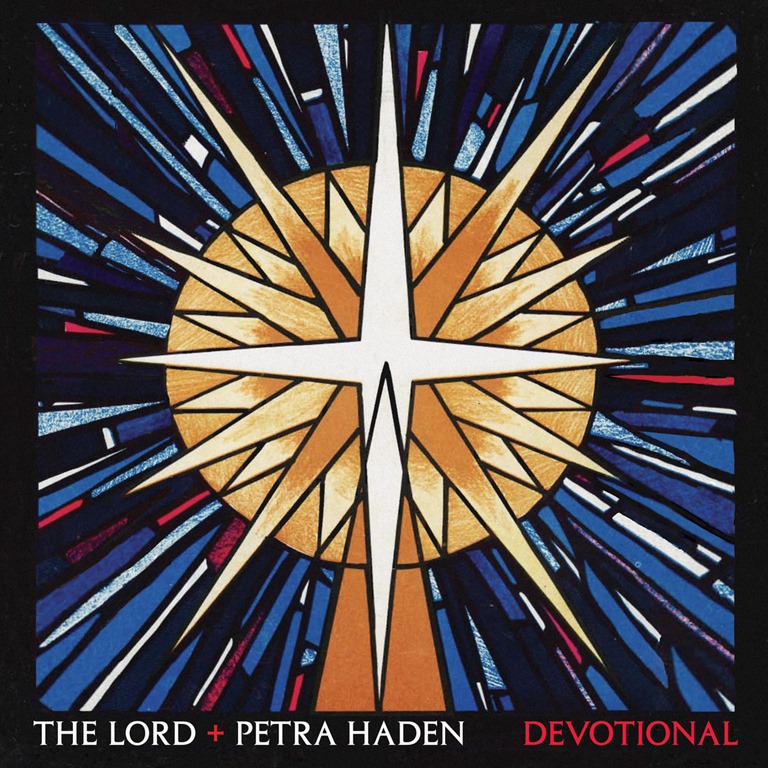
Southern Lord – 26th November 2021

Christopher Nosnibor

Long after the heyday of the legendary Peel Sessions, BBC sessions remain something to be revered and something special. Even back in the 80s and 90s, when Joh Peel’s show was the place to gain exposure as an underground band, and a Peel session the pinnacle of prestige for any act outside the mainstream, the likes of David ‘Kid’ Jensen and Janice Long were also notable DJs who invited bands to record live / studio sessions, and while R1 has since become the domain if wall-to-wall major label slop without a single window for anything remotely alternative (that died with Zane Lowe’s departure in 2015, and while his sycophantic arselicking was nauseating, he did at least provide a platform in an otherwise mainstream space), 6Music, recently salvaged from decommission continues to uphold the tradition, thanks to Mark Riley (formerly of all-time Peel faves The Fall) and Mary Anne Hobbs. Hobbs(who quit R1 in 2010 to mentor students at The University of Sheffield and stepped into 6Music a couple of years later) in many ways represents the last bastion of the old-school, in a good way: the veteran DJ is more attuned to less obvious music than many DJs a fair bit younger, as her offering a slot to Sunn O))) indicates.

The beauty of BBC sessions is that they offer acts studio time to use as they please. Many crank out versions of tracks off their latest album, but others explore new territory, either with works in progress, random covers, or something else entirely. Sunn O))) elected to record a whole new album. And so it is that the follow up to Pyroclasts is an extension of the work from that previous album (plus one from its predecessor, Life Metal (2019)) – of which Pyroclasts was in turn an extension of sorts, having been recorded during the same sessions. They certainly know how to stretch a concept: the thing with Sunn O)) is that for all of their impenetrable wall of seriousness, which corresponds with their impenetrable wall of sound, there is a sense of wryness, a sense that they’re more than self-aware of their mythmaking and stylisation, and that delivering it all with not even straight faces, but faces obscured by cowls, isn’t entirely serous. By this, I mean high art and humour aren’t mutually exclusive. Sunn O))) make serious music in a serious fashion, and are even serious about it, but maintaining character throughout is integral tom the wheeze. And so in keeping with maintaining both the style and the form, they grind out longform pieces that drone interminably and gnaw away at the intestines in an uneasy tonal probing.

Having toured with the band as a support on the UK leg of their tour, Anna Von Hausswolf joined the band in the legendary Maida Vale studio and lent vocals, adding an ethereal quality to the low-end drone that continues for all eternity.

Immediately, we’re dragged into Sunn O)) time. Most radio sessions comprise three or four songs, with a duration of maybe fifteen minutes or so in total. Because most radio shows last maybe three hours, and a feature slot of fifteen to twenty minutes is proportionate. But with Sunn O))), most tracks are half a show in duration, and the first track on here, ‘Pyroclasts F’, an excerpt of which was revealed in November, is comparatively gentle, drifting semi-ambient work, combining heavy guitar drone and feedback, and of course it’s never-ending. Well, fifteen minutes in duration, to be more precise, as its counterpart Pyroclasts C#.

It’s not until ‘Troubled Air’ starts and that the truly intense, gut-shredding sensation hits. It’s five ambient minutes until the monstrous power chords strike the knell of dark doom, and we’re in classic Sunn O))) territory. Growling for an uncomfortable eleven minutes on Life Metal, this performance extends the piece for over half an hour, with downturned chords struck at An impossibly slow rate. The earth turns between chords, the sustain extending light years. The ominous organ notes trill and quaver like mist creeping in a horror movie, while the doomy chords torture the bowels and lower intestine and blossom into blooming cathedrals of chthonic darkness. It’s a sonic black hole from which there is no escape, and it grinds and billows and the listener is slowly sucked under by the relentless swirling currents.

Metta, Benevolence captures Sunn O))) at their minimal best, conjuring enormous, sweeping soundscapes of the densest, darkest, most relentlessly dark drone.

AA

a3821764350_10

Dret Skivor – 1st October 2021

Christopher Nosnibor

Dret Skivor continue to provide an outlet for the weird and wonderful, not to mention the obscure and droney with the eponymous release from the enigmatic but somewhat amusingly-monikered twAt klaxon. All we know of twAt klAxon is that they’re a Finnish sound artist – but then, so we really need more (beyond the advice to ‘Play through decent speakers/headphones for best results’)? Sometimes, it’s preferable to engage simply with the music than to become side-tracked by biography and theory.

Being a Dret release, twAt klAxon is an album of two halves, created very much with the cassette format in mind (with just four copies of the limited C45 physical edition produced), and each side contains a single longform track. The first of these, the inspirationally-titled ‘twAt’ manifests as a single, thrumming, humming drone. It hovers predominantly in the midrange, and not a lot happens for a long time. Fleetingly, it stammers and stalls, before pulsing back with a stronger, more overtly rhythmic phase. While the variations are minimal, the sonic ripples yield some good vibrations – not just metaphonically, but literally, sending waved through my elbows and forearms as they west on the surface of my desk as I listen. And listen I do. Sometimes, to focus intently on a single sound can be a quite remarkable experience, one that’s both relaxing and liberating. The sound thickens and sticks, and slowly it creeps over you. It’s a frequency that doesn’t drill into your skull, but instead wraps your head tightly and squeezes, a smothering compression of emptiness.

As a child, I had a recurring dream in which pencil-drawn planes crashed and scrumpled in succession. This dream was soundtracked by a deafening silence. This is not that sound, but it reminds me of it, and in doing do, recalls the anguish caused by that dream, and it’s not pleasant. Even without that association, the tension of that single note that hovers from around the fourteen minute mark and on and on and on for all eternity is challenging. The reason I admire this as a work of sonic art because of the level of patience that must have been required to produce it – unless, of course, they left the room and made a cuppa while the sound continued, in which case I would feel somewhat cheated, and making them a twAt of the highest order.

‘klAxon’ is more drone: there are more vibrations, the sound is thicker, denser, buzzier, and there are intimations of beats of at least regular pulsations that thump rhythmically low in the mix. This slides into some heavy phase and throbs endlessly hard. It’s primitive, with undertones of early Whitehouse, mining that analogue seam minus the pink and white noise. twenty-one minutes of that undulating, slow-shifting bubbling almost inevitably has an effect, and it’s deeply disorientating. Perhaps less klAxon and simply more twAt.

Quippage aside, this album is certainly no accident: it is designed to register physically, while torturing psychologically. And no, torture is not too extreme a word: that isn’t to say that twAt klAxon is intended to inflict any kind of trauma, but it does employ the methods of torture within an artistic context to create a work that’s perverse and purposefully challenging – and it succeeds.

AA

a3994329484_10

DRET Skivor // Bad Tapes – 5th November 2021

Christopher Nosnibor

There’s niche, and then there’s microniche. Swedish cassette label Dret Skivor, this time in collaboration with Bad Tapes, present a split release that on paper doubles the audience, meaning they could probably shift a larger run. So is the run of just twelve copies of the cassette an act of wilful obscurantism? Or is it simply an awareness of market reach for what is, by all accounts, an obscure and difficult release?

Housed in some particularly (out of character) tranquil fine art depicting a rustic scene worthy of Turner, created by the ubiquitous one-man noise scene that is Theo Gowans, this collaborative effort was recorded to celebrate the midsummer of 2021 – released, appropriately just days after the end of British summertime, and also coincidental with November’s Bandcamp Friday.

Side A is occupied by ‘midsommar’, a celebration Scandinavian style. It’s not exactly a celebration in the sense of a carnival atmosphere, but it is a celebration of a momentary pause, the point at which the year hangs at its apex before its gradual retreat back towards darkness and autumn.

It manifests as fourteen minutes of ominously hovering drone during which almost precisely nothing happens. It’s ominous, and its power lies in its commitment. That is to say, it’s the Waiting for Godot of drones. Practically nothing happens. There is no discernible variation. There’s not even much to listen to for change; the texture is flat, the tone is flat. So many releases are referred to as exponents of drone, but this, this is the definition of drone. It’s not doomy, it’s not dark: it’s almost completely blank. Not so much sound pouring into a sonic void, but fourteen minutes whereby sound creates a sonic void.

Flipside ‘midsummer’ is typically Gowans; midsummer English style – some chatter over the setting up of mics and the loke, some field recording ambience, birdsong and a small choir starts things off gently if there’s a lot going on at once, and then a barrage of feedback and churning noise that obliterates everything. It gradually slides into a morass of interweaving drones that undulate and twist, with all sorts of extraneous fizzes and scrapes intersecting throughout. If ‘midsommar’ is a smooth drone, an endless stretch to a clear horizon ‘midsummer’ is an unsettled and unsettling experience dominated by disruption, there is discord and discontinuity, and a pervading air of discomfort.

Taken together, the two pieces provide contrasting perspectives which illustrate that experience is not fixed, but something which comes from perception.

AA

a1635961788_10

Cruel Nature Records – 24th September 2021

Christopher Nosnibor

Cruel Nature’s September releases are all about lost classics from Gateshead. Every local scene has those bands who had so much potential to go further afield, and who, given the right exposure, the right breaks, could – and should – have been (inter)national cult icons.

‘Local’ bands so often get a bad rep, as if they’re somehow inferior because they haven’t broken out. Sometimes, it’s misfortune. Sometimes, it’s because of life – dayjobs, family, personal circumstance. And sometimes, it’s simply a lack of ambition to do anything more than make music and play locally, and that’s not reason to judge an act. Not everyone wants to be a global superstar, and of the tend of thousands who do, hardly any make it anyway, so maybe accepting your limitations is a good thing to do, and far healthier than throwing yourself not the rat-race running on the vaguest of hopes of ‘making it’ – whatever that is.

Like turn-of-the-millennium purveyors of brutal harshcore, ODF, R.Y.N. demonstrate a remarkable range and quality of non-mainstream music being played around Gateshead. R.Y.N. was the drone / void ambient project of Gateshead duo Pete Burn and Dean Glaister, active from 2003 to 2011. Like the simultaneous ODF release, Cosmic Death is a retrospective which puts their 2008 albums Astral Death and Cosmic Birth together for the first time as a double cassette package.

Cassette one contains the six tracks from Astral Death, and the eight-minute ‘Conscious Patient’ provides a wonderful introduction into their world of dense, dark, grating dronescaping. Things delve deeper and darker with the nine-minute churning drabness that is ‘The Cleansing’: cleaning is appropriate, and it’s the sonic equivalent of as colonic irrigation. It feels gentle in comparison to the grating metallic oscillations of the third track, ‘Mind Over Mind’. It’s a fifteen-minute thrum, where nothing happens, nothing changes, and it’s not quite harsh noise wall – not least of all because there are shifts in texture and tone – but it’s limited, and a piece that achieves its effect through its sheer relentlessness and lack of variety, the effect of the dense wall of sound being cumulative psychologically.

It’s readily apparent that R.Y.N. had global potential, but for an audience so niche they’d have probably have needed to relocate to Japan to play to an audience of more than fifteen people, unless they’d scored a support with a noise giant like Merzbow or Whitehouse – in which case they may have got to play to 75 or a hundred people on a good night. But quality and quantity are rarely contiguous, and when it comes to creating dark atmosphere, these guys were clearly masters.

‘Cosmic Research Unit’ is still a heavy drone work, but feels softer and leans more toward ambience. It doesn’t get such bleaker than ‘Astral Death’. It sounds like a recording of an engine or a lawnmower, played at reduced pace. It’s like HNW with additional layers of swampsome murk that shift and provide some sense of movement, however slow and lingering.

Cosmic Birth opens with the title track, and picks up where its predecessor left off, with a harsh scraping metallic drone like a machine churning and grating on and on, over which whispering drifts of sonic smoke linger – and it very much sets the tone for the remaining seven tracks, which include two twelve-minute epics in the form of the dank and murky ‘Brain Pictures’, and ‘Creation of Infinity’, both of which lead the listener inside themselves to contemplate those darkest inner recesses, and the fifteen-minute ‘Gravity Drain’, which really pushes the oppressive atmospherics to the limit.

‘Catacombs’ plunges through sonorous and penetrating darkness to arrive, with a bone-rattling percussion way off in the background, at an empty space. And ultimately, the final destination: the somehow incomplete yet equally finite ‘Serpen’, which swirls around ominously and maintains a knife-edge suspense.

After wandering through endless tunnels without light and without any real hope of escape from this claustrophobic aural subterranean, it becomes clear: this is the face of the abyss – from which, there is nothing and no return.

AA

a1776692118_10

Pilgrimage of the Soul is the 11th studio album in the 22-year career of Japanese experimental rock legends, MONO set for release on 17th September (Pelagic Records)

Recorded and mixed – cautiously, anxiously, yet optimistically – during the height of the COVID- 19 pandemic in the summer of 2020, with one of the band’s longtime partners, Steve Albini, Pilgrimage of the Soul is aptly named as it not only represents the peaks and valleys where MONO are now as they enter their third decade, but also charts their long, steady journey to this time and place.

Continuing the subtle but profound creative progression in the MONO canon that began with Nowhere Now Here (2019), Pilgrimage of the Soul is the most dynamic MONO album to date (and that’s saying a lot). But where MONO’s foundation was built on the well-established interplay of whisper quiet and devastatingly loud, Pilgrimage of the Soul crafts its magic with mesmerising new electronic instrumentation and textures, and – perhaps most notably – faster tempos that are clearly influenced by disco and techno. It all galvanizes as the most unexpected MONO album to date – replete with surprises and as awash in splendor as anything this band has ever done.

MONO began in Japan at the end of the 20th Century as a young band equally inspired by the pioneers of moody experimental rock (My Bloody Valentine, Mogwai) and iconic Classical composers (Beethoven, Morricone) who came before them. They have evolved into one of the most inspiring and influential experimental rock bands in their own right. It is only fitting that their evolution has come at the glacial, methodical pace that their patient music demands. MONO is a band who puts serious value in nuance, and offers significant rewards for the wait.

Watch the music video for first single ‘Riptide’, a film by Alison Group now:

AA

MONO

Vinyl Eddie Records – VINED006 & VINED007 – 9th July 2021

Christopher Nosnibor

Opposites and opposition – and the way in which those contrasts are core to our understanding of the world and our place in it – have been key points of exploration in art for centuries. The concept of either / or, light / dark, heaven / hell is the foundation of Judaeo-Christian religions and those polarities became the core tropes of Elizabethan poetry, at the dawn of modern literature. Sir Thomas Wyatt’s ‘I Find No Peace’ cements these tropes that have come to define both internal conflict, the turmoil of love, and the fundamental dichotomies of the human condition.

And yet it’s Earth’s Angels Of Darkness, Demons Of Light, released in two parts that comes to mind when presented with Soma Crew’s new offering, a twin vinyl release capturing two days’ intensive recording to collectively forge one monumental document of the band’s creative work since the release off 2019’s F for Fake in 2019.

I know, I know I always say the same when writing of Soma Crew – which I have done often since they formed under the guide of Muttley Crew back in 2013 – that they get better with every release, with every show. But that’s the simple fact of the matter. They tend not to deviate far from their psychedelic drone style that’s most reminiscent of Black Angels, but that isn’t to say they don’t push their limits in the execution. But most importantly, they know how to batter away at a riff for an age and whip up a psychedelic haze.

Out Of Darkness / Into Light is a slow-burner, and marks something of a shift, and on first listen, I was a shade concerned by the lack of motoric beats and shimmering walls of distortion and delay rippling over cascading riffs. But this is the new direction: the beats are still motoric, but simply more minimal and subdued, and the emphasis has shifted toward a more understated and minimalist sound.

The first track, ‘Phantom’ starts off simple, plugging away at a four-chord riff with a hint of swagger that’s almost Primal Scream. The guitar sound is clean, shimmering, and Si Micklethwaite’s vocal is pretty low in the mix, meaning everything blends together gently. There are heavy hints of early Fall about the six-and-a-half-minute ‘You’re So Cool’ – the easy-tripping clean guitar with its naggingly repetitious riff is straight off Live at the Witch Trials or Dragnet. It’s simple, it’s immediate, and the fact it was recorded on the spot only accentuate these qualities.

Soma Crew don’t do short songs: of the twelve here, only two are under five minutes, with the majority clocking in around the six-minute mark. There’s plenty of throbbing bass runs and repetitions and spacey slide guitar going on here, and these qualities are integral to the Soma sound. They’re not a ‘chorus’ band, but a band who create a hypnotic atmosphere through their endlessly cyclical riffs and the plod of the percussion – by no means a criticism here, as drummer Nick understands that less is more – using a setup consisting solely of snare and floor tom for the duration. This minimal ‘Bobby Gillespie’ setup works well, meaning the instruments occupy the space – or don’t – instead of the conventional sound whereby crashing cymbals fill the sound the a load of top-end mess that so often sounds crap.

‘There’s a Fire’ steps up the urgency eight songs in, but instead of going all guns blazing with distortion and a blast of cymbals and snares, Soma Crew hold steady. The slow down again for the forlorn country meandering of ‘Broken Matches’ and counterpart ‘Machines’ with some nice lap steel work, and there’s no question that Out Of Darkness / Into Light is a more ponderous, reflective set of songs, and rather than being a set of two distinct halves, it’s very much a coherent and unified work.

If anything about Out Of Darkness / Into Light intimates production values that eschew slickness and polish, that’s one of its real selling points: recorded live over two days in January 2020, this is a band at work, and it’s an album that captures what they actually sound like, rather than a studio-based tweaked and fiddled fantasy version of what they might sound like if they were another band entirely. Hearing them stripped back and sparse, they sound musically confident even while Micklethwaite’s plaintive vocal navigates seams of self-doubt and introspection through the lyrics, and this album shows that plugging away at simple, cyclical chord structures is as effective and hypnotic without the deluge of effects as with.

AA

a3992898530_10

Dret Skivor – 18th June 2021

Christopher Nosnibor

Swedish cassette label Dret Skivor continue to expand their catalogue at pace with another made-for-tape two-tracker in the shape of Hammarö Stickning Kubb’s Storbror Ser Dig. As is customary, biographical information for the label’s seventh release is nil, and technical information is sparse, the accompanying notes simply stating ‘Six oscillators, reverbs, psychoacoustics, voices in your head, chance methods.’

Methodologically, this evokes the spirit of John Cage – substitute eight or twelve radios with six oscillators, retain the random, and, well, there you have it. The fascination of the random – particularly where there are multiple operatives or machines involved – is the way it can yield moments of unanticipated interplay. It’s not just about the overlaps and intersections, either, but the spaces where one or more of those elements is not participating or contributing. It’s here where the potentials of permutation present themselves. Maths, I‘ll freely admit, isn’t one of my greatest strengths, but the permutations of six clearly offer significant numbers of variations. And on the one hand, while it is mathematical, there is also a strong musical and literary lineage of permutational work, with Brion Gysin’s permutational poems being a strong example of how a simple phrase consisting of maybe four, five, or six words can yield a substantial array of variants through the process of permutation. Then, of course, there is Dret label founder Dave Procter’s own Fibonacci Drone Organ project, which is – as the name suggests – mathematically based.

The permutational aspect of Storbror Ser Dig – split across two twenty-minute pieces, ‘Storbror.’ (side one) and ‘…Ser Dig’(side two) aren’t really apparent, but on the former, a minimalist drone swells to a filler drone that continues to expand in density over time.

‘…Ser Dig’ occupies a lower mid-range register and subtly wavers through slow oscillations. Not a lot happens, but this is a work that demands a certain level of focus – or otherwise, no attention whatsoever, by which I mean that close listening will reveal minute details, and that intent, alert state of scrutinising the sound brings with it a different state of mind, a certain clarity. Contrastingly, allowing oneself to become one with the drone is a deeply relaxing experience: headphones, dark room and candle, a smoky scotch all contrive to a certain slow fade in and out of the continuum, which is different altogether. It encourages you to empty your mind and instead of reflecting on any sense of trajectory, simply immersing oneself in the slow, subtle ripples of sound that reveal themselves over time. No drone is ever just a drone: there is always movement, shapes, undulations, ripples, waves. They are all present in this subtly-shifting, rippling dronescape that evolves over the course of its forty-minute duration. And the details are nice, but nicer still is just to sit back and let it play out, because life is stressful and demanding enough and sometimes, details simply don’t matter. With this, it’s time to go with the flow.

AA

DRET007 tape inlay card

Southern Lord – 25th June 2021

Christopher Nosnibor

Twenty years is a long time. But that’s how long it’s been since Iceburn last graced us with new material. The shifting collective, primarily operative between 1990 and 2001 reconvened in 2007, with this current lineup again at the core.

As the band’s bio summarises, ‘The band’s initial output slowly evolved from hardcore and metal to free improvisation and noise. The 10 year arc saw the band following their own path and becoming more and more obscure as they got deeper into unknown musical worlds. By 2000 the cycle seemed complete and Iceburn did their final tour in Europe 2001. In 2007 this early core crew reunited to play a local anniversary show focused on the earliest material. Every few years since they would get together for another ‘reunion’ until that word became more of a joke, it was clear the band was back, getting together every week, and working on new material.’

And here it is: two truly megalithic tracks, each spanning the best part of twenty minutes, and packing them densely with some hard-hitting, churning, trudging, sludgy riffs.

This is some heavy, doomy, din: the riffs are Sabbath as filtered via Melvins, and let’s face it – Sabbath may have invented heavy metal, but it was Melvins who reinvented it with that gnarly, stoner twist and all the sludge.

It’s about halfway through the eighteen-minute ‘Healing the Ouroburous’ that things take a bit of a crazy turn. The lead riffing steps up to next-level flamboyant and I’m starting to think ‘this is maybe a bit much’. It’s not just that it’s technical, it’s just a bit fretwanky, even a bit Thin Lizzy, like ‘Whisky in the Jar’ jammed for fifteen minutes at a gig with three local support bands for a minor-league headliner – but then they pull it back and we’re returned to slow, lumbering territory. If there’s a brief burst where it sounds a bit Alice In Chains, it’s forgivable, because within the obvious genre framework, Iceburn bring in so much to expand the limits of convention, and it’s refreshing, especially from a band with so much history. It would have been so easy for them to just turn out a brace of droning riff beasts where not a lot happens, and no doubt they would have been lauded for their return to form and their place in the underground canon, but… well bollocks to that. Then there are the vocal – shifting between a low growl and some quite melodic moments, but all kept low in the mix.

‘Dahlia Rides the Firebird’ is another absolute bloody behemoth, a collision of Earth and Melvins, and a real slow-burner that takes suspense to a point near the limit. It takes three minutes before it even begins to take form, and then lumbers like some giant Cretaceous riff-lizard – one with big, swinging riff knackers at that. Yes, this has some swagger, and it builds, and it builds… The monster crunching riff that crashes in to punch hard in the last five minutes more than justifies the wait. When it lands, it’s absolutely fucking colossal.

Asclepius is a statement, and one which informs us that Iceburn are forward-facing and aren’t looking to recreate the past or retread old ground just to please people. And that in itself should please enough people, because this is so, so solid.

AAA

a1401051411_10

24 April 2021

Christopher Nosnibor

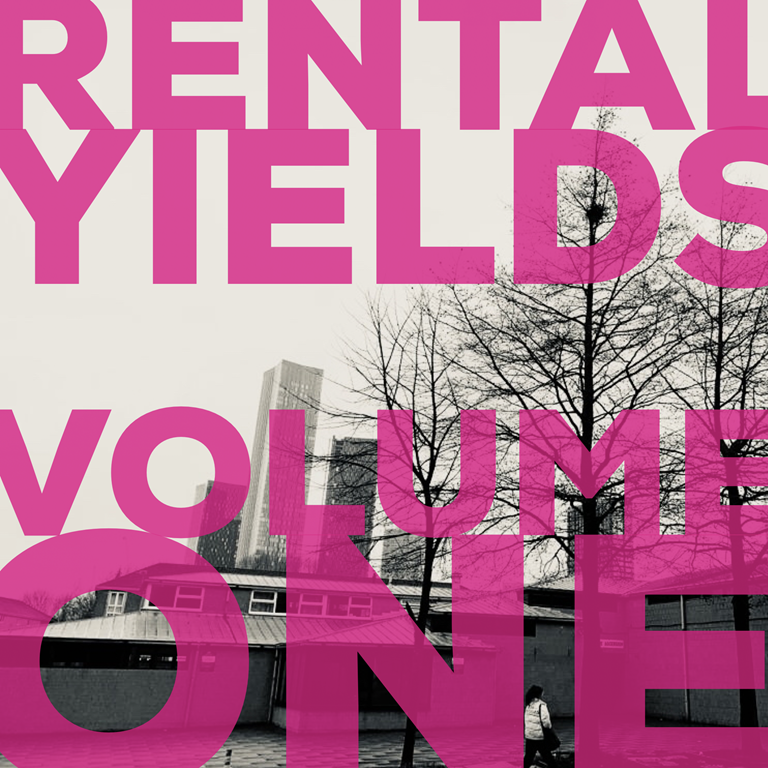
The title is pretty much a summary of this release: a collection – or compilation – of works by dark ambient act In The Absence Of Words. It’s the first of two volumes, and draws on their seventeen previous releases (discounting the 2020 ‘reworked’ version of III (originally 2017).

There are a lot of numerals to assimilate here – which is a point of interest given that the man behind In The Absence Of Words is a copywriter by day, a person who spends the majority of their time immersed in the formation of words in order to convey specific information. The craving for some time away from words is one I can personally relate to, and is one of the reasons for my pursuit of a musical project centred around noise and abstraction. We all need a break from the dayjob, and for a writer, that headspace comes not from time out of the office in the gym, but from something not only devoid of words, but which blanks out words completely, and covers over the internal monologue and that inner voice, whatever it’s saying, to wash away and cleanse the mind of words, if only for a short while.

A Collection I may assemble six compositions from a vast and swiftly-built catalogue, but it’s explicitly not a ‘best of’ intended to shift units of back-catalogue: instead, it’s a carefully-curated project where the pieces have been, as the liner notes explain, ‘carefully selected to complement each other and to create a single immersive listening experience. Each track was originally released individually on Bandcamp between 2017 and 2019 and each has been remastered and assembled specifically for this compilation.

As such, it’s less about singling out individual pieces and immersing oneself in the holistic experience, allowing oneself to simply take the journey and observe the landscape, absorbing the sights, sounds, and scents. That said, there are clear distinctions between the tracks, and these very much signpost the route from beginning to end.

As such, some notes on the passage seem appropriate, in the same way one may jot down observations from any other journey, and ‘The Meeting Point’ undulates slowly, and I’m reminded of the tranquil ripples of Prurient when they’re not devastating the ambience with a blitzkrieg of white noise and distorted vocals.

The seventeen-and-a-half minute ‘Suspension of Belief’, originally featured on debut I back in 2017 isn’t discernibly different, but swells and groans out a textural rinse that rumbles and rolls on and on, its churning grind becoming quite uncomfortable over time.

Much of the album is soft, cloud-like, with sonorous, billowing drones changing shape and form often but subtly over time, and while the second half of the album feels less varied in terms of both texture and tone, the way the individual pieces melt into one another to create a extended sonic space in which it’s possible to relax and empty your mind is credit to the artist for his selection and sequencing of the material to render such an experience.

AA

A Collection I

Nadja reveal another track "Starres" from their forthcoming album Luminous Rot, which shall be released on CD and DL formats via Southern Lord on 21st May, with the LP version arriving on 13th August. Luminous Rot pre-orders are live from today, and info can be found on the Southern Lord store, Southern Lord Europe store and via Bandcamp.

About the track and video Nadja comments, "Starres is about both inner- and outerspace, a conflation of the internal neural-network of the human brain with the external cosmos, and how the act of observation might alter those, both from the viewpoint of the observer and the one observed. The video attempts to replicate something of that feeling of cognitive dissonance in the observer, taking a mundane image of houses and warping them, both through reflective filming and digital effects."

Watch the video here:

AA

Nadja 2

(image by by Janina Gallert)