Posts Tagged ‘Drone’

Rocket Recordings – 17th October 2025

Christopher Nosnibor

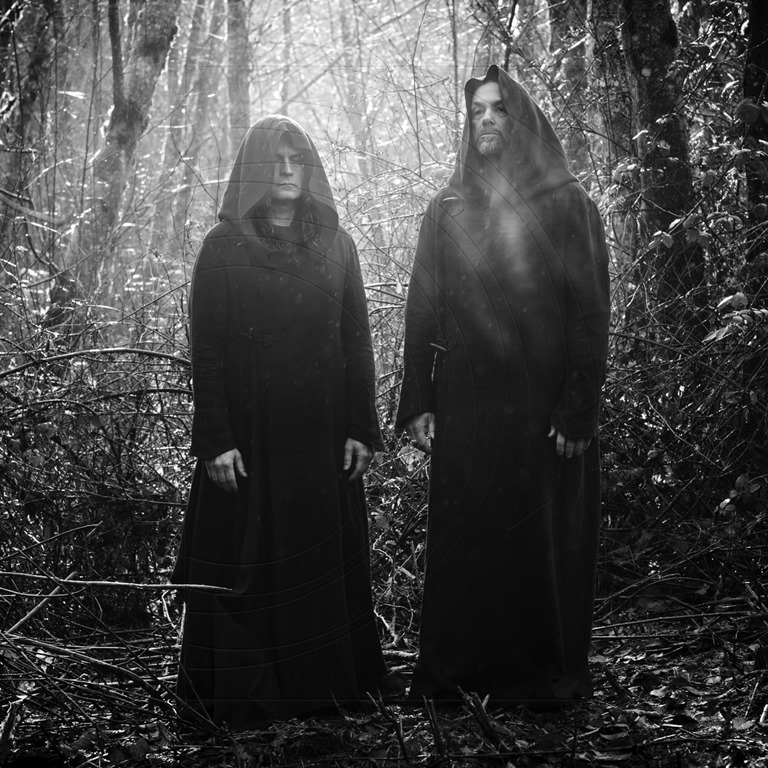
The thing that particularly stands out in the bio for the latest Smote album is this: ‘Daniel Foggin has spent the majority of his adult life working as a landscape gardener, frequently pursuing his trade in conditions of either baking heat or freezing cold and, as he puts it “more often covered in mud than not”. Yet the primal, meditative aspects of this work, the act of communing with nature, its histories and its depths have fuelled his art on a profound level. As Daniel himself relates; “I think the music is a direct reflection of this feeling that I haven’t quite managed to define yet, it is dirty and hard but there is an overwhelming comfort to it.”’

It’s something artists rarely mention: they have day jobs. Perhaps there’s an element of shame in it for some. Maybe it detracts from the mystique. Or it could be that it’s considered a detraction from the pitching of the latest creation. But it’s a truth rarely spoken: most musicians, and artists in any medium, have day jobs and have to make time for their creative work. Tours have to be negotiated with work, taken out of annual leave, often juggled with family responsibilities. Sleevenotes by Joe Thompson of Hey Colossus and Henry Blacker is the most open narrative on the realities of this I’ve read to date, and at times the exhaustion crawls from the pages. As such, it’s refreshing that Foggin not only acknowledges his day job, but recognises it as a significant influence on his creative work. And why not? The most engaging art is drawn from life, after all. Much as it would be a more ideal situation that artists could make their living from art, at the same time, there is perhaps greater value in art created by those who live in ‘the real world’ rather than floating, detached, elevated above it in some kind of bubble.

The words ‘Free House’ make me automatically think of pubs, which perhaps says more about me than the artist, of whom we learn that ‘In the world of Smote, going further out means going inward. Less a metaphysical journey into inner space, more a physical journey into the ground itself, converging with its roots and vibrations. What’s more, a journey right to the heart of its principal architect’s daily experience’.

A cottar is a farmer, and with the album’s first piece, we’re plunged into a deep, surround-sound immersive dronescape, There are many layers to it: reverberating voice, trilling flute, sonorous synths, distant percussion… and it builds, and builds, growing into a hypnotic swell before finally breaking into a slow, weighty post-metal riff that twists and turns with spectacular force, hammering with the force of Pale Sketcher by the six minute mark. It has the weight of sodden earthworks, and conveys the hard exertion of ploughing and tilling, as it descends into a speaker-shredding wall of distortion.

‘The Linton Wyrm’ brings heavy Nordic connotations as it plods on, and on, over the course of a rousing nine and three quarter minutes. It’s not so far removed from the epic force of Sunn O))), but equally Wardruna, a band who evoke earthiness and the essence of pagan spiritualism – not about worshipping mythical gods, but celebrating a connection with nature on a level which is almost primal, and isn’t readily articulable through words: it’s something which transcends language.

Single cut ‘Snodgerss’, which clocks in at under four minutes is both representative of the album as a whole – and not. With its trilling flute and thunderous slow riffery, it incorporates some of the leading elements, but in a way which is considerably more accessible, not least of all with its folk leanings, and presents them in a condensed format. That said, it’s an intense piece, which offers no let-up.

The ten-and-a-half-minute ‘Chamber’ is slower, heavier, dronier, and encapsulates the true essence of the album as a whole, building on a low, resonant throb before the introduction of mournful woodwind. As graceful and soulful as it is, it connects with a primitivism which reaches to the core, a place beyond linguistic articulation. This is the sound of forests, of hills, of streams and moorlands.

The final track, ‘Wynne’ hammers the album home in a squalling blast of overloading guitar and powerful oration propelled by thunderous percussion. It’s mighty, and beyond, seven and a half minutes of blinding intensity which concludes an album that’s varied but unswerving in its density and force. You can truly feel the earth move.

AA

a1730365911_10

It’s that time of year again, when the nights draw in, it rains nearly every day, and people start coming down with bugs and viruses. Consequently, JUKU have been forced to pull out of tonight’s double header, which is disappointing in extremis. A powerhouse live act wo we don’t get to see often enough, they promised to provide the perfect contrast to Soma Crew’s psychedelic drone. But alas, it was not to be on this occasion. This did, however, provide an opportunity for The Expression to step up and open the evening.

If ever one was looking for proof of just how healthy the York scene is right now, this is it. There are new bands of outstanding quality copping up all the time, none of whom are run-of-the-mill indie acts. It’s also worth noting how many of the bands in York aren’t all just blokes, either. And at the risk of repeating myself to the point of tedium, this is why it’s worth going to the free gig in pubs, the five-quid gigs in local venues, and turning up for all the acts. JUKU’s absence afforded the absolute revelation of The Expression.

DSC04006DSC04018

The Expression

They showcased a set of well-realised, tight compositions which brought together elements of dreamy shoegaze, and blistering post punk, propelled by rolling drums. The final song started gently but swelled into something altogether more solid, more riffy, calling to mind The God Machine. Despite battling issues with mic feedback, and nerves jangling just below the surface, they came across well and kept it together to relay some magical moments of chiming, mesmerising picked guitar, with vocals which at times were reminiscent of All About Eve’s Julianne Reagan. Definitely a band to keep on the radar.

DSC04036

The Expression

I really so wanted to like Deathlounge. They have a great name and a great premise. Previous outings had shown real promise, too, not least of all their EP launch, despite what felt like an overly ambitious and overlong set. But tonight, they sparked, but simply failed to ignite. They sound rough, and it’s nothing to do with the PA. First and foremost, it’s the singer who’s the weakest link, but their lack of coherence is the real issue. They do melodic hardcore without the melody. Or the hard. The guitarist thinks he’s in Fugazi, while the bassist wants to be in Jamiroquai. The whole thing is a bit of a mess.

DSC04046

Deathlounge

Soma Crew always seem to start with a slow, sparse number, and sound a bit trepidatious, awkward, uncertain. And tonight is no exception. I find myself thinking ‘ooh, is this even in key?’ With a substitute drummer, and Soma Crew being Soma Crew, the set is off to a slow, hesitant-sounding start, but building to a surging swell, a monolithic throbbing drone. I’ve drawn the comparison to Black Angels before, and the parallels are never more apparent tonight. With three guitars plus bass, and with everything but the vocals coming straight from the backline, they’re loud, and the sound fills the small space and then some. When they hit their stride, they’re phenomenal. Toward the end of their set they drop ‘Roadside Picnic’ and the sound is simply huge, and this, this is why we’re here.

DSC04051DSC04053

Soma Crew

Constellation – 3rd October 2025

Christopher Nosnibor

The third album by The Dwarfs Of East Agouza (Maurice Louca (Lehkfa), Alan Bishop (Sun City Girls, Sublime Frequencies), and Sam Shalabi (Land Of Kush) promises ‘a focussed set of rhythmic psych-trance free/improv’.

As their moniker and the album’s title suggests, they demonstrate a collective interest in urban myths, the strange, the embroidered and embellished tale, perhaps spun with a twist of esoteric mysticism, but at the same time, aren’t entirely serious about it all. That is by no means to imply they’re not serious about the music they make, even when the pieces have titles like ‘Goldfish Molasses’, ‘Saber Tooth Millipede’, and ‘Swollen Thankles’. Because it is possible to be intense and serious and at the same time retain a capacity for humour, a sense of the absurd.

Sasquatch Landslide is an album that’s knowingly ‘out there’, but at the same time, it’s clearly the work of a collective who are completely immersed in the world they’re creating through a conglomeration of sounds which border on the transcendental. Elongated, quavering drones and an array of percussion merge in a haze to forge loose, yet curiously intense grooves. The aforementioned ‘Sabre Tooth Millipede’ is a full-on wig-out jazz frenzy played with the psychedelic loopiness of Gong as their most far-out, and at the same time, amidst the twanging and clattering, there’s something of the spirit of The Master Musicians of Joujouka about it. For an added addling bonus, there are tempo changes galore, and some parts where there are multiple tempos crossing one another simultaneously as the players seemingly detach from this physical realm into different plains of consciousness, separate from one another yet still connected by some kind of telepathy. Because however weird and disjointed it gets, somehow it works.

‘Double Mothers’ goes spaced-out, haunting, and atmospheric. On the one hand, it’s one of the most overtly jazz pieces on the album, but the wandering, reverb-soaked saxophone weaves its way through a nagging twang of a distinctly Eastern influence, while a pulsing heartbeat rhythm creates an underlying tension.

Single cut ‘Titular’ is busy and adds an easy listening, lunge-like organ trill which is completely at odds with the hectic hand drums and frenzied fretwork. They really cut loose on the ten-minute ‘A Body to Match’, stretching things out in all directions – tempo, texture, detail, serving up a pan-cultural smorgasbord of noodlesome improvisation. There, they slowly pick apart the component elements, a slow-motion explosion or deconstruction of the composition, each part slowly moving further from the rest. ‘Goldfish Molasses’ slowly melts, a plodding beat reminiscent of ‘What A Day’ by Throbbing Gristle provides the spine for this slow, pulsating Industrial thudder, where a woozy bassline undulates in the background, and incidental noises and chattering yelps fill the space behind some indecipherable vocal.

Sasquatch Landslide is big on warped, looping drones and layers of intricacy upon layers of intricacy, which weave a shimmering sonic cloth that ripples and shifts before the eyes – and ears. Time itself bends and stretches, taking on an almost elastic quality as the threads unravel to reveal new layers and dimensions. One can feel the instrumentation expanding outwards into infinity – and infinite reverb – in the same way that the universe is continually expanding, only in an accelerated timeframe. For all of its abstraction, Sasquatch Landslide provokes quite visual interpretations of the sounds emanating from the speakers. I expect to have very strange dreams tonight after this.

AA

08 - The Dwarfs Of East Agouza cover art

The forthcoming full-length from Los Angeles–based band Agriculture, The Spiritual Sound, traces a narrative arc through extremes.  The album is largely a fusing of the visions of its two principal songwriters: Dan Meyer and Leah Levinson.  Though distinct, their voices converge in a singular spiritual grammar—one that defines the totality of The Spiritual Sound, not as separate parts, but as one unified expression.

Dan writes like someone clawing toward the divine through noise, channeling Zen Buddhism, historical collapse, ecstatic grief. Leah’s songs move differently: grounded in queer history and AIDS-era literature, amid the suffocating fog of the present, they carry the weight of survival as daily ritual. Dan takes the lead on their next release, a quieter moment amongst the chaos. About the track, he says;

“This is a love song to a future child. It is so moving to me that even though this child does not exist in the form of a child yet, all of the matter that will one day make up their being is already in the world. And of course this is true of all things that have ever existed. So even though I’m talking about a kid that I want to have one day, I’m really talking about the principle that everything is totally connected.”

AA

Agriculture’s formation mirrors their duality. What began as a loose collaboration between Kern Haug and Dan Meyer in the Los Angeles noise scene evolved into a shared pursuit of the sublime through heavy music. With the additions of Richard Chowenhill and Leah Levinson, the project solidified into the band’s current form. The ecstatic black metal foundation that was laid on 2022’s The Circle Chant expanded into something more precise and far-reaching on their 2023 self-titled full-length, and deepened further with 2024’s Living Is Easy: a record that embraced devotional intensity and radiant heaviness in equal measure.

Agriculture’s writing process is built on dismantling and revision of self. Dan and Leah bring songs to the band and then allow them to be pulled apart and rebuilt communally: reshaped through conflict, repetition, and deep trust. Richard adds guitar melodies and solos, and Kern constructs rhythms which are sometimes familiar but often unconventional. Finally, with Richard producing, the final form of each song is realised through intense collaborative work in the studio. Although a time consuming and ego-frustrating process, this allows the band to find the spirit of the songs not through inspiration, but through persistence.

Yet, even in its most ambitious moments, The Spiritual Sound remains rooted in the ordinary and in the day-to-day relationships between the people who made it. Gas station snacks. Inside jokes. Sleeping on floors. Playing shows in rooms that smell like mildew. The spirit here isn’t abstract, it’s live. This is spiritual music that starts with imperfect gear and a long-in-the-tooth tour van.

Agriculture doesn’t offer salvation. The Spiritual Sound isn’t a map out of the fire. What it offers instead is presence: a confrontation with the moment, however unbearable, however divine. It insists that meaning is still possible, even in a world hell-bent on reducing everything to content, and where suffering itself can be conducive to recovery. As the Buddhist saying goes: “the only way out is in.”

AA

agriculture_river8copy-990451000004513c

Photo credit: Milan Aguire

AGRICULTURE LIVE DATES 2025:

Sep 17  Kortrijk, BE — Wilde Westen
Sep 18  Haarlem, NL — Patronaat

Oct 8  Brooklyn, NY — Union Pool (Record Release Show)

Oct 27  San Antonio, TX — Paper Tiger $
Oct 28  Austin, TX — Mohawk $
Oct 30  Atlanta, GA — Masquerade $
Oct 31  Saxapahaw, NC — Haw River Ballroom $
Nov 01  Silver Spring, MD — The Fillmore $
Nov 02  Philadelphia, PA — Union Transfer $

Nov 04  Louisville, KY — Zanzabar
Nov 06  Oklahoma City, OK — 89th Street
Nov 08  Albuquerque, NM — Launchpad
Nov 09  Phoenix, AZ — Valley Bar
Nov 11  Denver, CO — Hi-Dive
Nov 13  Salt Lake City, UT — The State Room
Nov 14  Boise, ID — Neurolux
Nov 16  Seattle, WA — Madame Lou’s
Nov 18  Vancouver, BC — Fox Cabaret
Nov 19  Portland, OR — Mississippi Studios
Nov 21  Sacramento, CA — Cafe Colonial
Nov 22  San Francisco, CA — The Chapel
Dec 04  San Diego, CA — Soda Bar
Dec 05  Los Angeles, CA — Lodge Room

$ with Boris

Ideologic Organ – 5th September 2025

Christopher Nosnibor

Umberto Eco is one of the many authors I feel I should have read, and hope that one day I will get around to reading. Social media has of late showered me with posts and reposts with a quite from Eco about owning more books than you will ever read – something I never much relate to. I only have so many hours in the day, and reading – since I insist on engaging with books rather than passively absorbing audio books while participating in other activities – is one of those pastimes which is time-intensive. I find music-listening to be comparable. As much as I enjoy listening to music while I’m cooking or participating in other activities, I like to give music full attention, especially new music. And it’s in this context that I often find I purchase music – like books, albeit to a lesser extent – at a faster rate than I can consume it. And this is why it’s taken me until the twentieth anniversary release of Slomo’s The Creep to catch up with this cult classic which brings together sludge / doom and vintage industrial influence.

The album’s context, too, is worth providing here, and so, I shall quote at length rather than paraphrase – not because I’m lazy in my writing, but because I fear making omissions, and feel that liner notes or press releases articulate in a way which better represent the artist.

Just one week after the passing of COIL’s Jhonn Balance in late 2004, the 61-minutes of "The Creep" manifested in a Sheffield suburb. Not yet a band and only captured due to happenstance, this first music of Slomo flowed forth without any consideration of it even being "a piece", let alone a release, though it didn’t take long for the participants (Chris "Holy" McGrail and Howard Marsden) to realise they’d captured something of distinct colour on account of how often they were listening to it.

Initially dubbed "The Ballad of Jhonn & Sleazy", the pair soon instead ascribed the music to Boleigh Fogou; a prehistoric underground chamber on the Land’s End peninsula that both had recently visited and been affected by. "The Creep" took its name from the peculiar side chamber assumed to be if ritual function, having no apparent practical use. This ponderous music chimed perfectly with the fogou; an apparently stolid place that teems with life once you become attuned to its frequency.

Fitting in perfectly alongside other massive single-track albums such as Sleep’s "Dopesmoker", COIL’s ‘Queens of the Circulating Library’, Cope’s "Odin", and Boris’ "Flood", "The Creep" secured a limited release on Cope’s Fuck Off & Di CD-R label in 2005 that quickly sold out via supportive outlets such as Southern Lord, Aquarius Records and Stephen O’Malley’s Ideologic Organ – then operating merely as a blog and micro-store.

And now, Ideologic Organ present a twentieth-anniversary vinyl edition. No doubt there will be plenty of people who are happy about this: after all, it’s never been released on vinyl, and I expect the tonal qualities of vinyl are ideal for a work where there is so much texture, so much richness of tone. The slow, resonant, reverberating bass during the quiet intro deserves deep grooves and decent speakers.

One downside of where the industry is now – and there are, as most of us are aware, many – is that the days of a promo copy of a slab of vinyl are essentially over (unless you’re writing for a major national or international publication), meaning I’m here with some decent enough speakers, but basing my opinion of the mastering and overall sonic experience based on an MP3 version. And as the low notes crawl, quivering, from those decent enough speakers, the rooms seems to darken and the atmosphere grows thicker, heavier.

Not a lot really happens during the first fifteen minutes, but the effect is profound, in that it resonates throughout the body. There is movement, but it occurs at a tectonic pace, and by stealth, rumbling around the far reaches of internal organs. For anyone who has read The Anatomy of Melancholy, Robert Burton’s seventeenth-century analysis of depression which explores the effects of the various humours on both mind and body. And The Creep slowly pulls on the gut and the intestinal tract in the most shuddering, lugubrious ways. At times it’s barely there, but shudders and shivers uncomfortably low on the psychic register. Others… there are low peaks among the troughs, but this is an album that registers more on a subliminal level and certainly low in the guts.

Where I raised the point of the vinyl release likely being popular with many fans, the counterpoint to this is the disruption to the continuity that the format creates. Listening to the MP3 version, there’s a fractional pause at just over thirty-two and a half minutes. It feels like a minor stutter, given that there is a long, low, undulating bass boom that fans out like a ship’s horn or subaquatic signals – but imagine having to get up and flip the record at this critical point before things begin to build. I’m perhaps being picky, but this feels like an unwarranted disruption.

The second half is even lower and slower than the first: twenty-nine minutes of bleak, rumbling abstraction. It’s the perfect amalgamation of drone, experimental, and dark ambient. And The Creep is dark. Whisps of feedback trail around and waft over hovering bass tines which simply roll and reverberate. Time stalls. Everything hangs in suspension: even your mind, and your digestion, hang, suspended, paused. Your breath… your mind. You stop thinking and simply float in this, this sound. Immersive is an understatement. It’s all-consuming, and you can easily lose yourself – completely – in this slow, slow, heavy drone.

20 years on, it’s clear that this is a work which is timeless. Niche, but timeless, in the same way that Earth 2 and Sleep’s Dopesmoker are more than just heavy droning noise. It’s no means an easy listen, but I’d still point to it as an essential one.

AA

a3748639222_10

Rocket Recordings – 22nd August 2025

Christopher Nosnibor

While you wouldn’t exactly call Rún a supergroup, they certainly represent a coming together of disparate artists of no insignificant pedigree, as their biography attests:

Rún comprise firstly Tara Baoth Mooney – sometime Jim Henson voice artist, with a longstanding background in everything from folk and choral music to experimental film-making. Diarmuid MacDiarmada – Nurse With Wound co-conspirator and brother of Lankum’s Cormac, brings with him the experience of avant-garde collaborations with a plethora of artists stretching back over thirty years. Drummer, sound designer and engineer Rian Trench, meanwhile, has worked on everything from the psychedelic IDM of Solar Bears to auto-generative experiments to orchestral arrangements, and owns the studio – The Meadow on Ireland’s East Coast – in which the album was made.

It’s a delicate folksome vocal which floats in on the first composition, ‘Paidir Poball (Pupil)’over what initially sounds like a mechanical wheeze of a bellows, or some form, of life support. The juxtaposition between something so earthy, so human, and something so very much not is compelling, and quite powerful, in a way which isn’t immediately easy to unravel. But a couple of minutes in, a thick, droning guitar – reminiscent of Earth 2, with that thick, sludgy distortion and trebly metal edge – winds its way int the mix and immediately, the mood and the direction changes. And then, on top, choral, almost monastic layers of vocal build and rise upwards to the heavens through the grit and grind and howls of feedback before eventually there is percussion. The drums – thick, thudding, low in the mix, feel as if they’re lagging, foundering in the tide or struggling against a head-facing current.

‘Your Death My Body’ strips things back primarily to percussion, but turns up the intensity with the vocals, which hit a wild intensity which borders on rabid. But with this, and some bleepy computer incursions and a grumbling but groovy bass which makes allusions to Jah Wobble, this album becomes increasingly difficult to place, or to pigeonhole. It’s a sad fact that nowadays, not only will they throw you in jail if you say you’re English, these days (I’m safe as I’m ashamed to pronounce my Englishness, even – or perhaps especially – in Scotland) – but aligning oneself to a genre can be a minefield, too.

The eight-minute ‘Terror Moon’ is a dark morass and a muti-layered, bass-heavy mindfuck that explodes into blistering, shredding electronic overload in the first minute before thumping percussion and the filthiest, fuzziest bass drive in and punch straight in the gut, propelling a psychotic, psychedelic weird-out with tripping space-rock synths and strains of feedback and infinite echo, which leaves you feeling dazed, dizzy. Terror? Yes, just a bit: it’s huge, it’s warped, and a tiny bit overwhelming in its weight and witchiness.

But this is nothing compared to the final track, the ultimate finale, the thirteen-and-a-half minute behemoth that is ‘Caoineadh’. Arriving as it does after a pair of punchy cuts – ‘Such is the Kingdom’ is murky, atmospheric, leaning toward experimental / spoken word, but a mere three an as half minutes on duration, and ‘Strike It’, which is perhaps the album’s most direct composition, evoking Swans circa ’86 but on speed, the grind coming with pace –it takes the album in a whole new trajectory. Gentle, even tentative at first, with nothing but a wandering bassline, it has a slow-burning drone-rock vibe to it as first. But then, the vocals – oh, the vocals! Tara Baoth Mooney brings a lilting folk feel against a slow, droning backdrop, which eventually gives way to a slow, expensive prog-pop mellowness, opening new horizons in every way. And every direction. It ends in a rippling wave of distortion.

This is essentially Rún in a nutshell: they have no confines, no limits, and to touch them is to embark on a journey. And what a journey this is.

AA

a1829277806_10

Dragon’s Eye Recordings  – 22nd August 2025

Christopher Nosnibor

A year on from my review of Yorkshire Modular Society’s Fiery Angels Fell, I find myself presented with another release of theirs on LA label Dragon’s Eye Recordings, and I can’t help but contemplate the circuitous routes by which music travels, since the release landed in my inbox courtesy of a PR based in Berlin – while no-one in my sphere of acquaintance, which includes a broad swathe of electronic artists around York and, indeed Yorkshire as it spreads in all directions – appears to have even the first inkling of the existence of YMS, despite their connection to Todmorden. But then, I often observe that what holds a lot of acts back is confinement to being ‘local’, and it’s a lack of vision, or ambition – or, occasionally, practical matters – which prevent them from reaching the national, or international, audience they deserve.

Yorkshire Modular Society clearly have an audience, and it’s not going to be found at pub gigs in their native county. This is true of most experimental artists: there’s no shortage of interest in niche work globally, but it’s thinly spread. There are places, predominantly across mainland Europe, and like Café Oto, which cater to such tastes, but they’re few and far between, which explains why most such projects tend to be more orientated towards the recording and release of their output, their audience growing nebulously, more often than not by association and word of mouth.

This release – which is the first collaborative album from Yorkshire Modular Society with Peter Digby Lee – could only ever really be a download. With ‘a suite of four ambient compositions shaped by intuition, ritual, and shared resonance’, it’s over two hours in duration, giving recent Swans a run in terms of epic.

The story goers that ‘The artists first crossed paths not through conversation, but through shared vibration — at the resonance Drone Bath in Todmorden. A quiet alignment. Some time later, Peter sent over a treasure trove of sound: samples he had recorded and collected over many years — textures, fragments, and moments suspended in time. From this archive, Dominick Schofield (Yorkshire Modular Society) began to listen, to loop, to stretch, to shape… What followed was a process of intuitive composition—letting the materials speak, revealing what had been buried in the dust and hum. This album is the result: four pieces, each unfolding from the source material with care and curiosity, a shared language spoken in tone, breath, and resonance.’

The title track is soft, gentle, sweeping, lilting, serene, floating in on picked strings, trilling woodwind and it all floats on a breeze of mellifluousness, cloud-like, its forms ever-shifting, impossible to solidify. With hints of Japanese influence and slow-swelling post-rock, it’s ambient, but also busy, layered, textured, thick, even, the musical equivalent of high humidity. It moves, endlessly, but the breezy feel is countered by a density which leaves the listener panting for air. The sound warps and wefts in such a way as to be a little uncomfortable around the region of the lower stomach after a time, like being on a boat which rocks slowly from side to side. ‘Beneath the Hanging Sky’ lays for almost thirty-six minutes, and it’s far from soothing, and as a consequence, I find myself feeling quite keyed up by the arrival of ‘Glass Lung’, another soundscape which stretches out for a full half-hour. This is more conventionally ambient, softer, more abstract, but follows a similar pattern of a slow rise and fall, an ebb and flow. Here, the application is emollient, sedative. I find myself yawning, not out of boredom, but from relaxation, something I don’t do often enough. And so it is that this slow-drifting sonic expanse takes things down a couple of notches. You may find yourself zoning out, your eyes drooping… and it’s to the good. Stimulation is very clearly not the objective here.

Third track, ‘Echo for the Unseen’, is the album’s shortest by some way, at a mere twenty-two minutes in length. It’s also darker, dense, more intense than anything which has preceded it, and as ambient as it ss, the eternal drones are reminiscent of recent both latter day Swans, and Sunn O)). The epic drone swells and surges, but mostly simmers, the droning growing more sonorous as it rolls and yawns wider as the track progress. There are harsher top-end tones drilling away in the mix as the track progresses. It makes for a long and weighty twenty-two minutes, and we feel as if we’re crawling our way to the closer, ‘Spiral of Breath’, which arrives on a heavy swirling drone that’s darkly atmospheric and big on the low-end. Instead of offering levity, ‘Spiral of Breath’ is the densest, darkest piece of the four, as well as the longest. With no lulls, no calm spells, no respite, it’s the most challenging track of the release. It’s suffocating. There is no respite. There is, however, endless depth, and eternal, purgatorial anguish.

AA

a1425387917_10

28th July 2025

Christopher Nosnibor

Beauty, as they say, is in the eye of the beholder. Certainly, it requires a fairly specific subjective standpoint to hear the beauty in a bleeping rush of effervescent electronic froth, but there is something in it – and yes, it is intense – to the extend that it’s like a fizzing chemical reaction, like vinegar and bicarbonate of soda, exploding in your brain. And it’s quite a high.

Intense Beauty finds Gintas Kraptavičius (Gintas K) in his most common setting, with the album being fully improvised, ‘recorded live, using computer, midi keyboard & controller’. Recorded in June 2025 of this year, by the power of the Internet and micro-labels, it was released as a limited cassette on Tokyo-based label Static Disc just weeks later on 10th July, before also becoming available on Gintas’ own Bandcamp page.

As is common to many of Gintas K’s works recorded in this manner and with this – seemingly unique setup, there’s something playful, even joyful and uplifting about the sound. It is chaotic, but it’s also carefree, and it’s not remotely dark or heavy: there’s nothing harsh or abrasive to be heard here. ‘intense’ is skittery and skittish, off-key electric piano thumps and stomps erratically, glitching in and out throughout, while cellular sounds fly around all over like plankton in a storm before gradually slowing, tinkling and flitting at a more sedate pace until grinding to a halt.

‘harmony’ isn’t particularly harmonious, instead merging static and drone with groaning whirrs before yielding to discordant bent notes playing across one another. One thing that is a constant throughout Intense Beauty is a sense of movement. There isn’t a moment is stillness, as sounds and ideas flit from one place to another with no discernible flow, and th9is is nowhere more apparent than on the shifting sonic collage of ‘gal bet’. It’s hyperactive, and should be exhausting, but the sheer energy is contagious and uplifting.

Watching the accompanying video of Gintas recording for the album is illuminating, particularly the vigour with which he plays, simultaneously striking keys on the keyboard with hands, wrists, forearm, seemingly at random, but with remarkable speed and dexterity, while cranking knobs hard and fast: the camera and table shake under his frenetic kinetic activity. K isn’t one of those who creates sound simply by pushing buttons here and there: this is a full-body physical performance. This, too, is an example of intensity, and the artist pours it into the act of artistic creation.

There are a lot of experimental electronic artists around, but no-one else sounds quite like Gintas K.

AA

AA

a3925363230_10

Torto Editions / Ramble Records / Atena Records – 25th July 2025

Christopher Nosnibor

DuChamp (certainly not to be confused with the seminal avant-gardist Marcel Duchamp) is a Berlin-based artist, and for this release, is the product of ‘a journey of development, research, and refinement of a deeply personal voice’, their chosen selection of instruments is listed as ‘baritone guitar, voice, organ, synths, bouzuki, electronics, incredible stubbornness.’

The baritone guitar is not a common instrument, but oner which sounds quite unlike any other guitar in terms of its tonality. Its application here is in providing the core to elongated sonorous drones on the five compositions on The Wild Joy. It’s a title I take to be somewhat ironic, for despite the resplendent flora which graces the album’s cover, the title of the first piece, ‘Sine proprio’ translates, depending on your choice of reference source, as ‘without property’, ‘without possession’, or ‘poverty’. Whether or not this is a reference to a physical or spiritual poverty isn’t apparent, but what this nine-and-a-half minute dronescape does possess is a wealth of texture as the layers build and vibrate against one another.

‘The Shape of Time’ is very much constructed around contrasts; a whining, scraping drone nags the conscious level of listening, while a low, rumbling bassy resonance lingers way below, and it’s something you feel as much as hear. In the space between, incidentals drift in and out. In the distance, gongs chime and fade slowly, and the disparity between their timing and that of the pulsating throb which has begun to build is disorientating, unsettling.

‘Epithalamion’ marks a dramatic shift – in every way, starting with the change of instrumentation, and by no means ending with the change of approach, with a wild, undisciplined key-bashing crescendo occupying the first couple of minutes, before giving way to a wheezing sound like an organ on the brink of expiry. With its origins in the classical age, an epithalamium is a poem written specifically for the bride on the way to her marital chamber. This, however, sounds more like a piano being pushed down six flights of stairs, before a ghastly gasp sputters along interminably for the remainder of the duration. I pity the bride this was penned for.

Things are different again on ‘Fulaxos’: there, the baritone guitar comes into its own and to the fore, played conventionally, a picked, rolling motif that’s brooding, even doomy provides the starting point for a piece which gradually unfurls toward a place of light and optimism. The final track, which is also the title track, brings us almost full-circle, but there’s a levity to this extended, delicate dronescape, and the soaring vocal only accentuates this sense of elevation.

The joy may be somewhat subdued overall, but it’s there, on what is, ultimately, an accomplished, multi-faceted work.

AA

a3734767457_10

Cruel Nature Records – 1st August 2025

Christopher Nosnibor

If ever an album was appropriately titled, this is it. Obliteration is from the Sunn O))) / Earth end of the slow and heavy spectrum, with everything low and grinding and dense and seeping along at a snail’s pace – but it’s also so very different. The eleven-and-a-half-minute ‘Teeth’. which raises the curtain on this colossal work, trudges along, thick and murky, the guitars like sludge, overlaid with the most haunting, ethereal vocals, like spirits ascending to the heavens – or perhaps more accurately, fleeing the molten torment of the volcanic pits of hell. The quieter passages ripple gently, but there’s something off-key and off-kilter that proves unsettling, a discordance which isn’t quite right.

The album is described as ‘a visceral, atmospheric journey shaped by improvisation, deep literary roots, and a shared affinity for both crushing heaviness and ghostly ambience’, with the notes going on to add that ‘vocalist and instrumentalist Amanda Votta draws lyrical inspiration from classic rock icons and poets alike – Led Zeppelin, Stevie Nicks, Carl Sandburg’s poems ‘Alone’ and ‘The Great Hunt’, along with Sylvia Plath.’

If none of the influences are immediately apparent, it’s likely because influence can be subtle, more a process of osmosis and assimilation rather than being about emulation. Drawing influence from Led Zep doesn’t have to equate to epic solos and using ‘baby’ a thousand times. And so it is that The Spectral Light suck all of those influences into a swirling vortex.

The churning ‘Branch’ is wild: ZZ Top on acid, Led Zep in the midst of a breakdown, riffs played at a thousand decibels through shredded speakers and melting amps. But it also spins into cracked post-rock territory over the course of its disorientating nine minutes.

Make no mistake: this is a monster: ‘Moonsinger’ warps and bends and it’s emotionally gutting in ways that are difficult to articulate. It touches the core of the very soul. The title track is defined by a dense, metallic churn… and yet there is still a delicacy about it. It’s dark, disturbing, ugly, and yet… beautiful. There is nothing else quite like this. And the dark, airless trudge of Obliteration feels like a black hole… and I find myself being dragged into its eternal depths.

Ahead of the album’s release, we’re privileged to be able to offer a video exclusive for the album’s final track and choice of lead single, ‘Whisper Surgery’. You might want to pour a big drink for this one.

AA

AA

AA

a1781525944_10