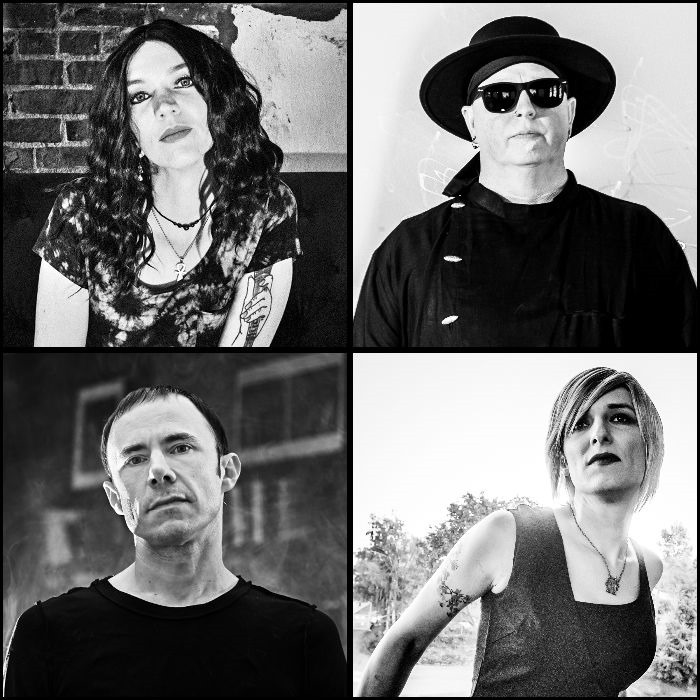
Lifted from their recent AA-approved Slowburn EP, Dissonance have released a lyric video to accompany the Smoke and Mirrors Mix courtesy of James Reyna, aka Melodywhore.
It’s a slowburn indeed, and you can watch it here:
AA

Lifted from their recent AA-approved Slowburn EP, Dissonance have released a lyric video to accompany the Smoke and Mirrors Mix courtesy of James Reyna, aka Melodywhore.
It’s a slowburn indeed, and you can watch it here:
AA
Forged in the fires of the East Coast underground music scene in the 90s, experimental Hip Hop pioneers, Union City, NJ-based duo Dälek has spent decades carving out a unique niche fusing hardcore Hip Hop, noise and a radical approach to sound. Their brutal sonic temperament pushes rap music’s capacity for noise and protest to some exhilarating conclusions.
Following in the footsteps of their predecessors Public Enemy while drawing from influences as varied as My Bloody Valentine and German experimentalists Faust, Dälek have succeeded in adding completely new textural and structural dimensions to rap music.
A visceral and powerful live act, Dälek spent over a decade touring and bringing their raucous and blistering performances to audiences around the world. During this time they toured with and supported a wide range of acts in the Hip Hop, Rock, Metal, and Experimental genres including Flying Lotus, De La Soul, TOOL, The Melvins, Grandmaster Flash, Pharcyde, Fantomas, KRS One and The Bug.
For their latest and eighth album, Precipice, Dälek unleashes a work that is practically bristling with fury and power. Arriving on April 29th via Ipecac Recordings. Predominantly the work of the core duo, Will Brooks, aka MC Dälek and Mike Manteca (Mike Mare), Precipice features a guest appearance of Adam Jones of Tool on one of the album’s tracks. The band has enlisted Paul Romano (Mastodon) for the striking cover art, and the packaging features the art of Mikel Elam.
Today Dälek are sharing a video for the brickyard boom-bap track ‘Decimation (Dis Nation)’ which was directed by Brooks and can be viewed here:
AA
Initiated before the outbreak of COVID-19, the group briefly put Precipice on hold before returning to inject a newer, more dynamic energy into the album’s songs. The result is a timely work, that is teaming with immediacy.
“Precipice was a completely different record pre-pandemic.” MC Dälek explains. “We had been working on the sketch of what the album was going to be at the end of 2019. I think me and (Mike) Manteca had narrowed it down to 17 joints out of the 46 or so that we had started with. Me and Joshua Booth had taken the 17 and really fleshed out the joints. The idea was to bounce them back to Mike and then arrange and write lyrics. 2020 obviously had different plans for everybody. We basically put everything on hold. I ended up doing the MEDITATIONS series that year on my own. I think the catharsis of that project, its rawness, the pandemic, all the death, the social upheaval, everything that went down… when I went back and listened to what we had down… it just wasn’t right anymore, it wasn’t strong enough, it wasn’t heavy enough, it wasn’t angry enough. It just didn’t say what I needed it to say.”
With Precipice, Dälek have once again tapped into the heartbeat of the day and used that energy to create a vital statement about the world we live in. Continuing in the long tradition of revolutionary Hip Hop, Precipice builds new cadences born out of tumultuous times.
After decades of challenging and expanding the sonic fabric of Hip Hop itself, giving way to new approaches and possibilities, Dälek is set to take their rightful place as one of the culture’s true innovators.
AA

Photo Credit: MICHAEL PATRAS
Postpunk-darkwave-electro trio VONAMOR presents their pulsating and enthralling new single ‘You the People’. Recalling the best dark pop of the ‘80s, this is the second taste of their impending debut VONAMOR album, an 8-track collection produced by Lucio Leoni and being released via Time To Kill Records (TTK).
The hypnotic fast-paced videoclip features dystopian imagery depicting the messed-up and borderline world in which we live. The sound weaves together stories of men, power and protest worldwide to sharp dialogue between male and female, voiced in English and Italian. Colours and pounding images mesh with archive footage of clashes between people and power, men and progress, technology and freedom, as flashes of our modern world strike your retina.
“Through our darkwave music and words, we search for the question, the ambiguity, the multiform influence of a variety of demons. We feel the urgency of questioning ourselves, our fellow human beings and the reality around us," says Giulia Bottaro.
“At first it may seem you are watching the videoclip for ‘You the People’, but the more you go on, you may feel that the video itself is watching you – and you are there, at the very intersection between we and you, between past and present, between desire and fear, between sound and colour.”
‘You The People’ underlines VONAMOR’s dialecticism and style, as well as their will to convey originality and sensuality, even when menacing, with passion and intensity. Eternally playing with words and sounds, they never lose sight of the rhythmic, Dyonisian and captivating soul of their electro dark, post-punk vision.
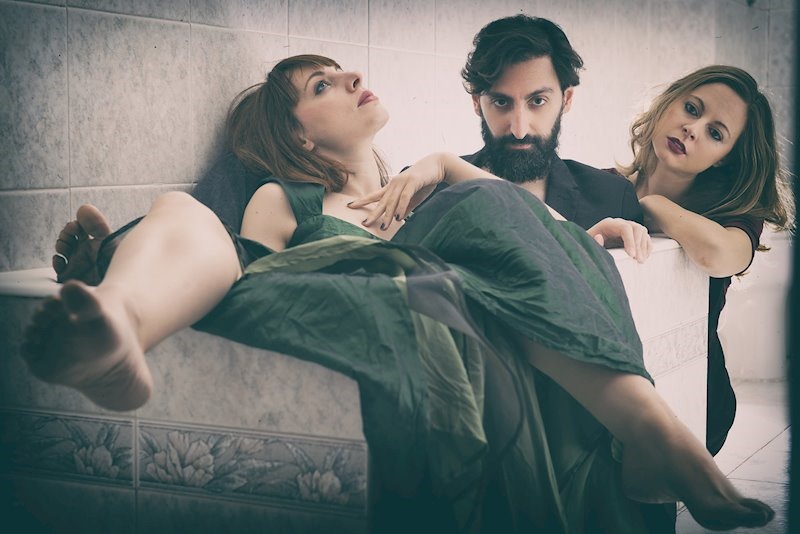
This single follows the lead track ‘Take Your Heart’, which has been met with international acclaim, and its intriguing video, directed and edited by Fabio Santomauro. Last year, the trio released the singles ‘Never Betray Us’ and ‘Fast-Forward Girl’.
VONAMOR is made up of sisters Giulia Bottaro, Francesca Bottaro and Luca Guidobaldi, with Francesco Bassoli and Martino Cappelli joining the trio for live performances. The band’s roots date back to 2016 in Rome. Initially focused on communicating images and composing scores for short films, they morphed into the trio we know today with their style, literary echoes, imperious art-pop and enigmatic aesthetics.
“VONAMOR is an escape plan, our treasure island, a thick and savage jungle that gives you the chance to let your prayers and whispers reverberate like a church. We used the music in this album to walk paths that we hadn’t known before, to connect Rome to Paris to Berlin to Beijing, to mix techno music with folk, to let our voices and bodies mingle and dance to an incredibly weird yet familiar beat, and finally to search for a boom of love and light into the dark of our everyday life: yes, VONAMOR is a boom!” says Luca Guidobaldi.
Watch the video here:
AA

28th January 2022
Christopher Nosnibor
So I’ve been bigging up OMNIBAEL from the outset – not because I’m acquainted – that cuts no ice with me as a critic, and if I don’t dig the music, I’m not going to back it for anything – but because I really rate what they’re doing. And what they’re doing is… well, they’re not entirely sure. OMNIBAEL are on a voyage of discovery, and they’re inviting you – and me – and all of us – along for the ride. They have no idea where it’s headed or where it will end, and that’s a large part of the appeal. So much supposedly ‘experimental’ music is scripted and scored. Rain Soaks the Earth Where They Lie is an experiment within a long-term experiment.
Each release to date has been a document of an evolution, and their debut album roper is no exception. Twittering feedback gives way to ripping riffage that’s distorted to fuck on opener ‘Mind is a Mess’ that’s the gnarliest of black metal melted into the darkest pits of burning torture, a missive from a purgatorial inferno.
I may have written on this album elsewhere, including some abstract liner notes that capture its essence, but I haven’t previously reflected in detail on the listening experience. It’s not pleasant, but it is intense, and it is, in the same way as it is with listening to Uniform, or The Body, a full-on body slam. It’s not easy, it’s not comfortable, and it’s a physical experience – one that’s like taking a kicking from a gang. Drums hammer in like boots reining in on the ribcage, and there’s absolutely no fucking mercy across the album’s nine tracks.
The churning murk of the eight-plus minute ‘Last Days’ is pure Throbbing Gristle, and this is dark, gnarly, nasty. ‘The Repetition’ starts with a mess of overlayed tape loops that’s very much reminiscent of the Burroughs / Gysin tape loops that so influenced Cabaret Voltaire in the early days, and after a moment of crackling electronica that strays into Whitehouse / Merzbow territory, it plunges deep into torturous melting industrial metal, a dingy mess so dark and so charred as to be corrosive to the organs. It ccu88ulminates in punishing screeds of howling feedback atop thunderous percussion that hammers like thunder. There are some deeply fucked-up vocals low-down in the mix, too.
It’s not pleasant, and listening to this breeds tension upon tension, you feel your muscles tense and your head grow tight at the temples and the back of the cranium. If the dank and gloomy ethereal ambience of ‘Rung Keep’ evokes swimming underwater, it equally feels like the soundtrack to drowning slowly, and there really are no breaks on this album: despite its sonic and textural variety, it’s heavy all the way. ‘Sound of the WW2 Story’ may be a brief interlude with some soft ambience akin to the swafting of a jellyfish, but it’s still dense, tense, and oppressive, and offers but two minutes breathing before the thundering punishment of ‘Flowering backwards’, which callas to mind Swans circa 1986 and early Godflesh in dub form. The volume, the power, the force, all combine to create something utterly cruising.
Listening to Rain Soaks the Earth Where They Lie is hard. It’s a brutal nihilism I’ve been craving and welcome unreservedly; it articulates the fact that life is pain. But the pain is without letup. Rain Soaks the Earth Where They Lie is uncomfortable, painful, and very, very necessary.

Brood of Hatred, the Tunisian progressive death-metal project led by multi-instrumentalist Muhammed Mêlki, have just shared a new track from forthcoming third album The Golden Age, which is set for release on February 25th via Gruesome Records.
Listen to ‘The Mask of Death’ here:
The follow-up to 2018’s second album Identity Disorder features 8 songs of heavy, technical, blistering and emotional landscapes, merging death-metal with progressive textures. Regarding the album concept as far as music and lyrics go, as well as the cover art, “The Golden Age is an album of musical and thematic growth. It develops a dark and cold atmosphere with elements of rhythmic play. The artwork reflects a parallel universe of post-apocalyptic revival” says Muhammed Mêlki.

MILDREDA’s sinister video clip ‘Liaisons Dangereuses’ has been selected by the Brussels Independent Film Festival in the short film category "The Rabbit Holes". This category is dedicated to a cinematic rabbit hole of offbeat, weird, wonderful, poetic, surreal, and abstract films. The clip had been created by the Belgian production house Pigeon Eggs and features Belgian actress and model Miss C.
Watch the video here:
AA
Mildreda comment: “The girl in the video played by Miss C symbolises a ‘poisonous muse’, which is what I like to call this type of character”, explains mastermind Jan Dewulf. “In the short film, you will see that the girl evolves from white to black, which illustrates her allegorical shift from ‘good to evil’. Though in fact, she was toxic from the start.”
‘Liaisons Dangereuses’ has been taken from Mildreda’s critically acclaimed physical debut full-length I Was Never Really There.
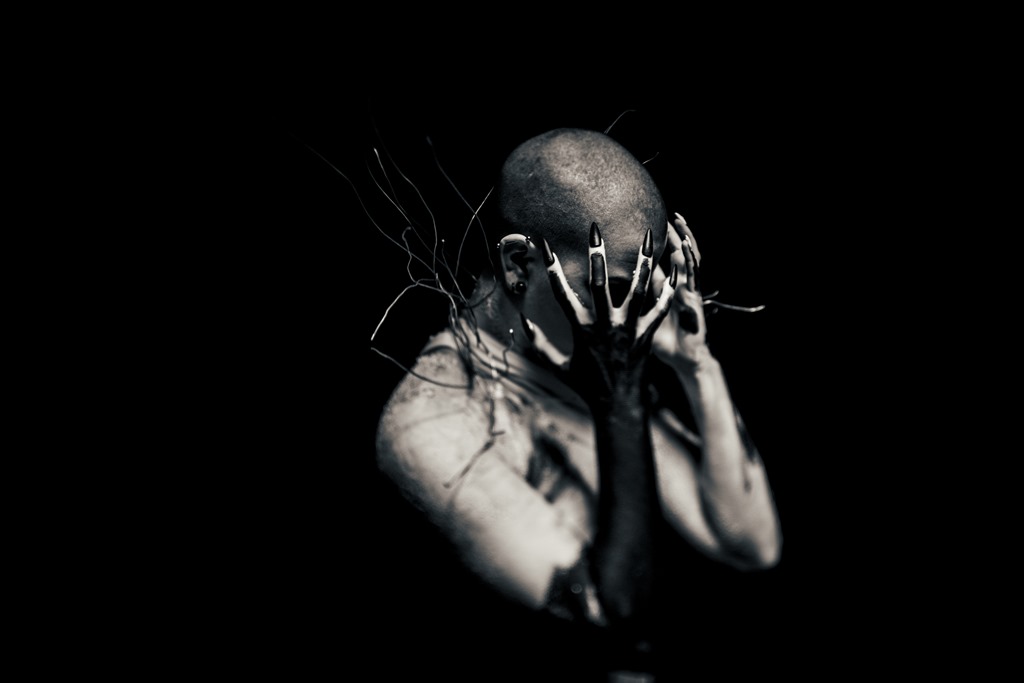
Image: Pieter Clicteur
Metropolis Records – 4 February 2022
Christopher Nosnibor
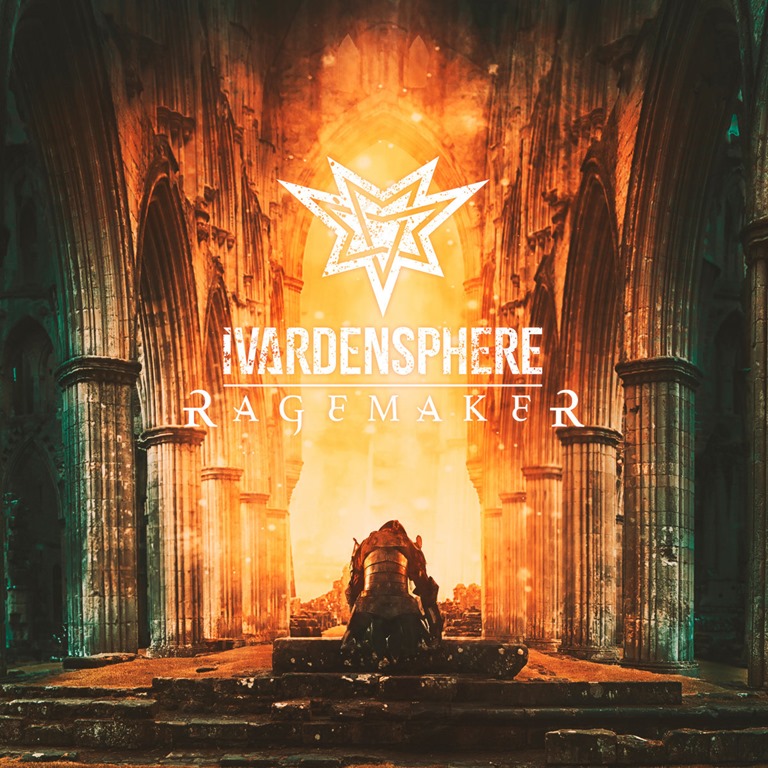
For years, I’ve had the rage. There is, after all plenty in this world, this life, and no doubt beyond, to rage about and against. iVardensphere focus that rage through sound rather than verbally, through an album that articulates darkness and tension through the language of sound.
‘A Whimsical Requiem for the Fey’ is appropriately titled; being a breezy, neoclassical assimilation of light-as-air plucked strings and soft, accessible melody. As such, it does nothing to prepare the listener for the instant plunge into the darkest of depths brough with the growling churn of ‘The Maw’, which features Jesse Thom. But it’s on the title track that the album really hits its stride. Tribal drums dominate a gloomy soundscape, weighted with dense bass tones, but also the portent of soaring vocals. And while the jagged strings add to the tension, the drums simply build and build and batter your very being. This isn’t rage, it’s the unleashing of vengeance via the hammering of the soul.
The individual compositions are each dramatic and powerful in their own right, and the attention not only to the details of the arrangement, but the sequencing of the album stands out, and the ambition is clear without the explanation that this is ‘a sweeping, cinematic album, equally suited as the next evolutionary step of iVardensphere, and as the film score to a post-apocalyptic motion picture.’ It’s dark, stark, and atmospheric, and thunderous rhythms evoke ancient mysticism, and scenes on barren hilltops and sweeping moorlands; tribal rituals, burials, spiritual ceremonies of great import. And there are moments when those rhythms step up, pounding harder and more intensely, so as to be all-encompassing.
As the accompanying notes outline, ‘Traditional percussion from all corners of the world, Taiko, Surdo, djembe, timpani, and more are deftly intermixed with all manner of sourced percussion sounds. Hammers and anvils, slamming doors, even the sound of a dumpster being kicked are sampled and folded into the sonic melange.’ We’re in Neubauten / Test Dept territory here, but there’s a subtlety to so many of the compositions that go beyond these comparisons too: the graceful sweeps of ‘Indomitus’ stray from anything industrial towards progressive / post rock territories, and Seeming’s vocals are almost rock.
The electronic elements are remarkably restrained in the main, with only occasional incursions, such as the bending blasts of bass on ‘Varunastra’ (which features Brittany Bindrim’s vocals); elsewhere, ‘Draconian’ brings the drones, and a low, serrated throbbing. Then, it also brings glitchy danceable beats, which evolve into another crashing assault that batters away relentlessly.
Then there’s the straight-ahead thump ‘n’ grind of ‘Orcus’ and the mournful trudge of ‘The Age of Angels is Over’; these tracks conjure very different atmospheres, but in the way the album unfolds, they develop a sense of significance. If ‘Sisters of the Vipers Womb’, with Brien Hindman’s vocals, seems a little too cliché in its sinister stylings, it sits in the broader context of an expansive and immersive work that has a trajectory through ever-changing moods, and to powerful effect.
AA
Cleopatra Records
Christopher Nosnibor
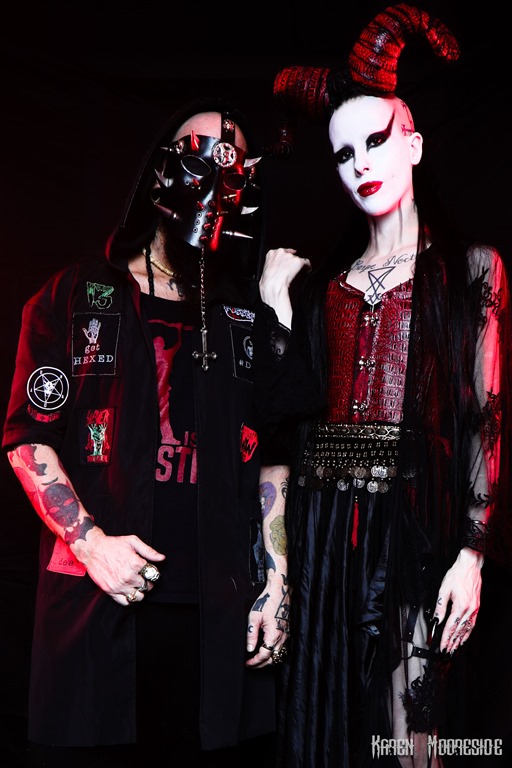
Well, this is pretty fucking intense. Released to promote the duo’s new album, ‘Hear My Call’ is a beast. The verses are queasy, ominous with a hushed, almost strangulated tension. In contrast, the choruses are utterly pulverizing in their weight and density: there’s nothing hushed about them, and the tension is released in a chthonic snarl. The vocal transition is remarkable, as Lilith gears down an octave at least and flicks from anguished to a raging demon spewing toxic flames from the very bowels of hell. The crossover between electronica and black metal is almost schizophrenic, but Luna 13 render it in such a way that it’s perfect, that switch that happens at an imperceptible trigger lands with eye-popping precision, and the video, directed by Vicente Cordero (Stabbing Westward, Filter, 3TEETH) is a magnificent visual reflection of the music.
For a start, there’s splattered gore galore, as Lilith Bathory sloshes around in a bathtub that’s initially brimming with rose petals but before long it’s a streaming splatterfest where said tub is brimming with blood. She twitchily dials the telephone… and it transpires she’s not calling The Samaritans, but instead she connects on a hotline to Satan, and it cuts, and she’s a roaring, horned demon, and to the side, Dr Luna yanks a huge phallic lever that seemingly drives this whole whorl of chaos that’s blackened beyond black, the sound of scorching incineration.
A lot of so-called ‘occult’ and ‘Satanic’ shit is – well, shit – corny, half-baked, a bit laughable, at least to anyone not already invested, and you wonder how people take so many of these bands seriously. Not so Luna 13: this shit is truly terrifying. There’s no denying that some off the elements are perhaps cliché; masks, blood, and so on and so forth, but it’s all in the execution. Sonically, and visually, they’re full-on, and fearsome.
AA
Darkness treads light as a feather. The voice of despair gently wafts through the air. Delicate pain wrapped in radiant beauty pierces the heart slowly yet without hesitation. The sinister yet beguiling images that DARKHER aka Jayn Maiven paints with her ethereal vocals, guitars, and added strings conjure iridescent cinematic scenes in which it becomes hard to tell whether there lies beauty in darkness or if it is the other way around.
With her sophomore full-length "The Buried Storm", the guitarist, composer, lyricist, and producer has clearly succeeded to even improve the beloved alchemic musical formula that was firmly established on DARKHER’s debut album "Realms" in 2016. Her mostly eerie and at times even outright sinister sonic storytelling comes refined on every level and with sharpened contrasts that reflect the ongoing learning-process of their creator.
DARKHER were conceived as the sole brainchild and solo-project of Northern English singer and guitarist Jayn Maiven in 2012. The dark and melancholic yet also massively heavy sound on the self-titled debut EP "Darkher" (2013) combined with the distinct vocals of the shy pre-Raphaelite beauty caused an audible buzz – particularly in the doom scene and brought DARKHER a quick record deal, which led to the following EP "The Kingdom Field" (2014) appearing via Prophecy Productions.
Despite not even having an album out, DARKHER were invited to prestigious festivals such as Roadburn in Tilburg, The Netherlands and Prophecy Fest in the Cave of Balve, where the English delivered widely celebrated performances. In 2016, the highly anticipated debut full-length "Realms" was finally released to much praise from critics and fans alike. Press compared DARKHER’s music with a wide range of highly individual acts such as CHELSEA WOLFE, ESBEN AND THE WITCH, SÓLSTAFIR, LOREENA MCKENNITT, and PORTISHEAD.
In the meantime, Jayn’s long-time drummer Christopher Smith, who already contributed to earlier releases, live shows, and again on "The Buried Storm" has been added as permanent member to the line-up of DARKHER.
"The Buried Storm" gives shape to the darkness lurking at the edge of consciousness, hidden from plain sight but patiently biding its time to strike out at the heart. DARKHER have delivered another frightening masterpiece that easily transcends musical boundaries with its broad appeal to friends of dark sounds regardless of genre. "The Buried Storm" captivates its listeners with deceptive sweetness – only to bind them tightly within a thorn-spiked nocturnal beauty forevermore.
Watch ‘Lowly Weep’ here:
AA
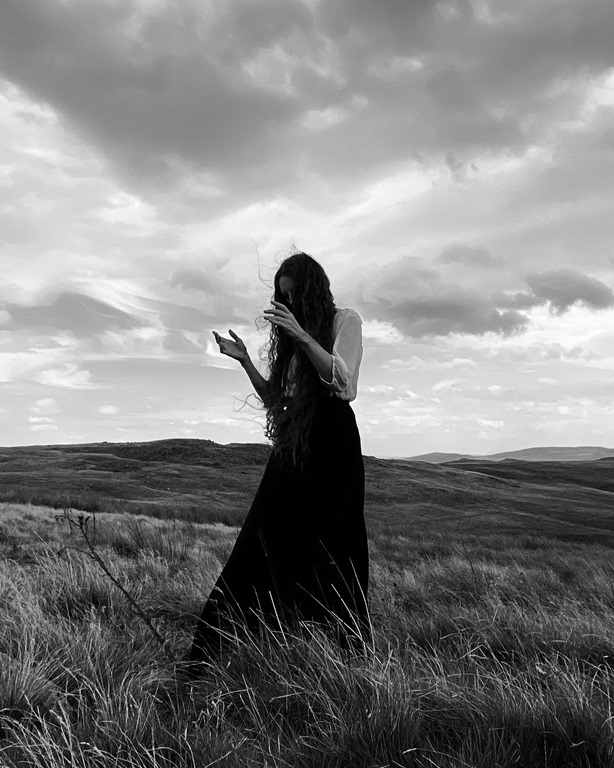
Image: Kathryn Pogue
Oregon-based electronic act, Luscious Apparatus has just unveiled their debut single, ‘Infiltrate.’
‘Infiltrate’ is about domestic violence, the kindness of strangers, and helping someone escape from an abusive relationship. The lyrics were triggered by an article that offered an excruciatingly detailed account of the horrors inflicted upon one of the victims of Brian Warner, aka Marilyn Manson.
The song speaks to the often terrible and destructive power wielded by abusers. It attempts to inspire hope and strength for anyone who has found themselves in an abusive situation and are trying to find their way out of the fog.
Check ‘Infiltrate’ here:
Luscious Apparatus blends cinematic soundscapes, synths, shoegaze textures, and syncopated percussion, to create a sound best described as Electrogaze or Noir Pop. Founded by Jack Norton as a studio project in 2019, the Portland, OR based act evolved during the great plague of the early 2020s with the arrival of Sandi Leeper on vocals. Catherine Hukle, a guitarist from Seattle, moved to Portland, providing the band’s signature walls of sound. Daniel Henderson joined on drums in late 2021. All members are active in writing and producing for LUSCIOUS APPARATUS.
Luscious Apparatus’ roots are spread wide throughout the post-90’s post-punk scenes. They incorporate everything from goth and industrial to indie rock, electronica, and trip-hop. Influences are broad: from Nine Inch Nails to Garbage. Joy Division to Massive Attack. Gary Numan to My Bloody Valentine. Frontline Assembly and Delerium.