Posts Tagged ‘dark’

7th July 2023

Christopher Nosnibor

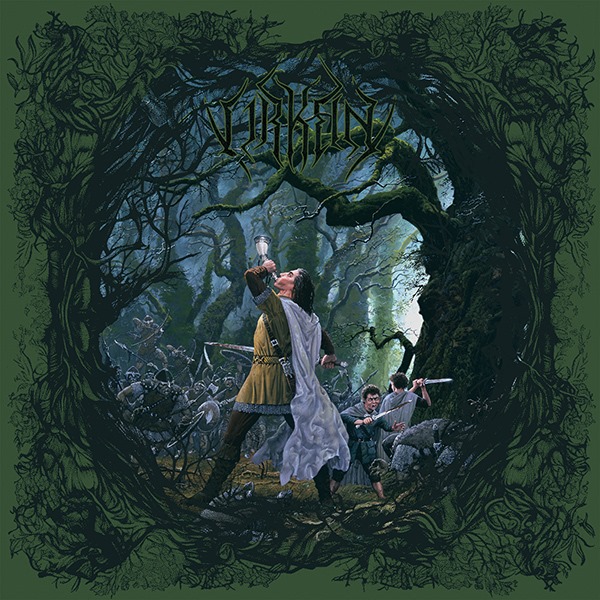
When it comes to band names, metal is one of those genres that has a unique way of throwing out monikers that mean you know it’s a metal band just from the name – unless, of course, you can’t read it because of the unintelligible spiky logo, in which case you absolutely know what to expect without even knowing the name. Indian deathgrind act are a quintessential example. Just look at that cover! It’s all the thorns – and it encapsulates the listening experience perfectly. Yes, it’s sharp, it’s a set of songs that snags and tears at your skin and your psyche.

Fifteen years into their career, Carnal is their third album, and if it sounds like that’s perhaps slow progress, the eight brutal cuts on here suggest that the time goes into compressing everything down to its tightest, densest form, honing it to the point at which its mass and velocity is absolutely optimal.

With the exception of the six-minute epic closer and the forty-one second blast of mid-album track ‘Insidious’, the songs range between around three-and-a-half and four minutes – and they pack everything into these compact sonic slabs. They don’t do fiddly, twiddly stuff, and there are no squealy notes or solos, apart from on ‘Bodysnatcher’ where they work -and wank – all the frets in a frenzy: this is music which sounds like it’s the output of a car-crusher – compacted, mangled, brutally fucked and as dense and weighty as it gets.

The album’s themes are clear from the song titles, with opener ‘Son of Sam’ setting the tone, ahead of ‘Bind Torture Kill’, ‘Body Snatcher’, and ‘Alter of Putridity’, which, like the font and everything else, pretty much speak for themselves. They’re well into their serial killer shit, but as I observed just the other day, this stuff is mainstream now. Pouring over mass murder and serial killing is no longer the domain of trenchcoat-wearing loners who aspire to wreak their own revenge on this cruel world; it’s David Tennent on ITV scoring eleven million viewers per episode.

That doesn’t mean that this kind of brutal tempestuous racket is mainstream, but people can no longer judge the work of a band like Gutlsit as sick or perverse when their subject matter is primetime. We’re all murder junkies.

‘The Killing Joke’ opens with a sample from an interview with notorious sadistic serial killer John Wayne Gacey (who makes Son of Sam with his seven victims look like a mere hobbyist), saying ‘The dead won’t bother you. It’s the living you gotta worry about’. Gracey may have been somewhat flippant in his remarks, but he had something of a point.

Gutslit sound neither dead nor living, their grating attacks sounding more like the undead on EST, a least vocally, and they go all out to deliver punishing intensity on a satanic level. It’s a churning mass of guitars that grinds at your guts as beats blast so fast as to blur to a flickering rattling sound rather than form an overtly structured rhythm. The obligatory guttural vocals growl and snarl, switching between styles fast and often between growl and barks, coughs and vomiting streams of vowels. It’s frenzied, demonic, furious. It sounds murderous, it sounds brutal, disturbed and disturbing.

‘Primeval’ is slow in terms of chords, but countered by a thunderous rush of beats, which renders it disorientating, harsh, and high on impact, and as a whole Carnal is pretty nasty – just as intended.

AA

407112

German synthpop artist, Meersein has introduced their new single, ‘Haunting’;  a hauntingly beautiful song with a ghostly melody that lingers in the atmosphere.
Meersein sings about the memories of a love that is impossible to forget. The chorus is an earworm that will stick with you long after the song is over, capturing the feeling of being trapped in a love that taunts and lures you in, with nowhere to hide.

‘Haunting’ is a must-listen for anyone who has ever been haunted by a love that just won’t let go.

Watch the video here:

AA

The nostalgic sound of the 80s returns with a modern twist. The solo artist Meersein presents a Depeche Mode aesthetic with unique, contemporary elements. His debut single "Speechless" was released in June 2022, but he has been establishing himself on the darkwave scene since October 2021.

With his own radio show and new music reviews, he has established his channel as the ultimate darkwave resource.

This multidimensional artist is not only an experienced musician and dynamic live performer, but also a passionate new wave enthusiast. His infectious passion for multiple aspects of music is evident in his releases. 

321409

13th June 2023

Christopher Nosnibor

This. It’s a statement in itself. It’s simple, direct, to the point. It might indicate the image of a finger pointing down at the thing in question, like some kind of cartoon graphic or meme in the making – but there’s no need for it, or anything else. ‘This’ requires no qualification: it simply is. Self-contained. Precise. And this… well, this is 13x

It’s been a while since we last heard from ‘Multi instrumentalist transgirl’ 13x, who melted our brains good and proper in 2019 with antiscene. And it’s been a while because reasons, as the notes which accompany This outline: ‘Recorded over a 3 year period, this difficult release was made at the start of lockdown, and remained unfinished until now. Dealing with topics such as racism, transphobia, disingenuine people, the Government, abuse, loss and isolation, it goes from manic, crushing noize to quieter, more sombre tracks.’

Many, even most, of us, have endured some truly awful times these last three years, but it’s fair to say that some have endured more and worse shit than others. This is a document of some of the aforementioned shit of the notes, and the track titles encapsulate the mood and / or sentiment pretty neatly.

The first track, ‘TERFkilla’ is largely sparse and minimal in terms of both sound and arrangement, as a dissonant synth bleeps over a stuttering beat and low, droney bass. But shrill noise breaks over the top and the anger crackles within the cloud of abrasive noise. ‘fukt’ is, well, fukt, a sprawling mess of grinding synths and scratches, and some murky snippets of vocals with something of a hip-hop feel, and they sound sampled but appear to not be. They’re so cut and mangled, that when twisting and stammering against a backdrop of a shuffling drum loop and some low-end distortion it’s hard to know what the hell is going on – and it works.

There are plenty of samples woven into the fabric of This, and from an eclectic range of sources, ranging from Nirvana to a 60s interview with a catatonic schizophrenic, via a BLM interview after George Floyd was brutally murdered and Kate Winslett from Eternal Sunshine Of The Spotless Mind.

‘Fucking cunts’ is the looped refrain from the stomping aggrotech beast that is ‘Cistem Error vx.02’ – the most accessible and danceable track on the album, and simultaneously the most hard-hitting, while ‘brOkEnhEddz’ encapsulates the entirety of the album in just five minutes. Warped, woozy, it’s fractured and dark, whirring electronics and stuttering beats – but it builds and finds a groove, and from the chaos emerges something magnificent, an expansive, driving slab of dark synth pop.

I still find it unfathomable that we live in a world where vast swathes of society proclaim themselves to be anti-woke: if you’re anti-woke, you’re expressly pro-racist, pro-misogynist, pro-homophobic, pro-abuse, pro-anything that’s cunty. But then, we live in a world where vast swathes of people subscribe to Donald Trump’s view that ‘antifa’ is the enemy. But if you’re anti-antifa, you’re expressly pro-fa. There is something gravely wrong with this picture. ‘Truth Against Fascism’ and ‘The System Is Wrong (For George)’ are in effect a diptych of thematically-linked compositions. The former is a bleak mid-tempo trudge through mangled circuitry that reminds of the synapse-twisting impossibility of engaging in meaningful, rational discussion with right-wing shits who harp on about ‘stopping the boats’ and so on, while the latter has a gentler, more contemplative tone, laced with a wistful melancholy.

It’s this melancholy, expanded deeper into an aching sadness, which drapes itself all over both ‘Neeko’ and the album’s final track, the twelve-and-a-half-minute ‘Wintercutz’. I’m reminded vaguely of The Cure’s ‘Carnage Visors’ soundtrack from 1981, perhaps primarily because of the rolling drums of ‘Neeko’ and the expansive atmosphere which permeates both pieces. But there’s something special here: you can almost taste the nostalgia, and after the aggressive, angry start, there’s a sense that by the end of This, there is some sense of peace, acceptance, and a looking to the horizon in the hope of… something.

There’s often a significant disparity between the lived experience and its articulation in any medium: such is our wiring that even the most accomplished and attuned artists spend lifetimes striving to find the method that best suits them in their quest to convey what’s in their head to an audience who exists outside of their head. Sometimes, it’s not even about the audience: sometimes, the creation of art is a process by which to make sense of and deal with all of it. By purging the shit from the mind into something constructive and creative, however unappealing it may be to the masses, and there’s a strong sense that This is as much about purging and process as it is about communicating. But what This achieves is, in fact, both. This speaks without words, and says much, while at the same time, leaving substantial room for the listener to pour their own experience and frames of reference into the shifting sonic spaces. Over the course of ten pieces, This achieves a considerable amount: This has range. And This, while drawing on a host of elements from different places, sounds quite unlike anything else. This is This.

AA

a4153800615_10

Their debut extended-play release, the ‘PLAYTEST’ EP finds the Yorkshire noiseniks delivering 5 tracks of ferocious, Doomsday-baiting post-punk ripe for our times. From the cataclysmic Dune-inspired ‘Spice King’, to the slithering gothic-rock stylings of ‘Wee Van Bee’, or the intense industrial clamour of ‘Smother’; the band make their mark with a dark, brooding collection of songs that meld the gothic and euphoric with invigorating results.

Opening this Pandora’s box is the pulse-quickening ‘Fractured’, which is also out now. A song about dual-identities and the dawning realisation of deception when it’s been staring you in the face, lead vocalist Jamie explains of the track: “’Fractured’ channels the complicated relationship of having a double-life paraded right in front of your eyes, understanding its insidiousness but ultimately fearing the fire of confrontation.”

Listen here:

AA

FF

Young God Records – 23rd June 2023

Christopher Nosnibor

Swans are back – again. This is no surprise: they released – as has become standard form – a limited edition demos CD, Is There Really A Mind? through the website as a fundraiser to pay for the album’s recording and release. All ten of the songs which appeared there have made it to the finished album, but, more often than not, in aa rather different form. Unusually, though, the bare-bones demos didn’t all start life as brief acoustic sketches which expanded to twenty-minute sprawlers exploding with extended crescendos: the shapes of the songs were realised early on, and in several cases, the final versions are actually shorter than the drafts. And while Gira hinted at a seismic shift following the gargantuan blow-out of The Glowing Man, heralding the arrival of a new era with Leaving Meaning – and it’s true that the shape of the band has been very different, not least of all with mainstay Norman Westberg and Thor Harris both stepping back to being contributors rather than a core members, Kristof Hahn remains – Swans remains very much ultimately Gira’s vehicle. And so it is that for all of the changes, The Beggar is clearly very much a Swans album, and sits comfortably in the domain of their body of work.

There does very much seem to be an arc when it comes to Swans releases, rather than any rapid shifts, particularly since their 2010 comeback, My Father Will Guide Me up a Rope to the Sky, whereby the songs grew incrementally longer and more sprawling and the crescendos more drawn out, fewer, and further apart. And so it is that The Beggar follows the more minimal sound of Leaving Meaning, and, like its predecessor, it’s a comparatively succinct statement, at least by Swans standards in the last decade – at least, discounting ‘The Beggar Lover (Three)’, an album-length track which is absent from the album, and occupies the majority of disc two on the CD. This track is, in some ways, contentious: does it even belong on the album, or should it have been released as a standalone work? The album minus ‘The Beggar Lover (Three)’ is still an expansive work, but has a certain flow and sense of existing as a cohesive document. And so it feels like there are almost two different albums here:

As the album’s ‘taster’ tune, the twitchy, trippy, eternally-undulating ‘Paradise is Mine’ indicated, Gira’s compositions on The Beggar are constructed around heavy repetition. This is to be expected: it’s been Gira’s style since day one. The first song, ‘The Parasite’, strips right back to nothing around the mid-point to find Gira acappella, imploring ‘come to me, feed on me’ in a menacing low-throated rasp. And as Gira questions ‘is there really a mind?’ in the psychedelic droning loops of ‘Paradise is Mine’ the tension increases and you start to feel dizzy. and perhaps a little nauseous. This pit-of-the-stomach churn is something that Swans have long been masters of, although quite how it manifests has changed over time: back in the days of Filth, Cop, and Greed, it was sheer force. More recently, it was woozy, nagging repetitions that lurch like a boat on a bobbing tide.

‘Los Angeles: City of Death’ returns to the style and form of The Great Annihilator – a three-minutes hard-punching gloom folk song. After the previous incarnation’s ever-longer workouts, it’s an absolute revelation, and a joy to be reminded that despite the work of the last decade or so, Gira can still write tight songs that you can actually get a grip on and really get into. ‘Unforming’ is a soft country drone, which finds Gira crooning cavernously over slide guitar, and it’s reminiscent of some of the more tranquil moments of Children of God.

‘I’m a shithead unforgiven… I’m an insect in your bedclothes…’ Gira drones on the ten-minute title track. For all of the artistic progress and evolution over the decades, Gira is still chained to the tropes of self-loathing and the darkest, most self-destructive introspection, and this is dolorous, doomy, and bleak …and then about four minutes in, the drums crash in and the sound thickens and they plug into one of those nagging grooves that simply immerses you and carries you upwards on a surge of sound. ‘My love for you will never end’, Gira moans, ever the subjugate, before the vocals conclude with an anguished, wordless strangled gargle as the riff kicks back in and swells to a monumental scale seemingly from nowhere.

‘No More of This’ is mellow and almost uplifting, both sonically and in its message – at least until near the end, when Gira reels off a list of farewells, and as much as ‘Ebbing’ seems to be about drowning, it’s a sliver of sunny-sounding psychedelic folk. And then ‘The Memorious’ hits that dizzying swirl of repetition that feels like a kind of torture. It’s hard to really articulate just how there can be music that makes you want to puke because it’s so woozy, wibbly. It’s the sonic equivalent of watching Performance. You don’t need to take a trip to take a trip.

‘The Beggar Lover (Three)’ represents a massive detour that does and doesn’t sit within the flow of the album. It’s either the penultimate track, or an appendix, depending the format of your choice. However you approach it, this is drone on an epic scale. Five minutes into ‘The Beggar Lover (Three)’, which starts out a trickle, with a robotic female spoken word narrative, everything just goes off – mostly drums, but also noise. When this tapers away, we’re left with the sound of sirens, ominous drones, and then after some hypnotic droning, there’s another monster surge, a nagging guitar motif riding atop a thumping beat and heavy swell of drone. It soon crackles into a grand wheeze of electronica, And a detonating wall of noise, and at the end, it all collapses. Around the eighteen-minute mark it really hits a heavy groove and blows you away.

The Beggar is certainly not the kind of heavy of Swans early releases, but it’s still heavy. It may not possess the sledgehammer force of the original. It’s beyond strong.

Once again, Swans have produced an album that’s more than an album, more than anything.

AA

a3082583285_10

Dependent Records – 2nd June 2023

Christopher Nosnibor

Now in their twenty-seventh year, Girls Under Glass return after an extended break – of some seventeen years – with a new album that wasn’t wholly planned. As the bio notes, explain, when they started composing some new tracks for an EP to round off a planned boxset of their complete works, ‘The fire reignited and songs kept coming… [they] understood that their batteries had recharged to bursting point after a 17-year break and the projected EP turned into a full-length.

The trouble with being forerunners and progenitors is that time catches up. What was innovative at one time becomes assimilated, absorbed: ‘influential’ becomes commonplace, however much you keep moving. And while Backdraft shows that Girls Under Glass have progressed, it also shows how external elements have, too – even within the spheres of post-punk and goth, which on the face of things, haven’t evolved all that much. Emerging bands are still emulating The Cure and The Sisters of mercy circa 1985, and oftentimes if feels as if these are genres locked in time – but then, the same is also true of punk, and contemporary grunge acts.

At least Girls Under Glass can lay justified claim to being there at the time and laying the foundation stones for the sound that endures over thirty years on, and they’re fully accepting that this new outing draws on the sound and sensations of their previously active years in the 80s and 90s. ‘Night Kiss’ brings all the synth-goth vibes where early New Order and third-wave goth acts like Suspiria meet, but there’s much to chew on across the ten songs on Backdraft. ‘Tainted’ – which features Mortiis on guest vocals – has a more industrial feel – but that’s industrial in the way that Rosetta Stone drew on Nine Inch Nails for Tyranny of Inaction than Ministry. It’s got grit and magnetic bubbling synths and some hard grooves, but the aggression is fairly restrained.

Single cut ‘We Feel Alright’ has a vintage vibe and sits in the bracket of ‘uplifting goth’ – it may not bee recognised as a thing, but it sure is, and propelled by a pumping disco beat, it’s one of those songs that brims with an energy that makes you want to raise your arms and your face to the sky as you’re carried away on the driving rhythm and expansive synths and guitars.

The six-minute ‘No Hope No Fear’ blissfully ventures into Disintegration-era Cure stylings, with a bold, cinematic approach, while ‘Everything Will Die’ is a quintessential slab of Numanesque electrogoth It’s uptempo, even poppy, but it’s dark, and if the Hi-NRG pumping of ‘Endless Nights’ is a shade cliché, but they redeem the dip with the sparse six-minute ‘Heart on Fire’ with its sepulchral synths, before erupting into an epic climax that’s like a shoegaze / synthwave take of Fields of the Nephilim.

Ultimately, Backdraft is a solid album: its roots are deeply retro, and it’s not one hundred percent hit, but it’s a solid addition to the catalogue of a band whose longevity speaks for itself.

AA

077216

Prague-based gothic rock band, Cathedral In Flames presents their new single, ‘Release The Pain’ – a hypnotic ballad about coping with pain and death. Gatsby’s throbbing bass and Ambra’s angelic vocals complement Phil’s vocals about the contemporary unlearning of the perception of death and pain through social media.

Vocalist, Phil Lee Fall says,  “When the song was written, I was having a pretty bad time. I was taking long night walks through old Prague and I realized that all the people I meet are going to die sooner or later.”

And Gatsby adds: “’Release The Pain’ is a catharsis for our whole band. For me, there is so much emotion in this song that if it doesn’t knock you on your back, nothing will.”

A narrative music video was also created for the track, showing the band in the abandoned magical corners of Rudolphine’s Prague combined with the mystical hills above the contemporary city. Both sceneries are connected in the image and lyrics of the number 9 in various forms. 9 is the number of fulfilment, closure and completion. It also symbolizes the coming of age and the connection between dimensions and worlds on all levels.

Watch the video here:

AA

23ee6bd8-12b8-f634-756f-7ddb327adcb2

Ipecac Recordings – 28th April 2023

Christopher Nosnibor

As their bio explains most succinctly, ‘Spotlights occupy the space between a push-and-pull of jarring metallic catharsis and sweeping distortion. Even as either side vies for supremacy, neither extreme ever completely tightens its grip, allowing waves of melodic vocals and expressive sonic sorcery to breathe in the middle. This deft balancing act has enabled the trio—husband-and-wife Mario Quintero [guitar, vocals, keys] and Sarah Quintero [bass, vocals] joined by Chris Enriquez [drums]—to carve a singular lane. Armed with an uncanny ability to wield darkness or light, the trio’s fourth full-length offering, Alchemy for the Dead [Ipecac Recordings], finds them exploring something we all face, yet few embrace…’

Expanding on this, Mario explains the album’s overarching theme, which the title alludes to: “One of the major parts of our lives, is the fact we’re all going to die,” he says “Most people are terrified of it, some people learn to look forward to it, and some see it as a way out of their misery. Various cultures view it differently. There isn’t necessarily a story to the album as a whole, but each song deals with the theme of death. It could be fantasy such as bringing a loved one back to life or darker moments like suicide and deep depression.”

It’s a fact that, at least in Western culture, death remains perhaps the last taboo, something of which even the dying tend not to talk about, not properly.

It was back in 2018 that I first encountered Spotlights: their cover of ‘Faith’ by The Cure from their Hanging by Faith EP was an instant grab. This was a band that really ‘got’ the atmospherics of the track and captured the essence of what, for many, myself included, remains as an untouchable trilogy of albums, 17 Seconds, Faith, and Pornography.

Alchemy For The Dead doesn’t sound like any Cure album specifically, but still takes cues in terms of weighty atmosphere. Following a gentle introduction that borders on dark synth pop, it’s not long before the blasting power chords crash in, thick and dark and heavy. And the thick, processed bass on ‘Sunset Burial’ blends with a rippling guitar that’s richly evocative and reminiscent of Oceansise at their best. But when they break into monolithic crescendos of distortion, I’m reminded more of the likes of Amenra, of BIG ¦ BRAVE.

There are some extravagant guitar breaks, but somehow, they’re as forgivable as the more processed prog passages, which in the hands of any other band would likely sound pretentious: Spotlights sound emotionally engaged and sincere without pomp or excessive theatricality: this isn’t something that’s easy to define, not least of all because it’s such a fine line when weighing up musical that’s so reliant on technical proficiency and very much ‘produced’. And the production is very much integral here: the arrangements require this level of separation and clarity. But this is where it’s important to distinguish between production and overproduction, and it’s testament to Mario’s skills at the desk that he’s realised the band’s vision so well. The bass really dominates the sound, which is so thick, rich, and textured, and also explores a broad dynamic range: the quiet passages are delicate, the loud ones as explosive as a detonation at a quarry.

Similarly while the songs tend to stretch beyond the five-minute mark, there’s nothing that feels indulgent or overlong here. ‘Repeat the Silence’ builds on a simple repeated sequence almost reminiscent of Swans’ compositions, but thunders into a bold, grungy chorus that’s more Soundgarden.

The album’s shortest song, the three-and-a-half-minute ‘Ballad in the Mirror’ is also the most overtly commercial, a straight-up quiet/loud grunge blast, and the riffage is colossal.

‘Crawling Towards the Light’ marries monster riffage with Joy Division-esque synths, and somewhere between Movement-era New Order and Smashing Pumpkins, but rendered distinctive by the propulsive drumming which drives the track which builds to a roaring climax.

The seven-minute title track is sparse and suffocating. It has a nostalgic quality that’s hard to define, and it’s perhaps something that’s only likely to punch the gut of nineties teens in this specific way, but it’s understated and emotive, and then the guitars crash in and it’s fucking immense and… well, what a way to conclude an album.

Alchemy For The Dead is a huge work, an album that draws its own parameters and digs new trenches around genre definitions before bulldozing them to the ground with riffs. Complex, detailed, and unique, Alchemy For The Dead is something special.

AA

SPOTLIGHTS_AFTD_LP FULL.png

Kranky – 7th April 2023

Christopher Nosnibor

I had been warned. A fellow reviewer who received this before me had said that this album had made him feel ‘unwell’. It was a compliment, of course. This comes as little surprise: Tim Hecker is an artist capable of creating the most intense and all-encompassing experiences, and while the live performance I attended in 2014 may not have made me feel ill, it did make me feel pretty weird, detached, disorientated. As the only artist I have ever known to use more smoke than The Sisters of Mercy and Sunn O))) combined, filling the room to the extent that it was impossible see your own hand in front of your face, let alone the person next to you, Hecker made me feel uncomfortable, and in some way a little scared in a claustrophobic way.

I’ve had a few records which have had a physical effect on me: listening to PJ Harvey’s Rid of Me for the first time with a brutal hangover is one standout experience, its raw and up-front lurching guitars punching my head and stomach simultaneously with puke-inducing results which went far beyond the post-booze discomfort. Because listening to music is not a passive activity, and as well as requiring focus, it would seem also degree of compassion – you feel its force physically as well as psychologically.

The notes which accompany Tim Hecker’s latest album are bold, to say the least, describing the Canadian composer as ‘a beacon of unease against the deluge of false positive capitalist ambient currently in vogue’ and continues, ‘Whether taken as warning or promise, No Highs delivers – this is music of austerity and ambiguity, purgatorial and seasick. A jagged anti-relaxant for our medicated age, rough-hewn and undefined.’

Clearly, this is exactly what I need, having felt tense and on edge, unable to catch my breath properly for several days now. If the album’s title sets the initial expectation, the track titles reinforce the album’s mood: ‘Monotony’; Pulse Depression’; ‘Anxiety’; ‘In Your Mind’; ‘Total Garbage’ – all the shades of dark, of bleak, of miserable, of self-questioning, panic.

The aforementioned ‘Monotony’ pings a single note back and forth for almost eight and a half minutes. Drones build sonorously behind it and swarm the mind as the volume grows and then shrinks again, and the buzzing and extranea become siren-like. And so, there is movement behind the tedious repetition, but it’s tense and unsettling. Moments of levity which appear to suggest tranquillity is within reach prove to offer nothing but false hope as we’re soon plunged into the gloaming, or otherwise into glitchy, lurching passages of unease. Soft sounds which ought to be mellow and soothing are rendered uncomfortable, or mournful, or both.

‘Lotus Light’ initially intimates a Krautrock pulsation, but some bending frequencies and melting notes swiftly take this trip on a rapid descent. If the lotus flower is supposed to signify rebirth and enlightenment, then this is one which is wilting, poisoned, and if eating the lotus is supposed to provide a conduit to pleasure, this is the soundtrack to picking the wrong plant, as everything rushes forward too fast and you’re not in control. You don’t feel right: you feel drugged, delirious.

‘In Your Mind’ picks and stabs away with tempo changes galore, surging and sweeping this way and that, echoing reverberations around the cranial cavities before booming stabs of synth blast through the drifting haze, before ‘Monotony II’ returns like a waking memory of a traumatic dream from the night before. The trilling saxophone does nothing to calm the mind or the mood. And over the course of more than eight minutes, ‘Anxiety’ recreates the experience if that increasing heartrate and the clenching of every muscle perfectly. That is to say, it’s brilliant, and also brilliantly difficult, and potentially triggering to some. The flickering, fluttering electronic throbs are practically Jean Michelle Jarre reimagined as a fibrillation.

No Highs is a difficult album, but how difficult depends on our headspace: from a certain perspective, it’s a cinematic electronic set, but from various others it’s the soundtrack to being unable to settle, to relentless tension, to jitters and fretting, and worse. The notes oscillate and you clench; sudden spurts of sound burst and you jump momentarily., before ‘Sense Suppression’ pulls you down, slowly, into a sea of sound, before the album drifts away to nothing on the drifting tides of ‘Living Spa Water’.

No Highs is sad and dark and deeply affecting, and not necessarily in the ways you’d expect. Listen and share the suffering.

AA

a2157297652_10

17th March 2023

Christopher Nosnibor

This new EP from the bleakly-monikered The Funeral March is described as offering five tracks which ‘whisper of dreams, murmur of despair, cry out in madness, and reflect on hope and loss’, inspired by the Greek queen of the Underworld, Persephone, reflecting on the ‘transition between death and rebirth’.

We’re deep into the realms of heavy concept here, and such weighty topics warrant weighty music. The Funeral March certainly do themselves and their subject matter justice here.

It begins with pounding percussion and heavily effects-laden bass and guitars. I’m instantly reminded of Pornography-era Cure. It’s dense, heavy, intense. Hell, the first time I heard that album I could hardly breathe. It’s liked having your ribs stood on. The first time I heard music so suffocating was on being passed a tape of The Sisters of Mercy’s First and Last and Always and I was still indifferent to The Cure. It was Pornography that really hit me.

It’s that seem that The Funeral March are mining here. With that tumultuous drumming paired with a thick, thunderous bass, and the dark, murky theatricality of early Christian Death – completed with a dark and dirty production that sits between early 80s goth demo and black metal dirt – it’s a compelling and intense listening experience, with ‘Two As One’ proving particularly hellish in its claustrophobic density and ‘Kiss Me’ channelling the synth drone of ‘A Strange Day’ and doomy atmospheric of ‘Siamese Twins’.

The atmospheric ‘Nite Nite’ brings synths to the fore over the trebly mesh of guitar, providing variety of tone and texture not to mention a classic 80s feel, and drenched in reverb, J. Whiteaker’s vocals sound lost as if trapped between two worlds.

The final track, ‘Wasted Moon’, is again driven by a supremely thick bass and trudging beat that echoes beneath the murk. Whiteaker sounds desperate and anguished and you feel the pangs of panic rising.

Listening to Persephone is like being wrapped in a carpet and tossed in a car boot to be buried – not that I have first-hand experience of this, but it’s how I imagine the experience – and that sense of panic and entrapment, of feeling lost and alone is palpable, is real. It leaves you feeling tense, and hollowed out, emotionally drained. Powerful music isn’t about making you feel good, it’s about making you feel. Persephone is powerful and drives straight to the heart.

AA

357743