Posts Tagged ‘Cut-Ups’

3rd October 2025

Christopher Nosnibor

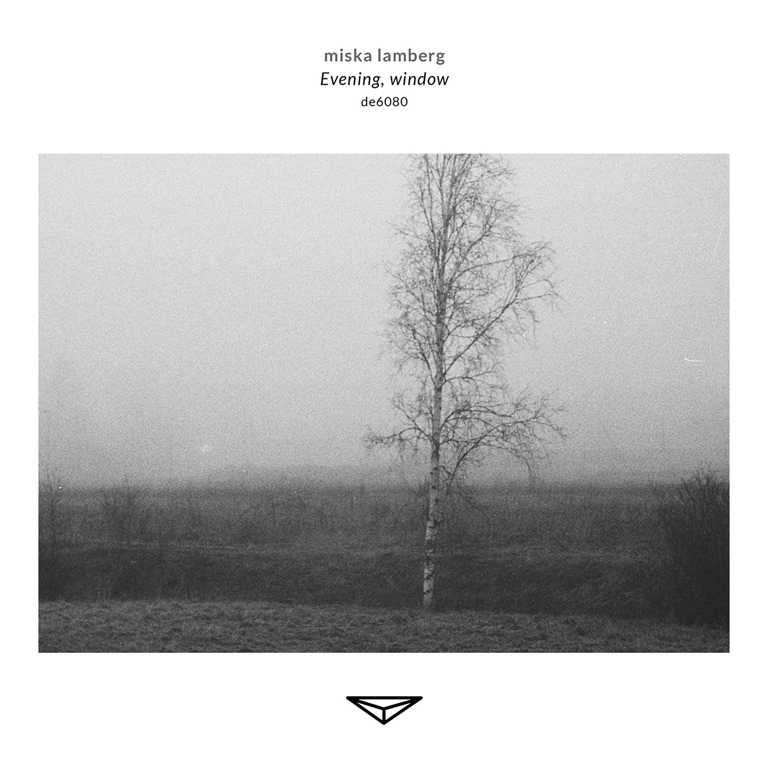
Foldhead has been quiet on the output front of late, after something of a purple patch around lockdown, there was a lull, broken by Mirfield Pads in 2022, with only the ‘Single’ release with …(something) ruined since, and a live outing or two. This is the only kind of quiet you’ll get from Foldhead, mind you: the Yorkshire maker of mangled noise likes to turn it up and blast the frequencies – and tones.

If Mirfield Pads ventured towards mellower, more Tangerine Dream-like electronica, Paris Braille sees a return to the harsher territories more frequently wandered by Foldhead.

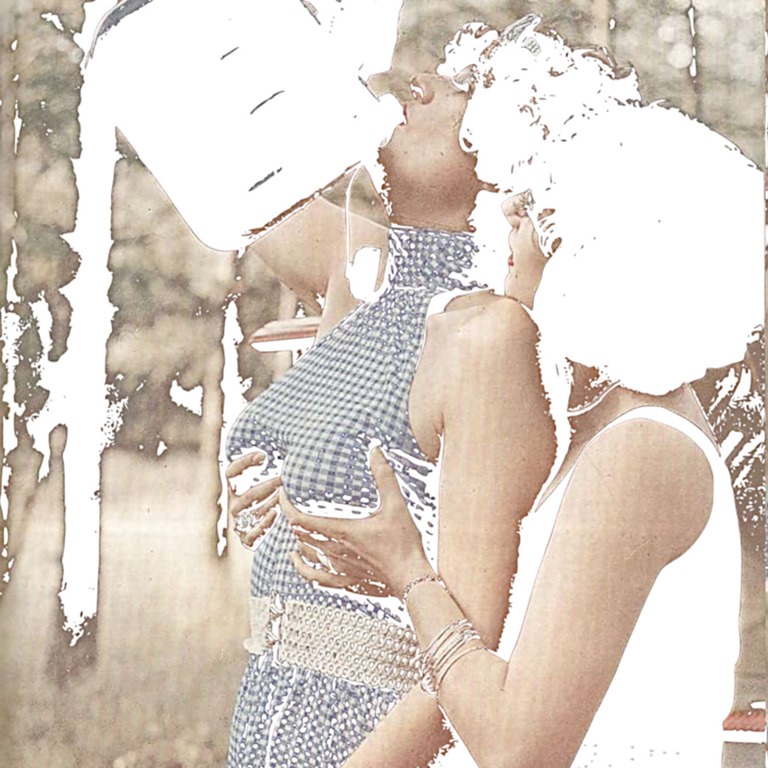
Paris Braille – the title likely a reference to two cut-up novels by the late Carl Weissner (who not only appeared in some collaborative / split works with Burroughs, including the seminal pamphlet So Who Owns Death TV?, but translated many of his novels for the German market), namely The Braille Film and Death in Paris – is a typically abrasive affair, with the title track being a nine-minute loop of noise which captures of the essence of the ‘derangement of the senses’ Brion Gysin strove to achieve with his multi-sensory performance pieces which extended the concept of the cut-ups to its logical extreme. The thunderous beat, when surrounded by and endless loop, becomes almost trance-like and strangely euphoric. It’s difficult to discern precisely what’s in the mix here: there may be voices, or it may simply be a tricky of the human ear – my human ear – in its quest to seek recognisable forms amidst the formless sonic churn, in the same way one finds the shapes of animals and faces in clouds. In the right context, say, as a remix on a Cabaret Voltaire EP (where it would be right at home, and the William Burroughs / cut-up connection is again relevant here), this would be hailed as an industrial dancefloor stomper – largely because that’s what it is. Intense, hypnotic, relentless, it’s a pulsating, shifting noise beast that slowly spins off its axis and out of control in a swelling surge of sound.

‘CW Loop’ unashamedly harks back to the tape experiments of Burroughs and Gysin from the late 50s and early 60s, which in turn were a huge influence in Throbbing Gristle, and in particular Genesis P-Orridge, who released a selection of archival recordings on the Nothing Here Now But the Recordings LP on Industrial Records in 1980. It is, quite simply, short vocal sample, heavily bathed in echo, looped, and overlayed with a churn of undulating noise.

The third and final track, ‘Film Death’ – the title echoing and mirroring that of the first – round the set off with a return to the thunderous, beat-driven sound of ‘Paris Braille’, this time with a squall of shrill feedback and full-spectrum static. The result is akin to Throbbing Gristle covering Matal Machine Music. In the world of Foldhead, this is absolutely mission accomplished.

AA

a3884873763_10

Bearsuit Records – 5th September 2025

Christopher Nosnibor

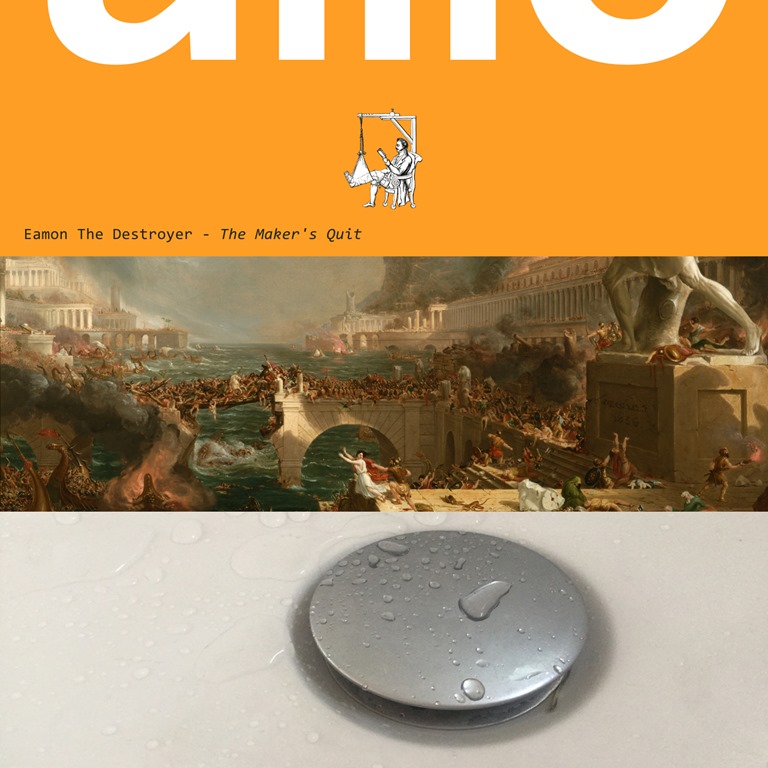
The thing with Eamon the Destroyer is that you never know what you’re going to get. The Maker’s Quit is different again from We’ll Be Piranhas, which in turn was quite unlike Small Blue Car (which remains a personal favourite, even if it does make me feel impossibly heavy on the inside). If We’ll be Piranhas marked a step forward in terms of experimentalism and optimism, The Maker’s Quit sees a greater emphasis on songwriting and structure – but don’t for a second think it’s in any way straightforward, and that the experimentalism has taken a back seat – it’s still very much a copilot here, and with the accent on the mentalism.

Here, the title track commences what is an incredibly varied set with a song that has the theatricality of Alex Harvey crossed with 1990s Leonard Cohen, before ‘Silverback’ confounds all expectation by bringing some shuffling funk-infused jazziness. In contrast to the fairly minimal arrangements common to previous ETD releases, this is pretty busy, then is settles into a mellow groove that’s almost loungey – bar the mid-section, which is rent with a protracted burst of extraneous sound. It’s almost as if he purposefully weaves around the line between genius and self-sabotage simply to tests us as listeners. There are some nice, light, poppy moments on here, and – albeit fleetingly – some captivating grooves. But it wouldn’t be Eamon the Destroyer without a huge helping of straight-up weird shit mashups, and The Maker’s Quit brings the lot, from frenzied jazz and post-grunge, wonky vaudeville waltzes and whistling, via electropop and slices of pan-culturally inspired melody.

More often than not, the verses and choruses are so contrasting as to seem to have been spliced from different songs – that’s when there are verses and choruses. ‘Three Wheels’ is a veritable patchwork, which compresses segments of what sounds like half a dozen songs into five minutes as it spins from grandiose heavy country dirgery by way of an intro, which even hints vaguely at recent Swans, before swerving into Europop with a hint of Sparks, through a off-kilter but gentle soundscaping that slides into laid-back salsa before winding up with a segment of jaunty indie rock. But rather than feel like an identity crisis, the effect is more that of a multi-faceted artist showing all his facets simultaneously. It’s hard to keep up, but one can only imagine what it must be like to live in his head.

The lyrics are equally fragmented, between stream of conscious and cut-ups, producing a Burroughsian, dream-like quality. This snippet from ‘The Maker’s Quit’ exemplary: ‘Saturn kid – spins and reels – in a city / Little Feet – lost in a wave – out to sea / A grandmother – nods – to a space in the crowd / Cap gun assassin – emerges – from a conjurers cloud…’ Beyond oceans and waves, it’s impossible to pin down any notion of themes or meanings. The images float up and fade out instantaneously.

‘The Ocean’ begins dramatically, a swelling, surging drone that halts abruptly, yielding to one of the most typically Eamon the Destroyer passages – lo-fi folktronica with a low croon reminiscent of Mark Lanegan, which slowly tilts its face upwards from scuffed boot-tips towards the sun…. and then all mayhem happens in a brief but explosive interlude, and your head’s suddenly spinning because wherethehellhasthiscomefrom? It’s this wild unpredictability and unapologetic perversity which is – strange to say – a substantial part of the appeal of Eamon the Destroyer.

When Eamon the Destroyer goes downtempo, as on the mournful, string-soaked introductory segment of ‘Captive’, you can actually feel your heart growing heavier by the bar, but then it twists onto some semi-ambient avant-jazz, and the sensation transitions to bewilderment.

The final track, ‘The Buffalo Sings’, is a twelve-minute behemoth is s slow, surging lo-fi electronic exploration. Face the strange? It embraces it, hard, then absorbs it by ghostly osmosis. If ever a song was less country, less ‘Buffalo’… maybe some of the western themed electrogoth songs by James Ray and the Performance are on a par on that score, but this wanders into a sonic desert without even a hat for protection from the punishing sun, and slowly, everything melts in the heat. Circuits bend and warp, and the weirdness rises like a heat haze… and it’s wonderful to be immersed in a work which celebrates creative freedom with no sense of constraint or obligation.

On reflection, with Eamon the Destroyer, you know exactly what you’re going to get: visionary hybridity, moments of aching sadness and fractured beauty, shards of melancholic memory , unbridled inventiveness and fevered creativity, and music like nothing anyone else is making. In a world where meaning seems to have all but evaporated and it’s increasingly difficult to make sense of any of it, The Maker’s Quit feels like a fitting soundtrack. It exists purely in its own space, and it’s the perfect space to escape to in these most dismal of times.

AA

Eamon-TD-3_Cover

Cruel Nature Records – 27 June 2025

Christopher Nosnibor

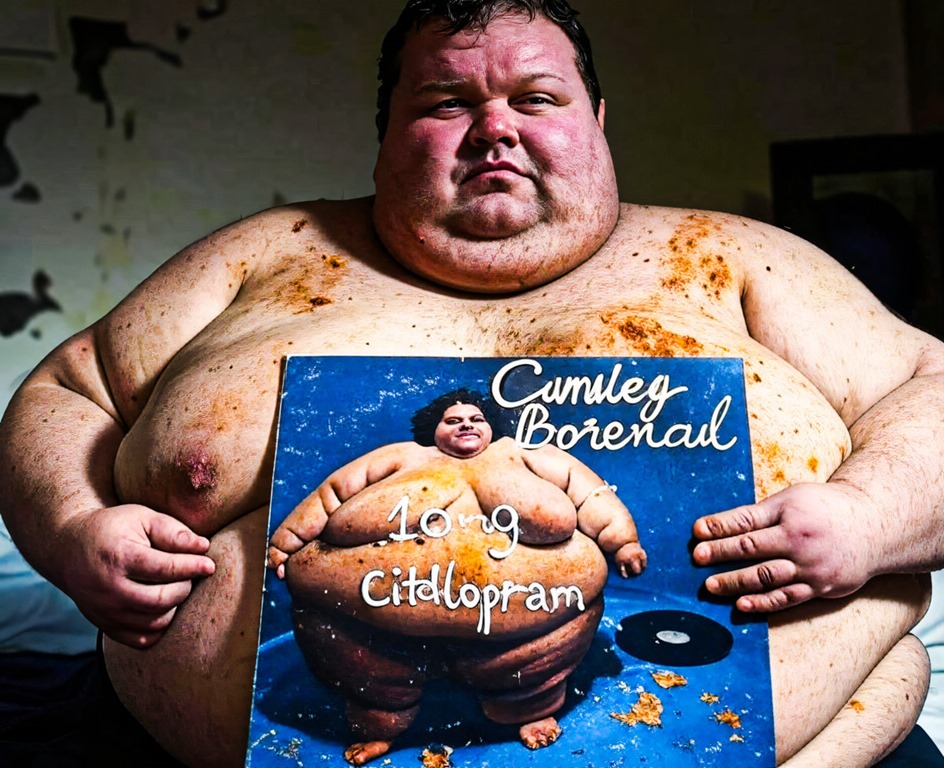
The cover within a cover artwork is only the first example of near infinite layers when it comes to this complex and inventive work from the truly demented experimentalist who records under the moniker of Cumsleg Borenail.

This latest effort promises ‘a collision of methods—part LLM-based sampling, part MPC assembly, part human lyrics—stitched together into something fluid and unpredictable. AI scavenges random prompts, returning garbled errors and fractured phrases, while voices and instruments drift in from nowhere, guided by no fixed direction. Each track begins as one idea and mutates into another, warping its original design into something unrecognizable yet strangely intentional.’

Oh, and it delivers on that promise, alright. This is truly a derangement of the senses, a collaged cut-up, an uncompromising mash-up, a smash-up, if you will, where absolutely nothing is off limit, and it all gets tossed, unceremoniously and indiscriminately, into the blender and churned up into a mess of the most mind-blowing chaos imaginable.

To provide a detailed analysis of this would be to unpick the threads in a way which would reduce the album to less than the sum of its parts. 10mg Citalopram works precisely because it’s an exercise in brain-pulping loop-heavy derangement.

‘You mean nothing me!’ a female voice repeats, and repeats, against a clattering, springing backdrop of twangs and poings throughout ‘You Mean Something To Me’. My head’s a shed by the time we’re midway through the second track, ‘Denizen Invocation Via Lunar Phase’ – because this is a work that goes off in all directions, all at once, and it’s really not pretty. It is, however, weird and frantic. It’s a mess of noise and samples and glitchy electronic samples and frantic breakbeats. Later in the album, there’s a companion piece of sorts, ‘Now I Know I Am Nothing Because You Said’.

AA

In some respects, I’m reminded of early Foetus, JG Thirlwell’s crazed tape loops and cacophonous noise bursts, and the way Cabaret Voltaire took the tape experiments conducted by William Burroughs and Brion Gysin and the ideas outlined in The Electronic Revolution as their starting point – but it’s also a bit Trout Mask Replica, in that it’s like listening to several songs being played at the same time, only it’s got bust-up techno beats exploding all over the shop and frankly, it’s impossible to know what the fuck’s going on most of the time. Too much, for sure. But that’s the point.

For context, Citalopram is a widely-prescribed antidepressant, described on the NHS website as ‘a medicine that can help treat depression and panic attacks’. This album, however, sounds more like a prolonged panic attack or all of the listed possible side-effects being experienced at once, while the numerous references to being ‘nothing’ appear to allude to the inner voice of low mood. Then again, there are other medical matters of an altogether different sort which provide the reference points for tracks like ‘Clostridium Difficile’ (a bacteria which causes diarrhoea) and ‘Snifflers, Nostril Pickers and Dribblers’. All of it is utterly batshit wonky and wildly arrhythmic, and certainly not for anyone who’s feeling tense or jittery or suffering from any kind of psychosis. For anyone else… proceed with caution. May have unwelcome and unpleasant side effects.

AA

a1363557647_10

Editions Mego – 21st February 2025

Christopher Nosnibor

Russell Haswell and Florian Hecker are both prolific as solo artists, each with numerous collaborations with other artists to their respective credits, Haswell also having been a contributor to and touring member of Consumer Electronics. The UPIC Diffusion Sessions are a long-running collaborative project which began in the early 2000s, exploring Iannis Xenakis’ UPIC system as the sole instrument.

As the accompanying notes outline, ‘The UPIC is a computer music system that generates sound from visual input. The original intention of the system developed by Xenakis was to make a utopian tool for producing new sounds accessible to all, independent of formal training. One can locate footage of Xenakis and a group of children making drawings for the system in the 70’s.’ They continue, ‘The duo set off experimenting with a diverse array of hand-drawn images to feed the UPIC system including news photographs of disasters and atrocities, “food porn” through to depictions of the natural world and microscopic images of molecular structures (including ‘the blackest ever black’). The resulting eccentric audio from these images is claimed by the artists to heighten synaesthesia and is as mysterious as it is baffling.

I suppose the potential outputs for the UPIC are as infinite as the inputs, and this alone makes for a fascinating project, and the results here are, indeed, mysterious and baffling. The recording from this session is represented by a single track, just over half an hour in length.

Immediately, trilling oscillator tones rise in pitch – and keep rising, until you feel the pressure build inside your skull. There are glitching spasms of sound which flash across like subliminal messages. The pressure drops and the siren wails fade out, before scuttering blasts of seemingly random noise collage and intersect across one another, buzzing and fizzing, humming and thrumming… the forms move quickly, and shift from dark to light, hard to soft instantaneously. Shimmering sprays of abstract sound burst like fireworks, short interludes of harsh noise wall, microtonal bubbles and ZX Spectrum like babbles and bleeps all intersect or pass within mere seconds of one another. It is, very much, a sonic collage, the audio equivalent of William Burroughs’ cut-ups, an aural articulation of the simultaneity of experience of life in the world. Burroughs’ contention was that linear narrative is wholly inadequate when it comes to representing the real-world, real-time lived experience, whereby overheard conversations, snippets of TV and radio, and all the rest, not to mention our thoughts and internal monologues, overlap, and to present them sequentially is not true to life.

Leaping disjointedly from one fragment to the next at a bewilderingly rapid pace, listening to this is rather like the way the mind, and often conversations, skip from topic to topic without ever seeing any single train of thought to a defined conclusion, bouncing hither and thither in response to triggers and associations which often seem to bear no logic whatsoever.

There are thick, farting sounds, buzzes like giant hornets, choruses of angry bees, weird sonic mists and transcendental illuminations… of course, these are all conjured in the mind in response to these strange, sometimes otherworldly, sci-fi sounds, part BBC Radiophonic Workshop, part tinnitus and nightmare of imagination. Unpredictable isn’t even half of it as alien engines and spurs of 80s laser guns crossfire against earthworks, roaring jets, explosive robotics, skin-crawling doom drone, whispers and whistles, proto-industrial throbs…it’s a relentless blizzard of sound.

‘Experimental’ has become something of a catch-all for music that draws on eclectic elements or perhaps incorporates a certain randomness: this, however, is truly experimental, given that there is no way of knowing how the programme will interpret the input provided. And as much as the output involves oscillatory drones and the kind of synthy sounds associated with analogue, and with woozy, warping tape experiments, it evokes the drones of collapsing organs, wild sampling and everything else your brain could possibly conjure.

At once exhilarating and exhausting, UPIC Diffusion Session #23 is… an experience.

AA

eMego316V front

Futura Resistenza – 27th January 2025

Christopher Nosnibor

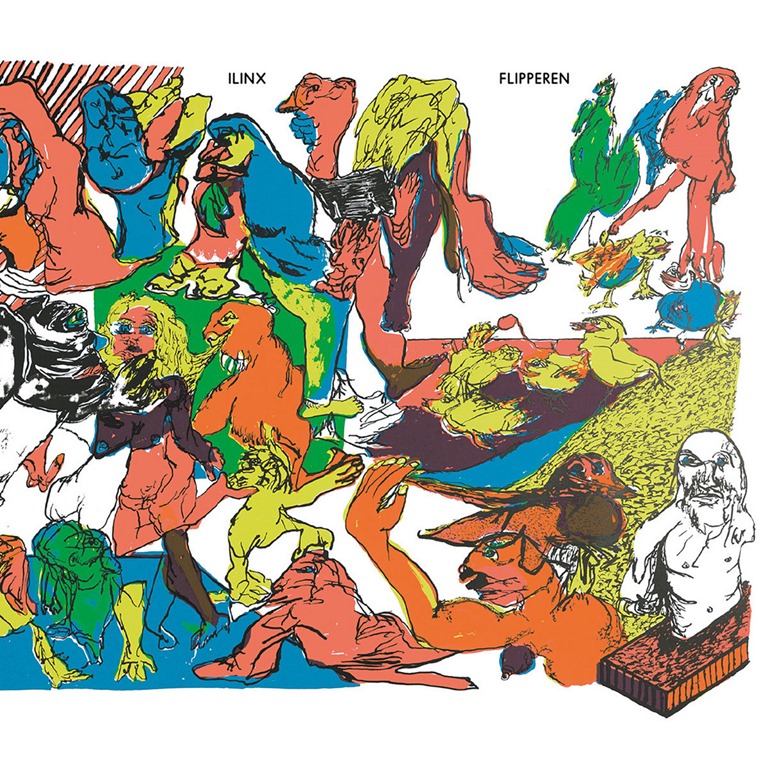
Some years ago (like about seventeen years ago), when I embarked on my reviewing journey proper, I was introduced to whacky experimental work and the world of microtonality. It was an absolute revelation. Just as, growing up in the 80s and raised on the Top 40 singles and Now That’s What I Call Music, discovering goth, alternative, John Peel, and Melody Maker completely changed my head, so did entering this new world. Onje thing that completely spun me was the way in which some artists extrapolated and academicized some pretty stupid or mundane stuff. This is a reasonable example. To quote: ‘Flipperen takes the randomness of pinball and turns it into music. Using recordings from old pinball machines, the music mixes chaos and structure, reflecting the Fluxus spirit of play and chance. It’s a wild ride through sound, where things don’t always make sense–but that’s the fun of it.’

Flipperen began as a lockdown / COVID project, of course. As they detail, ‘During the quiet and strange Covid days, Suzana Lașcu, Robert Kroos, and Reinier van Houdt began a recording project based on the soundbites of pinball machines. They visited the empty Dutch Pinball Museum in Rotterdam and captured field recordings of machines from the 1960s to the 1990s. From these, they selected 28 samples to serve as thematic starting points for what they called ‘game pieces,’ recorded in two sessions at Sonology Studios in The Hague. The recordings were then shaped into sound collages using cut-up techniques and probabilistic processes.’

These processes mean that the end product is a very long way removed from the actual sounds of metal balls pinging and rolling about inside a glass-covered case. Instead, landing between Brion Gysin and John Cage, we get a collection of weird and woozy fragmentary pieces – compositions would be something of a stretch – ranging from awkward ambience to crashing and banging that sounds like a prepared piano fitted with lump hammers. There’s playful, whimsical sighing and trilling, psychedelic trippery and some fairly straight jazz-flavoured piano in the mix. There’s Clangers-like whistling and clattering and clanking, pops and thuds, explosive industrial noise and frenzied country. There are moments which sound like someone grunting through a comb with greaseproof paper, others which sound like the strumming of an egg-slicer, others still which create the impression of a piano being dropped down a flight of stairs.

The final cut features twenty-six tracks, the majority of which are around a couple of minutes long, or even significantly shorter. But there are a couple which run to around six and a half minutes of uncoordinated chaos, and it’s a lot to take in.

The appeal from a sonic and experimental perspective is that ‘Pinball is a game that combines control and randomness—each action leads to an unpredictable result, and the outcome is always uncertain’, and as such, the patterns which provide the material for these pieces are erratic, unpredictable, and ultimately, not really patterns at all. And so it is that Flipperen shunts forwards and backwards, crackles and pops with zany snippets of this, that, and everything, conjuring a wild collage of disparate elements and all kinds of discord.

As much as pinball machines lie at the heart of Flipperen, it’s really a wide-ranging collage work with randomness at its heart. It’s fun, it’s fascinating, it’s brain-bending – and one might say it’s a work of Flipperen genius – but you definitely have to be in the mood for something quite this far out.

AA

a2489366009_10

5th July 2024

Christopher Nosnibor

Sometimes, I really do feel as if my brain is my enemy. Word association and wordplay are a particularly frequent and annoying curse. Oftentimes, I keep this to myself, but midway through listening to this, it struck me, completely at random, that Killzones isn’t a million miles away from Calzone, at least when written down. So why share this? A problem shared, and all that, for one. But as much as anything, I felt the urge to purge, or moreover to crack open the challenges that present themselves as part of the creative process. Writing – and finding something new and interesting to say – about music, day in, day out, is a challenge in itself, without other factors.

Seemingly, the recording of this EP proved rather less challenging for its makers, who came together and developed it swiftly and fluidly –although the same can’t be said for listening to it. That’s by no means a criticism. In a climate where the airwaves are jammed solid with anodyne sameness and slickly-produced beige sonic slop disguised as raw or edgy on account of some explicit content and some choice language that requires beeps or asterisks in the mainstream media, anything that does something different offers a welcome challenge in the way many pit themselves against the Great North Run or similar. We’ve grown accustomed to everything being delivered neatly-packaged and pre-digested, and feeling like following a recipe from Hello Fresh makes us a Michelin chef. Collectively, we’ve forgotten how to chew – meaning that this will either kick-start your metabolism or simply make you spew if you’re unaccustomed to anything that’s this high-fibre. Just look at that cover art. It’s dark, grainy, uncomfortable. It’s the perfect encapsulation of the music it accompanies.

Machine Mafia is quite the collaborative paring: Adam Stone of gritty northern grimsters Pound Land and Jase Kester of ever-evolving experimental noisemakers Omnibael / Omnibadger have come together to do something different. Very different.

As Jase explained to me, the EP features ‘no live instruments, leaning into the way dub reggae was so embraced by punk right in the early days.’ And there’s no question that it has both – simultaneously – the spaciousness of The Ruts (D.C) and the density of early PiL. It’s a formidable combination, that’s for sure.

The title track assembles sampled snippets as its foundation, drawing parallels with the collaging methods of Cabaret Voltaire and Throbbing Gristle, evolved from William Burroughs and Brion Gysin’s late-50s tape experiments – in turn a progression from the cut-ups on paper. Atop of this slice ‘n’ splice selection of political speeches and an almost subsonic, floor-shaking bass, Stone delivers a mumbling, drawling semi-spoken spiel. It’s like Sleaford Mods on Ketamine, a heavy trudge of ever-degenerating sound which eventually collapses to a low-end buzz and a crisp sample that makes the pair’s political position clear through antithesis.

On ‘Faces’, scrapes of discord, distortion, and a thudding beat half-submerged in the mix grinds out the opening before a dark, dense bass groove starts a gut-shaking growl. The drawling, atonal vocals, too, are distorted and low in the mix, and I’m reminded of some of the more obscure Ministry offshoots witch Chris Connelly – the vibe is dingy, sleazy industrial, a bit early Pigface, and sounds like it was recorded in a damp mould-stained basement on a salvaged reel-to-reel.

The songs get slower and heavier – and longer – as the EP progresses. ‘I Am Not You’ comes on as if Dr Mix and The Remix had done dub, while ‘Lecture 0.3B’ goes all out on transforming a simple spoken-word piece into a cut-up tape experimental headfuck with loops and delays and effects galore, all laced with crackles of distortion and sonic degradation fuzzing and fading the edges. It lands somewhere between the JAMS, Max Headroom, and Throbbing Gristle’s ‘Hamburger Lady’ – weird, unsettling, dystopian, with near-familiar elements twisted and recontextualised in an ugly mash-up collage work.

Conceptually, Killzones is far from new – but then, there’s no claim to innovation here, explicitly drawing a line from the past. But the kind of reference points and influences in evidence here are not the ones you find often, if ever – independently, perhaps, but the whole point of intertextuality as a method of creating is the nexus of divergent touchstones and the way in which they’re combined. With Killzones, Machine Mafia deliver a crash course in experimental music 1976-1994. It’s a mangled, messy cognitive assault. It’s knowingly, and purposefully, difficult, unpleasant, and a complete creative success.

AA

a0890048129_10

Cruel Nature Records – 26th April 2024

Christopher Nosnibor

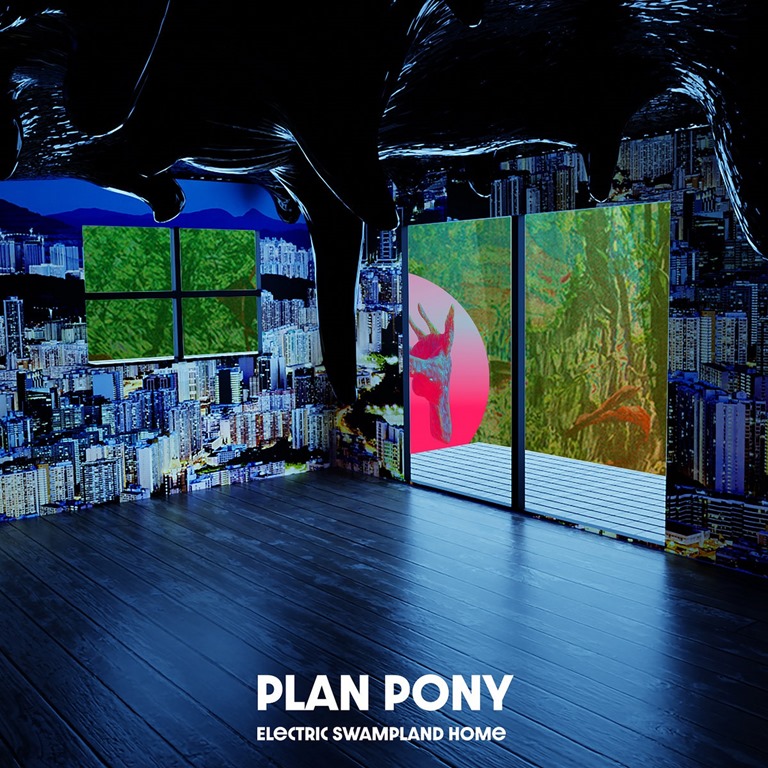
Plan Pony – the solo project of Jase Jester, one half of Ombibael / Ombibadger – has been simmering for a while, and we’ve been following his output since the release of the ‘Martyr’ single back in 2020. So I was naturally excited to hear his latest offering.

I felt suddenly uncomfortable, concerned, even, on seeing the accompanying blurbage, which leads with ‘RIYL: Animal Collective, Madlib, Nurse With Wound, Hype Williams, Black Dice’. I mean, I do like a bit of NWW, and don’t mind some Black Dice, but I absolutely abhor Animal Collective. So, so much. Something about Animal Collective radiates muso smugness – something it would be hard to accuse Jase of.

Electric Swampland Home is the first Plan Pony album, and as with previous outings, finds Kester grappling with vintage gear to conjure authentic vintage noise inspired by those early adopters. He’s right when he tells me that emulators simply aren’t the same, and that when technologies were emerging, the sound of the resulting recordings was born of necessity – like when you bounce tracks on a cassette four-track and lose some quality and definition in the process, and the presence of amp hum and tape hiss because amps hum and tape hisses. Adding tape hiss or vinyl crackle digitally is an affectation, and while some may be sold on this kind of nostalgic artifice, it lacks that certain something.

While questions of authenticity provoke heated debate in circles around some genres – punk, obviously, grunge, perhaps to a lesser extent, and right now, indie and alternative as new acts track stellar trajectories seemingly from nowhere while claiming modest grass-roots credentials while obfuscating middle class and public school backgrounds and major label backing, Electric Swampland Home is a truly authentic work. Kester hasn’t amassed a pile of highly-sought-after vintage kit in the way people with hods of cash buy up 808s and Moogs to try to be cool. Electric Swampland Home is the sound of a Boss sampler and an old Tascam digital studio he’s had for yonks, and which by today’s standards are pretty primitive.

From the very start, Electric Swampland Home creates discord and chaos with the woozy, bent, and frankly fucked-up ‘Travelling There’, a loop of atonality that gives way to a rolling rhythm and feedback-squalling bass crunch… and from thereon in, everything goes.

‘The Village’ tosses a salad of tribal beats, twisted Kyoto and a dash of Joujouka. While I’ve never been comfortable with the kind of cultural appropriation that the likes of Paul Simon’s takes on ‘world music’ present, this is something entirely different – a full global exploration which occurs simultaneously. This owes more to the tape experiments of Burroughs and Gysin, Throbbing Gristle and Cabaret Voltaire than anything else, conveying a sense of the way in which everything happens all at once, and linearity is a construct.

Across the album’s eight tracks, Plan Pony meshes some dense sonic textures and layers of difficult dissonance. Notes and tones bend and warp, things twist and melt and bleed into one another: edges blur and fade. The way the juxtaposing and often incongruous elements are brought together isn’t explicitly jarring, it’s not a bewildering collision of noise, but something rather more subtle – although no less impactful and no less disorienting. As with Burroughs’ cut-ups, Electric Swampland Home captures – recreates, distils – the overwhelming experience of modern life, the blizzard of information, the endless intertext, the diminished attention span, the globalisation and the egalitarianism of everything. That isn’t to say we live in an egalitarian world – but that everything equally demands our attention from every corner of everything, to the point that it’s impossible to prioritise or even reasonably assess what’s of more importance than anything else. And so we quiver, frozen in stasis, poised between myriad options and so often spend hours selecting none of them.

This is nowhere more clearly conveyed on the warped, glitchy layerings of ‘Same Cloud’, which brings everything all at once. On the one hand, it’s the most overtly ‘song’ like piece on the album. On the other, it’s like listening to the radio from the next room while reading a book with the TV on in the background, and your phone’s ringing and next door are doing DIY and your mind’s wondering about what’s for dinner – and this continues into the sample-soaked looping stuttering jangle of ‘Amphibian’.

‘8pm Local Time’ combined field recordings, a low-level quivering bass and squelchy laser-blasting electronics together, and not necessarily in the most comfortable of fashions.

Electric Swampland Home revels in incongruity, in awkwardness, in otherness, and in many ways, it’s a magnificent representation of life in all its colours and chaos, its business and unpredictability. It’s not an easy or immediate album, and it’s not for a second intended to be. It is an unashamedly experimental work, and one which succeeds in its explorations.

AA

a3913248541_10

Unseen Worlds – 4th August 2023

Christopher Nosnibor

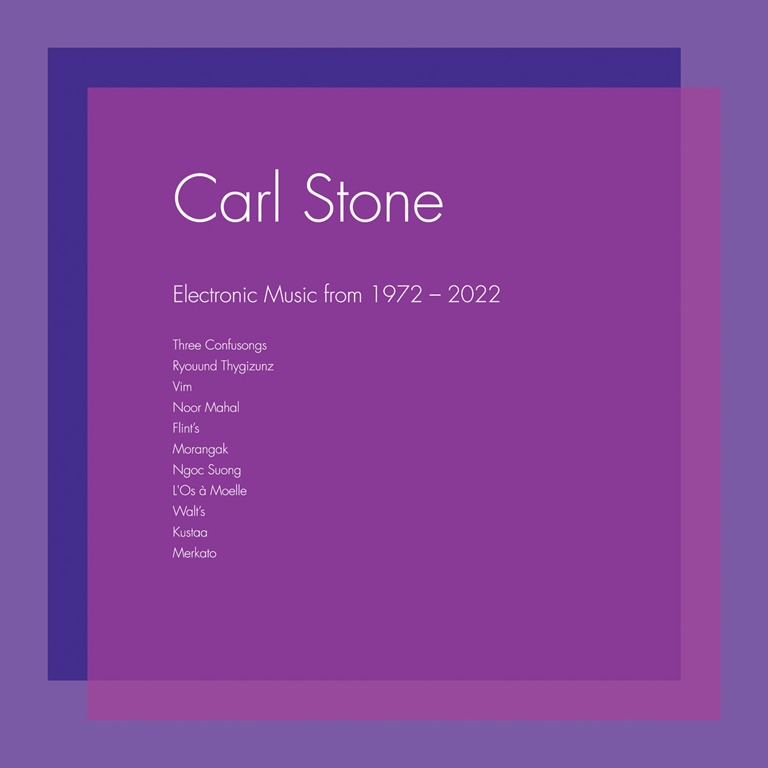
Having failed to make it to Carl Stone’s show in Leeds the other week – in the same way I’ve failed to make pretty much any shows this year and am largely tied to engaging with music in recorded forms for the foreseeable future, it feels only right that I should compensate in some small way with a review of his upcoming compilation album, a monster career-spanning triple album.

And when it comes to his career, the title sets out the immense landmark it represents. Not just the fact that this release is a summary of a career spanning half a century, but the broader context that there has been electronic music for so long. Village Voice have called him “the king of sampling”. Being born in 1975, I only became aware of sampling in the late 80s, and while Tangerine Dream and Kraftwerk and Throbbing Gristle are legendary as pioneers of electronic music, you probably don’t generally think of there being many other artists breaking ground and experimenting as far back as 1972.

The accompanying notes provide an outline that’s easier to quote than to summarise: ‘Electronic Music from 1972-2022 seeks to frame fifty years of Carl Stone’s compositional activity, starting with Stone’s earliest professionally presented compositions from 1972 (‘Three Confusongs’ and ‘Ryound Thygizunz’, featuring the voice and poetry of Stefan Weiser – later known as Z’EV) up to the present. This collection is not meant as a definitive history but rather as a supplement to be used alongside the previous two archival releases. It is simultaneously an archival release marking Carl Stone’s evergreen 70th birthday and a document of archival art. In the spirit of disorienting repetition and layering, call it an archive of archiving.’

This, then, is by no means a retrospective in the conventional sense, but it does clearly trace a trajectory of the evolution of Stone’s work. The album doesn’t spread the tracks evenly, being weighted heavily to certain years, with each year effectively representing an era.

The 1972 material, which occupies side A and represents the early years, is very much a cacophony of loops and echoes, reminiscent of William Burroughs and Brion Gysin’s tape experiments of the later 60s, and foreshadowing the first releases by Foetus and Cabaret Voltaire, as well as the disturbing drones and processed vocals off Throbbing Gristle, and clearly very much ahead of its time and venturing into the realms of dark ambient before it was even given a label.

Side B leaps forward fifteen years to 1987, with a brace of scraping, discordant pieces, both of which extend beyond the ten-minute mark. The production of these more structure, beat-orientated collage pieces is quite eye-opening: how times and technology change! ‘Vim’, which sounds like a cut-up of The Beach Boys is very much a cut-and-paste assemblage of loops, but the sound is crisp and marks an evolution more of light years than actual years. At ten and a half minutes, it feels it goes beyond proving its point, but then again, perhaps that is a point in itself. It also reminds us of the changing musi8cal landscape: 1987, the year the Justified Ancients of Mu Mu released the sample-riot 1987: What the Fuck is Going On. This is significantly more sophisticated than the JAMMs, and takes a less confrontational approach to the application of the emerging technologies. In contrast, the other 1987 track, ‘Noor Mahal’ combines tribal drumming and hypnotic folktronica, prefacing the airy new age folk crossover forms that would bubble up in Enya’s ‘Orinoco Flow’ and The Beloved’s The Sun Rising’ a year or two later.

And this is what ultimately threads Stones’ work together. He’s astute enough to be aware that evolving technologies are in themselves the soundtrack of the times, and it’s clear listening to this in sequence that experimental music invites chicken-and-egg discussion as to whether the music evolves because of the way technology facilitates it, or of the technology encourages those who are so inclined to push it to its furthest ends.

There’s just one nineties cut, with the jaunty ‘Flint’s’ from 1999, before the millennium brings a selection of dark jerky pieces (‘Morangak’ (2005) is a particularly gnarly Dalek-like mess of a loop) with two absolute beasts in the form of ‘Ngoc Suong’ (2003) and ‘L’Os à Moelle’ (2007), which both sit around the twenty-three minute mark and occupy a side of vinyl apiece, proving particularly disorientating. The former is also particularly testing, an experience akin to water torture, while the latter is… different by its sameness. Like listening to The Eagles on a three-hour car journey. I woke up with a jolt, my face on my keyboard, realising my review was incomplete and it was fifteen minutes later than it had been, and this track feels like a comment on the time in which it was created. It gets weirder as it progresses, of course.

Cut forward to 2022, with three much shorter pieces occupying side F, and ‘Walt’s’ presents a different kind of surprise, being bright, crisp, with technicolour energy and it’s almost game-showy. Spinning folksiness with cornball AI –sounding blooping, and also whipping in some Bollywood bang and an 80s synth-pop vibe, it’s dizzying, and these elements are present in varying levels on ‘Kustaa’ and ‘Merkato’ which are overtly ‘world’ music inspired wile spreading in all directions at once. And this, ultimately, is what Electronic Music from 1972-2022 tells us: Carl Stone has spent five decades ahead of and / or capturing the zeitgeist, distilling the essence of the contemporary into a headspinning whirl. This may be a swift tour, but at the same time it’s comprehensive, and well worth exploring.

AA

AA

a3301642996_10

CD Epicentre Editions EPI-2101

Christopher Nosnibor

It’s testament to his degree of innovation and influence that John Cage’s works remain a source of fascination for so many almost 30 years after his death. Few composers have reached across so many fields, let alone a composer as radical and overtly experimental. But Cage singlehandedly broke all the ground, especially when it came to exploring elements of the random, of the relationship between the performance and the audience, and of incorporating strands of philosophy into the creative process.

This recording of Variations VII is very much an unadulterated document of a specific event, best detailed in the liner notes:

Variations VII was created by John Cage to be performed at a special event, 9 Evenings, Theatre & Engineering, held from 13th to 23rd October 1966 in New York and in which a team of engineers, led by Billy Klüver, worked with ten artists from the American “avant-garde”, with the aim of enabling them to extend their exploration of the possibilities of electronics in their own art. Here is how John Cage described this piece in the programme for the event:

« It is a piece of music, Variations VII, indeterminate in form and detail, making use of the sound system which has been devised collectively for this festival, further making use of modulation means organized by David Tudor, using as sound sources only those sounds which are in the air at the moment of performance, picked up via the communication bands, telephone lines, microphones together with, instead of musical instruments, a variety of household appliances, and frequency generators. »

And so ‘Intro’ is four minutes of audience chatter, a throng of conversations, all in French, over and across one another. It may feel superfluous to some, but in so many ways, it’s integral to the experience. It not only captures the moments before the performance as it happened, but also transports the listener there, and reminds us that this is not a studio work, designed to capture some kind of perfect realisation of the piece for all time. There is no trickery or manipulation after the fact: this is a live performance, in front of a live audience, something that happened in the moment, and the moment is all there is, and the life of the piece is tied to that specific moment. And then, there is the fact that Variations VII is, effectively, about chatter.

Crackles of static, whistles and whines rent the air as the performance begins; the sound of radio dials turning, tuning in, finding – or failing to find – the right wavelength. Hums, hisses, and snippets of conversations, fragments of music. Whups and whirs, shill shards of feedback and blizzards of white noise emerge from a myriad pieces of sound, booming yawns of interference all criss-crossing over one another in a disorienting real-time sonic collage. Machines grind, babies cry, there are explosive, thunderous blasts of distortion, It’s like walking down a busy street, hearing pieces of conversation, radios blaring from cars, engines revving, and the parallels with William Burroughs’ cut-up technique, for those familiar, are clear. This replicates the experience of life in real-time, and real-time experience is not linear, but simultaneous: a plane flies overhead and you catch sight of an advertisement, and a reflection of a face in a shop window while conducting a conversation, and all around, other people conduct their own conversations…

The mechanics of it are complex and ambitious, but also typical of Cage’s approach to composition:

‘Ten telephone lines connected to the sounds of ten different locations in New York City. History has taught us that one of the first uses of the telephone at the end of the 19th century was, besides transporting voices, the live re-transmission of concert performances of opera. A few privileged listeners could therefore listen to the music in their own homes. Several decades later, John Cage reversed this, so to speak, by inviting the sounds of several distant environments into the concert venue!’

And so it is that the 1966 piece was performed live once more on August 15th, 2020 at the festival Le Bruit de la Musique. The performance lasts for an hour and eight minutes, during which time we’re subjected to a bewildering array of sounds, unconnected, disparate, all completely independent of one another, uncoordinated, random, haphazard and hither and thither. It’s a bewildering experience: not a lot happens, but at the same time, everything happens, a lot of it simultaneously. For the duration of the performance, the spell remains unbroken. For some reason that I really can’t explain, I find myself sitting, ears pricked, on tenterhooks, listening out for details. Towards the end, a blitzkrieg of overlapping extranea build to a tempestuous tumult of harsh noise that sounds like Throbbing Gristle a whole decade before their conception. And as it gradually tapers down, a cough from the audience cuts through the quiet – but it’s not quite finished. We wait, on edge.

Suddenly, there is silence.

Only when the performance ends is the tension broken.

There is a pause, a few seconds of uncertainty, before the applause breaks. There are a few whoops, but mostly, it’s polite. Enthusiastic, but polite. There is no chatter now. One suspects that having witnessed this – bearing in mind that it’s 1966 – many would have been simply stunned of vocabulary. The era may have been accustomed to all kinds of newness, all kinds of shocking, taboo-breaking art, but this…?

Variations VII hasn’t dated, and not lonely does it still sound contemporary, it remains incredibly relevant: if anything, its relevance is greater in 2021 than it was in 1966, perfectly recreating the experience of total media and sensory overload. Never mind The Beatles, here’s John Cage.

Cold Spring Records – 16th April 2021

Edward S. Robinson

William Burroughs maintained a prolific output over the course of his lengthy career, and not only in the written form, committing many hours of recordings to tape. Yet even now, Brion Gysin’s contribution remains largely overlooked, despite being not only the man who ‘discovered’ the cut-ups and introduced the idea to Burroughs, but as a long-term collaborator and an outstanding polyartist in his own right. This album devotes a significant portion of the second side to Gysin’s recordings, and goes some way to redress the balance, although one suspects the immense Burroughs mythos will mean Gysin will eternally exist as a (lengthy) sidenote.

A great many of those recordings made by Burroughs – with Gysin – have been released, and a number are almost legendary in Burroughs circles in their own right, notably the 1965 introductory collection Call Me Burroughs (re-released recently), and the collection of audio experiments released in 1981 on Throbbing Gristle’s Industrial Records as Nothing Here Now But the Recordings.

Now, the last time I reviewed a Burroughs release, Let Me Hang You, back in 2016, I copped some flak from certain quarters of the online community of Burroughs fans and experts for having failed to spot that what was pitched as a ‘new’ recording excavated from the archive was in fact a previously-released recording of Burroughs with new music. My bad, as they say: I’d failed to fully research all aspects of my 1,400-word critique. Like The Who, I won’t get fooled again.

The liner notes for this vinyl-only release contextualise as follows: ‘Rare recordings of beat/cut-up writers and artists William S. Burroughs and Brion Gysin. Comprises the complete recording of Burroughs reading live in Liverpool in 1982, plus performances by Gysin of a selection of his permutated poems, as well as home recordings made by the pair in Paris in 1970. All recordings are taken from original tapes in the British Library collection.’ If ‘rare’ suggests unreleased or otherwise incredibly difficult to find, it’s worth noting that this exact track listing was released on CD, with a running time of sixty-six minutes, in 2012 by the British Library on its own label under the title The Spoken Word, credited to William S. Burroughs and Brion Gysin and is available via Discogs for a tenner. The cover image is also the same as the British Library release. That said, of all the Burroughs CDs I own, this isn’t among them, and I’ve never seen a copy or heard the majority of the material, and in many ways, this is as much about the artefact as it is about the material, and if the title seems a little lacking, at least it’s descriptive of the contents.

The Live in Liverpool recording is an interesting one, recorded as it was the night after Burroughs’ reading in Manchester as part of The Final Academy tour, where Burroughs featured alongside Cabaret Voltaire, Psychic TV, and 23 Skidoo, as well as screenings of the experimental movies Burroughs made with Gyson and Anthony Balch. The Manchester Hacienda performance was filmed, but only edited highlights made it to the ‘Final Academy Document’ released in 1983 on Factory subsidiary IKON, and re-released on DVD by Cherry Red in 2002.

However familiar you may be with Burroughs’ voice, the first few minutes of playback on a recording has an impact. No-one else sounds like Burroughs: that perfectly-enunciated drone – well-spoken, slow, deliberate – not a drawl as such, just a flat, paced rhythm with unique intonation and timbre just hits you somehow. And so it does again as that voice echoes across the decades from c.1963 on the first piece, ‘The Beginning Is Also The End (Excerpt)’, also credited elsewhere by its opening line, ‘I am not an addict, I am the addict’. Cracked, as dry as parchment, the voice summarises one of the leading themes of his work, particularly his most famous novel, Naked Lunch.

The Liverpool set opens with a reading from the foreword from his recently-completed but as-then-unpublished novel The Place of Dead Roads, where he outlines the world view that divides the population into Johnsons and shits. Obviously, back in 1982 he could not have predicted the rise to power of a shit called Johnson. The performance finds Burroughs – then aged sixty-eight in fine form – sprightly, energetic, and engaging, and demonstrating precisely why he was in demand as a spoken-word performer during his later career. He’s not only a great performer – clearly well-rehearsed, he doesn’t fluff a line, and his timing is impeccable – and entertaining, but he’s also funny, the tongue-in-cheek humour perhaps translating better via the medium of spoken word than on the page. The lively characterisations are delivered with gusto, and the audience response speaks for itself. You didn’t have to be there to appreciate this, but is certainly makes you wish you had been. Touching on smallpox and ‘anti-vaccination cults’, we’re once again reminded of Burroughs’ prescience.

Gysin’s voice – also well-spoken, but distinctly English and sounding for all the world like a 1950s newscaster as he advocates trying cut-ups for yourself to see the words ‘gush into action’ – contrasts with Burroughs’, and the audio quality of ‘Cut-Ups Self-Explained’, recorded between 1960 and 1962 but which would not see the light of day as a text until 1978 on the publication of The Third Mind, is somewhat muffled. But as an archival recording, it’s absolute gold. It’s hard to really know what’s going on during ‘I Am This Painter Brion Gysin’, and it sounds like the scraping of a marker against a wall-mounted pad. You feel as if you’re only getting half the story.

But then the sequence of ‘pistol poems’ is something else: bewildering, baffling at times they are best appreciated as sound, and works rather than poems hearing Gysin work through the permutations of ‘I’ve Come To Free The Words’, ‘No Poets Don’t Own Words’, ‘Kick That Habit Man’ and ‘I Am that I Am’ is revelatory (the latter featuring some wild pitch-shifting and delay / echo effects), although his delivery of ‘Junk is No Good Baby’ is simply hilarious. The layered cut-up experiment of ‘Calling All Reactive Agents’, which featured on the Break Through in Grey Room album on Sub Rosa in 1986, is also a remarkable example of rudimentary sampling and looping a fill two decades before the start of the real electronic revolution which saw the likes of Cabaret Voltaire and Foetus advance the principles in a musical context.

The four short Burroughs tracks that close off the album are scratchy experiments in multi-tracking that might not sound like much now, but in context, they provide essential insights into recording history.

As such, while this release provides no material which hasn’t been circulated before, it does bring a remarkable collection of material back into focus, and perhaps to a new audience – and of course, on a format that previously wasn’t available. For that experience of sitting down and concentrating, vinyl is hard to beat, and this is a release worth digesting at leisure.

AA

a2467006287_10