Posts Tagged ‘cross-genre’

17th October 2025

Christopher Nosnibor

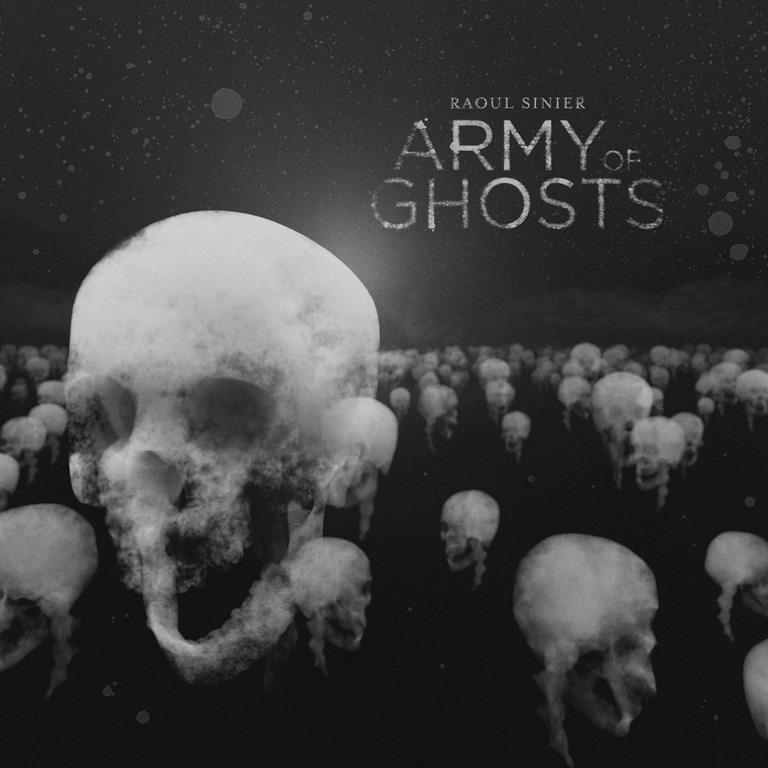
Raoul Sinier first caught my attention with the release of Guilty Cloaks, although he had already built a substantial catalogue of strange and surreal works in the preceding years, notably Brain Kitchen (2008) and Tremens Industry (2009). After Welcome to My Orphanage (2013) and Late Statues (2015), I rather lost track – something which is clearly to my detriment – and then he fell silent following Death, Love and Despair in 2018. Perhaps that title was a revelation beyond any of the contents or accompanying notes. It’s not anyone’s business, regardless.

What matters is that the arrival of Army of Ghosts is a welcome one, and one which is heralded in the accompanying press release with the fanfare that ‘Raoul Sinier is back — more hybrid and unpredictable than ever’. We go on to learn that ‘His new album is a bold fusion of everything that made electronic music iconic, layered with sample work straight out of hip-hop’s golden age. Add in overdriven guitars, throbbing bass, flashes of rock, prog, and funk, and you’ve got a sonic landscape that’s as explosive as it is unique. Floating above it all is Sinier’s signature ethereal voice, a haunting counterpoint to the beautiful chaos below.

Melancholic yet sharp, lyrical yet raw, his music walks the line between introspection and confrontation.’

The appeal of Sinier’s work is its inventiveness – although with Guilty Cloaks, I will admit that I was drawn by a certain post-punk vibe, too – and Army of Ghosts is certainly inventive.

The album’s first song, ‘Phony Tales’ switches between Phantom of the Opera theatrical verses and brutal industrial choruses worthy of Trent Reznor. It’s not just the surge of sound, but the crashing, metallic bin-lid snare that dominates the mix and completely spins your head. It may only last two minutes and ten seconds, but it’s intense.

Much of Army of Ghosts is intense, but in different ways. The drums are uncommonly dominant, and Sinier’s vocals often invite parallels with A-Ha’s Morten Harket, but crucially, said vocals are wrapped in a broad range of forms. ‘Brace Yourself’ offers a lethal cocktail of this, and that, and the other, led by some trip-hop drumming and proggy guitar work, before tapering out with a dark, sonorous bass. It’s that same insistent, baggy beat and Bauhaus-meets-metal explosion which shapes ‘Disperse’, a word which has enhanced implications and resonance of late.

In its eclecticism, Army of Ghosts comes up trumps. ‘Walking Through Walls’ offers springy post-punk energy in the vein of Bauhaus at their best, while the title track straddles post-punk and Nu-Metal, and then post-rock, with sludgy bursts of low-end distortion and…piano. Unexpectedly, it calls to mind the stylistic swathe of Bowie’s 1: Outside, an album which knows no borders.

Sinier knows how to spring surprises, and the wild intro to ‘Spectral Ocean’ is indeed wild, a furious flurry of violin, layered and awash in echo abruptly giving way to a low-slung thunderous bass groove that’s got goth stamped all over it and would have been perfectly at home on the new Rosetta Stone album – and that’s before we get to the brittle, picked guitar and sturdy mechanical drumming that pumps away relentlessly. After the widescreen expanse of the moody ‘Distant Wildlife’, which builds to a dark, slow-burning climax, driven by a dense, throbbing bass, the final track, ‘Neon Sign’ pairs things back and goes all out on the haunting atmosphere, with serrated guitars cutting through drifting synths and a contemplative vocal performance – before suddenly closing with a blast of drone metal straight off Earth 2.

The thing about Army of Ghosts is that it is both detailed and direct, sometimes simultaneously, but it is never predictable. The song titles do not offer a clear overarching theme, but the ghostly and paranormal hover in every shadowy corner of this theatrical and imaginative set of songs – a set that’s wildly varied, but consistent in its quality. Raoul Sinier is most definitely back, and this is very much a good thing.

AA

WXFDSWXCXII front

1st November 2024

Christopher Nosnibor

Imagine having your album release scheduled many months in advance only to find the release date crashed by The Cure’s first album in sixteen years. Imagine you’re not only an act likely to appeal to Cure fans, but your act features a former long-serving member of The Cure. This is the true story of Vamberator, the duo consisting of Jem Tayle, formerly of Shelleyan Orphan, and Boris Williams, Cure drummer from 1984 to 1994, and sometime contributor also to Shelleyan Orphan.

The album’s title is telling and possesses a certain resonance. Much has already been written on the contradictory impact of social media, and the idea that while we’ve never been more connected, we’ve never felt more isolated. Scrolling through endless snaps of people’s holidays, parties, nights out is a hollowing experience, and one that’s anything but inclusive. Of course, you want to be pleased and happy for these people sharing their experiences as they live their best lives, as is the parlance, but inside, you’re being eaten away as you’re confronted with your own mundane, grey existence.

If anything, the pandemic heightened the agony for many: half the population was basking in being work-free, spending days baking bread and discovering new hobbies and bingeing on Netflix, while the other half was battling their way into work, or juggling work and home schooling, or simply trapped indoors on their own – or worse. Virtual drinks via webcam and group WhatsApps and streaming gigs were poor substitutes for the real thing.

And now we’re supposedly back to normal, but it feels as if something has been lost, and possibly lost forever. Our lives have become more distant, more disparate. In my own experience, it simply seems harder to co-ordinate meeting with people, and while some people seem to be so busy with their social lives it’s a wonder they can remember what the interiors of their own homes look like, their busyness leaves some off us at home, disconnected for weeks at a time. I am not alone in being alone: for many, the creeping sense if isolation and loneliness weighs heavier than ever before. This is truly The Age of Loneliness.

I’ve begin with the digression in order to contextualise the point at which I arrive at this album, having spent the last few days – like a lot of people – immersed in the melancholia of the new Cure album, having not seen proper daylight for the best part of a week and struggling against the urge to hibernate.

The single release ‘Sleep the Giant of Sleeps’, which came out in the summer, showcased an energetic embracing of myriad firms, and I myself described it as ‘a mega-hybrid of alt-rock, post-punk, and psyche.’ It set a level of expectation for the album and despite being born from a place of comparative darkness, the spark of experimentation and joy of creating illuminates the recesses of Age of Loneliness.

‘I Used to be Lou Reed’ kicks the album off in a flurry of strings and takes flight with a quite poppy flavour. It’s got horns and string and synths bursting all over, and there’s a slick funk groove which emerges after a minute or so… but despite being there, there, and everywhere, from James Bond to crooning 90s indie all in the space of five minutes, nothing feels forced or corny. Wish-era Cure meets Pulp might not sound like the ultimate pitch, but prepare to be pleasantly surprised.

Shades of negativity colour songs with titles like ‘I Need Contact’ and the title track, as well as ‘I Don’t Want to Cut the Grass’, a paean to lethargy which drifts and lilts like a Kraftwerk piece, but with the drollness of late Sparks. ‘Pilgrim’ brings tints of Beatles-esque twanging and some Eastern shades alongside elements of psychedelia. With loping rhythms and layered instrumentation, the title track slips into a groove worthy of late 80s Wax Trax releases then swerves unexpectedly. ‘I Need Contact’ is a sparse piano-led ballad, and its simplicity in itself is affecting. ‘Creature in My House’ begins haunting and ominous, before swinging into an electropop glam stomp which shouldn’t work, but does. This is true of much of Age of Loneliness.

Being predictable is not an accusation one could level at Vamberator: Age of Loneliness is ambitious, and bold. Sometimes it goes over the top, but it’s forgivable, because instead of playing it safe, as musicians of their experience often do, Tayle and Williams have tested their limits here, and they’ve emerged victorious.

AA

AA

a0433341087_10

Cruel Nature Records – 25th October 2024

Christopher Nosnibor

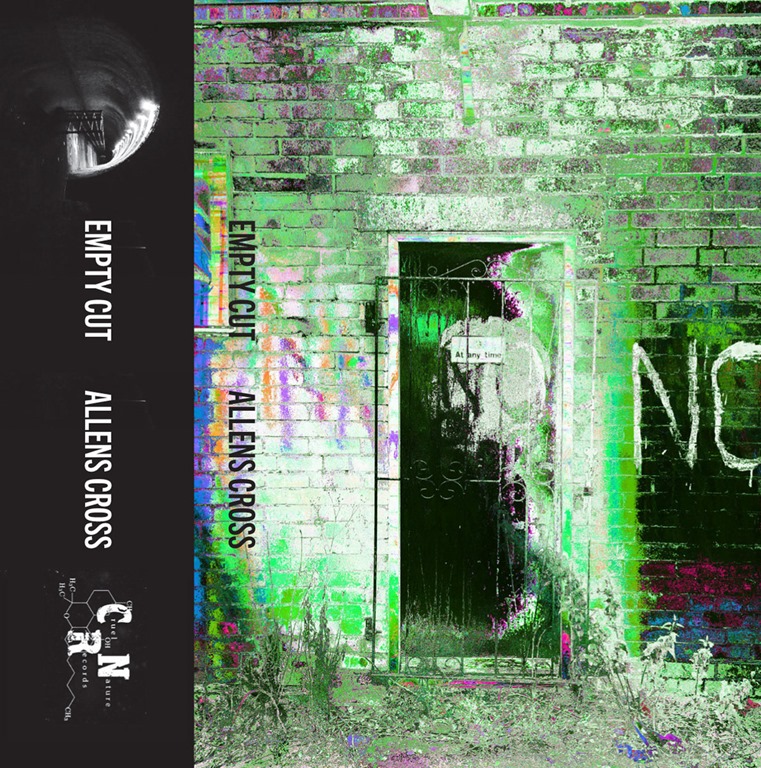
In the debate of nature versus nurture, it’s noteworthy how many artists find themselves influenced in no small way not only by their formative years, but also the place or places where they grew up. There’s an entire thesis to be made from this, but here I make the observation because on Allens Cross, Empty Cut – a duo consisting of Douglas Fielding-Smith and Robert Bollard – have forged a work ‘Inspired by their childhood growing up in Birmingham they blend together all their experience and inspirations to create a noise that holds a heavy solid groove mixed with harsh noise and fuzzed out reverbed bass, topped with psychedelic synths, and chopped and screwed vocals.’

Birmingham, the city which gave us Black Sabbath and UB40, the second largest in England, with a population of over two and a quarter million, and has long been renowned for its diversity, and is a truly multicultural melting-pot. It’s perhaps unsurprising that cities like this – in contrast to so many predominantly white, often middle-class towns – are the source of musical innovation: throw in an element of social deprivation, the frisson of frustration driven by class and cultural disparity, and inevitably, this backdrop will fuel the fires of those with a creative bent.

Allens Cross is exemplary: as the blurbage summarises, ‘mixing together drums, bass, samples, effects and vocals they have created a sound that incorporates punk, hardcore, electronica, jazz, drum’n’bass, experimental-industrial and shoegaze.’ It’s one of those that on paper probably shouldn’t work, but thanks to the dexterity if its creators, works far beyond imagination.

It grinds in on a sample looped and echoed across a dirty bass and slow-building beat… and then everything slides into a doomy, sludgy sonic murk. ‘Bloodline; makes for a dank and difficult opening, five minutes of feedback and dinginess sprawling and lunging this way and that, culminating in a manic howl driven by frantic percussion and driving bass.

‘Fidget’ whips up a howl of feedback against a juddering stop/start bass, and with shouty vocals low in the mix, it brings a quintessential 90s Amphetamine Reptile vibe with a hint of Fudge Tunnel… until things take a detour into dub territory in the mid-section. When the noise blast returns, it hits even harder.

With none of the album’s eight tracks running for less than five minutes and the majority straying beyond six, it feels like there’s an element of slog, of punishment, inbuilt. ‘The Well Beneath’ certainly mines that dark seem of metal that plunges underground, but with the contrast of jazz drumming and some quite nifty bass work, at least until they hit the ‘overload’ pedal and everything blows out with booming distortion.

If ‘Fluff’, by its title sounds cuddly, like a kitten, or a bit throwaway, like that which you’d sweep up from the corner or the room, the reality is quite the opposite: a six-minute seething industrial sprawl, it’s slow-burning, dark and menacing, and a clear choice of lead tune… Not, but then again, with an echo of Eastern promise and a certain ambience, and the strains of feedback a way in the distance, it perhaps is the most accessible cut on the album.

We’re proud to share a video exclusive of ‘Fluff’ here:

AA

Elsewhere, ‘Hymn to Then’ pitches cold synths and rolls of thunder to conjure dark images, a stormy backdrop to an eye-opening hybrid of prog rock, industrial, and krautrock: the result isn’t only epic, but conjures images of Dracula and unseen horrors with its icy atmospherics, while the last track, the eight-minute ‘Shatter’ begins with an eerie take on Celtic folk

Allens Cross is a highly imaginative work, an album that draws together a broad range of styles in a cohesive form. Its impact lands by stealth, building as it does across a range of styles, often creeping under the skin, unexpectedly, to register its effect. Sparse synths laser-cut across distorted, arrhythmic percussive blasts, as a low-level crackle and hum of distortion hovers around the level of the ground. Fractured vocals add to the disorientation, and the experience is uncomfortable. You cower, and will for release, not because it’s bad, but because it’s intentionally claustrophobic, torturous, and so well executed.

This is perhaps a fair summary of Allens Cross as a whole. It is not, by any means, an easy listen. Enjoyable would be a stretch. But it is utterly compelling.

AA

a3947501964_10

Cruel Nature Records – 27th September 2024

Christopher Nosnibor

The scene of microlabels will always give you something absent from the mainstream. I mean it’ll give you many things, but I’m talking about variety. We live in the strangest of times. Postmodernism brought simultaneously the homogenisation of mainstream culture and the evermore extreme fragmentation of everything outside the mainstream. And example of that fragmentation is the existence of Cruel Nature Records, who operate by releasing albums digitally and on cassette in small quantities. Further, the second album by Deep Fade, is typical, released in an edition of forty copies. It’s better to know your audience and operate on a sustainable model of what you can realistically sell, of course, but do take a moment to digest the numbers and the margins and all the rest here. It’s clear that this is a label run for love rather than profit.

The sad aspect of this cultural fragmentation is that so much art worthy of a wider, if not mainstream, audience simply doesn’t get the opportunity. Not that Deep Fade have mainstream potential, by any means. As evidenced on the seven tracks – or eight, depending on format – tracks on Further, Deep Fade are just too weird and lo-fi for the mainstream to accommodate them. They simply don’t conform to a single genre, and with tracks running well over eight minutes and often running beyond the ten-minute mark, they’re not likely to receive much radio airplay either.

Opener ‘Tidal’ is exemplary. Somewhere during the course of its nine minutes it transitions from being minimal bedroom pop to glitchy computer bleepage to a devastating blast of messed-up noise. Yet through it all, Amanda Votta’s vocals remain calm and smooth as she breathily weaved her way through the sludge. The twelve-minute title track veers hard into wild Americana, a mess of country and blues and slide guitar, before tapering into fuzzed-out drone guitar reminiscent of latter-day Earth. Amidst trudging drone guitar, thick with distortion, it’s hard not to feel the lo-fi pull.

We’re immensely proud to present an exclusive premier of the video for the mighty ‘Tidal’:

AA

‘Surge’ arrives on a raw metallic blast before yielding to a spacious echo-soaked guitar drift and some dense, grating abstractions. Texture and detail are to the fore on this layered set of compositions are by no means easy to navigate.

As the band explain, ‘The album, influenced by Neil Young and Einstürzende Neubauten, was recorded across various locations including St. John’s, Providence, Liverpool, and Edinburgh. Environmental elements play a significant role, with guitars recorded during a nor’easter and vocals captured at lighthouses, incorporating natural sounds like wind and bird calls… Toronto’s Church of the Holy Trinity and the Cowboy Junkies’ The Trinity Sessions also influenced the album’s sound, adding to its atmospheric and melancholic feel.’

Atmospheric and melancholic it is, although many of the aforementioned touchstones aren’t easy to extrapolate from the mix. Nevertheless, and you feel your stomach enter a slow churn, which is exacerbated by the low-gear drones which sound like low-circling jets – there have been a lot of those lately and the air is filled with paranoia and mounting dread right now. Further, however not only provides a sonic landscape that matches this mood, but runs far deeper into the psyche.

The acoustic ‘Little Bird’ scratches and scrapes over a fret-buzzing acoustic guitar. The fifteen-minute ‘Heartword is simply a mammoth-length surge of everything, occasionally breaking down to piano and deep tectonic grinds.

It’s fitting that Deep Fade should call their second album Further, because this is where they take things. At times it’s terrifying and at times it’s immense.

The lyrics are as breathtaking as the crushing bass on ‘Wake Me’, and the sparse arrangement of closer ‘Fixed and Faded’, with its breathy, folky vocal and crunchy overdriven guitar which drones, echoes, and sculpts magnificent spares from feedback and sustain, brings a sense of finality and offers much to digest.

The digital version includes an additional track, another monumental epic in the form of the eleven-minute ‘Hawk’, a work of haunting, spectral acoustic country: it’s one hell of a bonus worthy of what is inarguably, one hell of an album.

AA

a1741881484_10

Gringo Records – 15th December 2023

Christopher Nosnibor

By way of a name, Reciprocate doesn’t give much away. With its connotations of collectivism and collaboration, it could be anything from limp indie to a jazz ensemble, although to my ears, it suggests ska-punk or some other corny right-on festival friendly guff. But no: they’re an avant-rock trio, and something of a supergroup when it comes to representatives of the UK DIY scene, consisting of Stef Kett (Shield Your Eyes), with drummer Henri Grimes (Shield Your Eyes, Big Lad), and Marion Andrau (The Wharves, Underground Railroad) on bass, and the name, it transpires, is a reflection of the synergy between the three, promising ‘intoxicating, super catchy good-time, big heart music – a human album delivering a human message of love and love lost.’

The blurbage goes on to outline how Soul To Burn proceeds at a cadence all of its own, halting and blasting, ducking and weaving, zooming away from its distant cousins: Taste era Rory Gallagher or Mr Zoot Horn Rollo of Beefheart’s Magic Band, leathering it at full throttle, fuelled by virtuosic back beats that remind of somewhere between the rolling rock of Mitch Mitchell and the fractured noisebeat of Lightning Bolt’s Brian Chippendale: immediate, innovative, virtuosic, exhilarating.

The album’s ten songs are concise and precise, with ninety percent keeping below the four minute mark, and it’s perhaps this focus which really makes Soul to Burn pop. ‘Sleevetugger’ is pretty minimal, and has soulful, bluesy vibe with even a dash of county twanged into the mix – but it’s played with a wonkiness worthy of Pavement, and that absolutely changes everything. They amp it up on the groovesome ‘Rhodia’, where a riff that comes on like a Led Zep lift is delivered with a rough and ready noise-rock approach.

For context, my first exposure to live music was electric blues acts playing in pubs in my home town of Lincoln, at the tail end of the 80s and very dawn of the 90s. While I was just starting to discover alternative music – via the top 40 and also Melody Maker – I was still that bit too young to go to ‘proper’ gigs, and besides, there weren’t (m)any in Lincoln back then. But what struck me was the musicianship of so many of the acts, many of which would play a mix of originals and covers, and I also came to appreciate how everything blues-based springs from an extremely limited root stock. ‘Derivative’ isn’t really a criticism that holds any water. But, to make blues rock work, it has to either the executed extremely well, or otherwise fuck with the formula in some way, and bring something different to the party. Either is really, really hard to do in such an immense field. The last decade or so has seen countless acts achieve success with some pretty mediocre blues rock played loud: I began to think I was bored of blues. But then an album like Soul To Burn turns up unexpectedly, doing it with a real punk attitude, and turns everything around.

Whereas many power trios – not to mention duos, who are the power trio of the post-millennium years – go all-out to fill every inch of space with sound, Reciprocate create space and separation. Everything isn’t blasting to the max, and instead, what we get is a rare level of detail. The bending strings, the fret buzz, the rattle of the snare, the ragged imperfections – they’re all there, and are integral to the fabric of the recordings.

They do melody and groove, and it’s enjoyable, but when they wander off track, as they do most spectacularly towards the end of ‘Pissed Hymn’ there’s something truly glorious about it. The title track is ahead-on collision between Shellac-like mathiness and raucous, rabble-rousing folk. Everything gets twisted and knotted up, the template gets tangled and torn, and it’s unpredictable and exciting.

And it’s got a cat on the cover. 10/10

AA

Reciprocate - Soul to Burn cover 3000px

Cleopatra Records – 8th November 2023

Christopher Nosnibor

The goth crowd are an odd bunch. Like many subcultures, there’s a strong tribalism ingrained among them, and not even simply the older adherents or trad goths. There’s a perplexing contradiction here, in that a subculture born out of a broad church of outsiders should be so defensive and exclusive, even antagonistic towards those outside their club, while at the same time many are the most broad-minded and accommodating people you could encounter. I suspect the less accommodating are keen to protect their thing from people who aren’t really into it. Casuals, weekend goths, emos and metallers who misrepresent what it is to be goth… yeah, there’s a logic to not want to be tarred with the same mascara brush as some.

In my experience, some goth gigs – and I have been to many, although can’t claim to have been ‘there’ in the early 80s when it was all starting out because I simply wasn’t of an age – do seem to attract more than their share of ‘gother than thou’ posers, and while my collection is very heavy on vintage goth records (and CDs) and my wardrobe is 90% black (as Andrew Eldritch once quipped, and I paraphrase, it saves on laundry), I’ve always felt that I’m not goth enough for the weekend tribal gatherings in Whitby.

This is all to say that I get where Neon Funeral are coming from with this release. The New Jersey-based darkwave/post-punk band, are on Cleopatra Records, which has some pretty strong goth credentials. But then no doubt there will be British goths who will say that it’s an American label and the Americans don’t really ‘get’ goth and created their own strain and yadda yadda yadda.

As the blurbage explains, ‘The EP’s theme is based upon the band feeling alienated from the goth scene. The name of the EP, Banned From The Goth Club was given because of the band’s challenge in finding their audience given their contradictory sound.

The band states, “The goth audience can’t exactly get fully immersed into the music because of the aggression and intensity of the vocals and the hardcore scene can’t exactly understand the softer and dance-driven instrumentals for moshing. We once performed at a goth venue and seemed out of place and out of touch with the audience. We then coined the phrase ‘Banned From The Goth Club’ to welcome the eclectic sound and introduce it playfully.” As is to accentuate this point, the last track on the EP is a cover of Eddie Murphy’s 80s foray into music-making, ‘Party All The Time’.

‘A Void’ is probably too synthy for the traditionalists who like their guitars, trebly and drenched in chorus – but then the switch to gritty, snarling vocals are too metal for the darkwave fans. Of course, you can’t please all of the people all of the time, but what do you do when the people are ultra-picky and pedantic? In the words of Valor Kand – fuck ‘em! It’s a cracking tune, dreamy on the surface but with a heavy dash of nightmare in there. On ‘Avolition’, the heavy synths and hyperactive programmed drumming, melded to solid bass and overlaid with theatrical vocals bring all the ingredients of 90s goth as represented by the likes of Suspiria and the Nightbreed Roster (although thankfully not Every New Dead Ghost). ‘High Tech Low Life’ is short – a mere two minutes and fifty seconds – and gloomy, a droning, drifting synth that lands between Faith era Cure and New Order circa Movement, but with some roaring metal vocals, before it skips into something that’s more like The Mission on crack and fronted by Carl McCoy. All to often, hearing the popular elements of goth being jigsawed together is a bit of a yawn, but it would be way off to describe this as derivative. With its harder edge, Banned From The Goth Club isn’t going to appeal to a large portion of the crowd, particularly the trads and the purists, and it’s not one for the dreamwave, darkwave, or cybergoths either. But for anyone who isn’t set on genre limitations, and with ears, and who likes it dark and a shade gnarly, this is a winner.

AA

AA

a0967268712_10

Rocket Recordings – 6th October 2023

Christopher Nosnibor

Time was when I found a certain excitement and even a solace in a good dystopian novel. There’s always the question of nature vs nurture when it comes to the development of a child to adulthood, and my tendency to gravitate to the darker aspects is likely at odds with my incredibly mundane middle-class upbringing in the rural backwater of Lincolnshire. Or perhaps that was precisely its origin. What may present superficially as an idyll proves under scrutiny to be an inbred place with a smalltown mentality and has been a longstanding Tory stronghold. Being primarily agricultural, the county had the largest Polish population on account of the seasonal harvesting work. But the locals don’t like these foreigners coming over and stealing the jobs we won’t do, so… It’s probably best to start with the digression rather than veer off course later, and the purpose of the digression was to respond to the context of Teeth of the Sea’s latest effort, their sixth, and by their own claims, ‘most outlandish’ album.

To expand the detail of the context, it’s worth quoting from the accompanying blurbage rather than attempting to paraphrase it: ‘In Frank Herbert’s 1973 novel Hellstrom’s Hive, the Dune writer tells of a sinister narrative surrounding the maverick scientist Nils Hellstrom, who has created a meticulously constructed Hive underneath his Oregon farmhouse. Therein, he oversees a subterranean order of 50,000 insect-human hybrid life-forms. Ultimately his plan being for the inhabitants of the Hive to usurp humanity and take over the world. The decade thus far may not have seen anything quite so daunting, but it’s provided more than its fair share of challenges. Yet in such dystopian environments, Teeth Of The Sea flourish. This band has created a kaleidoscopic inner world all its own in Hive, their sixth and most outlandish album.

I spend the entirety of the first track, ‘Artemis’ being frustrated by my inability to place the origin of the nagging motif which is central to the tune, to the extent I stomp my feet and roar at the ceiling, neither of which helps. But things move on swiftly with the space-age stomp of ‘Get With the Program’, the vocals low in the mix beneath a conglomeration of a bubbling repetition and some gyrating dives, dominated by a sturdy four-four bass drum beat.

If ‘Butterfly House’ is overtly in the style of commercial dance circa 2005, it’s equally classic electro, reminiscent of Ladytron, but with frenzied fretwork dominating the midsection. Nevertheless, it’s dreamy, mellow – and quite the contrast from the quasi-industrial percussion-based attack of ‘Liminal Kin’.

No-one could accuse Teath of the Sea being predictable or derivate here, and the diversity of Hive spans post-rock ambience and progressive rock, and the nine-and-a-bit minute behemoth ‘Megaframa’ goes full Chris ‘n’ Cosey electro-driven dance. It’s beaty, it’s groovy, but it’s got weirdness woven through its fabric.

The final two tracks, ‘Powerhorse’ and ‘Apollo’ are both mellow, but once again couldn’t be more different, with the former bringing an ambient drift before the later fades into the sunset with melancholic picked guitar and unexpected but emotive trumpet. On paper, this probably bears the making of an incoherent mess, but nothing could be further from the truth: the contrasts are complimentary, and there’s a flow which brings the album together. It’s not mere crafting or composition, but a work of sonic alchemy.

AA

630014

Panurus Productions – 6th October 2023

Christopher Nosnibor

Heavy music doesn’t have to be po-faced or excessively serious, and there have been a few comedy metal and noise bands through the years. Lawnmower Deth are one which swiftly spring to mind, but the likes of Municipal Waste, and lesser-known acts like Grindcore Cakemakers also make hard noise while being a far cry from the existential rage more commonly associated with their genres. And that’s good. The world needs variety, and there’s more than one way to alleviate the grimness of life on this sorry planet.

This album from Black Shape is perhaps the absolute antithesis of Godflesh’s seminal Streetcleaner. With the lumbering weight of a runaway bin lorry, Black Shape rumble their way through eleven tracks of bin themed absurdity, utilising their knack for writing material that is as colossally heavy as it is varied and comedic. Most of the tracks are around the two-minute mark, with just a couple of four-minute outliers. On the surface it’s a whole mess of noisy shit, but closer listening soon reveals a wildly varied album which incorporates jazz, spoken word, nu-metal, rap and thrash.

‘The Beast from the North East’ is a dirty, shouty punk effort – more Anti-Nowhere League than The Pistols. Dense, muscular, with filthy sludge guitars, pant-soiling bass, and a wild solo which occupies half the song’s duration. The production is rough and raw, and this works in its favour: the guitar on ‘I Wanna be a Binman’ positively tears from the speakers, and it’s like being at a gig and standing so close to the PA that your nostrils vibrate. If you’ve never done it, you need to at least once, although earplugs are recommended. You still feel the force without fucking your hearing for the rest of your life. It’s a throbbing stomper reminiscent of Ministry circa Psalm 69. Only instead of burning for the needle, it’s a hard craving for lugging refuse. They pillage every style going here: ‘Dogshit Bin Juice’ takes a turn for the choral in the verses between ball-busting glam stomp riff breaks. It’s hilarious, but also makes you think. You sometimes hear that binmen are pretty well-paid. But would you do this, for any money?

If ‘Put Me in the Bin’ is the most overtly old-school punk cut, the recording is again more industrial, which couldn’t be more at odds with the offbeat, off-the-cuff lyrics, while ‘Once a Binman, Always a Binman’ throws a curveball with a gentle intro and unlikely lift of ‘Love Lift us Up Where We Belong’ before going full-slugging nu-metal / grunge crossover, with the meaty heft of Tad bringing the blue collar grit to proceedings. There are some moments of astute observation and social critique which land quite unexpectedly, but it just goes to show that it’s a mistake to write of a so-called ‘comedy’ album – or indeed any comedy – as shallow, lacking in content, or emotional depth. ‘The Story of How I Died’ brings lilting harp and Pam Ayres style narrative.

Beyond bin-related themes, this is not an album that’s predictable in anyway, lyrically or stylistically, with piano ballads pressed against squalling hardcore assaults. And because of the punk / thrash / metal leanings, and the overall daftness of many of the lyrics and the overall concept, Black Shape’s musicianship is likely to be overlooked. But the range is a measure of immense versatility and competence. Black Shape are the Bill Bailey of dustbins, and BINS is a work of sheer brilliance.

AA

a2313098061_10

Buzzhowl Records – 24th January 2020

Christopher Nosnibor

Masks are generally used to either obscure, hide, or otherwise present an alternative identity. The press blurb which accompanies the debut release by Masks, which arrives in the form of a two-track (lathe-cut) seven-inch gives little away, beyond the ‘fact’ that Masks is a New Zealand based artist. Singular. Although this is immediately thrown into question by the statement ‘We’re very excited to be putting out Masks’ debut release. We’ve been fans of the people involved for some time now.’ This doesn’t discredit the singular aspect, but does compel questioning. Toward the end of any interrogation, it’s perhaps worth asking ‘does or should it matter?’ Probably not, although our instinct is to seek something upon which to pin an identity or similar concrete elements as identifiers, as a means of basing experience and engagement.

Most songs about weekends I’m aware of are jaunty, jubilant, celebratory tunes. Take Michael Gray’s 2004 chart smash ‘The Weekend’, accompanied by a video with a sultry secretary busting moves around a photocopier, for example Reverend and the Makers’ ‘Living for the Weekend’ was irksome wank, and ‘The Weekend’ by Interpol is one of their weakest tracks by yards. The emphasis is very much on the separation pf the working week, and the weekend, which for many is not the reality of how work and life balance.

Masks sounds like their weekend contains back-to-back funerals as they grind and hammer their way through a murky mess of guitar that’s more about atmosphere than definition or tune. The percussion is pure punishment, industrial-strength pounding, while a synth howls an anguish-inducing drone around a monotone vocal that carries hints of Brian Molko. Yes, ‘Our Weekend Starts Tomorrow’ comes on like a bleak industrial / post-punk Placebo and packs some serious punch in a lugubrious, mid-tempo but thunderously dense sense.

There’s a change of mask for ‘Broken Glass’, a drifting, beat-free swell of instrumental ambience. It’s pleasant, but dark and contrasts starkly with ‘Our Weekend Starts Tomorrow’ in its overt formlessness. Is it a different face of the ‘band’ / ‘artist’, or another identity altogether? It’s unquestionably a departure, and if nothing else, suggests that Masks are multi-faceted.. complex. Unpredictable. Subject to change. What lies behind the mask? Maybe all will be revealed in good time…

Artwork Credit_ Sven Soric