Posts Tagged ‘collaboration’

Human Worth – 18th April 2025

Christopher Nosnibor

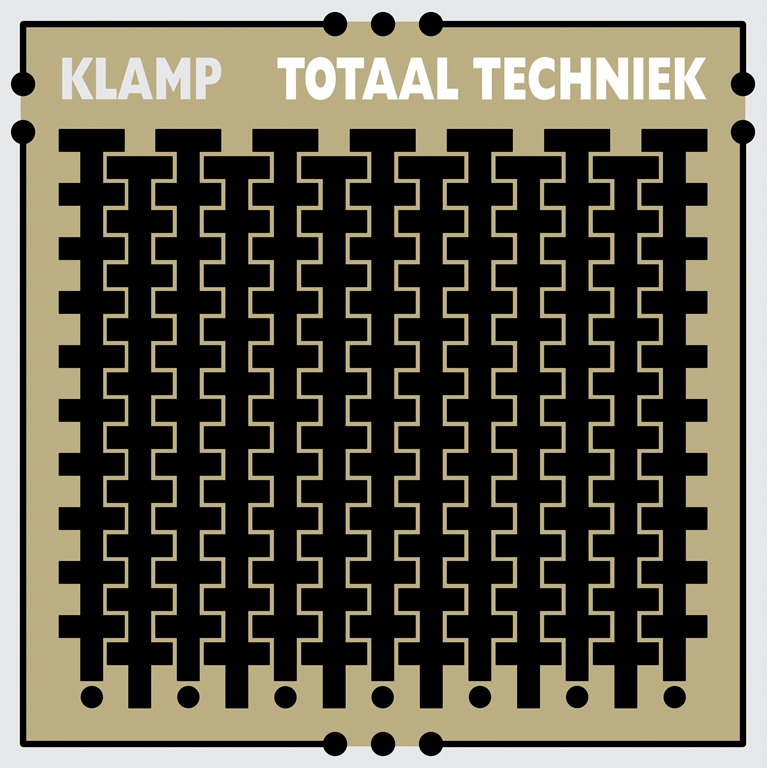
Given the event it supposedly commemorates, Good Friday has always seemed like a rather strange choice of name to give to the day – although I suppose for Christians it’s good because without it the religion probably wouldn’t exist. But this year, Good Friday actually lives up to its name, with the ever-dependable Human Worth dropping its second new release in a fortnight, this time in the form of TOTAAL TECHNIEK by KLAMP.

KLAMP first emerged in 2020, with the upfront Hate You, and since then, they’ve evolved considerably. Less a band and more of a fluid and ever-expanding collective, the original trio consisting of Jason Stoll (Sex Swing / Mugstar / JAAW), Lee Vincent (Pulled Apart by Horses) and Greg Wynne (Manatees) has now swelled to a lineup of seven performers, with Adam Devonshire (IDLES), Matthew Parker (Tall Ships), Rachael Morrison and Wayne Adams (Petbrick / Big Lad) having joined their ranks, along with a host of others who have contributed to this second album while passing through.

When approached in the right way – that is to say, with an open mind – collaboration can yield not only works which are greater than the sum of the parts, but unexpected results, as fresh input and different perspectives can throw wide open the doors to new ideas and possibilities. The converse of this is when a collaboration finds those involved arriving with egos fully inflated and preconceived ideas, and they simply stifle one another into playing to form. It’s abundantly clear that KLAAMP foster a spirit of experimentalism, a willingness to try things out, and see what transpires. The list of genres and influences, direct or implicit, noted in the liner notes is immense, and a reminder of why genres are not really the friend of artists who go with the flow of whatever happens creatively. But rather that dwell on that excessively, I’m simply going to replicate the ‘FFO’ list which accompanies the release, because it not only illustrates the stylistic range TOTAAL TECHNIEK offers, but also sets the scene in terms of expectation: ‘Swans / Sonic Youth / Black Sabbath / Godspeed You Black Emperor / Mark Lanegan / Einstürzende Neubauten / The Fall / Sunn O))) / Wire / Aphex Twin / Portishead / Godflesh / Earth / My Bloody Valentine / Gnod / Anna Von Hausswolf / The Bug and more… ‘ In other words, while there’s a lot of heavy and noisy stuff happening, there’s a whole lot more besides.

This means that the appropriately-titled ‘The First Song’ commences the set not with skull-crushing heavyweight riffery, but a subtle sense of ambience. Drones hover ominously, while chittering extranea evoke almost jungle-like sounds while distant beats flicker and echo like a collapsed synapse before they strickle into a drifting, psychedelic indie dream. There may be hints of later Earth about it, but ultimately it’s mellow and shoegazy, and while the pedals kick in just shy of the five minute mark, it’s steering hard in the vein of desert rock with an easy-going vibe, even with the raging vocals which are practically submerged in the mix. As it carries you along on its warm currents, there’s no frustration that this isn’t the heavy shit they’d promised. It’s simply good music, and has atmosphere and texture.

‘Zpine’ brings motorik drumming, a hint of Pavement crossed with Stereolab, with some noisy guitars slashing and splashing cross the solid, sequenced groove, while the vocals are harsh and ragged. The mid-section goes full Hawkwind, and the weirder and more wide-ranging it gets, the better it gets, too.

The album’s shortest song, ‘Wet Leather’ is a bass-led Krautrock-influenced psych-hued droner that bounces along nicely, and while it does kick off heavy a minute or so in, it mostly kinda comes on like The Fall circa Code: Selfish but with guitars from early Ride swirling all over.

‘Leprozenkapel’, the fourth track – which marks the end of side one – brings the rage and the noise and the throbbing noise, and it’s dark and heavy, and in some respects calls to mind late 80s Ministry as it pounds and snarls. Those drums, totally overloading with distortion and a metallic crunch… this is mean and brutal, while the eight-and-a-half-minute ‘The Crying Towel’ is different again, and altogether kinder. This is good: we need more kindness right now. And at some point a couple of minutes in, the ball-busting, super-weighty riff comes in, and there it is. But there are layers, texture, elements of shoegaze and more atop the lumbering rockout riffery. There is a lot happening here, and KLAAMP balance e it all perfectly.

Things shift towards menacing, doomy black metal on ‘Evil Pipe’, but the album ends – with another epic track in the form of the seven-and-a-half-minute title track, that comes on like a meshing of Joy Division or early New Order – particularly with the drumming – and Doves, before going full Melvins. And it somehow works. Of course, Human Worth would never release a crap album, but TOTAL TECHNITECH is truly outstanding. It’s not just the concept,  but in the delivery, and it’s all killer.

AA

HW044_KLAMP_TOTAAL TECHNIEK_CoverArtwork

Human Worth – 11th April 2025

Christopher Nosnibor

Name three great but seemingly disparate acts for a collaboration, and the chances are that no-one, but no-one would pick Ghold, Bruxa Maria, and Test Dept. But here we are with the arrival of Ohm by Deadpop, which promises ‘Hard hitting & riff heavy sludge rock’ out of London.

It’s a pretty far-out work, it has to be said. Riding in on a siren-like wave of noise, ‘Saboteur’ announces the album’s arrival loudly and intensely, and it makes you sit up, alright, and your eyes pop when the guitars slam in after some forty seconds – which is a long time when it comes to listening to twitching, glitching feedback. The bass and drums meld together in a thick sludge of overdrive.

I’m not sure what the two parts of ‘Tomahawk’ are about – although it’s probably more likely to be a punk thing or the missile than expensive steak, and they bleed together for forge six minutes of thunderous racket which takes me back to circa 2009 when bands like Pulled Apart by Horses, Blacklisters, Chickenhawk (later rebranded as Hawk Eyes), and These Monsters were exploding on the Leeds scene. Sure, there’s been noisy shit in circulation forever, and grunge may have opened the doors to a wider, more mainstream, audience, but the indie charts and John Peel’s radio show was chock-solid with wayward guitar-driven racket. Human Worth have championed big noise from day one, but have perhaps leaned toward a different shade – or perhaps there hasn’t been anything quite of this nature released recently. And am I really feeling nostalgia for circa 2009? Well, actually, perhaps I am. It was sixteen years ago, after all. Kids doing their GCSE exams weren’t even born then.

I digress – as usual – but it’s relevant when positioning this release, an album that brings the kind of big sonic mayhem that feels less common now, and in context, feels quite different from anything else that’s been released recently. ‘Tomahawk II’ adds the percussive frenzy of Test Dept to the party, calling to mind early releases like the ‘Compulsion’ 12” and Beating the Retreat.

‘Third Metal Wheel’ is a lurching cacophony of lumbering guitars, layers of echoed vocals, and thunderous drumming, the outcome being something akin to Melvins current releases, and while the monster riffology of ‘Dirt Cheap Rage’ provides but an interlude at under two minutes, it’s well placed ahead of the experimental oddity of ‘Disgrace’, which straddles sludge rock, heavy psychedelia, and punk.

The six-and-a-half-minute ‘Yesterday’ summarises the album, really: a thick, full-heft riff slogalong that pounds away, relentlessly, it calls to mind Melvins, but also encapsulates the spirit of all that is stoner, sludge, and doom in a capsule.

The album’s final track, ‘Skygrave’ delivers a driving finish, a blistering blast of full-on, speaker-shredding distortion, with some brief warping samples and disturbances thrown in for good measure, and it’s a truly brain-melting occurrence. If on the surface, Ohm is just another sludgy / stoner noise, the actuality is so much more: this is an album that brings a certain experimental bent, on top of all the riffs. And yes, it does bring all the riffs. And that’s a fact. Ohm is a heavyweight riff-slugger – and that’s a fact, too. This album is a beast.

AA

a3570033219_10

Gagarin Records – 6th December 2024

Christopher Nosnibor

You might be hard-pressed to call CEL a supergroup, but Felix Kubin has been creating sound here, there, and everywhere for a long time now, and Five minutes to self-destruct is definitely a coming together of established creative forces, containing as it does five recordings of live tracks performed by longstanding Kubin and longstanding collaborator Hubert Zemler, remixed by Warsaw sound engineer Jan Wroński.

And the thing about creative collaborations is that they often rely on spontaneity, immediacy, the frisson between the individuals in proximity, feeding off one another in the moment. And so it is here, as the accompanying notes set out: ‘The expressiveness of these recordings is evident not only in their unbridled live energy, which can hardly be reproduced in the studio, but also in a musical nervousness that sets itself apart from the current wellness folklore of the modular community. The pieces gather in their DNA the paranoid plasma of cultural unease, chaos and upheaval.’

To make a small sidestep, we hear endless decrees that employees need to return to the office in order to foster the spirit of collaboration and all the rest. We know that this is bollocks, and is simply about working the instruments of control. Collaboration and the coalescence of energy for creative ends is not something which cannot be forced, and it happens, regardless of distance, time, and space, given the right connection and chemistry. Hearing the performances on Five minutes to self-destruct, it’s immediately apparent that this is not something that could ever be created by desire or will alone.

As the accompanying bio notes, ‘The expressiveness of these recordings is evident not only in their unbridled live energy, which can hardly be reproduced in the studio, but also in a musical nervousness that sets itself apart from the current wellness folklore of the modular community. The pieces gather in their DNA the paranoid plasma of cultural unease, chaos and upheaval.’

The title track ‘Five minutes to self-destruct’ is a quote from Michael Crichton’s sci-fi classic The Andromeda Strain, which describes a research team’s fight for survival against an accidentally triggered self-destruct mechanism, underpinned by trigger impulses and increasing panic.

My own experience of the modular community may not be on quite the same scale or the same higher circles as theirs, but it does feel primarily the domain of the middle-class, middle-aged white male these days, and there’s a certain air of ease and the satisfaction of hobbyism about it. Needless to say, not so here. There’s a tension that runs throughout the entirety of the release. ‘Krakenwaltz’ cartwheels and loops in jittery circles, head-spinning rhythmic cycles with no small degree of attack, with some sharp, aggressive snare sounds and a frenetic, frantic undercurrent which grows increasingly disorientating over its near-six-minute duration.

‘Eskalacja’ is dominated by hectic percussion and a whirl of fairground bleeps and toots running in ever-tighter concentric circles. It some respects, it calls to mind the frenzied looping and wild, vaguely manic excesses of early Foetus 12” singles, seeing just how far they can push the concept, and themselves in the creation of hyperactive sound.

The seven-minute ‘Blauer Dunst’ which sits as the album’s centrepiece marks a distinct shift in tone and texture, a rumbling dark ambient piece that invites comparisons to some of the more abstract works of Throbbing Gristle. It predates the rest of the set by almost four years, having been recorded in October 2020.

It’s back to more upbeat, stomping percussion-led synth work on the DAF-like ‘Neustart Generation’ – but don’t mistake upbeat for uplifting: it clatters and bangs with a clipped, regimented, Germanic feel, and the grooves are taut and tense, and it’s simmering tension which crackles beneath the lumping, shuffling, organic rhythms which underpin the sparse, tetchy title track. A couple of minutes in, a loping percussive cycle breaks out and the repetition of this and the dominant synth motif, amidst a swell of extraneous sounds – samples, sirens – makes this one of those tracks where you can feel your blood pressure increasing as it progresses and the pace quickens to a blur. It ends before reaching the point of inducing an aneurysm, and the assurance to the applauding audience, “We’re still alive, it’s ok,” at the fae injects some unexpected humour to proceedings.

AA

a1852422406_10

Mortality Tables – 29th November 2024

Christopher Nosnibor

Because life experience creates linguistic associations, for me, it’s impossible to see or hear the word ‘interzone’ without immediately thinking of William S. Burroughs. The title of a collection of short stories and ‘routines’ penned in the mid-1950s, Interzone was the working title of the seminal breakthrough novel Naked Lunch (1959), and the collection, published in 1990 consists of segments which failed to make the final cut. The pieces were written while Burroughs was living in Tangier, something of a haven for expat writers, including, perhaps most notably, Paul Bowles, but also polyartist and true inventor of the cut-up method, Brion Gyson. Burroughs described the city as an ‘interzone’, and it was indeed both an ‘international zone’, as the portmanteau implies, and a space between zones, outside of any single culture or jurisdiction, its administration divided between the US, French, Spanish, and English sectors, where ‘nothing is true, everything is permitted’. Of course, there are numerous other connotations, but this is what I’m bringing in terms of prececeptional baggage to this.

The accompanying notes certainly indicate that the album’s content holds up to these parallel positions: ‘Like its name implies, these are place of transiency. Intermediate places. In-between locations. Melting pots of different people and different ideas, constantly evolving as one thing collides with another, and another, and another.’

The album was initially recorded in 2022 as a solo work, but subsequently scrapped and rerecorded with a different collaborator on each composition. Collaborations do tend to bring out different aspects of an artist, and it should therefore be of no surprise that this suite of nine pieces, recorded between 2022 and 2024 in Switzerland, England, Luxembourg, France and Zimbabwe, is eclectic in its take on electronica.

As the bookending pieces, ‘Entry Visa’ and ‘Exit Visa’ indicate, travel, movement, and transition, are the key themes here. But this is not some pan-cultural pick ‘n’ mix grab-bag, and instead creates an experience which replicates the disorientation of travel. It’s difficult to articulate just how this sonic patchwork works, or quite how the experience feels. It’s not as if it lurches from techno to grunge, to opera, to thrash, and in this respect Lally’s works represent his ‘two inches of ivory’, so to speak. But within the realm of electronica, Interzones covers substantial ground.

‘Play Position’, featuring Salford Electronics, is a sample-packed exploratory work with a prominent beat, which contrasts considerably with the near-ambience of ‘A Stealth Approach’, featuring Scanner; contrasting further, Simon Fisher Turner brings a sort of drawling space-age country aspect to ‘Calmer’, before things take a spin toward out-and-out trance on the title track, and Karen Vogt’s airy, soft vocals on ‘Running Circles’ pull the album gently into hypnotic shoegaze territory. The album continues on this trajectory, sliding deeper into dark, gothy electropop with ‘Ripples’.

The insistent beat and overtly dance style of ‘Exit Visa’ makes for an unexpected change in direction – despite the fact that, by this point, nothing should be truly unexpected. The effect, however, is disorientating, and you find yourself wondering how you came from A to B over the duration of the album. It’s testament to both Lally’s compositional skills and his selection of contributors – as well as the album’s sequencing – that somehow, it flows and the transitions themselves are seamless, which only heightens the sense of moving between spaces with no real sense of how it came to pass. Vitally, Interzones is a subtly detailed work, with hidden depths and moments of genuine beauty.

AA

a2037434320_10

Legendary artists Peter Murphy and Boy George have combined forces for a gorgeously majestic new single entitled ‘Let The Flowers Grow’. Produced and co-written by Youth, their duet on what is a profoundly emotional orchestral masterpiece is available from today on Metropolis Records.
Murphy recalls: “I was recording my new album in Spain with Youth and, while listening to a playback of a song, I heard another piece of music coming from his mobile phone. It caught my ear for its melodic beauty as well as a Roy Orbison-like voice that was singing it.” Upon learning that it was an unfinished demo written by Boy George, he was intrigued and asked Youth if he could work on the partial song. “In a matter of twenty minutes, we had ‘Flowers…’ finished.”

“When I heard the mix, I was satiated in every way,” beams Boy George. “I have always loved Pete’s voice and his writing on this adds a beautiful darkness. The production feels very epic, like Scott Walker.”

Check it here:

AA

‘Let The Flowers Grow’ carries an air of elegance, the iconic voices of both singers delivering a message of hope and tolerance. Originally written by Boy George, its initial message was one of personal acceptance about being gay. As the song developed, it took on a more expansive and universal scope, its lyrics extending beyond sexuality and embracing race, gender, creed and religion. “With everything going on in the world about identity, it feels very powerful,” he explains.

The mutual adoration between the duo has spanned decades. “I first met Boy George when he asked to be allowed backstage to meet Howard Devoto when Bauhaus were supporting Magazine,” recalls Murphy. “He struck me as a super-original, self-styled 17th Century fop. The second time I met him was when we walked into the BBC to do ‘Ziggy Stardust’ on Top of the Pops where Culture Club were also making their debut on the show. George greeted me very warmly and I discovered he was a Bauhaus fan.”
With the single unveiled, Boy George adds:“It makes me dizzy and proud,” while Murphy concludes: “Boy George loves it and I’m so glad.”

ffef40caabb67931b45349413f908104c7dd3a0b20e548081ff71a0021808434db2a81f3e3fc8597

PETER MURPHY : photo by Jolene Siana  |  BOY GEORGE : photo by Dean Stockings

Intro: Christopher Nosnibor

Interview: John Wisniewski

Images: individually credited, via Foetus.org

It’s been over forty-five years since Melbourne-born James George Thirlwell washed up on English shores, and having played some keyboards on the album No Cowboys by post-punk act PragVec in 1980, he embarked on what would become a truly remarkable and lifelong musical journey of his own.

Along the way, he’s released no fewer than eleven studio albums under an array of variants of the Foetus moniker, not to mention quite literally dozens of other musical vehicles from big band (Steroid Maximus) to more experimental instrumental work (Manorexia) and almost everything in between, not to mention powerful collaborations with Marc Almond (Flesh Volcano), Jim Coleman (Baby Zizane), Lydia Lunch (Stinkfist), and the late Roli Mosimann (Wiseblood), to name but three of many. And then there are the numerous scores… and yet whatever he turns his hand to, his work has a certain distinctive style, a sense of drama.

Foetus may have been on hiatus since 2013, but at the age of sixty-four, Thirlwell is showing no signs of slowing down. John Wisniewski managed to catch a window in the man’s relentless schedule to ask about his myriad projects past, present, and future…

JW: Did you formally study music, JG?

JGT: I briefly learned cello and percussion when I was a kid. But I was very slow with sight reading.

Later I just taught myself everything from instruments to recording, programming, scoring etc.

Tell us about your first music project, Foetus. What did you want to present?

The initial catalyst for Foetus was to create something totally by myself, where I played wrote and produced everything, as a reaction to the democracy of playing with other people. I wanted to make the music in my head and the music I wanted to hear. I also wanted to create artifacts, a work of art as a multiple where everyone owned an original. It took me a long time to be able to fully realize what was in my head. I’m still not always successful with that transfer process.

How did the Lydia Lunch collaboration come about?

I knew Lydia’s work and was introduced to her when she moved to London in about 1982 through the Birthday Party. At first she asked me to write her a press bio as I had been writing fanciful bios for the Birthday Party! First I played sax with one of her projects which we toured with in Sweden. Then we started writing songs for something called The Hard Diamond Drill, which was never realized. Then we created Stinkfist and went on to make Immaculate Consumptive. We became involved romantically and moved to NYC together. I was with her until about 1989 / 1990.

Any favorite music artists?

Many favorite artists, it changes daily. I become obsessed with someone for an afternoon. I like to hear new things all the time. I am a cultural sponge. I publish a monthly playlist on my Tumblr blog. https://jgthirlwell.tumblr.com/

What inspires you to create?

Everything. I have so many ideas, it is an infinite renewable resource. I also have a hungry legacy and I have to make sacrifices to its insatiable maw.

Another legendary early collaboration was with Nick Cave. How did that one come about?

The Birthday Party broke up. Nick was looking to work with other people and we were friends. We wrote the music for one song together, which was Wings Off Flies on the first Bad Seeds album. When he came to record that album I went to some sessions, but drifted away as I was in the midst of a big bout of recording of Foetus material, the sessions that became the Hole album. A bit later we had the Immaculate Consumptive project – Oct 1983.

Do you like collaborating with other artists?

I have gotten better at it.

tumblr_lqecdl1bnu1r26hzho1_1280

Photo by Marylene May

What was the experience like working with Marc Almond and Trent Reznor’s material?

Marc is very open minded and works very fast and is excited by music that challenges him and stretches the boundaries of what he has done. So that is stimulating. For Trent I remixed two of his songs, “Wish" and "Mr Self Destruct". I did my work on it, mutating the original material. he wasn’t involved. He liked what I did.

Do you like to work within different genres of music?

You may have noticed one of the hallmarks in my music, is that I combine multiple styles often within one song.

What are you working on now?

New Xordox album Terraform, Venture Bros Volume 3 and Foetus HALT should all be out in 2025.

Also under way are two albums of symphonies for chamber orchestra, and album of soundtracks I have written for Ken Jacobs. An EP with Laura Wolf, a triple box of music I created for sound and art installations. Hopefully another Archer soundtrack album. And much more.

Why do you have so many projects on the go (and how do you manage it)?
I like to work in a lot of styles and on a lot of projects in different forms – solo pieces, ensemble pieces, multi channel, electronic, acoustic, vocal, instrumental. Concert works, classic songs, scoring. I have a lot of ideas to get out of my system. There’s no one project that can harvest everything. There are things that I get out of my system with Foetus which are totally different to the place I am in when I create a sound installation, or a soundtrack,

My projects are usually staggered, which is to say a lot of projects in different states of completion. So I shunt them all along and they get completed in different paces. Then new ones sprout up. I couldn’t just work on one thing.

AA

2009-jgthirlwell-circa-2

Do you ever take time out and what do you do to unwind?
Yes I stop to watch movies, see art and travel. But my work is perpetual motion, I don’t need to unwind from it. I believe in being creative every day. That’s also manifested on ideas I have for visual art, photography etc
>
I’ve read elsewhere that the upcoming Foetus album, as the title alludes, is slated to be your last. What can we expect from it?
Tying up forty five years of Foetus is no mean feat and I have been working on it for seven years. There are parts that make it seem like a continuum and other parts that have never been done in the Foetus context. It’s going to be epic.

AA

Catch up on JG Thirlwell’s output on his Bandcamp page.

2010-jgthirlwell-circa-2

Discus Music – 27th September 2024

Christopher Nosnibor

One way to tell an avant-garde musical work from its title alone is when the title provides a quite precise statement relating to its compositional nature. And so it is that this collaborative set of songs by Keir Cooper and Eleanor Westbrook are structured around guitar and voice.

‘Willow Tree – A Dialogue’ takes the interesting form of – perhaps not surprisingly – a dialogue of sorts, in which Westbrook’s adopts two contrasting modes of delivery, with a spectacular operatic aria juxtaposed with a spoken-word interrogation as a counterpoint. The effect is closer to a simultaneous internal monologue running across the song itself rather than a dialogue in the conventional sense. Meanwhile, the delicately picked neoclassical guitar is subject to interruption by clunks and distortion and occasional whirs and bleeps and the operatic vocal strays off kilter and the dream which drifted in twists and flickers with darker shades: not pronounced enough to be truly nightmarish, but unsettling.

The pair continue to explore the contrasts of melody and disharmony as Westbrook squeaks, squawks, trills, and purrs an infinite array of vocal gymnastics and Cooper’s guitar work, which chimes and treads delicately from folk to flamenco via classical streams, stamps on its own beauty with sudden and unexpected stops and stutters and forays into wrongness with stray notes and dissonance.

‘Superstar’ strays into the space which soundtracks a sense of derangement, the territory where things make no sense, and that place of incomprehension instils an unsettling confusion that borders on anxiety. ‘Modern Translation’ follows a similar trajectory: it’s a piece of magical neoclassical chamber music that’s twisted as if performed in an auditory hall of mirrors. Everything is wrong: something that should be soothing and beautiful is warped in a that it becomes unheimlich, eerie.

It’s hard to locate a touchstone or reference point for this: perhaps there are elements of later Scott Walker present, blended with hints of The Ex with its more avant-jazz leanings. One can only muse as to how they came to create this work: despite its clear foundations in the realms of classical and opera, Star Quality ventures so far from this path that it often bears little resemblance to any given style. The pieces evidently do have quite detailed and complex structures, as there’s nothing haphazard or uncoordinated about the way the two play together, but it’s impossible to decipher them from an outside perspective.

There’s a grand yet ethereal theatricality to ‘Bordering the Afterworld’, and ‘O’ soars and swoops and squeaks and whoops its way theatrically – and somewhat crazily – across some sprightly, if vaguely gothic-sounding guitar picking that suddenly, from nowhere, begins to buzz and thump. ‘The Time I Gave Up the Stage’ draws the curtain on an incredibly curious and as far off the wall as is imaginable.

Star Quality clearly has theatrical inspirations and aspirations, but shows two artists who are more interested in exploring their outer limits than taking the limelight in a mainstream setting – and for that, I applaud them.

AA

a1210959813_10

Buñuel recently announced their fourth full-length album Mansuetude, and first release outside their outlandish trilogy of albums. Today, they share a second preview of the album in the form of ‘Fixer’, a track featuring the snarls of Couch Slut vocalist Megan Osztrosits.

Listen here:

AA

The music on Mansuetude warps and buckles with complexity, freedom, tenderness and primaeval energy all at once. The album includes a handful of exciting collaborations, with ‘Fixer’ being the first taster of this combined energy. About the track the band comments;

“Following a Breaking Bad trajectory and owing this account largely to a friend of his who had been called The Crystal Meth King of Oklahoma by the FBI, the FIXER follows a drug czar’s Man Friday as he cleans up that which inevitably needs cleaning up when you’re living a life of crime.”

Megan Osztrosits of Couch Slut adds;

“When Eugene hit me up to ask if I wanted to do vocals for a track, I said yes without even hearing it. He rules and I am psyched for this absolute ripper of an album.”

AA

BUNUEL_MANSUETUDE_RECORD-99079e051404513c

(BUÑUEL, L-R: Franz Valente, Xabier Iriondo, Andrea Lombardini, Eugene S. Robinson | By Annapaola Martin

Slaughterback – 22nd August 2024

Christopher Nosnibor

Dallas Kent might sound like a fictional cowboy, or possibly a made-up American town in a made-up state, but it’s actually the name bestowed upon the collaboration between London-based composer/producer Ian Williams (originally from Canterbury, Kent) and singer Crystal Brown (from Dallas, Texas). In that context, the moniker makes sense, of course.

As their bio explains, ‘It started in the late 2010s when Williams was looking for a singer to work with on some of his dark electronic pop songs, with Brown happening to live one street away from his studio in Hackney, East London… They swiftly recorded a considerable amount of material, but had to shelve the project when Brown relocated to the USA. The duo continued to discuss their options until finally, with Crystal settled in San Francisco and the pandemic giving everyone time to pause their normal lives, they decided to complete what they had begun so many years before.’

There’s no question that the pandemic changed a lot, if not, in some ways, everything. While many suffered with extreme alienation and the traumas of isolation and separation, it also forced a realisation of what was achievable, creatively, despite separation, and proved that the idea that ‘distance is no object’, which had long been embedded within the channels opened by The Internet was not merely a concept, but something which was more than simply a conceptual matter.

I suppose I realised this around the turn of the millennium, when I experienced something akin to a lockdown situation of sorts, albeit for very different reasons. I had relocated to Glasgow around Easter 2000 under difficult personal circumstances. I didn’t really know anyone. I was yet to make friends in my new job there. And I was so fucking broke I could barely afford to eat – a situation not particularly conducive to socialising and building new friendships. A friend I had known in York, who had subsequently moved to Sheffield, introduced me to Hole’s chatroom, and, stuck at home and unable to sleep, I found myself spending my nights online chatting to people from around the world at all hours, at least until, with dial-up Internet costing a penning a minute, I racked up a phone bill I couldn’t pay, and had my phone cut off. Then along came MySpace, and again, the possibilities for communication and collaboration across continents were immediately apparent. People who missed the age of the chatroom and MySpace were perhaps less predisposed to these potentialities, and consequently, the pandemic lockdowns hit them harder: they had to learn these things anew.

Anyway. This single entitled ‘Ghost Highway’, which, their bio tells us, ‘is redolent of Massive Attack and Ennio Morricone’ is the first fruits of their collaboration, ahead of ‘a full album that promises to be a mash-up of cinematic downtempo sounds, Americana, French disco and anything else they can throw into the mix.’

‘Ghost Higheway’ is very much a spacious trip-hop-influenced piece, with haunting vocals and a thick, dubby bass rolling low under a slow, deliberate, nod-along beat. Its magnificence lies in its sparse simplicity, and the fact it’s over almost as soon as it begins, and you find yourself yearning to delve deeper, to keep moving into this atmospheric world they’re presenting… it’s like the opening pages of mysterious, mystical novel, drawing you in and then…

The accompanying video is similarly compelling but without resolution: they describe it as ‘David Lynch-ian’ and explain how it was ‘filmed by Brown on her phone before being edited as psychedelically as possible by Williams.’

That they’ve kept this all in -house and simple and delivered something so compelling, so strong, is testament to their imagination and capacity for innovation, proving just how much can be achieved with minimal tech and over distance, given the drive and determination.

AA

37a5cb68f0cdad3a9a9e149ada8a125c052e391b2f9e5cde7010f1832fba7bd5751f2e8bee6f60fe

DALLAS KENT | Crystal Brown (photo by Ian Williams) & Ian Williams (photo by Damien de Blinkk)

33.3 – 24th July 2024

Christopher Nosnibor

Since their inception and debut album Finding Beauty in Chaos in 2018, the project helmed by Human Drama and Gene Loves Jezebel guitarist Michael Ciravolo has presented a staggering array of collaborators and contributors. Not so much a band as an open music collective, they return with Dancing With Angels, which promises appearances by ‘luminaries from The Mission, The Bellwether Syndicate, Holy Wars, Kommunity FK, The Awakening & Strangelove.’ Indeed, Wayne Hussey has been a regular contributor, and he, and wife, Cynthia return this time around to appear on the dreamy, Cure-esque single cut ‘Diving for Pearls’, with chiming guitars and bulbous bass sound reminiscent of ‘Pictures of You’.

Each of the album’s eight atmospheric gothy post-punk hued songs features a different vocalist or vocalists, with duties shared by William Faith and Sarah Rose Faith of The Bellwether Syndicate on opener ‘Present Tense’, a cut that harks back to the sound of the alternative scene circa 1986, when The Mission were taking their first steps and Gene Loves Jezebel were at their commercial peak. Given Ciravolo’s other work, this isn’t entirely surprising – but what is welcome, and impressive, is the extent to which the sonic blueprint is expanded to incorporate a broad range of styles, stretching out to the shimmery shoegaze dream pop of ‘The Devil You Know’ at one end of the spectrum, and the brooding anthem that is ‘Echoes and the Angels’ via the crackling guitar-driven indie of ‘Kiss Me (Goodbye)’.

With its rippling piano and swooning vocals, courtesy of Cynthia Isabella of Lost Gems (and formerly of Silence in the Snow’, ‘Hollow’ is delicate and emotive, while ‘Holy Ground’ brings soaring lead guitars to a solid rockin’ tune. It may be because it’s sandwiched between ‘Hollow’ and the slow-burning closer, ‘Made of Rain’ (featuring Ashton Nyte making a fifth appearance with Beauty in Chaos), but it feels like the weakest of the songs here.

Whether or not Ciravolo wrote the songs with the singers in mind, or if they evolved around them once they were on board, the fact each guest brought their own lyrics means they feel like they’re in their natural environment, and each songs sounds like it belongs to them. The end result has something of a mixtape feel to it, while retaining that essential coherence.

Nevermore has the project’s moniker felt more apposite: conjured from a whirlwind, an effervescent creative froth of a diverse range of creative minds, Dancing With Angels stands as testament to the power of collaboration.

AA

551286