Posts Tagged ‘Avant-garde’

Institute For Alien Research – 15th January 2025

Christopher Nosnibor

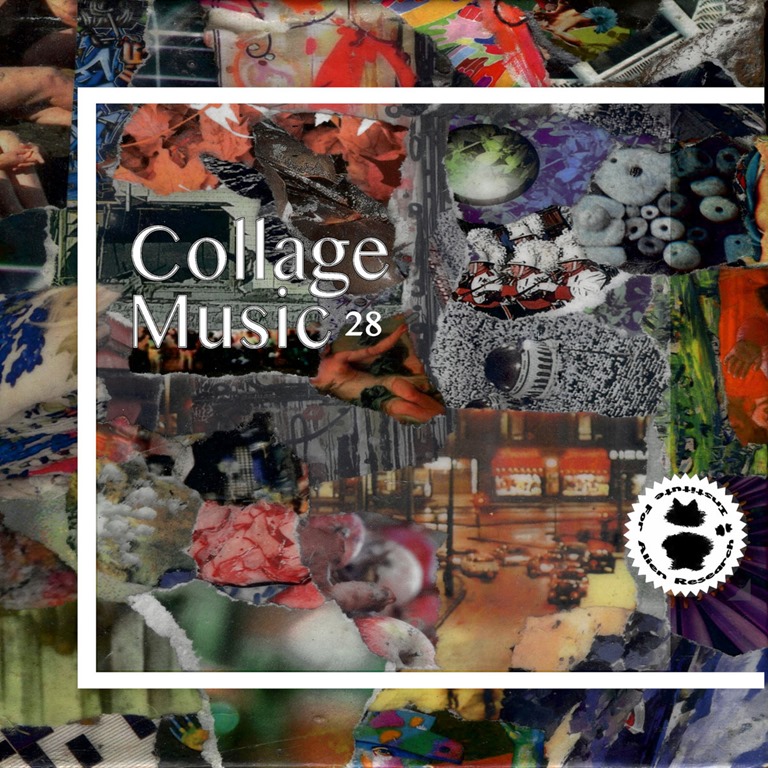
Bath-based microlabel Institute For Alien Research tends to focus on compilation releases, with open submissions, on various themes. One long-running series is Collage Music, each of which features fifteen works, the only stipulation being that their duration is 4:33. Not a second more, and not a second less. They’re not looking for interpretations of John Cage’s seminal work, and as such, the duration is in many ways arbitrary beyond the idea that artists respond to limitations and set parameters in different ways, and as this – the twenty-eighth in the series (as the title indicates) – illustrates the point unequivocally.

With ‘Circumstances’, Support Group ease us in gently with some slightly woozy, echo-soaked, ambience, before Lezet stammer and glitch through a multi-layered slice of abstraction with ‘Colonnades of Fear,’, which may also be ambient, but it far from relaxing, although it’s Robert & Lamy who are the first to venture into much darker territory, with the kind of doomy, drony warped tape and noise experiments that are reminiscent of Throbbing Gristle in places.

The arrival of ‘bruits de la vie’ by samelectronics feels like something of a watershed moment, being the first piece to present big, bold sounds – feedback and immense powerchords, which, instead of feeling heavy or oppressive, open an expanded horizon, to surprisingly uplifting effect. The rough, lo-fi punkiness of ‘Johnny got no respect’ by This is The Utter vs Chelsea comes as a surprise bang in the middle, being the album’s first straight-up guitar-based cut, and it’s a savage semi-cover to boot.

Along the way, there’s a superabundance of weird shit, with collages and field recordings and ethereal haunting soundtrack-like compositions, dark electronica, spaced-out BBC Radiophonic Workshop type soundscapes, and banging dance, courtesy of Sbilts, with ‘Acid Dog’, who mine a vintage techno sound propelled by old-school drum machine sounds. That snare! Samples! It’s a sonic time-machine!

Just as grassroots venues are essential on so many levels, so are labels who put out releases like this. Most of the contents of such compilations is ultra-niche, and will never expand beyond being so – and that’s ok. There is a huge audience with niche tastes who simply aren’t catered for by bigger labels, bigger venues. Most of the acts here are unlikely to ever play to more than twenty-five people, assuming anyone will put them on, and they’re never going to be snapped up by a label which has aspirations of making money. Self-releasing is find, but it’s hard to reach the tiny, fragmented target audience. But a label like Institute For Alien Research, having established a reputation for providing a platform for the full spectrum of experimental electronica and beyond, creates its own niche. It may seem hard to believe when there are maybe a few hundred or so people who are into it, but this really is what the world needs. Capitalism is killing cultural diversity, and it’s killing art.

The fact that Collage Music (28) is a mixed bag is a good thing. It would be all too tempting for the label to be picky, sniffy, selective, and offer up a compilation which is more homogeneous, unified, that presents, ultimately, a curated collection determined by personal taste. And that would have been fine, and entirely their prerogative. But Collage Music (28) is all the better for its wild eclecticism. You might not like all of it – and it would be probably be a bit strange if you did – but in listening to it, there’s a chance you’ll find your eyes are opened to something you didn’t know you would like, and it’s absolutely guaranteed you’ll hear artists you would never have otherwise encountered. So dive in!

AA

a3223356046_10

Ideologic Organ – 10th January 2025

Christopher Nosnibor

It’s already looking like 10th January is going to be an intense date in terms of the sheer volume of releases. Time was when January was something of a quiet spell for new music, as everyone recovered from the Christmas glut, and labels tended not to release much since people were skint. It also used to be the case that unexpected releases would sneak unexpectedly high in the charts, especially the UK singles top 40, with remarkably low sales figures, usually with cult acts with savvy labels whacking out a release that would have barely scraped the charts any other month – White Town’s ‘Your Woman’, released 13th January 1997 and hitting number one in the UK and going top ten globally – however briefly – is a classic example.

There’s no danger of Nate Wooley registering on any charts with Henry House, released on the Ideologic Organ label, curated by Stephen O’Malley of Sunn O))) legend, and home to a long line of truly magnificent avant-garde and otherwise most unusual musical works, of which this is very much one. That’s not because it’s not good, it’s just that the nature of charts has changes beyond recognition over the last thirty years. There is also the statistic which recently came to light that there was more music released on any single given day of 2024 than during the entirety of 1989. It’s a pretty staggering statistic, and one of many factors when considering just how difficult it is for artists to make a living from making music. Something I have touched on previously is the fact that simultaneous with this explosion of output, culture has become both more homogenised and more fragmented. In terms of the mainstream, this homogenisation has facilitated the advent of multimillionaire and even billionaire ultra-megastars like Taylor Swift – but at the other end of the spectrum, there are tens of thousands of artists releasing music on Bandcamp and Spotify with no backing or publicity whatsoever, to be heard by maybe five people.

But we need music that’s unpopular, that isn’t created with any commercial intent, and we very much need labels like Ideologic Organ to provide a platform and to point us toward the cream of those artists who may not otherwise reach the audience they so richly deserve.

And as an album containing a single composition split into five parts, described as ‘a recurring dream song’ with a running time of some eighty minutes, this is a work which is very much non-commercial in every way.

As the accompanying notes detail, this is a work which combines ‘closely tuned instruments and sinetones, tape-music editing techniques, field recordings, and voice,’ providing the context that ‘this eighty-minute, five-part song cycle is an evolutionary step away from the spontaneity of the free jazz/noise aesthetic usually found in the music of Nate Wooley. Henry House expands on the ecstatic, durational work found in Wooley’s Seven Storey Mountain, a six-part composition that has been premiered over the last ten years by an ensemble that now includes multiple drummers, guitarists, a twenty-one-person choir, and the composer on amplified trumpet. But its ritual is more serene, more natural, slower.

Henry House is the first long-form piece that doesn’t feature Wooley’s trumpet. It is also the first to be constructed around his poetic writing. Wooley weaves a strange funeral mass for a fictional everyman from isolated phrases culled from essays, poems, and non-fiction written by Wendell Berry, John Berryman, Joseph Mitchell, and Reiner Stach. After organizing the fragments into a dream narrative, Wooley rewrote the text dozens of times, manipulating the stitched-together story until only glimpses of its sources remained.’

It’s ten minutes into the twenty-minute opener, ‘Acacia Burnt Myrrh’ that the poetical oration begins, with the words spoken by Mat Maneri. He speaks in a calm, not entirely flat, but level tone, of geometry, of space, of time. The words conjure abstractions, images, moods, against backdrops of elongated hovering hums, oscillator-driven quivering drones. The words are audible, but comparatively low in the mix, and it’s not always easy to stay focused on the narrative, such as it is: instead, the mind focuses on absorbing the atmosphere. There’s a lot of that, and Henry House is an immense project with near-infinite dimensions. Megan Schubert’s faster-paced, more driven-sounding delivery is quite a contrast to Maneri’s, and from these counterpoints, the album grows in terms of dynamics and depth.

So much happens: listening to Henry House is like reading a book which contains stories within the story, and illustrations in a range of styles. No two tracks are really alike, and the arrangements change across the course of each piece. It draws you into a dark fairytale, a unique world which isn’t exactly scary, but unsettling because it feels unfamiliar, dissonant. The fact that two of the pieces bear the same title only add to the bewilderment. Horns and drones radiate between the narrative segments, and the final piece, ‘Aleatory Half Sentences’ is led by some flighty piano work, which trills and flickers against a heavy, nagging, low-level hum. It’s one that really takes some time to process, but it’s very much worth the effort.

AA

a3180996504_10

Cruel Nature Records – 6th December 2024

Christopher Nosnibor

The ever-prolific Aidan Baker has been a frequent and recurrent feature on the pages of Aural Aggravation since its inception in 2016, and I’ve been listening to, and covering, his works since a fair few years earlier. He’s an artist who never fails to intrigue, and his manifold collaborations see him revealing new aspects to his creativity.

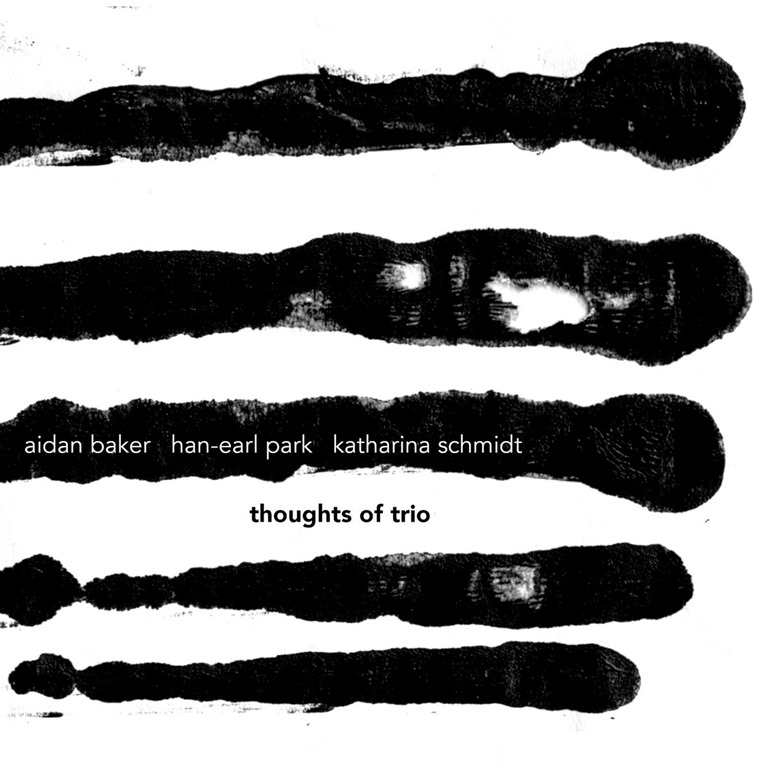
This three-way collaboration was, according to the accompanying notes, ‘recorded live at Morphine Raum in Berlin, Germany on February 21, 2024 by Canadian guitarist Aidan Baker, Korean-American guitarist Han-earl Park, & German drummer/percussionist Katharina Schmidt. The group brings together their respective, disparate musical backgrounds to explore the intersections of ambient music, improvisational (free) jazz, and musique-concrète.’

It’s worth noting just how many live releases of collaborations there seem to have been released recently: in fact, only yesterday I was delving into the dynamics of the latest offering by CEL. This may be a ‘cost-of-living’ matter, in part: economic circumstances really aren’t favouring anyone who isn’t two-homes-and-at-least-one-cruise-a-year rich, and this is a global issue, whereby post-pandemic the disparity between the wealthy and the rest has increased exponentially (a word I’m mindful of tossing about being aware of its actual meaning), and it’s never been a tougher time to be a musician, unless you’re Taylor Swift, or Ed Shearan or Elton John or Coldplay… you get the idea. And it’s certainly not (only) because of the shit streaming revenues paid (or not) by Spotify. Studio time is expensive: getting together for intercontinental collaborations is expensive… and when it comes to it, it’s not always easy, or even possible, to recreate the energy, the frisson, the immediacy of a live performance in the studio.

And so here was have Thoughts Of Trio, which captures a set from the start of the year, mastered as eight segments, simply titled sequentially ‘TOTone’ to ‘TOTeight’. The arrangements are often sparse, and combine nagging, regular repetitions with erratic irreglularities: ‘TOTone’ sounds like a pulsating wave or a slow alarm simultaneous with a game of ping-pong and some urban foxes foraging through bin bags. I mean, it doesn’t really sound quite like that, but the different elements belong to different places, and while it does work, it does not feel like a composition in any conventional sense. And this is very much the form of the album: there are no overt structures, there is no sense of cohesion or linearity.

But where Thoughts Of Trio evades the pitfall of being a discordant disaster is in just how they somehow keep things together, with an absorbing, if loose, sense of rhythm, which is both absorbing and bewildering, but, however subtly, ever-present. ‘TOTthree’ features springing guitar twangs and lurching grumbles, but a distinct sense of almost abstract rhythm. Clanking rattles and slow-bending, woozy drones hover and slowly wilt, with scrapes and subterranean bumps and nudges unpredictably rising and falling.

There’s no obvious shape to any of this, but amidst a set of pieces which are five or six minutes long, the eighteen-and-a-half-minute ‘TOTseven’ stands out a dominant track on the album, although one suspects that for those who were actually there, it was difficult to differentiate the pieces, which tend to bleed into one another. It rumbles and hums, tense and dense, simmering, without ever breaking through the tension that holds down the surface.

There’s little to no audience noise, no applause in the interludes or intersections, which works well in terms of the overall listening experience, but means that this doesn’t sound or feel like a live album. That’s by no means a criticism, and again illustrates how live recordings can replace studio recordings for so artists. This simply doesn’t sound or feel like a live recording, and that’s not only due to the lack of audience noise, but the way everything flows.

For all of the discord, the twists and knots and disparities, Thoughts Of Trio comes together somehow. While it’s is by no means overtly, jazz, Thoughts Of Trio sits between jazz and ambient, with an experimental / avant-garde. Ultimately, it does its own thing.

AA

AA

a4098448952_10

Innis Orr / UR Audio Visual / Redwig / Bar Marfil – 1st November 2024

Christopher Nosnibor

Glasgow’s Howie Reeve could never be accused of being predictable, or dull. His musical output is eclectic, experimental, and more than that, it’s often spontaneous, energetic, and in-the-moment. His last release, in 2022, was a set of songs created with his (then) ten-year-old son. Before that, there was a live recording of Chassons (that’s Cathy Heyden on alto sax, practice chanter, tin whistle, and Howie Reeve on electric bass) performing at Le Maquis de Varielles, a document which captures ‘Both of us grabbing whatever else is to hand and occasionally ululating.’ This time around, there’s a whole host of accomplices doing more or less the same to lead the listener on a wild ride. Indeed, Leaf in Fog finds Reeve working with a substantial number of friends in order to realise this ambitious and wide-ranging work.

The title – and cover art – carries connotations of the natural world, perhaps a sense of drifting autumnal melancholy, but the actuality is something altogether more jagged, dissonant, tense and disorientation. There is an earthiness to the songs and their performance, but it’s rent with the kind of twists and spasms that tear the fabric like a psychotic episode.

‘Microscopic Liberties’ starts out – and concludes – as a work of ramshackle lo-fi acoustic folk that’s not quite folk but not quite anything else one could pin down as belonging to a specific genre either. In between, there are blasts of howling noise and slanting guitar slaloming askew across a wandering bass groove. There are moments where it goes a bit Pavement, others more They Might be Giants… and it’s only two and a half minutes long. ‘Water Catalyst’ follows immediately, and tosses in elements of prog, neofolk, medieval minstrel folk and jazz.

‘Apotrope’ may be but an interlude with a running time of a minute and twenty seconds, but it’s a sharp honk of straining horn, a fragment of dissonant jazz swirling in an ambience of voices and then some sing-song poetical narrative… it’s hard to keep up. The compositions, the song structures, border on the schizophrenic, or the aural equivalent of Tourette’s, but instead of being unable to hold back the ticks and sputter ‘tits, fuck, cunt, wank’, Reeve can’t leave a song to just drift along comfortably, and it’s always just a matter of time before spasmodic bursts of all hell break loose.

From among chaos, occasionally, moments of quite affecting musicality emerge: the pick and strum opening of ‘Shop Window’ is whimsical and at the same time somehow sad, and continues to be so even when chaos and discord and bleeps and whistles collide like a speeding juggernaut travelling in the wrong carriageway, obliterating the acoustic serenity. ‘Evidence’ begins subtle, slow, a dolorous bass trudging through lugubrious strings and a sparse, simple clip-clop rhythm. The vocals veer between light and lilting and wide-eyed and tense as the instrumentation switches and slides through a succession of unpredictable transitions, before ‘Trouser Tugger’ goes full Trumans Water, but with a more muted, bedsit indie feel, leaving you dazed and bewildered at the end of its clanging, jolting three minutes.

The songs on Leaf in Fog are predominantly folk songs at heart, and the core elements expose moments which are often quite touching and pluck at emotions which are just beyond reach, beyond articulation, obscured, perhaps, by fog, but equally obscured by fret buzz and crackles and crazed strings and horns and an endless array of additions and interruptions.

It would be impossible to pretend that Leaf in Fog is in any way immediate or especially accessible, and the truth is it’s likely simply too much for many. Like Beefheart’s Trout Mask Replica, there’s so much going on its dizzying and difficult, and requires a lot of focus, and energy, to listen to. But Reeve – with more than a little help from his friends – has conjured a bold work, brimming with charm and mysticism, imagination and madness. Venture into the fog and explore, but do tread carefully.

AA

a1513935626_10

Ex Records – 20th September 2024

Christopher Nosnibor

It’s hard to conceive that The Ex have been going for a full forty-five years. It’s more than understandable that the pandemic proved a challenge for them, a band accustomed to getting out and doing it live. As their bio points out, in 45 years they did more than 2000 concerts in 45 countries. But creativity isn’t something that can simply be switched off. Again, to turn to how their notes set it out, ‘The pandemic was a standstill for many, including The Ex. Or perhaps it was more a kind of recharging, as the band is back on national and international stages with new music, ready to return to the studio… It was time for a new 45rpm 7” single. From the brand-new set they are playing full-on this year, they picked two blinking tracks: ‘Great!’ and ‘The Evidence’.

For some reason, I’ve always considered The Ex to be more of an album band, but as the compilation Singles. Period evidences, they’ve released a fair few singles through the years. And what’s interesting is how they clearly approach singles and albums very differently, exploring expansively on albums in the same kind of way they do live and striving to see just how far out they can push things, while exercising remarkable discipline and concision with the single releases, with tracks of two or three minutes and rarely exceeding four in running time. This awareness or tailoring of material to medium is quite a rare thing, but illustrates their phenomenal versatility as musicians, and also provides some insight into their methodology and creative processes.

‘Great!’ is. It’s an uptempo meandering sliver of discord whereby the musicians play across one another rather than together to spin a slice of angular post-punk that’s not a million miles from The Fall in their early years. ‘The Evidence’ – which clocks in at under three minutes – is more focused-sounding, and more noisy. Both songs are the work of a band who are still firing on all cylinders with ideas and energy.

This single is exhilarating in unexpected ways. It sounds fresh – and yes, it might also sound like it’s from circa 1979, but it sounds authentically 1979, rather than some old buggers trying to recreate and rekindle the vibe of their youth. Just what their secret is, I don’t know – although one suspects the fact that they’ve continually striven to create, and to create something new, something different, is a significant factor. In life, as well as with musicians, it’s so easy to simply settle, to adopt a routine, to take the easiest path within an established comfort zone. Fair enough: most people want an easy life, especially when they reach a certain point. But, critically, to accept a diminishing scope for activity is to consign oneself to a future of diminishment in every way. This clearly isn’t the mindset of The Ex, and this single provides ‘The Evidence’ that they’re still ‘Great!’.

And after that shameful punchline, I should probably get my coat – but shall instead pour another drink and get to the next review – because diminishment is stagnation and death, and re-engaging with The Ex post-pandemic is an invigorating experience.

AA

EX148 front

Discus Music – 27th September 2024

Christopher Nosnibor

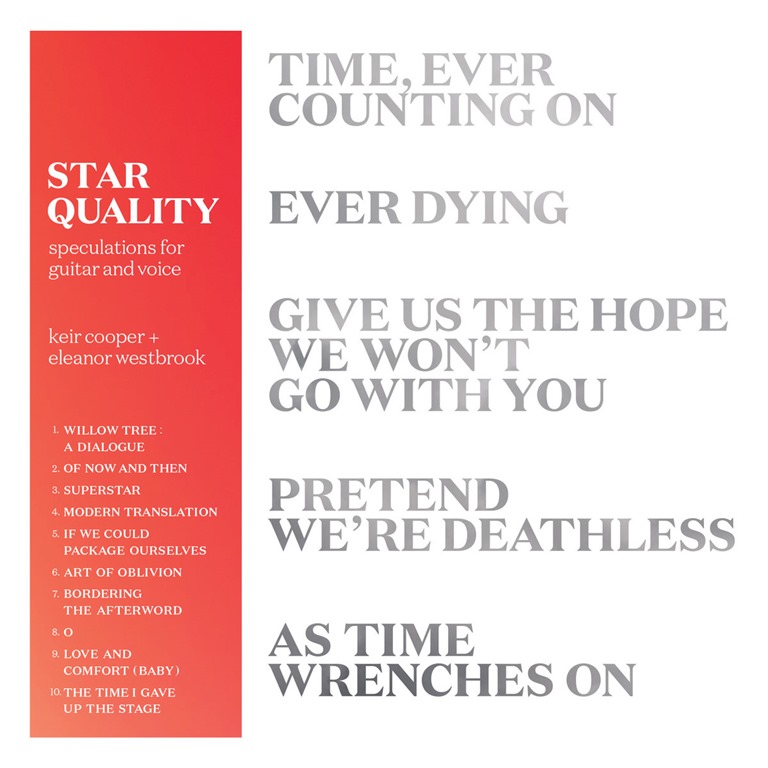
One way to tell an avant-garde musical work from its title alone is when the title provides a quite precise statement relating to its compositional nature. And so it is that this collaborative set of songs by Keir Cooper and Eleanor Westbrook are structured around guitar and voice.

‘Willow Tree – A Dialogue’ takes the interesting form of – perhaps not surprisingly – a dialogue of sorts, in which Westbrook’s adopts two contrasting modes of delivery, with a spectacular operatic aria juxtaposed with a spoken-word interrogation as a counterpoint. The effect is closer to a simultaneous internal monologue running across the song itself rather than a dialogue in the conventional sense. Meanwhile, the delicately picked neoclassical guitar is subject to interruption by clunks and distortion and occasional whirs and bleeps and the operatic vocal strays off kilter and the dream which drifted in twists and flickers with darker shades: not pronounced enough to be truly nightmarish, but unsettling.

The pair continue to explore the contrasts of melody and disharmony as Westbrook squeaks, squawks, trills, and purrs an infinite array of vocal gymnastics and Cooper’s guitar work, which chimes and treads delicately from folk to flamenco via classical streams, stamps on its own beauty with sudden and unexpected stops and stutters and forays into wrongness with stray notes and dissonance.

‘Superstar’ strays into the space which soundtracks a sense of derangement, the territory where things make no sense, and that place of incomprehension instils an unsettling confusion that borders on anxiety. ‘Modern Translation’ follows a similar trajectory: it’s a piece of magical neoclassical chamber music that’s twisted as if performed in an auditory hall of mirrors. Everything is wrong: something that should be soothing and beautiful is warped in a that it becomes unheimlich, eerie.

It’s hard to locate a touchstone or reference point for this: perhaps there are elements of later Scott Walker present, blended with hints of The Ex with its more avant-jazz leanings. One can only muse as to how they came to create this work: despite its clear foundations in the realms of classical and opera, Star Quality ventures so far from this path that it often bears little resemblance to any given style. The pieces evidently do have quite detailed and complex structures, as there’s nothing haphazard or uncoordinated about the way the two play together, but it’s impossible to decipher them from an outside perspective.

There’s a grand yet ethereal theatricality to ‘Bordering the Afterworld’, and ‘O’ soars and swoops and squeaks and whoops its way theatrically – and somewhat crazily – across some sprightly, if vaguely gothic-sounding guitar picking that suddenly, from nowhere, begins to buzz and thump. ‘The Time I Gave Up the Stage’ draws the curtain on an incredibly curious and as far off the wall as is imaginable.

Star Quality clearly has theatrical inspirations and aspirations, but shows two artists who are more interested in exploring their outer limits than taking the limelight in a mainstream setting – and for that, I applaud them.

AA

a1210959813_10

When iconic Norwegian vocalist Gaahl, revived TRELLDOM he did the only thing that could ever be expected from this exceptional artist: the unexpected. Hardly anybody could have predicted the stylistic shifts and the twists and turns of the forthcoming new full-length: …by the shadows…

A few weeks back, TRELLDOM opened their set at this year’s edition of Bergen’s Beyond the Gates festival followed the introduction via By the Shadows with the new opening track ‘The Voice of What Whispers’. This avant-garde jazzy yet relentlessly driving song conjured looks of confusion, fascination, and even rapture onto many faces in the crowd. Now the band releases ‘The Voice of What Whispers’ as the third single in the shape of an equally unexpected yet fascinating video. Who would have thought to see a Japanese horror style clip from a Norwegian band with deep roots in the black metal scene?

Watch the video here:

AA

45d43f56-416e-0552-bf75-2930adccdd19

Neil Mackay is perhaps best known for contributing to Loop: having joined after the recording – but before the release – of their 1987 debut, Heaven’s End, he provided the big, solid bass grooves to Fade Out and A Gilded Eternity before they split in 1991. Loop all too often get lumped in alongside Spacemen 3, or otherwise as progenitors of shoegaze, both of which do them an injustice and ‘underrated’ would perhaps be the most appropriate descriptor for their legacy.

Mackay went on to form The Hair and Skin Trading Company, which, too, incorporates elements of drone and psychedelic rock. As Trouser Press outline it, following Loop’s demise, ‘Neil Mackay and drummer John Wills (augmented by ex-Savage Opera guitarist Nigel Webb) cribbed this unsavory moniker from an old warehouse in London and persisted in their efforts to rephrase Metal Machine Music as power-rock.

Having released four albums since their formation in 1991, the most recent being I Don’t Know Where You Get Those Funny Ideas From (2019), as well as a bunch of singles, EPs, and compilations, The Hair and Skin Trading Company continue as a going concern.

John Wisniewski caught up with Neil to find out about what he’s been up to lately, and reflect on a few moments from his lengthy career.

Editor’s note: some interviews, it’s appropriate to proof and tweak interviews conducted by email for spelling and punctuation, as much for readability as what one might sell as ‘professional standards’. But for this one, any substantive ‘tidying’ would feel invasive, and to strip out so much of the essence of the replies. It’s important that artists are presented ‘in their own words’, without being subject to any mangled paraphrases. When an interview reads like jazz, you let it play like jazz.  And so this interview is presented more or less unedited, immediate, warts ‘n’ all, as they say.

JW: What are you doing now, Neil?

NM: Silent Invisible Radiation (SIR)

The Hair and Skin Trading Company (HASTCO)

Solo project

I have new album projects on the boil with all of them….

I am jamming regularly with Damon from SIR

And hopefully receiving and swapping more files from John and Nigel from HASTCO

HASTCO last album: I don’t know where you get those funny ideas from: released Sept 2019

SIR last album: Ventifacts : released July 2023   ….check that one out …2.5 hours long !!!

Occasionally I jam at the Vitaim S night at the Wine Cellar in Auckland central Monday nights ….( haven’t been for a while though ) ….Check that night out for some awesome improv / jazz / avant noodlings …. I want to and are planning to do much more live work …gigs etc ……

When and how did you join Loop?

I joined Loop in 1987 just before the release of their 1st album:Heavens End …For some reason the Bass player who played on that 1st album couldn’t be in the band anymore so I was one of only to people to apply for the job from an advertisement in Melody Maker …. The other guy apparently got really drunk when they met at the pub and threw up everywhere …..so I got the job lol….

Do you have any favourite bands?

too long a list

Can Stooges MC5, Moondog  Sun Ra  Peter Brotzmann , Faust , Einsturzende Neubaten, THe Pretty Things (UK )  , Steve Reich , Alice Coltrane , Arvo Part , Manuel Gottsching , Xenakis , Lee Perry , Dub Syndicate ,The Scientst ,Mad Proffesor,  Wire , Sex Pistols, Joy Division , New Order, Aphex twin , Velvet UNderground , THe Doors , THe stranglers ,  the pop group, The Raincoats , Daniel Johnston , Butthole Surfers , The Clash , Dead Kennedys , Black Flag , Hunters and Collectors , Dplit Enz , Ths Stones (NZ)  , The Rolling Stones ( US ) , THe Clean , The Chills , Talking Heads , Favid Bowie , Bjork , Captain Beefheart, The Residents , Sonic Youth, Brian Eno , Roxy Music , John Coltrane , Neil Young , Laurie Anderson , The Pixies , Public Image Limited , Devo , Pere ubu , Luigi Russolo , Boredoms , THe Beatles , Psychic TV , Throbbing Gristle , My Bloody Valentine , Nick Drake ,William Basinski,  Beach boys , Elvis , Kraftwek , Swans , Neu !  Massive Attack , King Tubby ,  Mikey Dread ,Suicide , Alpha and Omega ,  John Zorn ,,,,,

I like any music really as long as its  good !

It’s up to you what defines good

What was the concept for how Loop should sound?

Robert’s baby you should ask him …

Personally – live anyways I was trying to blast people through the back door …

Ridiculous we were too loud (sometimes )

I have really bad tinnitus now ha whatever ….

Why did Loop break up?

Burnt out I reckon …. I have read other band members give their reasons ….all good

i was gutted when we split ….but relieved in a way as well because it wasnt fun on tour at all any more ….

I remember when Loop came back from touring for 9 or so months …. I just wanted to chill out and reax at home …. But 9  o’clock came along and I got a huge energy rush of adrenalin and HAD to go out to a gig …… 

When and how did you join up with The Hair and Skin Trading Company?

John the drummer from Loop and I wanted to keep doing music together I immediately contacted my old mate Nigel Webb ,,,, I had been in a band with him called Savage Opera …. We could never get a drummer to stay in the band ….. anyways Nigel is an awesome guitar player …. so walking down turnpike land one Saturday afternoon we saw a decrepid old factory that had a sign that said : The Hair and Skin Trading Company : so we thought that would be a great name for a band … that was it

Do you like jazz and avant-garde music?

Yes big fan …..  I worked at The Rough Trade shops in London for 17 years and used to hang out and buy records from Rays Jazz shop …..European and US jazz/ experimental music … I also love :world : music and have a large collection of Gamelan and African vinyl from labels such as Occora …Also like Dada (1920;s)  environmental ,,,I was collecting Peter Brotzmanns label FMP …. Jazz wise IM more into the avant garde type weirdo jazz …..

Any future plans and projects, Neil?

I answered that in Question 1 ….

yes …..maybe thinking about coming to the UK for one more music blast ….

Getting older now at 60 ….

The tour with the loop re union was kinda fun great to see old fans / friends….

….

Could you tell us Neil, about your collaboration with Godflesh called Loopflesh?

And the double header tour in 2014 with Godflesh?

super cool tour ,,, we went into house in the woods and did the cover for the excellent label clawfist ……We were all freinds it was a great time ,,,,, that was a great tour apart from that ….thats it ……

The Shoegaze and psychedelia movement was much maligned, but seems to be experiencing a Renaissance. How do you feel about this?

At the time shoegaze wasn’t a expression we used ….. it was used by the press to get >something? going ….Psychedelia is a better expression ….but yeah all good ….. Im not up on new bands but Im up for new bands / music …always ….who are good in this field now ,,,( answering a question with a question )

247406390_3076711192588313_2314698922711416870_n

May 2024 / July 2024

Christopher Nosnibor

Gintas K is possibly one of the most-featured artists here at Aural Aggravation, and I’ve written about his work elsewhere, prior to establishing this site. I’ve often commented – sometimes flippantly, sometimes in sheer awe – at his rate of output, but it seems appropriate to make the observation once again, since a little while ago I found myself simply swamped and a shade overwhelmed by the volume of submissions I was receiving. Electroacoustic Space Drumming landed in my inbox and I failed to so much as open it, let alone download it. Then, Outsider’s appeared, reminding me I was behind on things, only to discover that a split tape release with Jacob Audrey Taves had come out in between the two.

The first of the releases, Electroacoustic Space Drumming, comes courtesy of London label Anticipating Nowhere Records, as a download and limited cassette (in an edition of 20, more than half of which have gone already).

The titles are incomprehensible to me, but I very much doubt this will make any difference to my appreciation of this jangling, bleeping glitchfest. The six tracks do very much sound like a circuit meltdown, the digital xylophonic cadences interrupted by sudden jolts or sound and stuttering microbeats like an Action Man marching band trapped inside a jam jar half-full of water. Creaks, groans, and splashes abound and contrive to create a complex and layered work.

It’s difficult – if not impossible – to unpick everything that’s going on, and consequently, you simply sit back and let it wash over you. But that doesn’t mean it’s comfortable, or easy to do so.

And then there is Outsider’s, with its questionably-placed apostrophe in the title. Outsider’s what, precisely? And with twenty-three tracks, released digitally and as a colossal five disc CD work, it’s an absolute beast.

The five CDs make sense in a way which is less apparent on the digital release, as there are essentially five segments or suites, with the tracks belonging to each names with a suitable prefix: jazz, crunchy, noise, drones, and piano stuff. Each contains between three and six pieces, effectively an EP’s worth apiece.

In truth, the track titling isn’t especially helpful: the six tracks of the first set, ‘jazz’, and entitled ‘jazz good’, ‘jazz also good, jazz prolongation’, ‘jazz’, ‘jazz’, and ‘jazz.’ Spoiler alert: there’s nothing especially jazzy about the ‘jazz’ cuts, but there’s electronic percussion that cuts through foamy bubbling washes and a disarray of oddness that sounds like machine gun fire, and glitches aside, it almost feels co-ordinated. And no-one needs a jazz prolongation, although this decidedly unjazz cut, we can forgive.

The four ‘crunchy’ cuts are riots of bleeps and squips, a riot of sound that’s no more vigorous than on the first, ‘crunchy.geras greit.’ The two pieces simply entitled ‘crunchy’ combine haunting, hovering tones, and collapsing circuits and lurching synaptic stutters, like exposed wires sparking as they swing, and things become increasingly scratchy, scrapy, a frenzied buzz of fractured, fizzing, fucked electronics.

The three ‘noise’ pieces build in their noisiness, but at heart aren’t all that dissimilar from the ‘crunchy’ pieces, although perhaps quieter and less overwhelming, and overwhelming it is. Then again, the ‘drone’ pieces aren’t especially droney, and more represent explosions of frothing discord, and the final suite, ‘piano stuff’ is a cacophonous conglomeration of bubbling noise down a drain.

These recordings remind me of my early days of reviewing, back in 2018 or so as my introduction to truly avant-garde, experimental electronic works, and Gintas K – perhaps one of the first acts I discovered as an exponent of dripping, bleeping, weppling, weirdness. All this time later. he’s still proving to be a rare master of electronica. Come 2024, and Gintas K is still right there at the forefront.

a1621189998_10a2101315344_10

Unsounds – 24th May 2024

Christopher Nosnibor

When it comes to being a music writer, for me, at least, perhaps even more of a buzz than getting advance listens of the most eagerly-anticipated releases is being exposed to music I otherwise wouldn’t have. And the nature of the avant-garde means that you have to be in the know to know. Being introduced to the Unsounds label and the work of Yannis Kyriakides certainly opened my eyes – and more so my ears – to a whole expanse of music I assumed must exist, but would have had no obvious means of locating or accessing while going about my ordinary life before.

Although I’ve only dipped in and out of Yannis Kyriakides’ output, more as one with a casual interest than a fan per se, his work has never ceased to impress with its range and constant questing for something different, something new, both sonically and methodologically and “Hypnokaséta (2020-2021) is no exception.

Kyriakides’ introductory notes explain both the concept and the practice behind the recording of the album: “Hypnokaséta (2020-2021) is a continuous set of 16 pieces for string quartet, improviser (playing cassettes and any instrument) and live electronics. The source material is based on dreams that I had during the first few months of lockdown, April-June 2020. Accounts of these dreams are encoded in the music that is played by the quartet and also encrypted in the sound textures that surround this.

“The pieces alternate between quartet as the foreground and electronic interludes, where solos or duos underpin the soundscape. The title of the piece (Greek for ‘sleep-cassette’) refers to a theory of dreams proposed by Daniel Dennett, that says that dreams are loaded into consciousness like a cassette tape during the night and played just before waking.”

It’s longtime collaborator Andy Moor who provides the guitar and tape work on these recordings, and together with Kyriakides’ electronics, which move between shuddering skitters and unsettling scratchiness and quite abstract sounds, when juxtaposed with the strings – which span playful to mournful to droning discord.

The sixteen pieces have been mastered as six separate tracks, but they flow as one immense composition in a continuous state of transition. Within each of the six numbered tracks, the individual segued pieces bear titles, with their time markers also noted. The titles present, if not strictly a narrative, then a guide to the theme, the idea, the inspiration.

‘Hypnokaséta I’ comprises ‘The government’s new cultural scheme’, ‘All roads to the airport are blocked’, and ‘Everyone is nervous, everyone is lost’, titles which serve to encapsulate the events and the sensations they engendered within the populace at the strangeness and uncertainty of lockdown.

‘Hypnokaséta III’ is a stunning work of contrasts, containing as it does the gentle, almost light-spirited string-led ‘The reluctant hotel manager’ and the dramatic, jarring ‘She lifts the mountain’, a dark, alien drone brimming with electronic tension that crackles and tweets. The rapid switches in mood and form recall the sudden and wild extremes I experienced myself during this time: it was impossible to keep up with the constant stream of developments in the news, while at the same time entrapped within the confines of the house, where the world outside felt so very far away, while also having to accommodate the changeable and diverse headspaces of friends, family, and colleagues. No-one knew what the fuck was going on, or how to cope.

There was an air of unreality about it all, and at times it became difficult to distinguish between the bewildering nightmarish reality of the wakeful hours and bewildering nightmarish sleep, and in drawing on dreams in the creation of Hypnokaséta (2020-2021), Kyriakides captures the essence of that abstract space forged in the mind where everything blurs. This blurring and abstraction is also reflected in the titles: ‘The concert promoter complains that not much happens in the piece’ sounds like something that could happen in one of those self-reflective semi-anxiety dreams, and ‘Bridges are being dismantled

across the city’ has an apocalyptic sense of separation, while ‘Body swap opera’, ‘Swimming pool synthesis’, and ‘Mutations on an empty grid’ are altogether more surreal in their connotations.

Throughout the album, the lister is jolted from a moment of tranquil reverie by some abrasive thud or rasp, an unexpected spike in volume, and a turn towards an altogether more disquieting atmosphere.

The composition is nuanced, the placing of the switches and transitions perfectly timed to achieve optimal impact, never allowing the listener to truly settle, to relax, to sit back and enjoy, and the moments of tension are indeed tense; but credit must also go to the performers: the strings are played with a keen awareness of the importance of both dynamics and detail, and Moor, in his capacity of ‘improviser’ brings texture and tone delivered with an infallible intuition. The album’s structures may be subtle, almost invisible, but they’re affecting, and as a whole, Hypnokaséta (2020-2021) is an experience which permeates the psyche in unexpected ways.

AA

a2874939530_10