Posts Tagged ‘Avant-garde’

Karl Records – 21st September 2018

James Wells

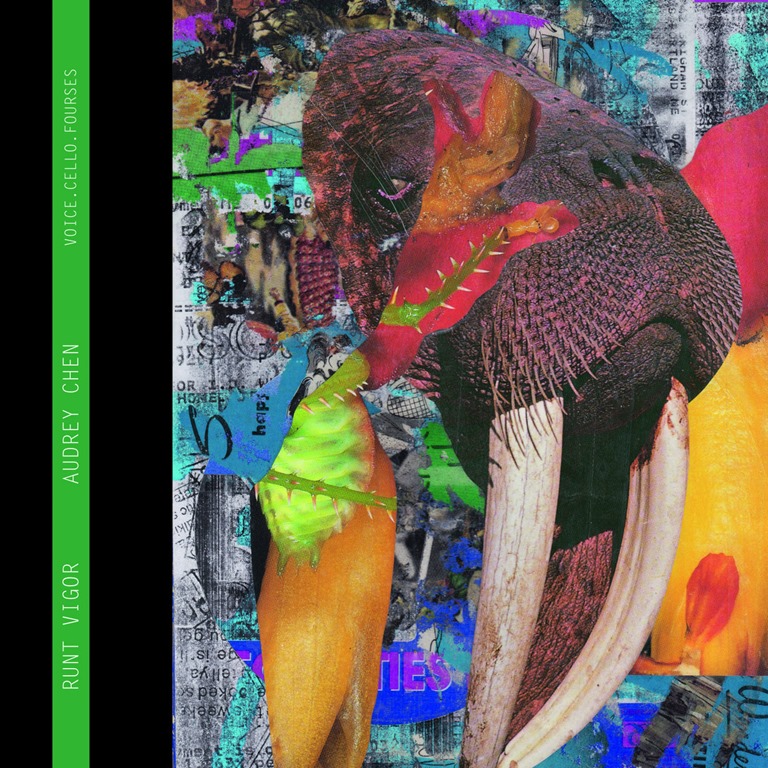
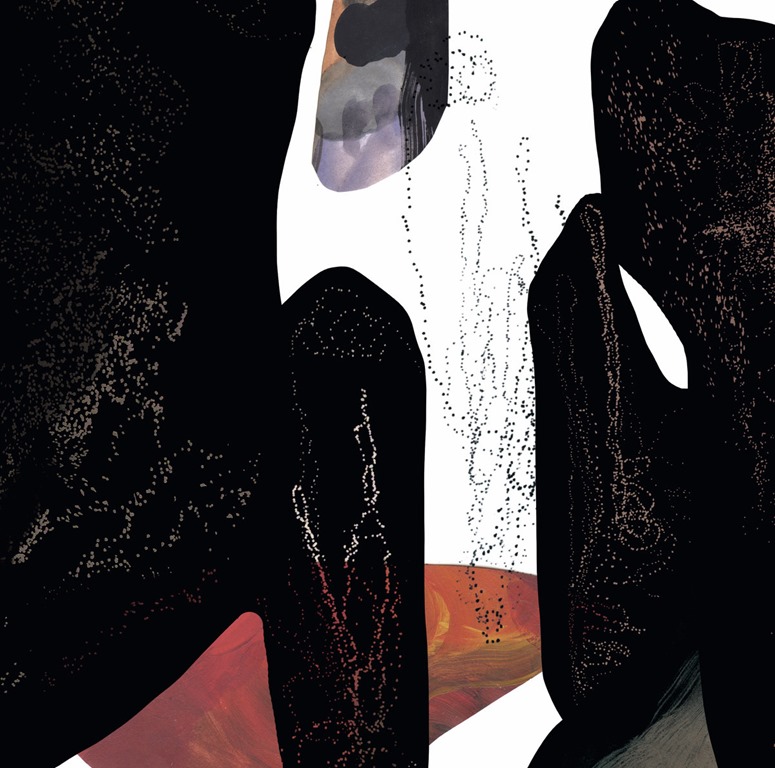
There’s nothing like an intriguing title, or one which ignites the imagination to generate interest in an album – or maybe it’s just me. And so the curious selection of the pairing of ‘runt’ with ‘vigor’ piqued my interest: the idea and image of a runt, smaller and weaker than nature intended, flailing feebly but energetically… Paired with the collage cover art, it all points toward something far-out – and I’m not mistaken or misled.

Now, I’m more accustomed and adjusted to music from the furthest, most extreme fringes, avant-gardism that redefines bizarre, inexplicable, outré. Chen is so outré that she’s bypassed me for all of 30 years, which includes a prodigious solo career punctuated by myriad collaborations that accounts for the last 15.

While much of her output is centred around cello, voice, and analogue electronics, vocal explorations have been at the heart of her most recent works including this four-track offering, which contains forty minutes of gulps, clicks, gargles and hums all emanating from the mouth and throat. Ululations and stuttering glottal stops create the very fabric of the compositions and occupy the foreground, along with asthmatic, gasping breaths, atonal, meandering whistles, and strangulation sounds.

While it’s more overtly ‘musical’ than Mike Patton’s Adult Themes for Voice which stands by way of a relatively obvious comparison, it’s not less disturbing or strange, and it’s impossible to distinguish the origins of all of the sounds here; the whispering hums, drones and wavering gusts of wind are, I would assume, as likely to originate from the artist’s body as from an instrument. It’s the way in which everything is rendered obscure, the voice twisted, pushed, pulled, distorted and disfigured beyond all recognition from the conventional utterances of speech, song, or even flatulence, which is so awestriking.

You may hear albums which share the same sonic territory, but I’d wager none will have been created in the same way.

AA

Audrey Chan

Mamka Records – MAM01 – 1st November 2018

Christopher Nosnibor

‘Language becomes sound, and sound becomes language. Out of the fragmentary, the density is weaved. From the depths of the fragile, the whole is born. Time structures are questioned and assembled through loops. Field recording from Mexico meet Osojnik’s singing. Spoken language turn into melodies, whole noise turns into bittersweet rancheras.’ The words from the text – more of a short essay – which accompanies this release resonate: as a long-time student and practitioner of cut-up methodologies, I’m a firm believer in the unusual power of the fragmentary, the capacity for those broken, ruptured pieces of discontinuity to unlock experiences and emotions direct approaches to narrative and the channelling of experience cannot. similarly, I’ve long maintained that the language of sound has the capacity to transcend the language of words, to touch deep and difficult parts of the soul and the psyche irrespective of the tongue or tongues in the listener’s ken.

And so it is that the first release on Mamka records, the label established by Maja Osojnik – whose work I’ve not only covered previously but greatly admire – is something really quite special. My download arrives – personally addressed, handwritten, stamped, embellished – all the way from Vienna, in an envelope 7” square and therefore resembling a 7” single, accompanied by a six-sided press release packed with words far more engaging than the usual hyperbole. There’s also a numbered cut-vinyl print, 7” square included in the package, and it all adds up to a multisensory experience – sonic, tactile, visual – which above all conveys a real sense of commitment, a passion, to making something tangible, something that’s not ephemeral or disposable, but something that matters. The medium is the message, and Maja has found a way – labour-intensive as it is – which goes beyond the medium of the audio release to create… art. The same approach applies to the ‘commercial’ release, a 7” available in a super-small run of 150 copes, only 120 of which are available for public consumption. But better target a small, passionate niche than a large indifferent mainstream if art is your pursuit.

Finding a way to render digital media tactile, visual, and above all, personal, in giving the digital listener a large portion of the vinyl experience, Maja is quite possibly breaking new ground, or at least standing at the forefront of something new. For me, it’s less about nostalgia and more about recovering some of what’s been lost with the demise of physical media.

Said release finds Maja performing with Rdeča Raketa (together with Matija Schellander, she’s integral to the duo who go by the name of Rdeča Raketa) and author Natascha Gangl to deliver a brace of tracks – very much a replication of the classic 7” A and B sides.

‘Chicken’ opens with a frenzy of analogue synth noise. It simmers to a grating buzz and pulsating electro beat before Maja barrels in with a deep-throated monotone with a barrage of lyrics about a chicken in her heart which bleeds and bleeds, and while clucking electronic bleeps twitter and bleep here, there, and everywhere. It’s weird, it’s noisy, it bumps and thrums, but still has an off-kilter pop sensibility partially submerged in the layers of noise and oddness.

‘Die Toten’ (that’s ‘the dead’ in translation) is rather less accessible, but no less intriguing, engaging, or odd, and in fact, introduces a new level of strangeness to proceedings. It’s low, slow, lugubrious.

Simultaneously weird and wonderful, ‘Chicken’ is everything you want – and need – by way of an introduction to partially-accessible, highly idiosyncratic, and extremely engaging weird shit.

AA
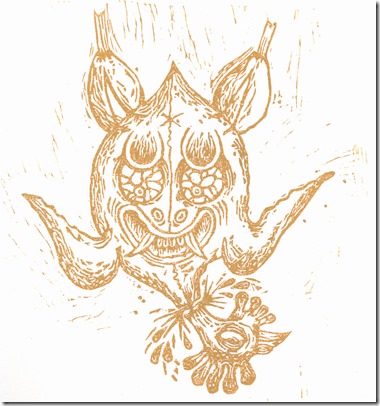
Natasha Gangl & Rdeča Raketa – Chicken

Nonclassical – cnclss024

Christopher Nosnibor

Langham Research Centre originated through late-night experimental gatherings at the BBC studios, and have evolved to produce long-form radiophonic works, of which 2014’s Muffled Ciphers was inspiredby JG Ballard’s seminal novel -which challenged the very notion of the form – The Atrocity Exhibition. Created with an accumulation of rare and obsolete instruments and devices, and inspired by early electronic composers spanning John Cage, Alvin Lucier, and Delia Derbyshire, Tape Works Vol. 1 is pitched as ‘a collection of modern musique concrète.’

The first thing I noticed was that my copy is number 11 of an edition of 30 promos. This knowledge spurs me to get my finger out and provide some coverage. The second thing I notice, on scanning the track listing, before reading the biography containing the above, is that it features tracks with the titles ‘The Voices of Time’ and ‘The Terminal Beach’ – the former of which is a collection of short stories by Ballard, and the latter of which is the title of one of the stories in that collection, which first appeared in 1963 under the title The Four-Dimensional Nightmare.

On Tape Works Vol. 1, the Langham Research Centre (and doesn’t that sound so Ballardian in itself… I’ve spent hours scanning my collection to see if there’s a character named Langham in Ballard’s oeuvre and have drawn blanks before ultimately deciding it’s better to actually get the work done than disappear down another rabbit-hole of research) explore all the dimensions. And while at times it confirms to the template of so much experimental analogue work, at times it ventures in the truly weird.

‘LOL, Pt 1’ mixes monkey chatters and R2D2 bleeps with eerie abstractions, bibbling bloops, fractured vocal snippets and small samples of laughter enter the mix alongside the kitchen sink to from an uncomfortable, disorientating sound collage.

There’s a lot of stopping and starting, whistling and droning, woe and flutter and infinite disruption. This is the sound of dislocation, a soundtrack designed to induce maximum disorientation.

Bleeps and squiggles, trilling squeals rising to a high-pitched hum collide with woozy, groaning bass frequencies. Notes bend as if on a stretched tape, and tape whips back and forth through heads. There are moments which recall the head-spinning cut-up and drop-in tape experiments conducted by William Burroughs, Brion Gysin, and Iain Sommerville in the late 50s and early 60s.

Birdsong. New snippets. A plane roars overhead. A conglomeration of voices. Static. Interference. A howling wind. Sparse, arrhythmic beats clatter and clang. Yes, this is life: fractured discordant, difficult. Simultaneous. Overwhelming. This is essentially how I feel about it. I cannot compute. I feel dislocated, alienated. I feel tense. Nothing new there. But Just as reading Ballard makes me feel uncomfortable in my own skin, so Langham Research Centre’s fucked-up sampling of old adverts and blending them with minimalist dark ambient twists me into a state of discomfort.

At time gentle, at others abrasive and bordering on the attacking treble whistles and white/pink noise crackle of early Whitehouse and Merzbow, Tape Works Vol. 1 is at no point accessible, easy, cuddly. But it does push the senses and question linearity and accessibility and even the boundaries of musicality. And as such, it fulfils its objective.

AA

Langham

Grappa Musikkforlag – 24th August 2018

Christopher Nosnibor

I used to watch a fair few horror films when I was younger, but don’t get to so much these days: my wife isn’t a fan, and, moreover, I can’t watch movies and listen to music at the same time. Spending my evenings reviewing means it’s the movies that have had to give. But when I did have the time to watch horror movies, I always preferred the films that unsettled the mind rather than overloaded the senses with in-yer-face viscera and gore. It isn’t necessarily that I like to be scared: I just like to be mentally challenged, and the imagination is a powerful thing. For the same reason, I usually prefer to invest the time in a book rather than TV show or movie. Greater effort tends to yield greater reward, and what’s more, the mind can conjure scenes far beyond the scope of any film set and special effects.

The mind’s eye is a terrible thing, but also a wonderful thing. Just look at your dreams: they’ll likely present vistas beyond anything you’ve ever seen in any movie. And even if not, these scenes are your own, rather than something pre-presented, the product of someone else’s imagination.

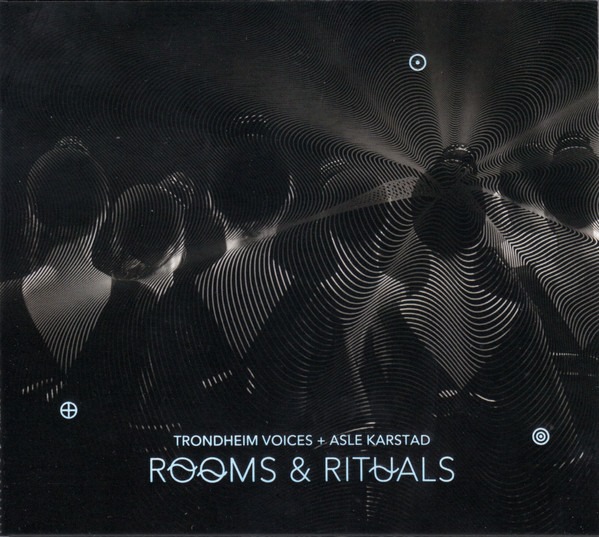
Rooms & Rituals is an album which engages the mind and encourages it to explore the darker recesses. The compositions are haunting, to the point of being outright scary. tapping into the deeper realms of the psyche, teasing out the horror of disquiet, and poking around in those dark, uncomfortable places. The voices are those of no less than ten female singers, although not necessarily at the same time. This is, indeed, a choir like no other.

‘Steamsaw’ sets the tone: dark, ominous, rumbling thunder and fear chords drifting almost subliminally… It’s minimal, and it’s a discomfort you can’t quite put our finger on. But it’s there, it’s real, and it gnaws at the pit of your stomach. ‘Pulser’ is eerie. Voices, disembodied, and as if rising from the grave, amidst unintelligible guttural utterances from the underworld, shrieks, and industrial pulsations and the occasional, sporadic clash of grating undifferentiated noise conglomerate to forge something stomach-churningly tense.

‘Ritual #3’ is a series of bleeps and tweets over a low-end rumble, and is reminiscent of some early Whitehouse, minus the trebly shouting. ‘Rise; is a voice lost in a gale, the sense of dislocation, distance and isolation rendered palpable in the drift. ‘Hymn’ pitches vocal melody that’s evocative, haunting, almost a Celtic folk piece, against a gnawing hovering synth hum, and elsewhere, ‘Gleam’ goes gloriously minimal, trilling organ pulses providing the backdrop to ethereal vocals that drift skyward.

Collectively and cumulatively, these pieces move and unsettle the listener, bringing a sense of dislocation, and disorientation. It creates a space for pondering. This is art.

AA

Trondheim Voices

Constellation Records – 15th June 2018

Christopher Nosnibor

Bush Lady, originally released in 1985, is described as ‘a unique and magical record by any definition’, and as ‘an invaluable example of contemporary First Nations music that blends traditional folkways with modern composition’. Obomsawin is a member of the Abenaki Nation and one of Canada’s foremost activist documentary filmmakers: with over 50 films to her credit, she’s not primarily known for her musical output, with Bush Lady being released as a private pressing, half of which languished in her home for years and years.

It’s not easy to place. It’s not folk; it’s not spoken word. But then, these aren’t conventional songs either, although there are some charmingly pleasant flickers of woodwind and strings. But it’s primarily about Obomsawin’s vocals. Her voice conveys so much; against monotonous, thudding rhythms and trilling notes, eerie discord and wandering abstraction, she swings between blank monotone and quirky vocal contortions that jar the spine.

The real thing about Bush Lady is just how fresh and contemporary it feels, and sounds, never mind the fact it’s 33 years old. It’s not that nothing’s changed in this time, but an indicator or the creative prowess and sheer otherness of Alanis Obomsawin’s art.

AA

Hyperdelia – HEX002

Christopher Nosnibor

It seems to be something almost unique to the world of experimental and avant-garde music, that the titles are directly descriptive, functional, literal. Imagine if the practise was adopted in the genres of rock or indie. How would releases like Angsty shit ripping off the Foo Fighters, Adolescents who are pissed off because we can’t get laid and Ten three-minute derivative jangly guitar-based songs about life in college be received? Actually, they’d probably still sell infinitely more units than releases like this, but the point of differentiation is that this is art, and commercial considerations really are not leading factors in determining the work or its release into the public domain.

We learn that Womb is ‘a musical narration for abstracted ears and bodies – engulfing a listener simultaneously in subaquatic sonic environments, distant dreams of childhoods, memories and voices from the unknown: where time and space fold into each other.

The initial material of field-recordings of nature and body sounds, interviews and compositions has been re-recorded and re-amped underwater in a swimming pool – and has been re-arranged (partly by way of the impulse responses of the pool) now for stereo home listening.’ And so we’re very deeply into literal territory here.

It’s watery and muffled, womb-like every second of the way. ‘Cocoon’ sounds like someone typing – quite slowly, unsteadily – while slow ambient music with whale song and slow, arrhythmic beats pulse, all heard with cotton wool in one’s ears. ‘The Garden’ is a long, slow ebb and flow of elongated dronage, spiralling contrails of vapour and mist, an eddying vortex of mid-range that twists ethereal, occasionally rent with bulbous belches of sound which echo out beyond the reaches of perception.

The beats are glitches, pulses, crackles and thudding heartbeats, incongruously urgent and pacey and at odds with the sedate sonic swirls that hover and hang, Samples, muffled and heavily filtered, are abstracted amidst twittering birdsong, wide-sweeping drones, ominous fear tones and unsettling extranea.

The focus is beyond soft: it’s submerged, out of reach. Everything about Womb is warm, supple. There is a sense of depth – immense depth that extends beyond sound to the absolute core of being. A slow immersion that works its way inside, Womb is both meditative and introspective, and while it’s very much conceptual, it succeeds independently as a soundwork.

AA

AA

Kajasa Lindgren – Womb

Christopher Nosnibor

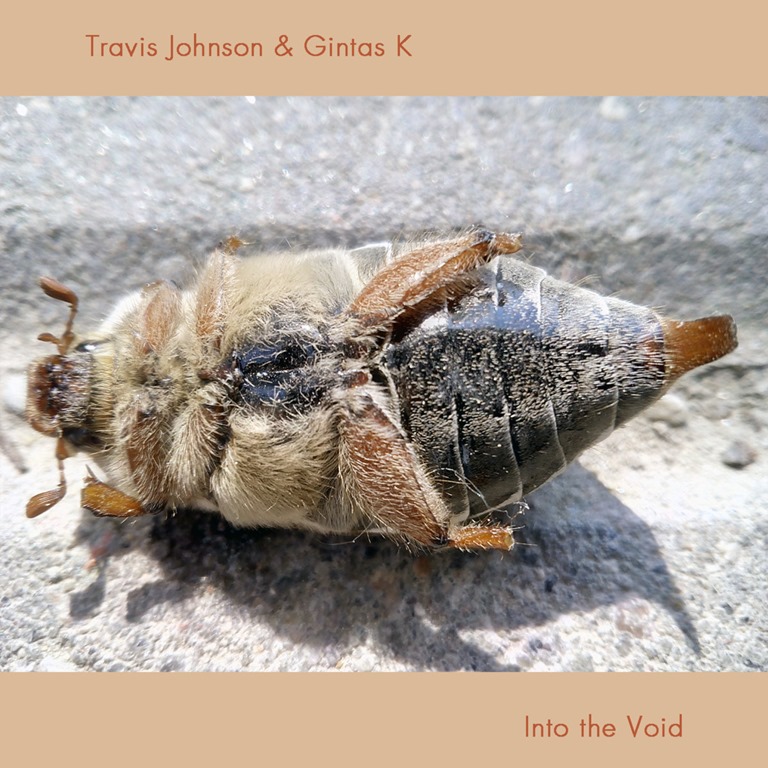
Into the Void is Gintas K’s second album-length release of 2018, and we’re not even quite halfway through. For this outing, the enigmatic granular sonic artist from Lithuania has delivered an array of 14 fragmentary pieces, the majority titled by number, spanning snippets less than a minute in length to quarter-hour brain-sizzlers, with the majority of pieces clocking in around the two-minute mark.

The limited notes accompanying the release state ‘Pieces created by Gintas K using Travis Johnson sound material.- rhythms loops.’ It’s perhaps worth noting that this is Travis Johnson (2) as listed on Discogs – the ‘sound designer, electronic music producer, improviser, and farmer from Suwannee County, Florida, United States’, and not the bassist with metal band In This Moment or either of the other two.

We’re all staring into one void or another, so there’s a degree of universality in the experimental intent of this release.

Those rhythms and loops are warped, splayed, disjointed, whipping backwards and forwards across the heads in a jumble of crazed anagalogia reminiscent in places of some of William Burroughs’ tape experiments from the late 50s and early 60s, when he and Brion Gysin, with the assistance of Iain Sommerville, who was an electronics engineer and programmer.

For the most part, it’s about variation – or not so much – on a theme. Beats stutter and funnel into disarray and fuzzy edges dominate the sounds as those beats crackle and fizz. Most of the loops on here sound sped up and pitch-shifted, gloopy electronica and synthy beats shifted up to resemble clicks and bleeps and scratches of static. Everything crunches and collides at a frenetic pace to create an overwhelming blizzard of sound, a sonic soup that batters rather than massages the senses and the brain. A great many of the rhythms are arrhythmic, or otherwise disturbed or distorted in some way or another. At times akin to a palpating heart, and at others a flutter beneath a screeching squall of static, a fizz of treble and a mess of skittering noise, Into the Void leads the listener into difficult territory, and at times threatens to abandon them in a sandstorm of sound that will leave them completely adrift.

There are some moments of variance: ‘Void4’ is a slow, woozy slice of opiate dub, and ‘Void6’ is largely distorted thumping and rumbling, and ‘Void12’ brings the emptiness of it all into sharp relief, a quavering, oscillating humming drone. It’s minimal, but delivers maximum discomfort.

Personally, I dig it, but as a listening experience, its uncomfortable and far from easy.

AA

Travis Johnson & Gintas K – Into the Void

Ventil Records – V008

Christopher Nosnibor

Variations on Bulletproof Glass follows 2016’s Decomposition I-III which also featured Christina Kubisch, and set out to explore – and demolish – the well-worn thematics of field recordings.it represents something of a deviation in terms of its methodology, as well as its focus. This fourth decomposition collapses material rather than location, and places a very different focus on the concept of field recordings, centring not on the out and about, but the controlled space, and with a clearly defined specificity.

Variations on Bulletproof Glass is a literal title, being constructed from ‘waves which were transmitted through a bulletproof glass pane while it was exposed to major physical impacts’. But of course, like most works which are devoted to a microcosmic sound source, that source becomes increasingly obscured the closer the lens looms. While there are moments that do sound vaguely evocative of glass, cracking and splintering, there’s not a single classic crash and tinkle, a solitary smash and splinter. None of the sounds here betray their origins, and Kutin and Kindlinger have manipulated the source material to forge something altogether in a different sonic sphere from the pieces that lie scattered at source. There may be hints of scrapes and ricochets on/off glass, but there’s nothing which overtly says ‘this the sound of glass’ in the (de)construction of these samples. Because this is bulletproof glass, for a start. It has different properties, and can withstand greater punishment. The consequence is that so must the listener: this is challenging, and difficult to readily access.

‘X26’, the first of eight pieces, clanks and scrapes, and the chanking treble is countered by woozy bass. It has all the hallmarks of experimental dub, and even builds some dense, gut-churning rhythmic pulsations and dynamic beats – none of which even hint in the slightest at the source of the sounds. ‘Throne’ is a jolting, stop/start attack, and Elvin Brandhi’s vocals are stark, dishevelled, wild and wide-eyed. ‘PANE#2’ blasts away at a beat that echoes Throbbing Gristle’s ‘Discipline’ as synth-like sounds howl and wail aggressively before tapering to a quieter place.

Elsewhere, the sonorous, trilling done and scrape of ‘L.I.W’ is uncomfortable, and not for a single second does one listen to this and think that this is an album to mellow to, or even to function to. It’s not just distracting, but the sound of abstract obstruction.

AA

Kutin Kindlinger – Decomposition IV

The Sublunar Society 053 – 11th May 2018

James Wells

Just as Facebook advertising and Amazon recommendations prove that algorithms can be applied usefully but are no substitute for human input.

Of course, The Rosenberg Algorithmic Music Generator is subject to human input, in that it was created by Mick Sussman himself. A programme is designed to ‘compose’ ‘unique’ music, by ‘making decisions based on a sequence of randomised processes.’ The nineteen compositions collected here seem to suggest a greater leaning toward the random than the musical. There are notes and there are rhythms, but none of them seem to coordinate with one another, and the sounds are trebly synthetic, 80s computer gamey. The cover art has obvious ‘matrix’ connotations, and tells much of the story of what The Rosenberg Algorithmic Music Generator is about. Only, this is the sound of the matrix collapsing, of being stretched and pulled in all directions, twisted and tossed.

Sussman observes in the liner notes that in programming terms, Rosenberg is a primitive piece of coding, but is sufficiently versatile to enable him to vary musical phrasings and tempos – to the extent that one option enables the user to allocate a different tempo to each instrument. Why would anyone do this? Because, I suppose. It’s an indication of Sussman’s adoption of avant-garde principles, to disassemble and reconfigure that which has gone before, to build anew. It may well be that no-one has done this before not because they haven’t thought of it, but because they didn’t want to, but that’s every reason for Sussman to be the first.

The result is a disorientating, bleepy, bloopy clamour of sound, with digital notes flying in all directions in an exercise where the concept is considerably more appealing than the experience of the end product.

AA

Mick Sussman – The Rosenberg Algorithmic Music Generator

Ventil Records V009 – 24th May 2018

Christopher Nosnibor

ƒauna’s style is billed as ‘dystopian avant pop’, and her second album is a magnificent mosaic of alienation. Vintage drum machine sounds click and pop out spartan rhythms, overwhich bibbling synths loop and ripple.

The press release emphasises the album’s dominant themes – facing down an uncertain future, dissecting new digital identities, the importance of political activism – and points to the fact that Infernum is very much an album of our times. But so much of the album’s intrigue lies in its juxtapositional positioning, its straddling of contemporary and retro. This also applies in absolution to the sonic makeup of the album.

The first track, ‘Primus’ has ƒauna outline – in a detached robotic voice – the circumstances surrounding the making of the album. It’s a perfect encapsulation of the album as a whole, a work of retro-futurism which may or may not be autobiographical. It’s a mistake to synthesis the artist and the art, and this of course connects with the issues of identity – in particular virtual and digital identities. Who is ever truly themselves on-line, in public, in company? In any context, identity is a construct, and ƒauna explores the layers of construction here.

Supposedly emerging from ‘a dark crossroads between conceptual pop, downtempo hip-hop, and the euphoria of the club’, these influences manifest primarily in sparse electro compositions which resonate with the kind of tape-looping experimentalism of the underground of the late 70s and early 80s. The structures and overall production are sparse, the compositions perversely disjointed, deliberately angular, with .

Then again, the rolling synth swell of ‘Death Fly’ and bouncy insistence of ‘Lonely at the Top’ are crisp pop, distilled down and refined to its purest, most immediate from, while elsewhere, ‘Went Home Got Lost’ pushes more overtly contemporary dance-orientated tropes to quirky but affecting effect.

It’s an analogue take on an analogous representation of postmodernism: the collision of past, present, and future, with no clear distinction between the boundaries. And watching those boundaries dissolve with every clipped, synthetic beat is fascinating, and in some strange way, quietly exhilarating.

AA

V009_front