Posts Tagged ‘Avant-garde’

Christopher Nosnibor

Yeah, yeah, I know it’s not the done thing to review a show you’ve performed at, let alone one you’ve had a major hand in organising and promoting, but what’s not done sometimes just needs doing.

This was a lineup I’d been excited about – seeing it take shape around the initial basic concept of curating a show and giving …(something) ruined – a platform while showcasing other acts we like.

…(something) ruined coalesced into a formal unit following a one-off experimental collaboration back in May following a shout-out on Facebook from racketmonger Foldhead for recommendations for someone to provide vocals to compliment / contrast his wall-of-noise power electronics. My name was put forward by a handful of sonic sadists, and so it came to pass we brought a new level of brutality to an unsuspecting audience at CHUNK in Leeds. The idea for a showcase came before we’d decided anything else. Orlando Ferguson were top of our wants list, and promptly agreed, before we’d even decided exactly what we were doing, both for the gig and as a band. We didn’t even have a name. Truth is, we were deafened and buzzed on adrenaline and beer and before we’d even dismantled the kit, had decided it was going to be a thing.

The rest of the lineup coalesced largely through Paul (Foldhead’s) immense network of far-out acts. This was always going to be niche, an event that was about putting on a gig we wanted to see, regardless of who else’s tastes it would likely appeal to. This is where venues like The Fulford Arms are vital to the arts, and are sadly few and far between. Midweek in York, as long as the cost of paying the sound guy is covered one way or another, anything goes. Selling some pints beats no pints. As a totally underground, completely DIY operation, it’s only this kind of opening that makes catering to more outré tastes and providing a space for artists with a minority appeal.

So we went up first. I was only our second show after all. We’d failed to get the Paul’s visuals projected behind us, so they played on the screens at either side of the stage. Not ideal, not the impact we’d been hoping for, but sonically, it came together, probably.

…(something) ruined

How did we do? Alright, for sure. We’d spent five minutes planning the shape of the set and how it would build over the first few minutes, and Paul’s awareness of my delivery led to a set given to more undulations in comparison to the blazing wall of noise that was the first outing. The broad consensus was that we were brutal, but loud enough? The majority seemed to think so, but no-one fled the venue crying or with their ears bleeding, and I could even hear my own vocals in the monitors for 70% of the set, albeit only when I shouted so hard I felt like my throat would erupt – so probably not. Then again, could we ever be loud enough? Again, probably not. But I did shift a hell of a lot of books.

Primitive Knot, over from Manchester, are showcasing material from the latest release, Puritan. I use the plural because Primitive Knot is a band, although on this outing, it’s just front man Jim doing the work and creating the sound of a full band. It’s impressive to witness him playing synths and churning out grinding guitars over sequenced bass and drums, while also performing vocals.

DSC_2199[1]

Primitive Knot

Said vocals are often single words, shouted, with heavy echo, reverberating into a churn of metallic overdrive, repetitive cyclical riffs, strongly reminiscent of the industrial grind of Godflesh, complete with thunderous mechanised drumming. It’s dense, oppressive, harsh, relentless. And as the only guitar of the night, PK’s set provides an essential contrast, standing out for all the right reasons.

Continuing to forge further contrasts, standing starkly against the regimented, heavily rhythmic attack of Primitive Knot, Territorial Gobbings’ freeform improvisational irreverence is different again, and then some. The new album, Sausage Chain, is a mess of random noises, but doesn’t really prepare the recipient for the crazed performance art that is the live show. Theo Gowans is nothing if not a showman, and one who doesn’t care about popularity or reception: tonight’s set begins with swinging mics and clanking beer bottles and concludes with cables and kit and the artist in a messy heap strewn across the stage. People watch perplexed, uncomfortable. Good. Art should challenge, be awkward and uncomfortable. And this is extremely awkward and uncomfortable – which is precisely why it’s ace.

DSC_2203[1]DSC_2212[1]

Territorial Gobbing

John Tuffen and Ash Sagar, of more bands than I’ve had pints on a big night, are Orlando Ferguson. They sit twiddling knobs and looking intently at their kit, and don’t actually look like they’re playing chess this time around. It’s the bigger table and side-by-side positioning.

DSC_2214[1]DSC_2220[1]

Orlando Ferguson

Tonight’s set is so much more than electronic drone, and the long, sweeping notes that provide the foundations create an expansive field in which they conjure an atmospheric soundscape. Sonically, they explore an array of textures and tones, and their improvisation is magnificently intuitive. It’s a pleasure to watch, and an even greater pleasure to hear, and following the raging tempests of weirdness and noise from the preceding acts, their altogether more tranquil approach provides some welcome calm and relief to round of a varied yet complimentary array of far-out music. And if you missed it – as most did- you missed out.

9th August 2019

Gintas K’s bandcamp boasts no fewer than twenty-nine releases. The Lithuanian experimentalist isn’t one to place quantity over quantity either: this almost overwhelming output, as represented by an average two releases a year, is the product of an enquiring mind, a fertile imagination and an unstinting work ethic.

The title gives a hint as to this EP’s creation: recorded live in a single day, without any overdub; using computer, midi keyboard & controller assigned to vst plugins, the three pieces on One Day Journey are exercises in excitable minimalism, skittering glitchtronics and exemplary works in the field of circuitry-based fuckabouts.

The three tracks, distinguished simply in numerical terms, are defined by swampy bleeps, bloops, glops, thumps, pips and pops fly haphazardly flitting and flickering in all directions, surging and swelling, whumping and slumping. Drip, drop, blip, blop, slip, slop, tinkle, tinkle In so many respects, they’re devoid of both structure and substance, and yet it’s this flippant flimsiness that renders them of merit.

Gintas’ flighty, almost fanciful style of experimental electronica is amusing in an avant-garde way, and almost seems intent on being vaguely irritating to anyone who isn’t already entirely on board with this strain of whacky wild synapse-snapping oddness.

The third and final track, ‘Three’ fizzes and foams a mess of electronic froth, foaming and fermenting effervescently over a thirteen-minute sprawl of apparent discoordination. It’s a crazed mass of non-linear noise, an impossible combobulation of sound. And if you are on board with this strain of whacky wild synapse-snapping oddness, One Day Journey has everything going for it.

AA

Gintas K - One Day

Bohemian Drips – BD10 – 30th August 2019

Christopher Nonsibor

January 2017: I was introduced to Microtub on receipt of their album Bite of the Orange.it prompted all kinds of tangential associations, few actually or specifically related to the album’s sonic contents. But then, that’s s often one of the great pleasures of music for me – the ideas and images it has the capacity to unlock. And while more conventional musical forms – especially lyric-orientated works – resonate on a more direct level in that sound and sentiment combine to connect with given emotional states, more abstract works have greater potential for far freer associations.

July 2019: I’m reintroduced to Microtub and reminded that I still don’t really grasp what a microtonal tuba is, and remain amazed by the idea of there being three microtonal tubas in existence, let alone musicians to play them. Because, yes, as the press release informs / reminds us, ‘Microtub is the world’s first and only microtonal tuba trio, exploring Just Intonation and the rich harmonic potential of the tuba. In collaboration with bohemian drips and Ace Tunes they bring us their new release Chronic Shift, featuring recorded material from the stunning “Großer Wasserspeicher” (large water tower) in Berlin-Pankow, mixed with analog synthesizers’.

It gets a bit technical after that: ‘Carefully recorded in binaural audio by the bohemian drips engineers, this unlikely combination of tubas and simple synth pitches provides a meditative and immersive experience, and an auditory glimpse into a truly unique acoustic space. By using Kunstkopf stereophony and the perspective of a so-called dummyhead microphone (Neumann KU-100), the acoustical scenary of the tank was captured in 3D-audio, relocating the listener into the actual recording situation’.

More usefully, we learn that ‘the title track ‘Chronic Shift’ is a rework based on the piece ‘Sonic Drift’, a Robin Hayward composition written specifically for Microtub. Not that I’ve heard ‘Sonic Drift’ to compare, or know if I’d be able discern the connections.

Still, the two pieces on Chronic Shift are yawning longform experiments in organic hum and drone that sound nothing like anything involving an actual tuba. Which is probably for the best.

BD010_front

Editions Mego – EMEGO264 – 5th July 2019

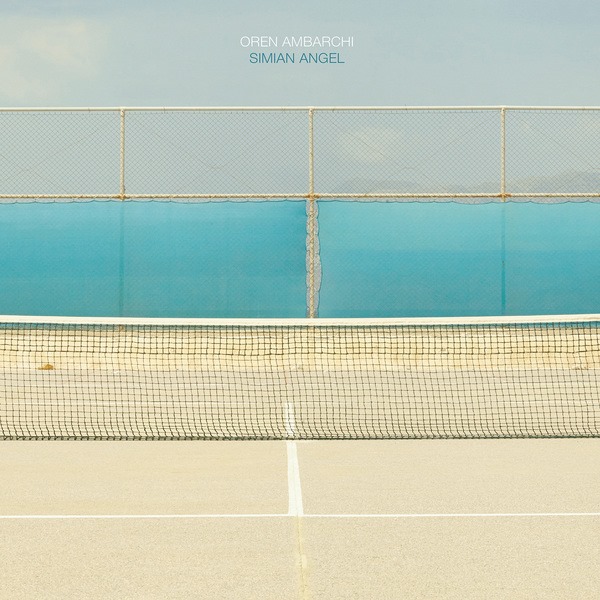
Australian avant-gardist Oren Ambarchi has enjoyed a varied career spanning over three decades, and includes among his associations Sunn O))), Merzbow, and Burial Chamber Orchestra. To describe his output as ‘prodigious’ would be an understatement.

According to the press release, ‘Simian Angel finds Oren Ambarchi renewing his focus on his singular approach to the electric guitar, returning in part to the spacious canvases of classic releases like Grapes from the Estate while also following his muse down previously unexplored byways’.

It continues: ‘Reflecting Ambarchi’s profound love of Brazilian music – an aspect of his omnivorous musical appetite not immediately apparent in his own work until now – Simian Angel features the remarkable percussive talents of the legendary Cyro Baptista, a key part of the Downtown scene who has collaborated with everyone from John Zorn and Derek Bailey to Robert Palmer and Herbie Hancock’. Some of this has meaning: a lot of it doesn’t. I don’t know everything, and nor have the time or inclination to research. Jobbing reviewers crib from press blurbs and make like they know stuff. The majority are lying.

Neither Brazilian music nor guitar are overtly apparent on the two long-form tracks which make up Simian Angel: the sixteen-minute ‘Palm Sugar Candy’ consists of supple, trilling organ notes drifting across clopping, loping, irregular wood-based percussion which fades out to nothing leaving only soft, whisping tones which weave in and out of one another.

The title track is vague, piano notes rising into a rarefied air. It builds gradually into flurries of notes which flutter like snow in a breeze, skittering unpredictably. Baptista’s contribution is remarkable in its subtlety: a sedated heartbeat pulse which occasionally stutters and stammers. Around the mid-point of this twenty-minute mod-inspiring epic, the piano halts unexpectedly and an upward gliding drone alters the previously straightforward trajectory of the composition. Simmering down into twittering gentleness, subtly twisted with the slightest hints of dissonance and eventually transitioning into some mellowed-out semi-ambient reinterpretation of minimalist jazz – which isn’t nearly as bad as it sounds. Instead, the slowly insistent beats force something approximating a solid frame on which all the other abstraction hangs – and it works.

AA

Oren Ambarchi – Simian Angel

Focused Silence – FOCUSED0065 – 7th June 2019

Christopher Nosnibor

Shrill. Treble. Not so much chiming as trilling, a sound between a rapid ringing bell and an alarm that drills into the cranium introduces ‘Colophon’, both the album and the title track on this release by ifitisn’t, a duo comprising Robinson & Kalnars – who both have musical pedigree. It’s the jangle of shattered glass and continues for what feels like an eternity, even though it’s only five minutes or so, before dissipating, dispersing into fragments amidst soft clouds of sound punctuated by near-subliminal bumps and scrapes.

According to the press release, ‘ifitisn’t is about the interruptive noise that exists between transmission and the intended reception of the message, the fragments of concrete experience that interrupt hegemony. it is the mapping of emotional and political territories. ifitisn’t is cartographer and rhetoricican’.

They probably realise that absolutely none of this ‘mapping of emotional and political territories’ actually translates through the work itself: the transmission conveys none of the intended reception. They’re probably more than aware that art’s capacity to ‘interrupt hegemony’ is limited at beast, especially in the current climate, especially when that art is obscure and inscrutable. The disparity between the medium and the message are immeasurable, and all that we have to process is ‘interruptive noise’. It’s quite conceivable that that’s the entire point. The fact they’ve gone ahead and done it anyway is what matters. Artistic statements count for less than pissing in the wind, but its through persistence and perseverance and a steadfast refusal to bow or quit that art will ultimately rise above its societal and cultural backdrop. And it’s art, in all of its myriad forms across all media, which makes life worth living.

I’m by no means saying that with Colophon, ifitisn’t are going to have any impact on my life praxis, or make any waves even within artistic circles. But that doesn’t matter.

Random sounds abound on the second piece, the eleven-minute ‘Denity’, which finds whistling digital feedback, dd snorts, disembodied voices and sounds of unidentifiable origin rifting in and out and intersecting with irregular chanking chimes and glooping ripples of analogue waves frothing impatiently. Nine minutes in, some gallic-sounding vibes enter the mix: it sounds at first like an accordion or concertina of some kind, but could equally be a melodica, but it’s soon washed away on a tide of fuzzy extraneous sound whatever it is.

And whatever it is, it’s worth hearing at least once.

AA

FOCUSED0065_front

After sharing the track ‘Dysfunctional Helper’ in late January, Joni Void – the avant-garde electronic project of Montréal-based composer Jean Cousin – is unveiling a second song entitled ‘Abusers’ from his forthcoming album Mise En Abyme. ‘Abusers’ highlights Cousin’s ability to craft gorgeously layered sonic collages, dextrously incorporating minimal percussive elements and melodic tones sampled from Ai Aso’s ‘Most Children Do’ with vocal contributions from fellow Montréal artist Sarah Pagé. Minute snippets of sound fit together in tight sequence, eventually giving way to stretched vocal arcs that remind us of the organic, deeply human instincts that root Cousin’s digital explorations.

Listen to ‘Abusers’ here:

AA

Joni Void

Christopher Nosnibor

I was forewarned. The note which accompanied the debut releases – yes, plural – three separate CDs released simultaneously – but experimental collective kröter – strongly recommended that listening was not (yes, underlined) to be attempted with a clear head. The note’s sender, one Mr Vast, began with an apology. ‘I’m really sorry to do this to you…’ he wrote. I don’t believe him. He knows I like weird, fucked-up shit. Although with this sprawling three-album effort, I can’t help but wonder If he’s testing me. If I struggle, how will anyone else handle this work of ambition beyond sanity?

Things get off to a good start, with a picked guitar, notes bent, weaving a soft melancholy. I suddenly jolt and look around: it sounds like my cats in pain in the next room. No, wait, it’s just the CD. That’s some crazy woodtrumpet noise. ‘Is that the cat?’ my wife calls from the next room. ‘No, it’s just the CD,’ I reply. ‘Thank goodness, it sounded like the cat was really ill.’ Seconds later, my daughter’s at my elbow asking if it’s the cat she can hear in my office. I explain it’s the CD, and she declares that she loves it. We’re less than two minutes in, not even one full track of twenty-seven played, and already these Kröter buggers are causing mayhem and breaking my flow.

The sparse, bass-led spoken-word sleaze of ‘Sebastian’ seems positively commercial by comparison, despite being, in real terms, claustrophobic and vaguely disturbing, the monotone narrative bordering on the psychotic. And the rest of the album is just as weird. All the shades of weird, from dislocated spoken word colliding with off-kilter electro-funk to minimal electro-pop that sounds like it’s melting as beats misfire in all directions and loops stutter and fracture like some kind of sonic seizure, with the lyrics veering from the surreal to the ultra-mundane by the verse.

Wibbly-wobbly weirdness abounds, shuddering, juddering analogue synthiness and all sorts of inexplicable dominate pieces that range from interludes of less than a minute in duration to expansive workouts. On *b, ‘Dogsick’ is a seven-minute spoken-word piece that delivers graphic details about the varying shades of the globules of canine vomit, mutating along the way to find Mr Vast come on like Peter Murphy against a backdrop of whacked-out trumpet action.

There’s wonky, fucked-up funk disco on the menu, too, alongside the 10-minute ultra-sparse blues exploration of ‘Tricky Task’ that goes kinda Pavement, kinda huh? as it progresses. It’s impossible to separate the wheat from the chaff, the killer from the filler: this is simply an exercise on experimentalism, and you’ll like it or lump it and maybe like some or lump the rest, or, meh, who cares?

By disc three, my brain’s beyond bent: my daughter’s hassling for more songs that sound like that cat and I’m being battered with tunes from her new Pomsie, which are like cat disco and explaining that there probably isn’t another song on the planet like it isn’t being well-received, which is troublesome, especially as kröter do have some net tunes half-buried in the big mess of weird shit. Then again, ‘Telephone Rag’ starts out quite nicely, but rapidly descends into screaming madness, and ‘Opera Lift’ is all over, a nasally-delivered narrative carried by a slow-building post-rock / krautrock crossover with swelling choral backing vocals. I mean, how do you rationally process this? There is no rationality to the yelping dog loop freakiness of ‘Asumasite Huip’, or the Doors-meets-The-Fall plod of ‘Flageolet Beans’, or, indeed, any of this. And then tings go kinda strangely Bowie on the last track, ‘Awful Light’, which is arguably the best track on the entire set.

Kröter are the epitome, the encapsulation, the embodiment, the definition of niche. They’re the archetype of a band making music for their own entertainment. These three discs – which purport to contain ‘excepts’ from their sessions in Berlin in 2017 – may represent the best of their improvisations, or only a flavour, but nevertheless leave the question ‘just how much material did they get down?’ The questions unasked, perhaps ‘how much more are the likely to release?’ and ‘how much more do we need?’ The truth is, the world is always a better place for artists unconstrained by convention: it doesn’t matter whether or not you, or I, or anyone, like them – it’s about choice. It’s about expression. And commercial success is no measure of artistic merit. And if the artistic merit of the individual pieces on this insanely ambitious, sprawling effort varies immensely, it doesn’t actually matter, because the merit is in the scope, the ambition, and the fact it exists. They may have utterly screwed my brain, but the world is better for the fucked-up weirdness of kröter.

AA

AA

1st October 2018

Christopher Nosnibor

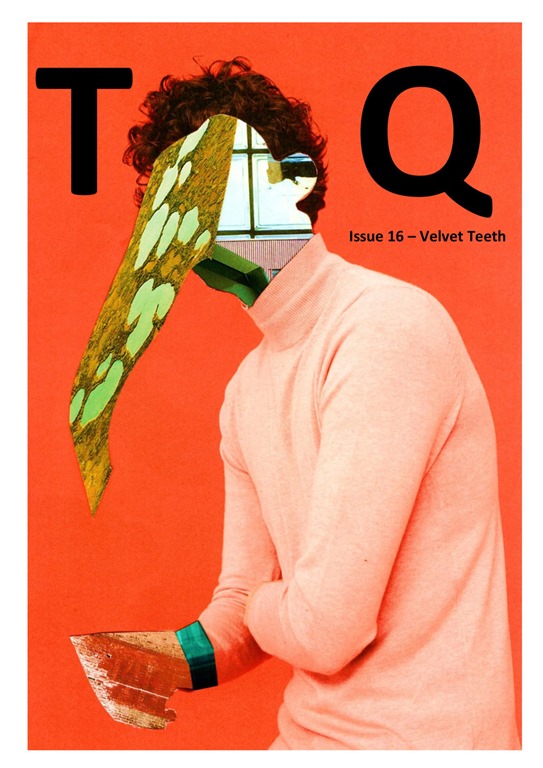
Velvet Teeth was originally released as a 200 only limited-edition CD through the October issue of TQ Magazine, which is the kind of publication that gives coverage to the likes of Ceramic Hobs and Drooping Finger – not so much competition for Aural Aggravation, but a channel with a shared goal of giving coverage to the kind of acts most won’t, assuming they’ve even heard of any of the artists. The funny thing about niche music is that it has a fairly hardcore set of devotees, and there’s a kind of disparate, disconnected community that’s less of a scene and more of a rhizome-like underground network. And while a lot of fairly niche stuff may still only have a potential market of around 200, it’s often amazing just how many oddballs there are hiding in the cracks demanding the work of some bands that on the surface seem so obscure that even their mates haven’t heard of them. Chlorine – the musical vehicle of Graeme Hopper – certainly has that wider appeal, and moreover, most certainly deserves wider exposure and the opportunity of a larger audience.

Velvet Teeth is experimental in the most explicit sense, a sequence of fragmentary sonic collages. The longer pieces roam around murky depths with ominous fear chords obscured by laced shrouds of sonic fog. ‘Manlines’, with its down-tuned, sinister vocals and groaning, droning dissonance, and ‘The Scenic Route’ exploit dimetric tonalities and the prominent separation of frequency ranges, with rumbling, almost subliminal low-end providing a base for niggling treble. The six-minute ‘Low Hauxley Tide’ pushes further on the resonant low-end pulsations, a low, tidal throb providing the main body of the piece. It’s kinda mellow, but kinda shiversome, too. There’s a creeping fog of darkness that pervades both the piece, and the work as a whole, which creates a certain sense of separation. It’s simultaneously immersive and engaging, but there’s a feeling that you’re not quite in the same room and there’s a force-field preventing entry.

‘Who Pays for This’ is a spine-tingling mess of scrapes and jangles, muffled, slowed speech that’s just on the cusp of indecipherability, and elsewhere, ‘Bubbewraps’ is woozy, wibbly, vaguely disorientating. The album as a whole is built on a loose, drifting fluidity, with compositions that aren’t so much compositions as sonic coalescences which occur as much by chance as design.

Uncomfortable, awkward, unsettling… these are the positive qualities of the oddity that is Velvet Teeth.

AA

Chlorine - Velvet

Christopher Nosnibor

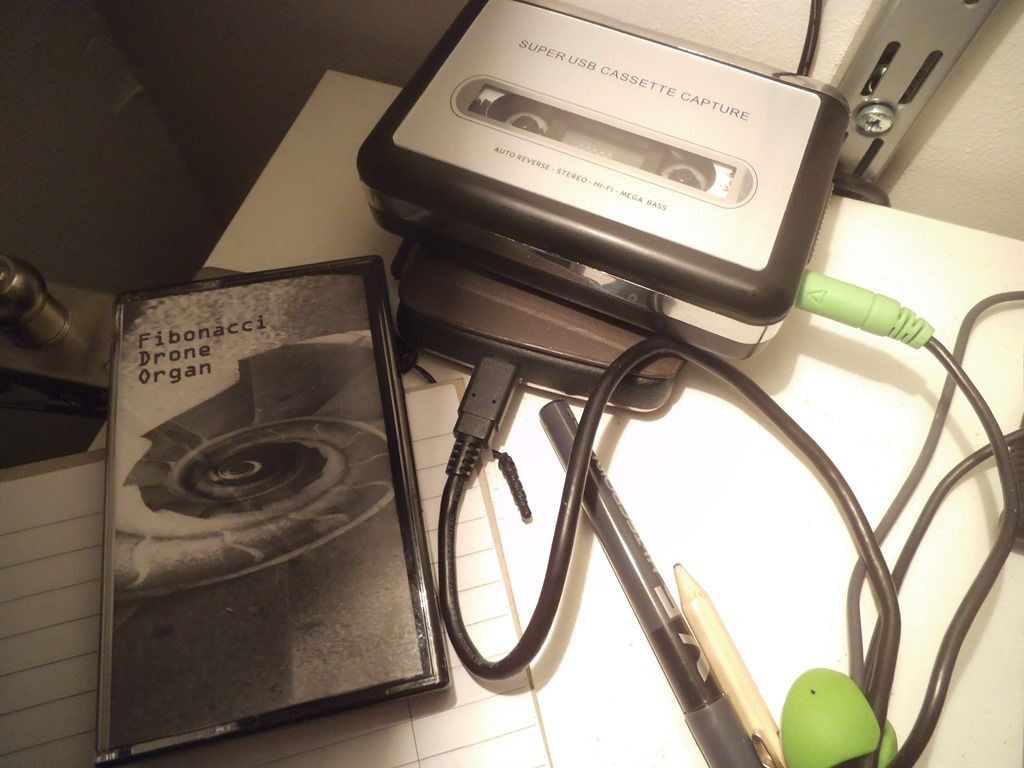
Fibonacci Drone Organ: three random words spliced together, unshackled from the constraints of context to allow free association to determine interpretation? Or a descriptive indication of what Dave Procter’s second- or t(h)ird-latest (this month saw the debut of HUNDBAJS, which is Swedish for dogshit, the absolute latest) of his myriad projects which include the Wharf Street Galaxy Band and Legion of Swine? The cassette release contains precisely no information whatsoever, even down to a track listing, but a spot of digging reveals that it’s the latter – which should come as no surprise, given that the man behind FDO curated a ‘10 Hours of Drone’ event a while back. The album contains two pieces, each occupying a side of the tape, and they’re formed around droning organ notes. Long, long droning organ notes.

And my (rather limited but suitably fruitful) research uncovered that FDO ‘uses the Fibonacci Series as part of the compositional process,’ that ‘the notes are chosen via dice rolls and coin tosses,’ and that ‘the durations of the notes are chosen by the Fibonacci Series. Notes are added at the appropriate time.’

From this, I infer that in technical / theoretical terms, FDO compositions emerge from an intersection of John Cage-inspired randomness and the mathematical precision of Fibonacci. What this actually means, ‘m not entirely sure, and thankfully, the technical aspects don’t impinge too heavily on the output from a listening perspective. Ultimately, it’s all drones. And on this outing the ‘appropriate’ time for adding noes is seemingly after an eternity.

This means that across the tape’s duration, not a lot happens. Notes may be added, but at such distance that the layers build so gradually that the pieces are over before much depth, resonance or layering has occurred. This is all testament to Procter’s unswervingly uncompromising approach to music-making, and encapsulates the reasons I personally hold him in such high regard (and it’s fair to say that if there’s one person I’ve worked with who’s intuitively understood my vision for creating spoken word with the most hellishly mangled noise, it’s Dave who’s been behind the majority of my best and most exhilarating collaborative live work). With more projects, pseudonyms and releases to his credit than seems humanly possible, he’s practically a one-man underground scene in his own right. Look up ‘northern avant-garde’, and you’ll likely find a picture of Dave Procter – or a bloke in a lab coat sporting a pig’s head or something.

Procter gets art, and is an artist, but doesn’t espouse the pretentious trappings of being an ‘artist’ (or, worse still, an ‘artiste’). Which means he can not only get away with releasing a tape containing 40 minutes of theory-backed drone without appearing a tit, but delivers some of the most brilliantly self-aware electronic drone you’re likely to find.

Side two (not that the sides are marked) brings a quavering decay to the elongated drones – which hover toward the higher frequencies – by way of contrast to the strong, stable drones of side one. The effect is cumulative and ultimately soporific, and it’s definitely the music and not the beer as I listen to the spindles rotate on my tape deck and the notes drift from the speakers. Sometimes, there’s no shame in sleep.

DSCF6863

AA

28th September 2018

Christopher Nosnibor

Disjointed. Fragmentary. Fractured. Sketchy. Incomplete. The ten pieces (untitled other than by numbers 1-10) on Refound are vague in structure, minimal in form, non-linear in trajectory, and often unclear in purpose. Hardly surprising, given that they emerged from improvisational sessions made with electronics and ‘inside piano’. I’m not sure if this is becoming increasingly popular as an instrument of choice in avant-garde circles, or I’m simply evermore aware of its use in the making of experimental music since I received a copy of Reinhold Freidl’s immense Inside Piano double CD four years ago.

But what are they doing to the piano to achieve these sounds? Precisely what ‘inside piano’ actually is remains is shade unclear. The liner notes to Friedl’s debut solo which effectively set the mark for and so defined the technique, is spectacularly oblique and vague in its definition of ‘inside piano’: The good old grand piano plays aggressive noise attacks, choir-like symphonic movements, strange complex sound fibrillations, sometimes lighting up single prepared piano notes, juxtaposed with the tremendous bass of the nearly three-meter long strings…

For Refound, Neumann and Neilsen’s improvised experimentations were remixed and realigned by the two contributing artists themselves to create something… well something. I was tempted to say that conveyed their joint vision, although what that vision is, assuming there was a vision beyond seeing what their playing together produced, is unclear.

Refound manifests as a succession of tweets, hisses, rumbles… skittering, bird-like treble and yawning mid-tone feedback. There’s no discernible trajectory, the pieces break off and stand separately from one another as a series of sketches rather than as a coherent, cohesive album.


AA


Andrea Neumann Mads Emil Nielsen – Refound