Posts Tagged ‘Atmospheric’

Rocket Recordings – 10th June 2022

Christopher Nosnibor

International Treasure is the second album from the ‘collaborative collision’ of Steve Davis, Kavus Torabi, and Mike York. And, of course, much has – and will – be made of the Steve Davis factor: he may have kept his musical interests largely under wraps during the lengthy heyday of his snooker career, but the fact is that he’s long been a fan and supporter of ‘interesting; music, and this is a musical unit that stands on the strength of its work – and its work is (utopia) strong.

As the accompanying notes explain about the origins of International Treasure, ‘All three musicians here found themselves operating outside of their comfort zones – Torabi’s purchase of a guzheng (a Chinese plucked zither) led to Shepherdess’s lambent allure and York’s spectacular and evolving array of pipes and wind instruments contributed just as much as his ruthless editing. Davis meanwhile, whose speciality lies in rich tapestries of modular electronics, sums up their relationship in characteristically self-effacing fashion: “I see myself as a strong midfielder, or a centre back. Kavus and Mike are like the Lionel Messi or Ronaldo of the equation, and I’m setting situations up for them”.

Davis’ application of an extended football analogy is amusing in context, and one suspects it’s an intentional slice of drollery. The music itself is not amusing – as in, there are no chuckles to be found here – but instead is intensely focused, with magnificent results. There’s a tangible sense of an intuition flowing between the three of them on this album as the sounds ebb and flow and weave and quaver, the elongated drones and meandering organs melting together like a stream of butter.

There are some odd samples – probably animal, rather than vegetable or mineral – flow together into a soft mass, with no hard boundaries, no distinct edges… ‘Shepherdess’ is spacious, meditative, but shifts over time to emerge as a more pulse-based modular synth work, and ‘Disaster 2’ brings all of the various elements together perfectly, as well as bringing together ambient, post-rock, and folk. It’s a beautiful and uplifting experience, and one which acknowledges the pains, trials, and tribulations of life, how it may not be possible to function all day every day.

There’s something soothing, even soporific, about the slow, mellifluous tones that drift together smoothly, seemingly effortlessly, to coalesce into some form, however cloud-like and abstract, to create International Treasure. Even when deep, resonant notes hang like the slow decay of a chimed gong, as on the title track, the darkness is always tempered, by light.

It’s not ambient and it’s not Krautrock – but International Treasure finds the three musicians drawing on elements of both to conjure something magical, something mystical. The final track, ‘Castalia’ is a calypso party party, and if it at first feels somewhat at odds with the rest of the album, it’s worth bearing in mind that the album exists at all because the players are keen to explore different terrains and territories. And explore they do: International Treasure mines many seams, and excavates a wealth of listening pleasure.

AA
525397

After being involved with Heilung for two years, and more recently with the worldwide-acclaimed movie The Northman as songwriter and actor, Jonas Lorentzen decided to focus on his own musical expression, based on a reimagination of Nordic Folk and spiritually driven music. The result is Nebala, spearheaded by Jonas Lorentzen, but assisted and graced by powerful talents such as Sebastian Gainsbourough (Vessel, The Northman, Manchester Collective), Kjell Braaten (Wardruna, Origami Galaktika) as well as non-musician minds assisting in the conceptual development, Doctor Mathias Nordvig (Professor of Pre-Christian Religion at CU Boulder) and Philosopher Naina Gupta (University of Kingston).

Nebala unveils today the new single ‘Ant Mér Sjalfri Þér’, a song about unfulfilled love, desire and longing consuming us. It refers to the myth in which Wōdan sought the Billingas magwia, the Maiden of the Fleeting Moment. In this myth, love and desire are ripped away from the ones who have let themselves be consumed. The artist also releases a new video, a short film in which the songs ‘Ant Mér Sjalfri Þér’ and ‘Laþu’ merge to create ‘The Eternal Child’.

Jonas Lorentzen comments: "This is the entire art film as we originally intended. A story about a man trying to come to grips with his own demons and desires. Inspired by mythology and Jungian archetypes."

Watch the video here:

Using traditional frame drums, lyre, tagelharpa, Tibetan singing bowls, and throat singing, Jonas Lorentzen has developed a unique Indo-Nordic sound for Nebala that toys with timescapes, soundscapes, and cultural boundaries to bring you back to the primordial experience of music itself.

He comments on the album: “When you let yourself be taken by desire and lust, you will be consumed by what the ancient Germanic peoples called Laþu. The ancestor of our modern word “to let,” laþu suggests giving into natural desire and emotion. When Wōdan sought the deepest knowledge of the cosmos he had to brave the dangers of the deep caves in Hnitbjörg and let himself be taken by the desire of Gunlaþu, the forceful goddess of the underworld.”

AA

JL

28th April 2022

Christopher Nosnibor

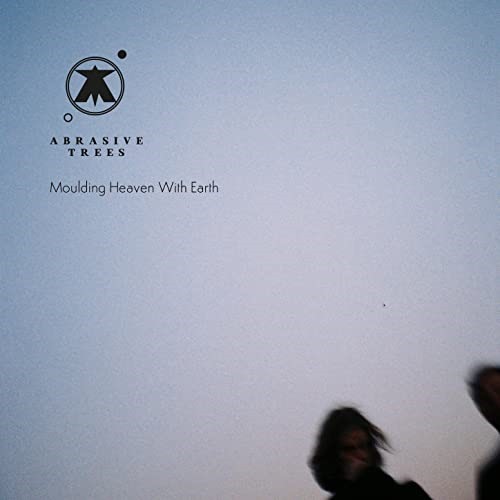
While physical formats for music may not be especially popular these days, there really is no substitute for holding an article in in your hand. It’s not just about the artefact or the possession – although increasingly, I feel that actually ‘owning’ your music seems like a sound move as acts pull their music from popular platforms – particularly Spotify – and acts who no longer exist cease to maintain their websites and BandCamp profiles and their works simply disappears. Nothing is permanent, but when it comes to things which are virtual, their ephemerality is even more pronounced. This is a long way to coming around to saying that the CD for Abrasive Trees’ new single is magnificent as an item, and it’s very much a fitting way to present the musical contents, and with three tracks including a remix of ‘Moulding Heaven with Earth’ by Mark Beazley (Rothko), it’s a proper 12” / CD single release, the likes of which are sadly scarce these days.

I don’t just love it for the nostalgia: this feels like a proper, solid package in every way, and ‘Moulding Heaven with Earth’ is very much cut from the cloth of sparse, minimal shoegazey post-rock, which provides the backdrop to a stirring spoken word performance before spinning into a slow-burning extended instrumental work. It builds and it broods, the atmosphere growing denser and tender as the picked guitar lines unfurl and interweave across a slow, strolling bass. A reflection on life and death, earth and afterlife, it’s a compelling performance, and the words would stand alone either on a lyrics sheet or as a poem. From there, it’s a gradual, and subtle journey that culminates in a crescendo – that’s strong, yet restrained.

B-side / AA side ‘Kali Sends Flowers’ is moving: again, it’s understated, and yet so very different, spinning a blend of post punk – even hinting at the gothier end of the post-punk spectrum – and psychedelia that in places hints at Spear of Destiny in the way it’s sparse yet rousing. It’s one of those songs that simply isn’t long enough, and that demands for ‘repeat’ to be hit immediately to keep it going.

Mark Beazley’s remix of ‘Moulding Heaven with Earth’ accentuates the atmospherics, and while it retains the rhythm – and if anything it highlights the beef of the bass – and is generally quite respectful in its treatment, and somehow expands the vibe and introduces a more ambient feel, while at the same time shaving over a minute off the time of the original. It’s an interesting – and I mean that positively – reworking, and one that most definitely brings something fresh to the track, rounding off what’s as close to a perfect EP as you’ll hear all year.

AA

AA

31UQdh hqYL

DARKHER are now premiering the bitter-sweet video single ‘Love’s Sudden Death’ taken from the beloved Northern English doom act’s sophomore album The Buried Storm, which has been chalked-up for release on April 15.

The black and white clip ‘Love’s Sudden Death’ was filmed on location at Long Dike Moor, which lies between Hebden Bridge and Haworth in West Yorkshire – and is also very close to Top Withens, the moorland that inspired the Brontë Sisters’ novels and poetry.

Watch the video here:

AA

AfxiDV8w

Photo: Catherine Pogue

Metropolis Records – 4 February 2022

Christopher Nosnibor

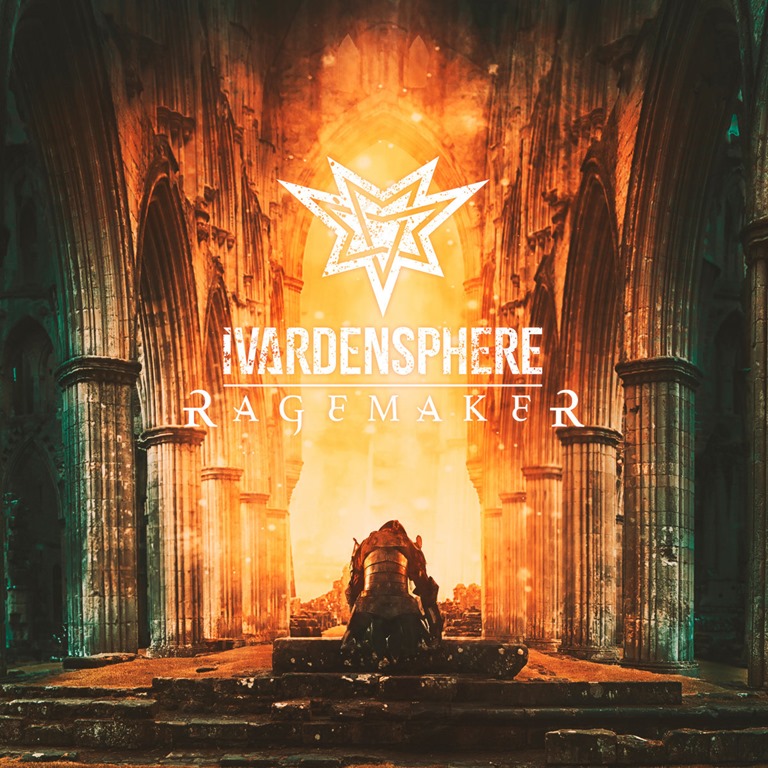
For years, I’ve had the rage. There is, after all plenty in this world, this life, and no doubt beyond, to rage about and against. iVardensphere focus that rage through sound rather than verbally, through an album that articulates darkness and tension through the language of sound.

‘A Whimsical Requiem for the Fey’ is appropriately titled; being a breezy, neoclassical assimilation of light-as-air plucked strings and soft, accessible melody. As such, it does nothing to prepare the listener for the instant plunge into the darkest of depths brough with the growling churn of ‘The Maw’, which features Jesse Thom. But it’s on the title track that the album really hits its stride. Tribal drums dominate a gloomy soundscape, weighted with dense bass tones, but also the portent of soaring vocals. And while the jagged strings add to the tension, the drums simply build and build and batter your very being. This isn’t rage, it’s the unleashing of vengeance via the hammering of the soul.

The individual compositions are each dramatic and powerful in their own right, and the attention not only to the details of the arrangement, but the sequencing of the album stands out, and the ambition is clear without the explanation that this is ‘a sweeping, cinematic album, equally suited as the next evolutionary step of iVardensphere, and as the film score to a post-apocalyptic motion picture.’ It’s dark, stark, and atmospheric, and thunderous rhythms evoke ancient mysticism, and scenes on barren hilltops and sweeping moorlands; tribal rituals, burials, spiritual ceremonies of great import. And there are moments when those rhythms step up, pounding harder and more intensely, so as to be all-encompassing.

As the accompanying notes outline, ‘Traditional percussion from all corners of the world, Taiko, Surdo, djembe, timpani, and more are deftly intermixed with all manner of sourced percussion sounds. Hammers and anvils, slamming doors, even the sound of a dumpster being kicked are sampled and folded into the sonic melange.’ We’re in Neubauten / Test Dept territory here, but there’s a subtlety to so many of the compositions that go beyond these comparisons too: the graceful sweeps of ‘Indomitus’ stray from anything industrial towards progressive / post rock territories, and Seeming’s vocals are almost rock.

The electronic elements are remarkably restrained in the main, with only occasional incursions, such as the bending blasts of bass on ‘Varunastra’ (which features Brittany Bindrim’s vocals); elsewhere, ‘Draconian’ brings the drones, and a low, serrated throbbing. Then, it also brings glitchy danceable beats, which evolve into another crashing assault that batters away relentlessly.

Then there’s the straight-ahead thump ‘n’ grind of ‘Orcus’ and the mournful trudge of ‘The Age of Angels is Over’; these tracks conjure very different atmospheres, but in the way the album unfolds, they develop a sense of significance. If ‘Sisters of the Vipers Womb’, with Brien Hindman’s vocals, seems a little too cliché in its sinister stylings, it sits in the broader context of an expansive and immersive work that has a trajectory through ever-changing moods, and to powerful effect.

AA

a0129874839_10

3rd December 2021

Christopher Nosnibor

If there’s ever been an emerging theme across music of all genres in the last year and a half, it’s isolation. Yes, if a global pandemic has achieved one thing, it’s brought everyone together in their feelings of isolation.

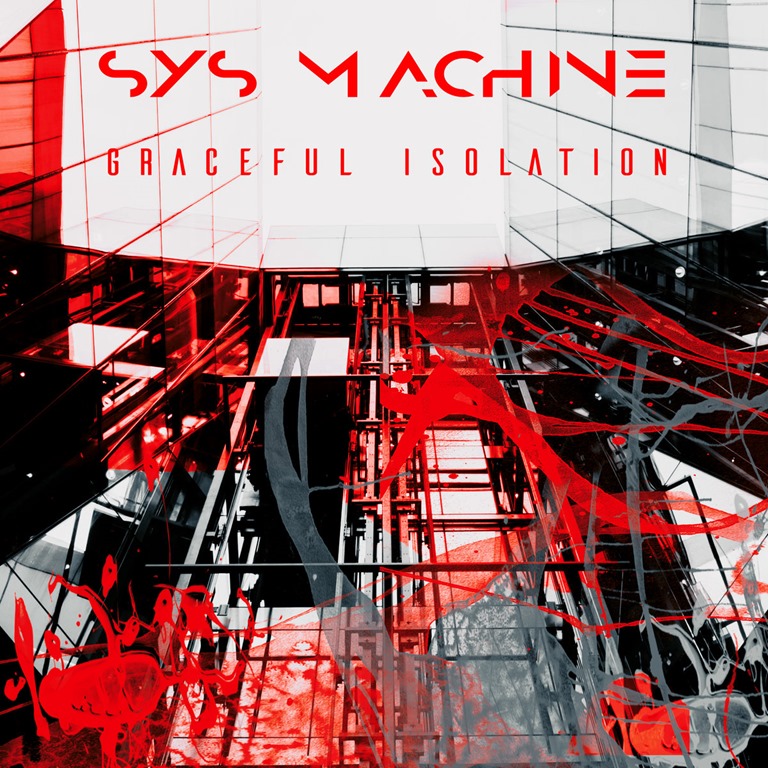
And so it is that we learn that the tracks on Graceful Isolation ‘address the feelings of isolation and coming to terms with new norms that the past year has brought. The title is derived from the fact that over the course of the album, none of the collaborators were ever in the same room.

One could counteract that in creating an album featuring numerous collaborations (notably Kimberly Kornmeier of brooding orchestral electro goth act Bow Ever Down on vocals on three songs, but also a slew of remixers), Dave McAnally has been far from alone despite being forced to work in physical isolation, yielding an album that demonstrates that distance is no object and geography is a state of mind, even if it is no substitute for proximity.

‘Poison My Skin’ makes for an atmospheric opener, with stark, minimal synths and drum machine providing a cold backdrop. ‘You’re never gonna touch me again’, Kimberly croons in a detached, robotic monotone, with subtle hints of Siouxsie, while giving voice to the thoughts that have echoed around my head that there are likely many people I have seen, heard, and been in the presence of for the last time in my life. I don’t miss the office, I don’t miss the people I used to work alongside in that artificial, uncomfortable, unnatural space, and yet… well, none of us expected that way of life to be curtailed, and certainly not in the way it was, an instant switch-off. March 2020, on being told to go home to work, I never anticipated being away more than a few weeks. And here we are… people have moved on; people have left; people are no longer with us. It’s been a long and painful couple of years.

‘All the Pieces’ and in particular ‘Impossible Dreams’ are stripped-back and sparse in their arrangements – not quite demos, but certainly skeletal, with stuttering drum machines providing the brittle spine to the songs. The lack of flesh on the bones is integral to the appeal here.

‘Drowning in the Past’ and ‘Illusions’ are tense, queasy in their taut atmosphere. McAnally resumes vocal duties, and said vocals are pegged low in the mix, compressed, accentuating the dislocation and distance. The former pegs a particularly expansive guitar solo to some nagging synths and comes on like a proggy James Ray, and it’s some good shit if you’re on the market for dark, gothy electropop.

My only niggle – surprisingly or perhaps not so much – would be that the thirteen tracks on the album consist of only five individual songs, and with three mixes of ‘All The Pieces’ slap bang in the middle, in addition to the original version, plus three versions of ‘Drowning in the Past’ it’s does get a little bit repetitive, and it may have worked better as an EP and a remix EP rather than a full-length album in its own right. Put another way, I’d play the grooves off the EP, but would probably only spin the remixes every now and again – not because they’re poor remixes, but because the original cuts hang together so well, it feels like a fully-realised document that requires no adornment.

AA

a2053013240_10

By Norse – 26th November 2021

Christopher Nosnibor

Hildring is the second album by Wardruna vocalist Lindy-Fay Hella with musicians Dei Farne. It’s been a long time in the making, with ‘Taag’ dropping as a single back in the summer of 2020. But what is time when the world is off its keel and the world is spinning at a different pace, one so rapid we’ve lost touch with our innermost selves? Lindy-Fay Hella and Dei Farne connect with a past world, a time before technology: not necessarily a more primitive time, but a time in which there was a closer connection to earth and nature, and also to the inner self, the core spirit.

‘Hildring’ is the Norwegian word for mirage, and it’s fitting, for despite the solid, tribal percussion that dominates the sound, paired with solid, chunky basslines, the remaining musical elements are fleeting, flitting, mellifluous, transient, impossible to grasp a firm hold of.

That isn’t to say the album is all airy atmosphere and no substance: quite the opposite, in fact, there’s a sturdiness and density to the richly layered compositions, and it’s a very fine balance of the seemingly separate elements, namely the solid, and the ethereal and airy. The drumming is immense, ribcage-rattling, rousing. There is a wonderfully rich, earthy quality to Hildring. In keeping with Wardruna’s quest to explore Norse cultural and esoteric traditions by delving into ancient history and mythology, so in this collaborative project Lindy-Fay Hella continues that focus. The sound is modern, but the album is deeply evocative as echoes of the ancient resonate forward through every note, and you feel the aura of generations past around your being as you listen. It resonates in ways beyond expression, beyond lived experience. It’s deep, and it’s powerful, and strikes a resonant chord from the off with the percussion-led title track, where soaring vocals and a driving bass melt together amidst spacious waves of sound, and it sets the bar and the form.

In something of a shift from the overarching style, ‘Insect’ feels rather more overtly electronic, with skittering glow-worm flickers flitting hither and thither, but it’s still packing a rare emotional intensity.

‘Compositionally, ‘Briising’ is minimal; drums, bass, sweeping, droning synth, and incidental cymbals accompany a balanced, inwardly-focused vocal performance. There’s a menacing, growling vocal that is again otherworldly, and if not scary, then unsettling. ‘I return to fire’, he repeats in a dark, gravelled monotone.

‘Taag’ goes big on the expansive sound, and it’s sweeping, immense, immersive. It’s bordering on the grandiosity of post-rock, and propelled by urgent drumming. Elsewhere, the sparse, looping synth of the appropriately-titled ‘Otherworld’ is relentless and resonant.

Throughout, Lindy-Fay’s vocals are outstanding, and the album showcases her remarkable vocal dexterity. Often light and airy and floating and soaring above all layers of human perception, Hildring is magical, mystical, beautiful, majestic, and powerful. There, I managed to not to use ‘epic’!

AA

GDOB-30H3O1-001.pdf

Italian shoegaze and post-rock project led by Gianluca Divirgilio, Arctic Plateau have just revealed a music video for a brand new track titled ‘Saturn Girl’, which is taken from their third album Songs of Shame, due out on December 3rd via Shunu Records.

Watch the video here:

Emerging from an eight-year hiatus, songwriter Gianluca Divirgilio brings his darkest and most introspective thoughts to light with Arctic Plateau’s Songs of Shame. Recorded by Fabio Fraschini at PlayRec Studio,mixed and produced by Gianluca Divirgilio at Arctic Plateau Studio, the follow-up to 2012’s second effort, "The Enemy Inside", is an album of intimate and powerful performances that serve as the first steps toward a healing that has been decades in the making. Pre-orders are now available at this location.

Formed by Gianluca Divirgilio in 2006, Arctic Plateau is a post-rock and shoegaze project from Rome, Italy. Having signed to Prophecy Productions in 2008, Divirgilio recorded his first studio album On a Sad Sunny Day in 2009, followed by a split-release with Les Discrets in 2011. 2012 saw the release of his second full-length, The Enemy Inside, which allowed him to open for Anathema on their Italian tour.

The newest record called Songs of Shame will be released in late 2021 by Shunu Records, and distributed by Season of Mist.

a0738542092_10

Tanto. so much. too much.

Lucrecia Dalt and I have shared much music with one another, and over the course of the many years of knowing each other and sharing stages, we decided to collaborate on the track ‘Tanto’ for Qalaq. We discussed a few ideas and wanted to keep it minimal, but maintain the form of a ‘duet’. We exchanged some music and she came up with a beautiful tape loop for the backbone of the track, through which we were able to find our vocal identities. It was a haunting, eerie, out-of-time tape loop, which she proposed after I had sent her the (Arabic) lyrics and a translation of them—and most importantly, their intention. The song is meant to evoke the feeling of ‘envy’ familiar to many people in developing nations.

Legs in an Eastern sewage, eyes in a Western fictitious paradise.

Erin Weisgerber and I decided to make a small film for this song. I had wanted to work with the incredible Stacey Desilier as a choreographer and dancer. We exchanged some ideas and I sent everyone some film references, to which everyone echoed back others, and from there we settled on a setting and imagery and actions and shot this film in the forests north of Tiohtia:ke / Montréal.

–  Radwan Ghazi Moumneh –

Watch the video here:

2fe0a1b6-49ad-0734-6bbe-372530dca1ae

Qalaq album cover
Photo of the 2019 Beirut October Revolution by Myriam Boulous

Hypershape Records – 22nd October 2021

Christopher Nosnibor

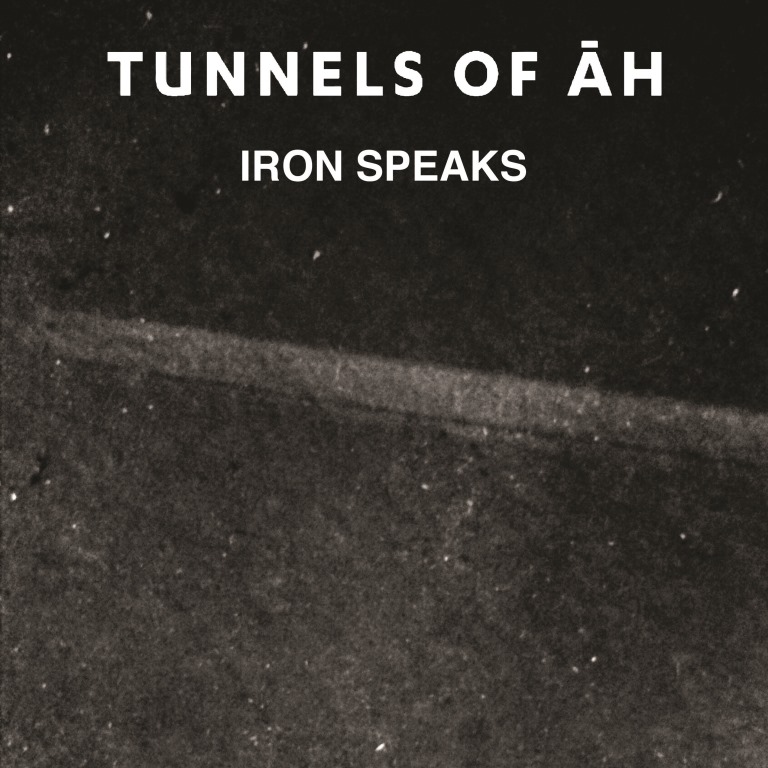
Chronology can be a real bitch sometimes. Linearity is incredibly overrated. How can it be that even now, the world can be so far behind William S. Burroughs’ concept that the conventional novel in its staid, conventional, linear form is passe, and ultimately fails to represent life as it’s lived? Iron Speaks is a release that may trouble some sequential obsessives, as it was in fact recorded before 2020’s Deathless Mind, the fifth album from Stephen Āh Burroughs, formerly known as Stephen R. Burroughs of heavy makers of noise Head of David. Since 2013, he’s pursued subterranean channels of darkness via the medium of fundamentally ambient music, but with an ancient and spiritual undercurrent.

As the press release explains, ‘Iron Speaks has become known as the ‘lost’ Tunnels of Āh album since it was abandoned as the fifth album release due to it sounding ‘unengaged’ to writer Stephen Āh Burroughs; until now. After reworking the original material, Iron Speaks emerges as a rediscovered official sixth album release.’

This is perhaps to overstate the album’s mythology – being shelved for a time is one thing, but to attain ‘lost’ status within three years another. Nevertheless, fans who’ve been keen about this album’s development will likely be happy with both its eventual emergence and its content, which is predominantly a dark whorl of bleak, churning ambience laced with a ghoulish shriek of feedback and general top-end tension. And tense it is: the six pieces bleed together to forge a continuous work that offers no respite and continually works at the psyche and the gut, twisting and gnawing at both. Time stalls, and you find yourself sucked into a subterranean space that’s dark and disorientating.

According to the accompanying blurb, ‘The material deals with the transitional stages of life and death, and it’s an ominous possessive piece of work. As ever though, the darkness of Tunnels of Āh’s output stems from and towards a place of infinite light.’ None of this is so readily apparent on listening, with any light feeling particularly distant as Burroughs leads the listener deeper and deeper through tunnels that rumble and surge with dense walls of noise – and sometimes, it hurts as the weight of it all bears down on the listener. It’s a rich, dense, elemental sound, born of earth and minerals.

We’re told that ‘The title, Iron Speaks, is a reference to the chapter in the Koran which states that iron emerges from the heavens as a gift to mankind. This is often graphically depicted as a blazing ball of molten fire approaching its earthly target, and that image perfectly encapsulates the sonic dynamism of this album. This album is a consuming experience as it slowly enters its intended orbit to its chosen point with inevitable crushing impact.’ The tile track does indeed pack that crushing impact, an oscillating tumult of treble atop layers of rhythmic squalling; in contrast, ‘Every Hour Wounds’ inflicts a different kind of pain as the lower-end notes bounce like oxygen bubbles in murky water in a deep, dark pool. Ominous drones and hums hover before an industrial slash of sheet metal strikes.

The album’s six pieces all sit around the seven- or eight-minute mark, and are densely-textured, and often quite oppressively heavy works. The first, ‘Wardens’ is a smog of bubbling murkiness, where the sound churns ad churns, like dense cloud and uncomfortable gut churning. Long strains of feedback scrape out over a barren wasteland, and ominous hums and drones hover over heavily-textured earth-shifting grind. It’s ultimately not really about ‘engagement’, but about tone texture, and atmosphere, and this is bleak, dense, and uncomfortable, and in a way that draws the listener in. Thunder rumbles, and the experience is quite discomforting. It’s more than that: it’s claustrophobic, suffocating. ‘Terminus Est’ clanks and chimes and booms out dolorous, depressing notes that offer no space to breathe or to reflect. It leaves you feeling compressed, and if not necessarily anxious, then far from relaxed or soothed, but instead on edge and unsettled – and this is why Iron Speaks is a strong work: it has the capacity to have a palpable effect on the listener.

AA

HPS013_front