Posts Tagged ‘Album Review’

APF Records – 30th August 2024

Christopher Nosnibor

Perhaps it’s because I listen to and write about a pretty broad range of music, perhaps it’s something else entirely, but sometimes, I just get buzzed by the prospect of some monster riffage. And that’s what’s promised here with WALL’s debut, Brick by Brick.

Their press write-up got me in half a sentence, describing them as ‘An instrumental 2-piece heavy fucking riff machine, built brick by brick & riff by riff by twin brothers and Desert Storm members Ryan & Elliot Cole’ and the news that ‘debut album Brick by Brick is overflowing with unashamed Iommi-worshipping, instrumental, sludge/doom metal.’

There’s some flamboyant fretwork which adds detail – and a hint of extravagance – to the tunes, but in the main, they keep things tight, with pounding percussion and pulverising, full-weight riffery dominating the album from beginning to end.

Some may balk at the absence of vocals, and listening to the big, overdriven guitar heft of the album’s thirteen tracks, most of which pish their way past four minutes, which makes for quite a long album, I did occasionally thing that some throat-ripping larynx work would be of benefit. But then, how many great albums, even great bands, have disappointed with the vocals, for whatever reason? The number of times weak vocals have let down a strong instrumental sound for me is beyond my counting, so on balance, they’re wise to stick with the instrumental duo setup instead of risk diminishing the material.

The band – and album – are appropriately-named. This is just short of an hour’s worth of relentless riffery, and it’s solid. Like, well, a wall, and heavy, like, er, bricks. These may not sound like revelatory statements, but the point is that so many bands promise the world and barely deliver more than few pebbles. WALL hammer our hard riffs, back-to-back.

‘Legion’ is almost buoyant and the intro at least offers a picked guitar line that sits with the turn of the millennium metal sound before big, thick power chords crash in, evoking the spirit of the 70s and then some. ‘Avalanche’ brings with it some busy fingerwork, something which veers toward excess on ‘The Tusk’, but is kept in check for much of the album, thankfully.

There’s not really anything that’s new on Brick by Brick, but this kind of consistent riffology is comforting in a way, and moreover, they don’t disappoint.

There are some nice, atmospheric and pleasantly musical passages to be found along the way, and they clearly understand the power of the dynamic as well as of volume. When they take things down, it reels you in, before slamming on all the pedals and blasting you away with big, big chords. A few tracks feel a bit like filler, but then again, they provide some contrast, which is never a bad thing when an album is very much centred around one specific thing, namely headbanging instrumental riffs.

There are a couple of covers, and one night question the necessity of their inclusion, particularly closing with a Black Sabbath cover (‘Electric Funeral’): the may have been wiser to cut it on the penultimate track, the massive slugger that is ‘Filthy Doner Kebabs on a Gut Full of Lager’, but maybe they just don’t know when they’ve had enough, eh? But for that, this definitely feels like an eight out of ten in terms of delivering what it sets out to.

AA

a1461439387_10

Petroglyph Music – 25th August 2024

Christopher Nisnibor

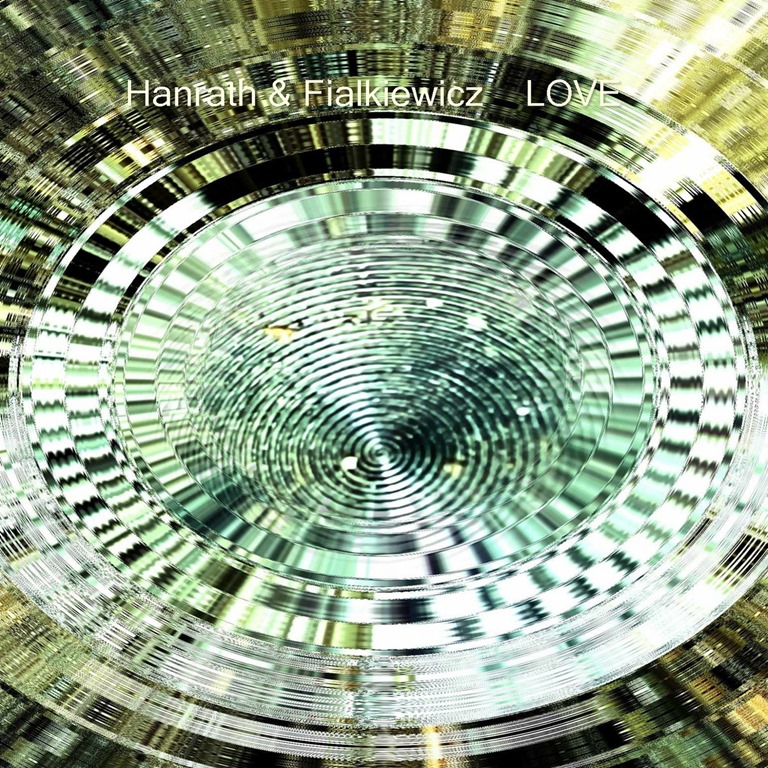
Deborah Fialkiewicz, who I first encountered performing as one half of her noisy dark ambient duo SPORE, is one busy and highly prolific creator, who not only manages to whip musical work spanning contemporary classical to ambience from out of the air at a remarkable pace, but clearly thrives on collaboration. This latest one, with German sound sculptor Wilfried Hanrath, is a further example of the way in which the coming together of artists with slightly different background and musical bents can make for unexpected – and brilliant – results.

As the accompanying notes explain, ‘the album starts with Deborah’s wonderful piece ‘Love’ and ends with Wilfried’s interpretation of it – ‘Love in other words’… The eight tracks in-between are based on noisy, dark ambient drones Deborah provided. Wilfried, inspired by a short trip to the sea, added to these by playing his synthesizer in the beautiful seaside resort. The result is a melange that combines the influences that both bring into this project to something larger than its components.’

Having recently returned from a week by the sea – on the Cornish coast – I can certainly vouch for the replenishing, refreshing, and inspirational qualities of the sea. Living inland and in climes which are perpetually humid and polluted, one immediately notices the difference in air quality when in the presence of a sea breeze.

As collaborations go, this is a particularly interesting one, not only musically as of and in itself, but it’s difficult to separate out what each of the contributors has brought here.

Fialkiewicz’ opening composition is gentle, combining tweaks, tweets, and twitters over the picked strings of a chamber orchestra of sorts, and a billowing wind which fills the background. It’s simultaneously sedate and mournful, and ends feeling unresolved.

Fialkiewicz’ capacity for conjuring dark drones is well-documented, primarily with her work as one half of Spore, but just how much manipulation they’ve been subjected to at the hand of Hanrath – which should really be an album title for a future collaborative / remix work of his – is impossible to determine. This is how collaborations should be, really: the aim should be to achieve a blend, to, and to conjure something which is neither one party nor the other. LOVE fits this criteria: it’s not about who does what, specifically, but the overall listening experience being something different, which is neither one artist or the other, but what they create in combination.

Following ‘Love’, ‘Oneness’ marks a complete shift in every way: it’s a bubbling quickfire electro piece that pretty much brings Kraftwerk together with Gershon Kingsley’s ‘Popcorn’. This numerical sequence of pieces, which runs from ‘Oneness’ to ‘Eigthness’ is an evolutionary, exploratory series, the majority of which are an expansive seven or eight minutes in duration and really mine a deep seam of bubbling, squelchy electronica which becomes increasingly engrossed in the quite granular details of the interplay and interaction between tone and texture, but without venturing fully into the dots-in-front-of-the-eyes details of the truly microtonal.

Slow winds and wide washes define the soundscapes offered here, and I suspect these are the foundations Fialkiewicz provided before Hanrath began to add his spin to them, with stabbing strikes and all kinds of digressions and generally unpredictable incidents which change both the course and the mood of the pieces.

‘Threeness’ is a particularly layered piece, ominous and brooding at first and subsequently, but interrupted by wibbling bleeps, a hint of an R2D2 seeking escape from the haunting confines of the track’s opening. Nothing is quite as it seems, and nothing feels quite right here.

‘Fourness’ is a torturous mess of oscillating drones and groans pitched against a mangled sampled vocal loop, and as one of the album’s darkest and most uncomfortable pieces, it’s very much in the vein of Throbbing Gristle. But suddenly, emerging from the frothing tempest of noise emerges a piano which brings tranquillity to provide balance. And this is where LOVE exceeds. There is a lot going on, and it’s an album which really revels in its contrasts and its manifold depths. This means that overall, and in context, LOVE is a standout work which conforms to no set parameters, doesn’t really sit anywhere, not least of all within the realms of expectation.

AA

a0291842123_10

27th August 2024

Christopher Nisnibor

Just read that bio, and reflect for a moment:

Beige Palace was a band from 2016 to 2024. During that time we released two albums, an EP, a split 7" and some other miscellaneous bits. We toured the UK a bunch, we managed to play shows in France and Belgium, and we opened for some of our favourite bands like Shellac, Mclusky and Dawn of Midi. It has been lovely!

These are no small achievements. But for all of them, Leeds’ leading exponents of low-key lo-fi have been humble and kept it DIY throughout their eight-year career. Fans inevitably feel a sense of loss at the demise of any band, but as someone who was present at their first ever show and having followed their progress through the years, this feels like a particularly sad moment. It shouldn’t: the members have moved on to become Solderer, with the addition of Theo Gowans, a Leeds luminary, gig promoter, purveyor of mad noise as Territorial Gobbing, and one-time member of Thank, another of Freddy Vinehill-Cliffe’s vehicles, and of course, they’ve all received coverage here along the way.

So we shouldn’t feel sad. Instead, we should celebrate the achievements of a band who seemingly set out with no ambitions other than to make music for themselves. But still… I was in attendance at their first show, and as I documented at the time, and as I’ve mentioned in subsequent reviews, they were ace. Unassuming, a shade awkward, perhaps, but warm, human, and appealing in the way they presented their set of sparse, minimal tunes, Young Marble Giants were my first-choice reference point.

How YMG, a band whose album was released on Rough Trade and who have been the subject of a number of articles, not to mention being referenced and covered by the likes of Hole, remain obscure, I will never comprehend. But no matter: Beige Palace picked up their baton and, er, hid it under the settee.

In contrast to the wildly flamboyant dayglo-sporting Thank, Beige Palace were always the introspective, introverted musical counterpart who hung back, heads down as they looked at their shoes. Beige Palace’s successes happened almost in spite of the band themselves. That’s no criticism. They were a great live band, and they released some great music, too. I’m reminded of one of the other great DIY Leeds – via Bradford – bands, That Fucking Tank, who bookended their career with recordings of their first and last shows. Without the documents, the events would be but myths and legends.

This looks like being the first of two retrospective releases, and as a recording of their last live show – which neatly bookends my experience of the band, having attended their first – makes my case about the quality of their performances.

LIVE For The Very Last Time (2016-2024) presents a career-spanning set, with opener ‘Mum, Tell Him’, ‘Dr Thingy’, and ‘Illegal Backflip’ representing their 2019 debut album, Leg, and a fair few cuts from Making Sounds for Andy packing out a varied set, which culminates in single ‘Waterloo Sublet’.

But there are a handful of unreleased songs here, too: like Thank, Beige Palace were always focused on the next project, the next release, and as the very naming of ‘Waterloo Sublet’ illustrates, irreverence was their thing. ‘Local Sandwich’ is a perfect illustration of their quirky irreverence, as Vinehill-Cliffe rants about, yes, a local sandwich shop.

LIVE For The Very Last Time (2016-2024) captures everything that was great about this trio. Awkward, honest, slightly disconnected between-song chat is integral to the experience, and there’s plenty of that – including comments on someone’s wind – on this warts-and-all, as-it-happened recording, captured in Leeds in the intimate but awesome grassroots venue, Wharf Chambers, where the sound is always good – and loud – the audiences are friendly, and the beer is cheap.

There are no overdubs, there’s no polish or pretence, and LIVE For The Very Last Time (2016-2024) is all the better for the fact. The mix isn’t always balanced – the vocals are half-buried and times and the guitars are way loud at times, but what you get is a feel for being in the room.

The music is gloriously wonky, skewed, angular math-rock with some valiant forays into noise. The vocals and guitar both veer wide of melody; it’s the lumbering, loping, rhythm section that keeps everything together: without them, it would be a complete disaster. But this is how some bands work, and Beight Palace always sounded like a band on the brink of falling apart, in the same way Trumans Water always sounded like they may or may not make it to the end of the song as they jerk and jolt their way through waves of chaos.

‘Update Hello Blue Bag Black Bag’ which lands mid-set making its debut and final appearance is unexpectedly evocative, and the eleven-and-a-half-minute ‘Dinner Practice’, also unreleased, hints at the trajectory they might have taken on their next album.

Beige Palace were never going to be huge: they were cut out for cult fandom, and comfortable with that, being one of those bands who made music for fun first and foremost. It’s the sense of fun that come across here. Even in the most downtempo songs, what comes across is that they’re enjoying playing. They will be missed, but we look forward to their next incarnation.

AA

a3696456151_10

ENCI Records

Christopher Nosnibor

It’s taken me a while to get around to this one. It happens, and happens often: I’m simply overwhelmed by the sheer quantity of new – and exciting – releases that land with me on a daily basis. Of all the things to be overwhelmed by (and I will confess that I often find myself overwhelmed by many other things, too, from parenting challenges to DIY, budgeting and the prospect of driving to the supermarket), I do realise that I’m extremely fortunate. But there’s a specific reason I’ve selected this album to post a review of today. Why today? For those who live in a vacuum – and at this moment, I truly envy you – today is the day Oasis announced their reunion and a fourteen-date UK tour. ‘The news the world has been waiting for’, people frothed on FaceBook. Fuck me: judging by the reaction and the blanket press coverage, you’d think world peace and a handout of million quid for every person on the planet had just been announced simultaneously. But no. Just a couple of gobshites have decided that for a few hundred million quid they can bare to be in one another’s presence for a bit. It’s not even looking like it’s the full or original band reuniting.

For many, Oasis were, and remain, the best band on the planet in the whole of history. For anyone with ears, they were purveyors of lumpen, lifeless, plodding, derivative pub rock. A great many of the people who are going absolutely fucking apeshit at the news are broadly in my demographic, who were in their twenties in the nineties, and who, on hitting thirty, found their cultural clock stalled, and they’ve spent the last twenty years or so bemoaning the fact that there’s no been any decent new music since the 90s and how they miss Chris Evans and TFI Friday.

Just as age tends to have a correspondence with increasing political conservatism, so the same is true of musical tastes. It’s why parents of every generation gripe about the music their kids listen to and dismiss it as being shite, without appreciating that they’re not supposed to like or even understand it, because they’re not the target audience. Do I get K-Pop? No, no more than Skibidi Toilet makes any sense or provides any amusement to me. It would be weird if I was down with the kids at the age of 48, and my daughter would likely find me even more embarrassing if I was than being the dinosaur she perceives me as. BUT – and it’s a massive but, a but so massive Sir Mix-A-Lot would die for, that doesn’t mean that there’s no new music of interest any more.

Certified, the debut album by San Diego-based Los Saints, is a perfect illustration of this fact. They describe themselves as an alternative rock band. Various other sources, in their coverage, have referred to them as showcasing a ‘bold indie rock sound’, ‘indie’, and even ‘Chula Vista’s version of Cage the Elephant’, alongside numerous comparisons to The Strokes. I’m not a fan of either The Strokes or Cage the Elephant, but that’s beside the point: both of these acts have produced music far more exciting than anything Oasis mustered during their career spent serving up half-baked bollocks and right now, in the present, amidst the endless wanking over the announcement that after fifteen years a couple of overrated has-beens are going to reheat their tedious, tepid stodge in the name of nostalgia and the interest of payola, we have Los Saints giving us Certified.

There are rib-rattling basslines aplenty, which give the songs – which tend to be on the shorter side, with only a couple of the album’s ten tracks running over three and a half minutes – a really beefy sound and a certain dynamism, an urgency (the likes of which you’ll hardly ever find in an Oasis song). Lead single ‘Faded’, which kick-starts the album with a lively two-minute stomp not only gets things off to a cracking start, but sets the tone, too – dreamy, slightly fuzzy, psychedelic vocals and mellow guitars contrast with the stonking rhythm section, and if anything, ‘Where We Goin’, which follows it is even better, and then again, the punky, poppy, melodic guitar driven indie of ‘Hard’, which lands perfectly between Asylums and Pixies. Even if the rest of the album was shit, after this opening run, you wouldn’t grumble. But no, they keep on delivering joyous tunes with the grungy pop nouse of DZ Deathrays crossed with the driving tones of Darklands era Jesus and Mary Chain and a dash of A Place to Bury Strangers. The title track pairs a nagging guitar with another chunky-as-anything bass before blasting into a breezy but sturdy chorus, and there simply isn’t a dud here.

The production isn’t overly polished, giving the album a live-sounding energy, and this only enhances its appeal, because you feel the band are really in the music, feeling the playing of the songs. Yes, some of the touchstones may be from some mythical golden era – as identified by people of a certain age – but Los Saints show that they can write songs – rather than rip them off – and deliver them with a contagious vibrance.

Bollocks to nostalgia: Certified is proof that not only is there some great new music around, but that a lot of stuff that’s held up as being ‘classic’ is objectively underwhelming and its status is tied to a period in time – and popularity is no measure of anything other than popularity itself – or, more probably, good marketing.

AA

Certified_-_Album_Cover_Resized

Room40 – 6th September 2024

Christopher Nosnibor

For an album that’s based solely on the sounds of the guitar, Dust Resonance sounds distinctly unlike a guitar album. As the title, Dust Resonance, suggests, this is a work of extended, drifting drones, a set that’s predominantly ambient in nature.

But as Norman Westberg’s recent solo releases – also released on ROOM40 – have demonstrated, it is quite possible to take the guitar into this territory, and to create expansive, subterranean drones with just six strings and some distortion pedals, and perhaps some reverb thrown in.

As Zimoun himself explains, he was interested in the guitar as a sound source for some time and have explored it on previous editions including Guitar Studies I-III. “On this work,” he says, “I’ve experimented with different methods and materials, specifically a Magnatone tube amplifier from the 1960s, and various speaker membranes covered with dust, soil, or small stones. The friction of these materials on the vibrating speaker membranes produced slight distortions and irregularities in the sounds, alongside the warm tube tones of the vintage amp.”

As such, the dust is rather more literal than metaphorical here, but the title and the substance of the sound presents a work that functions on multiple levels, with the connotations of dust settling as time elapses and the idea of dust and drones hazing together working alongside the physical interference of organic material with the mechanics of the recording process.

Zimoun’s approach, then, like Westberg’s, is similarly simple and sparse, but at the same time, adds an edge of experimentalism which is quite unique. The addition of materials to create friction and alter the texture of his guitar may take its cues from the ‘prepared piano’ pioneered by John Cage and taken forward as a career choice by Reinhold Friedl. I can’t think of so many examples of the guitar being twisted and mangled in such a way, or an artist taking such an organic, earthy approach to breaking down the fundamentals of the sound of their instrument of choice. It does, however, create the context for an album which features nine dronescapes which creep into one another to forge a continuous hum, scratching, scraping, quite literal earthworks. The thought of earthworks draws me to a place where I find myself reflecting on hut circles, tumuli, and the landscape of the iron age, something I was fascinated by in my early teens and have once again become drawn to having resumed, after a lengthy period, walking moorlands and studying the details of OS maps. And so it’s purple-hued heather-covered moors and outdoor expanses which occupy my mind as I listen to this, a work which evokes similarly vast and barren spaces.

The album contains nine numbered pieces, which hover low and heavy and segue into one another to create one single, monolithic work, and one of immense density. The colossal ‘DR Part 2’, which grinds on for almost nine minutes is exemplary.

I recently wrote on the experience of listening to the instrumental ambient release Ambient Short Stories by Bistro Boy, which slotted firmly into the ‘background’ ambient slot: soft, gentle, undemanding. This is most definitely not background: the dense, buzzing tones and uncomfortable frequencies of Dust Resonance place it firmly in the foreground. It’s impossible to settle back and let this drift over as you yawn and slowly relax into a space of tranquillity. Dust Resonance makes you squirm, sends tension down your spine. Throughout, there is a sense of unease, discomfort, of wrong, which rumbles in the guts.

Dust Resonance is a work which, beneath its smooth surface ambience, is grinding, rough-hewn, slow, and dragging, with billows of cloud accompanying the low-level churn. Something about this, paired with the slow-building spin, starts to feel a shade disorienting. You might sleep, but you may not sleep comfortably.

AA

a0068423991_10

Möller Records – 9th September 2024

Ambient Short Stories is the tenth album by Frosti Jonsson, who records as Bistro Boy. As selected monikers go, this isn’t one of the best in terms of what it connotes, at least for me. While I accept that there’s an element of personal perception involved here, there’s little escaping the fact that there’s a strong whiff of middle-class superiority in the mix here, a late-nineties / turn of the millennium snobbery with a hint of contemporaneous IKEA-tinged cool.

Cut back to 1997, my then girlfriend and I bought our first flat, a cardboardy newbuild with magnolia walls and magnolia carpets, which we stuffed with pine units and furnished the dining part of the open-plan kitchen-dining space with a trendy bistro-style circular table and chairs. On the other side of the same room, we’d sit on the IKEA sofa and watch Friends. I’ve actually got no beef with Friends, but fuck me, talk about cliché. We actually thought we were cool, and our friends did, too.

Ambient Short Stories contains eleven instrumental – and as the title suggests – ambient works, which are pleasant, mellow, easy on the ear. Fair enough. The compositions aren’t the sort of thing you’d actually hear in a bistro, or any other social setting for that matter, although the style is very much background when it comes to the level of attention the album demands. From amidst the generally gentle drifts and rippling waves pipe up some unexpected incidental bits and bobs, and these interjections – whether they’re woodwind or some dominant lead synth or something else – feel a bit out of place, a fraction loud in the mix, a bit wrong, and also a bit dated, a bit post-Tubular Bells 80s / 90s New Age.

Ambient Short Stories isn’t bad, by any stretch: in fact, as a gentle ambient work, it brings almost exactly what you’d probably want: it’s slow, supple, soothing, spacious, and quite soporific, to the point that it almost feels like AI has conjured the perfect balance of light and dark. It isn’t particularly gripping, but I don’t think it’s intended to be, instead sowing seeds of ponderousness.

AA

Ambient Short Stories - Ambient Short Stories - Bistro Boy

Cruel Nature Records – 11th September 2023

Christopher Nosnibor

For those unfamiliar with ShitNoise, their bio describes them as ‘a noise punk band hailing from Monte-Carlo (Monaco). Formed in February 2022, the band has undergone several lineup changes. Currently, it consists of Aleksejs Macions on vocals and guitar, Vova Dictor on guitar, and Paul Albouy on drums.’ What’s more, they reckon their third album, I Cocked My Gun And Shot My Best Friend, ‘showcases their most energetic and mature work to date… Departing from their previous noise-centric style, the band blends grungy guitar riffs, metal-influenced double-kick drums, and a more polished production. The album explores themes of confronting the harsh realities of society and the lasting psychological impact of traumatic events. Through gritty soundscapes and stream-of-consciousness lyrics, it paints a raw portrait of present-day existence and the enduring human spirit in the face of adversity.’

I’m often wary of bands and artists who claim to have matured: all too often it means they’ve gone boring, that they’ve lost their fire and whatever rawness, naivete, edge, that made them stand out, drove them to make music in the first place. But these things are relative, and ShitNoise isn’t just a gimmicky moniker, but a fair summary of what they do. Here, they’ve stepped up from no-fi racket to lo-fi racket and evolved from the trashy punk din with dancey and electronic elements that at times sounded like a Girls Against Boys rehearsal recorded on a Dictaphone, toward a more wide-ranging and experimental approach to noisemaking. As for the album’s title… well. Was the act an accident, one of stupidity, gross negligence, or intentional? Either way, as the adage goes, with friends like these… ShitNoise are certainly not the friend of sensitive sensibilities, or eardrums.

So sure, they’ve ‘matured’ inasmuch as they’ve broadened their palette, but in doing so, they’ve discovered new ways of creating sonic torture.

‘Ho-Ho! (No More)’ launches the album with shards of shrill feedback and distortion: it’s two and a quarter minutes of nails-down-a-blackboard tinnitus-inducing frequencies and deranged yelping that’s somewhat reminiscent of early Whitehouse, minus the S&M / serial killer shit. Not that I have a fucking clue what they are on about, and the noise is so mangled it’s impossible to differentiate any of the sound sources from one another – guitars sound like screaming synths, and there’s so much dirty mess in the mix everything sounds so broken you begin to wonder if your speakers are knackered.

Proving just how much they’ve ‘matured’, ‘Brown Morning’ barrels into churning noise driven by thunderous beats as the backdrop to a rappy / spoken word piece, after which the arrival of the fairly straightforward punk tune ‘Gum Opera’ feels like not only light relief, but somewhat incongruous. But then, in the world of ShitNoise, anything goes, as long as it’s noisy shit. And keeping on with the noisy shit, there’s the gnarly Jesus Lizard meets Melvins gone rockabilly slugging sludgepunkfest of the oxymoronic ‘Pleasant Guff’ to go at, and it’s abundantly clear that they’re absolutely revelling in following their curiosity in every direction when it comes to exploring any and all avenues of racketmongering. I Cocked My Gun is wild, and wildly divergent, stupid, chaotic, and fun.

If the off-kilter grunge of ‘X-Ray Phantom’, with its incidental piano tinkling along behind crunchy guitars hints at something approaching a kind of sensitivity – and a closet ability to write songs – ‘Endless Void’ demonstrates their capacity to step back from noise completely, and venture into near-ambient territories, and with remarkable dexterity.

But mostly, these deviances only serve to bolster the impact of the manic racketmaking which dominates the album, which brings us to the epic penultimate track, ‘Hashish (The Yelling Song)’ – a ball-busting seven-and-a-half-minute stoner-doom slammer that slaloms its way through some heavy drone and some explosive psychotic episodes… and we’re immensely proud to be able to present an exclusive premier of the video which accompanies this mammoth slab of sonic derangement right here:

Get it in your lugs. Let it permeate every cell. Bask in the insanity. With I Cocked My Gun And Shot My Best Friend, ShitNoise have really gone out on a limb, and while teetering on a precipice of madness, have proved that artistic fulfilment lies on the other side of mania. It’s a far more enjoyable place than the everyday in which we find ourselves of late, so why not dive on in?

AA

a2752328939_10

Peaceville – 19th July 2024

James Wells

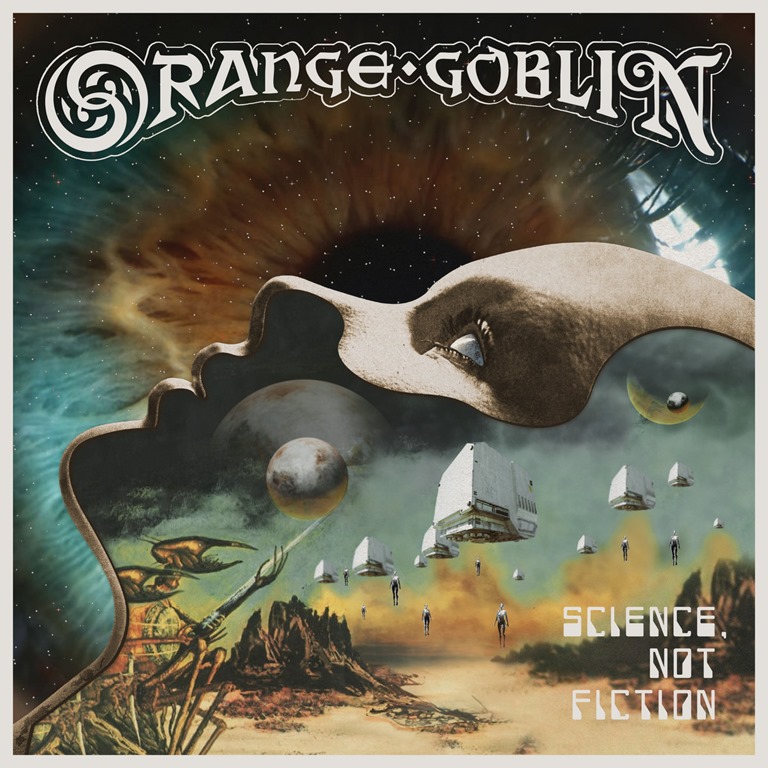
Since their inception as Our Haunted Kingdom in 1995, before transitioning to Orange Goblin and releasing their debut album, Frequencies From Planet Ten in ’97, OG have established themselves as leading exponents of heavy metal thunder.

Science, Not Fiction, explores, as the press pitch puts it, ‘the world as seen through the three fundamental factors; Science, Spirituality, & Religion and how they determine and affect the human condition.’

On the one hand, this is very much hoary old-school metal, with monster riffage cranked up and driving hard with gruff vocals giving it some. But on the other, it’s hoary old-school metal that’s very much more in the Motorhead vein than, say, Iron Maiden. It’s got the heavy swagger of the best of stoner, the monstrous density of slugging, sludgy doom. Fretwanking is kept in check while ball-busting riffery is cranked up to eleven. No shit, this is how it should be done.

‘(Not) Rocket Science’ is exemplary, and brings both the riffs and the cowbell. They sling in some sampled speech on ‘Ascend the Negative’, which offers a solid sense of positivity pushed on by a pounding riff and thunderous percussion. ‘The rich inflate their egos while the poor just foot the bills’, Ben Ward growls on ‘False Hope Diet’, clearly establishing their political position. This enhances my personal appreciation of the band, for certain – but as much as anything because of their up-front engagement with issues, rather than just pumping fists about birds or relationships. That shit just gets tired and has been done to death, as has mystical bollocks for that matter. It ain’t the 70s anymore, man.

Orange Goblin by no means strive to subvert or place a spin on well-established genre tropes: if anything, quite the opposite is true: Science, Not Fiction absolutely revels in them. But, at the same time, in terms of subject matter, Science, Not Fiction is bang-on contemporary and on point.

There’s simply no arguing with this album: Science, Not Fiction is all the meat, there’s no let-up from beginning to end: nothing but riff after riff, delivered with confidence and brute force. Good shit.

AA

a2836724414_10

Sacred Bones – 23rd August 2024

Christopher Nosnibor

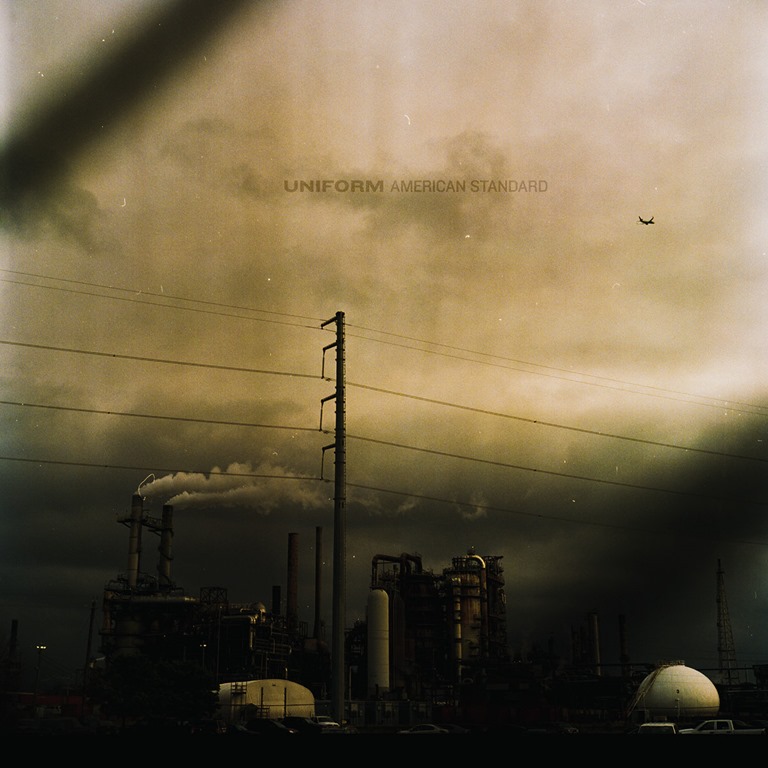
You know that when the bio for an album’s release is prefaced by a trigger warning, this is going to be some pretty powerful stuff. But this being a Uniform album, it almost goes without saying. Since their inception, they have gone all-out on every level, with the harshest noise providing the backdrop while Michael Berdan strips his skin to make the most brutal, unbridled, rawest expositions of the human condition, invariably born out of his own personal traumas.

I’ve often wheeled out the line that in the personal lies the universal, and even where there’s no direct correlation in terms of shared experience, the articulation of extreme emotions often provides a vessel whereby the outpouring of an individual’s catharsis offers a chalice into which others may pour the flow of their own emotional stigmata. If the metaphor seems a shade overwrought, bear with me.

Uniform is, unquestionably, a vehicle through which Berden vents endless pain and anguish. He’s a troubled person, and he’s open about this, to the extent that it’s more than just a but uncomfortable. But this isn’t some kind of trauma porn ride: the appeal of Uniform is this raw honesty, the absence of filter. You know – and feel – this is real. It’s not a case of manipulating the listener’s emotions, but an example of creativity as a vital outlet, a survival mechanism, even. It doesn’t exist for anyone’s entertainment. And with each release, Uniform, seem to find new heights of intensity, and new levels of sonic brutality, while dredging new emotional depths.

Shame felt like a gut-wrenching pinnacle which would be difficult, if not impossible, to surpass – but then, so did The Long Walk. In this context, it should come as only small surprise that American Standard goes even harder and harsher, but the simple fact is it would hardly seem possible. But here we are.

In the run-up to the release, Berden has spoken / written openly and in detail about his struggles with bulimia, and the fact that over many years of managing alcoholism and having come to a point whereby this is no longer a taboo topic, breaking down this particular wall has felt altogether harder.

Even the preceding singles, ‘Permanent Embrace’ and ‘This is Not a Prayer’, could not have provided anything like adequate forewarning of the intensity of the album as a whole.

I shall quote, while I take a moment and steel myself for this:

“The following songs are about a lifetime of making myself vomit,” Berdan writes in the personal essay that accompanies the album. His pain is so apparent, so immediate, that it feels like hearing someone scream for the very first time. “There’s meat on my face, that hangs off my face, sweats like I sweat, cries like I cry.” The music finally begins with those words, not in a glorious crash and clatter but in the tones of a gurgling drain. This is the sound of liquid moving through pipes that are full to the point of bursting with things usually hidden inside of stomachs and behind mental walls.

It all starts with an admission. Beneath the harrowing screams, there’s the pain of bulimia nervosa. There’s the pain of a sickness that is as physical as it is psychological. This is a kind of coming out. This is a kind of emergence. A far cry from edgy provocation or high school level transgression, this is something truly unacceptable.

As one might fear, this is just the beginning. As Don Delillo once wrote, “There are stories within stories.”

American Standard contains only four tracks, but the first, the title track, is fully twenty-one minutes long is the definition of harrowing. It’s a massive departure, in that with perhaps the exception of their 2015 debut, their compositions have conformed to the fairly defined structures, often with verse and chorus structures built around chord sequences and the arrangement of the percussion.

After an intro that can only be described as a scream of pain, ‘American Standard’ lurches into life as a churning throb of noise, and Berden’s bonne-rattling roar is only just audible amidst the pulverising fizz. When the power chords kick in, they’re like a full-on slam to the guts. Around the nine-minute mark, some keys enter the mix and there’s almost a redemptive tone, at least in the music, but Berden’s vocals continue to articulate the upper reaches of anguish. This is a different kind of purging from the subject matter – a flaying, emotional purging, a release of all of the years of torture and self-flagellation, distilled to the highest potency. It’s the barely human sound of breaking, breaking, emptying, over and over. The lyrics may not be easy to decipher, but the excruciating pain Berden articulates in their delivery is unmistakeable as he howls his larynx to bleeding shreds amidst a thunderous cacophony worthy of Swans live performances. If it’s not the heaviest shit you’ve heard all year… well. Just making it to the end of the title track is a thoroughly draining experience that leaves you feeling utterly spent.

The pounding machine-gun drumming, squalling, atonal synths and booming bass blasts of ‘This is Not a Prayer’ offer no respite, the layers of vocals, all screaming in pain, is beyond punishing: you feel your chest tightening and breath growing shorter with each intake, your throat clenching. The sheer physicality of the piece – which they sustain for a relentless six and a half minutes – is a panic attack in a can.

If the introduction to ‘Clemency’ swirls into ambience, it’s a bilious, nauseating brew of sulphur and fumes that festers just long enough to unsettle before the hardest percussion and the dirtiest guitars lurch in and everything becomes intensely claustrophobic. Again, there’s no oxygen, you’re constructed by the density and sheer relentlessness of it all. And it slams away like a lump hammer for almost eight minutes. The arrival of ‘Permanent Embrace’ feels like relief, of only for its brevity. There are some uplifting synths in the mix, but it’s the most savage finale they could have mustered.

The last time a record affected me this intensely in a physical way was over thirty years ago, when at the age of fifteen or thereabouts, having been introduced to Swans by way of Children of God, I picked up a copy of Cop at a record fair. I found it hard to conceive the record was actually revolving at 33rpm: it felt more like three, as time stood still and I felt my body being compressed by its crushing weight.

American Standard is certainly anything but standard. It goes beyond – way beyond – harrowing, or heavy, in any sense that words can easily convey. It’s the hardest listen. It simply hurts. But you know that this was the album they had to make. Forget your discomfort, and feel the pain.

AA
a2313479398_10

Southern Lord – 19th July 2024

Christopher Nosnibor

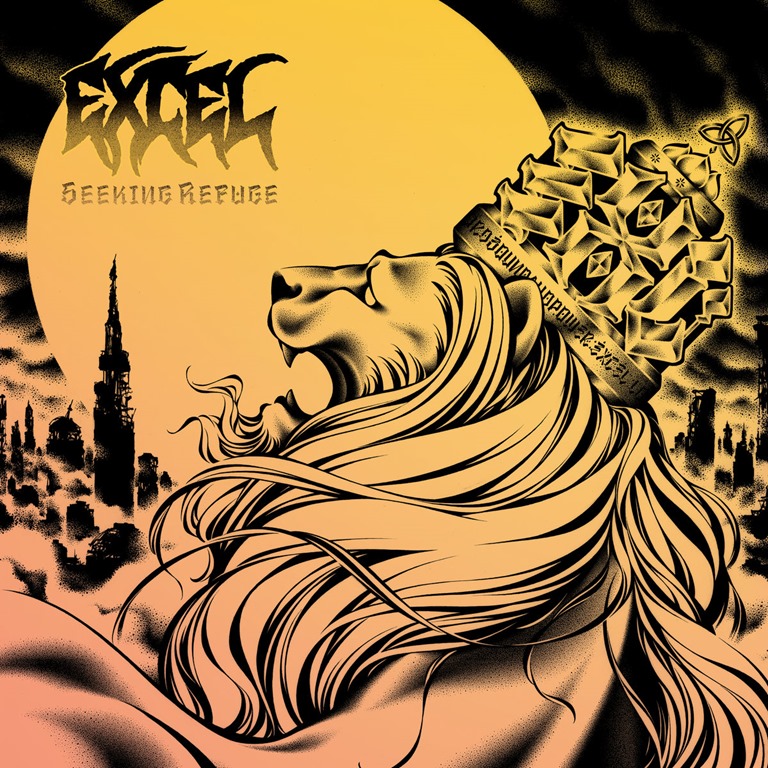
Southern Lord have once again excavated a long-lost release from the California underground scene, with a particular emphasis on hardcore and metal from the late 80s and early 90s, this time with a reissue of Excel’s 1995 album Seeking Refuge.

For context, while saving myself typing some inferior paraphrased recap, here’s the summary from the bio: ‘From the dark alleys and dead ends of Los Angeles, EXCEL have been delivering maximum crossover since crossover first crossed over. Their classic albums Split Image (1987) and The Joke’s On You (1989) remain linchpins of the genre decades after their release… Originally released in 1995 while grunge dominated airwaves and MTV, Seeking Refuge offers a glimpse at an EXCEL many have never heard before. Out of print for decades, Seeking Refuge will finally get its due, complete with a guest shot from H.R. of Bad Brains (on “Take Your Part Gotta Encourage”) and a video starring Tony Alva for the anthemic single ‘Unenslaved.’’

This is clearly one for fans first and fore most, but equally, one assumes its purpose is to bring the band, and the release, to a new audience, namely the many who missed it the first time around. And there will likely be many – like me – who simply hadn’t encountered the band previously. On the basis of the above, I suspect this isn’t really the optimal point of entry, but then, that’s how it often goes. I came to The Fall by Kurious Oranj and Swans via Children of God: arguably not the most representative of releases, but then again, comparatively accessible. I figure this is a fair summary of Seeking Refuge. It’s certainly an odd fish, and one that sounds solidly rooted in the early 90s.

Opener ‘Unenslaved’ is a bit hair rock meets late 80s thrash for the most part, and reminds me why I was never really into either; there’s just something about the guitar posturing, paired with the clean vocals trying to sound a bit tough that’s kind lame to my ear and to my way of thinking. But it goes a bit acoustic Alice in Chains in the middle, and the idea that ‘crossover’ may actually be represented by a stylistic switch mid-song.

There are some monster, churning, grungy riffs across the album: ‘Take Your Part Gotta Encourage’ is exemplary, not least of all because the chuggeracious thunder is topped with some really showy and extravagant soloing which isn’t afraid of hurtling headlong into the realms of excess.

In terms of composition, the songs are tightly structured, often making sharp turns or tempo changes midway through: ‘Drowned Out’’ suddenly slams on the breaks and drops to a slow Sabbath-esque riff that’s more of a head-nodder than a headbanger, and kicks the pace up again for a big riff finish – but again, there’s some epic fretwork that just feels that bit too much like the worst of 70s rock excess.

For all the context that suggests that Seeking Refuge was lost on account of its being out of step with the zeitgeist, it seems to overlook just how much grunge stuff was quite in thrall to 70s rock and this isn’t a million miles from Soundgarden, unless people are really going to bicker over the details. Don’t get me wrong: there are some proper metal moments: ‘Riptide’ really cuts hard, but still takes cues from Sabbath’s ‘Supernaut’, while ‘Overview’ sounds for all the world like a Rage Against the Machine rip. Seeking Refuge is solid, but not incendiary, and the endless fretwanking does get tired after a time.

With secondhand prices for the original vinyl sitting at around £35, and for the CD around a fiver, I do wonder just how badly the world is itching for this, but then, perhaps this reissue will spark renewed interest more broadly.

AA

a2959660533_10