Posts Tagged ‘Album Review’

Klonosphere Records – 7th March 2025

Christopher Nosnibor

What is it about prog bands and Greek mythology and space? Sure, both are inspiring for their expansive and epic qualities, but it does seem to be almost a requirement for prog acts to be quite obsessed about mythology or space – or, in the case of March of Scylla, both. Indeed, Scylla is a man-eating monster which features in Homer’s Odyssey, while the French progressive metal quartet’s debut album’s title may refer to the galaxy, or daughter of Cassiopeia in Greek myth, after which said galaxy was named. I suppose there’s some intertwining there, which works. On the one hand, it’s mystical, it’s deep, and its seriousness manifest.

These guys do bring some ultra-chunky riffs which straddle nu-metal and technical metal, and they alternate these with huge, arena-friendly choruses which are impressive in the anthemic heights they scale, and no, that’s no sarcasm, believe it or not. But it does flop headlong into the template trap which is the curse of so much metal of the twenty-first century – and again, it’s something that emerged and came to prominence with the advent of mu-metal and then seemingly seeped into other strains of metal, alternating full-throated roaring verses with melodic choruses. At first, to my ears, at least, it sounded less dynamic or thrilling, and more like bands trying to please everyone by being everything all at once. And I suppose the formula must work, because a quarter of a century later, they’re still doing it, even though it’s tired and ultra-predictable now. Sure, it’s fundamentally the same form as the quiet / loud structure that defined the grunge sound in the 90s, but the difference is that with the quiet / loud thing, it felt like build-up and release, whereas this is more like splicing two different songs together. It’s Jekyll and Hyde. And a sudden turn works when it’s out of the blue, but when every song is structured around a ball-busting riff and raw-throated guttural vocals which abruptly give way to some big emotive burst of white light you can sing along to, it’s not only predictable, but feels as if one segment undermines the other. Like, c’mon, make up your minds! None of this is to say that I think ‘heavy’ bands should only do ‘heavy’: contrast is a vital element in giving a composition impact, and besides, I would simply never prescribe that music should be one thing or another. My point is that when things become overly formulaic, they risk losing that impact.

So ‘Ulysses’ Lies’ does the raging riff thing alternating with the anthemic chorus thing. I’m not sure if the lyrics are being delivered from the perspective of a protagonist from the canon of Greek mythology, or it it’s simply a framing for some introspective moan about relationships or whatever, and no doubt if I was willing to spend hours straining my ears to decipher it all, I’d find the answer, but I can’t say I’m that invested. It sounds like some introspective moan about relationships or whatever, though. Way to diminish the potency of epic tales of gods battling and whatnot.

‘Death Experience’ stretches out for a fill seven minutes, and if it’s not necessarily a full epic, it’s most certainly an epyllion, and with some tight and detailed guitar-work and a well-executed atmospheric mid-section, it delivers everything it promises, including a sense that the ‘death experience’ is one of a dazzling ascension beyond this plane. And if it seems as if I’m being unreasonably critical of March of Scylla, there’s no questioning their musicianship or capacity for solid compositions. They pack in some megalithic, churning riffs and know exactly how to hit the hammer on intensity, just as they absolutely nail the huge, hooky choruses. But it just feels so studied, and you know how it will go as each song plays out.

‘To Cassiopeia’ is an interlude which combines space and mythology in one processed, predictable but atmospheric piece, before ‘Dark Matter’ goes Metallica’ before it goes You Me At Six… and it’s a sonic identity crisis to my ears, although it’s precisely what they were going for. What to say? It’s wrong to criticise a band for what they’re not, but this is difficult for what it is – namely conflicting and predictable, but perfectly executed. The heavy segments hit hard, and the light, melodics parts are well done but ultimately a bit lame. It’s yin and yang.

AA

a2477402970_10

5th March 2025

Christopher Nosnibor

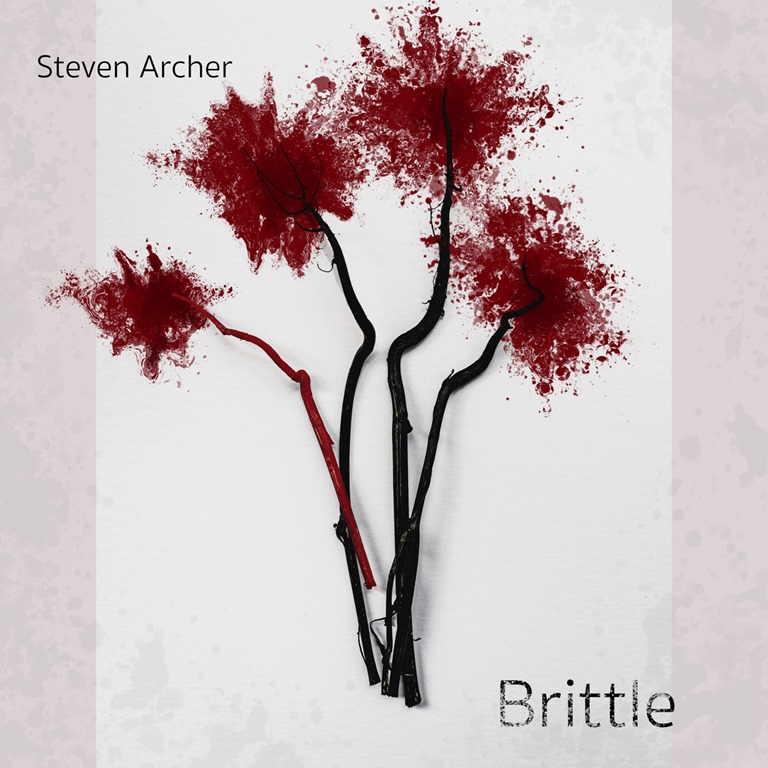
Steven Archer has been keeping busy: it’s barely three months since he landed the latest Stoneburner release, with its glorious Foetus-inspired cover art, not to mention a brace of EPs late last year, and a and lo, we have an album of steaming-hot brand new material. I often marvel at artists like this, who are so prolific. Do they even sleep? I do get that creativity is something that, more often than not, simply hits and you have to run with it, but…

Brittle is a twisted mix of all sorts. First and foremost, it’s an electronic album, and one which leans toward darker territories – not in an aggressive or overtly industrial way, but more given to brooding, introspection, haunting reflection and melancholia.

‘Our Past is a Wasteland’ is a track which transitions and evolves as it progresses: initially, it’s kinda smooth, a bit epic, sedate in in its musical form, with soft synths and mellow beats presenting a low-temp dance vibe, but along the way it begins to develop a darker, harder edge, gets a bit more Depeche Mode. The gentle drift of ‘Tenuous Place’ steps into expansive mode toward the end, exuding anguish and pangs of pain. ‘Only the Young Die Good’ is decidedly heavier: a droning organ gives way to a twitchy drum ‘n’ bass beat and serrated synths that saw deep into the psyche.

With its piano-led instrumentation and popping drums, ‘The Human Void’ is bleak and expansive, dark electropop rubbing and against drifting ambience with sinister industrial undercurrents as the backdrop to a vocal that switches from almost spoken word to hypnotic repetition. Elsewhere, ‘Tiger Longitues’ shares borders with the kind of smoky trip-hop of Portishead, only heavier, bassier, beatier.

The vocals on Brittle are heavily processed, and there’s a strong technogoth feel to the album as a whole. There’s something of a juxtaposition here, in that lyrically, emotional turmoil and troubling psychological situations are the main focus. Yet, in contrast to the intense and personal nexus of the words, the processed feel, which diminishes the human aspect of the vocal delivery, renders a clear separation. Perhaps this is a part of a necessary distancing: it’s certainly easier to manage challenging personal matters by creating layers of separation, and a deliberate detachment. ‘A Love Song for Monsters’ is exemplary: it’s a straight-up stomping banger, with robotix vocals and a slick production, but there’s so much more beneath the surface.

On the surface, Brittle sounds anything but: with sturdy beats and throbbing basslines, it’s a set which concentrates on delivering dark bangers. But however much we lay ourselves bare, we tend to need for there to be some kind of buffer, some space in between, in the interests of self-preservation. Most of us are more fragile, more delicate, more brittle, than we are comfortable to admit, even through the most forthright of art.

Brittle is uncomfortable, pulling in different directions, the undercurrent dragging against the main current on the surface. But the tension at its core is what renders it so compelling. Take in the tension, let it course through you.

AA

a4203216124_10

Neurot Recordings – 7th March 2025

Christopher Nosnibor

If a release is on Neurot, there’s almost a guarantee that it’ll pack some heft, and that it’s likely to be good. And so it is with the debut album from Guiltless, who feature members of A Storm of Light, Intronaut, Generation of Vipers, and Battle of Mice and were ‘born from a love of experimental rock, noise rock, early industrial, sludge, and doom’. Their bio describes their first release, the EP Thorns as ‘crushing and cheerless’, adding that ‘it seemed to welcome the apocalypse looming on our collective horizon.’

The horizon is feeling closer than ever, the Doomsday Clock now set to just 89 seconds to midnight, reported as being ‘the closest the world has ever been to total annihilation.’ Teeth to Sky is a worthy successor to Thorns, and while it may not be quite as unutterably bleak, it sure as hell isn’t a laugh a minute, or even a month. And if anything, it’s heavier, denser, and it’s more layered, more exploratory.

‘Into Dust Becoming’ crashes in on a howl of feedback before the riff comes in hard. No delicate intro or gradual build-up here: just full-on, balls-out explosive power. It’s a veritable behemoth, dragging a megalithic weight and a brutal rawness as it churns away with devastating force. It’s one hell of an ear-catching way to open an album, and serves as a statement of intent.

‘One is Two’ barrels and lurches, the bass booming low while the guitar slices and slews across at jagged angles, and with the roaring vocal delivery, it’s dark and furious, as is fitting for a song that explores human behaviour and the fact that as a species we seem utterly hell-bent on destroying our own habitat. It’s a perverse contradiction that as the most advanced species to have evolved on earth, we have seemingly evolved to bring about the hastening of our own extinction, but then again, perhaps it’s for the best. But considering this, and the state of everything, brings a range of complex emotions which aren’t necessarily easy to articulate through language, or language alone – and this is when one comes to really appreciate the catharsis of visceral noise. And it’s a crushing force that blasts from the speakers on ‘In Starless Reign’; the guitar tone rings a squalling dissonance, and there are some deft tempo changes which accentuate the textural detail and enhance the impact.

They slow things to an eerie crawl on the epic ‘Our Serpent in Circle’ to round off side one, and although it doesn’t exactly offer respite, it does provide some variety ahead of the assault which ensues with the title track at the start of side two, followed by the utterly merciless ‘Lone Blue Vale’, a track of staggering density. Combined, they deliver a relentless sonic barrage. ‘Illumine’ closes the album with slow-paced precision, a harrowing seven-minute dirge designed to snuff the faintest glimmers of hope in your soul.

It’s a significant achievement that Guiltless manage to maintain such a punishing level of intensity for the duration of the whole album: Teeth to Sky will leave you feeling utterly pounded, breathless, and dazed.

AA

160821

28th February 2025

Christopher Nosnibor

It seems quite remarkable that Pink Turns Blue are still going a full forty years on from their formation in Berlin in 1985. Starting out as a duo consisting of Thomas Elbern (vocals and guitars), Mic Jogwer (vocals, bass and keyboards) and a drum machine, they’re considered a part of Germany’s first wave of gothic rock.

The history of goth is certainly a divergent one: the hotbed of dark post-punk that was Leeds in the early 80s spawned a host of bands approximately simultaneous with the emergence of The Cure and Siouxsie and the Banshees, and Germany latched on to them and The Sisters of Mercy early on – so in relative terms 1985 feels like being late to the party. But at the same time, this was a peak year for goth across the continent.

As a personal aside, despite being deep into my goth once I discovered The Sisters and The Mission in 87/88 (late? I was 12/13 and simply too young to be into anything other than Duran Duran and Madness in 84-85) my introduction to Pink Turns Blue was 1994’s Sonic Dust, which was floating around at the second-hand record shop I worked at on weekends. It very much sounded like the indie stuff of the time, but perhaps with a dark edge, but gave no hint of the band’s history.

Since then, they’ve returned to their roots somewhat, and Tainted (2021) was a dark, brooding masterpiece which largely went under the radar, largely like the band’s output as a whole. But while latter-day acts like Editors and Interpol draw the media and commercial attention, Pink Turns Blue just keep on. And Black Swan is a classic addition to their catalogue.

The chiming, picked guitar of ‘Follow Me’, brings an instant pang of melancholy. The rippling synths and crisp drums make everything tight and the sadness begins to permeate. It’s a wistful, reflective sensation: this is where Pink Turns Blue excel. Their songs are drenched with an aching weight.

Jogwer’s clipped vocal delivery sits perfectly with the rolling bass and insistent rhythms, which underpin guitars which wash and chug in neatly-orchestrated duels. And so it is that Pink Turns Blue make music that’s dynamic, exciting, and sad, at the same time.

Single cut ‘Can’t Do Without You’ is simultaneously perfect pop and melancholy indie, and ‘Dancing Wirth Ghosts’, another single, brings the jangle of The Sisters’ First and Last and Always in a style that’s reminiscent of ‘Walk Away’ and ‘No Time to Cry’. Because it’s still possible to be pop and intense and claustrophobic. ‘Fighting for the Right Side’ steps things up and punches hard.

‘Why Can’t We Just Move On’ reminds me more of Slow Readers Club, dark-inflected indie / alternative, with a vibe that balances mellowness and melancholy with a certain tension, and this is really where Pink Turns Blue excel. The title track – by far the album’s longest song, clocking in at nearly six minutes – really taps into emotional undercurrents with its downtempo, reflective styling. There’s no one thing that one can identify as the thing – it’s all about the mood, the delivery. It goes beneath the surface, resonates on a level that’s beyond the articulation of cause and effect: it’s simply achingly sad, but at the same time, utterly beautiful.

Pink Turns Blue have a quite unique take on mid-80s post-punk / goth, and unlike many of the bands which emerged from the class of ‘85-’87, they don’t conform to the clichés to the tropes, the template which became predictable and tedious so quickly, and yet has endured, with every other band doing doomy baritone, aping Craig Adams’ bass pinned to a thumping drum machine. And this is integral to their enduring appeal. They don’t carbon copy The Sisters of Mercy, they’re not another Rose of Avalanche. Yes, they do incorporate certain elements, as ‘Please Don’t Ask Me Why’, with its thumping bass groove and chorus-heavy guitars evidences, but at the same time, they do something different and sound uniquely Pink Turns Blue, and it’s not only the German inflection. Again, it’s not easy to pinpoint the difference: the simple fact is that it’s tangible. Black Swan is a great album: it’s consistent, it’s got mood and feeling, and has something that’s just beyond reach, and that is magic.

AA

a3699160702_10

1st March 2025

Christopher Nosniboir

Richard Rouska is something of a cult legend in his own lifetime: back in the 80s he was pivotal in the Leeds zine scene, documenting the emerging post-punk movement Leeds remains so renowned for, in real-time, subsequently writing a number of books. Along the way, he’s made some music of his own, recently making Well Martin This is Different his primary focus, with some prolific results. Finding The Ai G-Spot is WMTID’s fifth since their inception in the mid-late eighties, and serves up a set of remixes, with proceeds from any donations going to the Throat Cancer Fund.

And yes, it certainly is different, and that’s clear from the get-go. WMTID’s music is essentially electronica, but draws on a host of elements which have their origins in different decades and different scenes. I will admit that I misread the title as Finding The Ali G-Spot initially. Ai-iit! But while this album draws on a huge array of influences, you won’t find any naff cultural appropriations.

‘The Prince is Dead (Again)’ is a twisted hybrid of lo-fi post-punk, 80s electronic industrial (think Wax Trax! stuff in the late 80s / early 90s), space rock, and Krautrock, a motorik groove stricken through with some wild orchestral strikes and multi-layered vocals – and this is to an extent the template: ‘03:33 Time’s Up’ is exactly the same duration as the original version (‘333’) which appeared on I Know What You Are But Who Am I? in the Autumn of 2024, tweaked to optimise the hypnotic rhythm and detached-sounding vocals. The result is somewhere between DAF and early Human League. ‘Deep Down Low II’ – again reworking a track from I Know What You Are goes full-on techno / cybergoth stomper, with industrial-strength beats pounding away relentlessly. It works so well because it doesn’t take from the original, instead simply rendering it… more. More. MORE! And I want MORE!

There are hints of both KMFDM and very early New Order about ‘It’s (Another) Lovely Day’, but then, it’s as much a work of buoyant lo-fo indie and bedroom pop, while ‘Little Bombshells’ comes on a bit Prodigy, but again, a bit technoindustrial, and a bit kinda oddball, bleepy, bloopy, twitchy, stuttery, the vocals quavering in a wash of reverb as crashes of distortion detonate unexpectedly. Elsewhere, ‘Waiting For The End…’ goes dark and low and robotic, and ‘Three O’Clock Killer’ is hyperactive and warped, and brings menacing lyrics atop a baggy 90s beat.

It really is all going on here, and the end result feels like a wonderfully eclectic celebration of music, articulated through some quite simple compositions, all of which have solid grooves providing the backbone of each.

My general opinion of remix albums is widely documented and not entirely enthusiastic, but Finding The Ai G-Spot is a rare exception, mostly because it doesn’t feel like a remix album an doesn’t offer three or four unnecessary and unrecognisable versions of each song, boring the arse off all but the most obsessive fan. In fact, if you’re not up to speed on WMTID’s output – and there’s a fair chance you may not be, to be fair – Finding The Ai G-Spot offers a neat entry point and summarises the last couple of albums nicely, too.

AA

a2835565654_16

Reinhold Friedl & Costis Drygianakis – ta amfótera en / two into one

zeitkratzer productions – 28th February 2025

Christopher Nosnibor

Reinhold Friedl has been a significant contributor to the world of avant-garde music for a long time, not only as a leading explorer of the potentials of the prepared piano, as pioneered by John Cage, but in excavating the works of historical composers and reconfiguring those of more contemporary ones, leading the zeitkratzer ensemble through performances of Metal Machine Music and selected cuts from Whitehouse’s catalogue.

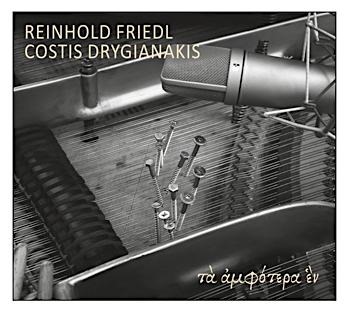
This particular collaboration coalesced during the pandemic, after which, as we learn, ‘Costis Drygianakis recorded Reinhold Friedl’s special piano sounds on a Blüthner grand piano with a bunch of extremely diverse microphones, ranging from a beautiful old Neumann U67 to a cheap tape cassette machine and even a Dictaphone. The resulting recordings have been classified, selected and processed at his home studio in Kritharia, Greece. No other sounds have been used.’

ta amfótera en is one continuous piece, just over an hour induration, and it’s a journey, to say the least. By ‘journey’, I mean torturous experience. It’s dark, punishing, pulverising, scraping, nightmarish. The first two minutes alone are a soundtrack to extreme horror – fear shaking amidst tremulous piano, heavy discord rumbling low and disconcerting to the point of spiking anxiety, after which there are protracted warped drones and rumblings which drag on, scraping and twisting, sonorous and uncomfortable. Amidst rolling, swirling, churning ambience and awkward, uncomfortable noise, random piano notes spike, seemingly at random. Gongs chime, crash, and clash.

When I was a child, the warping, discordant intro to ‘Rio’ by Duran Duran intrigued me. It created a palpable tension which affected me inexplicably at the age of nine. Perhaps this brief snippet of sound, dissonant, metallic, paved the way to my later obsession with musical otherness. The specific reason I reference this formative experience is that lengthy segments of two into one sound almost exactly like those opening bars of ‘Rio’ – scraping, discordant, a little like twisting metal.

two into one warps and hums, scrapes and drones, and occasionally plonks and thunks, the sounds rising from a random and seemingly unarranged twisting spill of sonic strangeness. There are chimes, and chsllenges.

There is much space – just as there are whistles and feedback – on two into one. The experience is, perhaps inevitably, disorientating, vaguely bewildering, even. There is something about this work which lifts you off the planet: to attempt to pin it to the particulars of contemporary rock music seems to be missing the point. Explore this release… and discover.

AA

Friedl 2

Metropolis Records – 7th March 2025

Christopher Nosnibor

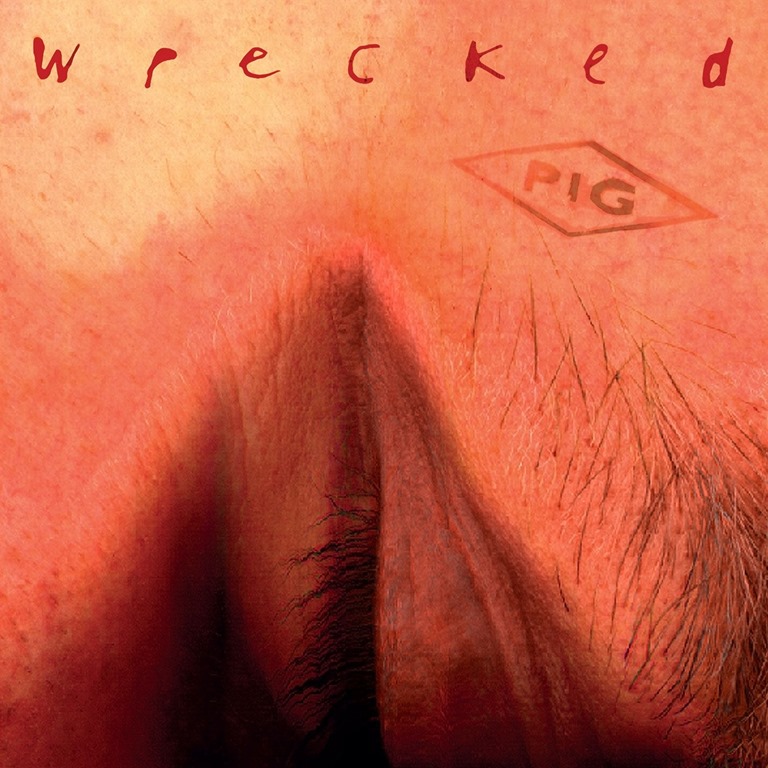
As Metropolis continue with their run of PIG reissues, the arrival of the remastered Wrecked reminds us of the run they had in the 90s. Having hardened up the sound showcased on debut album A Poke in the Eye… and follow-up Praise the Lard, and having toured with Nine Inch Nails in the Downward Spiral tour, PIG found themselves signed to Trent Reznor’s Nothing label for the release of Sinsation (1995), which melded the more experimental aspects of The Swining and Red Raw & Sore from a couple of years previous and cranked up the guitars – and the sleaze and depravity – to eleven. And after Sinsation came Wrecked, and having returned to Wax Trax!, in the US at least, the album was released first in Japan in ’96 and the US a year later with a substantially different tracklisting – and was an absolute bastard to get here in the UK in either form.

This version brings together the tracks which featured on both the original Japanese edition – which was criminally missing ‘No One Gets Out of Her Alive’ and ‘Contempt’ – and the American edition, which brought ‘The Book of Tequila’ and ‘Fuck Me I’m Sick’ in their place.

Wrecked very much represented PIG at their wildest, most wide-ranging, and arguably their heaviest. The title track drifts in on some mellow steel guitar country vibes and ambient chilling… and then gets gnarly with gritty industrial rigging and snarly vocals that are quintessential PIG. Raymond Watts may not have been in the best place during this period, but creatively… the music he was making was something else, and Wrecked stands up just as well now as it did on release. I’ve mentioned previously that PIG stand apart from their contemporaries, and while Watts was a touring member of Foetus in the late 80s and worked with JG Thirlwell when PIG was born, as well as being a member of KMFDM for a time, as much as those elements of aggrotech and industrial metal are core to the sound, Watts took it somewhere else entirely. Where? It’s hard to say: PIG’s work simply doesn’t conform to any genre forms or models – PIG just are PIG. While a couple of tracks had been previously released in different forms – the original versions of ‘Find It, Fuck It, Forget It’ and ‘Blades’ appeared on The Swining, released only in Japan in 1993 (prior to a 1999 US reissue) – it would be wrong to suggest that their inclusion on Wrecked suggested a lack of material, given just how radically different these versions are. The same is true of the reworked version of ‘My Sanctuary’, which appeared on Praise the Lard: expanded, more grandiose, more everything, the ‘Spent Sperm Mix’ taking the track to preposterous heights while audaciously combining industrial, techno, and gospel with orchestral strikes galore.

Since the US and Japanese editions included various alternative mixes, it would have been nice to see this version feature all sixteen tracks featured on the 2017 tour edition, which is arguably the definitive edition. But what we learn here is that you can’t have everything, and this edition at least has the majority of the prime cuts. Sequentially, it follows the Japanese edition, with the tracks which featured on the US release at the end.

The drumming on this album is brutal, choppy, the guitars cutty, stuttering, heavily distorted, but with a bright, clear, digital crispness that really slice hard. Watts growls, snarls and sneers, dark and salacious, and everything about Wrecked is harsh and ugly. ‘Find It, Fuck It, Forget It’ is a full-throttle beast of a track, with a sample-laden breakdown in the mid-section, with snippets of reports on American obesity and the like (in place of the sped-up snippet of ‘The Dance of the Sugar Plum Fairy’ on the original), and it’s pretty dark and unforgiving.

‘Blades’ is one of the greatest tracks ever recorded by PIG or anyone – it’s one of those songs that just does something to you. The ‘Slash Mix’ on here may not be the best version – for my money, I prefer the more orchestral original, but this rendition is dense and girthy, and fits with the sound of Wrecked. Then there’s ‘Save Me’, the album’s slowie, and so, so powerful. It takes ‘anthemic’ in a whole new direction.

Watts has always made music with a boldly theatrical approach to the industrial template – and Wrecked really turns up the dial on everything – density, volume, aggression, intensity, and this expanded reissue is an essential document in the broader industrial oeuvre. It’s also an outstanding album in its own right.

AA

67fd98d7819df26e756c1ecba56842acbbd35016

Cruel Nature Records – 21st February 2025

Christopher Nosnibor

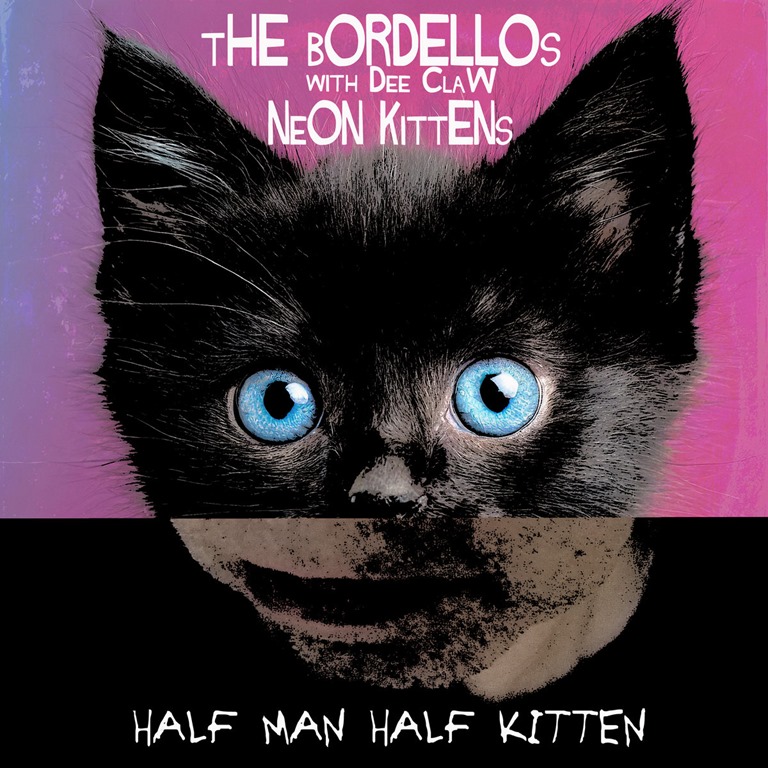
This split release has a lengthy backstory, which is given in full on the label’s Bandcamp page – but the short version is that when York’s Neon Kittens (how had I not heard (of) them, given that they appear to be from round my way and absolutely my bag? I feel ashamed, and fear I cannot even remotely claim to have the finger on the pulse of my local scene right now – but still, better late than never, right?) approached The Bordellos about a collaboration, the latter, having taken an eternity to only half-finish their current album-in-progress, some ten years after the release of will.i.am, you’re really nothing, offered everything they had for a split release. And lo, this is it.

I suppose the eight songs Neon Kittens have contributed here provide a solid starting point to their rapidly-expanding catalogue, and being paired with The Bordellos works a treat. Both espouse the same lo-fi DIY ethic, with a certain leaning toward indie with a trashy punk aesthetic.

That the cassette edition sold out on advance orders hints at the anticipation for the release: for, as The Bordellos describe themselves as being ‘ignored by millions, loathed by some, loved by a select few’, when you’ve got a small but devoted following, they get pretty excited for new material.

‘Set Your Heart to the Sun’ is perfectly representative of their scratchy, harmony-filled indie – kinda jangly, a tad ramshackle, but direct, immediate. Dee Claw’s airy vocal contributions really lift the sound and raise the melodic aspects of the songs. Not all of the songs have full drum-kit percussion, often favouring tambourine or bongos or seemingly whatever comes to hand, and more than any other acts, I’m reminded of Silver Jews or really, really early Pavement – those EPs that sounded like they were recorded on a condenser mic from the next room with more tape hiss than music, but still undeniably great tunes. And yes, they really do have great tunes – overall, they’re pretty laid-back in their approach to, well, everything: remember when ‘slacker; was a thing? Yeah. In place of polish, they have reverb, and these songs tickle the ears with joy.

Neon Kittens bring a rather denser sound and a greater sense of urgency with the buzzy, scuzzy ‘Better Stronger Faster’. A hyperactive drum machine stutters and flickers away beneath a sonic haze of fuzzy guitar: there are hints of Metal Urbain crossed with The Fall and Flying Lizards in the mix, while ‘All Done by Numbers’ brings Shellac and Trumans Water together in a head-on collision – and one suspects any similarity to Shellac’s ‘New Number Order’ is entirely intentional from a band who recently featured on a Jesus Lizard tribute. ‘Cold Leather’ presents a spoken word narrative over a lurching, lumbering morass of discord, held together by the whip crack of the snare of a vintage-sounding drum machine.

The majority of their songs are around the two-minute mark, and crash in, slap you round the chops, and are done before you really know what’s hit you. ‘Deaf Metal’ is a work of beautiful chaos, constructed around a thick, rumbling bass and rolling drums., while the rather longer ‘White Flag’ is almost a stab at a grunge-pop song, while the discordant clang of ‘Sailing in a Paper Boat’ is absolutely The Fall circa Hex Enduction Hour: lo-fi post-punk racket doesn’t get much better than this.

AA

a3951021685_10

Majestic Mountain Records – 28th February 2025

Christopher Nisnibor

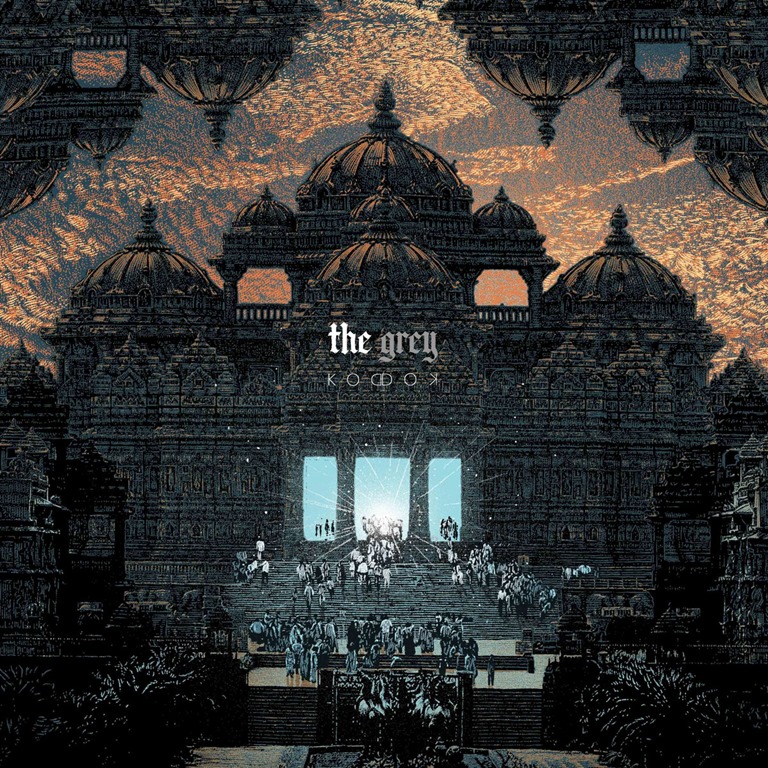
Kodok, the third album from The Grey, is pitrched as ‘a masterful fusion of raw energy, deep emotion, and undeniable artistic growth… carv[ing] a new narrative, guiding listeners through an intricate yet comforting journey of power, pain, and catharsis.’ They’ve also put a lot of work into broadening their range, or, as they put it, ‘Kodok expands the band’s sonic palette, offering a richly varied tonal composition. The album is further elevated by collaborations with an incredible roster of guest artists, including Will Haven, Ace Skunk Anansie, Ricky Warwick, fattybassman, and dARKMODE, bringing unexpected depth and fresh musicality to the project.’

The album contains only six tracks, but there are some bona fide epics here, in particular the first piece, ‘Painted Lady’, which extends to almost twelve minutes. It begins with dark, thunderous rumblings, and then the guitars crash in, and the riff GOES. It’s a slow, pummelling brute of a tune, with rolling drums and weighty bass, but the guitar has an unexpected brightness to it… and over it’s expansive duration, we’re lead through an array of soundscapes – sometimes rolling hills, others gathering storms over exposed rock summits, and around the eight-minute mark it goes full riff juggernaut.

It’s metal, it’s post-metal, it’s stonerish, it’s wide-ranging musically articulate. And it feels like an album. They explain how it’s ‘Designed as a sequential body of work—with a clear beginning, middle, and end’ and that ‘Kodok invites listeners to fully immerse themselves in its journey’, and it certainly does feel like a journey,

The seven-minute ‘La Bruja (Cygnus)’ really goes all out on the weight, the heft of the guitar churning out a supremely girthy riff is powerful, but the second half switches to amore ethereal sound, with subtly chiming guitars and atmospheric synths, and – for the first time – vocals, before a crushing flange-soaked riff assault by way of a finale. ‘Sharpen the Knife’ goes darker and heavier, with a grainer, sludgier feel and invites reference to Neurosis in its thick, dense, earthy churn… and then things get heavier still on the nine-minute ‘CHVRCH’, which is simply immense in every respect, its dynamics evoking not only Neurosis but Amenra. There is delicacy, grace, elegance here, and you feel yourself ache inside, and then the pedals are on and immediately it’s a tempest.

By rights, I should be yawning at another nine-minute riff-driven workout with dynamic, prog-influenced breakdowns, but there’s something in that wait, the suspense, then the release when it finally drops that’s exhilarating, and ultimately a source of joy. I suppose that just as some people get a huge buzz and the big laugh from the sitcom or comedian with a catchphrase or quintessential punchline that really is IT, the anticipation of the riff landing followed by that BOOM! moment is similar, only more cathartic. It’s not easy to articulate to anyone who hasn’t experienced that specific rush just how powerful it can be, and how it’s a multisensory explosion, something that’s physical, emotive, almost euphoric, as well as simply something you hear with your ears.

During the course of Kodok, The Grey deliver these moments with frequency and precision, with maximum impact. When there are vocals – as on the simple, acoustic ‘Don’t Say Goodbye’ – they’re compellingly melancholy, and it provides welcome transition ahead of the soaring epic that is ‘AFG’, a cut whereby its five-minute running time is simply nowhere near enough.

The download features a couple of extra cuts, but in terms of maintaining the album’s integrity, no extras are required.

AA

a3706604145_10

Kranky – 21st February 2025

Christopher Nosnibor

One thing you have to say about Tim Hecker is that his output has been varied, and his career interesting. This isn’t a case of damning with faint praise: it’s very much about highlighting what makes him such a remarkable artist – the fact he doesn’t simply mine the same seem in perpetuity. The difference between the organ-based compositions of Ravedeath, 1972 (2011) and the dark ambience of No Highs (2023) is vast, and is emblematic of an artist who simply cannot be confined within narrow constraints. Electronic music is an immensely broad church, and Hecker’s output ventures the field far and wide.

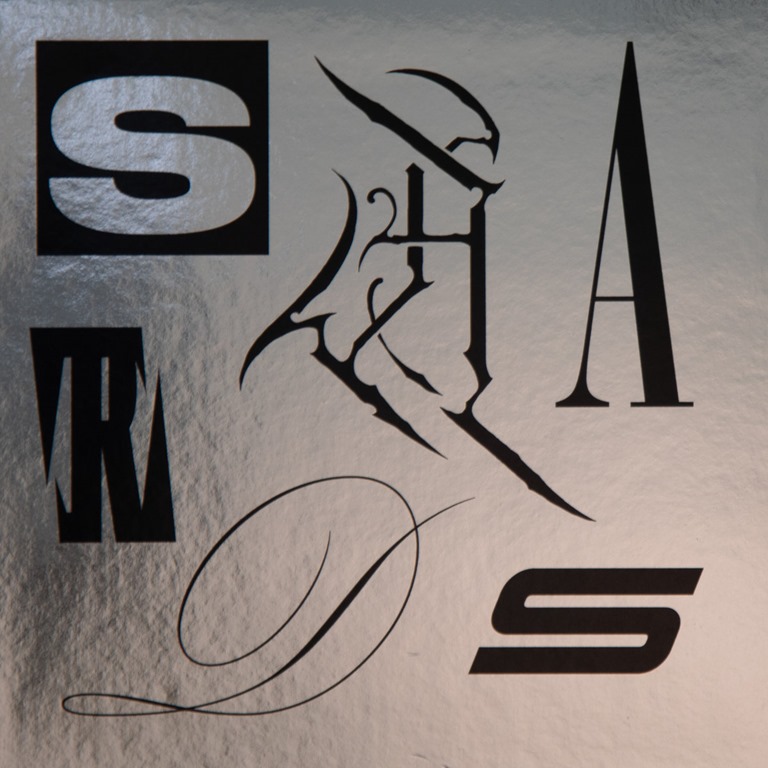
This is perhaps exemplified no more clearly than on Shards, ‘a collection of pieces originally written for various film and TV soundtracks Tim Hecker has scored over the last half decade. These compositions were originally written for scoring projects including Infinity Pool, The North Water, Luzifer, and La Tour.’

The album’s seven compositions highlight Hecker’s capacity to mould mood.

‘Heaven Will Come’ evolves and expands over the course of its four minutes and forty-eight seconds, growing from delicate but expansive elongated organ-like notes to a swirl of anxiety, with dank, rumbling bass lumbering around, as if without direction, amidst warped, bending undulations, an uneasy discord. ‘Morning (piano version)’ is very pianoey… but also brings booming bass resonance, and slight, flickering, glimmers of sound, almost insectoid, and mournful strings which bend and twist and ultimately fade… to be replaced by a deathly bussing drone and distortion which fills your head in the most uncomfortable way.

The hectically scratchy plink and plonk and looping delirium of ‘Monotone 3’ hints at the trilling of woodwind-led jazz, but there are menacing drones and weird shapes being sculpted here.

Hecker specialises in the disorientating, the unheimlich: the majority of the pieces here are superficially calm, tranquil – even the more brooding ones. But something about each isn’t quite right – there are dark undercurrents, or there is a twist, from out of nowhere. And herein lies Hecker’s unique skill as a composer.: he can twist ambience into discomfort, and at the most unexpected times and in the most unexpected ways. Consequently, Shards brings many twists and turns: at times soothing, at others tense, and at others still claustrophobic and even almost overwhelming, and it completely take you over as you feel this range of different sensations.

Shards – appropriately titled in that it draws together splinters of Hecker’s diverse  and divergent output is an exercise in depth, range, and magnificence. Sit back, bask, and take in the textures.

AA

a3720420051_10