Archive for the ‘Albums’ Category

Human Worth – 8th December 2023

Christopher Nosnibor

It’s only a bit of a brag – and a collateral one, at that – to say I’ve followed the Human Worth label since its inception. There’s a contextual reason to mention it, namely that while I’ve long raved about their being consistent in their selection of all things noisy, Human Worth isn’t a label with a ‘house’ style devoted to any one strain of music of an overdriven guitar nature. One need look no further than then recently-released angular indie noise-rock hybrid of Beige palace’s Making Sounds for Andy for evidence of that. It’s most definitely an ‘alternative’ record, in that it’s a million miles from the mainstream, but it’s not particularly noisy.

A. L. Lacey’s mid-bill placing on the label’s recent eight-act extravaganza in Leeds was an inspired one, as her graceful tunes provided the perfect respite from predominantly noisy guitar-based acts, and her performance set my level of anticipation for her album, Lesson.

It’s a landmark release for both Alice and Human Worth: having long established herself as a contributor to numerous acts in her locale of Bristol, Alice explains how “there was a frustrating sense of unfinished business. In that, my piano parts and ideas were being restricted to someone else’s’ vision – a vision which was often ‘less is more’ – a tasteful afterthought… A huge part of this project therefore became the need to challenge myself and to see what I could achieve or lessons I could learn, if I did things my own way – a bit of a journey towards autonomy – a predominant theme in most of my songs, along with finding purpose from confusion, and strength in your weaknesses.”

Lesson, then, is Lacey’s statement of identity, as she steps out from the shadows of other people’s work to present herself and her own musical ideas. And what’s striking is just how eclectic the album’s nine songs are.

‘Sewn’ opens up with rolling piano propelled by a vintage drum machine sound that’s pure late 70s/early 80s. But if this evokes the lo-fi sparseness and simplicity of Young Marble Giants, her vocals, swathed in reverb and strong yet delicate, are equal parts folk and shoegaze. And yet for all these elements, Lacey creates a maximal expansiveness with minimal instrumentalism. With swells of energy, it’s a soaring, uplifting piece, which hooks the listener immediately into the unique world she conjures with her magical fingers and tuneful voice.

It paves the way for eight further slices of creatively crafted musicality that combines elements of neoclassical, folk, and experimentalism. ‘Complaint’ is exemplary: the instrumentation is sparse, subtle, a soft wash of thrumming, droning synths underpinned by an insistent but understated beat. Incidental sounds weave in and out, creating depth, while Lacey’s multi-tracked voice is simultaneously trad folky and otherworldly.

There’s an energy and pace to many of the songs on Lesson which are far from the kind of bland, plodding fare common to many singer-songwriter types: ‘Memo’ may be but a brief note, but has the vintage pop vibes of Stereolab as it breezes on through and makes its mark. Elsewhere, the title track is wistful, swooning, without being remotely twee, and ‘Home’ brings post-rock dramatics to the proceedings. Bold yet understated, ‘Paper’ is worthy of all the airplay, and would sit comfortably on soundtracks and being performed at arena shows alike, being accessible, easy on the ear, hooky, emotive, and –

AA

Perhaps because she’s been doing this for a lot longer than the arrival of a debut would imply, Alice’s accomplishment as both a musician and a composer shine through every moment of this spellbinding collection of songs: the attention to detail the nuances of the playing and the production only accentuate the multi-faceted qualities of her songwriting and performance. It all adds up to a uniquely special album.

AA

HW026_ALLacey_Lesson_CoverArtwork

By Norse Music – 1st December 2023

Christopher Nosnibor

First released in 1989, Gula Gula was Mari Boine’s second album proved to be her breakthrough, earning her a Norwegian Grammy award and providing the gateway to a career which continues over thirty years later as an international voice for the Sámi peoples. The album, originally self-released, would later come to the attention of Peter Gabriel, who would release it worldwide on his label Real World Records in 1993. But 1993 was twenty years ago already, and there are many – including myself – who will be unacquainted with this album, or even Boine’s work. This reissue comes with the added bonus of two previously unreleased tracks from the Gula Gula studio sessions which were only recently discovered.

That the songs of Gula Gula are primarily sung in the Northern Sámi language is both unusual and significant, being key to what her bio described as ‘the fight of preserving the culture of the Norwegian Sami people and the natural world. Two matters that lie close to Mari’s heart and are still threatened to this day. The indigenous people have a wisdom that says that the earth is our mother, and if she is harmed, we are harming ourselves.’

These feel more salient now than ever, as we witness the effects of global climate change and a world riven with cultural conflicts whereby dominant cultures continue to oppress and obliterate older, indigenous cultures in the name of ‘progress’ – as if the most brutal applications of capitalism are the only way. This album’s reissue happens to land in the same week that Israel resumed its onslaught to decimate the whole of Gaza in the name of defending itself against a minority terrorist organisation, while the UK government slammed down some truly brutal plans to slash immigration under the premise of benefiting the economy. This determination to stamp out difference is diabolical, but somehow accepted as reasonable by many. But in taking such destructive paths, it should be apparent that the harm goes far deeper and wider than the claimed intent. Similarly, those who vent their ire against the likes of Just Stop Oil and XR for employing methods which are disruptive and argue that these methods turn people off from their message are missing the point that a) non-disruptive protest hasn’t achieved anything like enough b) there should be no debate when it comes to their message. What they’re objecting to, then, ultimately, is that these protesters are trying to force them to face uncomfortable truths. The saddest fact is that those objecting to the protests don’t give a fuck and just want to get on with driving their SUVs to the McDonald’s drive-thru.

So, at the heart of Mari Boine’s songs is a certain tension which may not always be immediately apparent from their melodic musicality, especially if you’re not fluent in Northern Sámi. For that, you can be forgiven, and whether or not you’re versant in the sociopolitical aspects of their context, it’s easy to appreciate the music on a more superficial level.

The songs of Gula Gula are quite simply arranged, and are, fundamentally, manifestations of folk music. But while the instrumentation is predominantly acoustic, and serves to provide a backing to Mari’s voice, which while always melodic, shows at times a stirring degree of ferocity and passion, as on ‘Vilges Suola’ while the piano-led ‘Eadnán Bákti’ is a soft ballad. ‘It Šat Duolmma Mu’ brings both raw power and some intricate musicianship melded to a thumping subterranean groove.

‘Oppskrift for Herrefolk’ (‘Recipe for a Master Race’) finds Mari singing in Norwegian on the album’s most overtly political song. Musically, it marks something of a departure, too, with a screeching 80s rock guitar solo slicing through the trilling folksiness. It’s almost as if it’s there to reinforce a point. And it works. It’s worth considering for a moment that there are places where such a song could lead to arrest, and worse. This isn’t to say that the Sámi have it easy, but to highlight the fact that these struggles are real and often go widely unreported, unacknowledged, the voices unheard.

Whether taken in, or out, of context, Gula Gula is an enchanting and powerful album.

AA

a2659250302_10

Mille Plateaux – 1st December 2023

Christopher Nosnibor

It’s always exciting to hear what electronic experimentalism Neuro… No Neuro have cooked up, and Positive* is the second album this year, following on from the collection of glitchy snippets which comprised Compartments back in January. Just as Compartments was a very different project from its predecessor, Faces & Fragments, so Positive* explores very different territory from the ‘Kawaii-Glitch’ of Compartments.

As the accompanying notes explain, ‘Positive* by Neuro… No Neuro is based upon thin slices of memory, and the disintegration of their existence. The day-to-day, with its ‘ups and downs’, all while operating/existing above and to the right of the body. When the day ends, and the separated is reunited; how does one collect what is no longer there? …Separating consciousness from the corporeal… Memory and thought are being swept out to sea in granules that are imperceptible to those around you. Short term is riddled with inconsistencies…Say “so long” to the granules.’

It’s all about focus, and the focus of Positive* is very different from any previous projects. And when it comes to projects like this, details are important. In context, it’s ok to focus on those details, and to do so isn’t obsessive or excessively picky, but to engage with a creative work on the basis of its design, its intent. I preface my assessment this way because the first thing I’m drawn to, before hearing a single note, is the asterisk in the title. Such a mark denotes a footnote, an aside, a necessary commentary on the subject.

But there is not one appended to the accompanying notes. What can it mean? Is this an accidental omission? It seems unlikely, and as such, one can only conclude that it’s for the reader to decipher the nature of the discourse. In my own experience of academic writing, it’s often the case that the real commentary and the grain of the research lies in the notes, and so it is the case here.

‘This Time for Sure’ brings some stuttering ambient drum ‘n’ bass which arrives in a drift of Japanese-inspired scales, bit there are some subtle details and textures to be found low down in the mix. It certainly sets the tone for this comparatively delicate collection of pieces, most of which are fairly fleeting, sitting around the two-and-a-half-minute mark on average.

Each of the titles pins a positive slant on neutral or even potentially negative scenarios – ‘Even I can See this Now’, ‘When You Actually Want to Wake Up’, ‘Drier days Ahead’ – all feel like phrases uttered the kind of pep talks you might give yourself in times of struggle. C’mon, you can do this! Sometimes, try as you might, it still feels empty and futile, and as oft as you repeat it, you struggle to believe it.

‘When You Actually Want to Wake Up’ perhaps represents this struggle most keenly, a loping glitch like the back and forth internal monologue you struggle to overcome: yes… no… yes… no… just get up… but…’

‘Of Course You Know it All’ has an implied snarky, snideness to its title, but it’s still positive, right? Its glitchy, picky, chiming mellowness float beneath some pinging arcs, while the sweeping ambience of ‘Almost Through’ arrives with a sense of sagging fatigue, the kind of positivity many feel in the last half hour of the working week – fagged out and clinging to that point of release.

The world is dark and life is a grind, and it’s often difficult to see the light, the positive aspects among it all – and they are few and far between. Platitudes like ‘at least I have a job’ or ‘at least I have my health’ don’t really carry much conviction. Sure, there’s always someone worse off, but it’s hardly saying much. It’s ok to be negative, to be discontent.

And perhaps it’s here we finally come to understand and appreciate the asterisk. Positive* is, overall, melodic, and feels quite uplifting, being gentle, the urgent beats tempered by ambience and melodicism. It’s actually – dare I say it – quite nice. But finding those uptempo, upbeat aspects, maintaining balance, is hard as you juggle and struggle to keep things together, a day at a time. And perhaps this is how we can best appreciate Positive*. Just as memory drifts and floats, so does our capacity to continue onwards and to stay afloat. All you can do is hang in there.

AA

a3005718583_10

Dret Skivor – 1st December 2023

Christopher Nosnibor

Yes, that’s fjord, not fox, meaning you won’t find these collaborating sound artists bouncing around the woods dressed as furry animals, making daft, random sounds. Well, you won’t find them bouncing around the woods dressed as furry animals, anyway, although Dave Procter did spend many years performing while wearing a latex pig’s head, but he put a stop to that after David Cameron started turning up at his shows.

This latest collaboration between Martin Palmer and Dave Procter is, in fact, inspired by the site of previous experimental audio tests in 2019, namely the sculpture “what does the fjord say?” in Trondheim harbour. As they tell it in the accompanying notes, ‘Armed with percussive sticks, contact microphones, audio recorders and the occasional toy and synth, they set about a full exploration of the sculpture and their own sonic ideas in and around the sculpture, using created and environmental sounds to answer the question posed by the sculpture. These recordings are Palmer and Procter’s replies.’

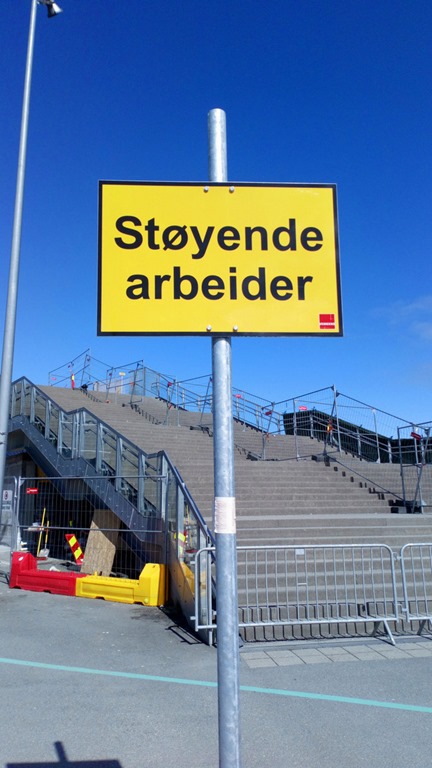
The first reply ‘støyende arbeider’ is more of a lecture than a simple reply, with a running time of twenty-one minutes. Consisting of random clatters, crashes, squidges, squelches and shifting hums which ebb and flow amongst an array of incidental intrusions, it’s more of a non-linear rambling explication, and exploration of the rarely-explored recesses of the mind than a cogent conclusion. But then, why should a reply necessarily be an answer. This, then, is a dialogue, a discussion, not an interview constructed around a Q&A format. It’s nothing so formal, and all the more interesting for its being open-ended, evolving organically. There are points at which the thuds, clanks and scrapes grow in their intensity, creating a sense of frustration, as if attempting to unravel a most complex conundrum and finding oneself stuck and annoyed by the fact that there is something just out of reach, something you can’t quite recall. And at times, this is also the listener’s experience. The way to approach this is by giving up on the expectation or hope of coherence, or anything resembling a tune, and yield to the spirit of experimentalism.

‘Moose Cavalry’ and ‘Mock Paloma’ are both significantly shorter pieces, the former being atmospheric and evocative, the animalistic calls conjuring images of beats roaming moorlands in the mist. Plaintive, droning moans and lows transmogrify into warped, pained cries and needling drones. The latter is different again: dark, tense, shrill tones scratch and scrape, flit and fly, reverberating from all directions. It’s unsettling, uncomfortable.

These three compositions are so different from one another, it superficially makes for a somewhat disjointed set, but on deeper reflection, what Palmer and Procter have forged a work which demonstrates how it’s possible, and even desirable, to approach a subject from multiple angles and perspectives. I still don’t know what the fjord says, but I do know that Palmer and Procter have posed some interesting musings in response.

AA

a3551752136_10

The Helen Scarsdale Agency – 8th December 2023

Christopher Nosnibor

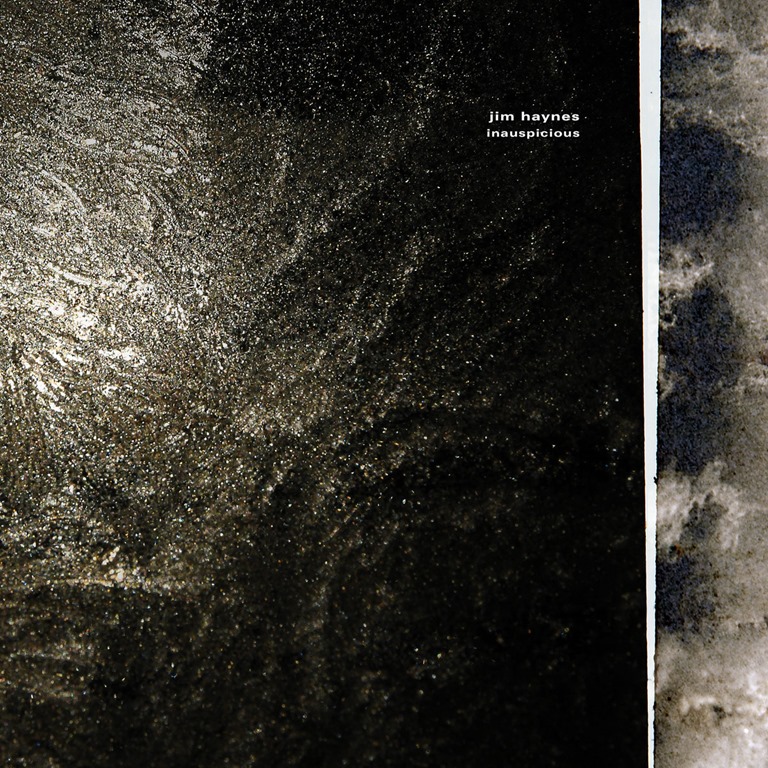
It’s often difficult to keep up with artists’ outputs, especially the super-prolific ones. Jim Haynes not quite make the super-prolific category, but having first written on his work with a review of The Decline Effect back in 2011, I’ve covered three albums between 2017 and 2021 alone. I tend to take a particular interest in albums released through The Helen Scarsdale Agency, which despite sounding rather prim and literary, is a label which has a particular knack for platforming music of an experimental and often difficult and noisy nature.

Haynes’ work has become progressively harsh over time, and the press release for Inauspicious notes that this has been particularly true post-pandemic, while acknowledging the cliché that the pandemic marked a pivotal point for many musicians. Crucially, it notes that ‘The tools for Haynes’ work remain limited: motors, electronics, shortwave radio, found objects, all applied with considerable pressure. Compositionally, Inauspicious is a very rough moire pattern from overlapping elliptical structures that can negate and obfuscate just as easily as they can compound and aggregate. The album surges and collapses upon the two twenty minute chunks of controlled noise that follow an internal logic that snakes from brooding power drones, spectral radio transmission, and an aktionist demolition cast upon metal, glass, and unfortunate wooden objects. Rupture and release. Purge and pulse.’

As such, while the output, and the dynamic may be different, Haynes’ fundamentals remain unchanged, and this matters, in that it demonstrates that more often than not, the end product is not so much dependent on the input and the raw materials, but their application and the process.

Inauspicious features just two compositions, ‘Variant, Number Fourteen’ and ‘Variant, Number Fifteen’, which each run to precisely twenty minutes apiece. It’s a work that’s seemingly designed for a vinyl release, with each piece occupying a side of the LP, and I daresay that the dank ambient rumblings have their greatest impact when rolling from the grooves of a thick chunk of vinyl. Still, it works digitally when played through some decent speakers which afford air to the album’s slow, granular churnings. It’s not that fat into ‘Variant, Number Fourteen’ that it’s built to a brain-shredding blast of drilling noise. Beneath the ear-destroying mesh of treble and shredding abrasion, there are swells and surges of lower-end noise. It’s easy to overlook the slight details in the face of such a wall of abrasion, but it matters. While Haynes is bringing a relentless assault, it’s important to pause by the details, and Inauspicious is abrim with them, although ‘Variant, Number Fourteen’ spins into a restless ancient howl in its final minutes and tapers into a dank rumbling that brings a heavy tension.

‘Variant, Number Fifteen’ brings more of the same: heavy drone, grainy texture, harsh noise, spluttering and droning,  a deep sense of ominous foreboding, only with lower, deeper, more resonant bass, the tone of which drags on the lower abdomen among the swishes and swirls. And then grating mid-range abrasion. It’s hard to know how to react to this truly painful grind. By turns, I feel as if I need to defecate and vomit, although in the end I do neither as I simply clench my stomach during passages of this dark mess.

This is an album that brings noise and it brings pain. It’s a relentless grind and growl, and not for the first time, Jim Haynes has tapped into a sense of awkwardness which really grates and grinds.

AA

a3232720135_10

21st November 2023

Christopher Nosnibor

It’s now an established fact that many, if not most listeners make judgements on a song within seconds – to the extent that back in 2014, it was revealed a quarter of Spotify tracks get skipped within the first five seconds. And only thirty seconds or more counts as a stream. I suspect that figure may be even higher now, as attention spans have hardly increased in the last few years. I only speak for myself when I think of the jittery hours where scrolling and skipping has become more of a nervous twitch than social media engagement – although I still refuse to use Spotify, meaning any review request containing only a Spotify link is an instant rejection. It’s one way to filter the fifty-plus daily submissions.

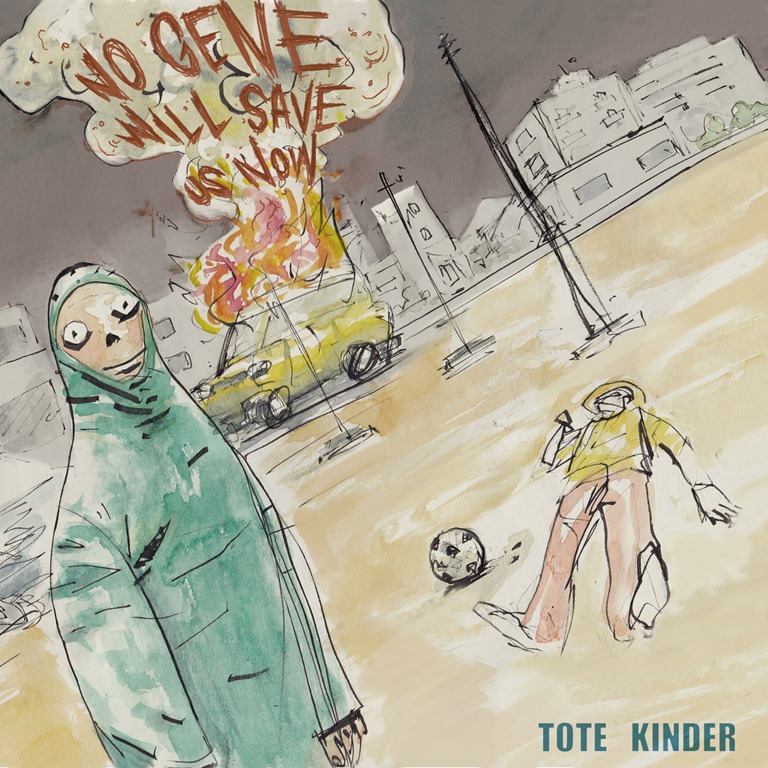
But while I’m likely to give a track more than five seconds, I am prone to making pretty snap decisions when it comes to new music. The chances are the squalling mess of noise that crashlands ‘Overfed’, the opening track on No Gene Will Save Us Now by Greek ‘machine-driven noise rick duo’ Tote Kinder will repel 95% of potential listeners in less then five seconds, because its skronking scrape of slanting, skewed guitar is an instant headache – and the very reason I love it immediately. It’s a shouty, angular mess of – well, everything, and probably the first time I’ve heard anything overtly mathy and a bit Truman’s Water using quite such a barrage of drums right up front. It’s like The Young Gods in collision with Daughters and slams hard between the eyes, and the crunchy bass-led ‘Permanent Damage’ is equally hard-hitting. Taking its guitar cues from Gang of Four, it’s noisy and difficult, despite its leaning towards a groove.

‘Hard to Swallow’ really is, arriving in a shrill blast of power electronics with overloading noise before plunging into darkness and with distorted bass and thudding relentless drums. It’s a hybrid of DAF and PIL, and it’s strong. It doesn’t stop. ‘Die Letzte Weste’ is all thumping beats and grinding bas, again reminiscent of DAF – at least until the blasting guitar noise crunches in, and thereafter, it’s Foetus and KMFDM who spring to mind, but there are others, too. This is some full-spectrum noise.

Tote Kinder are taut tight, poised, in their delivery of churning industrial noise. ‘The Falling Man’ is a sneering, snarling, industrial chug worthy of Filth Pig era ministry, a workout that froths with nihilism. The last couple of tracks don’t exactly offer a mellow finish – and nor should they.

No Gene Will Save Us Now may only contain seven tracks, but they’re all strong and incredibly hard-hitting. – and fittingly reminds us that we are all fucked. Why will people not accept or otherwise recognise this? They just continue as normal, booking their overseas holidays. We are so over. And this album will so break your head.

AA

a0565283797_10

28th November 2023

Christopher Nosnibor

Following on from the interim Thrown Away EP release, which boldly, and perhaps somewhat unexpectedly – pitched a Papa Roach cover front and foremost, and taster single release in the shape of ‘Slow Blade’, Binary Order drop the new album The Future Belongs To The Mad. In doing so, Benjamin Blank’s techno / industrial / metal vehicle reveal just how much has evolved since previous album, Messages from the Deep.

So many acts in this musical sphere seem to exist in a sort of genre-specific bubble, grinding out endless psychodramas centred around dark sexuality and degradation, having taken the first couple of Nine Inch Nails albums as templates for their musical existence. Fair enough. It’s easy enough to become embroiled and fixated on the relentless turbulence of your angst and relationship disconnects and how they fuck with your head. At least when you’re a fucked-up hormone-explosion, which is pretty much anyone’s teens and probably twenties.

This could perhaps explain in part the difference in focus of The Future Belongs To The Mad. Blank has been operating as Binary Order since 2008 – the same year I got serious about reviewing music – and it’s been a ling and tempestuous fifteen years. Older, wiser… and more bewildered by the world.  Blank’s statement which accompanies the album is stark, bold, bleak, and honest – but at the same time suitably vague, and I shall quote in full in order to provide context:

“It’s never easy to be honest about these kind of things, but I feel it’s important with this release to be so. The Future Belongs To The Mad was written during possibly the most difficult period I’ve ever had to get through – a period I’m not actually done dealing with – and one from which I now fear I shall never depart.

This album is an expression of my own inability to find meaning or purpose in life. And the utter disdain and emotional distraught that comes from the accumulation of living like that year, after year, after year. With this album I’ve managed to turn something that is for all intents and purposes destroying me, and created what is without any doubt in my mind, the greatest accomplishment of my life.

I don’t know if there is going to be anymore Binary Order after this. Finishing this album felt like an impossibility at one point, and now it’s done I feel like I am too. I hope anyone who listens to this can find something of value for within it. If not then I just appreciate having this platform to express myself in this way because it has kept me alive.”

Whether so much of this existential trauma was triggered by lockdown or other personal circumstances, we don’t know, but the fact that Blank is British and subject to the daily hell of living in a country in turmoil and seemingly hell-bent on utterly fucking itself and its citizens is worth highlighting, in that this seems to reflect the mood of many people I know. It feels as though the mad have already taken over and are stealing the futures of the rest of us, and our children. From this vantage, you look in, you look out, and you feel hollow and broken.

The Future Belongs To The Mad is harsh, abrasive, and rages hard from the offset, with the blistering hot guitar inferno of ‘Consternation’, which judders and stutters, halts and race, blasts of noise slamming in your face in the first bars. The vocals alternate between snarling, impenetrable metal roars in the verses and cleanly melodic choruses abrim with bombast.

Elsewhere, ‘Perfect World’ builds to a truly magnificently anthemic climax, while ‘Feel Again’ brings some crisp dark electropop that calls to mind mid/late 80s Depeche Mode with its layered synths and backed-off but crunchy guitars, over which Blank wrestles with his entire soul over darker feelings. There are dank instrumental interludes to be found during the course of the album. ‘Hope is a Mistake’ is every bit as bleak and life-sapping as the title suggests. ‘Skin’ is tense and claustrophobic electro, but again, there are segments which are smooth and soulful. ‘Face Beneath The Waves’ is a black blast of aggrotech metal / glichy electro / industrial / emo which takes your face off then soothes your raw flesh with some nicely melodic passages.

If nu-metal at its best / worst battled with stylistic duality, Binary Order carry this through to a Jekyll and Hyde manifestation of internal struggle on The Future Belongs To The Mad, which incorporates elements of numerous genres. These contrasts serve the album well in terms of it being a dynamic, energised offering, but such schizophrenic sonic stylings make for an album that’s almost pitched at two or more different markets. But more than anything, it feels as if these stylistic conflicts are the manifestation of Blank’s internal conflicts – and with this interpretation, The Future Belongs To The Mad works well. Blank hauls the listener through his difficult experiences, one at a time, and you bear witness to his self-torment a song at a time.

The Future Belongs To The Mad is not an easy album, but it is one that carries much weight and is well-realised. I won’t be alone in hoping it isn’t the last of Binary Order – but if it is, it’s a grand final statement.

AA

a3124503610_10

Crazysane Records – 24th Nov 2023

Christopher Nosnibor

The press release describes Zahn as a ‘German post–modern noise rock ensemble’, while their bandcamp bio offers ‘A bold escape from your daily life through technicolor transmissions of post–rock, krautrock, dark jazz, noise–rock, post–punk and electronic music. Influenced by the likes of TRANS AM, THE JESUS LIZARD, METZ, THE MELVINS and TORTOISE’, adding that ‘Adria is a compelling soundtrack to a 1980’s anti–utopian road movie!’

As a prospect, it’s head-spinning, sounding like an everything-all-at-once hybrid, and the actuality isn’t much different. There are plenty of driving grooves, largely propelled by solid bass and insistent drumming, but there are also some angular riffs and big splashes of noise.

The first track, ‘Zebra,’ boasts a bulbous bass with some big low-end and some easy, noodly synths which wibble and wander agreeably and mellifluously… and then towards the end it builds and distorts and things get altogether more twisted and less pleasant. And this is a feature characteristic of the compositions on show here. They don’t mash everything into every second simultaneously, and there’s none of that jazz / Beefheart kind of stuff that sounds like each band member is playing a different tune in a different key and time signature all at the same time. There are times where that kind of avant-gardism most definitely has its place, and works, but this isn’t what Zahn are doing here. In keeping with the road movie concept, the pieces are constructed around transition.

The ten-minute ‘Schmuck’ is a magnificent example of their ability to do mellow, with clean sounds and even a tinge of a country twang, it swings along breezily and evokes sunshine and expansive vistas. Then, near the seven-minute mark, the bass steps up to a crunching grind and things get a whole lot noisier, from where it builds into a big, driven riff which crackles with energy. ‘Yuccatan 3E’ is another colossus of a cut, running to almost nine and a half minutes and manages to take it time in pushing outwards and working a single passage for a fair while, but equally packs in at least three or four songs’ worth of ideas.

The changes feel organic, and sometimes emerge gradually, and at others there will be a sudden and unexpected swerve, and there’s so much happening that the absence of vocals barely registers.

Because the mood, tone, and tempo differs so radically between songs – and between sections – Adria very much does feel like a journey, through space and time. ‘Apricot’ is a sparse synth work with crispy vintage drum machine snare cutting through quavering analogue synth sounds – then, without changing the instrumentation or the simple repetitive motif, it goes massive. A post-rock Depeche Mode chronically undersells it, but it’s as close as I can get, at least off the top of my head. The final minute is an extravagant climax, and truly magnificent.

The majority of the album’s eleven tracks run past five minutes, with the majority sitting more around the seven-minute mark, but the eleven-and-a-half-minute ‘Faser’ is the album’s megalithic centrepiece. It blasts hard with a fuzzy, scuzzy repetitive riff cycle with stoner rock tendencies, and it’s dynamic and exhilarating. Dropping down to bubbling synths in the breakdown around six minutes in, the threat of a re-emergence of the heavy lingers suspensefully. When it does land, it does so with a vengeance, before transitioning once more into something altogether different again, skittering its way into Krautrock territory.

The power blast of ‘Tabak’ hits square between the eyes and feels unexpected however expected it actually is. These guys are absolute masters of the unpredictable and varied structure, and conjure some highly evocative and atmospheric passages, and while the playing is technical, it’s not technical for its own sake: there’s nothing showy or extravagant, and the focus is very much on the compositions, the structures, and the impact. ‘Amaranth’ piledrives a full-on doom riff, slogging away at it for what feel like an eternity. It’s a heavy trudge, and really hits the spot – again, when you least expect it.

Adria straddles many, many genres, and does so in a way that’s incredibly imaginative. The key to its success is its execution, which balances precision with passion.

AA

a0822649105_10

23rd November 2023

Christopher Nosnibor

Dark post punk and music of a gothy persuasion appears to be enjoying – if enjoyment is an accurate description – of late. Dark times call for dark music, and the echoes of the 80s which resonate in the presents are deep. As financial turmoil continues to bite hard – and hardest on those who struggle the most – and war rages around the world, the new state of cold war which hovers has been relegated to a mere shadow in the background, bur remains very real. Add climate change and constant surveillance, massive inflation, and a global political shift to the right to the mix, and we have the perfect cocktail for an explosion of music which channels dissent and frustration.

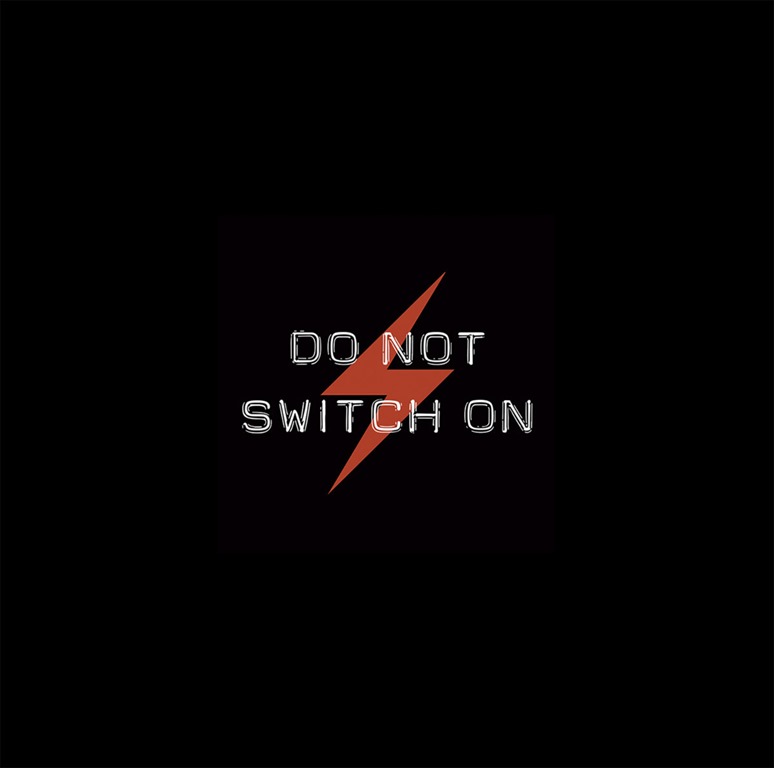
But what goes around comes around, and it’s a truism that if you stick with what you’re doing long enough, it will inevitably come back into fashion at some point. And so here we are presented with Do Not Switch On, the latest offering from we be echo.

Canadian Kevin Thorne has been doing what he does for a long time. As he set out in his bio, ‘I formed Third Door From The Left with Raye Coluori in 1979. I left to form we be echo in 1981, and released Ceza Evi on cassette and contributed to several compilations. I’m still recording now, some 40 plus years later. And what do you know? The world has come back around and caught up with his mode of musical output once more.

Do Not Switch On is straight in with bass that snakes and crunches: ‘Cold Rain Gun’ is dark, dank, weighty and throbs away as Thorne paints a word-portrait of a bleak and dangerous world. Depressingly, any depiction of near-future dystopias are more or less the reality in which we find ourselves.

Instrumentally, ‘At You, Because’ sounds like a cut from The Jesus and Mary Chain’s Honey’s Dead, with a driving bass and shuffling beats locking down a solid groove. The same is largely rue of the pulsating psychedelic throb of ‘Sometimes’, which calls to mind the cyclical stylings of Pink Turns Blue, only with more bass – much more bass – and more noise – much more noise.

‘Grey, Grey’ is a blistering riff-driven tune, and it’s swampy, dark, dense, with a tinge of not only psychedelia but of swampy surf. For all that, The Black Angels stand as the closest comparisons, at least on this absolute stomper, and hot on its heels, ‘Die For You’ follows the same hypnotic template, a motoric beat thudding away through various explosions of sound while Thorne croaks and croons a monotone amidst the swirling tension, and ‘Sepia’ locks into a groove that feels longer than it is, in a good way. If ‘Shallow Hallow’ leans rather heavily on Bauhaus and ‘R.U.N.’ takes a bit much from both The Black Angels and the Sisters of Mercy simultaneously, it works.

Do Not Switch On is a solid album, and that’s a fact. Most of the tracks run past the five-minute mark and drive away at a single repetitive riff for the duration. But within what may appear to be limited confines, Thorne really wrings a lot out of what is, in real terms, a minimal setup.

This stuff never ceases to excite, either live or recorded. Do Not Switch On is solid, and nags and gnaws unexpectedly.

aa

a1670967739_10

Mind Altering Records – 13th November 2023

Christopher Nosnibor

Back at the start of 2021, I penned a pretty positive review of the solarminds album Her Spirit Cracked the Sky. The combination of ambience and extreme weight was a thrilling proposition. And it was – and still is – monumentally epic. It feels a long time ago already, and much has happened in the interim. If emerging from the pandemic was trailed for a long time by the release of myriad ‘lockdown’ projects, we’ve subsequently trickled into a ‘world’s turned to shit’ phase, and like the pandemic, it feels like there’s no end in sight. Trump may be out of office, but he still looms large and continues to pose a threat in the arena of world politics, and it’s a world at war, and a world where alternately wild fires and floods decimate swathes of land. Slowly but surely, the planet is becoming less inhabitable. And yet, still, people jet off on skiing holidays and bemoan the lack of snow despite being the cause of the lack of snow, and whenever it rains, people take to their cars to make five-minute journeys to avoid getting wet, thus ensuring it will rain an awful lot more in the time to come.

And since the release of Her Spirit Cracked the Sky, after more than a decade, Chris Miner has put the project to bed. But, like the proverbial phoenix rising from the ashes, he now returns with Sun Colour Sound, and the first in a projected trilogy of releases. On the evidence of this first one, it will be something special.

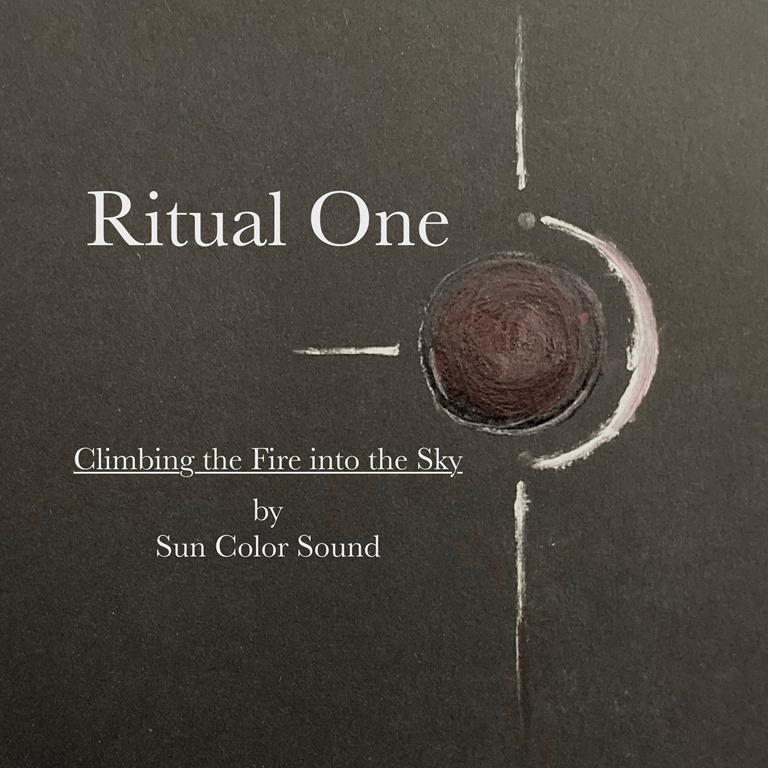
Ritual One (Climbing the Fire into the Sky) consists of a single piece, which runs just short of half an hour, and it shares many elements with solarminds – namely a fair bit of noise, some hefty guitars and punishing percussion, at least in the first two thirds, and it’s heavy, harsh, noisy, and it crashes straight in with some grating, heavy drone, twisting feedback and thudding drums.

This is one of those tracks which stars like the end of many sets, and it feels like it’s winding down from the offing. This is by no means a criticism, simply an observation that what in the context of many works is a climactic, tempestuous crescendo finale, is simply the start of a ferocious sonic storm. It does very much call to mind Sunn O))) and the epic, swirling instrumental passages of contemporary Swans, although the guitars are very much geared towards generating howling feedback rather than crushing, clashing chords that sound like buildings being demolished. Therte’s something of a psychedelic twist in the spacey delivery, too. As whining, whistling notes ring out, the percussion builds from the occasional roll to a relentless thunder. The combination is immensely powerful, and assails the senses with a real physicality. Buy around the thirteen-minute mark, it’s reached wall-of-sound levels, a dense, shimmering sonic force which shimmers and ripples while coming on like a bulldozer, at the same time as hand drums fly at a frantic pace and evoking something spiritual in the midst of a hypnotic frenzy. And still, it goes on, surging forwards.

The shift in the final third occurs subtly: the percussion continues to clatter away, but the guitar abrasion tapers away, to be replaced by altogether softer strings.

Ritual One (Climbing the Fire into the Sky) is more than just a really long piece of music: it’s an ambitious piece in every way, and its scope and scale are immense. There is so much depth and detail here, and it takes repeated listens to really appreciate just how much is happening, especially given that the first reaction is simply to bow to its sheer sonic force.

But the last ten minutes belong to a different world from the first portion. Hypnotic, soothing, graceful, the tension dissipates and Eastern vibes radiate through the gauze-like layers which drift and float over the busy but altogether more subdued percussion.

So while it is an ambitious work, it also delvers far above any expectations, and it’s both unique and special.

AA

Version 3