Archive for the ‘Albums’ Category

Transcending Obscurity Records – 19th January 2024

Christopher Nosnibor

Every day, every week, the world descends further into a pit of shit of human making. I feel as if I’m continually circling back to this same premise to frame almost every discussion, not just when writing about music, but any conversation I have about pretty much anything. The sad fact is that there is simply no escaping the fact that it’s not just me personally, but the whole of our existence which hangs under a cloud of gloom.

Only this afternoon, my mother texted me in her usual cack-handed typo-filled fashion bemoaning the succession of storms which has battered the country this week, commenting on how she can’t get over it and asking what we’ve done to deserve such crap weather. I simply couldn’t face pointing out that things have been heading in a bad direction since the industrial revolution and that we’re pretty much driven off a cliff at full speed in the last fifty years thanks to capitalism, and what we’ve done to deserve is fucked the planet with greed. She probably wasn’t really looking for an explanation, and likely wouldn’t have appreciated or even understood if I’d given one. Meanwhile, wars are raging around the globe, and escalating on a daily basis. And because we don’t have quite enough death and destruction, the state of Alabama has seen fit to pilot slow and painful executions by nitrogen gas. What the fuck is wrong with the world? And is it any wonder we’re experiencing a massive mental health crisis?

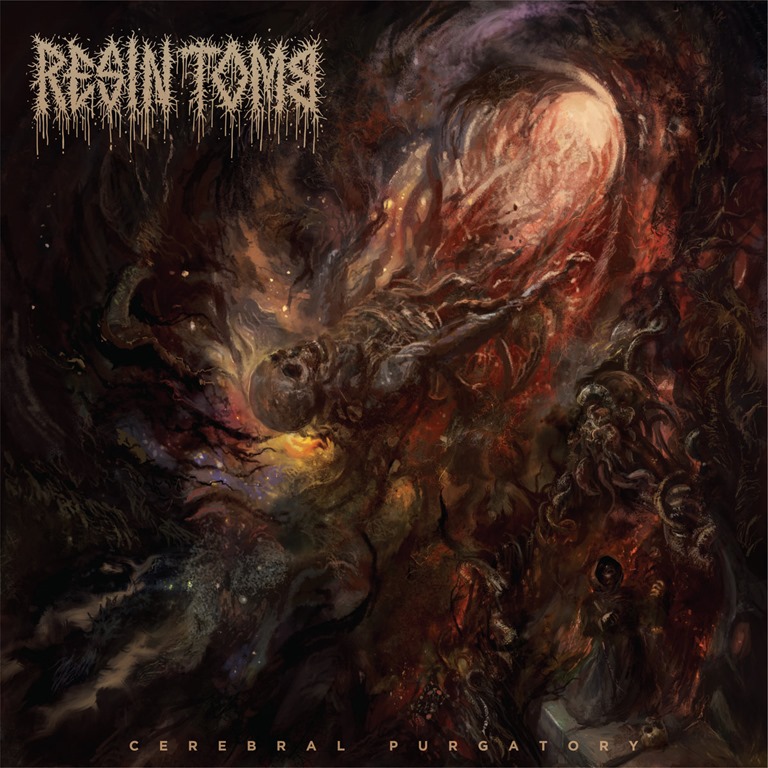
In the face of all of this, you do what you can to get by, and while many will advocate meditation and calming music as an alternative, or supplement, to medication, catharsis can also provide a much-needed means of release. And after releasing a couple of well-received EPs, Australian band Resin Tomb have dropped their debut album, Cerebral Purgatory. It’s a title which pretty much encapsulates the condition of living under the conditions I’ve outlined above – and purgatory is the word, because there is no escape and it feels neverending. The first track, ‘Dysphoria’ perfectly articulates the existential anguish of life in these troubled times. Again, the title is spot on: I frequently see – and have likely made my own – mentions of how we are seemingly living in an amalgamation of every dystopia ever imagined. But what is the psychological response to this? Dysphoria: ‘a profound state of unease or dissatisfaction’, the antonym of euphoria. Much as I do sometimes feel like cheering humanity to the finish line in the race toward self-extinction, for the most part, I feel not simply gloomy or pessimistic, but a deep sense of anguish and anxiety, not to mention powerlessness. And I am by no means alone – although it’s more apparent from time spent on line than conversations with friends, family, or colleagues, perhaps because people tend to shy away from heavy topics for the most part, and instead prefer to shoot the breeze about the weather. But ‘Dysphoria’ is a brief, brutal blast, gnarly mess of difficult emotions articulated through the medium of full-throttle guitar noise and vocals spat venomously in a powerful purge.

As their bio puts it, ‘They’ve forged their own sound which is a remarkably cohesive mix of dissonant death metal, gravelly grind and somehow even thick, blackened sludge.’ And yes, yes they have. And it’s a dense, powerful, racket they blast out. There’s little point in drawing on references or comparisons: there are simply too many, and they all tumble over one another in this cacophony of monstrous metal noise, a flaming tempest of gut-ripping heaviosity.

‘Flesh Brock’ packs tempo changes and transitions galore, packing more into three minutes and eight seconds than seems feasible. And in packing it all in, the density reaches a critical mass which hits with the force of an atomic blast.

Four minutes and twenty seems to be Resin Tomb’s sweet spot, with four of the album’s eight tracks clocking in at precisely that. And when they do condense so much energy and weight into every second, four minutes and twenty seconds affords a lot of room.

The title track comes on with hunts of Melvins, a mess of overloading guitars and a bass so fucking nasty and so forceful it could shatter bones, melding to deliver a colossal bastard of a riff. ‘Human Confetti’ comes on heavier still, pounding away with a pulverising force and playing with elements of discord and dissonance in the picked guitar line – and while the lyrics may be indecipherable, the title alone conjures a gruesome image.

If ‘Purge Fluid’ and ‘Concrete Crypt’ again convey their fundamental essences in the titles alone – and these are absolutely brutal, punishing pieces – the album’s final track, ‘Putrefaction’ absolutely towers over the murky swamp of black metal and grindcore with a dramatic, nagging picked guitar and a cranium-crushing wall of noise. Holy fuck. It hurts. And good. Angry is good, and better to channel that anger into art than knifing people in town on a Friday night. That’s one for another time, perhaps. At this particular moment, we have this – an album so heavy, so violent, it’s an exorcism.

AA

719914

Unsounds/Echonance Festival – 2nd February 2024

Christopher Nosnibor

It’s never a comfortable experience to learn of someone’s passing, even if it’s someone you’re only really aware of rather than familiar with. My knowledge of Phill Niblock and his work was relatively scant, although I had written about a few of his releases over the years. I wasn’t particularly enthused by Touch Five back in 2013 – an album I would probably appreciate considerably more now. This likely says as much about me as it does Phill Niblock, but does perhaps indicate just how artists who fully espouse avant-gardism are always ahead, and tend to only be truly appreciated later. And so, to learn of Niblock’s passing only this month, from the press release which accompanies this release was a… moment, a cause to pause.

And so as I read how this release serves to ‘commemorate the late Phill Niblock with this release made in close collaboration with the composer,’ and features recordings of some of his very last compositions just before his passing in January 2024. ‘The two works on this album, ‘Biliana’ (2023) and ‘Exploratory, Rhine Version, Looking for Daniel’ (2019) represent the hallmarks of his unique approach to composition where multiple, closely-tuned instruments and voices are used to create rich and complex sonic tapestries…

The fact that he was still composing up to the age of ninety is remarkable. The fact these two pieces don’t feel radically different from much of his previous work is impressive. And yet, in context, the fact that these final works are such long, expansive, and unsettling compositions feels fitting.

To understand and contextualise the pieces, it’s worth quoting directly: ‘In Biliana, written for performer Biliana Voutchkova, her violin phrases and vocalizations carve out a deep sonorous space full of fluctuating overtones. By emphasizing on the physicality and materiality of her sound, the piece gives us the sensation of stepping back to reveal a singular portrait of the musician. ‘Exploratory, Rhine Version, Looking for Daniel’ was recorded by two Netherlands based ensembles, Modelo62, and Scordatura ensemble from a live recording made at the Orgelpark, Amsterdam during the Echonance Festival in February 2023. It is a complex work comprising of 20 parts, where lines seem to emerge and disappear out of a landscape of harmonies and sonic spectra. There is also a voice hidden in this mass of instruments, just like in Biliana, giving both works an added human element – something that always emerges out of Phill Niblock’s seemingly dense musical constructions.’

Each piece takes a long form, extending beyond the twenty-minute mark.

A decade ago, I bemoaned just how ‘droney’ Touch Five was, how it was impossible to perceive any tonal shifts. Listening to ‘Biliana’, I’d have likely posited the same complaint, bit with hindsight and personal progression, it’s the eternal hum, the intense focus on the most minute and incredibly gradual of shifts, which are precisely the point and the purpose – and the things to appreciate. On the one hand, it is testing. It’s minimal to the point of a near-absence, an emptiness, but present enough to creep around your cranium in the most disquieting of fashions.

It’s not uncommon to lie awake and night or have deep pangs of regret which knot the stomach when you replay that awkward exchange, that time you said the wrong thing, the occasion when you plain made a twat of yourself one way or another. The same anguish hangs heavy over reviews where I’ve simply been wrong. There’s no way of undoing them – and to repost or revise down the line would be disingenuous, an act of historical revision. You can only correct the future in the present, and not in the past. We all know how rewinding history to make a minor alteration goes. Before you know it, your hands are fading and you’re about to become your own father or something.

You almost feel yourself fading over the duration of ‘Biliana’ as the eternal glide of string sounds hangs thick and thickening in the air and somehow at the same time remains static. Where is it going? Where are you going? Everything feels frozen in time, slowed to complete stasis in a slow-motion drift. Wondering, waiting… for what? A change. But why would change come? Breathe, let it glide slowly over you, however much you feel a sense of suffocation.

‘Exploratory, Rhine Version, Looking for Daniel’ begins sparser, darker, danker. Ominous, string-line drones swell and linger, here with scraping dissonance and long-looming hums. Nothing specific happens… but it crawls down your spine and you feel your skin tingle and creep. Nothing is quite right, nothing is as it should be.

Over the course of his long, long career as a defining figure of the contemporary avant-garde, Niblock was outstanding in his singularity, and the unswerving nature of his compositions, a vision which, as this release evidences, remained unaltered to the end.

77U_front

26th January 2024

Christopher Nosnibor

Polevaulter haven’t come from nowhere but have, it seems, evolved – or devolved – from a regular band with guitars and a regular drummer, to a brutal drum-machine driven duo, a model which has landed them some high-profile support slots and attention in their own right. Debuting – at least in this incarnation – with ‘HILTSCTW’ (That’s ‘How I Learnt To Stop Chewing The Wasp And Face The Bulldog’) in February 2020, they’ve put out a couple of EPs on tape and CD, both of which have sold out, as well as a couple of digital singles, ahead of this, their debut album, which they performed live for eight hours straight and streamed it on YouTube as a fundraiser for Palestine the other week. It might not have had the intensity of one of their half-hour support sets, but it set out their position politically and as people, suggesting that as much as they’re about impact, they’re also about endurance.

With the exception of the last couple of singles, none of the songs on Hang Wave have been previously released. Hang Wave, then, is no sweeping up of their catalogue to date, but an album proper, and a work which is focused on where they’re at now, not where they were.

It’s a thudding pulsing bass drum bear that drives ‘Mia Goth Made Me Do It’, the first of the album’s ten tracks. It’s tense, and it’s dark: the bass is low-slung and bulbous, but the vocals are subject to really high-treble EQ and some crisp, dry reverb which gives them a harsh edge. This is no gentle introduction: they’re straight in and at the jugular. A mangled, confrontational industrial / goth assault, it makes for a challenging, confrontational opening to an album that’s stark and uncompromising.

Single ‘Trend’ packs snappy (and in places somewhat bizarre) lyrics, with lines like ‘Don’t tell me to put my vase away’ and ‘I do a line off a horses dick’, and stuttering beats, a monstrous bastard of a bass noise and some woozy discordant notes that bend and melt in the incendiary heat of the fire of the vocal ferocity. ‘Pissed in the Baths’, just unveiled as a final taster of the album is another murky morass of dingy post-punk, and as likely to deter more prospective listeners than it will attract. You get the impression that Polevaulter couldn’t care less, and that they’re not doing this to garner popularity, to get played on the radio, for accolades or to get rich or famous – which is a good job: in articulating alienation and also simply venturing, without restraint, down the deepest, darkest, and most obscure tunnels against a backdrop of the most unrefined, angular noise, Polevaulter have pretty much guaranteed they will achieve none of these things. Of course, in repelling the majority, they’re appealing to an extremely devoted minority of people who actively enjoy music that hurts, physically and mentally.

It’s hard to make out what the fuck they’re ranting and raving about most of the time, but the delivery – half spoken word, half hollering – is strong and is a message in itself. Because anger is an energy, and shouting into the abyss is the most exultant catharsis. Polevaulter deliver that catharsis in the bluntest, starkest of manners, and the production accentuates it all.

‘Industry Plant Based’ seems to be a swipe at more than one contemporary issue, and it’s fair to say it’s hard to imagine an act further from The Last Dinner Party.

There are no tunes to speak of on Hang Wave, and choruses are in short supply, too. Perhaps the most obvious and valid points of comparison are Benefits and Sleaford Mods – but whereas the latter bring hooks and groove, Polevaulter present nothing but bleak trudging, and while the former are focused on the channelling of rage with passion and a politically-charged message of unity, Polevaulter bring us blank nihilism delivered with a twist of crushing desolation. There are dance elements in the mix, but the mix is a cement mixer churning away a blend of grit and napalm, and this is nowhere more strongly evidenced than on single cut ‘Violently Ill’, a song so wrecked as to twist your intestines, while the air-raid siren howl of ‘GabWorld’ is chilling and unsettling.

The album winds up in a twitching, glitching, explosive mess in the form of the snarking, sparking, meltdown that is ‘any%WR’.

Hang Wave is harsh. There are no mellow moments, or softer interludes. There is nothing remotely pretty or pleasant about it, either. Outside, a storm rages – the second in as many days, and the tenth since October. The river just a few hundred yards away has burst its banks again. The sound of other people’s recycling rattles past my front door as it bowls down the street, and it’s a potent reminder of the reality and the palpable effects of climate change. It looks very much like we’re on the brink of WW3 s the UK and US dig deeper into their commitment to fire missiles into Yemen; Gaza is all but decimated; Trump looks like he’ll running for president once again, and no-one seems particularly concerned because they’re fretting about how they’ll pay the rent and the next energy bill. It’s a sick, sick world. All of it mounts up and compounds and you feel ill. With Hang Wave, Polevaulter do absolutely nothing to lift the mood or make you feel better, but Hang Wave is the perfectly bleak, nihilistic to these utterly fucked-up times.

AA

HWsleeve

skoghall rekordings – 8th January 2024

Christopher Nosnibor

There’s nothing like a descriptive title to set out plainly what you’re getting. As the notes which accompany this EP release inform us, ‘Leeds postpunkspacerockers Farming Incident released a couple of LPs over their existence and ceased to be in June 2010… The three songs on this release are the first and only batch of recorded songs that were put to tape in late 2007 as part of the proposed 3rd LP which sadly never came into existence…… These songs were rediscovered by FI vocalist Dave Procter in December 2023 and are now released in their full glory.’

Agent Procter has been busy with myriad musical projects since the demise of Farming Incident, many of which have been covered here at Aural Aggravation, and his relocation to Sweden to escape the post-Brexit hell of this sorry island meant that we lost another great Leeds / York postpunkspacerock act in the form of boilersuit-wearing motoric mofos The Wharf Street Galaxy Band. Perhaps in another decade we’ll be treated to some of their final lost session recordings – but for now, we should keep our attention on the release at hand.

To establish the chronology, the band’s untitled third album, which was clearly very much in its early developmental stages, was in progress before their second album, Nine Degrees of Torture (reissued last year) was released. On the strength of just three songs, it’s difficult to determine the level of ‘overlap’ and / or ‘departure’ when weighing up the content of the next album versus its predecessor.

‘the message’ is a heavy-duty full-throttle blast that really transports the listener back to that bridging point where punk split into post-punk circa 79, and with its stonking bass and hectic drumming, I find myself thinking of Joy Division’s early demo recordings as Warsaw. It’s raw, furious, and all the fire. Busy, jangly, messy with treble and without even a smear of polish, it’s real alright. Procter isn’t a singer – he’s a vocalist, and the fact he strains for the higher notes – which is half the song isn’t just ok, but integral to the raw sound. He sounds rather like David Gedge on ‘the pit of doom’ as he sings ‘you’re slipping on the slope / grasping for the rope’, while the band scrabble and scratch away at the instrumentation. The guitar is a scaping chang of treble which chops and splinters into a mesh of top-end amidst streams of feedback.

‘menezes’ is another rough and ready guitar-driven explosion that’s more the sound of ’79 than ’07… although I’m struggling to think what the sound of ’07 actually was. There’s a sense that this was something of a murky spell for music. The post-rock explosion which had erupted circa 2003-4 which seemed to last an eternity was in fact dying of in 2007, and while there was undoubtedly good new music out there – and I was writing about it – there was no real dominant form, no genre which stood out as defining the period, and we trudged and lurched our way through a no-man’s-land of nothing much at all. Small wonder that a band like Farming Incident should peter out. They weren’t part of the zeitgeist: there was no zeitgeist. It’s a shame: Farming Incident were good, and their works in progress showed serious potential, however out of step.

As an aside, their page mentions that ‘All proceeds of any sales will go to Médicins sans Frontières. Thanks for your donation. Go to this link for more details -> http://www.msf.org and of course donate directly here -> http://www.msf.org/donate. Ta(ck).’ It’s good. Give it a blast. And give money.

AA

AAa2821299314_10

Human Worth – 1st February 2024

Christopher Nosnibor

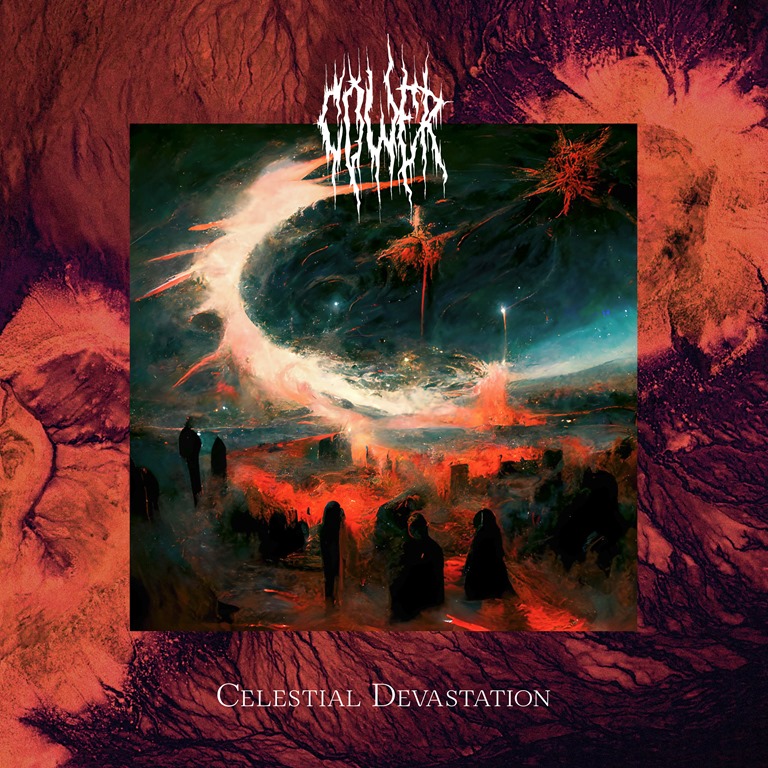
Anyone familiar with the works of William Burroughs will likely be aware of the so-called ‘23 enigma’, which essentially centres around the auspicious frequency of the occurrence of the number 23. It may be a case of confirmation-bias, but once attuned, it’s impossible not to notice, and the fact it’s filtered into mainstream consciousness via the KLF and the 2007 Jim Carey movie The Number 23 is worthy of note, if nothing else. So the fact that catalogue number HW023 has been assigned to the second album by supergroup COWER, featuring members of The Ghost of a Thousand, Petbrick, USA Nails, Yards, The Eurosuite and JAAW is something that may be of no real significance, but then again…

Few would necessarily expect the album to begin with a soft, gentle piano ballad with ‘We Need to Have the Talk’. It’s contemplative, and even if the talk is direct at times lyrically, the mood is low-key and lulls the listener into a sense of false calm. Immediately, ‘Summoner’ crashes in with pounding drums, a snare like smashing a bin lid, and a bass so thick and grimy as to churn your very guts. This broad shift is precisely what you expect from COWER, as they push parameters and do things different; this is what you want from COWER, and this is what they deliver. It’s a rambunctious roar, with an elevated artful tone and all the rage. They pack a lot into a mere three and a quarter minutes – and a lot of what they pack is beefy riffage and furious noise. It’s an instant rush, and at the same time, your muscles tense.

‘Hard-Coded In the Souls of Men’ presents as a downtempo slice of brooding electropop with hints of Depeche Mode, even down to the soulful baritone croon and spacious sound with soft synth interludes. In a parallel universe, this song would get played all over on Radio 1 and would make all of the mainstream radio and Spotify recommended playlists, and people in their tens and hundreds of thousands would love it. And then they would arrive at the album, and wonder ‘what the fuck?’ as they simultaneously shat their pants. This would be the perfect outcome, but is of course, highly unlikely, because acts on small labels just don’t have those opportunities.

The funny thing is that back in the 80s, major labels would back all kinds of bands and would promote – and shift mega-units of – an album based on a largely unrepresentative single. Back then, you couldn’t hear the album online, so would head down to Boots or Woolworths or WHS, or add it to your selection with Britannia Music, and you might love it or you might hate it, but they’d shifted the unit either way and because you only had a handful of records or tapes, you’d play it enough times there was probably a 50% chance you’d come to like it even if you hated it at first.

COWER succeed by being unpredictable, and whichever way they turn, be it noise or electropop, what they deliver is top quality. ‘Buffeted by Solar Winds’ boasts a stalking bassline and brooding vocal, as well as some synths and some circuit-melting overload that shows Nine Inch Nails how it’s done. ‘Deathless & Free’ is pure Depeche Mode circa Songs of Faith and Devotion: soulful, dark, and sonically immense, with percussion that utterly blasts you away. How is this right? And how does it work, when songs like ‘False Flag’ bring the most raging, sinewy punk, half fired-up post-punk, half incendiary grunge, entirely raw, ragged antagonism. The end result is New Model Army meets Big Black, with some wild sax tossed in for good – or crazy – measure.

The tile track is a slow, slow groover, driven by immense, industrial beats. What a contrast the energetic, intense and ultra-tense ‘Bury Me in the Lawless Lands of the West’ which really exploits the tropes of early 80s goth with is throbbing bass and fractured mesh of lattice-like guitars. Celestial Devastation;, however you pitch it, is hefty.

There are many so-called supergroups who aren’t especially super, who seem to trade on their main projects as the selling point. COWER amplify the intensity of their individual main projects to the power of three. Balancing mangled guitar noise and some pretty harsh electronics from beyond, Celestial Devastation is as good as it gets. Celestial Devastation is special.

AA

HW023_Cower_CelestialDevastation_CoverArtwork

New Heavy Sounds – 26th January 2024

Christopher Nosnibor

It begins with a yawning, wailing drone, before thunderous bass, drums, and a rolling piano crash in tempestuously. But if you think this is just another heavy doom-leaning record with a dash of theatre, the arrival of Amber Gardner’s vocals changes everything. She brings an antagonistic, nihilistic punk vibe at first, but then, as the song transitions into a grand, sweeping expanse, reveals a softer side. And so it is that ‘White Noise’, the album’s eight-and-a-half-minute opener is a real shape-shifter, sliding back and forth between crushing weight and spellbinding atmosphere. But when it goes heavy, it’s utterly pulverising, and the sustained crescendo which occupies the last three minutes is gut-wrenching, annihilative, a rare exhibit of raw, chest-tightening emotional heft combining with the most punishingly brutal instrumentation, which leaves the listener feeling wracked, drained, ruined.

It may sound strange, but it’s often more difficult to write about albums which really hit you, which have the most impact. To scrabble for an analogy, it’s like being kicked in the chest and left lying breathless on the ground then being asked to describe the experience while still barely able to draw oxygen. It’s like… like… It leaves you stunned, numb, dazed, and at a loss. Regeneration is one such album. It’s all well and good clutching and comparisons and scratching for similes, but no words can really come close to articulating the spectrum of sensations which engulf your very being when faced with something so intense, so close to overwhelming. Yes, it’s dancing about architecture. What you want to do, more than anything, is to forcibly sit people down and say “listen to this! No, really, listen! Feel that!”

New York-based GUHTS (pronounced ‘guts’) declare themselves to be an ‘avant-garde post-metal project, delivering larger than life sounds through, deeply emotional music’. It’s the emotional aspect that hits harder than the punishing power chords, but it’s the combination of the two which really is the killer here.

The album’s seven tracks are incredibly ambitious in scope and scale, and in terms of balancing emotional depth and sheer brutal force. For the most part, the compositions extend beyond the five-minute mark, but are confined to under eight, and are effectively doom/goth epyllia – expansive, dense, cinematic. The prominence of piano – particularly notable on the slower, intensely wrought and dynamically varied ‘The Mirror’. One of those songs which sustains a surging sensation from the very beginning, it’s truly worthy of the ‘epic’ descriptor.

‘Till Death’ has hints of Cranes about it in Amber’s ethereal vocal delivery, but it’s paired with megalithic guitars of absolutely crushing weight, while the shortest song on the album, ‘Handless Maiden’ is monstrous in its unyielding heaviness. Gardner brings another surprise with her rabid howl, which is utterly petrifying.

There isn’t a weak track here, nor a single second that doesn’t feel utterly vital and doesn’t crackle with intensity, and Regeneration is an immense and powerful album. ‘Generate’ rolls into graceful shoegaze territory, with rolling drums and chiming guitars which wash and ripple mesmerically, gradually building to a sonic tsunami.

There’s something inevitable and completely perfect about the way it all leads the way to the ten-minute ‘The Wounded Healer’, which comes as a truly monumental finale. And what a finale! It begins delicately, ringing xylophone or glockenspiel chiming out mellow tones, before a grinding low-end grinds in and from here, the build is slow and inexorable. Gardner traverses the sonic space, shifting mood and tone in a flicker. The guitar twists and spins, tense and serpentine against the ever-swelling wall of booming bass and by only halfway through, you’re drowning, the air pressed form your lungs… and then… then… Christ. Gardner is possessed, and the guitars pulverise and you feel your skull beginning to compress. Finally, around the seven-minute mark, there is levity. Clawing for aa comparison, I arrive at Amenra, although it’s less than half the story of a song, and an album, which is utterly peerless and completely beyond spheres of comparison.

Regeneration is special, hard-hitting, unique. Really. Listen! Feel that!

AA

a3406377299_10

Fysisk Format Records – 26th January 2024

Christopher Nosnibor

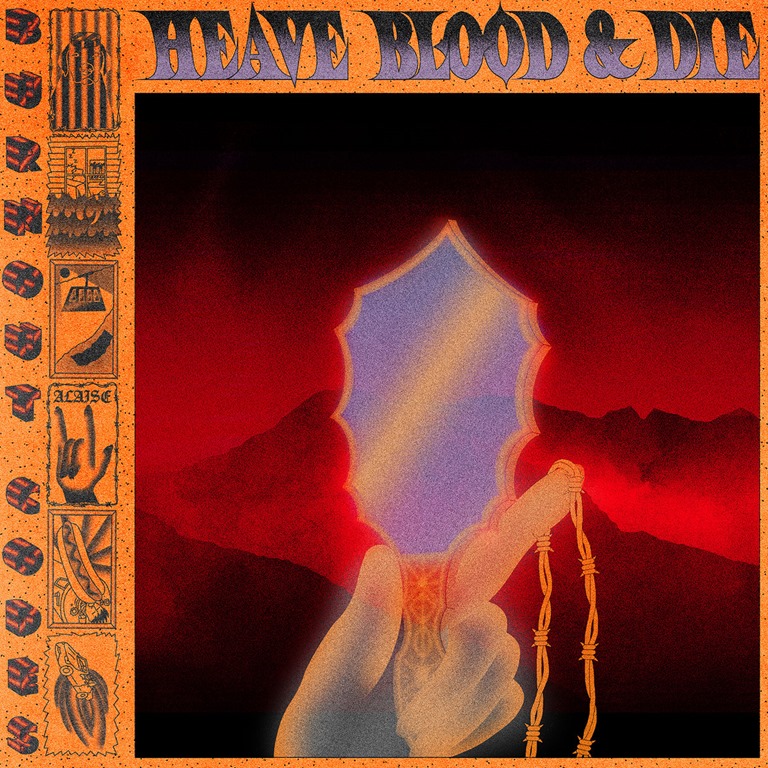
The arrival of single ‘Mjelle’ just the other day provided a strong alert to the imminent arrival of Heave Blood & Die’s Burnout Codes. The band’s name may have a certain comic-book flippancy about it, but their fourth album comes with altogether less cartoony connotations: as the accompanying text explains, ‘Dedicated to bassist Eivind Imingen, who decided to end his life just following the recordings of the album, Burnout Codes is shrouded in sadness and tragedy, and shows the Norwegian collective offering their most textured and innovative album to date.’

It’s not even a mater of English as a second-language: the phrase ‘decided to end his life’ is a difficult one to digest, and one which reminds us that there is no comfortable way to articulate death, and particularly premature death by suicide. Words simply don’t work, they don’t fit, they don’t sound right, they don’t read right. There are no words. But of course, the job of the artist it to find words, and to articulate these essentially unspeakable, incomprehensible things, by various media, be it words alone music, visuals, a combination of any or all of these.

Some albums stand out, at least to me, as being weighted by the perspective of events which would follow soon after: Nirvana’s In Utero and One Last Laugh In a Place of Dying by The God Machine, and, of course, Joy Division’s Closer all resonate with the echoes of foreshadowing deep tragedy, and would also add the altogether lesser known album Nails Through Bird Feet by Chris Tenz – one of the first albums I reviewed on here (positively), to learn some time later that Chris had not only taken his own life just a few weeks later, but did so after visiting York in his final days.

I struggle with the dichotomy between the contemporary dialogue around these things: while there is a huge drive to encourage open discussions about mental health, some feel that anything mentioning anxiety, depression, and suicide should come with a trigger warning and that people should be able to be excused from being confronted with these topics. I do understand that they’re difficult and upsetting, but how does one navigate life by avoiding anything difficult, upsetting, even traumatic? Being recently bereaved myself, I feel I need to front up to one of life’s only certainties, namely that it will end.

Like all of the albums mentioned previously, Burnout Codes is not an album which is about suicide, or grief, but a dark album which explores these challenging themes, and has taken on further dimensions on release due to the addition of unforeseen context. We shouldn’t judge the album within these contexts alone, though.

Sonically, Burnout Codes is a fiery blast of fury out of the traps with the buzzing throb of ‘Dog Days’, a furious collision of grunge and raging hardcore punk which leaves you dazed and breathless, and it’s immediately followed by the sub-three-minute assault that is ‘Men Like You’, which slams in, drums to the fore before locking into a scuzzy wall of guitar and synth, like Girls vs Boys produced by Steve Albini.

‘Hits’ is built around a nagging, throbbing pairing of guitar and synth and a shouty vocal that evokes all the fist pumping. But no, there’s more detail than that. The synths are stark, chilly, droning, the sound of Closer­ era Joy Division, early New Order, The Cure even, but the guitar is positively grungy, and these contrasts create a dynamic tension that serves to sonically articulate a mood of internal conflict, of the experience of feeling jittery, adrenalized, and it’s ramped up threefold on ‘Stress City’, a crackling soundtrack to that sense of feeling overwhelmed, overloaded, overstimulated. If you’ve ever been there, it will resonate deep and hard – and if you haven’t, it’s still a rush of a tune.

Single cut ‘Mjelle’ sits in the middle of the album and marks a shift in placing the synths to the fore and pulling back the guitars, and it’s an obvious single choice with its more clearly-defined chorus and hints of Gary Numan. A slower song, and the album’s longest, extending beyond five minutes, it stands out in the set, but make no mistake that the atmosphere is pretty fucking bleak.

‘Things That Hurt’ races back in with a fierce post-punk darkness, a serpentine synth intertwining with a slippery guitar lead and pounding drums which bring an explosion of energy.

The contrasts and shifts in pace and mood are integral to Burnout Codes, and for this reason, ‘HEATWAVE 3000’ packs a late surprise with its rawness and 80s synth oscillations and strolling bass: it comes on like Killing Joke, with a full, bass-led production.

‘Seen it All’ brings a harrowing conclusion, and bringing the album to a heavy conclusion, Desolate (Keepin) repeats the phrase ‘everything burns’, a crunch of distortion and a rasp of desperation accentuating the pained, ragged appraisal of the mess of life. The statement can be taken metaphorically and literally as we recall how wildfires ripped through Greece last summer in the world’s hottest year on record. The worlds is on fire. Wars rage around the globe. Everything does, indeed, burn… and eventually, burns out.

AA

945712

Karlrecords – 21st January 2024

Christopher Nosnibor

Reinhold Friedl’s career has been long and interesting, and continues to be so. The list of collaborations on his resumé is beyond outstanding, and he has taken the concept of the prepared piano, as first conceived by John Cage, to limits beyond imagination. As such, while the idea may not have been his own, Friedl’s advancement over the last twenty years has been the definition of innovation. But what makes Friedl such a remarkable figure is his capacity to explore so many different and divergent avenues, and to turn his hand to so many different projects – and this latest, with Martin Siewert is exemplary. Siewert’s instrument is the guitar, but his style of playing is far from conventional, tending to conjure atmosphere from feedback and sustain and otherwise working the space between the notes instead of blasting chords. As such, this is an inspired pairing.

Lichtung blasts in with a thick, heavy, grindy drone that almost borders on Sunn O)) territory: the twenty-four-minute first track, ‘Genese’ is a journey, which begins with an all-out assault of thick, gut-twisting drone and shards of shrieking feedback which twist into a maelstrom of chaos before receding to reveal altogether more tranquil shores. From this, it builds, a droning, churning wash, buzzing drones and dramatic crashes. And from the rising tempest, lone piano notes rise… These particular notes are identifiable as a regular piano, rather than a ‘prepared’ one – but that’s the nature of the tweaked instrument: random items on the strings create random sounds. It’s a curious array of sounds, and over the course of the track, the sound rises and falls, ebbs and flows, but the water is always choppy, the storm building and rumbling before it rages its full force. ‘Genese’ feels like it could be an album in its own right, but there’s a whole lot more to come.

‘Gedstade’ is a mere interlude at five minutes in duration: with plinking, plonking random twangs and scrapes and woozy drones, not to mention extraneous noise and crashes and more, it’s strong on atmosphere and oddness.

Often when interacting with music, or when critiquing music – and these are two different, if quite proximate experiences – I will ask myself, or otherwise consider, ‘how does this make me feel?’ Because ultimately, music, like any art, is about the experience of the recipient, and that experience defines its success and / or impact. To expand on that, and to clarify, many may dislike and so decry a great work of art on account of their singular experience, because it’s difficult to rationalise or otherwise quantify said work. As a critic, to baldly declare ‘they’re wrong’ would be a mistaken and to devalue the experience of others. But if others share a very different experience… then that is their experience.

And so we arrive at ‘Gestitche’, the album’s third and final track, a fifteen minute exploratory work which begins with crashes of low-end piano which sound like thunder and shake the ground beneath this exploratory composition. It’s heavy, doomy, dolorous. The scratchy, discordant guitar work only accentuated the album’s immensely broad sonic range. Squalling squealing guitar ruckus and feedback riot tears its way through the tempest of noise and plunging piano and sputtering sparks of wires. As the track progresses, things evolve and escalate, the thunder builds to a tempest, and at times you feel thoroughly assailed.

To my ears, then, Lichtungis a compelling experience. Lichtung is unquestionably niche, like all of Friedl’s but that in no way diminishes its value. And the joy of Friedl’s work is its variety, and the way in which he interacts with his collaborators. To this end, this album is a work which brings joy.

AA

a1344738009_10

22nd December 2023

Christopher Nosnibor

We live in strange times – times which have gone beyond the established expectations of what defines postmodernism into a period which is something else. Something else we’re yet to come to terms with, let alone define. Postmodernism heralded the arrival of what one might call ‘the nostalgia schtick’ by meshing together past, present, and future to conjure something of a liminal territory in which all times exist simultaneously. But if postmodernism, as defined by the likes of Francois Lyotard and Frederik Jameson is primarily defined by an accelerated pace of communication and an overwhelming blizzard of media, one thing which no critics or theorists could have readily anticipated when defining the term was the rush to cling to the recent past, or that the next big boom in industry would be nostalgia and revivalism.

The advent of the Internet heralded a revolution in terms of all things archival. Back in 1996 or thereabouts, when I first got online – with AOL on a floppy disc and a 14k dial-up modem plugged into a second-hand IBM 486 ­ it seemed like a new dawn. It was basic, but text from obscure zines from the 60s, 70s, and 80s and pretty much anything you could ever wish for from the depths of the most subterranean archives was suddenly available, as was anything else. By the early 00s, Warren Ellis’ Crooked Little Vein was the world as it was: if it existed, it was on the Internet. But then the Internet got hijacked by big business, MySpace ceased to be the anarchic free virtual world that it had been, and everything turned to shit. Because capitalism ruins everything.

Amidst all of this, postmodernism is – or was – characterised by a celebration of depthlessness, of rejoicing in its own disposability, what Stewart Home referred to as ‘radical inauthenticity’. Postmodernism was laced with irony, knowingness, self-awareness. We seem to have lost the sense of irony and humourous knowingness somewhere along the way, and as we grapple with AI, deep fakes, and music industry plants, we have come to return to the question of authenticity as something which should perhaps be valued. Admittedly, these debates are perhaps minority issues, because for the most part society is split between those who believe everything they’re told and those who believe nothing, and there is only limited space for nuanced critical debate. It is, of course, hard to have a nuanced, critical debate in segments of 140 characters or so, and this compression, coupled with an ever-decreasing collective attention span has, undoubtedly been damaging in many ways.

The tug-o-war regarding the value of authenticity has been particularly apparent in music, as fellow musicians and critics alike have descended on punk and ‘indie’ bands to challenge their authenticity as exponents of punk and indie. With the rise of the ‘industry plant’ threatening the integrity of the DIY and indie music scene, it does make sense, but the point I suppose I’m ultimately making is that nothing really makes sense anymore, and that everything is a contradiction.

So, at the same time as AI has surged forwards to recalibrate the means of production, we’ve also witnessed a sustained boom in all things nostalgia. As much as it would pain many to admit it, it’s that same pining for the past that has driven the demand for vinyl, cassettes, grunge, tribute bands, as brought us Brexit. Admittedly, a yearning to return to the days of the Empire and when England resembled a Hovis advert is more socially damaging than basking in the glory days of Britpop, but it’s a pretty close call. A significant portion of the success of Stranger Things, for example, is its retro context, which has seen many hailing it as bearing parallels with The Goonies. I can’t help but wonder if this passion for the not-so-distant past is a means of escaping the absolutely hellish present and the utterly-fucked-up future we’re hurtling headlong into.

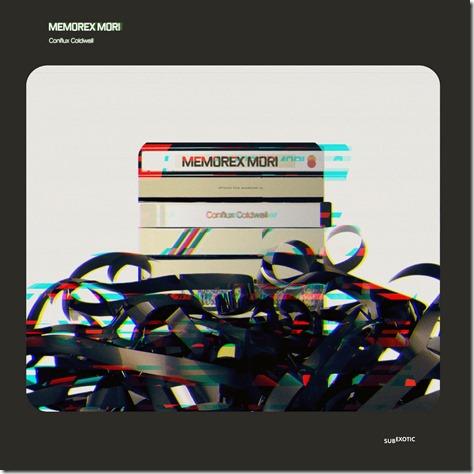
Conflux Coldwell’s latest project is one which plunges deep and direct into nostalgia, and as such resonates with the zeitgeist which has been simmering for a few years now. We’ve all seen it: the ersatz recreation of scratchy recordings, crackles and pops of old vinyl and the warps and snow of videotapes. And now everyone’s back to buying vinyl and audiotapes… how long before the VHS renaissance? And at the same time, it raises the question of ‘the archive’, of the (im)permanence of documents. We have always believed that documenting and recording events was the route to immortality, and that the advent of modern media would solidify our legacy in the same way as The Anglo-Saxon Chronicle or The Bayeux Tapestry. It was not so long ago that the Internet was supposed to be an eternal archive of everything ever. Only now, it’s apparent that modern technology is as ephemeral and disposable as our very culture, and that online archives vanish the moment their owners stop paying for the domain.

Memorex Mori is an unusually authentic work, born out of an excavation of -personal archives, as Coldwell explains: ‘Last year I found a dusty box of old unlabelled VHS tapes at my parent’s house, including some early work of my own I’d long forgotten about. Unfortunately the tapes were all in very poor condition and I only managed to recover some of the material. Despite the bad quality I decided to sample the videos anyway and make something new out of the various noisy remnants – the final result of that extended process is Memorex Mori.

Coldwell himself isn’t outside the frame of nostalgia with this ambitious project, either, as he continues: ‘VHS was the medium of my childhood in the 80s and 90s, and was still routinely used for budget productions by the time I started making films and music of my own. Looking through the old tapes made me realise the ultimate fragility of all our recordings and the memories they hold. These analogue tapes only have an estimated lifespan of 25 years, and this artificial life is only granted to the videos we actually decide to keep. The vast majority ended up in landfill when the world went digital – what was lost in the waste? In contrast, we might think that current digitisation and cloud storage allows our memories to live forever, but they are still fallible. The major difference is that with digital archives this mortality is hidden – with analogue media we can potentially witness that death happening in slow motion before our eyes.’

It’s an interesting and valid distinction between analogue and digital: growing up in the 80s and 90s myself, I remember being told not to vacuum clean near any video tapes, and so on, while toward the turn of the millennium the emerging digital future was presented as eternal. But now, it’s clear, that there is no such thing as permanence, or the eternal, and that any archive is as fragile as life itself.

And so, Memorex Mori is a multi-faceted, multi-dimensional, multi-media project, where past, present, and future collide, and postmodernism melts into the as-yet-to-be-defined present. It’s a film and it’s a soundtrack, and both can be appreciated independently of one another, as intended.

Coldwell expands on his notes, explaining ‘This project continues a lineage started by William Basinski and The Caretaker, exploring themes of memory loss, entropy and spectrality, through the sampling of destroyed recordings. But Memorex Mori extends this idea into the visual realm, presenting a feature-length music video alongside the music. As well as sampling early Conflux works from tape (Traveller, Glitch, Machinedance and Trainboy) various other unknown recordings were appropriated from the video box – all sorts of forgotten cultural detritus including my Mum’s 30 year old Open University programmes. A few modest pieces of equipment were used to add extra sonic layers – including the Korg NTS-1 and a home-made Marantz tape delay – then all bounced back to VHS.’

The video is a disorientating barrage of film clips, from train journeys to clouds, via small aircraft lifting off and droplets of water rippling out. Everything flickers and fades , glitches and warps. At times, we’re simply submerged in a snow of magnetic degradation and ruination, and it’s not always easy to discern what we’re actually being shown. But, often devoid of context, these detached, fragmentary scenes take on a sense of significance. The effect is an uncanny emotional response, a pull in the lower intestine as something unexplained and inexplicable evokes something within. There’s a comparison to be drawn with Memorex Mori and the experimental works created by William Burroughs and Brion Gysin in the late 50s and early 60s – in the soundtrack, the tape experiments, perhaps, but more so the whole audiovisual project, which calls to mind films such as Towers Open Fire, produced in the mid-60s with Anthony Balch, and a step closer to what Gysin’s quest to realise ‘a derangement of the senses’.

The soundtrack is the perfect soundtrack to this endlessly unsettling sequence, an eternally shifting sonic drift that’s at times noisy, even harsh, while at other altogether more ambient. Like the visuals, it draws you in, but it also stands independently as a purely sonic experience, and it’s also a smooth, expansive scene for reflection, and perhaps it’s to be expected that the soundtrack has greater impact when experienced in isolation, without the distraction of the visuals.

As a whole, or in part, Memorex Mori is quite an unsettling experience: visually compelling, and aurally challenging. It demonstrates the fragility of any documentation, any archive, and of life itself. Nothing lasts forever. And it speaks of how, as memory fades, so the documents diminish in value: moments captured in moving or still images which seem so essential at the time lose meaning over time: where was that picture taken? What was I doing there? Why did I think that would be worth filming / photographing? Who even is that?

I feel a weight descend as I reflect on all of these things while immersing myself in Memorex Mori. I can’t even begin to imagine the experience of assembling it. Then again, I can’t really assimilate the experience of other viewers or listeners, either. What’s intensely personal to an artist is likely to hit a spot with the audience, but for each, the reception will differ, based on their own experiences, their own immediate headspace.

But, regardless of individual interpretation, the vast ambition of Memorex Mori is matched by its accomplishment. THIS is a document. A powerful work, which will stay with you long after the silence descends.

AA
a2043088135_10