Archive for the ‘Albums’ Category

Dret Skivor – 4th October 2024

Christopher Niisnibor

Unlike Record Store Day, which has been hijacked by major labels and swamped with overpriced reissues to the point that it no longer benefits any of those it was initially intended to, Bandcamp Friday is something I wholly endorse.

Bandcamp’s model is rather different from other streaming services in that it provides a platform whereby people can pay to actually own the music, be it in digital or physical format. While purchase is available through some – Apple, Amazon – rates for artists aren’t great. Many people have ditched physical media form reasons of convenience and space, but the trouble with streaming – and this doesn’t only apply to music – is that it can be removed from a platform at zero notice, which is irksome when you’re halfway through a series or really want to watch a particular movie… or want to listen to an album. The Internet is not the infinite, permanent archive of everything ever we were promised it would be around twenty-five years ago, and the reason for this can essentially be summarised in one word: capitalism.

Maintaining a site costs. Everything costs. The Internet and – especially streaming services – do not exist for the benefit of either artists or end users, at least not anymore. But here, Bandcamp Friday represents the best of the Internet, in that all proceeds go to artists. And artists deserve, and need, to be paid. Because we need art. It may be massively underappreciated and taken for granted as wallpaper, but humanity needs creative art to survive. It does not need capitalism: if anything, capitalism is strangling culture and, moreover, killing the planet. Art predates not only capitalism, but houses, farming, even language.

This does mean that every Bandcamp Friday finds my inbox even more swamped than usual with notifications of new releases, and the run-up means a significant influx of emails for review of simply notification, and it can be quite overwhelming.

It’s with almost clockwork consistency that Swedish obscure noise label Dret Skivor drop a new release on Bandcamp Friday, and this one is no exception, arriving in the form of a collaborative work between the notorious cult noisemaking vehicle that is Legion of Swine and bøe under the portmanteau moniker of BØESWINE.

In classic Dret form, bøeswine offers two longform tracks – ‘bøe’ and ‘swine’ – each of which runs for approximately twenty minutes and occupies a side of the ultra-limited cassette release. And so it is that ‘bøe’ groans and drones and groans and clanks and clatters out an amorphous mess of noise with sparks of tinnitus-inducing treble cutting through the endless hum and scratching distortion for a full nineteen and a half uncomfortable minutes. It’s pretty harsh, and darkly uncomfortable. More than harsh noise, this level of churning grey noise is hard on the ear: it’s like standing next to a cement mixer at the edge of a demolition site as every window is smashed by a wrecking ball. Once ‘bøe’ has assaulted the eardrums and left you in a state of physical and psychological ruination – and it will, it’s that dingy, grindy, mangled, abrasive – we come to the twenty-one-and-a-half-minute ‘swine’, another monster epic driven by dark noise, strains of feedback and fizzing electronics, and this time it’s amped up to the power of eleven to render THE nastiest noise.

It’s a relentless force, as harsh as an atomic detonation in your back yard. So much noise, and so relentless. And I love it. Yes, it’s uncomfortable, unyielding, positively painful. But musical experiences are simply entertainment of they don’t test. This is like the ultimate test, a work of the darkest, most fucked-up, unstructured noise. Any comparisons to Throbbing Gristle are entirely valid. Bøeswine is equally punishing and magnificent.

AA

boeswine for bandcamp

Ipecac Recordings – 4th October 2024

Christopher Nosnibor

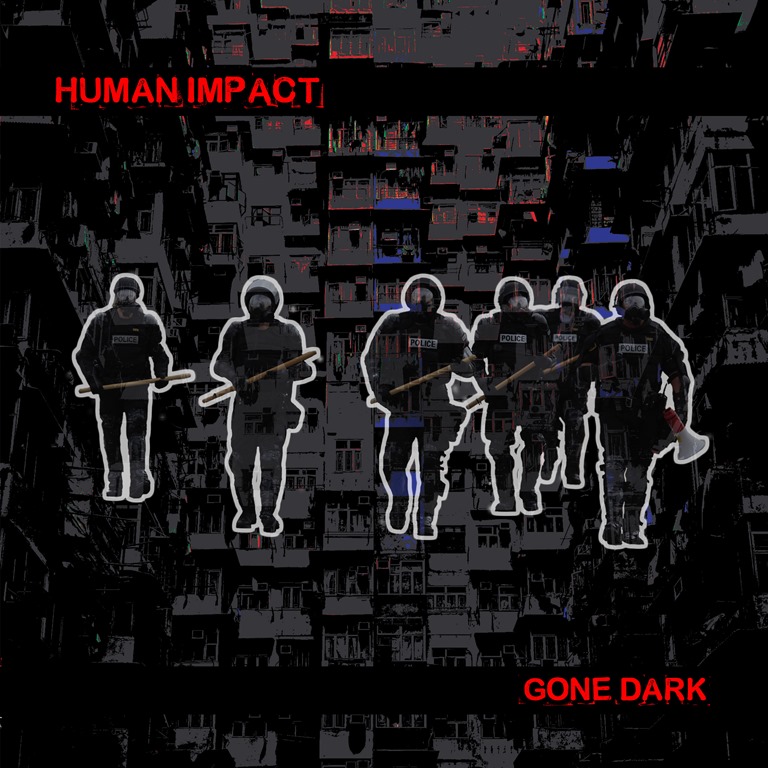
The band’s very name carries considerable weight. It’s a phrase oft-used, but rarely really assessed and processed. But the band’s comments around their second album place it front and centre: “This is more of a statement about how things are going in the world right now.” says Spencer. “Things were pretty shitty before. I think things may actually have gotten a little bit worse.”

In the last week, here in the north of England, it’s rained. A lot. Here in York, the river breached its banks for the first time this autumn. Last year, this didn’t happen until sometime in October, although – despite multi-million-pound work being done on flood defences – vast swathes of land lay under water for the best part of six months thereafter. It’s also rained a lot in the south, too, with flash flooding. Yesterday, I turned on the news to see images from the US, which showed trucks being driven on rapid currents of rivers which hours earlier had been roads. And yet still people shrug and say ‘meh, it’s cyclical, we’ve had ice ages, we’ve had climate change before, I don’t see any evidence it’s man-made. Besides, we’ve just had the coldest summer in years, how’s that global warming, eh?’ When it comes to climate denial, denial is the operative word. Sure, climate is ever-changing, but not at this rate.

But as a species, we seem hell-bent on self-destruction: seeing things unfold in real time in the Middle East is terrifying, the mounting death toll in Gaza – or what’s left of it – a horror almost beyond words, while Russia continually alludes to a nuclear response. But this isn’t even a return to the Cold War climate, because a very hot war rages all the while, with no sign of abatement or a peaceful resolution.

So, have things ‘gotten a little bit worse?’ It would seem so. And the thing about history is that it happens – or is made – fast, and sometimes faster than others. As I type, I’m having to turn the volume up to drown the sound of fighter jets running night exercises – I like to hope they’re exercises – nearby and over the city. RAF Eurofighters – currently, it would seem there are seven running circuits around the area – and occasionally US planes, too, have been evermore present of late, and it’s hard not to feel nervous.

Turning up the volume on Gone Dark at least is no chore: it’s an album which needs to be heard at the kind of level it was played, the kind of level you know it would be played live. Seeing Unsane at The Brudenell in Leeds back in 2011 will forever be a standout for me. Nothing fancy or showy: they were simply relentless and brutal. And so it is that Human Impact bring the best of their component parts, consisting as they do of Unsane frontman Chris Spencer and Cop Shoot Cop squallmaker Jim Coleman, with bassist Eric Cooper (Made Out of Babies, Bad Powers) and drummer Jon Syverson (Daughters). These are four guys who know how to make the most punishing noise. And if noise has colour, the colour of Human Impact is a stark, steely grey, with the texture of sheet metal.

As the accompanying notes explain, ‘Gone Dark‘s songs emerge from a cinematic miasma of dark ambience, processed field recordings, street rants and industrial grinding. Like embers flickering from an inhospitable wasteland, Gone Dark‘s nine tracks provide paths away from total annihilation, with Spencer barking “Wake up or live on your knees” (‘Collapse’); “Now is the time to resist” (‘Destroy to Rebuild’) and “Follow the sound … the future is now” (‘Corrupted’)
“It’s just sort of the modern state of being, to me. From really a human perspective in terms of us being part of the masses, all of us together as one giant conglomerate of production and taxpayer bullshit,” says Spencer. “I make a conscious effort to try to think of things in terms of ‘we’ and ‘us’ and what’s happening to us as a whole instead of just my stupid problems.”

Understanding this context is integral to appreciating Gone Dark. There’s a pervading weight to every song, and the mood is of rage – the kind of rage that comes from a feeling of powerlessness. ‘Collapse’ sets the bleak, nihilistic tone as it hammers away, the guitar and bass meshing together to form a dense sonic sludge. It’s abrasive, but suffocating, conveying a sense of desperate confinement. Anger, anguish, anxiety. Gone Dark positively burns with all three.

It would be wrong to bemoan any lack of variety across the album’s nine punishing assaults: Gone Dark reflects life in the real world. There’s no respite, only relentless, brutal onslaught, kicking after kicking. You don’t get to catch your breath or mellow with some nice time out: no, you just have to endure the blows and do whatever it takes to stay afloat, and you stagger, punch-drunk, swaying on your feet wondering how much more you can actually take. It’s not a real question, since there is no option to do anything but plough on. Life is harsh, and this is a harsh album – not in the sense of harsh noise, but in its unyielding density. Gone Dark is the sonic equivalent of a good kicking. It’s so raw, so harrowing, and so intense it hurts.

AA

114481

2nd October 2024

Christopher Nosnibor

Christ only knows what this is intended to be a soundtrack to, but the debut long-player from chaotic Welsh post-punky alternative rock act Baby Schillaci could be loosely considered a concept album. The soundtrack to a schizophrenic episode, perhaps?

Opening with ‘## TITLE SEQUENCE ##’ and with ‘## INTERVAL ##’ breaking the sequence midway through, there’s a semblance of a structure here, and while some of the titles do hint at a narrative art in keeping with ‘real’ soundtracks – ‘DISINTEGRATING SMALL TALK’ and ‘JACKIE’S GIRL’, for example, elsewhere there just seems to be more of an interest in brutality and mortality – consider ‘BLUNT FORCE TRAUMA’ and the crazed, explosive single cut ‘THE FLATLINERS’.

The aforementioned ‘title sequence’ brings tension – a stark piano and brooding bass builds and ultimately yields to a surge of expansive abstract dissonance, but with a widescreen, cinematic feel, before ‘ULTRA HD HAPPY FACE’ blasts in with some thick, scuzzy guitars and there’s a strong early 90s alternative vibe to it. But as much as it’s Jacob’s Mouse and the Jesus Lizard, it’s got that roaring grunge revival thing going on, and calls to mind Pulled Apart by Horses’ debut album. ‘tHe AnTi suNCreaM LEaGUe’ comes on like Therapy? in collaboration with Sleaford Mods with a bit of Rage Against the Machine going on, which on paper shouldn’t work, but it’s an absolute riot: furious overdriven guitars nagging at a cyclical riff paired with a relentless, vitriolic spoken word rant hits the mark, and again reminds us – at least those of us who were there – just how eclectic the 90s alternative scene was. This was the decade when shit got weird, in a good way. It was a time which will be forever synonymous with grunge and Britpop, but it also gave us the previously unthinkable musical hybrid of the Judgement Night soundtrack, and a whole host of less-than-obvious crossovers. Pop Will Eat Itself were a one-band hybrid of infinite proportions, while Faith No More were more contained but no less genre-busting, and there was just so much weird shit happening the only question was as to what’s going to happen next. Sadly, the answer was Oasis, and while interesting stuff was still happening on the fringes, Oasis simultaneously killed indie and alternative and musical innovation with their turgid pub-rock monopoly.

Built around a thick, low-slung, grinding bass, ‘DISINTEGRATING SMALL TALK’ has something of the industrial roar of Filter about it, but then again, some of the stoner swagger of Queens of the Stone Age. These guys don’t limit themselves when it comes to their songwriting. Genre? Pfft. Look, if it sounds good and they get to kick out some dirty noise, it’s good. And this IS good.

‘THE FLATLINERS’ starts out like early Interpol before flooring the pedal and accelerating in a deluge of guitar and frenetic drumming, and it’s like at least three songs in one, and it’s this crazed shift from one thing to another which defines The Soundtrack. Closer ‘BLUNT FORCE TRAUMA’ is a sort of motoric workout where The Fall and The Black Angels collide, but the sound is solid and it builds to a mighty climax.

The thing The Soundtrack needs now is the accompanying movie… I’ve no idea what it would look like, but it would be wild!

AA

Baby Schillaci - The Soundtrack Artwork BIG

Reptilian Records – 4th October 2024

Christopher Nosnibor

It’s remarkable how quickly the future can become past. Take the Wikipedia entry for God Bullies for example. It closes with the statement ‘God Bullies are slotted to record a new album at Steve Albini’s Electrical Audio this April set for a September 2024 release on Reptilian Records followed by touring In the US and Europe.’

The album recording happened, and here it is, but Steve Albini isn’t – just a month after the recording of this album, and the week of the release of the latest – and now last – Shellac album. Life has a habit of throwing unpleasant surprises – something I have first-hand experience of in the most devastating of ways.

It’s been quite the year for long-dormant bands crashing in with new releases, and certainly not only Shellac – the Jesus Lizard recently dropped their first album in twenty-six years, which is staggering. And it’s a belter, as, indeed, was Shellac’s To All Trains. God Bullies certainly sit in the same bracket, as purveyors of noise rock in the 90s and aligned to classic labels Amphetamine Reptile and Alternative Tentacles. Active between 1986 and 1995, they reconvened in 2010 for the Amphetamine Reptile Records’ 25th Anniversary concert.

But that was fourteen years ago, and it would remiss to ignore the fact as part of a balanced review that there’s some dispute over this release, because, as we know, bands have a habit of falling out, and it’s widely documented how there have simultaneously been two versions of Fleetwood Mac, of Hawkwind, among others.

Bassist Mike Corso, who runs the God Bullies website explains that ‘Mike Hard and his long time band “Thrall” have chosen to illegally co-opt the God Bullies Trademark in an effort exploit its legacy in hopes of fulfilling their delusional dreams of hitting it big. And the truly sick fact is that on numerous occasions they’ve held out that they are doing it in the name and spirit of our fallen comrade, David Livingstone… Mike Hard and his band Thrall have recently recorded a CD and plan on fraudulently release it calling it the God Bullies. A little back story here. The fact of the matter is that in 2002 the actual God Bullies (Adam Berg drums, Mike Corso Bass, Mike Hard Singer, David Livingstone guitar) have had a 10 song CD with all the drum and bass tracks recorded. All that was needed was for Livingstone and Hard to do guitar and vocal tracks to complete the project. You will see numerous times mentioned about completing that album. While finishing that album was mentioned many times, completing the God Bullies album was evidently never a top priority for either Livingstone or Hard.’

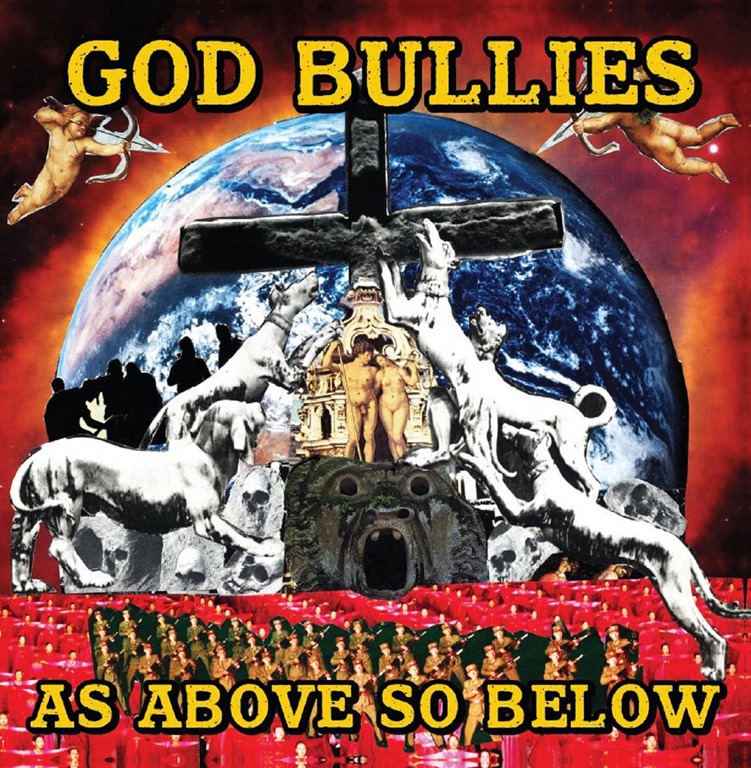
And so it seems we have two different perspectives on the ‘real’ God Bullies. It’s true that this is not the album the band recorded the bones of in 2002 that never made it over the finish line. But As Above, So Below certainly does feature vocalist and founder member Mike Hard, but not bassist and founder member Mike Corso. And guitarist David Livingstone sadly died in February of last year, an event which was always going to make any subsequent activity… not quite the same. Corso says it’s not a God Bullies album… but it’s here as a God Bullies album, and, well, it sounds like one. That is to say, it’s gnarly, mangled dirty noise-rock that is quintessentially of the sound of Amphetamine Reptile and Touch ‘n’ Go in the 90s, which saw God Bullies sitting alongside a host of bands including the Jesus Lizard, Tar, Guzzard and countless others who have largely been forgotten by the majority.

Sidestepping any interpersonal wranglings between (former) band members, on its own merits, As Above, So Below is a cracker. It’s a raging, roaring tempest of noise, blurred, slurred, dingy, dirty, and vaguely demented and delirious. The riffs rage and tear savagely, and As Above, So Below is a brutal, scuzzy blast of raucous noise and rabid, manic vocals.

‘Help’ is a twisted classic and finds Hard yelling and hollering like a man possessed, while ‘You Never Know’ is more brooding and overtly contemporary goth. ‘Love’ sounds like the kind of love that will likely end in strangulation, with a hookline of ‘You call this love?’ hollered over a larynx-vibrating bass snarl. In fact, everything snarls and grinds on every track.

No doubt fans will be riotously divided on this release, and that’s understandable. But objectively, As Above, So Below works as a classic example of the ferocity of God Bullies. It may not quite be the comeback album it’s been pitched as, featuring as it does more members of Thrall than it does original God Bullies, and I’ll leave it for the band and fans to fight that one out. Sidestepping all of the stuff, As Above, So Below is a brawling dingy blast of noise and it kicks some serious ass.

AA

a3399313706_10

Discus Music – 27th September 2024

Christopher Nosnibor

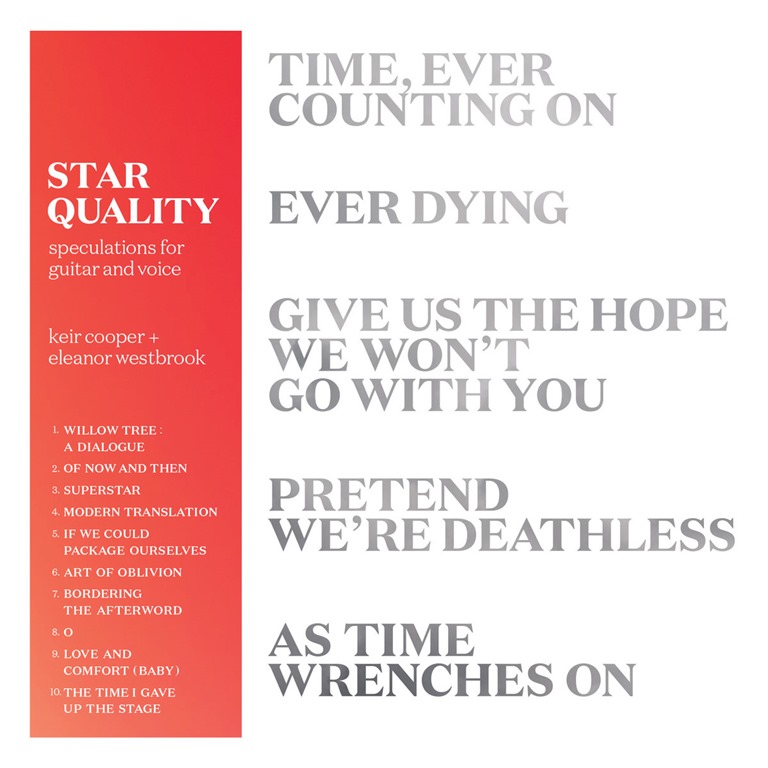
One way to tell an avant-garde musical work from its title alone is when the title provides a quite precise statement relating to its compositional nature. And so it is that this collaborative set of songs by Keir Cooper and Eleanor Westbrook are structured around guitar and voice.

‘Willow Tree – A Dialogue’ takes the interesting form of – perhaps not surprisingly – a dialogue of sorts, in which Westbrook’s adopts two contrasting modes of delivery, with a spectacular operatic aria juxtaposed with a spoken-word interrogation as a counterpoint. The effect is closer to a simultaneous internal monologue running across the song itself rather than a dialogue in the conventional sense. Meanwhile, the delicately picked neoclassical guitar is subject to interruption by clunks and distortion and occasional whirs and bleeps and the operatic vocal strays off kilter and the dream which drifted in twists and flickers with darker shades: not pronounced enough to be truly nightmarish, but unsettling.

The pair continue to explore the contrasts of melody and disharmony as Westbrook squeaks, squawks, trills, and purrs an infinite array of vocal gymnastics and Cooper’s guitar work, which chimes and treads delicately from folk to flamenco via classical streams, stamps on its own beauty with sudden and unexpected stops and stutters and forays into wrongness with stray notes and dissonance.

‘Superstar’ strays into the space which soundtracks a sense of derangement, the territory where things make no sense, and that place of incomprehension instils an unsettling confusion that borders on anxiety. ‘Modern Translation’ follows a similar trajectory: it’s a piece of magical neoclassical chamber music that’s twisted as if performed in an auditory hall of mirrors. Everything is wrong: something that should be soothing and beautiful is warped in a that it becomes unheimlich, eerie.

It’s hard to locate a touchstone or reference point for this: perhaps there are elements of later Scott Walker present, blended with hints of The Ex with its more avant-jazz leanings. One can only muse as to how they came to create this work: despite its clear foundations in the realms of classical and opera, Star Quality ventures so far from this path that it often bears little resemblance to any given style. The pieces evidently do have quite detailed and complex structures, as there’s nothing haphazard or uncoordinated about the way the two play together, but it’s impossible to decipher them from an outside perspective.

There’s a grand yet ethereal theatricality to ‘Bordering the Afterworld’, and ‘O’ soars and swoops and squeaks and whoops its way theatrically – and somewhat crazily – across some sprightly, if vaguely gothic-sounding guitar picking that suddenly, from nowhere, begins to buzz and thump. ‘The Time I Gave Up the Stage’ draws the curtain on an incredibly curious and as far off the wall as is imaginable.

Star Quality clearly has theatrical inspirations and aspirations, but shows two artists who are more interested in exploring their outer limits than taking the limelight in a mainstream setting – and for that, I applaud them.

AA

a1210959813_10

Kalamine Records – 14th September 2024

Christopher Nosnibor

Whether it be solo works ranging from ambience to classical, or collaborations running the full gamut in the electronic field, Deborah Fialkiewicz’s output in recent years has been nothing short of prodigious, and spanning as many forms as her work does, there is never a dull moment. This latest work, under the POOCH moniker, in collaboration with Dan Dolby (Bassist in Mastiff, Noisemonger in Catafalque and Sulphur Nurse) is no exception. It offers a set of eight dark, stark electronic compositions which owe a considerable debt to early industrial and electronic works, bringing a combination of dark atmospherics and nagging beats. Although entirely instrumental, we’re in the kind of territory occupied by the likes of Cabaret Voltaire, Test Dept, and Chris and Cosey’s Trance.

As an opener, ‘Hades’ is as dark and subterranean as the title would suggest, a bleak, murky pulsation squelching around and leading the listener down, down, down. It serves as something of a primer, a mood-setter, but doesn’t fully prepare one for the altogether steelier, starker, more rhythmic and percussion-driven pieces which follow.

The title track pairs a dense, dirty bass with clattering, metallic percussion which assails the mind like a concerted assault with the contents of a cutlery drawer, and it bashes away relentlessly for four and a half minutes straight. On paper, it might not sound much, but as an experience, it’s pretty hard-hitting. Built around short, clipped repetitions, it creates a suffocatingly claustrophobic aural space. The word ‘pooch’ evokes a cuddly companion, something friendly, but there’s nothing cuddly or friendly about this, a listening experience closer to being whipped with a chain than fussing a canine buddy.

Each composition bears a one-word title (‘GameBoy’ being a forced blend-word (it doesn’t really qualify as a portmanteau) in order to maintain the theme. Funtime bit-tunes are bent with glitches and warping drifts of darkness here, before things begin to slide further into beat-orientated minimal techno.

The steady beat which dominates and defined the spartan ‘Quazar’ is almost soporific: the track assumes something of a background position as it clicks along nonchalantly, with a low, unshifting drone hovering just around the level of register. Nothing happens. It doesn’t need to. And while the thunder which heralds the arrival of ‘Midnite’ might initially serve as an alert, the piece soon melts into abstraction. The final track, ‘Stimpy’ may be missing Ren, but hits hard, built around a strong, thudding beat and looped electronic undulations.

For all of its cuddly connotations, Pooch is a pretty dark album. To my mind – and it could be to my mind alone – music which is heavily beat-orientated and instrumental feels impersonal somehow, and I find it somewhat disorientating, disconnecting, alien. And so it is that the pounding beats of Pooch leave me feeling somewhat dazed, detached, even dizzy. But it’s impossible to deny the detail, the quality of the execution, or the fact that this is an outstanding work.

AA

cover

Christopher Nosnibor

Well, this one landed unexpectedly. It’s a welcome arrival, although taking a second hit of material from Uniform’s latest and quite possibly most brutal and challenging album to date does feel like an exercise in Masochism. It’s also a superb example of alternative marketing, landing this alternative version of American Standard less than a month after the album’s release, on digital and tape formats.

Context, from Uniform’s bandcamp: ‘A companion piece to American Standard, Nightmare City is essentially the same record devoid of the rock elements. By removing the presence of traditional instruments, the synths, lap steel, and pianos that sit beneath the surface of the proper album are allowed room to breathe and speak for themselves. The end result straddles the worlds of Basic Channel influenced dub, Tangerine Dream inspired soundscapes, and brutal death industrial.’

It’s a bold move, befitting of Uniform, a band who have relentlessly pushed themselves to explore ever-wider horizons, switching from their original drum-machine driven raw industrial noise to adopting live drumming, undertaking a number of collaborative projects with the likes of The Body and Boris, and especially befitting of this album, where Michael Berdan tore away the last vestiges of artistic separation to rip off his skin and purge the rawest emotions stemming from his dealing with Bulimia.

Nightmare City is another step towards stripping away the layers and presenting the naked self. ‘The bedrock of American Standard stands upon the Nightmare City. It’s not the happiest of all places, but understanding the landscape yields its own rewards,’ they write alongside the Bandcamp release.

One thing about being in a band – even if there are only two of you – is that there’s somewhere to hide, somewhere to transfer the focus. Hell, even performing solo, if there’s noise, there’s something take shelter behind. I’ve always thought that solo acoustic and spoken word performers were the bravest: there is simply no place to hide, and nothing to blur or mask any fuck-ups. Nightmare City isn’t quite solo acoustic, but it is seriously minimal.

Removing the ‘rock’ elements to reveal the bare bones of the songs shows the inner workings of Uniform, and they’re unexpected, to say the least. One would expect them to build up from the elements of drums bass, guitar. But this leads us on a different journey.

Punishing riffs and pulverising percussion, rather than supple layers and swirling instrumental ambience. As the band put it, ‘Although the finished product stands as a culmination of cohesive sounds, the individual threads that weave songs together often provide necessary nuance and exposition all of their own. Each isolated stem might be part of a greater story, but the whole cannot stand as intended without a complex series of seemingly disparate elements.’

Hearing the swirl of these ‘seemingly disparate elements’ feels like hearing the ghost in the machine, a haunting, eerie, ethereal echo, which barely seems to correspond with the structured framework of the final versions of the songs. One might almost consider this a palimpsest, an album beneath the album, submerged by process of layering and erasure. The tracks are – and I shouldn’t be surprised, but still I find I am – completely unrecognisable. Instead of being the punishing beast the album version is, ‘American Standard’ sounds more like one of the epic instrumental segments of recent SWANS works. There’s a muffled thud like a heartbeat on ‘This is Not a Prayer’ which possesses something of a womb-like quality, while ‘Clemency’ feels like a moment caught between heaven and hell, soundtracking the struggle of being pulled between the two in some purgatorial space as ceremonial drums hammer out a doomy passageway and spluttering vocals spew raw anguish.

In common with American Standard is the darkness which looms large, the tension, the suffocating gloom, the discomfort which dominates, and hearing this spectral echo of the album brings a fresh understanding and appreciation of the process and the depth of layering and everything that goes into their material. ‘Permanent Embrace’, too, sounds both like an ascent to the light and a sepulchral sigh, a funereal scene in which the grave suddenly opens like a sinkhole sucking everything down into the bowels of the earth.

Nightmare City is appropriately titled: it is a truly hellish, tortuous listening experience – but at the same time quite remarkable. Uniform, in their quest to do something different, to push themselves and in refusing to conform to genre conventions, continually find new ways to articulate the pain of the human condition.

AA

a1449843444_10

24th May 2024

Christopher Nosnibor

Welcome… to The Royal Ritual! I simply felt the urge to open with that. It felt necessary, if only to me. But if you can’t please yourself…

In my case it’s something of a belated welcome, having been aware of the act and its founder, David Lawrie for quite some time, but having only recently come around to the actual music, with my introduction being their recent show in York. There’s something to be said for hearing a band live first, without knowing the songs, rather than the other way around: if they can grab you in that twenty minutes or half an hour, when you’re not necessarily primed to absorb songs and details, then there’s a strong chance they’ve won a fan, provided the recordings are up to scratch.

Where The Royal Ritual really stand out live is with the use of live guitar, which brings the benefit of not only an immediacy and human aspect to the predominantly digital music, but an additional body on stage, which creates not only a visual balance but a greater sense of movement.

Recorded, these elements are less essential, and the songs here are clearly the product of extreme focus and a meticulous attention to detail. When I wrote in my review of the York show that The Royal Ritual sound ‘produced’, I observed that ‘their approach to production owes more to the methods of Trent Reznor as pioneered in the early 90s on Broken and The Downward Spiral, balancing gritty live guitars with synths and fucked-up distortion and harnessing their tempestuousness in a way that creates a balanced yet abrasive sound.’ And so it is on record, also.

Pleasure Hides Your Needs is The Royal Ritual’s second full-length release, following MARTYRS in 2022. A lot has happened, and much has changed since then, and the project, born in lockdown, has evolved significantly – as have many of us. Life is different now: that’s a fact.

We learn that ‘Pleasure Hides Your Needs sees David contemplate his own life and experiences, adopting a distinctive, more personal tone than the expansive and outgoing approach of MARTYRS: “Pleasure Hides Your Needs is much more introspective when compared to the social and political commentary of MARTYRS,” says David. “For me, it is about the closing of three distinct chapters of my life. Finding the common threads through each of those chapters in order to represent them sonically, and in a consistent way, was a really interesting challenge – if at times quite emotionally exhausting.”

Life is exhausting, in every way, but there’s a tense energy to Pleasure Hides Your Needs. It builds from the instrumental intro piece, ‘Shadow Self’, where crashing waves erupt from soft ripples, dark rumbles and inaudible muttering contrast with chimes, before ‘Vantage Point’ opens a broad sonic vista paired with a solid kick drum beat. Just as it’s leaning into the proggier end of alternative rock, a gritty guitar kicks in and the mood immediately turns darker.

‘Fifteen 14’ lands as an unexpectedly pop tune, with a solid chorus, which softens the arrival of the album’s nine-and-a-half-minute centrepiece, ‘Sinner Gambler Fugitive’, which really does run the gamut for range, a sonic and emotional rollercoaster. It’s ‘Modes of Violence; that goes full industrial, with a metallic smash of a snare and snarling bass providing the backdrop or Lawrie’s wrought vocal as he wrestles with a veritable tempest of emotion, before he hollows himself on the bleak, minimal title track.

The album as a whole is more geared toward tension than release, always simmering but rarely bursting the floodgates. Muted isn’t the word: it’s more a case of clenching tightly to maintain a grip of control for fear of what may erupt otherwise.

Pleasure Hides Your Needs is dark and exploratory, but still eminently listenable. As The Royal Ritual evolves its sounds and expands its horizons, there remains much potential to explore myriad paths in the future, and recent touring will likely serve to open new avenues of exploration.

AA

a0879761406_10

Room40 – 20th September 2024

Christopher Nosnibor

Autumn is something of a difficult season to assimilate. As much as it can be filled with beautiful shades as the leaves turn and the sunlight takes on a softer hue, there can often be a hint of melancholy in the cooler air and darker evenings. Some may yearn for the heat of summer, but more than that is the reminder that we’re on a transition toward winter, and the passing of another year. The passing of time is something which creeps up on all of us with an inexorable inevitability, and while you’re busy living life – or, likely, battling just to keep on going through it – time slips by, and your twenties slide into your thirties slide into your forties… people, places, jobs all come and go. Go where? And what have you got to show for it?

As one of the most dismal summers in a long time – not to mention the coldest in six years – draws a close to the wettest eighteen months or so since records began here in the UK, where it’s felt like eighteen months of October, the arrival of the 15th Anniversary Edition of A Colour For Autumn is nothing if not timely. Anniversaries inevitably give pause for thought, inspiring reflecting on the time of the actual event, and the intervening period. And with in his reflections on A Colour For Autumn, and its context, Lawrence English makes some powerful observations:

‘Climate change, as a lived experience and not merely as a ‘possibility’, suddenly came into focus with reports flooding in about the climatic dynamics since the turn of the century and events like the Black Saturday fires here in Australia. It felt like, and continues to feel like, seasonality as some predictable measure of our world is relegated to the ‘before’ times. This record is not about these climatic shifts however, more a recognition of how we have used patterns and predictability to guide us over the centuries and perhaps a realisation that the way forward is not the path we have known historically.

‘Listening back to the record with fresh ears, a process made completely delightful by Stephan Mathieu who has carefully remastered it, I am struck by how minimal some of the structures were. There are moments that strike me as uncharacteristically patient and even generous, allowing one element to hold without interference. I’m grateful to still feel a deep connection to this edition and to the people and places that helped shape it.’

‘Droplet’ seems to start midway through: there is no intro, no fade-in, no slow-build. We find ourselves landing in the midst of a long swell of ethereal sound, a chorus of spectral voices drifting in vapour and carried on clouds. Sometimes, ambience carries something of greater depth than is readily apparent. More than a medium to meditation, a conduit to contemplation, seemingly formless, abstract sound resonates on a subconscious level with and unexpected force. Over the course of almost seven minutes, the track drifts and twists and a squall of dissonance and a whistle of feedback builds in the background.

Just as the pieces merge into one another, so the titles of some of the tracks link together to form phrases, albeit with only vague meanings: ‘The Prelude To’ leads into ‘The Surface of Everything’. Elsewhere, English departs the surface and transports the listener high above the atmosphere in ‘Galaxies of Dust’. You almost feel as if you’re floating, detached from everything, even time, hanging in suspension.

Much of the sound on A Colour For Autumn takes the form of hums and drones, and while gentle and delicate, there’s an ever-present discomfort, something just beyond perception, on the edge of the senses, which unsettles, nags and gnaws. It’s this uncertainty, this element of disquiet, which makes A Colour For Autumn such an enthralling and evocative listening experience.

AA

a2415743988_10

Thanatosis Produktion – 30th August 2024

Christopher Nosnibor

Reconnecting with Microtub via their new album takes me back: a year or two into doing this reviewing thing, I began to find myself with access to a whole array of experimental music the likes of which I never knew existed, as released on labels like Editions Mego and Room40. Revelation is an understatement. It was the opening of the doors to a whole new world – a world where albums would contain a single track of ten to twenty minutes on each side, or otherwise a raft off really short snippets of what sounded like digital code, or… well, anything.

I thought I’d heard it all, having explored Metal Machine Music and picked up a stack of grindcore releases where a 7” EP packed in anything up to a dozen tracks and still had more playoff than a three-minute pop single. Pah. I knew nothing, and my tastes were so, so narrow.

Suddenly, my eyes were opened to new vistas, and I even learned that I didn’t actually hate all things jazz, and I lapped up all of these crazily inventive exploratory releases. Among them, Microtub stood out because I was simply blown away – and also somewhat amused – by the very idea of a microtonal tuba. What even is that? What does it look like, and who came up with the idea? And how on earth were there three players off this instrument who managed to find one another and come together to form a creative unit?

I still don’t have all of the answers to these questions, but Thin Peaks is the sixth album by Robin Hayward (UK/DE), Peder Simonsen (NO), and Martin Taxt (NO), and it contains five pieces: the four comparatively short compositions, ‘Andersabo’ (parts 1-4), which occupy side A, and the seventeen-minute title track which fills side B.

As ever with such works, the process is both interesting and integral when it comes to appreciating its evolution and final emergence, as well as the timespan from conception to release:

‘Initially developed during an artist residency in Andersabo, Sweden, the two pieces ‘Andersabo’ and ‘Thin Peaks’ underwent several adaptations before being recorded in 2022. The pieces draw on the acoustic phenomena of half-valve combinations, creating distinctive timbres and harmonic spectra based on the unique half-valve signature of each tuba. Whilst ‘Thin Peaks’ hockets between the pitches arising from a single half-valve combination, each of the four movements of ‘Andersabo’ results from a different half-valve combination, sometimes resulting in surprisingly consonant harmonies.’

A fair bit of this sounds quite technical to me, but technical knowledge and ability isn’t essential when it comes to listening – it may help, but I suspect many ‘technical’ musicians would find the way in which they use their extreme technical skills to create sound which doesn’t necessarily confirm to many people’s concept of ‘music’. The pieces on Thin Peaks are droney, often a shade atonal, a little dissonant, and almost completely without structure when compared to either conventionally-shaped rock, pop, etc., or even jazz or classical. There are no crescendos, no hooks, no… no nothing to grab a hold into. It’s a whole other realm when it comes to conceptions of what constitutes music. It isn’t an easy in. Abstraction is simply not part of musical convention or what our brains are generally attenuated to process. But if you can open your ears and enter this other sonic realm, it can be enriching in the most unexpected of ways.

Thin Peaks is intriguing, its sparse arrangements and contrasting tones acting simultaneously like a scarification and soothing of the faculties. Breathe slow, and go with the flow…

AA

THT35 front