Archive for the ‘Albums’ Category

17th March 2025

Christopher Nosnibor

Deborah Fialkiewicz has been busy again, recording and releasing her latest offering in a compressed timeframe. Deborah Fialkiewicz is a low-key and predominantly ambient set, comprising twelve sparse, minimal works which rumble and eddy around the lower reaches of the conscious mind.

There are beats, but they’re way off in the background, as is the rest of everything. The restraint shown on ‘summer mantra’ is impressive: it’s the musical equivalent of holding your breath for five minutes. ‘the lief’ is rather more structured, centred around a descending motif which tinkles and chimes mellifluously, guiding the listener down a delicate path which leads to a murky morass of unsettling sonic experimental in the vein of Throbbing Gristle. The crackling static and muffled, impenetrable verbal mutterings of the ominous title track is exemplary, and it makes for uncomfortable listening. A hovering, quavering, UFO-drone hangs over words which are indecipherable, as if spoken from the other side of a thin wall – but their tone is menacing, and everything about this tense experience feels uncomfortable.

The circular, rippling waves of ‘star lady’ offer some respite, but it still arrives with strong hints of Throbbing Gristle circa Twenty Jazz Funk Greats and Chris and Cosey’s Trace, but also alludes to both Kraftwerk and Tangerine Dream. Thinks take a turn for the darker on the swarming drone of ‘Corpus’, which feels angry, abrasive, serrated edges buzzing attackingly, a thick rippling dominating like a helicopter directly overhead. In the present time, I can’t help but feel twitch and vaguely paranoid hearing this, even as it descends into a lurching, swampy nothing, because ‘bloodchild’ goes full churning assault, an echo-heavy wall of noise that cranks the oscillators this way and that, churning the guts and shredding the brain in a squall of resistor-driven frequency frenzy.

‘norther star’ is particularly mellow, as well as particularly tied to vintage beats and rippling repetitions, a work that’ simultaneously claustrophobic and intense. Synth notes hover and drift like mist before the next relentless, bubbling, groove. ‘widershin; is static, a locked-in ripping of a groove. And then there is the thirteen-minute ‘timeslip’, which marks an unexpected shift towards that domain of screaming electronic noise. The fact I found myself zooning out to the thirteen-minute monster mix of ambience and noise that is ‘timeslip’ is testament to the track’s immense, immersive expansions which massage and distract the mind.

Genetic Radio i.d delves deep into the electronica of the late 70s and early 80s, embracing the points of intersection between ambient and industrial, early Krautrock and BBC Radiophonic Workshop, while at times venturing into the domain of noisemongers like Prurient. It’s a harsh, heavy, extraneous incursion into the quietude of daily living, and it’s a sonically gripping and ultimately strong work which stretches in several direction simultaneously.

AA

AA
a1096582352_10

Exile On Mainstream – 21st March 2025

Christopher Nosnibor

Noisepicker get a pass for a rather lame name by virtue of being absolutely phenomenal purveyors of noise rock, and that they are absolutely phenomenal purveyors of noise rock is a fact, not an opinion.

It’s also a fact that the album’s title, The Earth Will Swallow The Sun, is factually inaccurate. But again, they get a pass, not least of all because without Earth, there would be no Sunn O))) and the whole world of drone metal was born from Earth and the sun, or at least Sunn O))) revolve around that… but I digress. The Earth Will Swallow The Sun marks the return of Noisepicker after a seven-year break following the release of their debut, Peace Off, in 2018, because… life, apparently. This seems to be how it goes. Stuff happens, you get busy dealing with it, and simply doing everyday stuff, like laundry and life admin, and before you know it, shit, five years have evaporated, and that’s half a decade.

‘Do not expect neat, polished, note perfect, carefully constructed sound. Noisepicker are loud and abrasive. They pay homage to the genres which made them fall in love with music in the first place – doom, punk and blues – and bring it all together in a hearty and heavy concoction that is all their own.’, they forewarn, and yes, it’s all true. The Earth Will Swallow The Sun places texture and impact and density over palatability and accessibility. And that’s for the good: the world is engulfed in slick digital mass-produced music, and there seems to be something of a rebellion against it in underground circles, with artists with nothing to lose going all-out to splurge their souls with unapologetically raw output. And this is something that feels relatable, it’s music to connect with, because it’s real, immediate, direct, and without compromise. To listen to something so unfiltered is to feel alive.

The album starts sparse, with strong hints of Mark Lanegan, with Harry Armstrong delivering a heavy-timbred vocal croon that emanates from the chest and crackles in the throat, over a simple guitar strum and some anguished drones, until finally, almost two minutes in, it all kicks in with some big guitars, thudding drums, booming bass. It’s a hint at the potential energy that Noisepicker offer, and if opening an album with a slow-paced dredger of a song seems like an odd choice, it paves the way for some high-octane, high-impact racket, sliding immediately into the darkly chaotic snarl of raging riff-out roar of single cut ‘Chew’, which lurches and lumbers between grunge and metal and heavy psychedelia.

Things only get more intense from hereon in. ‘Tomorrow Lied the Devil’ is built around a solid blues-based boogie, but with everything cranked up to eleven and Armstrong giving it some gravel-throated grit while the guitars chug hard against thunderous percussion. ‘Leave Me the Name’ sees them coming on like Chris Rea not on the road to hell, but dragged up, charred and rotting from the depths of hell, and ‘What Did You Think Was Going to Happen’ is dense, dark, gnarly, menacing and lands like a punch to the gut. The riff is actually a bit Led Zep, but with so much distortion and a vocal that sounds like a death threat, it all takes on a quite different dimension, while ‘The End of Beginning’ is simply a slow but blistering assault. None of this is pretty, and none of this is gentle. All of it is strong, and rabid in its intensity. ‘Start the Flood’ offers some wild bass runs amidst the raving riff-driven mayhem – because we need for there to be more happening here. There’s some rabid raving about supernovas, and then the title track comes on like some deranged stoner rock blitzkrieg that has hints of Melvins and a megadose of daftness. We need that daftness as much as we need the guitar carnage. There’s a smoochy swagger to the blues / jazz-hued ‘Lorraine in Blood’ that’s like Tom Waits narrating a pulpy crime novel, before ‘Lunatics’ brings the album to a more experimental conclusion with its dominant crowd noise backing.

It’s rare for a side-project to stand above the main band, but Armstrong has his fingers in many pies beyond Orange Goblin, and Noisepicker are a rare entity in every way. The Earth Will Swallow The Sun is something else. It’s the sound of a pair of extremely capable musicians really testing themselves, and having fun in the process. It’s fun to listen to, too. Hard, and harrowing at times and in places, but ultimately fun.

AA

AA

420726

20th March 2025

Christopher Nosnibor

And finally, following the single release of ‘The Reflecting Skin’, Mercury’s Antennae deliver their first album in seven years, in the form of Among the Black Trees, the release date set to mark the Spring Equinox. It’s a nice detail which feels pertinent. This last winter has felt particularly grim: not necessary especially cold or even seasonal by historical or conventional standards – but dark, unpleasant, and relentlessly grim – and that’s without even contemplating global events. The Spring Equinox is a specific point of celebration, even elation, perhaps, at which the long, dark nights begin to recede, buds and shoots begin to appear, leaves unfurl, and the first flowers bring colour. The renewal, rebirth, and even a bubbling sense of optimism is palpable, and reminds us that whatever atrocities mankind commit upon the planet and one another, nature has a resilience which transcends all of it.

They describe the album’s nine tracks as ‘existential tales [which] inhabit a ghostly realm of reflection, rebirth and reconciliation, overlaying dense bass, swirling ghostly guitars, and atmospheric electronics, all melding with lustrous and soaring vocal melodies’.

It begins with the glacial synth-led six-minute ‘A Sunless Winter Night’, and it conveys that through the medium of sound as the layers of vocals sweep and soar. It’s vaguely reminiscent of Ultraviolet-era All About Eve, and its slow beats are absorbing and compelling as they clip through the swirling sonic backdrop.

It’s a heavily chorused, reverbed, and otherwise processed guitar which chimes and flutters its way through ‘The Moon Viewing Garden’, a song which is truly beautiful, but also aches with a beautiful sadness, while the six-and-a-half-minute ‘Whispered Among Flowers’ presses the downtempo, atmospheric vibe, with soft washes of chiming, reverb-hazed guitar and wispy synths shaping and shading everything delicately – although it’s the thudding classic goth bass groove that really pins everything together.

As much as the early goth sound emerged from a range of sources, spanning Siouxsie and the Banshees to Bauhaus, and not forgetting The Cure, it’s fair to say that Craig Adam’s bass style and Wayne Hussey’s twelve-string picking on The Sisters of Mercy’s debut album set a definitive template. Among the Black Trees is by no means derivative, but the lineage is evident.

This brings us to the lead single, ‘The Reflecting Skin’: it’s certainly a high mark of the album, but also perfectly representative of its boldly atmospheric intent, and the way it blends the melancholy and the uplifting, perfectly articulating the complexities of emotional and mood-driven highs and lows and the swings that come with what one may describe as ‘seasonal variations’.

While the instrumental ‘PERMIAN’ provides a solid-sounding interlude, ‘As I Lay Hidden (Deer Island)’ offers something quite different, a swashing, dark, Cocteau-Twins influenced slice of dream-pop which also brings with it a folksy twist, and the result is – I’ll say it – epic. And that’s perhaps the ultimate summary of Among the Black Trees as a whole.

As much as many of the songs feel introspective, their expansive nature feel very much outward-looking, as if scanning the horizon for hope, for optimism. It’s something we need to cling to. It can’t all be bad, after all.

To suggest that Among the Black Trees offers light at the end of the tunnel would be misleading. There is no end to the tunnel right now. But Among the Black Trees is a magnificent work, one which is abrim with subtle emotional depth and sound which is truly immense – yes, epic – in scope. It’s an ambitious and expansive album, which offers so much – and delivers on all of it. For the large part, it’s a work that’s understated, but it is, in its own way, quite spectacular.

AA

Mercury_s Antennae promo shot v4

Lavadome Productions – 14th February 2025

Christopher Nosnibor

This is a release that’s certainly been a long time in coming: twelve years, in fact. Time flies when… life happens. Chaos Inception tore their way through two albums and then… they stopped. But now the Brazilian makers of supremely full-on black / death metal are making their return with eleven cuts of  brutal, two-hundred-mile-per-hour, gnarly, grunty metal, charged with the most relentless riffs and no apologies.

Sometimes, words feel somewhat futile in the face of such a monster attack. As you find yourself gasping for breath and your heart racing – because music can be so much more than something you listen to, and can be something that you feel, and even if death metal isn’t something you’re drawn to, there’s something to appreciate in the blistering force of a release like this.

Vengeance Evangel is everything they promise when they write that ‘The music channels an intensity that transcends mere aggression, evoking a spirit of triumph from within its seemingly chaotic energy.’ The energy does, indeed, seem chaotic: every track presents a maelstrom of churning guitars, blistering blastbeats, double-pedal bass drum attack, raw-to-the-core – but making music this frenetic also requires immense discipline and technical ability, and this is something that perhaps escapes the casual listener, or the non-listener who skips it and dismisses it as just so much frenzied metal noise.

The intensity of the sonic assault is matched by the intensity of focus in the performance on Vengeance Evangel. The solo work on ‘Falsificator’ is absolutely wild, a complete fretboard frenzy, swerving between a blanket of rapidfire notes and virtuoso mania, crazed tapping and squealy notes all over, while the drumming is nothing less than a raging tempest that goes way beyond timekeeping and hits a different platform of exploding, beat-heavy attack.

They slow things considerably on the slugging, chugging, ‘La Niebla en el Cementerio Etrusco’, but while the chords are low and slow the percussion blasts away at twice the speed, and the contrast alone is utterly brain-melting, and that’s before you get to the gut-punching guitar and vocals dredged from the pits of hell.

The title track is perhaps one of the weakest, by virtue of its predictability, being rather death-by-numbers – or perhaps it’s simply because of the strength of the tracks it finds itself in company with.

The jolting explosion of ‘Ultima Exitium’ is fast and furious, and it feels as if they crank everything up a few notches on the second half of the album for a pounding, punishing, relentless assault, pulling out unexpected stops/starts, swerving tempo changes, eye-popping solos – it’s got the lot, and all delivered with heartstopping precision. Vengeance Evangel is monster of an album, and the level of detail within each composition is remarkable. No wonder it took twelve years.

AA

a1483258639_10

Cruel Nature Records – 28th March 2025

Christopher Nosnibor

Pound Land have evolved, expanded, metamorphosed, mutated, from two guys cranking out two-chord dirges, to a shifting lineup of musicians cranking out some wild freeform jazz over murky two-chord dirges. And now we learn that they’ve returned to their roots for this latest offering, their third of the year, no less. As they put it, ‘Can’t Stop sees founding Pound Land members Adam Stone and Nick Harris return back to the gratifying freedom and eccentricity of DIY recordings and lo-fi audio projects. Nine diverse tracks spread over half an hour, this short experimental collection nods to Pound Land’s absurdist ‘kitchen-sink punk’ past’.

Can’t stop? Or won’t stop? Not that they should, either way: Pound Land’s mission, it seems, is to proliferate their dingy bass-driven racket as far and wide as possible, and the world – as unspeakably shit as it is, especially right now – is in some small way better for it.

“Got my joggers on / got my flapjack / got my shaven head,” Stone mumbles laconically as if half asleep, over some trickling electronics at the start of the opening track, ‘Armed with Flapjack’. Then some dirty, trebly guitar clangs in and everything slides into a messy mesh that’s neither ambient nor rock, providing a seething, surging drone by way of a backdrop to the spoken word narrative, which is only partially audible, but seems to be a gloriously mundane meandering tale involving, essentially, leaving the house and going about ordinary business.… But it actually turns out to be more of an internal monologue of an anxietised mind. “I’m alright, I tell myself that, I’m gonna be ok, I can do this… bus, and train, take one thing at a time…” It’s really quite powerful in its way.

And staying with the mundane, ‘Watching TV’ is a spectacularly sloppy-sounding celebration of the mindrot pastime that starts out sounding almost sensitive and with a dash of country in the mix, but slides into soporific sludge, before the choppy ‘Lathkill’, which clocks in at just under two and a half minutes, shifts the tone again: it’s a classic Fall rip, or perhaps Pavements ripping The Fall, a sparse, lo-fi four-chord effort which just plugs away repetitively.

Things get really murky with the pulsating ‘Stuff’, where Stone’s meandering contemplations ring out through waves of reverb, and the whole thing feels – and sounds – very Throbbing Gristle. Dark, muffled, monotonous, it grinds and clatters away, a thick sonic soup, and it’s as primitive and unproduced as it gets. It’s not pleasant, but it works perfectly: it needs to be rough, raw, unfiltered. There’s simply no way this act is ever going to have commercial appeal, and that’s perfect: Pound Land are made for limited cassette releases and playing tiny venues to audiences who will be split roughly down the middle between absolutely loving them and wondering what the fuck they’ve stumbled upon. Pound Land really aren’t for everyone. They’re the anti-Coldplay. They’re for people who relish being challenged. ‘I Spy’ brings that challenge straight away, being different again, the rawest, scratchiest, scratchiest, most abrasive no-fi-punk you’ll hear all year.

Things get even more jarring and difficult towards the end of the album. ‘Janet’s Here’ should be a breezy interlude, announcing the arrival of a guest, but instead it’s tense because the delivery is straight-up demented, and ‘Affordable Luxury’ is a rabid rant, again reminiscent of Throbbing Gristle. It’s uncomfortable, the drawling vocal secondary to the warping drones and scratchy experimentalism. Stripped-back not-quite acoustic ‘EGG’ is a trick: again, it has hints of The Fall doing ‘sensitive’ – like ‘Time Enough at Last’, for example – and it’s delicate, but it’s also not.

And this is the thing. Can’t Stop is their most wide-ranging and accessible album to date. And yet… well, it’s not really accessible, for a start.

Can’t Stop is challenging in new ways, too. Working with so little, they’ve pushed the songwriting in divergent directions, making for an album that reaches in all different directions, while, of course, retaining that primal Pound Land core and purposefully simple, direct approach and aesthetic. I love it, but I expect many will hate it. And that’s the way it should be. It’s peak Pound Land.

AA

a3349026030_10

14th March 2025

Christopher Nosnibor

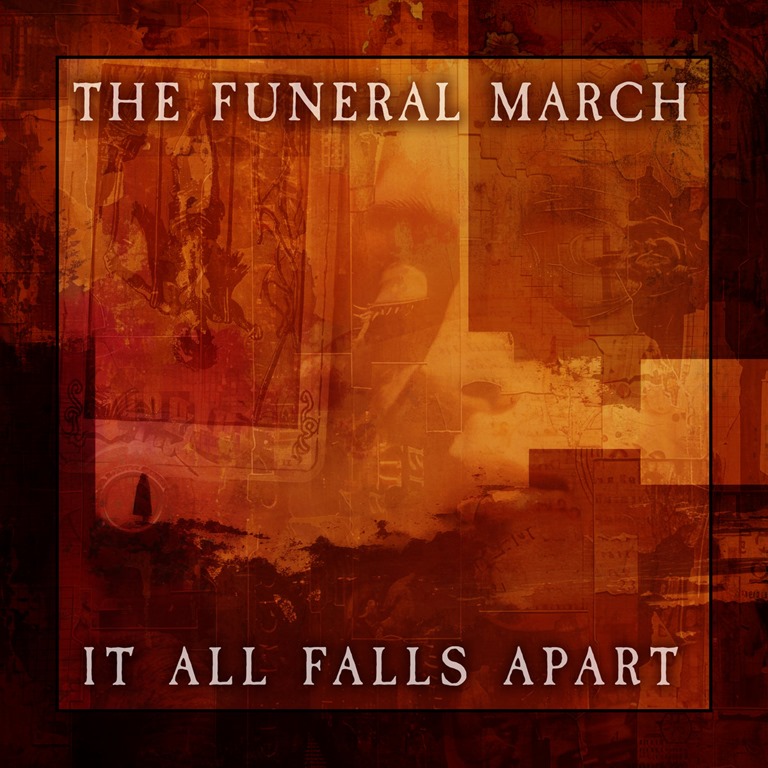
While the early- to mid-80s is considered by many to be the ‘golden age of goth’, 87-88 were pretty good years, too, and saw some of the first wave of bands breaking through commercially… It was at this time, with the release of Floodland and Children that The Sisters of Mercy and The Mission, respectively, broke big in the charts, and being 12/13 at the time, this was when my eyes – and ears – were opened to a whole new world of music. And so it was, too, that things really started to happen across the pond, too, and it was in 1987 that saw the formation of The Funeral March of the Marionettes, often referred to as The Funeral March.

There may well be a whole thing about how goths are obsessed with death, as even the band’s name suggests, but this release arrives in a genuinely sad context, namely the passing of founder and front man Joe Whiteaker from pancreatic cancer in his mid-fifties. With every year that passes, it becomes apparent that the people who are dying are closer to our own age, are our peers, or close to. But the fact Joe did complete the recording of It All Falls Apart is something to celebrate. Many of us ponder our legacy: what is it that we leave behind?

The Funeral March are drawing the curtain on a thirty-seven year career with what may be their finest work to date.

They started out, like so many gothy / post-punk inspired acts, drawing inspiration from seminal English acts like Bowie, The Cure, Siouxsie and the Banshees, Bauhaus, and Joy Division. The band’s name, meanwhile, was a nod to Charles Gounod’s ‘Funeral March of a Marionette’, best known as the theme music for TV’s Alfred Hitchcock Presents. And truth be told, this is all pretty standard: marionettes seem to be part of textbook goth catalogue: There was The Marionettes, for a start who started life as The Screaming Marionettes in ’86, and when you chuck all the words into a goth band name generator, let’s not forget Screaming Banshee Aircrew… So much goth seems to thrive on derivation.

It All Falls Apart brings with it a certain familiarity by necessity, really. But this release sees them push the boundaries rather more, forging their own identity more strongly than ever before. It’s a sign of artistic growth: many artists – regardless of medium, be it music, writing, visual arts – begin by learning from their precursors, leaning on their influences, and finding one’s own voice takes time and confidence. It’s also an album of two halves – essentially an EP and a remix EP, but again, in context, it feels appropriate.

So if ‘Starts at Night’ brings hints of The Mission’s ‘Sacrilege’ or ‘Amphetamine Logic’ by The Sisters, perhaps even Skeletal Family’s ‘Promised Land’, all of which are killer by virtue of the complex picked lead guitar parts, it’s equally worth noting just how hard it blasts out of the gates. Pow! It’s the drums that really make this one. More Danse Society circa Seduction than anything else than comes to mind, it packs all the power up front, and that impact really lands strongly.

All of the ‘standard’ goth tropes are present and correct, from the loping, dynamic drums, the chiming, chorus-rich guitars, and thumping down-on-the-floor bass, but their execution is exemplary. This is the sound of a band who are intensely honed and striding confidently through all aspects of songwriting and production. It’s the thinking bass that really makes ‘Shadow Games’, but with its chiming guitars and vocal inflections, it ventures into the territory of classic contemporary post-punk, in the way that the likes of Interpol have built on the foundations of Joy Division without being a carbon copy, and the energetic chorus calls to mind White Lies at their best. It’s not that The Funeral March have abandoned their roots here, but that they’ve cut loose and taken flight.

‘Save Us’ is more driving, more hard-hitting, more overtly post -punk than goth, bit it’s also dark, snarly, proper rock ‘n’ roll, the sound of leather jeans and legs akimbo, and a contrast with the more overtly atmospheric but no less punchy ‘Bobblehead’. As for the title track… well. It feels like the finale, and, with the benefit of hindsight, the farewell. Stretching out to six minutes, it’s the perfect blend of guitars, shimmering in waves of treble an reverb, atop the phattest drums and underpinned by a thick bass. It’s goth perfection and would have been at home on the recent album by Pink Turns Blue. It All Falls Apart is appropriately titled, as it turns out.

The quality is consistent throughout, and the remixes are actually nice additions here, making All Falls Apart a superb addition to the band’s catalogue, we can only speculate on what they might have done next, but All Falls Apart feels like the perfect way to finish a career.

AA

a1572369656_10

Klonosphere Records – 7th March 2025

Christopher Nosnibor

What is it about prog bands and Greek mythology and space? Sure, both are inspiring for their expansive and epic qualities, but it does seem to be almost a requirement for prog acts to be quite obsessed about mythology or space – or, in the case of March of Scylla, both. Indeed, Scylla is a man-eating monster which features in Homer’s Odyssey, while the French progressive metal quartet’s debut album’s title may refer to the galaxy, or daughter of Cassiopeia in Greek myth, after which said galaxy was named. I suppose there’s some intertwining there, which works. On the one hand, it’s mystical, it’s deep, and its seriousness manifest.

These guys do bring some ultra-chunky riffs which straddle nu-metal and technical metal, and they alternate these with huge, arena-friendly choruses which are impressive in the anthemic heights they scale, and no, that’s no sarcasm, believe it or not. But it does flop headlong into the template trap which is the curse of so much metal of the twenty-first century – and again, it’s something that emerged and came to prominence with the advent of mu-metal and then seemingly seeped into other strains of metal, alternating full-throated roaring verses with melodic choruses. At first, to my ears, at least, it sounded less dynamic or thrilling, and more like bands trying to please everyone by being everything all at once. And I suppose the formula must work, because a quarter of a century later, they’re still doing it, even though it’s tired and ultra-predictable now. Sure, it’s fundamentally the same form as the quiet / loud structure that defined the grunge sound in the 90s, but the difference is that with the quiet / loud thing, it felt like build-up and release, whereas this is more like splicing two different songs together. It’s Jekyll and Hyde. And a sudden turn works when it’s out of the blue, but when every song is structured around a ball-busting riff and raw-throated guttural vocals which abruptly give way to some big emotive burst of white light you can sing along to, it’s not only predictable, but feels as if one segment undermines the other. Like, c’mon, make up your minds! None of this is to say that I think ‘heavy’ bands should only do ‘heavy’: contrast is a vital element in giving a composition impact, and besides, I would simply never prescribe that music should be one thing or another. My point is that when things become overly formulaic, they risk losing that impact.

So ‘Ulysses’ Lies’ does the raging riff thing alternating with the anthemic chorus thing. I’m not sure if the lyrics are being delivered from the perspective of a protagonist from the canon of Greek mythology, or it it’s simply a framing for some introspective moan about relationships or whatever, and no doubt if I was willing to spend hours straining my ears to decipher it all, I’d find the answer, but I can’t say I’m that invested. It sounds like some introspective moan about relationships or whatever, though. Way to diminish the potency of epic tales of gods battling and whatnot.

‘Death Experience’ stretches out for a fill seven minutes, and if it’s not necessarily a full epic, it’s most certainly an epyllion, and with some tight and detailed guitar-work and a well-executed atmospheric mid-section, it delivers everything it promises, including a sense that the ‘death experience’ is one of a dazzling ascension beyond this plane. And if it seems as if I’m being unreasonably critical of March of Scylla, there’s no questioning their musicianship or capacity for solid compositions. They pack in some megalithic, churning riffs and know exactly how to hit the hammer on intensity, just as they absolutely nail the huge, hooky choruses. But it just feels so studied, and you know how it will go as each song plays out.

‘To Cassiopeia’ is an interlude which combines space and mythology in one processed, predictable but atmospheric piece, before ‘Dark Matter’ goes Metallica’ before it goes You Me At Six… and it’s a sonic identity crisis to my ears, although it’s precisely what they were going for. What to say? It’s wrong to criticise a band for what they’re not, but this is difficult for what it is – namely conflicting and predictable, but perfectly executed. The heavy segments hit hard, and the light, melodics parts are well done but ultimately a bit lame. It’s yin and yang.

AA

a2477402970_10

5th March 2025

Christopher Nosnibor

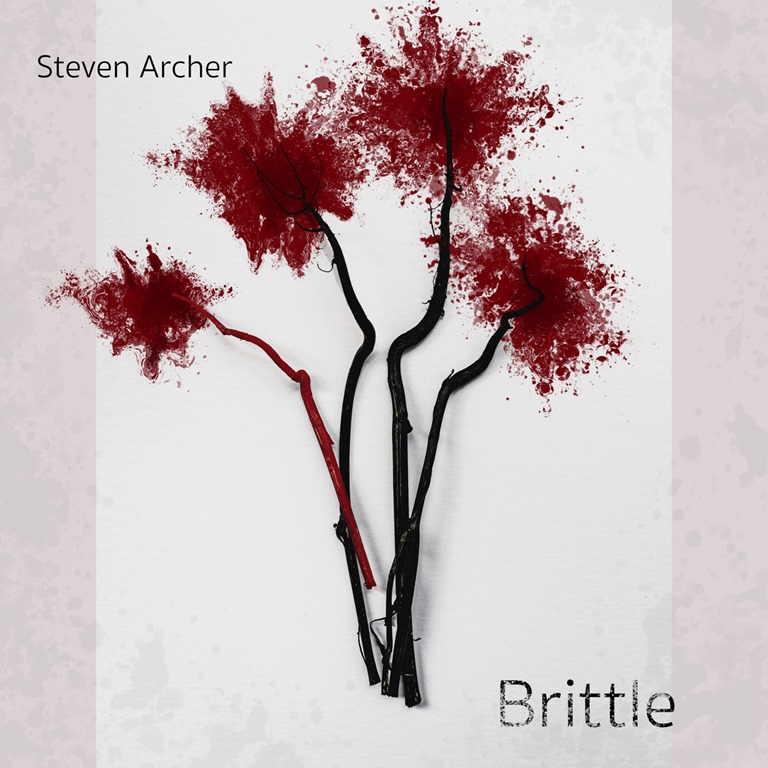
Steven Archer has been keeping busy: it’s barely three months since he landed the latest Stoneburner release, with its glorious Foetus-inspired cover art, not to mention a brace of EPs late last year, and a and lo, we have an album of steaming-hot brand new material. I often marvel at artists like this, who are so prolific. Do they even sleep? I do get that creativity is something that, more often than not, simply hits and you have to run with it, but…

Brittle is a twisted mix of all sorts. First and foremost, it’s an electronic album, and one which leans toward darker territories – not in an aggressive or overtly industrial way, but more given to brooding, introspection, haunting reflection and melancholia.

‘Our Past is a Wasteland’ is a track which transitions and evolves as it progresses: initially, it’s kinda smooth, a bit epic, sedate in in its musical form, with soft synths and mellow beats presenting a low-temp dance vibe, but along the way it begins to develop a darker, harder edge, gets a bit more Depeche Mode. The gentle drift of ‘Tenuous Place’ steps into expansive mode toward the end, exuding anguish and pangs of pain. ‘Only the Young Die Good’ is decidedly heavier: a droning organ gives way to a twitchy drum ‘n’ bass beat and serrated synths that saw deep into the psyche.

With its piano-led instrumentation and popping drums, ‘The Human Void’ is bleak and expansive, dark electropop rubbing and against drifting ambience with sinister industrial undercurrents as the backdrop to a vocal that switches from almost spoken word to hypnotic repetition. Elsewhere, ‘Tiger Longitues’ shares borders with the kind of smoky trip-hop of Portishead, only heavier, bassier, beatier.

The vocals on Brittle are heavily processed, and there’s a strong technogoth feel to the album as a whole. There’s something of a juxtaposition here, in that lyrically, emotional turmoil and troubling psychological situations are the main focus. Yet, in contrast to the intense and personal nexus of the words, the processed feel, which diminishes the human aspect of the vocal delivery, renders a clear separation. Perhaps this is a part of a necessary distancing: it’s certainly easier to manage challenging personal matters by creating layers of separation, and a deliberate detachment. ‘A Love Song for Monsters’ is exemplary: it’s a straight-up stomping banger, with robotix vocals and a slick production, but there’s so much more beneath the surface.

On the surface, Brittle sounds anything but: with sturdy beats and throbbing basslines, it’s a set which concentrates on delivering dark bangers. But however much we lay ourselves bare, we tend to need for there to be some kind of buffer, some space in between, in the interests of self-preservation. Most of us are more fragile, more delicate, more brittle, than we are comfortable to admit, even through the most forthright of art.

Brittle is uncomfortable, pulling in different directions, the undercurrent dragging against the main current on the surface. But the tension at its core is what renders it so compelling. Take in the tension, let it course through you.

AA

a4203216124_10

Futura Resistenza – LP Mar 24, DL Feb 28

Christopher Nosnibor

Most blurbs which accompany releases are either factual, unspectacular in their biographical detail, or tedious in their technicality. Some are vaguely amusing or otherwise entertaining, but the words accompanying Jeugdbrand’s 3 × hullo, hullo, courtesy of  Lieven Martens are outright deranged. I mean, there’s a narrative there, but it’s more of a slab of gonzo fiction than anything. And that’s before we get to the whole mole thing….

‘Well, it went like this: I open the glass door to the garden, the early morning coming to its midday end. That everyday anxiety that overcomes late risers from time to time kicks in. “Fuck, almost half a day wasted!” But abruptly, this sentence in my head gets overdubbed by the Queen’s English: “That shit mole, that blimey shit cunt mole!” I see the expat owner of our Airbnb punching his bare fists on his green lawn. A spotless lawn, but with here and there a few molehills. His grass, like a billiard cloth in a smoked bar, serves as a contrasting pathway to the black volcanic rocks at the back of the house. Behind these rocks, the ocean foams and growls. “Luv, get the poison! I wanna finish the bugger now and for good. Bloody hell!” I watch this scene with amusement, until suddenly, when the landlord notices me, he cleans up his act. “Ooh, these are funny little creatures, eh, these furry moles. Cheeky peng. Eh, fancy a cuppa?” The landlord’s head and belly are so ridiculously red that I can almost hear a lobster scream in a pot of boiling water. He looks like a walking can of Spam, its contents cooked by countless days under the Indian Ocean’s sun. The Indian Ocean, where sharks migrate between Africa and Australia. And where the Hawaiian-shirt-wearing tourist bravely builds new islands of trash. Yes, the very true meaning of re-creation. Someone once told me that lobsters don’t really scream.’

I once caught some shrimps and prawns in a rockpool while on holiday in Devon. I was probably about twelve. We took them back to the cottage, and my dad cooked them up, tossing them into boiling water. I understand the sound of them being boiled alive was actually the air escaping their shells, but they did sound as if they were screaming, and I have referred to them as ‘squealy prawns’ ever since.

That I have digressed in response to an epic digression seems only fitting, and all of this seems appropriate when it comes to this album. 3 × hullo, hullo definitely falls into the category of ‘weird shit’. ‘Lonely, Sure, but It Is Getting Late and My Grandmother Is Calling’ flits between blasts of noise, stuttering percussion, jolting rumbles, whistling feedback, mumbling, grumbling, and demented yelling, yodelling and ululation. It’s a lot to pack in to less than six minutes, particularly when it’s six minutes spent scratching your head, looking around and wondering what the fuck is going on.

By the end of the album’s five tracks, I’m none the wiser. It makes me think of when I see a post on social media which is both seemingly cryptic and linguistically nonsensical, and yet it’s followed by a series of responses which bewilder not only in their equally coded babble, but in the realisation that people actually understand the initial post. It isn’t that I don’t get the way language evolves and how each generation develops its own spin, but… words. They mean what the mean, no? No. It seems I am wrong.

In fairness, I do understand the words and the narrative Jeugdbrand offer, it’s just that the narrative is crackers, and it’s fitting because the album is also crackers, a collage of craziness from beginning to end. ‘Tomorrow, Tomorrow? I’m Talking About Now, Forget about It!’ starts with a ticking clock and then goes haywire, making for a head-spinning eleven and a half minutes of tribal percussion, drones, discordant church organs, surges of sound add rapid depletions, hollers, yells, grunts, and yelps. Elongated notes quaver, quiver, and fade in and out, while there are twangs of guitar and the occasional, incidental thump and scrape. ‘There’s No Word for Ambient in Dutch’ is dark, haunting – at least after its strange, murky start, reminiscent of Throbbing Gristle’s noisy, oddball experimentalism.

‘Motorcycle Oil on Canvas’ is eleven and a half minutes of spooky, spaced-out woozy, warping drones and oddity, again with snippets of chants, record scratching, clicks, pops, crackles, toots and parps and, amidst the rumble of engines and the snarl of prehistoric reptiles, one finds oneself completely adrift and perplexed. It ends with anguished wailing atop a tempest of noise. There is a lot going on. Much of it is hard to process.

I’m accustomed to all shades of avant-garde and experimentalism, and I’m even more accustomed to my friends defining my musical tastes as ‘weird’, but this is far and away some of the weirdest shit I’ve heard – period.

AA

a2998600553_10

Neurot Recordings – 7th March 2025

Christopher Nosnibor

If a release is on Neurot, there’s almost a guarantee that it’ll pack some heft, and that it’s likely to be good. And so it is with the debut album from Guiltless, who feature members of A Storm of Light, Intronaut, Generation of Vipers, and Battle of Mice and were ‘born from a love of experimental rock, noise rock, early industrial, sludge, and doom’. Their bio describes their first release, the EP Thorns as ‘crushing and cheerless’, adding that ‘it seemed to welcome the apocalypse looming on our collective horizon.’

The horizon is feeling closer than ever, the Doomsday Clock now set to just 89 seconds to midnight, reported as being ‘the closest the world has ever been to total annihilation.’ Teeth to Sky is a worthy successor to Thorns, and while it may not be quite as unutterably bleak, it sure as hell isn’t a laugh a minute, or even a month. And if anything, it’s heavier, denser, and it’s more layered, more exploratory.

‘Into Dust Becoming’ crashes in on a howl of feedback before the riff comes in hard. No delicate intro or gradual build-up here: just full-on, balls-out explosive power. It’s a veritable behemoth, dragging a megalithic weight and a brutal rawness as it churns away with devastating force. It’s one hell of an ear-catching way to open an album, and serves as a statement of intent.

‘One is Two’ barrels and lurches, the bass booming low while the guitar slices and slews across at jagged angles, and with the roaring vocal delivery, it’s dark and furious, as is fitting for a song that explores human behaviour and the fact that as a species we seem utterly hell-bent on destroying our own habitat. It’s a perverse contradiction that as the most advanced species to have evolved on earth, we have seemingly evolved to bring about the hastening of our own extinction, but then again, perhaps it’s for the best. But considering this, and the state of everything, brings a range of complex emotions which aren’t necessarily easy to articulate through language, or language alone – and this is when one comes to really appreciate the catharsis of visceral noise. And it’s a crushing force that blasts from the speakers on ‘In Starless Reign’; the guitar tone rings a squalling dissonance, and there are some deft tempo changes which accentuate the textural detail and enhance the impact.

They slow things to an eerie crawl on the epic ‘Our Serpent in Circle’ to round off side one, and although it doesn’t exactly offer respite, it does provide some variety ahead of the assault which ensues with the title track at the start of side two, followed by the utterly merciless ‘Lone Blue Vale’, a track of staggering density. Combined, they deliver a relentless sonic barrage. ‘Illumine’ closes the album with slow-paced precision, a harrowing seven-minute dirge designed to snuff the faintest glimmers of hope in your soul.

It’s a significant achievement that Guiltless manage to maintain such a punishing level of intensity for the duration of the whole album: Teeth to Sky will leave you feeling utterly pounded, breathless, and dazed.

AA

160821