Archive for the ‘Albums’ Category

Cold Spring Records – 23rd June 2025

Christopher Nosnibor

It may be a heretical stance, particularly as a big fan of Throbbing Gristle, but Psychic TV never really did it for me. They felt a bit meandering, wanky folky, in the same way as a lot of David Tibet’s stuff does. This may be to my detriment, and I may be missing the joys and benefits of a huge catalogue, but… I can shrug it off, and I will live.

TG and seminal filmmaker Derek Jarman were kindred spirits, provocative, avant-garde, and testament of their reciprocal artistic respect is cemented in their 1980 collaboration, where TG soundtracked Jarman’s movie Under the Shadow of the Sun (with the soundtrack being released some four years later).

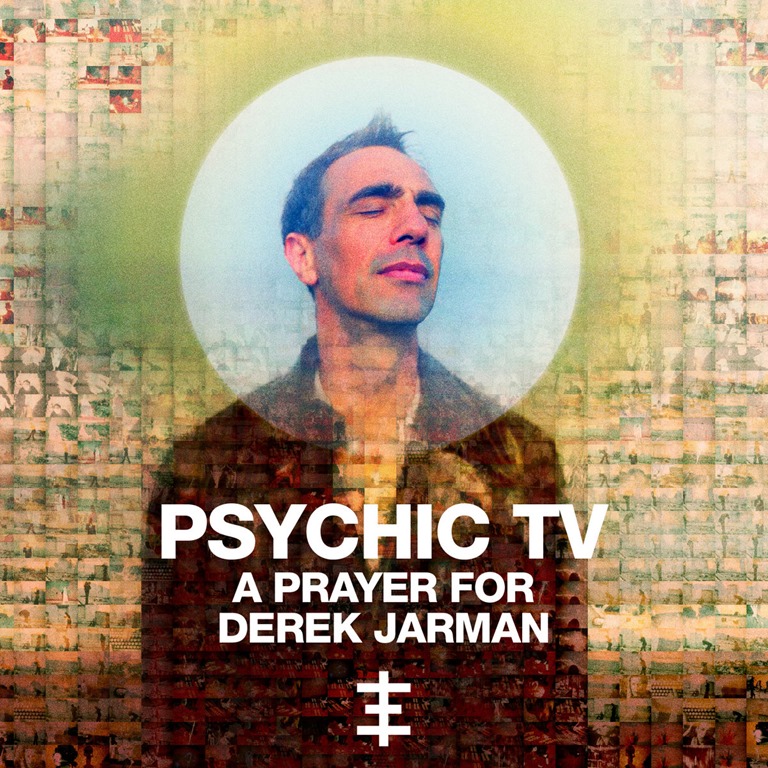
A Prayer For Derek Jarman was recorded later, on LP in 1985 by Temple Records and subsequently reissued as an extended CD version by Cold Spring in 1997. As the accompanying text explains, ‘Unavailable for almost three decades, this collection from the Cold Spring archive has been repackaged and remastered with new artwork. A documentation of the soundtrack work created by Psychic TV for the film-maker and artist Derek Jarman, it serves as a demonstration of why PTV were one of the most important groups in the underground scene of the 1980s and 1990s.’ The material on this disc was – as far as I can discern – last available in 2011 as part of the Themes six-CD box set, also released via Cold Spring, and this represents a solo release of disc two.

There’s no mistaking that both Jarman an PTV were important, although I would personally rank the former above the latter – that may be a rather subjective position to take, though, and there is no denying the immense shadow Genesis P Orridge would cast over the scene for many a year and perhaps an eternity.

The titular ‘Prayer For Derek’ is intended as an invocationary prayer and is based on Tibetan rituals; a collage of sounds including field recordings of the lulling waves running aground on the shingle beach opposite Jarman’s Prospect Cottage in Dungeness, Kent, home of some of the UK’s best preserved ‘sound mirrors’ – alongside bird song, crying babies and massed ritualised chants to aid the late director in his after-life journeys. It follows the seventeen-minute churning abstract noise whorl that is ‘The Loops Of Mystical Union’ – and which is, on balance, as good as any of Throbbing Gristle’s expansive dark noise works, and ‘Mylar Breeze (Parts 1 & 2) on which the promo for the album is predominantly pitched, and the ‘Mylar Breeze (Part 3)’. These compositions are piano-led and border on neoclassical. Dainty, charming, and musically eloquent, they certainly mark a departure from the work more commonly associated with Orridge or PTV, as well as evidencing the reasons why they are such a difficult act to pin down, or even distinguish the ‘good’ and ‘not so good’ works in their immense and wide-ranging – and variable – catalogue. With its echoed, looped vocal layers redolent of Gregorian chants, it’s not so hard to determine why ‘Mylar Breeze (Part 3)’ is not mentioned in the promo, although it’s entirely captivating.

As the accompanying text observes, ‘Other tracks feature elongated drones, washes of dissonance, melancholic guitar chime, evocative piano scoring, Burroughs cut-ups, gothic chants and snarling dogs.’ ‘Rites of Reversal’ marks a clear contrasts from the delicate piano-led compositions, diving in with some hard-edged grinding oscillations, which, again, lean more toward the kind of dark noise that was the TG trademark.

A Prayer For Derek Jarman is broad in scope and mood, and this is as appropriate is it is likely deliberate. It certainly presents the more experimental aspects of Psychic TV, and as varied as it is, the quality is also there.

AA

AA
a2838757322_10

11th June 2025

Christopher Nosnibor

Some artists thrive on collaboration. Deborah Fialkiewicz is one of those. While she’s prolific as a solo artist, the volume of collaborative works in her discography is also noteworthy: when she’s not working as part of SPORE, she’s part of the ever-rotating lineup of BLOOM – and that’s before we touch on the frequent collaborations with (AN) EeL, the most recent of which was only released three weeks ago.

The Improvisation Sessions was recorded live May of this year, with a lineup of Dan Dolby, Deborah Fialkiewicz, and John Koser, marking an expansion from the duo which recorded the trilogy of Parallel Minor, Besides, and Hybrid in 2020. Fialkiewicz is without doubt an artist with range, but one who favours the dark end of the ambient spectrum more often than not, and this is very much the case here.

The Improvisation Sessions features two longform tracks which would quite nicely align with a vinyl release.

‘Chameleon Soul’, which spans a colossal continuous twenty minutes, begins with low, rumbling ominous drones, but soon escalates to a busy, buzzy criss-cross of sounds, interweaving and interlacing, leaving one’s head in a spin as if after trying to trace several flies flitting about the kitchen on a hot summer’s day for any period of time. It’s a morass of warping tones overlaying a ballast of churning noise, and any comparisons to Hull luminaries Throbbing Gristle or Merzbow are entirely justified.

The layers of distortion only grow denser and gnarlier as the track progresses, crashing waves of white noise blast in from one side and then the other as they really push to test the stamina. And then you realise we’re only six minutes in. This is a positive: plenty more left to enjoy… Enjoyment is of course subjective, and enjoyment of this requires being appreciative of a dizzying, disorientating assault simultaneous with a full-on white noise blizzard.

The momentary lulls, the spells where they pull back from the precipice of all-out aural obliteration, are far from mellow, as serrated spurs of hard-edged drones, wails of feedback and brain-melting extraneous noise conglomerate to seismic effect. There are some nasty high-end frequencies knocking about in the mix, moments were one has to check if the whistle is coming from the speakers of if it’s that troublesome tinnitus nagging again, and said frequencies rise from a battery of ugly distortion, bone-shattering blasts of which simple explode around the twelve-minute mark, and from hereon in, things only grow harsher, more corrupted, more intense, more difficult to withstand. We’d be inching into polythene bags on heads territory were it not for the variation, but the last three minutes or so are fractured, damaged, and agonizing – part power electronics, part circuit meltdown.

As the world becomes evermore and increasingly fucked up, I find words fail me more by the day. It’s harder to articulate, and this is where I’ve found that sound has come into its own. Sound as the capacity to convey something beyond words, something that lies in the most innermost parts, giving voice to the subconscious, even. On The Improvisation Sessions, BLOOM convey anxiety, gloom, pessimism.

‘The Dark Room’ is indeed dark, constructed primarily around a fixed but thick, distorted hum. Oscillators whine and whistle, and something about it calls to mind Whitehouse around the time of Never Forget Death, when they discovered low-end frequencies and restraint, the impact of a low undulating wave and subtle tweaks of reverb.

It rumbles and drones on, eddying and bouncing around in a shrilling mesh of dissonance. There isn’t a moment where this is an easy listen, and so often, it sounds as if the equipment is faulty, whether it’s a stuck loop or generating unexpected noise.

This set hangs on the edge of ambience, but be warned, it’s dark, and noisy at times, to the extend that it may shred your brain. For me personally, that’s my idea of fun, so it gets a two thumbs up, but for the more sensitive, this is a release to approach with caution.

AA

a3419622385_10

Futura Resistenza –16th June 2025

Christopher Nosnibor

Much of Felix Kubin’s work since the turn of the millennium has involved radio, although film and theatre and other soundtrack works have also been a feature. Der Tanz Aller is one such soundtrack work, which was ‘created for the performance of the same title by the experimental arts collective LIGNA. The group specialized in site-specific, participatory works. Der Tanz Aller is based on Rudolf von Laban’s radical 1920s concept of ‘Bewegungschöre’ (movement choirs), collective dances in public space that aimed to reimagine social order through shared movement.’

The context and objective behind the composition are particularly useful to be aware of when listening to this album in isolation, as Kubin sets out: ‘When the performance group LIGNA approached me in 2012 to compose music for a play based on Rudolf von Laban’s revolutionary kinetic theories and so-called ‘Bewegungschöre’ (movement choirs), I thought of a soundtrack that would be both rhythmically engaging, abstract and mechanical. I knew there would be pre-recorded voices talking about his philosophy and guiding the audience via headphones. So, I had to leave some “air” in the arrangements, allowing the visitors to concentrate on the spoken words, while simultaneously becoming dancers. In LIGNA’s conceptual works – just like Laban’s idea of the movement choirs – the audience members become the performers.’

I shan’t dwell too long on the conceptual aspects here, beyond noting that this predates John Cage’s 4’33” by more than two decades, and while Cage’s silent work was on many levels a quite different proposition, the way in which any sound made by the audience – be it a cough or the shuffling of feet or the creaking of a chair – immediately becomes part of the performance indicates clear common ground. Likewise, William Burroughs’ cut-ups, which invited ‘creative reading’ whereby the engagement of the reader and their experience and perception was integral to their success, arrived some thirty years later. As such, ‘Bewegungschöre’ represent the cutting edge of avant-gardism, belonging to the era which brought us Duchamps’ readymades and – perhaps more pertinently – Tristan Tzara’s directions to make a Dadaist poem.

For the most part, the ‘air’ in the arrangements is apparent: there is space, separation, and while we can only imagine the prerecorded voices talking about Laban’s philosophy through headphones, it’s possible to get a sense of how it would work. But then, occasionally, Kubin’s compositions get father more busy, as on ‘Dämonen der Zerstreuung’, with big band percussion and noodlesome orchestration that’s of a strong jazz persuasion, but has a whole lot happening, and often simultaneously. There’s drama with orchestral strikes, and creeping, urgent glockenspiels that bring a noirish, detective movie feel – not a chase scene, but a cat-and-mouse scenario.

There are some spoken-word passages, in German, as on ‘Raumstunde Vera Skoronel’, accompanied by evolving sonic backdrops, the likes of which I find hard to imagine inspire dancing, but spasmodic twitching and erratic lurching, while the title track is a slice of jerky, and quite insular and intense, Kraftwerkian synth bleepery, and ‘Rotes Lied’ is a perfect exemplar of sparse, spaced-out, glooping, blooping, reverby weirdery with occasional chimes and stuttering shot of snare. There is plenty of air here, as you sit and wonder what exactly is going on?

Who knows? And does it even matter at this point? The percussion builds from all sides, and the nagging away – until suddenly it doesn’t.

The unpredictability of Raumstunde Vera Skoronel is its strength. It is weird, unexplained in many respects, beyond simply the initial onboarding awkwardness. We should probably celebrate this weirdness, this sense of separation. Raumstunde Vera Skoronel is never dull, but always strange and alien – and these are reasons to appreciate it.

AA

AA

RESLP040 front

Human Worth – 6th June 2025

Christopher Nosnibor

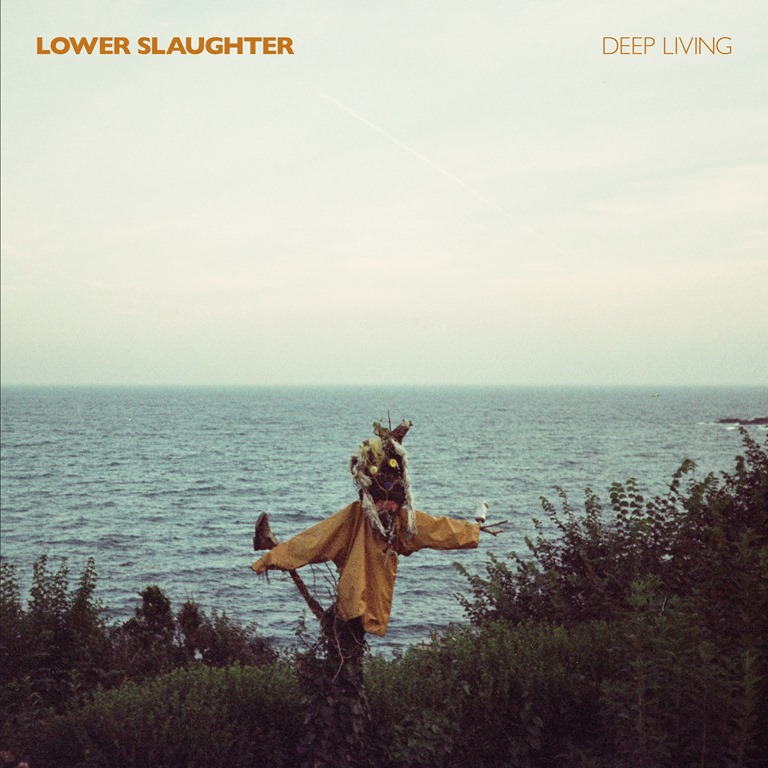
Where does the time go? No, really? I’m not just stunned by the fact we’re a week into June already, but the fact that it’s been six years since the last Lower Slaughter album, and nine years since I missed their show in Leeds with Working Man Noise Unit supporting because I was watching Man of Moon play to a nearly empty room across town instead. That’s almost a decade I’ve spent being frustrated by my inability to clone myself, and I find it hard to let these things go.

They’ve undergone some changes since their last outing – changes of the nature which would have terminated, many a band. Their bio traces a raid succession of personnel switches:

Following the departure of long-time vocalist Sinead Young, their surprise return in 2024 saw the remaining former members unveil a new line-up, welcoming James Gardiner to the fold on bass, and with previous bass player Barney Wakefield switching over to vocal duties. Upon Gardiner’s addition, a considerably more expansive sound has emerged, bringing the band’s now recognised output of what the Quietus once referred to as ‘lurching noise-rock’ to new exciting heights, all the while set against an equally more confident and expansive dynamic, reinforced by the chemistry of Graham Hebson and Jon Wood, who remain tighter than ever on drums and guitar respectively.

And so seemingly miraculously, they’re still here. Thus, we arrive at Deep Living, a colossal twelve-track document of the new Lower Slaughter, a release of blistering overload dominated by rolling percussion and thick bass. It’s varied, to say the least, and most certainly does not pursue the most obvious or commercial avenues. It was certainly worth the wait, and we’re most grateful that they are still here. And because it’s being released by Human Worth, 10% of all sales proceeds donated to charity The PANDAs Foundation – a trusted support service for families suffering with perinatal mental illness.

After a good couple of minutes of rolling, tom-driven percussion and muted vocals which sit partially submerged beneath a fat, fuzzed out bass ‘Year of the Ox’ suddenly slams the pedals on and erupts and Wakefield roars in anguish, ‘My eyes! My eyes!’. ‘Take a Seat’ is quite different, more overtly mathy, post-punky, and more accessible overall, despite its hell-for-leather pace and wild energy, and there’s a bit on jangle to altogether mellower ‘The Lights Were Not Familiar’ that’s a shade Pavementy – but it’s Pavement as covered by Fugazi. And the guitars sound loud. In fact, everything on Deep Living sounds loud, and what’s more, the recording and mixing work done by Wayne Adams (Petbrick/Big Lad) captures and conveys that it such a way that it feels loud, like you’re in the room with the backline practically in your face. This is nowhere more apparent than on ‘Dear Phantom’, which has something of a Bug-era Dinosaur Jr vibe to it – and the big grungy riff is magnificent. Then halfway through it goes slow, low, and sludgy – and that’s magnificent too.

Balancing melodic hooks and some quite breezy indie / alt-rock with some hefty, heavier and hugely overdriven passages, Deep Living has some range.

The six-and-a-half-minute ‘Memories of the Road’ is a slow-burning epic that builds to a roaring finish, and makes for a standout cut. It’s a trick they repeat on the title track which brings the album to a close.

In between, ‘Hospital Chips’ brings pace and jittery tension via thumping bass and jarring, sinewy guitars, and straight-up punk brawlers ‘The Bridge’ and ‘Motions’. All the range, but it’s the fact there are tunes galore that make Deep Living a cracking album.

AA

Lower Slaughter LP.indd

Magnetic Eye Records / Redux Records – 6th June 2025

Christopher Nosnibor

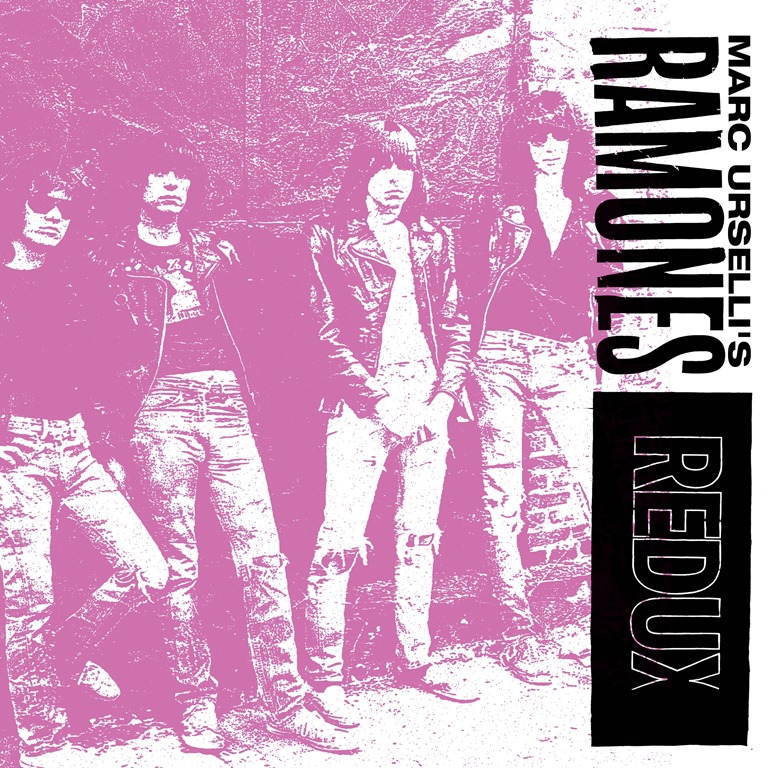
Magnetic Eye have released a few of these ‘Redux’ tribute albums now, each of which has come in two editions, and each of which has taken a different approach. Whereas the Meantime Helmet releases offered a standard and expanded version, for example, others have presented an album on one version and a ‘best of’ as a companion. And in all instances, they’ve managed to score some outstanding names as contributors. This time around, it’s the Ramones’ eponymous debut which is accompanied by a ‘best of’ set as a counterpart, and the project was ‘masterminded and curated by New York City and London-based Italian-Swiss audio engineer, sound designer, composer, multi-instrumentalist, and Grammy winner Marc Urselli’ – hence the titles.

Mondo Generator, Napalm Death, Ufomammut, Arthur Brown, David J, and Voivod are among the big-hitters featured here, but as I settle down with a cold pint of Oranjeboom, I contemplate the need for a Ramones tribute – or, more specifically, another one. There have been a few, perhaps most famously 2003’s We’re a Happy Family, which featured The Red Hot Chilli Peppers, Marilyn Manson, Green Day, Garbage, U2, Metallica, and The Pretenders, among others, and there are so many tribute acts out there, too, one has to ask ‘is this not overkill?’ Well, no, because that would be Motörhead, and what’s more, with a lower tier of ‘name’ contributors, it feels more authentic, somehow. I’m not saying U2 aren’t fans of The Ramones, but they feel like they’re on a par with the fans who bought a T-shirt in Primark and only discovered they were a band after the fact. Casuals, in other words.

Some might say that the debut album doubles as a ‘best of’, and there’s a case for that, given that every single song is a pure classic. Mondo Generator kick off the debut album covers set with a roaring ‘ONETWOTHREEFOUR’ before launching into ‘Blitzkreig Bop’, and it’s a faithful but fiery, fizzy rendition, the guitars like jet engines on what you could only describe as a proper punk blast.

Daníel Hjálmtýsson and Mortiis offer an altogether different take on ‘Beat on the Brat’ – slowed down, moody, gothic, a bit theatrical, a shade menacing, and yet somehow accentuating the pop currents which flow through this, and indeed, all Ramones songs. Boots Electric, with the help of none other than Wayne Kramer, push the pop to the forefront

Ufomammut bring the metal and convert the sub-two-minute surf-pop ‘Chain Saw’ into a six and-a-half minute grind that’s downtuned, dense, and dirty. It’s also absolutely brilliant in its execution. Napalm Death have enlisted Thurston Moore for their take on ‘Now I Wanna Sniff Some Glue’, which is a minute and a half of speaker-shredding thrash nihilism, and absolutely perfect.

The Ramones weren’t only punk progenitors, but purveyors of precise and often perfect pop songs, and this pair of albums represents the fullness of their influence (still not saying they. didn’t influence RHCP or U2., but…) Arthur Brown and The Berserker’s take on ‘I Don’t Wanna Walk Around With You’ is crazy, and absolutely perfect.

Voivod rope in JG Thirlwell for their hell-for-leather yet hooky as hell take on ‘Zero Zero UFO’ which opens the ‘best of’ set. And there are some corkers, with a slowed-down, heavy psyche yet oh-so-pop take on ‘Pet Sematary’ by Impostor Cult with Amy Tung Barry Smith being exemplary. So Hideous’ twangin’ take on ‘The KKK Took My Baby Away’ is one of the most radically different interpretations on the album, although Kayo Dot and Ihsahn push ‘Teenage Lobotomy’ in the most unexpected directions, while David J and Paul Wallfisch push ‘I Wanna Be Sedated’ to a soporific seven minutes. With a super-sparse arrangement, it sounds as if they’ve achieved their wish before entering the studio.

What these two albums illustrate, more than anything, is that The Ramones wrote superlative and truly classic songs, with earworms galore. And as tributes go, these albums do feel perfectly fitting.

AA

691820395539

30th May 2025

Christopher Nosnibor

Knox Chandler may not be universally known, but many of the acts he’s credited as playing with over the last forty years are, with long stints as a member of  and the Cyndi Lauper band. Then there’s his work in various capacities with REM, Depeche Mode, Grace Jones, Marianne Faithful, Natalie Merchant, Tricky, The Creatures, Dave Gahan, Paper Monsters and The Golden Palominos… it makes for quite the CV.

This solo outing marks a fairly significant departure from all of that, though. The context behind it is that ‘Knox spent a decade residing in Berlin, Germany, while he explored sound-scaping. He developed a technique he calls “Soundribbons”, which he recorded and performed in its own right as well as applying it to different genres and mediums . He composed, recorded, toured, produced, and wrote string arrangements for Herbert Grönemeyer, Jesper Munk, Pure Reason Revolution, The Still, TAU, Miss Kenichi and the Sun, Mars William’s Albert Ayler Xmas, Rita Redshoes, Them There, The Night…”

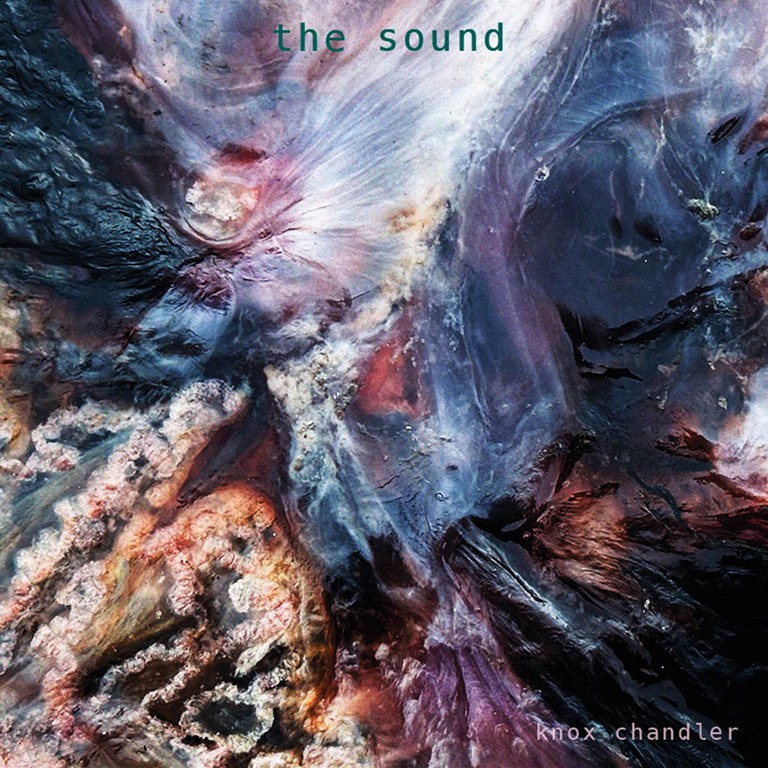
And so what we have here is a collection of ten instrumental works, whereby the guitar doesn’t sound like a guitar. In fact, it doesn’t sound specifically like anything. Chandler conjures wispy, ephemeral sound sculptures, atmospheric, brooding, a shade filmic, soundtracky, with hints of sci-fi and BBC radiophonic workshop about their strange, twisting, abstract and keenly non-linear forms.

There’s more than simply droning guitar on offer here, though: flickering, surround-sound precision provides a shifting backdrop to the ever-morphing ‘Tea Stained Edge’, where tremulous, reverby guitar bounces here and there off sonorous string-like sounds and even something resembling a jazzy double bass, but in contrast, ‘Lost Dusk Feather’ takes the form of a magnificently disjointed collage work, flipping between ambience and discordant confusion. The playfully-titled ‘Hidden Hammock Pond’ is one of the album’s most overtly experimental works, a mish-mash of sounds overlaying one another, smooshed together and as strange and unpredictable as it gets, venturing via exploratory ambience and quivering drones and allusions of abstract jazz into Krautrock . It’s wilfully perverse, and swings between the dark and serious, and the light and entertaining within the space of a heartbeat. ‘Mars on a Half Moon Rising’ goes a shade New age strange, insectroid flutters, field sounds and mystical hoodoo, bells and chimes, Morris dancers and scraping bass which occasionally strays into some kind of Duran Duran bending bass moments.

It’s all going on here. It’s impossible to predict direction over the duration of this release: The Sound meanders here, there, and everywhere. At times expansive (as on ‘Burn’), at times claustrophobic, it’s never less than compelling or varied listening.

If you’re seeking anything in the vein of the headline acts with which Knox Chandler is associated with, you may well be disappointed. But if your ears are open to abstract, instrumental strangeness, you’re in the right place. The Sound is weird, unapologetically and strange – and it’s the sound of an artist cutting loose and exploring sound. It’s weird, and wonderful, in equal measure.

AA

a0385212710_10

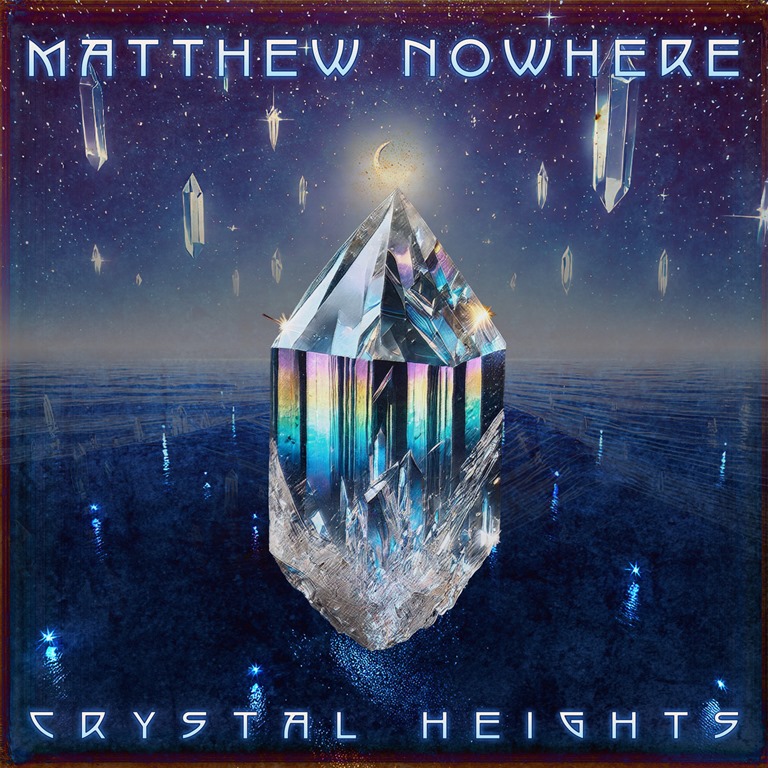
How times have changed. Back in the early 80s, this would have been mainstream. It would have been major label. It would have been huge. It would have smashed the charts. 2025: nah. And so Crystal Heights is a self-released effort, and the chances are its audience will be respectable but limited.

This is an album which is steeped in all things retro: it’s an electropop work which is light and airy and easy on the ear, and low on demand.

He describes it as ‘a sonic love letter to the 1980s’, and the title track is exemplary: it’s light, bouncy, melodic. But it feels somewhat shallow, a shade flimsy. Then again, this was also true of much 80s pop, and it was a criticism levelled at pop music at the time. Critics in particular were not especially enamoured by electronic instruments, particularly sequencers. Here in the UK, the Musicians’ Union sought to ban drum machines as they were seen as doing drummers out of a job. They weren’t really all that keen on synths, either. Using machines to make sound wasn’t considered ‘real’ music.

Again, how times have changed (although drum machines in a ‘rock’ context are still unusual). Drum machines didn’t eradicate drummers, but the death of small venues pretty much killed off bands, impacting the number of places for them to play in the most dramatic fashion. And the proliferation of two-piece acts, and solo acts, is nothing to do with technology, and everything to do with the simple practicalities of performing live music. Rehearsal spaces are as scarce as gig spaces: what are bands to do?

The mid-tempo ‘Love is Only What We Are’ sounds like mid-80s radio-friendly movie soundtrack material, and drifts along nicely with some picked reverby guitar work, and it works nicely as a counterpoint to the crisp snare and clinical kick drum sounds. ‘Echoes Still Remain’ is atmospheric, evocative, and also sounds so familiar – not because it is, but because it’s the very quintessence of so much music released circa 1984. It’s hard to fault the level attention to detail here. ‘Ruby Shards’ provides perfect evidence of this, in that it manages to compress pretty much the entirety of New Order’s output into four and a half minutes.

‘Transforming’ was recorded with Lunar Twin, and is a bona fide electropop banger. Constructed around a rippling loop, it’s a supple work that oozes 80s vintage. It’s going to nag me for weeks which songs it reminds me of. It’s a clear standout in an album that’s solid but… but what, exactly? It feels light, perhaps lacking, even. But what more should we want from it, realistically? Innovation? No, that was hardly the objective here. Lunar Twin also features alongside The Antonio Family Singers on ‘Persist3nce’, a brooding slow-burner built around a mesmeric beat which fades to grey.

With Crystal Heights, Nowhere has achieved something that’s not insignificant – an album that’s instantly accessible, strong on melody, and enjoyable.

AA

a0495838035_10

Prophecy Productions – 6th June 2025

Christopher Nosnibor

Absence makes the hearty grow fonder, so the adage goes, and so it also goes that some acts return not only rejuvenated, but more prolific the second time around: this has certainly been true of a number of acts, ranging from Earth to The March Violets, and it seems that Austere are also finding a purple patch of creativity, with The Stillness of Dissolution being their third album in two years after a thirteen-year break – having only released two albums in their initial four-year career.

Older and wiser? Or perhaps older and feeling a greater sense of freedom in creative terms… it matters not, really. Here, the Australian duo, consisting of Mitchell Keepin (guitars, bass, keyboards, vocals), and Tim Yatras (drums, keyboards, vocals), we’re reminded that ‘their roots in early Norse black metal and its depressive Scandinavian offspring remain clearly audible’, and the album’s six lengthy tracks offer texture and detail, and darkness… much deep darkness.

Opening, ‘Dissolved Exile’ clocks in a little shy of eight minutes, and what’s striking us just how crisp the guitars sound, both the crunchy rhythm parks and the spindly lead, which takes off into an epic solo, propelled by double-pedal blasting drums. But something else stands out, too: as raspy and demonic as the vocals are, there’s a strong sense of groove to it, the chugging chords presenting a solid form and structure. ‘Redolent Foulness’, too, has an epic quality, and an almost neo-prog accessibility. There’s melody in the vocals, not to mention an abundance of dynamics and detail.

It would be easy to criticise Austere for pursuing a more commercial sound and a more ‘casual’ audience, but the simple fact is that they’ve got some crafted tunes here, and The Stillness of Dissolution showcases songwriting ability, rather than simply the ability to play fast while burying everything in muddy production. The Stillness of Dissolution is by no means a commercial album, or a pop album, but in melding genuine hooks to monster slugging riffs, Austere have forged an album that’s compelling, exciting, and yes, I’ll say it, catchy. Not in a pop sense, of course, but those juggernaut riffs just grab you: ‘Rusted Veins’ fully rocks out, and at nine and a half minutes, closer ‘Storm Within My Heart’ is a solid epic. Overused? Yeah, but have you got a better word? It begins atmospherically, before blasting in with explosive force, and with the snarling vocals buried beneath a frenzied blanket or fretwork, it’s the most overtly black metal cut on the album.

And what an album: it really is well-considered, crafted, detailed. ‘The Downfall’ borders on shoegaze and prog-metal, but there’s blistering rage in there, too. Metal tends to be underrated when it comes to texture and emotional range, but The Stillness of Dissolution brings it all by the truckload: ‘Time Awry’ bringing three songs in one, with a nagging lead guitar line that loops over a thunderous riff. This is an album which makes you feel – and its power is as immense as its stunning quality.

AA

450960

Young God Records – 30th May 2025

Christopher Nosnibor

And so we arrive at the end of another era in the epic history of Swans. When they called it a day in 1996 with Soundtracks for the Blind, and a farewell tour documented on Swans are Dead, it really did seem as if that was it. Swans had run their course, and the colossal Soundtracks double CD summarised everything they had achieved over

It may seem strange that the bookend to this phase of their career should be titled Birthing. But such is the cycle of life, and indeed, the avant-garde: death gives way to new life, to build anew one must first destroy. And so in this context, Birthing, which Gira has announced will be the last release of this epic, maximalist phase, makes sense. With a running time of a hundred and fifteen minutes, it’s comparable in duration to its predecessor, The Beggar, and The Glowing Man (a hundred and twenty-one minutes and a hundred and eighteen minutes respectively) , but on this outing, the individual pieces are all immense in proportion, with the album containing just seven tracks, with only one clocking in at less than ten minutes.

‘The Healers’ makes for a suitably atmospheric, slow-burning opener. Around seven minutes in, the gentle eddying begins to swell, like a breeze which wisps and ruffles the leaves on the trees – a minute or so later, the drums have entered the mix, and the ambient drift begins to take a more solid form, and there’s a change in the air temperature, the barometer plummets and the breeze becomes a wind. In no time, there’s a swirling wail of sound surrounding Gira’s increasingly exultant enunciations, but as he growls and mumbles and raises his voice higher, he’s increasingly drowned by the maelstrom. And yet, it’s nowhere near a crescendo, and I’m reminded of their set on the 2013 tour, where, having told my friend that having seen them in the same venue three years previous that they took volume to another level, the first twenty minutes of the set was loud, but not remarkably so – and then suddenly, there was a leap of around thirty percent that felt like a double-footed kick in the chest. Will it happen here? Around the fifteen minute mark, it tapers down to a haunting whistle of wind – and it’s the calm before the storm, as a raging tempest suddenly erupts, a frenzied wall of noise that has become their signature, and the song surges to a powerful sustained climax.

While the delivery is considerably less brutal than it was in the early 80s, Gira’s lyrics are still riven with dark and disturbing imagery, and now coloured with a hint of abstraction and madness, and this is nowhere more evident than on ‘I Am a Tower’, which was aired as a lyric video a little while ago. ‘With thin boneless fingers and pink polished nails, I’m searching for the fat folds of your blunder. Speak up, Dick! …Bring your fish-headed fixer to whisper in my ear. Please worry me here, tongue that victim in there…’ he intones like a cracked messianic cult leader against a backdrop of swirling drones. Attempting to unpick sense or meaning from it feels futile, and potentially traumatic, so instead, it’s perhaps experienced holistically, as a jumble of images and impressions, a fractured collage, a derangement of the senses whereby you allow it to transport you to another plane, away from anything concrete or grounded, beyond all that you know. Seemingly from nowhere, a motorik rhythm kicks in and we get something approximating a driving Krauty post-rock riff, hook and all. It could be Swans’ most pop moment since the White Light / Love of Life albums in the early 90s.

The title track arrives in a ripple of proggy synth that has a hint of Mike Oldfield about it, but gradually builds into a dramatic swell of sound, the likes of which has come to characterise the last decade of Swans, with a single chord struck repeatedly for what feels like an eternity. And then, from nowhere, they launch into something approximating a jig – on a loop, where the bass and drums simply hammer away repeatedly, like a stuck record. It is, if course, pure hypnotic magnificence. Gira’s words slip into soporific sedation amidst descending piano rolls. ‘Does it end? Will it end?’ he asks at the start of an extend wind-down, and it does feel like this would make a perfect gentle close – but there are more jarring, jolting ruptures to come, whipping up a truly punishing climax by way of a close, and by the end of the first disc – a full hour in duration – we’re left drained and hollowed out, tossed this way and that on a sonic – and emotional – tempest only Swans could create. Disc one, then, feels like a compete album. But this is a Swans release, and a landmark one, at that there isa whole further album’s worth of material yet.

‘Red Yellow’ begins in a dreamy drift, but soon slides into a warping drone pitched against another of those relentless, repetitive grooves, this time with some jazz horns freaking out in every direction. And at this point, there does arise the question of what new this iteration of Swans is offering at this point, but the immense, immersive soundscapes provide the answer in themselves. Swans have certainly evolved, but they have always done so gradually. The first half of the eighties was devoted to crushing slow grind, and you’d have to be a glutton for punishment to listen to more than one album in a sitting. The point is that Swans have always pleased themselves and made music that tests the listener’s limits, and Birthing is no exception.

Reviewing a Swans album is always a challenge, especially their comeback releases. They’re not about songs, and, broadly speaking, not really about impact in the way their early works were: instead, they’re about transcendence, about moving beyond mere music.

‘Guardian Spirit’ starts out textured an atmospheric, but ends full Merzbow, before ‘The Merge’ takes noise to the next level, albeit briefly. It’s as if Gira is toying with us. Perhaps he is, but when the noise erupts, it really erupts. ‘Rope’ returns us full cycle to there My Father Will Guide Me, while making an obvious connection with all phases of their career, through which ropes and hangings have been a perpetual theme.

Birthing is not an easy album, but it is one which requires listeners (and reviewers) to do something different in terms of approach. You don’t listen so much a feel it, and ride its endless waves: sometimes slow, gentle, at others an absolute roar, Birthing brings together everything Swans have done, and achieved, over the course of this iteration. It’s often overwhelming, and almost impossible to reduce to words. The second disc does feel softer, more abstract, and leaves on wondering precisely what the next phase will look or sound like.

SwansBirthingalbum-cover-artwork-

21st May 2025

Christopher Nosnibor

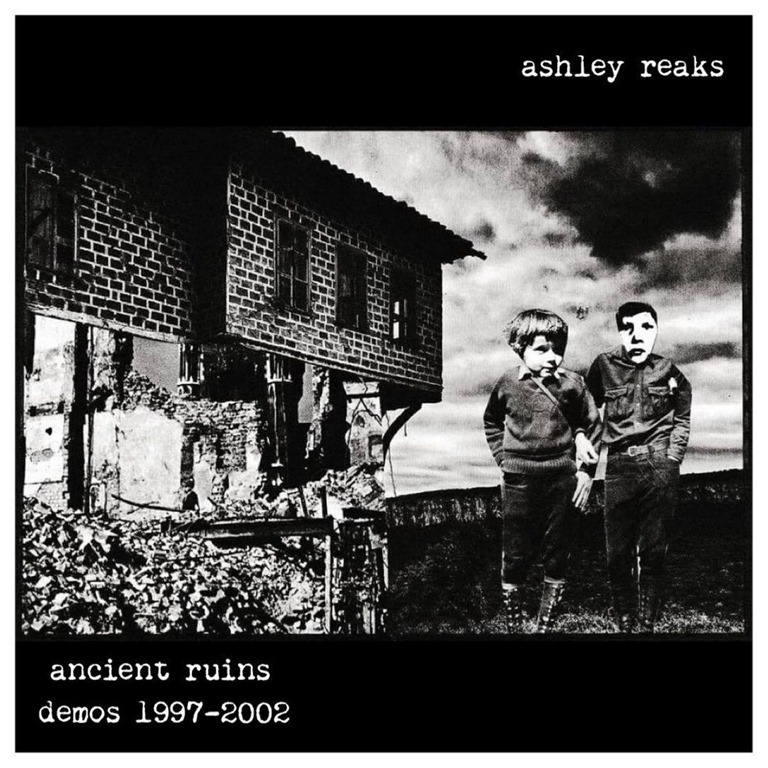
Ashley Reaks first came to the public’s attention under the guise of Joe Northern, fronting promising turn-of-the-millennium dark synthpop act Younger Younger 28s, a head-on collision between The Human League and Clock DVA, who released their sole LP, Soap in 1999. Since then, the Harrogate-based Reaks has expanded his field and is now as known for his disturbing collages as he is for his eclectic musical output, which spans dub, postpunk, and whatever other genre concepts come his way. Reak’s creative diversity, while very much an artistic strength, has likely been an obstacle to his achieving more commercial success, because the sad fact is that polyartists who venture into the domains of oddness are extremely difficult to market, because, well, how to you pigeonhole or genre categorise someone who works not only in a host of media, but does stuff which is, at times, quite disturbing and impossible to place in a given bracket? Of course, another likely, and more obvious, obstacle to commercial success is that the fact that a lot of his work is what a lot of people would likely consider plain fucking weird.

But even before Younger Younger 28s, Reaks – whose appreciation of The Sisters of Mercy and the like is widely-stated on his social media – was dabbling with the gothier aspects of post-punk, and would continue to do so for some time. His decision to release Ancient Ruins may only be for the sake of posterity, as a document, but here it is, and it’s not bad either.

Because this is Ashley Reaks, it’s not a set of songs which adhere to straight-up genre conformity, as is immediately apparent from the first track, ‘A God in the Devil’s World’, which has a certain swagger and a swing to it, the female vocals not only providing a counterpoint to the growling baritone Reaks adopts, but also a pop shimmer that’s still more Human League than The March Violets.

‘No Man’s Land’ offers picked guitar and jittery synths melded to an insistent drum machine, and comes on with the trappings of mid-80s rock, and a bit Prefab Sprout. ‘Disconnected’, however, plunges into darker territories, an echo-heavy bass-driven blast of angst that’s more the sound of the underground circa 1983. And it’s good, but then you realise how anachronistic it is for the time it was recorded.

Between 1997 and 2002, Britpop died a slow and painful death and Nu-Metal exploded. The post-punk revival was still some time off, and simply no-one was making, or listening to, anything that evoked the spirit of The Batcave. But then, they weren’t really digging 80s synth pop, other than the original stuff in a kitsch or nostalgic way, and the much-touted 80s revival hadn’t really gained any traction. To top it, in keeping with Reeks’ other output, thew songs on here are littered with lyrical observations and kitchen sink vignettes, pithy pairings, and couplets which are wilfully wordy and awkward.

‘Christiane’ is a campy goth pop effort that’s wistful and theatrical, with hints of late 80s Damned woven into its fabric, while ‘I Always Wanted to be You’ brings some indie jangle and… brass. Then again, there’s the chugging industrial blast of ‘Swimming Against the Tide’ which sounds a bit like Therapy? circa Nurse but with an overtly ‘baggy’ beat and a Prodigy-influenced midsection. Oh yes, it’s all going on here.

If nothing else, Ancient Ruins provides some insight into the evolution of Reaks’ compositions, from oddball pop to off-the-wall melting-pot madness, with loads of ska brass and a whole lot more besides. The dubby closer ‘Ghost Town In My Heart (Version 2)’ is particularly illuminating.  If only all history lessons were this interesting.

a3128964198_10