Archive for the ‘Albums’ Category

Play Loud! Productions – PL063LP

Christopher Nosnibor

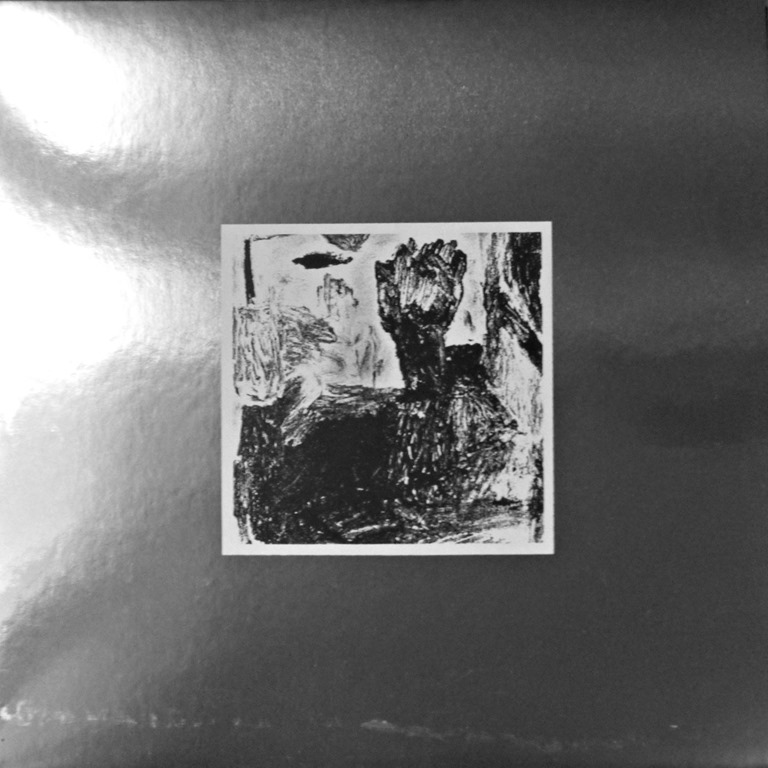
Mark E Smith is not Damo Suzuki. Only Damo Suzuki is Damo Suzuki. Damo Suzuki requires no introduction, of course. However, his vast and almost immeasurably influential output seems to exist almost in the ether, his own name and that of CAN being names to conjure with, but perhaps carrying more connotations than actual connection.

Suzuki’ status as an innovator and a one-off requires no comment, either. The fact he’s been going for multiple eternities, and continues to perform sets that are completely off the wall means his reputation remains unharmed, and this release – one more addition to already impressive body of work which essentially stands to define Krautrock – won’t dent that.

As the title suggests, this set was recorded live at Marie-Antoinette, Berlin, Germany, on 24th November 2011. Damo Suzuki was joined on stage by a stellar lineup, consisting of Dirk Dresselhaus (Schneider TM, Angel) on electric baritone guitar and effects; Ilpo Väisänen (Pan Sonic, Angel) on electronics and effects; Michael Beckett (kptmichigan, Super Reverb) on electric guitar and effects; Claas Großzeit (Saal-C) on drums and percussion, and Tomoko Nakasato (Mio, JINN) on dance and electric rake. No, I have no idea what an electric rake is, but on vinyl, each of the album’s half-hour tracks occupies a side of the two-disc set.

Ordinarily, live releases take the best cuts, or the single best night of a tour. Dirk Dresselhaus’ comments which accompany the release suggest that this recording doesn’t necessarily follow that rule, and instead presents an honest account of a singular event: “I find it fairly difficult to say something about how the music in this concert came about, cause we didn’t plan or rehearse anything and hardly were able to hear each other on stage. Wherever it came from, the energy and course of this concert is very much based on group dynamics and an almost telepathic sort of communication, like a swarm of fish. When I mixed the sound later on in the studio I discovered a lot of weird things on the separate tracks: for example Kptmichigan’s guitar signal is changing level for about +/-30 dB once in a while which is a lot and was probably caused by a broken microphone cable. Luckily the fucked up parts made the sound even heavier and more distorted instead of destroying it,” he says.

At times the lack of planning and rehearsal is apparent, but in the main, Live at Marie-Antoinette captures a collective who are capable of a rare musical intuitiveness. And whatever it may have sounded like on stage, and regardless of the occasional stab of feedback and errant extraneous intrusion, the recording captures a tense, atmospheric musical soundscape which transitions across the various parts with a creeping stealth.

To draw attention to any one passage would be to entirely misrepresent the overall arc of the performance. From the tribal chants to the undulating synth-like tones to the slow-building crescendos and the sustained sonic blitzkriegs which absolutely tear through the curtains of sonic decency, each and every aspect of the set is integral to the overall experience, which is built around a series of ebbs and flows, often rising from next to nothing to a whorling tempest quite unexpectedly. And it’s true that the colossal peaks are accentuated by the shuddering volume and crackling distortion they produce. Sometimes, fucked up is good.

This is all part and parcel of the live medium: while the studio affords total control over every aspect of every element of the sound, when playing live, anything can happen. The real test of a band’s capabilities is how they deal with the unexpected eventualities and how they deliver the show to a crowd under adverse circumstances. There is no audience sound on Live at Marie-Antoinette, which means it’s impossible to gauge the audience reaction to the show. But the sound balance suggests the audience were subjected to a punishingly loud and challenging set. It’s probably one of those rare live albums where the recording is more pleasurable than the actual event.

http://playloud.org/archiveandstore/trailers/damosuzuki/trailercode.html


damo-suzuki-sound-carriers-live-at-marie-antoinette

LP: Let Them Eat Vinyl  – 22nd April  2017

CD and digital: Westworld Recordings – 5th May 2017

Perhaps it’s because I consider Joy Division to be one of those bands that will forever be precious of, that I’ve always been a shade sceptical of Peter Hook and the Light’s activities. By which I mean that my scepticism is not solely on account of Hook’s churlish reputation. Granted, if anyone can lay claim to ‘owning’ those bands, it’s probably Peter Hook: his bass wasn’t so much integral to the bands’ sound, particularly that of Joy Division, but defined it. But, feeling conflicted, I’ve passed up on a number of opportunities to see The Light play live, despite the fact that having been born in 1975, meaning that I was simply too young to see Joy Division, or New Order when they were good.

But then there are these four releases, which capture Peter Hook and the Light playing gigs devoted to Joy Division’s two albums, as well as New Order’s Movement and Power, Corruption and Lies. Because the sets include tracks not from the albums in question, they manifest as some sort of ‘expanded edition’ performances, throwing in demos, rarities, B-sides, contemporaneous material and a selection of classics alongside. As such, these performances are a far cry from the ‘greatest hits’ sets Hook so vehemently criticises his former band-mates for, but while as a live proposition it’s all completely valid, one has to ask why the need for the shows to be released. I mean, fine as a memento for those who were there perhaps, but aren’t these releases tantamount to a live album by a tribute band?

Maybe, but in fairness, they’re pretty good and in the main do a decent job of capturing the spirit of the songs and the bands at the time they were originally released.

The recording of the band’s performance of Unknown Pleasures was originally released digitally in 2012, and features a slew of choice cuts from the Joy Division catalogue, including large chunks of Closer alongside. The performance is solid overall, but it’s certainly a warts-and-all effort, in keeping with disc two of Still and any other live Joy Division recordings you may happen to find. The end of ‘Disorder’ is ropey enough to have been played by the original lineup. ‘Heart and Soul’ is sparse, haunting. It’s followed by ‘A Means to an End’, which is well played, but the guitar heroics don’t sit right. That said, it would be wrong to suggest that the performance is patchy: honest would perhaps be a more appropriate description.

Closer was recorded at The Factory in Manchester (where else?) in May 2011, and again, includes a lot more than simply the album from beginning to end. Again, it’s a case of taking the rough with the smooth: the vocals on ‘Colony sound more like Lou Gramm than Ian Curtis, and the high, forced, rock stylings simply don’t work. Still (no pun intended), it’s more hit than miss.

Movement stands apart in the New Order oeuvre. The set begins with a stomping version of ‘Incubation’ and there’s a good run of Joy Division material before any New Order songs are reached. The album – played in sequential order – is prefaced by New Order’s debut single, ‘Ceremony’ and transition-marking single ‘Procession’. Somewhere in my collection still lurks a cassette containing bootleg live recordings of New Order from around the time of Movement, including a set at the Retford Porterhouse. It’s a remarkable document of the early, tentative steps of a band finding their way into the light after the greatest moment of darkness. The songs sound brittle, developmental, but their spirit is ineffable. That same atmosphere is recreated with breathtaking accuracy as The Light play Movement from beginning to end: the murky mix, through which stuttering beats hammer nervously is encapsulated so perfectly on ‘Truth’ that it sends a shiver down the spine. This, I had not expected, and it’s enough to challenge the ‘what’s the point?’ position quite effectively. The point, it seems, is that these are great songs, played in the spirit in which they were first played, and this live recording serves as a reminder of just what a killer – and unique – album Movement was, and still is.

Power Corruption and Lies, New Order’s second album, released in 1983 is almost universally recognised as the point at which the post-Curtis band began to forge their own identity and in context of the other releases, this is rendered plainly apparent. The sound may still be fractal and sparse, but the focus is very much on insistent grooves and study, propellant disco beats. It also marks the point at which New Order began to produce songs which sounded very like one another, developing the template which would define their sound for much of the next decade. It also reminds us that New Order have never been a vocally-led band, keeping the voice element of their songs backed off and comparatively anonymous. And that works here, as the driving bass and buoyant synths dominate the mix.

Listening now, it’s clear that Power Corruption and Lies isn’t only a very dance -oriented album, but also an album of its time, and the fact that Hook and crew faithfully replicate the sound may be problematic in itself: obviously, the fans love it and the entire premise of Hook’s project is to play the songs as intended. But parts of Power Corruption and Lies sound rather dated now. This is no criticism of the band or its fans: I still go berserk over the details of the production of albums I love from the 70s and 80s. Ultimately, it all boils down to context, of course and the current context is, sadly and unavoidably, nostalgia.

Wading through the full set of releases is no small challenge, and probably on even the most ardent fan is unlikely to undertake, at least in a sequential or back-to-back context.

Critically, I’m still on the fence. But on balance, these aren’t bad at all.

Peter_Hook_Digi-600x425

Young Thugs Records – 12th May 2017

Christopher Nosnibor

Straight out of the trap, DOG sounds like …And the Hangnails. They have a knack for blasting out of the speakers, full-throttle, from the first bar at the start of every album. There’s no preamble, no atmospheric or suspenseful intros, no slow-build and no pissing about: they’re in there, immediately, all riffing and explosive drumming.

That’s actually all there is: this grungey garage-pop duo have spent their carer to date maximising the impact of a comparatively limited format, namely the fact they’re a guitar and drums combo. But the trick is that they don’t sound like a duo, especially on this, their third album: the production is phat and full and with the treble backed off just a shade in comparison to their previous efforts, Martyn Fillingham’s split-signal guitar sounds thicker, denser meatier and more like both a guitar and bass simultaneously.

Steven Ried’s exceptional powerhouse drumming (this is a man who drums hard, and at a hundred miles an hour, and who makes Dave Grohl sound like some jazz tapper), sounds even more exceptional than ever on DOG. I mean, really. The guy’s a one-man percussion explosion. And again, while it’s commonplace for music critics – myself included, on occasion – to criticise little, grungy, lo-fi bands for ‘selling out’ by cleaning up their sound, aligning higher fidelity with a betrayal of their roots, in this instance at least, it would be a mistake. DOG is the work of a band which has evolved. This means that while there isn’t anything as explosively raw as ‘Fear Only Fear’ or ‘Everybody’s Luck’ from the previous albums, their edge has by no means been dulled. Yes, the songs do feel more crafted, more developed and less primal, bit it’s an incremental thing. It’s still loud, brashy, thrashy and rough around the edged. There’s still fuzz and feedback by the shedload.

But more than anything, on DOG, it’s possible to actually hear the detail and the sonic range. The result is that the full force of their live sound can at last be heard in a recorded format. Besides, it’s not as though they’ve gone super slick and delivered an album of radio-friendly r’n’b. DOG may be an album busting with hooks, but it’s also a serious alt-rock racket, and alongside the breezy surf-pop backing vocals are driving riffs galore.

DOG is without question their most accessible album to date, but that doesn’t mean that it’s overtly commercial or in any way a sell-out. There isn’t a weak track on the album, and there sure as hell isn’t a big ballad at the end of side one. DOG is ferocious, relentless, sharp, to the point and represents the realisation of everything …And the Hangnails have been building up to.

It contains just ten songs, the majority of which sit around the three minute mark. And so, as is their trademark, DOG is a short, sharp blast of post-grunge garagey punk bursting with killer hooks and belting tunes from start to finish. If this doesn’t see them make some kind of breakthrough, the world is even more fucked up and wrong than I’d imagined.


DOG artwork

Schoolkids Records – 22nd April 2017

Christopher Nosnibor

As I kid – and especially as a teenager – I thought I knew everything, and that anyone over 30 was ancient, a has-been and that it was impossible to be cool past a certain age. But even then, I envied some of the older people I knew – largely through music and record shops – who had seen punk and new wave bands I’d got into in their heyday (or at all).

Hindsight is indeed wonderful, especially when viewed from a vantage of being older and wiser – and while the early 90s felt exciting for someone who was properly old enough to go to gigs on their own on turning 18 in 1993, it’s only really now that it’s possible to really reflect on the fact that there are people in their teens and 20s who will forever curse having been born too late to experience the grunge explosion first hand.

Bettie Seveert aren’t a grunge band, but it was on going to see Dinosaur Jr – who, despite having been around a lot longer, really got to ride the crest of the grunge wave – at Nottingham’s Rock City touring ‘Where You Been’ in February 1993, that I first encountered Come, and (then) Melody Maker darlings Bettie Serveert.

24 years on from that gig and a full quarter century from their debut album Palomine, and the Amsterdam-based act deliver their tenth album: it’s a respectable and steady work-rate by any standards, and what matters is that ‘Damaged Good’ is a great alternative rock album, which displays a neat pop sensibility without in any way being cheesy, corny or lightweight. Released in Benelux last September, it’s now getting a full global release, and this is definitely a good thing. While they may not have received the press backing, or replicated the success of Palomine commercially, creatively, Bettie Serveert have still got it.

Opener ‘B-Cuz’ brings the bounce, not to mention a blend of 60s pop and punk energy and makes for a neat entry to the album. ‘Brother (in Loins)’ brings a darker, post-punk atmosphere and twists in element of 90s alt-rock to a song that has the disco pop groove stylings of Blondie. Elsewhere, there’s a purity and innocence about the vintage indie stylings of ‘Whatever Happens’, and the shuffling beat and darker undercurrents which bubble beneath the buoyant bass of ‘Unsane’ calls to mind ‘Gran Turismo’ era Cardigans. Again, this is a good thing.

In fact, there are no bad things about Damaged Good. The eight-minute ‘Digital Sin Nr 7’ finds the band indulging their more experimental and considerably noisier side, but holding it all together with a tense bass groove. ‘Love Sick’ with Peter de Bos is a driving grunge pop belter: not a song that sounds like it belongs in the 90s so much as a timeless hook-filled cracker of a tune. And herein lies the key to what makes Damaged Good not just good, but great: it’s an album of songs, and while varied in style, the quality is both high and consistent. Songs matter, and there isn’t a dud to be found here.

Bettie_Serveert_-_Damaged_Good_(cover).jpg

Metropolis Records – 5th May 2017

Christopher Nosnibor

Having recently completed their ‘Swine and Punishment’ double-header tour with Mortiis, PIG, previously having lain dormant for the best part of a decade, are returning with a vengeance. Billed as ‘a supplemental sermon’ to The Gospel, Swine and Punishment, with its audacious combination of literary allusions with shameful puns, is a remix album which slots into neatly into the already extensive PIG oeuvre.

Comments on social media and YouTube suggest that The Gospel has elicited something of a mixed reception, on account of it not being as good as some of the albums released during what they perceive as the peak of PIG’s carer. Many seem disgruntled by the more overtly glam / pop direction of the album. But these people have clearly missed the fact that Watts’ output under the PIG guise had a strong pop sensibility from the very outset: A Poke in the Eye and Praise the Lard are both pop albums first and foremost, with Watts revelling in the incongruity of combining dark lyrics with often quite buoyant tunage. They’ve also clearly missed the fact that Watts’ tongue is usually positioned somewhere in his cheek, and never more so on the knowingly song-orientated and accessible Gospel. In short, to criticise it for being the album it was intended to be is erroneous.

While remix albums are – as I’ve said and written more times than is remotely interesting, but hey, I’ll say it again – often difficult, thorny and sometimes thoroughly pointless, debasing exercises, Swine & Punishment does a good job of capturing the spirit of The Gospel while at the same time extending its scope.

One of my frequent gripes about remix albums is the track repetition, and on this score, Swine and Punishment is guilty, in that it’s largely built around three tracks from The Gospel, namely ‘Viva Evil’, ‘The Diamond Sinners’, and ‘Fly Upon the Pin’; however, it benefits from the inclusion of reworked renditions of ‘Drugzilla’ and ‘Found in Filth’, as well as the previously vinyl-only ‘Violence’. Moreover, the individual mixes ae diverse and divergent enough to make for an album that’s varied and doesn’t sound like the same three tracks dished up, reheated, with a range of subtly different sauces. The sample-filled, lopping grind of the MC Lord of the Flies remix of ‘Found in Filth’ (courtesy of Cubanate’s Marc Heal) is exemplary, particularly when places alongside the stuttering, abstract electro reinterpretation of the KANGA remix of ‘The Diamond Sinners.’

The St Gregory mix of ‘Fly on the Pin’ is perhaps one of the strongest examples of how a song can be given new life by means of serious mangling, and while there’s nothing as extreme as JG Thirlwell’s treatments of ‘Wish’ to be found here, Swine and Punishment invites favourable comparisons to NIN’s Fixed by virtue of the quality and range of the reinterpretations it contains.

Pig - Swine and Punishment Cover


Pig - Swine and Punishment Cover

Young God Records – 28th April 2017

Christopher Nosnibor

The great Swans back catalogue reappraisal and re-release continues with a brace of albums from near the end of the band’s initial incarnation. The latest pairs Swans’ 1995 album The Great Annihilator with Gira’s simultaneous solo release, Drainland. 1995 was a fertile year: Jarboe also released Sacrificial Cake through Alternative Tentacles in the same year, in some respects mirroring the period eight years previous, when two different Skin albums – effectively Gia and Jarboe solo releases – appeared in 1987 and 1988 in near synchronicity with Swans’ pivotal Children of God. Indeed, while the ‘definitive’ reissue programme is both extremely welcome and is a genuine boon for Swans fans both new and old, it does highlight the complexity of the band’s back catalogue. Precisely which album sits with which is a question which will never find an easy resolution, but on balance, Gira and Young God have made a decent fist of presenting a cohesive and linear recataloguing of the band’s initial history.

The Swans album The Great Annihilator arrived some three years after the epic twin salvoes of Love of Life and White Light from the Mouth of Infinity, which had represented both an evolution and a return to form following The Burning World in 1989. And while The Great Annihilator clearly belonged to the same broad phase as its immediate predecessors, it also felt more focused and more intense. It also stands as a transitionary album, the last studio release before the immense, everything-through-the-wringer churning mash of Soundtracks for the Blind, at which point the first phase of Swans collapsed and terminated.

Soundtracks perhaps hinted at the direction the reincarnated Swans would take on their return, but lacks the immensity of the sound they would produce on their post-millennial return, and equally lacks the focus of The Great Annihilator, and in this context, it’s this album which stands as such a significant document of the band in the later years of their first phase. The 2002 reissue saw the album augmented with a six-minutelive recording of ‘I Am the Sun’, which is also included here. However, this version is more about presenting a ‘restored’ version, returning to the recently-excavated original tapes to deliver the album as intended.

Great Annihilator / Drainland (Remastered 2017) - PRE ORDER

By this point Gira had perfected the cavernous, monotone drone which is now his signature: emerging on Children of God and honed over the course of White Light and Love of Life, on The Great Annihilator and Drainland the dark, bleak detachment conveyed in that vocal is as terrifying as any of the growling, barking threats of violence contained on Filth and Cop. He may have sounded brutal in his rage on those releases, but here Gira affects a demeanour which is altogether calmer, and consequently all the more dangerous in its psychopathy. He no longer sounds like a tortured, tormented human soul: he sounds like he’s detached himself from humanity.

What makes The Great Annihilator such a strong album is its range, which is equalled by its force and its cinematic production, balancing slow, repetitive, hypnotic tracks with explosive, percussion driven compositions. As such, it’s a perfect encapsulation of the ugly / beautiful juxtaposition which characterises the Swans ethos. The raw, visceral Jarboe-led ‘Mother/Father’ is gruelling in its intensity and contrasts with the mesmeric ‘Killing for Company’ and the expansive, uplifting ‘Where Does a Body End?’ (which stand among some of my all-time favourite songs by Swans – although, if truth be told, in the scheme of their vast output, it would be easy to fill a double album with my favourite songs by Swans).

‘I Am the Sun’ shares common ground with previous percussion-led tracks like ‘Power and Sacrifice’ (which stand a world away from earlier percussion-led tracks as featured on their albums prior to Children of God, which very much marked a turning point for the band), but at the same time, offers the first hints of what the band would evolve to produce during their second, post-millennium phase. Elsewhere, ‘Mind/Body/Sound/Light’ and ‘Celebrity Lifestyle’ display a certain newfound commercialism (beyond the folk leanings of The Burning World), magnificently counterpointed by Gira’s monotone baritone drone. And who else could succeed with a line like ‘she’ just a drug addiction, a self-reflecting image of a narcotized mind’? ‘Alcohol the Seed’, meanwhile, is sparse, stark and harrowing, the direct, declarative lyrics standing at the point where art and life intersect to deliver maximum discomfort to the receiver. ‘Killing for Company’ is delicate yet beyond dark, a song which reflects Gira’s interest in serial killers and takes its title from Brian Masters’ 1993 biography of Dennis Nielsen.

Gira’s solo debut, Drainland, has always stood as a singular release, both stylistically and in overall terms of the Swans / Gira oeuvre. It also seems to be one of those releases which has been somewhat overlooked.

The first track, ‘You See Through Me’, which features a serrated, grating, oscillating drone and haunting piano provide the musical backdrop to a recording of Gira, drunk, nasty, arguing with his then-partner Jarboe over money and his alcohol problem. It’s one of those works which crosses a line that will never be readily acceptable, where art transgresses the boundaries of the personal and the public. This, of course, is art of the highest order, that demands the receiver face uncomfortable and painful realities. Simultaneously, Gira, in his capacity or artist, dismantles all sense of persona and lay himself bare in the most unfiltered way imaginable.

It paves the way for what is a difficult album on every level, as he trawls the darkest recesses of his psyche: the lyrics may not be as visceral as those contained on early Swans releases, but they’re every bit as gut-wrenching in their impact, not least of all because they’re so intensely personal.

Great Annihilator / Drainland (Remastered 2017) - PRE ORDER

It’s a dark, stark album, which makes for uncomfortable listening on many occasions: even the more overtly post-Children of God tracks, where Gira spins hypnotic, opiate-hazed acoustic strums, as on ‘Unreal’, it’s more nightmarish than dream-like. And then there are jarring, nauseatingly difficult loop-led nightmare dirges like ‘Fan Letter’. And yet, the album contains moments of true beauty. Songs like ‘Why I Ate My Wife’ (which again alludes to Gira’s serial killer fascination and also draws on, and shares its title with, a piece from 1993 which appeared in Gira’s book of collected prose, The Consumer (1994)), dark as they may be lyrically, are also truly magnificent, and as touching – and well-crafted – as anything Gira has done during his long career.

The mastering seems comparatively quiet, but that’s largely on account of the fact everything tends to be mastered so damn loud and so damn bright these days that much of the dynamic range is lost. The very purpose of this remaster is about audio fidelity and unravelling knots in the original processing. Sonically, this remaster feels richer, denser than the original releases, although it would take obsessive comparison and a lot of time to draw out all of the detail. Most importantly, this release makes two classic Swans / related albums (one being something of a lost or unsung classic at that) readily available once more, and on vinyl, too – The Great Annihilator has been commanding obscene prices on the second-hand market for a long time now, while Drainland was only released in the US packaged with Jarboe’s Sacrificial Cake and is again expensive and hard to come by: as such, it all adds up to an essential release.

28th April 2017

My first encounter with Cinema Cinema was in 2012, when I received their sprawlingly epic double album Manic Children and the Slow Aggression for review, and landed an interview for Paraphilia Magazine with Ev Gold. Not only was it a remarkable album, but Ev proved to be a great interview subject: enthusiastic, affable, conversational, and I recall him singing ‘cinema, cinema,’ as he explained the origins of the band’s name to me. I didn’t recall the scene, but I knew the film in question: the dark, Belgian-made, parodic documentary, Man Bites Dog. As the press info accompanying the release of their latest album, ‘after years of explaining… the duo felt compelled to further affix it to their story by naming the new album after the film.

With the band’s gear – including all of their guitars – being stolen just two days into the recording sessions, Man Bites Dog is testament to the sheer determination and bloody-mindedness of one of the hardest-working bands around. Brooklyn duo Ev and cousin Paul Claro have gigged pretty much relentlessly since their formation, and it’s on the road that the material has been evolved and honed. This adherence to the punk ethos, based on the simple premise of two guys in a van, showing up, plugging in and playing hard. So, using borrowed gear, the album’s recording went ahead regardless. Never mind making lemonade from lemons, the very existence of this album proves that Cinema Cinema thrive in the face of adversity, and are completely unstoppable.

Man Bites Dog continues the trajectory of its predecessors, from the aforementioned Manic Children and through 2014’s Night at the Fights. That is to say, it’s a noisy, guitar-driven beast of an album, that veers wildly between crunching riffs and expansive experimental space-rock sections. On this outing, they expand their sound with the addition of saxophone, courtesy of NY jazz musician Matt Darriau.

The first track, ‘Bomb Plot is a lurching, low-slung racket, a crazed hybrid of US hardcore punk and math-rock, with a snaking groove and a fuck-ton of other stuff going on too.

‘Run Until Your Out’ packs a pot-punk vibe in the verses, then explodes into a roaring grunge chorus. It’s a complete riot, and while all sorts of incidentals whizz and whirr in the background and Gold comes on like Jello Biafra one moment and Kurt Cobain the next, it’s remarkable just how direct and accessible it is. It’s no small achievement that they can pen and perform a song that possesses such an overt pop sensibility without sidelining either their full-throttle rock sound or reining in the experimentalism. And it’s this fine-honing that makes Man Bites Dog their most powerful and potent work to date.

‘Exotic Blood’ represents the album’s first foray into more overtly experimental territory: a six-minute stoner rock work out, there’s a hefty riff, but it’s warped and bends all over the place in a way which invites comparisons to Melvins – until the sax comes in and takes it somewhere else completely while a whole heap of stuff goes off in every direction. Indeed, the album’s mid-section marks quite a change in tone from the opening salvoes, with the discordant riffs, tinged with free jazz flavours and riven with unpredictable tempo changes swathed in drifting noise and wandering sax. ‘You talkin’ to me?’ Gold yells dangerously on ‘Taxi Driver’, another song which reflects the duo’s equal appreciation of film and music. It’s also a song which chops and changes and stops and starts and judders and drives. The end result is little short of deranged: tense and strange and forceful, it packs a lot into a short time.

The thunderous, trudging ‘Mask of the Red Death’ is the soundtrack to a truly purgatorial experience that breaks into a monster stoner riff that’s hard to resist, picking up the pace and beefing up the density until hitting a frenetic peak around four minutes in. The obligatory ‘Shiner’ improvised jam track – the album’s closer being the fifth in the series – typically explores the band’s most experimental tendencies, and it’s nine minutes of angular guitars, wild effects and even wilder sax.

It all adds up to a focused, concise and yet still strangely divergent album, and in this way, Man Bites Dog is perhaps the most perfect encapsulation of Cinema Cinema’s sound, scope, and ethos to date.


coverart_only_3500px

Exile On Mainstream – 21st April 2017

Christopher Nosnibor

It begins with a howl of feedback. Of course it does. The sustain continues through the opening power chords: doomy, slow, before it all comes crashing in, trudging tempo and gut-churningly downtuned.

Obelyskkh’s fourth album isn’t so much about surprises, but about continuing – and extending – the trajectory of its predecessors, albeit with a greater emphasis on groove. Not that this is an album you can dance to: it’s very much one to slow headbang to. The press release draws attention to the fact that the album’s title ‘evokes one of H. P. Lovecraft’s iconic poems, providing inspiration for the album’s lyrical content and the artwork for The Providence. Another dimension to the album is illustrated almost perfectly by French revolutionist Victor Hugo: “Above all, you can believe in Providence in either of two ways, either as thirst believes in the orange, or as the ass believes in the whip.” The band lived by this message throughout their uphill battle to complete the record.’

It’s taken them four years, and The Providence feels like four years’ anguish and slog distilled into six immense pieces. The title track, which opens the set, is twelve minutes long. It’s not pretentious, but heavy with portent: this is a vast doomscape of an album, dominated by some colossal guitar riffery, propelled by a juggernaut of a rhythm section.

Things get a bit progressive folk-metal in the middle of ‘Raving Ones,’ but when the riff hits its stride, it’s a throbbing, driving rush. Elsewhere, ‘Northern Lights’ veers toward classic, vintage horror, with a deluge of cataclysmic guitars burning a purgatorial furrow on the scale of the Grand Canyon. And just when the thick distortion threatens to burn out the eardrums, a shift toward upper frequency overload provides the punishing attack needed to complete the abominable mission. The fourteen-minute ‘NYX’ stands as the album’s centrepiece, and is a classic slab of thunderous, sludgy doom metal. Over the course of a succession of passages, it grinds its way to a punishing critical mass, with velocity consumed by density.

Clocking in at under six minutes, ‘Aeons of Iconoclasm’ feels almost throwaway in its brevity. Fear chords weave and waft almost subliminally, and it feels at first like a mere interlude, but then the gates of hell open and every screaming demon ever known tears down from the blackest of skies.

In contrast, the slow, but so, so, dense guitar overload of ‘Marzanna’ feels like a gentle wind-down, although at over nine and a half minutes of roaring thunder and groaning, droning, slowed riffage and mangled vocals that squeeze Sabbath through a Melvins filter it’s hardly some kind of loungecore fluff.

Everything about The Providence is immense. This is heavyweight, it’s doomy metal exactly the way it should be.


Obelyskkh – The Providence

Hide & Seek Records – 21st April 2017

Christopher Nosnibor

This being a Post War Glamour Girls album, there’s a lot to chew on, and I’ve played Swan Songs on the bus to and from work most days for the last month and a half in an attempt to really let the songs embed and to unravel. It’s not because Post War Glamour Girls make albums which are difficult or lack immediacy, but because there’s just so much to extract, and each listening reveals more. I’m still discovering new details and dimensions in their 2014 debut, Pink Fur, and suddenly, here we are at album number three.

And with album number three, they’ve made it a clean sweep of awesomeness: not a case of third time lucky, but a straight hat-trick. Few bands can claim such a record, although Post War Glamour Girls are unlikely to gloat, or even reflect on this achievement: chances are by the time the album tour is under way, they’ll have filled the set with new material which may or may not feature on album number four.

Swan Songs is by far their most commercial and accessible album to date, but it would be a chronic error align that in any way to them selling out, and in many ways, it’s equally their knottiest, thorniest release thus far. Yes, they’re contradictory and contrary, and that’s precisely their appeal. And while they always sound uniquely like Post War Glamour Girls – there really isn’t a band going – or, indeed, previous – who sound quite like them, they’re spectacularly varied in their style, and you never know what to expect from album to album. This is music born from restless energy and a drive to create something new, to challenge the band and their fans in equal measure. The one thing that is seemingly guaranteed is the quality of the material.

Swan Songs is most certainly their most eclectic-sounding album yet. The overall tone of the album is altogether less down than its predecessor, Feeling Strange. The downcast, brow-beaten self-loathing is replaced by a roaring defiance, at least in part. And, of course, it has all the band’s trademark qualities, honed to a new level of sharpness.

The album’s opener, ‘Guiding Light’ comes on like a cross between Big Country and The Wedding Present circa ’92 with its spiralling celtic guitar motif and stadium-fulling chorus – before making a 90-degree swerve only Post War Glamour Girls could pull off, with James Smith veering off into one of his densely-packed rants. You only catch snippets of the lyrics, but in the space of a minute he’s here, there and everywhere, pulling in what appears to be a reference to Gang of Four and macroeconomics with a line about ‘guns before butter’.

‘Chipper’ is more common PWGG terrain, and finds Smith in brawlingly nihilistic form, howling, bleating and hollering over a murky backing of guitars that jangle and warp and bend as the driving rhythm section powers on relentlessly. At the middle eight, it heads off on another trajectory, Smith coming on like a brutalised hybrid of Mark E Smith and JG Thirlwell on top of Alice Scott’s icily calm backing vocals. If ever a band knew how to work contrasts, it’s Post War Glamour Girls.

Conjuring a brilliantly visual image while working a dubby post-punk seam, the more understated ‘Gull Rips a Worm’ marks something of a departure, with Smith revealing a more soulful side in his melodic vocal delivery. Meanwhile, ‘Big Trip’, which recently found its way onto Radio 1 thanks to a shout-out from fellow Leeds legends Pulled Apart by Horses, is a brilliantly gruff and darkly grounded paean to escapism. It might not quite rank with the time the uncensored version of Rage Against the Machine’s ‘Killing in the Name’ was spun at teatime on a Sunday during the Top 40, but it’s pretty subversive. It’s also indicative of the band’s mass-market potential, given the right exposure.

Awkward buggers that they are, the two sets I saw them perform following the release of Feeling Strange, showcased unreleased material in favour of either the latest album or their rapidly-expanding back-catalogue. These shows hinted squarely at a more direct pop sound, and while Swan Songs is a long way off this, being neither direct or upbeat and poppy, the second half of the album is the closest they’ve come to creating unadulterated pop in the studio.

‘Polyanna Cowgirl’, which featured on last year’s live album, is a big, reverby song that draws together elements of classic dreampop with vintage mid-80s postpunk and even more overtly charty music of the same era. Ah, such different times… And so, they manage to imbue the song with a certain nagging nostalgia, as well as a pining wistfulness. The hefty welter of drums and driving bass render it uniquely Post War Glamour Girls, but the multifaceted harmonies and chiming guitars, expansively produced, bring that cinematic slant to the finished product. The shimmering ‘Golden Time’ wafts and warps gently before ‘Sea of Rains’ drifts into I Like Trains territory, but Smith’s bleak lyrics render it a very different animal: ‘The lust you tried to drag from the soles of his shoes / is the worst excuse for loneliness I’ve ever had to use,’ he reflects, grimly.


The jarring, splintering, ‘Welfare by Prozac’ sees the band ploughing headlong into the Fall-like realms they stomp with aplomb, Smith duelling with Scott like vintage Mark E and Brix, a snarling, spitting inscrutability counterpointed by a melodic yet icy tone, while squalling guitars break over a thick, strolling bassline.

Now, I’m a huge sucker for a monster closing track. On past form, it seems Post War Glamour Girls are masters of the monster closing track (even if Feeling Strange perversely delivered said monster track as the penultimate song in the form of ‘Cannonball Villages) and Swan Songs proves no exception, with the seven-minute ‘Divine Decline’ building from nothing to a raging behemoth of a song. ‘Love and hate stem from the same cell,’ Smith croons, before the whole thing erupts. ‘All I ever wanted /as to be a better to better person / and I’m working on it constantly / working like a dawwwwwg!’ he growls. It’s a storming finale, and no mistake, as the band whip up a dense maelstrom of sound.

As is so often the case, Smith channels a vitriolic rage which one feels is largely directed toward himself. It’s a recurrent aspect of the album’s lyrical content: ‘My manners aren’t amazing / My poetry is pisspoor / My attitude’s an anathema,’ he snarls self-critically on ‘Chipper’. At the risk of too closely, or even mistakenly, aligning the art with the artist lyrics with lyricist and assuming the role or armchair analyst, one can’t help but wonder on the evidence his lyrics, coupled by his driving of the band’s relentless forward trajectory, if he isn’t fighting himself every moment of every day, and if Post War Glamour Girls aren’t some means of his justifying his existence to himself. If this is some kind of therapy, then – from a purely selfish perspective – our best hope is that it takes a good few more albums to purge himself yet, and that the title is more a reference to the conceptual contents of the album rather than an indication of the band’s final sign off. Because, not only is Swan Songs a killer album, but a cohesive and rich set which is the work of a band really hitting their stride and riding on the crest of a wave.*


Post War Glamour Girls - Swan Songs


*The success of this closing punchline is limited, not least of all on account of the fact that swans’ natural habitat is inland and on / by rivers, lakes, and ponds, and therefore unlikely to be tidal or otherwise, meaning that swans are rarely found in an environment where waves are common. But every review needs a punchline, right?