Archive for the ‘Albums’ Category

Wolves & Vibrancy

Christopher Nosnibor

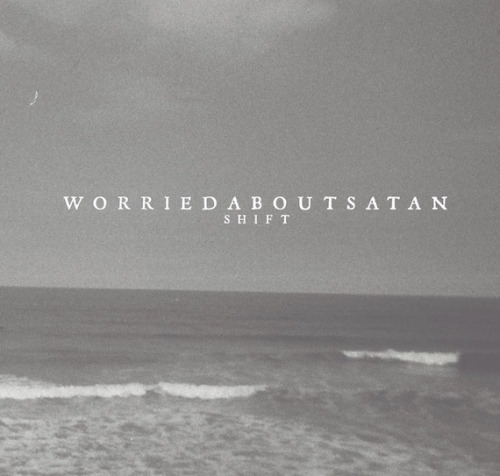
German label Wolves & Vibrancy is predominantly given to releasing metal, which makes worriedaboutsatan something of an unusual choice. Still, any release by the genre-straddling electronic duo is welcome regardless of who releases it. With two tracks spanning twenty-five minutes, Shift sits somewhere between an EP and a mini-album. And while it’s categorically not metal, because it’s worriedaboutsatan, it does, most definitely, err toward shades of darkness is places. But equally, because it’s worriedaboutsatan, it’s a work built on contrasts and detail.

On ‘Shift 1’, the rendering of those contrasts and details is analagous to a pencil sketch drawn with a relaxed, free hand, the shading effortlessly contoured by a smooth, easy, and relaxed wrist action to form soft, organic shapes and subtle movement.

A throbbing, low-to-mid drone swells dark, sombre. The first beats are but scratches. Paired, isolates. Hanging n space amidst the dense swirl. But they pick up – almost imperceptibly at first – and slowly, so slowly, begin to approximate a sedated heartbeat. From the building tension and growing density, just as it threatens to reach a critical mass of claustrophobia, emerges a soft, supple, rippling sound of light. Toward the end, a stippling, dappling pattern of light in the form of an interweaving motif rises on a slow wave.

‘Shift 2’ is more about stark contrast, black and white op-art flickers: the interweaving motif that surfaced, spectral, in ‘Shift 1’ takes on a new dynamic, a new tone, and dominates the front end of composition. The result is the sonic equivalent of a monochrome kaleidoscope, the patterns shifting in time and sequence with disorientating effect. Simultaneously calling to mind the vintage works of the likes of Tangerine Dream, Mike Oldfield and contemporary microtonal experimenters, it’s immersive and powerfully hypnotic. In time, it tapers away, and the temp slows, returning to the heartbeat bass and echoic click, before resurging around the mid-pint to weave a mesmerising sonic latticework.

Shift is appropriately titled given its endless evolution and morphology. In context of their oeuvre, its one of their ostensibly less ‘beaty’ releases, but it’ still displays the dynamism and sense of atmosphere that was have made their trademark since their emergence as premier purveyors of music that crosses post-rock and electronica. And as such, while it marks yet another evolutionary progression and expansion, Shift is quintessential worriedaboutsatan.

worriedaboutsatan – Shift

AA

Dependent /Amped – 26th January 2018

It would be easy to criticise Kirlian Camera’s new album for being a genre stereotype, entrenched in darkwave clichés of thumping disco beats propelling shuddering sequenced bass undulations and chilly, inhuman synth sweeps. But having formed in 1980, the Italian act, having mutated from pedalling synth-pop to progress into darker territories as the 8s progressed, are part of the first wave of bands to fore the style.

As maligned and misunderstood as it is, goth and its subcultures and musical substrains have endured, impervious to fashion, and any ebb and flow which has witnessed an upsurge in popularity has seemingly been coincidental.

I’ve no aversion to electronic music, but as a general rule, dark wave / cold wave music leaves me, well, cold. It’s not that synths and carefully produced vocals can’t convey emotional depth and that there is nothing to connect with, but as a style, it tends to lack humanity and consequently resonance. There’s music you hear, and music you feel. The electronic strains of goth all too often tend to be heavily stylised, entrenched in the well-established tropes.

As a listener and critic, I’m in no position to judge or undermine the actual emotional content of the lyrics or to question their sincerity. I am no-one to challenge how strongly any individual feels something, and I’m the last person to deride a so-called goth for being sensitive. It’s a matter of articulation: eternally drawing on a limited bank of metaphorical references and stock-phrase imagery, it feels more like the feelings are pulled tightly into a corset or genre conformity than a true release of pent-up, innermost pain. Moreover, the drama-focused delivery feels to careful, too meticulous in its presentation.

Despite a shifting line-up over the years, Elena Fossi has covered vocal duties since the turn of the millennium, and her melodies are excellent, strongly delivered with grace and nuance. So what’s the issue? It’s certainly not technical or compositional. It’s not about lack of range in terms of tone or tempo, either: ‘Helium 3’ goes all swampy, with whiplash snare and a stark, minimal synth chord sequence reminiscent of The Human Leagues ‘Being Boiled’ overlaid with creeping fear chords, atmospherics and samples. ‘Kryostar’ brings robotix vocals and a pounding technoindustrial beat, and a relentless juggernaut groove paired with soaring, choral operatics.

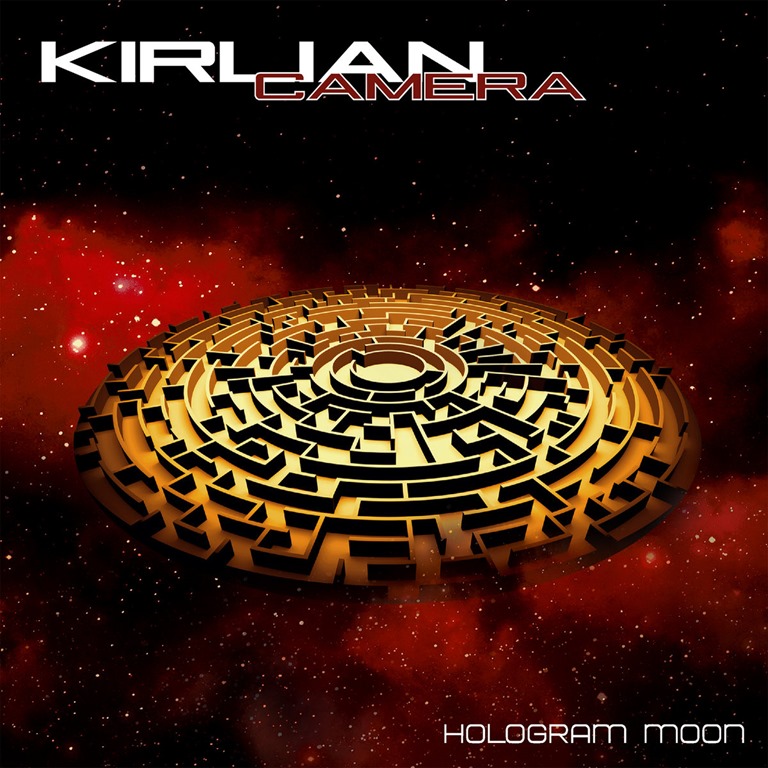
But whether it’s rolling piano and breathy vocals building the drama, as on ‘Traveller’s Dream’, or bombastic synth explosions, Hologram Moon feels very stylised, controlled. And thus we return full circle. It would be easy to criticise Kirlian Camera’s new album for being a genre stereotype, but however well-crafted, well-performed and well-produced, it would be difficult to compliment it for being anything more.

AA

Kirlian Camera - Moon

Crónica 136 – 9th January 2018

Christopher Nosnibor

There’s something seriously awry with my promo download of the album. The tracks won’t play any audio, and instead flit by as if scrolling, searching through a menu on fast-forward. It’s a disorientating experience, and frustrating. But my curiosity I piqued, and so I feel compelled to piece together a review from the sources I can access, starting with the album’s BandCamp page on the label website.

The genesis and evolution of this collaborate project is described in the most factual of terms in the accompanying blurb.

To start AMT and Tarab exchanged materials and objects. AMT exchanged a single sound sculpture for Tarab’s collection of small objects. This material exchange led to activity. AMT manually manipulated, Tarab also, but more often than not he placed the sculpture in situations and let them work on it. Once again exchanges took place, this time of audio material. Elements where then selected and arranged and further rearranged; some left untouched and some where [sic] transformed.

I know little about either act, beyond the sketchy bios which accompany the release. On the evidence of the contents of this curious split album, Artificial Memory Trace – a project by Slavek Kwi, a sound-artist, composer and researcher interested in the phenomena of perception as the fundamental determinant of relations with reality – create fragments of sound, with seemingly random bumps and scrapes and whistles and near-mic distortions and whatever snippets come to hand tossed together to make bumpy, jumpy sonic rides. Very brief, bumpy, jumpy sonic rides at that: the seven AMT contributions to this release are under the minute mark, but what they lack in duration is countered by their intensity. They don’t make for easy or smooth listening.

Tarab’s seven pieces are lengthier and present a very different approach to composition and arrangement. Scuffling shuffling scrapes and thumps congeal to render soundscapes that couldn’t possibly sit within the ‘ambient’ bracket. It’s altogether too jarring, the intrusions unexpected and sometimes surprising. You can’t settle to this, you can’t mellow out or relax. If fact, this is a sonic experience that provokes twitchy, tetchy reactions. It’s not music to ‘like’ but to appreciate artistically. Its challenge is its strength.

None of this is to pitch one act against the other as being more ‘evolved’: if anything, their contrasting styles and near-duality is integral to the appreciation of this release.

How seriously should it be taken? Probably quite seriously. Nothing about Obex intimates an explicitly light-hearted release, an album geared towards ‘fun’. And yet amidst the dark, ponderous clanks and rumbles, something about Obex suggests an entertaining aspect, and also hints that this is art for the love of art over and above any grander narrative. And, context / no context, this is an interesting, textured work, rich in texture and dynamics.

AAA

OBEX

Candlelight Records – 23rd February 2018

Christopher Nosnibor

Having caught Black Moth live early on, before the release of their debut, I’m in a position to attest just how far they’ve come and how much they’ve grown. And third album, Anatomical Venus shows their trajectory continues upwards and outwards: with each release, they’re bigger, and simply more.

If debut The Killing Jar was a rock-solid heavy rock album that revelled in the vintage riffery of Sabbath and its successor, Condemned to Hope was the sound of a band coming into their own and filing out their songs with heavier, denser chuggage, Anatomical Venues combines the strongest elements of its predecessors and brings an even harder, heavier edge, while at the same time bristling with even sharper hooks and stronger vocal melodies.

‘Buried Hoards’ blends grunge and goth to forge a dark grandeur, while the six-and-a-half-minute ‘Severed Grace’ finds Harriet bring a certain sneer and tantalisingly teasing edge to her delivery, which weaves its way around a serpentine lead guitar and super-dense bass throb. And across the album, Back Moth bring groove galore. Anatomical Venus leans toward the quicker tempo: ‘A Lovers Hate’ is less Sabbath and more Motörhead, a punk attitude informing the driving guitar-based assault. Compositionally, it’s stripped-back and simple, something that’s been core to Black Moth’s work from the outset: namely, that the riff is king. Front and centre, the riff. Simple, but effective, four chord workouts lie at the heart of most of the songs. In the world of both rock and pop, less is invariably more. Back Moth know this and exploit it well.

There’s no substitute for a beefy bit of guitar you can get your head down to. Not that they lack technical prowess: the solos are killer, but never overlong or excessively flamboyant. There’s simply no fat to be found on Anatomical Venus.

The album’s last track, ‘Pig Man’, lands somewhere between Lydia Lunch and Melvins, with a churning sludge metal riff and a sassy, semi-spoken verse… and noise. Cathartic, chaotic noise building to a climactic crescendo.

Black Moth’s strength has always been their knack for solid, hard rock that fundamentally plays to the rules – by which I mean, their focus has been quality over innovation. This is actually an admirable quality, because they’re a band who grasp what makes rock music rock. But Anatomical Venus sees the band extend their horizons, without losing sight of any of the qualities that made them in the first place. And in bringing everything all together, and making it tighter, tauter, and as dense and heavy as ever, Black Moth have delivered their strongest, most focused album to date.

AAA

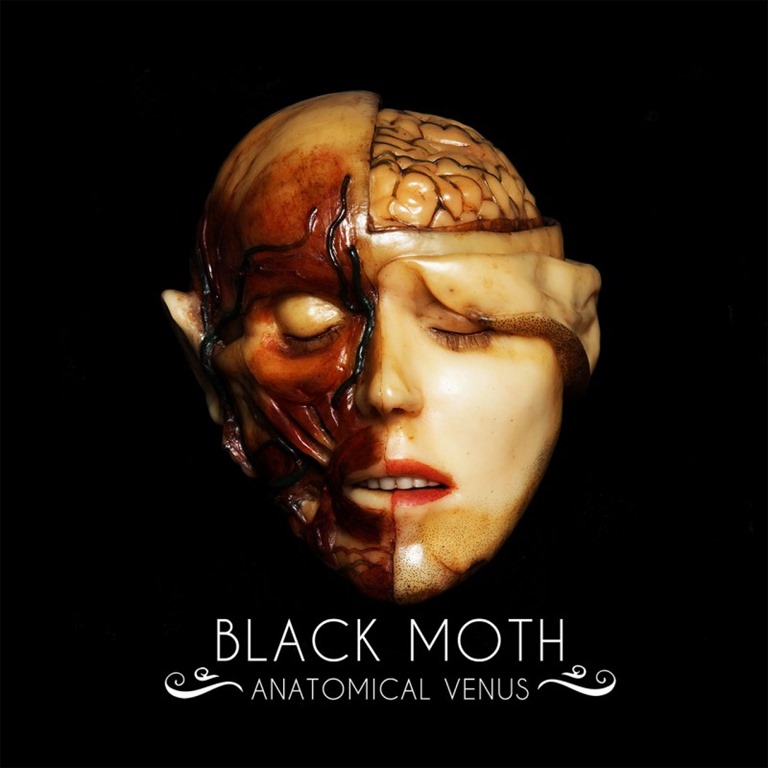
Black Moth - Anatomical Venus

gk rec. 2018 – 4th January 2018

Christopher Nosnibor

The ever-prolific and some enigmatic Gintas K kick-starts 2018 with his umpteenth album (26 available via BandCamp for a start) in fifteen years. We don’t hear much from Lithuania, and the chances are that the exploratory and chiselling works released by Gintas K will reach the broader populace is an injustice.

Acousma Light is a mangled mass of bubbling analogue bleeps and whistles, R2D2 slowly melting over a sulphurous swamp amidst an immersive smog of low-end hums and disconsolate drones. As such, it very much continues in the vein of one of the most confusingly-titled releases ever, 2014 (Attenuation Circuit 2017), which was released last year.

Gintas K (no relation to Michael K or the associated neoist project of multiple identity associated with the name) sits in the broad bracket of avant-garde in his approach to creation. He describes himself as ‘a sound artist exploring granules, hard digital, memories,’ and has had works released on an impressive array of labels which promote experimental and avant-garde works, including Baskaru and Crónica. But, perhaps more admirably, K continues to release material apace with or without label backing. This is an artist in the truest sense – one who places artistic endeavour before commercialism, and clearly creates by compulsion rather than being motivated by any desire to create ‘product’ of an overtly marketable nature. And there is nothing commercial or marketable about Acousma Light, an album with a detailed theoretical context which I shall sidestep here, because its not integral to appreciating the audio experience.

It’s awkward, uncomfortable, tense, jittery. The compositions – such as they are – are formed around flickering circuitry, skittering notes – not exactly musical, so much as resembling sparks flickering from a defective socket. Much of Acousma Light reminds of the pink noise extravaganza of early Whitehouse releases like Total Sex, or more contemporary works like

Yoshio Machida’s Music from the Synthi and Yasunao Tone’s AI Deviation #1, #2. It’s also an expansive work: the bulk of the nine ‘episodes’ extend far beyond the five-minute mark, with ‘Episode#3’ (17:24), ‘Episode#4 (9:27), and ‘Episide#7’ (12:50) really pushing the parameters with extended sequences of unsettling noise.

There’s nothing comfortable about any of this. There isn’t supposed to be. Unsettling noise, ever-shifting carpets of discomfort casting patters over which snakes slither and crawl: this is the shape of the ever-shifting shape of Acousma Light. Dark, murky, hazy: above all, this is an unsettling scred of noise which offers a different kind of immersive.

Gintas K

Everyday Life Recordings – 8th December 2017

Christopher Nosnibor

They’re described as ‘motorik-punk outsiders’. Something about those three words grabbed me. Individually, they’re words I read several times a day in reference to bands being thrust in y direction for a critical appraisal. The world of music PR and criticism – not that many critics seem to be especially critical these days – is awash with cliché. And cliché begets cliché: no-one’s interested in inventing the next big thing: it’s far safer all round to recreate the last big thing in an infinite loop of regression. Punk never died, it just got diluted and turned into guitar-pop for teens too sappy to handle anything heavy. But when did the Krautrock revival begin? When The Fall emerged with their Can-influenced repetitious racket in the second half of the 70s, acts like PiL and Joy Division may have cited leading exponents Can and Kraftwerk as a touchstone, but few really embraced the now-ubiquitous ‘Apache beat’ innovated by Neu! And it is ubiquitous, and has been for some years now.

Still, few punk bands of any strain incorporate relentless, repetitive 4/4 rhythms in an overtly Krautrock way. Moderate Rebels, however, have really made this their signature (if you’ll pardon the pun). Not that they’re ‘punk’ in the sense it’s commonly perceived, nor in any of its contemporary revisions: Moderate Rebels have very much taken the spirit of The Fall as their template, and having set the template, they work the absolute fuck out of it over the course of the thirteen tracks on this, their debut album.

There’s certainly something Fall circa Bend Sinister or Frenz Experiment about the chugging ‘Extraordinary’ with its drawling, monotone an almost off-key multiple vocals, repetitious lyrics and endlessly looping chord sequence and beat. It should be as tedious as hell, but the longer it stretches out, the more it drags you in, and it’s a killer earworm. The only criticism is that it simply isn’t long enough. It’s a trick they repeat on a number of occasions, with guitars that jangle and scrape at skewed angles over strolling basslines and pulsing synths. And all the while, the rhythms hold steady, mid-tempo, stomping along with minimal fills. These aren’t songs that follow verse / chorus structures, evolve, build, or ‘go’ anywhere. The effect is simply cumulative. And that’s only amplified over the album’s duration: dipping in’s fine, but it’s best played as a whole, and better still, on repeat for a full afternoon, to achieve optimal enjoyment and appreciation.

Moderate Rebels are by no means one-trick ponies, though, and there is more to The Sound of Security than calculated monotony and the ploughing of sonic furrows that dig into the psyche by virtue of sheer tenacity.

There are pieces which work spacious atmospherics, with sputtering vintage drum machines bursting through elongated e-bow drones and rippling piano. Elsewhere, the laid-back and loose ‘Waiting for the Water to Clear’, and the slacker country of ‘I’m Feeling the Deep State’ showcase a more indie, Pavement-y vibe.

But mostly, it’s about plugging away, chugging and thumping. The reverb. The repetition. And the repetition. And not to forget the repetition. There is no such thing as too much of a good thing.

AA

Moderate Rebels – The Sound of Security

Metropolis Records – 13th October 2017

Christopher Nosnibor

I’ve lost count of how many bands and songs I’ve encountered that reference ‘dream machine.’ The first was perhaps back in maybe 1992, aged seventeen, on purchasing Scenes from the Second Story by The God Machine. Although I had read Naked Lunch, Junky, and Queer (which was the limit of William Burroughs material available in my local Waterstones), I had yet to discover the weirder and more wonderful, experimental side of Burroughs, let alone his accomplice Brion Gysin, who was as responsible for the advent of the cut-ups as Burroughs himself. It was electronics technician, computer programmer, and peripheral Beat Generation associate, Ian Sommerville who invented the stroboscopic device know as the Dream Machine in 1960. I do sometimes wonder how many of those references to Dream Machines are aware of its origin and history, but given Burroughs’ popularity in industrial / related circles, the chances are probably fairly high. Which then leads to the question – just how much is this about trip, and how much about hip?

Inertia have been kicking out technoindustrial tunage for almost two and a half decades now. Over that time, they’ve acquired a respectable fanbase and released a slew of albums. As is always the case with the ‘goth’ scene, it’s all happened more or less invisibly, underground, and internationally rather than domestically.

Dream Machine is very much an album which follows established templates: insistent, bubbling synths heave and grind over thumping sequenced beats with a toppy edge and hard dancefloor edge. It’s solid, and it has tunes. It’s got the right balance of attack and melody, edge and groove. In fact, it’s pretty much back-to-back tracks you could get down to on the dancefloor at a goth night, and steel toe caps would be recommended.

The drum pattern at the start of ‘Only Law’ is a near-lift of the intro to ‘Burn’ by The Sisters of Mercy, before it all goes Music for the Masses Depeche Mode. It’s not just the insistent synths and jittery sequenced bass, or the hard-edged beats, but the soulful, melodic, backing vocals. Elsewhere, ‘Thorns’ goes Ministry circa Twitch. But for the most part, as is so often the case with longstanding technoindustrial acts, I hear Depeche Mode, with a dash of early Nine Inch Nails. I’m by no means averse to the sound, the style, or the influences: in fact, I’m a huge fan of both DM and NIN and have more Wax Trax! 12” than I could play in a week.

So where’s the beef? It’s all a bit samey. I feel like I’ve been listening to the same hardfloor techno-driven industrial-strength electro grooves for more than twenty-five years. Cybergoth, Darkwave, EBM, Aggrotech, Industrial Dance Music… the terminologies matter not. Some came, some went, but musically, it’s much of a muchness and I’m not up for debating the semantics of microgenre aesthetics.

Dream Machine is ok. It’s got some decent tunes. And it sounds like countess albums I’ve heard before.

AAA

Intertia - Dream Machine

Unknown Pleasures Records – 14th February 2018

Christopher Nosnibor

Given the band’s name and that of the label they’re signed to, it’s only fitting that they’re exponents of bleak synth-driven post-punk. Sure enough, as the Italian five-piece’s biography notes, Stefano Bellerba (vocals, guitar), Leonardo Mori (synth), Matteo Luciani (bass), Saverio Paiella (guitar), and Daniele Cruccolini (drums) formed in 2010, and united over their love of Joy Division, The Cure, Nine Inch Nails, and Depeche Mode. The bio adds that ‘their music is also strongly influenced by Bauhaus, Siouxsie and the Banshees, Yeah Yeah Yeahs, Japan, The Damned, Interpol, Suicide, CSI, CCCP, and Massimo Volume.’

One of my favourite poems of all time is Philip Larkin’s ‘This be the Verse’, and the fact they put it to music for single release in the summer of 2017 -and made a decent job of it – got me on-side ahead of the new album.

The album in question, Santa Sangre is a lot more guitar-orientated and edgier: while the synths are still very much in the mix, the sound is dominated by brittle, metallic-edged guitars drenched in reverb and flanged hard. It’s the sound of 1982-1985. I’d be hesitant to use the term ‘gothic’ or any variant, despite the snaking atmospherics of tracks like ‘Rejoice’, with its strolling bassline and vocals all but lost in an ocean of echo, which allude to the likes of The Danse Society and acts of similar vintage.

I make no apologies for being an old goth (although I’m not nearly old enough to be a proper old goth, having been born in 1975 and only discovered alternative music in any form in 1986/7). Similarly, I make no apologies for not being a purist, or for my knowledge of second-wave and beyond bands being limited. There’s so much else out there in the musical sphere. Yet, at the tail end of the year, feeling weary and wintery and withdrawn, I find myself here – as I did late last year, and the year before – with a crop of albums which betray gothier leanings which leap out as among the strongest and most compelling releases I’ve received all year.

Lead single, ‘Circle’ was a blast of buzzing bass and squalling guitars, with elements of The Jesus and Mary Chain and A Place to Bury Strangers, pitched with chilly synths and vocals with a grippingly desperate edge. It’s placed up front in the track listing, and serves the purpose of demanding the attention with its urgency and serrated edges.

Snaking basslines, choppy guitars and tribal drumming abound, but there’s a pop edge to a number of the songs: ‘Blown Away’ melds fractal guitars to an insistent flanged bassline that’s as pure Cure as the synths which eddy at a respectful distance in the background. There’s a certain bounce – and even catchiness – to the richly-layered shoegaze-goth of ‘For Every Flaw’.

When they do lugubrious, it’s as sparse and bleak as anything on Faith, and when they do slow-build, they really go for delayed gratification, forging a dense atmosphere along the way.

Santa Sangre is taut, tense and crackles with dark energy.

AA

Japan Suicide - Santa Sangre (cover)

20th December 2017

There’s something uniquely enjoyable about watching a band develop from their most formative stages to become the act they aspired to be, and showed the potential to be. I first encountered Seep Away on a bill of noisy shit around Christmas in 2015, soon after they came into existence.

They describe their sound as ‘raw and punkish,’ and not that ‘there’s not too much melody, a lot of anger and a tonne of noise’. Their performance was ragged, and it was clear they were very much in development, both musically and as an act. But the sheer passion and raw energy they poured into that set was something else. They would stop and gasp for breath between songs, having played each one like it was the last song they would ever play.

Over the course of the next two years, they didn’t just get better, they got awesome. Tighter, louder, harder, harsher. Jay Sillence swiftly evolved into one of the most compelling front men you could hope to see: fearlessly in your face, anarchic and unpredictable, and it was clear watching them play that they were loving every minute.

It’s therefore sad that The Blackened Carnival of Societal Ineptitude is a parting gesture. But it’s also a cause for elation that they’re signing off with a collection of songs that encapsulate the sound – not to mention the brutal, ferocious, energy of those later live shows. Circumstance and geography may be behind the band’s demise, but better that than acrimony or creative collapse, and they’re departing on a high. The Blackened Carnival of Societal Ineptitude contains eight tracks and clocks in at around twenty-two minutes and condenses all elements of the essence of Seep Away into that.

‘Rot’ is all about the churning, pulverizing riffage, the ribcage-rattling bass and snarling vocal attack. For dingy, murky, metal-done-dirty, it’s up here with Fudge Tunnel at their best. Single cut ‘Matchstick Man’ throbs and rages. Their rendition of Ol’ Dirty Bastard’s Shimmy Shimmy Ya’ has long been alive favourite, and the studio version captures the spirit of their interpretation perfectly. You’ll be leaping round the house hollering ‘baby I like it rrrrrrrrrrroooooaaaaawwwwww!’ for a week after hearing it just once.

The album’s second cover, a take on Minnie Riperton’s ‘Loving You’ sees Sillence come on full Marilyn Manson, and they ratchet up the sneering sleaze to eleven. It’s a showy, metallic-grinding wheeze, brimming with sadistic malice. It’s also a sackful of deliciously manic and suitably irreverent fun.

‘Joie de Vivre’ returns to the snarling, churning, grunt and chug of the heavy grindy / metal / hardcore amalgam that defines the band’s sound, and it’s hard-edged and gnarly in the best possible way. It packs in all of the band’s intensity and full-throttle attack into under four minutes (and is the longest track here).

Closing the album (EP. whatever) in quirky and irreverent style, ‘The Awkward Handjob’ is a piece of silly fairground japery about, er, wanking, of course. It’s fitting that of any band, Seep Away should end their all-too-brief career with a toss-off track about tossing off.

Instead of bemoaning unfulfilled potential or mourning their departure, we should focus on the positive: Seep Away have delivered a blinder of a set here.

AA

Seep Away - Blackened