We’re deep into skittery microtonal bleeping territory with this 24-track extravaganza. Sussman’s work is algorithm-based, meaning there’s a certain formality to the proceedings, however chaotic the notations become. And they do indeed become chaotic, explosive,
The first of these tiny sonic snippets, ‘Kr 22.2.6’ is a hyperspeeded barrage of blips that sounds not dissimilar to the old dial-up sound. Wonky chimes and clanging digital bongs abound, along with stammering, clattering metallic beats and popping electronic arrythmia jitter through EQ filters.
Variety comes in the form of splurging squelches, parping electronic squiggles that wobble digital farts: ‘Kr 28.1.6’ almost forges a semblance of a funk groove from the bubbling sonic swap. In contrast, ‘Kr 29.4.13’ ebbs and flows ins surging pulsations that set the teeth and nerves on edge with a squall of digital fizz’, while ‘Kr 30.3.14’ is fun but warped, a detuned piano bouncing every which way in a tidal wash of delay. ‘Kr 31.3.18’sounds like a call from a mobile phone in a washing machine, while ‘Kr 33.5.8’ is a sparking digital blastbeat that showers treble explosions are several hundred shards per minute.
The album as a whole is a morass of digital experimentation, and each piece is but a fragment, with running times ranging from 2:28 to 2:49. It’s bewildering, disorientating, difficult. It isn’t for everyone. But it is interesting.
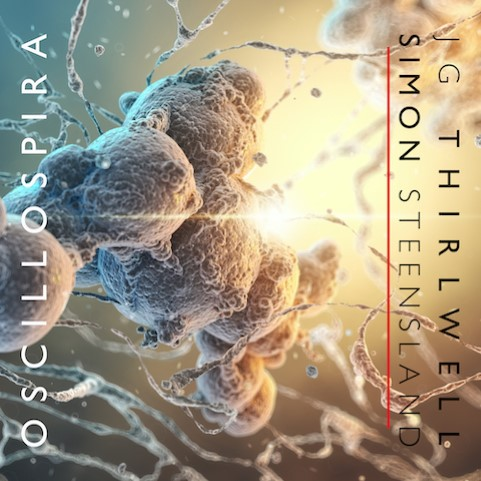
Some cursory research tells me that Oscillospira is an anaerobic bacterial genus from Clostridial cluster IV that has resisted cultivation for over a century since the first time it was observed. There’s a distinct compositional theme across the album’s eight compositions, although, with high drama and dynamics dominating.
Thirlwell has been mining a rich seam of orchestral drama for a long while now, in a trajectory that began with the 1985 Foetus album Nail. Since then, his projects have become increasingly expansive and ambitious, and the last decade has seen him abandon all trace of anything that could be remotely construed as ‘industrial’ in favour of grand cinematics, not only on the latter Foetus albums, but also the Manorexia releases and soundtrack works and all the other various side projects… Did I mention that over 40 years into his career, despite having tempered his wilder sonic urges, Thirlwell’s creativity and output remains unabated? And yet for all the volume, the quality remains undented. I make no apologies for the fact that I’m a total fan, and have been forever.
Few musicians are even a fraction as articulate as Thirlwell, musically, lyrically, or conversationally. Throughout his lengthy career, he’s retained his somewhat enigmatic status and singular musical view.
This collaboration with Simon Steensland is one of many during his career, and is very much representative of Thirlwell’s output over the last decade: heavy orchestral work with all the widescreen feel of a John Williams work, while at the same time seeing Thirlwell return to territories that bring industrial and orchestral together in a head-on collision.
‘Catholic Deceit’ enters by stealth with a sweep of strings, but swiftly develops into something bold and layered, before crunching metal guitars grind in hard and heavy. Revisiting the religious theme at the album’s mind-point, single release ‘Papal Stain’ follows a similar trajectory, with some energetic jazz drumming and discordant horns clashing crazily over the course of its ten-minute running time.
‘Heron’ goes choral and a little bit original Star Trek, but equally has some hushed, eerie passages that not only provide contrast, but alter the mood significantly. There’s a Swans-like stop-start guitar grind at the heart of ‘Night Shift’ over which monastic vocals echo like a ritual, and ‘Heresy Flank’ pushes a cyclical groove that’s ruptured by some classic orchestral strikes.
It’s not just the arrangements and the varied instrumentation that are outstanding in their immense vision and inventiveness, but the production too: it’s immense, and while the overall effect is one thing, the detail entirely another, as incidentals leap out unexpectedly, and different instruments rise to the to fore. Often, such details are subtle, but the effect and impact are pronounced, and something special.
No preamble, no slow-building intro: Fret! pile in with everything louder than everything else on the full-throttle set opener, ‘Hillbilly’. It’s got swagger and groove, but it sure as hell ain’t country, and similarly, ‘Surf’ is swampy, repetitive, dingy. And of course, I’m excited.
Recorded live at South Street Arts Centre, Reading (UK) 18 March 2017, Fierce Business On South Street documents a set which comprises a large number of songs from the album
Through The Wound The Light Comes In, released the month before. It captures the feel of a live show brilliantly, being raw, unsanitised, and in your face. Right now, when I’m missing gigs so badly it hurts, Fierce Business On South Street reminds me of everything that’s special and unique about that blast of sound in a confined space, with the immediacy and proximity to both the band and other people being leading factors. It’s perhaps ironic that this live recording does more justice to some of the songs than their studio counterparts, but Fret! are a band who are 100% DIY in their aesthetic, and the zero production applied to the releases to date is integral to that.
‘DK’, the first track on Through The Wound, is built around a cyclical bass riff and some churning guitar that slows to a crawl before bleeding into the lugubrious doomy dirge of ‘Dark as a Dungeon’, a downtuned grinder that which features the set’s first vocals. If you’re looking for melody or hooks, look elsewhere. Cut down to seven minutes from the 14-minute studio version, it’s still epic on every level.
They rip through nine songs in just over half an hour, with a succession of short sharp shocks – ‘Cowboy’, ‘Punch’, and ‘Loop’ are all around two-and-a-half minutes, with the penultimate assault, ‘Tired’ being blasted through in a blink-and-miss-it minute and a half. Closer ‘Sonic’ blasts in with a blitzkrieg of snare shots like machine-gun fire and it drives it all home to the finish in style and with all the energy.
The riffage is relentless, and dingy and packs the same sweaty gunge heft of early Tad, and this is so grimy you’ll probably need to shower afterwards.
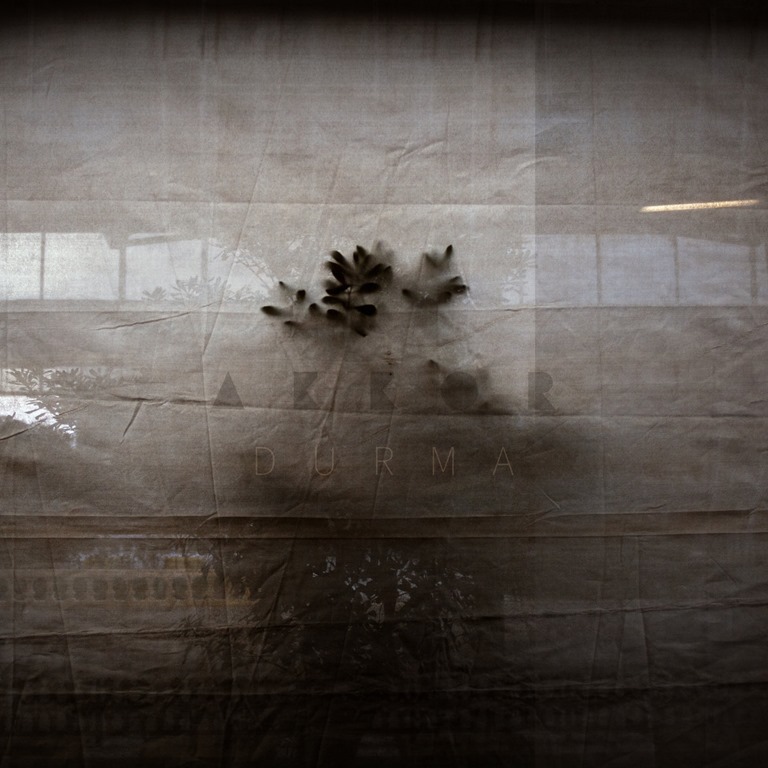
Following on from the single cuts ‘An’ and ‘Zabt’ in January and February, Turkish musician Akkor unveils the full-length album in the form of Durma, which promises ‘an electroacoustic narrative in a progressive cinematic sound universe through piano, synthesizers, soundscapes and recorded/found noises’.
What these releases hinted at, and which the album confirms, is that Akkor’s approach to combining found sound and electroacoustic arrangements are subtle, seamless, even. Rather than collaging cut-up fragments and snippets across one another to disorientating effect, Akkor processes everything, hard, smoothing it together to form a whole that’s textured but remarkably coherent. That there’s an overtly structured feel to the album, with piano motifs and defined beats holding things together is the key here.
The ten-and-a-half minute title track which opens the album is a spacious ambient work that rumbles, scrapes and soars towards the stratosphere before the thudding electro beats kick in and pull it back towards the ground. It’s mellow and expansive, but there’s a solidity at the core of the cloud-like drift.
It sets the tone and the form nicely. With all but one of the seven tracks stretching past the five-minute mark and the majority in the six to ten-minute range, Akkor isn’t afraid to explore, to give his ideas and the sounds that carry them room to breathe. And Durma is one of those albums that’s best experienced as a whole, not because of continuity or flow, but because it sits together as a single piece. And when heard as such, it’s an absolute pleasure.
Please Call Me Fuck In Front Of My Friends, the latest dispatch from the prodigiously prolific Theo Gowans, aka Territorial Gobbing, finds oodles of discombobulating discord and dissonance thrown together in a set of skewed sound collages. As such, it’s business as usual. TG’s wildly experimental approach to rendering and processing sound by means not just of founds found and myriad effects, but the (mis)appropriation of random objects means you never know what the hell you’re actually listening to: loud crackles and scratches are probably the sound of sweet wrappers and paper towels being scrunched up close to the mic. It’s supposedly Theo’s most ‘organised’ work to date, and maybe it is, but of course, it’s all relative and one man’s organised is another man’s chaos – as anyone who’s seen my office will probably appreciate.
Amp hum and scrambled tape loops twist and entwine into a massive twisty knot of noise, a clashing conglomeration of aural chaos, a crazed cataclysm of random elements thrown together in the most haphazard of fashions. This shit’s impossible to pin down.
Garbled groans and wheezes, bleeps and blasts of noise collide with static and radios being tuned detuned, and retuned; there are prolonged periods where not a lot happens, which are annihilated by brain-bending bursts wee everything happens all at once.
‘Pyrex Chalice’ is representative, with something that sounds like bottles and cutlery being used as an improvised xylophone while dustbins clatter in a city alleyway and someone close to the mic stifles the breaths of a crafty wank.
Metallic scrapes and clatters coagulate into messy improvised chimes, and there’s some kind of whispered, gallic-sounding sleaze that descends into sobbing and is backed by clattering pots and pans on ‘Massage the Scar, Five Minutes, Five Times’. If none of it makes any sense, then that’s entirely the point.
Playful but bleak and as twisted as fuck, Please Call Me Fuck In Front Of My Friends again suggest that Territorial Gobbing is one of the acts closest to the spirit of the other TG, and Genesis P-Orridge’s absorption of the influence of William Burroughs’ cut-ups. The Industrial Records release of a collection culled from Burroughs’ archives of tape cut-ups on Nothing Here Now But the Recordings marked a direct link: Territorial Gobbing very much continues the trajectory in creating music that discards linearity in favour of simultaneity.
Weird times call for weird music, and Please Call Me Fuck In Front Of My Friends is the perfect brain-bending soundtrack and exactly the distraction you need.
This release acquired a new poignance with the passing of the person who inspired it just weeks before its release. Mark was the editor of Losing Today magazine and his blog, The Sunday Experience was renowned and revered for its coverage of the weird, the wonderful, and ultimately, the underexposed, an ethos I can more than relate to. It’s something you do for the love – and I don’t mean adulation – not the money. But the thing I’ve learned from personal experience is that the more obscure and niche the band, the greater the appreciation for the exposure. Depeche Mode were right: it’s a competitive world, and with a gazillion bands vying for attention, it’s hard to snag coverage if you’re unknown.
As I see it, as a music fan and writer, it’s all about the grass roots and the underground: no-one needs my opinion on the latest Editors or U2, but they do need to know about the great stuff being released by the likes of Bearsuit and Panurus and infinite acts working on a DIY basis. This was also very much Mark Barton’s territory, and the disparate array of contributors to this compilation is testament to his eclecticism and unswerving commitment to promoting all things beyond the mainstream – so much so that this CD reminds me of what it was like to listen to an episode of John Peel in the early 90s. So there’s a shedload of indie and alt-rock, a dash of grunge, all the shoegaze, and some trudging industrial metal. Yep, they’ve even scored a track from Godflesh for this release, in the form of ‘Ringer’, lifted from the ‘Decline & Fall’ EP released back in 2014 and now deleted.
The list of contributors and the track list is remarkable, and testament to Barton’s range and reach, and also respect in the music community. The relationship between music writers and artists can at times be fractious, and so tom observe the reciprocal appreciation for a true champion is something.
It’s pretty cool having The Lovely Eggs up first: they’re one of those quintessential lo-fi indie/ alt-rock bands that could have exited at any time in the last 30 years, but we’re fortunate they exist now to carve out melodic songs with a quirky twist and all the crunchy guitars. And while guitars do dominate the selection – Kiran Leonard’s ‘Pink Fruit’ is rather like early Radiohead but with a major grunge twist, while Pigs Pigs Pigs Pigs Pigs Pigs Pigs bring a mess of Hawkwind-like space rock and Yellow 6 and Moon Duo booth melt together combinations of psychedelia and shoegaze together over a motorik groove.
Given Bearsuit’s propensity for the ultra-weird, often with hints of electronica and with a Japanese flavour, this release seems surprisingly regular – but that’ a question of context rather than a case of selling out, as the gloopy ambience of Irkan’s ‘Hirkeskov’, the swampy bedroom trip hop of Fort Dax’s ‘Sakura’ and the presence of an array of unknown acts evidence.
The names and unknowns sit alongside one another perfectly, however, and in balancing knowns and unknowns, it makes for a great showcase of diversity, and a great compilation in its own right. The fact all proceeds are being donated to Macmillan Cancer Support is an additional bonus, and shows the artistic community doing what big businesses so rarely do, namely putting people and causes before profit.
Tētēma’s second album, Necroscape, takes as its theme ‘isolation in the surveillance age; and although lofty/high-concept sounding, this is still an intensely fun and heavy listen’. As we enter a strange (I’m already sick of ‘unprecedented’) time that gets stranger by the day, isolation is coming to take a new level of meaning and a heightened reality for many around the globe. As if the constant surveillance wasn’t enough to make many of us jittery and paranoid, the world in which we now find ourselves is one in which paranoia has been replaced by all-out panic, jitterniess by full-on bog-roll buying shitting. However caught up in the hysteria one is, the incontrovertible fact is that things are weird right now. And because tētēma is a project involving Mike Patton, this is a weird album.
Pairing again with Anthony Pateras to deliver a ‘modernist electro-acoustic rock proposition’, the one thing Necroscape is not is predictable. It’s also far from po-faced, instead leading the listener on a wild ride that’s intense, and bewildering but not bleak.
The haunting, sepulchral title track, with monastic vocal utterances and delicate piano does nothing to prepare the listener for the blistering racket that follows on ‘Cutlass Eye’. Swinging between snarling black metal and wild orchestrals, it’s a rollercoaster to say the least. ‘Soliloquy’, released recently as a single, ain’t Shakespeare, but is a random blast that sounds like a 33 being played at 45 with sinister vocals that veer from a whisper to a snake-like strangulated snarl. There are passages of murky experimentalism and discord that slide in and out of swampy jazz, and there are classic Patton moments that slip out amidst the collage of chaos, with hints of Faith No More’s inimitable melodies an Mr Bungle’s nuttiness balanced by Anthony Pateras slightly more balanced, rational compositional style.
As a collaboration, it brings together two quite different styles and melds them seamlessly.
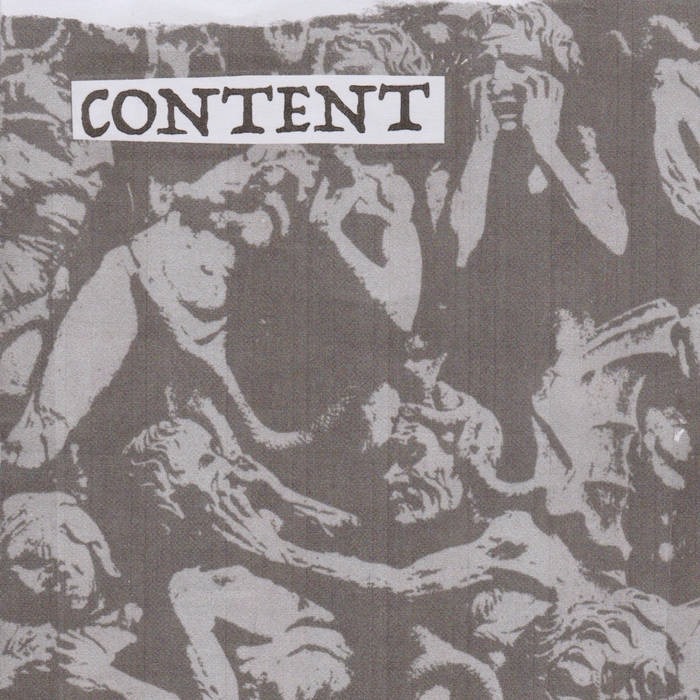
Nothing says ‘niche’ and ‘underground’ more than a limited edition of 17 copies. Pitched as a work of ‘radical ideology for fans of Crass, Pet Shop Boys and Nitzer Ebb from the rotten half of Normal Man’, this six-tracker is a gnarly mess of electronics, popping beats and a disorientating sonic swirl.
It’s an aggressive spluttering nailgun blast of percussion that assaults the ears first on ‘Permanent Contract’. There’s a bumping bass beat beneath it, but it’s the clusterfuck of cranium-splitting treble that dominates. The vocals veer between Sprechgesang and wavering atonal singing as layers of extraneous noise build and passages of warped discordance provide the breaks, before everything slides into a buzzing whorl of flange.
‘If Hard Work Pay Show Me Rich Donkey’ is more minimal, an ominous multitonal drone providing the primary backdrop to the repetition of the title for two minutes and twenty-one seconds. ‘No Big Idea’ and ‘Nu Cringe’ grind out gritty, primitive synths geared toward the lower end of the sonic spectrum over insistent bash-bash-bash electronic percussion, and ‘What You Want’ doesn’t exactly deviate too much from the same formula. ‘You’re Stupid and So Am I’ presents a more overtly punk sound – although it’s punk with the mechanoid twist of Metal Urbain or Dr Mix.
The production is ultra DIY, the audio quality is murky and clangs with swampy reverb, and Content very much channel the spirit – and the sound – of Throbbing Gristle here. Lyrically, when decipherable, they’re keen exponents of the three Rs – repetition, repetition, repetition, and the ethos and aesthetic is very much in line with that of post punk and the origins of industrial, with slogans and soundbites welded to cyclical motifs.
Combining vintage sounds with contemporary politics, it’s not necessarily ‘clever’, but it’s uncompromising and highly effective, and gets my vote.
Because I like my shit weird, I’m always thrilled to receive new releases from Bearsuit Records, and Harold Nono’s latest is one of a brace of fresh releases – brimming with weird shit, of course.
The title We’re Almost Home suggests a relaxation, an easing into the home straight. Instead, what Nono delivers is a brain-bending sonic tempest, with ideas lifted from all corners of the planet.
Nono’s straight in with insistent stuttering rhythms that pound systematically over the point as the title intimates, against a jolting japandroid clash of fragmented robotix. Like all of Nono’s previous releases, it’s a whimsical culture clash, stop-start chillout dance grooves are juxtaposed with trilling synths, samples, scratchiness and warping
‘Shaking on an Iron Bed’ is a calamitous crash of wild jazz horns and cymbal bursts that give way to pulping disco with orchestral strikes, while the jazz tones keep on coming. All the ‘what the fuck?’, all the ‘why?’ and all the ‘no need!’ and yet, despite everything, it’s all the reasons Nono is worthy of you ear. It shouldn’t work, and on paper doesn’t work, and even at times in actuality is kind of off the mark, but the transitions are so rapid that it’s doing something else completely different before it’s even registered.
There are moments of Stereolab-like mellow doodling to be found in places, as on ‘Let the Light In (Prince of Darkness)’, heavy dark ambience, as on ‘Ron’s Mental Leap Coach’ and tripped out semi-ambient space electronica, as on ‘The Fall Reprise’. There is oddness and drama, and a whole bunch of abstract glitchiness, and it’s all characteristic of both Nono and Bearsuit. If you’re curious to take a walk on the weird side, then this comes recommended. If you’re not, then you need to expand your horizons, and this is still recommended.
Matt Elliott’s solo work released under his own name is a world apart from his output under the Third Eye Foundation moniker. However, as the press release reminds us, he’s ben flying solo for a while now: The Calm Before, released four years ago, was his seventh solo effort. Farewell To All We Know is not the storm his previous album, The Calm Before alluded to, but nor is it an entirely mellow affair either. There are currents that run deep and perturbed in Farewell To All We Know, an album that leaks a certain sense of despondency which is often hard to define. It’s all in the mood.
The title track, which arrives after a brief instrumental introductory piece, is representative of the album as a whole: sparse acoustic guitar is the primary accompaniment to Elliott’s Leonard Cohen-esque growling drone. He sings low and mumbles his lyrics, but there’s something appealing about this gruff unintelligibility. Oftentimes, the vocals are emitted in monosyllabic breaths, breaking the words down to simple sounds, at which point they become less about linguistic meaning than the conveyance of a feeling, a mood, an emotion.
Flamenco favours and understated piano colour the instrumental slant of the album, giving it an almost continental hue. The soft, vaguely romantic – but bleak – stylings of the compositions are charming, sedate but with an undertow from currents that run dark and deep.
‘Can’t Find Undo’ is dark, stark, and brings a rumbling ambience as a prelude to the almost nursery-rhyme sing-song melodies of ‘Aboulia’ and the scale-driven ‘Crisis Apparition’ is easy on the ear but still drags on the soul.
Farewell To All We Know is a lugubrious and at times slow to the point of dragging effort, but one feels that’s the intention: this is not a pop album. Or a rock album. Farewell To All We Know is bleak and harrowing, but also charming and enjoyable in a dark, dark, dark folksy way.





 Aural Aggravation