Archive for January, 2024

Standing alone in the cold north, militant DIY dance punk duo, Polevaulter toil and labour to explore the limits of underground achievement. Known the land over for their hypnotic live performances home and away, the Northern noisemakers have built from nothing something few can argue with.

The sonic assault the two create is almost arrogant, fathered from the marriage of seismically sharp bass and loin-grinding beats. The words are quipped and brayed atop the aural landscape. They are boastful, accusing, repellent and inviting, they question and skewer the veins of masculinity, sexuality, the order of things, the music industry and the miserable reality of the North. Toured with JOHN, shared a stage with Thank, Mandy Indiana, Pink Turns Blue, Bambara, A Place To Bury Strangers, VR Sex, and others.

New Polevaulter single ‘Violently Ill’, is as the title suggests, a hard-hitting dark and fiercely off-kilter slab of awesome sickly noise and follows recent acclaim for the duos work from the likes of The Needle Drop’s Anthony Fantano and Louder Than War. The track combines pulsating beats and glitchy electronics with intense repeating shouts to create an intoxicating and exhilarating experience. With the track, Polevaulter announce their debut album ‘Hang Wave’ for release on 26th January and UK/EU tour dates starting February.

On ‘Violently Ill’, Polevaulter’s Jon Franz explains- “I created the track out of a sample I found from a free library, it was inspired by our trip to Tallinn in April. I demoed the track pretty much as is as soon as we got back, and Dan liked the sampling a lot, so we moved forwards. The lyrics were the first things I thought out at practice, and I like the fact that it has more sparse vocals than most of our tracks, gives our music chance to shine. Its maybe my favourite song on the album.”

Watch the video here:

Alongside the single release, Polevaulter are set to perform the debut album on repeat for 8 hours straight from 4pm to midnight on 13th January via a livestream to raise funds for the Gaza Sunbirds, a para cycling team based in the Gaza Strip. The team is currently providing emergency food parcels and aid to families sheltering around the Gaza Strip. For more info and to donate visit: https://www.justgiving.com/page/polevaulterforgazasunbirds

Polevaulter will tour the UK and EU as follows:

Jan 31st – The Fenton, Leeds – Album launch

Feb 2nd – Hatch, Sheffield

Feb 3rd – Little Buildings, Newcastle

Feb 6th – New Adelphi, Hull

Feb 7th – The Lounge, Manchester

Feb 8th – Old Blue Last, London

Feb 9th – Bear Cave, Bournemouth w/ JOHN

Feb 10th – Craufurd Arms, Milton Keynes w/ JOHN

Feb 13th – DAda, Toulouse, France

Feb 14th – Le Mans, France

Feb 15th – TBA, France

Feb 16th – Melody Maker, Rennes, France

AA

PV

1st December 2023

Christopher Nosnibor

My introduction to West Wickhams was the day their debut single ‘He’s Acquired a New Face’ crashed my inbox in the Autumn of 2019. Something about it absolutely gripped me. Something about it was strange and different. And of course, it’s no longer available anywhere. But it was the only thing they had out at the time, and for various reasons, I didn’t get wind of subsequent releases, the first of which arrived almost a year later, and now it turns out I’ve got some catching up to do, as it turns out they’ve knocked out not one, but two five-track EPs since June 2022. But first, Vivre Sa Vie. A nine track EP!!!

Admittedly, when most of the tracks are around two to two-and-a-half minutes in length, it’s definitely got an EP running time, and would easily fit on a 10” record, but still.

It’s a joy to discover that while the songwriting has evolved and expanded, they’re still magnificently idiosyncratic, and still revel in every layer of echo and reverb going. ‘I am Sparkling Cyanide’ is a mid-tempo shimmery tune that’s almost poppy, bringing together early 80s synth pop with a dash of The Jesus and Mary Chain, all spun through a shoegaze filter. But ‘The Maddening Crowd’ is a piston-pumping blast of fucked-up psychedelic surf rock with an agitated bassline and relentless cheapy drum machine creating a rigid spine, over which even cheaper synth notes tinkle and twinkle.

With its nagging bassline and monotonous programmed beat ‘Carla Suspiria’ plunges into haunting early 80s goth territory, its heavy atmospherics reminiscent of early Danse Society. The vocals – like the guitar – are almost lost in a cavernous reverb. The atmosphere gets darker still on ‘I’m Spinning I’m Spinning’: the fat bass sound is pure Cure and listening to it feels like floating in space – detached, disorientated, out of body.

‘At the Cinema’ transforms the mundane into a heightened emotional experience, channelling Joy Division all the way, even down to the sounds of breaking glass.

The large number of tracks is by no means an indication that they’ve just bunged everything on there just because they’ve got it: Vivre Sa Vie is quality all the way, and they’ve utilised the space afforded by the longer format to structure the sequence in a way that feels like there’s a flow and a certain linearity, punctuating the really bleak gloomers with the poppier efforts.

The final track, ‘Damned Defiant!’ crashes in on a barrage of beefy percussion countered by chiming synths, and it’s a total assimilation of The Cure’s catalogue, and it’s rendered so magically, and in the space of two minutes and nine seconds that it can only be described as doomy goth-pop perfection.

AA

a2127070247_10

What timing! Getting up and starting work on the dayjob in the dark, on a cold, cold morning on what felt like the Mondayest of Mondays ever, my day suddenly took an unexpected upturn on the arrival of the news of an imminent new album from Pissed Jeans – and best of all, a video for the first track to be released from it.

On 1st March 2024, Pissed Jeans will release Half Divorced, their incredible sixth album, on CD/LP/DSPs worldwide from Sub Pop. The band is sharing the official video for indelible lead single “Moving On” from director and frequent collaborator Joe Stakun (“The Bar Is Low,” “Bathroom Laughter,” “Romanticize Me”).

Watch it here:

Pissed Jeans’ Half Divorced is the follow-up to 2017’s Why Love Now, an album that took aim at the mundane discomforts of modern life. The album and its singles received praise from The New York Times, The New Yorker, Rolling Stone, Pitchfork, The Guardian, Uncut, Stereogum, and more.

The twelve songs of Half Divorced skewer the tension between youthful optimism and the sobering realities of adulthood. Pissed Jeans’ – Matt Korvette (vocals), Bradley Fry (guitar),  Randy Huth (bass), and Sean McGuinness (drums) – notorious acerbic sense of humor remains sharper than ever as they dismember some of the joys that contemporary adult life has to offer.

Half Divorced includes the previously mentioned “Moving On,” the omnidirectional piss-take “Everywhere Is Bad” (Spoiler alert: “Seattle is soaking wet”), shrinking debt-to-credit ratios in the bracing “Sixty-Two Thousand Dollars in Debt,” and the harsh truth-telling in the bruising “Cling to a Poisoned Dream.”

Half Divorced was produced and mixed by Pissed Jeans and Don Godwin and engineered by Mike Petillo at Tonal Park in Takoma Park, Maryland, and mastered by Arthur Rizk (co-producer and mixer for Why Love Now).

Pissed Jeans’ previously announced international tour dates in support of Half Divorced span end of February to April. New shows include Friday, 29th March 29th in Schijndel, NL at the Paaspop Festival. Additional live dates will be announced soon.

Thu, Feb 29 Mississippi Studios, Portland, OR Tickets

Fri. Mar. 01 – Seattle, WA – Madame Lou’s Tickets

Sat. Mar. 02 – Los Angeles, CA – The Echo Tickets

Fri. Mar. 15 – Philadelphia, PA – Underground Arts

Sat. Mar. 16 – Brooklyn, NY – St. Vitus

Fri, 29th March – Schijndel, NL – Paaspop Festival

Sat, 30th March – EartH (AKA Hackney Arts Centre), London, United Kingdom Tickets

Sun, 31st Mar – Manchester Punk Festival, Manchester, United Kingdom Tickets

Tue, 2nd Apr – Stereo, Glasgow, United Kingdom Tickets

Wed, 3rd Apr – Whelan’s, Dublin 2, Ireland Tickets

Thu, 4th Apr – Brudenell Social Club, Leeds, United Kingdom Tickets

AA

cgKJcW99

Photo credit: Ebru Yildiz

15th December 2023

Christopher Nosnibor

It’s quite refreshing to find an EP with only three tracks. At the risk of coming on like a nostalgia sap, it takes me back to the late 80s and early 90s, when I first got into music and buying records, when 7” EPs would often contain three tracks. There was something tidy about the format. Then again, a lot of 80s releases would feature two tracks on the 7” and add an additional B-side to the 12”, which was also pretty tidy – before the days of extended remixes and CD EPs which would tediously pack out the space with multiple versions of the single, none of which were often worth the bother, but of course, collectors would feel compelled to buy all of the different formats and the single would achieve a higher chart placing thanks to cynical marketing.

The Supplements, from Fort Lauderdale, describe their sound as ‘moody post-punk meets riff-lead indie rock’, and while post-punk is my thing, it’s the indieness that draws me to this release, and nit only on account of the EP format and the fact the lead track is a mere 2:44, with the longest song being not much over three minutes.

While my loathing of Morrissey and a general sense of ‘outgrowing’ The Smiths in recent years may have eclipsed my one-massive love for the band, there’s no denying that they were the absolute kings of the perfectly succinct single, and there’s clearly an element of that tight songwriting in the zero-fat brevity on the songs The Supplements serve up here.

But another aspect of the band’s sound which is utterly compelling is that darker post-punk element, which is pure Interpol. Now, after hearing all the raving about Interpol being the new Joy Division, I was sorely disappointed the day I picked up their first two albums. But once I had come to terms with the fact that the critics were just wrong in their reviews, I came to love those albums, and the ones which followed (apart from the last one, which is toss). And it’s that dark but jangly thing – think ‘Say Hello to the Angels’, with the kind of descending runs which can be found on ‘Slow Hands’ – which The Supplements do so well.

‘Another Day’, the lead track, boasts a driving bass, and Ted O’Connell’s vocals are pitched around the baritone of Paul Banks’. ‘I Can’t Have Everything’ is defined by a choppy guitar underpinned by a chunky bass groove, and the last few bars seem to lean heavily on the intro to ‘Slow Hands’. ‘Different Light’ – nothing to do with The Bangles – again brings some nagging guitars reminiscent of the intro to ‘Roland’ and the mid-section of ‘The New’ and a strong rhythm section, where a strolling bass holds tight against some urgent drumming. With Moving On, The Supplements deserve to be moving up too, because this is pure quality.

AA

a0154580951_10

5th January 2024

Christopher Nosnibor

While I’m still sifting through December’s releases – it seems as if 90% of 2023’s releases landed on 15th December – I’m most conscious that 2024 hasn’t only arrived, but is blasting forwards at a rocket pace. The first week has evaporated already. Where does time go? Where does life go? I find myself contemplating these questions daily, weekly, not as part of some existential fret, but simply as I jostle with the everyday contradiction of the so-called work/life balance. For the majority, the very concept is a myth. They work, they work, they work… and then they die. This is the reality of contemporary capitalism, and apparently, we need to shut up and deal with it.

I shall park the political rage momentarily, while addressing this. Here we have ‘Choppy’, the new single release from Berlin punk rock duo Circolo Vizioso, pitched as ‘a high-octane single spawned of depression and failed love story and… the first taste of their debut album Verrueckt (out March 1st) and as showcasing ‘their unique brand of high-intensity, lyric-driven punk, created with electric violin, guitar and drums. On this album, Circolo Vizioso wrestles with isolation, lack of social and human contact, and a hunger for music and art, which we all felt during recent lockdowns.’ It’s also pitched as being for fans of Sonic Youth, The Black Angels, Fugazi, Nirvana, Buzzcocks, Shellac, Gang of Four, Schleimkeim, Pisse, Abwaert, Old Time Relijun. Of the bands among those with which I’m familiar (It’s a falsehood that even the most knowledgeable music critics have heard every band, however hard they might pretend it’s so) this is all positive, and these are the kind of bands whose sound provide a sonic template for exploring some dark and complex emotions and navigating challenging situations and a messed-up society. Music is more than mere entertainment: it’s an outlet, a way of dealing with difficult things, of exploring and working through them, and on the evidence of this release, Circolo Vizioso unapologetically channel these difficulties into their creative outlet.

‘Choppy’ is as raw and primitive as it comes. Rough and scratchy, it feels like a demo – but to pretty it up with production would be to strip it of its primal immediacy. Listening to those first few bars, I’m reminded of early Pavement, in every way: it’s rattly, ragged indie, cleanish guitars fuzzing as a condenser mic on a portable cassette recorder overloads. It’s heavy with melancholy, and the tempo switches and drags and races. And the accompanying video – ultra-saturated, blurry – is an eye-bleeder which perfectly mirrors the mood and the no-fi stylings. The violin makes for an unusual slant, bringing further tension and scrapey noise to the dysfunctional party.

AA

488582

15 December 2023

Christopher Nosnibor

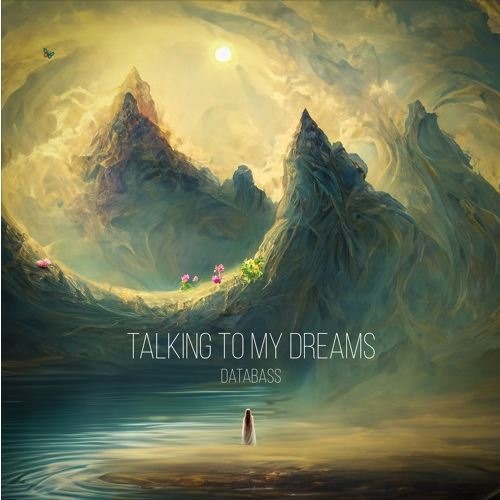
Few artists can state that they’ve been developing their skills from the age of six, but Katie Arndt is very much a rare breed, and her bio lists her as a ‘prolific producer, vocalist, pianist, and composer.’

All of this is in evidence on her latest offering under the DataBass moniker – as project she’s operating while also, again according to her bio, ‘pursuing studies in classical and commercial voice, with a major in Music Media Production at Ball State University’.

But more impressive than any of this is the quality of her material. ‘Talking To My Dreams’ is a truly captivating composition, and if it stands as rather a departure from most of the releases I cover here, it’s for two reasons: the first being that a bit of a breather is essential. Sure, I like heavy, I like really heavy, and I like really fucking bone-crushing heavy. But I also like tunes, and to drift in moments of tranquillity.

‘Talking To My Dreams’ is both a tune and a moment of tranquillity, as Arndt’s clear voice skips over a delicate piano. Her skills as a producer are in evidence with the inclusion of subtle incidentals, subtle layers of synth and so on, before the vocals are doubled, with backings and harmonies drifting in with the greatest of naturalness.

That the song is barely two and a half minutes long is noteworthy, too, as it seems to reflect something of a trend toward shorter songs, as we had back in the ‘50s and ‘60s. The reasons for such succinct singles may be different now, but it does mean that we’re hearing songs which aren’t stretched out or padded, and simply say what they have to say. ‘Talking To My Dreams’ is a work of great economy, and its brevity adds to its gentle impact.

Lake of Confidence – 15th December 2023

Christopher Nosnibor

Having worked for far too many years in financial services in order to pay the bills, ‘terms and conditions’ is a term that weighs heavily on my soul and my psyche. All that small print… the devil is in the details, and there’s a good reason customers often feel swindled by the inclusion of impenetrable clauses written in language which only someone with an advanced degree in legalese could even begin to decipher. The title, then, brings fitting connotations to a complex and detailed work, although, mercifully, it’s more rewarding than frustrating and doesn’t leave you feeling bamboozled and shafted over.

Label Lake of Confidence – which sounds like it’s on the moon – informs us that ØrsØ’s debut EP ‘is a reflection on our civilization, offering a gripping critique of consumable culture and post-social network alienation.’ They also describe his style as a fusion of ‘experimental music, indietronica, dark wave and English-speaking pop’, and ‘English-speaking’ is right: ‘Unreal Moment’ has the nagging industrial-strength electro pulse of DAF paired with the electro pop layering of early Pet Shop Boys, topped with a vocal delivery that alludes to the monotone nonchalance of The Flying Lizards.

ØrsØ’s brilliance lies in his ability to amalgamate such a range of elements while still keeping the compositions relatively simple, structurally and in terms of things happening at any given time. These songs – and they very much are songs, even if conventional hooks and choruses aren’t dominant features – are clever and carefully constructed. ‘Dancing Girl’ has something of a recent Sparks vibe about it, while he channels shades of Bowie in the vocals, and this is accentuated on ‘To Yourself’, which could be an outtake from Outside.

The EP’s five tracks showcase the work of an artist who possesses a high level of musical articulacy, matched by a high level of experimental curiosity. There isn’t a weak track here, and significantly, no two tracks are particularly alike: the last of the five, ‘Follow the Wind’ brings a more overtly dance feel, with a pumping bass beat and rippling, trancey synths, but at the same time, there are hints of The Human League and Visage in the mix.

In an ocean – not a lake – of retro-tinged, vaguely dark-hued synthy pop, ØrsØ’s ‘Terms and Conditions’ stands out as being more detailed, more nuanced, and more inventive in its assimilation of wide-ranging elements – and the results are accomplished.

Norwegian post-punk collective Heave Blood & Die are gearing up to drop their fourth album "Burnout Codes" on January 26th via Fysisk Format.

Dedicated to bassist Eivind Imingen, who decided to end his life just following the recordings of the album, "Burnout Codes" is shrouded in sadness and tragedy, and shows the Norwegian collective offering their most textured and innovative album to date.

Just recently, Heave Blood & Die revealed a new track titled "Mjelle", which is the second single taken from the new album following leading single "Things that Burn".  Listen to "Mjelle" here:

AA

The band had this to say about the new track: “This is the soundtrack to the industrial mourning march to goth town, screaming Power Corruption and Lies! Mjelle  is about getting up and trying to achieve, falling short and burning  out, it’s a never ending loop of finding false and temporary refuge in  avoidance. This one is for our dear friend Eivind and a nod to one of Northern Norway’s undying classics by Terje Nilsen about the windswept and red beaches of  Mjelle just outside of Bodø.”

Recorded and produced by Karl Løftingsmo Pedersen and Ariel Joshua Sivertsen (Ondt Blod, Die a Legend),  mixed by Magnus Lindberg and featuring the artwork and design by Annika Linn Verdal Homme of Daufødt, "Burnout Codes" will be released on vinyl and digital on Fysisk Format.

AA

228c246d-045d-c84d-59d8-0cf6eaa39b9b

Photo by Brage Pedersen

22nd December 2023

Christopher Nosnibor

We live in strange times – times which have gone beyond the established expectations of what defines postmodernism into a period which is something else. Something else we’re yet to come to terms with, let alone define. Postmodernism heralded the arrival of what one might call ‘the nostalgia schtick’ by meshing together past, present, and future to conjure something of a liminal territory in which all times exist simultaneously. But if postmodernism, as defined by the likes of Francois Lyotard and Frederik Jameson is primarily defined by an accelerated pace of communication and an overwhelming blizzard of media, one thing which no critics or theorists could have readily anticipated when defining the term was the rush to cling to the recent past, or that the next big boom in industry would be nostalgia and revivalism.

The advent of the Internet heralded a revolution in terms of all things archival. Back in 1996 or thereabouts, when I first got online – with AOL on a floppy disc and a 14k dial-up modem plugged into a second-hand IBM 486 ­ it seemed like a new dawn. It was basic, but text from obscure zines from the 60s, 70s, and 80s and pretty much anything you could ever wish for from the depths of the most subterranean archives was suddenly available, as was anything else. By the early 00s, Warren Ellis’ Crooked Little Vein was the world as it was: if it existed, it was on the Internet. But then the Internet got hijacked by big business, MySpace ceased to be the anarchic free virtual world that it had been, and everything turned to shit. Because capitalism ruins everything.

Amidst all of this, postmodernism is – or was – characterised by a celebration of depthlessness, of rejoicing in its own disposability, what Stewart Home referred to as ‘radical inauthenticity’. Postmodernism was laced with irony, knowingness, self-awareness. We seem to have lost the sense of irony and humourous knowingness somewhere along the way, and as we grapple with AI, deep fakes, and music industry plants, we have come to return to the question of authenticity as something which should perhaps be valued. Admittedly, these debates are perhaps minority issues, because for the most part society is split between those who believe everything they’re told and those who believe nothing, and there is only limited space for nuanced critical debate. It is, of course, hard to have a nuanced, critical debate in segments of 140 characters or so, and this compression, coupled with an ever-decreasing collective attention span has, undoubtedly been damaging in many ways.

The tug-o-war regarding the value of authenticity has been particularly apparent in music, as fellow musicians and critics alike have descended on punk and ‘indie’ bands to challenge their authenticity as exponents of punk and indie. With the rise of the ‘industry plant’ threatening the integrity of the DIY and indie music scene, it does make sense, but the point I suppose I’m ultimately making is that nothing really makes sense anymore, and that everything is a contradiction.

So, at the same time as AI has surged forwards to recalibrate the means of production, we’ve also witnessed a sustained boom in all things nostalgia. As much as it would pain many to admit it, it’s that same pining for the past that has driven the demand for vinyl, cassettes, grunge, tribute bands, as brought us Brexit. Admittedly, a yearning to return to the days of the Empire and when England resembled a Hovis advert is more socially damaging than basking in the glory days of Britpop, but it’s a pretty close call. A significant portion of the success of Stranger Things, for example, is its retro context, which has seen many hailing it as bearing parallels with The Goonies. I can’t help but wonder if this passion for the not-so-distant past is a means of escaping the absolutely hellish present and the utterly-fucked-up future we’re hurtling headlong into.

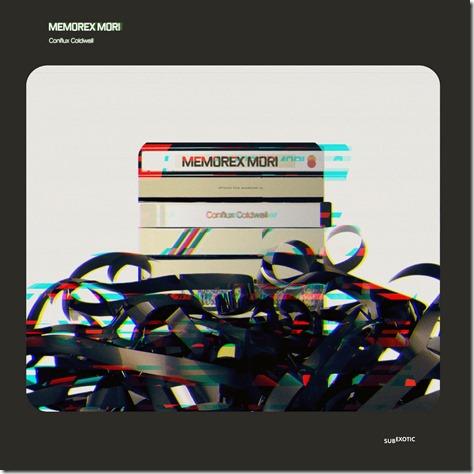
Conflux Coldwell’s latest project is one which plunges deep and direct into nostalgia, and as such resonates with the zeitgeist which has been simmering for a few years now. We’ve all seen it: the ersatz recreation of scratchy recordings, crackles and pops of old vinyl and the warps and snow of videotapes. And now everyone’s back to buying vinyl and audiotapes… how long before the VHS renaissance? And at the same time, it raises the question of ‘the archive’, of the (im)permanence of documents. We have always believed that documenting and recording events was the route to immortality, and that the advent of modern media would solidify our legacy in the same way as The Anglo-Saxon Chronicle or The Bayeux Tapestry. It was not so long ago that the Internet was supposed to be an eternal archive of everything ever. Only now, it’s apparent that modern technology is as ephemeral and disposable as our very culture, and that online archives vanish the moment their owners stop paying for the domain.

Memorex Mori is an unusually authentic work, born out of an excavation of -personal archives, as Coldwell explains: ‘Last year I found a dusty box of old unlabelled VHS tapes at my parent’s house, including some early work of my own I’d long forgotten about. Unfortunately the tapes were all in very poor condition and I only managed to recover some of the material. Despite the bad quality I decided to sample the videos anyway and make something new out of the various noisy remnants – the final result of that extended process is Memorex Mori.

Coldwell himself isn’t outside the frame of nostalgia with this ambitious project, either, as he continues: ‘VHS was the medium of my childhood in the 80s and 90s, and was still routinely used for budget productions by the time I started making films and music of my own. Looking through the old tapes made me realise the ultimate fragility of all our recordings and the memories they hold. These analogue tapes only have an estimated lifespan of 25 years, and this artificial life is only granted to the videos we actually decide to keep. The vast majority ended up in landfill when the world went digital – what was lost in the waste? In contrast, we might think that current digitisation and cloud storage allows our memories to live forever, but they are still fallible. The major difference is that with digital archives this mortality is hidden – with analogue media we can potentially witness that death happening in slow motion before our eyes.’

It’s an interesting and valid distinction between analogue and digital: growing up in the 80s and 90s myself, I remember being told not to vacuum clean near any video tapes, and so on, while toward the turn of the millennium the emerging digital future was presented as eternal. But now, it’s clear, that there is no such thing as permanence, or the eternal, and that any archive is as fragile as life itself.

And so, Memorex Mori is a multi-faceted, multi-dimensional, multi-media project, where past, present, and future collide, and postmodernism melts into the as-yet-to-be-defined present. It’s a film and it’s a soundtrack, and both can be appreciated independently of one another, as intended.

Coldwell expands on his notes, explaining ‘This project continues a lineage started by William Basinski and The Caretaker, exploring themes of memory loss, entropy and spectrality, through the sampling of destroyed recordings. But Memorex Mori extends this idea into the visual realm, presenting a feature-length music video alongside the music. As well as sampling early Conflux works from tape (Traveller, Glitch, Machinedance and Trainboy) various other unknown recordings were appropriated from the video box – all sorts of forgotten cultural detritus including my Mum’s 30 year old Open University programmes. A few modest pieces of equipment were used to add extra sonic layers – including the Korg NTS-1 and a home-made Marantz tape delay – then all bounced back to VHS.’

The video is a disorientating barrage of film clips, from train journeys to clouds, via small aircraft lifting off and droplets of water rippling out. Everything flickers and fades , glitches and warps. At times, we’re simply submerged in a snow of magnetic degradation and ruination, and it’s not always easy to discern what we’re actually being shown. But, often devoid of context, these detached, fragmentary scenes take on a sense of significance. The effect is an uncanny emotional response, a pull in the lower intestine as something unexplained and inexplicable evokes something within. There’s a comparison to be drawn with Memorex Mori and the experimental works created by William Burroughs and Brion Gysin in the late 50s and early 60s – in the soundtrack, the tape experiments, perhaps, but more so the whole audiovisual project, which calls to mind films such as Towers Open Fire, produced in the mid-60s with Anthony Balch, and a step closer to what Gysin’s quest to realise ‘a derangement of the senses’.

The soundtrack is the perfect soundtrack to this endlessly unsettling sequence, an eternally shifting sonic drift that’s at times noisy, even harsh, while at other altogether more ambient. Like the visuals, it draws you in, but it also stands independently as a purely sonic experience, and it’s also a smooth, expansive scene for reflection, and perhaps it’s to be expected that the soundtrack has greater impact when experienced in isolation, without the distraction of the visuals.

As a whole, or in part, Memorex Mori is quite an unsettling experience: visually compelling, and aurally challenging. It demonstrates the fragility of any documentation, any archive, and of life itself. Nothing lasts forever. And it speaks of how, as memory fades, so the documents diminish in value: moments captured in moving or still images which seem so essential at the time lose meaning over time: where was that picture taken? What was I doing there? Why did I think that would be worth filming / photographing? Who even is that?

I feel a weight descend as I reflect on all of these things while immersing myself in Memorex Mori. I can’t even begin to imagine the experience of assembling it. Then again, I can’t really assimilate the experience of other viewers or listeners, either. What’s intensely personal to an artist is likely to hit a spot with the audience, but for each, the reception will differ, based on their own experiences, their own immediate headspace.

But, regardless of individual interpretation, the vast ambition of Memorex Mori is matched by its accomplishment. THIS is a document. A powerful work, which will stay with you long after the silence descends.

AA
a2043088135_10

15th December 2023

Christopher Nosnibor

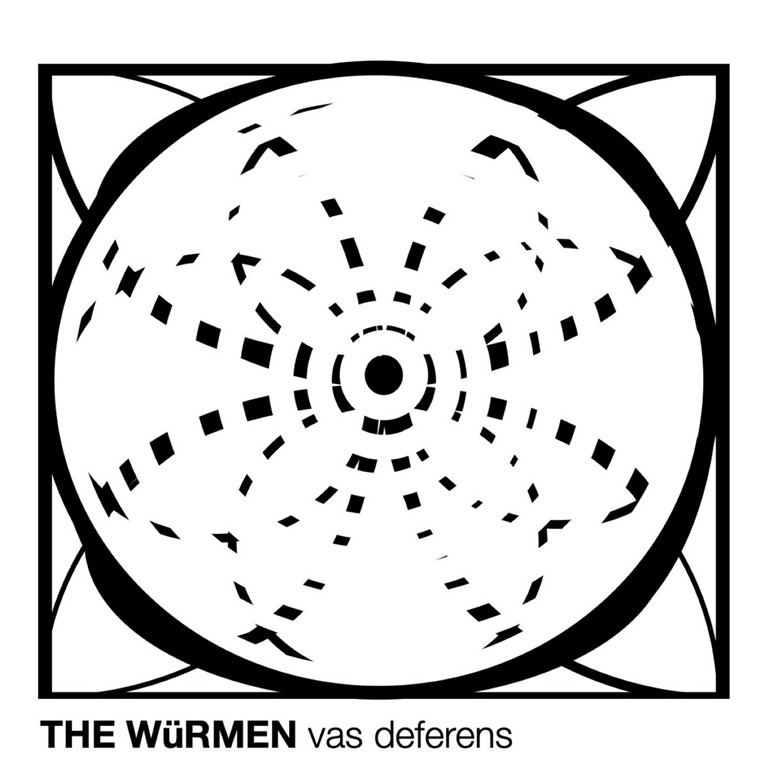
Among their tags, garage / punk / alternative rock band The Würmen have included ‘super-edgy’. Fair enough: they are German, right? Wrong! They’re from West Yorkshire – Leeds to be precise – and this, their debut EP, which features two previous singles, offers a set of four songs, all with medical / related titles and puns. ‘Vas deferens’ was the punchline to a joke I’ve completely forgotten after being told some twenty-five years ago. This is a recollection which helps no-one, but simply adds a layer off intertext to the experience of hearing this primitive punky racket. The songs are raucous, shouty, not too mention a tad zany, equal parts Pixies and Leeds legends Bilge Pump, the choppy, skewed guitar slaloming all over a dominant bass sound.

‘Ceiling Funny’ – the EP’s only track to run beyond three minutes – feels like their stab at a song that might get some traction, if not necessarily airplay, with the angularity yielding to a hooky chorus that’s not quite Foo Fighters, but clearly aspires to a more ramshackle reimagining of Biffy Clyro.

‘Cognitive Dissonance’ is quirky noise rock that’s quintessential Leeds, channelling the roaring grunge of Pulled Apart by Horses and the nagging mathiness of Wintermute and This Et Al. ‘Remediation Policy’ is a hell-for-leather riotous race to the end, wrapping up a snappy release that’s exploding with energy, urgency, and raw power, and which is great fun.

AA

a3001611594_10