Archive for August, 2023

Edward S Robinson

Stewart Home’s career to date has been enviably long by any standards, and extremely varied: emerging out of the London punk scene in the 80s, his modus operandi was – and remains – subversion, playing with form and literary theory in equal measure. The idea that a writer who cranked out lowbrow pulpy trash which was littered with references to highbrow theory, smashing the two together in a fashion that was the epitome of postmodernism confused and annoyed a lot of people, but earned him a substantial cult reputation at the same time.

His style and subject matter have evolved significantly over the years, although – some notable exceptions notwithstanding, in particular Tainted Love and The 9 Lives of Ray the Cat ­ he has continued to utilise certain tropes, elements of cliché, and display a truly audacious streak is evident throughout his work. His work is serious / not serious, and he’s serious / not serious about it.

One defining feature of Home’s career is that it has always been forward-facing, often promoting the next book over the one most recently released (and he’s exceptionally dedicated when it comes to promoting his work). Even when reflecting back – as much of his earlier work did, on youthsploitation novels of the 90s did on the culture of the 70s – Home was anything but nostalgic in his angle, presenting as much of a critique as a celebration. Revisionist, parodic, comedic, yes, but not nostalgic.

Even Tainted Love wasn’t really nostalgic, and nor was She’s My Witch, which was fun and frustrating in equal measures, apart from near the end, when it became so, so sad. Home has the infinite capacity to confound expectations: for all of the overt revelling in ‘trash’ writing that most academics would dismiss as not even being within a mile of the field of literature, and for all of his one-dimensional characters who exist simply as vehicles to carry – often quite thin – plots and stand as ciphers for more theoretical ends, Home is clearly a writer capable of emotional depth.

The circumstances of the publication of his most recent novel, Art School Orgy (which is very much not concerned with emotional depth), are worth considering in terms of what they tell us about the relationship between art and society. It would be too easy to pursue the ‘cancel culture’ route of discussion, but this feels like obfuscation of real issues. Times have changed significantly since the time of Home’s early novels, the violent, pulpy, parodic Pure Mania, Slow Death, and Come Before Christ and Murder Love. The perception is that society has opened up and anything goes now, but the fact he struggled to find a publisher willing to take on Art School Orgy suggests the opposite is true. Publishers are fearful. Fearful of recrimination, and fearful of not clearing their margins. It’s the perfect illustration of why art and capitalism are incompatible, and it was this situation which resulted in the book being published by a record label. Despite the music industry being dominated by a handful of huge major labels, independence and DIY in music are lauded, and aren’t subject to the same snobbery which pervaded publishing, which is still moored to old conventions.

What’s interesting and surprising in some respects about Home’s two forthcoming publications is that they’re both reissues from way back in the past: debut novel Pure Mania, and an obscure and long-deleted CD of punk tunes, Stewart Home Comes in Your Face.

Had Home been touting Pure Mania round agents and publishers now, it’s almost certain none would bite, simply because it doesn’t conform to the extremely narrow prescriptions of what they’re looking for. If it’s not the next Harry Potter or Games of Thrones, or something that will sit beside Karin Slaughter or Lee Child, then most publishers simply aren’t interested. It’s all about the bottom line, and what can sell millions stacked on the three-for-two table at Waterstones.

It had been a while since I’d been in contact with Stewart, other than a few exchanges around the time of my review of Art School Orgy, and even longer since my last interview, so this seemed like the perfect opportunity. What follows is a simple Q&A conducted over email, but on a purely personal level, I feel like we achieved some good riffing on some pertinent topics.

ER: Since the material on the album was written in the 70s and early 80s, and then recorded much later, in the 90s, it must feel quite strange to be promoting Stewart Home Comes in Your Face and making promo videos now. How do you feel about the songs now with the benefit of so much distance?

SH: At first I found it hard to listen to the songs again. They almost seemed like something someone else had done but they grew on me once I got over the fact that my voice is what it is, and much as I’d love to be able to sing like Aretha Franklin that’s never going to happen. Likewise my guitar playing has always been rudimentary. So once I’d learned to accept my musical limitations once again, I found the songs very funny. It also struck me as hilarious that I should keep returning over decades to tunes that had been knocked up very quickly with little thought about arrangement. A decade and a half and sometimes more between writing and recording, then nearly 4 decades before I thought about making music videos for them.

With the music videos it was interesting to see how much I can get into the pretty juvenile state of mind in which many of the songs were written… I actually had no problem with that. I did a video for ‘Destroy The Family’ first because I saw I could fit that with the coronation by using masks of the royals on myself and a couple of sex dolls. The video I’ve shot for the song ‘Kill’ was even easier. I bought a teddy bear in a charity shop, took it into a wood and had a friend film me stabbing it with a large kitchen knife! I still need to edit explosions and other stuff into that, so it isn’t finished but will be soon. And I don’t want to put the music videos out too close together anyway.

I think the distance I have from the songs really helps. I can take them even less seriously now than I did at the time and that enables me to do things visually with them that I might have thought were too crass back then. I also like the way music sneakily builds online and elsewhere. It’s got much harder for my anti-art videos to gain much traction on YouTube, so music videos seem like they might be a way around that. The old content of the songs becomes something that gets people looking at the new content of the visuals, which is what I’m more taken up with now.

Of course I’m also making non-music videos. In terms of books promo, which the music videos link to as the songs also appear in my reissued novel Pure Mania, here is a series of video book sculptures made by me and artist friends where there is a video on small screen and a shelf with a pile of my books. The sculptures have 15 of my books to start but these are for sale retail and with each book sale, the price of the video sculpture goes up because less is more and you’re getting less. For Defiant Pose, I recite an eight-minute passage from that novel while standing on a Swiss ball and being tickled with a feather, so I’m trying to keep my balance and finish the recitation. So that’s a far more conceptual/live art approach to videos simultaneously connected to my novels.

The promo video for ‘Destroy the Family’ has given an old song a new contemporary relevance. Your position on the monarchy doesn’t really require any kind of interrogation, but do you think that Charles’ accession has raised the levels of anti-monarchy sentiment, particularly when the division between rich and poor (and especially those whose wealth is funded by ‘the taxpayer’) has never been felt more acutely or been more closely scrutinised?

I think we’re a lot closer to seeing the abolition of the monarchy than we were 25 years ago. You could say the image has cracked. When the cops busted up the Sex Pistols boat party promoting their anti-monarchist single in 1977, there was no mainstream sympathetic press coverage. Although the same kind of heavy-handed repression went on with the arrests of those expressing anti-monarchist views at the coronation, the mainstream press clearly can’t get away with the type of coverage it did in 1977. The fact that Charles Windsor is clearly an entitled windbag with dodgy friends and family means that many don’t like him. With the cost-of-living crisis, the ostentatious way the royals flaunt their wealth can only add to the fast-rising tide of anti-monarchist sentiment. It is time to strip the royals of their titles and wealth!

In terms of my performance on film, you can see I have been practicing with the martial arts weapons I use to attack the sex dolls with royal family face masks. That said my staff and sword fighting skill is still a little rough and it isn’t as graceful as it night be although still potentially deadly. So I think that mirrors my guitar playing at the point I wrote the earlier songs and also when I recorded them. I had a seven or eight year break from playing guitar before picking it up again for a few weeks to make those recordings.

AA

You described ‘Destroy the Family’ as ‘super-dumb 2-chord sleaze-bag thud’ (a phrase which appeared in the introduction to the second edition of Cranked Up Really High), and have variously been somewhat critical of the limitations of punk. As you yourself came out of the punk scene, to what extent is your own musical work parodic in its use of tropes and cliché? And to follow on, while songs like ‘Kill’ clearly aren’t ‘serious’, is there an element of catharsis and / or a serious element to simplistic sloganeering?

I think there’s a sympathy for the nihilism late-capitalism breeds in many people but also an attempt to make it clear a ‘blow it up’ or ‘hang them all’ response to exploitation should be moved on from. We all need to rediscover our humanity and reclaim it from the ways in which capitalist alienation have deformed us. But to answer your point, yes there is a certain catharsis in there but it’s undercut. In Kill for example it’s subverted where the words in the chorus are changed from “kill, kill, kill, fucking kill everything” to “kill, kill, kill, practically everything”. Hopefully people get the point that there is no one size fits all one time solution to the world’s problems. We have to keep working at them!

Punk should be fun regardless of musical limitations, What I’m critical of is the art punks who make too much of a fetish of not being able to play. You may as well play as well as you can but that doesn’t mean you have to make it complex. I’m a real fan of super-dumb sleaze-bag 2 chord thud when it rocks, what I don’t like is when it’s leaden.

There are few, if any, genres where authenticity is as highly valued as in punk. You’ve essentially built a career since the early 80s with your zine, Smile to ‘stage an ongoing assault on notions of authenticity’ and have espoused the concept of ‘radical inauthenticity’. Yet ironically, with perhaps one or two notable exceptions, such as Tainted Love, you’ve avoided the mainstream by producing work that’s antagonistic to not only the mainstream, but to academia, and the middle-class, middle-brow readership, while at the same time being too subversive and challenging for – sadly – the vast majority, which suggests you’re perversely authentic. How do you reconcile this?

To use a pat formula, I don’t think I can reconcile it while living under capitalist social relations…. But it could also be seen as a dialectical ploy and one that’s not uncommon in more art school orientated punk rock – although that’s not really the racket I make. Even back in the seventies I thought groups like Wire were operating in that way. Or to take a US example Devo. That said, I think I’m more parodying everything from the Clash to the anarcho-punk scene. One of the reasons other than the music I liked bands like Wire and the punk incarnation of Adam and the Ants, was that they just didn’t seem to take themselves too seriously. In relationship to all the phrase “artificial authenticity as authentic artifice” provides perhaps a more than superficial answer to your question. The Sex Pistols manager Malcolm McLaren used the term glorious failure to describe what he wanted to achieve – but I aim higher, since I intended to reinvent world culture in its entirety, even if that takes a life-time.

In terms of books, aside from Tainted Love I think The 9 Lives Of Ray The Cat Jones and She’s My Witch might have reached a mainstream audience if I didn’t already have the reputation I have. Audiences have a certain expectation of what a Stewart Home or Michael Moorcock book is going to be like and will impose that on everything you do. Because reading a book takes more time than listening to a music track, it is harder in the fiction world than the music world to turn around perceptions of who you are and what you do. If people think they’re not into what you do they’re not going to give a book they might like a chance, whereas they could easily be exposed to some music that didn’t sound as they expect it to be more or less by chance.
Stewart

Nostalgia ain’t what it used to be, but many of the original first-wave of punk bands are still plugging away on the gig circuit, and while many are doing so to smaller and smaller crowds, some are doing pretty nicely out of it: The Damned, for example, are currently touring the UK’s 2,000 capacity O2 venues before heading Stateside. Would you consider playing your songs live again?

I guess for people who missed those bands first time around there’s an appeal to seeing them now. For me, I don’t want to go and see Slaughter and The Dogs or Menace because I saw them in the 70s. Also the line-ups are mightily changed from back then and the crowds and atmosphere are very different. I’d rather preserve my memories of how it was by not going to see those bands now. As for The Damned, I saw them in 1977 and compared to that I was even a little disappointed by how they were when they reformed after first splitting up in 1978. I saw them as The Doomed and a few times after that back as the Damned, two or three years on from first seeing them and for me they were never as good. Of course, they weren’t bad at all but for me they weren’t as super-phat and groovy as the earlier incarnation of the group.

I actually learned a lot from playing in bands in the 70s and 80s. I can see how a lot of what I’ve done subsequently with spoken word, live art and stand up etc. emerged from how I learned to present myself with punk and reggae bands. But at the same time I’ve no desire to play live again – I’ll probably regret saying that very soon if I find myself just doing it for some reason. But the songs weren’t written for me to sing, I just wanted to play in the band and have someone else sing them. When they got recorded, the musicians around me were saying you have to sing coz you’ve got a profile and they’re your lyrics…. I feel much happier just making music videos for those songs now coz it means I can develop something new with them. I can dig repetition but going back to playing those old songs live just doesn’t appeal to me and hasn’t for a long time, I have been asked to do it!

Pure Mania was your first published novel in 1989, and now commands a pretty hefty price tag on the second-hand market. I suppose as much as it draws on pulp novels, you could call it a punk novel, stylistically as well as in setting. How do you feel your writing has evolved since then?

It’s punk in that it took a reimagining of London 1976/77 punk as its subject and that I had a bricolage approach to writing which is very punk. But at the same time, it’s also a very postmodern novel. Back then I was still learning how that type of novel is constructed, I moved on to anti-narrative after I felt I’d perfected that postmodern simulation of pulp narrative with the follow up books Defiant Pose, Red London, Blow Job and Slow Death. You can also see my prose being honed very quickly, the journalistic approach to sentence construction is clearly smoother in my second novel Defiant Pose. Likewise the narrative/anti-narrative construction becomes slicker but never too slick. I can say that technically my writing improved through practice. But some like rawness best anyway.

I think there was a fairly systematic working through an evolution of material, despite changes in style, up to Mandy, Charlie & Mary-Jane in 2013 – if you discount Tainted Love which was me wanting to fictionalise my mother’s life since no one believed it in non-fictional form. Then with The 9 Lives Of Ray The Cat Jones I went back to Tainted Love and took that fictionalisation of family history in a different direction with a different relative. She’s My Witch riffed on the type of woman my mother was but took someone from my generation down rather than my mother’s – but with plenty of morphic resonance. So I think there are two trajectories in my novels and they fall into two groups. Art School Orgy goes back to the first set of novels and hews closer to the earlier trajectory – it is the book I might have written after Whips & Furs if I hadn’t wanted to write 2002’s 69 Things To Do With A Dead Princess (which was a development of what I’d done in 1997’s Come Before Christ & Murder Love).

Art School Orgy feels very much like a lot of your earlier works in stylistic terms, so I’m assuming the issue for prospective publishers was that the subject was a living artist, and their feared litigation. What were the rejection letters / emails like?

I was only trying independent presses so the rejections weren’t as rude as those I got for my earlier books. Mostly it was a “we’d like to publish you so why do you have to make it so difficult” kind of response. One publisher who doesn’t know me as well as the others said he’d like to do the book but to change the names. Obviously that didn’t work for me. But they feared litigation if the book came out using the names I’d chosen. But so far that hasn’t happened.

AA

A fair few of your earlier books have been translated into Finnish and German. How has the reception been in those nations compared to domestically?

They early books created a much bigger stir in Germany, Finland and Russia than here. In Finland and Russia I had a lot of young female readers, so the audience was also very different. When I had a post box I might go and find a pair of unsolicited used knickers from a Russian fan. In Finland I was the biggest selling writer there for a while in the late-1990s, so I’d had TV crews trailing me around and when I told an old drunk Finnish writer at a literary festival that he should shut up as he was talking through my reading, it became front pages news that I’d beaten him up, although that was an exaggeration. I just gave him a fright by leaning into him and screaming in his ear! I also got asked to appear in a nude celebrity feature in the biggest selling newspaper in Finland, which of course I accepted and I got an all expenses covered trip to Helsinki out of it.

In London I can walk around and no one pays any attention to me but it wasn’t like that in Finland in the 1990s. I went in a record shop to buy some Finnish released records you couldn’t get in London including JMKE, the first Soviet punk band, and they said “You’re Stewart Home you don’t need to buy records!” They gave me everything I wanted to buy and a load of other stuff too as they said I ought to have it. I enjoyed going over to Finland for a week or two and experiencing that sort of thing but I think it would be a drag to experience it full time in London. Anyway, it wouldn’t happen to me in Finland now…. Everything has its moment.

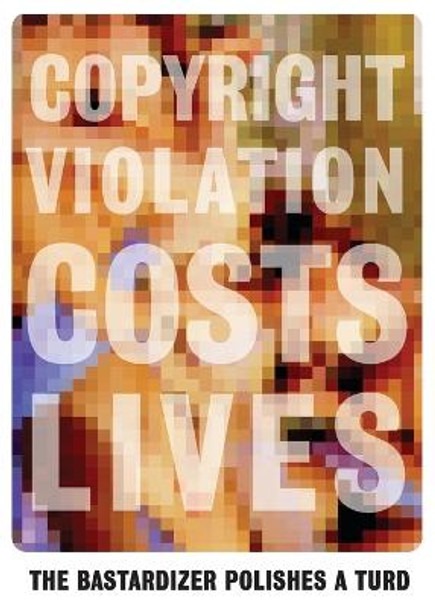
You were recently involved in the publication of Chus Martinez’ novella, The Bastardizer Polishes a Turd, which is a crazy and exciting read. Can you explain Chus Martinez, and also how Simon Strong comes into all of this?

Chus Martinez is a multiple identity project – a lot of different people anonymously producing work credited to the same name – following on in the tradition of projects like Karen Eliot and Luther Blissett. It’s been going in a low key way for over a decade. Chus as a diminutive in Spanish can be either gender and the gendered nature of previous multiple name projects was something those involved with this one wanted to overcome. The Luther Blissett project broke through a lot of earlier blockages but it seemed like gendering was something that still needed to be addressed. Chus Martinez started with a lot of retro-graphics and celebration of the sixties Spanish guitar player Chus Martinez. The first two Chus Martinez novels Copy and Issue came out in 2014 and were published by Simon Strong on his Ledatape Organisation imprint. The novels were written by different people and issued at the same time. Since then Simon has closed down Ledatape, so as there was a new Chus Martinez novel that needed putting out and which Simon had already done the typesetting and graphic design for, so I issued it on my Cripplegate Books. The project involves a lot of different people and although I’m involved, I haven’t yet done a book for it.
9781838218942__06441

The fact that you struggled to find a publisher for Art School Orgy clearly slowed your output in terms of what’s been put out in the public domain, but despite that, you’ve maintained a steady output the last ten years, albeit at a lesser pace that in the mid-late 90s. What’s your method for keeping the flow?

I only write when I have something to say and as there’s plenty that needs addressing in this rotten world we live in, the books keep coming. But I’m constantly writing stuff – not just books and not just fiction. I’d like to write less fiction so I can spend more time on non-fiction. I have another novel written in first draft called Femdom Ninja Lockdown, which was hacked out during lockdown to try and record the experience while also utilising a cut-&-paste composition method closer to IFD and Filmark than Burroughs-style literary cut-ups. I like it but I’m in no rush to get it out. I’ll revise it when it seems like the time is right to publish it. I wasn’t planning on writing a novel, it just seemed unavoidable given the madness of the situation we were all in.

I’ve known a few writers sign up to big contracts with lots of money advanced and it chains them to producing books that they end up hating working on. They’re legally bound to produce these great big books with a literary content when they’d probably rather be writing almost anything else. I’m fortunate never to have been in that position, so I can stay alert to the world and do things that groove me. There is also an issue with those who want an identity as a writer, something that is a terrible drag on actually producing anything interesting. Rather than writing a book because they have something to say, there are way too many people writing novels because they want to appear profound and wise but inevitably they end up coming across as the opposite of that.

I assume you’re still keeping the flow now, so what’s in the pipeline?

Some non-fiction, probably starting with a book on yoga that explores how the term is undefined and defuse, what’s practiced in yoga studios bears no relationship to older Indian meditation traditions that are called the same things. The stretch routines that millions practice as yoga draw heavily on primitive Scandinavian gymnastics but they didn’t receive their confusing name until they were mixed with positive thinking and secularised Christianity dressed up as Hinduism in California at the start of the 20th century. I’ll also look at how the spread of this western yoga is intimately connected to the growth of fascism in the first half of the 20th century. So I’ll provide a corrective to the misplaced idea that some people in the overdeveloped world have that what they practice as “yoga” is a non-political tradition that is thousands of years old and originated in India.
Pure Mania

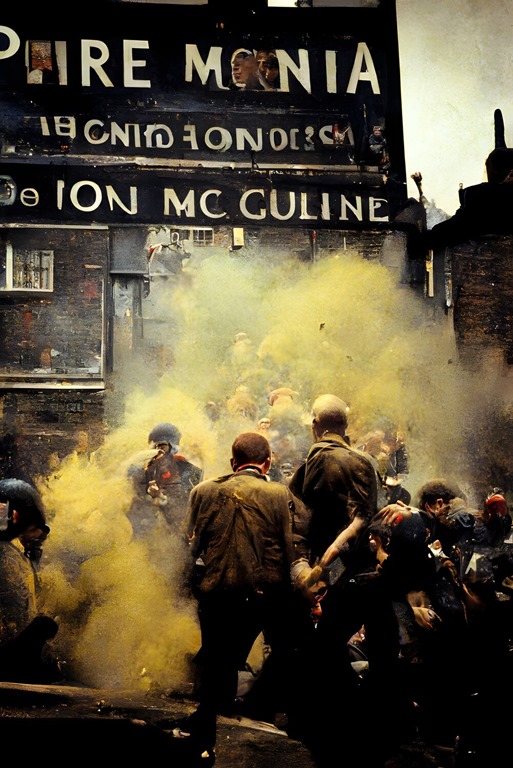
Pure Mania will be published on 17th August 2023 with a brand new cover design in both limited edition hardback, which comes signed by the author and accompanied by an original Necrocard, and paperback, as well as eBook for the first time, via Leamington Books. Stewart Home Comes in Your Face will be released by New Reality Records in September.

Brutal Resonance / Confusion Inc. –21st July 2023

Christopher Nosnibor

One thing I find – often – is that I keep encountering acts who have been going for quite literally decades without my having the slightest knowledge of their existence. This is a source of frustration: after all, I like to think I not only have my ear to the ground – so to speak – when it comes to emerging artists, but that I am pretty well connected with labels and PR. But then, so much of the music industry, it seems, is about luck and change encounters, and being at the right place at the right time. That, and the fact that existing in underground circles for a decade or more doesn’t mean that the chance of rising up toward the light is anywhere near remotely assured.

And so it is that I have been blissfully unaware of Slighter – the solo moniker of Colin C., who it appears, according to the bio, ‘has been fine-tuning the future of electronic music since kickstarting his music in Mid City Los Angeles in the early 2000s… Creating from a unique vantage point, he was involved in collaborations for various Metropolis Records releases and Cleopatra Records compilations, in addition to Slighter releases via his own Confusion Inc. imprint.’

‘How?’ I ask myself, and again, ‘how?’ I’m not only a fan and follower of these labels, but frequently get sent releases for review. I’ve mentioned perhaps a few times now – or more – how Cleopatra tapes were an integral part of my introduction to goth, and subsequently, Metropolis have been the outlet for some of my favourite more industrial-leaning acta like PIG, who I’ve been a fan of since they supported Nine Inch Nails on The Downward Spiral tour back in 1994. It might have wiped me bang in the middle of my A-Level exams, but fuck, the trip to Wolverhampton was worth it.

This is apposite. It seems almost impossible to discuss anything in the bracket of contemporary industrial without recourse to either Niner Inch Nails or Ministry, depending on whether the music is of an electronic or metal persuasion. It wasn’t always this way: from the 70s and through the 80s, industrial was a different beast, but circa 88 or thereabouts, something happened. It’s hard to really pinpoint what that something was, but it definitely happened.

And so it is that Slighter’s latest, The Futile Engine, is some strong work, which sits in the post-NIN industrial bracket, while owning a certain debt to 80s Wax Trax!. ‘Introspection Illusion’ announces its arrival with a squall of noise, a scream of electronica, and some muffled, subterranean vocal whisperings which are dark and unsettling… and then the machinery grinds into action and things really get heavy, and in no time we’re submerged in a throbbing barrage of noise, driven by a thudding industrial disco beat.

‘Pulling Me Under’ is more obvious brooding industrial dance with whirling synths and mangled, menacing vocals pitched against pounding beats. This sets the tone for the album as a whole: ‘Have No Fear’ is dark and sparse, a mechanised beat pulsating in the background against menacing close-mic vocals and we’re deep in PHM terrain here. In contrast, ‘Nostalgia Hysteria’ launches headlong into trance territory, tweaking the 505 in a full-on Josh Wink style.

They plunge deep into dark waters with the more experimental ‘Memory Corruptor’, but so much of The Futile Engine is simply dance music with some darker edges that it’s hard to really engage with. And the trouble I have with so much dance music is that it feels cold, clinical, impersonal. Perhaps it was the lack of drugs that mean I never got 90s rave or techno. But this doesn’t gain more appeal with time, and that’s a fact.

The Futile Engine has its moments, for sure, its execution is pure perfection, and the album displays a knack for insistent beats… but it’s exhausting. Unless you’re seeking relentless beat torture, you probably won’t dig this.

AA

a0419039551_10

French/Irish alternative rock-metal outfit MOLYBARON, known for their energetic, hard-hitting sound, will release their new album Something Ominous on September 15th on InsideOutMusic/Sony Music. The announcement of the new album comes following the success of the recent single and video ‘Something Ominous.’

Over the course of two subtly radical records, 2017’s self-titled debut and 2021’s acclaimed The Mutiny, this eclectic quartet have casually bent and broken all the usual rules of modern heaviness.

In 2023, they return with their third and most fervently diverse record to date, Something Ominous: further evidence that MOLYBARON are operating in a field of precisely one.

When MOLYBARON released The Mutiny in 2021, the world was still reeling from the effects of a global pandemic. Nonetheless, the album struck its mark with ease, garnering countless glowing reviews and comparisons to the likes of System Of A Down, Tool and Muse. Two years on, Something Ominous reveals a band that have sharpened their focus and found their groove. Comprising ten succinct and characterful songs, which range from thunderous acts of aggression to noirish, mutant balladry, MOLYBARON’s third full-length is invigorating and immersive in equal measure.

“I don’t think our sound can be defined by one genre,” says guitarist/vocalist Gary Kelly .“It’s certainly not by design. I write and produce all the music in the band, but I’m strange – I never really listen to music. I have no idea what’s hot or what’s not these days. I suppose this makes it easier for me to create songs, I’m not trying to mirror any one style, I just write as it comes to me, probably based on what I hear floating in the ether; in the cinema, on the TV, on the elevator, it really doesn’t matter!”

MOLYBARON are also pleased to share the second single from the album.

You can check out the lyric video for ‘Breakdown’ here:

AA

VcN6SaCA

Photo Credit: Teddy Masson

After two decades of timeless records, Oklahoma City’s Traindodge continues their post-hardcore dynasty with the release of their eighth LP, The Alley Parade, due out on September 22, via Spartan Records.

Upon the release of the album’s second single ‘The New Low’, vocalist/guitarist Jason Smith says, “’The New Low’. It’s about seeing what you want to see in someone regardless of where it might lead you. Sometimes you find that you hold vastly different definitions of the same words you’re using with someone. Then gradually you realize you’ve been having conversations of pure insanity with them the entire time.”

Listen here:

AA

Traindodge_2023_-_Dylan_Johnson__giantclick-3

Photo Credit: Dylan Johnson

Icons Creating Evil Art – 4th August 2023

Christopher Nosnibor

The third single from Swedish act Darkplace is their first to feature vocals, and is not a cover of the Gary Numan hit.

The band are described as ‘a mysterious new Swedish dark dream pop/post-punk group whose forthcoming debut album, About The End Of The World, is a conceptual work inspired by the bleak landscape of the Stockholm suburbs that birthed them.’ They go on to say ‘for the members of this highly secretive group, it is not just about the music. They perceive themselves as more an art project that happens to be exploring and commenting on the state of the world through their chosen mediums of music and video.’

Is a band mysterious if they tell you they are, or does that undermine the mystery? Surely a lack of disclosure is mysterious in itself? If I’m overthinking, it’s almost certainly a consequence of their overexplaining, although I am entirely on board with the idea of an act taking their art seriously to the point of fully inhabiting that space. When it comes to concept-based creations, you have to fully believe in it, otherwise, how can you expect anyone else to?

When it comes to Darkplace, context counts for a great deal, and to provide this, I shall quote liberally here: ‘Centred around an alternative reality – or is it just a grim present and future? – the album is being unveiled gradually via a series of videos based on animated digital paintings for each of its tracks… Their new single, ‘Cars’ […] sees the story move on to a man who travels north following cryptic messages written on highway signs that only show up in the blast of his headlights. Is he the only person who can see them and follow the trail? Darkplace cryptically state that “trying to escape this psychotic, slow burning apocalypse is not easy. Nowhere is safe. These weird structures and phenomena seem to occur everywhere, all over the world. Nowhere is safe!”

Perhaps somewhat ironically, the slow-burning apocalypse of which they write is accelerating at a pace no-one can keep up with, and half the planet is on fire now, quite literally, although this afternoon I read of hailstorms of biblical proportions in Germany and Italy, smashing car windscreen and requiring snow ploughs to clear the streets. It really does feel like the end of the world, and there’s a strong chance that is truly is.

Detached from the narrative of the album, ‘Cars’ stands well as a standalone single. It’s a taut, dark (of course) slice of post-punk inspired tunage, and while its lineage is clearly one that can be traced to the early 80s, it’s equally indebted to the school of the early 00s, which brought us Interpol and White Lies. What goes around comes around, and here in 2023, times are the bleakest they’ve been since the early 80s, with the added bonus of climate change threatening the collapse of civilisation and life as we know it. It’s dreamy but driven by an insistent beat and nagging guitar lines, and if the vocals, floating in reverb, evoke The Charlatans or Slowdive, and there’s perhaps a hint of Doves in the mix, the energy is more reminiscent of early Editors. Lyrically, it’s anything but uplifting, but the musical counterpoint really sweeps you along, making for an exhilarating three minutes.

AA

fc7f46444f143114c333beafb3be754b3b51910f

The Quietus

Christopher Nosnibor

It’s not that I like to brag, but I’ve been writing about Sly and the Family Drone since 2012, when they blew me away at the Brudenell in Leeds, with a chaotic, percussion-heavy, audience-participation-led performance (and since when my writing has improved and I’ve become a shade more sensitive, perhaps). Witnessing Matt Cargill standing aloft on a stack of amps while surrounded my members of the crowd battering drums distributed by the band was one of the most exhilarating experiences of my life, and I was an instant convert. In some respects, I was fortunate to witness it: in a recent interview, Cargill was at pains to stress that it’s one of those spontaneous things: “It doesn’t happen at every gig,” he warns. “And I don’t want it to become a thing that people expect or are disappointed when we don’t do it. There are times I’ve seen people write, ‘Bring your drumsticks!’ I’ve never said that and I don’t want you to do that! If we were doing it every night people would be, like, ‘Oh, fuck off! They’re doing their schtick.’”

It’s this spontaneity and true commitment to improvisation that is a significant part of the band’s appeal. You never know quite what you’re going to get, and there’s a sense that nor do they: it all unfolds in real-time.

Their subsequent releases since my introduction in 2012 have never disappointed, and for me, at least, the best thing about Sly is that they embrace the difference between the live and recorded media. As such the recordings are the recordings, the performances are the performances. Explaining the difference to The Quietus, Cargill says “It was nice to be able to do all that spatial and stereo stuff which we wouldn’t be able to do live,” he says. “Because of mics on drums and stuff, it just doesn’t really work in that way. So we were able to spend a bit of time just working on that and doing some quite weird-sounding drum stuff which I’m really happy with.” The same article also explains, ‘The passages of manipulated drumwork are bookended by the band performing together in full skronking and lumbering flow and, in a move that vaguely echoes the ecstasy of their live sets’ endings, it finishes with a warm and symphonic cacophony of horns. “It’s kind of a pieced together track but I think it works as an entire piece,” reflects Cargill.

They have forged a career – or perhaps eked one, on the breadline, with a cult reputation which exceeds the returns a fringe act can attain in this crappy climate, a climate whereby post-Brexit overseas travel is prohibitive and not just financially – from being far out. Embracing elements of jazz and noise and a whole spectrum beyond, it’s fair to say that this is an act who plough their own furrow, and for that, respect is due, and them some.

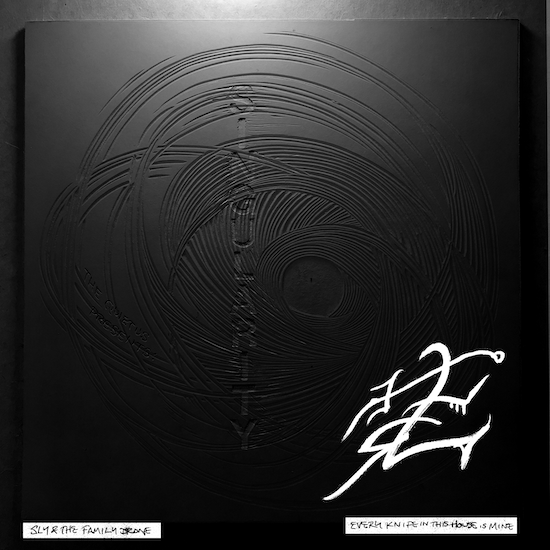
This latest release is – as ever – an interesting one. It’s a limited lathe-cut 12” released via The Quietus, a publication with an immense reputation for its championing of the weird and the wonderful, and which perhaps more than any online publication with a significant readership plugs the gap left when Sounds, and then Melody Maker ceased to be. For non-subscribers, it’s available digitally via the usual platforms.  The ones I don’t use or advocate. But I digress. ‘And Every Knife In This House Is Mine’ is Sly at their best.

As a single track – less a composition than an exploration – with a running time of twenty minutes, it’s an EP or an album by some bands’ standards, but what it ultimately is is an immersive experience which sees them make the most of having access to studio facilities to push their sound further in different directions.

It’s a shrill, rippling wave of feedback that pierces the eardrums in the opening seconds which announces its arrival before a tempest of crashing drums, wayward brass and extraneous noise deluges in, and more happens in the first forty seconds of this tune than the entirety of many albums. Shortly after, it settles into a thunderous groove, the rhythm section grindingly heavy while wild horns – Kaz Buckland’s alto sax and James Allsopp’s baritone sax interplay is a back-and-forth that is timed with perfect precision.

There’s a lot of reverb, and a lot of space here. They pull back from the brink of pure chaos and meander through some expansive gentler passages, before, each time, exploding into a wild crescendo. It’s hard to differentiate snarling electronics from barking vocal yelps , and there isn’t a second where there isn’t something happening. It’s impossible to maintain a commentary on this sequentially.

A tumult of noise, bleeps and glitches, bloops and whirls, all fuse to form a wild cacophony, and it’s pure bliss to yield to this sonic tidal wave. But over the course of the track’s twenty minutes, there are constant ebbs and flows, the lower-level churning swashes rendering the louder segments and extended crescendo’s all the more impactful.

Things get decidedly Throbbing Gristle around the midway point, with swampy electronics and groaning low swoons taking things down, disrupted by random clatterings of percussion, before things take a turn for dark around the fifteen minute mark, with drones that sound like a 747 heading towards the ground in a nosedive… and then the climaxes with an extended jazz frenzy, and… woah.

Running through every form and texture, Every Knife In This House Is Mine is both exhilarating and exhausting… and everything you would expect from Sly and the Family Drone, and all that jazz.

AA

SlyAndTheFamilyDrone_Flat_copy_1669300606_crop_550x550

Argonaut are keeping them coming at a rate of a song a month for their open-ended album, Songs from the Black Hat.

We’re fans of this, not least of all because you never know quite what they’re going to bring next.

Keeping it DIY and no-budget, Nathan and Lorna’s sixteen-year old has, for the second month, made the video to accompany the track. Simple, but effective, it’s very much in keeping with the Argonaut ethos.

Check it here:

AA

a3621123206_10

skoghall rekordings – 4th August 2023

Christopher Nosnibor

This one feels like it’s had more build-up than any previous releases on either of Dave Procter’s labels, the recently-founded skoghall rekordings,, or the more established noise-orientated Dret Skivor: there have been numerous one-line quotes, snippets of lyrics from the album posted on social media in the last month – and it’s certainly piqued my interest as to just how far this latest project will take things.

Not that far, my notes suggests, but that’s no slight. You see, Procter’s output is copious and widely varied, from the abrasive noise of Legion of Swine to the recently-released acoustic protest songs of Guerrilla Miner. In between, there’s the grumpy spoken-word-with-noise of Trowser Carrier and the technical experimentalism of Fibonacci Drone Organ. But – and this is something I can say from personal experience – Procter is also a strong collaborator, one who’s open-minded and intuitive, but at the same time always retaining his own unique style as a clear element.

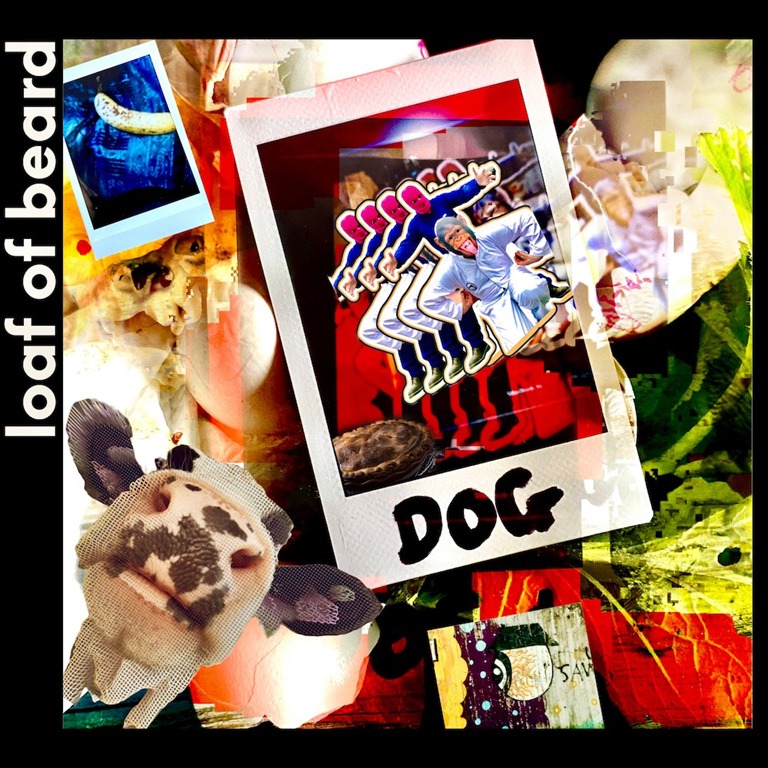
Loaf of Beard’s debut, Dog, features ‘2 British immigrants in Sweden point the finger at the state of politics in their home and former home countries, in a number of musical styles’. When they say ‘a number of musical styles’, it’s like listening to Joh Peel in the 90s, where baggy indie and experimental stuff would be crammed back to back with trance and grindcore. It’s all good, but it’s like a musical fancy dress party, with the pair tossing on different outfits and doing a different genre to go with it. And sometimes, it’s as if they’ve thrown on flares and a biker jacket, or a cocktail dress and a gimp mask by way of a combo.

‘Zippy Was a Blairite’ raises the curtain on the album in a post-punk style, and harks back to arguably one of Procter’s most popular and cherished musical vehicles, The Wharf Street Galaxy Band, with a nagging, elastic bassline pinned to insistent drums. Here, they’re programmed rather than acoustic, but that crisp, cracking vintage snare sound serves the purpose well of (re)creating the sound of the early 80s – but it’s the sound of the 80s as reimagined by Sleaford Mods, a primitive loop providing the musical accompaniment to the lyrics… and those lyrics are bitter. And at the risk of sounding like a crackling piece of overplayed 80s vinyl with a scratch, the current renaissance of the sound of the dark days of Thatcher in Britain is no coincidence. After thirteen years of austerity and the quality of life of the average worker being eroded faster than the world’s glaciers are receding, the mood is gloomy, angry, nihilistic. We can’t even think about protesting without risking being arrested. ‘The middle of the road is sitting on the fence’, Proc half-sings, half-speaks, reminding us of something many of us knew at the time, but chose to overlook because it meant getting the Tories out: New Labour was a long way off left in real terms: ‘pseudo-left credentials, politics so central’, as they summarise, chucking in a well-placed ‘motherfucker’ for essential emphasis.

Following ‘No Puffins for You, Lad,’ and Dale Prudent’s piece about pigeons, ‘Birds’ revisits the avian fascination that’s been a long-running theme in Procter’s work, and it’s a semi-ambient, spoken-word piece, which collides with the gritty chug and hyper-energised pumping of ‘Hund’, which comes on like Metal Urbain. ‘It’s a man in a frock!’ It’s a succinct summary of the indignation of the culture wars that obfuscate the real issues that are crippling the country.

That snarling glammy stomp of ‘Boothroyd Every Time’ is pure quality, and celebrates both a strong woman and a fellow Yorkshire person, and if ‘The Atrocity of it All’ is a less than subtle hectoring rant about the fucking state of everything it’s entirely justified, and the mangled, frenetic groove of ‘Cock’ may not be sophisticated, but it drives to the heart of the way the rich are milking the country dry while blaming increasing wages for inflation. Funny how wages are going down but profits aren’t isn’t it? No, it’s not remotely funny. Cock. Yes, Richboi Sunk, we’re looking at you.

‘Vote your life shitter / get your life shitter!’ Procter repeats over and over on ‘Lagom Murder Diaries’ and it doesn’t matter if he’s preaching to the converted here. Fuck. Just tell it to anyone who will listen: vote tory, get fucked. ‘Shithouse’ is comedically loose slacker funk, which finds Dave having a stab at rap. It’s not really his forte, but there’s a nice bassline and nagging guitar that’s a bit Orange Juice. It’s an odd mess of a tune that sounds a bit like a more tongue-in-cheek Yard Act.

‘Good’ sounds like Chris and Cosey but with that classic Northern flat vowel delivery in the vocals adding to the gritty groove as they sneer at the cuntiness of greedy capitalists. As if there are any other kinds.

Dog is fun, challenging, and tells it like it is. Fuck the Tories.

AA

364206108_807680231081653_4479751087162176766_n

Manchester underground music icon HARRY STAFFORD (frontman/founder of INCA BABIES) and North Carolina-based trash blues guitarist MARCO BUTCHER present their new single ‘Walk Among The Spectres’, following the resounding triumph of 2021’s ‘Bone Architecture’ LP. This is a cool piece of walking blues, with percussive Hammond organ and Butcher’s laconic backbeat. Their forthcoming album We Are The Perilous Men is out this autumn via Black Lagoon Records.

The video is fitting for this song, which is about an old friend who is fondly remembered. Our hero travels across town to put an electric piano-keyboard on his grave, discovering his own fragile mortality along the way. Directed by Stafford, this video was filmed in an expansive cemetery in South Manchester, which dates back to 1700 and was used throughout the Victorian era. Now a public park, people are invited to wander among the tombstones… to literally Walk among the Spectres.

Watch the video here:

AA

stafford

26th June 2023

Christopher Nosnibor

‘Industrial’ is a definition that’s shifted significantly over the years. The shift seems to have come some time in the late eighties or early nineties, when the likes of Ministry and Pitch Shifter were breaking into a much more mass-market audience: the former smashed MTV with the singles from Psalm 69, with even Beavis and Butthead getting down to ‘NWO’ and proclaiming ‘even the old dude is cool’ in reference to William Burroughs’ appearance in the video to ‘Just One Fix’. It seems hard to reconcile the enormity of that album with the face of music in the media now, but the early 90s really were something. You’ll read endlessly about how Nirvana smashed open the doors and so on, and perhaps to an extent that’s true, but they were simply a part of the zeitgeist in an era when MTV focused on ‘M’, and you would find bands like Soundgarden and Butthole Surfers and Rage Against the Machine being played alongside ‘Sabotage’ by The Beastie Boys, and it didn’t seem incongruous with all the mediocre pap because, well, that was what people were listening to. I even picked up a Therapy? live bootleg CD in a record shop while on holiday in Venice in the summer of ’94. I was excited, but it didn’t seem particularly strange at the time. Pitchshifter, meanwhile, had named their debut album Industrial, and it was fucking heavy, but it wasn’t until they changed their sound and rode the wave of sports metal around the turn of the millennium that they got popular, doubtless aided by their intersection with The Prodigy.

But because of the bracketing of these bands as ‘industrial’ in the 90s, the original characteristics of what had previously been deemed ‘industrial’ became buried, and forgotten. It’s hard to really find a connection between Ministry and the likes of Throbbing Gristle and Cabaret Voltaire (at least musically: they all loved Burroughs, but Jourgensen’s fascination was more about the junkie guru legend, whereas TG and The Cabs were into exploring ways of applying the cut-ups and Burroughs’ tape experiments of the late 50s and early 60s to music.

Binary Order sit firmly in the bracket of contemporary industrial, or what many refer to as Industrial Metal, and with this release they really show their influences and wear them with pride.

Now, I do get somewhat twitchy when the running order of a review stream or download differs from the Bandcamp stream or whatever, because the flow of a release is important – at least to me, and I tend to consider the overall flow of a release in my appraisal of its success.

So we’re going with the Bandcamp sequence here, which kicks off with lead single and title track, ‘Thrown Away’, a cover of the song by the oft-maligned nineties nu-metal act Papa Roach, who, remarkably, are still going and releasing albums at a steady rate. Are people really still buying this shit? Rap Metal was surely one of the worst things to have happened to music… but here it is. They blast off the four-track EP with a chunky riff-dense rendition of ‘Thrown Away’, and with that out the way, be can finally turn to the rest of the EP.

The remaining three tracks are remixes of songs from their debut album, Songs from the Deep, released in November of last year. The ‘Bleeding Mix’ of ‘Parasite’ is a gut-churning gurgle of stuttering electronica, that starts with a pumping, shuddering beat and a quivering synth groove which provides a stark backdrop to the raw vocals… but then it gets a bit ravey and autotune and straddles the uncomfortable intersection between dancefloor and sonic assault.

The Arcadmix Remix of ‘A Good Death’ is altogether more atmospheric and moody, and works well, largely because it’s neither overtly dancey nor Industrial / Nu-Metal. The six-and-a-half-minute ‘Irreversible Mix’ of ‘Hands of Time’ manifests as a long, oppressive, darkly ambient drone that’s a real departure from the rest of the EP.

The diversity is the key strength of this release, paired with the fact that it shows a band wanting to push their limits and aren’t especially precious about how their material is reshaped or adhering rigidly too their chosen genre.

AA

812429