Archive for March, 2023

25th February 2023

Christopher Nosnibor

There aren’t many singles that grab you with the opening bars, but silktape succeed with a tune that’s deeply rooted in both nineties and turn of the millennium alternative, spidery tripwire guitars spiralling around math-rock motifs against a hammering bass and sturdy drumming. They present all the angles with some shouty vocals atop guitars that some in from this side and that, with hints of Fugazi, …Trail of Dead, and Jacob’s Mouse cutting in alongside more recent reference points to make for a busy but solid and breath-catching sound, and they’re coming to the chorus now, and….

The chorus – well, it sounds like it belongs to a different song altogether. When they pitch it as being ‘’anthemic’, they’re absolutely right, but it’s from that vein of emo that renders it rather anticlimactic following the tense dynamics of the verse. It’s very much a cliché terrace-chanty ‘woah-hoah’ effort that would be more effective if it didn’t sound so template-drawn, down to the ‘ok not to be ok’, message, which is positive but somewhat uninspired and uninspiring.

The midsection, where they drop everything right down is brilliantly realised, and the song’s structure, paired with the contrasting guitar sounds, is outstanding. It’s early days for these guys – ‘Sink or Swim’ is only their second single, and they clearly have the songwriting skills and musical skills which demonstrate huge potential – and no doubt they’ll go far and almost certainly swim rather than sink once they decide for certain which audience they’re going for.

AA

su59301-silktape-Sink_Or_Swim-Silktape_Metway_Press_-_161122_-_Will_Fraser_Creative-11

silktape by Will Fraser Creative

24th February 2023

James Wells

Looking Tigers is Marcel Moliner, based in Leith, Edinburgh, and he describes his style as ‘animal techno’, since it’s all based on or inspired by tigers. That’s Not to be confused with Techno Animal, although in reality, this is unlikely.

With a hard bass thudding insistently, this is one of those tracks that’s sparse and stark yet at the same time dense. It’s all about the bass. Or, as Marcel suggests, ‘a steady 125bpm kick acts as a safety net against all unforeseen turns, where tiger roars unveil a very primal experience that won’t be forgotten.’ ‘They’re coming’ is dark and brooding, foreboding, and has strong hints of instrumental remixes of Nine Inch Nails or Depeche Mode, as well as calling to mind early Factory Floor.

Yes, it’s danceable, but it’s also cerebral, and it makes you feel compressed and tense, paranoid, even. You can almost feel their breath behind you: they’re coming, but who are they, and what are they here for?

Equally big on groove and atmosphere, it doesn’t necessarily convey the energy of a prowling hunter or savage beast, but this is interesting.

Mille Plateaux – 14th April 2023

Christopher Nosnibor

ID[entità] is a collaborative work between composer, performer, sound and multimedia artist Gianluca Iadema and Swiss vocalist, improviser-composer Franziska Baumann, which developed over the span of 2017 to 2021, and is as much a work of decomposition and deconstruction and reassamblage as anything.

We’re deep into the territory of artistic concept and execution here, as the accompanying notes detail how ‘the Italian artist composes for the electronic and the acoustic voice, searching for similarities and contrasts that take styles of glitch, techno, and pop music to the extreme. Far from melody and accompaniment, he composes an oscillating interplay of the acoustic and the electronic environment, morphing and sculpting the two realms as equal sound materials. Rarefied moments, melodic outbursts reminiscent of Renaissance vocal music, and rave rhythms give rise to sonic textures embedded in a minimalist framework. The compositions are conceived in “spaces” rather than linear development, although an “ergodic” narrative is present. With a cubist approach, the spatially sculpted sounds transform into intimate moments and vice versa, thus allowing atmospheres to separate identity and non-identity. Born as a cycle of compositions for electronic voice.’

Cubism in music is something I have never considered, let alone encountered, and so I am – naturally – curious to discover what the album’s ten pieces would contain.

Strange, strange sound it what they contain. This is perhaps one of the oddest voice-orientated works I’ve heard since Mike Patton’s Adult Themes for Voice. Like Patton, Iadema showcases just how strange, unsettling, and unnatural the human voice can sound. That most familiar of things can also prove to be the most uncanny when its familiarity is twisted out of shape in any way. Against straggling strains of digital glitchery and fear-chord drones, we gets breathless utterances, muttering mumbles and off-key scales.

I hear eerie discord and dissonance; I hear voices bent out of shape to create forms that aren’t natural or humanly achievable without manipulation – but being human voices, they resonate subconsciously as belonging within the psyche. I hear stuttering glitches looped into helicopter rotors and panic attacks and sultry, soporific drones. I feel choral exultations and moments of contemplative spirituality. I hear uncertainty and a sense of unease. I hear scrambled bleeps and fluttering microtones, snippets in foreign tongues, a sensation akin to Wiilliam Burroughs’ cut-ups whereby words, sounds and images collage together to portray the world as we experience it, consciously and subconsciously, and simultaneously rather than via chronologically-sequenced narrative. There’s trilling and milling, humming and murmuring, and a sense of something just beyond reach, beyond knowledge, beyond perception, and a sense that something is somehow wrong. I may not hear Cubism, but then perhaps I’m not sure what I’m listening for, but I do hear fragmentation, sonic manipulation and all kinds of jarring effects.

With the majority of the tracks stretching beyond the five-minute mark, ID[entità] is a long album, and one which despite being quite calm and gentle in tone, with protracted ambient stretches hovering in an unsettling mist.

It’s a unique and visionary work which pushes multiple boundaries at the same time. ID[entità] is not always an easy listen and it’s by no means immediate, but it is accomplished and utterly compelling.

MP59_art

24th February 2023

Christopher Nosnibor

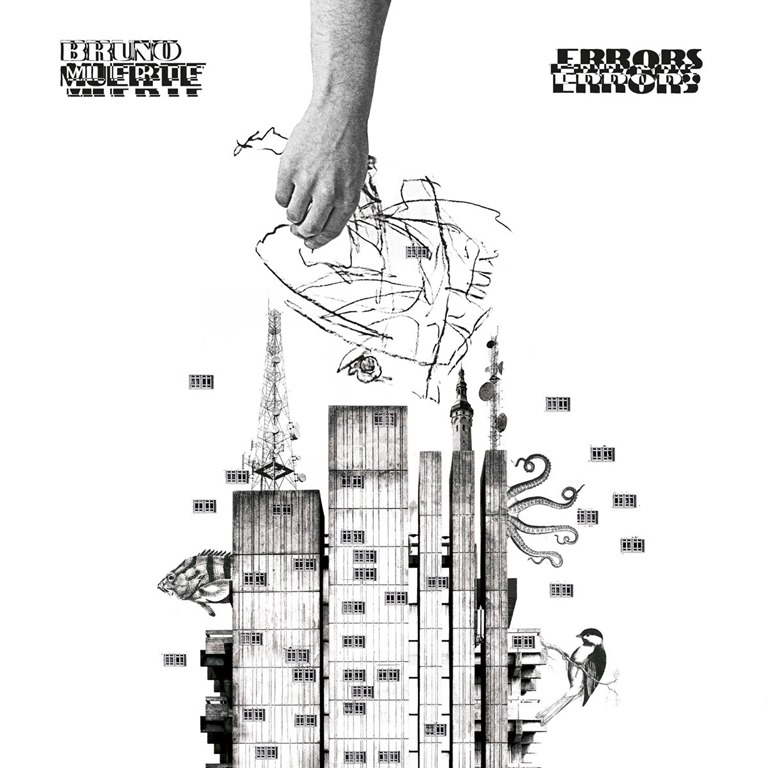
This Oxford based act describe themselves as ‘Techno Western New Wave Electroclash’ and ‘Synth lovers’. Unfortunately for me, this description conjures images of moustachioed hipsters circa 2009. The pair may well, be, choosing to keep their mugs off the record, and I’m all too aware of just how the field of instrumental electronic music is very much the domain of middle-class white guys tinkering with expensive toys. This lack of cultural diversity may be a leading factor in there being so much sameness stylistically.

Sameness isn’t really a criticism one could level at this album, for while it does assimilate many common tropes of contemporary synthesizer music – in that its inspirations are often retro in origin – stylistically, Errors offers a broad range.

‘Science of Errors’ is a punchy piece of electropop with some big, bold proggy sections that surge along in a rush, and it’s a strong start. ‘Conga Cop’ is very much a tune of 80s TV show vintage style. It’s extremely busy in terms of arrangement, stabby synths shooting over a hectic rhythm and samples flying around there and there, before going altogether more minimal on ‘Phil D’Ophear’, a much darker slice of techno where the dense bass dominates. Elsewhere, ‘Wibli Wobli’ packs a driving, energetic groove.

Errors is big on ideas: it’s positively bursting with them, and consequently, there is a lot happening, sometimes, if not all at the same time, then densely packed together, to the point that sometimes it feels as if there’s too much happening. And not all of the ideas necessarily work perfectly: the Clangers whistling over a microtonal waltz on ‘Satomi’ is novel and fun, but little more, but it’s Bruno Muerte’s willingness to experiment and the mix-and-shake approach to making music that’s a large part of the album’s appeal.

As they write in the accompanying notes, ‘One of the basic rules of the universe is that nothing is perfect. Perfection simply doesn’t exist without errors.’ It’s refreshing to hear: Errors, then, is not a quest for perfection, but a celebration of imperfection and the joy of being creative. And ultimately, it’s joy that Errors brings.

AA

a2776445249_10

17th March 2023

Christopher Nosnibor

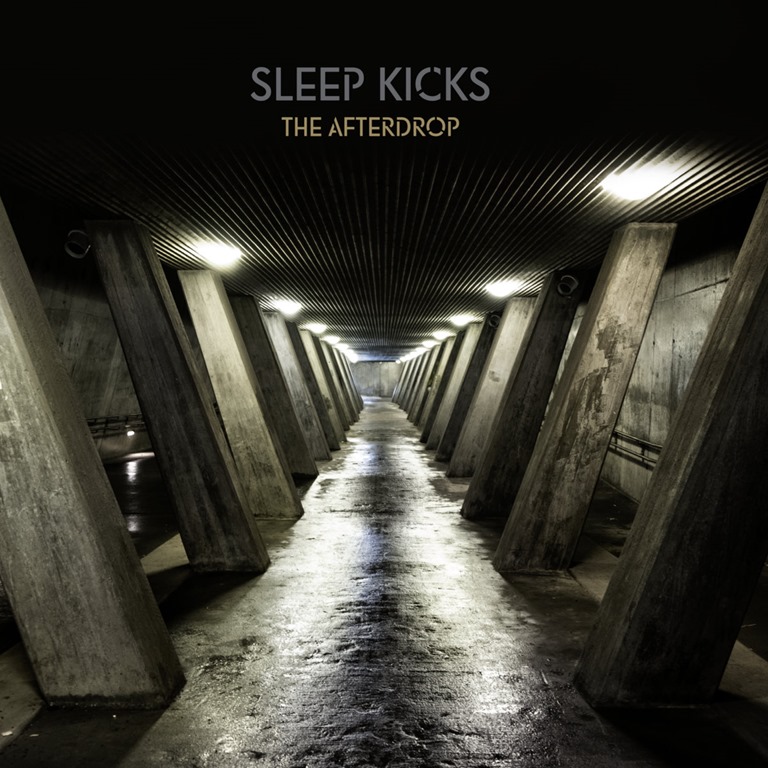
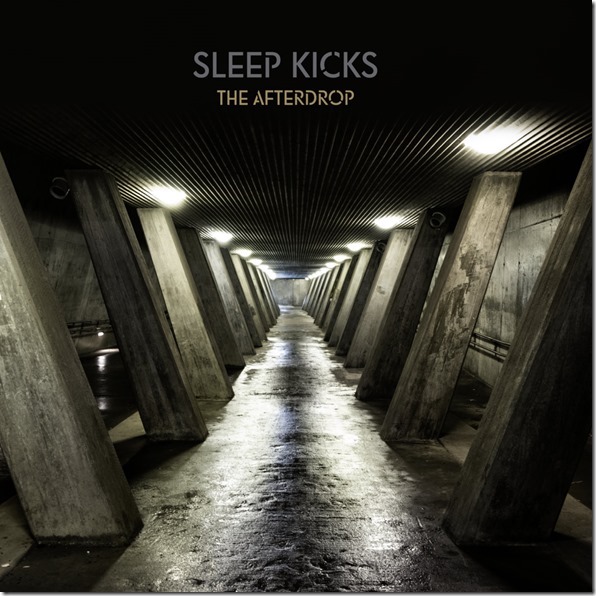
In the feast or famine equation, there’s rarely a true drought when it comes to quality new releases, but this month really does seem to be one for an eye-popping proliferation, and the arrival of Sleep Kicks’ debut album after a succession of singles and EPs is a most welcome arrival along them.

Having previously showcased – and raved about – previous releases, it’s a joy to see The Afterdrop finally land. Most of those previous singles – ‘My On Demon’, ‘No Chains’, ‘Hall of Shame’, ‘Neptune’’, and, most recently, ‘Words in Vain’ are featured here, along with a different recording of ‘Exodus’ from the one that appeared on the Summer EP back in July 2020. It’s marked as an edit, which makes me curious to hear the full-length version performed as a full band.

Having frothed and foamed exuberantly about the band’s melding of dark post-punk with soaring pop aspects with each single release, I’m running low on my reserve of superlatives. But there are four new songs here, and then there’s also the question of how it hangs as an album – whether or not if feels like a padded-out singles compilation or an album proper.

I suppose the first thing to point out is that while all of their previous releases have been digital-only, The Afterdrop is receiving a vinyl pressing, meaning the songs finally feel solid and tangible in a way they perhaps didn’t before, and with the atmospheric instrumental opener, ‘Reflections’ lifting the curtain on the ten-track set, it does very much feel like an album rather than simply a collection of songs. It’s dark and spacious, with robotic drumming driving it along.

It’s then straight into the vaguely gothy post-punk of ‘Words in Vain’, with its stonking bass and fractal guitars, a tune that on its own should have earned the band global domination on a par with Editors and Interpol. ‘Neptune’ is synthier, but its poppiness is countered by dark undercurrents, and it’s a rush, as is ‘Exodous’ – a thunderous bass and brittle guitar that’s pure Interpol circa Turn on the Bright Lights defining the side.

In previous reviews, I’ve also likened Sleep Kicks to fellow Norwegians A-Ha: some of this is down to Terje Kleven’s vocal qualities – rich, varied, and with a knack for inflection, but equally, they’re a band I’ve always returned to because there’s there’s a darkness to their pop that I feel has been largely overlooked, and it’s this amalgamation of darkness with a pop sensibility that is what I’m driving at with Sleep Kicks.

‘Silencer’ – another one of the new songs – is slower, sparser, but brims with brooding and emotional resonance, and, once again, it’s magnificently crafted. This is true of every one of this album’s ten tracks. ‘Orbiting’, another song which hasn’t been released before, is bittersweet bliss and again revises the 80s spirit with a brooding yet accessible slice of guitar-driven desolation.

Again, in a just world, ‘No Chains’ would have been their ‘Pompeii’ and would have seen Sleep Kicks on the same pegging as Bastille – again, there are similarities, but the fact is that Sleep Kicks are by far the better band. It’s an unjust world where it comes down to label backing and pluggers. But then, we know it’s an unjust world, and the music industry sucks. But there’s a world outside the industry, and ‘Hall of Shame’ with its choppy guitars and snaking bass runs is as good a song as you’ll hear all year. But then, so is ‘My Own Demon’. In fact, The Afterdrop is an album without fault, and as good an album as you’ll hear all year, or ever.
a3769329865_10

Human Worth – 17th March 2023

Christopher Nosnibor

God Pile is the debut release from Leeds duo Grub Nap, a duo consisting of Dan Barter (Dvne, Joe Pesci) on guitar and ‘back mouth’ and Steve Myles (Cattle, Groak, Thank, Khuda) on drums and ‘front mouth’. As if their joint pedigree isn’t recommendation enough (and having witnessed the majority of the aforementioned acts playing life for myself, I can vouch for that), it’s being released on Human Worth, and the limited run of fifty tapes has gone in advance of the release date.

And being Human Worth, 10% of all proceeds are being donated to charity, in this instance Leeds Mind, promoting positive mental health and wellbeing and providing help and support to those who need it most.

Now, I’ve mentioned this variously before, but for mental health and wellbeing, music can be – and certainly is for me – an immense help, and it’s the gnarlier, noiser stuff I often find provides the greatest comfort, especially in a live setting. It’s all about the escape, the release, the catharsis of raw emotions pitched against raging noise.

And Barter and Myles, who, according to the band bio ‘first played together in a hardcore band in their late teens and have teamed back up to churn out sludgecore for folks with short attention spans and no interest in wizards or flag waving’ definitely bring the noise, and the describe God Pile as ‘a golden brown, 15 minute, crumbly, introspective riff lattice. Snappy(ish) songs about greed, crippling anxiety, suburban nuclear mishaps and flagellant rozzers. 6 knuckle dragging clods of down tuned insolent rage.’

The longest of the six songs on here is three minutes and eighteen seconds long: the rest are all between a minute and two-and-a-half minutes long.

They pack a lot of action and a lot of noise into those short spans. The guitars are so thick and gritty the riffs churn your guts, so you don’t miss the bass, and Myles’ hard-hitting drumming is dynamic and varied, with shifts in both volume and tempo keeping the songs moving well, and the Raw-throated vocals are absolutely brutal. There’s a late 80s / early 90s feel to their brand of dingy noise, landing somewhere between early Head of David and Fudge Tunnel, then going full grind on the minute–long ‘The Daily Phet’.

Slowing to a downtuned crawl and ending with a howl of feedback, one suspect the title of the last track, ‘Crowd Pleaser’ is likely ironic – you can’t really have a go-nuts mosh to this. But then, after the intensity of the preceding cuts, you’re a knackered sweaty mess already – and that’s just sitting at home listening. Oh yes. Grub Nap hit the spot.

AA

a2853079058_10

Quite possibly the most exciting thing to come out of Redhill in the last three centuries, Trevor’s Head markedly circle in three distinct orbits around stoner, punk and prog, creating a heavy, sonic vibe quite unlike anybody else out there.

Their new album “A View From Below, released on 5th May via APF Records (Mastiff, Desert Storm, The Brother’s Keg, Video Nasties) is a lean and cohesive expression of the power trio’s precision, which marks the next stage in the genre-bending and ever-evolving sound that is Trevor’s Head. For first single ‘Call of the Deep’, Roger Atkins (guitar/vocals) states,

"These last few years have been tough for us – for everyone – and I have constantly been struck by the strength I’ve seen in others. Whether battling personal loss, mental health difficulties, financial stresses, relationship troubles, whatever. This song is a nod to anyone who keeps fighting through the calm and through the storm. I have unending respect and pride in anyone who can do that, and this song is for them. Even if it didn’t go to plan for the protagonist this time.”

Listen to ‘Call of the Deep’ now:

AA

91sJNfls

Dret Skivor – 3rd March 2023

Christopher Nosnibor

Fern’s Deformed is appropriately titled: this some mangled shit. From the slow, deliberate, rolling grooves that boom and bow through snarled up noise, while against it, crisp, crunching beats thump and stutter, Fern keeps things interesting and innovative, but more than anything, keeps it uncomfortable.

Deformed sits within that bracket of dark ambient that’s deeply dark, but not entirely ambient, and doesn’t for a second let you settle into it, instead twisting and squirming awkwardly, refusing to solidify or confirm to any one fork of style.

‘Intro’, the minute-long splurge of wibbly dissonance set the scene nicely for the following twenty-five minutes of oddball electronica. The liner notes offer ‘Respect to Portishead, aphex twin, faster katt and Mindacid for inspiration (samples)’.

The majority of the album’s ten tracks are brief sonic snippets, most being well under three minutes in duration, and in many respects, Deformed feels more like a palette sampler than a fully realised work – although that is by no means a failing, as it gives the album an immediacy that further evolution would likely dilute.

It’s four tracks in that Deformed really starts to take (strange, twisted, unexpected and indefinable) shape: ‘Greyhats’, a live recording – it’s unclear if it’s live in the studio or soundboard, but there’s no crowd noise and it fades at the end – is aggressive, dark, and difficult.

Immediately after, ‘Heaven in my hands’ is a murky mangled mess of distortion and mid-range, drums overloaded and crackling in a grey blurry sonic haze, and ‘Give Your Soul Away’ is a skull-pounding beat-driven assault, and the samples pile in thick and fast. ‘Porthole’ is dense, robotic, repetitive, and while dance elements are a defining feature of the album’s style, this is by no means a dance album: it’s stark, it’s bleak, detached, and in places, unsettling.

Deformed is many things: easy, predictable, comfortable, are not among them.

AA

a0661217700_10

Following the announcement of their forthcoming album Dødheimsgard return with their exceptional first single ‘Abyss Perihelion Transit’. The ten minutes plus track weaves a sombre tapestry incorporating elements of multiple sub genres in the world of Extreme Metal and thematically tackles ideas of epistemological dualism.

Regarding the single Vicotnik had the following to say:

“The whole album revolves subjectively around perception, experience, psychology, objective/subjective reality vs external pressure, tropes, taboos, the laws of motion/causality which influences one’s life. The subjective perception of reality vs the objective causal effects of reality and how they are bound interact. Epistemological dualism.”

Vicotnik continues:

“I guess mental health, or rather instead of health, let’s call it mental condition is a big topic on this record. Not as in a complaining way, or as a good or bad notion, but rather a subject’s study of his own psychology (en)during everything.

Like the ambiguity of Being. What is Being? Is it a meta-physical stratum of subjective emotionally fuelled notions or is Being just explaining a physical object that is, therefore being. Epistemologically I guess these lyrics dwell a lot on naïve realism vs representational realism. Cognitivism vs behaviourism, and then bringing it all to an artist context obviously. So, it is experiential renditioning, not solution driven.”

Accompanying the single is a video and single cover art from visionary artist Costin Chiorenau who brings the disparate and incredibly solemn existence of ‘Black Medium Current’s first single to life. Working together both the song and the video evolve over the course of the ten-minute run time to create something truly visionary both in a sonic and visual context. Costin elaborates on the video below:

“I’ve been following Dødheimsgard for 20 years now, and the genius of Vicotnik always captured my highest focus, being at the same time a huge inspiration, both musically and aesthetically. I always perceived Dødheimsgard being more as an artistic movement than a black metal band, another aspect which excites my creativity and I feel fulfilled that I could express all this passion through the ‘Abyss Perihelion Transit’ art video and single cover.”

He continues: “When I first heard it, I felt that void left behind by the desperation of the root-sense of old structures of perception. That void, which shakes the black matter foundation every time when manifestations tuned with and born in the past overleap the fresh sight of the present which fights hard to penetrate the dense walls of repetition. The main characters of this movie are the absence created by the vanishing old, the observer in search of a new fitting cloth of identity for its avatar and the desperate need of giving shape to the yet-not assimilated nor understood living new.

Secondary characters are different types of glitches in the matrix between self-imposed reality and the golden mean dream state, measuring systems for various types of space found between the layers of perception and the omnipresent shadow. These characters are interfering one with another in a multiverse of contrasts between defined and undefined, forming a brick-dust flavoured whole, at times exotic, at times smoked in bitter nihil. These characters are also the topics spoken but the energy of this song, by the voice of now and I consider the proper ones to be dissected through art.”

Watch the video here:

AA

thumbnail_2021-09-12 DØDSHEIMGAARD0819

‘White Rose,’ the new track from Leeds drum machine-driven racketmongers La Costa Rasa, is about the ‘White Rose Group’ in WWII Germany and specifically about Sophie Scholl.

A German student and anti-Nazi political activist, she was She was convicted of high treason after having been found distributing anti-war leaflets at the University of Munich with her brother, Hans. For her actions, she was executed by guillotine.

Never Forgive, Never Forget.