Archive for August, 2021

23rd July 2021

Christopher Nosnibor

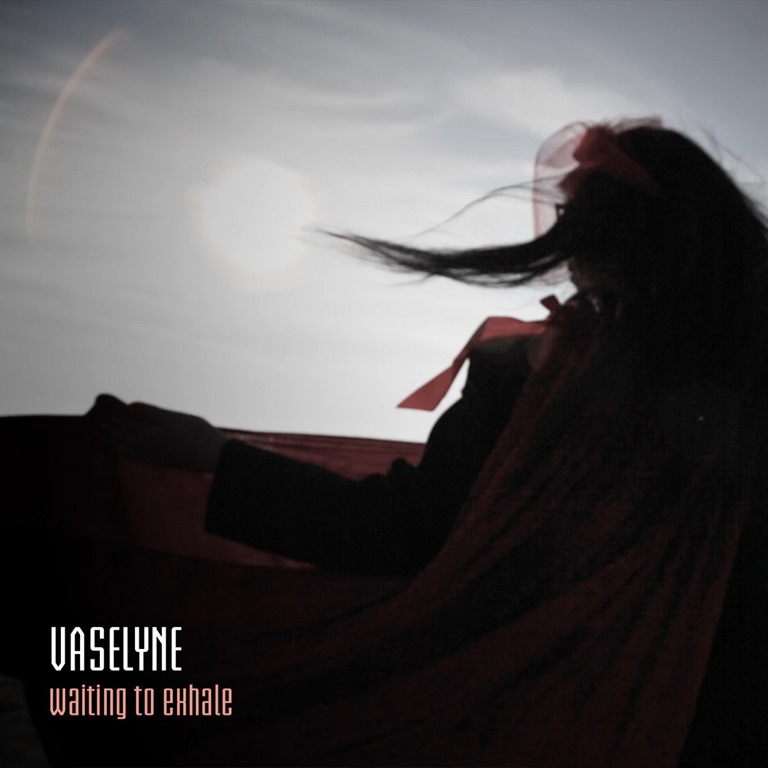
The new release from Dutch duo Vaselyne, consisting of singer Yvette Winkler and musician and producer Frank Weyzig is sold as a maxi-single, and sure enough, with the track accompanied by instrumental and demo versions, it does replicate the feel of the old 12”, which in time became the CD single.

If I’m habitually ambivalent about versions and remixes, it’s because they often feel like it’s an attempt to eke out a limited amount of material over the most space, and back in the day – the day being the late 80s and through most of the 90s – as a completist collector of a number of bands, I’d feel a bit swizzed over B-sides consisting of acoustic versions etc spanning multiple formats, and much preferred the first half of the 80s when the 12” single often meant no more than an additional B-side not on the 7”, or at most, an extended version, and there as only a 7” and 12” on offer, rather than a 7”, 12”, limited 12” and likely a standard and limited CD, all with different tracks, plus a cassette single that was likely the same as the 7” but well, you couldn’t just leave it, could you? Especially if it was in a nice card slipcase or a cover like a cigarette packet.

I digress, just a little. Firmly rooted in the brooding corners of theatrical gothic rock, the piano-led ‘Waiting to Exhale’ is six minutes of poised, dramatic splendour, a work of melancholic beauty. Yvette’s vocal are rich, bordering on the operatic in places, although never overdone: there’s no bombastic emoting here, just controlled reflection. The production is full, but again, uncluttered, not over the top. In this respect, there isn’t much difference in the song’s evolution from the demo to the final version, other than the fact that the final version is fuller, more polished, but with no loss of resonance.

And if it invites comparisons to Evanescence, this is perhaps the key difference: Vaselyne keep things real and resist the overblown, and in doing so, render the more understated emotional qualities more sincere-sounding. A mournful string scrapes across the layered vocal and carries the listener into a space of aching reflection.

AA
542687

Composer and curator Greg Anderson (Southern Lord Recordings; Sunn O))), Engine Kid, Goatsnake & more) has unveiled a new song as a part of his forthcoming explorative compositions and collaborations as THE LORD available on Bandcamp.

The first track to surface is the thunderous song “Needle Cast,” which features BIG|BRAVE guitarist/vocalist Robin Wattie.  Wattie’s striking, shimmering vocals pair perfectly with Anderson’s multi-faceted instrumental approach.  Anderson comments: “I’m extremely honoured to have been able to collaborate with Robin Wattie on this track.  I’m a massive fan of BIG|BRAVE especially Robin’s emotive vocals and infectious melodies.  Immediately after composing this track I was envisioning her dynamic vocals within the piece.  The performance she recorded went beyond what I had imagined. Robin also created the amazing artwork that accompanies the music."  All proceeds from “Needle Cast” will go directly to The Native Women’s Shelter of Montreal.

Listen to ‘Needle Cast’ here:

AA

LOrd

"Needle Cast" cover art by Robin Wattie

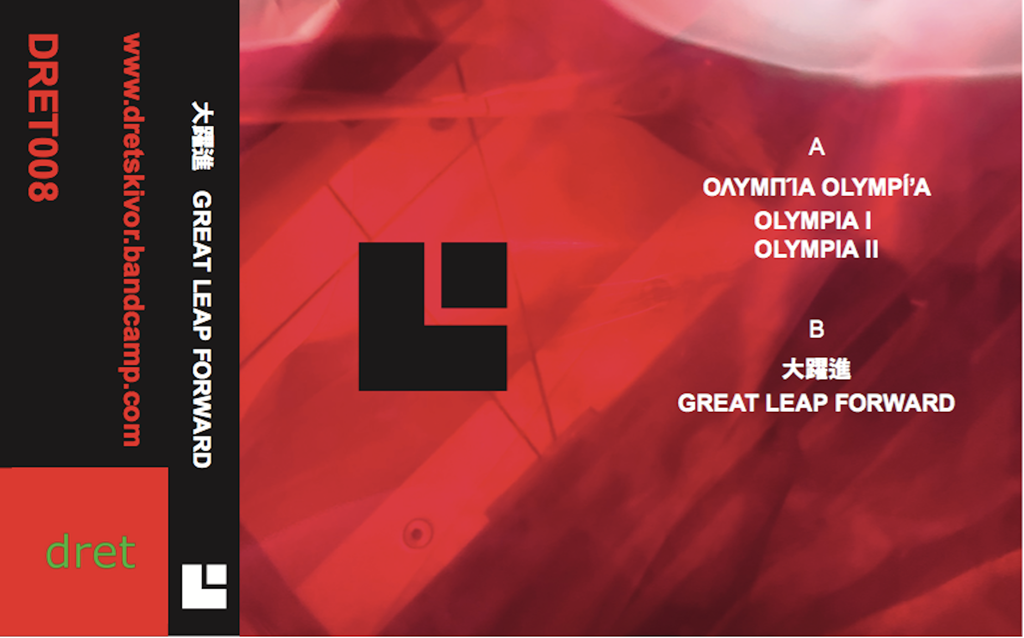
Dret Skivor – DRET008 – 6th August 2021

Christopher Nosnibor

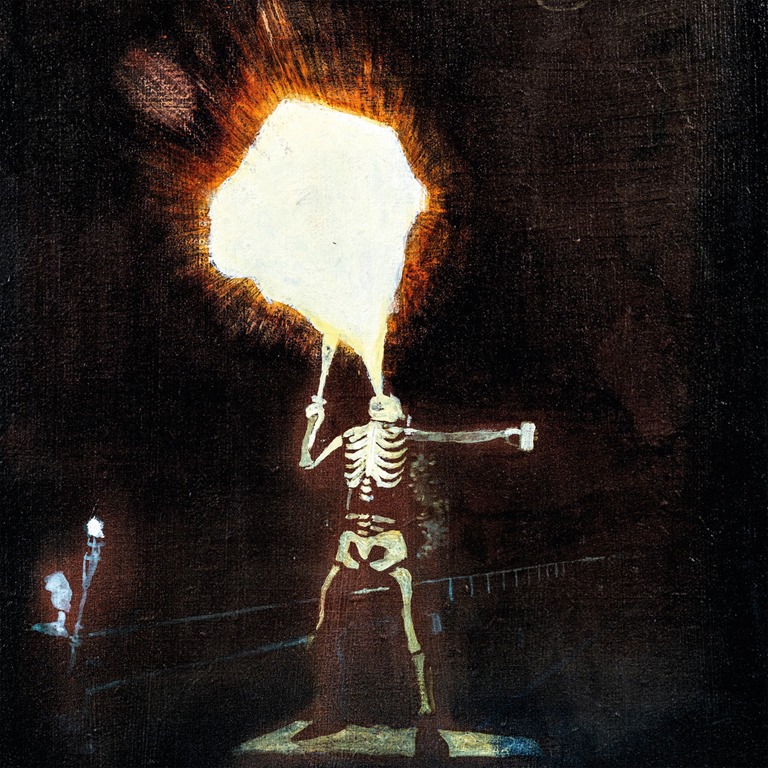
The latest offering from Dret Skivor, a Swedish tape label specialising in drone and various shades of experimental noise, is the new album from Danish maker of electronic noise Thomas Li, who, as Li, has self-released almost a dozen works digitally. Biographical details are less than minimal, and that’s cool. Why do we need to know about the artist, their background or their back catalogue? Do we really need to know the context or the intent, the theory behind a work? Sometimes, when it’s an experimental work informed by theory or a certain concept, it helps, because the concept and theory are integral to both the process and the end product. Then again, there’s a danger that sometimes said theory or concept can impinge on one’s appreciation of the work. Sometimes, it’s best to just be able to listen, and allow oneself to be immersed in the sound, without pouring over lengthy liner notes, researching myriad avenues presented by the references, and straining one’s brain over concepts. This is particularly true of many works of a more ambient persuasion. I’m not remotely anti-academic or anti-intellectual – quite the opposite. But sometimes, you just need a break, and music can be the perfect conduit to vital headspace. An overemphasis on context can detract from the often underrated pleasure of simply listening, and enjoying.

Admittedly, enjoyment of an album like this is the preserve of a small minority: it doesn’t contain any ‘tunes’, it’s beatless, and it’s not always entirely mellow either. But it does have a great deal of texture, and this is something you can really lose yourself in.

Great Leap Forward contains three tracks, with side one occupied with the two-part ‘Olympia’ and the second side containing the eighteen-minute monster title track.

‘Olympia I’ is nine minutes of dense, churning drones, billowing sonic clouds that choke and smother, while counterpart ‘Olympia II’ gurgles and churns a dark whirling cyclone of sound. The latter is more interesting, sonically, with a lot more going on – meaning it’s also more challenging and more tense, as crackles and hums fizz and spin from the dank depths of bubbling noise.

The title track is altogether less tumultuous and more background ambient by comparison. Being eighteen minutes in duration, on the face of it, not a lot happens: there are no climactic blasts of noise, there’s nothing explosive or even overtly disruptive. And yet for all its subtlety, it is engaging, and there is movement, there are shifts and distract and divert. Howling winds blast over barren landscapes of drifting sand and strains of treble and whines of feedback emerge from the eternal mid-range rumble that drones on, and on, and on.

In the context of his output to date, this may not really be quite such a great leap forward, but it does clearly mark an evolution and an expansion on the soundscapes sculpted on previous works. And, played with the accompaniment of a candle and some CBD-infused beer, Great Leap Forward is a well-executed soundtrack to mental recuperation.

AA

tape label grab for bandcamp

Two decades into their journey as ritualistic black metal conjurers, Wolves In The Throne Room have emerged from the forest with Primordial Arcana, their most majestic album to date, and their first release via Century Media Records (in the UK, mainland Europe, outside of USA/Canada) and Relapse Records (USA and Canada) out August 20th.

In the visuals Wolves In The Throne Room are taking us on a journey through Cascadia, a bioregion that has been highly influential for the band’s aesthetics and sound. From the forests in “Mountain Magick” and rivers and streams in “Spirit of Lightning” we are following them to the ocean in their latest video for “Primal Chasm (Gift of Fire)”:

AA

The band comments: “’Primal Chasm (Gift of Fire)’ is an explosion of cosmic grandeur, a symphonic rendering of the hermetic maxim As above, so below. The lyrics are a dreamtime retelling of creation. The act of the universe creating itself comes from the same impulse—it all springs from the same source, the same union of fire and ice. It’s the interplay between polarised opposites, and it’s from their contradiction and chaos that life happens and music and the planets are created.”

Primordial Arcana is the band’s first completely self-contained work: in addition to composition and performance, brothers Aaron and Nathan Weaver alongside guitarist Kody Keyworth handled all aspects of recording, producing and mixing at their own Owl Lodge Studios in the woods of Washington state.

AA

WiTT

Photo Credit: Dreaming God

Hallow Ground – HG2104 – 13th August 2021

Christopher Nosnibor

There are few things in life you can really rely on, but Hallow Ground is one of them, if you’re seeking music from the darker side. The clue’s pretty much in the name here: this is pretty dark. Of course it is. It’s also quite an interesting and unusual blend of styles and sounds, for while this forty-minute, seven-track work is predominantly instrumental and ambient in its leanings, it pushes wider and deeper than that, to span a range of territories, with often quite unsettling results.

DarkSonicTales is a project by Rolf Gisler, who was granted an artist residency in a 300-year-old farmhouse in the Swiss countryside in autumn 2019, by the label. How this sort of thing comes about, I’m not really sure, but there it is. I am a shade covetous of artists who get dedicated time and space to work on their art in whatever medium, because the simple fact is that in ordinary life there never seems to be enough time. For anything. And creativity requires headspace and time, both of which are rare and precious commodities.

Rolf seems to have made the most of his time, and the result is an album that’s varied in terms of form and tonality, which makes for a fascinating listening experience. From the mellow chiming of the short intro piece, ‘Info Pandemie’, to the eight-minute drone-swirl of ‘Best Buddies’ that drags the album to a slow-simmering conclusion in a bilious fog of sonic drift, DarkSonicTales is a deeply exploratory piece.

‘I Still Believe’ is a long, slow-burning, low-key, low-tempo gothy tune, where Gisler whispers in a baritone croon over a delicately picked guitar that’s hauntingly atmospheric and pinned down by a distant but insistent drum machine, its cracking snare cutting through the sonic haze.

‘Best Buddies’ brings the finale, and there’s a stuttering heartbeat drum flickering like a palpitation against the slow, majestic musical backdrop.

In some respects, it’s a challenge, simply because however much the album leans towards electronics, the way the instrumentation is used is so widely varied this feels like an album that’s harder to accommodate far more than it actually is. Somehow, the pieces of the jigsaw fit together.

AA

a4220900238_10

Birmingham, Alabama 4 piece EMBR are set to release a 3 song EP called “1021”. The title alludes to the fact that, the EP is the second in the New Heavy Sounds 10th Anniversary CD EP series.

‘1021’ follows on the heels of their critically acclaimed full-length “1823”. It also falls in line with the 2-year anniversary of the drummer Eric’s kidney transplant.

EMBR deliver 3 brand new songs, each of which push the template set up by the album. These compositions chronicle love, devastation, disappointment, forgiveness and anger, and once again, musically EMBR are on top form. Drummer Eric comments on the video for new single ‘Vesuvious’,

"Vesuvious, the first track from the upcoming EP 1021 is an intense composition. It’s a bit out of the box for EMBR, which is exactly what we set out to do. Musically, it’s faster and more up-tempo than what we usually write. The riffs are driving, The rhythm section is pummeling, Crystal’s vocals are soaring, at times haunting and she even Incorporated a substantial dose of her screaming.  Lyrically, the song is loosely based on “the lovers” from the Pompeii disaster. If you listen to the lyrics you’re hear some of that story. So you could say that this song is a heavy love song. The video is composed of footage from our weekend at Ledbelly Sound…… stick around till the end for A few outtake clips. We hope that you’ll enjoy the song as much as we did writing it."

Watch the video now:

AA

NYHMpu_Q

BIG | BRAVE are pleased to announce European tour dates in April and May 2022 in support of their latest album, VITAL out now on Southern Lord.  Dates and details below.

On their fifth album VITAL, the core trio of Robin Wattie, Mathieu Ball and Tasy Hudson traverse minimalism and instinct, structure/freedom and meticulous timing, elements that have been the cornerstones of BIG | BRAVE’s precise, rhythmical sound. Lyrically the album explores the weight of race and gender, endurance and navigating other people’s behaviours, observation and protest. VITAL was recorded with Seth Manchester at Machines with Magnets.

BIG | BRAVE EUROPEAN TOUR DATES 2022

+ Fågelle

08/04/2022 FR Dunkerque Les 4 Ecluses
09/04/2022 UK Ramsgate Ramsgate Music Hall
10/04/2022 UK Sheffield Record Junkee
11/04/2022 UK Leeds Brudenell Social Club
12/04/2022 UK Newcastle The Cluny2
13/04/2022 UK Norwich Norwich Art Center
15/04/2022 UK Glasgow Broadcast
16/04/2022 UK Manchester The White Hotel
17/04/2022 UK Leicester The Soundhouse
18/04/2022 UK Bristol The Crofters Rights
19/04/2022 UK London Electrowerkz
20/04/2022 BE Antwerp Kavka
22/04/2022 GER Hamburg Hafenklang
24/04/2022 SWE Göteborg Showdown
26/04/2022 NO Oslo Blå
27/04/2022 DK Copenhagen Pumpehuset
28/04/2022 GER Bremen MS-Loretta
29/04/2022 GER Schorndorf Club Manufaktur
30/04/2022 AT Innsbruck pmk *
02/05/2022 AT Linz KAPU
03/05/2022 CZ Prague Bike Jesus
04/05/2022 PL Warsaw Hydrozagadka
05/05/2022 LI Vilnius XI20
06/05/2022 LV Riga Noass
07/05/2022 EST Tallinn Svetaa Baar
09/05/2022 PL Gdynia Desdemona Club
10/05/2022 GER Berlin Kantine Berghain
11/05/2022 GER Dortmund Junkyard
12/05/2022 FR Paris Petit Bain
13/05/2022 FR Pau La Ferronnerie
14/05/2022 ES Oviedo La Salvaje
16/05/2022 PT Lisboa ZDB
17/05/2022 PT Porto Hard Club
18/05/2022 ES Madrid Wurlitzer Ballroom
19/05/2022 ES Barcelona Sala Vol
20/05/2022 FR Toulouse Le Connexion Live
21/05/2022 FR Lyon Sonic
22/05/2022 CH Geneva Cave12
24/05/2022 FR Strasbourg La Maison Bleue
25/05/2022 CH Zürich Rote Fabrik
26/05/2022 FR Metz Young Team Festival 22 
27/05/2022 BE Ghent dunk!Festival
29/05/2022 RU Moscow Bumazhnaya Fabrika
30/05/2022 RU St. Petersburg Lastochka

* no Fågelle, plus Trialogos

BB

SIGE Records – SIGE100 – 25th June 2021

Christopher Nosnibor

Woah! Dizzying, head-spinning chaos and cacophony! Twangs and bangs – strings stretched to within a millimetre of snapping, bending and scraping and scratching. Every instrument is playing across the others at an angle. About ten minutes into side one, you realise the discoordinated racket, having had some flickers of brass bubble through – like tentative flames licking around an oversized log on a fire that’s yet to fully establish itself -has congealed into a dense, soupy drone with industrial strength hip-hop beats played by a live drummer. And it just doesn’t stop. For twenty minutes straight. It gargles and parps and booms and toots and parps and growls and farts on and on and on, while the drums clatter and crash and thwack and thwock and bump and fuck me it’s an almighty headache-inducing din.

Details about this release are fairly limited, but details tend to be lost to history anyway. And most of history suggests that White People Killed Them is a common recurring theme throughout. There are so many of ‘them’, anonymous, often buried in unmarked graves in the name of progress – white progress. History is a narrative of shameful exploitation and bloodshed.

Whether or not the three musicians, Raven Chacon, John Dieterich, and Marshall Trammel, intended any such connotations when they came together in New Mexico in 2019, I have no idea, but the forty minutes of music recorded and relayed on this eponymous release would certainly make for a fitting soundtrack to the sheer brutality of history as a catalogue of killing. It’s so relentless, it makes you want to stand up and shout ‘stop! Enough is enough!’ But of course, as history shows us, it never stops. And nor, seemingly, does this album. It’s not a particularly pleasurable experience. It is an intense experience, and one that instils a kind of anxious excitement, even exhilaration. But pleasure… not really.

Things take a turn for the strange on side two, where from some warped, stretched-tape nastiness, there’s some twangy, spaghetti western weirdness that emerges briefly, before everything gets fucked up and mangled again. And it just builds and then sustains this massive wall of thick, discomfiting sound. The end leaves you absolutely drained, desiccated, mentally and physically decimated. If it was possible to achieve death by avant-jazz, White People Killed Them have slain us all with this monster.

AA

SIGE100_front

Fabrique Records – 18th June 2021

Christopher Nosnibor

Berlin-based composer and sound artist Jana Irmert has approached her third album for Fabrique with a view to exploring the way in which sounds have a certain sensory aspect. There’s a way in which music touches us, not just aurally, nor emotionally: some music you really do feel. Beyond music at the louder, harsher end of the spectrum – be it electronic or more conventional in its instrumentation, this is something that is perhaps more common to experimental forms, where contrasting sounds and the shapes and textures of those sounds are more the focus than the unity of a collection of instruments for create ‘songs’.

Articulating how music makes you feel is one challenge, but articulating how music itself feels – or moreover, how the sounds themselves feel – is an immense challenge. Because writing, like any other art, can often reveal its authors limitations, however well they’re working. Every artist has their own personal limitation. Francis Bacon was unable to paint feet, for example. The greatest limitation is invariably the disparity between concept and execution, and often, for musicians, it’s articulating the sound in their head using actual instruments – or, if not articulating the sound, conveying complex emotions through the medium of sound.

Jana Irmert’s challenge here was to render one sensation through another. “I felt I wanted to get closer to the sounds, feel their structure and surface and how they contrast each other,” she says. And, during the process, her recordings yielded some quite unexpected results: “It turned out the processed sounds resulting from hard materials would often have soft and tonal qualities whereas those made from ‘soft’ materials like water or air would ultimately be of percussive or harsh and noisy character.”

The opening bars of the first piece, ‘Lament’, are unexpectedly dense and heavy, a rugged, grainy tone that grinds from the speakers before slowly tapering down to something rather more tranquil, yet draped with the weight of melancholy. Moving into ‘Against Light’, Irmert creates a much more upbeat ambience, a shimmering, shuffling stuttering of sound, and it’s gentle, but not entirely calming or comforting, like being stuck in a tractor beam, a glitching loop that affords no forward trajectory.

With the sounds of the sea, the title track initially seems like it will fulfil the description, offering something soft, soothing, immersive. But as layers build, darker sounds clunk and rumble and loom and lurk in thickening shadows.

There is a certain sense of progression over the course of the eight compositions, with more percussive sounds coming increasingly to the fore. In doing so, the album gradually moves from intangible to something altogether more substantial, its physicality developing an almost corporeal tangibility.

Listening to The Soft Bit, one feel as though one is somehow in nature, and surrounded by nature, from the clouds, and the air – invisible, yet capable of substantial force when moving as a wind – to solid objects – stones, trees, the ground beneath the feet. Listen, inhale it all in, and feel it flow.

AA

FAB088_front

Iconic post-punk band Pink Turns Blue has announced that their new album ‘Tainted’ will be released in autumn on limited edition vinyl, CD and digitally via Orden Records.

Ahead of that, they present their new single ‘You Still Mean Too Much To Me’, following up lead singles ‘There Must Be So Much More’ and ‘So Why Not Save The World’.

Pink Turns Blue is Mic Jogwer (vocals, guitar), Reubi Walter (bass, keyboards) and Paul Richter (drums). Inspired by Joy Division, The Sound and The Chameleons, Pink Turns Blue plays alternative rock heavily influenced by 80s post-punk and new wave.

This album is the result of time well spent this past lockdown year writing, recording, mixing and mastering the new album in their Berlin recording studio. On ‘Tainted’, the band added an electronic element to their classical vocals, guitar, bass and drums. The album title itself relates to the state of our world: climate change, its effects, the reaction to it, the split within society, isolation, health risks and financial uncertainty.

"How to overcome the grief / pain of lost love, torn between hate, very bad feelings and, at the same time, not being able to let go at all. As there is no understanding why you fall in love with someone in the first place, there is also no reason / understanding  why love does end or your love of life starts to feel attracted to someone else. It all dissolves into nothingness," says Mic Jogwer.

"Some melodies and moods just call for certain sad themes and touch old wounds that never seem to heal. Normally love stories don’t seem to have a connection to me and my life. But then, when I find a sad melody with some sad chords it all gets stirred up and comes to life. Maybe love really never ends."

Lusten here: