Archive for July, 2021

21st June 2021

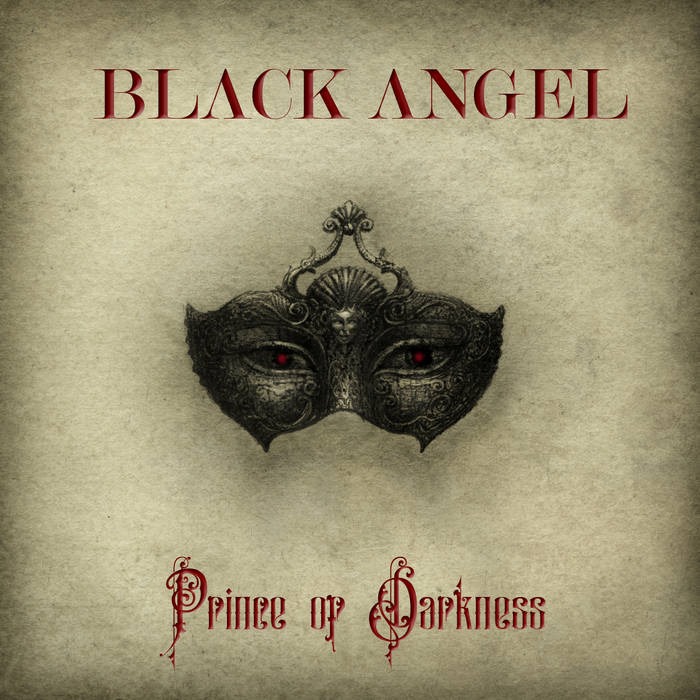
Black Angel emerged four years ago, and released Kiss of Death in July of last year – an album that brought together Matt Vowles’ years of experience from being in and around the goth scene to recreate the spirit of 1985.

This time, Vowles and co have come out with a concept album for their third outing, which is ‘inspired by cinematic classics such as ‘Dracula’ (Gary Oldman-1992) and ‘Interview with a Vampire’ with contemporary inspiration on tracks like "Alive" and "Give It To Me’" from the modern aristocratic sophisticated vampires in ‘Underworld’.

The album’s concept, the blurbage explains, is ‘to take you on a journey. The record starts out with an introduction to set the tone and to put you in 10th century England. As our protagonist embarks on his pillage through the town, we hear screams from the villagers as they run for their lives. He’s the Prince Of Darkness and causes chaos and mischief wherever he goes’.

There’s a fine line between artistry and pretence, theatre and corn, and despite the concept that veers towards an amalgamation of all the clichés of goth distilled into a dozen tracks, Prince of Darkness once again nails that vintage goth sound, with ‘Alive’ melding the energy of early Mission with the mechanised drumming of The Sisters to create a swirling cyclone of tripwire guitars and gloom with a glint of joy.

The energy is sustained across the bulk of the album, and the vibe is very much a muscle-flexing dominance, delivered with a big, ballsy swagger: there’s a hefty whiff of testosterone and a barrel load of rock god posturing going down here, but it’s delivered with a knowing nod ‘Live to Love’ is a proper old-school rock ‘n’ roll stomper with a smoky vocal growling and grizzled over a piston-pumping beat and a wonderfully insistent bassline that nags away at a repetitive motif. It’s got that level of grab that immediately makes you want to stick the whole album on repeat, especially after ‘Turn Around’, which pushes the quiet / loud dynamic with a searing guitar line that’s right in the vein of The March Violets – it’s that flangey reverby chorus thing.

Vowles has some depth, and range, too – on some tracks, like ’Call the Night Part II’ he showcases a grainy croon reminiscent of Mark Lanegan, and it’s heavy timbre is well-suited to such expansive epics, and then again, on ‘Secretly’ we see a more soulful, even tender side, and ‘My Love’ goes all out for the heart on sleeve grand gesture. It’s theatrical, but at the same times feels emotionally sincere, and while the melody bears similarities to ‘The Scientist’ by Coldplay, it sounds like it’s being sung by James Ray, and it’s quite moving in a brooding, gothy way.

Throughout, the songwriting is solid, with guitar hooks galore and a taut rhythm section that forges that classic goth groove. There’s a clear lineage from its predecessor in that Prince of Darkness is very much old-school goth delivered with a subtly contemporary twist, but it sounds and feels more confident, more ambitious, and not just on account of its embracing an overarching concept. Prince of Darkness is the sound of a band really hitting their stride, and achieves the perfect marriage of concept and execution.

AA
368330

Nefarious Industries

Christopher Nosnibor

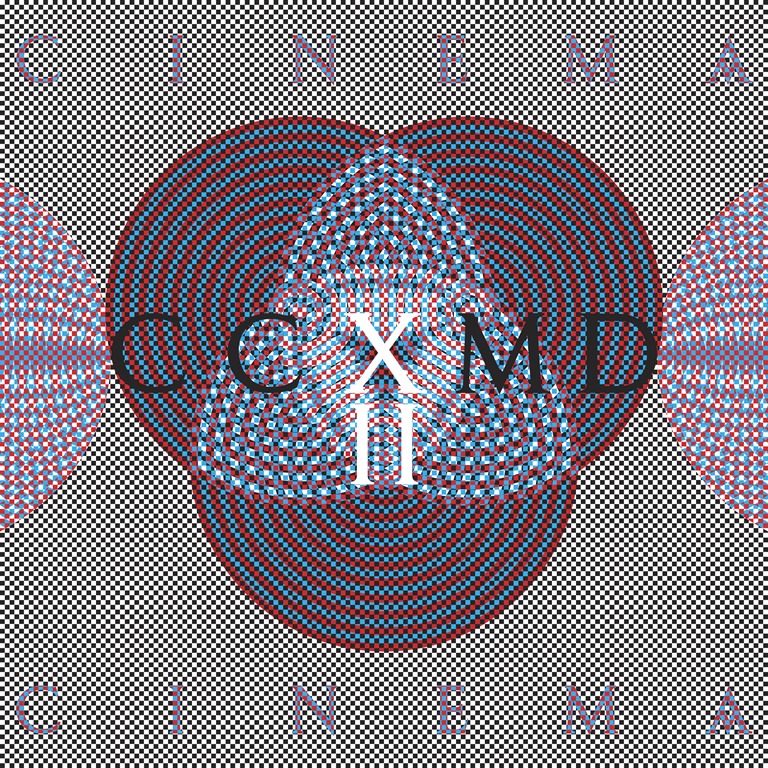
Less than two years after the release of the ambient avant-jazz oddity that was CCXMD (that’s not some random Roman numeralisation, but Cinema Cinema X Matt Darriau (The Klezmatics), the New York duo return for round two of their collaboration with the astutely-titled CCXMDII.

Let’s get the spoiler out of the way up front and early: they couldn’t have shifted further from their noise roots, and there really isn’t an overloading guitar riff in the whole album. If CCXMD was avant-jazzy and ambient, CCXMDII is avant-jazzier and more ambient. Having laid the foundations previously, it’s not so much of a shock, but anyone hoping for a return to their riffier roots will be disappointed by this weirdy, spaced-out experimental work.

It contains but seven tracks, although three of them are over ten minutes in duration, including the eighteen-minute opener ‘A Life of its Own’, which was unveiled as the album’s lead single a couple of weeks ago. And here, Cinema Cinema push further still than on their previous album, with those seven tracks bleeding together to forge one, vast continuous piece.

It begins tentatively, with tremulous, trilling woodwind and some scratchy strumming. Sounds echo and reverberate and voices mumble in a blurred, slowed, hallucinated state that’s most unsettling, and slowly transitions from some shilled, chiming new-age desert vibe into an increasingly bad trip as unintelligible jabbering spits and slurs angrily against the warping backdrop and swelling percussion – and that’s before the crazed jazz horns begin to bray and parp.

There are definite ebbs and flows, but not necessarily correspondent with the transitions between the tracks, and ponderous guitar and trepidatious woodwind teeter precariously through ‘Continued’, which is less of a piece in its own right than a bridge toward the nine-minute ‘Bratislava’. Guitars scrape and the drums stutter and test the waters and levels, and it actually sounds like a band checking their levels between songs during a live show than anything. There are some exploratory post-rock moments, but they’re fleeting, and even when the rhythm section finds a groove, it’s but for a short time and ultimately frustrating and unsatisfying, chopping and changing in a mathy fashion – which is fine in itself, but for the lack of a resolution, a crescendo, a finish. Instead, it peters out and squeaks and toots into the next piece.

The trilling woodwind – pan-pipes or similar – are all over the meandering piece and while the percussion rolls, the guitar is pegged back to providing mere texture, and there is no question that the band have shunned pretty much all ‘rock’ trappings here. The raspy, chthonic vocal whispering and manic hollering returns, before it trickles down into ‘Crack of Dawn’ with its stop / start arrhythmic percussion, hovering drones and eerie formlessness.

It’s not until the penultimate track that we get power chords. There is silence, briefly, before ‘Trigger’, which is unexpectedly led by a stop/start drum and hesitant bass groove that eventually emerges as a core motif. Imagine Shellac with brass instead of vocals, and you probably get the idea. It locks into a motoric krautrock groove – but that freewheeling wild horn action is something else. It brings chaos, it brings discord, riding wild all over some wild improv.

CCXMDII isn’t an easy album, and it’s not the punk or guitar-led set some may have expected. But it is a bold, daring work, one that sees a band who don’t give a fuck about conventions or expectations demonstrating that lack of fucks musically. Every band says they’re making music for themselves, but hardly any mean it. These guys do. CCXMDII is also a wonderfully odd abstract soundscapes that drifts and meanders and entertains and perplexes. CCXMDII is the work of a band in continual evolution, and long may that evolution continue.

AAAAA

CCXMDII_album_art_final_cropped_cover

Pilgrimage of the Soul is the 11th studio album in the 22-year career of Japanese experimental rock legends, MONO set for release on 17th September (Pelagic Records)

Recorded and mixed – cautiously, anxiously, yet optimistically – during the height of the COVID- 19 pandemic in the summer of 2020, with one of the band’s longtime partners, Steve Albini, Pilgrimage of the Soul is aptly named as it not only represents the peaks and valleys where MONO are now as they enter their third decade, but also charts their long, steady journey to this time and place.

Continuing the subtle but profound creative progression in the MONO canon that began with Nowhere Now Here (2019), Pilgrimage of the Soul is the most dynamic MONO album to date (and that’s saying a lot). But where MONO’s foundation was built on the well-established interplay of whisper quiet and devastatingly loud, Pilgrimage of the Soul crafts its magic with mesmerising new electronic instrumentation and textures, and – perhaps most notably – faster tempos that are clearly influenced by disco and techno. It all galvanizes as the most unexpected MONO album to date – replete with surprises and as awash in splendor as anything this band has ever done.

MONO began in Japan at the end of the 20th Century as a young band equally inspired by the pioneers of moody experimental rock (My Bloody Valentine, Mogwai) and iconic Classical composers (Beethoven, Morricone) who came before them. They have evolved into one of the most inspiring and influential experimental rock bands in their own right. It is only fitting that their evolution has come at the glacial, methodical pace that their patient music demands. MONO is a band who puts serious value in nuance, and offers significant rewards for the wait.

Watch the music video for first single ‘Riptide’, a film by Alison Group now:

AA

MONO

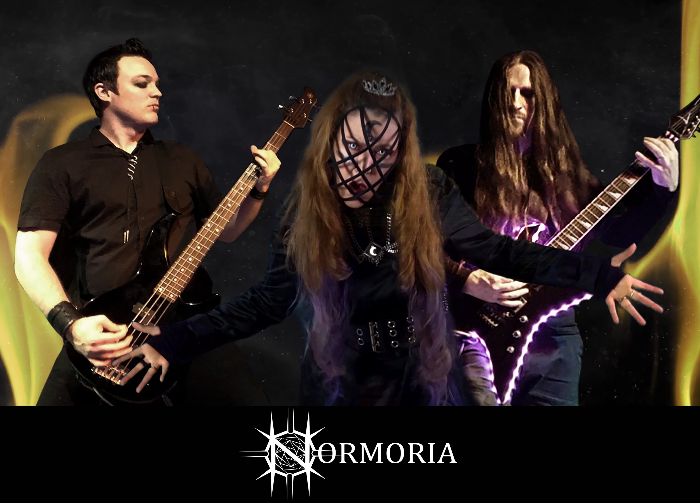
Swedish/American dark electro/industrial band, Normoria has unveiled their new video, ‘Land Of The Rich’ from their latest EP, Voyage.

The band say: ‘Land Of The Rich’ is the new music video taken from our latest EP, VOYAGE, and it highlights how incredibly divided the US currently is. While the rich keep getting richer, and most Americans are struggling to get by in a country in distress. Booming vocals, punkish guitars and intense bass are part of what makes this track one of this dark electro Industrial band most energetic and in your face songs!

Watch the video here:

Normoria is an American/Swedish band whose seductive sound is a fusion of many elements: primarily dark electro and rock-Industrial. The music is a big blend of dark styles, amplified by Johan’s rumbling bass and Gustav’s enigmatic guitar, as well as their charismatic frontwoman Angel Moonshine’s versatile vocals, and dramatic aesthetics. Expressive power, hauntingly catchy melodies, and a combination of obscure energized sounds, are signature features of the band that combined make Normoria distinct and outside of the traditional.

64329b38-b244-de41-ec07-2e083c06a104

Roman Numeral (US) / Wolves And Vibrancy (EU) –13th August 2021

Christopher Nosnibor

Linear narrative can be so dull, so predictable, or otherwise lacking in intrigue and imagination. There is so much more challenge – both as a writer and a reader – to a work that doesn’t follow that standard beginning / middle / end convention. There’s nothing predictable or obvious or linear about Fawn Limbs’ their third long player.

‘Day three. I woke up in a bed made of hay and roots. For a brief but fleeting moment, I couldn’t recall the incidents of the past days…’ This is how we arrive in Darwin Falls. It’s a sparse country vibe, a bit True Detective. It’s hazy, hot. The dry, cracked voice of Lee Fisher narrates the scene, and we’re as lost and bewildered as he is. Where are we? Why are we here? What the fuck happened? The picture gets darker as it unfurls, and it’s a slow, languorous build… and then, unexpectedly, everything erupts and shit spews forth as if from a volcano bursting from the very molten pits of hell. It tears with a burning fury at your guts and at your organs, and this is punishment. And then, this is calm, this is tranquillity. This is schizophrenic, unpredictable. It’s too much to process.

How you do describe Fawn Limbs? Odd and experimental is perhaps a fair starting point, and the first track in this is both. ‘Nesting Lumens’ is abstract and ethereal, a shade abstract, but it’s also raging chthonic demon-noise metal and all the brutality delivered with a razor-sharp technicality. It’s perhaps most interesting when the rage dissipates and we’re left with expensive post-rock tropes, and these extend into the majestic

The Transatlantic trio describe themselves as ‘avant-garde mathgrind’ and that seems a fair summary of the blistering hellfest that is Darwin Falls.

We’re still struggling to find orientation amidst the slow-twisting post-rock smog of the opening segment of ‘Wound Hiss’ when things suddenly turn brutal, a battering sonic assault that’s brief but so violent as to cause concussion.

It’s the extremity of the contrasts that render these songs so staggering in their impact. As a post-rock band, they’re outstanding at forging delicate, graceful pastoral pieces, musical passages of delicacy and grace – but instead of breaking into breathtaking crescendos of cinematic beauty, they rampage into howling blasts of anguish that explode on the most frenzied slabs of extreme metal. There are moments of eerie spaciousness, as on ‘Caesura’, a short piece which appropriately provides a moment of respite, and mellow interludes such as the still waters of laid-back jazz at the start of ‘Twitching, Lapsing’ which jolts into life with a haemorrhage-inducing blast of rampant noise and only becomes more impossible as the brass collides with a nuclear storm and a tsunami of noise.

If Justin Broadrick and co successfully combined free jazz with slow, industrial grind as GOD, then Fawn Limbs push the concept to another level, and the spoken word sections provide a fascinating counterpoint to the roaring, blazing sonic blasts that come in between. But ultimately, comparisons simply don’t hold up here. True innovation is rare, and we’re unaccustomed to it: it’s difficult to respond to it appropriately, somehow. It phases us. Shuddering, bemusement, bewilderment. A lack of comprehension. How do you measure it, and how do you process? Darwin Falls is a remarkable album, a sonic supernova, and it’s no mere hybrid: it is truly unique. Prepare to have your mind – and eardrums – blown.

AA

Darwin Falls ARTWORK

Sargent House – 23rd July 2021

Christopher Nosnibor

Alexis Marshall is an interesting figure, and no mistake. As front man and lyricist of Rhode Island makers of noise, Daughters, he’s emerged as an artist with a rare poeticism matched only by his fierce intensity as a performer. Anyone who caught them during their comeback album, You Won’t Get What You Want – which saw them reconvene after an eight-year hiatus and harness the sheer mania of their previous phased into something with a rather broader appeal without remotely selling out – would likely have been blown away by his manic energy, not to mention self-abuse with a microphone. One got the impression that this wasn’t just performance or for show but a man living every moment with visceral power.

In interviews, he’s said he considers himself a performer first and foremost, although 2017 saw the publication of his first collection of poetry, A Sea Above the Pains of Our Youth, and it’s clear he’s got artistic range and is more than just some lunatic who shouts.

On the release of his book, Marshall was interviewed by Lucas Anderson of No Echo, and said, ‘There are so many guilty pleasures, and mine is combing through bad Instagram poetry. There are so many terrible, terrible, terrible poets on Instagram with like 15,000 followers, just writing fucking garbage. Just absolute souless things you would find on like a doily in a tea room, or a fortune cookie, its just bullshit self-help stuff under the guise of poetry. They use things like hashtags #poetsofinstagram and all this shit.’ This is something I can completely relate to as a writer. This is the reason I don’t even dabble with poetry competitions and the reason I more or less quit as a spoken word performer. It’s not even the lack of reception to anything different: it’s the turgid shit you’d have to sift through that would receive rapturous applause while thinking ‘seriously? But that was crap?’ Yes, art is subjective, but sometimes a turd is just a turd. Thankfully, there is nothing turd about House of Lull, House of When.

August 2020 saw Marshall release ‘Nature in Three Movements’ via Bandcamp, and yes, it sounded a lot like recent Daughters, but that was as much on account of his sprechgesang style, a combination of spoken work, hollering, and manic yelping. Marshall has a rare capacity to convey anguish, and no mistake, and if this first foray into solo work was intense but brief, his first solo album sees him fully explore the space a long player affords, and it feels like a very different kind of beast overall – And came about via a very different process, with Marshall convening with Jon Syverson (Daughters) and former tourmate Evan Patterson (Jaye Jayle, Young Widows) in the studio with absolutely no plan whatsoever. The result is cacophonous, unpredictable, often dark, often percussion-dominated.

House of Lull, House of When is an album of spontaneity, born out of chaos, and out of collaboration – the kind of collaboration where nothing is preplanned or predetermined, and this gives the album a rare immediacy and a sense of unpredictability. Marshall has a distinctive vocal style and a predilection for noise, but embraces all inputs and sets no parameters.

There are some long songs with some sparse instrumentation here: the first, ‘Drink from the Oceans, Nothing Can Harm You’ is a spartan piano piece that’s over seven minutes in duration. With some creeping eeriness and a distant, clattering industrial beat, Marshall’s spoken word is slowly swallowed in the mists and he fades out as he hollers psychological torture into an increasingly murky sonic sea.

‘Hounds in the Abyss’ finds Marshall lunging, lurching, seemingly lost and disoriented as he lunges through a thumping beat and elongated screeding drone, while ‘It Just Doesn’t Feel Good Anymore’ is heavy grind and repetition reminiscent of Swans circa 1985-6, and this is perhaps the closest and most fitting comparison I can reach for here: many of the lyrics take the form of barked instructions, particularly on while ‘It Just Doesn’t Feel Good Anymore’, seems to be a dissection of corporate and covid life, the endless repetition and ordering for compliance that has dominated our lives for the last year and a half, nearly.

‘You are responsible / stay where you are / you are expected to meet your obligations / Don’t get up / don’t touch anything / don’t touch anyone’ he bellows repeatedly like a government press conference or other outlets. It’s painful punishing, and all the more for the avant-jazz horns shrieking shrilly throughout, and that thunderous, grating repetition dominates and defines ‘Religion as Leader’ too. One suspects that religion is a far deeper, more divisive topic in the States than here in the UK, but it’s a global reality that religion is war – and ultimately, we need neither.

The monotone delivery of the reflective ‘Youth as Religion’ is a magnificently measured piece of spoken word, pitched against sparse organ drone and minimal guitar pickings, and it’s a world away from the whirlwind of noise that is Daughters. This is the intrigue and appeal of House of Lull, House of When: the title is obscure, and so is its formation, and there are no overt structures which tie the pieces here to the conventions of ‘songs’ with verse / chorus repetitions. As such, it’s ‘music’ in the broader sense and won’t appeal to many, even fans – but that’s no denigration of its artistic merit. Creatively, in terms of both vision and execution, House of Lull, House of When is special, and doesn’t sound like any other album – and all the better for it.

AA

Processed with VSCO with b2 preset

Christopher Nosnibor

It’s been a long time. An insanely long time. Apart from a brief spell where there were a handful of seated gigs on offer around August of last year, live music has been off the menu for the best – or worst – part of sixteen months, and a long, torturous sixteen months it’s been for so many of us – not least of all those whose livelihoods depend on it, but also for those of us who find comfort and catharsis in the experience, a few hours’ escape from the grind of daily life.

I haver to confess having anxietised over the prospect of attending my first live show since August 2020, since which time I’ve barely set foot in a pub or anywhere really, having been working from home since forever. Less fearful of Covid, more of social situations in general, fearful I’d lost the little social skill I had from before, I simply wasn’t sure what to expect, and the worst fear is the fear of the unknown, and this had perhaps tempered my immense excitement.

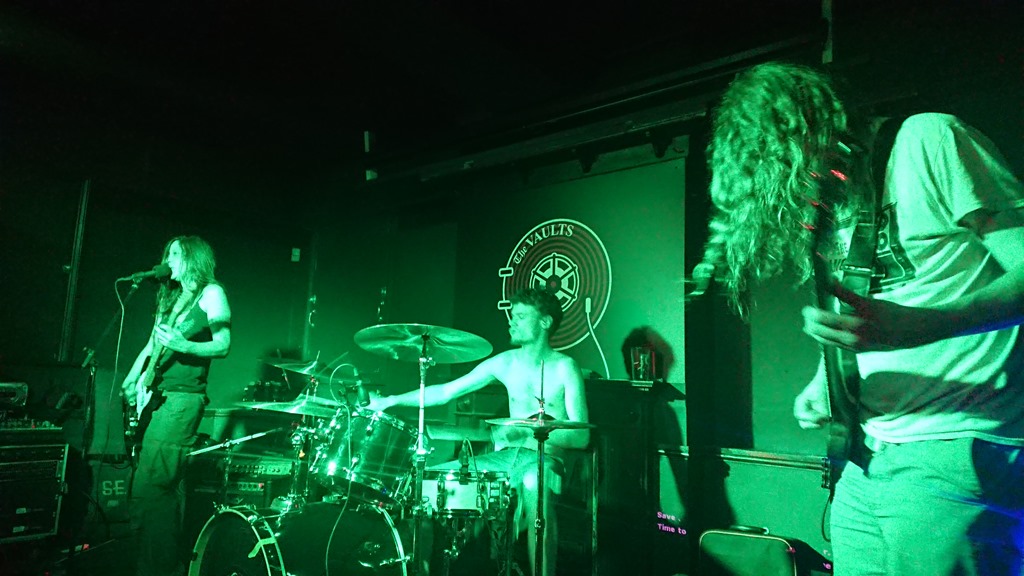
In the end, it transpired I needn’t have worried, and everything was nicely managed at the Victoria Vaults. They’ve moved the bar since I was last there, and the refit works well in making for a significantly bigger gig space and next to no bottlenecks, plus the bar staff were friendly and attentive with their table service – which was perhaps as well, because it was sweltering and needed to maintain a flow of cold cider.

Sitting just feet from a real drum kit with my shoulder against a PA stack felt great, and simply being back in that environment brought a great joy. Then there was the lineup: one of the last shows I’d seen, back in January 2020 had featured both My Wonderful Daze and Redfyrn. Both had impressed then, and given reason to come back for more. Although, of course, January 2020 feels like another life.

With King Orange having dropped off the bill without explanation, it’s a later start with Redfyrn straight on and straight in, with the power trio kicking out hefty blues-based grungy heavy rock with a sludgy/stoner vibe, driven hard by some crunchy 5-string bass. Cat Redfern’s soaring vocals are at times almost folksy, and contrast with the hefty lumbering riffs. Collectively, they’re tight, the songs textured and dynamic. There’s a lot of cymbal, but some proper heavy-hitting drum work and the sludgy sound is both steeped in 70s vintage and contemporary influence, resulting in some solid swinging grooves. The mix could have perhaps done with more guitar, but then I was sitting in front of the bass amp and about six feet from the drum kit. Closer ‘Unreal’ has bounce and grit and groove and is a solid as. The band were clearly pleased to be on stage again, and it came through in a spirited performance.

DSC_0618DSC_0620

Redfyrn

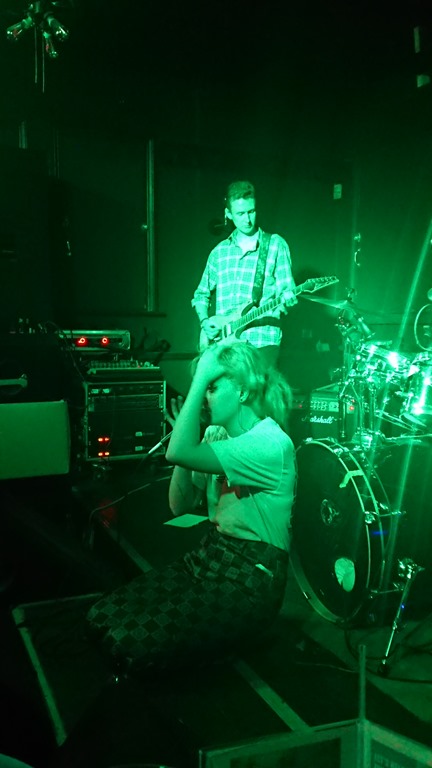
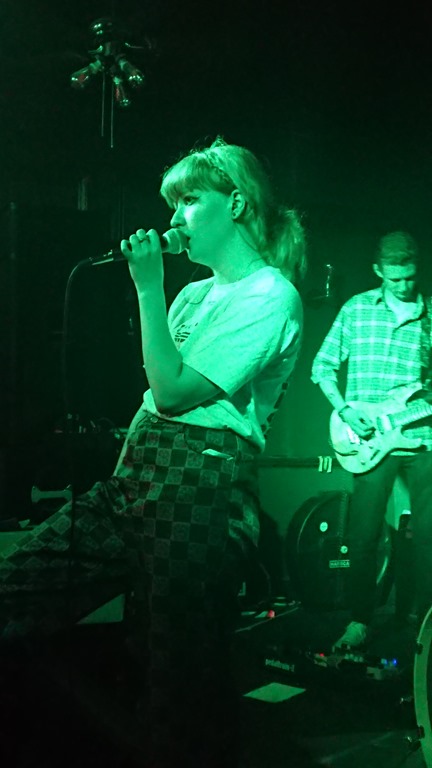
My Wonderful Daze’s singer Flowers may be feeling and looking a shade off colour but is in fine voice and all the better once she’s taken her boots off at least for a while. The band bring more big, lumbering riffs, and any concern they may have been rusty after the time out proves to be unfounded, because they’re tight – and loud. They bring all the rage early in the set, coming on more Pretty on the Inside – era Hole than Live Through This, more Solar Race than L7. It’s not long before she’s sitting down to sing because she’s dizzy, and yet still fucking belts out the angst, and despite visibly struggling throughout, it doesn’t affect things sonically: the band don’t just play on, but continue to give it their all. Watching this set really brings home just how hard bands work to do what they do. The slow-burning ‘Dust’ is something of an epic that’s emotionally rich and transitions from a gentle chime to some simmering power chords with some audience participation clapping to aid the build.

DSC_0623DSC_0628

My Wonderful Daze

They announce apologetically that they’re cutting set short to skipped to encore song Tommy for fear of fainting, but it’s a valiant effort and the right choice, although Flowers didn’t make it past the first verse before rushing from the stage. The rest of the band finish the song – and the set – with force, and all the credit to them for their consummate professionalism. Both bands did themselves truly proud, and delivered a great night, and hopefully the first of many.

Utopia, the technical metal group centred around guitarist John Bailey and Corrupt Moral Altar vocalist Chris Reese have shared the 2nd video from their upcoming debut album Stalker set for release on 27th August (APF Records).

New single ‘It’s Not The End’ sees John and Chris joined by drummer Lee Fisher (Psyopus / Fawn Limbs) and bassist Arran MacSporran (De Profundis). Watch the video now:

AAA

Utopia pic

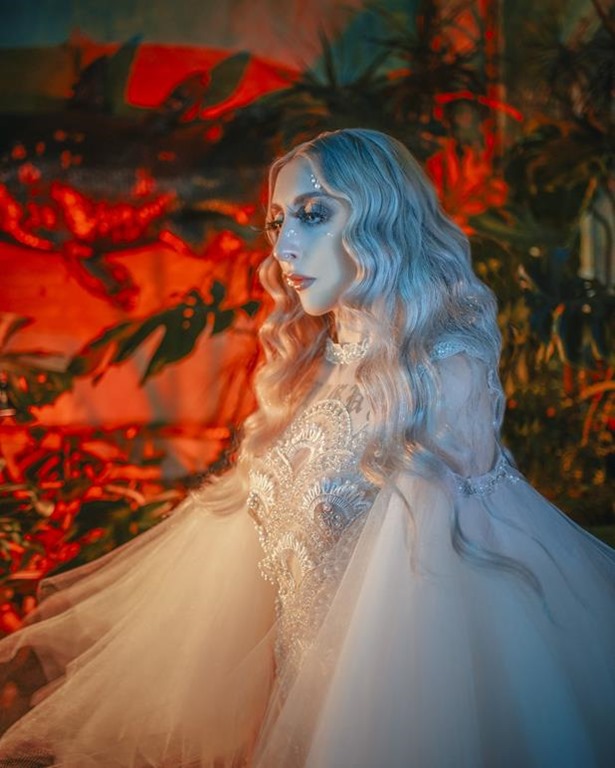
Kristin Hayter, the classically trained multi-instrumentalist, performance artist, and vocalist known as Lingua Ignota, has a new album on the way, and here is the next song and video from it.  ‘Perpetual Flame of Centralia’ a quiet meditation on one of the major lyrical motifs of the record, the blood of Jesus; that which can “wash and cleanse every stain,” as tearfully expressed by disgraced evangelist Jimmy Swaggart in a televised confession.

The video, shot by Emily Birds, brings an extraordinary and profoundly moving collaboration between Hayter and acclaimed fashion designer and fellow Sargent House artist Ashley Rose Couture who created the looks specifically for this video, inspiring an entire collection. Prompted with “the blood of Jesus,” the designer created a floor-length, red veil studded with pearls and mountains of tulle. Hayter explains, “I asked her to design a piece indebted to 17th-century Dutch costume, and she returned with a gown with a 20-foot train and a magisterial lace collar exploding with pearls.”  The two artists deal with pain through their art: Hayter through past domestic abuse and Rose through the death of her twin brother, whose encouragement led to her starting her own line.

Watch the video here:

The album, Sinner Get Ready is released on August 6th via Sargent House.

ERU

Clothing by Ashley Rose Couture. Photo by Lisa Birds

20th July 2021

Christopher Nosnibor

More than I dislike talking politics or sport with colleagues and strangers, I feel most uncomfortable talking about music, because unless their leanings are, it’s almost guaranteed that we won’t hare similar tastes or knowledge. Usually, it’s a case of my hating everything they love, and their not having heard of anything I listen to. There’s no middle ground there: even if I feign an interest, nod and smile, where is there left to go?

And so I do often wonder about press releases, specifically the influences artists cite. In the more fringe fields of obscure metal, ambient, and electronica, esoteric reference points abound, perhaps because to an extent obscurantism carries a certain coolness and cachet. In more commercially-leaning circles, the opposite tends to be true. Artists aiming for a broad acceptance tend to cite artists who are well-known to the point that they’re essentially household names.

This isn’t to single out Jack Caine by any means, but his listed influences – Bob Dylan, The Beatles, Leonard Cohen, Tom Waits, Patti Smith, Arctic Monkeys, Joni Mitchell, The Smiths – feels incredibly ‘standard’. Are these really his influences? Maybe – it could really be that most people who make music listen to the same well-known artists. I also have a personal discomfort with citations of The Smiths, a band I loved with a deep passion in my teens, but have since struggled to relate to in my thirties and forties, and with their memory sullied by the colossal twat Morrissey has confirmed himself to be.

Of course, even music that is very much an evidential sum of its parts should be judged on its own merits, and while ‘derivative’ clearly bears heavily negative connotations, the assimilation of tropes and absorption of influences is, in itself, no bad thing per se. It’s all in the delivery, and for all this, ‘All in a Day’s Work’ is an accessible, melodic middling tune with hints of classic vintage indie and pop when pop wasn’t slick, manufactured, mechanised, digitised – and it’s well-executed. It has spirit, it has soul.

Building from a muted electric guitar played clean, over which Caine paints a kitchen sink scene, the bass begins to get twitchy and the muffled drumming begins to push things along and you just sense it’s going to break sooner or later… and then it spills. It’s a great single, with dynamics, energy, and emotion, and hooks.

su22432-Jake_Caine-All_In_A_Days_Work-Jake_caine_19