Posts Tagged ‘Wax Trax!’

US electronic musician and vocalist Mari Kattman has issued a video for ‘Typical Girl’, the opening song on her new album Year Of The Katt, released in late June by Metropolis Records. The clip was shot in downtown Providence (Rhode Island) by Mark Allison of @401FilmsPVD.

“Typical girl. People say it constantly, so much so it feels almost criminal to be female by birth,” Kattman states when explaining the meaning of the song. “Like it’s vulgar or something to carry characteristics that are even remotely female. That it makes you difficult, unlovable or crazy when it’s not packaged up and tied with a pretty bow or something. There are so many misunderstandings about what it is to be a woman.”

AA

1294d110ff8d8524f83699accd7bc97e5d071859

AA

Kattman has recently announced a UK tour in October 2025 as the special guest of Assemblage 23, the electronic act founded in 1988 by Tom Shear, who is Kattman’s collaborator in the electronic duo Helix and her husband. Dates are as follows:

15th October  BRISTOL Exchange
16th October  MANCHESTER Rebellion
17th October  GLASGOW Ivory Blacks
18th October  SHEFFIELD Corporation
19th October  LONDON The Dome (downstairs)

Negative Gain Productions – 25th July 2025

Christopher Nosnibor

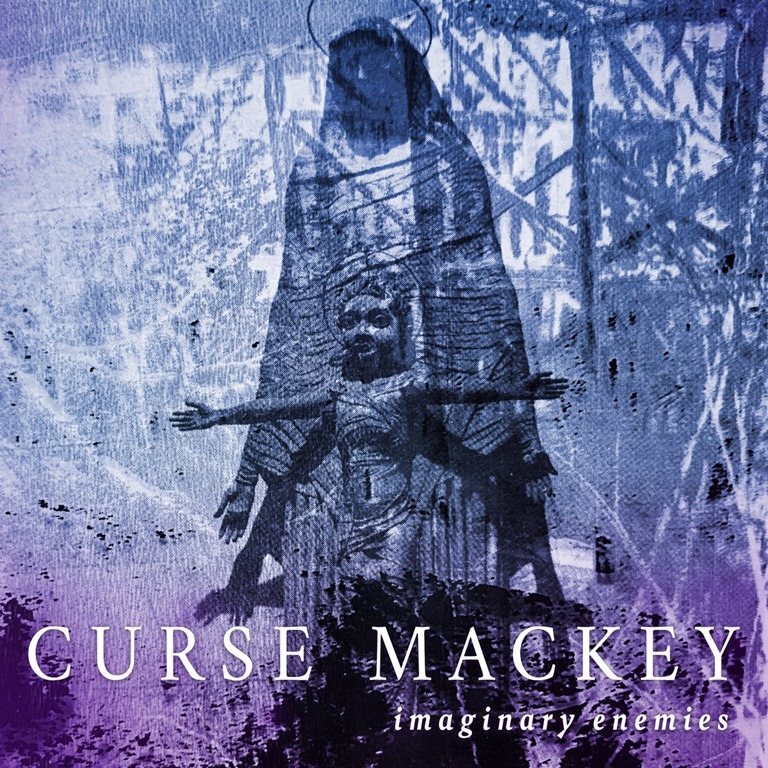
It’s been three years since Curse Mackey delivered Immoral Emporium. Three years may not be a long time, but a lot can happen in three years – and it has. And very little of it has been good. There has always something about industrial music – something I’ll unpick in a moment – which has displayed a sense of the apocalyptic, to the extent that at times it seems to almost bask in it. And that is not a criticism. The end is nigh, and while it’s always a question of ‘when’ rather than ‘if’, we seem to be ever closer to the brink of total annihilation. These are dark times, which call for dark music.

Industrial has come to mean many things, in terms of musical forms over the years, while Throbbing Gristle were the progenitors of all things industrial, technological advances saw acts more interested in pursuing more structured works with tape loops and drum machines, eventually giving us the more electro-orientated strain of industrial that became synonymous with Wax Trax!, and, subsequently, industrial metal, not least of all due to Ministry’s evolution from one to the other. Curse Mackey’s work very much belongs to that late 89s / early 90s Wax Trax! domain.

Concluding the trilogy which began with 2019’s Instant Exorcism, Imaginary Enemies promises to be ‘his most intense and intimate album to date… A bleak, beautiful meditation on paranoia, grief, and the ghosts we conjure from within’.

And so it is that the listener is lead into the album by route of looped samples, layering across one another, before a pounding beat crashes in, and Mackey, accompanied by a low, thumping synth bass groove, sets out his stall with ‘pressure points’, ‘psychosis’, and ‘decay’ delivered with a processed growl. There are many layers to the arrangements, creating simultaneously an expansive and claustrophobic feel. Single cut ‘Vertigo Ego’ swiftly plunges into darker, denser territories: brooding and ominous, Mackey’s vocals are a barely audible whisper. It sounds tormented, stressed, anguished.

AA

If ‘Discoccult’ and ‘Time Comes Clean’ (which calls to mind early (electropop) Ministry and Trudge era Controlled Bleeding) find us in fairly familiar industrial territory, something about the production imbues the material with a suffocating intensity. More often than not, there’s a brightness, a crispness, something of a ‘digital’ cleanness about the genre. In contrast, the sound here is murkier, more ‘analogue’ in feel, alluding to eighties synth music – something I’ve never been quite able to pinpoint as a listener and critic rather than a producer.

One can reasonably assume that album centrepoint ‘Blood Like Love’ makes a reference to Killing Joke’s ‘Love Like Blood’, even if only in title, but sees Curse lean towards gothier territories, stark, brooding, yet ultimately layered, graceful, with synth melodies and dramatic piano weaving around the samples and mechanised beats.

AA

The second half of the album locks into an atmosphere that’s less aggressive and attacking, and more brooding, moody, and introspective, and as such, marks a clear departure from its predecessors. What’s more, it works well, with the more uptempo title track marking a high point in the album, sitting comfortably alongside some of the more contemporary goth classics with its nagging, reverb-heavy guitar line and pulsating bass all held together by that classic, relentless, drum machine sound.

For my money, it’s Curse Mackey’s best release to date.

AA

a1263141378_10

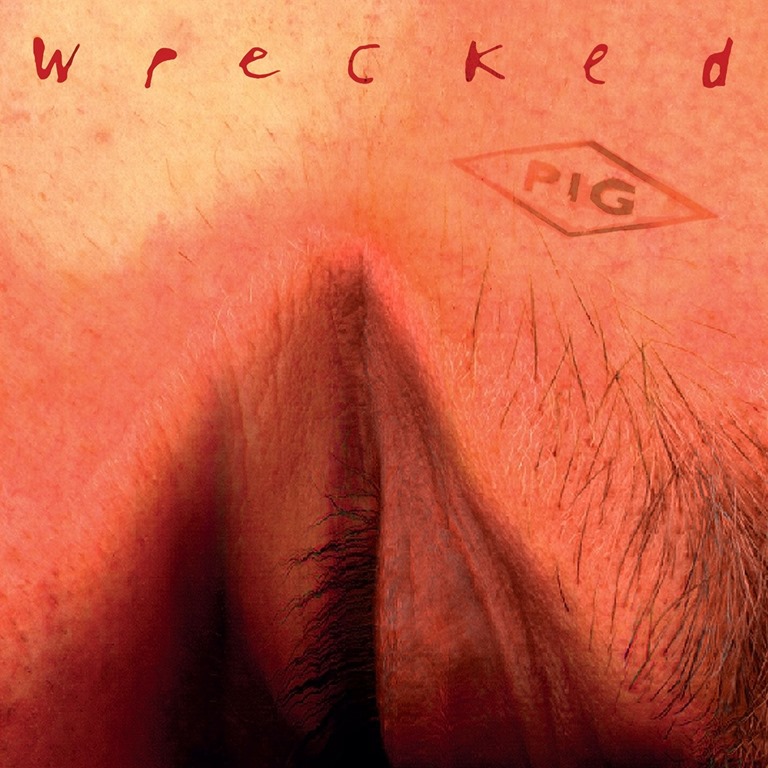
Industrial glam kingpin Raymond Watts aka PIG will reissue a remastered and expanded version of his 1996 album Wrecked via Metropolis Records on 7th March. His fifth full-length record, the remastering has been made by Tom Hall at Abbey Road, while its reappearance coincides with UK live dates to promote the 2024 studio album ‘Red Room’. The PIG live band currently includes En Esch (ex-KMFDM, Pigface) and Jim Davies, formerly of Pitchshifter but best known for his acidic and acerbic guitar lines on several chart hits by The Prodigy. Davies co-wrote many of the songs on ‘Red Room’.

Whereas the recently reissued Sinsation (1995) had originally been released on Nothing Records (the label established by Trent Reznor of Nine Inch Nails), its follow-up saw a switch to Wax Trax!, the leading ‘90s exponents of industrial rock.

“Revisiting Wrecked for remastering was a sobering experience that left me shaken,” states Watts. “I recalled a period when I was stirred to a creative frenzy of crisis and desperation while searching for beauty. Although I can still hear glimpses of it, the bonfire of my hope was more an expression that was savage and twisted.”
Following the desperate burning that had resulted in Sinsation, Watts considers it more “a yearning, grinding plea for liberation that manifested in ‘Wrecked’, a tomb I had built for myself and my troubles that only the very bravest would dare enter.”

The original press release for Wrecked had described the album as “a nihilistic slash and burn, a scrapbook of manifestos and suicide notes written in dried blood.” In the cold light of day almost three decades later that description still holds true.

Wrecked features contributions from former KMFDM members Günter Schulz and Steve White, as well as Julian Beeston (ex-Nitzer Ebb, Cubanate).

Ahead of the expanded remastered reissue, they’ve released a video for ‘Everything’, which you can see here:

AA

67fd98d7819df26e756c1ecba56842acbbd35016

COP International – 31st December 2024

Christopher Nosnibor

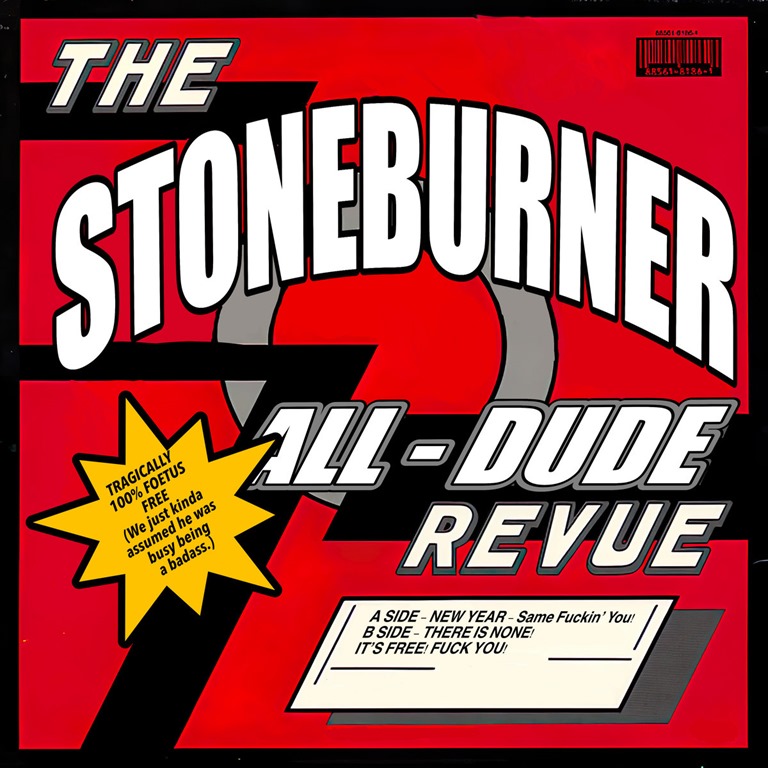
The adage that you should never judge a book by its cover is a nonsense, and certainly doesn’t apply to records. I was instantly drawn to Stoneburner’s ‘New Year Same Fuckin You’ for its referencing – by which I mean almost direct lifting – of the artwork for the Foetus All Nude Review ‘Bedrock’ 12”, one of JG Thirlwell’s first forays into the ‘big band’ swing sound back in 1987.

It transpires they’ve got form: previous releases ape the fourth Foetus album, Nail, as well as Big Black’s Atomizer, and no doubt other releases reference things I’m unfamiliar with, as it’s impossible to know everything within another’s sphere of reference, and Stoneburner have released a hell of a lot in a comparatively short time. But I always maintain there’s more honour in being up-front in acknowledging one’s influences than trying to hide them, and have all the admiration for Stoneburner for their unashamed referencing. By now, we all know – or should know – that there’s nothing news, so better to front up and embrace the fact instead of feebly proclaiming artistic innovation.

The solo project of Steven Archer, best known for his work with the electronic rock band Ego Likeness, as well has is abstract electronica project ::Hopeful Machines::, he’s one of those creatives who simply gushes new material.

For ‘New Year Same Fuckin You’, Archer has enlisted Rodney Anonymous, Matt Fanale, and Mark Alan Miller, and it’s something of a departure from the majority of the Stoneburner catalogue, which, while very much given to industrial leanings, also place considerable emphasis on atmosphere and drama (in the way JG Thirlwell and Raymond Watts do, setting Foetus and PIG apart from the majority of the field). There’s no such subtlety here: ‘New Year Same Fuckin You’ is a balls-out blaster.

The track is pitched as ‘a rallying cry for a time when so many feel defeated and powerless. A time when giving up seems easier. But when I think of those who marched across the bridge in Selma, knowing full well what was waiting for them; when I think of the women who sacrificed everything for their autonomy; when I think of every brave soul who stood tall against oppression, I know this: we owe it to them to rise again.’

It’s a strong sentiment delivered at a time when mood and energy feels like it’s at an all-time low. It’s hard to recall a festive season that’s felt less festive, and celebrating extravagantly with gifts and feasts has felt quite wrong while the world is at war and hyperconsumption continues to drive climate change. What are we actually celebrating here? The idea that we’re ‘doing it for the kids’ rings rather hollow when you know that every overpriced piece plastic of tat stuffed in a stocking is another nail in the coffin of the future they’ll inherit.

And this brings us to the gimmick of New Year’s resolutions. How many last past the first fortnight of any given new year? Mostly people seem to resolve to get fitter, and take out gym memberships with good but misguided intent. Gym conglomerates rub their hands as they make half the year’s profits in a week or so, knowing that the regulars won’t be complaining of overcrowding again come February. Most goals set are as pointless as they are unattainable., but how many set themselves the target of being less of a cunt in the coming year, eh? Eh? Yeah – New Year Same Fuckin You.

This is a full-throttle raging technonidustrial banger, and curiously, as much as it’s in the vein of KMFDM and the entirety of the Wax Trax! catalogue with its pounding, hard-edged disco beat and snarling synths and mangled vocals, I can’t help but be reminded of ‘It’s Grim Up North’ by the JAMMs.

As an anti-trend anthem, with it’s ‘Fuck you! Fuck you! Fuck you!’ refrain, ‘New Year Same Fuckin You’ is the perfect counterpoint to all of the motivational guff that circulates all year round but becomes particularly prevalent at this time of year as every agency going advertises to appeal to your shame – shame for your indulgence, your weight gain, your slacking, your failure to move forward in your life goals – in an attempt to take your money and convince you that spending with them will make your life better. Yes, fuck you! Get a grip. You want your life better? Start by taking control of your own direction, instead of paying for apps and influencers and life coaches to tell you what you already know. Need reminding that this is the true way forward? Listen to this on repeat for an hour daily.

AA

a1200904832_10

Metropolis Records – 6th December 2024

Christopher Nosnibor

Heralding the arrival of their first new music since 2010 (discounting the 2012 remix album, Transfusion), Unit:187 slapped down ‘Dick’ by way of a single, and gave cause for me to prick up my ears.

Their bio explains the ad reason for the extended hiatus:

Founded in 1994, Vancouver’s Unit:187 forged a name for itself with a crushing mix of industrial and metal. After the passing of founding member Tod Law in 2015 & taking time to process the loss, Unit:187 now honours his legacy with KillCure – finishing the songs the band wrote with Tod before his death, as well as new music.

It’s a difficult – and seemingly all-too-common dilemma for bands: what to do when a founding member and key player dies? There is no right or wrong thing to do: for some, their passing equates to the death of the band, for others, pressing on is a way to honour their memory. And fans react to these decisions differently, too: the return of Linkin Park with Emily Armstrong fronting in place of the late Chester Bennington is a perfect example of how divisive these things can be.

Former backing singer Kerry Vink-Peterson has stepped up to front Unit:187, which feels like something of a natural move forward, and when they state that some songs on KillCure are ‘finishing the songs the band wrote with Tod before his death’, that means that his contributions remain intact, and he’s credited on the album. In bringing past and present together in this way, KillCure stands as a transitional album, and in some ways feels like the episodes of Dr Who where the Doctor regenerates.

It’s by no means some maudlin, sentiment-filled baton-passing effort, though. Oh no. KillCure is an album which blasts forth with fist-pumping energy to declare that Unit:187 are undefeated and as fierce as ever. ‘Glamhammer’ swings in with some toppy guitar harmonics, sirens blaring over a juddering synth grind and pumping industrial-strength beat, coming together for a groove-laden swagger, breaking out into a monster chorus with snarling vocals and big power chords. It’s one of those tunes that just grabs you by the throat, and it strongly reminiscent of PIG in the mid-nineties, circa Sinsation and Wrecked.

It sets the template for the album nicely. As much as KillCure is rooted in that milieu of Wax Trax! and KMFDM, Unit:187 dial down the hyperactive aggrotech aspects to deliver something that feels somehow more considered, perhaps owing to the favouring of lower, more conventional ‘rock’ tempos and the guitars having a less processed feel, but it’s dark and aggressive, and ‘Dick’ is exemplary, proving itself as a worthy choice of lead single.

Landing in the middle of the album or what would be the end of side one on an old-school vinyl album release, the brooding – and perhaps appropriately-titled – ‘New Beginning’ slows things down, but amps up the sleaze and grind with some scuzzed-out guitar ripping its way over a stomping beat amidst fizzing electronics.

The second half is straight-up solid: samples abound amidst dense guitars and everything meshes into a relentlessly gritty chug-driven industrial grind. But there’s a certain theatricality to it, a knowingness that’s unstated, understated, but unmistakeably present, and it’s nowhere more apparent than on the raging in-yer-face muscle-flexing of ‘Overrun’.

Concluding the album the title track, with a duel-vocal performance, feels like the perfect summary of where Unit:187 are at, and the perfect intersection between the Tod Law and Kerry Vink-Peterson eras.

AA

a2448606893_10

Metropolis Records – 23rd August 2024

Christopher Nosnibor

Even at their commercial peak, PIG releases weren’t all that easy to come by, at least here in the UK, despite some of them being on big labels with big distribution. PIG – the project of London-born Raymond Watts – is an act which can legitimately claim to be big in Japan while largely unknown at home.

My own first encounter was seeing them support Nine Inch Nails on The Downward Spiral Tour in Wolverhampton in 1994. I was in the middle of my A-level exams, but no way was I going to miss NIN. I didn’t even know who the support were, but witnessing the heavy grind of PIG, with pigs’ heads on poles at the sides of the stage, as their lanky singer writhed his way through a gritty set was an absolute revelation. The set’s opening song stuck with me, but it was some years before I would actually source a copy of Red Raw and Sore, on this new site called eBay. The debut album, A Poke in the Eye…. With a Sharp Stick and the ‘Sick City’ 12” were fairly easy to find at record fairs around 1994, as Wax Trax! vinyl was available in abundance, and often cheaply, too, but anything else? Pretty much impossible to find. And so it was that PIG felt like a near-mythical act, and despite having played these big shows with NIN, still no-one was really aware of them.

Sinsation was released first in Japan in 1995, and a year later in the US, and on learning of its existence, I got my local record shop to order it in, but had to wait literally months for it to arrive on import. Oh, but it was worth the wait. It delivered all of the theatrical pomp that defined A Stroll in the Pork, but cranked up the dirty industrial guitars and found Raymond Watts in top form with his extravagant wordplay. In short, it reset the bar, not just for PIG, but for what ‘industrial’ music could be. This wasn’t just hard and heavy, but also playful, witty, intelligent, and still dark, seething.

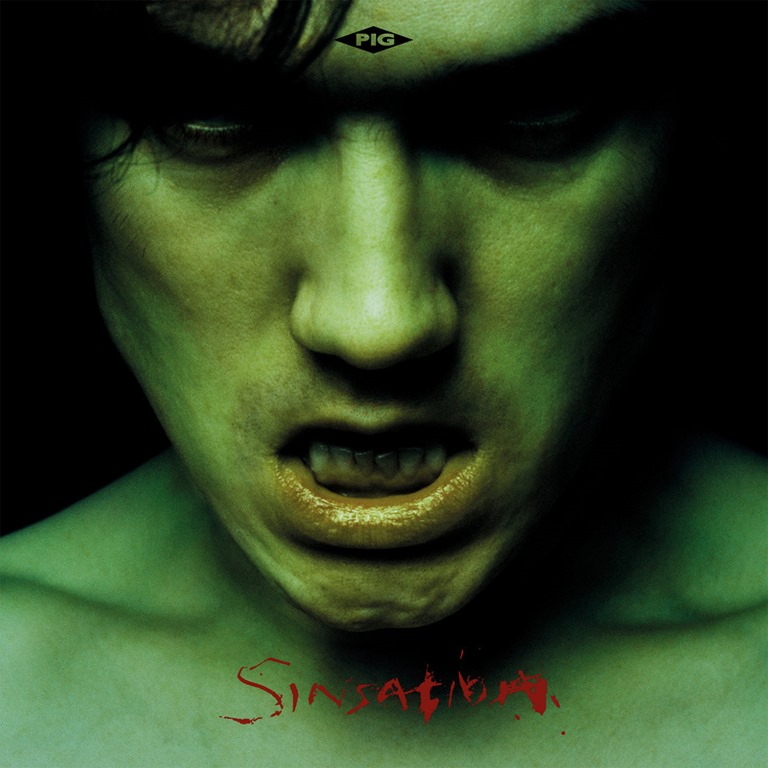
The cover alone is striking. Watts’ image is a standard feature on all PIG releases, but whereas more often than not he is depicted looking buff or brooding, the sickly green hue is unsettling – and slamming in with a series of orchestral strikes and a low, grumbling bass before hitting full-on industrial anthem mode on the first track, the six-minute ‘Serial Killer Thriller’ (the chorus of which provides the album’s title), it’s immediately apparent that Sinsation is something special (and not something sad…).

Admittedly, despite this being an album I’ve played to death over the last thirty years, apart from a few tracks being a few seconds different in their duration, I can’t discern any huge differences between this remastered version and the original: there are, perhaps, more details revealed in the mix, but then, the production on the original was impressive, and again, I’ll come back to that word, ‘detail’. There’s a lot happening; samples, snippets of bits and bobs, strings, multi-layered vocals… A touring member of Foetus early in his career, with JG Thirlwell involved in the early singles and debut album, Watts clearly learned much from Thirlwell, as well as his early involvement with KMFDM. Sinsation felt like the point at which he brought these two aspects together in perfect balance while simultaneously realising his own unique sonic vision. The result was a set of hefty, driving songs, exploding with ideas and noise, and so many layers, so much going off all over the place. It was bold, audacious, and while it’s easy enough to say that it’s a bit Foetus, a bit KMFDM, it goers so far beyond these points that comparisons are a diminishment of Watt’s achievements here.

Sinsation is certainly the first PIG album to showcase the full range of styles and compositional aspects Watts has in his locker, and as such, represents something of a creative peak.

While nominal single ‘Painiac’ (an early version of which was the lead track on a Japanese-only EP, and a video for which got a few spins on MTV on the album’s release) is a throbbing industrial beast of a tune, ‘Golgotha’ is a dark, semi-ambient interlude which sits between the driving snarl of ‘Hamstring on the Highway’ and the swaggering industrial-strength glam-tinged gospel-infused dark pop of ‘The Sick’, which would provide the blueprint for the PIG renaissance which started with The Gospel in 2016. ‘Analgesia’ is a magnificently atmospheric piano-led instrumental which incorporates elements of ambient and electronica and extraneous noise ‘Volcano’ is serpentine and sleazy, with some audacious orchestral work in the mid-section which take the bombast of Foetus’ Nail to another level, while ‘Hot Hole’ drives hard and heavy with pulsating electronics colliding with hefty chugging guitars and ferocious beats.

For the many who likely missed this the first time, this re-release provides the opportunity to make acquaintance with one of the definitive PIG albums, and for those already familiar, it’s a timely reminder of the incredible journey that has been PIG’s career to date, while offering the first chance to get it on vinyl. Almost thirty years on from its first release, Sinsation still sounds phenomenal – insanely ambitious, utterly deranged, and in a league of its own, quite unlike anything else before or since, even within the PIG catalogue.

AA

a2059987689_10

Aggro-punk band, MALICE MACHINE has finally unleashed their long-awaited new single, ‘Hyena’.  The track will appear on the forthcoming full-length album, Act Of Self Destruction.

‘Hyena’ is about the forces and the decision makers that create chaos in the world and ultimately burn us all. It’s a message based on imagery and driven by bass and drums that’s expressed in the typical MALICE MACHIKNE fashion of unfiltered angst… At it’s core, ‘Hyena’ is a statement of anger about life, society and its leaders.

It’s pure late 80s technoindustrial, KMFDM, Ministry circa Twitch, Skrew, Wax Trax!

Get yer lugs round this monster here:

AA

a1430851937_10

Negative Gain Productions – 9th September 2022

Christopher Nosnibor

Curse Mackey has enjoyed an enviable career as a frequent performer with legendary industrial collectives Pigface and My Life With The Thrill Kill Kult, and has built a substantial catalogue of work as a solo artist too – and it’s perhaps to be expected that much of this, including his latest, Immoral Emporium, is defined by the vintage late 80s / early 90s Wax Trax! electroindustrial sound.

While Immoral Emporium is undeniably dark, it’s also fairly poppy and accessible, with a title track that calls to mind more recent Gary Numan. And this is in the region of the album’s tone and style overall.

Starting off, ‘Smoking Tongues’ is strong on melody and surprisingly sparse retro synths and while Depeche Mode circa Black Celebration comparisons are likely the obvious choice, it’s as much A Flock of Seagulls. That may appear to some as a rather casual dismissal as being flimsy pop, but the electropop that rode the charts in the early to mid-80s was way darker than it’s usually given credit for or remembered as being. Consequently, suggesting that the spoken-word verses of ‘A Sharp Reminder’ are reminiscent of Pet Shop Boys’ ‘West End Girls’ is absolutely no sleight.

‘The Reveal’ takes a turn for the more overtly industrial, with menacing synth bass pulsations and a death disco thudding beat. ‘Dead Fingers talk’ borders on bouncy, and while ‘Lost Body Hypothesis’ is harder, darker, and driven by a nagging bass, it’s in the same sphere as Nine Inch Nail’s ‘Sin’, and it’s that late-80s grind that dominates Immoral Emporium. Many will bang on about how Pretty Hate Machine broke new ground, but the fact is, without denigrating what is undeniably an outstanding and era-defining album, that it only broke the territory in commercial terms. It maty have added some layers of noise in the production, but it didn’t really add all that much to what Ministry and Depeche Mode had already been doing, and that’s before we get to the conveyor-belt catalogue run of acts churned out by Wax Trax! between 1986 and 1988 with releases by the likes of Revolting Cocks, Front 242, and Fini Tribe. There was a certain sameness among the label’s acts and releases, but they worked, because there’s something instinctive and primal about drums that thump and clatter distortedly against insistent bass workouts and various elements of extraneous noise.

On Immoral Emporium, Curse very much revisits his roots, and it’s well-realised with solid songs packed back-to-back.

AA

a2417364119_10

16th July 2021

Christopher Nosnibor

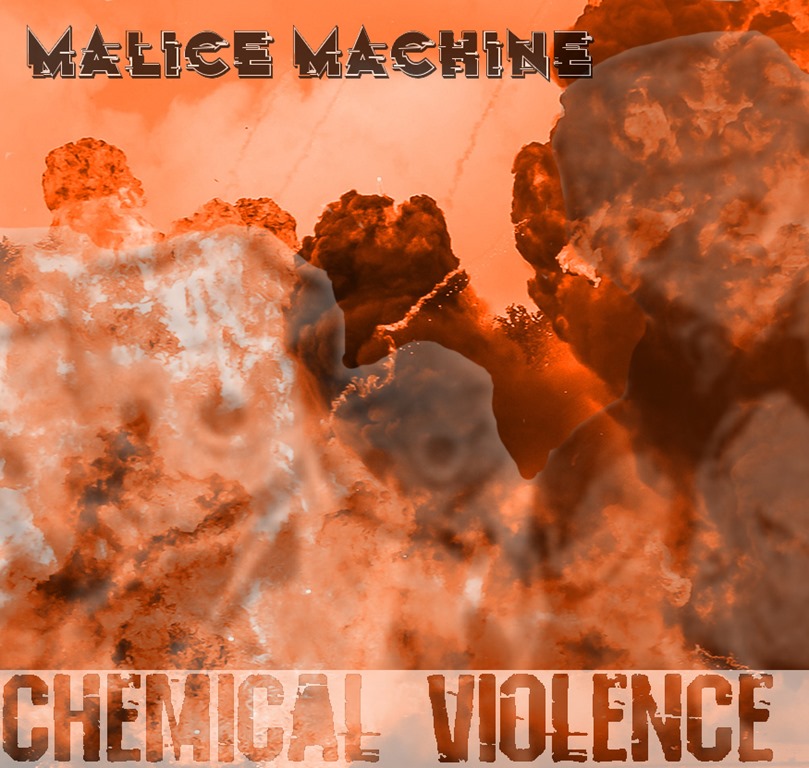
Initially intended as a straight follow up to their 2019 debut, Digital Scars, Chemical Violence evolved as a more technoindustrial work, with less primacy given to the guitars. But having said that, the band explain that they were keen to present a range of elements across the album: ‘We don’t want to be pigeonholed into one sub-genre so all the songs have their own flavor. Retro and post style, Electronic, driven guitar, grinding Noisecore and Aggrotech elements, Synth bass, Drum dominant. We don’t want to be pigeonholed into one sub-genre so all the songs have their own flavor. Retro and post style, Electronic, driven guitar, grinding Noisecore and Aggrotech elements, Synth bass, Drum dominant.’

The album slams straight in with the shuddering synths and thumping beats with the hard-edged stomp of ‘Prototype’. The vocals are gnarly, mangled, snarling, robotic – yes, derivative of Twitch era Ministry and a million Wax Trax! releases from 86-89, but that’s entirely the idea.

It was The Wedding Present who turned a negative music review into a T-Shirt bearing the slogan ‘all the songs sound the same’ and while it served to turn the criticism back on itself, it raises the very fair question of ‘what’s the problem?’ Certain genres particularly require a significant level of sameness.

Dance music is necessarily constructed around a narrow range of tempos, and this strain of electro-centric industrial is in many respects, an aggressive rendition of dance music (no, I’m not going to call it fucking EDM. Or EBM, either. Because there is just so much tribal wankery around genres, and rebranding shit doesn’t make it new shit, it just makes it the same shit rebranded. I never blame bands for this: it’s a press and marketing thing.

Chemical Violence most definitely isn’t shit – it’s an astute work that sees the band really exploit the genre forms to their optimum reach, and the point is that the further you delve into a genre, the more important the details become. Malice Machine know this, and this album is the evidence. ‘Dead Circuit’ presents the grinding sleaze of PIG, while ‘Machine Hate’ is pure insistent groove that’s overtly dance – most definitely drum dominant – but clearly has its grimy roots in that Chicago c86 sound. Flipping that, ‘Techno Pagan’ goes full raging Ministry industrial metal in the vein of ‘Thieves’. It wraps up with a killer rendition of Tubeway Army’s ‘Down in the Park’ that’s quite a shift, being both organic and robotic at the same time, and very much captures the stark spirit of the original. Covered by so many, from Marilyn Manson to Foo Fighters, and it’s become a synth-goth classic. Malice Machine seem to take some cues from the Christian Death version, but brings something unique to the party as well.

Where Malice Machine succeed with Chemical Violence clearly isn’t in its innovation, but its execution, and they don’t put a foot wrong, making for an album that really is all killer.

large explosion

Metropolis Records – 8th February 2019

Christopher Nosnibor

In a sense, I was raised on so-called ‘industrial’. It was the very early 90s and I was in my mid-late teens: Ministry had broken through to the MTV major league with ‘Psalm 69’ and I worked weekends in a second-hand record shop. The other hired hand, who worked when the owner wasn’t around and drove the van carrying the shop’s contents to record fairs on Sundays, was around 15 years older than me, and was massively into all sorts, but particularly punk, new wave, and industrial shit. He’d feed me stuff like Pigface and Lard. Records and CD had a pretty rapid turnover, so recent releases often landed with us for resale within a few weeks of release after a rush of ‘mistake’ purchases off the back of reviews in the music press, and at record fair, it was possible to swipe Wax Trax! remainder12” – which included albums, often still sealed – for a pound apiece.

The fact there was a certain similarity of sound across many of the releases was, in a sense, part of the appeal: the uniformity of industrial civilisation and its attendant culture, reflected in musical from echoed a blank nihilism that simultaneously accepted and confronted the grim harshness of daily reality.

But it’s 2019 and many of the old bands are still cranking out the same trudging grind, and there don’t really seem to be that many emerging bands in the field, making for a genre that’s increasingly stagnant, continually cross-feeding from within itself without drawing inspiration or air from outside its hermetic grey-hued space. The additional contributors featured here is a case in point: the album features contributions from Robert Gorl (DAF), Nick Holmes (Paradise Lost), and Chris Connelly (Revolting Cocks, Cocksure). As a catalogue of luminaries from the scene, it’s cool, but it’s the same catalogue as you might have seen as far back as twenty years ago

Wake Up the Coma isn’t bad by any means, and it certainly has its standout moments. It’s brimming with thumping industrial-strength disco beats, bubbling basslines and stabbing synths, and in this field, songs like ‘Hatevol’ are exemplary. The minimalist slow grind of ‘Tilt’ sounds very like PIG with its woozy, grimy, stop / start synth bass and snarling vocals, fuzzed at the edges with a metallic distortion. Then again, their cover of Falco’s ‘Rock Me Amadeus’ (with Jimmy Urine) stands out for less good reasons: it’s 100% straight, with negligible deviations from the original save for a more industrial beat. And I can’t help but think ‘what’s the point?’ there have been plenty of inspired industrial covers, and I will always cite RevCo’s take on ‘Da Ya Think I’m Sexy’ as an example of irreverent and inventive adaptation.

No-one looking for a solid Front Line Assembly album is going to be disappointed by this. And since FLA, now thirty-three years and almost twenty albums into their existence, are always likely to be preaching to the choir, they’ve delivered firmly with Wake Up the Coma.

AA

Front Line Assembly – Wake Up The Coma