Posts Tagged ‘varied’

Christopher Nosnibor

It’s good to be back at Wharf Chambers. Personal circumstances have meant that the trip to Leeds has been largely beyond me, but stepping into the place felt like coming home. It’s unassuming, some may even basic, but it’s got a unique – and accommodating – vibe. There aren’t many small independent venues that can keep going by sticking to a programme of leftfield live music, or being explicit in a keen leaning towards inclusivity for LGBTQIA+ and anyone else who stands outside the fence of the normies, but Leeds is a big enough, and diverse enough, city for a place like this to not only survive, but thrive. It’s kinda quirky, a bit shabby chic, and it works: the beers – local – are cheap, the sound in the venue space is good, and it’s all cool, and tonight’s advertised lineup is a cracker. Diverse, but solid quality of an international reach.

Before we come to that, it’s a strange and rare occurrence to arrive at a venue to discover that there is an additional, unadvertised, band on the bill, and even more so when the band in question has effectively gatecrashed the event without prior arrangement with the promoter, but by dint of deception. But the first band on tonight have done just that. Perhaps it’s the only way they can get gigs. Because they sure do suck, and it was obvious that they’d never have been booked for this lineup in a million years. I head back to the bar after a couple of songs, having heard enough. When they’re done, promoter and sound man (in both senses), Theo takes the mic to explain that he hadn’t booked them and that they didn’t espouse the experimental ethos of the acts Heinous Whining exists to promote. The band did not respond well to this, validating the opinion a number of us had already formed, and they fucked off in a huff. Dicks.

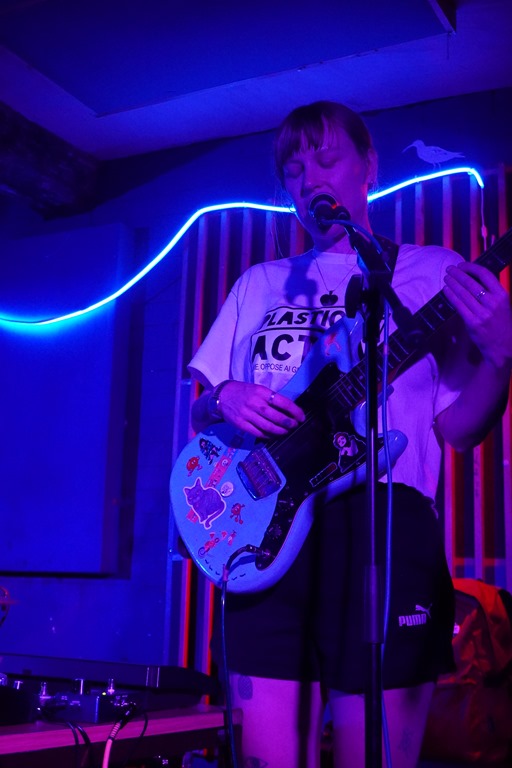
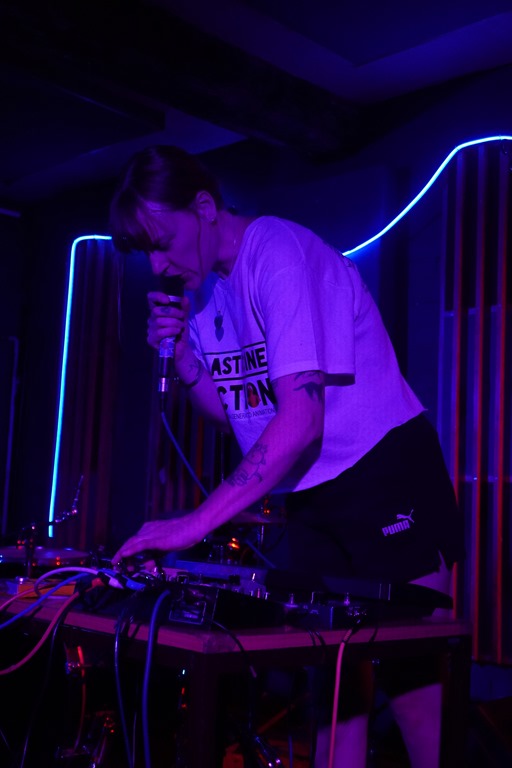
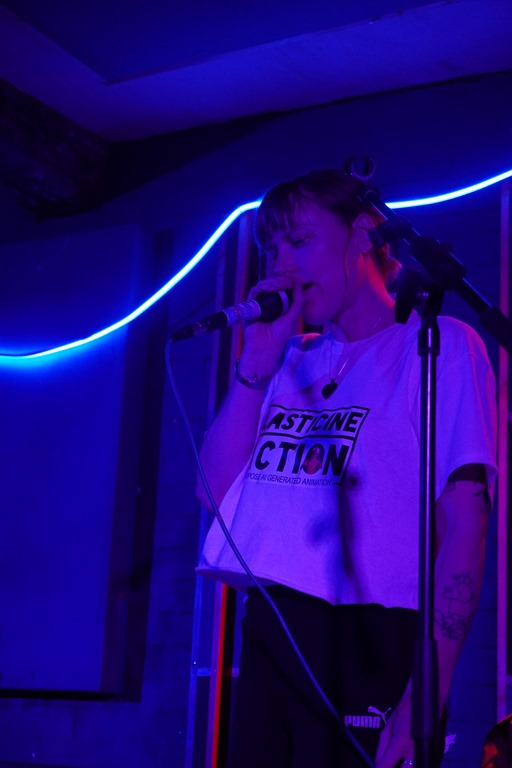
Thankfully, normality – of the kind we’re here for – resumed with the arrival of Sour Faced Lil, the solo project of Hilary from Cowtown. Her set starts – somewhat incongruously – with a quirky electropop cover of Bright Eyes. I just about manage not to cry. Then she swerves into swooshing space rock noise galore, and she explores the weird and wibbly, and it’s everything you’d expect from a Heinous Whining night. Live drums, looped, live guitar, and warped, undulating synths create a cacophony of sound in layers. The performance is a little tentative in places, but the audience is behind her all the way. There’s something quite enthralling about seeing a solo artist juggling myriad musical elements and instruments, knowing what a balancing act, how much effort it is to remember everything and keep the flow, and the fact she manages it is impressive.
DSC03057DSC03064DSC03070

Sour Face Lil

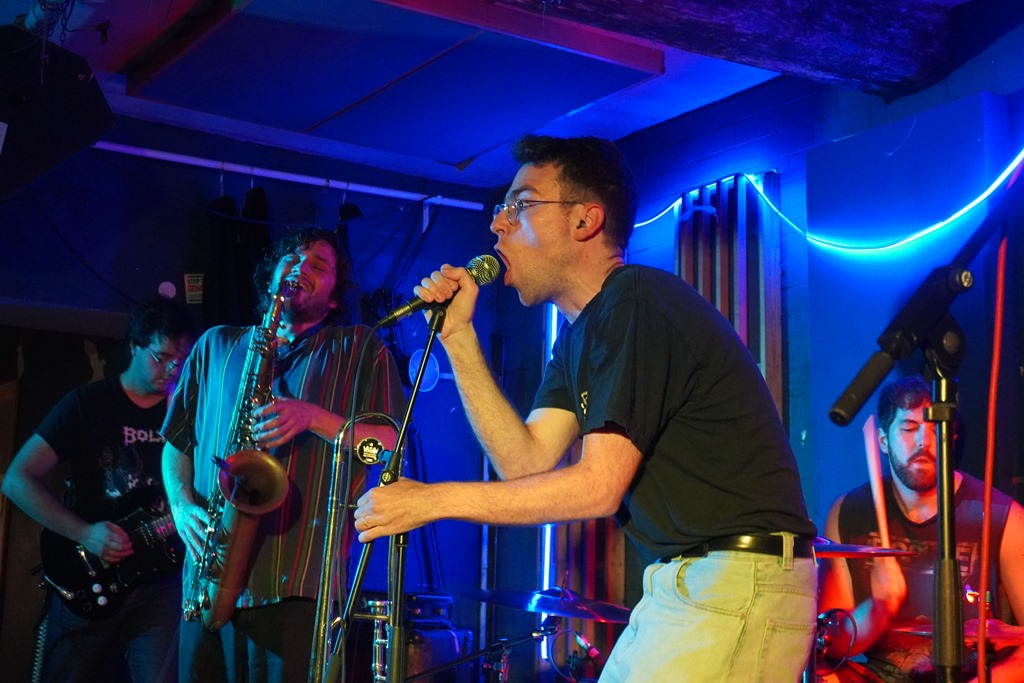
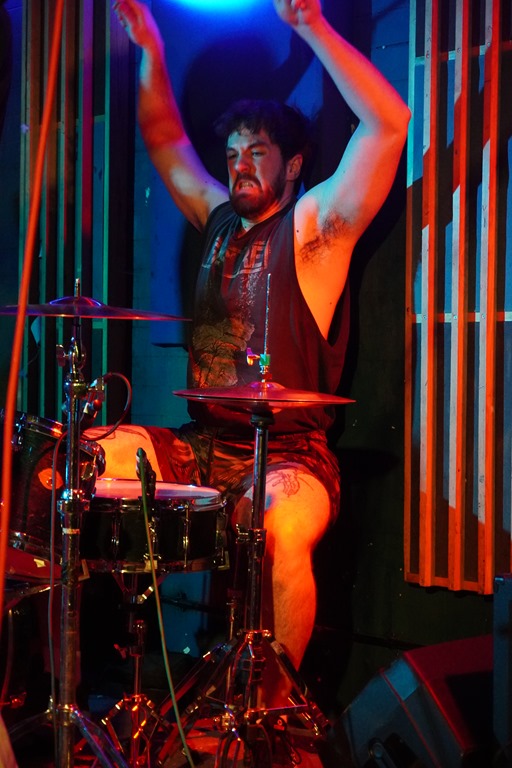
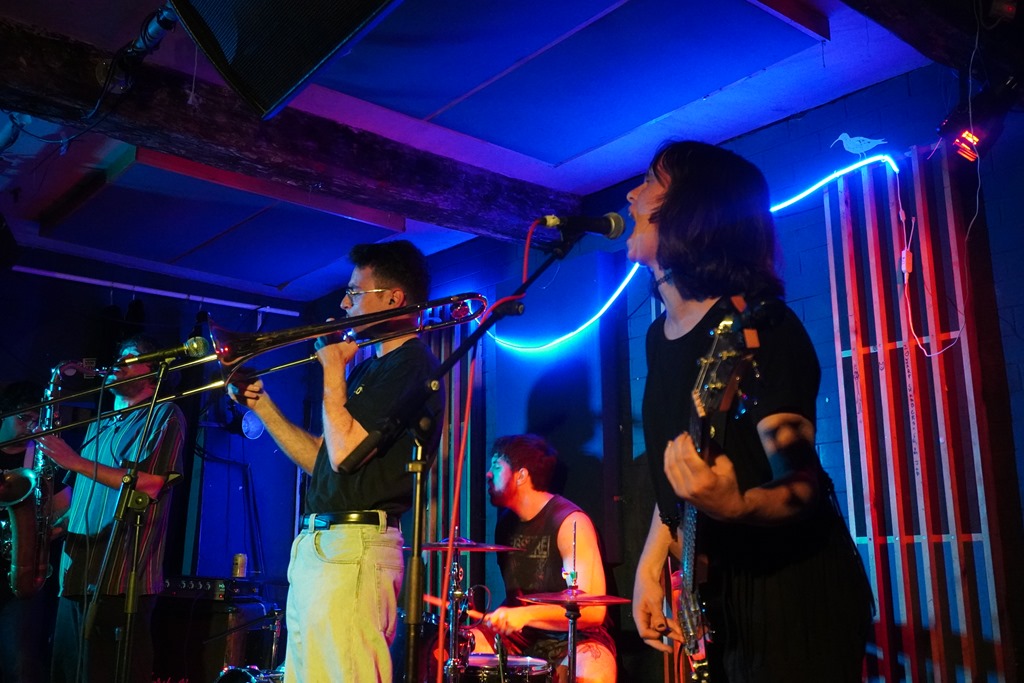
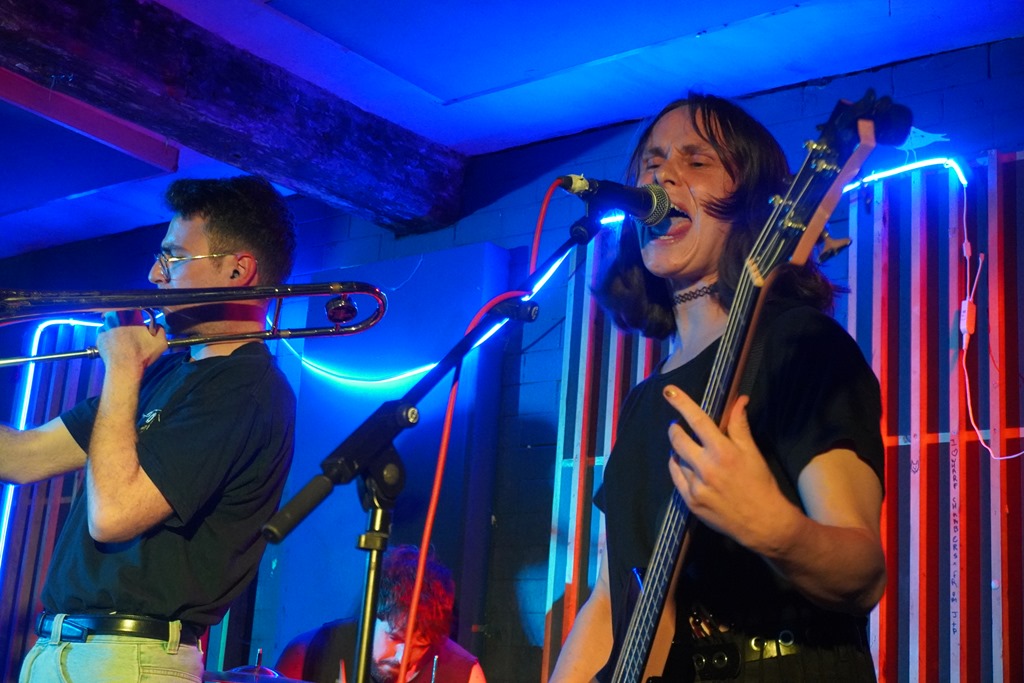
Also impressive are Lo Egin, but for quite different reasons. I feel I owe Lo Egin an apology, as it happens. When I reviewed their split release with Beige Palace a little while ago, I misspelled their name as Lo Elgin, more than once (although I managed to get it right when covering Volumancer in 2013) Hammering out reviews on a daily basis means I slip up sometimes. It’s not great, and I do try, to do better but… I did really rate that release, though, and I’ll admit that they were as much a draw for me as the headliners. And the fact is, they were worth the entry fee alone. On paper, they’re perhaps not the easiest sell, bring atmospheric post rock in the vein of early Her Name is Calla, with brass – sax and trombone – crossed with elements of doom – with the addition of screaming black metal vocals. They do epic. They do crescendos. They also do ultra-slow drumming, something I am invariably transfixed by having first become fixated during my first time seeing Earth live. The drummer raised his arms to fill extension above his head, before smashing down with explosive force.
DSC03079DSC03084DSC03092DSC03105

Lo Egin

Dolorous droning horns create a heavy atmosphere. Then, out of nowhere, from the delicately woven sonic tapestry they’ve been weaving, things turn Sunn O))) and the skinny baggy jeans wearing trombone guy who looks like a young Steve Albini delivers cavernous doomy vocals as he contorts and the mic stand and then all hell breaks loose. When they go heavy, they go heavy – and I mean HEAVY, the drummer smashing every beat so it hits like a nuclear bomb. To arrive with high hopes for a band, and to still be absolutely blown away is a truly wonderful experience, and one that stays with you.

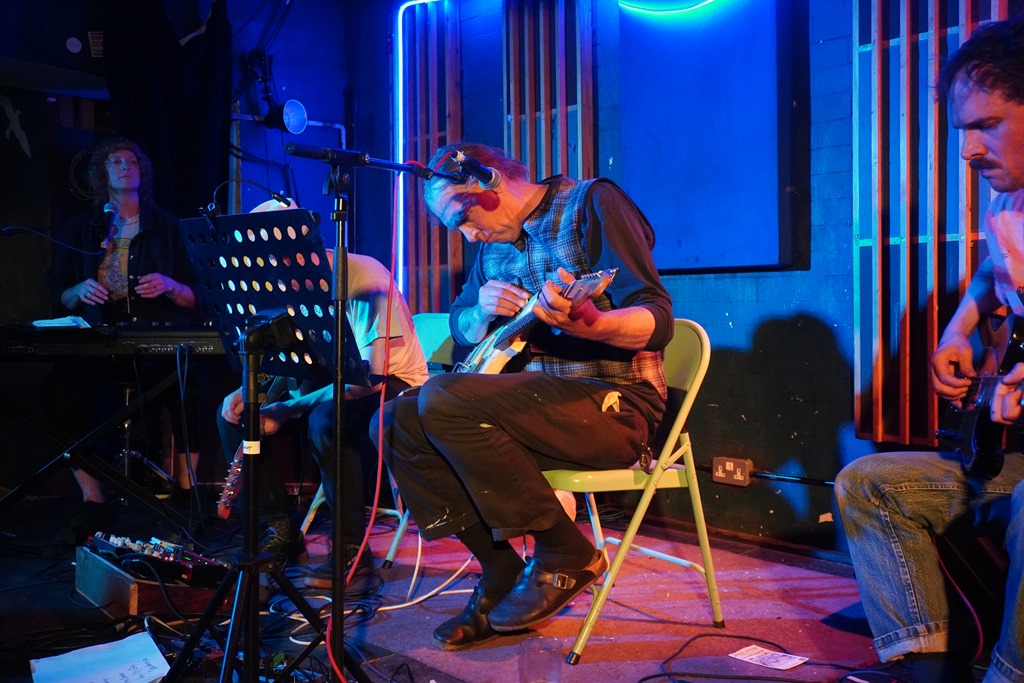
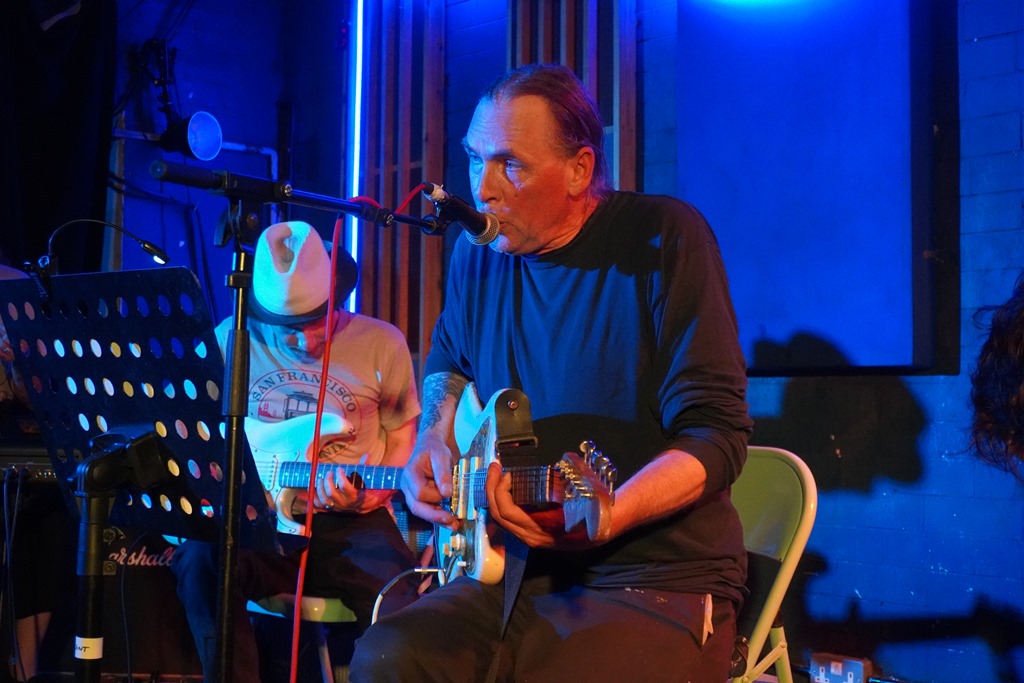
I feel I should perhaps take this opportunity to apologise to Jackie-O Motherfucker, too: in my review of Bloom, I described them as a country band. And while there are without question country elements, they’re really not a country band. They’re not really a psychedelic band, either, or any other one thing. Instead, they’re a hypnotic hybrid, and they’re deceptively loud considering how mellow everything is. What they do is simple in many respects, but in terms of genre, it’s rather more complicated, not readily pigeonholed. I’d clocked them about the venue beforehand, and they seemed like really chilled folks, and while they’re not exactly chatty during their performance, it’s apparent that they’re humble, and simply really chuffed to be playing here. The room is pretty full, too. Tom Greenwood looks like he’s just taken some time out from doing some decorating to play. He’s got paint on his trousers, and is as unassuming as they come.
DSC03109DSC03130DSC03137

Jackie-O Motherfuker

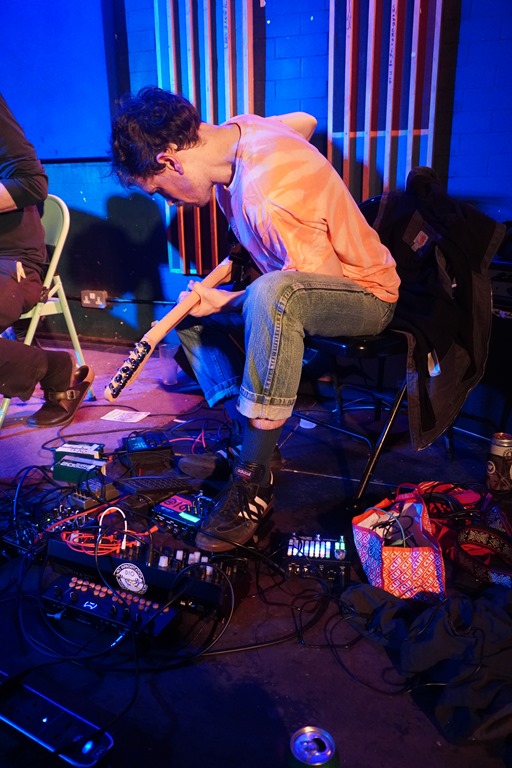
The current lineup consists of three guitars, synth, and some electronic stuff including subtle percussion. No bass, no drums. There are, however, many pedals and much pedal fiddling throughout the set, as they sculpt a wall of reverb and feedback and a whole lot more from this hefty – but ultimately portable – setup.

The resultant sound is detailed, but at the same time a hazy blur. Picked notes – and much of the sound is clean, with next to no distortion, but with all the reverb – bounce off one another here and there, creating ever greater cathedrals of sound. I find myself utterly transfixed. Their hour-and-a-bit long set features just seven songs, and they are completely immersive. There’s no real action to speak of, just an ever-growing shimmer which envelops your entire being. In some respects, their extended instrumental passages invite comparisons to the current incarnations of Swans, only without the evangelically charismatic stage presence or crescendos. In other words, they conjure atmosphere over some extended timeframes, but keep things simmering on a low burner, without any volcanic eruptions. The end result is a performance which is hypnotic, gripping because of, rather than in spite of the absence of drama. Low-key, but loud: absolute gold.
1st August 2025

Christopher Nosnibor

The other day, while riffling through my record collection, I found a few LPs and 12” I had quite forgotten owning, including a promo copy of ‘Chance’ by Red Lorry Yellow Lorry. Stapled to the plain black die-cut cover of this white-label record with the title hand-written in biro, is a press release which simply reads ‘I know this is what you’ve all been waiting for….. Yep. The new Red Lorry Yellow Lorry single It’s called “Chance” and as usual it’s on Red Rhino Records. It’s very good’ and is signed ‘Yours condescendingly’.

You just don’t get press releases like that any more – especially not typed in all block caps and photocopied.

I appreciate the effort that goes into a good press release, and a solid band bio, because it does help me as a reviewer get a sense of context, of what a band’s about, what an album’s about. But the counterpoint to that is that there’s so much detail being spoon-fed, there’s less room for creative interpretation. The fact of the music industry has changed radically since the 80s and 90s, the days of the weekly inkies, the time before the Internet.

There simply was no way of ‘doing research’. And writers had tight deadlines. And so they just riffed to fill the column inches. Facts were hazy, critiques were often based on first impressions and knocked out in an hour after an extended liquid lunch. Names, dates, titles weren’t always accurate. And fans scoffed at the errors – and still do when clippings are posted online – but that was the nature of the beast.

Now, misspell the name of the bassist or give the wrong year for their debut EP, or somesuch and PRs, labels, and bands are onto you straight away asking for corrections. In a competitive market – I often report that on average, I receive around fifty submissions a day – simply getting coverage is a massive feat. This is certainly not to say that those times past were better – simply different, and I simply navigate my way to this release via this route to demonstrate the ways in which things have changed in the years since I started out writing about music in the 90s. It’s also altogether rarer now to find negative reviews, and while a part of this is due to the overwhelming amount of music being released meaning that reviewers are generally more inclined to spend what time they have promoting music they like, there’s also a certain element of fear of there being a social media pile-on, or having their supply of gratis music cut off. But artists and their labels and PR really need to accept that they’re not going to please all the people all the time, and sometimes, it’s necessary to call out an act with dodgy politics or whatever, or to simply call a turd a turd.

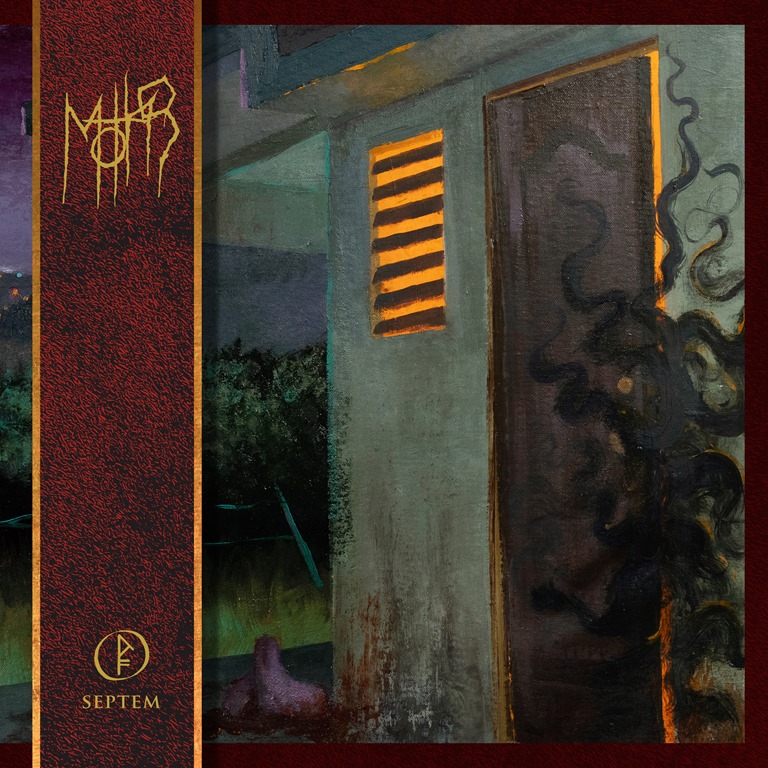
Anyway. Before I’ve even hit play, I’ve learned that this release by MOTHS is ‘a visceral journey through the Seven Deadly Sins, with each track embodying a facet of indulgence, obsession, and self-destruction — from the corrosive jealousy of “Envy” to the insatiable hunger of “Gluttony” and the rage of “Wrath”. The album plunges listeners into a dark, immersive experience where desire spirals into chaos’, and that ‘Diving deeper into heavier territory, MOTHS fuse elements of death and black metal with their signature blend of progressive, psychedelic, doom, and stoner metal, crafting a sound that’s both aggressive and atmospheric. With every step forward, MOTHS continues to explore new sounds and challenge genre boundaries, proving that music has no limits when driven by passion and innovation.’

I feel as if my work is already done. I can pour myself a large vodka and kick back, right? Well, I could. But that’s not my style. At least not the kicking back part. Large vodka in hand, I brace myself for the sonic onslaught… to be faced with some tinkering banjo or acoustic guitar giving country licks that are pure blues / Americana. And it gets jazzier and groovier as it goes on. What the fuck is this?

‘Sloth’ slides into ‘Envy’, a slippery, sultry alt-rock cut where the vocals are bathed in reverb, and the lo-fi production belies the fact that this is a vaguely jazzed-up take on grungy emo, at times coming on like Paramore recorded on a 90s cassette four-track. The haziness of the recording is actually something of a positive, but these are songs which require a slicker, fuller production. As a consequence, these takes sound more like demos than final versions.

The murky rawness works better on ‘Greed’, which brings rabid, raw-throated, growling black metal elements to the vaguely gothic metal compositions. It segues into ‘Pride’ which goes full-throttle skin-peeling abrasion before suddenly going commercial rock with fancy licks at the midpoint. I like ZZ Top, as it happens. I just wasn’t expecting a riff from Eliminator here.

‘Pride’ does take things full heavy, a prime slice of sludgy doom, and ‘Lust’ is, without question, a slugging slab of doominess, with some fancy fretwork thrown in on top. There’s certainly a lot going on here, and most of it works. MOTHS certainly bring some megalithic riffs and a lot of fire to an album that may be unpredictable in places, but is, overall, solid and with no shortfall of gutsy, guitar-driven heft.

AA

MOTHS - cover

Ipecac Recordings – 21st July 2023

Christopher Nosnibor

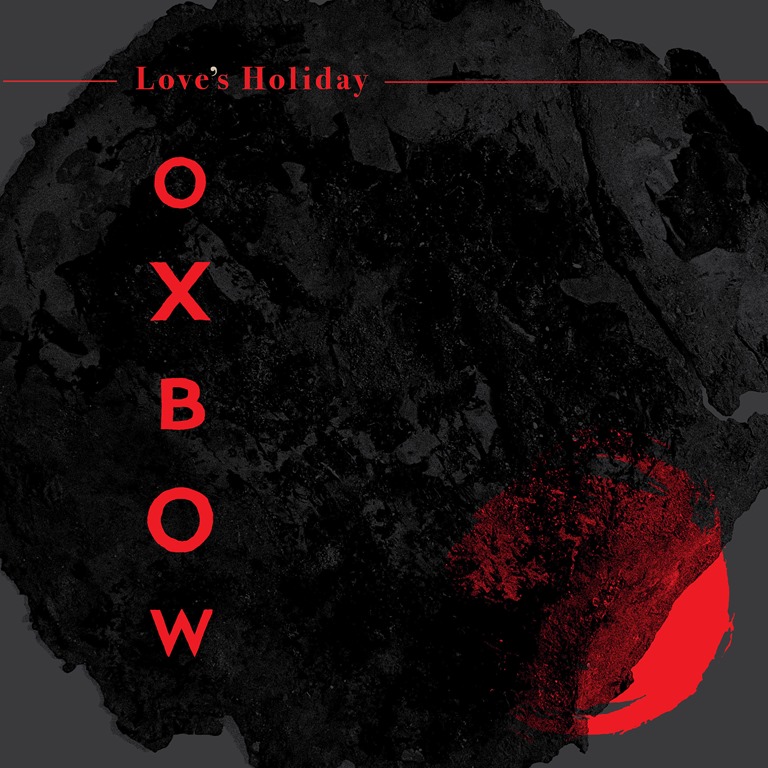
Thirty-five years is a long time. Not jus in cat or dog years, but in human years, too. For many, it’s half a lifespan. Perhaps it’s not so long in the scheme of the existence of the planet or cosmos, but that’s a timespan incomprehensible to most people, for whom the time from lunch till dinner feels like an eternity. But here Oxbow are, marking thirty-five years of existence.

A defining feature of their work has always been its diversity, and Love’s Holiday showcases that in abundance. The three songs released ahead of the album couldn’t have been much more different from one another, from the grainy, pained, and soulful ‘1000 Hours’ to the brooding, contemplative ‘Lovely Murk’ (both concerned with death and dying) via the full-throttle energised grunge-driven poke of ‘Icy White & Crystalline’.

How representative are they of the album? Entirely. Love’s Holiday has range, both sonic and emotional, and Robinson’s lyrics are dense and multi-facteted, and read like poetry. At first you’re struck between the eyes, but them you chew on them, because there’s more than mere impact, with smart wordplay running throughout, and they’ve visual, evocative, charged.

It screeches in with the sinewy discordant noise rock of ‘Dead Aherad’, Eugene S. Robinson hollering hard against scratchy guitar and tetchy drumming – and then, seemingly out of nowhere, everything locks together and brings a melodic chorus that’s somewhere between grunge and prog, landing in what you might call 90s alt-rock territory. Or you might not, but I’d challenge anyone to define it more specifically.

The raw, seething ‘Icy White and Crystalline’ drives in before ‘Lovely Murk’ and ‘1000 Hours’ follow one another in succession, changing the mood, pace, and dynamic of things. This piece of sequencing works well, as the intensity of the opening brace is enough to leave you gasping for breath and experiencing palpitation. Kristine Hayter’s Lingua Ignota choir vocals on the former fill the song with a white light, with something of a Gospel feel, in keeping with the song’s theme of death and ascension, after which ‘1000 Hours’ balances darkness with light.

A choral surge and rolling piano provide the backdrop to ‘All Gone’, and Robinson showcases his vocal versatility to stunning effect; first, a cracked, Bukowski-like drawl, before breaking into barrelling delivery more akin to Tom waits, and then switching to a hushed, intimate croon. The song bristles with tension and oozes soul.

There’s another switch of instrumental arrangement on ‘The Night the Room Started Burning’, with acoustic guitar entering the mix, and things taking a tense post-punk, almost gothy twist. But again, the choral backing adds a haunting dimension to the song, and it’s incredibly powerful. Pushing on with the stylistic collisions that they absolutely own and utilise to optimal effect, ‘The Second Talk’ melds no-wave noise with country-coloured slide guitar, before ‘Gunwhale’ takes leave by the grandest, most theatrical means possible, before slowing to a grinding drone.

If the overall mood of Love’s Holiday is reflective, introspective, there’s so much detail among it all that it’s hard to unpack even after several listens. Herein lies its greatest strength: it’s not an album which conforms to a genre, but an album which serves as a vehicle to convey, not one thing, but a whole spectrum of complexities. Love’s Holiday is not easy to process, but it’s an eye-opening artistic achievement that thirty-five years in, Oxbow are absolutely at the top of their game.

AA

OBLH_cover_final

Invada Records – 30th June 2023

Christopher Nosnibor

You know what? This never gets tired. I started reviewing live stuff in the 90s, but it wasn’t until 2008 I started receiving albums for review. Receiving albums ahead of release was a big deal back then: it made me feel somehow special. Advance promos probably meant something more then, on reflection. They would be, more likely than not., a single CD – or even a single-track CD – and my objective would be to get my review out ahead of, well, as many people as possible. It wasn’t so much about generating buzz as feeling a buzz.

I miss the steady drip of CDs and vinyl through the letterbox, although am coming to accept that space is an issue here, and if the endless bombardment of emails with downloads and streams sometimes – often – feels overwhelming, with up to fifty review submissions a day, when I clock a release I’ve been getting excited about well before time, the buzz still hits.

The way albums are released now isn’t quite the same, either: time was when there would be a single or two ahead of release, there’d be reviews and then the album would arrive and you’d have to buy it to hear it. Now, singles aren’t really singles and half the album’s been released on various streaming platforms along with a bunch of lyric videos and ‘visualisers’ (that’s one for another time). But having only slipped out a couple of tracks in a relatively low-key fashion in April and May, this landing in my inbox to download ahead of release, gave me a genuine buzz.

Gas Lit, released in 2021, was a powerful, album on so many levels. As they put it, the album was their ‘fight for Indigenous Sovereignty, Black and Indigenous Liberation, Water, Earth, and Indigenous land given back.’. The Australian duo make music with meaning, and do so with passion and sonic force.

How often do we hear recently that the failings were systemic? Systemic failings in the NHS led to deaths, and systemic failings in the schooling system resulted in kids committing suicide, systemic failings in vetting and so on has resulted in a culture of racism and misogyny in the MET police… daily, we hear or read news about systemic issues. And we know, we know the system is fucked. Not merely flawed: fucked.

And on fourth album Systemic, Divide and Dissolve examine ‘the systems that intrinsically bind us and calls for a system that facilitates life for everyone. It’s a message that fits with the band’s core intention: to make music that honours their ancestors and Indigenous land, to oppose white supremacy, and to work towards a future of Black and Indigenous liberation.’

“This music is an acknowledgement of the dispossession that occurs due to colonial violence,” says Takiaya Reed, saxophonist and guitarist in Divide and Dissolve. “The goal of the colonial project is to separate Indigenous people from their culture, their life force, their community and their traditions. The album is in direct opposition to this.”

Divide and Dissolve represent a people for whom the system hasn’t failed: it was always pitched against them, and succeeded in stripping Indigenous people of everything. What kind of system is it where this brutal debasement is a success? A capitalist one, of course.

Systemic certainly isn’t a flimsy pop record, then. But it is inherently listenable and does unashamedly incorporate pop elements, and this dynamic only serves to heighten its sonic power.

‘Want’ lulls us into a false sense of tranquillity, a looping motif pulsating over grand drones: it’s quite pleasant, even. And then ‘Blood Quantum’ hits: after a delicate, supple chamber-pop intro, the guitars crash in and it’s like a tidal wave. It’s a slow-stomping riff that grinds hard, and the textures are thick and rich.

The setup is simple, and the guitar and drum combo has become increasingly popular in recent years – but for all of its limitations, it also has considerable versatility, and Divide and Dissolve exploit and push those parameters by exploring the interplay between the two instruments when played slow and heavy and at high volume. And so it is that without words, their songs convey so much.

Photo_by_Yatri_Niehaus_516198

Photo by Yatri Niehaus

There’s almost something of a Duane Eddy / Western twang to ‘Simulacra’ before it explodes in a thrashing flurry of distortion and pummelling percussion. But for all the sludge-laden noise of ‘Reproach’, there is a grace and beauty about it, too, and this is what differentiates Divide and Dissolve from their myriad ‘heavy’ contemporaries: they imbue their songs with a palpable emotional depth. ‘Indignation’ begins with trilling woodwind, and possesses a wistful, aching jazz vibe before the thunderous deluge of guitar and drums heaps in. Featuring a spoken word recital from Minori Sanchez-Fung, ‘Kindgom of Fear’ is the only one of the album’s nine tracks to feature vocals: it’s a more minimal musical work which allows the words to stand to the fore, supplementing them with atmosphere and adding further variety and contrast to the album, notably ahead of the ragged riffery of ‘Omnipotent’.

The tranquil strings of ‘Desire’ provide the perfect bookend to stand opposite ‘Want’, and their synonymity is highlighted in this way. To want, to desire, something – something back – seems reasonable, should not need so much fight… but while there is the need to fight, Divide and Dissolve make protest music. It may not be protest music in the way many of us recognise it, but slogans and punk and folk are tired and worn, and on Systemic, Divide and Dissolve speak in their own strong and powerful way.

AA

644835

Medication Time Records – 27th January 2023

Christopher Nosnibor

My first encounter with Fågelle was supporting Big | Brave in Leeds last spring. Despite suffering some technical difficulties and being on before a band so mighty that I still haven’t quite got over the experience, I wrote that ‘Fågelle proves to be an absolute revelation’.

The release of her new album, album Den svenska vreden (The Swedish rage), affords proper time to digest, and to reflect on this. And live, I remarked on her understated presence and the variety, shifting from quiet restraint to some heavy noise, and with experimental elements. Those are all present here, to forge what the press release set out as ‘collage-like soundscapes made with twisted field recordings, mobile memories, digital trash, dark electronics, and howling choirs while moving between harmony and noise.’

For the most part, Den svenska vreden is subtle. There are soft, electronic washes and the slightest of glitches ripple and stutter almost subliminally. The layers rub against one another to create tensions, but still, the overall mood of the album is comparatively light, particularly given the album’s title and her explanation of the album’s context and contents.

“I was so angry and had been for years.” explains Fågelle, “A kind of adult rage that was new to me. Feeling forced to accept and stay in circumstances making me miserable. To patiently suffer now for a better future. But also, a subdued Swedishness that doesn’t hold space for flaring, tearing, wallowing rage but rather pushes it down from the surface and inwards. Question is, where does the rage go, and which forms does it take? That became a starting point for the record where I kept exploring my personal boiling points, pressures and releases, where to hold my rage, in words and in the body, as a swede and as a woman.”

She continues, “Swedish social norms value the level headed and emotionally subdued. There is a pressure put especially hard on women to function like social glue and to always be consensus oriented. It’s a pressure to practice self control, a self choking of non-agreeable ideas and feelings. Rage being one of them.”

As such, one senses the rage is very much tempered by the Swedish restraint. And that’s something that there is a strong sense of, listening to Den svenska vreden – that there is in fact far more beneath the surface, simmering.

‘Slavar’ is dark and tense, tentative, mysterious. In contrast, ‘Aldrig mera här’ is almost minimal pop in its flavour. As a prelude to the soft folk reflections of ‘Fåglar’, which in parts invites comparisons to Suzanne Vega while in others goes quite wonderfully weird, ‘Tredje långgatan tretton’ begins as hushed ambience and builds into dramatic strings. It’s on the title track that the rage burst forth, manifesting as two minutes of mangled noise, and the album culminates in a thumping burst of beat-driven electronica which I wouldn’t go so far as to describe as dance, but it’s certainly got enough groove to get down to.

There’s a sense that Den svenska vreden reflects its creator: complex, inscrutable, enigmatic, and multi-faceted.

AA

919308

26th September 2022

Christopher Nosnibor

Ever spend time scratching your head wondering what a song or band remind you of, and drawing eternal blanks? Yeah, I get it a lot: I put it down to exposure. Too much music to process.

This is by no means my first introduction to Arcade Fortress: we’ve featured three of their previous singles here on these pages, and I personally described ‘Sabotage’ as ‘a fully-realised anthemic beast of a tune’. And I stand by that, too.

Younique the album finds them powering into the title track by way of an opener, there are samples seeping from the corners as they thrust away at a punk / rock / pop hybrid sound with incendiary energy.

Younique may not be unique by any stretch, but then nor is it derivative, and my ponderance for comparisons is a frustrating distraction but simply a habit of mine. I can’t help but try to place references, lifts, nods. It’s perhaps because there’s so much going on and Younique is such a melting pot of all things from 90s grunge to post-millennial punk-pop that placing any of it specifically is nigh on impossible, and as a result, what you’re faced with is the vibe, and it’s deep retro.

They encourage us, the listener, to sit back, relax and enjoy a rollercoaster of a ride over 12 anthemic rock tracks, but it’s not as easy as all that. The slow-burning Sabotage’ sits four tracks in and there’s no questioning its anthemic enormity, and I can’t help but think of a grungier take on the sound of Depeche Mode circa Ultra, perhaps, when they were grittier and more guitar-driven.

But there’s a lot happening here. It’s not all absolutely killer: ‘Alan Bell’ gets a bit emo and lightweight, and elsewhere, and ‘Killing Time’ sits between Weezer and 80s hair rock, while ‘Tangible’ throws an area-friendly curveball. In contrast, the driving ‘Uppercut’ is more reminiscent of Therapy? circa Troublegum and its tense, taut, and totally kicks arse, as does the riff-driven ‘Strontium Dog’. ‘Dark Seeds’ is more of a punky / hard rock crossover.

It’s not always easy to make a casting vote, and it’s not always fair to get off the fence when it comes to weighing up maters of opinion and taste. Ultimately, Younique finds Arcade Fortress packing some solid tunes, and that’s hard to argue, regardless of taste.

AA

a0586434423_10

3rd June 2022

Christopher Nosnibor

The best music is timeless. This four tracker from ‘lady fronted, post-hardcore influenced’ quartet, Fantømex, hailing from Asheville, North Carolina could have been released any time during the last thirty years or more, and that’s definitely a positive.

It slams in with the raging, angular grunge of ‘Fantomcatz’ that’s got strong echoes of early Hole or Solar Race, but amidst the screaming fury, there are some neat dynamics and a solid structure. ‘White Hole’ is lighter, popper – I mean, it’s all relative, it’s hardly fucking Beyonce – but it’s got something of a 90s Sonic Youth vibe to it, but then it goes full-tilt histrionic punk, before leaping back to being more Sonic Youth / Pavementy, and the guitars even jangle a bit, albeit briefly.

‘Gaslight’ is appropriately disconcerting, disorientating, and perhaps the most disjointed of the four tracks, but in context it works. It’s no sleight to draw a line to The Pretty Reckless with its more overtly ‘rock’ sound, before they round it off with a jarring slew off guitars that’s like a mathy mess squished into a melodic tune delivered with punk attitude, but at the same time, when she’s not spilling her guts, Abigail Taylor proves she’s capable of delivering a melody that can really tug at the heartstrings.

And so it is that in the space of around eighteen minutes, Fantømex whip together a whirlwind of musical styles and emotions, and do so with both style and force.

AA

a0817393751_10

InsideOut Music – 6th May 2022

Christopher Nosnibor

There’s been a lot of beefing and bitching about ‘authentic’ indie bands and labels in circulation of late, particularly about bands who have been blasted into the collective conscious seemingly overnight and questions being asked of their ‘indie’ credibility.’ The sceptics question, ‘how can a band go from nowhere, not even a handful of local gigs, to emerging, fully-formed on a national level? Surely there must be finance and machinations behind the scenes?’ Every story is different, of course: Benefits have truly emerged – against the odds – by sheer hard work and grass-roots support via word-of-mouth promotion. The Lovely Eggs have done it 100% DIY, but it’s taken forever for them to achieve the cult status they now have that means they can sell out 50-capacity venues. Wet Leg got snapped up by a large-scale independent label early on, because it happens, just as historically bands would send a demo to a major label and get signed for big money by some A&R dude seeking to be the one who discovered the next big thing (but for every five hundred bands signed, only a handful would even release a single before being dropped). And so it was that Royal Blood weren’t quite the from-the—bottom grafters they may seem, and even Arctic Monkeys weren’t purely word of mouth viral in their ascendency, despite their legend. But is it fair to begrudge bands reaching the audience they deserve? So many great bands have failed to make an impression simply because they’ve not had the backing or exposure required to puh them up to the next echelon.

And what of labels being acquired by majors? Is that selling out? Not necessarily: it depends on the deal, and more than an independent brewery being bought up necessarily means its beer will be brewed under license elsewhere and become more supermarket piss. So InsideOut may be owned by Sony, but they’re seemingly left to do what they do as a channel for all things prog, while benefiting from major-label funding and distribution, which is a win for all concerned.

It’s highly unlikely that Sony would have picked up and given a home to the debut album from Chinese purveyors of progressive metal, OU. Not because it isn’t any good – it is – it’s just a long way from being overtly commercial, and all the better for it, of course.

One of the reasons it’s so far from having mass appeal is because it’s simply too ‘different’. ‘Travel’, the first song of the eight, has many elements of electropop and the darker side of 80s chart rock, but the vocals are bombastic, soaring, everything all at once, incorporating the quirkiness of Bjork with choral stylings and flying at times completely over the top, and the song’s unpredictable structure sees the segments shop and change in a blink. You need hooks to get on the radio, not oddball noodling shit like ‘Farewell’, where Lunn Wu sounds like she’s possessed by the spirit of Billy MacKenzie fronting Evanescence covering Captain Beefheart in a technical metal style. Or a drum ‘n’ bass take on Yes’ back catalogue. Or something. Point is, there’s a hell of a lot happening either all at once or in rapid succession, and it’s a lot to take in, and sometimes it’s too much.

It’s very much the kind of prog that blends math rock and jazz to froth up something that’s busy, to the point of being dizzying. There are some decent tunes and pleasant melodies in the mix here – but they’re in the mix with whirling chaos and some kind of cerebral explosion.

When they do slow things down and bring down the manifold layers of hyperactivity, as they do in the altogether gentler and magnificently mystical mid-album interlude, ‘Ghost’, they reveal a real knack for atmosphere and ethereality. Haunting and evocative, it’s a magnificent piece. In contrast, ‘Euphoria’ begins as a pleasant, rippling piano-led piece that quickly evolves into what sounds like about three songs all playing at once, which is difficult to assimilate.

The musicianship is outstanding, but it sometimes feels as if they’re trying too hard to showcase their technical prowess, and just because you have ideas doesn’t mean you should play them all at once. It’s good, but it’s busy, and the twangy slap bass on ‘Prejudice’ is a little flimsy in the face of the full-on crunch of ‘Light’.

One is indisputably well-realised, both in terms of composition and production. But despite it seemingly being too much in parts, some of it leaves you yearning for more.

AA

OU_One-1-740x740

29th November 2019

Christopher Nosnibor

For me, there are few things worse than a story untold and only alluded do. Tell it or don’t! The press release for Cologne-based Roman Jungblut’s solo debut tantalisingly informs us that ‘His mainly improvisational musical live performances – in varying constellations since 1996 – are temporarily reduced to a few selected appearances in Cologne since 2009, due to reasons’. First and foremost, of course, my thoughts are with the artist: we all have our reasons for done – for not doing – things. Sometimes, they’re painful, or we simply don’t want to talk about them. But a story-half-told can lead to speculation. Not that I’m about to speculate on anything here, and shall instead focus on the sonic document presented in the form of Back To Where It Never Started, which comprises four pieces which explore a broad territory in a short span of time.

The blurb goes on: ‘After a ten-year full abstinence of recorded output besides contract work – and only ever having released music as a member of bands or collectives – Roman finally found it to be inevitable to not only release some music, but to do it as a solo artist, not hiding behind a pseudonym, an ensemble or even ironic distance. “Back to where it never started” is the first product of a long time filled with lots of artistic and personal moments of growth, of finding the courage for imperfection and embracing the potential of constraints’.

The most striking thing about the EP is its diversity.

‘Detox – Retox’ packs a lot into just five minutes, as a trilling top synth that surges and builds tension suddenly gives way to a plunging, thumping bass pulsation that’s low and low, and registers around the lower abdomen, before spiralling scraping drones evolve around it, conjuring a cinematic, texture-heavy soundscape that resonates in ever-expanding ripples.

‘78-7-88’ is radically different, a piano-led piece that’s almost jazzy in its stylings – but not so jazzy as to be irritating. Long, drawn-out notes hang and taper over the jaunty, mellifluous babbling backdrop, while ‘Einsicht’ is a space-age bloop-out, with whistles, bleeps, and whirrs hovering in zero-gravity slow-mo.

The final composition, the eleven-minute ‘Two for Tooth’ takes the form of a sparse yet layered ambient work that gradually grows warmer as it develops, slowly and subtly, around a rippling repetitive wave.

In some respects, the fact the set tapers out after so many shifts and ups and downs feels vaguely disappointing, but ultimately, its slow ebbing departure seems fitting as the listener’s journey ends with Jungblut meandering toward the horizon.

AA

RJ01_front