Posts Tagged ‘trance’

3rd February 2026

Christopher Nosnibor

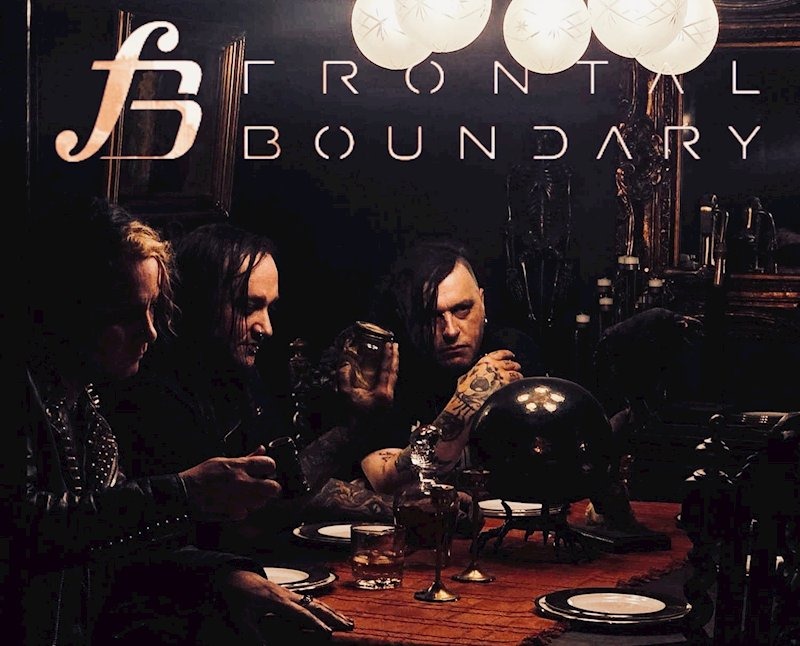
Founded in 2002 by Brendan Ross, Frontal Boundary have been mining a seam of aggrotech, synth-pop, and raw emotional expression for almost a quarter of a century (mid 00’s hiatus notwithstanding, which meant that it wasn’t until 2012 that debut album Electronic Warfare emerged).

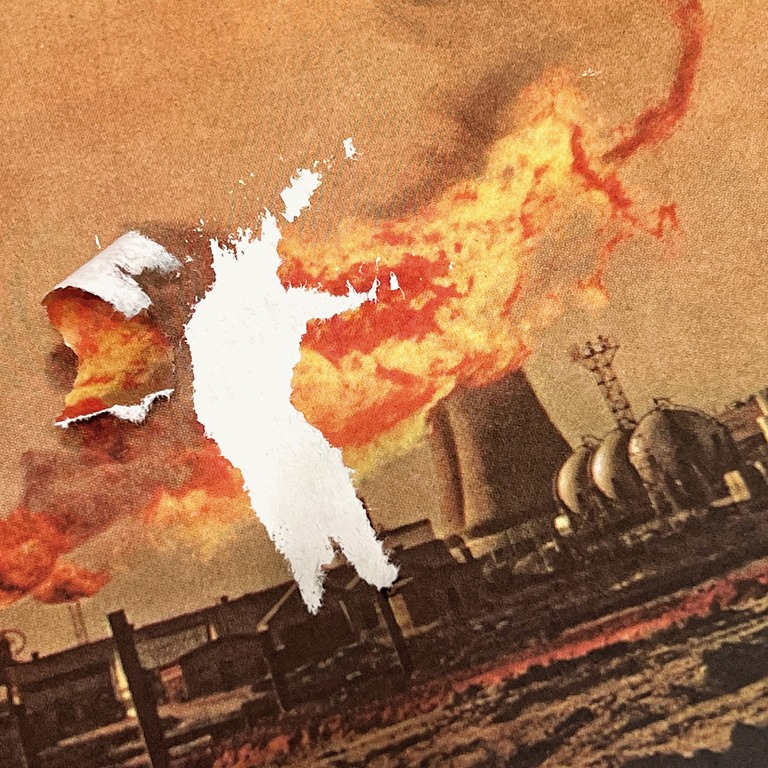
As the title of their latest offering indicates, this is an album brimming with nihilism, frustration, darkness. The expansive-sounding ‘Remember’ is one of those intro tracks which in a way create a false expectation of something a bit mellow, a robotix voice announcing ‘We are Frontal Boundary’ over a cinematic, semi-ambient drift and an easy, mid-tempo beat. And of course, this all changes with ‘Burn’, which slams in hard with a heavy stomp and snarling, distorted vocals, with words like ‘destruction’ and ‘corruption’ emerging and essentially telling you what you need to know.

While decidedly dancey in its synths which soar and stab across thumping basslines and relentless thudding beats, there’s something unflinchingly dark and nasty about Failure, not least of all the heavily-processed, dehumanised vocals, but equally, the sample selections are unsettling – even seemingly innocuous snippets take on sinister overtones in context, in the way that children’s voices sound menacing in horror movies.

Failure is very much cut from the same cloth as Controlled Bleeding and Mussolini Headkick and a bunch of late 80s / early 90s Wax Trax! stuff, and in places – as on ‘Hollow’ and ‘Hate’ Frontal Boundary really go all out on the aggressive rave stylings. The latter feels perhaps a shade light for the subject – musically that is: the vocals are strangled, scorched, demonic. Is black metal rave a thing? If not, Frontal Boundary may be pioneers of a new genre.

It’s high octane, Hi-NRG, and while the lead synths are poppy and dancey as anything, the overall vibe, with the contrasting vocals in particular, is gnarly, and harsh. It’s a juxtaposition which works well: although the musical style and vocal delivery are both genre tropes, the way in which Frontal Boundary draw them together feels fresh, innovative, powerful, and proof positive that there is no success like failure.

AA

AA
410825

26th March 2026

Christopher Nosnibor

Having slipped out ‘This and That’ as a forewarning of the imminent arrival of his ‘difficult third album’, the time is almost upon us for its unveiling. Just as it was six years between his debut, Grievous Bodily Charm and second album Touch & Go, so another eight years have elapsed since then, although he’s maintained his profile through touring – something which for him comes with the added challenge beyond the usual logistical matters with a wild stage act and even wilder and largely impractical-looking outfits. But then, Mr Vast is more than music. The creation of Henry Sargent of Wevie Stonder – perhaps the sole exponents of the cack-pop genre – Mr Vast is more than a musical project. It’s an entire world, where the Vast persona is all encompassing, bringing together music and performance art, and there are no half-measures here, Vast fully embracing the strange, the wonky, the incongruous and the improbable.

He’s at pains to stress that this isn’t art, though, and explicitly states ‘Mr Vast is not art. He’s something that happens to you. So let him.’ I rather feel that there’s no choice in this matter, really. The idiom goes that one should ‘expect the unexpected’, and this could well be a mantra for approaching Mr Vast – although it’s perhaps more appropriate to suggest that it’s all expected when it comes to his work. ‘Accept the expectable, yeah?’ he says on ‘Ants’, before blabbering on about ‘swan crisps’ and reflecting on deep water: the wrongness and the delivery remind me of Nathan Barley – perhaps one of the most underrated and uncomfortable sitcoms of the early 00s. ‘Failure is its own reward’, he croons moments later, spinning another classic postmodern dichotomy within a cocoon of New Age hipster jargonisms.

And so it was – and still is – that ‘This and That’ confounded expectation by being remarkably not-weird, a surprisingly danceable cut that could be legitimately referred to as a ‘bangin’ choon’. How serious or how ironic or parodic it is, remains unclear. Before we get to it on the album however, there’s ‘What’s Difficult About Being Stupid?’, which at twenty-nine seconds in length is more of a sliver of facetious frippery with a toy keyboard, and ‘Scatterbrain’, a sub-two-minute flourish of medieval folk absurdity that comes on like a collision between Horrible Histories and Steeleye Span. Or something. In this context, the pumping hyperactive acid beats of ‘This and That’ seems like a moment of sanity, despite its OTT KLF-style ‘stadium house’ / ambient / soul breakdown in the middle before going full-on happy hardcore. ‘Oh, listen to the sound effects… that’s fantastic’, he comments amidst a stream of conscious lyrics, before drum ‘n’ bass breaks drop.

Upping the Ante is appropriately titled: it’s peak Vast. ‘The Bench’ is almost – almost – a spoken-word vignette within a soft, mellifluous ambient composition, and it’s almost – almost – not weird or off-kilter. But then, as we learn a few tracks later in what seems like a confession of sorts, Vast tells us, ‘I Can’t Help It’. This track is another Hi-NRG work which incorporates drum ‘n’ bass and samples but breaks out into derangement worthy of a Brett Easton Ellis character – but there’s some observational content in the mix, too.

‘Neural Preening’ takes the form of jerky, quirky early eighties electronica, a bit Devo, a bit Thomas Dolby, a lot hyperactive. Keeping up with the sheer range of what’s going on is mind-bending, and while the gentle acoustic ‘Guess Who’ does offer some breathing space, it does so while offering something a bit trippy, a bit Syd Barrett era Pink Floyd. Then he goes and spins things into a different orbit with the murky groove of ‘Crumpet Man’, which could be a ‘Born Slippy’ meets Tubular Bells for 2026 if he wasn’t talking about animals, muffins, and pancakes.

It would be easy enough to simply bracket this as ‘experimental’ – and also ‘barking’ and ‘batshit’, which I’ve probably done myself before – but this fails to give due credit. Sure, there’s a certain sense that Mr Vast’s main purpose is to explore the furthest fringes with no regard for musical or social norms, instead seeing what new novelty oddness he can create, but equally, one gets the impression that this isn’t forced gimmickry, but simply how his head works – this is the work of someone who is wired differently. He doesn’t so much think outside the box, but exists outside the box, while performing origami on said box, which is, of course full not only of frogs, but newts and Natterjack Toads, all of which may or may not exist when the box is closed or folded in a certain way.

Some might think that with his evident ability, Sargent could make music that’s far more commercially viable, but as a writer who thought it would be a doddle to knock out a genre novel and actually get paid for this, only to find that the literary Tourette’s kicks in after a few paragraphs or pages. In other words, he really can’t help it. And this is a good thing. There’s too much bland shit out there. There’s too much manufactured shit out there. There’s too much shit out there, full stop. But there’s a real fear amongst musicians that they need to confirm to have any chance of success – whatever that is – and reach an audience and survive. Mr Vast exists not only outside of this, but in his own world, one almost devoid of reference points, comparisons, and peers. And this is what we need more of in the creative community. Arguably, such freedom to disregard pretty much all influence and all trends is a luxury, but to submit to conformity is to surrender the foundations of what it is to create.

Upping the Ante is warped, weird, and dances to its own tune and no other. It deserves applause – and your listening ears.

AA

crump yellow test

Constellation – 3rd October 2025

Christopher Nosnibor

The third album by The Dwarfs Of East Agouza (Maurice Louca (Lehkfa), Alan Bishop (Sun City Girls, Sublime Frequencies), and Sam Shalabi (Land Of Kush) promises ‘a focussed set of rhythmic psych-trance free/improv’.

As their moniker and the album’s title suggests, they demonstrate a collective interest in urban myths, the strange, the embroidered and embellished tale, perhaps spun with a twist of esoteric mysticism, but at the same time, aren’t entirely serious about it all. That is by no means to imply they’re not serious about the music they make, even when the pieces have titles like ‘Goldfish Molasses’, ‘Saber Tooth Millipede’, and ‘Swollen Thankles’. Because it is possible to be intense and serious and at the same time retain a capacity for humour, a sense of the absurd.

Sasquatch Landslide is an album that’s knowingly ‘out there’, but at the same time, it’s clearly the work of a collective who are completely immersed in the world they’re creating through a conglomeration of sounds which border on the transcendental. Elongated, quavering drones and an array of percussion merge in a haze to forge loose, yet curiously intense grooves. The aforementioned ‘Sabre Tooth Millipede’ is a full-on wig-out jazz frenzy played with the psychedelic loopiness of Gong as their most far-out, and at the same time, amidst the twanging and clattering, there’s something of the spirit of The Master Musicians of Joujouka about it. For an added addling bonus, there are tempo changes galore, and some parts where there are multiple tempos crossing one another simultaneously as the players seemingly detach from this physical realm into different plains of consciousness, separate from one another yet still connected by some kind of telepathy. Because however weird and disjointed it gets, somehow it works.

‘Double Mothers’ goes spaced-out, haunting, and atmospheric. On the one hand, it’s one of the most overtly jazz pieces on the album, but the wandering, reverb-soaked saxophone weaves its way through a nagging twang of a distinctly Eastern influence, while a pulsing heartbeat rhythm creates an underlying tension.

Single cut ‘Titular’ is busy and adds an easy listening, lunge-like organ trill which is completely at odds with the hectic hand drums and frenzied fretwork. They really cut loose on the ten-minute ‘A Body to Match’, stretching things out in all directions – tempo, texture, detail, serving up a pan-cultural smorgasbord of noodlesome improvisation. There, they slowly pick apart the component elements, a slow-motion explosion or deconstruction of the composition, each part slowly moving further from the rest. ‘Goldfish Molasses’ slowly melts, a plodding beat reminiscent of ‘What A Day’ by Throbbing Gristle provides the spine for this slow, pulsating Industrial thudder, where a woozy bassline undulates in the background, and incidental noises and chattering yelps fill the space behind some indecipherable vocal.

Sasquatch Landslide is big on warped, looping drones and layers of intricacy upon layers of intricacy, which weave a shimmering sonic cloth that ripples and shifts before the eyes – and ears. Time itself bends and stretches, taking on an almost elastic quality as the threads unravel to reveal new layers and dimensions. One can feel the instrumentation expanding outwards into infinity – and infinite reverb – in the same way that the universe is continually expanding, only in an accelerated timeframe. For all of its abstraction, Sasquatch Landslide provokes quite visual interpretations of the sounds emanating from the speakers. I expect to have very strange dreams tonight after this.

AA

08 - The Dwarfs Of East Agouza cover art

Benefits blast in ahead of another substantial UK / EU tour with the release of the first new material since their debut album, Nails.

‘Land of the Tyrants’ features additional vocals by Zera Tønin of Arch Femmesis.

It may be more overtly dancey than previous outings, hitting an almost trance groove, perhaps even a bit KLF, and the rage is more simmering than roaring in in terms of delivery, but lyrically… as explosive as ever, ‘Land of the Tyrants’ tells it like it is. The video is more overtly produced, but it’s dark and stark. It’s grim up north, right?

Tour dates:

05/10 HUDDERSFIELD Parish

06/10 LANCASTER Kanteena

07/10 GLASGOW The Hug and Pint

08/10 EDINBURGH Wee Red Bar

09/10 ABERDEEN Tunnels

10/10 STIRLING Tolbooth

11/10 MIDDLESBROUGH Play Brew

12/10 LIVERPOOL The Shipping Forecast

13/10 PRESTON The Ferret

17/10 ROTTERDAM Left of the Dial Festival

18/10 UTRECHT ACU

19/10 ROTTERDAM Left of the Dial Festival

20/10 OSTEND Cafe de Zwerver

22/10 SOUTHAMPTON The Joiners 23/10 BRIGHTON Hope and Ruin

24/10 MARGATE Where Else

25/10 LONDON The George Tavern

26/10 NEWPORT Le Pub

AA

Benefits@2000x1270-696x442

Pic: Tom White

12th December 2023

Christopher Nosnibor

German electro duo ALTR∞ seem like a pretty chipper pair, pronouncing the arrival of their second EP with the theatrical, Shakespeare-referencing proclamation ‘The world is not a stage, it’s a dancefloor: welcome to the Cosmic dancefloor of Eternity!’

They go on to explain how the ‘INFINITE’ EP is a celebration of the complexity and the beauty of life and the connection that binds us all! The broad spectrum of music influences, woven into the EP’s music tapestry, symbolises the infinite flow of ideas and references that shape and drive the Collective Consciousness. We hope that these songs will make you feel free: dancing and releasing all worries and troubles! We wanted to try new things, while exploring a more dancefloor-oriented sound, while still sticking to our own style. The energy was there and the rest just happened as usual – immersing in the magic of the studio and channelling our feelings!’

The EP’s four tracks span just over eighteen minutes, and while they are certainly very rhythmically-orientated, in terms of commercial dance, they’re not what anyone would call bangin’ dance choonz – not even your dad or your grandad. Sonically, Infinite sits somewhere in the middle ground between the minimal techno favoured by Gilles Peterson on his 6 Music show, and the kind of stuff I find modular synth fanatics noodling out at the Electronic Music Open Mic nights we have around the country.

‘I Saw the Future’ is, ironically, a squelchy analogue workout that’s decidedly retro, and the sparse vocals are more 90s dance track dub remix than avant-garde futurism. The vocal snippets add layers or mystique and esotericism, ‘Hurricane’ brings more urgent beats, clattering hand drums rattling over a thudding bass drum and pulsating groove, with weaving synths conjuring an expansive and trace-like atmosphere. The last track, ‘Infinite Mind’ pulses away in an inwardly-focused way.

This isn’t music that will send you wild or dance yourself into a frenzy, but will instead likely catapult you into inner space, and inspect your own psychological circuitry – in a most pleasant way. It kinda sounds like the cover looks.

AA

a0263571887_10

18th November 2023

Christopher Nosnibor

As my sweep-up of singles released a few weeks back but still in the later stages of 2023 continues, we come to John X Belmonte’s ‘Under the Stars of Andromeda’. The New Yorker has been slipping out slabs of dark alternative pop since 2020, and has maintained a fairly steady output these last three years. Citing David Bowie, Depeche Mode and Kate Bush as influences, he promises ‘Haunting atmospheres, beautiful melodies, driving rhythms, and rich sonorous vocals [which] draw the listener into his musical dream world.’

With perhaps the exception of Depeche Mode from Black Celebration and later, these touchstones don’t really convey just how gothy Belmonte’s work is. ‘Under the Stars of Andromeda’ is a dark, stark electro cut that pulsates and has all the ingredients of the kind of electrogoth which started coming through in the mid 90s. There are chilly layers of synth which drift and hang like a freezing fog to conjure murky atmosphere, and as the track evolves, it feels that we’ve left earth and are being carried through clouds of dust particles, floating free of any gravitational pull, and a thumping techno beat cuts in and takes things stratospheric.

It’s the vocal which really defines the sound, and the genre leanings, too: Belmonte’s baritone croon is theatrical, taking obvious cues from Andrew Eldritch and Peter Murphy, and it’s subject to heavy processing and compression, meaning that while it sits tightly within, rather than above the music, in terms of not only mix but tonal range, it feels detached, dehumanised. It’s effective, in that it sounds menacing, and sends a shiver down your spine, as you wonder just what he has in mind when he says ‘we’ll find a better place.’

The synth sounds may be trancey and expansive, but clocking in at four minutes, ‘Under the Stars of Andromeda’ is neat and compact, structurally, and the production is faultless.

AA

Bel

Davide Compagnoni, aka ‘KHOMPA’, has been pushing musical boundaries since the release of his ground-breaking debut album, The Shape of Drums to Come in 2016, featuring an adventurous mix of drumming, electronics and cutting-edge drum triggering technology. The album, featured on Ableton Live and Modern Drummer, introduced this unique audiovisual live project, whose main elements are: a drummer, a conventional drum kit, 3 state-of-the-art drum sensors, a laptop and a stepsequencer. Each drum controls a virtual musical instrument (synthesizers, samplers, arpeggiators, etc.) within Ableton Live music software that, in combination with a custom stepsequencer developed with MaxforLive app, allows Davide to perform real melodies/electronic orchestration without the use of any backing track. 100% live. In addition to that, he also uses a microphone set up in the middle of the drumkit to capture the dynamics of the acoustic drums and translate them through ‘envelope followers’ into electronic parts in several ways.

KHOMPA’s second album, Perceive Reality, which followed in 2022, saw the further integration of audio and visual components, with AI-generated 3D visuals created by Riccardo Franco-Loiri (alias Akasha) all triggered and modulated live from the drumkit.

Tre Trigger Contro Tre Trigger is a companion piece to Perceive Reality, drawing on the same technology but venturing into a more trance-inducing territory, with oscillating synths snaking around a pulsating, primal drumbeat, rising in pitch to a cathartic peak.

The video for ‘Tre Trigger Contro Tre Trigger’ is a 100% live performance where all the sounds and visuals were triggered in real time with KHOMPA’s drum kit as a reflection of the punk/chaotic/hypnotic energy of the song. The piece is also the closing track of the live performance "Perceive Reality A/V" that the artist is currently playing in festivals, cinemas and clubs in Italy. In the video, words that seem to be extracted from a manifesto of perceptual dissociation bounce off the screen activated and distorted by the drum kit itself.

Watch the video for ‘Tre Trigger Contro Tre Trigger’ here:

AA

thumbnail_image002

Dret Skivor – 5th August 2022

Christopher Nosnibor

In typical Dret style, the accompanying notes are brief and to the point; functional, you may say.

As such, we know nothing of either AU or FDO as individuals – if indeed they are – of their previous works or methods, but then, nor to we need to in order to address the release at hand. ‘When analogue electronic drone meets toy keyboard drone, the results are this.’

‘This’ being a forty-three minute piece of continuous drone. Not that it’s all just one long drone: it’s multiple drones that hang and hover in layers. Despite its lack of overt structure or form, there are clear distinctions and a strong separation between the different layers, that, unexpectedly – and whether intentional or not – bring something of a conventional musicality to proceedings, with a distinct ‘lower’ drone overlaid with a higher ‘lead’ drone, as well as incidental moments of discord and dissonance as the shifting tones interact with one another. And, as the piece progresses, so the pitches change, and consequently, so do the moods. At first comparatively calm and tranquil, the tension rises over time.

Shrill wraith-like whispers flit through a darkening atmosphere as the lower drone begins to thicken and swell in density and volume and the overall sounds grows murkier, forging a more sinister, ominous feel.

Over time – and here, time feels like a vague concept, where seconds stall and minutes moderate and ultimately swing in suspension, slowing, until reaching a point around twenty-five minutes in where nothing moves and a perfect stasis is reached. The interweaving drones remain locked, and there is no movement. Life itself has stopped and the listener finds themselves frozen, like an insect set in amber to be preserved for all eternity. And here – here – the urge for any form of transition or trajectory abates, simply sliding away along with even the desire to move.

Somewhere along the way, you simply forget you exist and the sound becomes everything, and yet, simultaneously, it fades into the background as you find yourself in a fugue-like state, entranced, and barely notice when it ends.

AA

a2685101601_10

Box Records – 7th May 2021

Christopher Nosnibor

Gavin Miller’s hardly been slacking of late: in fact, it turns out I’ve been struggling to keep pace with his output this last year or so. While for many, time seems to have stalled since the sequence of lockdowns began some fourteen months ago, Miller’s had his foot firmly on the accelerator, expanding the already extensive worriedaboutsatan catalogue with five new releases, including an archival excavation (appropriately titled The Vault) and an expanded reissue of the Europa EP, and a split release with Capac, all of which followed a brand-new LP, in the form of Time Lapse.

This latest effort, releases on Box Records, run by Matt Beatty of Pigs x7, arrives almost a year to the day after Time Lapse, and is in many respects of the period since its predecessor was recorded, a period which has been both eventful and uneventful at the same time.

The liner notes detail Miller’s objective in piecing together the album as follows: ‘Resisting the urge to simply turn in more longform experiments in expansive post-rock informed electronica, Providence seeks to capture several different elements of the ‘satan sound, whilst attempting to thread it together into one cohesive whole.’

There has been a certain sense of linearity to the majority of previous ‘satan releases, although that sense of trajectory has, for me, always been most defined in the live sets, and the challenge here is very much how does one provide a sense of flow, of linearity, or narrative, of continuity; to what is, in many ways, a drifting desert of time, punctuated by so very little?

Since the departure of Thomas Ragsdale, at which point worriedaboutsatan again became Gain solo, the beat and bass elements of the sound have much more subdued, and sonically, Providence is very much classic Miller: rich ambient tones with subtle undercurrents that allude to post-rock and glitchtronica, and on paper, it probably doesn’t sound all that remarkable – although perhaps what is remarkable is that worrriedaboutstan started carving this nice back in 2006, before it became commonplace, making was trailblazers the world has gradually caught up with.

‘Stück Für Stück’ shimmers, rippling notes cascading delicately down like droplets of spring rain while a subdued, almost subliminal beat and bassline pule in the background, and ‘Für Immer’ finds Miller return to German for the track’s title – and perhaps some clues as to the narrative lie in the titles of the tracks. ‘Für Immer’ shares no obvious connections to the 1982 DAF album of the same title, but perhaps hints at the sense of eternity that pervades Miller’s work, not least of all as reflected in the name of his label, This is it Forever. It may be creative reading, it may be the enactment of reception theory or even projection on my part, but some of the track’s resonance lies in the sense that the soft ambience, directionless, lacking overt form, encapsulates the drifting emptiness of this span of disconnection, of aimlessness, of there being no end in sight, and the weak, powerless, listless, feeling is engenders, a sense reinforced by ‘On Your Own’, and all of the connotations of isolation and loneliness it carries.

Waves washing onto the shore splash through soft chimes on the short interlude that is ‘Everything is Fine’ (which I can’t help as read by turns as sarcastic and self-affirmation, but neither of which suggest that things truly are fine), while ‘Stop Calling My Phone’ is its antithetical scenario, and it’s a jabbing, petulant synth that dominates this track All or nothing: the desolate silence, or the bombardment of contact are both equally difficult to manage, and there rarely seems to be a happy medium.

If the nine-minute trance-inducing haze of ‘Stórar Franskar’ articulates the expansive drift of time and that sea of emptiness, then closer ‘Just to Feel Something’ is perhaps the companion to ‘Everything is Fine’, in that the numbness manifests as façade. Because everything is so empty, and so numb, and so absent, it’s difficult to retain focus, a sense of space, a sense of perspective.

Providence is the perfect soundtrack to those protracted spells of ponderance, that discomfort and dissatisfaction, the introspective reflection and self-doubt. It stands as a magnificent blank canvas into which to project and reflect. It’s also another strong addition to the worriedaboutsatan catalogue.

AA

a2413327704_10

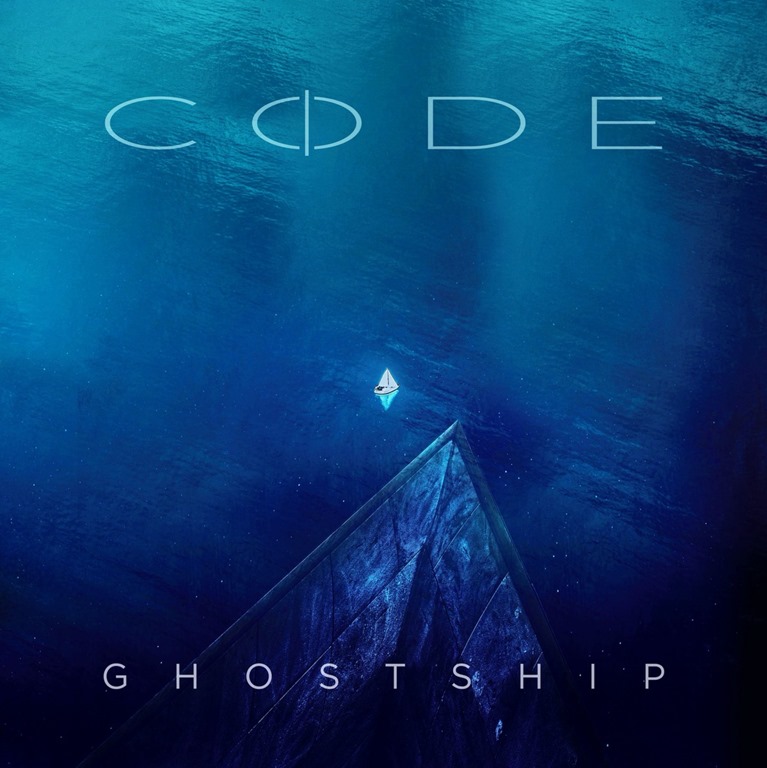
Kent based electronic quartet CODE have released a rebooted version of their 1992 debut single ‘Light Years’, which was available on white label only at that time and remains highly collectable to this day. Attracting support from John Peel at Radio 1 and Colin Faver and Colin Dale at Kiss FM, the original was a cross-genre classic; cosmic and psychedelic yet club-friendly, it pointed towards the future while acknowledging past masters such as Tangerine Dream with its sinuous, mind-bending arpeggiations and minimal melodic motifs. The 2020 upgrade remains true to its industrial techno roots but adds a contemporary dancefloor sheen. Bandcamp orders will also include a remix by Bjika, a musician who melds the spatial elements of progressive and deep house with the rawness of Detroit techno.  
The full length rework of ‘Light Years’ appears on a new album by CODE entitled ‘Ghost Ship’, their first in 25 years.

Watch the video here:

7eaaa5ea05da962bad5d421c72ccbd64ef4e4aaf