Posts Tagged ‘synth’

London based synth duo, Sex Cells have shared the video for their debut single ‘Hell Is Where The Heart Is’.

The double A-Side release also features ‘Are You Ready’ and will be available digitally and released on limited edition seven inch vinyl on their own Pretty Ugly Records. Under the guidance of Raf.E and produced by Dave M. Allen (The Cure, Yassassin), the two songs will be accompanied by a series of surrealist artworks made by the band – like a love letter to a nightmare.

Taking their inspiration from early synth pioneers such as Wendy Carlos and Delia Derbyshire, Sex Cells perform a kind of ritual dance – a mixture of Suicide, Psychic TV, and Art House sensibilities. The band are Matt Kilda and Willow Vincent, originally hobbyist promoters running monthly nights of live music and visual projections for experimental noise acts. Sex Cells started off life as a purge of shared anger after the pair were ripped off in a house rental scam. Left completely penniless from the fraud, they sought sanctuary in a Peckham rehearsal room where they decided to document their crisis with a synth and house drum kit.

Soon after, early shows in South London for Trashmouth Records introduced the pair to those at the centre of the same scene that The Fat White Family and Shame have risen through. Finding musical allies in bands like Meatraffle and Madonnatron, Sex Cells have become regular fixtures at nights around London, sharing bills with the likes of The Rhythm Method and HMLTD.

Sex Cells  have been navigating London full circle ever since, setting up camp wherever they can, and rarely staying in one place for longer than a few months. Together with a mutual interest in Dadaist values, Surrealist imagery and an obsession with ‘lost London’ and the esoteric, the band’s slum living conditions and precarious existence has provided a fitting thematic universe which both of these tracks draw from.

Watch the video here:

A truly exciting live prospect who reject the modern stereotype of electronic music made by laptops, Sex Cells will play following London shows in August:

LIVE DATES:

AUG 09TH    THE FINSBURY, LONDON N4

AUG 11TH    THE FIVE BELLS, STREATHAM, LONDON SW16
Ventil Records V009 – 24th May 2018

Christopher Nosnibor

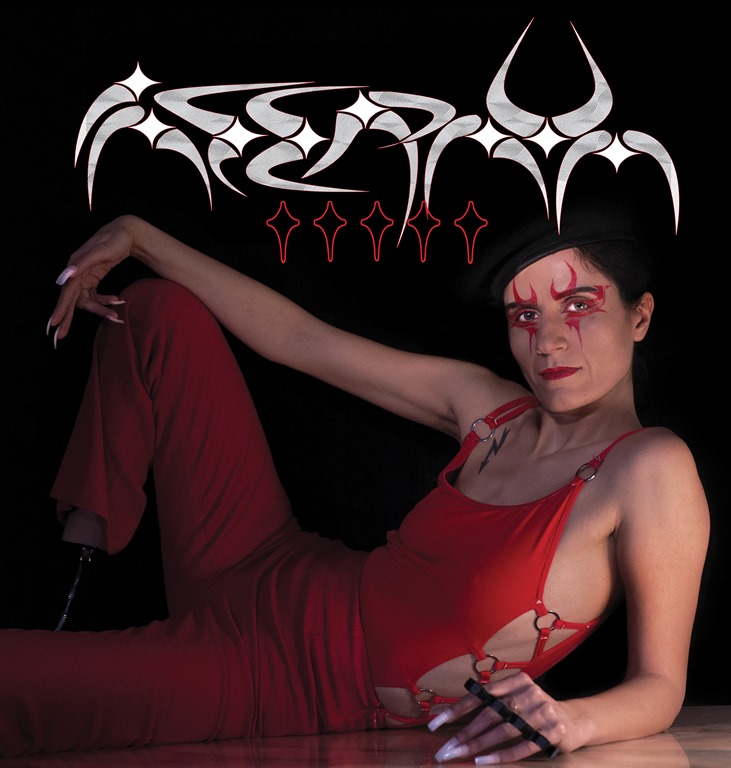
ƒauna’s style is billed as ‘dystopian avant pop’, and her second album is a magnificent mosaic of alienation. Vintage drum machine sounds click and pop out spartan rhythms, overwhich bibbling synths loop and ripple.

The press release emphasises the album’s dominant themes – facing down an uncertain future, dissecting new digital identities, the importance of political activism – and points to the fact that Infernum is very much an album of our times. But so much of the album’s intrigue lies in its juxtapositional positioning, its straddling of contemporary and retro. This also applies in absolution to the sonic makeup of the album.

The first track, ‘Primus’ has ƒauna outline – in a detached robotic voice – the circumstances surrounding the making of the album. It’s a perfect encapsulation of the album as a whole, a work of retro-futurism which may or may not be autobiographical. It’s a mistake to synthesis the artist and the art, and this of course connects with the issues of identity – in particular virtual and digital identities. Who is ever truly themselves on-line, in public, in company? In any context, identity is a construct, and ƒauna explores the layers of construction here.

Supposedly emerging from ‘a dark crossroads between conceptual pop, downtempo hip-hop, and the euphoria of the club’, these influences manifest primarily in sparse electro compositions which resonate with the kind of tape-looping experimentalism of the underground of the late 70s and early 80s. The structures and overall production are sparse, the compositions perversely disjointed, deliberately angular, with .

Then again, the rolling synth swell of ‘Death Fly’ and bouncy insistence of ‘Lonely at the Top’ are crisp pop, distilled down and refined to its purest, most immediate from, while elsewhere, ‘Went Home Got Lost’ pushes more overtly contemporary dance-orientated tropes to quirky but affecting effect.

It’s an analogue take on an analogous representation of postmodernism: the collision of past, present, and future, with no clear distinction between the boundaries. And watching those boundaries dissolve with every clipped, synthetic beat is fascinating, and in some strange way, quietly exhilarating.

AA

V009_front

Acte – Acte 002

Christopher Nosnibor

The press release provides previous little detail about the release, or the artist, beyond a brief summary of his broad interdisciplinary pursuits which include dance, theatre, live electronics improvisations and audiovisual performances and installations. It’s quite an expansion on his biography last time I encountered his work, back in 2011, when he simply described himself as a ‘sound artist’. That was when he released the ambient-orientated exploration usure.paysage.

Transfert/Futur is a long way from ambient. Heavy on the synths, it’s a beaty work that packs some considerable attack amidst the airy pulses and breezy blossoms of effervescence. It contains two tracks, the first of which, ‘transfert (299 792 458 m/s)’ is the audio element of a touring sound/light installation from 2017. On CD, it’s simply sound without the light, and clearly, the interactive and multisensory aspect of the project is nowhere near fully represented. Nevertheless, musically, it works. Over the course of some eighteen minutes, Bernier builds the atmosphere but above all, builds the beats. Scratchy, stuttering, synthetic, exploding in all directions, the rhythms pop and thrum, marching surges halting abruptly to change direction before powering forwards once more embarking on a propellant trajectory. The surround synths glide, pop and bubble, but mostly click and bleep and elongate, morphing and stretching longways, occasionally plunging into expansive, oceanic depths and venturing into eerie subaquatic territories. With so many false starts, false ends, twists, turns and unpredictable stammers, it’s anything but linear.

The second composition, ‘synthèse (299 792 458 m/s)’ has no such obvious context attached, but again is centred around warping synths and woozy bass tones wrapped around bold beats. Over the course of twelve minutes, it swerves from oblique bleeps and minimalist electronic squiggles and arabesques, via slow-building crescendos, to passages approximating straight-ahead dance music that you can actually get down to. As the track progresses, its form gradually dissolves. The soundscape is increasingly rent with bleeps and whispers and tranquillity always gives way to tension after a few uncountable bars. Microbeats and circuit spasms come to dominate the swell of hyperenergetic electrodes in synaptic collapse. Finally, nothing is left but a quivering whistle which slowly decays to nothing.

What does it all mean? Probably precious little. Transfert / Futur is about the journey, and the algorithms, rather than the meaning. It’s not a journey that traverses from A to B, but burrows its way into its own unique space.

AA

Nicolas Bernier

Metropolis Records – 6th April 2018

Christopher Nosnibor

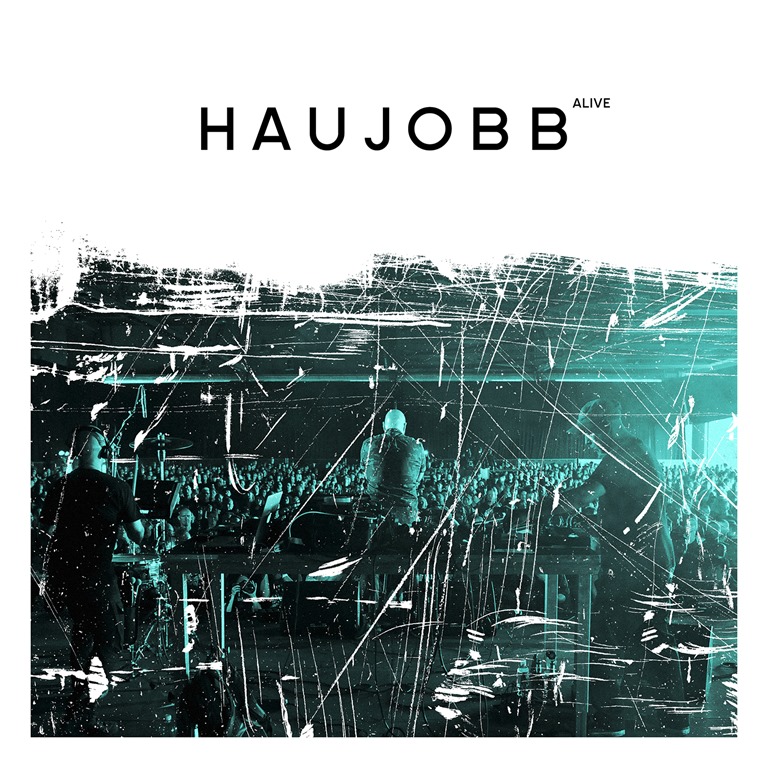
However much music you know, there’s always a near-infinite realm beyond your ken. Until now, German electronic crossover act Haujobb – a hybrid of electro, noise, IDM and techno, who lean toward the more mainstream electro-industrial sphere – have existed beyond my range of awareness. I can’t imagine why.

I would rarely recommend a live album by way of an introduction to any band, but then again, it was by listening to Concert that I found the motivation to explore The Cure in more detail, and it was Welcome to Mexico… which compelled me to listen to releases beyond Gub.

So, we’re presented here with ‘a career-spanning collection of the band’s most beloved songs, recorded at various recent concerts throughout Europe’, which, according to the blurb, ‘stands as a testament to the band’s live prowess and unique creativity’.

They’ve produced a vast body of work over the course of their 25-years existence, and Alive gathers 15 cuts from across it, opening with the slow-building ‘Machine Drum’. Lifted from 2011’s New World March, it’s brooding, dark, and angry. But – overlooking the absence of audience noise, which on one hand can interfere with the listening experience, but by the same token is also pretty much integral to the live experience, and I always eye (metaphorically) a live album with no audience noise suspiciously – the question of how representative it all is encroaches on the enjoyment of such a release. And sequencing matters: is this live collection in any way representative of the actual live experience? I suspect not. The sound quality is pretty consistent given that it’s a compilation culled from various shows, but then again, the slickness and uniformity mean it doesn’t feel very ‘live’, and equally, with so much of the instrumentation sequenced and preprogrammed, meaning that it’s a little hard, perhaps, to convey the band’s live prowess.

‘Renegades of Noise’ – and a fair few others, if truth be told – sounds like a Depeche Move studio offcut, as remixed by RevCo. Elsewhere, ‘Input Error’ is driven by a clanking industrial beat and a bucketload of aggression and anguish. As on ‘Let’s Drop Bombs’, The anger is palpable, while electronic stabs rain in like gunfire from every angle near the end. And while Haujobb occupy well-trodden territory, the semi-familiarity of the structures and delivery doesn’t undermine the fact they’ve got some strong songs and a mastery of driving beats and hypnotically looping sequenced grooves. In all… it’s not bad.

017339

22nd September 2017

Christopher Nosnibor

Ummagma really do have some impressive friends and fans. The Canadian dreampop duo’s lush, textured shoegaze has garnered them not only and admirable fanbase and favourable critical reception, but has placed them into direct contact and collaboration with a number of their heroes.

The ‘LCD’ EP, which follows up their ‘Winter Tale’ maxi-single with 4AD dream pop pioneer A.R.Kane earlier this year, features four tracks, including the new original title track ‘LCD’, and reworkings of Ummagma songs two legendary British musical figures in the form of Cocteau Twin Robin Guthrie, and Dean Garcia of Curve and, latterly, SPC ECO.

The lead track is a classic slice of 90s-tinged dreampop with tangents ago-go: a slippery funk-infused groove envelops what sounds like two independent drum tracks which interlace and intertwine, while synths bubble and grind. It all comes together to create something strangely nebulous and at the same time compellingly propulsive despite its lack of obvious form.

Dean Garcia’s SPC ECO mix really accentuates the spaciness of the track, stripping it back to a sparse frame around which echoed notes and voices drift. Gloopy beats reverberate around dripping synths and elongated drones to conjure a rich atmosphere. Garcia takes a similar approach to the minimal drift of ‘Back to You’, which takes a turn for the darker as its resonant bass tones hang in a rarefied air, cloud-like and barely tangible yet present.

What Robin Guthrie brings to ‘Lama’, which originally featured on their debut album, is a real sense of appreciation of the original, and an accentuation of the nuance. He also provides not only a new arrangement and mix, but additional guitar work, which renders it more of a collaborative piece than a straight remix. There’s something magically organic about it, and as Shauna McLarnon’s soaring vocal tops off the sonic soufflé perfectly.

AA

Ummagma – LCD EP

Gusstaff Records – 2nd September 2017

Christopher Nosnibor

It may have bene groundbreaking and have acquired a legendary status, but I have to confess to being unfamiliar with Mapa’s previous album, Fudo, released some nineteen years ago. That said, No Automato is billed as being quite an evolution and reveals a newfound simplicity and sense of minimalism.

Not that you could exactly call any of the album’s nine compositions simple or minimal, because there’s a lot going on, but there is a directness and energy which emanates from the music. Stylistically, it’s all in the mix, incorporating elements of punk, avant-garde jazz, instrumental hip-hop and experimental electronica.

There’s a playfulness about the way they forge juxtapositions: slow, ritual percussion booms and rattles tribalistically as if marking the pace of a funeral march deep in the jungle. In contrast, warping bass tones and flickering, glitchy electro whirs and bleepy scrapes shape the sound: this is ‘MPA Jazz’, and this is how Mapa introduce themselves on No Automatu, and it’s clear that working with Marcin Dymiter brings out a different side of Paul Wirkus.

The mad, lo-fi disco of ‘Burnt Tragiczny’ transitions into the world of the weird as the juddering retro beats slip their sprockets, and the rapid-fire retro snare explosions which pin the woozy bass undulations of ‘Heute Tanz A’ in place evoke a bygone era of experimental electro recordings. ‘Heute Tanz B’ juxtaposes surging waves of analogue synth with a beat lifted almost directly from Cabaret Voltaire’s ‘Nag Nag Nag’, and it’s the primitive drum machine sounds that define the album’s sound throughout.

‘Rudyment’ may be instrumental, but its sparse plod is harrowing and oppressive, and it’s clear that Mapa are abundantly capable of forging an atmosphere more or less out of nowhere and pulsing throbs build the backdrop of the infinite layers that build on top. The title track is the album’s closer, and it’s a dense, relentless attack built around motoric drums and woozy, abrasive synth-bass.

Mapa are all about the clatter and clang, and No Automatu is a curious album whichever angle you care to view it from. Messy, noisy, unpredictable, the range of atmospheres and vibes packed into the album keeps it moving at pace, and means it’s never less than fascinating.

AAA

mapa-no-automatu

Ventil Records – V006

James Wells

I know next to nothing about this release. Here’s a moment of transparency: music reviewers receive absolutely shedloads of stuff to review. Press releases are handy, not just as a shortcut when it comes to research, but also for locating inroads into a work. But even with a press release to hand, details surrounding Wealth are sketchy.

Consisting of Michael Lahner (synths) and Manuel Riegler (drums, synths), Wealth draw on a range of different forms of electronic music to create what they consider to be a ‘highly organic mix’. Sonically, there’s very much a preoccupation with soft-edged pulsations: the beats are largely rounded, bulbous, and when more angular rhythms do emerge, as on ‘Plate LXXVI (Diagram for Lilies), they’re countered by altogether less aggressive synth tones with hazy outlines.

Subtle, stealthy, glitchy ambience with backed-off beats are on offer with Primer. Sonic washes and rippling, elongated, undulating bleeps eddy around agitated, juddering rhythms so backed off in the mix as to be barely subliminal. ‘Floor’ lays a deep groove; not so much one to get down to as to lie down and allow total immersion.

Primer is a delicate, balanced work, with considerable range beneath its more subtle, subdued surfaces.

Wealth - Primer

Moon Sounds Records – 17th March 2017

Christopher Nosnibor

It’s been almost two whole years since dreampop duo Lunar Twin released a remixed version of their debut EP ‘Champagne’. ‘Night Tides’ offers more mellow, drifting soundscapes over the course of six tracks, which finds supple, rolling synths wash around the grizzled vocals of Bryce Boudreau, which have heavy echoes of Mark Lanegan and Duke Garwood.

If the wooden tones of the percussion which holds the first track, ‘Waves’ in places suggest Jools Holland world music smugness, the heavy patina of Boudreau’s blues tones bring a resonant, resinous counterpoint. ‘Coral Sea’ brings the glacial synths of New Order’s Movement and the coldwave aesthetic and pairs it with a shuffling, understated beat, and again it’s the contrast of the warm, well-worn Cohenesque croon which makes it stand apart from the myriad laid-back electro acts in circulation right now.

‘Birds of Paradise’ pivots on an undulating synthetic 80s disco groove, while ‘Prayers of Smoke’ introduces a more Krautrock element to its spacious, synthy, dub-tinged verses, before breaking into a straight, slow and low, late-night blues chorus.

The title track provides the finale, and despite the absence of beats, it’s a magnificently-realised summary of the EP as a whole: hunting, sparse, yet rich and resonant. Drifting swirls intertwine subtly to create a delicate atmosphere, while Boudreau’s voice drips like treacle. And darkly pleasurable it is, too.


Lunar Twin - Night Tides

Moabit Music – 27th January 2017

Christopher Nosnibor

Despite having three previous albums to her credit, including one with Gudrun Gut, this is my first encounter with Canadian spoken word artist Myra Davies. I sometimes wonder, as an occasional spoken – or shouted – word performer myself why there aren’t more talkers putting out spoken word recordings. As a medium, spoken word is enjoying a surge in popularity, with both open mic and curated spoken word nights springing up all over, in addition to those longstanding ones which have survived, sometimes by virtue of being the only platform around for a form of entertainment which is, one could argue, the oldest of all.

There are a fair few big name authors who have extensive catalogues – Charles Bukowski, William Burroughs, Henry Rollins are among the first names which spring to mind – but apart from the odd clip on YouTube, it seems that very few writers who read aloud commit their voices to the recorded medium. Granted, some writers simply aren’t cut out to perform, and sadly, their readings to their material a disservice. But then, when done well, performance can bring a piece of writing to life and convey elements of the work not always immediately apparent to a reader. It’s all about the emphasis, the intonation. And there’s nothing to say spoken word recordings have to replicate the experience of those readings which take place in pubs and libraries: there is infinite scope to render the words very differently and to add myriad depths and dimensions – as Joe Hakim’s collaboration with Ashley Reaks and the recent album by The Eagertongue evidence – when done well, spoken word can be exciting and can reconfigure whatever perceptions one may have of the genre – which, of course, isn’t really a genre. Because spoken word can spill into so many other fields, and far beyond rap at that. Kate Tempest? C’mon, please! Her accessible, right-on doggerel may be well-meaning, but it’s little more than sixth-form poetry delivered in a hip-hop style without the beats.

On Sirens, Myra Davies brings the beats, thanks to her two musical collaborators, Beate Bartel and Gudrun Gut, who provide the backing to alternate tracks Despite this, Sirens demonstrates a remarkable cohesion, and doesn’t flip-flop between styles. Davies is a fantastic orator: she’s not only blessed with a cool, laconic tone, which benefits from her dry Canadian accent, but she’s also got a real sense of what works for narrating her own words. Sounds simple, but many writers lack this skill.

‘Armand Monroe’ sets the tone: sparse, angular, electropop with a funk groove, it’s cold yet fiery, as Davies spins out a succession of evocative imags. Jittery, tense robotix with propulsive, grinding synths abound, and wibbly loops and sumptuously spacey motoric beats dominate the album. ‘Golddress’ is a taut effort: listening through ‘phones, I find I have a racing pulse and my sense of anxiety increases as the track builds: it’s steely, detached tone is curiously out of kilter with real time and current space, it’s hard to let it simply pass.

Instead of sounding like a retro hash of futuristic music from the 80s – to which it does bear clear parallels – Sirens captures a sense of alienation, of otherness. It’s not simply in the weird doubling and echo-based effects on the vocals, or the treatments of the drums, or the twitchy, slowly warping effects of the synth backings – all of which contribute to Sirens being far more than a ‘spoken word’ album – but a combination of all of these factors, with the addition of something intangible. Perhaps it’s simply the restrained force and clinical focus of Davies’ delivery of words which are both gritty and discomforting. Ultimately, it comes down to the fact that Sirens is a superlative work of art. A hybrid of spoken word and electro-pop / coldwave / etc., it represents a perfect creative synthesis.


Myra Davies Music by Beate Bartel & Gudrun Gut – Sirens

January 2017

Christopher Nosnibor

There’s nothing wrong with pop. Critics the world over will tell you that pop is trash, that it has less artistic currency than any other musical style. We don’t mean it, at least as abrasively and directly as all that. And those who do man it are terrible snobs who lack the broadmindedness to be a just critic. Any music critic worth paying attention to loves pop – good pop. This means I’m not talking about the mass-produced r’n’b slop that proliferates in the top 40. What, they dispensed with that? Well, R1 did, and that perhaps shows just how devalued mainstream pop has become. But moving on… pop isn’t always a dirty word. Quality pop is a rare find.

Balancing expansive, bombastic, surging songs with more introspective, low-key yet deft and accessible songs, Ukrane’s Vagabond Specter produce pop of a rare quality: their synth-led songs are dreamy, layered. Pablo Specter, the band’s singer dispenses lyrics – his voice heavily processed and accented – about swans and dancing, and he’s got a decent range which spans from the light and soaring to a crooning baritone.

They’re not lightweight or lacking in substance or imagination, either. There’s a magical electronic snowstorm in the middle of ‘Scars as Notes’, and ‘Dancing in the Light’ has guitar chug, buoyant synths and a bouncy vocal, and calls to mind XTC’s ‘Making Plans for Nigel’. XTC are a perfect example of a pop band and ‘Making Plans for Nigel’ is as good a pop song as you’ll ever hear. This is not critical opinion: it’s fact. So, by associative connections, Vagabond Specter are a great pop band, and ‘Mirrors’ is a great album. And it is: as much as it’s steeped in nostalgia and historicity, it’s a cracking pop album which harks back to certain vintage. There’s nothing wrong with that: great songs defy genre, age and epoch.


Vagabond Specter