Posts Tagged ‘synth’

Moon Sounds Records – 17th March 2017

Christopher Nosnibor

It’s been almost two whole years since dreampop duo Lunar Twin released a remixed version of their debut EP ‘Champagne’. ‘Night Tides’ offers more mellow, drifting soundscapes over the course of six tracks, which finds supple, rolling synths wash around the grizzled vocals of Bryce Boudreau, which have heavy echoes of Mark Lanegan and Duke Garwood.

If the wooden tones of the percussion which holds the first track, ‘Waves’ in places suggest Jools Holland world music smugness, the heavy patina of Boudreau’s blues tones bring a resonant, resinous counterpoint. ‘Coral Sea’ brings the glacial synths of New Order’s Movement and the coldwave aesthetic and pairs it with a shuffling, understated beat, and again it’s the contrast of the warm, well-worn Cohenesque croon which makes it stand apart from the myriad laid-back electro acts in circulation right now.

‘Birds of Paradise’ pivots on an undulating synthetic 80s disco groove, while ‘Prayers of Smoke’ introduces a more Krautrock element to its spacious, synthy, dub-tinged verses, before breaking into a straight, slow and low, late-night blues chorus.

The title track provides the finale, and despite the absence of beats, it’s a magnificently-realised summary of the EP as a whole: hunting, sparse, yet rich and resonant. Drifting swirls intertwine subtly to create a delicate atmosphere, while Boudreau’s voice drips like treacle. And darkly pleasurable it is, too.


Lunar Twin - Night Tides

Moabit Music – 27th January 2017

Christopher Nosnibor

Despite having three previous albums to her credit, including one with Gudrun Gut, this is my first encounter with Canadian spoken word artist Myra Davies. I sometimes wonder, as an occasional spoken – or shouted – word performer myself why there aren’t more talkers putting out spoken word recordings. As a medium, spoken word is enjoying a surge in popularity, with both open mic and curated spoken word nights springing up all over, in addition to those longstanding ones which have survived, sometimes by virtue of being the only platform around for a form of entertainment which is, one could argue, the oldest of all.

There are a fair few big name authors who have extensive catalogues – Charles Bukowski, William Burroughs, Henry Rollins are among the first names which spring to mind – but apart from the odd clip on YouTube, it seems that very few writers who read aloud commit their voices to the recorded medium. Granted, some writers simply aren’t cut out to perform, and sadly, their readings to their material a disservice. But then, when done well, performance can bring a piece of writing to life and convey elements of the work not always immediately apparent to a reader. It’s all about the emphasis, the intonation. And there’s nothing to say spoken word recordings have to replicate the experience of those readings which take place in pubs and libraries: there is infinite scope to render the words very differently and to add myriad depths and dimensions – as Joe Hakim’s collaboration with Ashley Reaks and the recent album by The Eagertongue evidence – when done well, spoken word can be exciting and can reconfigure whatever perceptions one may have of the genre – which, of course, isn’t really a genre. Because spoken word can spill into so many other fields, and far beyond rap at that. Kate Tempest? C’mon, please! Her accessible, right-on doggerel may be well-meaning, but it’s little more than sixth-form poetry delivered in a hip-hop style without the beats.

On Sirens, Myra Davies brings the beats, thanks to her two musical collaborators, Beate Bartel and Gudrun Gut, who provide the backing to alternate tracks Despite this, Sirens demonstrates a remarkable cohesion, and doesn’t flip-flop between styles. Davies is a fantastic orator: she’s not only blessed with a cool, laconic tone, which benefits from her dry Canadian accent, but she’s also got a real sense of what works for narrating her own words. Sounds simple, but many writers lack this skill.

‘Armand Monroe’ sets the tone: sparse, angular, electropop with a funk groove, it’s cold yet fiery, as Davies spins out a succession of evocative imags. Jittery, tense robotix with propulsive, grinding synths abound, and wibbly loops and sumptuously spacey motoric beats dominate the album. ‘Golddress’ is a taut effort: listening through ‘phones, I find I have a racing pulse and my sense of anxiety increases as the track builds: it’s steely, detached tone is curiously out of kilter with real time and current space, it’s hard to let it simply pass.

Instead of sounding like a retro hash of futuristic music from the 80s – to which it does bear clear parallels – Sirens captures a sense of alienation, of otherness. It’s not simply in the weird doubling and echo-based effects on the vocals, or the treatments of the drums, or the twitchy, slowly warping effects of the synth backings – all of which contribute to Sirens being far more than a ‘spoken word’ album – but a combination of all of these factors, with the addition of something intangible. Perhaps it’s simply the restrained force and clinical focus of Davies’ delivery of words which are both gritty and discomforting. Ultimately, it comes down to the fact that Sirens is a superlative work of art. A hybrid of spoken word and electro-pop / coldwave / etc., it represents a perfect creative synthesis.


Myra Davies Music by Beate Bartel & Gudrun Gut – Sirens

January 2017

Christopher Nosnibor

There’s nothing wrong with pop. Critics the world over will tell you that pop is trash, that it has less artistic currency than any other musical style. We don’t mean it, at least as abrasively and directly as all that. And those who do man it are terrible snobs who lack the broadmindedness to be a just critic. Any music critic worth paying attention to loves pop – good pop. This means I’m not talking about the mass-produced r’n’b slop that proliferates in the top 40. What, they dispensed with that? Well, R1 did, and that perhaps shows just how devalued mainstream pop has become. But moving on… pop isn’t always a dirty word. Quality pop is a rare find.

Balancing expansive, bombastic, surging songs with more introspective, low-key yet deft and accessible songs, Ukrane’s Vagabond Specter produce pop of a rare quality: their synth-led songs are dreamy, layered. Pablo Specter, the band’s singer dispenses lyrics – his voice heavily processed and accented – about swans and dancing, and he’s got a decent range which spans from the light and soaring to a crooning baritone.

They’re not lightweight or lacking in substance or imagination, either. There’s a magical electronic snowstorm in the middle of ‘Scars as Notes’, and ‘Dancing in the Light’ has guitar chug, buoyant synths and a bouncy vocal, and calls to mind XTC’s ‘Making Plans for Nigel’. XTC are a perfect example of a pop band and ‘Making Plans for Nigel’ is as good a pop song as you’ll ever hear. This is not critical opinion: it’s fact. So, by associative connections, Vagabond Specter are a great pop band, and ‘Mirrors’ is a great album. And it is: as much as it’s steeped in nostalgia and historicity, it’s a cracking pop album which harks back to certain vintage. There’s nothing wrong with that: great songs defy genre, age and epoch.


Vagabond Specter

No Sleep Records – 16th September 2016

Christopher Nosnibor

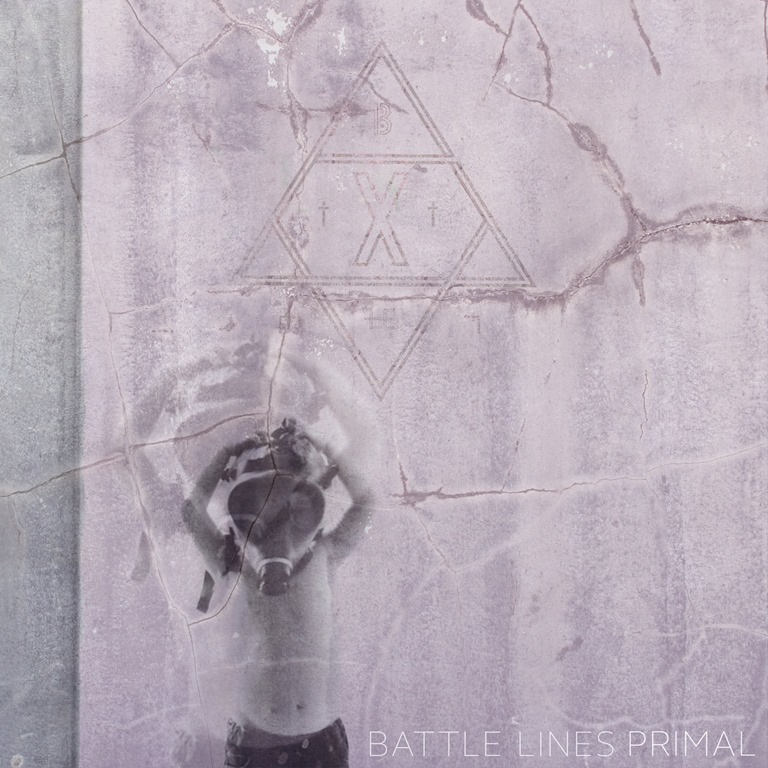
I have to admit, I’d been wondering what was happening with Battle lines. Following the single releases ‘Colonies’ and ‘Hunting’ (split with Post War Glamour Girls), and a storming set at the Brudenell to launch it, there was talk of an album when I chatted with the band afterwards, and then… Well, they seemed to drop off the radar. Carly had mentioned work and all of the things that get in the way of doing things, although it was some time ago, and I’d had a few pints during the evening and what with work and an endless stream of new releases demanding my attention… well, I sort of forgot about things. I’m sorry for the fact that this makes me the same as pretty much everyone else: I blame the ‘net age, the insane pace of our post-postmodern culture, where memories are overlaid and replaced in an instant, buried in the endless blizzard of shiny new things, images, sounds, more bad news and another media frenzy over the latest celebrity scandal. And so, a guilty late review of an album by a band I’m a big fan of.

While I’m looking around at intangibles to blame, I’m also aware that I’m feeding my own anxieties and understanding more the pressure on any artist, in any medium, to devote as much time to promotion as to the production of actual art. It’s all about the momentum! Paradoxically, to weather the storm that is the blizzard of social media, one is required to contribute to it further, and constantly. If you’re out of the public eye, you’re forgotten in a flash. It’s an absurd situation, of course: artists need to retreat in order to produce. In an over-loud world, silence is good, and importantly, silence from a band means they’re likely holed up working on material.

Battle Lines, individually and collectively, have been getting on with their lives, and thankfully, have been doing the things that are important, instead of fretting over their public profile. The press release apologises for their apparent absence, but is matter-of-fact about things:

It’s not a secret that we’ve been very quiet over the last year… There’s no big story, we love each other, we’re as good friends as we’ve ever been. Life has moved on for all of us, and we now reside in New York, London, Brighton and Leeds, geography prevents us from touring, but it can’t prevent us from releasing new music.

And so, while I was busy being distracted, Battle Lines slipped out their debut album, a record I’d waited more years than I care to count for: having first discovered them in their previous guise as Alvin Purple, I’d been captivated by the quality and richness of their dark, post-punk influenced material and the incredibly assured live performances they gave so consistently.

The switch to Battle Lines marked a refocusing: the energy which effused from their earlier songs was directed more inward, and the material displayed an almost ascetic discipline in its execution on those first single releases and in the live shows, more clinical, more icily intense than their previous incarnation.

This is all captured perfectly on Primal. The sparse title track and album opener hints equally at The XX and Closer era Joy Division. But then, glacial electropop undercurrents and thunderous tribal drumming also define the sound. And the sound… the fact they’ve taken their time over this means that the sound is honed to perfection. There isn’t a note out of place. That isn’t to say it’s overproduced within an inch of its sterile life or stripped of its soul: they’ve pulled everything to tight as to render it almost claustrophobically dense, a work which offers an insight into a near-obsessive control over the output. In context, it makes sense:

There’s an honesty about the notes which accompany the release which is at once uncomfortable and refreshing:

Lyrically this was an incredibly dark place to go to, I had come out of a relationship that became mentally abusive; looking back I wondered who I had become in excusing that kind of behaviour. This is what drove me in the album, those darkest moments became a journey of self discovery and a realisation of who I really am and what I deserved.

When life is out of control, what can you do but obsess about the things you can control – your art? But from darkness comes light, and creativity can be so cathartic. As dark as Primal is, it contains some truly beautiful and magnificently uplifting musical moments. Carly’s vocals at times soar so high as to disappear from the register of the average human ear, but ‘Sea of Fear’ is a swelling anthem of a track, and the sunburst shoegaze of ‘Smother’ ripples with the joy of drinking in clear air and rediscovering the potentialities of life.

‘Outsider’ is built around an insistent motoric beat and exploits the quiet / loud dynamic, bursting into explosive shoegaze wall-of-FX guitars which call to mind Ride in their early years, but as is always the case with Battle Lines, Carly’s ultra-high-frequency vocals means they don’t really sound like any of their forebears, or their contemporaries.

Of their single releases, only ‘Hunting’ has made it to the album. This is a bold and admirable choice, and one which makes a statement: a statement which says that \Primal is an album proper, a document, and not a ‘Hunting’ is, of course, a belting wall of noise driven by a twitchy disco beat and shuddering synth with metallic screeds of guitar peeling off a Donna Summer groove, over which Carly comes on like Siouxsie Sioux, breathy and intense.

The album concludes with ‘Riot’, a richly-layered and uplifting song which blossoms in a screed of guitar noise over an insistent rhythm section, the drums and bass tight and locked into a sedate groove.

Primal displays remarkable poise, and as much as its architecture is concerned with the turbulence which inspired its lyrics and overall tone, its coherence and control are remarkable. But rather than feeling soulless in its clinical execution, there’s a clear sense that Primal is about holding it together and showing just what can be achieved through sheer will and determination and the exertion of mind over matter. Despite the obstacles, personal and geographical, Battle Lines have (meticulously) produced a powerful album that was more than worth the wait.
 

Battle Lines - Primal

12th January 2017

Christopher Nosnibor

Ummagma have been making quite a name for themselves, and have done a great deal in revitalising the shoegaze / dreampop crossover style characterised by early 4AD releases. This release finds the Ukranian/Canadian act join forces with dreampop pioneers A.R. Kane (who also released music as half of M/A/R/R/S) and who have been silent since the 90s.

To try to get to the root of what it is about dreampop’s capacity to touch the listener is, indeed, akin to trying to locate the source, and subsequent emotional resonance of a dream. Waking up at 5am – as I often do – I was groggy with the images of dreams melting from my mind as I made the uneasy transition from unconscious to conscious. Some of the scenes clung, but their significance, which had been immense whist in sleep, swiftly evaporated as I rose to the surface. There was a logic to some of the more anxiety-inspired elements of the dream – desperately trying to send a text message while trapped in an eternal office meeting held in a room with no windows, for example – required little unravelling, but others subscribed to a dream-logic which only sustains any sense of coherence while in a dream-state.

Dreampop, at its best, suspends the listener’s connection with the concrete world and transports them into a mental zone somewhere in between realities. For the three to five minutes the song plays, the sound occupies the mind completely, and conjures a rarefied emotional state, a distillation of a deeper inner self that’s only partly accessible at any given time. This is why, in order to fully appreciate the cream of dreampop, it’s necessary to fully surrender oneself to the music. Anything else is likely to leave the listener feeling very much on the outside, looking in, and completely untouched.

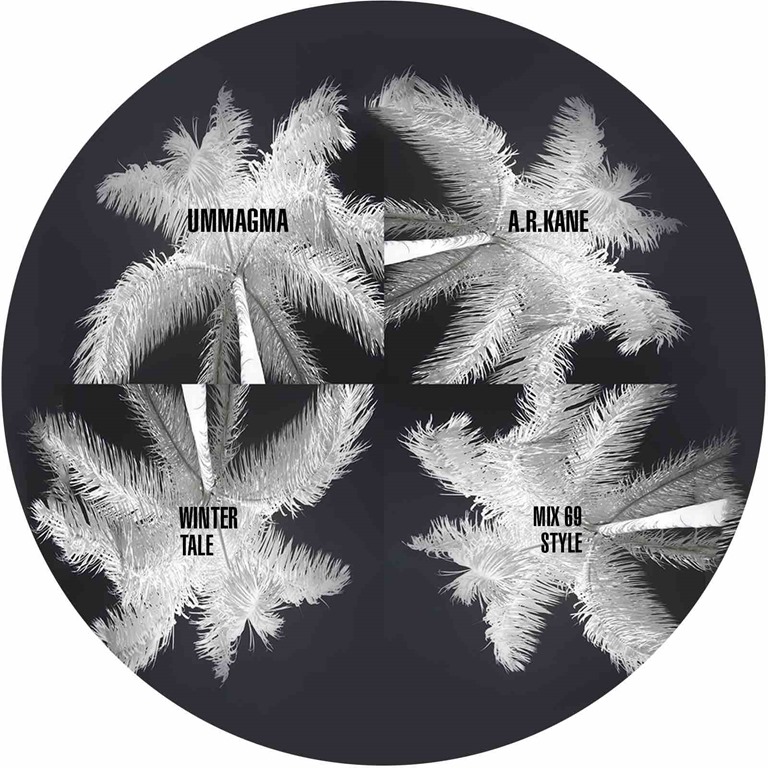
‘Winter Tale’ is a song by Ummagma, featured here in its original form and subject to a substantial reworking by A.R.Kane, and accompanied by an abridged radio version of the A.R. Kane interpretation.

The original is a dainty, delicate ditty, wistful, softly blurred, a lightly skipping vocal melody careening its way over a sparse backing of simple percussion and cloud-like synths, and it’s full of wintry imagery and a pervading sense of suspense. Shauna McLarnon’s vocal is delicate, airy, and floats mellifluously on the breeze.

The alternative version is quite different. A.R.Kane’s primary addition, however, is an overloading guitar. It’s kept at a respectful distance and doesn’t submerge the entire frame of the underlying original, but crashes like waves and breaks into howls of feedback, bringing textural layers and additional depths to the song, accentuating the darker aspects. The absence of percussion somehow abstracts the song in some way, and the gently rising bubbles of synth bring a sense of colour.

But when it ends, it’s hard to recall exactly what it was about it, like a cloud that’s changed shape and the rabbit is now just a streak in the sky.


Ummagma   A.R.Kane - Winter Tale (cover artwork)

Lado ABC – Lado A/18 – 21st March 2016

Christopher Nosnibor

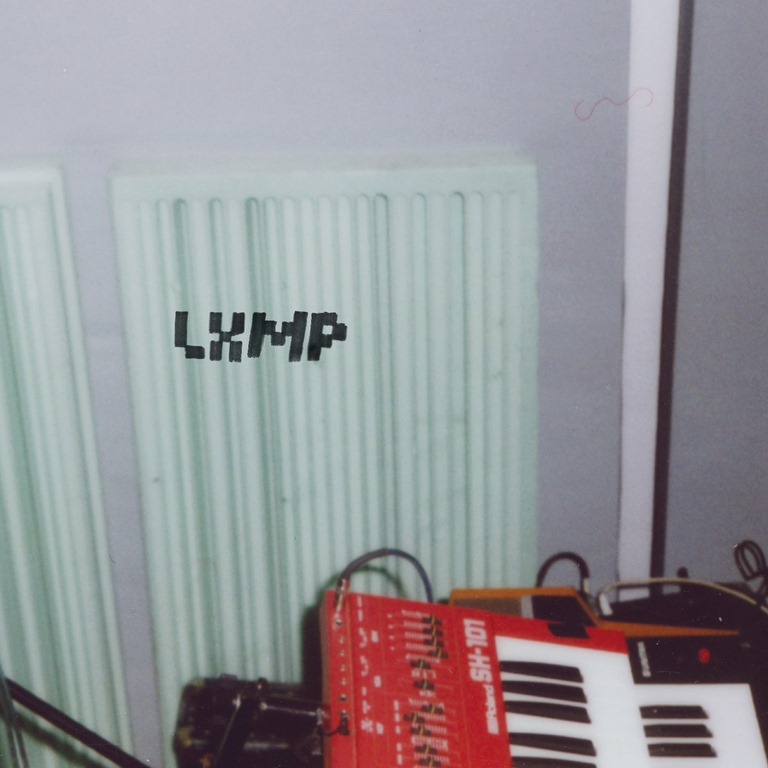
It’s all about the retro vibe. And it’s all about messing with the listener’s brain. Described as ‘an attempt at finding the perfect balance between beautiful and unbearable music,’ the Polish duo’s latest effort, Żony w pracy (trans. Wives at Work) Bringing a carnival of analogue synths to the party in a celebration of the machines of the East (Korg) and the West (Moog). Unfortunately, Żony w pracy often fails to find the balance it seeks, and ends up sounding more like a deranged duel than the homage it’s intended as.

Beneath a throbbing bass track, the time signatures of the percussion on the albums first track, ‘Brasilia’, are ever-changing, slipping the groove with to disorientating results. The track bubbles along nicely, mellow, jazzy easy-listening synth muzak until it sinks underwater into a muffles murk. So far, so middling analogue experimentalism, the likes of which has been done countless times before. It’s fun, it’s clever, but it’s awkward and twisty and difficult to really get into the groove.

But then things go crazy on ‘Torreador Janusz’, a frenzy of synths stab and loop and warp deliriously, descending into a riot of bleeps and squiggles flying in all directions. Wibbly, wobbly and whimsical, it’s smart and techy. But like so much music that’s smart and techy, regardless of genre – from jazz through avant-garde and experimental to post-rock, tech metal and prog rock – the mastery of instruments and a penchant for messing about with convention and form amounts to so much showing off. Yes, you can play – but how about some tunes? Still, XLMP manage to stay on the right side of the precipice that is unlistenable smug muso wank with just enough attention – or concession – to listenability.

‘Kosmos, Teil 1’ is perhaps the album’s most linear piece, a soaring, surging rush of synths in space that hints at Krautrock leanings. There are undeniably rather hipsterish overtones to it all, but it’s well executed and there is a sense that there’s an element of knowingness and self-aware humour at play here: Piotr Zabrodzki and Macio Moretti state that Żony w pracy is an homage to the real working wives, Anna and Zofia, and write, ‘Żony w pracy apart from being an homage to the homages, also, or even above all, ask one question of the “fundamental” sort – “How are you gonna play that live?”.

I’m not going to make any public judgement based on their latest promotional shot, and will keep my attention on the album itself and so, I will say this: guys – maybe you should listen to your wives. Żony w pracy has an indisputable novelty value, and does offer moments of fun, but how enduring its appeal is, well, that’s something that seems less certain.


XLMP


LXMP on Bandcamp