Posts Tagged ‘Reverb’

Christopher Nosnibor

It’s good to be back at Wharf Chambers. Personal circumstances have meant that the trip to Leeds has been largely beyond me, but stepping into the place felt like coming home. It’s unassuming, some may even basic, but it’s got a unique – and accommodating – vibe. There aren’t many small independent venues that can keep going by sticking to a programme of leftfield live music, or being explicit in a keen leaning towards inclusivity for LGBTQIA+ and anyone else who stands outside the fence of the normies, but Leeds is a big enough, and diverse enough, city for a place like this to not only survive, but thrive. It’s kinda quirky, a bit shabby chic, and it works: the beers – local – are cheap, the sound in the venue space is good, and it’s all cool, and tonight’s advertised lineup is a cracker. Diverse, but solid quality of an international reach.

Before we come to that, it’s a strange and rare occurrence to arrive at a venue to discover that there is an additional, unadvertised, band on the bill, and even more so when the band in question has effectively gatecrashed the event without prior arrangement with the promoter, but by dint of deception. But the first band on tonight have done just that. Perhaps it’s the only way they can get gigs. Because they sure do suck, and it was obvious that they’d never have been booked for this lineup in a million years. I head back to the bar after a couple of songs, having heard enough. When they’re done, promoter and sound man (in both senses), Theo takes the mic to explain that he hadn’t booked them and that they didn’t espouse the experimental ethos of the acts Heinous Whining exists to promote. The band did not respond well to this, validating the opinion a number of us had already formed, and they fucked off in a huff. Dicks.

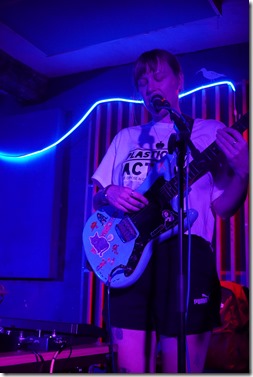
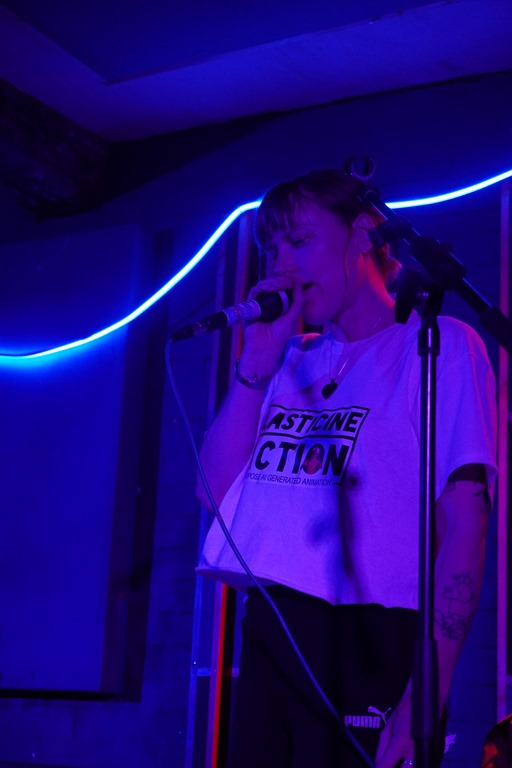
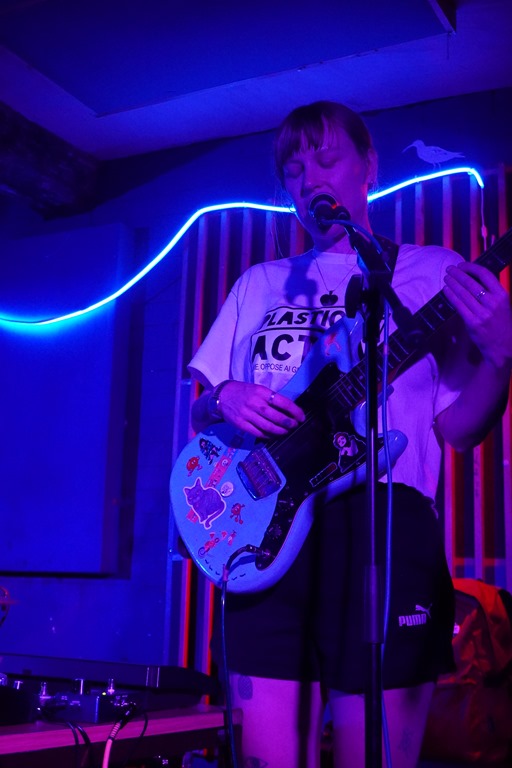
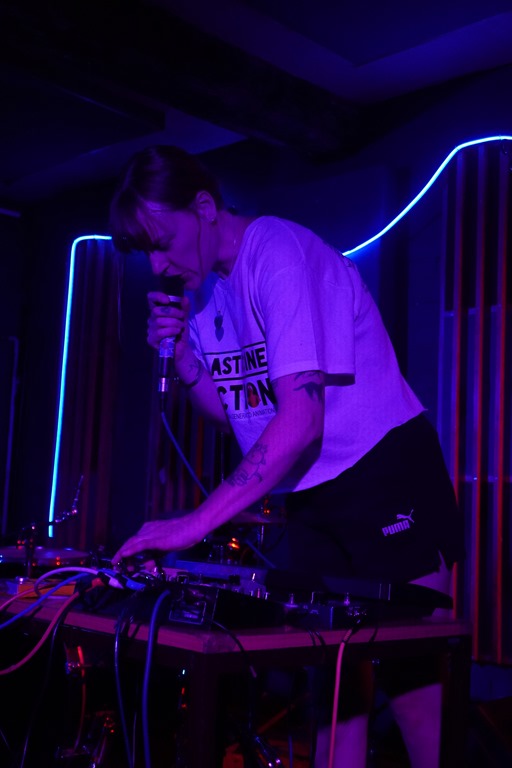
Thankfully, normality – of the kind we’re here for – resumed with the arrival of Sour Faced Lil, the solo project of Hilary from Cowtown. Her set starts – somewhat incongruously – with a quirky electropop cover of Bright Eyes. I just about manage not to cry. Then she swerves into swooshing space rock noise galore, and she explores the weird and wibbly, and it’s everything you’d expect from a Heinous Whining night. Live drums, looped, live guitar, and warped, undulating synths create a cacophony of sound in layers. The performance is a little tentative in places, but the audience is behind her all the way. There’s something quite enthralling about seeing a solo artist juggling myriad musical elements and instruments, knowing what a balancing act, how much effort it is to remember everything and keep the flow, and the fact she manages it is impressive.
DSC03057DSC03064DSC03070

Sour Face Lil

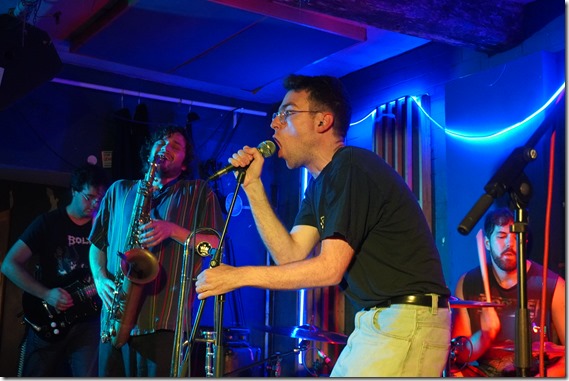
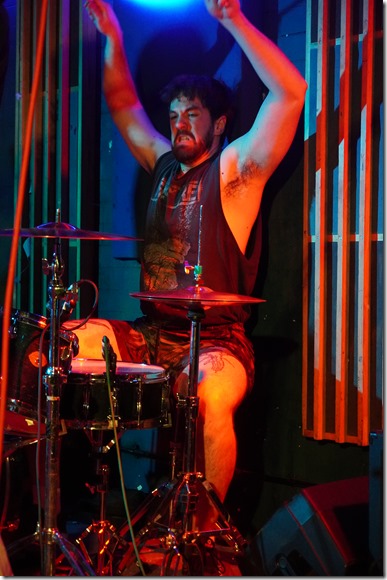
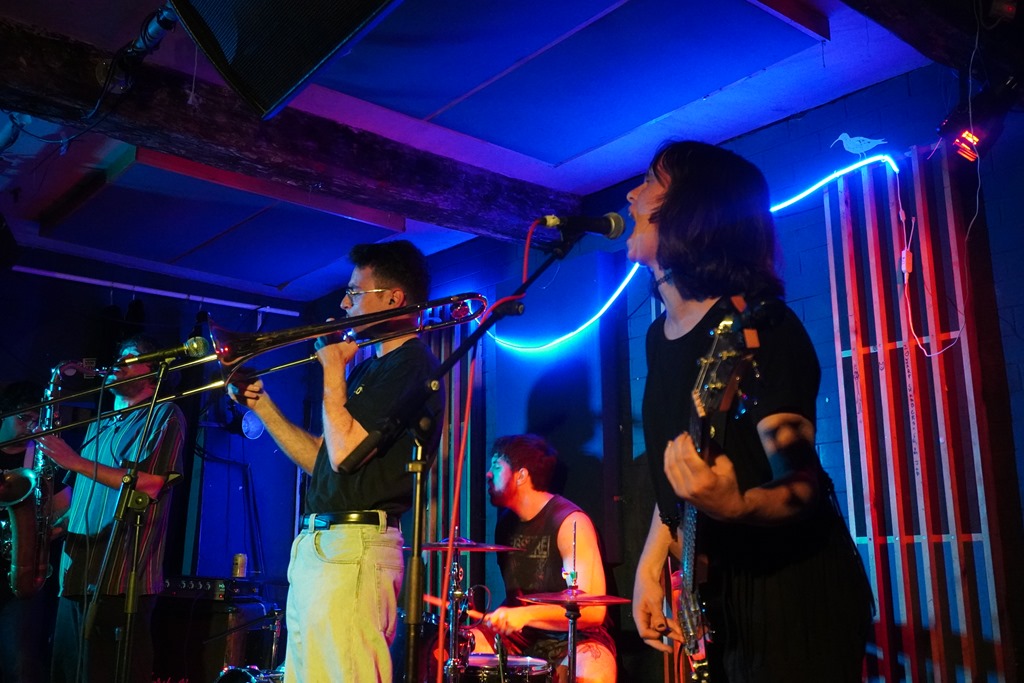
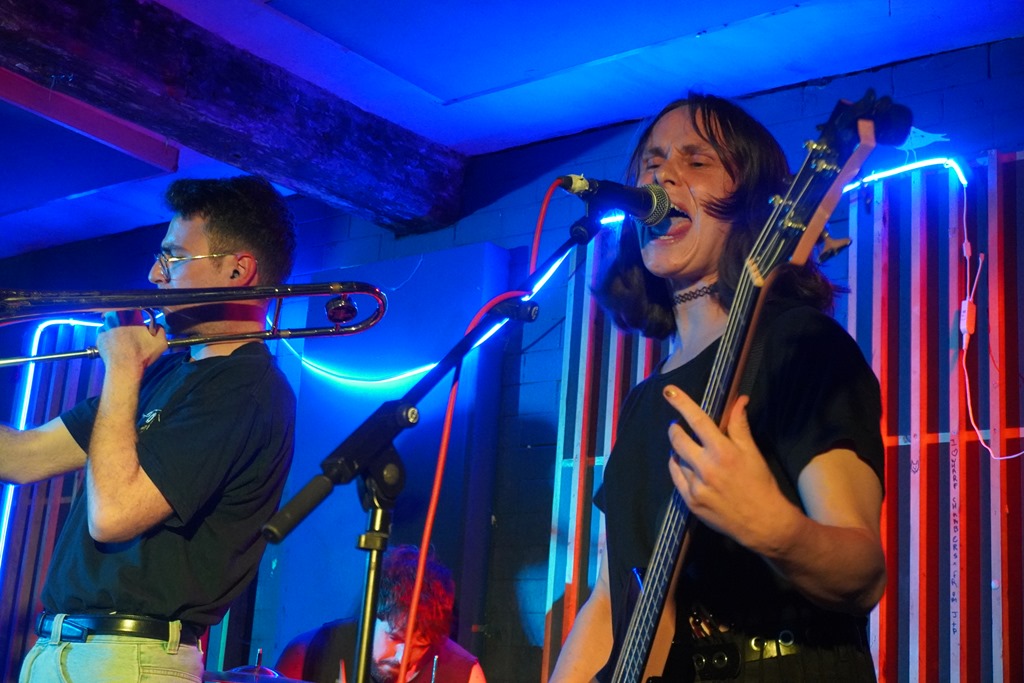
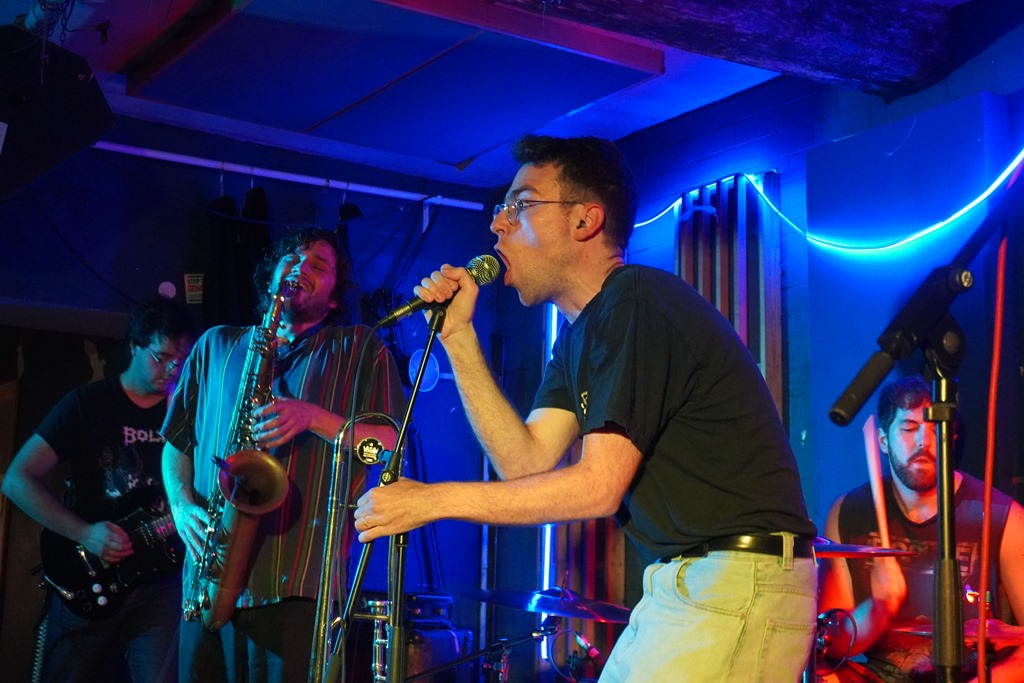
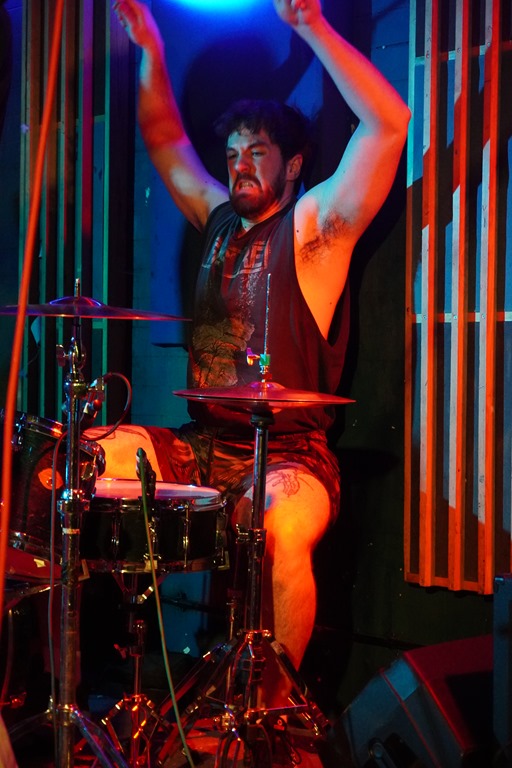
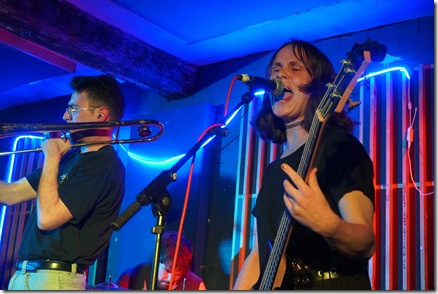
Also impressive are Lo Egin, but for quite different reasons. I feel I owe Lo Egin an apology, as it happens. When I reviewed their split release with Beige Palace a little while ago, I misspelled their name as Lo Elgin, more than once (although I managed to get it right when covering Volumancer in 2013) Hammering out reviews on a daily basis means I slip up sometimes. It’s not great, and I do try, to do better but… I did really rate that release, though, and I’ll admit that they were as much a draw for me as the headliners. And the fact is, they were worth the entry fee alone. On paper, they’re perhaps not the easiest sell, bring atmospheric post rock in the vein of early Her Name is Calla, with brass – sax and trombone – crossed with elements of doom – with the addition of screaming black metal vocals. They do epic. They do crescendos. They also do ultra-slow drumming, something I am invariably transfixed by having first become fixated during my first time seeing Earth live. The drummer raised his arms to fill extension above his head, before smashing down with explosive force.

DSC03079DSC03084DSC03092DSC03105

Lo Egin

Dolorous droning horns create a heavy atmosphere. Then, out of nowhere, from the delicately woven sonic tapestry they’ve been weaving, things turn Sunn O))) and the skinny baggy jeans wearing trombone guy who looks like a young Steve Albini delivers cavernous doomy vocals as he contorts and the mic stand and then all hell breaks loose. When they go heavy, they go heavy – and I mean HEAVY, the drummer smashing every beat so it hits like a nuclear bomb. To arrive with high hopes for a band, and to still be absolutely blown away is a truly wonderful experience, and one that stays with you.

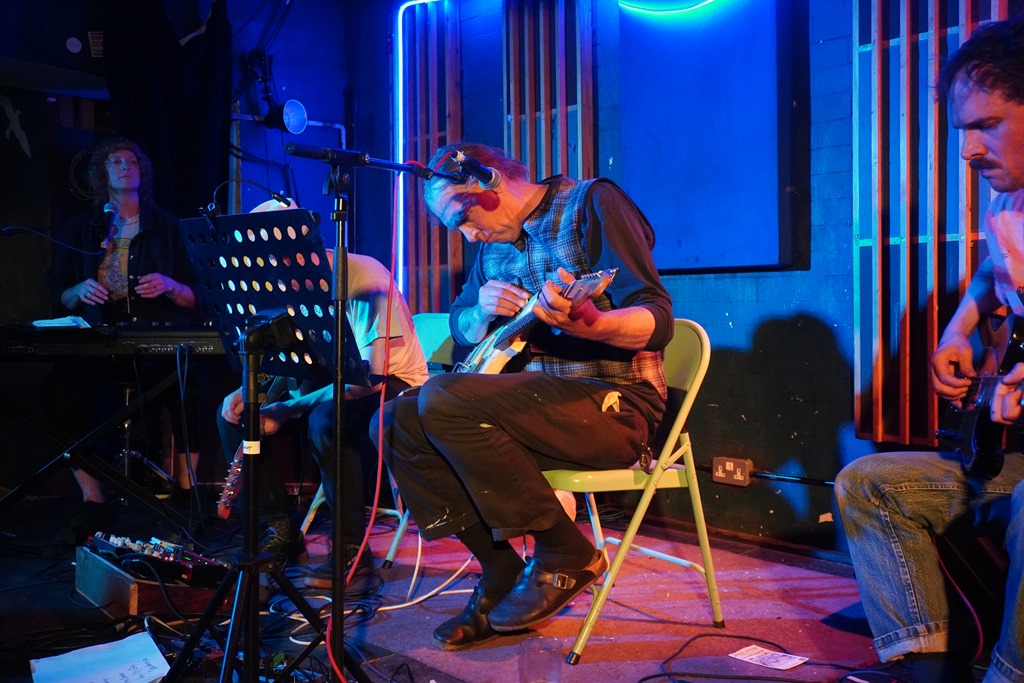
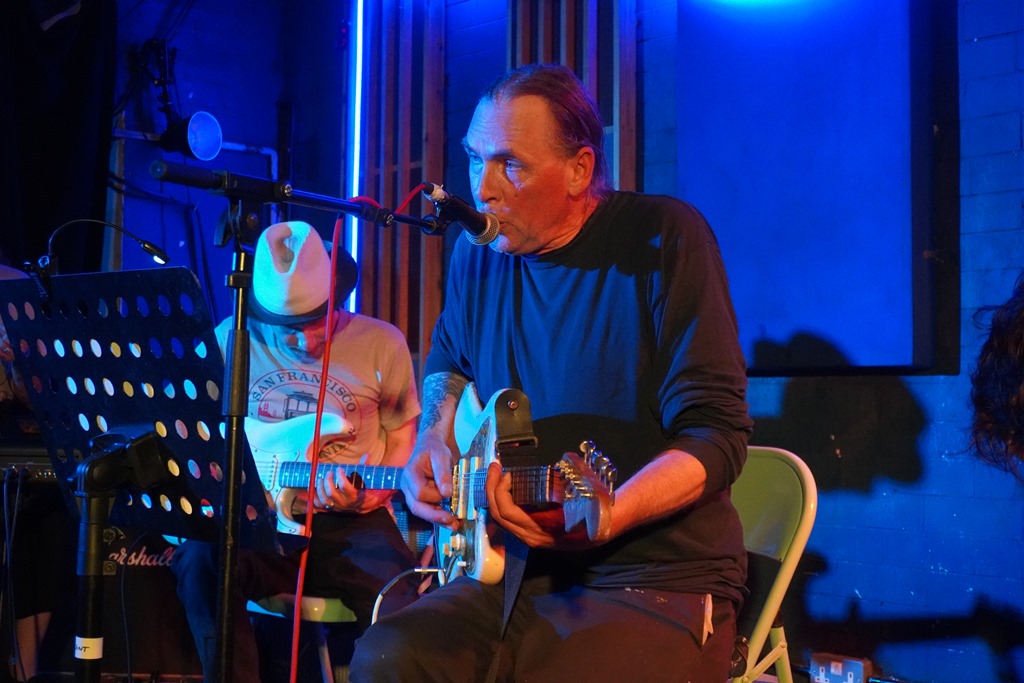
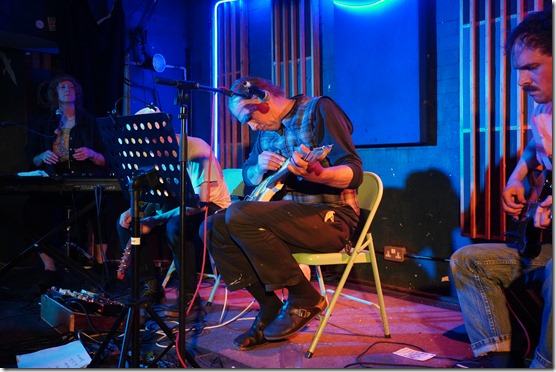
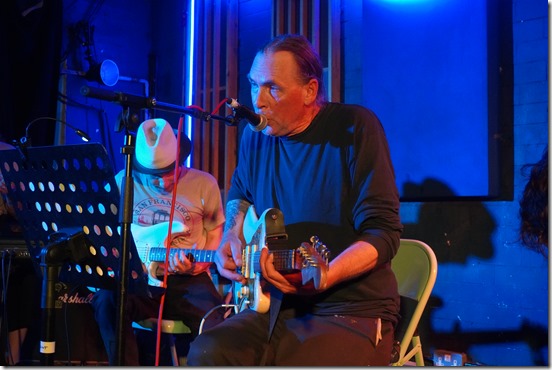
I feel I should perhaps take this opportunity to apologise to Jackie-O Motherfucker, too: in my review of Bloom, I described them as a country band. And while there are without question country elements, they’re really not a country band. They’re not really a psychedelic band, either, or any other one thing. Instead, they’re a hypnotic hybrid, and they’re deceptively loud considering how mellow everything is. What they do is simple in many respects, but in terms of genre, it’s rather more complicated, not readily pigeonholed. I’d clocked them about the venue beforehand, and they seemed like really chilled folks, and while they’re not exactly chatty during their performance, it’s apparent that they’re humble, and simply really chuffed to be playing here. The room is pretty full, too. Tom Greenwood looks like he’s just taken some time out from doing some decorating to play. He’s got paint on his trousers, and is as unassuming as they come.
DSC03109DSC03130DSC03137

Jackie-O Motherfuker

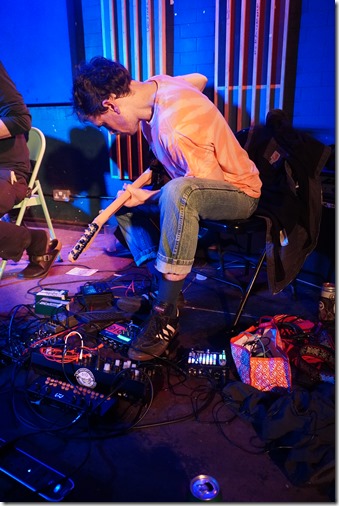
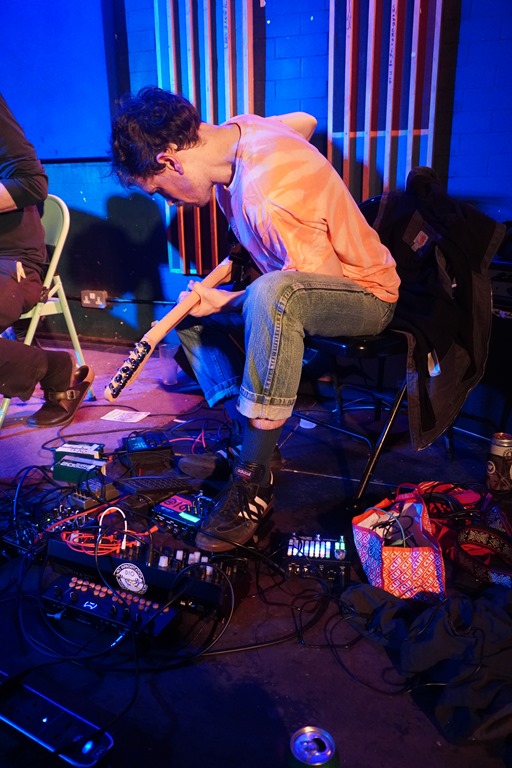
The current lineup consists of three guitars, synth, and some electronic stuff including subtle percussion. No bass, no drums. There are, however, many pedals and much pedal fiddling throughout the set, as they sculpt a wall of reverb and feedback and a whole lot more from this hefty – but ultimately portable – setup.

The resultant sound is detailed, but at the same time a hazy blur. Picked notes – and much of the sound is clean, with next to no distortion, but with all the reverb – bounce off one another here and there, creating ever greater cathedrals of sound. I find myself utterly transfixed. Their hour-and-a-bit long set features just seven songs, and they are completely immersive. There’s no real action to speak of, just an ever-growing shimmer which envelops your entire being. In some respects, their extended instrumental passages invite comparisons to the current incarnations of Swans, only without the evangelically charismatic stage presence or crescendos. In other words, they conjure atmosphere over some extended timeframes, but keep things simmering on a low burner, without any volcanic eruptions. The end result is a performance which is hypnotic, gripping because of, rather than in spite of the absence of drama. Low-key, but loud: absolute gold.
Saccharine Underground – 1st July 2025

Christopher Nosnibor

This one hell of a hybrid. Just when you think post-punk has been explored to the point at which it has been hollowed out, exhausted, and has only well-worn and instantly recognisable tropes to offer, along come Washington DC’s Zabus, purveyors of avant-garde post-punk with an EP which is something of a ‘best of’ with tracks from their two recent albums, Automatic Writhing (September 2024) and Floodplain Canticles (January 2025), plus a new track which paves the way for their next offering Whores of Holyrood (due in August).

With its immense, reverb-laden sound and expansive, drifting desert-like soundscape ‘Grafhysi Fyrir Alla’ makes four and a quarter minutes feel like a hypnotic span of double that duration. The shuffling bass and big, booming bass are pure dub. The guitar chimes and floats into the ether as everything swashes around in a huge echoic pool.

Of ‘Grafhysi Fyrir Alla’, lifted from last year’s Automatic Writhing, project founder and focal member Jeremy Moore says it’s about “the societal imposition of unobtainable standards of beauty, and our obsession with physical perfection at the expense of true happiness”. This is certainly not a case of style over substance, but a coming together of musical inventiveness with a level of intellect which is rare. “Psychopathologies like body dysmorphic disorder, at the extreme, can lead to a path of ruin, if most of your life is spent chasing a ghost—what you believe the world wants you to be. Death doesn’t discriminate. The end is always the same.”

This is some pretty heavy – and dark – philosophy on offer here, and it’s welcome: as much as there is much to be said for the benefits of the escapism music can offer, there’s equal solace to be found in art which articulates one’s own world view. And so it that that Zabus portray contemporary dystopia from a range of camera angles.

‘Orphalese’ is more uptempo and is decidedly cinematic with its broad-sweeping layers of synths driven by propulsive, rolling drums. There’s no verse / chorus structure, but instead a hypnotic expanse of sound, the aural equivalent of standing on a summit and looking out at a three-sixty horizon through a heat haze. It’s immersive, utterly absorbing, and transportative.

The first of the tracks lifted from Floodplain Canticles is the six-minute ‘Tearful Symmetries’, which is low and slow, Jeremy Moore’s reverb-drenched baritone croon approximating the late, great, Mark Lanegan against a dubby backdrop punctuated the clangs and scrapes of guitar drones and sculpted feedback. ‘This is the end….’ He reflects, but not with sadness or panic, but a sense of inevitability.

‘Golden-rot’ goes all out for the theatrically gothic experience: it’s as big on drama as it is on sound, as an insistent mechanised drum beat pounds away, cutting through a smog of murky guitar and thick, booming bass, and if I wasn’t already perspiring hard from the humidity and thirty-degree heat, this would make me sweat, with its tension and crackling energy.

And so we come to the title track, the first taste of Whores of Holyrood. It’s different again, although the cavernous reverb is a constant. This cut is a brooding piece that borders on country, once more evoking the spirit of Lanegan. It’s spacious, but its intensity brings an almost suffocating weight.

Shadow Genesis provides a perfect introduction to Zabus, and at the same time whets the appetite for what’s to come. And let me tell you, it’s something to get excited about.

Zabus - Shadow Genesis cover art

Mortality Tables – 16th May 2025

Christopher Nosnibor

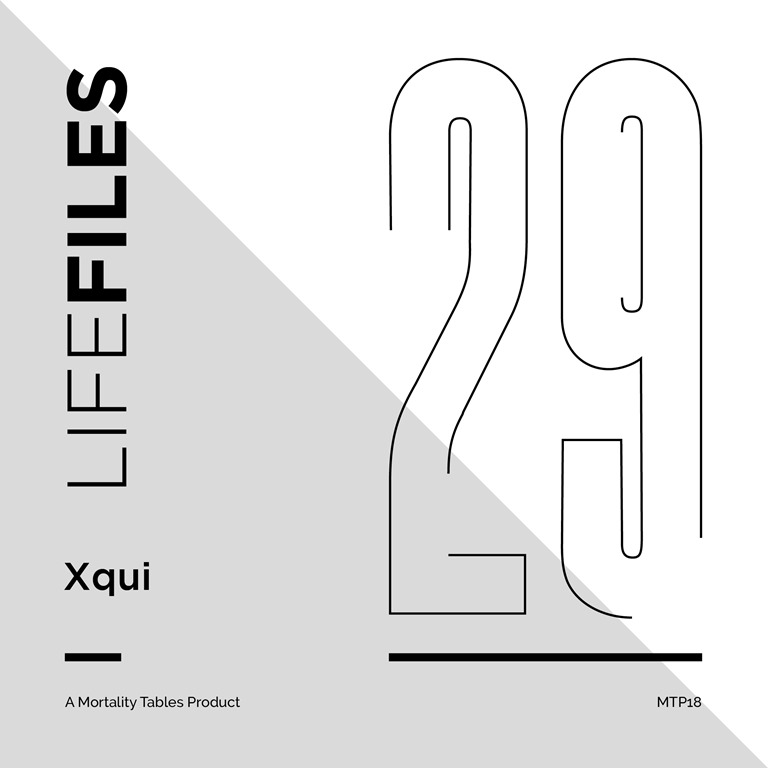
Just three weeks after the previous instalment in the extensive LIFEFILES project from Mortality Tables, now in its third season, comes what promises to be the final instalment for now. And all proceeds from this release will be paid to CALM – the Campaign Against Living Miserably. It seems fitting, given that life can often feel relentless, amped-up stress and bewilderment, and the LIFEFILES series has presented, over its duration, works which take the listener into audio representations of calmer environs. I write this as someone who has, in recent years, factored a daily walk into their routine, as much for the mental health benefits as for the physical exercise. A change of scenery, particularly in open spaces and away from crowds, can be a transformative experience.

The premise of the series, for anyone who hasn’t seen any of my previous coverage, is that the artist is given a field recording, captured by Mat Smith, who runs the label, to respond to in any way they feel appropriate. For this release, the accompanying notes record that the two tracks have been constructed using ‘Source recordings made by Mat Smith at Charing Cross Underground Station on 27 November 2021, as part of a Hidden London tour of disused areas of the station and areas not normally accessible by the public.’

In addition, there’s an excerpt from Smith’s journal, from the same date, which reads as follows: “…walked around the old station section of the Jubilee Line that isn’t used any longer, went into a construction tunnel underneath Trafalgar Square which had a bend in it to avoid the foundations of Nelson’s Column, and then finished up in a ventilation shaft above the Northern Line platform…”

Xqui’s treatment of the recording is interesting, taking the form of the ‘classic’ experimental work, the likes of which you’ll find on labels like Editions Mego, with a single longform track occupying each side. The first, ‘Charing Cross Underground’, captures the voice of what may be a tour guide, spun out in reverb and glitching echo, while trans rumble in the distance, before slowly melting into ambient abstraction. It’s like hearing the ghosts of the underground, rising up through the disused tunnels, calling out to the present to remind us of the past beneath our feet. There are flickers of chatter, as if, here in the present, we continue to talk without ever stopping to listen. Voices warp, slow, slur, distort, and it makes for an unsettling fifteen minutes.

‘Reverb Underground’ goes slower, more spacious, more echoey. I had half-expected something resembling a dub version, but instead, Xqui slows and stretches everything beyond recognition, creating a slow-motion blur, a crawling ambient drone. The sound simply hangs, dense, suffocating. Time stalls, and you find yourself floating, in suspense, in a fugue state, as the sound lifts free of context and embraces pure abstraction.

What Xqui manages to convey on this release is a sense of history, of space, of time, and the way we’re so busy rushing about in our daily lives that we never pause to contemplate the echoes of the past which exist, and linger all about us.

AA

cover

10th May 2024

Christopher Nosnibor

Back in April 2020, writing on the release of their second album, Prepared for a Nightmare, I remarked that it had been four years since their debut, Observed in a Dream, and it had felt like an eternity. And here we are, a further four years on, and ‘A Foretold Ecstasy’ has landed as the prelude to album number three, due in the autumn.

Here, they’re straight in with that tight, solid rhythm section – a chunky bass with a hint of chorus to fatten it out while also giving it that classic spectral goth sound, melded to a relentless four-four metronomic thump, minimal cymbals, no flamboyant fills, just taut, a tense, rigid spine around which the body of the song grows. This, of course, is the foundation of that vintage gothy / post punk sound which originated with The Sisters of Mercy and, thanks largely to Craig Adams – who is arguably one of the greatest bassists of all time by virtue of his simple style of nailing a groove and just holding it down for the duration – carried on in The Mission. The Mish may lack some of the style and certainly the atmosphere and lyrical prowess of The Sisters, but the musical ingredients – and in particular that unflinching rhythm section – are fundamentally the same. And so it is that while the dominance of that thunking bass and bash-bash-bash snare may have become something of a formula, it’s hard to beat and absolutely defines the genre.

Mayflower Madame have always sat more toward The Mission end of the spectrum, whipping up songs which owe a certain debt to Wayne Hussey’s layered, cadent guitar style. But what they bring that’s unique is a swirly, psychedelic / shoegaze hue, a fuzzy swirl of texture and light. There’s a dark decadence, a lascivious richness to Mayflower Madame that accentuates the dramatic aspects of the gothiness: theatrical, flamboyant, but without being hammy or campy. And of course, Trond Fagernes’ vocals drift in an ocean of reverb, and the cumulative effect isn’t simply atmospheric: it carries you away on a sea of mesmeric sound.

With layers of synth which drift like mist across a production that balances dreaminess with a driving urgency, ‘A Foretold Ecstasy’ floats between haunting verses and surging choruses – and it’s hinting at their best work to date.

AA

5tqs_MayflowerMadame1photobyMiriamBrenne650--1

PHOTO CREDIT: MIRIAM BRENNE

1st December 2023

Christopher Nosnibor

My introduction to West Wickhams was the day their debut single ‘He’s Acquired a New Face’ crashed my inbox in the Autumn of 2019. Something about it absolutely gripped me. Something about it was strange and different. And of course, it’s no longer available anywhere. But it was the only thing they had out at the time, and for various reasons, I didn’t get wind of subsequent releases, the first of which arrived almost a year later, and now it turns out I’ve got some catching up to do, as it turns out they’ve knocked out not one, but two five-track EPs since June 2022. But first, Vivre Sa Vie. A nine track EP!!!

Admittedly, when most of the tracks are around two to two-and-a-half minutes in length, it’s definitely got an EP running time, and would easily fit on a 10” record, but still.

It’s a joy to discover that while the songwriting has evolved and expanded, they’re still magnificently idiosyncratic, and still revel in every layer of echo and reverb going. ‘I am Sparkling Cyanide’ is a mid-tempo shimmery tune that’s almost poppy, bringing together early 80s synth pop with a dash of The Jesus and Mary Chain, all spun through a shoegaze filter. But ‘The Maddening Crowd’ is a piston-pumping blast of fucked-up psychedelic surf rock with an agitated bassline and relentless cheapy drum machine creating a rigid spine, over which even cheaper synth notes tinkle and twinkle.

With its nagging bassline and monotonous programmed beat ‘Carla Suspiria’ plunges into haunting early 80s goth territory, its heavy atmospherics reminiscent of early Danse Society. The vocals – like the guitar – are almost lost in a cavernous reverb. The atmosphere gets darker still on ‘I’m Spinning I’m Spinning’: the fat bass sound is pure Cure and listening to it feels like floating in space – detached, disorientated, out of body.

‘At the Cinema’ transforms the mundane into a heightened emotional experience, channelling Joy Division all the way, even down to the sounds of breaking glass.

The large number of tracks is by no means an indication that they’ve just bunged everything on there just because they’ve got it: Vivre Sa Vie is quality all the way, and they’ve utilised the space afforded by the longer format to structure the sequence in a way that feels like there’s a flow and a certain linearity, punctuating the really bleak gloomers with the poppier efforts.

The final track, ‘Damned Defiant!’ crashes in on a barrage of beefy percussion countered by chiming synths, and it’s a total assimilation of The Cure’s catalogue, and it’s rendered so magically, and in the space of two minutes and nine seconds that it can only be described as doomy goth-pop perfection.

AA

a2127070247_10

Neurot Recordings – 30th September 2022

Christopher Nosnibor

Tension Span’s debut is quite a departure from the majority of Neurot releases and Neurosis offshoots, of which there are now many. Comprising Noah Landis (Neurosis, Christ On Parade), Geoff Evans (Asunder), and Matt Parrillo (Dystopia, Kicker), the blurb hails the arrival of an album that uses ‘the musical language of their past, the dark punk of their early bands… that infuses classic elements of punk and post-punk, and sounds both urgent and personal, speaking truth to the bleak realities of today’s socio-political collapse, and the angst and identity crisis it brings’.

And The Future Died Yesterday delivers on that, in spades. It’s spiky, jagged, angular, the guitars brittle yet driving and everything is driven by an agitated, twitchy bass that hits on every bear of the relentless four-square rhythms. It’s pitched as for being for fans of Killing Joke, New Model Army, Conflict, and Rudimentary Peni, among others, and there’s a keen sense that Tension Span are drawing on elements of classic anarchist, anti-authoritarian, anti—capitalist punk and post-punk as a means of channelling their ire. It’s the spirit of the early eighties, condensed into an adrenaline-fuelled package that makes perfect sense in 2022. What goes around comes around, but this time around it’s harder and more dysfunctional and powered by the Internet.

It’s harder because it’s difficult to differentiate fact from fiction, and because no-one has any time anymore. Everything is pressure, and everything is relentless. Everyone seems to spend every hour chasing their tails, chasing pay, or otherwise struggling to keep up with life. Even leisure time is competitive as people battle to keep abreast of the latest Netflix binges and post their viewing on social media, from simple posts on what they’re watching to full-blown critiques… and seriously, fuck the fucking lot of it and get a grip! As a society, we really don’t help ourselves.

Not so long ago, the press was all over employees regaining control of their work / life balance, embracing hybrid working that involved more time at home and less in the office, and there are endless column inches devoted to ‘the great resignation’ and ‘quiet quitting’ (aka doing the job you’re paid for instead of doing your manager’s job for your own pay) or whatever. It’s all bullshit, and it’s all manipulation from the controllers of capital, designed to keep workers in check and maximise productivity. But who benefits from productivity? Not the productive worker.

The trouble is, so many are simply too preoccupied or busy to notice, let alone complain. ‘Climbing up the ladder when they’re on a fucking treadmill,’ a line from ‘Crate Song’ (a snarling blast that combines the vintage punk of The Sex Pistols with the snarling contemporary nihilism of Uniform sums it all up perfectly. Society says that careers are imperative; the government certainly does. But why? And why does the majority blindly accept this? Because they need the money – and the enhanced benefits of a career climbing the corporate ladder – to keep up.

Tension Span articulate the fury at this false societal construct which exists primarily as a tool oof oppression. The title brings home the bleakness of view: there is no future now. We’re doomed, fucked. This was the mood that permeated the late 70s and early 80s.

The shadow of early PiL looms large over The Future Died Yesterday, and is nowhere more apparent on the bass-led bleakness of the six-minute ‘Filaments’ with its motoric Krautrock vibe, where The Cure and Killing Joke collide in an ocean of reverb. ‘Trepidation’ is built around a thudding flange-coated bass that’s pure Cure, but the vocal is more metal, and this is heavy, oppressive stuff.

Instead of breathing life, ‘Ventilator’ is a furious assault that requires no explanation in the context of the last couple of years, and the second half of the album picks up the pace to deliver a succession of sonic assaults on the shitshow that is America. But it’s not just America: this is the world right now, and it’s fucked, as ‘Human Scrapyard’ attests most succinctly: ‘Out with the old, in with the new…’

The Future Died Yesterday is a dark album – but these are dark times, making this a perfect soundtrack.

Partisan Records – 16th September 2022

Christopher Nosnibor

It’s simply impossible to keep up with everything all the time. It feels like a recurrent theme, and even something of a mantra: so many bands, so little time.

Over the course of eighteen years, The Black Angels have cemented their position as, as their bio puts it, ‘standard-bearers for modern psych-rock’. And that’s not hyperbole: it’s a fair assessment.

2010’s Phosphene Dream was a major let-down, particularly in the wake of two such stunning predecessors, with Passover and Directions to See a Ghost. Consequently, feeling disillusioned, both Indigo Meadow and Death Song bypassed me, but Wilderness of Mirrors landed in my inbox with the promise of a return to early form after a five-year gap – or, as they put it, ‘marks a triumphant return with their foot on the pedal. Political tumult, the pandemic and the ongoing devastation of the environment have provided ample fodder for their signature sound and fierce lyrical commentary’.

For Wilderness of Mirrors, the band worked with Brett Orrison (co-producer) and Dinosaur Jr engineer John Agnello ‘to achieve something fresh and new while retaining their heavily influential classic sound’.

Wilderness of Mirrors is epic and feels like it needs to be a double album simply because it has such weight and important in a way that’s hard to really define. It’s not sprawling and awkwardly indulgent: yes, it does contain fifteen songs, but less than half extend beyond four minutes. But it’s an album of density.

Opener ‘Without a Trace’ starts out tentative-sounding distant before the bass crashes in like a landslide and in an instant, the listener is sucked into a dense sonic whirl. It’s the gritty bass that also dominates the pulverising ‘History of the Future’ that lands somewhere between Ther Jesus and Mary Chain and Ride, with some blistering guitar that’s a wall of fuzzing, fizzing treble against a busy beat and a bass that buzzes so hard it practically cuts the top off your head. And just like that, you’re back to remembering why this band mattered in the first place. Everything is a murky swamp of reverb, a deep 60s vibe radiating through the 80s and 90s filter.

I’ve long noted how the Jesus and Mary Chain essentially played surf pop with feedback and distortion, and ‘Empires Falling’ follows this approach magnificently, and with its relentless rhythm section and squalling guitars, it bears strong and obvious parallels with A Place to Bury Strangers.

It’s best played at high volume, of course: this is guitar music to melt the brain, and if songs like ‘El Jardn’ and the acoustic ‘Here & Now’ are more accessible, melodic and overtly indie, they offer some much-needed respite, while still boasting some howling guitars. There’s a vaguely gothic hue to the sneaking guitars and dubby grooves of ‘Make it Known’ and the slower ‘The River’, and it works well in contributing to the album’s rich and varied atmosphere and contrast with the jittery tension of the title track.

Ultimately, the best thing about Wilderness of Mirrors is that is sounds like The Black Angels – quintessentially, unmistakeably, with its motorik grooves, simple, repetitive riffs and song strictures that define the chorus not by a significant shift in key or chords, but by the explosion of sound, the simple structures executed with rare panache. They’re definitely on form here.

AA

qGJhuOyC

1st June 2018

Christopher Nosnibor

It all starts with an air-raid siren. A historical sound with connotations of WW2 for many, but still heard in places like South Korea and Japan, it’s a sound which provokes an almost biologically-wired shudder of unease. They may only be tests, but the sound of sirens in the last 12 months reminds us that stability is but precarious. And then the snaking, surfy bass strolls in, awash with reverb… and then the guitars… It’s all pinned to a locked-down groove, and Trond Fagernes’ voice rises up from amidst it all as if from the back of a cathedral. You saw it all coming, right? They obviously did and approach by stealth, before building to a whiling cacophony by way of a climax. But for all of its noise and tension, this feels more introspective than anything they’ve done before.

Norway’s Mayflower Madame draw heavily on post-punk influences – music born out of the dark days of the early 80s, corresponding with the period when cold war tensions escalated to warrant the labelling of ‘the second cold war’, and the economic boom years widened the chasm between the haves and have-nots was rendered more conspicuous by the rise of the yuppie. And so on.

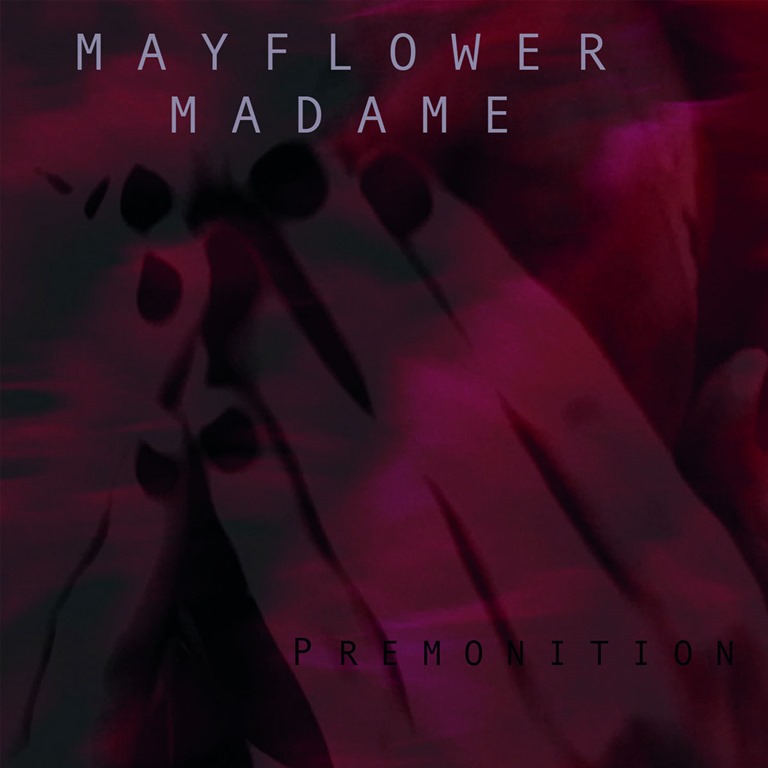
What Mayflower Madame bring to the gothy party is a potent dose of Nordic noir psych and a dash of shoegaze, all doused in massive reverb, and the four tracks on Premonition continue the trajectory of their 2016 debut album, Observed in a Dream.

The claustrophobic focus continues on the swirling, shoegazy ‘Before I Fall’; the guitars twang through a gauze of drifting synths and echoey fx that create a certain distance between the listener and the actual song, an unusual sense of both space and an absence of space. ‘Alma’s Sermon’ is centred around a backed-off yet insistent motoric beat and has greater immediacy and – it’s all relative – upbeat vibe. But then closer ‘Siders Seek’ plunges deeper into darkness: a paranoid shiver runs down the spine of the track’s tremulous guitars, and everything about the song’s construction seems to be about concentrating the tension. And yes, this is tense.

AA

Mayflower Madame – Premonition EP