Posts Tagged ‘Production’

4th July 2025

Christopher Nosnibor

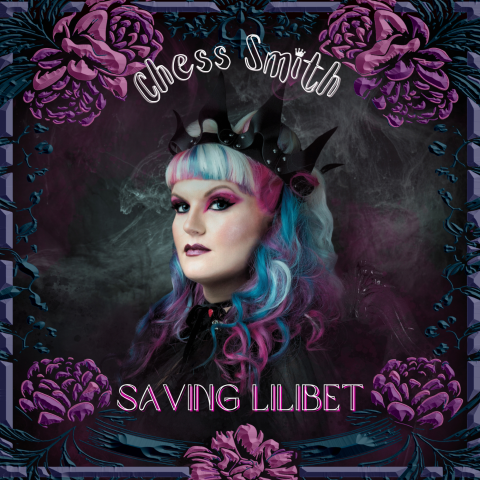
It may be coincidental that Chess Smith threw down Saving Lilibet on 4th July, but it’s certainly appropriate. This is a release that is all about fighting spirit, taking things back, and claiming a state of independence.

Her bio for this release is nothing if not direct:

Chess Smith has been a commanding presence on the Kent music scene for over a decade, both as a solo artist and a frontwoman, most recently as critically acclaimed power vocalist for Salvation Jayne… until 2020, when an abuser tried to take her power, dull her shine, and break her spirit. But they didn’t succeed.

Despite enduring a devastating nervous breakdown at the time, Chess has come back fighting in spectacular style with Saving Lilibet, her most personal, and relatable, work to date. She has made it her mission to provide a voice for those who have experienced abuse and toxicity, and to show the world that you can not only heal after these experiences – you can thrive.

As the saying goes, what doesn’t kill you makes you stronger, and simply telling her story, getting up and putting this out there, with no holds barred, demonstrates phenomenal strength. And for all that, Saving Lilibet is not remotely sad or self-pitying, but a set of songs which is uplifting, and very much focused on empowerment and positivity.

The intro, ‘Saving Lilibet’ is a weirdy, atmospheric little piece, on which Smith’s voice echoes from left and right, ‘save, save’. One gets the impression that this is the voice in her head, her internal monologue speaking to her, pulling her out of her torpor. And that’s exactly what she does, with some pristine pop tunes.

Lead single, ‘Bounce Back’ in many ways speaks for itself. When I covered it back in February, I noted how it was both ‘slick and soulful’, but I don’t think I fully appreciated just how strong the production was: it’s got the groove of Thriller-era Michael Jackson backing up a really crisp pop song, propelled by a thumping retro beat and showcasing a bold vocal performance, which, paired with her heartfelt lyrics hollers ‘taking no shit’.

Second single, ‘Drama King’ is up next, and once again, it’s tight, and light, but by no means flimsy in content or delivery’, and it so happens that the singles are entirely representative of the collection as a whole. The vibe is very much 80s pop played through a post-millennium filter – something which is nowhere more apparent than on the slower ‘Alexa’, while ‘Dissociate’ blends hints of Madonna with some Hi-NRG dance pop and moments of introspection.

‘All My Love’ is a big, anthemic slower song, and clocking in at almost six and a half minutes, it’s epic in every way. And once again, it’s realised with absolute precision and try dynamic is remarkable.

Saving Lilibet is a triumph on every level, and Chess Smith proves she’s not just a survivor, but an artist – and human being – who is determined to thrive. It’s inspiring stuff.
 

Chess Smith Artwork

1st August 2025

Christopher Nosnibor

The other day, while riffling through my record collection, I found a few LPs and 12” I had quite forgotten owning, including a promo copy of ‘Chance’ by Red Lorry Yellow Lorry. Stapled to the plain black die-cut cover of this white-label record with the title hand-written in biro, is a press release which simply reads ‘I know this is what you’ve all been waiting for….. Yep. The new Red Lorry Yellow Lorry single It’s called “Chance” and as usual it’s on Red Rhino Records. It’s very good’ and is signed ‘Yours condescendingly’.

You just don’t get press releases like that any more – especially not typed in all block caps and photocopied.

I appreciate the effort that goes into a good press release, and a solid band bio, because it does help me as a reviewer get a sense of context, of what a band’s about, what an album’s about. But the counterpoint to that is that there’s so much detail being spoon-fed, there’s less room for creative interpretation. The fact of the music industry has changed radically since the 80s and 90s, the days of the weekly inkies, the time before the Internet.

There simply was no way of ‘doing research’. And writers had tight deadlines. And so they just riffed to fill the column inches. Facts were hazy, critiques were often based on first impressions and knocked out in an hour after an extended liquid lunch. Names, dates, titles weren’t always accurate. And fans scoffed at the errors – and still do when clippings are posted online – but that was the nature of the beast.

Now, misspell the name of the bassist or give the wrong year for their debut EP, or somesuch and PRs, labels, and bands are onto you straight away asking for corrections. In a competitive market – I often report that on average, I receive around fifty submissions a day – simply getting coverage is a massive feat. This is certainly not to say that those times past were better – simply different, and I simply navigate my way to this release via this route to demonstrate the ways in which things have changed in the years since I started out writing about music in the 90s. It’s also altogether rarer now to find negative reviews, and while a part of this is due to the overwhelming amount of music being released meaning that reviewers are generally more inclined to spend what time they have promoting music they like, there’s also a certain element of fear of there being a social media pile-on, or having their supply of gratis music cut off. But artists and their labels and PR really need to accept that they’re not going to please all the people all the time, and sometimes, it’s necessary to call out an act with dodgy politics or whatever, or to simply call a turd a turd.

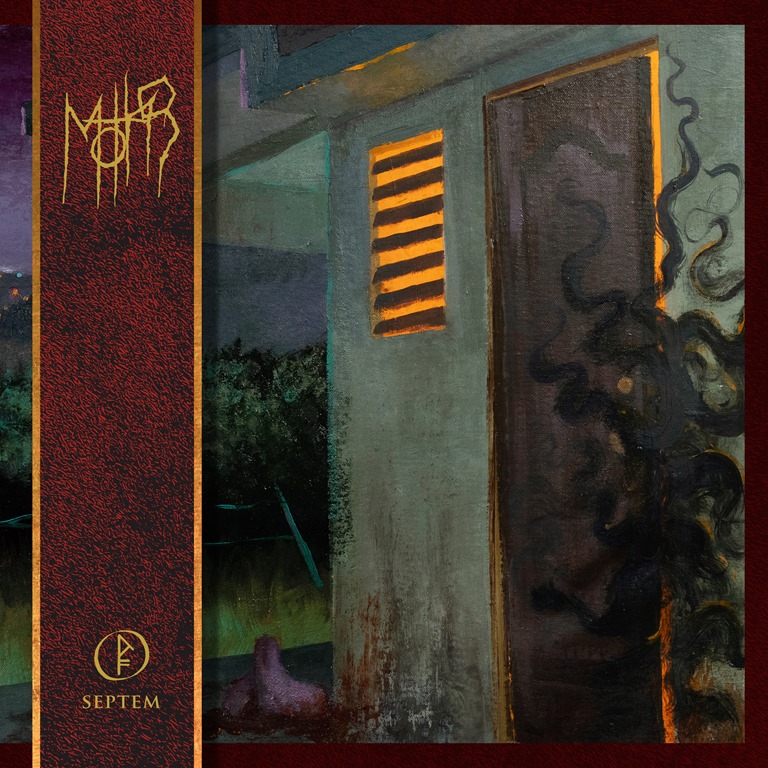
Anyway. Before I’ve even hit play, I’ve learned that this release by MOTHS is ‘a visceral journey through the Seven Deadly Sins, with each track embodying a facet of indulgence, obsession, and self-destruction — from the corrosive jealousy of “Envy” to the insatiable hunger of “Gluttony” and the rage of “Wrath”. The album plunges listeners into a dark, immersive experience where desire spirals into chaos’, and that ‘Diving deeper into heavier territory, MOTHS fuse elements of death and black metal with their signature blend of progressive, psychedelic, doom, and stoner metal, crafting a sound that’s both aggressive and atmospheric. With every step forward, MOTHS continues to explore new sounds and challenge genre boundaries, proving that music has no limits when driven by passion and innovation.’

I feel as if my work is already done. I can pour myself a large vodka and kick back, right? Well, I could. But that’s not my style. At least not the kicking back part. Large vodka in hand, I brace myself for the sonic onslaught… to be faced with some tinkering banjo or acoustic guitar giving country licks that are pure blues / Americana. And it gets jazzier and groovier as it goes on. What the fuck is this?

‘Sloth’ slides into ‘Envy’, a slippery, sultry alt-rock cut where the vocals are bathed in reverb, and the lo-fi production belies the fact that this is a vaguely jazzed-up take on grungy emo, at times coming on like Paramore recorded on a 90s cassette four-track. The haziness of the recording is actually something of a positive, but these are songs which require a slicker, fuller production. As a consequence, these takes sound more like demos than final versions.

The murky rawness works better on ‘Greed’, which brings rabid, raw-throated, growling black metal elements to the vaguely gothic metal compositions. It segues into ‘Pride’ which goes full-throttle skin-peeling abrasion before suddenly going commercial rock with fancy licks at the midpoint. I like ZZ Top, as it happens. I just wasn’t expecting a riff from Eliminator here.

‘Pride’ does take things full heavy, a prime slice of sludgy doom, and ‘Lust’ is, without question, a slugging slab of doominess, with some fancy fretwork thrown in on top. There’s certainly a lot going on here, and most of it works. MOTHS certainly bring some megalithic riffs and a lot of fire to an album that may be unpredictable in places, but is, overall, solid and with no shortfall of gutsy, guitar-driven heft.

AA

MOTHS - cover

Cruel Nature Records – 24th October 2024

Pound Land have become regulars here at Aural Aggravation, essentially because I absolutely love what they do and feel that it’s fitting use of the platform I have to broadcast the fact. They’re clearly not everyone’s proverbial cup of tea, with their overtly dour, dingy, misanthropic racket which provides the sparse backdrop to sociopolitical critique being presented with a grainy, lo-fi production which is absolutely guaranteed to ensure that they’re not going to be all over the radio, or even usurping the popularity of Sleaford Mods anytime soon, or ever. ‘Dour’ and ‘dingy’ hardly sound like strong selling points, but I’m clearly not alone in my appreciation of their work, and it’s been perversely satisfying witnessing the growth of both their reputation and audience.

But just to be absolutely one hundred per cent, cast-iron solid in guaranteeing this, their latest album is something of a twofer, a cassette release (of course) with a live set occupying the first side, and a single longform track in the shape of the half-hour long ‘Worried’ filling the other. It’s effectively Pound Land’s Ummagumma.

And while most bands who put out a live release pick recordings which are the most representative, while at the same time capturing them at their best – which is why a lot of live albums tend to be assembled from recordings made over the course of a whole tour, Pound Land are giving us a document of a one-off, as they write: ‘[It’s] a recording of the band playing live at New River Studios in North London in the summer of 2023. This was in the midst of a heatwave, without Nick on guitar, and joined by the good boss of South London DIY label Rat Run Records, Rob Pratt (who organised the gig and opened proceedings that night as his electronic alter-ego Entschuldigung). 35 minutes of dub-inflected psychedelic synth-soaked Pound Land has been captured, improvising through the heat and the alcohol, and laden with BBC Radiophonic-style special effects. Recorded by Tom Blackburn at the desk, then mixed by Tom and finally mixed and mastered by Nick Harris. This is Pound Land live as they’ve never sounded before (and possibly won’t again).’

Yes, it’s been mixed and mastered, but it’s essentially a warts-and-all document of a single moment in time.

Minus the guitar but with the addition of jittery sax, the bass-led rendition of ‘Violence’ reminds me rather of the Foetus track ‘Honey I’m Home’, which foetured on the live album Male and semi-official bootleg, with its simple, trudging chord sequence, especially with the drawling, thick-throated snarling vocal. Brutally atonal, it’s a hell of a set opener, and sounds like they’re on stage trying to see how many people they can drive out of the room in the first five minutes.

Single cut ‘Liar’ is a raw and raucous blast, motoric beats and monotonous bass groove laced with frenzied woodwind and a blitzkrieg of laser synths provide the sonic backdrop to Adam Stone’s ragged hollering, before they dig even deeper with ‘Flies’, which lands somewhere between The Fall and the Jesus Lizard. The eight-and-a-half-minute ‘Brain Driver’ is something of a standout: fully two minutes longer than the studio version, it’s a dirty, bassy, jazzy, reverby spaced-out journey through darkness.

And then there’s the new studio track on the reverse, which they describe as ‘a 30-minute-plus sonic odyssey’, expanding that ‘This mammoth audio-journey was the result of many months of hard work by Nick Harris, joined by Adam Stone on voice and guest-star Adam Pettis (ex-The Ofays/Fuck Fuck) from America, on guitar, electronics and vocals. Arguably some of the best production and sound work Nick / Adam have committed to tape.’

No argument there: it actually sounds produced (which is no criticism of their other work), and is an expansive and explicitly experimental piece with infinite layers of echo and delay giving this tense composition a dubby vibe. In the dark blend are elements of trip hop and late nineties / turn of the millennium apocalyptic hip-hop and nihilist No-Wave spoken word, plus tribal beats and a whole lot more, including a dash of Scott Walker and Suicide. The sound is cleaner – in that it’s not buzzing and fuzzed-out or breaking your guts with booming bass – but still murky, and treble tones and sibilant syllables in the vocals cut through it. It’s clearly a departure from their existing body of work but whether it marks the start of a new direction, or is, like the live set it’s being released with, a one-off, remains to be seen. Whatever happens next, this is a very different kind of offering from Pound Land, and one which proves they’re not moored to a fixed idea of what they are.

AA

cover

Christopher Nosnibor

Being restricted to live shows within walking distance of one’s house really does change one’s perspective and selections. As much as it also significantly limits my options, I’m fortunate to have no fewer than three venues within this range, and spotting that The Royal Ritual – a band I’ve long been aware of but have never witnessed live – were playing at one of them provided more than enough of a poke to get out.

It’s not exactly heaving. That is to say, come 8:15, it’s still pretty quiet, even for a Wednesday night. But then, I noticed that York was conspicuously quiet all day today: driving almost empty roads to a near-dead Tesco was as welcome as it was strange earlier in the day. The first week of the school summer holidays, and it seems everyone has buggered off – apart from the tourists clogging the town centre, which was far from quiet in the afternoon. But tourists tend not to seek out relatively unknown alternative bands playing a mile or two out of town. They should. Live music is as integral to a city’s nightlife as its pubs and bars and so on. I once ditched a conference dinner in favour of a gig when visiting Stirling, having clocked that maybeshewill were playing, and in the process, discovered And So I Watch You from Afar, who absolutely blew me away, plus I got to explore a new venue. It was a memorable event, and one which has stuck with me. It’s unlikely the alternative would have had quite the same impact – and while I’ll never know, as someone who’s uncomfortable dining with strangers and making small talk, I’m as comfortable with my choice now as then.

Comfortable isn’t really my default, and caving crawled out of my bunker, this is an evening I’m quite content to hide in a dark corner with a pint and observe.

Material Goods are a last-minute replacement for Dramalove. It’s a solid, blank name which suits the duo’s style, which comprises some heavy, complex synth work paired with live percussion – and quite outstanding live percussion at that. The processed vocals are a bit muffled, but overall, the sound is dark and dense and the drums really cut through it with energy and force. Essentially, their palette is 90s alt rock, a bit NIN but with a vague dash of nu metal, and a bit Filter, too. Multitasking and a vast amount of gear affords the singer limited scope for movement on stage, but the sound has a really good, strong energy, despite the songs being pretty downtempo and downbeat.

IMG_20240724_200808IMG_20240724_200818

Material Goods

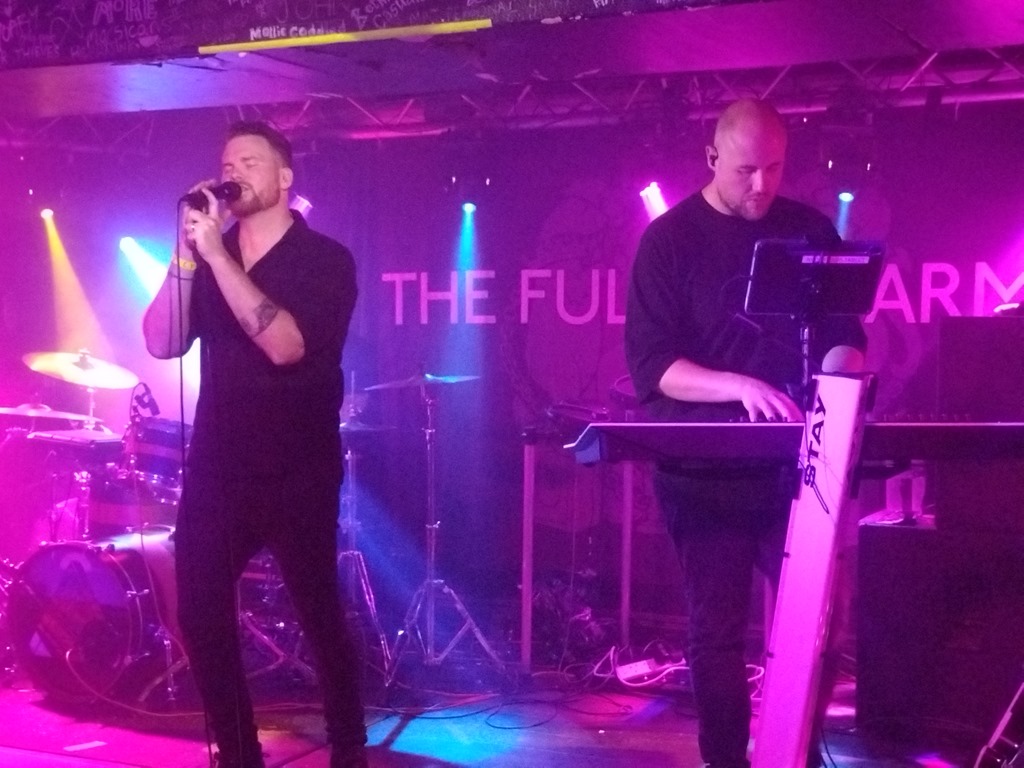
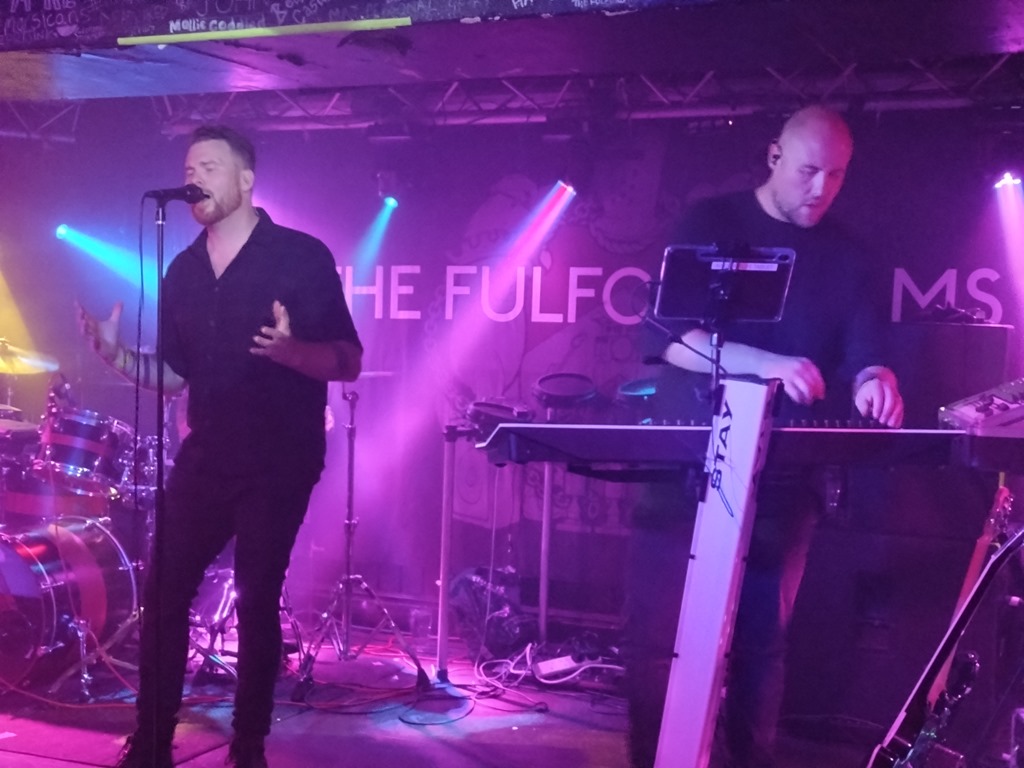
With Material Goods overrunning and Neon Fields also possessing an immense amount of flash-looking tech which needed setting up, we’re fifteen minutes behind time when they take to the stage. Sonically, they’re astonishing. Playing a hundred-and-twenty-five-capacity pub venue, they sound like half a million quid’s worth of gear in an arena. And the songs match it. They sound like they look: black clad, tattoo bands, neatly-trimmed beards, big, soaring emotional outpourings… And completely lacking in soul. Christ, this guy’s level of emotional trauma is enough to raise the blood pressure to induce a heart attack. Wracked with anguish and all of the pain of the lovelorn, the love-torn… And yet it’s all articulated so blandly, everything is so slick, and so one-level. The theatre soon wears thin, and I start to forget I’m listening to it while I’m listening to it. It doesn’t help that there’s a group of four people bang in front of me gabbing on and pricking around, pulling faces, play-fighting, the guys trying to impress the birds by demonstrating their strength by lifting one another up… they get shushed by a fan but even the absence of their distraction doesn’t really improve the experience. There’s some earnest, meaningful falsetto, and the penultimate song had some cliché tribal drumming, and they wrapped up their bombastic set ten minutes after the headliner was due on.

IMG_20240724_21083420240724_210849

Neon Fields

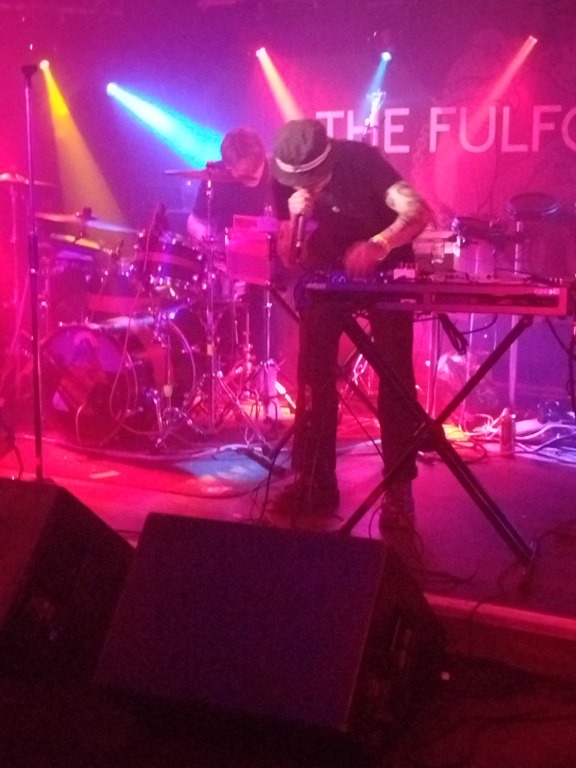
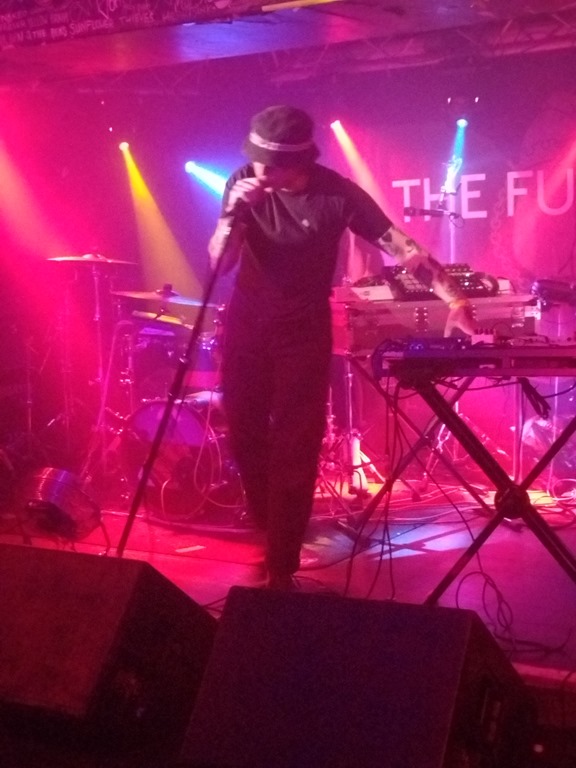
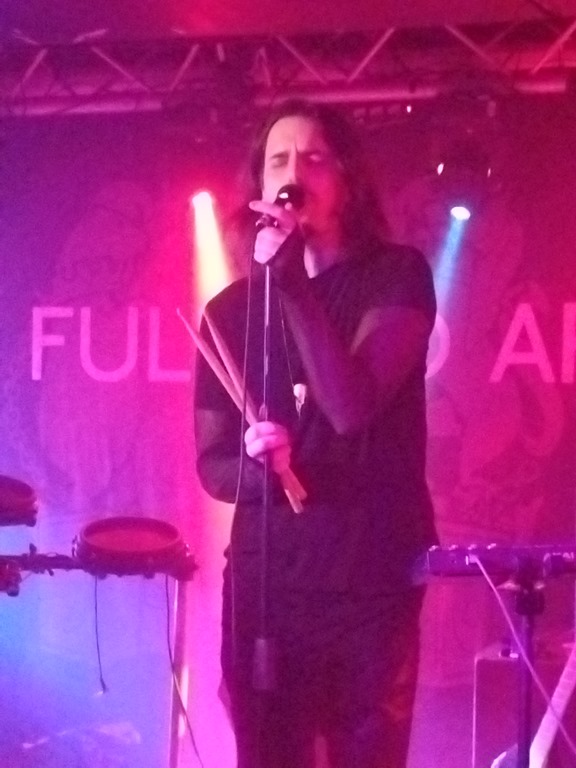
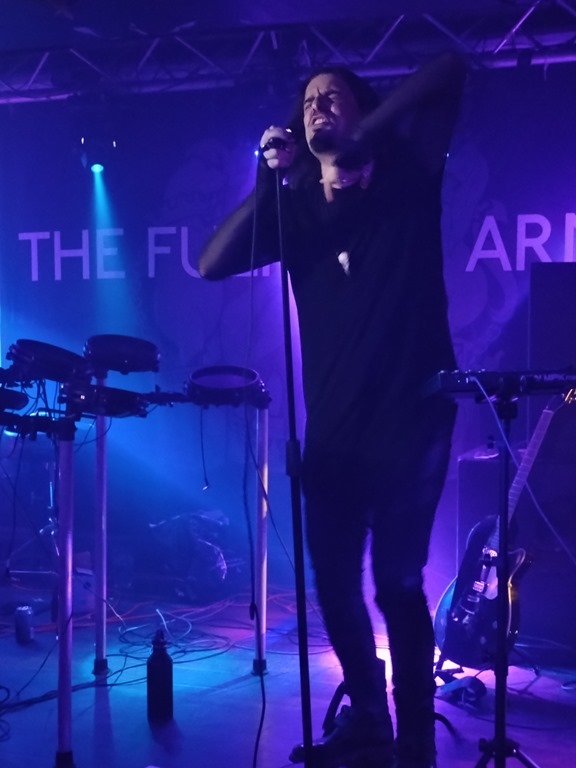
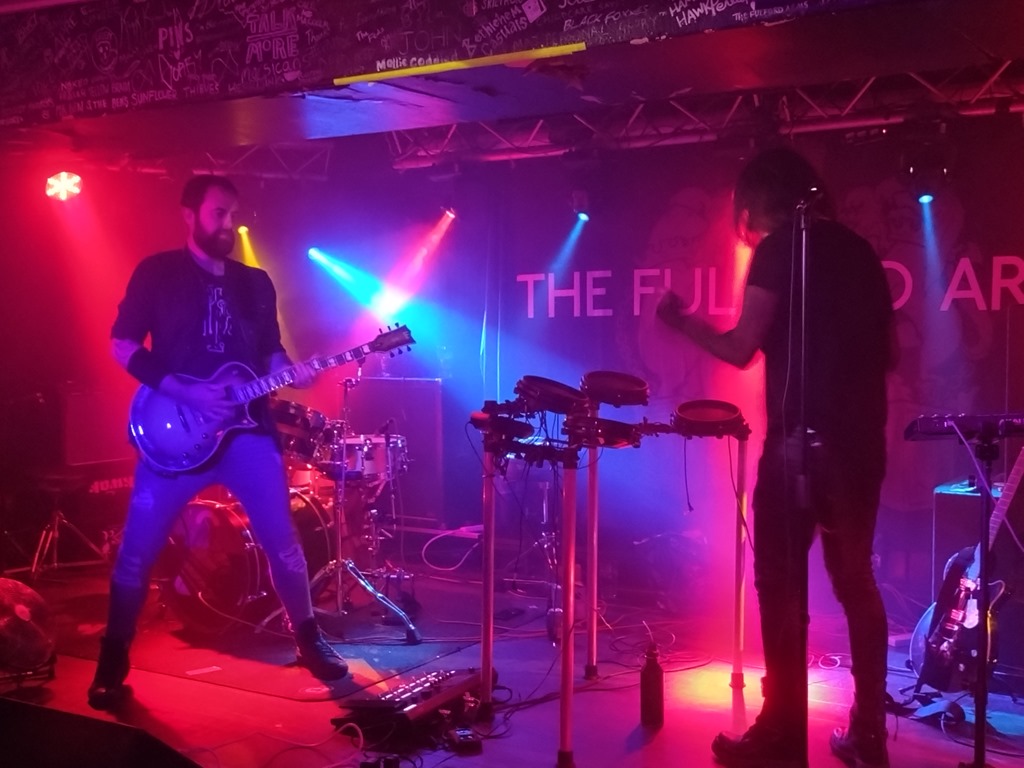
The Royal Ritual are also a duo who have an extremely ‘produced’ sound. But their approach to production owes more to the methods of Trent Reznor as pioneered in the early 90s on Broken and The Downward Spiral, balancing gritty live guitars with synths and fucked-up distortion and harnessing their tempestuousness in a way that creates a balanced yet abrasive sound. David Lawrie plays live electronic drum pads in addition to the sequenced beats, adding dynamics and live energy to proceedings, and flitting between the drum pads, synths, and mic stand, he’s incredibly busy throughout the set. But something about Lawrie’s delivery highlights everything that was absent on Neon Fields, and just carries so much more weight: the whole package brings a rush of adrenaline propelled by that emotional heft and solid force.

Objectively, the feel is very Stabbing Westward, and goes hard NIN at times in its combination of guitar, synths, and sequenced and live electronic drums. The Royal Ritual are strong on dynamics and atmosphere, and Lawrie is an intense and compelling performer.

IMG_20240724_22045120240724_22154320240724_220550

The Royal Ritual

He does break out of the moody persona to thank other bands and plug merch, but what do you do? In the current climate, bands sadly need to plug the stall. The fact that David steps out of broody tortured soul for two minutes of affable chap may seem hard to reconcile, but then, this perhaps speaks more of the human condition than remaining ‘in character’; people are complex and conflicted, multifaceted and inconsistent. And this is what truly lies as the heart of tonight’s performance by The Royal Ritual. Digging deep into the complexities of the psyche, there’s something about the duo’s performance that gouges into the flesh and demands contemplation.

Unifaun Records – 26th July 2024

Christopher Nosnibor

Vamberator’s debut single, ‘Sleep the Giant of Sleeps’ (26th July 2024) is from the forthcoming album Age of Loneliness (Unifaun Records). And? Well, Vamberator is a new musical duo of some pedigree – namely Jem Tayle of Shelleyan Orphan and Boris Williams of The Cure.

This is far from a joyful reuniting: Williams had also contributed to Shelleyan Orphan, until the band’s demise following the death of Caroline Crawley in 2016.

Jem describes his transition from Shelleyan Orphan to Vamberator as follows: “After Caroline’s passing, I had been offered the chance to make a solo album. I had been writing on and off without a focus and not having someone to bounce off was new to me. Boris is family, and we have played together with Shelleyan Orphan live and in the studio on and off for years, so it felt very natural for us to work on this together. I am extremely fortunate to have a drummer of his calibre pounding out the rhythms on this album.”

Grief has a habit of manifesting and finding its channels via unexpected routes and channels, and – from painful personal experience – creative outlets can be incredibly beneficial, a form of therapy, even, and so there’s a clear sense in Tayle’s wanting to push through on this new project. And the first fruits are pretty tasty.

‘Sleep the Giant of Sleeps’ is a mega-hybrid of alt-rock, post-punk, and psyche. I mean it with no malice when I observe that many artists who reach a certain age lose some of their edge and start putting out kinds middle of the road rock that’s like Chris Read without the guitar breaks. There are some elements of that underpinning the form of ‘Sleep the Giant of Sleeps’; standard guitar chord progressions tied to a fairly mid-pace rhythm. But there’s much to set this apart, too, in particular a certain sense of playfulness and experimentalism. There are some unexpected twists to the percussion, some savvy instrumental switches from guitar to piano to the fore, and some spacey whizzes and whirrs. The arrangement is layered, bold, orchestral. The video is a bit nuts.

They reference Lou Reed, and he’s clearly in the mix, but this whips together a visionary sonic cocktail which is impossible to pin down. But more significant than the wide-ranging elements and dazzling sonic experience, is the fact that ‘Sleep the Giant of Sleeps’ is a top tune with hooks and soul and passion.

AA

Vamberator - Sleep the Giant of Sleeps

Southern Records – 24th May 2024

Christopher Nosnibor

I’d feel guilty for taking so long to get around to reviewing this one, but since the band took twelve years to get around to putting out a new album, I figure I deserve some leeway. Besides, this isn’t an album that you can just grab ‘n’ go with an opinion; with near-infinite twists and turns, it requires time to digest and reflect. Hell, ‘Soul Catchers’ kicks it off and packs into six minutes a whole album’s worth of riffs, tempo-changes, curves, and detours. At times angular and noisy, at others, showcasing a more technical style.

Loping drums and noodling guitars dominate the opening of ‘Mother’ before scratchy discords crashes. The Shellac comparisons have been done to death, but are entirely appropriate, although there’s something that’s perhaps a shade more jazzy in the playing style here. This is highlighted by the instrumental interludes, which really do change the dynamic of the album as a whole, with some really nice piano work on display. But crucially, during the actual songs, it’s the drums that are front and centre, and batter hard at delivering stuttering, stop/start rhythms. It’s a timely reminder – well, after the arrival of To All Trains – of the impact Steve Albini had on alternative rock and recording methodologies. Before Albini – and still, generally – in rock music, the drums are background, keeping time, while the guitars dominated. His approach saw the drums take on a new level of importance, and expressive drumming, recorded right, alters the whole dynamic of a track. And there’s a lot of dynamic and some serious drumming on From Fire I Save The Flame. Every snare smash blasts the top off your head, and you feel like your in the room while the band are cranking this out live just feet from your face.

Again, another lesson from Albini: bands are often at their best live, when the energy and adrenaline are pumping and the heat and the blood are up, and to capture that on record is gold. From Fire I Save The Flame feels live: the performances are raw, unpolished, intense. That Steve is gone doesn’t really seem entirely credible right now, and the world – not just the world of music – will be so sadly lacking in his absence. But it’s clear that his legacy will endure, and endure. This album might not even exist without him, and certainly wouldn’t sound the way it does were it not for him, and the same is true of many releases now and in the future. This isn’t to detract from anything the band themselves have done here – and Three Second Kiss have reconvened to deliver something special – but, well, the point stands.

‘Garum’ lurches into noisier territory once more, reminding us why you’ll often find TSK mentioned alongside the Jesus Lizard – who have recently announced a new album after significantly longer than twelve years. It’s as pretty as a barroom brawl, spilling and staggering in all directions: the bass repeatedly punches you in the gut while the drums leave you dazed and with a split lip.

There’s sinewy, straining guitar galore on ‘Fuss’, before the final track, ‘Heart Full of Bodies’ grinds down to a slow-swinging crawl, before the growling bass and some thrashing drums whip up a climactic frenzy to draw the curtain quite dramatically on an album that’s heavy with dinge and dirt, unashamedly unsmooth, untamed, unprimed for radio.

From Fire I Save The Flame isn’t just a brilliant return, it’s a brilliant album in its own right, period. And landing as it does in between the Shellac album and the upcoming LP from the Jesus Lizard, 2024 is shaping up to be an outstanding year for quality noise music from bands many had considered dormant. It’s about time we had some good news, and this is some very good news indeed.

AA

a2253768086_10

Cruel Nature – 24th May 2024

Christopher Nosnibor

It seems as if every album of the year has been released on this date, May 24th – and by every album of the year, I mean all of the releases have landed at the same time, but also that this album and the other ‘best album’ contenders have all landed simultaneously, too. It’s meant that I’ve been absolutely swamped, and struggling to listen to everything, let alone formulate thoughts and render them coherent – something I fear I struggle with at the best of times.

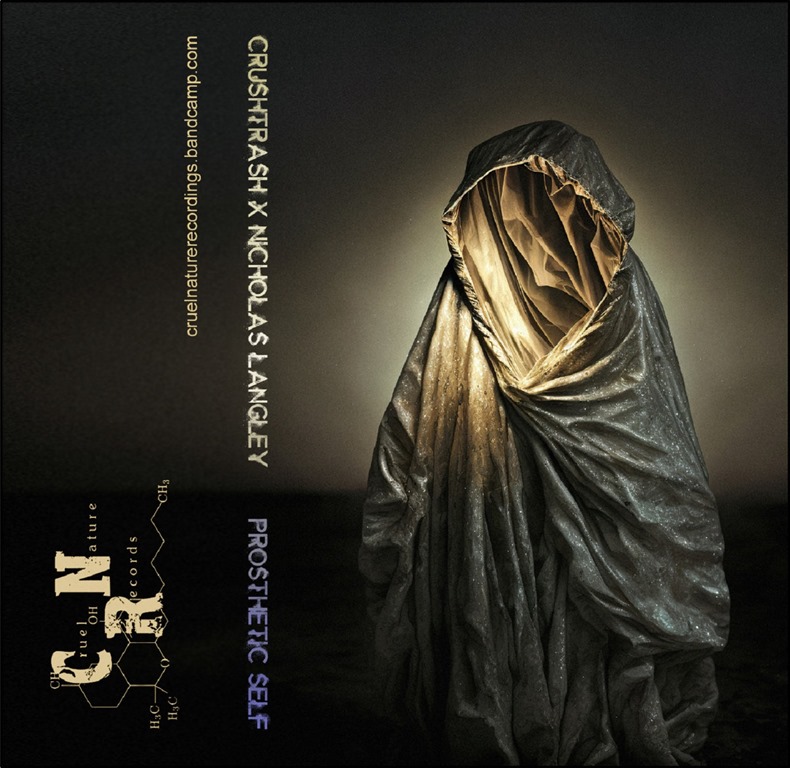
Surveying this release, I learned that ‘Prosthetic Self is a collaboration between CRUSHTRASH & NICHOLAS LANGLEY that seamlessly blends the energy of early ‘80s dark industrial synth pop with the mesmerising allure of ’90s electronica. Drawing inspiration from iconic acts like Coil, The Associates, Depeche Mode, Björk, and Portishead, this album is a sonic journey that transcends time and genre boundaries.’

It does feel as if every electronic act with a dark leaning wants to be Depeche Mode, and every electro-based Industrial act is essentially wanting to be Pretty Hate Machine – era Nine Inch Nails – who in turn sounded a fair bit like Depeche Mode if truth be told. That’s no real criticism, as much as an observation of the extent to which those two acts broke ground and created new templates in the 80s. However, the industrial elements of Prosthetic Self hark back to a time before Nine Inch Nails, and presents a more experimental form.

The tile, Prosthetic Self Connotes a sense of falseness, the fake exterior we apply to ourselves in order to deal with people and society. Workplaces – particularly offices – tell us to ‘be ourselves’ at work, while at the same time telling us we need to leave our problems and personal baggage at the door, but at the same time seem incapable of dealing with non-conformity. Well, come on then: what do you want: individuals or clones? Prosthetic Self is an exploratory work which presents a multitude of facets, and it’s a fascinating journey which leads one to the question as to what is real and what is construct, artifice. The cloak, on the cover, with its empty hood feels like a representation, not necessarily for this collaborative project, but the album’s themes, searching for what lies beneath the prosthetic self: is there, indeed, anything at all? Then again, how much here is style, and how much is substance?

There’s certainly a lot of well-studied style on display. ‘Bring Some Change’ is dark but also soulful, and their referencing The Associates hints at the almost operatic stylings of the vocals at times, and against some stark backings prone to some unexpected sonic ruptures and moments of heightened tension and drama, I’m also reminded of Scott Walker.

‘Claustrophobia’ is appropriately-titled. ‘In my dream, something’s wrong, caving in…’ Crushtrash croons with hints of Dave Gahan in his delivery against a slow-moving murky throb. But there’s a really attacking percussive loop that knocks on the top of your skull which makes it tense rather than soothing, and before long, panicked breathing gasps in the darkness, and you’re drawn into the nightmare.

Elsewhere, glitching, knocking beats shuffle and click, and the production really brings these to life in a way that makes you clench your jaw and tense your shoulders. ‘Selective Memory’ has something of a collage structure about the way the sounds are brought together and overlaid, with sampled snippets woven in alongside the bubbling vintage synth sounds.

In places, the kind of retro vibes which permeated 90s trip-hop seep into the shadowy atmospherics, and ‘Subtle Fetish’ comes on like Marc Almond in collaboration with Tricky, spinning lascivious wordplay along the way.

Prosthetic Self creates a lot of atmosphere with minimal arrangements, and they work because of the close attention to detail, the multiple layers of percussion which pulse and snake through spartan synths, more often than not with a simple, repetitive bass overlaid with subtle details, in a fashion which adeptly recreates the sound of the early 80s. In doing so, it recalls a time when so much was new, innovative. Coming at a time when there is so much sameness, and production and mixing has come to be all about the loudness, to hear a set of songs which really concentrate on dynamics and detail, it seems unexpectedly different.

AA

a1438080285_10

30th September 2022

Christopher Nosnibor

This is a proper slap round the chops. It follows many conventional industrial tropes, and you could readily lump it min with the endless catalogue of Nine Inch Nails rip-offs, primarily because NIN set the benchmark and the tone from way back in 1988. Prior to that, it was either mainstream sleaze with soul drawing influence from Depeche Mode, or pulsating electro industrial that was either on or wanted to be on, Wax Trax!

Pretty Hate Machine was actually more Depeche Mode than Ministry, but its use of extraneous noise and the general production was, to use a cliché, a gamechanger. It created a new conduit for simultaneous anger and emotional fragility in ways that had previously been untapped.

Anything post PHM is therefore destined to stand against comparisons to NIN if it’s angry electro and industrial, and ‘SAV@Ge’ is all of that – plus tax.

Luna Blake spits lyrics about blood and bones and shame, pain, and death, against a thumping beat-heavy surge of sleaze-grind that’s strong on the stomach-churning low-end and that classic NIN-style production that’s dense and distortion-thick yet crisply digital. The dynamic range and optimal use of dropouts just before everything powers in at twice the volume achieves maximum impact. ‘SAV@Ge’ is aflame with fury and condenses all the rage into just a fraction over two and a half minutes that absolutely blow your face off.

Glytsh ArtworkGlytsh image 3

Youth Sounds / Cadiz Entertainment

Christopher Nosnibor

Well, this is a surprise, and I say that without sarcasm. The lead single from Youth’s debut solo album is a breezy slice of indie with a heavy 60s folk influence.

But then, Youth has always been a man of surprises. His transition from Killing Joke bassist to producer and remixer of some incredibly high-profile mainstream acts including U2 and Erasure, via recording as a member of 90s dance act Blue Pearl and back to playing bass with Killing Joke and juggling infinite other projects is an incredible feat, and while I might consider his lack of commitment to any one thing uncritical, it’s clearly apparent that he’s an artist who can turn his hand – and successfully – to anything. I suppose the only real question is ‘what does he truly believe in?’ or ‘who is the real Martin Glover?’

The press blurbage for the album, out in November, and its eclectic range does attempt to shed some light one this:

‘Growing up with the sound of 70’s pop radio and bands such as Smokie, Pilot and Bay City Rollers – some of the tracks here are a flashback to those times and the initial inspiration of a thirteen year old Youth to write his first songs. ‘Sha La Laa I Love You’ and ‘The King Of The Losers’ are intimate, honest and have a naïve and innocent pop sensibility that are underpinned with regret and loss. He’s also took [sic] inspiration from psychedelic pop and English folk rock and his own words, he was thinking – “Everything from Nick Drake to Led Zeppelin, through a lens of Fairport tripping out with the Velvet Underground with a couple of Beach Boys, all the way to Cohen and Rodriguez, via Jim O Rourke, jamming with Fred Neil and Bert Janch and Michael Rother.’

Yes, Youth has been around, and so absorbed and assimilated a lot of stuff, and ‘Spinning Wheel’ brings many of those different pieces together, starting with a keen ear for melody, with the added bonus of some nice, subtle harmonies. Objectively, it’s a neat and accessible pop tune, and you can’t say fairer than that.

Cleopatra Records – 29th December 2017

Christopher Nosnibor

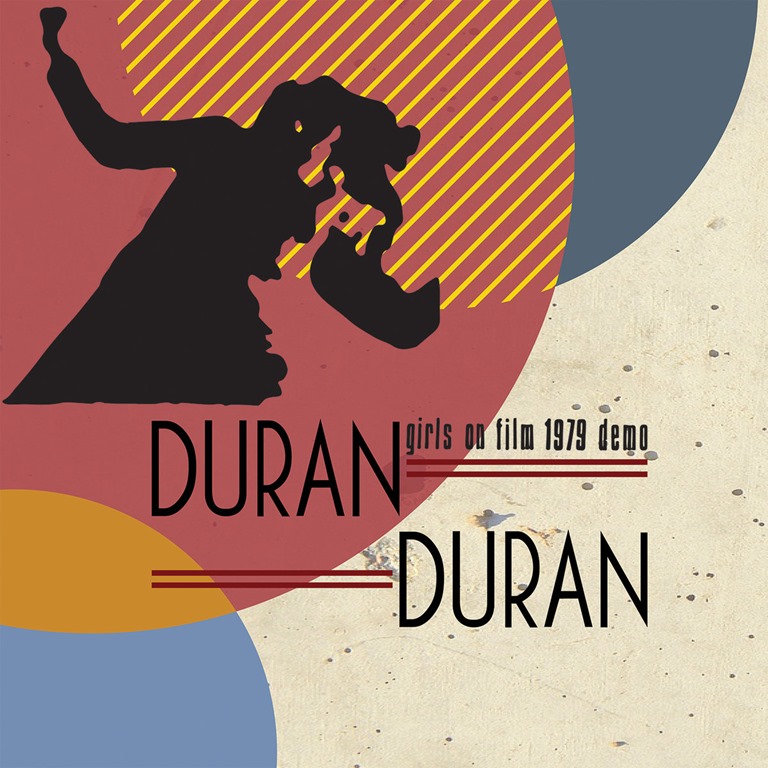
Duran Duran without Simon le Bon? Yes, indeed. Their earliest iteration featured Stephen ‘Tintin’ Duffy. Andy Wickett, formerly of TV Eye subsequently stepped in on vocals, before Simon joined the band. And yes, however synonymous with slick veneer 80s style and pop music, Duran Duran very much always were a band. Real musicians playing real instruments. Le Bon’s vocal talents may have played second to his image, but his voice played an integral part in their overall sound.

This four-track demo, recorded in 1979, includes an early version of ‘Girls on Film’ and, ‘See Me Repeat Me’ would later be reworked to become arguably the band’s defining song, ‘Rio’.

These cuts showcase a more new wave orientated sound, accentuated by Wickett’s more ragged and less overtly melodic vocal style. While the busy funk-laced bass that would feature in their later work is clearly in evidence, especially on ‘See Me Repeat Me,’ the vibe is more reminiscent of Gang of Four. The middle-eight is a chaotic, jazz-noise workout, and there’s a sharp, dark edge to it. The production (the songs were recorded at UB40s home studio) is altogether more direct and more raw than that which came to define the band’s sound on signing to EMI, and it’s in keeping with the more attacking style of playing.

‘Reincarnation’ is positively gothy, with Wickett taking his cues from Bowie and sounding more like Peter Murphy as he snakes his way around some chilly synths and urgent tribal percussion.

There’s a real urgency to ‘Girls on Film,’ the chorus of which is immediately recognisable when it emerges from the furious flurry of nagging clean guitars and driving funk-infused bass. But the verses aren’t only different musically and lyrically, but convey a very different perspective, with Wickett, who co-wrote the song, explaining that “the lyrics were actually inspired by the lives of the stars of old black and white movies…. It is important for people to understand the true origins of the song ‘Girls on Film’ and to hear the edgy sound that Duran Duran had in the beginning,” he says. “This song was inspired by the dark side of the glitz and glamour, where these perfect idols suffered tragedy and addiction. The film Sunset Boulevard was also a big influence with its tale of a fading movie star.” Shiny pop, it is not.

The last track, ‘Working the Steel’, is again percussion-heavy, with hints of Adam and the Ants, and the vocal hook is a howl. Duran Duran would never sound this angry or intense again, and of course, had they continued in this vein, they’d have likely achieved minor cult status with a couple of EPs and that would have been that.

As 80s icons, however polished and on-trend, however deeply they seemed to revel in surface, Duran Duran have, throughout their career, had darker currents and certain depths beneath the gloss. This – maybe – or, one would like to think – has played a significant part in their enduring popularity. That, and their capacity for great pop songs, of course. This release is very much a sketching out of ideas, rough, incomplete, unevolved. But it captures an energy, and, with the elements which would subsequently become prominent in their sound in place, does sound like the beginning of something: rather than simply a piece of juvenilia, it’s a relevant and insight-giving piece of history.

AA

884850