Posts Tagged ‘Noise’

Christopher Nosnibor

It’s no secret: I fucking love cheese. To the extent that it’s the single foodstuff that prevents me from being vegan, and to the extent that if I had to live on any one type of food, it would be cheese. Forget pudding, gimme the cheeseboard. In fact, scrap starters and mains, just give me all the cheese. My 4-tier wedding cake consisted of a wheel each of Brie, Stilton, Cornish Yarg, and a truckle of mature cheddar. So I kinda feel that Chronic Johnny’s debut single is a song that should appeal, regardless of actual content.

Harrogate may not be an obvious place to spawn a ‘wild noiserock trio’ like Chronic Johnny, but on reflection, it makes sense: it’s a lovely, leafy, middle-class market town close to York. What could possibly spur a bunch of guys to make angular, guitar-driven racket, the sound of anger and frustration in a setting like this? Well, precisely a setting like this. There’s always something to rebel against, always a reason to feel disenfranchised. And always a reason to make noise.

And Chronic Johnny make a cracking noise of a decidedly 90s alternative vintage, all spiky, overdriven guitars that jerk and jolt, and peppered with a substantial dash of rockabilly / surf spice, not least of all in the manic, yelping vocals. It’s such a frenetic, hybridized racket that comparisons are pretty pointless; it’s more that this furiously dirty din, driven by a growling, busy bassline, draws together the essence of a period in time, and drags it, squalling and brawling into the present. It’s gnarly, and it kicks ass.

1st May 2020

Christopher Nosnibor

Pocket Signs is Sly & the Family Drone’s Matt Cargill and UKAEA’s Dan Jones, and according to Matt’s mail, Signs of the Times was ‘fired out in an afternoon with the aid of lager and pepsi max. Lights out, volume up, watch yer face bins.’ He describes it as the result of ‘plugging in all the objects and making a haunted, sprawling, disorientating racket. Blown out electronics, lacerated drums, churning bass and crumbling voices’. Which means I know I’m going to love it, along with at last 50 other people.

The album features two longform tracks, each a magical, mystical 23 minutes in duration, and like the times in which they were created, they’re a confusing mess of incoherence, a fractured and nonsensical sonic collage.

‘What About Obedience?’ starts out with what sounds like an engine roar – but not a real engine, so much as an engine on a racing console game. Then a deluge of clanks, bleeps, whirrs, clicks, pops, shoot-‘em-up laser guns and twanging elastic bands melting in a nuclear storm all pile in, more or less simultaneously and it feels like watching the news while scrolling through social media (as I do around five every evening while cooking dinner). The experience is utterly bewildering and to even attempt to unravel it all is futile, because the world has truly gone mad.

Searching for structures in this chaotic morass of noise is like trying to find logic in the UK government’s strategy for loosening lockdown, but there are some amazing moments to be found here, as snippets of tunes and spacey krautrock synth motifs emerge briefly from the blistering howl of undifferentiated nose that funnels like a gale.

Gurgles and glops and electronic extranea combine to forge an aural blitzkrieg that could easily be the soundtrack to a digital apocalypse. Everything swirls and melts into a maelstrom that builds a physical mass and hits with an impact that’s more than simply sensory.

Where do you go from a piece that concludes with a sustained squalling blast of white noise that leaves you with the sensation of the end of days? More of the same, of course: ‘How to be Saved’ begins with a series of murky vocal samples, echoed and overlaid, atop burrs of electronic discord, and in no time at all, later upon layer of dissonance has emerged to forge a raging torrent of noises. Feedback strains and scrapes, sharp and metallic with knife-like edges while surging currents gurgle and synth sounds squelch and quirt, titter and tweet around a vortex. Abstraction and chaos reigns, pulsing, bouncing, screaming and bumping in all directions. At time, the melee is impenetrable, bewildering, as it echoes around your cranium. Voices emerge and fade again at random: seemingly, everything is at random, and it’s a glorious headfuck. Not so much a dronewerk as a metadrone assemblage, it’s a wild and brain-frying journey, this may just be the perfect soundtrack to the now – or it may just tip you over the edge.

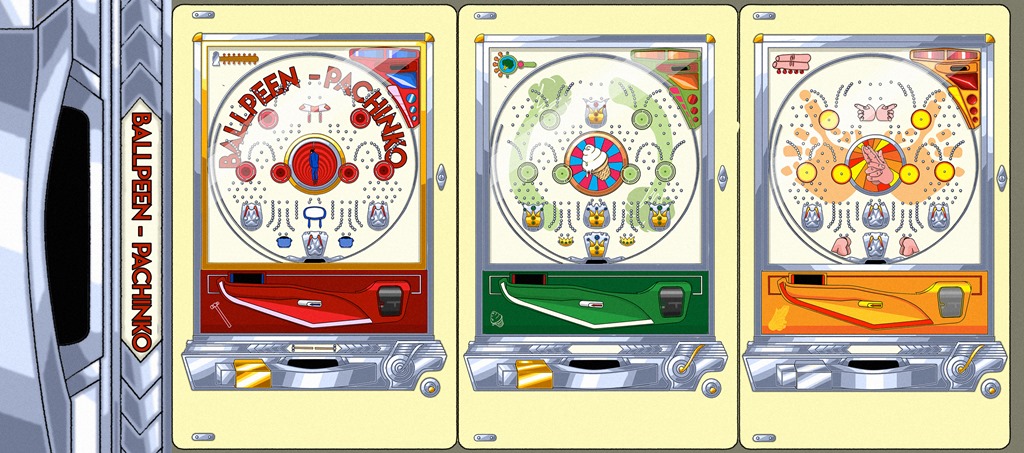
Oh, and the cover art is truly special.

AA

cover

Panurus Productions – 29th May 2020

Mantis Shrimp is the second Shrimp release following their eponymous debut released just over a year ago, in January 2019. A collaboration between various luminaries of the underground scene in Newcastle, England, and Ryosuke Kiyasu, who has enough projects to his credit to render him a one-man music scene in Japan, they describe their sound as ‘chitinous free grind onslaught’.

Now, if ‘Shrimp’ has connotations of small fry, the proverbial puny weakling, and their debut laid waste to those associations with a devastating cacophony , then it’s perhaps worth approaching this instalment with the knowledge that the mantis shrimp is the brutal bastard of the small crustacean world: a violent predator, mantis shrimp typically eat fish, crabs, clams, snails, worms, shrimp and squid, and can take on animals significantly larger than themselves thanks to their ‘calcified clubs’

According to Wikipedia, these hard exoskeletal bastards are sometimes referred to as ‘thumb splitters’ ‘because of the animal’s ability to inflict painful gashes if handled incautiously…—mantis shrimps have powerful claws that are used to attack and kill prey by spearing, stunning, or dismembering’.

This pretty much how it feels listening to the four pieces here.

There’s a strain (and strain is an apposite word choice) of experimental jazz that sounds like the end of a piece, where the instruments all clatter and rumble as they wind down from a climax, only that is the piece, and each piece lasts an eternity. That’s this. Only with grating guitars and bowel-ripping guttural vocals, which add depth and detail to the calamitous, chaotic racket.

‘Sealed Explosion’ eases it in gently, with thirteen minutes of stop / start percussion and stuttering discord that crashes and stumbles in all directions. It’s an absolute headfuck, and it’s only more intensely difficult from hereon in, with the sludgy squall of ‘Grasping Pincers’ bubbling through a relentless racket of crashing cymbals and stammering anti-chords and screeding feedback. The lull after four and a half minutes feels like an immense relief – but then you realise there’s another ten minutes to go as Watts starts up the gasping growl (first mistyped amusingly but perhaps appropriately as ‘sharts up’) that will continues to rasp through the bewildering tempest of noise. There’s some wild funk bass played at a hundred miles an hour around the ten-minute mark, but it’s submerged beneath a brain-shredding wall of noise. That’s no criticism, just a mere statement of fact.

‘Boiling Swamp’ spring and spurs, eddying electronics and guitars that sound more like they’re tuning up than playing actual music dominate the thrumming, humming drone of feedback and bass groans and tweeting sonic contrails. It gradual descends into a bass drone miasma, while shrill top-end feedback shrieks all around. Not a lot happens, but amidst the turbulence, there are wordless howls and hollers. Or, if words, impenetrable. As they ought to be. Watts resorts to guttural snarls in the dying minutes of this chthonic noise dirge that evokes Sunn O))) minus the growling low end crossed with Whitehouse, and which leaves ‘Endless Collapsing Staircase’ in prospect.

It’s 28 minutes of trippy experimental electronica that straddles noise, power electronics and various ambient forms. Percussion rattles erratically amidst trilling industrial scrapes, gradually building through wordless vocal drones and swelling layers of extranea. Anguished howls, shrieks, and barks punctuate a mess of feedback and flailing percussion. It’s a fucking horrible mess of noise: there’s a stab at a fractured bass groove in amongst it all. It never quite gets going, and 14 minutes in, it sounds like it’s all over as it collapses into a mess of pedals, but we’re barely at the midpoint. Watts sounds like he’s being gutted in a ceremonial act that’s been incorporated into a Large Unit performance. Or something. It hurts. But it works.

a3330396040_10

CATTLE and Territorial Gobbing are joined at CHUNK in Leeds by Modern Technology (London), Lump Hammer (Newcastle) and …(something) ruined for a night of noise in aid of Mind and Shelter.

We’re proud to be involved in promoting the event.

Door at at 7pm. It’s £6 OTD and BYOB. Be there: it’s going to be a belter.

Event details here.

Poster

Adult Swim Singles – 30th January 2020

Christopher Nosnbor

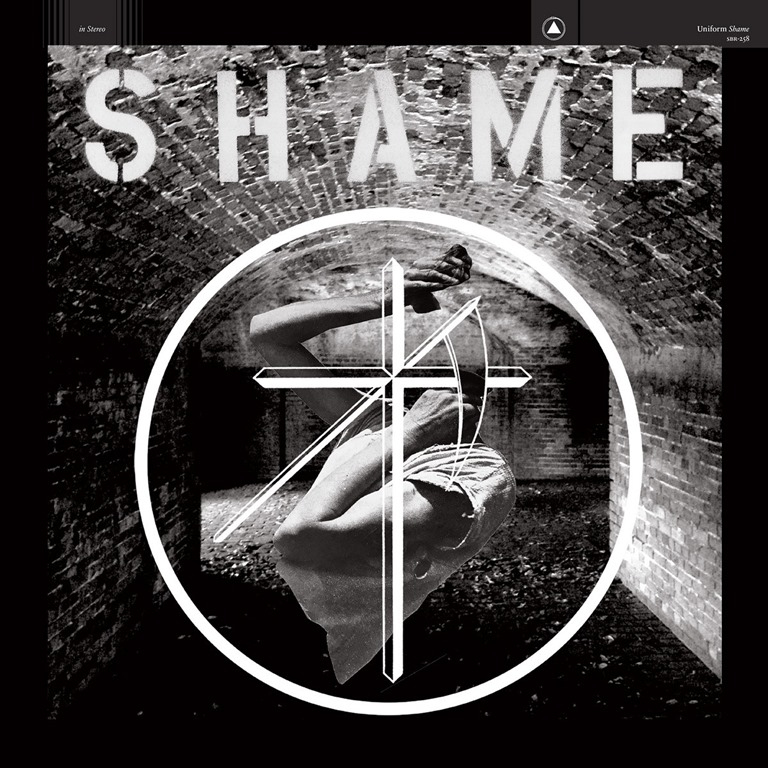
This one’s crashed in seemingly from nowhere, and because it’s Uniform, it crashes in hard. Promising ‘the first taste of a new song cycle that doubles down on the most immediate aspects of the band’s sound’, with shouter Michael Berdan drawing attention to the more dance-orientated sound.

And indeed, the groove is built around a steady, monotonous dance beat, but it’s a pounding industrial beat that’s reminiscent of Nine Inch Nails. The opening segment is sparse, with just drum and vocal and some rumbling extranea forging a claustrophobic tension before everything goes classic Uniform with a pulverizing blast of noise that packs all the abrasion, and again, it’s Broken era NIN that comes to mind as they meld devastating guitars to live drums hammering out mechanoid rhythms.

The guitar overdrives to the point of overload, and Berdan’s anguished holler channels the anger and anxiety of the song’s focus: “‘Awakening’ is about the daily frustrations of a complacent existence in late capitalism. Some might take it as a protest song. However, it’s to be implied that waking up with a deep seeded anger is something that happens every day. We know they are mad, but we don’t know if anything will ever change.”

If any band articulates the suffering that living in the present can create: the relentless sense of pounding your head against a wall, screaming into a void, unheard, in the face of endless idiocy and sheer brutality at the hands of a capitalism so hard that it’s beyond dehumanising. Compassion and care are out of the window as everyone is too busy climbing over everyone else just to survive, while the upper echelons crow and don’t even bother to pretend to cast down their crumbs as the pretence of any trickle-down is erased in the face of sheer greed. The power elites hold all of the power, and the rest of us are powerless to effect change.

And so many of the oppressed are oblivious to all of this, enabling the oppressors in supporting the Trumps and the Johnsons, feeding the instruments of their own oppression while failing to see the cycle they’re perpetuating, blind to the fact that ‘foreigners’ aren’t ‘stealing’ their jobs and sapping the welfare coffers, but propping up a fragile boom and bust economy by doing the minimum wage, zero-hours, per-delivery drudge jobs no-one else will take.

You wake up, burning with incendiary rage that these people, who’ve swallowed the propaganda wholesale wont; fucking wake up, and you veer wildly between wanting to kill ‘em all and killing yourself, but in the end you do neither because you’ve got bills to pay and mouths to feed so you do nothing but work and hate yourself for it until you crash out to suffer nightmares and then rinse and repeat the next day and the next.

That sense of confinement, of futility, and endless fury, that is what Uniform distil into four minutes of pounding anger.

AA

Uniform - Awakening

Uniform US Live Dates (all w/ The Body):

March 01: Portland, OR – Doug Fir Lounge

March 02: Vancouver, BC – Biltmore Cabaret

March 03: Seattle, WA – Laser Dome at the Pacific Science Center

March 05: San Francisco, CA – Rickshaw Stop

March 06: Los Angeles, CA – Zebulon

March 07: Las Vegas, NV – Bunkhouse Saloon

March 08: Phoenix, AZ – The Rebel Lounge

March 10: San Antonio, TX – Paper Tiger

March 11: Dallas, TX – Three Links Deep Ellum

March 12: New Orleans – Gasa Gasa

March 13: Atlanta, GA – Food Court

March 14: Durham, NC – The Pinhook

March 15: Washington, DC – Black Cat

March 16: Philadelphia, PA – Boot & Saddle

March 18: Brooklyn, NY – Market Hotel

March 19: Somerville, MA – Once Ballroom

March 20: Providence, RI – Columbus Theatre

March 21: Montreal, QC – La Vitrola

March 22: Toronto, ON – The Garrison

March 24: Chicago, IL – Empty Bottle

March 25: Minneapolis, MN – Turf Club

June 05 – 07: Austin, TX – Oblivion Access

Christopher Nosnibor

Leeds’ DIY scene is becoming increasingly adept at turning poky rehearsal spaces into gig venues: it makes sense from a funding perspective, but also means that while conventional scenes are struggling to stay open for various reasons (as often redevelopment as being squeezed financially) and new and niche acts are finding it increasingly difficult to get gigs, the Leeds scene is thriving and as diverse as ever.

I’ve previously sung the praises of rehearsal-room-turned venue CHUNK, and it’s Theo Gowans, who does a lot of the stuff there, who’s behind this evening’s show. Tonight, Mabgate Beach (or Madgate Beach, as the poster has it), tucked away in a corner of an industrial estate in an obscure corner of the city plays host to a brace of Newcastle noisemongers, supported by a brace of very different local supports.

I’d been forewarned that the room was small, but that’s something of an understatement.

Intimate isn’t even close.: it’s about the size of my living room, although it’s still probably a few feet bigger than The Hovel in York’s South Bank Social, which has a capacity of maybe 16. The drum kit and back-line fill most of the room, after which we manage to pack in maybe 20. And the lighting is as minimal as the space, only less consistent.

The Truth About Frank have been knocking around for over a decade now, and Alan Edwards’ sets don’t get any more mellow over time. Kicks off the bill with a riot of samples, the set comprises a single continuous improvised soundwerk, a jarring audio cut-up through which murky beats fade in and out through an ever-shifting collage of noise, creating what cut-up originator Brion Gysin would refer to as ‘a derangement of the senses’. Playing in near-darkness with a pencil beam of light emanating from the arm of his glasses to illuminate his minimal digital kit, Edwards’ stubby nicotine-stained fingers manipulate shapes on a touch screen and jab buttons, and with each prod and poke, more strange sounds emerge, and it’s brilliantly bewildering.

DSC_3262[1]

The Truth About Frank

Things start to feel quite cramped when a full band with bass and two guitars play, and I’m less concerned about site lines for photographs than being smacked by the bassist’s headstock, meaning I’m happy to settle for the second row to observe Loro spin a set of mellow post-rock. It’s kinda standard circa 2004 fodder for the most part, but it’s nice, and with twists of mathiness and jazz without being indulgent.

DSC_3265[1]

Loro

Penance Stare prove to be an absolute revelation. Their recent recordings are a hybrid of ethereal shoegaziness with black metal production values, and while those elements are very much present here, witnessing their colossal noise in such an enclosed space is an incredibly intense experience. There’s ferocious reverb on the vocals, and murky as fuck guitar duels with thunderous drumming. The duo explore some deep, dark atmospheres, too, and coupled with Esmé’s brutal anguished shriek, there are comparisons to both Amenra and early Cranes to be drawn here. Some of the soft instrumental segments are achingly beautiful and affecting, and are invariably obliterated by devastating distortion and howling agony. This is music that reaches deep inside and leaves one feeling somehow altered.

James Watts has more bands and projects than I have albums in my review pile, and having met him and performed alongside Lump Hammer in the summer, I was keen to see how things worked with a different slant and lineup, and an absence of knitted head/face garb. Whereas Lump Hammer ae sludgy and repetitive, Plague Rider mine a seam of pounding math metal, with Watts’ vocal veering between shrieking demonic and guttural taking a shit deep grunt. And what the fuck even is his two-string instrument with some kind of touchscreen attached? In the less-than—half-light, I’m struck by how much Watts resembles a young Alan Moore. It’s so dark, I can barely see the rest of the band to know what they look like, but they relentlessly kick out juggernaut riffs that hammer hard.

DSC_3274[1]

Plague Rider

Technical difficulties struck 15 minutes in, with a power outage on the guitarist’s pedal board bringing a halt to the set, but after a brief intermission they resumed as loud and punishing as before, and then some.

In such a confined space, the effect is staggering: every beat, every chord, lands like a punch to the gut. It’s exhausting but exhilarating.

Christopher Nosnibor

The Wonkystuff nights to date may have been a shade sporadic, but that’s what happens when the organisers have day-jobs and families, and more importantly, what they’ve lacked in regularity, they’ve more than compensated in quality, and that’s a major reason why there’s such a respectable turnout to a gig midweek, mid-January, in York. There’s also the warm, welcoming vibe: these nights may be musical showcases, but they’re also a coming together of an oddball community, where we’re all misfits together and it feels good and feels like home. Tonight’s lineup – as usual – demonstrates John Tuffen’s skill for bringing together acts who provide a satisfying balance of contrasting and complimentary.

It’s the Wonkystuff House Band – a collective rather than a fixed entity, tonight comprising Tuffen alongside Ash Sagar and Simon Higginbotham – who warm things up with a set consisting of permutational repetitions delivered by multiple vocals, delivered in a drab monotone over repetitive beats. Comparisons to Can, Cabaret Voltaire circa ‘Nag Nag Nag’, The Fall, Flying Lizards, Girls vs Boys, Young Marble Giants, and the more contemporary Moderate Rebels all make their way into my notes as I watch them crank out vintage synth and drum machine sounds. Cyclical bass motifs and whizzing diodes fill the air as they sit and twiddle knobs and read lyrics from clipboards and the historical leaps into the present for a while.

DSC_3198[1]

Wonkystuff House Band

The start of TSR2’s set crackles and pops fireworks. The trio hunch over customised kit with wires all over to create warped undulations and machine gun fire beats that batter the speaker cones. The set builds into a dense, murky trudge. The second track, ‘What will be’ is more co-ordinated than the opener, and is solidly rhythmic, mechanoid and spacious, and metamorphosises into some kind of glam reimagining of Kraftwerk via DAF. Heavy echoes and tribal beats dominate the third track, and they very much find their groove at this point, at least for a spell, before the construction grows shaky despite solid foundations. Perhaps it’s the sheer ambition of layering up so much at once that’s difficult to keep together. Despite this, the discord and dissonance are part and parcel of an intriguing set.

DSC_3201[1]

TSR2

Rovellasca takes the stage, quietly and understated and stands behind a bank of kit. So far, so standard. The set begins with deep, dark, rumblings, and very soon builds into something shatteringly immense. It’s dense. It’s loud, and fills the room like a thick, suffocating smog. The sound is thick, immersive. Time passes. Unexpectedly, elongated mid-range notes sound out and the underlying dense noise builds. I’m no longer listening: my entire body is enveloped. This is the effect of sonic force. Noise wall without the harsh. Burrs of static, pink and brown noise lurk in the immense billowing noise. The shifts are subtle, and gradual, but present over the course of the single, continuous half-hour piece. People start to become visibly uncomfortable after a time others vaguely bored. I’m loving it, and could listen all night. A slow fade to finish. The hush is deafening.

DSC_3204[1]

Rovellasca

It’s a hard act to follow, but See Monstd – the new musical vehicle of radiofreemidwich’s Rob Hayler is an inspired choice, in that it represents something completely different that thus prevents any risk of comparison. There’s a lot going on here: the set starts with a sample, then breaks into what my notes describe as ‘wtf noise’. It subsequently settles into heavy harsh ambience, with dense, grating drones providing the body of sound, with swerves off trajectory for spells of audience participation, with a phone being passed around for members of the crowd to repeat lines from the sheets circulated prior to the set. This is one of those performances where you never know quite where it’s going to go, and is all the better for the element of unpredictability.

DSC_3212[1]

See Monstd

And this, in a nutshell, is everything that’s great about the Wonkystuff nights.

December 2019

Christopher Nosnibor

Ukranian industrial duo Kadaitcha, consisting of Andrii Kozhukhar and Yurii Samson, have stepped up a gear for their fourth album, Tar, which follows Southern Phlegm, which landed at the front end of the summer. It’s an expansion in every sense: sonically, it displays a broad palette, from barely-there ripples and clicks to all-out abrasion, with all shades in between, and with seven compositions, ranging from six-and-a-half to thirteen-and-a-half minutes in duration, there’s a lot of room in which to venture on an exploratory journey.

They describe Tar as their ‘most powerful and elaborate release so far’, and there’s a story of sort behind it, as Andrii explains: ‘[The] album cover is based on the images from the series APEIRON by Ukrainian photographer Maxim Dondiuk. It’s a series of scanned photo negatives found in the Chernobyl exclusion zone, which were remaining there lost and forgotten for over 30 years, being subject to radiation and forces of nature.’

The images, available on Dondiuk’s site are disturbing and otherly, and convey more about the horror of the Chernobyl catastrophe, an event on an environmental, ecological and human scale that still has yet to be fully assimilated and that has, globally, faded into the annals of time for many, than any narrative possibly could. Tar effectively provides a soundtrack to these images. The album has a discernible arc, which transitions and deteriorates into ever-deepening distortion and degradation.

Spacious, atmospheric electronic layers hover and cascade around sparse desert guitar twangs at the start of the first piece, ‘Idle Hands’, before mangled chords, overdriven and distorted, crash in. ‘2219 F’ also collides soft, semi-ambient soundscaping with crushing wall-of-noise guitar screes that come on like an avalanche and devastate everything in their wake. And yet things are only just beginning to take shape: this only foreshadows the aural challenges yet to come. ‘Ran’ brings pulverizing rhythms and a deluge of noise in an altogether more overtly ‘rock’ format, and it’s got tension and attack, and marks the first stage in the transition toward a harrowing mess of ugly noise.

There aren’t many vocals on Tar, but when they do enter the mix, they’re gnarled, dehumanied, and monotone: ‘Eclipse’ is Throbbing Gristle on a doom-infused downer: a persistent electronic throb provides the backdrop to a detached, dehumanised vocal wheeze, and ‘Serpent Hill’s slithers into a murky morass of discomfiture. By the end – the overloading analogue explosion of the 13-minute ‘Yatagarasu’, which calls to mind Halogen-era Whitehouse – it’s a barrage of noise, a clunking beat and something semi-musical plinking away beneath a squall of white noise.

It hurts, but in a good way, a way that conveys damage, devastation, and environmental devastation.

AA

AA

AA

K - Tar

8th December 2019

Christopher Nosnibor

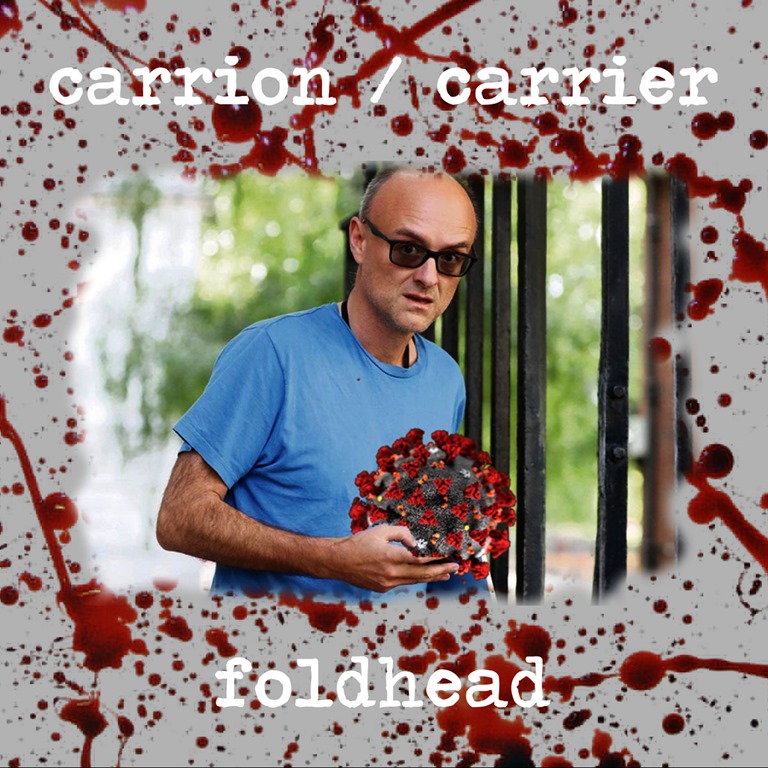
The latest release from Yorkshire electronic noisemaker Foldhead comes with no information whatsoever. It features just one track, and laser synth sounds throb space-age pulsations into a void of distant dissonance and static air. Voices crackle somewhere almost subliminally as if tapping into the mutter line. Change the frequency. Same distorted, indecipherable message. Feedback. Hiss. Hum. Extraneous noise. Sounds like something… something indefinable. Something out of range. Something unsettling. Not painful, but uncomfortable.

At the four-minute mark: silence. Is that a low rumble or simply the heating and my laptop’s hard-drive?

The ponderance is disrupted by crawling, squalling extranea, a mess of feedback and treble, scrapes and hovers, a mid-range, mid-air act of defiance against comfort. The volume takes unexpected incrementals steps upward, while the stuttering rotary stammerings continue to churn and thrum. Faint trills of treble and low-level grinds emerge and fade. The swell of sound is increasingly unsettling as the volume and density increases… ad then, an abrupt end. Silence. This is how it ends. This is how everything ends.

Now, I like noise, but am often relieved in some sense when it ends. Foldhead’s latest isn’t as oppressive as that, but there is a certain sense or the pressure lifting after the end. It may only be ten minutes in duration, but Radio Dust MAG 4.wav has a certain sonic intensity from which there is no escape until that silence descends.

AA

Foldhead - Dust