Posts Tagged ‘Noise’

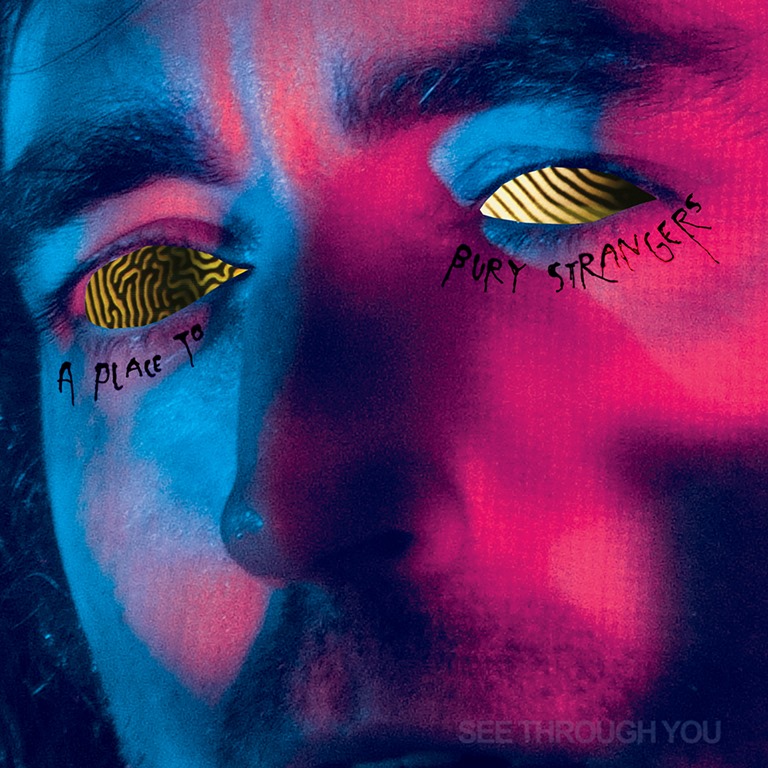
A Place to Bury Strangers find tenderness in the unlikeliest of places with ‘Love Reaches Out’, the fifth single and new music video from their critically acclaimed sixth album, See Through You, out now (digitally) and on March 11th (vinyl) on Dedstrange.

“’Love Reaches Out’ is the hope at the end of the tunnel that concludes this album,” says Oliver Ackermann. “I went through such a traumatic experience writing this record and yet people were there to help me, so this song is about appreciating and thanking them.” With its triumphant marching snare and a hooky bassline, ‘Love Reaches Out’ concludes See Through You on a warm and fuzzy note—though not the guitar kind. No circuit can contain the electrifying joy of two souls united. “Moments like this highlight how much [Ackermann has] grown as a singer,” writes Heather Phares at AllMusic. In her review of See Through You, she praises ‘Love Reaches Out’ as “Ackermann and company’s most empathetic song to date.”

In the music video directed by horror auteur Gabriel Carrier (For The Sake Of Vicious, The Demolisher), the third in a series of horror movie directors the band reached out to, a woman unexpectedly encounters and reaches out to a shapeshifting entity in the most unlikely manner. This entity befriends her after it was left for dead and gives her the support needed to help battle her own anxiety and inner demons. “It reminds us not to turn a blind eye to the small things and that friendships can manifest in the most unlikely ways,” says Carrier.

Watch the video here:

AA

5tqs_APTBSLoveReachesOut

Forged in the fires of the East Coast underground music scene in the 90s, experimental Hip Hop pioneers, Union City, NJ-based duo Dälek has spent decades carving out a unique niche fusing hardcore Hip Hop, noise and a radical approach to sound. Their brutal sonic temperament pushes rap music’s capacity for noise and protest to some exhilarating conclusions.

Following in the footsteps of their predecessors Public Enemy while drawing from influences as varied as My Bloody Valentine and German experimentalists Faust, Dälek have succeeded in adding completely new textural and structural dimensions to rap music.

A visceral and powerful live act, Dälek spent over a decade touring and bringing their raucous and blistering performances to audiences around the world. During this time they toured with and supported a wide range of acts in the Hip Hop, Rock, Metal, and Experimental genres including Flying Lotus, De La Soul, TOOL, The Melvins, Grandmaster Flash, Pharcyde, Fantomas, KRS One and The Bug.

For their latest and eighth album, Precipice, Dälek unleashes a work that is practically bristling with fury and power. Arriving on April 29th via Ipecac Recordings. Predominantly the work of the core duo, Will Brooks, aka MC Dälek and Mike Manteca (Mike Mare), Precipice features a guest appearance of Adam Jones of Tool on one of the album’s tracks. The band has enlisted Paul Romano (Mastodon) for the striking cover art, and the packaging features the art of Mikel Elam.

Today Dälek are sharing a video for the brickyard boom-bap track ‘Decimation (Dis Nation)’ which was directed by Brooks and can be viewed here:

AA

Initiated before the outbreak of COVID-19, the group briefly put Precipice on hold before returning to inject a newer, more dynamic energy into the album’s songs. The result is a timely work, that is teaming with immediacy.

Precipice was a completely different record pre-pandemic.” MC Dälek explains. “We had been working on the sketch of what the album was going to be at the end of 2019. I think me and (Mike) Manteca had narrowed it down to 17 joints out of the 46 or so that we had started with. Me and Joshua Booth had taken the 17 and really fleshed out the joints. The idea was to bounce them back to Mike and then arrange and write lyrics. 2020 obviously had different plans for everybody. We basically put everything on hold. I ended up doing the MEDITATIONS series that year on my own. I think the catharsis of that project, its rawness, the pandemic, all the death, the social upheaval, everything that went down… when I went back and listened to what we had down… it just wasn’t right anymore, it wasn’t strong enough, it wasn’t heavy enough, it wasn’t angry enough. It just didn’t say what I needed it to say.

With Precipice, Dälek have once again tapped into the heartbeat of the day and used that energy to create a vital statement about the world we live in. Continuing in the long tradition of revolutionary Hip Hop, Precipice builds new cadences born out of tumultuous times.

After decades of challenging and expanding the sonic fabric of Hip Hop itself, giving way to new approaches and possibilities, Dälek is set to take their rightful place as one of the culture’s true innovators.

AA

Dalek

Photo Credit: MICHAEL PATRAS

ant-zen – 4th February 2022

Christopher Nosnibor

Increasingly, when the consumption of music and art in general has become increasingly focused on accessibility, ease of consumption, and essentially a trade in intangibles – many no longer own any music physically, and simply stream everything – there is, conversely, a keen hankering and a strong, if niche, market for artefacts. Having grown up with first vinyl, and then CDs myself, I get this. The idea of not actually ‘owning’ your collection is bewildering, and the fact is that a playlist is not a collection. What happens when a subscription site folds, or when an artist withdraws their work from your platform of choice? Even bands who host their own music on sites like bandcamp, can withdraw or delete it at any time.

I’m no fan of MP3, but at least with an MP3, you’ve got something (although it pays to back up, or you might not). But with a true physical format, apart from fire or flooding, you have something pretty robust. But that’s not even half of it. It’s about the experience. The object. I can still recall when and where or how I came to acquire a large percentage of my collection, which runs well into the thousands of records and CDs (but no longer tapes, so much, for various reasons).

With the vinyl renaissance well under way, the late-cut single is very much a growth area. These things aren’t cheap, but what pressing plant is going to do a dozen copies? Meanwhile, a lot of artists with small fanbases still want something physical, but it would likely take then several lifetimes to shift a couple of hundred or more units. And then there’s storing the things. No-one wants boxes of unsold inventory they’ve paid a fortune for filling the spare room. And so, those who want something to cherish and simply own are generally happy to pay that bit more for something intrinsically scarce.

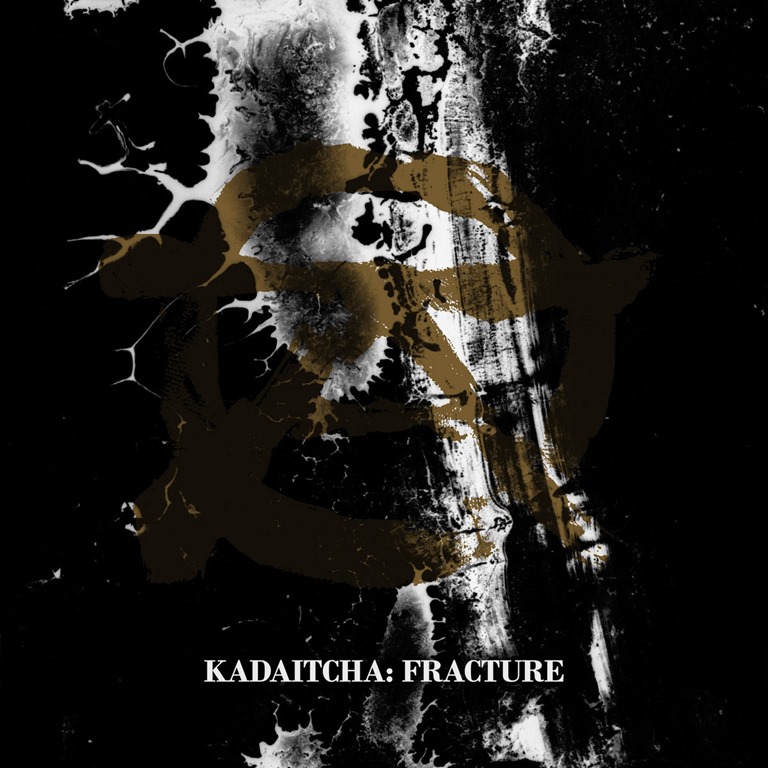
Kadaitcha’s latest, ‘fracture’ comes as a square lathe-cut 7”, which looks like one heck of an item, and of course, digital download, and contains two heavyweight slabs of dense, thunderous noise.

‘night’ is a crunchy, doom-laden drone driven by industrial-strength percussion. The guitars buzz and the vocals growl, almost submerged beneath the dense, murky noise; the beats blast like the heaviest machinery known to man. It’s like a black metal Swans. Flipside ‘rekill’ places the electronic to the fore, sounding like a JG Thirlwell remix of Nine Inch Nails with stuttering blasts and walls of digital distortion exploding from the speakers. It’s overloading, everything all at once, an instant headache distilled and amplified. This, of course, means I absolutely love it. Feel the pain.

AA

a2994709684_10

Dedstrange Records – 4th February 2022

Christopher Nosnibor

A Place To Bury Strangers have been pigeonholed variously in the brackets of noise-rock, shoegaze, indie, space-rock, and psychedelic rock. All of these are fair and accurate, but fail to represent the band’s expansions of these genres, and the fact that for all the noise, there is nuance. Listening to their catalogue of ear-bleeding sonic squalls reveals far more depth and range than this reductive characterisation implies.

The last few albums have tracked quite a journey, and See Through You resumes the trajectory of Worship and Transfixiation, whereby the production became evermore wayward and unconventional ahead of the rather safer-sounding pop-orientated Pinned (these things are relative, and it was hardly R1 mainstream pop). With each release, they’ve stepped further and further away from the accepted conventions of production and mixing, not only going evermore lo-fi, but also shunning by stages the conventions of balance, of tone. The vocals are way down, the drums are way up, and the EQ is utterly fucked as everything wallows in a murky midrange. It’s not an easy listen, and the song structures are far from obvious or clear either

So while recent single release ‘I’m Hurt’ leans heavily on The Jesus And Mary Chain’s ‘The Living End’ (and it’s by no means the first time they’ve taken cues from JAMC), the reverb echoes into a cavern of murk, as if a mudslide has slipped into said cavern. The chaotic crescendo that explodes by way of a finale still splinters the eardrums, but it’s not in the kind of blistering wall of treble that defined their sound up to Worship.

This evolution was necessary: they’d taken the limits of blistering psychedelic shoegaze wall of noise to – and beyond – its limits, with Worship standing as something of an apogee. But this was the album that also saw them recognise their limits while pushing beyond them. They have returned to more overtly structured songs for this outing in comparison to Transfixiation, while testing boundaries once more after the comparative retreat of Pinned. In short, it’s A Place to Bury Strangers at their best. That’s to say, it’s a squalling, blistering racket and it hurts, and there’s a fait bit going on, and beneath the crazed noise, there are some tunes. In fact, there are a fair few tunes, and some good ones at that.

The first track, ‘Nice of You to be There for Me’ feels like sarcasm and the guitars sound like melting cheese, the sonic equivalent of Dali’s clocks, a warping, dripping mess. And fucking yes. It’s as exhilarating as it is fucked up. ‘So Low’ does return to the spiralling explosive bass-driven racket of Worship and Transfixiation, but then things start to get really fucked up on ‘Dragged into a Hole’ as the frenetic disco beats are all but buries beneath a driving wall of obliterative bass and screaming guitar feedback. The distorted vocals only add to the head-smashing experience.

‘I Disappear (When You’re Near)’ is another bass-driven doomer, the pairing of a metronomic mechanised drum beat and throbbing bass that’s booming, grainy, distorted, and swathed in reverb is powerful. The guitars merely add texture, screams of feedback occasionally breaking through, while the vocals float in the swamp of noise. If It’s not already apparent, this is a noisy album. ‘My Head is Bleeding’ is kinda subdued, kinda electro, kinda pop, but in a Suicide sort pf way, and when the guitars explode in a fizzy mess, it’s an absolute rush, and everything that’s good about APTBS.

Closer ‘Love Reaches Out’ is essentially ‘Everything’s Gone Green’ merged with ‘Ceremony’: it’s the closest they get to commercial pop on this crazy roller-coaster of post-punk noise – and there is certainly a lot of noise.

So what to make of See Through You overall? It’s a solid album and quite daring, on many levels. When a band of this statute releases an album half their fans probably won’t like, you have to give respect to their prioritisation of their artistic vision.

AA

920817

Room40 – RM4163 – 3rd December 2021

Christopher Nosnibor

Field recordings are rarely something one would consider ‘contemporary’, although if you think about it, they invariably capture a moment in time in some way or another, be it the morning of the dawn chorus or the grind of machinery which is firmly post-industrialisation; the sounds committed to tape all document history in sound.

Ian Wellman’s latest release is quite specific in its focus on present times. It is almost impossible to avoid the pandemic; it has, after all, affected all of our lives, and in myriad ways. As the accompanying text states, ‘If this past couple of years has taught us anything, it is that to hold someone closely is not something we may take for granted. The bonds of friends and of family are tenuous, as tenuous as the world that we find ourselves in.’ While most attention has understandably been given to the vulnerable, the bereaved, and the sufferers of long covid, there have been long—terms and slow-evolving effects on everyone. And this is what Wellman soundtracks with subtlety and care here.

The parenthetical ‘(Police Helicopter Activity Increased – Jul 2020)’ is brief, but it’s impactful. On the one hand, it’s a simple snippet of the sound of rotors; on the other, it’s the kind of conglomeration of low-flying helicopter buzz that makes you duck and look up and feel paranoid: police helicopters hovering or circling overhead always do, right?

The final moments of ‘It Crept into Our Deepest Thoughts’ bursts into shards on abrasive noise in the final moments. It’s on ‘The Toll on Our Daily Lives’ that Wellman really encapsulates the struggle. The first four minutes are dislocated ambience, which reflects the general sense of detachment and distance, but the last minute is dominated by a rising tide of noise, a surging swell. And it speaks because it really is the sound of swelling tension and anguish. The reality is that living through this is not something that belongs to a ‘model’, there is no fix by means of re-engagement. This resonates because it speaks to and of the building anxiety, and it builds because maintaining that level of alertness, that level of fear, actually has a cumulative effect in real terms, and we’re simply not designed to process life in the now. There is nothing normal about this, old or new, and ‘The Toll on Our Daily Lives’ encapsulates this perfectly, both in its title and the sonic smog that ambulates broodingly, again growing in density and becoming more oppressive and heavy and harsh as it progresses. You feel not only the weight, but the tension. It’s real, it’s palpable, and it’s a direct reflection of life as lived.

The interludes, too, are so very visual and evocative: a cock crows and what sounds like rainfall and passing cars crackle and splash on ‘(Ash Falling on Power Lines – Sept 2020)’ (the ash of wild fires burning), and there’s a post-apocalyptic feel to ‘(Wind Against Decaying Bus – Jan 2021)’, and they all combine to create what the blurb describes as ‘a devolving diary of unsteady moments and the assurance of change as the one constant in our collective times’.

‘As The Beast Swallowed Us Whole’ veers between ominous rumbling and near-ambience and surging, cracking textured distortion that borders on noise, and there is nothing comforting about this album. Even the final track, the optimistically-titled ‘The Light at the End’ is woozy and disorientating, and evaporates into a crackle of static that ends abruptly, and feels more like the light being snuffed out. You want to be wrong… but life… it’s a killer. Swear all you like, but whether or not it’s going to be okay remains to be seen.

AA

a0173304686_10

Wharf Chambers, Leeds, 3rd December 2021

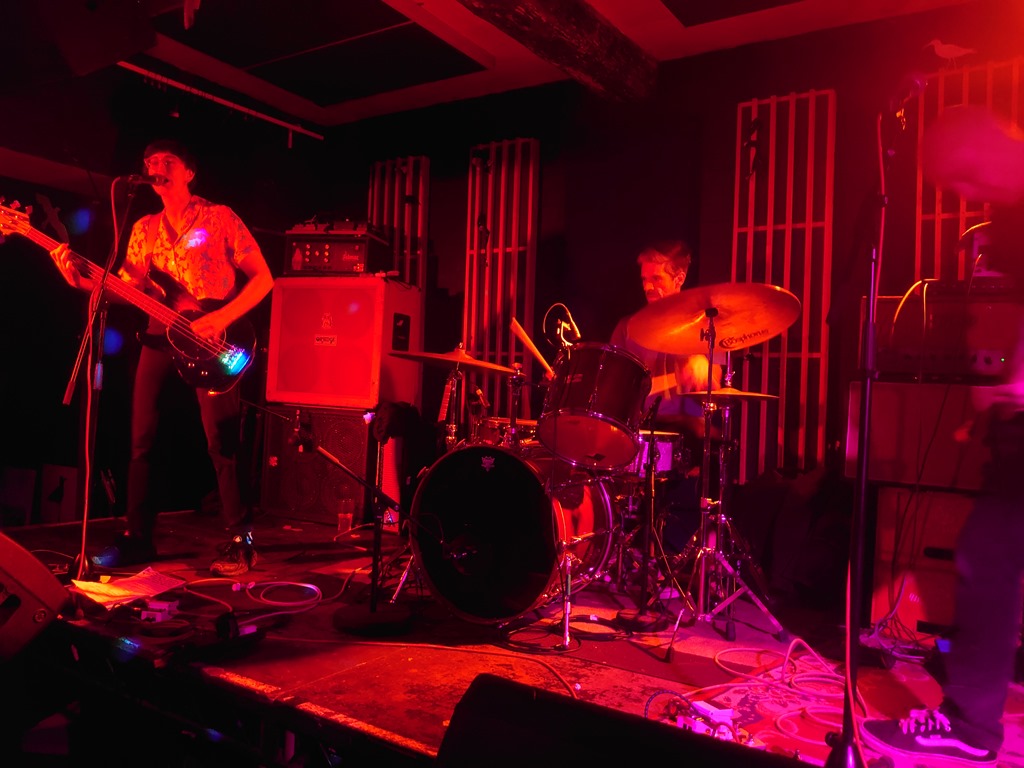
This is a show I’d been revved for for quite some time: on their last visit to this venue, back in 2017, noise veterans Part Chimp blew me away with the sheer quality of their performance, as well as their sheer volume, prompting me to ruminate on how ‘they radiate noise from every orifice and every pore’ and how ‘the guitars serrate your skull and the bass vibrates your solar plexus and every riff is as heavy as a small planet and the drums as hard as basalt.’ Experiences like that are rare, but also addictive: as a gig—goer, you want every show to replicate that level of thrill, that mind-blowing intensity, and it’s a dragon you’ll chase and chase but rarely capture. There’s also a thing about seeing a band for the first time, when you don’t know really what to expect, and then whatever your expectations may have been, they’re confounded tenfold. Second, third, fourth time around, it’s unlikely you’ll feel that same sock in the face.

Anticipation for the evening stepped up a few notches on disclosure of the support act, Objections, being ‘a pair of Bilge Pump’s and a Beards’. ‘Formed in 2007, dispatched in 2018’, the latter splattered their way onto the scene with their sound defined by the explosively angular racket of their debut album ‘Brick by Boulder’, and during their existence, proved to be a stunning live proposition. Meanwhile, the former, revitalised in 2019 after almost a decade’s silence had been reaffirming their status as Leeds legends prior to the pandemic halting their live activity.

Objections is Bilge Pump’s Joe O’Sullivan and Neil Turpin with ex-Beards’ Claire Adams. Claire covers bass and vocals, while Joe’s weapon of choice is a 12-string, which brings some real depth and density to their brand of sinewy post punk. It’s goth meets math rock, and at the same time combines the best of both Bilge Pump and Beards. The guitar provides texture and tone rather than tune, sculpting shapes, and watching O’Sullivan is always a joy, not to mention exhausting: the man is a relentless blur of energy (and impossible to [photograph without better kit than mine), and plays every chord with his entire body, leaping, lurching, and perspiring heavily every whichway. Adams’ bass is stop/start, lumbering, and the choppy, angular songs with their variable time signatures are held together with precision percussion from Turpin. Oftentimes, a relentless repetitive rhythm grinds a backdrop to peeling shards of guitar splinters, and chunk funk bass drives a collision between Shellac and Gang of Four, leading towards an ultimate space rock finale. They are stunning, and the place is busy, and the reception they receive is well deserved: this is one of those occasions where you could leave immediately after the support and feel that you’ve easily had your money’s worth.

DSC_1127DSC_1123

Objections

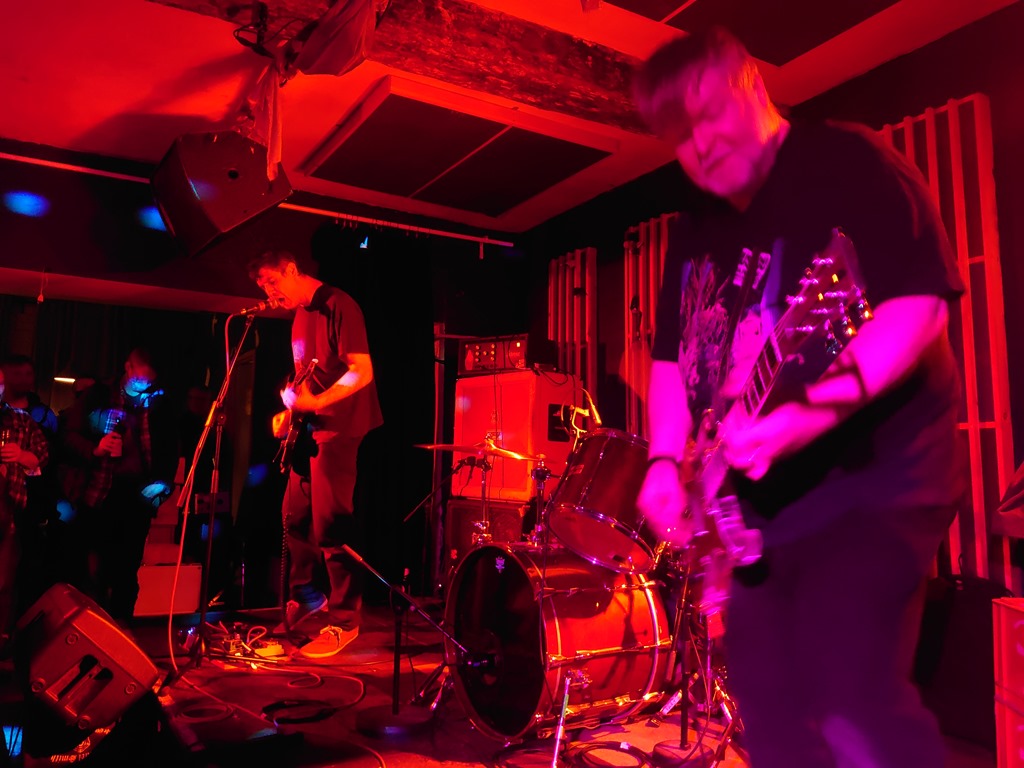
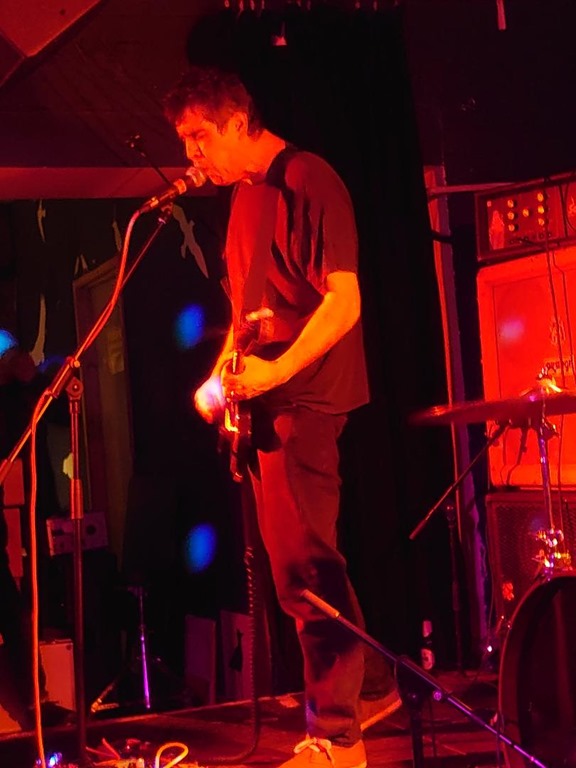
But then, it’s Part Chimp headlining, promoting their latest album, Drool, their sixth proper in their twenty-year career and the follow-up to 2018’s Cheap Thriller, and it’s the final track from this album that they power into a blistering set that’s a massive barrelling noise of relentless riffery from the off. They’re out as a three-piece sans bass tonight, but make enough racket for infinite members, with enough downtuning to cover the low end. And when I say that they’re loud, I mean they’re seriously fucking loud. Standing front row stage right I’m overwhelmed by the speaker shredding backline of Iain Hinchliffe’s guitar but it’s magical – obliterative, immersive, cathartic.

At this point in their career, they’re no longer young, and they’re not overtly cool, with their beanstalk singer and somewhat squat and unsvelte guitarist, but it’s the music that matters and makes them the coolest guys around: they make the best fucking noise, and may have just released their best album, which occupies half the set and reveals its range magnificently. Battering away at a couple of chords blended with all the distortion and feedback, the vocals buried in echo, and there’s a sample that runs between the songs throughout set in a fashion that’s reminiscent of the loop that runs through Rudimentary Peni’s Pope Adrian 37th Psychristiatric. With guitars like bulldozers blasting out rifferama ear-bleeding volume – did I mention that the volume’s up to twelve or thirteen?

DSC_1143pc...

Part Chimp

There are occasional hints of Hawkwind happening, but overloaded with distortion and howling feedback at a thousand decibels and there’s some bad trip psychedelia slow and hypnotic in the mix. But Once again, it very quickly becomes a haze, and it’s impossible to do anything but yield to the wall of sound and enjoy. Live music fans live for moments like this, and it’s clear that everyone in the room was in the same space. If there is a heaven, it has to be this.

Nim Brut – 19th November 2021

Christopher Nosnibor

The hardest battles are those against yourself: they’re perpetually self-defeating and at the same time impossible to win. A duelling duality creates the core dynamic of Rejection Ops. The Leeds-based duo’s bio describes them as ‘a drummer and bass-and-electronics player who sound like each is trying to outdo the other at driving audiences from the room’, presenting a scene of duality and conflict, and this document of that internal tension was captured in its rawest form, namely self-recorded on a Zoom recorder during May 2021, so no engineering panache or highly-detailed production values here, no layering, multitracking, or overdubs. And it’s a mangled, gnarly mess of noise from beginning to end. It’ sets your teeth on edge, it makes your organs vibrate. It makes you feel tense, and grind your teeth. And these are the reasons to love it, because it has impact. It’s not some comfortable background work, and it’s not even songs that drift into your ears and lodge softly but with longevity. Rejection Ops vs. Rejection Ops is pre-emptive revenge for something you may do, and it’s going to punish you hard for it.

The first track, ‘Agendas Vary’ is a squall of feedback and overloading noise pitched against a tempest of thunderous drumming, and it does that free jazz thing of sounding like the climactic finale of an epic set without there having been the epic set preceding it. As such, it’s seven minutes of ear-bleeding, cranium-crushing chaos that doesn’t go anywhere, but then isn’t intending to.

‘Atomic Basketry’, the album’s longest track at almost eight minutes in duration, ratchets up the noise and almost buries the percussion beneath a blistering squall of screaming noise, a tidal wave of treble, a deluge of distortion. Blistering electronic noise, a bowel-shredding harsh noise wall splatters against arrhythmic clattering.

Thereafter, the form shifts away from expansive and exploratory towards brief blasts of mangled abrasion, every one faster and harder and wilder and more off the wall. Guitars thrashed hard splinter in a mesh of treble while the drums pop like bubblewrap. ‘Heeding Tartan’ is particularly abrasive, two-and-a-half minutes of metal-scraping, crunching, white hot molten noise, and ‘Raging Ninepin’ rages hard, so hard it blisters and peels and pulverises the grey matter to the point of near liquefication. The drums ricochet hard and fast like machine gun fire through ‘Rat Pie’, which snarls and crackles hard, but it’s all just a prep for the sonic blitzkrieg of the final cut, ‘Soon Learned’. Even sooner remember earplugs would be the advice, because this absolutely fucking hurts. Again, it’s three and a half minutes of everything all at once, only here, it’s the head-shredding crescendo climax it sounds like, rather than just some avant jazz end without a start.

By the time it’s over, you feel battered, bruised, drained, but also buzzed and exhilarated. The purpose of art is not to entertain, but to challenge, to arouse the senses. Rejection Ops certainly challenge – not only the listener, but themselves and one another, to create a stupendously intense experience.

AA

a3422423491_10

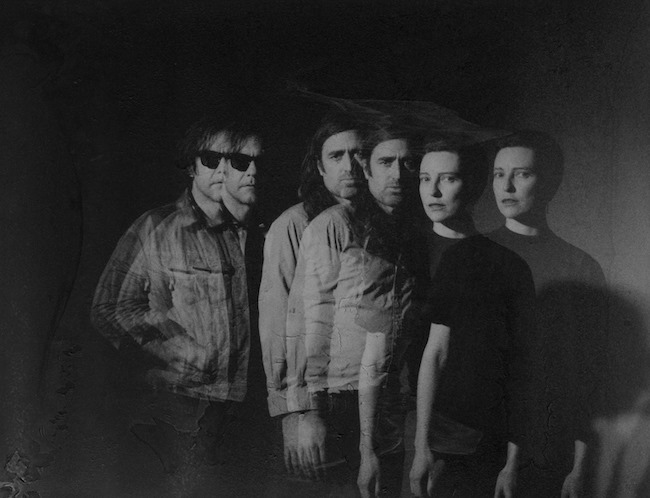
A Place To Bury Strangers announce the release of their sixth album See Through You on 4th February 2022. It’s not just a return to form for the band, but also a return to their fiercely independent, DIY roots on their own label, Dedstrange.

Outpacing even their own firmly blazed path of audio annihilation, this 13-track album repeatedly delivers the massive walls of chaos and noise that A Place To Bury Strangers are renowned for. It’s an explosive journey that explores the listener’s limits of mind-bending madness, while simultaneously offering the catchiest batch of songs in the band’s discography. It’s a nod to the art school ethos of the band’s origins, while forging a new and clear direction forward.

The first single ‘Let’s See Each Other’ is an intimate and disarming love song from a forgotten future. Syncopated memories and deconstructed fantasies of lovers lost in a city that doesn’t know their names. The accompanying video, directed by David Pelletier, features the band destroying the song while imploring people to reunite.

Watch the video here:

AA

5tqs_APTBSPhotobyEbruYildiz650

Photo by Ebru Yildiz

I know, I know, poor form, etc., etc. But hey, it’s not every day this kind of thing happens.

…(something) ruined coalesced by happy accident as a live proposition. Like so many bands, lockdown hit our progress and development hard. The ‘white noise and shouting’ worked because of a combination of factors all in the moment – extreme volume, intuition, adrenaline, the consumption of alcohol. Replicating the vibe without those factors proved to be a challenge – but, when offered the platform of the FEAST online streaming events organised by the Nim Brut label during lockdown, it felt like an opportunity to develop a new way of working and to refine that sound in a more controlled setting. Trial and error led to the creation of noise first, vocals second, and over the course of several months, thing evolved, and …(something) ruined became something more, with not only a more defined sound, but a thematic focus lyrically.

E.P. is a cohesive document, but also a document of an evolution, and the tracks are presented in the chronology in which they were created, each first aired at a FEAST event.

‘Life Is Too Short’: small frustrations simmer and boil over when presented with the stark reality that you could die tomorrow and you’ve squandered the last 10 years your waking hours being nice and pandering to utter cunts.

‘On Mute’: anthem for remote workers around the globe as we’ve watched cretins babble away merrily on video calls while no-one can hear a single word – although, frustrating as it is, it’s usually better than hearing their words.

‘Harder, Not Smarter’: another corporate classic. Time and again management promote smart working, time-saving, and economy. But for all the words, there’s only whip-cracking ultimately.

‘On Brand’: brand isn’t just slogans and advertising. It’s an ethos. You don’t just work for a company, you are the company, a walking promotion. Live the brand.

AA

a0772507179_16

Neurot Recordings / Gilead Media – 8th October 2021

Christopher Nosnibor

Less is more. This is something that few bands appreciate or understand half as well as Kowloon Walled City. And less doesn’t have to mean less intense: if anything, it’s a major factor in the ‘more’ element of the equation. Instead of hitting the listener with hard volume, relentless drumming, and gnarly distortion, Kowloon Walled City distil emotional pain into something simple and direct, and in doing so achieve optimal impact.

Their last album’s crushing weight derived not from its pace or even its volume, but its sense of space. Instead of filling the air with big noise, each chord crashed down hard and rang out into silence. In that space, Singer/guitarist Scott Evans’ vocals conducted pure anguish and blank nihilism. No throaty metal stylisation or posturing, just a kind of shouting – a shout of pain, of psychological torture – the torture of existence.

It’s the space between the sound that they’ve explored in the evolution of their fourth album, Piecework – their first output in six years. Make no mistake: Piecework is fucking heavy. It packs some utterly gut-punching, seismic riffs that drive hard, and when they hit, they’re utterly pummelling. But it’s the bleakness, and the blankness, that’s most affecting, that really hits the hardest. In the first instance, it’s simply so raw, so unprocessed. With the vocals clean and up-front, it’s the humanity that’s at the fore.

Not that there was any fat on Grievances, but with Piecework they pare it right down to the bone, and then scrape away a little more. Whereas most of the songs of its predecessor sat around the five or even six-minute-plus mark, Piecework packs seven songs into around half an hour. In cutting back so hard, the effect if heightened as the grey walls close in tighter, faster, more likely to bring a crushing end. The effect is cumulative, and there are no clear standouts on Piecework, only a sustained slug driven by a low, lumbering bass. It’s a bass that really churns the gut, and it has a physical force.

The production captures this dark, dense force perfectly, conveying a sound that feels live, that feels real. Wish you were there? Hell yes: we all need a bit of fortune, and Piecework is both beautiful and harsh. When they bring it down to nothing but a single note hanging in the ear, I’m reminded of latter-day Earth, and it’s clear that space and time matter.

As the press notes tell us, ‘Evans was dealing with the loss of his father during the writing of the album. He found strength in the women in his life, especially his maternal grandmother, who worked at a shirt factory in Kentucky for 40 years while raising five kids. The album name (and title track) is a nod to her line of work—and her quiet resilience.’ The lyrics are at once abstract and packed with images. There are no specifics, only scenes, and they’re bleak ones, of claustrophobic confined spaces, of deathbeds.

And it’s no criticism that this feels like an album of graft: the rhythm section ploughs on, and on, relentlessly, as if their duty is pure graft, digging, digging, digging. In the same way that early Swans was the sound of punishment, so Piecework is a soundtrack to the brutal reality of production-line capitalism.

The album’s predominantly slow pace is not the sound of rapid mechanisation, but of soul-sapping drudgery, the crushing weight of negative progress. There is no respite, no detours to bathe in moments of human kindness, the idea that for everything, there are glimmers of light and optimism. No, Piecework is an album with no let-up, in the way that Unsane are unrepentant, unremittingly grey in their outlook and execution. It hammers and bludgeons away at the senses and prods hard at the frayed nerve endings, the space and dead air speaking to the emptiness that hits us when the noise stops. Life is short and life is cruel, and Piecework is the perfectly merciless reminder of that.
065653