Posts Tagged ‘Noise Rock’

EMI North / Launchpad+ – 30th March 2026

Christopher Nosnibor

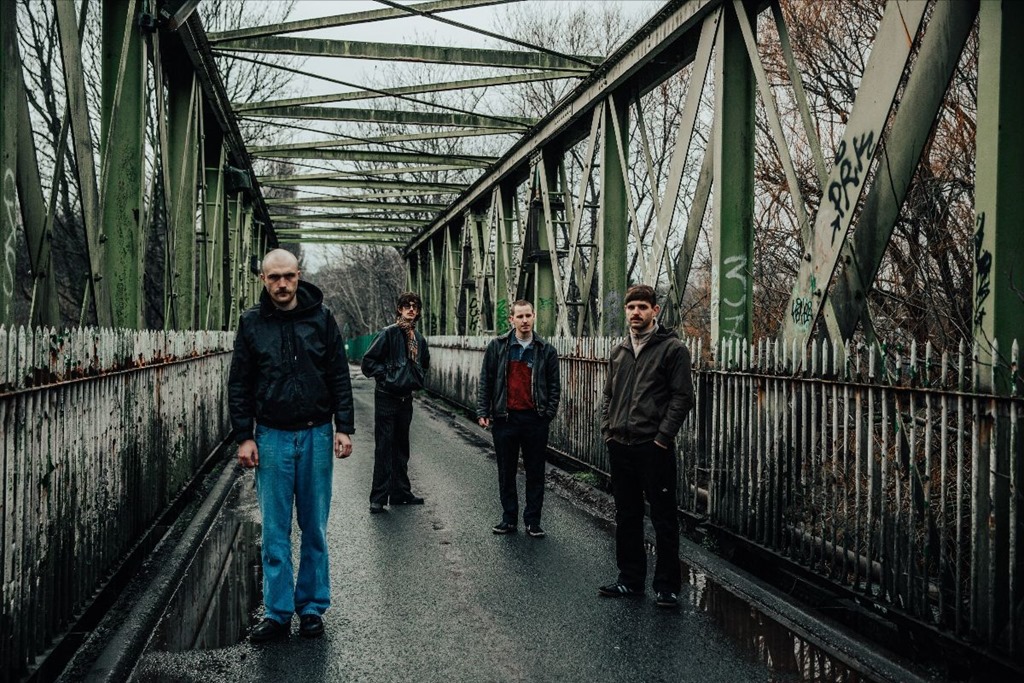
The 113 have done it again – only this time, more so. Like its predecessors, single ‘When I Leave’ is take from the forthcoming debut EP, The Hedonist, which is due to land on 17th April. And once again, it steps things up.

It follows the noisy path of debut, ‘Leach’, a vitriolic blast which powers in on a thick, thunderous overdriven bass, paired with an attack of heavy-hitting, cymbal-smashing percussion, slamming in with hard impact in the opening bars. Immediately, it’s the sound of a band that means business and arrives with a physical force. The vocals are straight in with a pumped-up spleen-venting tone of disaffection, and on this outing, the focus of their dissection and dissatisfaction with the conditions of contemporary living is lasered in on ‘the personal, exploring the gamified and repetitive nature of dating apps, where every interaction can seemingly begin to blur into the next’.

The accompanying notes expand on this, explaining how ‘the track captures that specific sense of cyclical monotony; scripted conversations, fleeting intimacy, and the almost inevitable feeling of disillusionment that can occur following the search for something real within systems designed with the purpose of endless scrolling: “Nice to meet you! Scratch the skin and we’re done, and hold the stench of a thousand pros playing for fun”.

Does anyone actually gain anything but grief and stress from dating apps? A few shit experiences, perhaps gathering a stalker or pest along the way, but really, how many find love – versus how many find nothing but the dregs of humanity?

It’s perhaps relevant to mention here that I met my (now late) wife online, in a music chatroom, at the turn of the millennium, before dating sites existed and before it was socially acceptable to meet people from online in real life. Her friends and parents were far from encouraging about her meeting me: back in 2000, the perception was that the Internet was full of weirdos, creeps, stalkers, and worse. Now… perhaps we’re more willing to take those gambles with the ever-expanding creep of isolation as a result of floating office hours, where people only see one another occasionally, the death of after-work drinks, and social media taking precedence over in-person interaction. How do you meet new people nowadays? Is this really what we’ve come to? It would seem the answer is yes….

And then, the guitar kicks in over that thick bass and pounding percussion, and it’s squalling and dissonant and then everything hits a laser focus to drive home a blistering chorus – their strongest yet – and POW! ‘When I Leave’ is two minutes and thirty-seven seconds of concentrated, distilled intensity.

AA

AA

0d196b4a-4c79-956e-eb71-fd2197f121c9

Credit: Naomi Whitehead

Fucking North Pole Records / Captured Records – 20th March 2026

Christopher Nosnibor

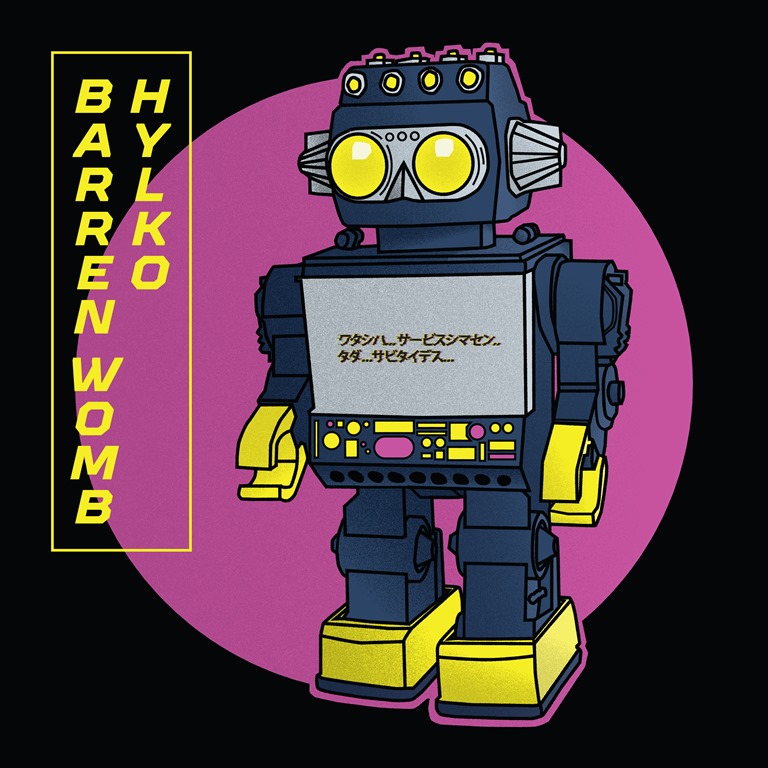
This single is pitched as ‘a split release that pairs Norwegian noise-rock abrasion with Japanese stoner-psych experimentation, bringing together two bands that thrive on doing things their own way’.

Its arrival is times just before Barren Womb launch a live assault on the UK, which threatens some big noise. Their half of this single, ‘The Perils of Self-Improvement’, which they describe as ‘a mid-tempo stomper delivering grim news for the supposed wisdom of self-help culture’ is an offcut from the Chemical Tardigrade sessions which they withheld specifically for this release, and it sure is a beast, which works particularly well as a standalone release. It’s got grit and grind as well as melody. The verses are hefty, trudging slabs of noise where the bass rumbles and the guitar jabs and the pair – consisting of Timo Silvola (drums/vocals) and Tony Gonzalez (guitar/vocals) manage to blend elements of Melvins and the Jesus Lizard with a dash of psychedelia.

AA

AA

On the flipside, Hylko really go all out on the psych, presenting a deep, dark, spinning riff which lumbers and lurches amidst a swathe of flange and reverb. And then it suddenly goes all dark and dubby, with the added bonus of sounds of water and running rivers.

AA

AA

It’s a perfect split release: complimentary but most definitely contrasting, completely wild and all quality.

AA

733508

Cruel Nature Records – 27th February 2026

Christopher Nosnibor

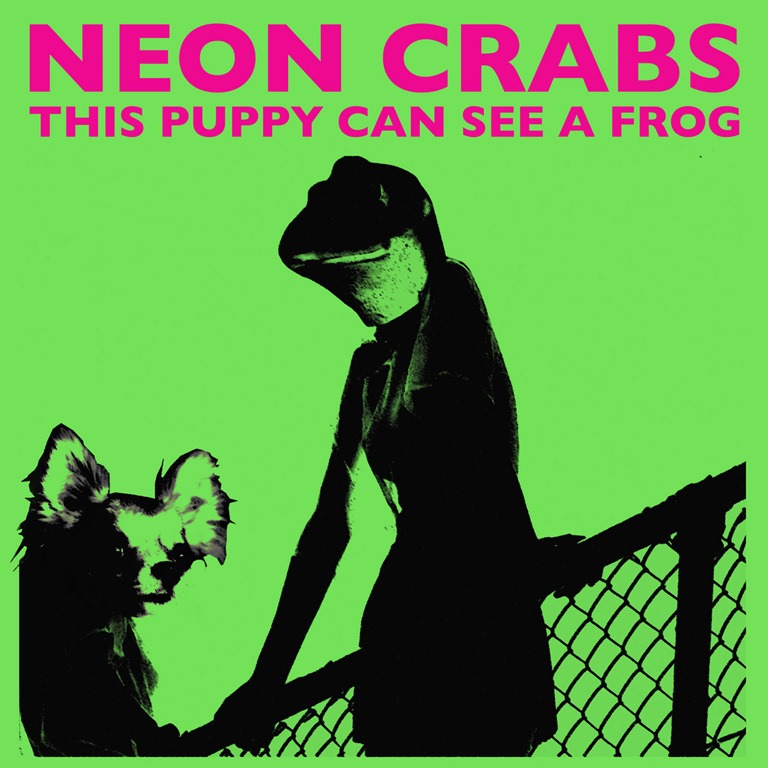
It’s a small world, as they say, especially if you live in York. As a city, it has more of a town feel, and round my way to the south of the city, it’s more like a village. It’s rare that I go for one of my daily walks or head to the local shops without seeing at least one person I know to nod or say hello to, and it’s nigh on never that I turn up at a gig where there aren’t people I know – mostly from previous gigs, and it’s a positive thing: there’s a palpable sense of community. So it’s more of a surprise that despite mutual friends, I’ve never encountered Andy Goz, or his band Neon Crabs, a transatlantic collaboration with Matt Nauseous of Dallas, Texas (I’m guessing those aren’t the names on their birth certificates), which has been operating since 2021. They made their debut last year with Make Things Better? on Half-Edge Records, followed by Drop It On Ya on Metal Postcard Records, with the cassette edition of This Puppy Can See A Frog representing their first physical release.

I’m going to guess that the colour scheme of the cover is no accident, a knowing reference to Big Black’s Songs About Fucking – although the material it houses is more in the vein of The Hammer Party.

It’s pitched as a collision between The Stooges, post-punk, and 90s noise rock, and as a fan of all three, I’m sold. The way in which they draw these elements together to conjure a sonic hybrid is inspired: here, we have the mechanoid, piston-pumping drum sound of Big Black paired with the scuzzed-out guitar fuzz of Metal Urbain. Just as The Stooges were punk years before punk was even a concept, and Metal Urbain and offshoot Dr Mix and The Remix (a huge influence on both Steve Albini and The Jesus and Mary Chain), so Neon Crabs launch themselves headlong into that space where acts were feeling their way around forms, styles, and technologies which seem primitive now, but where limitations led to innovations. This Puppy Can See A Frog has a raw energy, an underproduced, analogue feel with jagged guitars and some loose but dynamic playing.

The songs themselves are simple in both structure and chords – the guitars often straying away from chords to create texture rather than melody. The same is often true of the vocals, Matt swerving between semi-spoken word and drawling, occasionally singing but weaving around a tune rather than following it, in a style that’s perfectly suited to the frenzied maelstrom of discord which fizzes all around. ‘White Collar Witch’ is a messy collision between early Pavement and The Fall circa 1983, and is arguably Neon Crabs’ equivalent of ‘The Classical’.

‘Creature Violence’ adds free jazz to a murky mess amidst which Nauseous lives up to his name with what appears to be an extended riff on the ‘your mum’ insult with some scatological references as an added bonus. Or something. Maybe. The Fall comparisons stand on ‘Vicious Debasement’, a snarling, mess of layers spilling every whichway over a throbbing motorik backing – but then again, there’s a bit of the irreverent chaos of Trumans Water happening here, and a whole lot more.

Things seem to get darker, starker, and more desperate and ugly and experimental during the second half the album, dragging in dubby bass which seems to reference Bauhaus and squalling, scratchy guitar work with hints of Gang of Four and Wire abounds.

The simple act of titling a track ‘Lisa Kudrow’ evokes the spirit of 90s noise rock, the likes of Butthole Surfers and Tar and sure enough, that’s pretty much what you get, with added samples.

This Puppy Can See A Frog is a wild assimilation of sources, a rackitacious mess of noise heaped together as an album. It sounds like it could have been recorded in a dingy basement on an 8-track, or even a 4-track, in the space of a week – and is all the better for it, because it possesses an immediacy and energy that’s rare here in 2026.

AA

AA

a3663775174_10

mclusky have returned with new music (and some not-so-new music) in the form of a mini album called i sure am getting sick of this bowling alley, which ipecac recordings will release on 20th march (digital) and 1st may (vinyl). it will be released in the following formats: digital, black vinyl, ipecac/band translucent red vinyl and the rough trade exclusive variant, crystal fuchsia.

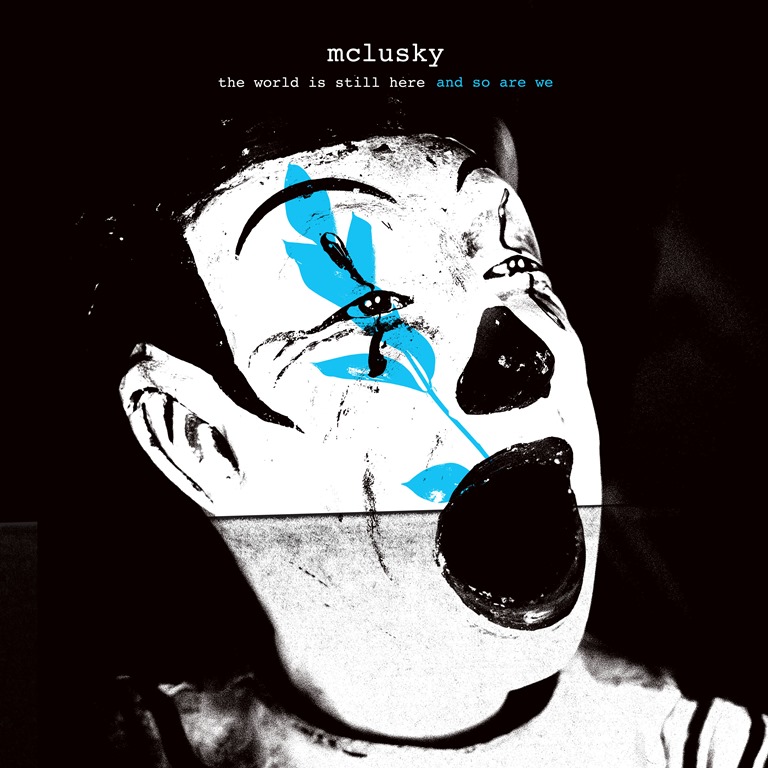
this follows their album the world is still here and so are we which was released in 2025.

content. it drives the modern music world. photos. opinions. more photos. more opinions (please note – not all photos and opinions are bad, just 99 per cent of them). how about – and indulge me here – music? that content-y enough for you? fact is we can’t stop writing, at least at the moment. it’s fun (that’s all it needs to be). it’s the common denominator of band. only death will slow us down (note – it won’t stop us).

the idea for this release started as a bit of a stop-gap – a thing with which to help promote the north american tour – and ended up as something else entirely. ‘i know computer’ and ‘as a dad’ are new and are singles (they may make the next album, who can say, it’s already half-recorded and you will like it). damien probably likes ‘i am computer’ a bit too much but that’s okay, the heart wants what the heart wants.

‘spock culture’ and ‘hi! we’re on strike’ were recorded during the the world sessions. why didn’t they make the album? i’m not sure. lyrically they are important historical documents, up there with the pusheen the cat books and/or the US constitution.

‘fan learning difficulties’ and ‘that was my brain on elves’ have only had a digital release before and are, to quote british children from forty years ago, ‘skill’. hopefully you can agree that i – and by osmosis, all of us – have read a lot of books. – falco x

AA

the live dates in north america are:

march 24 denver, co marquis theater

march 26 seattle, wa the crocodile

march 27 boise, id treefort festival

march 28 portland, or aladdin theater

march 30 san Francisco, ca the chapel

march 31 los angeles, ca the regent theater

april 2 austin, tx empire control room & garage

april 3 minneapolis, mn fine line

april 4 chicago, il metro

april 6 toronto, on mod club

april 10 philadelphia, pa underground arts

april 11 washington, dc black cat

AA

Mclusky_CornerHotel_rcstills-060126-5105-9900000000079e3c

Photo credit: Rick Clifford (@rcstills)

Ici d’ailleurs – 12th December 2025

Christopher Nosnibor

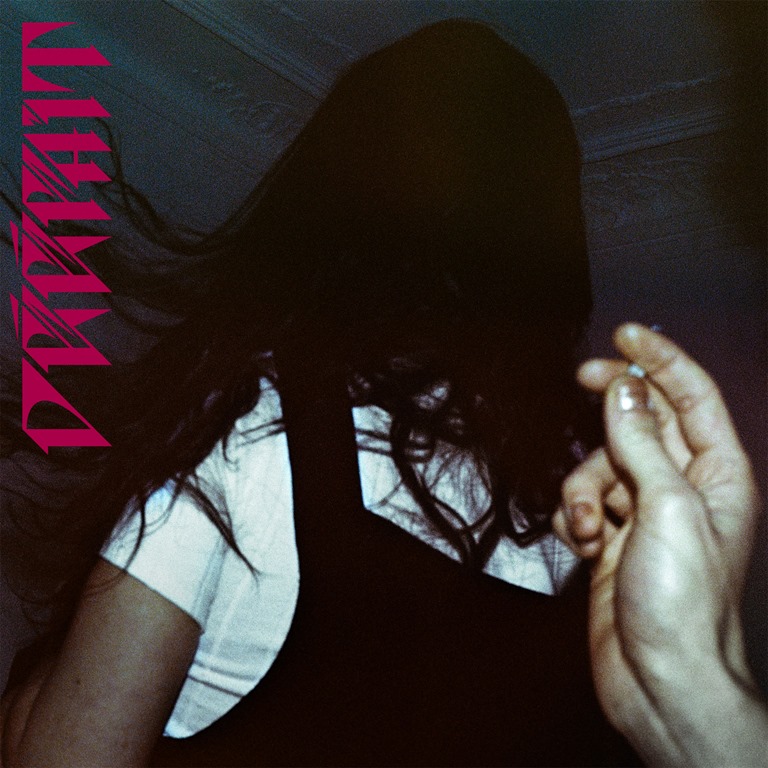
Woah, what? Is that really how it’s supposed to start? Hitting play on Dééfait’s eponymous debut EP and landing with ‘We Love Each Other We Don’t Belong to Any Species Anymore’ feels like crashing in midway through a song: there’s no intro, everything is already happening. And there’s a lot happening. It’s chaotic, lurching explosions of noise erupting through tidal waves of cacophony and discord, frenzied fretwork and spuming mania and derangement are everywhere here, to the point that you wonder if you’ve arrived at the wrong place at the wrong time, and downloaded the wrong files while you were about it. But no: welcome to the weird world of Dééfait

Their bio summarises their sound quite nicely as ‘Somewhere between krautrock, noise rock, decaying psychedelia, and pagan proto-punk’, adding that ‘Dééfait makes music as one performs a ritual: in trance, on repeat, and without a safety net. From the chaotic arteries of Mexico City to the basement venues of the Paris suburbs, Dééfait sculpts noise rock in a state of breathless tension. Their self-titled debut EP is a noise rite: a wall of guitars, incantatory percussion, and possessed voices. With Dééfait, sound twists, repeats, stretches, until exhaustion and ecstasy.’

And yes, this is all true. Dééfait transport the listener into another world, a different space, another time, where you don’t even know what space you’re in or what time it is, what year or even millennia you’re in. The warping, twisting trudge of ‘Molokh ’ is an epic, drifting desert-rock wandering into weirdness.

‘BONDNONDOND’ is a roiling rocker, the context and lyrical content aren’t easy to comprehend, but this I no way detracts from the ability to appreciate the song, which reminds me of …And You Will Know Us by the Trail of Dead. I have no idea what it’s actually about, but it’s a tempestuous aural blizzard which transports the listener on a rising tide which threatens to smash against rocks and deliver annihilation by nature. In contrast, ‘Comatose Big Sun’ is a classic example of 90s indie inspired shuffling jingle with psychedelia interwoven into the dense, droning texture. Ride and Chapterhouse are in the blend when it comes to touchstones here, but so do The Black Angels. They use a similar template for ‘Al’Ether’, but here, everything’s cranked up to ten, a wail of distortion swirls around the rolling rhythm section, and the whole thing goes off the rails in a blast of raucous jazz noise on the last song, ‘Wow! Ferreri Cooked for Us’. Wow indeed.

This isn’t so much an EP as a voyage of discovery.

AA

IDA168EP front

The differences between proper indie labels and major labels are manifold, but a key one is not professionalism, but passion. Riot Season release records for the love, not the money: they make enough to keep releasing albums, and that’s pretty much the aim. It’s by no means a capitalist endeavour. So when Andy announces the next release thus, it’s a sincere reflection of what it’s like to release an album by a band you love:

Over the years, I’ve released many a great noise rock (for want of a better term) record.

And pretty much every one of those bands have been influenced at some point by the Swedish underground legends BRAINBOMBS.

A band that thrills and disgusts in equal measure. With their bludgeoning repetitive riffs, and interesting lyrical themes, They’re pretty much held up as masters of the genre.

So, to be sat here in August 2025 announcing I’m releasing their new album on my little label is a fucking thrill. I’ve been listening to it non stop for about two solid months, and now you lot finally get to have a taste yourselves

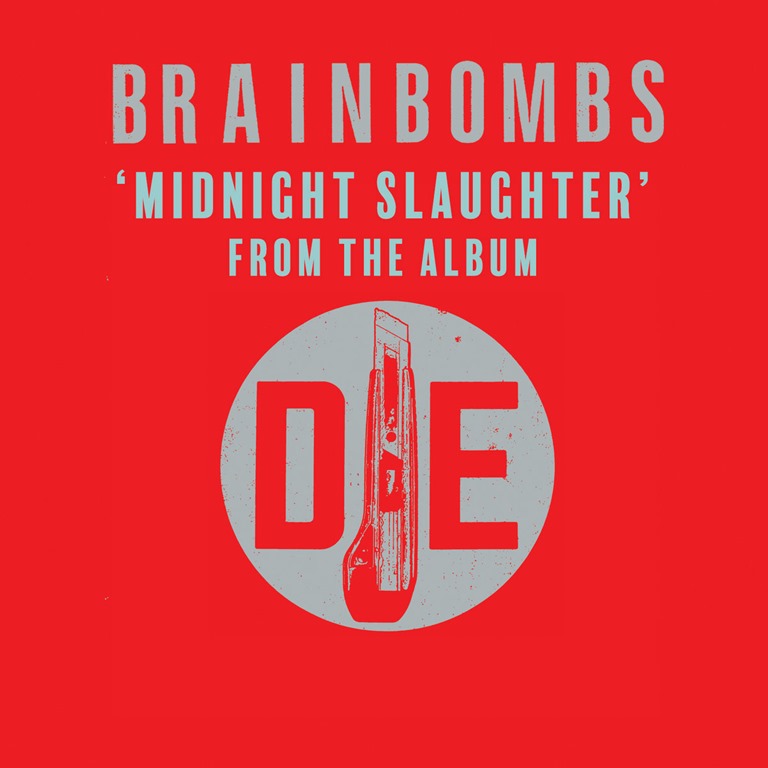
And the press blurb is gold. Read it, and then get stuck into ‘Midnight Slaughter’ below. It’s a killer.

PRESS BLURB

The Swedish underground legends return with a brand new album.

Let this reddit user take over …

“Listening to Brainbombs has been one of my weirdest experiences with music.

Brainbombs are most definitely a band. I guess at the core they’re a hardcore punk/noise rock hybrid I guess? But… its so unlike anything I’ve ever heard and I still don’t know if its good or bad. I saw the edgelord Ed Gein album cover, and it intrigued me, so I listened to their biggest song and it was easily THE WORST thing I had EVER FUCKING HEARD. I shut it off as soon as it got to the vocals. I was shocked by the fact that it had almost a half million streams. But, a few hours later, I clicked on it again and didn’t know why.

Over the past few days, I’ve listened to all of their discography and looped a lot of it. And I don’t even think I like them. The music is abysmal, its the same single riff and verse repeating for 5 minutes. To make it worse, the vocals are just a guy with a swedish accent awkwardly talking about murder and rape. That sounds awful right? It is awful. But at the same time I want to keep listening? It’s so childishly edgy and obnoxiously repetitive but so.. intriguing? Catchy? I’m not even sure. Its one of if not the weirdest experience I’ve ever had with music and I don’t know how to feel about it.”

Anyway: this is good noise. Listen for yourself:

AA

a1584943159_10

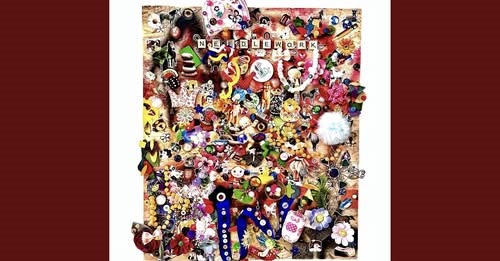
Needlework caught our attention a few months ago when they supported Aural Aggravation faves Soma Crew.

They’ve just dropped the track ‘Saddle Rash’, and we dig. Check it here:

AA

13838193987112654144

Human Worth – 11th July 2025

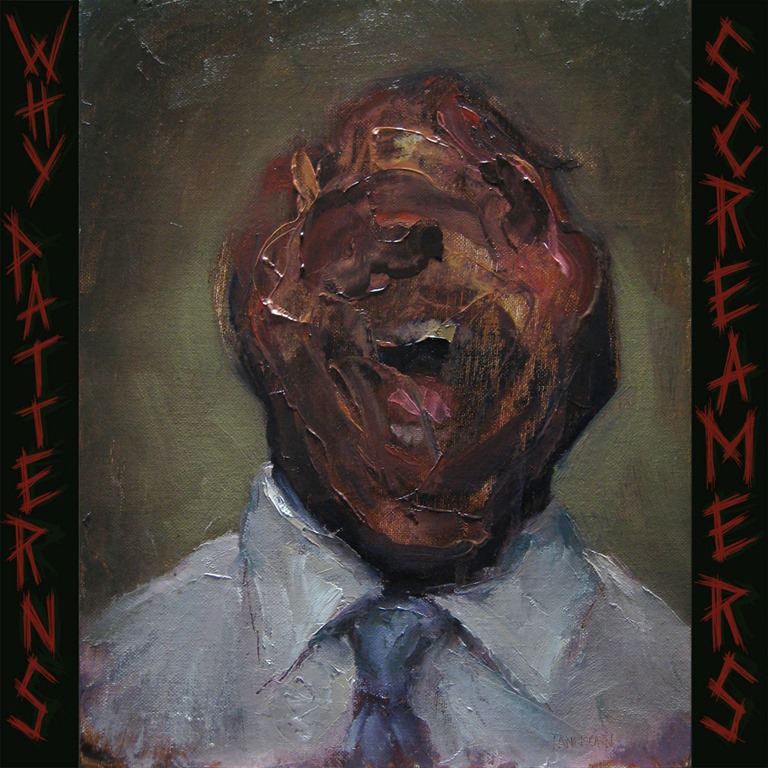
Why Patterns’ latest offering marks something of a shift from Regurgitorium, released back in 2022. I say ‘back’ in 2022 because it feels like a lifetime ago. Some of that is, admittedly, due to personal circumstance, but for most, 2022 was a very different time. We still weren’t all that long out of lockdown, for a start. We were still coming up for air, and finding our way – and likely crawling our way back to the office, while a lot of shops still had their Perspex screens in place. I remember in the checkout queue in Aldi just willing these weird cunts who had seemingly either forgotten the preceding year and a bit, or had lost all sense of how to engage, by looming and leaning over and pressing too close would fuck off. I revisit the context of the last album because it somehow managed to capture the mood in some obtuse way, and when I wrote ‘It’s fucked up. It’s deranged. It hurts,’ I could as easily have been referring to life itself at that point in time.

Screamers is different again. Or, if not so much, different, compressed, compacted, distilled, the intensity amplified by the concision of the tracks.

The crunchy, gnarly bass still dominates, and it’s snarling away and tearing strips straight out of the traps on the frenzied ‘After the Bullfight’. Clocking in at a mere minute and forty-seven seconds, it’s noise rock smooshed down to the tight parameters of grindcore, and with insane amounts of reverb, the stuttering, stammering vocal yelps from Doug Norton, the man behind the ‘Mouth Sounds’ owe an equal debt to Suicide and The Cramps, and this may be the spawning of industrial psychobilly as a new genre. Everything is overloading, the speakers are crackling with megawattage overload, and when ‘Clown in a Housefire’ blasts in, you actually begin to wonder if it’s supposed to sound like this of it your gear’s fucked.

One may cling in references to the Jesus Lizard and all the rest, but really, this sounds like a psychotic reimagining of early Blacklisters – specifically early because of THAT bass racket. But whereas Blacklisters were, and remain, quite song-orientated, at least structurally, Screamers sees Why Patterns take their template and smash the living fuck out of it by throwing it against a brick wall and stomping on it until there is nothing but splattered pulp. None of the songs – I mean, they’re not really songs, more demented blasts of discord played at three hundred miles an hour, all of the instruments playing at angles against and across, rather than with one another, the vocals the sound of a breakdown in real time. And listening to this as bombs and missiles are going off everywhere and no-one knows what is going on anywhere, I fin myself listening to this tumultuous mayhem and thinking ‘yep, they’ve done it again. This is the closest I’ve heard anyone articulate this moment.’ I mean, they don’t really ‘articulate’: as the title suggests, Screamers is a raw, primal scream. It’s a frenzied, lurching, gut-punching racket that rattles the bibs and kicks the balls, hard. Pleasant, it is not. Especially that grungy bass that churns the stomach.

There aren’t really any riffs: it’s just a relentless assault of jarring noise. ‘Nervous Laughter’ brings hints of the latest mclusky album, but does so with menace, malice, and a hint of the unhinged, and following on ‘Wind Up Chattering teeth’ is a minute and six seconds of rabid raving. It’s almost enough to make you want to puke.

Then there’s ‘Club Foot By Kasabian by Blacklisters’. It extends the joke of the original – since the Blacklisters song, ‘Club Foot By Kasabian’ wasn’t a cover, and had nothing to do with Kasabian, and so it is that ‘Club Foot By Kasabian by Blacklisters’ is a minute and a half of squalling, brawling, guitar-led abrasion. It’s somewhat reminiscent of Castrovalva in its deranged intensity, and frenzied, squawking disregard for decency. The title track is fifty-two seconds long. It’s rabid. It has to be heard to be comprehended.

The last track, ‘Buffoons and Barel Organs’ is both the longest and most structurally coherent. ‘Why do I cross the road? Why do I cross the road? Because I’m a fucking chicken!’ Norton hollers amidst a raging tempest of bass and drums.

Screamers is certainly appropriately titled. Every song is a brief but blistering assault. It’s full-on, and will melt your face, and as such, I wholeheartedly recommend it, unless you’re a wuss.

AA

AA

a3117811268_10

Ipecac Recordings – 9th May 2025

Christopher Nosnibor

mclusky was one of those bands which built a cult following without ever really breaking through in the period they were active, in the period which spanned from 1996-2005. None of the greats are ever appreciated in their time, of course. Their albums would fetch premium prices second-hand, in the years after they called it a day, and my local Oxfam had prohibitively-priced copies of a couple of them for a while, which got progressively more tired and shelf-worn. With Future of the Left, Andrew Falkous found a wider audience while still doing much of the same, but as loved as they became, there was always a sense among fans that ‘they’re bloody brilliant… but they’re not mclusky’.

Of course, nostalgia has a large part to play here, and it’s almost inevitable that practically no second or subsequent band, however popular or successful, will experience the same affection as their forebears, unless, perhaps, they’re The Foo Fighters, in which case that affection is misplaced anyway.

mclusky flirted with occasional comebacks, while Falkous would release solo work as Christian Fitness. But, somewhat unexpectedly, the Wikipedia note on Mcluskyism (2006) that ‘This compilation is, without doubt, the final chapter in Mclusky’s nine-year saga, as Falkous informs in the Mcluskyism liner notes, “that’s it, then. No farewell tour… no premature deaths (at time of writing), no live DVDs…”’ First, there was the EP unpopular parts of a pig in 2023, and now, here we have it: their first full-length album in a full two decades. What has happened? I really don’t know, but seemingly from nowhere, a stack of bands from the Jesus Lizard to Red Lorry Yellow Lorry, have re-emerged with their first new albums in twenty years or more, and they’ve not been some second-rate, tepid late- (or even post-) career cash-ins, but up there with the best of their work.

‘Is it any good?’ people will be asking. ‘Is it as good as the old stuff?’ Anyone who has heard lead single, ‘way of the exploding dickhead’ will probably already be thinking that the answer to both of these questions is in the affirmative, and they would be right. the world is still here and so are we is indeed up there. As they put it, ‘it was important not to cos-play the past but also not to flubbity-flub over everything like a gang of big stupid flubs.’ Yeah,. There’s definitely no flubbing, or flab here. This is lean and full-on, and sheer quality.

It’s ‘unpopular parts of a pig’ which launches the album in a scratchy blast of cutty treble, a skewe(re)d tumult of stop / start angular punk which is frantic and irreverent, compressing elements of Nirvana and Shellac and Butthole Surfers, Dead Kennedys, and the Jesus Lizard into a manic two minutes and twenty-one seconds.

It was often the case, especially in the 70s, 80s, and 90s – before streaming, essentially, but while record company exploitation and the industry gravy train was racing at a seemingly unstoppable pace – that the singles, which would lure you in to buy an album, were the only decent songs on it, and you’d feel pretty bummed and short-changed at having forked out £7.50 for an LP or cassette – unless if had been one of your bonus purchases through Britannia Music – when you might as well have just paid 99p for the 7” and not bothered with the album. This may still be the case in some instances, now that the album format is supposedly dead in the world of the mainstream, where people only stream the songs they know already as part of the playlist they’ll loop for weeks, but beyond the mainstream, it feels like the album is stronger than ever, and acts are committed to making albums which are 100% quality from beginning to end. This certainly rings true for the world is still here and so are we.

Of the album’s thirteen songs, only three are over three minutes in duration, and it feels like there’ve compressed and distilled everything to achieve peak intensity. The bass is absolutely immense, a thunderous boom that dominates the sound, leaving room for Falkous’ guitar to wander and explore sinewy tripwire picked lead parts and discordant textures.

‘people person’ also released as a single, lands with a swagger and showcases a gutsy bass-led groove, while also highlighting the sarcastic, ironical humour and misanthropy that’s integral to both mclusky and FOTL: bursting with pithy one-liners and sharp commentary, it’s everything that makes them so loved and so bloody great. Elsewhere, the more overtly mathy ‘not all the steeplejacks’ channels the spirit of Shellac rather nicely.

the world is still here and so are we is gritty, unpretty, full-throttle, and fiery. It’s a racket. And yes, it’s fucking mint.

AA

Print

Interview: John Wisniewski

Introduction: Christopher Nosnibor

It’s fair to say that Mars was a band ahead of its time. Formed in 1975, they were early to land on the No Wave noise-rock scene, and they’d called it a day before the scene really broke, and with only a handful of performances under their belts.

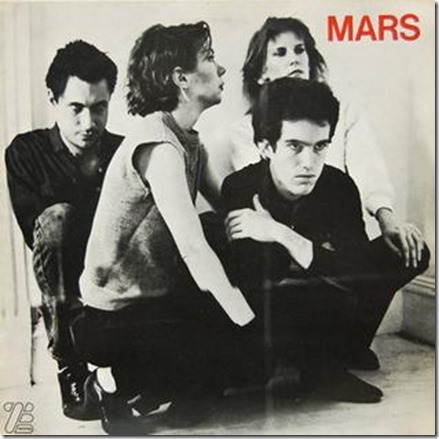
The history goes that Mars played live about two dozen times, and never ventured beyond Manhattan. Their first show was at CBGB’s in January 1977; their last one was at Max’s Kansas City on December 10, 1978. Their sole release during their brief existence was a seven inch single, plus a track on the influential No Wave New York compilation, produced by Brian Eno, although a live EP would emerge shortly after they called it a day, and their entire recorded output – which totalled half an hour’s music – would be released a couple of times in the mid ‘80s and in the ‘00s.

As is often the case, the legacy and influence far exceeds their brief history and scant catalogue, no doubt enhanced by the fact they never reformed. However, while most of the band’s members have disappeared from view, and both co-founder Nancy Arlen (drums) and vocalist Sumner Crane died in the early 2000s, since the end of Mars, bassist Mark Cunningham has remained active, and very much forward-facing in his musical output, most recently with solo albums Odd Songs (2020) and Blue Mystery (2023)

John Wisniewski caught up with Mark Cunningham to ask about Mars and their legacy, his recent releases, and plans for the future.

JW for AA: How did you get involved with music, Mark?

I’ve been playing since I was a kid. my uncle was a jazz drummer and he hooked me up with my first horn, and I played in the school band growing up. and as a teen I picked up guitar and bass to play in cover bands, but when I learned to really play and improvise was at college, surrounded by likeminded rock, free jazz and acid freaks studying avant-garde movements and playing all the time.

Any favorite music artists?

Lots, I grew up in the 60s, out in Jersey, and started going to shows at the Fillmore East in 68. saw a lot of the greats there, as well as little known strange psychedelic bands. I ate it all up, not discriminating too much, but of course Hendrix, The Doors, Jefferson Airplane, Zeppelin and a few others were extra special, and Electric Miles, who I first saw in 69 and showed me the future. Later at college I discovered the Velvets, Eno, Bowie and all the free jazz greats. I still followed Miles though.

0018927842_10

When did you join MARS, and what was the idea for how MARS should sound? Did you improvise?

Mars came together in late 75, a chance meeting that led to a year of working out our own way of expression before playing shows. At first we took the Velvets as a model, even jammed on some of their songs, and from there started making our own, somewhat similar frameworks and improvising on them. But we weren’t free improv. The character of the song and lyrics always came first. This has stayed with me through all my bands, although i do play 100% free in some duos and trios dedicated to that.

Why did you want to form your own record labels?

The first and most serious venture was Hyrax Records, which I managed to make happen in 1980 to release the John Gavanti LP and a Don King cassette. In those days it was possible to get distribution in the States and we sold quite well. But it still became a hassle and an expense to keep it going. DIY labels started getting popular in the 80s, when cassette recording and reproduction got cheap and easy. And in the 90s with CDRs. So I did some of that, especially with our duo Convolution, with my partner Silvia Mestres. We put out all our albums on CDR. Of course streaming killed that off completely. Nowadays all you have to do is put it out on Bandcamp and / or use the streaming platforms, which suck but do get it out there. So I do that with the more experimental stuff which we record on the cheap.

What were audience reactions to the music of Mars?

We had a pretty loyal and very vocal fan base in the city, which you can hear on some of the live stuff I’ve curated through feeding tube records and bandcamp. We always managed to draw enough of a crowd to keep things moving, even playing once or twice a month in the same clubs, which we did in Manhattan for two years, in *77 and *78. Unfortunately we never made it out of the city. Sometimes we got on bills with some more conventional bands and a mixed crowd, which provoked some interesting reactions. When we opened for Patti Smith at CBGB Theater, we had screamers both for and against, it was great!! We certainly were extreme, but never for its own sake, for us it was always about the music.
Mars,_12__EP_cover

What did you think of the No Wave New York scene?

That’s quite a question. At the time it was mainly a lot of work and fun. all of those bands worked hard to make their own music and sound. Mars rehearsed at least 5 days a week and sometime more. Something that could never happen later, when life became too expensive and distracted. So we were really a product of a time and place very special, with a lot of music and art movements sharing the same neighborhoods. It was a 70s phenomenon, which continued into the 80s but wasn’t the same as everything else was changing too quickly. It was over for us by the mid 80s, when I was working with my band Don King and started going to Europe, and in 91 I moved to Barcelona. Another thing altogether is the echo it’s had over the years, which keeps expanding, especially for Mars.

What was it like working with Brian Eno?

We got on really well. in fact we’d become quite good friends in those months he was in the city, I was living with Arto Lindsay at the time and he used to come over and listen to our records, as we had a lot of African and Asian stuff. So actually working with him was great though it was only a couple days, one for recording and the other for mixing. Recording he just let us get on with it, but then he was really hands on with the mixing, and had great ideas.

Tell us about your latest Blue Mystery album, and Odd Songs, your 2020 release? What was it like recording these albums?

Odd Songs, which came first, was half collaborations which I’d recorded over the previous few years and the other half playing everything myself, and on Blue Mystery I got deeper into that, plus it was during the Covid lockdowns, so it was really easy to spend all day working at home. Now I’m working on the third volume, Asombra7, which I’m recording at a rehearsal space I have in an arts factory in Barcelona, and some of the other residents are helping me out. Promising stuff, which I hope to finish by end of summer or so. I like taking my time and going as deep as I can, songwise and soundwise.

AA

Any future plans and projects?

I have lots of other projects already, some full time like my band Blood Quartet. which is marking 10 years now, others occasional, duos and trios with improvisers mostly. I have two recent LPs out, one, Infini with Marc Hurtado, formerly of the French industrial band Etant Donnes, the other Next, also a duo, with Jørgen Teller, a Danish experimental guitarist.