Posts Tagged ‘No Wave’

17th October 2025

Christopher Nosnibor

From the very outset, this is not easy on the ear. Sometimes, something leaps out about an album in the opening minutes, and here it’s the production – or lack of. The title track heralds the arrival of Benefactor, the first album by Washington D.C. improvisational psychedelic outfit Zero Swann in two years. And it’s a swampy, reverby, dingy mess. It’s integral to the experience, but it’s also likely to be a deterrent for some – but screw them, it’s their loss, right?

Although straddling heavy psychedelic and the dramatic gothic style, it’s the sludgy, feedback-riven outtakes of The Jesus And Mary Chains’s Barbed Wire Kisses which first come to mind when listening to this.

Benefactor is the follow up to 2023’s Amon Zonaris, which, at the time, was a one-off collaborative release with Scott “Wino” Weinrich. This time around, bandleader and Saccharine Underground label curator Jeremy Moore is flying solo, handling guitars, fretless bass, drums and noise assault. And there’s no shortage of the noise assault on this punishing no-wave behemoth. As they tell it, ‘From the noise rock / no wave snarl of Ritual Tension and early Sonic Youth, to the shoegaze sounds of My Bloody Valentine, to doom and free jazz chaos over a backdrop of pure lo-fi abrasion, Moore’s latest outing is a true crosspollination of styles’. It is, and what’s more, many of those styles are melted together to form a dark, disturbing sonic sludge.

‘Grave Wax Horticulture’ is a skull-splitting mesh of noise, equal parts The Jesus and Mary Chain and Christian Death. It’s theatrically gothy, in the vein of The Horrors, but primitively noisy – which is a fair summary of the album as a whole. It’s experimental, overloading in its racketaciousness – and while is a psychedelic album, it’s a full-on assault album, too, which draws parallels with Head of David’s first album, LP, and simply summarises a noise ethos which eschews convention in every sense.

Moore’s commanding baritone brings a sense of drama, not to mention a certain theatricality to the chaotic, palpating grind, and there’s an edge to his delivery which is both world-weary and tense, a voice emerging from the desolation of a society collapsing, a world in flames. This is surely the sound of the apocalypse, the sound of everything ending. Everything is overloading, murky, blown-out, blasted with distortion and reverb, resulting in a discordant thunderous attack which fires in all directions at once. It’s a primal roar reverberating from buildings collapsed to rubble, a brain-bleeding blitzkrieg of ruinous proportions, as mechanised drum sounds fire like machine guns and missile explosions, cutting through the wildest, densest racket. The absence of overt structures only compounds the sense of things falling apart. It’s the sound of unravelling, of societal threads pulling apart in real-time, a descent into mayhem, anarchy, barbarity.

‘Anagrams for Agnosia’ is perhaps jazz, but jazz in the loosest sense: it’s exploratory, experimental, freeform, but more than anything, it’s the sound of fracture, or fragmentation, instruments churning and burning, and pulling in different directions like splinters of an object in the wake of a detonation. As the screams die down, there is the thud of a panicked heartbeat, before the final track, ‘Phaneron’ obliterates with a squalling wall of howling guitar, stuttering drums and raw, ruinous noise.

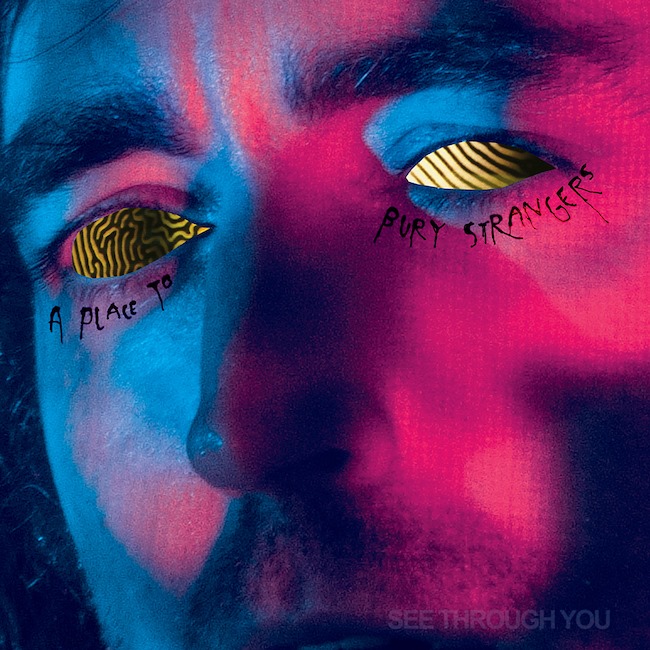
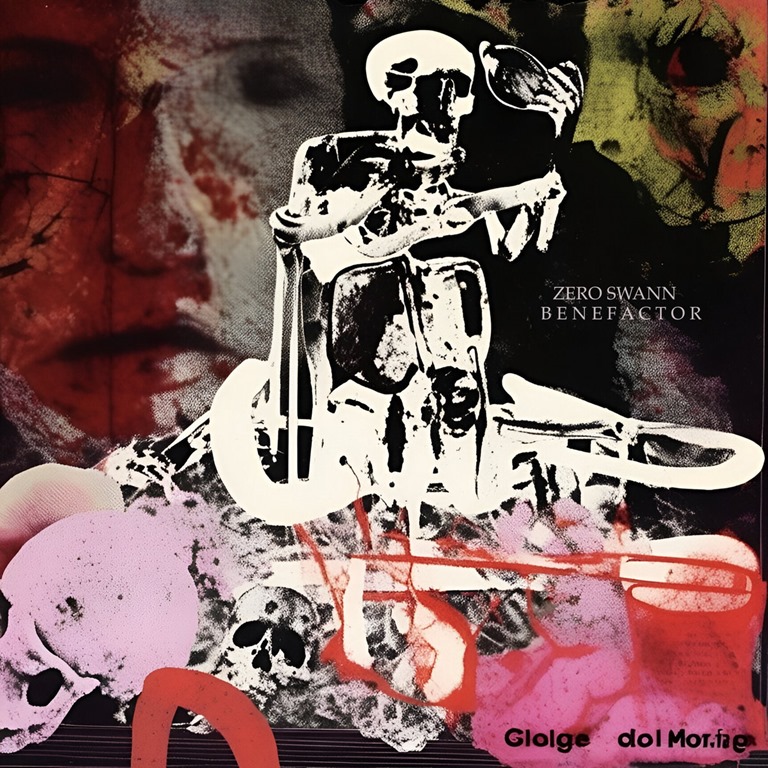
Benefactor is an album without let-up, which provides no breathing space, and is thoroughly relentless in its intensity from beginning to end. Recommended, but approach with caution, and a stiff drink. It sounds like the cover looks.

AA

a0986994420_10

Interview: John Wisniewski

Introduction: Christopher Nosnibor

It’s fair to say that Mars was a band ahead of its time. Formed in 1975, they were early to land on the No Wave noise-rock scene, and they’d called it a day before the scene really broke, and with only a handful of performances under their belts.

The history goes that Mars played live about two dozen times, and never ventured beyond Manhattan. Their first show was at CBGB’s in January 1977; their last one was at Max’s Kansas City on December 10, 1978. Their sole release during their brief existence was a seven inch single, plus a track on the influential No Wave New York compilation, produced by Brian Eno, although a live EP would emerge shortly after they called it a day, and their entire recorded output – which totalled half an hour’s music – would be released a couple of times in the mid ‘80s and in the ‘00s.

As is often the case, the legacy and influence far exceeds their brief history and scant catalogue, no doubt enhanced by the fact they never reformed. However, while most of the band’s members have disappeared from view, and both co-founder Nancy Arlen (drums) and vocalist Sumner Crane died in the early 2000s, since the end of Mars, bassist Mark Cunningham has remained active, and very much forward-facing in his musical output, most recently with solo albums Odd Songs (2020) and Blue Mystery (2023)

John Wisniewski caught up with Mark Cunningham to ask about Mars and their legacy, his recent releases, and plans for the future.

JW for AA: How did you get involved with music, Mark?

I’ve been playing since I was a kid. my uncle was a jazz drummer and he hooked me up with my first horn, and I played in the school band growing up. and as a teen I picked up guitar and bass to play in cover bands, but when I learned to really play and improvise was at college, surrounded by likeminded rock, free jazz and acid freaks studying avant-garde movements and playing all the time.

Any favorite music artists?

Lots, I grew up in the 60s, out in Jersey, and started going to shows at the Fillmore East in 68. saw a lot of the greats there, as well as little known strange psychedelic bands. I ate it all up, not discriminating too much, but of course Hendrix, The Doors, Jefferson Airplane, Zeppelin and a few others were extra special, and Electric Miles, who I first saw in 69 and showed me the future. Later at college I discovered the Velvets, Eno, Bowie and all the free jazz greats. I still followed Miles though.

0018927842_10

When did you join MARS, and what was the idea for how MARS should sound? Did you improvise?

Mars came together in late 75, a chance meeting that led to a year of working out our own way of expression before playing shows. At first we took the Velvets as a model, even jammed on some of their songs, and from there started making our own, somewhat similar frameworks and improvising on them. But we weren’t free improv. The character of the song and lyrics always came first. This has stayed with me through all my bands, although i do play 100% free in some duos and trios dedicated to that.

Why did you want to form your own record labels?

The first and most serious venture was Hyrax Records, which I managed to make happen in 1980 to release the John Gavanti LP and a Don King cassette. In those days it was possible to get distribution in the States and we sold quite well. But it still became a hassle and an expense to keep it going. DIY labels started getting popular in the 80s, when cassette recording and reproduction got cheap and easy. And in the 90s with CDRs. So I did some of that, especially with our duo Convolution, with my partner Silvia Mestres. We put out all our albums on CDR. Of course streaming killed that off completely. Nowadays all you have to do is put it out on Bandcamp and / or use the streaming platforms, which suck but do get it out there. So I do that with the more experimental stuff which we record on the cheap.

What were audience reactions to the music of Mars?

We had a pretty loyal and very vocal fan base in the city, which you can hear on some of the live stuff I’ve curated through feeding tube records and bandcamp. We always managed to draw enough of a crowd to keep things moving, even playing once or twice a month in the same clubs, which we did in Manhattan for two years, in *77 and *78. Unfortunately we never made it out of the city. Sometimes we got on bills with some more conventional bands and a mixed crowd, which provoked some interesting reactions. When we opened for Patti Smith at CBGB Theater, we had screamers both for and against, it was great!! We certainly were extreme, but never for its own sake, for us it was always about the music.
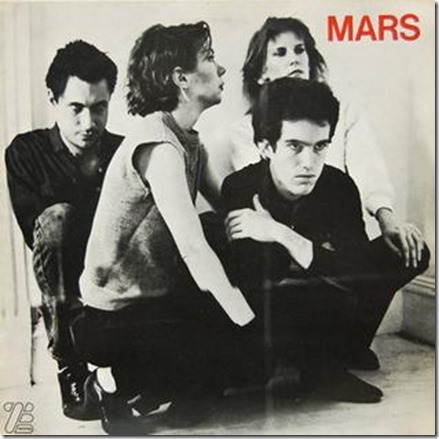
Mars,_12__EP_cover

What did you think of the No Wave New York scene?

That’s quite a question. At the time it was mainly a lot of work and fun. all of those bands worked hard to make their own music and sound. Mars rehearsed at least 5 days a week and sometime more. Something that could never happen later, when life became too expensive and distracted. So we were really a product of a time and place very special, with a lot of music and art movements sharing the same neighborhoods. It was a 70s phenomenon, which continued into the 80s but wasn’t the same as everything else was changing too quickly. It was over for us by the mid 80s, when I was working with my band Don King and started going to Europe, and in 91 I moved to Barcelona. Another thing altogether is the echo it’s had over the years, which keeps expanding, especially for Mars.

What was it like working with Brian Eno?

We got on really well. in fact we’d become quite good friends in those months he was in the city, I was living with Arto Lindsay at the time and he used to come over and listen to our records, as we had a lot of African and Asian stuff. So actually working with him was great though it was only a couple days, one for recording and the other for mixing. Recording he just let us get on with it, but then he was really hands on with the mixing, and had great ideas.

Tell us about your latest Blue Mystery album, and Odd Songs, your 2020 release? What was it like recording these albums?

Odd Songs, which came first, was half collaborations which I’d recorded over the previous few years and the other half playing everything myself, and on Blue Mystery I got deeper into that, plus it was during the Covid lockdowns, so it was really easy to spend all day working at home. Now I’m working on the third volume, Asombra7, which I’m recording at a rehearsal space I have in an arts factory in Barcelona, and some of the other residents are helping me out. Promising stuff, which I hope to finish by end of summer or so. I like taking my time and going as deep as I can, songwise and soundwise.

AA

Any future plans and projects?

I have lots of other projects already, some full time like my band Blood Quartet. which is marking 10 years now, others occasional, duos and trios with improvisers mostly. I have two recent LPs out, one, Infini with Marc Hurtado, formerly of the French industrial band Etant Donnes, the other Next, also a duo, with Jørgen Teller, a Danish experimental guitarist.
25th January 2024

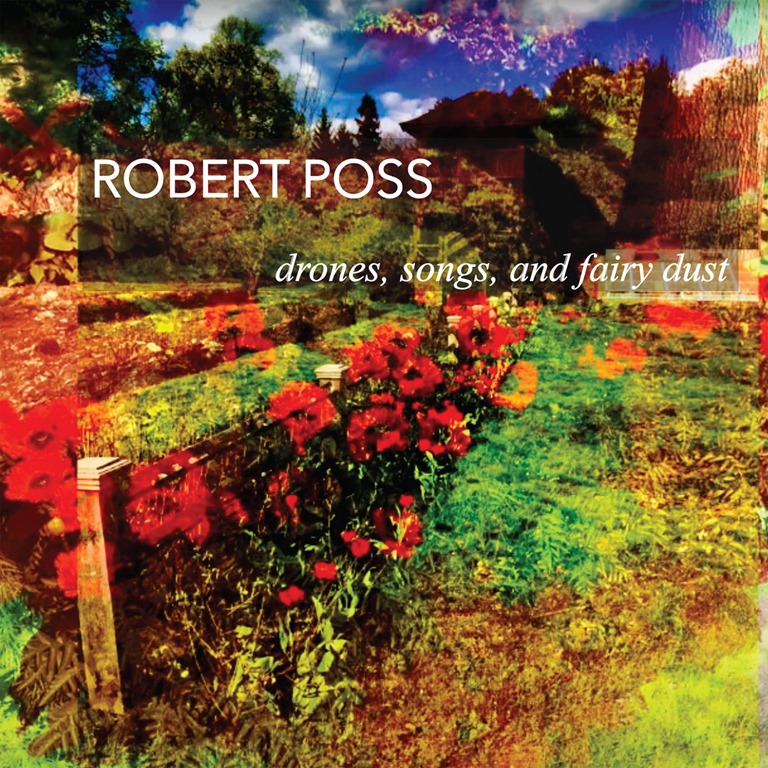
With Band of Susans, active between 1986 and 1996, Robert Poss curved an arc from the New York noise scene towards more of a shoegaze sound. With releases on Blast First and Mute, and featuring a pre-Helmet Page Hamilton on second album, Love Agenda, not to mention a reputation for eardrum-shatteringly loud live performances, the band unquestionably achieved more in terms of influence and cult cred than commercial success (something their final album, Here Comes Success (1995) seemed to acknowledge in its title). But what qualifies as success? Capitalist culture and media tell us that success is a career, promotion, cash, holidays, cruises, bug house big car. But that’s because these are the status symbols capitalism tells us we should aspire to. How about having enough to be ok, a home you like and feel comfortable in, having friends, knowing yourself and being comfortable in your own skin, and having the freedom to do things which give you pleasure? It’s a question of values: what do you value more, time, or money? Status, or the satisfaction of being true to yourself?

There seems to have been a fair bit made of fellow BoS alumni Karen Hagloff’s return to music making in recent years, but not so much about Robert Poss’ sustained output since the band called it a day. But then again, Poss has spent a career being somewhat overlooked and vastly underrated. Both his songwriting and style of playing is quite distinctive and unusual – quirky seems a reasonable adjective, and is certainly not a criticism. The notes on bandcamp note that ‘The release is dedicated to composer/filmmaker/photographer Phill Niblock, a long-time mentor, colleague and friend.’ The timing of this certainly renders this dedication particularly poignant, and also highlights the way in which exponents of avant-gardism feed off one another and evolve one another’s ideas in different directions.

The Niblock connection certainly sheds additional light on Poss’ approach to composition and sound, favouring drones and repetition over rigid verse/chorus structures and progression, and Drones, Songs and Fairy Dust does very much contain, as the title suggests, a miscellany of bits and pieces, ranging from exploratory wanderings to fully-formed songs using conventional ‘rock’ format of guitars, bass, and drums – and on some, there are even vocals, notably the punchy post-punk cut ‘Your Adversary’, which marks a change of style with its murky production and blustery drum machine backing.

The first of these, ‘Secrets, Chapter and Verse’ is a title which could easily be on a Band of Susans release and the song carries that Band of Susans vibe – jangly indie but played loud – and I mean LOUD, with strolling bass running back and forth and up and down beneath the layers of guitar, the vocals low in the mix and serving primarily functional capacity – sonic placeholders.

‘Out of the Fairy Dust’ combines jangling indie and ambient drone and in many respects does carry echoes of ‘Here Comes Success’ – but also Love of Life era Swans – at least until about halfway through where it takes a sudden turn into deeper folk territory. It’s quite a contrast with the deep, ultra-droney sonorous ambience of ‘Foghorn Lullaby’.

Like the epic solo workout that is ‘Hagstrom Fragment’, which comes on like some legs akimbo 90s rock, ‘Skibbereen Drive’ lunges into rock mode, and follows the chord sequence of ‘Flood II’ from The Sister’s of Mercy’s Floodland – and sounds very like it, with its cold synths and crisp drum machine, but without the acoustic guitar detail and lead guitar line. It’s a real contrast to the epic dronescape of ‘Into the Fairy Dust’, on which the drums are a million miles behind the drone as they clatter and roll away, onwards, ever onwards, but also almost entirely submerged in the mix. Elsewhere, with its snarling synth grind, ‘S Romp’ sounds like Suicide doing dirty disco, and ‘Trem 23’ – well, it takes us back to the 23 enigma.

Drones, Songs and Fairy Dust showcases a remarkable diversity of styles, and it’s neither as dry nor as dark as all that, with ‘Imaginary Music On Hold’ presenting a most whimsical feel. As a collection, it never fails to be interesting, or enjoyable, and showcases Poss’ eclecticism and range, and there’s pleasure to be had from listening to a collection of work by an artist who never feels constrained or compelled to confirm to a given genre or mode. It’s something that seems to trouble many people, not least of all labels and critics, that an artist’s creations are based on the pursuit of creative endeavour and interest rather than assigning themselves a category by which they must live. The flipside of this is that it may not feel particularly like an album it its own right, but more like a collection of demos and ideas – and just as the title summarises the contents as three separate elements – Drones, Songs and Fairy Dust – so it feels like it contains the seeds of three separate and distinct projects – a droney one, an indie one, and a dark rock-orientated one. It would be exciting to witness those three projects realised, but what we have here, regardless of future intent, is a document of forward-facing music-making and an artist whose sole priority is doing his own thing. This is, ultimately, the ambition for any artist: to create without concern for commercial matters. And Drones, Songs and Fairy Dust is an exemplary product of creative freedom.

AA

a2882047316_10

Ipecac Recordings – 21st July 2023

Christopher Nosnibor

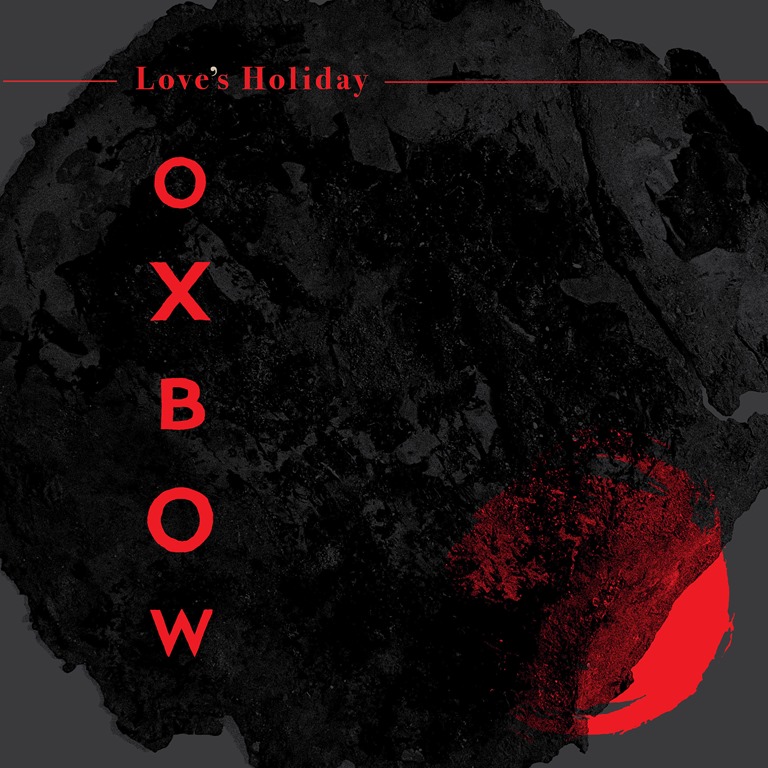
Thirty-five years is a long time. Not jus in cat or dog years, but in human years, too. For many, it’s half a lifespan. Perhaps it’s not so long in the scheme of the existence of the planet or cosmos, but that’s a timespan incomprehensible to most people, for whom the time from lunch till dinner feels like an eternity. But here Oxbow are, marking thirty-five years of existence.

A defining feature of their work has always been its diversity, and Love’s Holiday showcases that in abundance. The three songs released ahead of the album couldn’t have been much more different from one another, from the grainy, pained, and soulful ‘1000 Hours’ to the brooding, contemplative ‘Lovely Murk’ (both concerned with death and dying) via the full-throttle energised grunge-driven poke of ‘Icy White & Crystalline’.

How representative are they of the album? Entirely. Love’s Holiday has range, both sonic and emotional, and Robinson’s lyrics are dense and multi-facteted, and read like poetry. At first you’re struck between the eyes, but them you chew on them, because there’s more than mere impact, with smart wordplay running throughout, and they’ve visual, evocative, charged.

It screeches in with the sinewy discordant noise rock of ‘Dead Aherad’, Eugene S. Robinson hollering hard against scratchy guitar and tetchy drumming – and then, seemingly out of nowhere, everything locks together and brings a melodic chorus that’s somewhere between grunge and prog, landing in what you might call 90s alt-rock territory. Or you might not, but I’d challenge anyone to define it more specifically.

The raw, seething ‘Icy White and Crystalline’ drives in before ‘Lovely Murk’ and ‘1000 Hours’ follow one another in succession, changing the mood, pace, and dynamic of things. This piece of sequencing works well, as the intensity of the opening brace is enough to leave you gasping for breath and experiencing palpitation. Kristine Hayter’s Lingua Ignota choir vocals on the former fill the song with a white light, with something of a Gospel feel, in keeping with the song’s theme of death and ascension, after which ‘1000 Hours’ balances darkness with light.

A choral surge and rolling piano provide the backdrop to ‘All Gone’, and Robinson showcases his vocal versatility to stunning effect; first, a cracked, Bukowski-like drawl, before breaking into barrelling delivery more akin to Tom waits, and then switching to a hushed, intimate croon. The song bristles with tension and oozes soul.

There’s another switch of instrumental arrangement on ‘The Night the Room Started Burning’, with acoustic guitar entering the mix, and things taking a tense post-punk, almost gothy twist. But again, the choral backing adds a haunting dimension to the song, and it’s incredibly powerful. Pushing on with the stylistic collisions that they absolutely own and utilise to optimal effect, ‘The Second Talk’ melds no-wave noise with country-coloured slide guitar, before ‘Gunwhale’ takes leave by the grandest, most theatrical means possible, before slowing to a grinding drone.

If the overall mood of Love’s Holiday is reflective, introspective, there’s so much detail among it all that it’s hard to unpack even after several listens. Herein lies its greatest strength: it’s not an album which conforms to a genre, but an album which serves as a vehicle to convey, not one thing, but a whole spectrum of complexities. Love’s Holiday is not easy to process, but it’s an eye-opening artistic achievement that thirty-five years in, Oxbow are absolutely at the top of their game.

AA

OBLH_cover_final

Bronson Recordings – 26th May 2023

Christopher Nosnibor

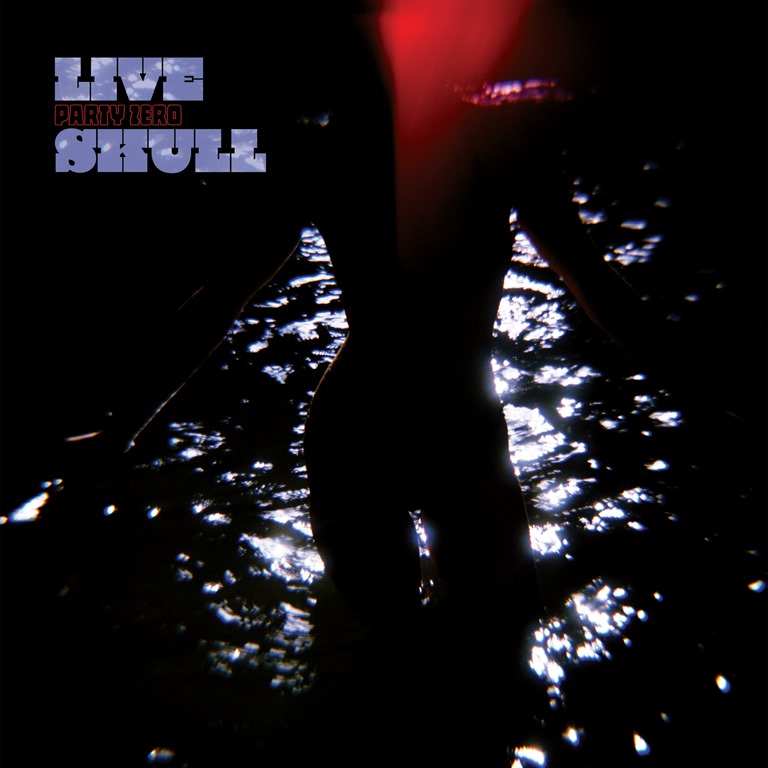
90s alt-rock band Come, fronted by Thalia Zedek, provided my route to discovering Live Skull, which she joined in 1987 and took over lead vocal duties. But my curiosity and interest in evolution and lineage led me to pick up cheap vinyl copies of Bringing Home the Bait and Don’t Get Any on You, which, brimming with shouty vocals, scratchy guitars and low-slung bass, could reasonably be described as No-Wave classics.

Somewhat ironically for a band which emerged out of the foment of 80s New York which also spawned Sonic Youth and Swans, the Live Skull reportedly disbanded in 1990 due to sustained lack of commercial success.

Perspectives change over time, although it was perhaps more of a returning to their original motivations which spurred them to reconvene in 2016, since when they’ve released two albums, with Party Zero being the third, and the seventh studio album of their career.

Delivering an album that’s described as ‘a fiercely political album, in keeping with this politically fierce age’ and ‘timely music, essential, impassioned, angry and beautiful’ founder Mark C. It is a politically fierce age, and now more than any time since the late 70s and early 80s – a period which spawned so many bands who existed as an outlet for frustration and anger and all kinds of difficult and even ugly emotions through nihilistic noise and various forms of confrontation and antagonism.

Sonically, Party Zero isn’t especially nihilistic or noisy, confrontational or antagonistic, but does very much refine these elements and hone the delivery of an almost obsessive focus on corruption, abuse of power, inequality and injustice.

If the sound is rather more polished and widescreen than their 80s releases, the key ingredients are still there, not least of all jagged guitars that blur and crackle with treble and careen into dissonance and discord against big, bold basslines. There’s a palpable sense of urgency to the songs on Party Zero. It may not be their strongest album or their most innovative or distinctive – but it’s an album that’s necessary.

“We’ve been pushed to the edge – how do we claw our way back? That’s been a common theme in Live Skull since the beginning, and so it is now. We’re trying to provoke thought.” There seems to be a rising tide of bands out to achieve these same ends, now, and from a vastly diverse range of stylistic contexts, from the minimal beats and loops of Sleaford Mods to the raging ranting noise-blasts of Benefits via the angular post-punk of I Like Trains. People are pissed off – and they’re frustrated, and scared – and those people in bands are using their platforms to call the bullshit, the fearmongering, the manipulation, the rise of the right and the immorality of governments and multinational companies.

It’s not just the pithy lyrics: ‘Neutralize the Outliers’ sounds like a rabble-rousing protest song, more New Model Army than anything that belies the band’s origins, and it works because it feels necessary, vital.

‘Chords of Inquiry’ plugs away at a simple, spare riff driven by crashing drums, and the drumming is a strong contributor to the album’s dynamic feel, and nowhere more on ‘Mad Kingship’, as they thunder along in a sustained roll. ‘Inside the Exclusion Zone’ is accessible, but driven, choppy, urgent, with a contemporary post-punk feel – think Radio 4’s take on the Gang of Four sound – and the same is true of ‘Turn Up the Static’, with its dubby strolling bass that ambulates through the reverby verses (before the chorus slugs out a mid-tempo fist-pumping holler-along call to arms).

And this is why the surge in protest music is what we need right now. It likely won’t change the world; the chances it won’t change opinions or provoke all that much thought, since most people who are likely to listen to Live Skull are the kind of people who are already in the same camp of political frustration or despair – and that’s ok. What these people – we – need is to know we’re not alone, and to feel a sense of unity and community, and for these feelings of frustration and anger to be articulated by relatable voices. Party Zero does that – and with some solid tunes.

AA

551413

NYC no-wave veterans Live Skull will return with new album Party Zero on May 26th, 2023 on Bronson Recordings. Following on album opener ‘Magic Consciousness’, a modern post-punk protest tune of uncanny subtlety and power, today they share new track ‘Neutralize The Outliers’. Both urgent and catchy, it’s an addictive anthem of otherness perfectly balanced with incredible guitar work and riffs. Recorded at legendary Deepsea in Hoboken NJ by Mark C, this is timely music, essential, impassioned, angry and beautiful. It’s the sound of Live Skull in the 21st Century, a desperate time that needs heroes like these. They are back from the past and still holding the post-punk sceptre.

Live Skull’s Dave Hollinghurst explains: "We watched the chaos unfold live on the computer screen, freaking out, confusion and doubt on our faces. I realized that not only are we the hunted, but we are the hunters – and what are we going to do about it? Strike back with our own brand of chaos and noise – at least we go down in a sonic blaze of glory".

Listen to ‘Neutralize the Outliers’ here:

Insurrections. Global pandemics. The return of fascism. Climate crises. These are some serious times. But if you’ve got angst in your pants and you need to dance, or scream, or play guitar too loud, too close to your amplifier, turn your ear to what Live Skull are doing. The New York noisers, who went on indefinite hiatus just before their kind of smart, gnarly, inventive din became lucrative, rose again in 2016. Their new album ‘Party Zero’, a thrilling work redefining what Live Skull means and what they stand for: no longer a group with a past, but one with a future. 

‘Party Zero’ marks the arrival of guitarist Dave Hollinghurst, an electrifying presence pushing the band in a fresh, new direction. It’s a fiercely political album, in keeping with this politically fierce age. “Desperation inspires us to make art and music,” he says. “There’s a lot of birth and rebirth, looking for pathways of resistance and promoting the good and trying to fight against evil. I once said we had to start Live Skull because Reagan became president. And we had to restart Live Skull because Trump became president.”

‘Party Zero’ is big in sound, brash in dynamics. But the sophistication that was always the group’s calling card remains an essential element, dealing in the kind of pulverising pell-mell that characterised the 80s New York sound, but also radiant with melody, the fusion of noise and unexpected tunefulness delivering a heady, psychedelic effect.

“We’ve been pushed to the edge – how do we claw our way back?” asks Mark. “That’s been a common theme in Live Skull since the beginning, and so it is now. We’re trying to provoke thought.”

5tqs_LiveSkullbyJenJaffe2650

Photo Credit: Jen Jaffe

Cruel Nature Records – 24th June 2022

Christopher Nosnibor

Hot on the heels of second album Can’t Be Arsed, Cruel Nature have repackaged the eponymous debut from the Manchester makers of ‘kitchen sink punk for the 21st century with a whole side’s worth of remixes from both previous releases – including two pretty radical reworkings of snarling single cut ‘Brain Driver’.

First, to revisit the debut – it’s a primitive, noisy document of disaffection. Adam Stone’s drawling, sneering vocal style is vintage punk, less about holding a tune as conveying attitude, and from the off they set the tone with the seven-minute ‘Food Chain’. A thick, dirty bass grinds out just a couple of notes over a plodding drum while Stone vomits vitriol. If ever a track encapsulated the monotonous drudgery of existing in Boris Johnson’s Britain, this is it. Most of the songs churn away for around seven minutes, but if you’re wondering just how far a band can push low, slow, trudging bass repeating the same simple motif atop a plodding beat, then the answer lies in ‘Half Priced Chickens’ – and the answer is just shy of fourteen minutes. This quarter-hour slog is a gloomy, dark, monotonous trudge: the kick drum sounds like a wet lump of wood, and the sneering shoutiness is replaced by a blank monotone spoken word, and in combination, they create an oppressive sonic fug. The scenes depicted are mundane. Words drift in and out – mobility scooters, office, boyfriend, cough mixture, cheese pasty – and these objects assume bleak resonance as you ask yourself, ‘is this it? Is this life?’ and the answer is there, slumped, devoid of energy, eyelids half closed: yes, this is life. And this is as good as it gets. And it’s fucking endless. Until it ends, in a swampy morass of slow decayed distortion and noise.

The final track, ‘Bunker’ locks into an uptempo groove, but while the drums rattle and bounce away, the mood remains tense, equal parts The Fall and Uniform. As the track progresses, so the anguish builds, and the effect is cumulative Stone hollers roughly about world war as feedback wails and the bass and drums just batter on, and on. Same old, same old…

There’s nothing pretty about Pound Land – the band or the album – and this is a good thing: they deal with the gritty reality of living in shit times. Pound Land articulates the languorous torpor of demotivation, of waking daily to feel the aching anguish of being beaten by life, every minute of every day. Sonically, it’s a long, long way from early Swans, but the density and oppression are very much shared aspects.

By the end of the five tracks, you’re absolutely harrowed and drained.

The remixes are a nice addition, though. The Ruffians on the Train Remix of ‘Brain Driver’ ventures into swampy, almost avant-jazz / trip-hop territory, before kicking into gnarly space-rock swirl. The drums are crisp but overloading, while the bass is pure punishment. Where remixes for most other bands are either dancier or more ambient or whatever, this set – with three of the six from R.O.D., these are primarily exercises in accentuating the gnarliness of the originals, with everything simply sounding even heavier, more crushing.

Pound Land is the real soundtrack to the now. They may have to change their name to Tenner Land before the year’s out the way things are going, so you’d be wise to bag this while you can, and hunker down before things get really tough…

AA

cover

Having announced their debut album Admire last month with first single ‘Pls, You Must Be a Dream’, LA-based noise duo GHXST has now shared new track ‘Marry The Night’.

‘Marry the Night’ is a love song for nights after hours spent walking through empty streets. The track opens with a lulling atmospheric loop that gradually opens into heavier spaces, with Shelley X’s signature delayed vocals echoing against drop-tuned guitars. Throughout, a drum machine pulses, like beats echoing from outside a Brooklyn warehouse. It’s gloomy listening, but the gloom is somehow warm and inviting. 

The video is a compilation of stories shot on iPhone by friends of the band. Scenes jump from New York to New Orleans to Palau to Los Angeles. There’s no narrative, but the moody, b&w scenes feel like flipping through someone’s lost memories from an endless day.

Watch the video here:

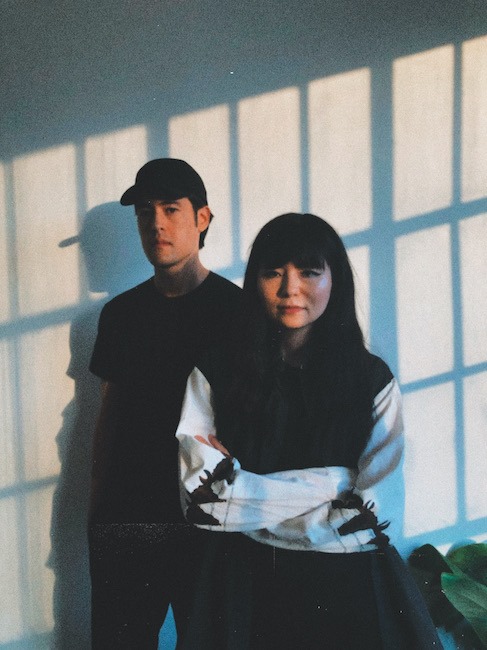
5tqs_GHXSTbysoojinpark650

A Place To Bury Strangers share the video for ‘My Head Is Bleeding’ from their new album, See Through You, out now on vinyl via Dedstrange.

Right away, ‘My Head is Bleeding’ gushes from the speakers with pummeling drums and whirring, anxious electronics–preparing listeners for one deafening blunt-force chorus after another. Wispy synthesizers and lacerating chemical burn guitars engage in a heated call-and-response while Oliver Ackermann extends a desperate plea for sanity to whichever metaphysical entity might be listening. “This song is about internally begging to a God when you might not necessarily believe in one,” says Ackermann. “It’s that moment where there’s just a sliver of hope that anything in your head might connect you with the Universe and actually make a change.”  

In the accompanying video from director Travis Stevens (Jakob’s Wife, Girl On The Third Floor), flesh and blood commingle in a pileup of heaving, mysterious biomass as a mechanical womb gives birth to an oily, ectoplasmic form. Says Stevens, “The entire album rips but there’s a plea to transform suffering into joy in this song that I really sparked to. In order to emulate the raw unpredictability of an APTBS performance, I tried to create a similar magical combination of flesh, emotion, intuition and technology."

Watch the video here:

AA

5tqs_APlaceToBuryStrangersSeeThroughYouCover650copy

A Place To Bury Strangers announce the release of their sixth album See Through You on 4th February 2022. It’s not just a return to form for the band, but also a return to their fiercely independent, DIY roots on their own label, Dedstrange.

Outpacing even their own firmly blazed path of audio annihilation, this 13-track album repeatedly delivers the massive walls of chaos and noise that A Place To Bury Strangers are renowned for. It’s an explosive journey that explores the listener’s limits of mind-bending madness, while simultaneously offering the catchiest batch of songs in the band’s discography. It’s a nod to the art school ethos of the band’s origins, while forging a new and clear direction forward.

The first single ‘Let’s See Each Other’ is an intimate and disarming love song from a forgotten future. Syncopated memories and deconstructed fantasies of lovers lost in a city that doesn’t know their names. The accompanying video, directed by David Pelletier, features the band destroying the song while imploring people to reunite.

Watch the video here:

AA

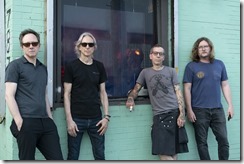
5tqs_APTBSPhotobyEbruYildiz650

Photo by Ebru Yildiz