Posts Tagged ‘New York’

The Whimbrels is an outer-borough masterpiece. The sound is dense, polyrhythmic, hard, and sweet, hooks and riffs to save your soul pop out at unexpected moments. The players’ credits — The Glenn Branca Ensemble (dating to the 1980s), The Swans, J. Mascis — predict the guitar-driven, sonic onslaught of The Whimbrels, captured on their startling debut – and as a taster, they’ve unveiled a video for the song ‘She is the Leader’.

A Whimbrels show involves racks of guitars, tuned in different and unconventional ways with the players constantly switching between them. ‘The Whimbrels’ album showcases this. There are counterpoint choirs, dueling e-bows phase against each other, chunking, poly- and cross-rhythmic interludes, soaring arias of distortion from Westberg and Evans’ strangely melodic and inventive guitar. Evans’ and Hunter’s vocals front a three-guitar line up tuned every way but normal. The ax men are veterans with contrasting styles that come together in a potent whole. The beats are smart and unrelenting. The album concludes with the instrumental Four Moons of Galileo, four short sections with the inner two framed by shimmering walls of descending, slowly evolving harmonies. The title recalls the four moons discovered by Galileo, suggesting the many more then lurking unknown in space.

ARAD EVANS (guitar, vox, primary songwriter) was a member, recorded and toured with Glenn Branca’s ensemble from the 1980’s until Branca’s death a few years ago. He is founder and still performs with Heroes of Toolik. In addition to Branca, he has played with Quiet City, Rhys Chatham, Ben Neill, John Myers’ Blastula, The SEM Ensemble, The New Music Consort, Virgil Moorefield’s Ensemble and many other groups. “A truly inventive and surprising guitar player.” (Rick Moody, The Rumpus Aug. 25, 2016).

NORMAN WESTBERG altered the course of rock as the main guitarist of the Swans over 35 years, contributing "overwhelming waves of volume with a mix of the rhythmically slashing and the harmonically sensual." He has a busy career as a solo artist and with other projects, such as Heroin Sheiks, NeVah and Five Dollar Priest.

LUKE SCHWARTZ is a New York guitarist and composer to watch; he also toured and recorded with Branca, and he performs in a wide range of groups, including Rick Cox, Joh Hassell, Lotti Golden, Wharton Tiers and with several of his own projects, The Review and the improvisational Hive and Quiet City and is in demand for film scoring work.

MATT HUNTER (bass, vox, songwriter) is a co-founder of New Radiant Storm King and plays or has played with a galaxy of cool projects, including J. Mascis & the Fog, King Missile, Silver Jews, SAVAK, and his own Matt Hunter and the Dusty Fates.

Drummer STEVE DiBENEDETTO, is a widely shown and collected fine art painter but also in in high demand for his music. ("The Spinless Yesmen" 1984—89, "Wonderama",aka "The Shapir-o-Rama" 1990—95, Airport Seven from 2010 to 14). He frequently collaborates with Dave Rick (Bongwater, King Missile, Yo La Tengo, Phantom Tollbooth) and Kim Rancourt (When People Were Shorter and Lived by the Water).

LIBBY FAB (drummer on That’s How It Was) is a founding member of the noise duo Paranoid Critical Revolution. She was technical director of Glenn Branca’s Symphony 13: Hallucination City from 2006-09 and toured as drummer for his ensemble on the Ascension: The Sequel tours. Her own electro acoustic and video works have been featured in festivals in Europe, North America and the Caribbean.

JIM SANTO (producer) partnered for many years with Wharton Tiers in the fabled The Kennel studio. At his own Tiny Olive, Santo has worked with a wide range of clients and projects. As a guitar player, his credits include The Sharp Things, George Usher and Harley Fine.

The New York Times once placed Arad Evans on “an index of creative or experimental electric-guitar-based music in America — young lords of the wild in the post-rock tradition.” That description fits The Whimbrels perfectly. You may need earplugs.

AA

Whimbrels_platforms

25th January 2024

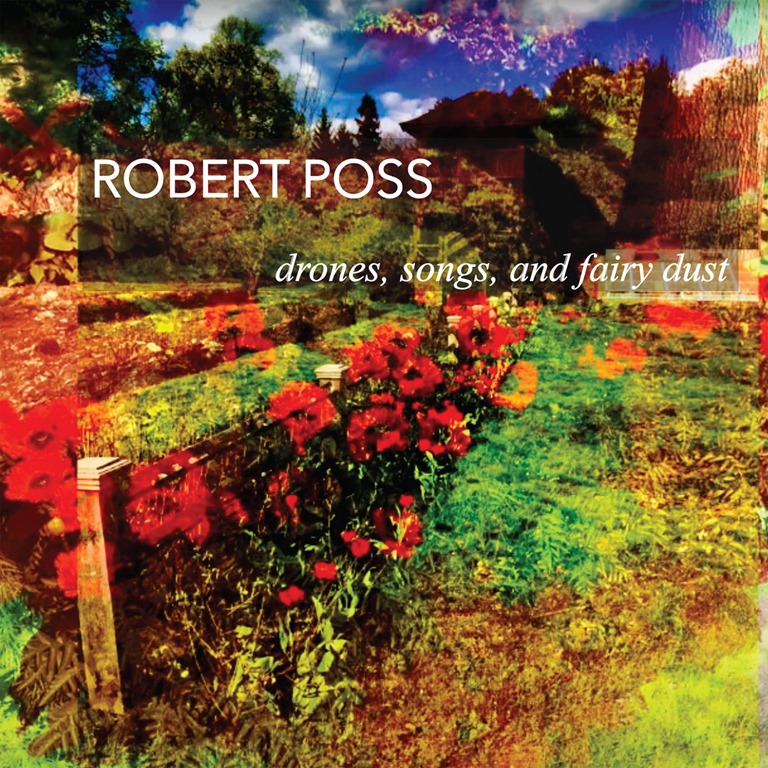
With Band of Susans, active between 1986 and 1996, Robert Poss curved an arc from the New York noise scene towards more of a shoegaze sound. With releases on Blast First and Mute, and featuring a pre-Helmet Page Hamilton on second album, Love Agenda, not to mention a reputation for eardrum-shatteringly loud live performances, the band unquestionably achieved more in terms of influence and cult cred than commercial success (something their final album, Here Comes Success (1995) seemed to acknowledge in its title). But what qualifies as success? Capitalist culture and media tell us that success is a career, promotion, cash, holidays, cruises, bug house big car. But that’s because these are the status symbols capitalism tells us we should aspire to. How about having enough to be ok, a home you like and feel comfortable in, having friends, knowing yourself and being comfortable in your own skin, and having the freedom to do things which give you pleasure? It’s a question of values: what do you value more, time, or money? Status, or the satisfaction of being true to yourself?

There seems to have been a fair bit made of fellow BoS alumni Karen Hagloff’s return to music making in recent years, but not so much about Robert Poss’ sustained output since the band called it a day. But then again, Poss has spent a career being somewhat overlooked and vastly underrated. Both his songwriting and style of playing is quite distinctive and unusual – quirky seems a reasonable adjective, and is certainly not a criticism. The notes on bandcamp note that ‘The release is dedicated to composer/filmmaker/photographer Phill Niblock, a long-time mentor, colleague and friend.’ The timing of this certainly renders this dedication particularly poignant, and also highlights the way in which exponents of avant-gardism feed off one another and evolve one another’s ideas in different directions.

The Niblock connection certainly sheds additional light on Poss’ approach to composition and sound, favouring drones and repetition over rigid verse/chorus structures and progression, and Drones, Songs and Fairy Dust does very much contain, as the title suggests, a miscellany of bits and pieces, ranging from exploratory wanderings to fully-formed songs using conventional ‘rock’ format of guitars, bass, and drums – and on some, there are even vocals, notably the punchy post-punk cut ‘Your Adversary’, which marks a change of style with its murky production and blustery drum machine backing.

The first of these, ‘Secrets, Chapter and Verse’ is a title which could easily be on a Band of Susans release and the song carries that Band of Susans vibe – jangly indie but played loud – and I mean LOUD, with strolling bass running back and forth and up and down beneath the layers of guitar, the vocals low in the mix and serving primarily functional capacity – sonic placeholders.

‘Out of the Fairy Dust’ combines jangling indie and ambient drone and in many respects does carry echoes of ‘Here Comes Success’ – but also Love of Life era Swans – at least until about halfway through where it takes a sudden turn into deeper folk territory. It’s quite a contrast with the deep, ultra-droney sonorous ambience of ‘Foghorn Lullaby’.

Like the epic solo workout that is ‘Hagstrom Fragment’, which comes on like some legs akimbo 90s rock, ‘Skibbereen Drive’ lunges into rock mode, and follows the chord sequence of ‘Flood II’ from The Sister’s of Mercy’s Floodland – and sounds very like it, with its cold synths and crisp drum machine, but without the acoustic guitar detail and lead guitar line. It’s a real contrast to the epic dronescape of ‘Into the Fairy Dust’, on which the drums are a million miles behind the drone as they clatter and roll away, onwards, ever onwards, but also almost entirely submerged in the mix. Elsewhere, with its snarling synth grind, ‘S Romp’ sounds like Suicide doing dirty disco, and ‘Trem 23’ – well, it takes us back to the 23 enigma.

Drones, Songs and Fairy Dust showcases a remarkable diversity of styles, and it’s neither as dry nor as dark as all that, with ‘Imaginary Music On Hold’ presenting a most whimsical feel. As a collection, it never fails to be interesting, or enjoyable, and showcases Poss’ eclecticism and range, and there’s pleasure to be had from listening to a collection of work by an artist who never feels constrained or compelled to confirm to a given genre or mode. It’s something that seems to trouble many people, not least of all labels and critics, that an artist’s creations are based on the pursuit of creative endeavour and interest rather than assigning themselves a category by which they must live. The flipside of this is that it may not feel particularly like an album it its own right, but more like a collection of demos and ideas – and just as the title summarises the contents as three separate elements – Drones, Songs and Fairy Dust – so it feels like it contains the seeds of three separate and distinct projects – a droney one, an indie one, and a dark rock-orientated one. It would be exciting to witness those three projects realised, but what we have here, regardless of future intent, is a document of forward-facing music-making and an artist whose sole priority is doing his own thing. This is, ultimately, the ambition for any artist: to create without concern for commercial matters. And Drones, Songs and Fairy Dust is an exemplary product of creative freedom.

AA

a2882047316_10

1st December 2023

Christopher Nosnibor

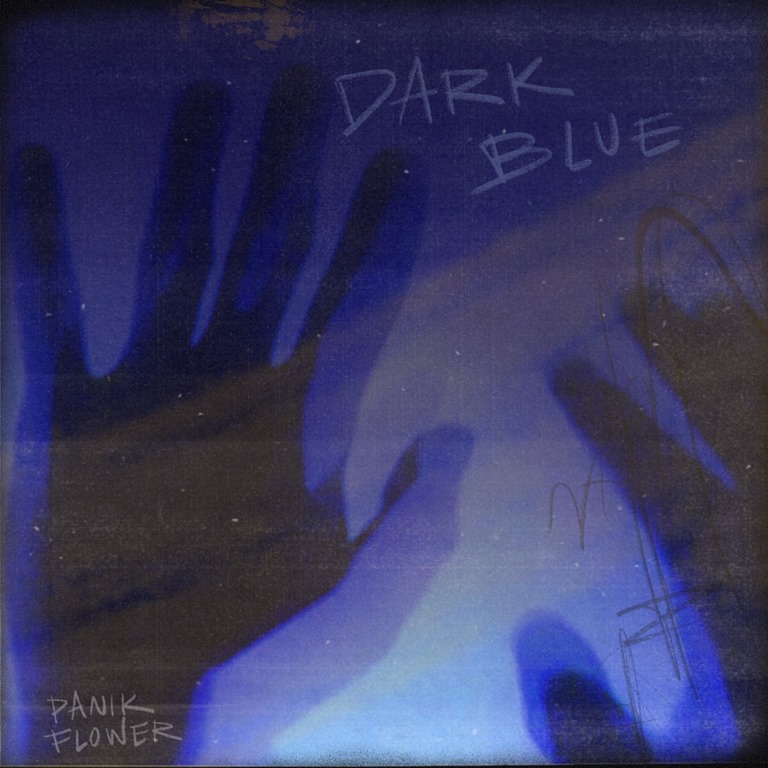
New York’s Panik Flower, purveyors of shoegaze / super washed-out guitar indie rock released their debut single ‘Pretty Face’ in September 2022, and promise ‘dream pop with an understated heaviness. The result is a unique soundscape of soft harmonies, hard-hitting instrumentals and cutting lyricism that evokes the hazy nostalgia of distant memories – ones of love, loss and identity.’

Watching the video to single cut ‘Playground’, which features four of the bandmembers – presumably because it was shot before the current lineup coalesced – pulls a chord of sadness in my chest. It depicts an afternoon spent at a fair, emanating youthful carefree fun, the likes of which is never appreciated at the time, but only ever in hindsight. However aware of the finite nature of youth, there’s a period where it feels that your life lies ahead of you, and every day is a new day. And then, suddenly, it isn’t, and you’re clawing through life a day at a time, strangled by the suffocating sensation that every day that passes is a day lost.

As a jaded, downbeat, saddened old bastard facing decline, I can’t help but be envious of Panik Flower. My youth doesn’t seem so far away until I realize that the bands they remind me of, and the bands from who they draw influence, date from the 90s. The 90s feels like maybe a decade ago: the idea that 1993 was 30 years is both depressing and terrifying. But Dark Blue brings a flighty balance of joy and melancholy.

And so it is that ‘Charades’ brings wistful indie vibes and some bold wells of guitar which grow and grow into crashing waves by the song’s finale. The title track is a solid FX-heavy indie tune with evocative vocals which bear a folksy edge reminiscent of All About Eve’s Julianne Reagan.

The aforementioned ‘Playground’ brings a heavy melancholy and an ache to the chest with its chiming guitars and panging vocal melody, as well as a sturdy chorus. Things get both poppier and also heavier in the choppy, chuggy final track ‘Dilute Me’, which brings big guitars and Garbage vibes and attitude to wrap up a solid EP that packs great songs back to back.

AA

a1899405276_10

Earth Island Books – July 2023

Christopher Nosnibor

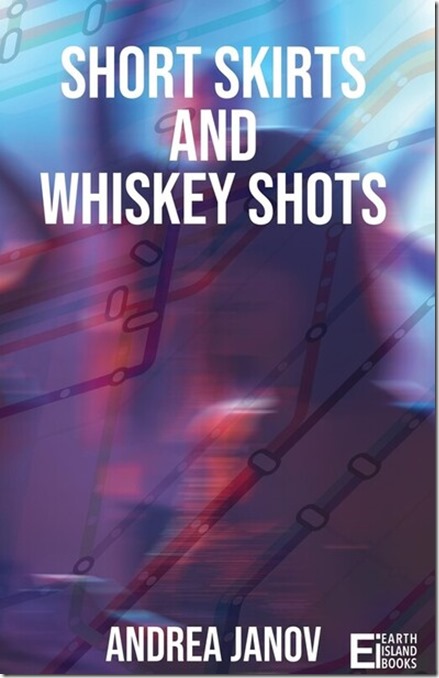
Ordinarily, any book reviews published here on Aural Aggravation are music-related – although admittedly, the inclusion of Stewart Home’s most recent outing, Art School Orgy made it here by virtue of being punk in ethos and published by a record label instead of a conventional publisher. It doesn’t pay to be too prescriptive. And so it is with Short Skirts and Whiskey Shots, the collection of poetry by Andrea Janov, which follows Mix Tapes and Photo Albums, described as ‘a coming-of-age poetry collection about a small town punk rock scene’.

Short Skirts and Whiskey Shots is pitched as a book which ‘captures that liminal part of our lives, that time past adolescence, yet before adulthood.’ It’s not really a book about music. In fact, it’s not remotely a book about music. It’s a book about New York, and a book about finding yourself while being lost in a lifestyle. Yet at the same time, music is there, in the background.

Although the visual formatting and typography (set in a very small font – presumably to maintain the shape of the lines and verses on the pages rather than for cost in this instance) is poetical, the pieces themselves are simple, straightforward prose narrative, and the 24 pieces which make up ‘A Fifth Floor Walk-In’ provide a neat linear scene-setting, sketching succinctly sights and sounds, people and places. The brush strokes are broad, with just the most cursory of details fleshing things out. The titles in this first section are all locations (if ‘7B’ feels rather tenuous compared to ‘10th Street and Avenue B’, we learn later that it’s a bar that plays punk rock), and this theme is continued, albeit less strictly, throughout the book. You couldn’t call it psychogeography, but it does serve to pin each reflection to a place, and sometimes a time, too, and in doing to explores the nature of memory and how places become evocative of moments in time, however fleeting, which reverberate in our recollections further down the line.

Amidst the array of sights, sounds, smells, and the general ambience of chatter and bustling subways, the weather is a prominent and recurring feature of these poems. While we British have a global reputation for our obsession with the weather, it equally seems to be an American thing, particularly when it comes to New York: Ed McBain’s novels always place great emphasis on the heat or the cold or the rain, a s from these readings it does seem as if NY has its own quite specific climate conditions which are an integral part of the experience of life in the city. In these early pieces, she captures the contradictory sense of community – or perhaps scene – and isolation, the distance that comes from living in such densely-packed proximity where people avoid eye contact and rarely even meet their neighbours, let alone reach speaking terms (‘NY, NY’).

As the book progresses, so the pace quickens and the details become less sharply defined, as long shifts in clubs and after-shift drinks melt onto an overall sensation of perpetual movement rather than specifics, and if the backdrop references to punk rock and the Beats on the surface feel somewhat cliché, given that Janov is recounting life in her early 20s finding herself in New York, it’s wholly credible, because it’s simply how it goes: these are the gateways to all things ‘alternative’, a rite of passage, almost. While few here in England use the term ‘punk rock’, its broad meaning in American parlance means it has a universal understanding of music that exists outside of the mainstream. Only a handful of bands are mentioned by name, and if anything, this vagueness imbues the writing with a greater relatability because it ‘despecifies’ and thus broadens the scope for understanding that general musical backdrop.

There are darker moments which remind us of the reason for the book’s subtitle, as in ‘Twenty First and Sixth Avenue, Please’ (the formatting I’m unable to replicate here)

Wake up / Suffocated by the sun / Disoriented and groggy / Chin throbbing / Hand caked in blood

[…]

Stand up. / One shoe on. / Sock in my pocket. / Grope around for other injuries. / No other spot of pain. / No cuts or bruises or contusions. / The chin probably needs stitches. / A skull and crossbones bandage will have to do.

There’s nothing dewy-eyed – and perhaps more significantly and more appealing, nothing dramatic about her narrations of living a life without fear simply because being young and immersed in living life, the risks of walking home through parks at 3am blurry with booze simply weren’t a factor for consideration.

There are a number of scenes and recollections which are replayed in only subtly different ways throughout the collection, but the repetition, rather than being frustrating, recreates the experience of lived memory, how things echo back at us variously, how our minds will return to certain times, certain places.

There’s a melancholy intermingled with fond nostalgia in ‘The East Village’, where on returning she reflects on the process of gentrification: the way the few places which remain have changed.

The sequencing of the poems does have a clear overarching linearity: first, the buzz of arriving and discovering New York, followed by the relentless whirlwind of life, before winding down to a more reflective place on revisiting and remembering. It makes for a short but satisfying work.

(Click on image for link to purchase)

9781739443801-perfect-1

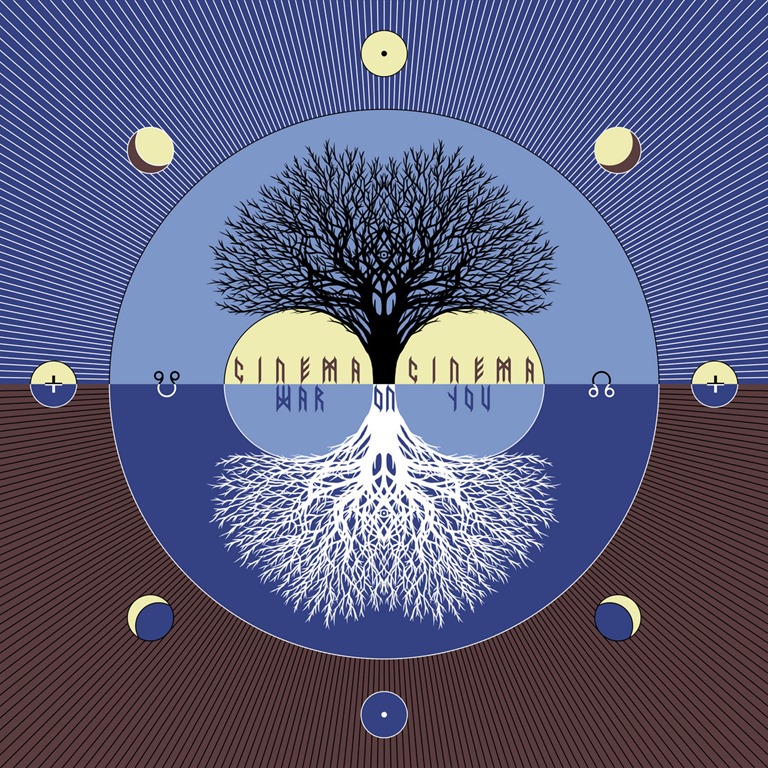
New York experimental noise duo Cinema Cinema unleash their latest sonic exploration in the shape of Mj​ö​lnir in July, and this time they’ve got none other than polymath percussionist Thor Harris joining them. The album was recorded at historic BC Studio in Brooklyn, NY, with legendary noise producer Martin Bisi (Sonic Youth, John Zorn, Boredoms).

Inviting multi-instrumentalist Harris into the fold inspires new direction for the ensemble. Exploring his creative repertoire, Thor makes use of BC’s synth collection along with an assortment of drums and arcane percussion pieces to leave his fingerprints on the proceedings. The trio submerge themselves in the strange beauty of chaotic sound, captured inside BC’s cavernous recording space.

Tracked just before the pandemic, Bisi spent time cultivating the sessions in the months that followed, helping shape one of the band’s most expressive records to date. This marking the third time that CINEMA CINEMA and Martin have worked together (2014’s A Night at The Fights and 2017’s Man Bites Dog), the familiarity breeds wild results.

The first flavour of those results can be heard on ‘War on You’. Hear it here:

AA

a1408884030_10

Bronson Recordings – 26th May 2023

Christopher Nosnibor

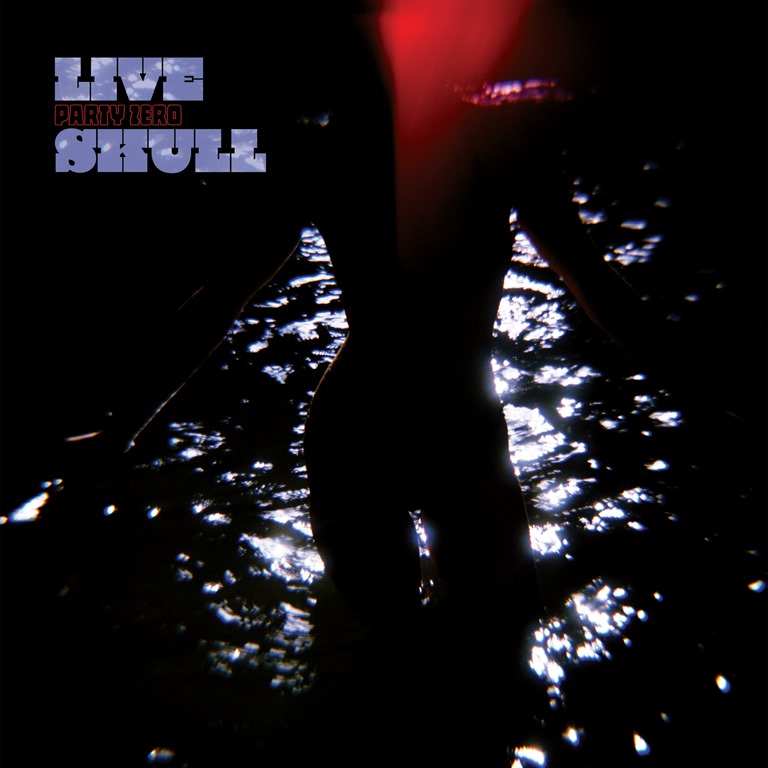
90s alt-rock band Come, fronted by Thalia Zedek, provided my route to discovering Live Skull, which she joined in 1987 and took over lead vocal duties. But my curiosity and interest in evolution and lineage led me to pick up cheap vinyl copies of Bringing Home the Bait and Don’t Get Any on You, which, brimming with shouty vocals, scratchy guitars and low-slung bass, could reasonably be described as No-Wave classics.

Somewhat ironically for a band which emerged out of the foment of 80s New York which also spawned Sonic Youth and Swans, the Live Skull reportedly disbanded in 1990 due to sustained lack of commercial success.

Perspectives change over time, although it was perhaps more of a returning to their original motivations which spurred them to reconvene in 2016, since when they’ve released two albums, with Party Zero being the third, and the seventh studio album of their career.

Delivering an album that’s described as ‘a fiercely political album, in keeping with this politically fierce age’ and ‘timely music, essential, impassioned, angry and beautiful’ founder Mark C. It is a politically fierce age, and now more than any time since the late 70s and early 80s – a period which spawned so many bands who existed as an outlet for frustration and anger and all kinds of difficult and even ugly emotions through nihilistic noise and various forms of confrontation and antagonism.

Sonically, Party Zero isn’t especially nihilistic or noisy, confrontational or antagonistic, but does very much refine these elements and hone the delivery of an almost obsessive focus on corruption, abuse of power, inequality and injustice.

If the sound is rather more polished and widescreen than their 80s releases, the key ingredients are still there, not least of all jagged guitars that blur and crackle with treble and careen into dissonance and discord against big, bold basslines. There’s a palpable sense of urgency to the songs on Party Zero. It may not be their strongest album or their most innovative or distinctive – but it’s an album that’s necessary.

“We’ve been pushed to the edge – how do we claw our way back? That’s been a common theme in Live Skull since the beginning, and so it is now. We’re trying to provoke thought.” There seems to be a rising tide of bands out to achieve these same ends, now, and from a vastly diverse range of stylistic contexts, from the minimal beats and loops of Sleaford Mods to the raging ranting noise-blasts of Benefits via the angular post-punk of I Like Trains. People are pissed off – and they’re frustrated, and scared – and those people in bands are using their platforms to call the bullshit, the fearmongering, the manipulation, the rise of the right and the immorality of governments and multinational companies.

It’s not just the pithy lyrics: ‘Neutralize the Outliers’ sounds like a rabble-rousing protest song, more New Model Army than anything that belies the band’s origins, and it works because it feels necessary, vital.

‘Chords of Inquiry’ plugs away at a simple, spare riff driven by crashing drums, and the drumming is a strong contributor to the album’s dynamic feel, and nowhere more on ‘Mad Kingship’, as they thunder along in a sustained roll. ‘Inside the Exclusion Zone’ is accessible, but driven, choppy, urgent, with a contemporary post-punk feel – think Radio 4’s take on the Gang of Four sound – and the same is true of ‘Turn Up the Static’, with its dubby strolling bass that ambulates through the reverby verses (before the chorus slugs out a mid-tempo fist-pumping holler-along call to arms).

And this is why the surge in protest music is what we need right now. It likely won’t change the world; the chances it won’t change opinions or provoke all that much thought, since most people who are likely to listen to Live Skull are the kind of people who are already in the same camp of political frustration or despair – and that’s ok. What these people – we – need is to know we’re not alone, and to feel a sense of unity and community, and for these feelings of frustration and anger to be articulated by relatable voices. Party Zero does that – and with some solid tunes.

AA

551413

NYC no-wave veterans Live Skull will return with new album Party Zero on May 26th, 2023 on Bronson Recordings. Following on album opener ‘Magic Consciousness’, a modern post-punk protest tune of uncanny subtlety and power, today they share new track ‘Neutralize The Outliers’. Both urgent and catchy, it’s an addictive anthem of otherness perfectly balanced with incredible guitar work and riffs. Recorded at legendary Deepsea in Hoboken NJ by Mark C, this is timely music, essential, impassioned, angry and beautiful. It’s the sound of Live Skull in the 21st Century, a desperate time that needs heroes like these. They are back from the past and still holding the post-punk sceptre.

Live Skull’s Dave Hollinghurst explains: "We watched the chaos unfold live on the computer screen, freaking out, confusion and doubt on our faces. I realized that not only are we the hunted, but we are the hunters – and what are we going to do about it? Strike back with our own brand of chaos and noise – at least we go down in a sonic blaze of glory".

Listen to ‘Neutralize the Outliers’ here:

Insurrections. Global pandemics. The return of fascism. Climate crises. These are some serious times. But if you’ve got angst in your pants and you need to dance, or scream, or play guitar too loud, too close to your amplifier, turn your ear to what Live Skull are doing. The New York noisers, who went on indefinite hiatus just before their kind of smart, gnarly, inventive din became lucrative, rose again in 2016. Their new album ‘Party Zero’, a thrilling work redefining what Live Skull means and what they stand for: no longer a group with a past, but one with a future. 

‘Party Zero’ marks the arrival of guitarist Dave Hollinghurst, an electrifying presence pushing the band in a fresh, new direction. It’s a fiercely political album, in keeping with this politically fierce age. “Desperation inspires us to make art and music,” he says. “There’s a lot of birth and rebirth, looking for pathways of resistance and promoting the good and trying to fight against evil. I once said we had to start Live Skull because Reagan became president. And we had to restart Live Skull because Trump became president.”

‘Party Zero’ is big in sound, brash in dynamics. But the sophistication that was always the group’s calling card remains an essential element, dealing in the kind of pulverising pell-mell that characterised the 80s New York sound, but also radiant with melody, the fusion of noise and unexpected tunefulness delivering a heady, psychedelic effect.

“We’ve been pushed to the edge – how do we claw our way back?” asks Mark. “That’s been a common theme in Live Skull since the beginning, and so it is now. We’re trying to provoke thought.”

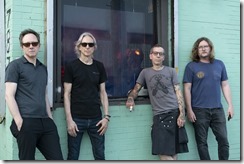
5tqs_LiveSkullbyJenJaffe2650

Photo Credit: Jen Jaffe

Cruel Nature Recordings – 27th August 2021

Christopher Nosnibor

Grunge isn’t dead. Not by a long way. Although, the trouble with grunge is that even at its height, most of the bands weren’t that impressive, and the ones who were achieved the widest success were the weakest, most accessible of the crop. Without the polished and ultimately marketable Nevermind, Nirvana would have never achieved global domination, although both Bleach and In Utero were, and remain, far superior albums, while the like of Tad and Mudhoney are the true sound of grunge, and capture the gritty, sweaty toil of blue collar labour channelled into aural catharsis. These bands never set out to change the world, but to vent their frustrations and ultimately their sense of powerlessness through music.

Perhaps it’s an age thing, but being in sixth form when grunge exploded it felt like not only an exciting time for music, but that this was a wave of music that actually spoke both to and for my generation at the time. In a way I feel rather sorry for the Millennials and Gen Z; the blandness of contemporary music speaks of nothing but surface. Even when addressing genuine issues, there feels like not only an absence of depth, but an absence of real emotion, of soul. Perhaps it’s just that the mainstream industry, represented by the mainstream charts, dominated by mainstream artists on major labels is simply giving the entirety of its focus on monetising slick sonic wallpaper. It seems odd that generations so riven with pain and angst (and who can blame them?) should find solace in this kind of anodyne slop. It can’t just be the numbing effects of antidepressants: something is clearly awry. Small wonder, then, that some delve into their parents’ collections in order to find music that contains what’s missing for them.

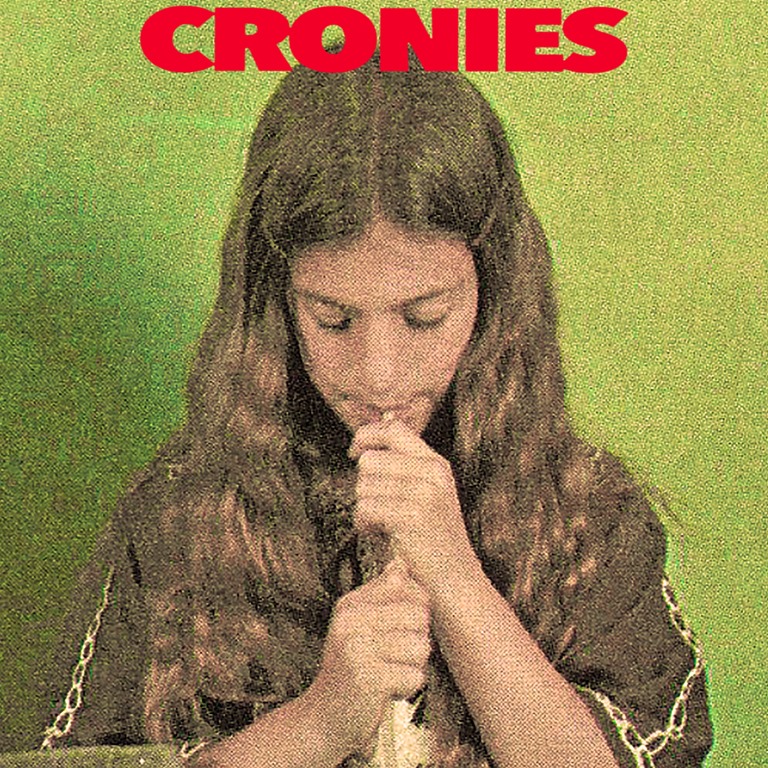
New York’s Cronies formed in June 2020 by brothers Jack and Sam Carillo, the press pitch describes the project as ‘the creative offspring of Covid and isolation’. Creative is the word: having pulled in a couple of mates to render this a full band, they’ve already banged out a brace of Eps in the last year ahead of this, their eponymous debut, which Cruel Nature are releasing on another Bandcamp Friday, with Proceeds going to charity.

It’s a bowel-shaking bass note that strikes first, and the sustain is something. And then in lurches a grimy guitar that’s welded to a stumbling rhythm section – and it’s heavy. Then the drawling vocal rips into a fill-throated roar that’s pure Cobain. These guys have taken the relentless battery of Bleach and the nihilistic squall of In Utero as their template, with a dash of thrash and some of the grimy heft of Tad in the mix (‘Slush Fund’ even leans on the riff from Tad’s ‘Behemoth’ but chicks in some stun synths and some manic hollering that’s more reminiscent of The Jesus Lizard), and ‘A Slippery Slope’ throws all of these in at once, along with a sudden change of pace and direction two-thirds of the way in. On ‘Ritchie from Lebanon’ they build a massively dense bulk of noise, the guitars and bass churning, overloading at great volume.

What Cronies have that their peers lack – well, there are many things, if we’re analysing (and of course we are: that’s the purpose of music criticism). But first and foremost, it’s raw passion and energy. There’s nothing slick or ultra-processed about this: Cronies are unashamedly ragged, and really embrace the grunge ethic of the time when most of the bands from Nirvana to Mudhoney were still on labels like Sub Pop. It’s perhaps because of the band’s origins – confined, trapped – that the songs on Cronies teem and seethe with abject frustration. Sometimes, words simply cannot articulate those feelings, and all there is to do is scream and unleash howls of feedback instead of neat chords. And this is what Cronies do, and this is why they speak to us: it’s accepting the limitations of articulation and unleashing a primal howl. It’s powerful because it’s real.

AA

cover

Brooklyn, NY’s Typhoid Rosie is rolling out another new single off the band’s upcoming album Queen Of Swords, out August 13.

The latest track, ‘Defend Your Temple’, is an empowering feminist anthem– and an urgent plea to stop seeking validation outside of ourselves.

Rosie Rebel describes it as ‘A punk song for every little girl who was sold a sham fairy tale, and is still waiting to be loved in such a disposable age: She don’t need no prince, she don’t need no mice, she’ll make it on her own just fine!’

Check ‘Defend Your Temple’ here:

AA

Rosie-0166-5x7

Photo: Mark Doyle

A Place To Bury Strangers share new single/video ‘I Might Have’ from their forthcoming Hologram EP out 16 July on founding member Oliver Ackermann’s label Dedstrange. Following lead single End Of The Night‘, ‘I Might Have’ is a fuzz-soaked sonic disaster in the best possible way. Past reflections collide with the brutality of a disintegrating world, stories of personal trauma, acceptance, and human failings emerge from the rubble of noise and destitute motorik rhythms. This is A Place To Bury Strangers at its most honest and unfiltered. Hologram serves as an abstract mirror to the moment we live in and ‘I Might Have’ smashes that mirror into a thousand pieces.

‘I Might Have’ is about the insecurities of life and growing up and when you just have to turn around and say ‘F*ck it,’” says Ackermann. “Life sucks so we may as well have a good time.” The accompanying video visualizes this mentality as it shows the band raucously hanging out together in New York City.

Watch the video here:

AA

A Place To Bury Strangers 2022 Tour Dates – Tickets on sale NOW

Wed 09 March – Hafenklang – Hamburg, Germany  

Thu 10 March – Beatpol – Dresden, Germany

Fri 11 March – Klub Poglos – Warsaw, Poland

Sat 12 March – Futurum – Prague, Czech Republic
Sun 13 March – Randal Club – Bratislava, Slovakia

Mon 14 March – Durer Kert – Budapest, Hungary

Wed 16 March – Control Club – Bucharest, Romania

Thu 17 March – Mixtape5 – Sofia, Bulgaria
Fri 18 March – Eightball – Thessaloniki, Greece

Sat 19 March – Temple – Athens, Greece
Mon 21 March – 25th of May Hall – Skopje, Macedonia

Tue 22 March – Club Drugstore – Belgrade, Serbia

Thu 24 March – Mochvara – Zagreb, Croatia
Fri 25 March – Freakout Club – Bologna, Italy

Sat 26 March – Largo – Rome, Italy
Sun 27 March – Legend Club – Milan, Italy

Tue 29 March – Bogen F – Zurich, Switzeralnd
Wed 30 March – Backstage – Munich, Germany

Thu 31 March – Caves Du Memoir – Martigny, Switzeralnd

Fri 01 April – La Trabendo – Paris, France
Sat 02 April – Lafayette – London, UK
Mon 04 April – Kayka – Antwerp, Belgium
Tue 05 April – Gleis 22 – Munster, Germany
Wed 06 April – Melkweg – Amsterdam, Netherlands

Thu 07 April – Vera- Groningen, Netherlands
Sat 09 April – Hus 7 – Stockholm, Sweden
Sun 10 April – John Dee – Oslo, Norway
Mon 11 April – Pumpehuset – Copenhagen, Denmark

Tue 12 April Hole 44 – Berlin, Germany
Wed 13 April – MTC – Cologne, Germany

AA

5tqs_APTBS1PressPhotoWEBVERSION600