Posts Tagged ‘Melody’

The catalogue of material released by Papillon de Nuit, the ever-shifting, ever-evolving musical project of Stephen Kennedy, continues to expand with the release of single number eight.

Kennedy’s approach to the project is both interesting and unusual, with each song recorded at a separate session, often not even fully-formed in terms of writing and arrangement beforehand, and realised with various guest musicians and vocalists. Retuning once more to Young Thugs studio in York, ‘The Pilgrim’s Arc’ again sees Stephen handle a considerable range of duties, from drums to grand piano and providing spoken and sung vocals, as well as writing and arranging the song itself, while joined by Michalina Rudawska (cello) and Karen Amanda O’Brien (spoken word).

The Exceptional Mr Hyde make a guest appearance here, providing ‘menacing spoken word’, while Steve Whitfield  added bass and guitar, as well covering production work

The result is a striking, dramatic, percussion-driven piece with some chunky bass, and layered vocals creating an almost schizophrenic mutter behind a soaring melody.

AA

a2654860644_10

23rd August 2024

Christopher Nosnibor

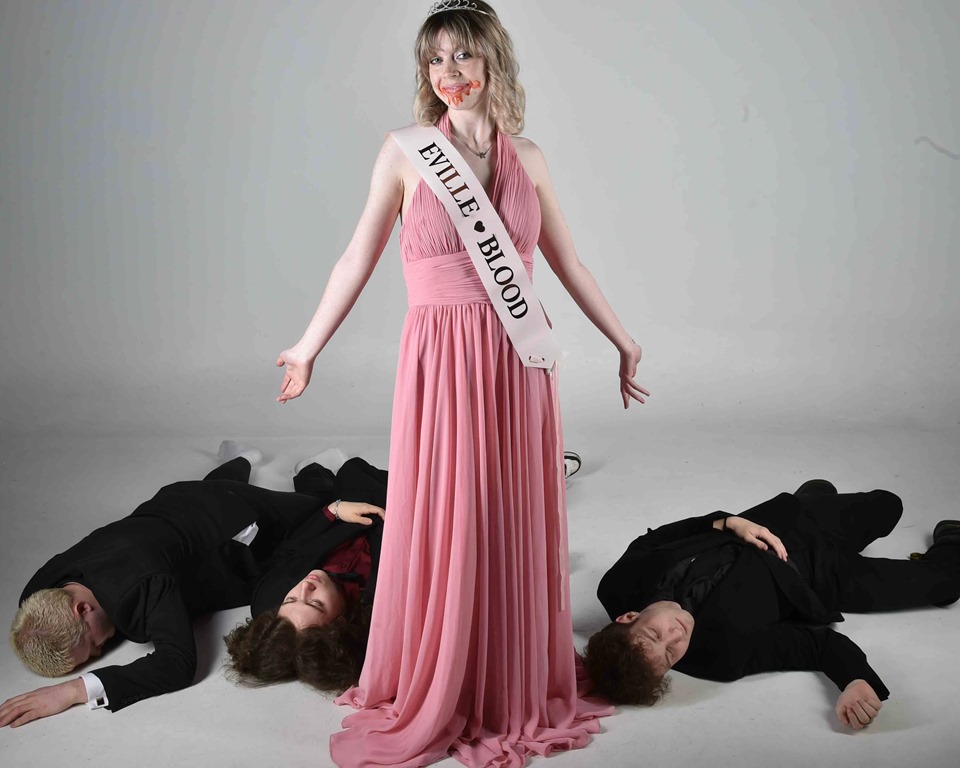
I’ve been enthusing over Eville for a while now. This is no small thing: in the main, I’m not really big into Nu-Metal. Back in the late 90s, the emergence of Limp Bizkit and KORN didn’t so much leave me cold as cause me to wilt inside, and as time progressed, the emergence of more, ever lamer and more cliché exponents of the genre pushed me deeper into the realms of despondency. Anyone who’s read anything I’ve written over the last decade will know that I’m not one of those middle-aged sad-sacks who bemoans the fact that there hasn’t been any new music worth listening to released since I turned 30. I’m not frozen in time, and I don’t believe that any genre is completely and irredeemably shit. Even Nu-Metal.

Eville are a case in point. One reason Nu-Metal was shit back in the day is because it was so overtly the domain of white blokes. So the prospect of a female-fronted Nu-Metal band changes things for a start, and having seen this ad recently, I have witnessed first-hand their capacity to whip up a frenzy.

And ‘Blood’ sure whips up a frenzy alright. It captures Eville at their absolute best: massive, slugging guitar riffs that punish, and hard, on every level, paired with poppy autotuned vocals and keen, earworm melodies. ‘Blood’ strikes the perfect balance between gut-punching riffage and strong melodic tunage. It does not get better than this, and you really need Eville in your life.

aa

eblR0q3w

15 December 2023

Christopher Nosnibor

Few artists can state that they’ve been developing their skills from the age of six, but Katie Arndt is very much a rare breed, and her bio lists her as a ‘prolific producer, vocalist, pianist, and composer.’

All of this is in evidence on her latest offering under the DataBass moniker – as project she’s operating while also, again according to her bio, ‘pursuing studies in classical and commercial voice, with a major in Music Media Production at Ball State University’.

But more impressive than any of this is the quality of her material. ‘Talking To My Dreams’ is a truly captivating composition, and if it stands as rather a departure from most of the releases I cover here, it’s for two reasons: the first being that a bit of a breather is essential. Sure, I like heavy, I like really heavy, and I like really fucking bone-crushing heavy. But I also like tunes, and to drift in moments of tranquillity.

‘Talking To My Dreams’ is both a tune and a moment of tranquillity, as Arndt’s clear voice skips over a delicate piano. Her skills as a producer are in evidence with the inclusion of subtle incidentals, subtle layers of synth and so on, before the vocals are doubled, with backings and harmonies drifting in with the greatest of naturalness.

That the song is barely two and a half minutes long is noteworthy, too, as it seems to reflect something of a trend toward shorter songs, as we had back in the ‘50s and ‘60s. The reasons for such succinct singles may be different now, but it does mean that we’re hearing songs which aren’t stretched out or padded, and simply say what they have to say. ‘Talking To My Dreams’ is a work of great economy, and its brevity adds to its gentle impact.

1st September 2023

Christopher Nosnibor

Since I was first introduced to Salvation Jayne, back in 2017, I’ve admired their energy, their punchy, punky rock tunes (unashamedly not ‘alt’ and straight-up kicking arse). But what happens when a band loses a pivotal member, particularly under rather messy circumstances? It’s nothing new, of course: Fleetwood Mac’s career after Peter Green was both longer and more commercially successful, and the same is true Pink Floyd after Syd Barrett’s departure and post-Gabriel Genesis. Roxy Music lost Brian Eno early on, and Marillion enjoyed a lengthy career post-Fish… and so on, from Iron Maiden to, er, Queen. Arguably, some of these lineup shifts have marked changes for the better. Others… maybe not so.

As far as many were concerned, myself included, Salvation Jayne was Chess Smith. Clearly, Salvation Jayne, releasing their first new music since her departure, would disagree, and they’ve forged on and are now clearly facing forwards and evolving. The arrival of Estelle Mey on vocals is swept over briefly in the band bio which announced a change in sound with the new lineup, describing it as ‘intense, dark and dynamic post-punk’.

It crunches in with warping electronics trilling over a murky bass noise that sounds like a bulldozer before slamming in with some serious force, the nagging guitar reminiscent of post-millennium Pitch Shifter and some vaguely nu-metal vibes, but still retaining the powerful pop elements which defined their sound, and it’s certainly a meatier and more aggressive sound they’re showcasing here. Contrasting shouty verses with a more melodic chorus, it’s a tried and tested structural formula, and they really work that dynamic, and it works well.

The layered vocals add unexpected depths and dimensions, and if there are moments where ‘Thirst’ feels crowded, the level of detail means there’s more to explore and it’s an adventure to unravel with subsequent plays and following the initial impact. Yes, Salvation Jayne are back, and they’ve got a big tune here.

AA

Salvation Jayne artwork

Limited Noise – 29th April 2022

Christopher Nosnibor

With a CV that lists near-multitudinous membership and participation in bands (notably his regular gigs with Snack Family and World Sanguine report, but also contributing to Sly ands the Family Drone and countless others), renowned experimentally-minded jazz drummer and percussionist Will Glaser has taken some time out to continue his solo album sequence with the fourth instalment of Climbing in Circles.

Over the course of three previous releases, Glaser has explored jazz, folk, and beyond, through an experimental prism and with a methodology that’s very much about improvisation. This outing features long-time collaborator, Matthew Herd, on saxophones and piano, alongside trumpeter, electronic artist and producer, Alex Bonney, and was assembled over the course of five day. While the album is loosely constructed around two overarching ‘acts’, they consist of eleven separate and distinct pieces, and bookended by ‘Beginnings’ and ‘Endings’, there’s a narrative arc of sorts, here.

It begins with crawing birds and a gentle piano playing what one could readily describe as a charming melody with a quite conventional structure, and ends with a genuinely pleasant lilting piano tune – and yes, I mean tune in that it has all the conventional features of one.

In between, there is slow decay and infinite space. Rumbling, echoes, notes reverberate off one another at distance. Sax and trumpet trill and drone, sometimes at one, at others as if duelling. The percussion rolls and crashes, but more often than not, at distance, and creating texture and atmosphere and colouring the pieces with expression rather than maintaining rhythm.

The combination of instruments is relatively conventional in jazz, and, similarly, there’s nothing particularly radical about the way they’re played and interact on here. But there’s considerable joy to be had in simply listening to the musicianship and the way the musicians themselves interplay on the pieces. ‘Spiral Dance’ is a hypnotic serpentine spin, while ‘Bad Dream Machines’ is a drifting mass of fragmentation, dissonant, discordant, and above all, a work that exists in the spaces between the notes and in the reverb and echoes as in the notes themselves.

There will be some – perhaps many – who are deterred by the very mention of jazz, and there is a perception of there being a certain elitism about jazz – the idea that random notes and borderline unlistenable chaos is somehow a superior art form, and anyone who doesn’t ‘get’ it is clearly a philistine. But Glaser is a remarkably positive showcase for jazz, with a focus on the listener rather than purely the musicianship. Climbing in Circles Pt 4 is about atmosphere, about vibe, rather than indulgent wanking: this is jazz you don’t need to be an aficionado to appreciate. It’s listenable, and it’s varied, too.

On ‘Dead Fly Disco’, he and his collaborators play completely straight, a song with structure and swing, something you could even dance to, or at least nod a long to its toe-tapping groove in a basement bar late at night. ‘Ballad in the Jazz Style’ almost feels like they’re playing with and working within the tropes as an example of discipline, and it’s highly restrained and wonderfully moody in that sad, smoky jazz melancholy way.

There’s plenty going on, and enough to maintain interest, but not so much as to be chaotic or to lose the listener. Whether these things make it a good access point to jazz, it’s hard to say, but what it does mean is that Climbing In Circles pt.4 is a jazz album that’s accessible and enjoyable simply as a musical work.

AA
Climbing In Circles cover 1000px CMYK

Christopher Nosnibor

The news just in is that ‘Electro-Industrial band MICROWAVED has just unleashed their new EP, Save Me’, and that ‘The EP contains 16 tracks, 14 of which will be available on streaming platforms June 12th. The Bandcamp release will contain two bonus tracks: a collaboration with LIEBCHEN on a cover of Pink Floyd’s “Comfortably Numb” and an additional remix from the talented and outstanding remix artist Steven Olaf.’

The last I was aware, EP stood for Extended Play, and LP for Long Play, and sixteen tracks is pretty bloody long (unless it’s grindcore, when 16 tracks would likely have a running time of about ten minutes). No matter: I’m being picky (for a change), and they’ve released the title track as a lead single, and it features Kimberley Kornmeier of electrogoth act Bow Ever Down.

‘Save Me’ is a brooding blur – the agitated, fast-paced percussion that pounds and stutters like a palpating heart contrasts with the deep, broad, sweeping synths and a gloomily wistful melody which leans heavily on The Cure’s ‘Pictures of You’. The contrasts work, despite being quite difficult to reconcile on the first listen or two. There’s also a subtle but definite harder industrial edge to it, and it makes for a bold yet sensitive song which reminds us that beneath exteriors, so many of us hold on to pain and suffering and loneliness, and that to feel lonely and to be alone are not the same thing.

It’s when it takes a step away from itself around the three-minute mark and there’s a brief segment that sounds more like Eminem that’s hardest to assimilate in the overall shape of the song. It may be incongruous, but at least you could never describe the song as being predictable, and ‘Save Me’ is pretty damn powerful on multiple levels.

AA

f31c61a9-e908-b188-9cbe-533f008d1f1a

Cruel Nature Records – 5th March 2021

Christopher Nosnibor

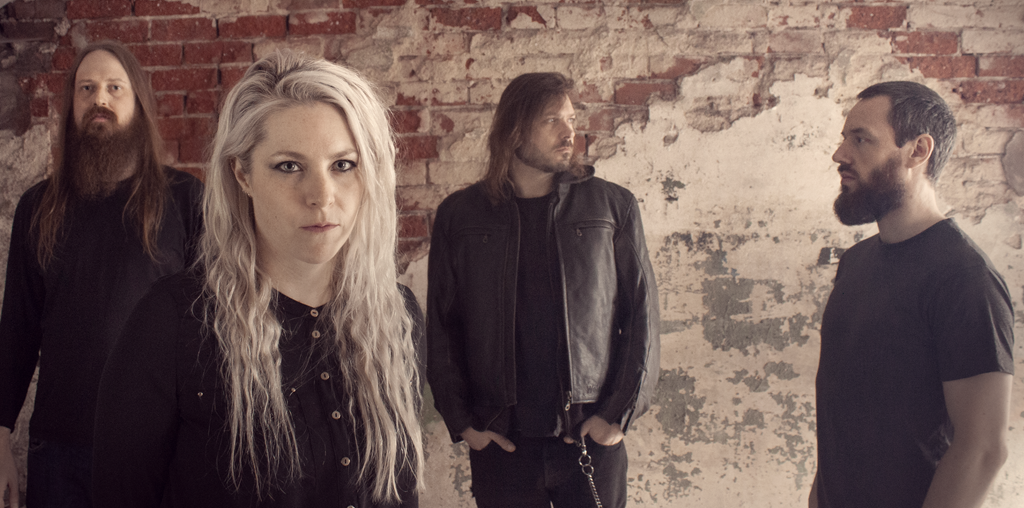
I know next to nothing about Fast Blood beyond the brief biographical info that accompanies this, their debut EP, which follows a brace of singles.

Apparently, the members of the foursome are stalwarts of the Newcastle-upon-Tyne DIY scene, but as a unit they only came together in 2019, performing together for the first time in April of that year. They managed to amass a decent resume of support slots in the eleven months before the world ended for live music, and announced their arrival in November 2019 with the hooky as hell ‘You’, which is featured here as the EP’s second track.

They trade in short – three minutes or less – poppy punk tunes, and for all their ‘nods to 90’s Midwestern indie/emo, hardcore and garage punk’, what actually comes through above anything is how they hark back to a more classic female-fronted punk vintage. That isn’t to say they sound like X-Ray Spex, or Penetration, or Blondie, but there’s certainly something of that vibe infused within their driving, guitar-driven songs which are big on energy.

‘Why do I keep doing this to myself? / I keep telling myself I’m not worthy’ Abigail Barlow sings on ‘Milo’, which was released as their second single in January last year, and while the delivery is accessible, and very much driven by a sense of ‘song’, and ‘melody’, and there’s nothing that’s overtly dark about their songs, there’s an emotional honesty and a sincerity about the lyrics that runs deeper. In this sense, it’s the best of both: a vintage style with a contemporary edge – without the crap connotations of punk-pop dragged along by the likes of shit like Panic! At the Disco, New Found Glory, and All Time Low – they balance bite with something altogether more easy on the ear. Kudos.

AA

cover

Hangman Ho Records

Christopher Nosnibor

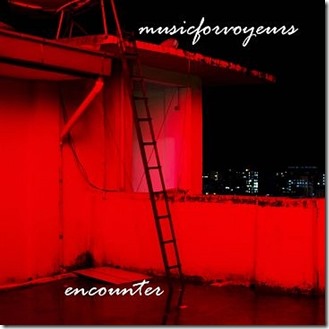
Rick Senley doesn’t do things by halves. Invariably, when I receive mail from him, it contains not one, but two CDs released in close proximity. His two solo musical vehicles, I Am A Man With a St Tropez Tan and musicforvoyeurs reflect quite different facets of his creative bent, and this has never been placed in sharper relief than on his two latest releases. I Am A Man With a St Tropez Tan’s The Tattooed Aunts and Mice on Speed is an abrasive, at times harrowing affair; its counterpart, musicforvoyeurs’ Encounter, which emerged off the back of a film project of the same name for which Senley created the soundtrack, is altogether lighter and softer, and as such, represents an almost polar contrast. That isn’t to say it’s a happy-clappy skip through summer meadows. Encounter explores the spaces between ranging depths of shade in a moving and thought-provoking way.

The eight tracks drift and flow into one another, as brooding strings forge cinematic sonic vistas over which samples pass, creating not so much a narrative, but a sense of meaning, however submerged or allusive. Death provides the primary focus of the snippets of dialogue, and while Encounter is a deeply melancholy work, its tone is ultimately reflective and contemplative rather than dark or depressing.

It begins softly, vaporous ambience washing beneath an extended sample. It concludes dramatically, with a flourish. In between, there is undulating movement and turns of atmosphere.

A humming, thrumming low-end buzz hangs heavy for a time on the second track, before majestic light and choral sweeps cascade forth. The frantic, agitated raised voice which cuts in toward the end changes the perspective and raises the tension, but Senley brings it down with a delicately picked guitar that’s dainty and soothing. Notes ripple and cascade in mellifluous glissandos. But burred edges and rumbling tones lurk just a little way beneath the surface. However pleasant and mellow any given segment of the album is, there is always a nagging reminder of an underlying tension, an insistent sense of doubt that refuses to dissipate or be shaken off. It’s this dynamic which renders Encounter such a compelling album.

musicforvoyeurs – Encounter

Click on the image to hear tracks from Encounter.