Posts Tagged ‘aggressive’

Negative Gain – 6th November 2026

Christopher Nosnibor

For far too long, even within the sphere of genre fiction, sci-fi was (and to an extent, still is) dismissed as being something of a lesser form. Much of this, however, is due to the misconception that science fiction is all about spaceships and interplanetary travel, wars with telepathic extraterrestrials and the like. Sure, there are plenty of books and movies which are about those things, but most of those are actually fantasy works set in space rather than true science fiction. Star Wars is one of the most popular and well-known examples of space fantasy: it’s not science fiction. Perhaps M. John Harrison’s The End of Everything winning the Booker Prize will go some way towards changing that (although, perhaps somewhat ironically, alien invasion is the device which precipitates the book’s eery, post-apocalyptic world).

The most compelling sci-fi explores – through the medium of fiction – what may happen if given technologies are developed in a given way. Many such works are cautionary tales. Michael Chritchon’s Prey stands out as a particularly keen consideration of nanotechnology, genetic engineering, and AI. But it feels as if the tech bros and multinational corporations have assimilated the entirety of the dystopian sci-fi corpus and taken it as a blueprint – because so many of the darkest futures depicted within these fictions have come to pass, the works feeling more like reportage than speculation.

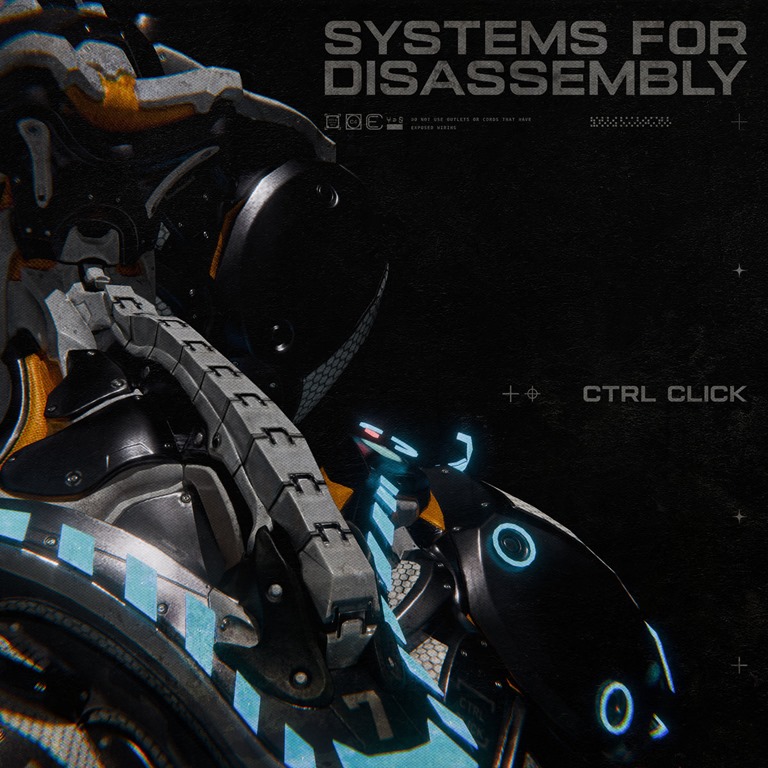
It’s within this context that we come to CTRL CLICK’s Systems For Disassembly, which they say is ‘not a concept record with a linear story. It’s an album of fourteen songs that live in the same world.’ That world is the one we inhabit, a world of ‘hospital wards and server farms, HR meetings and back alleys, pharmacy glow and the supermarket hum’.

They explain that amidst the thematic strands, there is a core focus: ‘The songs circle technology, conformity, mortality, addiction and corporate culture, and keep returning to one question: how do you stay human inside systems that want to classify, measure, medicate and monetize you?’

Spend half an hour on any of the big social media platforms, and you may be inclined to conclude that for many, it’s simply not possible. But in a better world – and we need to always hope for better – people should be able to live by just one rule: ‘don’t be a twat’. But capitalism itself is, by its very nature, dehumanising. Some bosses tell their staff they need to leave their personal issues at the door, but the reality of survival in a capitalist world is that you need to leave your soul at the door, or, to be safe, at home.

‘Angel of Death’ drags the listener into a dark, claustrophobic space, with a dense yet stark industrial electronic sound dominated by thumping mechanised beats and agitated bass. Discord and overlaid incidentals heighten the discomfort. Instantly, you’re there: trapped within hellish confines and no prospect of escape. ‘Insolent’ and ‘Good as Dead’ capture the essence of the endless drudgery of employment: your life is not your own, and living to work is not living. The execution very much calls to mind the likes of Mussolini Headkick and Controlled Bleeding, and early Revolting Cocks.

It wouldn’t be a technoindustrial album without samples, and they’re incorporated judiciously throughout Systems For Disassembly. And, like the systems the album depicts – all systems of oppression, systems of control, systems of manipulation, systems of suppression, systems of surveillance. Keep telling yourself you have freedom of choice and will. You might even believe it: after all, it’s a democracy, right? Right.

‘Eviscerate’ presents yet another suffocatingly dense groove, and it’s danceable in a repetitive, robotic way, but it sure as hell isn’t a feelgood dancefloor anthem.

All of the album’s fourteen tracks are around the four-minute mark, giving a run time in the region of an hour: and during that time, there’s no let-up, and CTRL CLICK mine that dark seem deep and with an almost obsessive commitment. It’s not an album constructed with variety or standout songs in mind, and instead, bludgeons the listener with its relentlessness. The effect is cumulative. If there’s a musical equivalent of onomatopoeia, Systems For Disassembly is its very definition. Systems For Disassembly doesn’t rage against the machine, it takes you inside the machine and recreates, sonically, the experience of a life of entrapment.

‘In League’ and ‘Slip Up’ buzz with overloading circuitry and muffled voices – the voices of the doomed, the damned – people trapped on the treadmill, just like you. There are some potent images to be found among the lyrics, and Systems For Disassembly would make for a compelling – if terrifying – basis for a movie. It’s as bleak and bereft of humanity as it gets, and each track drags us further through the sterile corridors of hell. And each trach seems yet more hellish than the one before. By the arrival of ‘Left for Dead’, my inner voice is screaming for mercy, but there are still a further four songs to go, and if you think they’re any gentler or kinder, you probably think your boss is going to give you a ten percent raise and additional paid holiday at Christmas. The greater likelihood is that your position will be replaced by AI a week before Christmas. Sucker. Your boss doesn’t care. Capitalism doesn’t care.

We’re in electro horror territory on ‘Successful Night’, and ‘Malignant’ goes darker and heavier still – or perhaps I’m just feeling that cumulative effect more acutely. But the final salvoes of ‘Piece of Work’ – reminiscent of Ministry circa Twitch – and ‘(Kill) the Vampire’ kick hard. Crawling out of the album alive feel like a feat. You’ve escaped the Matrix… only to discover that you’re still there in the real-world version.

AA
a1786037363_10

1st September 2023

Christopher Nosnibor

Since I was first introduced to Salvation Jayne, back in 2017, I’ve admired their energy, their punchy, punky rock tunes (unashamedly not ‘alt’ and straight-up kicking arse). But what happens when a band loses a pivotal member, particularly under rather messy circumstances? It’s nothing new, of course: Fleetwood Mac’s career after Peter Green was both longer and more commercially successful, and the same is true Pink Floyd after Syd Barrett’s departure and post-Gabriel Genesis. Roxy Music lost Brian Eno early on, and Marillion enjoyed a lengthy career post-Fish… and so on, from Iron Maiden to, er, Queen. Arguably, some of these lineup shifts have marked changes for the better. Others… maybe not so.

As far as many were concerned, myself included, Salvation Jayne was Chess Smith. Clearly, Salvation Jayne, releasing their first new music since her departure, would disagree, and they’ve forged on and are now clearly facing forwards and evolving. The arrival of Estelle Mey on vocals is swept over briefly in the band bio which announced a change in sound with the new lineup, describing it as ‘intense, dark and dynamic post-punk’.

It crunches in with warping electronics trilling over a murky bass noise that sounds like a bulldozer before slamming in with some serious force, the nagging guitar reminiscent of post-millennium Pitch Shifter and some vaguely nu-metal vibes, but still retaining the powerful pop elements which defined their sound, and it’s certainly a meatier and more aggressive sound they’re showcasing here. Contrasting shouty verses with a more melodic chorus, it’s a tried and tested structural formula, and they really work that dynamic, and it works well.

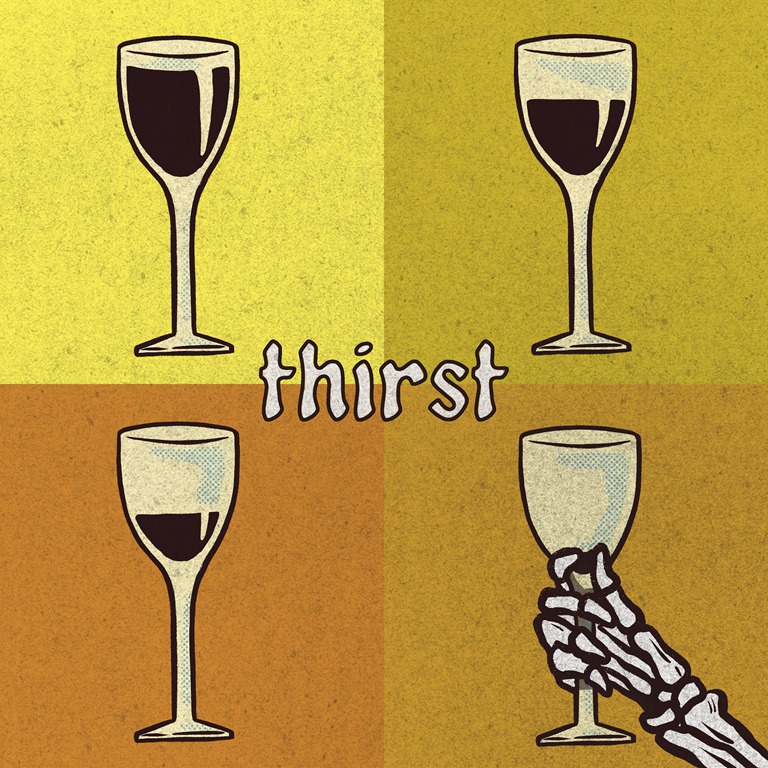
The layered vocals add unexpected depths and dimensions, and if there are moments where ‘Thirst’ feels crowded, the level of detail means there’s more to explore and it’s an adventure to unravel with subsequent plays and following the initial impact. Yes, Salvation Jayne are back, and they’ve got a big tune here.

AA

Salvation Jayne artwork

Renoir Records – 9th June 2023

Christopher Nosnibor

And so it goes that ‘In 2022, Norway’s Hammok released their first EP ‘Jumping/Dancing/Fighting’ and received very good reviews in publications such as Distorted Mag and Pitchfork – and we fucking loved it, too.

The press pitch for the Oslo-based trio’s follow-up, Now I Know, promises ‘a new chapter for the band [which] takes listeners on a vast and powerful journey, beginning on a more bright tone with the band exploring their more introspective and emotionally intense side and gradually drifting towards a more heavier and ferocious approach, reaching levels of fury and intensity never explored before.’

Predictably, perhaps, then, we fucking love this, too.

The EP comprises three tracks: ‘This Will Not Last’ parts one and two, and the title tune, and immediately, with ‘This Will Not Last PT 1’, the shift from the previous release is apparent. The vocals are still trained and straining, angry, aggressive, but they’re swamped in reverb as the instrumentation forges an almost shoegazey, dream pop curtain of sound. The thick, blooping, glooping bass and other key elements are still present but they’re all softer, meaning there’s no gut-punching blasts like ‘Contrapoint’ here. That isn’t to say it’s entirely mellow: it does break into a driving riff propelled by pounding drums and a blizzard of guitar around the mid-section, then takes a turn for the darker in the final minute. Perversely, as much as it’s a pristine slice of post-punk / noise rock crossover, it equally makes me think of a hardcore version of The Twilight Sad and I Like Trains.

‘This Will Not Last PT 2’, released as a preview, is the most accessible and melodic song on the EP, and is their most commercial cut to date by a mile, presenting a melodic, post-hardcore face. Melody is relative, mind you. It’s hardly The Coors. It sits strangely ahead of ‘Now I Know’ which is dense and dark and abrasive in its roaring rage and frantic pace. The guitars chop and churn, and by the close, Tobias Osland is practically spraying his flayed larynx in spatters on the floor as he purges his final howls of obliterative fury.

Hammok have expanded both their sound and range, but while there are softer moments, it would be a mistake to say that they’ve softened overall – and the softer moments only serve to give the hard blasts even greater impact, making for a second killer EP.

Southern Lord –10th March 2023

Christopher Nosnibor

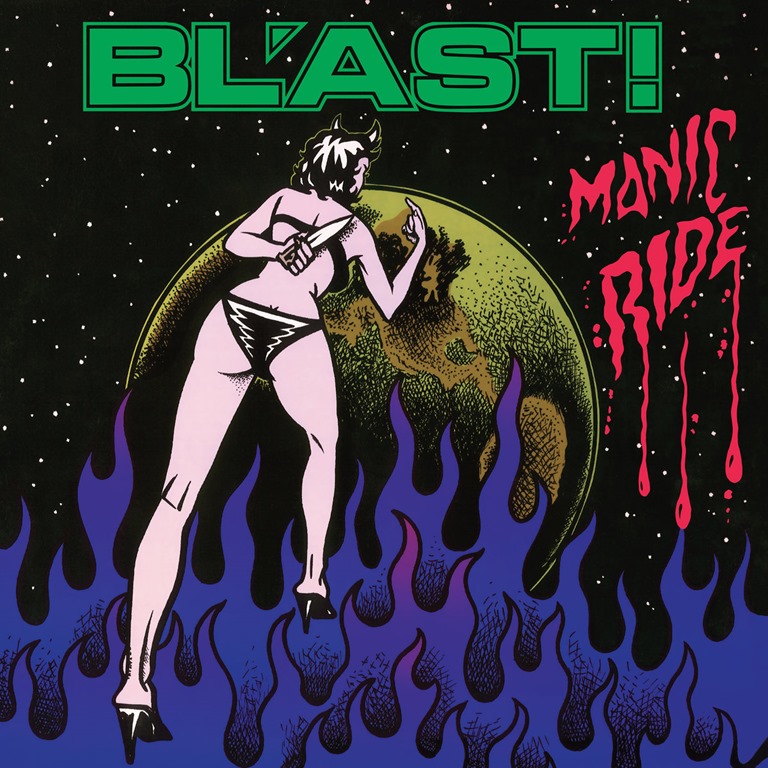
Ask people to name a hardcore band and any money they’ll say Black Flag, but anyone who knows their stuff will likely also mention BL’AST. BL’AST stand as one of the definitive hardcore bands, formed in 1983 and releasing their first album, The Power of Expression in 1986, having recorded it three times.

The story goes – according to the band’s bio – that in June of 1988 BL’AST! went into the studio with Black Flags’ live sound GOAT: Dave Rat (RATSOUND), and the breakneck Take The Manic Ride was recorded. This version was later destroyed after the band was dissatisfied with the original production, with a rerecorded version being presented to the public in 1989.

It perhaps seems ironic that a band as raw and immediate as BL’AST should spend so much time faffing about in search of achieving the ‘perfect’ recording, when the finished article sounds so… unpolished. But of course, that’s the point and the key issue: many bands who are live acts first and foremost find their sound stunted, diminished, compressed and ultimately rendered weak and lacking in bite when attempting to capture the experience in a studio setting. The studio is a sterile environment, clinical, and few producers really get the concept of not actually producing a band. Hardcore is about tearing your guts out with vitriolic rage. The studio is never going to be the best environment for channelling it.

This is the stuff of music legend: the master tapes for that first version were destroyed and were never to be recovered, but as Southern Lord detail, ‘Through some incredibly magical surgery a new heavy as fuck version of the album has been produced.’

Perhaps predictably, Manic Ride is a mess of furious noise and aggression, abrasive and angry. While the Southern Lord reissue isn’t leagues different from the Blast First original, it’s very clearly a different mix. Hardcore (sorry) fans will likely be divided over the mix, whether it’s better or worse or whatever and there’s no right or wrong really. This version is crisper and clearer but also fuller.

What really matters is that this key album is back out there, and if it divides fans, fine. It’s back in the public domain, and will, with any luck, introduce new listeners to the band and their legacy.

AA

a0095993474_10