Posts Tagged ‘Jazz’

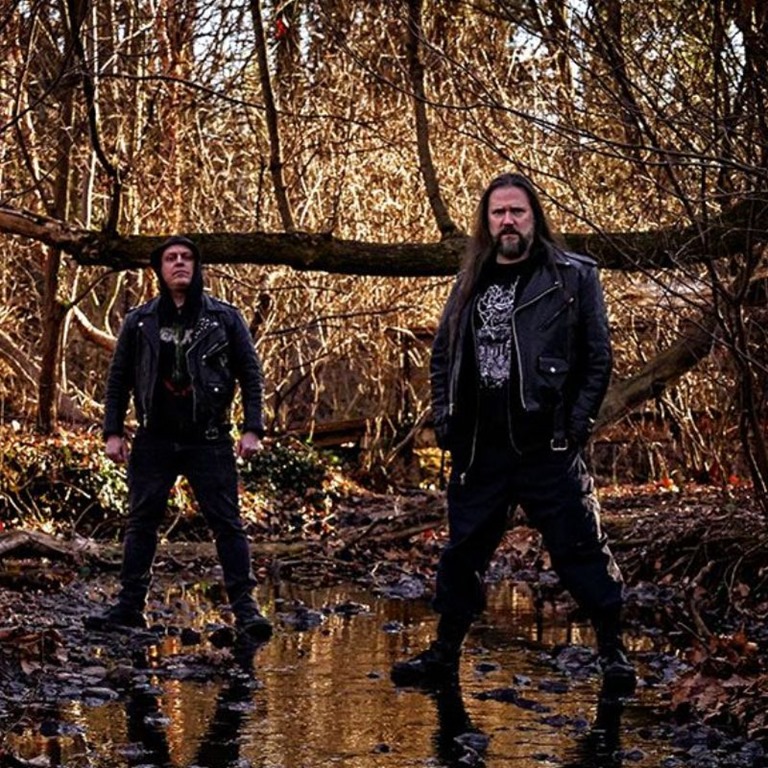
This October, the indefatigably enigmatic trio The Necks will release Disquiet, their 20th full-length release, a triple disc via Northern Spy. It’s an absolutely intoxicating listen, over three hours of incredible music.

The band has shared the mesmerizing 26-minute ‘Causeway,’ as a first listen. Hear it here:

AA

Necks

Photo credit: Dawid Laskowski

Azure Emote unveil the noire video clip ‘Bleed with the Moon’ as the final advance single taken from their new full-length Cryptic Aura. The fourth studio album of the American progressive death alchemists has been chalked up for release on July 25, 2025.

AA

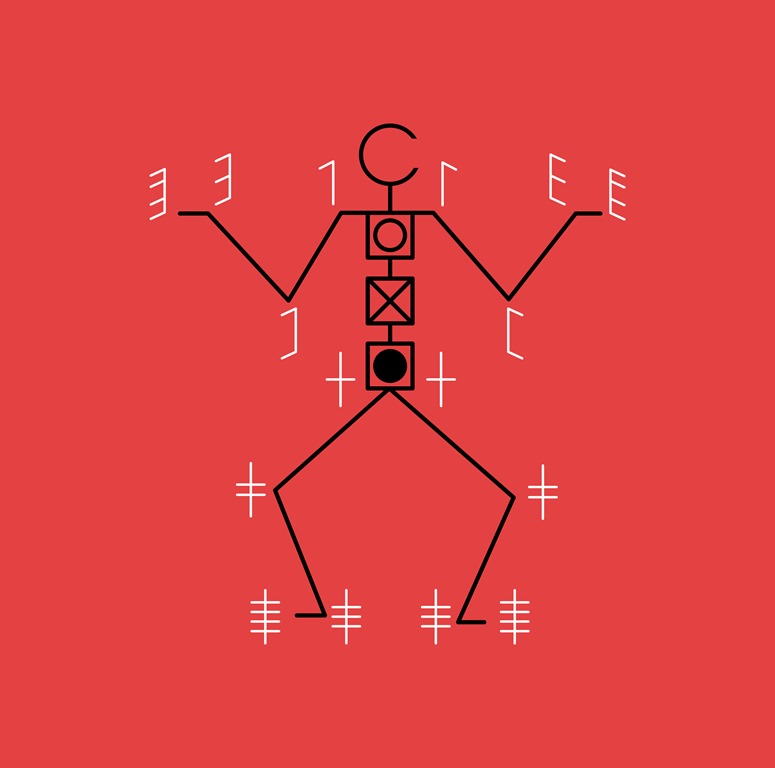
AZURE EMOTE comment: “Overall, ‘Bleed with the Moon’ is conceptually very simple and straightforward, but also one of the more personal songs on the album”, mastermind Mike Hrubovcak reveals. “Alcohol is a demon and I’ve named him Al-Kuhl. This analogy is based on my personal experiences and the lyrics are about getting possessed by this demon around a bonfire in the woods at night. I’m not trying to glorify excessive drinking here. I rather artistically convey the passion, euphoria, and physical and mental dangers of convening with such ‘spirits’ in the heat of the moment. I have a love/hate relationship with Al-Kuhl and I have learned that eventually it ends up taking much more than it gives. This song was written during such a night however, and even the album cover is a photo of a homemade skeleton that I made and burned in the woods along with a bottle and a bonfire.”

AA

52c331a8-4b98-17cb-6040-16cce6f984ec

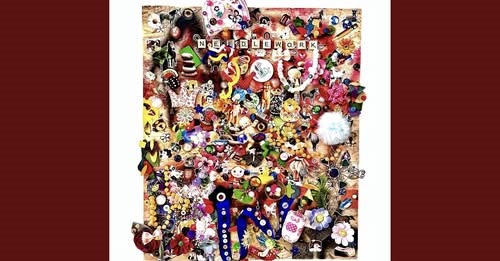
Needlework caught our attention a few months ago when they supported Aural Aggravation faves Soma Crew.

They’ve just dropped the track ‘Saddle Rash’, and we dig. Check it here:

AA

13838193987112654144

Futura Resistenza –16th June 2025

Christopher Nosnibor

Much of Felix Kubin’s work since the turn of the millennium has involved radio, although film and theatre and other soundtrack works have also been a feature. Der Tanz Aller is one such soundtrack work, which was ‘created for the performance of the same title by the experimental arts collective LIGNA. The group specialized in site-specific, participatory works. Der Tanz Aller is based on Rudolf von Laban’s radical 1920s concept of ‘Bewegungschöre’ (movement choirs), collective dances in public space that aimed to reimagine social order through shared movement.’

The context and objective behind the composition are particularly useful to be aware of when listening to this album in isolation, as Kubin sets out: ‘When the performance group LIGNA approached me in 2012 to compose music for a play based on Rudolf von Laban’s revolutionary kinetic theories and so-called ‘Bewegungschöre’ (movement choirs), I thought of a soundtrack that would be both rhythmically engaging, abstract and mechanical. I knew there would be pre-recorded voices talking about his philosophy and guiding the audience via headphones. So, I had to leave some “air” in the arrangements, allowing the visitors to concentrate on the spoken words, while simultaneously becoming dancers. In LIGNA’s conceptual works – just like Laban’s idea of the movement choirs – the audience members become the performers.’

I shan’t dwell too long on the conceptual aspects here, beyond noting that this predates John Cage’s 4’33” by more than two decades, and while Cage’s silent work was on many levels a quite different proposition, the way in which any sound made by the audience – be it a cough or the shuffling of feet or the creaking of a chair – immediately becomes part of the performance indicates clear common ground. Likewise, William Burroughs’ cut-ups, which invited ‘creative reading’ whereby the engagement of the reader and their experience and perception was integral to their success, arrived some thirty years later. As such, ‘Bewegungschöre’ represent the cutting edge of avant-gardism, belonging to the era which brought us Duchamps’ readymades and – perhaps more pertinently – Tristan Tzara’s directions to make a Dadaist poem.

For the most part, the ‘air’ in the arrangements is apparent: there is space, separation, and while we can only imagine the prerecorded voices talking about Laban’s philosophy through headphones, it’s possible to get a sense of how it would work. But then, occasionally, Kubin’s compositions get father more busy, as on ‘Dämonen der Zerstreuung’, with big band percussion and noodlesome orchestration that’s of a strong jazz persuasion, but has a whole lot happening, and often simultaneously. There’s drama with orchestral strikes, and creeping, urgent glockenspiels that bring a noirish, detective movie feel – not a chase scene, but a cat-and-mouse scenario.

There are some spoken-word passages, in German, as on ‘Raumstunde Vera Skoronel’, accompanied by evolving sonic backdrops, the likes of which I find hard to imagine inspire dancing, but spasmodic twitching and erratic lurching, while the title track is a slice of jerky, and quite insular and intense, Kraftwerkian synth bleepery, and ‘Rotes Lied’ is a perfect exemplar of sparse, spaced-out, glooping, blooping, reverby weirdery with occasional chimes and stuttering shot of snare. There is plenty of air here, as you sit and wonder what exactly is going on?

Who knows? And does it even matter at this point? The percussion builds from all sides, and the nagging away – until suddenly it doesn’t.

The unpredictability of Raumstunde Vera Skoronel is its strength. It is weird, unexplained in many respects, beyond simply the initial onboarding awkwardness. We should probably celebrate this weirdness, this sense of separation. Raumstunde Vera Skoronel is never dull, but always strange and alien – and these are reasons to appreciate it.

AA

AA

RESLP040 front

Limited Edition 7" Dubplate / DL Blank Records – 13th June 2015

Christopher Nosnibor

Tobias Vethake aka Sicker Man has spent a quarter of a century doing things differently – differently from other artists, and differently in terms of his own sound and approach to making music.

As his bio points out, ‘as our world changed a lot during the last 25 years, so did his music. On his last release, KLOTZ WENZEL VETHAKE, the interaction with other musicians and the political dimension of a musical wake-up call became a main focus… The single „Gravy Train / Hollowed“ marks a new and fresh look at both, his musical history and present. It features Sicker Man’s love for dub, noise and electronic music as well his passion for classical composition and spiritual jazz… ‘Stop The Gravy Train / Hollowed’ feels like a collaboration of Moondog and The Bug’

It certainly does. For these two pieces, Sicker Man has enlisted saxophonist Matze Schinkopf, and

How many ideas is it possible to pack into four and a quarter minutes? With ‘Stop The Gravy Train’, Sicker Man manages more ideas per minute than it’s possible to even begin to count. The piece starts with a low, grinding bass and industrial hums, before the saxamaphones enter the mix, interweaving through and across one another. They trickle smoother, teasing with points and counterpoints, laid-back and mellow over the simmering rhythm section, the bass and the beats building currents beneath. Around the midpoint, the piece makes a change of trajectory, the gentle jazz giving way to something altogether more urgent and driving, locking into a robust groove with low saxophone punching rhythmically and in syncopation with the whip-cracking snare and palpating kick drum.

‘Hollowed’ is different again: a swampy surge of seething electronica, a morass of meshing noise – at least to begin, and then it melts into a rather pleasant swaying jazz work, a clip-clip beat nodding along nicely. Swells of noise bubble and surge, but don’t quite break through, and industrial grooves settle in while the saxes tootle off in different directions, hither and thither to brain-melting effect.

‘Genius’ is a word which is chronically overused and often severely misapplied. Is this a work of genius? Maybe not, but it’s got to be close. There’s no question that it’s wildly inventive, and unexpectedly listenable, while challenging every musical preconception.

AA

a1110512025_10

Not Applicable – 23rd May 2025

Christopher Nosnibor

For about five minutes, AI looked like it may provide some entertaining diversions in terms of creative potentials. It wasn’t so long ago that it produced glitchy, idiosyncratic writing and wild art that was so wrong it was hilarious, and lame synth-loop electronic music which had neither style nor substance. It didn’t look like the threat to humanity that dystopian sci-fi novels had portrayed.

But then more information began to emerge about how AI was ‘learning’ by essentially stealing from all available sources. AI is the worst plagiarist imaginable, and nothing is safe or sacred. Then there came the reports of the vast amounts of energy, and water, required to power it, and it started to look like AI will doom the planet by sapping its resources instead of going rogue and obliterating humanity. But then…AI evolved, and fast. In no time at all, people stopped having additional limbs and appendages, the writing transitioned beyond repetitious babble, and people have begun to use to AI chat as a substitute for expensive therapy, despite reports of rogue AI advocating suicide… and as its usage accelerates and it morphs into the nightmare of sci-fi dystopia we’d dismissed just a few months ago, so the use of energy and water increases exponentially. One way or another, it does now look very much like AI will finish us.

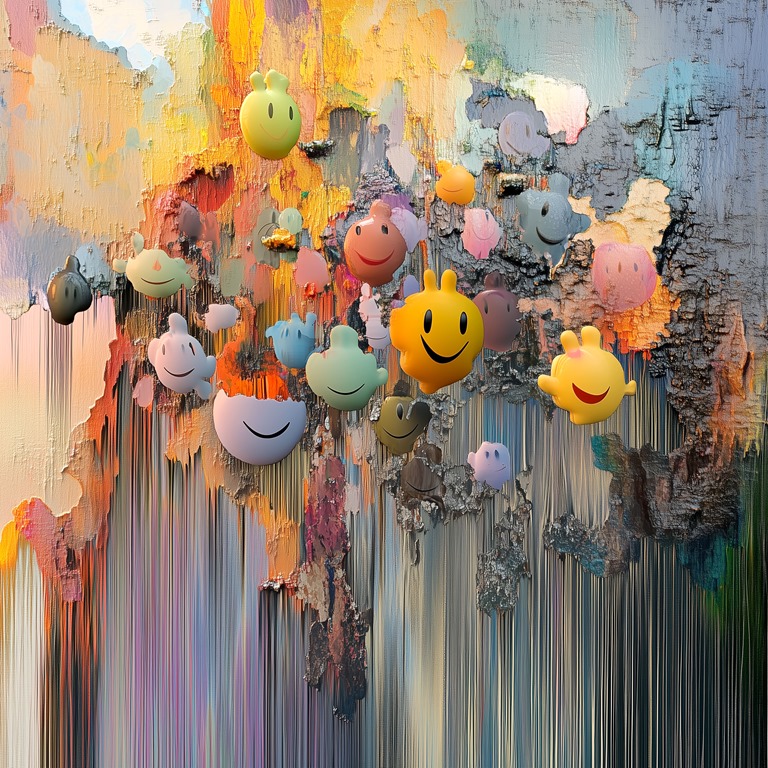
And so there’s a certain discomfort in approaching Put Emojis On My Grave by the spectacularly-monikered Ancient Psychic Triple Hyper Octopus, an album which is sold on the way it ‘boldly explores AI and improvisation on an album of freely improvised, experimental electroacoustic music’.

It features, as the press notes put it, ‘a new lineup of celebrated, British musicians’ (Alex Bonney (trumpet, bass recorder, Strohviol), Will Glaser (drums and percussion) and Isambard Khroustaliov, aka Sam Britton (electronics), and ‘ claims to forges ‘a new musical language’, with an album ‘which eschews traditional musical composition, seeks instead to “adopting the language of AI’s deep learning failures and glitches”, attempts to imagine how AI could make a positive contribution to the creative process’.

It’s hard to know how to really assimilate this. The six compositions which make up Put Emojis On My Grave are fine examples of exploratory jazz, with wandering trumpet tooting in meandering lines across clanking, clattering abstract percussion which sounds like cutlery and wind-chimes being knocked about while bleeps and bubbles interject seemingly at random. It has that avant-jazz, experimental, iprov feel which is in some ways quite familiar in its own strange way. That is to say, while it’s niche, the sonic experience is very much representative of a certain field. A field filled with jackrabbits, apparently.

‘Goats on Helium’ is bubbly, bibbly, scratchy, scrapy, wheezy, groany, a splatter and clatter of sounds piled up and colliding all over, and it gets pretty messy over its six and a half minutes. Warping drones and scratching, gargling abstract drones twist around deranged brass tootlings and crashing cymbals on ‘The Adiabatic Flux Differentials of the Id’, and I would challenge anyone to find a title that’s posier, more wankily intellectual than that this year. And while it’s a bit jazz-jizz in places, it’s certainly better than the title suggests.

This is, in my opinion, a fair summary of the album, a work which is concerned with space and time – not outer space, but inner space, the space which our minds explore in reflection like the clatter of 1,000,000 bongos, the space – or distance – between concept and execution, and virtual space, those our other selves occupy, both in the moment and, subsequently, leaving echoes and traces in infinite corners of the virtual world. It’s impossible to discern where the musicianship cedes to AI intervention here, which is certainly in its favour – and if Put Emojis On My Grave is used to train generative AI, then it could confuse it for a while, making for some interesting results. And Put Emojis On My Grave is certainly interesting.

AA

Ancient Psychic Triple Hyper Octopus – Put Emojis On My Grave cover 4000px

God Unknown Records – 25th April 2025

Christopher Nosnibor

A new album by World Sanguine Report is always something to pique the interest. The jazz-tinged avant-rock collective centred around Andrew Plummer, with longtime collaborators Matthew Bourne, Ruth Goller, and Will Glaser, has a knack of producing music that Does Something Different. In a world of mass-produced, off-the-shelf sameness, were even every ‘independent’ or self-professed ‘boutique’ business of any persuasion is simply a carbon copy of all the rest in their striving for Instagram perfection, this is welcome. Very welcome – even in their less accessible moments. Because all this endless sameness is brainrot.

A few years ago now, people started setting up independent burger places as a rebellion against the dominance of McDonalds, etc. But now there’s a hipster place doing smash burgers every few hundred yards, just as there’s an indie coffee place on every corner, and that’s great, but it’s total overkill. How much fucking coffee do we need?

In the early 00s, there was an oversaturation of post-rock. I can’t recall a time when we’ve ever been drowning in jazz-infused avant-rock, and while there are acts which stand by way of comparison when exploring their work, World Sanguine Report stand apart in a very open and sparsely-populated field. And for Songs From The Harbour, they’ve decided they need to do things a bit differently – just in case there was a risk of things getting a bit predictable.

They consider Songs From The Harbour ‘The most direct WSR album to date’. Plummer goes on to recall how ‘We auspiciously recorded the majority of the album aboard the Lightship 95 Studios on the Thames. The ship moved us, the ship moved with us. The Thames lapped at the boat, its tides washing in the Lightship’s echo chamber, housed in the hull of the ship, made its way into the recordings.’

London has a way of infiltrating the psyche and the creative mind of artists, in a way few other places do, other than perhaps New York. I digress. As usual.

‘Lay Down With Me’ makes for an interesting intro track: Less than two minutes log, it’s a low, slow, droner which leaves you pondering ‘where will this go from here?’ The answer is that will go deep, delving down and exploring difficult terrain. ‘She Is All’ is huge in its mere four minutes, with Plummer’s brooding baritone vocals resonating out over the space as reverb covers a crushing embrace. ‘Blue Skin’ finds Plummer brooding and musing, and sitting somewhere between late Leonard Cohen and Jim Morrison, only with a certain feel of despairing.

The same gloom hangs on the remainder of the album, with ‘Starboard’ not only clinging to the nautical theme of the album’s title, but sounding like a slightly inebriated sea funeral. ‘No Kids’ brings a slow, weary-sounding blues feel – and by weary, I mean fagged out, fatigued, it’s a knackered-sounding groan of a song, while the last song, the seven-minute ‘The Catching of the Bull’ rings out in a fuzzy-edged drift of melancholy with an almost sing-song back and forth with the dual vocals. It’s pretty and sad in equal measure, and leads the album out on an extended sonic cascade, like a slow incoming tide.

Songs From The Harbour is more bluesy and folky than jazz, and it’s also slow and weighty in its lugubrious mood. There’s a solidity to it, a coherence, and an assurance which radiates from its carefully-woven tapestry.

AA

a1542432635_10

Subsound Records – 18th April 2025

Christopher Nosnibor

Twenty-eight years and fourteen albums into their career, Zu continue to confound, and to defy comfortable categorisation. Jazzisdead, their first release in six years, is their third live album. It’s most certainly not, however, a set comprising live renditions of greatest hits and fan favourites, and instead being a collaboration between Zu bassist Massimo Pupillo and saxophonist Luca T. Mai, with drummer Yoshida Tatsuya, founder of the Japanese band Ruins – and as such, the moniker follows in the vein of Zu93 (Zu with David Tibet of Current 93). The result, then, is a crazed hybrid of punk, sludge metal and jazz driven by some frenetic full-kit drumming.

‘Gravestone’ kicks it off with a thunderous riff and it’s a track that wouldn’t sound out of place on a Melvins album, while the frenzied ‘Speedball’ comes on like The Dead Kennedys but with some wild falsetto vocals and a blustering blast of sax. How is this even possible?

There are some more sedate passages, but they seemingly exist as tricks to convince you that they’re capable of delivering something more conventional: the introduction to ‘Asmodeo’ is gentle, atmospheric, and it’s almost soothing – but halfway through, it’s explodes in a riot of honks and parps, drums flying in all directions, and each composition slalems hither and thither: at times they’re tightly together, at others , the three instruments play across one another at wildly divergent angles, as if playing three completely different tunes – and yet somehow there’s a groove happening.

‘La Grande Madre Delle Bestie’ features some eye-popping machine-gun snare work before slithering to a swampy crawl, and the thing about Jazzisdead is that it’s simply impossible to second-guess what’s going to happen next. Repeat listens don’t render the work more familiar, but instead reveal entirely different albums. Elsewhere, ‘Hyderomastgroningen’ is a lumbering beast that brings a grungy swagger that brings hints of the Jesus Lizard. However, it’s perhaps Melt Banana who stand as the closes comparison to this in their crazed and irreverent approach to music-making, and this is nowhere more apparent than on ‘Memories Of Zworrisdeh’, the album’s longest track with a running time of five minutes, and which packs in an album’s worth of ideas into that time. ‘Muro Torto’ is another track of two halves, with long, groaning drones giving way to an almost ska-like bouncing thumpalong. Predictable, this is not.

There are several pieces which are but fragments, intersecting passages a minute or two in duration, and these only add to the experience of an album so packed with changes in tempo and key that it’s most discombobulating. It’s dizzying, jaw-dropping, impossible to keep up with, and the interplay between the players is remarkable. Ultimately, Jazzisdead makes for a hell of a listen – although you might need to lie down for a bit afterwards.

AA

a3703079166_10

Christopher Nosnibor

This isn’t one of the three bands for six quid efforts I’ve been raving about, but three bands from out of town for eleven quid is hardly extortion, even on a Tuesday night, and Gans might have much social media presence, but they definitely have some traction building. Bearing in mind that it’s the Easter break and many students at both of the universities have gone home, the place is noticeably busy, and there’s a conspicuous number of really tall bastards in tonight, young and old. And while I’m inching towards being an old bastard myself, I shall never be tall, but will be eternally aggravated by the towering twats who step to the front row in a venue with a stage that’s barely a foot high. That’s just a personal peeve, and there’s not much you can do about biology.

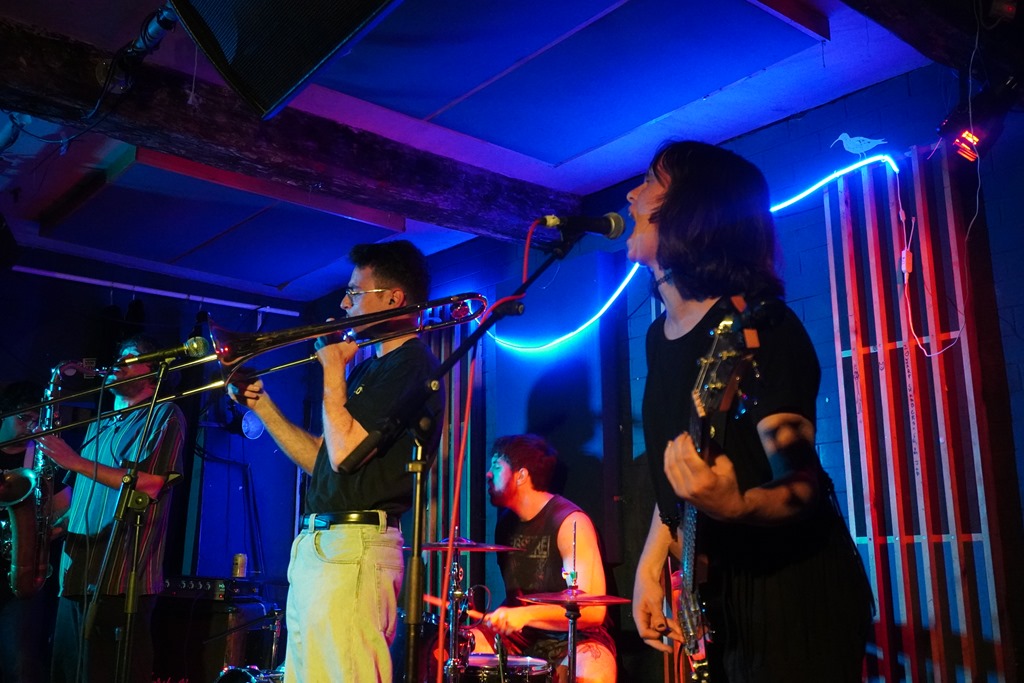
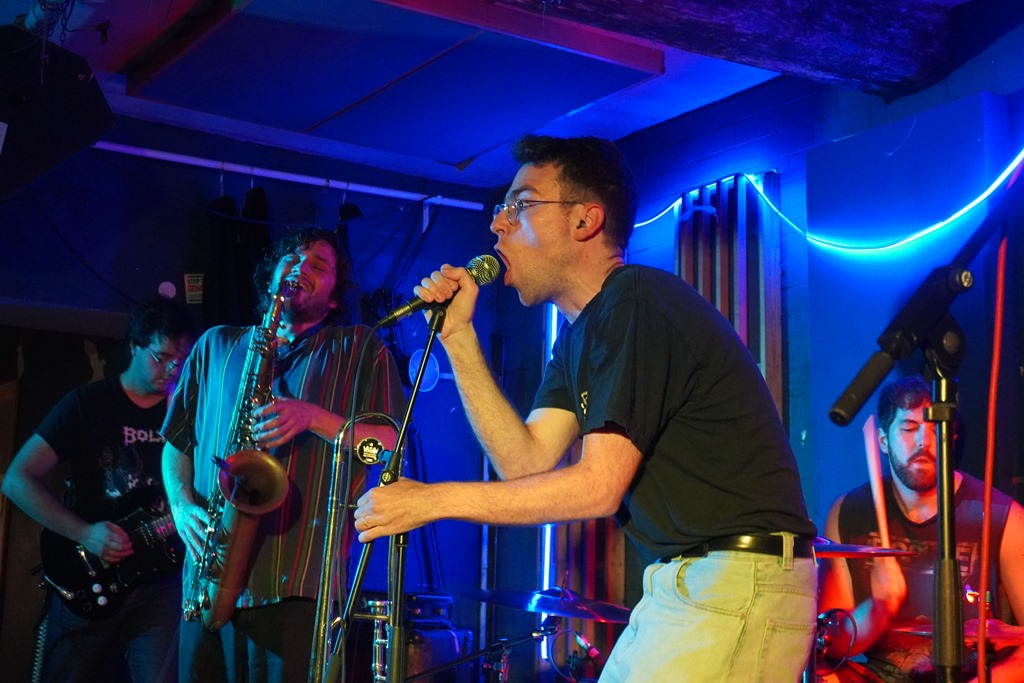
But there is something you can do about being a decent band, and I’ll admit my expectations are pretty low at the start of the set by the Richard Carlson Band, from Sheffield. It’s not the sax per se, but the slightly awkward presentation, the smooth jazzy leanings, my instinct to summarise this as ‘nice; and move on… but while their set is jazzy in part, it’s also varied, in places evoking Ian Dury, in others Duran Duran circa Seven and the Ragged Tiger… ‘Barrymore’s Pool Party’ goes darker and calls to mind Girls Vs Boys and The Fall, only with sax. They’re a five-piece with two – or three guitars, the third guitarist sometimes does keyboard, and they’ve no bass, instead finding the second guitar being run through a pedal that turns it into a bass. It’s unusual, and their set is both interesting and well-played.

DSC01597.edit

Richard Carlson Band

Mince, from Leeds, are also a quintet, and appropriate for their name, serve up some fairly standard meat and two veg punky fair. In fairness, they do at least do it with some energy. A few songs in the whip out a choppy guitar that’s pure Gang of Four and for a moment they’re ace. Then it’s back to sounding like The Godfathers crossed with generic indie / punk. The pace picks up as the set progresses: the standard doesn’t, descending into shit shouty indie. The last song, their upcoming single, is the best they have by a mile. It’s solid, but they’ve set the bar low.

DSC01607.edit

Mince

Gans are something else, and that something is superlative. Hard-hitting two-piece acts have become a prominent feature of the rock scene in the last decade, with Royal Blood blowing open a fair few doors before blowing their cool in spectacular fashion. Being rather less preoccupied with classic rock and more about raw punk energy, Gans are more reminiscent of Slaves before they sold out to the Man and became Soft Play. Gans set out to entertain, and absolutely give it their all, making a massive bloody racket in the process, with only bass and drums. I say ‘only’, but that bass sound is immense, and the bassist can’t keep still for a second: he positively vibrates with energy, while the drummer… kicking out rolling rhythms that have the glammy swagger of Adam and the Ants and The Glitter Band, he plays hard and with style: watching him, I continually return to the question ‘how does the man breathe, let alone sing while doing this?’

DSC01620DSC01643.editDSC01645DSC01649

Gans

Although they’ve only released five songs to date, they’ve got plenty more in the bag, and there’s no filler to be found here. They are truly a joy to watch, and they maintain the energy from start to finish throughout their high-intensity forty-minute set. Catch them in a small venue while you still can.

Gizeh Records – 4th April 2025

Christopher Nosnibor

Returning for their eighth album, A-Sun Amissa, purveyors of drone-centric ambience centred around founder Richard Knox pull back from the rather larger avant-rock sound of 2024’s Ruins Era to concentrate once more on ‘unsettling drones and claustrophobic atmospheres’. Knox is joined for the third successive release by Luke Bhatia and Claire Knox, indicating that this is a fairly stable lineup, and perhaps this has been a factor in the album’s exploratory, evolutionary approach.

The promise is that the record’s ‘washed out and ethereal sound drags electric guitar, clarinet, voice and piano through pillows of reverb and distortion to build heaving, desolate dronescapes. Moving through dense, oppressive passages of sound and diffusing into sections of gloomy, haunting restraint. We Are Not Our Dread is filled with majestic, textural detail. It envelops and, at times, smothers you before releasing just at the right moment, resolving in a billowing, melancholic, distorted reverie.’

The first thing that strikes me – as is often the case with any project centred around Knox – is the evocative nature of the title. Perhaps I’m feeling uncommonly sensitive right now, but this one in particular lands with an unexpected impact, and as much as the implication is one of positivity – no, we are not our dread, our dread does not define us or dictate our lives – there is equally the emphasis on the fact that we have that dread. And not you, or I, but us, together, collectively. And so it is that dread become the focus, that thing which looms large over not only the title or the album, but our lives. Why do we have this dread? It would not be an overstatement that the pandemic changed everything: the world that we knew lurched on its axis and no-one knew how to handle it. And since then, insanity has run free. 9/11 may have rattled the rhythm of life for a time, but not it seems that the entire world spent the pandemic years just waiting to wage war, and now nothing is safe or predictable – not your job, your home, your ability to post stuff online. You don’t need to be a prominent protestor or social agitator to attract the wrong kind of attention. The dread hangs over every moment now. We thought we had seen the worst when COVID swept the globe and lockdowns dominated our lives, and began to breathe a collective sight od relief when things began to retract, as we looked with optimism toward the ‘new normal’. But who ever anticipated this today as the new normal the future held?

We Are Not Our Dread consists of four fairly lengthy instrumental compositions, and ‘Electric Tremble’ arrives in a dense cloud of ominous noise which immediately builds tension, and if the rolling piano which drifts in shortly afterwards is gentle, even soothing, the undercurrents of rumbling discord and distant thunder which persist maintain a sense of discomfort which is impossible to ignore.

Ever since his early days with Glissando, melding post-rock with ambient tropes, Knox has had an ear for the unsettling, deftly manoeuvring elements of the soft and gentle with the spine-tingling. And while the eleven-minute ‘All The Sky Was Empty’ is a quintessential work of epic post-rock abstract ambience, rich in texture as it turns like a heavy cloud billowing and building but without an actual storm breaking, instead dispersing to offer breaking light and a sense of hope, the wandering clarinet brings a vaguely jazz element to the sound.

‘Sings Death or Petals’ arrives on trails of feedback and rumbling guitar noise, and is immediately darker, and those dark undercurrents continue with crackles and rumbles and elongated drones which persist beneath the ghostly, ethereal voices and reverb-heavy piano and picked guitar notes. At times, this bears the hallmarks of latter-day Earth, but at the same time there’s a less structured, less motif-oriented approach to the composition, which leaves much open space. I still can’t choose between death or petals here. It builds to a churning whorl, before the final track, ‘Our Hearts Bent As Crooked Lightning’ stirs from a rippling array of simmering noise and evolves into a colossus of rumbling drones, and, over the course of ten-and-a-half minutes, grows supple with softer waves of expansive synth which remind you to breathe again. For all the fuzz and broad swells of abstract, buzzing noise that’s equal parts gripping and soothing, the overall effect is sedative, and welcome.

We Are Not Our Dread leads the listener through some challenging moments, and as each listener experiences works differently, as I hear the final soaring strains of ‘Our Hearts Bent As Crooked Lightning’ this strikes me personally as dark and challenging. The intentions may be quite different, but this is undeniably a work which is sonically ambitious, spacious, resonant. Even as the tension lifts, the mood remains, like a dream you can’t shake, like the paranoia that persists even when you’ve dome nothing wrong.

That We Are Not Our Dread is true, and so is the fact that, to quote from Fight Club, you are ‘not your job. You’re not how much money you have in the bank. You’re not the car you drive. You’re not the contents of your wallet. You’re not your fucking khakis.’ And you are not your dread. It may at times possess you, but this, this is not it. This, however, is a great album.

AA

a1068739543_10