From Interpol to Editors to White Lies and far beyond, including, at present IST IST, dark-edged post-punk acts displaying strong Joy Division influence have been emerging for the last twenty years now, and more. Some are better than others, some capture the mood more effectively than others.
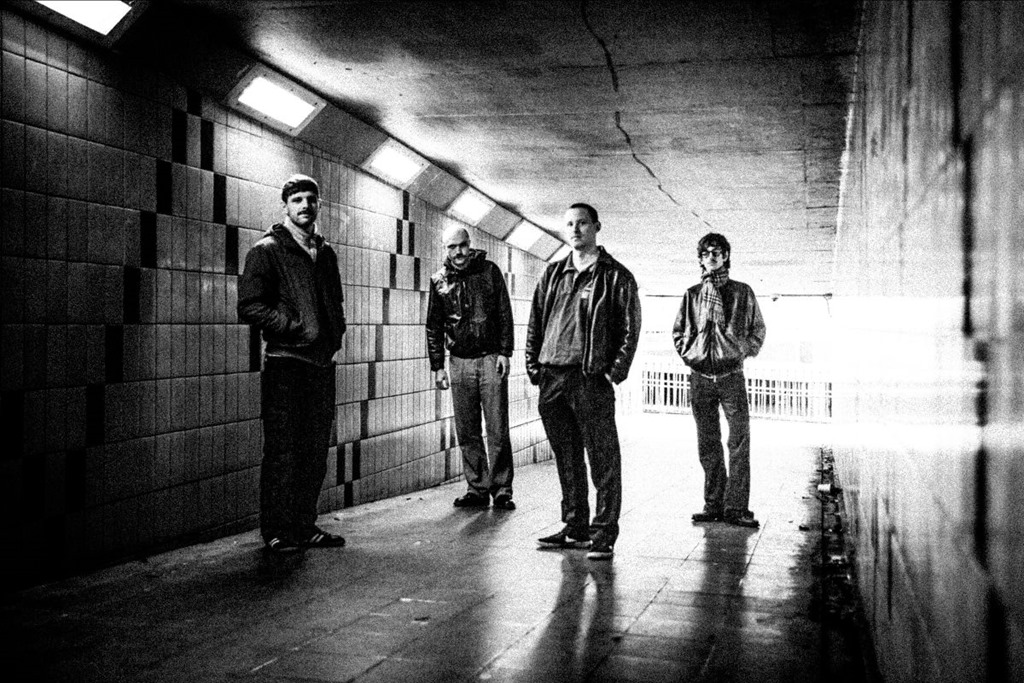
It’s perhaps because they’re from Leeds that The 113 are particularly good at capturing the mood: the spawning ground of goth in the 80s, the Leeds scene has always stood apart from not only the mainstream, but other major cities of the north, particularly Manchester and Sheffield, which in turn have always had their own identities: in the early 00s Leeds was hotbed for innovative post-rock, and has, over the last decade, yielded ever noisier, ever more angular, ever weirder bands, but also bands of quality who simply do – or did – their own thing, from Hawk Eyes and These Monsters to Castrovalva and I Like Trains, Thank, Post War Glamour Girls, Beige Palace, Black Moth, BELK, Irk, and of course, the mighty Blacklisters.
The 113 aren’t nearly as abrasive or far-out as many of these acts with whom they share turf, but their debut EP, To Combat Regret, released last March packed some blustering urgency to the familiar post-punk template. Both ‘Scour’ and previous single ‘Leach’ continue the same trajectory – lean, dark post-punk vibes, driven by dense bass, insistent percussion and some sinewy guitar work, creating tension and using it to powerful effect – but if anything, this is tauter, tenser, and more nuanced: the melodic, shoegaze mid-section adds significant impact to the song’s explosive conclusion.
This, in conjunction with ‘Leach’ says that the forthcoming EP, TheHeadonist (out April 17th) will be killer, and the upcoming tours in April and May look like something to get excited about, too.
Is it acceptable to wear the band’s T-shirt to their show? It’s a frequent topic of debate amongst my gig-going friends. As a rule, we tend to agree it’s not cool, although we all have our notable exceptions, and I got mine. But IST IST fans would largely disagree, it would seem – unless this is their exception band.
Usually, with the front bar right next to the auditorium, people sit at the tables supping until the bands start, sometimes until the headliners take to the stage. Not tonight. A large cluster of middle-agers in IST IST T-shirts are queueing and actually blocking access to the bar room half an hour before doors. There’s a guy with an immense beard wearing a sleeveless black denim jacket with Sisters of Mercy and Fields of the Nephilim patches paired with red tartan trees and he’s standing in the queue too. The queue is practically out of the front door by 7:25, but the bar remains almost empty. These people are keen.
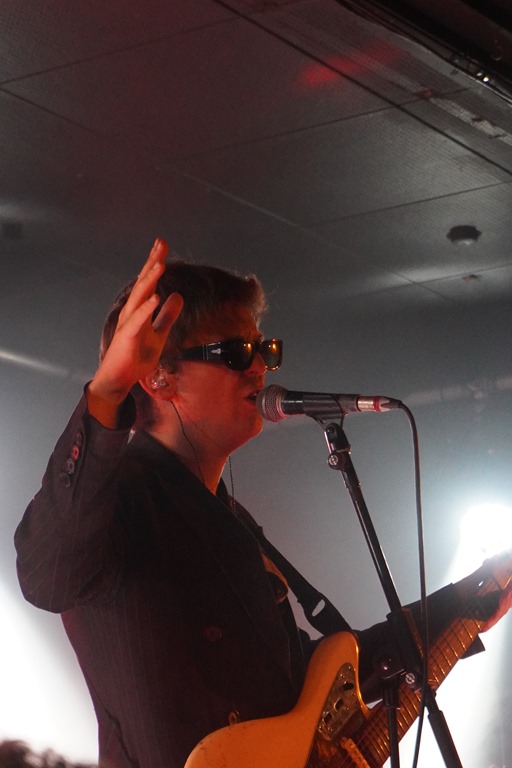
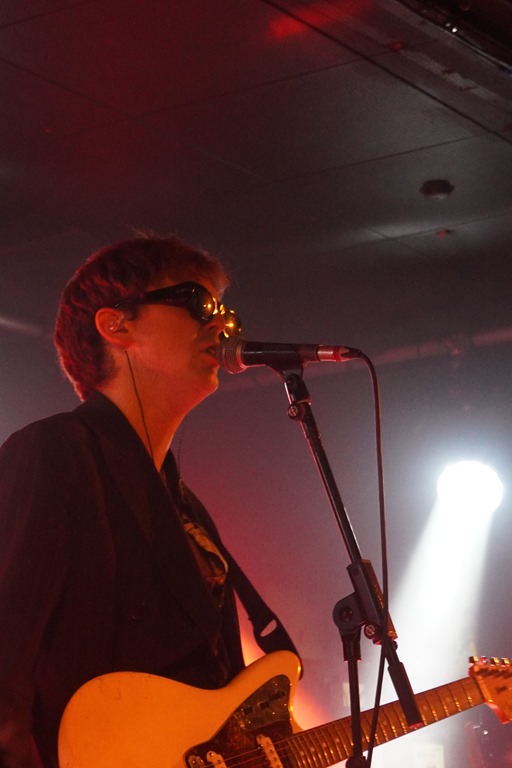
The support is an Ian McCulloch wannabe in a knee-length coat doing sub-mid-80s Psychedelic Furs lifts with a goth tinge. The drum machine is nicely up in the mix and the sound is great, even if the songs are only middling at best, and wince at worst. and it’s mostly backing track. But the Jarvis Cocker moves are overdone, suddenly throwing shapes in the most uncool fashion, sometimes going for a power pose or something a shade more aggressive and all the more incongruous, and the shades are off and back on and off and I again and the cringe only increases as the set progresses. It’s one of the longest half hours of music, and probably the most painful since the band supporting A Flock of Seagulls at The Brudenell a few years ago. It’s a rare talent to be this technically competent and so fucking embarrassingly awful at the same time.
Oliver Marson
Having clocked a vintage Sisters T in the gents and emerging to find the front of the stage absolutely rammed, I was reminded just how hardcore – not to mention fucking stubborn – older gig-goers can be. It’s no wonder I learned spot-bagging and elbows when I started going to shows as a teen in the early 90s. And, as then, I’m probably a sound 10-15 years younger than the majority of these buggers. Those clustered in the front row in groups are discussing the set lists placed on the stage. Smoke drifts as Interpol’s ‘Roland’ blasts from the PA.
It’s not hard to comprehend why this band enjoys such devotion from this demographic: they present all of the quintessential post-punk elements, delivered with precision and panache. It is, it must be said, post-punk as viewed through the prism of the 21st Century revival. And there are many who are here for that, too, with plenty of under 30s grooving away behind the first five rows of old sods.
IST IST
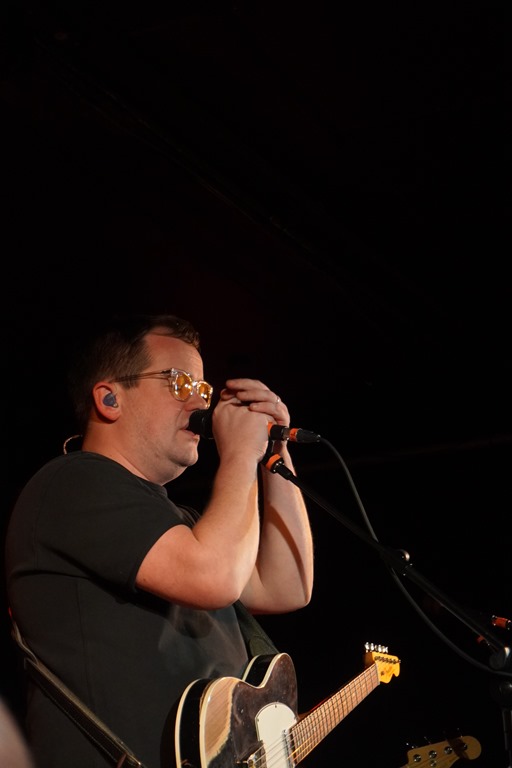
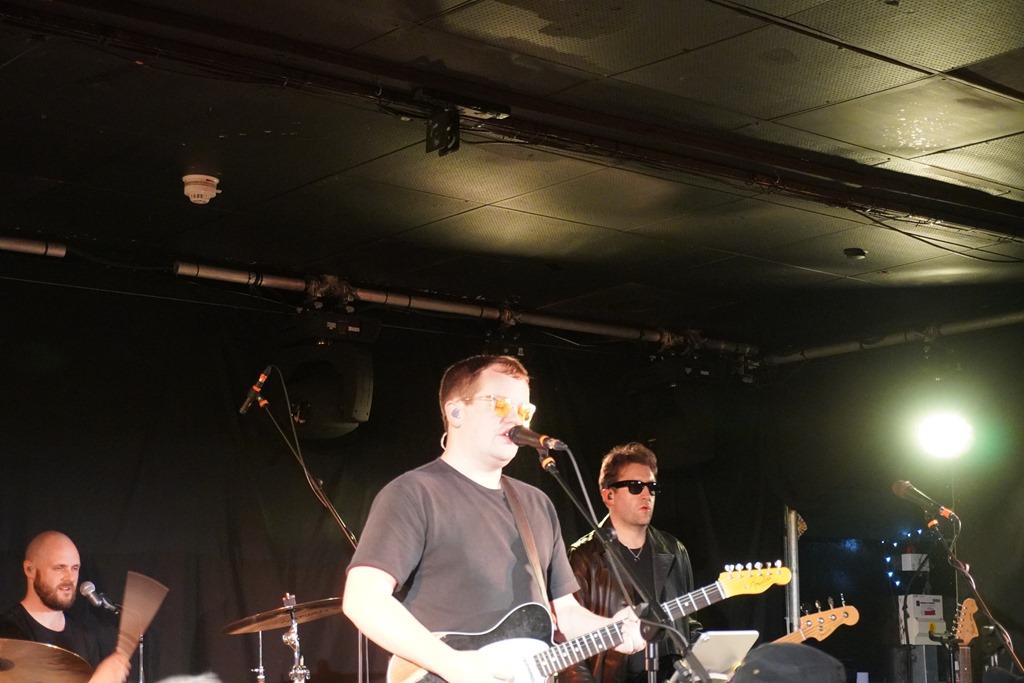
There has been no shortage of bands doing precisely this since around 2004, but Superlative drumming elevates their Editors /Interpol / White Lies – etc. – sound. The vocals are a flat, monotone and slightly twangy baritone with all the reverb, which take me a while to place, but they land somewhere between I Like Trains and She Wants Revenge. Credit to the sound guy, too, who’s working hard with the reverb and echo, especially on new song ‘Echo’, which has ‘instant classic’ written all over it and goes down a storm. They’re tight as and the sound is outstanding, with some super-solid bass at the pulsating heart of it all – and unlike Oliver Marson, leather jacketed bassist Andy Keating keeps his shades on – although I can’t help but wonder if they’re prescription and he’s doing a Wayne Hussey.
IST IST
One of the tracks later in the set – my notes are sketchy as I was a bit engrossed – is pure She Wants Revenge, and it would be easy to shrug that IST IST offer nothing new, and it would be a valid criticism – but the counterpoint to that would be the consistency of the material and sheer quality of the performance, where some nice 12-string action adds some all-essential texture, and there are abundant I Like Trains-style post-rock crescendos along the way – and shshsh, don’t tell the younger fans, but it’s all as goth AF.
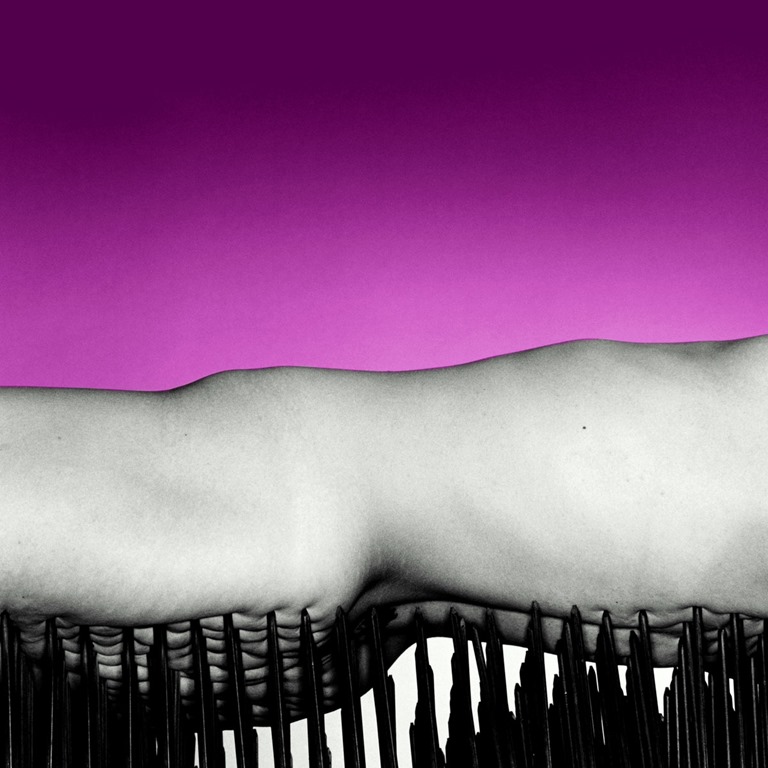
With every movement of American Standard, Uniform peels off a new layer and tells the story inside of the one that came before it. It’s Uniform’s most intimate work to date, tackling themes of self-destruction and with a particular focus on vocalistMichael Berdan‘s lifelong struggle with bulimia nervosa. His lyrics sink down into the core of the innermost self, the small human being crushed in the grip of sickness. His bandmates join him, applying majestic droning that becomes both mechanical and omniscient. As the rhythms continually pulverise, Uniform gives themselves over to the grinding gears of an uncaring universe.
The thematic content behind American Standard can be divided down the middle into two distinct sections. While the A-side of the record deals with an individual who exists in a purgatorial state of physical and psychic crisis, the B-side serves to address how a lifetime of dealing with an eating disorder has impacted those around him.
“Permanent Embrace,” available today, is the album’s final statement. Berdan tells, “It touches on a facet of the disease that I’m incredibly wary of facing. Built on a narrative foundation laid out by author and lyrical collaborator Maggie Siebert, the song revolves around the idea of a person holding a loved one as an emotional hostage. Seeing perverse beauty in a story about a car crash, the narrator relates the analogy of two automobiles twisted together to that of his last standing relationship. As he has broken down over time, so has the one who continues to stand by him. The object of his manipulative guilt trips remains locked in a hopeless situation, terrified of what he may do to himself if they were to finally leave.
The music reflects the psychic violence of the lyrics, as riffs and rhythms that wouldn’t feel out of place in the Unsane catalog careen into giant synth melodies before collapsing into itself. This is kind of our misguided interpretation of what Faith No More were doing on ‘Angel Dust’, and we hope that our tip of the hat to those masters of madness can hold a candle to their horrific splendor.”
For “Permanent Embrace,” Uniform teamed up with director Sean Stout on the single’s compelling visual. Stout tells, "Without sounding trite, when we first read Mike’s lyrics to the record our reaction was extremely visceral. They are brutally introspective and beautiful at times and we wanted to try visually to convey that range of emotion in a sequence of single images that unfold narratively and potentially shift their own meaning over time. Our concept was to intertwine images of an outer world-overgrown, rusting and moving on in its decay-with an inter-world that is largely going through the same process as a result, but is markedly separate as well. We never see one observe or interact with the other, yet they are the same and of the same world."
Watch the video for ‘Permanent Embrace’ here:
AA
Uniform wants to find what’s underneath. And what’s underneath the underneath. And what’s under that. American Standard begins with a shock. A voice, a room, a face in a mirror. In the mirror stares a visage, doubled and staring back. Each line comes back to him: reflected and refracted in the unsympathetic glass. Forget for a moment that Berdan has been destroying his throat in Uniform for over a decade. Forget his highly stylised delivery on the band’s acclaimed collaborative work (alongside experimental doom titans The Body and Japanese heavy rock powerhouse Boris). Forget the entire tradition of abrasive vocals in aggressive music. Look for what’s underneath the songs, the form, and the style.
To help peel away this narrative of eating disorders, self-hatred, delusion, mania, and ultimate discovery, Berdan sought assistance from a towering pair of outsider literary figures. Alongside B.R. Yeager (author of the modern cult-classic Negative Space) and Maggie Siebert (the mind behind the contemporary body horror masterpiece Bonding), the three writers eviscerate the personal material to present a portrait of mental and physical illness as vividly terrifying as anything in the present-day canon. The result is an acute articulation of a state beyond simple agony, capturing the thrilling transcendence and deliverance that sickness can bring in the process.
American Standard is surely Uniform’s most thematically accomplished and musically self assured album to date. Sections spiral and explode. Motifs drift off into obscurity before reasserting themselves with new power. Genres collide and burst open, forming something idiosyncratic and new. There’s a grandeur, due in part to the addition of Interpol bassist Brad Truax alongside the percussive push and pull of returning drummer Michael Sharp and longtime touring drummer Michael Blume, marking his Uniform recorded debut here. However, this magnificence is most clearly attributable to the scale and power of guitarist and founder Ben Greenberg’s arrangements, matching ever elegantly to the intense lyrical subject matter.
Underneath it all, what remains is trust. A record of this range and depth, a piece of art so far out on a ledge, can only be attempted with an extreme and almost foolish amount of understanding between collaborators. American Standard stands firmly on the bedrock that Uniform’s two original members, Michael Berdan and Ben Greenberg, have been building on for over a decade.
In Greenberg’s words, “When we started this record, Berdan told me: ‘I trust you to come up with a solid foundation for this, however you envision this thing. I want you to realize it completely, because I believe in you.’ So I wanted to write something overwhelming and all-encompassing for Berdan to lead his narrative through… because I trust and believe in him.” For an album to defy simple genre exercises and become a work of art, the musicians behind it must push themselves so far beyond the frayed ends of an established comfort zone that they might never return. Without a shred of doubt, American Standard is a work of art, agonising in its honesty and relentless in its pursuit of sonic transcendence. It is hideous. It is beautiful. It is necessary.
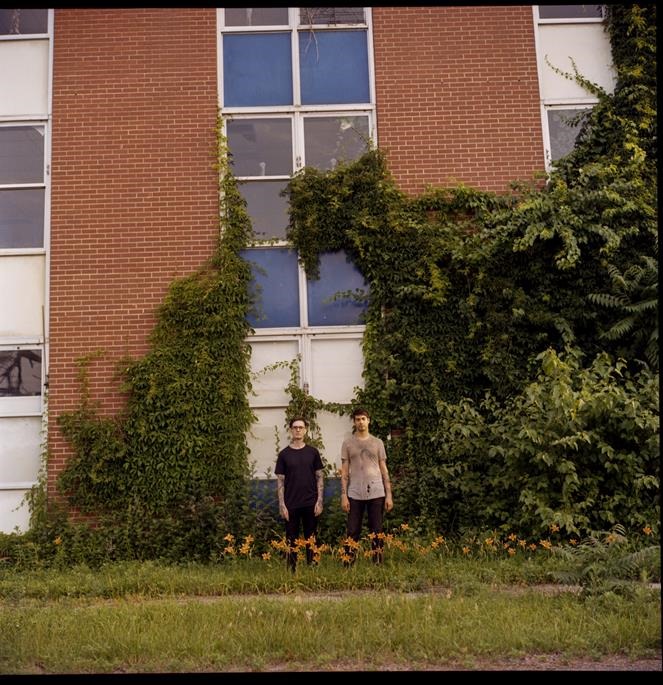
Press Photo By Joshua Zucker-Pluda & Sean Stout Pictured: Founding Members Ben Greenberg (Guitar), Michael Berdan (Vocals) Not Pictured: Mike Sharp (Drums), Brad Truax (Bass), Michael Blume (Drums)
It’s quite refreshing to find an EP with only three tracks. At the risk of coming on like a nostalgia sap, it takes me back to the late 80s and early 90s, when I first got into music and buying records, when 7” EPs would often contain three tracks. There was something tidy about the format. Then again, a lot of 80s releases would feature two tracks on the 7” and add an additional B-side to the 12”, which was also pretty tidy – before the days of extended remixes and CD EPs which would tediously pack out the space with multiple versions of the single, none of which were often worth the bother, but of course, collectors would feel compelled to buy all of the different formats and the single would achieve a higher chart placing thanks to cynical marketing.
The Supplements, from Fort Lauderdale, describe their sound as ‘moody post-punk meets riff-lead indie rock’, and while post-punk is my thing, it’s the indieness that draws me to this release, and nit only on account of the EP format and the fact the lead track is a mere 2:44, with the longest song being not much over three minutes.
While my loathing of Morrissey and a general sense of ‘outgrowing’ The Smiths in recent years may have eclipsed my one-massive love for the band, there’s no denying that they were the absolute kings of the perfectly succinct single, and there’s clearly an element of that tight songwriting in the zero-fat brevity on the songs The Supplements serve up here.
But another aspect of the band’s sound which is utterly compelling is that darker post-punk element, which is pure Interpol. Now, after hearing all the raving about Interpol being the new Joy Division, I was sorely disappointed the day I picked up their first two albums. But once I had come to terms with the fact that the critics were just wrong in their reviews, I came to love those albums, and the ones which followed (apart from the last one, which is toss). And it’s that dark but jangly thing – think ‘Say Hello to the Angels’, with the kind of descending runs which can be found on ‘Slow Hands’ – which The Supplements do so well.
‘Another Day’, the lead track, boasts a driving bass, and Ted O’Connell’s vocals are pitched around the baritone of Paul Banks’. ‘I Can’t Have Everything’ is defined by a choppy guitar underpinned by a chunky bass groove, and the last few bars seem to lean heavily on the intro to ‘Slow Hands’. ‘Different Light’ – nothing to do with The Bangles – again brings some nagging guitars reminiscent of the intro to ‘Roland’ and the mid-section of ‘The New’ and a strong rhythm section, where a strolling bass holds tight against some urgent drumming. With Moving On, The Supplements deserve to be moving up too, because this is pure quality.
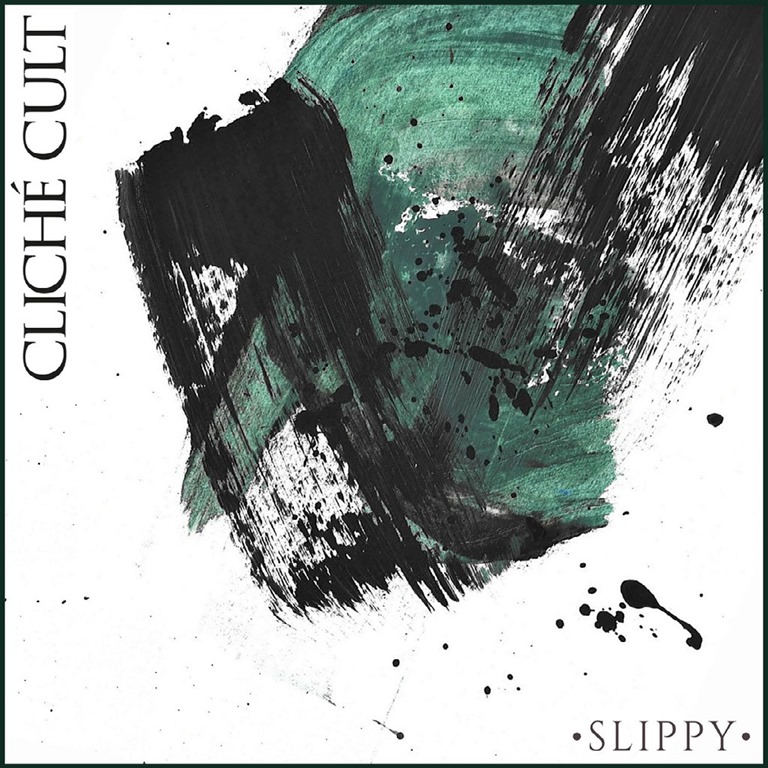
I thought I was pretty much abreast of happenings on the Leeds scene, but seemingly since lockdown put paid to live action for two years and since then reduced rail services and skyrocketing rail fairs have capped my forays over the county border significantly, it transpires I’ve missed out on a lot, including the emergence of post-punk influenced indie quartet Cliché Cult. They’ve banged out five singles already since forming in 2020, and this, their first with Blaggers Records, home to JW Paris, who have found favour on 6Music and on these virtual pages also.
‘Slippy’ is kinda loose-sounding, rough ‘n’ ready Northern indie with some chiming guitars that see it land somewhere in the region of Turn on the Bright Lights Interpol and Gene and Marion in that way that nods confidently in the direction of The Smiths but avoids the maudlin self-pity and whiny nasal vocals.
You wouldn’t describe them as typical Leeds, but it’s not hard to discern why they’ve built themselves a following, and fast, and if you’re looking for a song that fits the description of ‘indie anthem’, look no further.
Hot on the heels of ‘No Chains’ in the summer, Sleep Kicks follow up with ‘Neptune’ as we fade into autumn. And there’s something of an autumnal feel to the reflective feel of ‘Neptune’.
‘Was it an act of spite / Or was it the unrelenting time / That pulled you away that night?’ Terje Kleven questions contemplatively at the beginning of the song against a warm, rolling bass and rhythmic blend of piano and chilly synths. The vibe here is distinctly early Interpol, and it suits the band, and the song, well.
Kleven’s moderate baritone rides some deftly chiming guitar that breaks into a strong chorus where the synths come to the fore and sweep upwards to forge something uplifting while still tinged with a taint of melancholy.
Yet again, Sleep Kicks have dropped a killer tune that balances darkness and light, depth and immediacy, in an example of outstanding songwriting craftsmanship. Or, put simply, ‘Neptune’ is another great tune from a consistently great band.
It’s not often I’m on the fence, but here I am, the splynters stabbing into my arse. Opening bars of the new single form Wylderness, taken from second album Big Plans for a Blue World (out 1 June vi Succulent Records) suggest dreamy, chyming shoegaze, but y’know, I’ve heard it a myllion tymes before doing this. And much as I lyke it, much as I dig Slowdive, Ride, Chapterhouse, and later exponents like The Early Years (criminally underrated and sadly failed to really make their mark), I have to admit that so much is wishy-washy, winsome and airy to the point of lacking in enough substance to really prove compelling.
Past the opening bars… layers and aspects reveal themselves. ‘Wet Look’ is still dreamy, wynsome, wystful, but there’s a brooding steeliness infused within it, with hints of Interpol and post-millennium post-punk, and it just nags hard enough to draw you in for a second listen. Something about that reverb, that interplay between the guitars, that spaciousness, that melancholy… sigh.
It may sound a bit screwy, but then, we’re here on the Internet and I’m sure you’ll have read far screwier things presented in more enticing ways that are far more dangerous than my theory that individuals are somehow psychologically and biologically attuned to certain kinds of music. It’s a complex issue, and one I’m yet to fully unravel, but it feels like something that slots into the nature / nurture debate: are people born predisposed to appreciate darker music, or is it triggered by life events – or a combination of the two?
In 1983, at the age of seven or eight, I saw Killing Joke on Top of the Pops performing ‘Love Like Blood’. I was, in hindsight, enjoying a mundane middle-class upbringing, but this moment – and it was one of several – went a long way to cementing my appreciation of darker music. I’d never suffered any kind of trauma and hardship beyond maybe some kids taking the piss out of my coat or whatever, but still something drew me towards this kind of thing.
Nearly forty years on, and ultimately, nothing’s changed: the turn of the millennium brought a new wave of post-punk influenced acts, with the likes of Interpol and Editors setting the grounds of darker territory. And, in turn, we’re seeing bands emerging now that very much echo the sound and style of post-millennial wave of post-punk, or new millennium new wave if you will (there doesn’t really seem to be a label for it, but if that one ever gets used, I’m claiming it).
This is the long and meandering route to the arrival the new single from London-based alt-rockers The Palpitations who – like so many acts – emerged during lockdown out of a need to so something, and the foursome – Tom Talbot on vocals, Brett Rieser on guitar, Nishant Joshi on bass, Florin Pascu on drums – set out their agenda with the ‘Feed The Poor! Eat The Rich!’ EP.
But there’s a nugget in the Palpitations bio that shows they’re not just another bunch of musicians who were loafing around listlessly and decided to bung some tunes together to fill the time whole on furlough or unable to play live. Talbot and Joshi were, in actual fact, working as frontline doctors, and both were instrumental in protecting NHS staff with upgraded PPE, and also took part in protests that gained international attention. Joshi later took the government to court over their PPE failures, winning a landmark case.
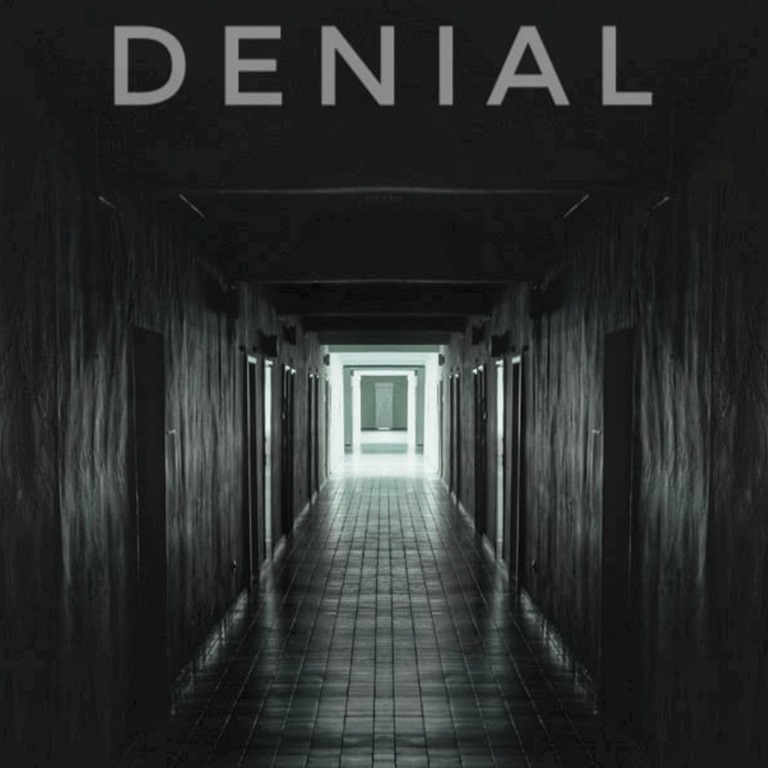
It’s out of this passion and a sense of frustration that the music of The Palpitations comes, and ‘Denial’ is a belter, smashing together a spindly, soaring lead guitar, with cool, meandering synths and a thumping solid rhythm section; if Interpol collided with Bivouac and Eight Storey Window, you’d probably have a handle on their post-punk grunge crossover, although there’s perhaps more than a hint of Placebo in the blend, and ‘Denial’ packs some darkly melodic angst and significant tension into its four-minute duration. It resonates not just on an emotional or sonic level, but on a cerebral and biological level – and it’s an instant grab.
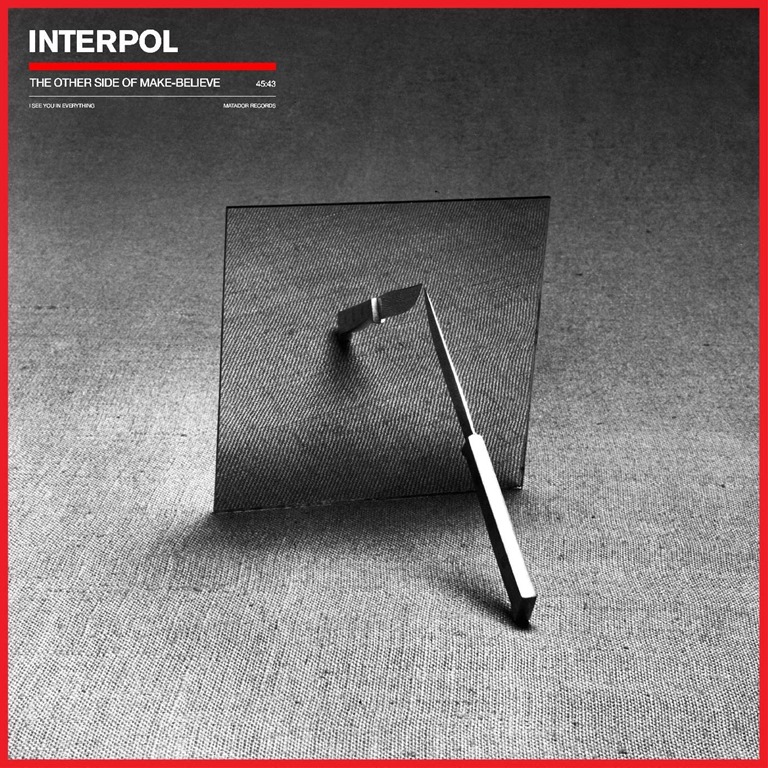
Well this has come out of nowhere: Interpol unveil a new song, ‘Toni’ with a video, while simultaneously announcing they’ve a new album, The Other Side of Make-Believe, out on Matador Records in 15th July 2022.
Pink Turns Blue have been around practically forever, having formed in 1985, and while they may not be widely regarded among the first wave of goth acts, they very much emerged from that milieu as a duo with a drum machine, and what they’ve achieved over so many of their peers while lingering on the peripheries is longevity. Having re-emerged in 2003 after an eight-year hiatus, they’ve continued to mine the classic post-punk seam that’s distinctively theirs, due in no small part to Mic Jogwer’s vocals. And of course, what goes around comes around. Their return in the early years of the new millennium was well-timed, coinciding with the point at which the post-punk renaissance bloomed with the likes of Editors and Interpol breaking through. There were of course countless also-rans, and bands who emerged but failed to fulfil their promise, but nevertheless, time has proven that the style has remained current, and the darker the times, the greater the craving for dark tunes, and this is where Pink Turns Blue really prove to be as contemporary and vital as ever.
Their eleventh album was written, recorded, mixed, and mastered during lockdown in their Berlin studio, and the first thing that strikes about Tainted is just how bleak it is. It’s achingly majestic, it’s magnificent, and possesses some wonderful hooks and choruses, but there’s an all-pervading atmosphere of sadness, of melancholy that’s draped over every beat and radiates from every note. Glimmers of positivity are dampened by an air of resignation, optimism doused with defeat. The next thing that soon becomes apparent is just how consistent the album is. It’s not only all killer, but had a remarkable cohesion. It’s true that that for cohesion you might interpret sameness, and they do operate with a fairly limited sonic palette. One suspect this is at least in part the result of the material being the product of three guys in a studio without any external input or interference.
But working within such limitations places the focus on the songwriting, on the tunes, on the delivery, instead of throwing in all sorts of fancy stuff.
The guitar to opener ‘Not Even Trying’ evokes the into to ‘Severina’ by ‘The Mission’, and it’s got that same solid four-four strike on every beat bassline that Craig Adams made his signature back in the early days of The Sisters of Mercy, and which has become something of a defining feature for so many gothy post-punk bands, and it makes the song an instant grab. ‘I’m not even trying’, Jowger admits blankly, as if admitting defeat from the outset, and setting the pessimistic tone that echoes through single cut ‘There Must Be So Much More’. It’s a song of yearning, of questing, and of determinism, and a song Editors would have likely killed to have penned for one of their first two albums.
This isn’t an album of depression, but the sound of downward-facing defeat, of staring at the ground and wondering where it all went wrong. ‘Never Give Up’ encapsulates the conflict, the inner turmoil of staring emptiness and defeat straight in the face and realising there are only two choices. But to never give up is not a positive thing, merely the stubbornness that comes from not knowing what else to do.
The bass and guitar are melded together in a tunnel of chorus and reverb, and tied to a relentless drum track, and it’s gripping and compelling. ‘Why Not Save the World’ has heavy echoes of mid-80s Depeche Mode and would sit comfortably on a She Wants Revenge album, while ‘I’m Gonna Hold You’ comes on like New Order as covered by A Place to Bury Strangers, with a nagging bass and brittle guitar that grips hard.
Just as Robert Smith can make a skippy pop song sound tear-jerkingly sad, so when Jowger sings of the joys of ‘a new day’, it’s with a wistful melancholy that aches deep and you feel something tug in your chest as you swallow it down, that inexplicable sadness. ‘Listen to the bumble bee’ he sings on ‘Summertime’, and it’s carried a way on a chiming jangle of guitars that are so wistful, while the tone is of deep nostalgia. A perfect sunny day can have its joy marred by the realisation that it isn’t quite as perfect as sunny days of a time gone by, happy, carefree times that will forever be trapped in the memory as magical, but now faded and never to be recreated.
The song structures are comparatively simple and straightforward, and built around repetitive chord sequences and guitar motifs, and there’s nothing fancy about any of the playing – which is absolutely key to the success.
Any fan of Interpol or Editors would do well to explore Tainted – but then again, so would any fan of not only post-punk, but anyone with ears and with a heart and soul. It’s a masterful work in music of the mood. The mood is low, the mood is sad, and this is an album of real depth that speaks and resonates beyond the immediate.





 Aural Aggravation