Posts Tagged ‘Industrial’

Blind Mice Productions – 18th June 2021

Christopher Nosnibor

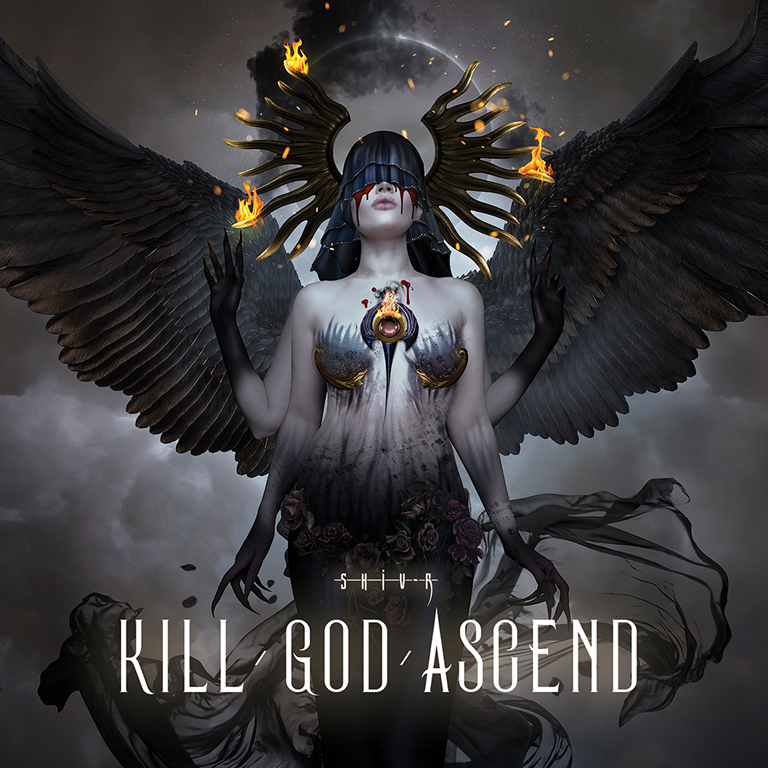
As the liner notes to Australian electro-industrial band SHIV-R’s fifth full-length album explain, ‘there is a Zen teaching that if you meet God on the road, you must kill him… What the killing of God means to each listener will be a unique and personal revelation. In a world full of gatekeepers and figureheads whose only interest in you is to tell you what to do, illusions will need to be shed and those who profess to have all the answers will need to be confronted’.

The title track launches the album with some harsh metallic guitars pitched against a pounding technoindustrial groove, where beats and synthesized bass are melded together perfectly. And while a lot of bands in this vein – even the likes of KMFDM to an extent – peg the guitars back in favour of pushing the synthesised elements of the instrumentation to the fore, to give a harsh, but ultimately slick, digital vibe overall, SHIV-R to crank up the guitars, and they punch hard, providing a strong counter to the danceable, mechanoid beats and throbbing low-end.

While growly or distorted vocals are common to the genre, it’s often strained-sounding or raspy, whereas Pete Crane has a rich, full-throated metal roar that has real depth and proper guts. That said, on ‘Spark’ and ‘Promises of Armageddon’ where they slip into grinding electrosleaze mode, evoking Pretty Hate Machine era Nine Inch Nails and mid-90s PIG, Crane shows a cleaner tone that’s poppy, but dark – which is a description that fits the slower pace of the Depeche Mode-like minimal electro of ‘Blue Turns to Black’. It’s well-placed at what would conventionally mark the end of side one – and highlights another strength of Kill God Ascend: it feels like an album in the classic sense, with ten tightly-structured and concise tracks that are sequenced in such a way as to drop the tempo, and conversely, slam in with an absolute banger, at just the right time. More than anything, it’s reminiscent of Stabbing Westward’s debut – but at the same time, Kill God Ascend is very much an album with its own identity.

Sixth track, ‘Empire’ is exemplary, kicking off virtual side two with a dark stomper on which Crane snarls, “I’m on my own path. Get the fuck out of my way.” He sounds like he means it, too.

There are some solid hooks, and Kill God Ascend sustains the angst from beginning to end – even when they bring it right down for the brooding penultimate song, ‘Valley of Death’, it’s as a prelude to the epic finale, the dark, slow-burning ‘Turpentine’ that’s gnarly and hefty and brimming with twists, turns, and glitches, a track where the machines finally devour the human components in a mangles mess of rust and dirt, blood and guts. And it’s at this point, you realise that god is indeed dead.

AA

AA
395781

5th June 2021

Christopher Nosnibor

The only way to remain sane through all of this madness is to embrace it, or at least some of it. Then again, ( kröter ) have been ahead of the curve in the madness stakes for some time, as the conveyor-belt of releases over the last couple of years have shown, since they were all culled from some epic sessions around 2018.

*f is their third album of 2021, and the sixth album to be culled from these sessions. Remarkably, rather than a random collection of offcuts and flow-sweepings, it contains some of the most outstanding material yet, and one has to wonder how much did they actually record?

They’ve spent a lot of time sifting through the material and chopping it into tracks and sequencing them into albums – with varying degrees of cohesion – but as they note, ‘as usual, there are no second takes in this pond. All is nutritious, spiraling and slowly growing legs.’ These legs are long and hairy, and the sprawling eleven-minute ‘Trajectory’ is a dingy, dirgy grind dominated by a crunchy, dirty bass groove and plodding beat. It’s kinda post-punk, kinda no-wave, kinda noise-rock, and if there are moments when Mr Vast’s vocals hint at a Jim Morrison-esque swagger, the whole thing reminds me most of Terminal Cheesecake, for those who can handle an obscure reference point.

‘The Letter’ is swampy, minimal, meandering, while ‘The Rock’, another low-oscillating slab of dark industrial-leaning synth is propelled by clattering percussion and features snarling, growling manic vocals. Vast is a versatile vocalist, even if on this set his delivery isn’t particularly angled towards melody, as he drones and yelps and drawls and yowls all kinds of atonality over repetitive electronic grooves.

It all comes together on the eighteen-minute ‘casper hauser in the mirror’, a thumping, humping, ketamine-paced motoric industrial jazz odyssey. Vast sounds utterly deranged as his voice wanders lost, aimless, as he half speaks, shouts, raps and yawns out abstract lyrics that drift out in a drift of reverb. Again, around the six minute mark, it sounds like Kraftwerk fronted by Jim Morrison circa LA Woman, and yes, it’s a pretty fucked-up experience, and the atmosphere is not only intense, but also dizzying, bewildering in its hypnotic pull. It transports the listener to another place, out of mind if not out of body, conjuring an almost trance-like experience. It may be some kind of woozy, weirdy, hippy shit, but it’s also affecting. There’s much to be said for the power of repetition, and this just goes on, and on… and on. It’s not nightmarish as such, but it is trippy and disorientating.

This is a fair summary of the album as a whole: *f really does pack in the weird shit, and if the initial tone is one of quirky, oddball fun, the overarching experience is rather darker. The disorientation it creates is less kaleidoscopic joy and more the nausea of excess, and a kind of unsettled bewilderment. ( kröter ) depart from Hunter S. Thompson’s adage that when the going gets weird, the weird turn pro, and instead forge their own path, whereby when the going gets weird, the weird gets even weirder, and a few shades darker, too. Which is cool, because who wants their weirdness to be predictable, after all?

AA

a2240317846_10

Empty Quarter – 1st June 2021

Christopher Nosnibor

The latest instalment in the reissue series of albums by oddballs Photographed by Lightning is something of a departure from its predecessors – but then, each album marks a different departure, and if one thing this contemporary appraisal of their back catalogue highlights is that they never stated still or retrod ground, which each release existing in a completely different realm from those which came before.

Recorded in 2002 and released in 2004 and considered by the band to perhaps be their strangest offering (and it’s got some tough competition), it lists as its inspirations the works of Kenji Siratori, Friedrich Nietzsche, Suehiro Mauro, Georges Bataille, J G Ballard. I’m often particularly intrigued when a band’s citations are literary, or otherwise non-musical, perhaps because in some respects, while there is naturally much crossover between all creative disciplines, literary influences tend to be more cerebral, ideas or concept-based over sonic. When a bands say they’re influenced by Led Zeppelin, you can probably hear certain stylistic elements in the composition: but you’re not going to hear elements of Ballard in the guitar technique of any band – although with a substantial catalogue of releases to his credit, Kenji Siratori is a notable exception to the rule, particularly as the experimental Japanese polyartist’s forays into extreme electronica and harsh noise in the vein of Merzbow actually do very much resemble his literary works also as a brain—shredding sensory overload.

This is certainly a fair summary of the experience of this album: the title track, a mere intro at under two minutes, is a blend of scratchy, synthy noise with extraneous elements collaged here and there.

‘The Embryo Hunts in Secret’ and ‘Putrid Night’ are both a sort of psychedelic new wave collision, and with the wandering basslines that veer up, down, and everywhere amidst treble-soaked chaos, the effect is disorientating dissonant, as if everything is slowly melting or collapsing in on itself. Everything is murky, dingy, kinda distant-sounding and discordant. Take ‘Kundalini Butterly’ – a spiralling kaleidoscopic mess or scrawling feedback and a bass that sounds like an angry bee bouncing around inside an upturned glass, coming on like Dr Mix covering Cabaret Voltaire’s ‘Nag Nag Nag’.

Blood Music is noisy, but it’s not straight-ahead guitars noisy: instead, it’s a mangled menage of bits and bobs hurled together – not clumsily, but then, not delicately, either, with pulsing washes of rhythm throbbing and crashing all around. It gets weirder and darker as they plunge into ‘My Hole’, where the bass bubbles and throbs beneath a continuous stream of trilling distortion, synth whistles and wails, and there’s a lot of overloading, whupping distortion that derails the helicotoptoring synths and froth and foam that sloshes around at the lower end of the sonic spectrum. ‘Dark Sun’ goes kind of industrial with a hefty, thunking beat, with a relentless, distorted snare, low-slung, booming bass and heavily treated vocals, and there’s chaotic piano all over the place: the emphasis is very much on the dark here.

Dave Mitchell’s lyrics are, we’re led to believe, to have been inspired by whatever he was reading, but buried low in the mix, bathed in reverb and given a grating metallic edge, he sounds like a malfunctioning Dalek chanting incantations. To be clear, that’s by no means a criticism.

Final track, ‘Frame’ is more overtly ambient, but dark, with a certain industrial hue as it shifts to pound out a relentless beat against braying sax and a whirlpool of aural chaos: I’m not about to suggest that PBL were going through any kind of NIN phase, but there are hints of parallels with The Fragile in places here.

Everything about Blood Music is seemingly designed to challenge, to present the music in the least accessible way possible – and it’s far from accessible to begin with, for the most part. The dark density of the sound is heavy, and there’s something quite deranged about the album as a whole, in a way that’s hard to define… but deranged it is. Which seems a pretty fitting summary of the band’s catalogue as a whole: the only thing you can really predict is their unpredictability.

AA

a3521472505_16

Christopher Nosnibor

The news just in is that ‘Electro-Industrial band MICROWAVED has just unleashed their new EP, Save Me’, and that ‘The EP contains 16 tracks, 14 of which will be available on streaming platforms June 12th. The Bandcamp release will contain two bonus tracks: a collaboration with LIEBCHEN on a cover of Pink Floyd’s “Comfortably Numb” and an additional remix from the talented and outstanding remix artist Steven Olaf.’

The last I was aware, EP stood for Extended Play, and LP for Long Play, and sixteen tracks is pretty bloody long (unless it’s grindcore, when 16 tracks would likely have a running time of about ten minutes). No matter: I’m being picky (for a change), and they’ve released the title track as a lead single, and it features Kimberley Kornmeier of electrogoth act Bow Ever Down.

‘Save Me’ is a brooding blur – the agitated, fast-paced percussion that pounds and stutters like a palpating heart contrasts with the deep, broad, sweeping synths and a gloomily wistful melody which leans heavily on The Cure’s ‘Pictures of You’. The contrasts work, despite being quite difficult to reconcile on the first listen or two. There’s also a subtle but definite harder industrial edge to it, and it makes for a bold yet sensitive song which reminds us that beneath exteriors, so many of us hold on to pain and suffering and loneliness, and that to feel lonely and to be alone are not the same thing.

It’s when it takes a step away from itself around the three-minute mark and there’s a brief segment that sounds more like Eminem that’s hardest to assimilate in the overall shape of the song. It may be incongruous, but at least you could never describe the song as being predictable, and ‘Save Me’ is pretty damn powerful on multiple levels.

AA

f31c61a9-e908-b188-9cbe-533f008d1f1a

Edelfaul Recordings – 5th June 2021

Christopher Nosnibor

Just as you should – at least ideally – never judge a book – or an album – by its cover, so you should never judge a musical project by its geographical origin, or judge the population by their government. This is particularly important as a point of note right now, and especially in context of this release. At home, we’re often led to believe that arts are of a lesser importance in the face of a pandemic or any other crisis, but history – and social media – will tell you otherwise: the natural human response to any trauma or crisis is to immerse oneself in either the creation or consumption of art or music. When bombs are dropping, people write poetry. It’s both a coping mechanism and a means of documenting events, and there is a clear logic to it: for me, writing helps to order things, both events and my own thoughts. The very act of writing gives mental effluvia a sort of solidity.

Spirit Skinned, the press release informs us, is ‘a duo rooted in the musical underground of Tel Aviv and Jerusalem’ and goes on to note that ‘The area is known worldwide as a high tension zone, and the small musical scene that bred Spirit Skinned enjoys a reputation for an uncompromising and often radical sound approach, paired with a rare level of perfectionism. If anything, their music lives up to that notoriety.’

Watching the news, one would be forgiven for being shocked and amazed that there would be any kind of music scene in Tel Aviv or Jerusalem, let an underground one. But even during sporadic war, life does go on, and citizens are always desperate to maintain some sensed of normality, and this is clearly true of Ben Ronen (aka diburnagua), former vocalist in various punk and noise projects in the Tel Aviv area and Ofer Tisser, producer/instrumentalist and a central figure in Jerusalem’s underground music scene, who have come together as Spirit Skinned.

The pair’s eponymous debut is pitched as ‘spanning the gaps between grime, industrial, hardcore, musique concrete, politics and expressionism’, and across the course of the album’s seven tracks, Spirit Skinned wanders far and wide stylistically. And you can’t criticise an album for any lack of focus when its focus is set so wide.

Many of Ronan’s crazed, yelping, barking vocals are largely impenetrable, and often partially submerged beneath layers of noise, not least of all highly dominant percussion: heavy industrial clanks and cracks dominant, but then again there are swamps of alternative and buoyant indie lurking in the mix.

‘Dry Season’ introduces the album with a slice of minimal DIY that’s brittle, spiky, and more than just a bit quirky, and lands somewhere between Young Marble Giants and Einstürzende Neubauten. Reverb bounces all over the place, while a slow, lowdown bass squirms away. They conjure seme tense and atmospheric scenes, and the claustrophobic, repetitious throb of ‘Leaving Room’ evokes the impotent rage of early Swans: it’s the sound of frustration vented through shouting into the void against a backdrop of music that bludgeons. ‘The Root’ is built around a monotonous pulsation that passes a significant nod in the direction of Suicide, but then there’s braying free jazz sax all over the top of it, and in combination, they’re pretty punishing. There’s a physicality to the music that’s affecting as they lunge from doomy drone to fractured, splintering harsh noise.

The album’s final track, the eleven-minute ‘Once Was Blind’ is sprawling monstrous hybrid of dark hip-hop, jazz, and psychosis. It’s like a beat poetry night on a bad trip. It’s a suitably weird end to a weird album, and one that’s well worth hearing.

EFT003_front

Miasmah Recordings – 16th April 2021

Christopher Nosnibor

It was the heavyweight score of his debut album, Hold, that provided my introduction to the work of James Welburn, and very much piqued my interest – because in some way, sonically at least, it seems I like to be published. Almost six years to the year on, Welburn delivers another immensely heavy set with Sleeper in the Void.

According to the accompanying blurb, the album ‘feels like a story in two parts, rising lethargically, but with gargantuan power. The second begins with the momentous In and out of Blue, where Juliana Venter’s disembodied, spectral dirge takes center stage among the furious drums and bassy riffs, reaching a full crescendo with seconds to go. Parallel marks a release – Hilde Marie Holsen’s nostalgic soundscapes, pristine as glass, meeting the distant thunder of Welburn’s strings on the horizon. And finally, Fast Moon ends the record in a most surprising way – a tribal industrialized banger, complete with vile distorted beats and every other spice in demand on a blackened dancefloor.’

It’s intense from the outset, and ‘Raze’ is anything but lethargic. It begins with a modestly middling dark ambient drone, but before long, pattering drums are hammering like machine-gun fire and whipping up a frenzy while all around the drones increase in volume and intensity until there’s a veritable cyclone of sound raging all about. The experience is dizzying, suffocating.

The percussion is again punishing on ‘Falling from Time’, but while the sound is still dense and murky, the thundering rhythm, is far more mechanised, more industrial, thudding in a furious frenzy amidst an impenetrable smog of sound. The tempo is fast, and it’s relentless: you could perhaps even dance to it, although that’s not so much my thing: instead, I found my pulse accelerating and a glow of perspiration as the tension grows. Finally, the synths break into a softer swirl, although there are ominous tones eddying around as the drums finally peter out and it’s finally possible to catch your breath and compose yourself. It’s but a brief respite before crushing percussion crashes in on the doomy dirge of the title track: stuttering, stop-start detonations cut through the shoegaze on ketamine crawl of the blurred blizzard of extraneous noise.

Julia Ventner’s vocal on ‘In and Out of Blue’ and ‘Fast Moon’ (the latter of which is a grating, bulbous bass-driven beast of a cut that loops and lunged in a trill of treble and a crackle of fizzing distortion) are haunting, ghostly, and pitched against the lurching cacophony of drums and juddering blasts of noise that hit like a taser to the abdomen, it’s not only a contrast and a change of atmosphere her presence brings, but a new level of trembling intensity.

Sleeper in the Void unquestionably makes an evolution for Welburn: while incorporating many of the same elements fundamentally, their application is quite different on Sleeper in the Void in comparison to its predecessor. The basslines are less overtly structured, and Sleeper in the Void sees Welburn move further from any loose conventions of ‘rock’ toward something more abstract. It may be less direct, less bludgeoning, less reminiscent of early Swans, but it’s certainly no less intense or powerful, and it’s still dense and percussion-driven. If anything, the greater sense of nuance and Welburn’s expanded palette only amplify its menacing resonance, making Sleeper in the Void an album that may be challenging, but achieves optimum impact.

AA

MIA050_front

Cleopatra Records – 23rd April 2021

James Wells

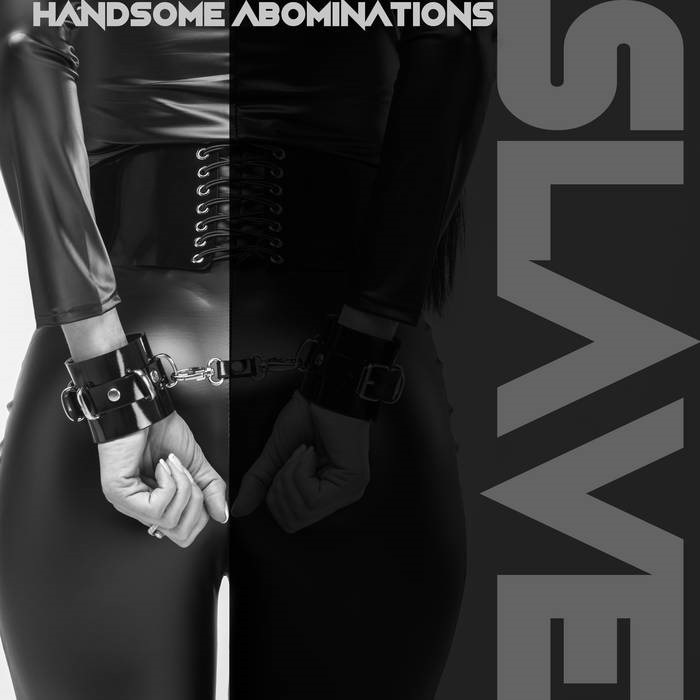
Ahead of their debut album, set for release on longstanding industrial / goth-leaning label Cleopatra Records – who will forever be a favourite with me for their releasing Rozz Williams-fronted Christian Death albums in the early 90s, although their catalogue is impressive in its depth and breadth – Handsome Abominations deliver their debut single, ‘Slave’.

The band are pitched as purveyors of ‘sleaze industrial’ – but then, isn’t that so much industrial? Leading exponents of technoindustrial, like Revolting Cocks, KMFDM, and PIG are aaaaaall the sleaze, and NIN – probably the biggest name in the field – are hardly clean and family friendly (‘Closer’, anyone?). This kind of grind has long associations with dingy nightclubs, latex, and S&M, and Handsome Abominations are all about that scene here.

As Baron VonSchnell says, “When I heard the strong, primeval beat that Tufty Hacka had programmed, I instantly knew that we had to write a writhing, sleazy anthem that would suite a fetish club.” And that’s precisely that we have here: ‘Slave’ is grimy, sweaty, slippy, heaving with all the wrong desires, and it’s clearly pitched at a specific audience.

There’s a whole lot happening, and a whole lot to unpack and discuss. ‘Slave’ is, without doubt a quintessential industrial disco cut that combines that low-down groove and blends it with some less than subtle lyrics that are all the sleaze. Of course it does. Nor would the blurb be justified in promising a song where ‘a sleazy, groovy musical orgy breaks out’ if it didn’t.

But at what point does the world of S&M fantasy stray into something that’s uncomfortable? I’m no advocate of trigger warnings, especially having run into trouble over an absence of them when referencing suicidal thoughts at a spoken word night a couple of years ago, but sometimes it’s possible to wander over lines in the name of ‘provocativeness’. So when Mistress Misha moans ‘Tie me down and rape me’, it sends a prickle. What is the message there? I suppose the question may ultimately come down to an understanding of the scene, in that rape fantasy is an entirely separate thing from the reality of rape, and the rape culture under discussion in the media right now, although it’s likely difficult to understand the distinctions and nuances of the scene for a straight. It isn’t the job of Handsome Abominations to explain this, and nor should art have to justify itself: it’s just difficult to draw distinctions in the current climate. But one thing is without contention, and that’s that ‘Slave’ is a cracking tune.

AA

a2204832655_16

Christopher Nosnibor

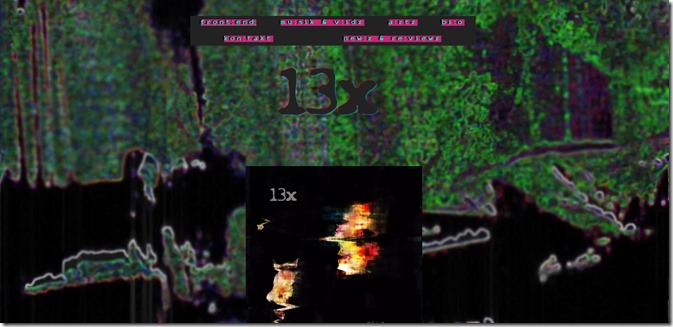
13x is less of musical project and more of an experience. As such, the katt13x website, the platform of the proudly transgender antiscene artist is a brain-melting labyrinth of sound and image that has a William Gibson-esque retro-futurist vibe that screams cyberpunk while searing your retinas with wildly oversaturated images that often render what’s being presented barely distinguishable.

The EPK video is, without doubt, a perfect summary of everything, as raw, bleeding primary tones melt and glow radioactively through a selection of appropriated snippets and other spliced scenes that takes Burroughs’ cut-up technique to the height of early noughties simplism to create something disorientating, disturbing.

Remember when the Internet was considered scary, because it contained the worst and more terrifying shit, from images from murder scenes and people being hit by trains (the original traingirl video was a blur, but a sickening one)? Pages like gruesome.com seemed extreme, and the porn explosion that was so concerning to many consisted of just so-many thumbnails and low-res .JPEGS of barely 50K because dialling up on 14K modems at a penny a minute, that kind of prurience was actually a fucking luxury. 13x takes us back to a time before YouTube, when eBay and Amazon were in their nascency, and we had Yahoo! Auctions and most people accessed the Internet and email having installed AOL with a free 3.5” floppy disc passed on to them by a friend who’d bought a magazine from WHS.

I’m reminded of Stewart Home’s original Spacebunny-designed website, which was a primitive-looking affair, neon-green text on a black background, and every word was an internal hyperlink. Not because 13x looks like it, but because it’s a reminder of when the Internet was inventive, was crazy, because there were no riles and there was no corporate involvement. No-one really policed the Internet, but then, kids were safe because the fact was, no-one even had Internet. But it was then future, and those who were present were pulsating to race headlong into cyberspace, whatever that was. And this takes us back to the time when we were on the cusp, and is accompanied with a period soundtrack, of sorts.

That soundtrack is an array of glitching, overdriven technoindustrial noise propelled by harsh, smashing snare crashes and squelching, wet fabric thwacking deadened bass beats define the abrasive, disorientating sound. Abrasive soundclashes, with squalls of noise and shards of feedback flare and blare over woozy undulating basslines and retro blippy 16-bit game mzk.

The sound and visuals in combination are an extreme and intense experience, where everything goes off in your face all at once, and it’s magnificent: dizzying, overwhelming, uncompromising, and one that doesn’t just touch, but assaults the sense from all sides at once.

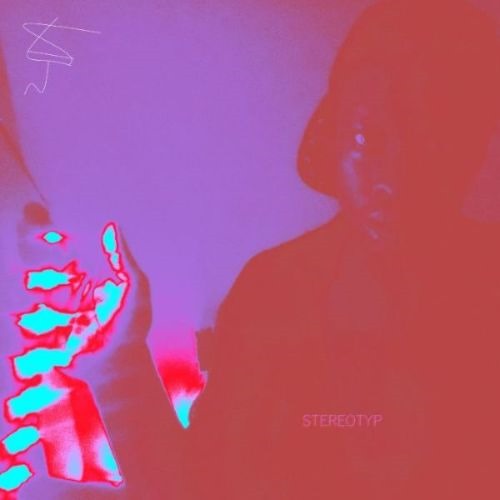
Canadian DJ & Multi-Instrumentalist JHNN has unleashed his highly-anticipated new album, StereoTYP.

StereoTYP is a personal dark album redefining the definition of what it means to be a walking "StereoTYP" who enjoys different kinds of music.

As a taster, he’s unveiled the video for ‘Heroin’: check it here:

AA

JHNN says regarding the album, "Basically the album was made from 2016 – 2020 and it’s about my biggest pet peeve of society which is the existence of StereoTYPs. It only scratched the surface of what I like to talk about; what it means to be a black man who just likes, is not afraid of experimenting, and making synth pop without being too expressive. I wanted to have fun as well and I wanted to get the point across. I also wanted to show all my sides of trying to cope like in the song "Darkness Will Always Be There", the fact that all the people in power won’t matter; "Children Are The Future", dealing with being anxious "The Warning/Warfare" and some views on religion "Greatest Lie."

AA

cbf714bd-3f3b-4d3f-858b-fe2ad3380b90

11th March 2021

Christopher Nosnibor

Sometimes I find myself in a state of confusion. Sometimes / often. Admittedly, work fatigue, lockdown fatigue, parenting, and beer on an evening are all likely contributors on many an occasion, but sometimes, I’m almost certain that life and situations are simply addling and that’s all there is to it. E42.A8’s press release is a source of a degree of bewilderment for me, as they outline their latest release thus:

‘E42.A8 lies between a place, a process, a group or several, or maybe as we were introduced in Frankfurt once: a Musikkapelle. We like to think that what matters are the following guiding notions: freedom, play with opening(s) & interaction, resulting in music marked by textures, variations between pulse & stretch, moments of varying intensities, détournements (Verwandlung?), oscillations in saturation and silence.’

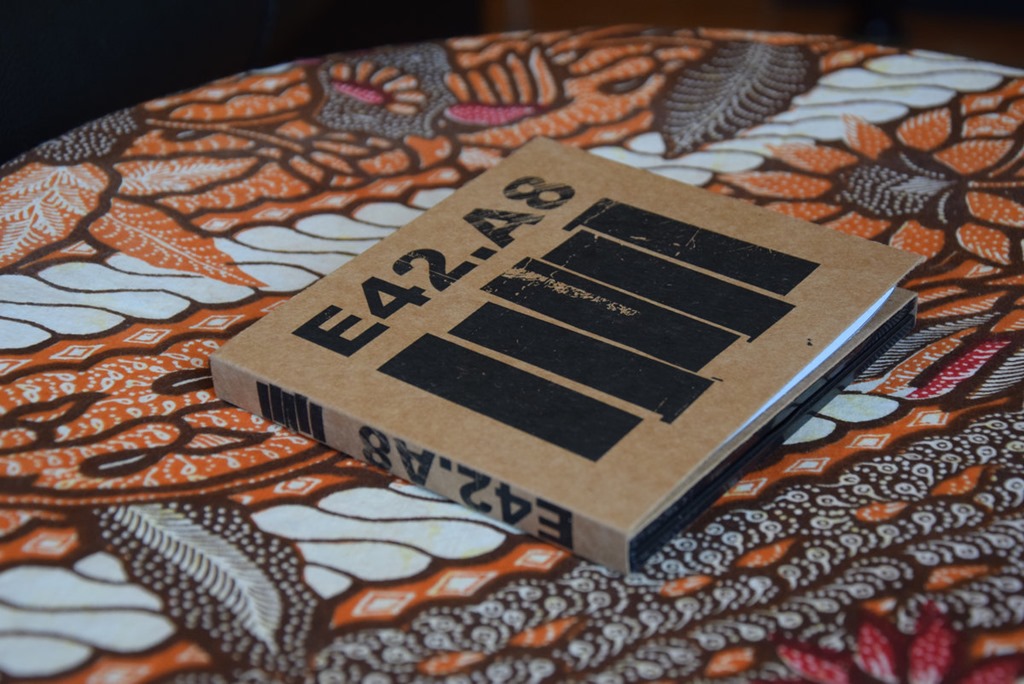
IIIII is in fact a compilation, a double CD, which draws on a morass of releases spread across downloads, CDr and one tape, and features 21 musicians, in varying ensembles, from 2 to 9 people, recorded during the first five years of the collective’s existence. Said collective, which operates around a ‘disused farm/barn in the countryside in Picardie ( a region spread over the north of France +southern Belgium’ is centred around improvisational works, and as the fifteen pieces, which span a whopping 141 minutes – which isn’t far short of two and a half hours – and which makes listening to this in full a serious time commitment. The chances are that few listeners are likely to repeat it more than once or twice.

And while most of the compositions are under the eight or nine-minute mark, there are are handful of absolutely epic works that sit in the twelve to twenty-one minute mark that really illustrate the expansive plains E42.A8 ere capable of exploring when given the time and the space, and of course, the right atmospherics.

As one might expect from such a loose framework of musicians improvising over such a time-span, this is a pretty mixed bag, centred around immense drones, grinding organs and elongated oscillations. At its best, it’s haunting, evocative, unsettling, while at its worst its clunky, uncoordinated, experimental but without focus. And that isn’t a problem: the avant-garde and the postmodern so often delights in revealing its workings, demystifying the creative process, pulling apart the myth of the ‘creative genius’. IIIII reveals E42.A8 to be multi-faceted and willing to take risks in the interest of progression, of artistic evolution.

Insectoid skitters and creeping drones, scrapes, and all kinds of bleeps and twitters and stream-like trickles combine to forge the peaks and troughs, gulfs and chasms which make up this immense work. Heavy clanks like the sound if a blacksmith mishitting his equipment as shards shower everywhere in such an enclosed space. Chinks and stammers and fractured tonal cracks break the surface, and disruptions and discord and discombobulations abound.

A track-by-track analysis would be even more pointless than Brexit or an episode of Pointless, because this isn’t a work that has standout tracks: compilation it may be, but ultimately it’s an immense document which collates a vast library of experimental ambient electronic works which will shred your brain, make your eyes pop leave you feeling bewildered overwhelmed, which is, in context, a measure of artistic success.

AA

a3729120449_10