Posts Tagged ‘Industrial’

Well this is bold… But if you’re going to cover a classic, you have to do something special with it.

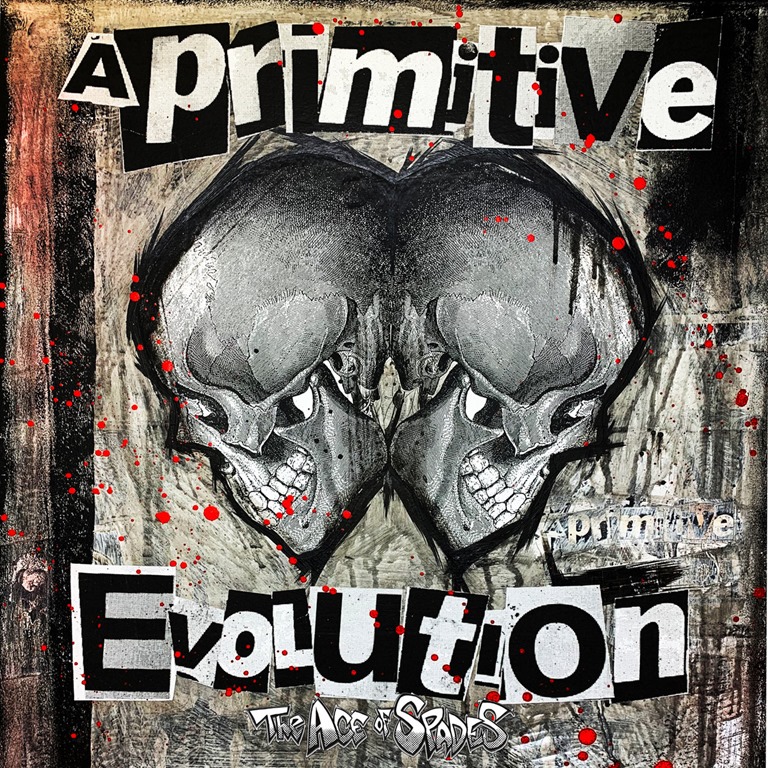
The Canadian alternative rock band A Primitive Evolution (A.P.E.) released an excellent third album entitled ‘Becoming’ in late 2018 that fused industrial, metal and electronic sounds to create a raw, visceral yet soulful record that blurred boundaries to show off a genre-blending mix of Nine Inch Nails, The Cure, Tool, Radiohead, The Prodigy and even U2.

Recorded at their Desolation Studios set-up in their home city of Toronto, it included input from writer/producer Ian D’Sa (Billy Talent) and engineer Kenny Luong (Metric) and displayed obvious crossover potential that had the band placed firmly in the ‘ones to watch’ category. With songs also featured in films such as ‘Chastity Bites’ and the vampire musical ‘Suck’, as well as several North American TV shows, their next step was keenly anticipated.

Then….frontman and guitarist Brett Carruthers joined old friends and compatriots (and labelmates) The Birthday Massacre as their new bassist, with writing, recording and touring duties foor them (not to mention a pesky pandemic) necessitating that A.P.E. be temporarily placed on the backburner.

The band have today taken a step back into the limelight with a new single entitled ‘Ace Of Spades’. Yes that one….and who saw this leftfield/rightfield (it’s all the same to me) curve ball of song choice coming? But, as Carruthers explains: “We actually started playing it live for fun years ago while writing ‘Becoming’ and were listening to a lot Motörhead classic. We thought, what if we slowed it way down to sound like one of our dirty rock jams? We fell in love with the result and played around with it, and finally decided to record and release it. We’re just sad Lemmy will never get to hear it, but hopefully the metal gods may accept our filthy offering!”

‘Ace Of Spades’ is included on a three track EP that is set for release on 3rd March via Metropolis Records. Check it here:

AA

a0641911817_10

31st January 2023

Christopher Nosnibor

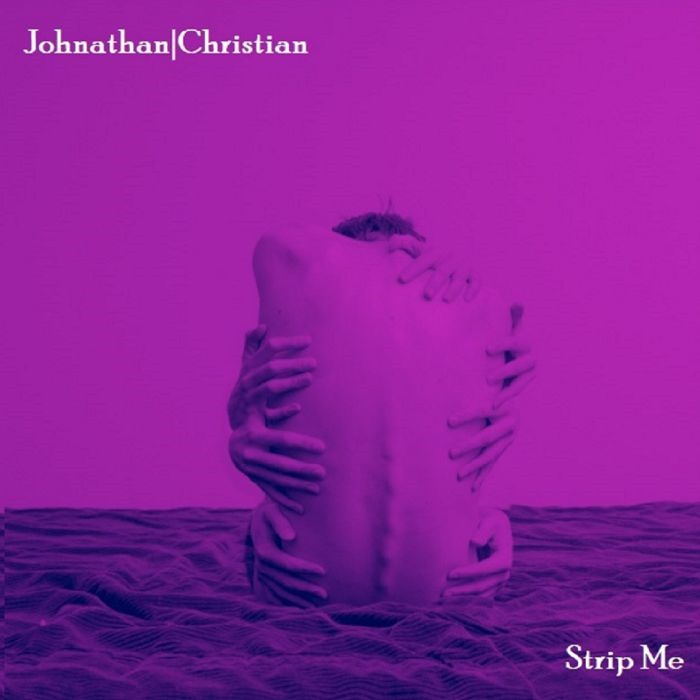
It might sound daft now, but seeing Depeche Mode perform ‘Stripped’ on Top of the Pops in 1986 felt like something risqué. It was a family show, after all, and I was ten years old. It wasn’t your average pop subject matter, and even at that age, I was aware that this was a bit dark and sleazy. It’s not just that I’m now forty-seven years of age, but times have most definitely changed. It isn’t that sex is necessarily more mainstream now – as a kid I’d see my grandad’s copy of The Sun whenever I visited, and Page 3 calendars were commonplace décor in offices and places – but the slant is different. Whereas Duran Duran’s ‘Girls on Film’ video was simply something you wouldn’t see, but Cardi B’s ‘WAP’ wasn’t the only song to have gone stratospheric in recent years which was hyper-explicit on every level.

‘Strip Me’, the lead song from the latest EP from Johnathan|Christian harks back to the mid 80s, both sonically and in terms of how it feels simply ‘a bit naughty’ and ‘a shade raunchy’ rather than full on porny – and besides, it’s more of a metaphor here than anything literal or kinky. It’s a cracking tune, a mid-tempo string-soaked slow-burner that’s as much Kylie’s ‘Confide in Me’ as it is anything by Depeche Mode, and it’s a quality dark pop song.

‘Sway Back’ brings some swing, and ‘This Too’ crunches Disintegration era Cure with Depeche Mode circa 86 to create a slick and expansive song that conveys an emotional depth beyond mere words.

Strip Me is an EP of two halves, with a remix of each of the three tracks following on. And if you’re going to do the remix thing, it probably pays to get some notable names on the mixes – and Johnathan|Christian achieve that with Ministry’s John Bechdel, EBM legend Leæther Strip, and Steven Archer (Stone Burner/Ego Likeness) all pitching in.

Of the three, ‘Strip Me’ still stands as the standout, but the other two are nicely done, with Leæther Strip delivering a dark disco stomper. Solid stuff all round.

AA

870643

Christopher Nosnibor

The third – or fourth, depending on your source – album by electronic duo Akustikkoppler, is a work of starkness, of austerity, and a collision of vintage and contemporary, and quite the contrasting experience.

The cover looks like a photo I may have taken from my daily wanderings. I’m not saying it’s a good cover or a bad cover, this is merely an observation. The duo would likely say the same about the cover itself. It’s a snapshot that speaks for itself of the nature off people in our all-waste capitalist society.

I feel an almost inevitable shiver of nostalgia listening to this, despite the fact that the album’s style and sound predate my musical awareness. Instead, it makes me feel a nostalgic tug for my teens, when I was introduced to all of the weird and wonderful, experimental and starkly harsh music that had emerged in the late 70s and early 80s, to which Alles Muß Raus demonstrates a clear lineage.

As the blurb explains, ‘Inspired by the rough commercial industrial surroundings of Schusters Studio back then in Hamburg, Alles Muß Raus was produced on vintage and modern equipment. The two artists combine past and future to a sparkling, shimmering darkness.’ And industrial it is – not in the Ministry sense, but in the spirit of the early innovators utilising primitive synths, drum machines, and tape loops. And it ignites a spark of excitement, in that even now, this kind of music doesn’t sit comfortably with anything in the sphere of ‘normal’ music. The nostalgia, then, is in remembering how hearing TG, Test Department, DAF, et al for the first time completely changed my world, and my concept of what ‘music’ could be.

The analogue drum machines, mixed to recreate the sound of the late 70s and early 80s with a dominant synthetic snare is a defining feature. The first track, ‘Entrümpelung’ is a head-cracking, gut-smashing sub-bass groove that’s anything but vintage and pulls you in before the bass-driven churn of ‘Mitnahmequalität’ steps boldly into grinding, bass-led Throbbing Gristle-influenced industrial. In contrast, ‘Mittenmang’ is almost playful, with tempo changes and some d‘n’b rapidfire drumming bouncing alongside some busy, bloopy electronica. One of the shorter tracks, ‘Horses And Carriages Burn’ hints in the direction of The Cure’s ‘Carnage Visors’ while recreating the spirit of ‘Pornography’.

Entirely instrumental and assimilating so many disparate elements, despite some insistent grooves and accessible, melodic ,moments, Alles Muß Raus certainly isn’t a pop album, but contains many elements of electropop, even if the shade is turned down to twelve. While Kraftwerk may be an obvious touchstone, the vibe that radiates from Alles Muß Raus is much more DAF, with insistent, snare-driven beats driving relentlessly to define the sound and structure of a varied and meticulously arranged set.

AA

a1894982188_10

Christopher Nosnibor

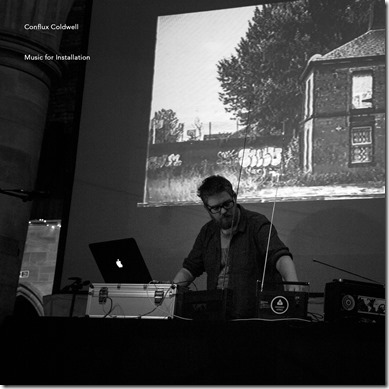
Coldwell’s own notes which accompany this – truly epic – album explains and articulates it best, when he writes ‘This new retrospective is certainly not your typical album. Each track is almost an album in its own right! The material sees CC at his most experimental, stripped back, noisy and immersive. Following on from last year’s Music for Documentary Film, this collection gathers together some of Michael C Coldwell’s sound art work and music written for exhibition and gallery contexts.’

This is very much one of the benefits of the digital format: there is no restriction of duration on account of data capacity. Time was when physical formats restricted the running time of a release, with a vinyl LP optimally running for around forty-five minutes but having the capacity to squeeze in about an hour, with CDs being able to hold seventy-two minutes and while a cassette could – precariously – take two hours, no-one released a two-hour single cassette.

Conflux Coldwell’s collection of installation works is immense, and with a running time of around two-and-a-quarter hours, it’s in the realms of recent Swans albums. While it’s by no means a brag, I’ve endured longer, notably Frank Rothkamm’s twenty-four-disc, twenty-four-hour Werner Process, and am also aware of Throbbing Gristle’s legendary 24 Hours cassette box set, but the point is, Coldwell has really made the most of the space available to him here.

I sometimes differentiate albums as being foreground or background, and Music for Installation is very much background, the very definition of ambient. That isn’t to say it’s uninteresting or unengaging. It’s simply a vast set of field recordings and sound collages that make you feel as if you’re in a certain environment. Unlike the aforementioned Swans albums, which I find are difficult to listen to because they require a commitment of time to sit with them and focus, to actively listen, Music for Installation is a very different beast which works while rumbling on while you’re doing other things. And as an experience, this very much works.

The fifty-five minutes excerpt (!) of Remote Viewer is exemplary. Passing cars, scrapes, drones, the sound of metal on metal, clanking, indistinguishable muttered dialogue, and extraneous sounds that range from – possibly – the rush of wind to the sound of feet gently passing on creaking timbers, all sit side by side and overlap in various shapes to create a latticework of real-life founds the likes of which you probably would ignore if you even noticed them at all under normal circumstances. Of course, if this is an excerpt, where’s the rest? It’s the kind of immersive soundwork that could run for hours and that would be perfectly fine.

The live performance of ‘Dead Air’, which runs for an album-length headline performance is superb. It’s testing, but it’s also magnificently executed. The sounds and textures are balanced, but the overall sound is gloopy. The result is a piece that’s creepy, evocative, and dissonant, and built around wailing whistles and pulsating drones that coalesce intro their own organic rhythms, drawing together elements of Kraftwerk and Throbbing Gristle to conjure a dark, dingy soundscape.

‘Dismantle the Sun’, running for fourteen minutes feels concise in comparison. It’s barely there for the most part, the most ambient of field recordings. It’s hard to identify any of the individual sources, but again, there are rhythms that emerge from the rumble off passing cars and the whisper of the wind, and the piece transitions both sonically and spatially as it progresses, at times evolving from a whisper to a howl. One feels a sense of movement, which in turn creates a sense of disorientation, although the voiceover detailing ‘solar oscillations’ in the closing minutes provides a certain grounding.

The final brace of compositions, ‘Alternating Current’ and ‘The Specious Present (How Long is Now?), which have a combined time of around ten minutes feel like barely snippets or sketches in comparison to the other three immense pieces, but what they lack in duration, they compensate in depth, being richly textured and showcasing some interesting beats and conjuring some dark, confined spaces. And for all its vastness, Music for Installation is quite a dense, claustrophobic experience at times – and it’s a quite remarkable experience, too.

AA
cover

18th November, 2022

James Wells

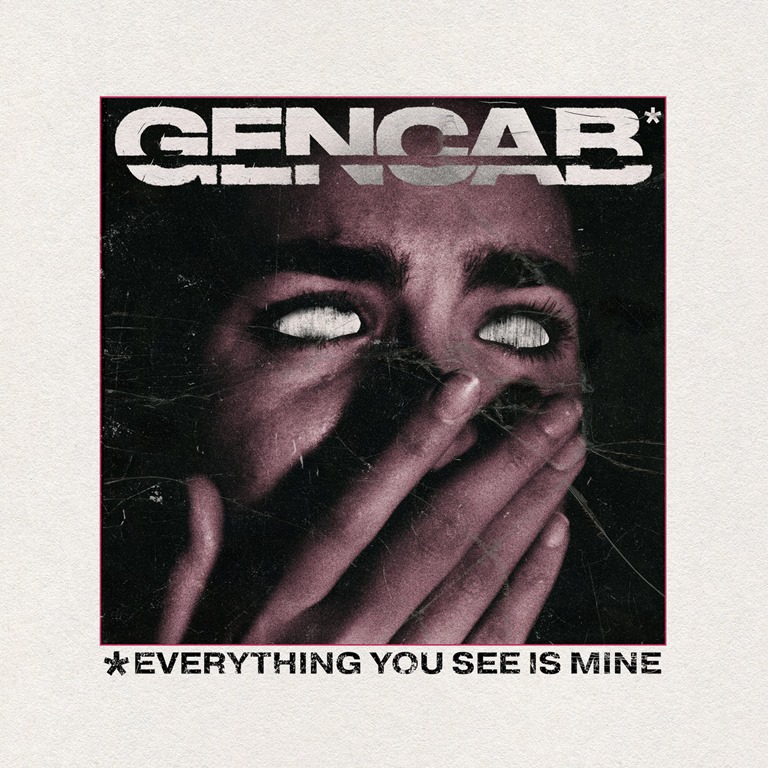
Perhaps I’m sensitive. Perhaps I’m just aware, attuned. But certain phrases trip me. And on reading ‘Everything You See Is Mine’ I feel my skin crawl a little. Something about it says power trip, something about it says control, something about it says manipulation, something about it says shades of wrong. It’s not something that explicitly makes its way through the music, but then, who do you trust?

This gnarly four-tracker is a furious frenzy of high-octane, uptempo industrial that draws many cues from early NIN with snarling electronica driving things hard from the get-go, with first song, ‘Soft’ being anything but as driving electronica slams home with the kind of abrasion that blasts the chest. It’s a strong start to a release that tapers off rather after that initial blast.

‘Wasp Factory’ – which I like to think tips a nod to Ian Banks’ debut – goes a bit emo and hints a bit awkwardly at Linkin Park and then the last song, ‘Only Skin’ brings a satisfying trudging crunch but also an unexpectedly accessible vibe, as it drives the EP home to its conclusion.

It’s not as dark or hard as all that and perhaps isn’t the dominant sneer the title suggests, but Everything You See Is Mine is certainly not an entirely accessible attack either. One to explore.

a1987592192_10

Modern industrial/EBM solo-project of studio guru Sebastian Komor (also known as ICON OF COIL, ZOMBIE GIRL, BRUDERSCHAFT…), KOMOR KOMMANDO finally strikes back with an all new 8-track EP release!

Although KOMOR KOMMANDO is deeply rooted in Industrial/EBM style, Sebastian Komor is not the kind of artist repeating himself again and again. He does not hesitate reinventing himself, experimenting and incorporating elements from other music genres as long as the cocktail mix remains sparkling and exploding! Sonically, this new EP sounds like an exciting solid blend of old and new, incorporating classic EBM vibes with modern EDM inspired production.

The title song “One By One” is bound to become a new instant club-hit and features guest female vocals by Azul from THE TRUE UNION revealing a perfect artistic match wetting our appetite for more. “I was doing mixing and production for her new release and after hearing her vocals I just had to ask her singing on one of my new tracks. I was simply blown away! Her vocals took the song to places I could not even imagine at the time…”, explains Komor. Strong basslines, powerful captivating vocals and hypnotizing beats. This song also appears here remixed by Brute Opposition and by Sebastian Komor himself who gave it a cool retro synth twist in its “xenomorph remix” version.

“Get Off The X” is another banging dancefloor track, with a darker and more malevolent edge maybe, a sort of sonic reflection of the bad, the good and the fxxcking ugly… This banging cut also received the remix treatment by C-LEKKTOR, ANTHONY (H) and CLOCKWORK ECHO each bringing this cut into an all new sound perspective.

“Brahmua” is the 3rd new song revealed on this EP. This instrumental piece has that special feel of tension-building, rising angst and mental distress. A sort of groovy sonic painting depicting how stressful life can sometimes be in its darker days.

Heavy, pulsing, dark and floor-packing: KOMOR KOMMANDO is back – play it at maximum volume!

Listen here:

AA

a4251528011_10

Panurus Productions – 2nd December 2022

Christopher Nosnibor

Panurus Productions are renowned for their favouring of pop and jaunty indie on their catalogue, but as the title suggests, they’ve really excelled with the saccharine-sweet, shimmery Christmas bauble stylings on this December release by Distant Animals, the vehicle for Daniel Alexander Hignell.

The accompanying blurb sets the pitch for ‘A scuzzed out synth/noise/punk affair… straddling a range of genres but never settling on any one of them for long, shifting around with an angry, anxious energy directed at our bleak status quo.’

Granted, this does mean it’s nowhere near as abrasive as recent releases from Trauma Bond or as dark as Carnivorous Plants, this is a hybrid form that coalesces to convey the sound of post-industrial nihilism.

The synths drive and dominate the sound, and they’re layered into thick, foggy swirls pitched against grinding, fuzzy-as-fuck sequenced bass and a drum machine that’s largely submerged beneath the swelling squall. The opener, the eight-and-a-half-minute ‘Greetings from the MET Office’ builds and builds into an immense wall of sound, the guitar adding layers off noise and feedback rather than melody. There is a tune in there, somewhere, and vocals, too, buried in a blitzkrieg that sounds like Depeche Mode covered by My Bloody Valentine and then remixed by Jesu or Dr Mix and the Remix.

‘Phase Down and Sweat to Death’ gets dubby, with samples and snippets cut in and out of the mix, and actually finds a murky, echo-drenched groove in places, before veering off on myriad detours.

As titles such as the title track and ‘Panning For Shit In The Shallow End’ intone, this is far from a celebratory collection, with the delicate and brittle-feeling ‘Hegel’s Violin’ sounding like it could have been penned by The Cure circa Seventeen Seconds, and yes, it’s fair to say that there are what some may refer to as ‘gothic’ elements to the brooding sound.

If songs titles like ‘Fondly Remembering When Primark was a Woolworths’ and ‘They Didn’t Have Snowflakes In 76’ might suggest that Hignell’s been gorging on the Memberberries, but on the evidence there is, buried away in trudging industrial sub-zero trudges and stark, oppressive abstraction, this couldn’t be further from the truth, and we can appreciate these compositions as critiques of the multi-billion-pound nostalgia industry and Brexit Britain, where narrow-minded twats get dewy-eyed all over social media reminiscing over false memories of a golden age that never was. ‘They don’t make ‘em like they used to…’ It’s patent bullshit of course, but so many subscribe to this that, well, it must be true that The BBC haven’t screened Monty Python in decades because they’re woke lefties (and nothing to do that after airing it in 2019 for the fiftieth anniversary, the rights were purchased by NetFlix), and Stranger Things is only good because, well, it’s like The Goonies, isn’t it?

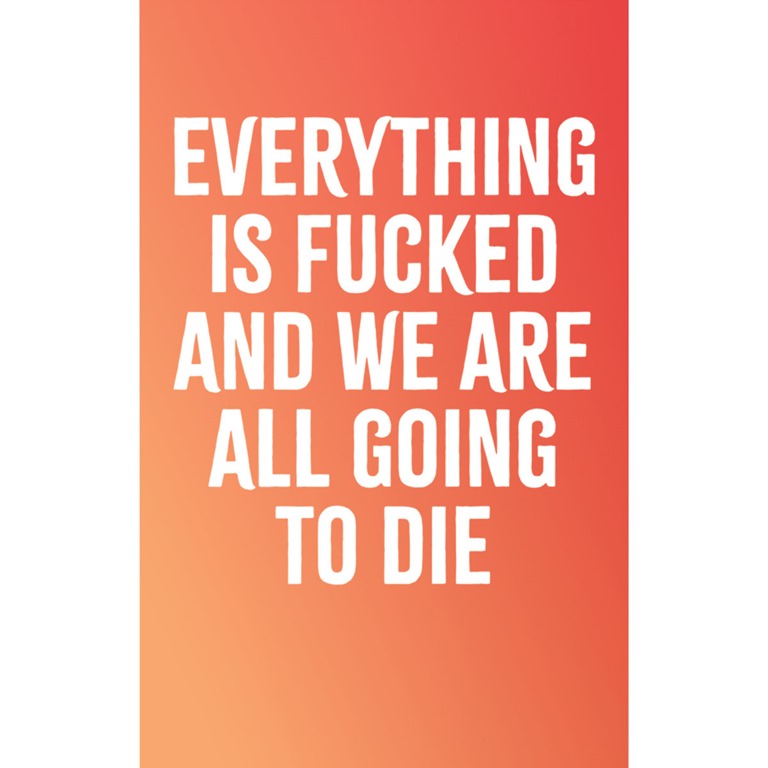
‘Panning for Shit’ is sparse, minimal electro that borders on Krautrock, and is the sound of drowning, not waving from our turd-encircled island, and there are many elements of this album which seem to align with the bleak perspectives and sounds of early industrial acts like Throbbing Gristle. But, to be clear, these are simply touchstones, rather than direct comparisons. Everything Is Fucked And We Are All Going To Die may evoke a sense of familiarity and a strange sense of déjà-vu, but ultimately presents a unique view and amalgamation of influences and stylistic references, and herein lies its true strength.

AA

a0758660749_10

Christopher Nosnibor

If the pandemic gave us anything other than Acute paranoia, it’s a lot of new bands. Who’d have thunk it?

This of course highlights just how different the lockdown experience was for people, dispelling the idea that we shared a collective suffering during those months. Many suffered the lack of an income, but many revelled in the newfound time available to them. Some of us, for better or for worse, got to continue to work full-time remotely while also having to squeeze in home-schooling.

Captain Zero was another band who formed during lockdown, when the tones of ‘dirty fuzz bass batterer Steve James (Geisha, Steveless) were gently dripped into the earholes of David Edgar (The Get-Outs, Superseed) and beat basher Keith Hall (Big Joan, Flag Fen)’ And the tale goes that ‘It wasn’t long before they all got in a darkened room together, turned their amps up to 6.5 and began smelting demonic demos into a fistful of filthy rock n roll bangers.’

These are the realities of forming a band and actually making music, but Captain Zero do a great job of hiding that 6.5 amp level on ‘Bullseye’, an absolutely blistering rager of a track with thick, fiery riffs and gnarly as their beards.

Bullseye’ is a dense metal trudge and grit and heft that’s a blast of blistering hardcore punk that’s got hints of 90s Ministry and the entirety of the grunge scene compressed into a nutshell. It’s a belter.

AA

a3945394204_10

12th October 2022

James Wells

Alright, so I can’t see ‘bad news’ without thinking of the spoof rock band that was part of the Comic Strip Presents… series, featuring the actors behind The Young Ones who released a parody rendition of Queen’s ‘Bohemian Rhapsody’, actually produced by Brian May, and got themselves bottled off stage at Monsters of Rock in 1986.

There’s nothing periodic or rock cliché about this, though. As the blurb outlines, ‘Bad News explores dreams and nightmares, forgiveness and damnation. Through dark electronic and industrial rock themes: wailing bagpipes and fragile synths on the likes of ‘Not Enough Bridge’ contrasted with pounding beats and heavy guitars on ‘Wild Girl (Slug Mix)’ the band further develops their self-described ‘alternadustrial’ sound.

Admittedly, bagpipes sound like really fucking bad news, but this six-tracker doesn’t sound nearly as bad as the cover art suggests it might. ‘L’appel du Vide’ comes on like Pornography-era Cure with doomy synths and clattering, crushing drum, but with the bonus addition of crunching metal guitar, with the end result being as heavy as hell.

‘Echo Chamber’ is twitchy and urgent, a vintage snare cutting through stark synths and a murky fog of bass and guitar; elsewhere, ‘Darkest Dream’ is stark and sparse, blending early Depeche Mode and Meat Beat Manifesto with a dash of Wax Trax! industrial-tinged electronica injected with a shot of adrenaline – and it’s all slammed home with that tempo that gets you pumped.

If the dense, dark waves of synth and snarling vocals and stomping beats which dominate the EP seem fairly standard fare, at least the pipes are kept in the background.

AA

a3952447274_10529013

21st October 2022

Christopher Nosnibor

What a week to drop a new single. Especially if you’re a politically-charged British band. And particularly if you’re Benefits. Their meteoric ascendancy continues unabated: still without label, management, or PR, they’ve had the video for their new single premiered on none other than Rolling Stone Magazine’s website. They are most certainly not your typical Rolling Stone act. Yes, the magazine may historically have been an outlet for Hunter S. Thomson’s writing and been both political and cutting edge, more recently, it’s been very much more establishment. But it’s reach is huge, and if this suggests by any means that Benefits have gone establishment, you’re either nuts, or you’ve not heard of Benefits before.

For a band like this to be given such a platform isn’t simply a big deal – it’s practically the sounding horn of revolution. And as the British government collapses around our ears faster than 24/7 scrolling news can update their marquees, the timing could not be better.

Against a grinding, undulating, distorted mechanical throb, Kingsley Hall delivers another lacerating dissection of Real Life, carving his way through anxiety and dayjob drudgery, corporate and political doublespeak, endless bullshit filtered and amplified through the echo chambers of social media, ‘failure masked as victory’.

Two-thirds in, a hefty industrial beat kicks in and gives a solidity to the squalling blast of thick, thick noise, and the roaring rage yields to a crisp, clinical spoken word monologue that in many ways hits even harder than that savage raw-throated primal scream, and there’s glimmer of home as he intimates ‘we can win this’… and then, abruptly, nothing. It’s the most unexpected ending to a sing since Dinosaur Jr’s cover of The Cure’s ‘Just Like Heaven’.

It’s also Benefits’ most uncompromisingly brutal and heavyweight release yet, as well as their most fully realised.

The world is changing fast. We may be quite literally drowning in shit on the coasts of this brown and deeply unpleasant pleasant land, but Benefits are doing their bit to make it a better place, not by bringing sunshine, but telling it like it is.

AA

310802024_441175827999222_3411172905400521185_n

Benefits are on your in November:

May be an image of one or more people and text that says "enefits 18/11 GLASGOW stereo 23/11 LONDON oslo 19/11 SUNDERLAND pop recs 24/11 NOTTINGHAM bodega 20/11 SOUTHAMPTON joiners 25/11 MANCHESTER yes 21/11 EXETER cavern 26/11 LEEDS brudenell 22/11 BRISTOL strange brew tickets all shows available www.benefitstheband.com on sale friday 10am"