Posts Tagged ‘Heavy’

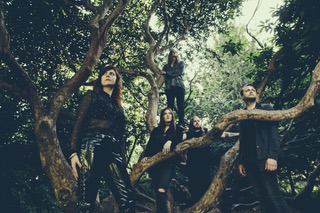
Montreal three-piece BIG|BRAVE  share an official video for ‘Sound’, a brand new track from their forthcoming third album, Ardor, due out September 15th via Southern Lord.  The trio also share headline tour dates in support of the album, with Jessica Moss (who features on the album) performing in support on some dates.

‘Sound’ speaks volumes regarding what’s to come in BIG|BRAVE’s next endeavor; swirling static, booming guitars, powerful drums—all the hallmarks that have made them one of experimental rock’s most exciting acts today.  With just three songs that clock in for a 40-minute-long LP, BIG|BRAVE have adopted a nearly unbearable level of urgency and intensity that weaves throughout Ardor.

Check out ‘Sound’ here (tour dates below):

TOUR DATES (SO FAR):

Sat 21/10 – UK, Brighton – Sticky´s Mike Frog**

Sun 22/10 – UK, Manchester – Star and Garter**

Mon 23/10 – UK, London – Underworld**

Tue 24/10 – FRA, Lille – Le Biplan

Wen 25/10 – FRA, Rennes – Barhic**

Thur 26/10 – FRA, Nantes – Soy Festival**

Fri 27/10 – FRA, Rouen – 3 Pieces

Tues 07/11 – FRA, Lyon – Sonic

Wed 08/11 – BE, Antwerp – Autumn Falls @ Het Bos

Thur 09/11 – NL, Utrecht – Le Guess Who?

Mon 13/11 – DE, Oldenburg – MTS

Tues 14/11 – DE, Mannheim – Kurzbar

Fri 17/11 – DE, Dresden – Scheune

**with Jessica Moss

(Further Dates to be confirmed soon)

Image result for big brave sound

Nuclear Blast – 1st September 2017

Christopher Nosnibor

When charged with the task of covering a new release by a ‘big’ name act, or an act which has been around a long time and developed a significant global following, but that you’re not an ardent fan of, the pressure is on. As a reviewer, you’re supposed to know everything about every aspect of every band ever, and the kind of act who has an established fanbase is also the kind of act who has a fanbase who expect critics to really know their shit before passing comment on ‘their band. At least, that’s my perception based on hard experience from sitting on both sides of the fence.

That progenitors of gothic metal Paradise Lost are still here to launch the fifteenth album of their career is impressive by any standards. And while I’ve been aware of them for an eternity – as a Sisters of Mercy fan for an even longer eternity, it was their cover of ‘Walk Away which provided an introduction – I’ve never really spent any time getting acquainted with their back catalogue. Nevertheless, and despite their death / doom roots, the fact Medusa is strong and proper heavy is even more impressive, especially given their forays into Depeche Mode-style synthpop and electronica and a stint on EMI which saw them move further into more commercial territories.

As the press release notes, ‘most people will know Medusa as the Gorgon from Greek mythology; she is the infamous beast with venomous snakes for hair who will turn anyone that dares to look into her eyes to stone. It is this hideous creature who Paradise Lost have chosen to be the figureheard for their 15th studio album, as, from a philosophical perspective, she is more than simply a monster.’

It’s the epic, doomy trudge of ‘Fearless Sky’ which grinds out for over eight and a half minutes which gets the album off to a dark and suitably intense start and demonstrates they’ve still got the high-art bombast which defines their sound, and of the poem which gave them their name in the first place. It was hearing segments of Milton’s immensely epic poem read aloud by one of my university’s more eccentric but enthusiastic professors which turned me on to his work, and in context, it all fits together. Medusa is an immense and ambitious album, and it’s also as heavy as hell.

The thunderous tribal drumming which propels the low-end focused sludge riffery of ‘Gods of Ancient’ leads the album deeper into darkness before the snarling desolation of ‘From the Gallows.’ ‘The Longest Winter’ is perhaps more accessible with its processed, dry and altogether more melodic vocals, but the guitars are still are thick and overdriven as you like. As for the title track, it brings the sense of immense portent with its groaningly heavy guitars and noodling lead, paired with a sense of gothic theatricality which lends it a kind of poeticism.

This is an album that trudges, dark and heavy, for the duration, and any comparisons to other bands from either the goth or metal sides of the equation are essentially redundant because it was this band who effectively spawned the hybrid which Medusa so perfectly epitomises anyway.

What makes Medusa a great album is that while it is heavy, it’s heavily gothy and it’s ultra metally in the snarling, guttural sense, and it’s also got immense range. As such, it doesn’t ever feel formulaic or dull, and ultimately, Medusa is a strong album which stands up in the Paradise Lost catalogue.

paradiselostmedusacd

Christopher Nosnibor

For those who aren’t fans of extreme music, it’s often hard to see the appeal. ‘How can you listen to that, let alone enjoy it?’ is a common line of questioning. Often, the response can be boiled down to a single word: catharsis.

The one thing that always strikes me about events like these is just how friendly the atmosphere is. The fans are friendly and many, like me, seem shy and reserved – until they completely go mental in the moshpit. And it’s in this context that extreme music makes perfect sense. I may be nursing bruised ribs today after my quest for photos landed me in the line of danger but never once did I feel in any way threatened: it’s all freaks, outcasts and oddballs together in a safe environment.

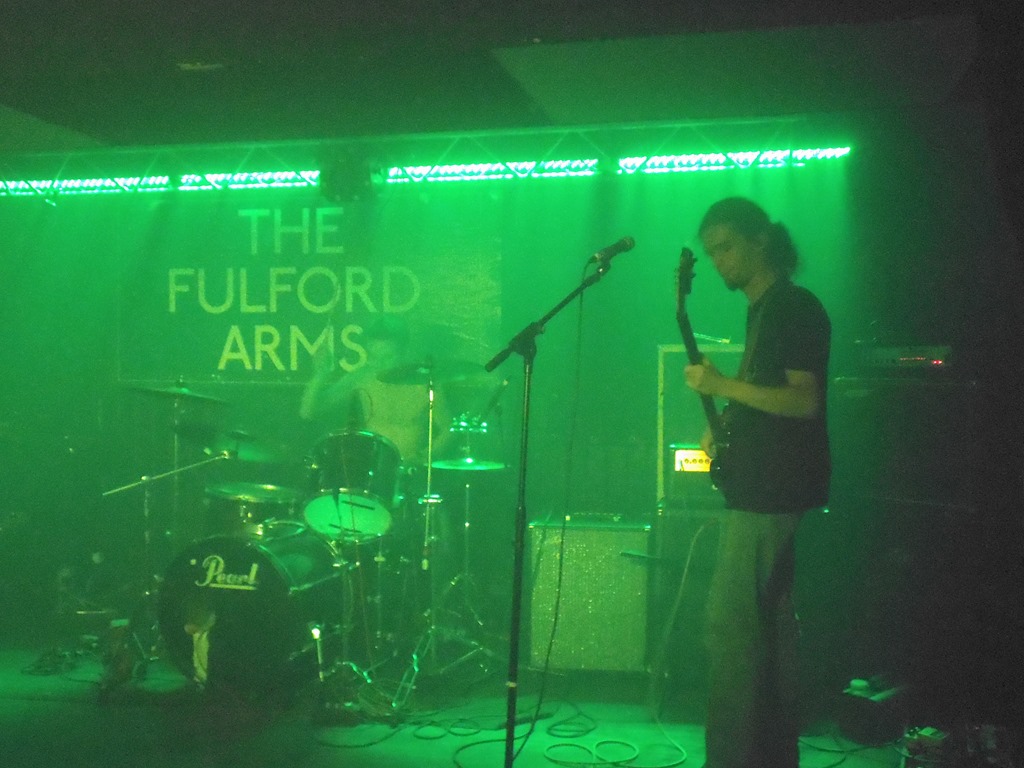
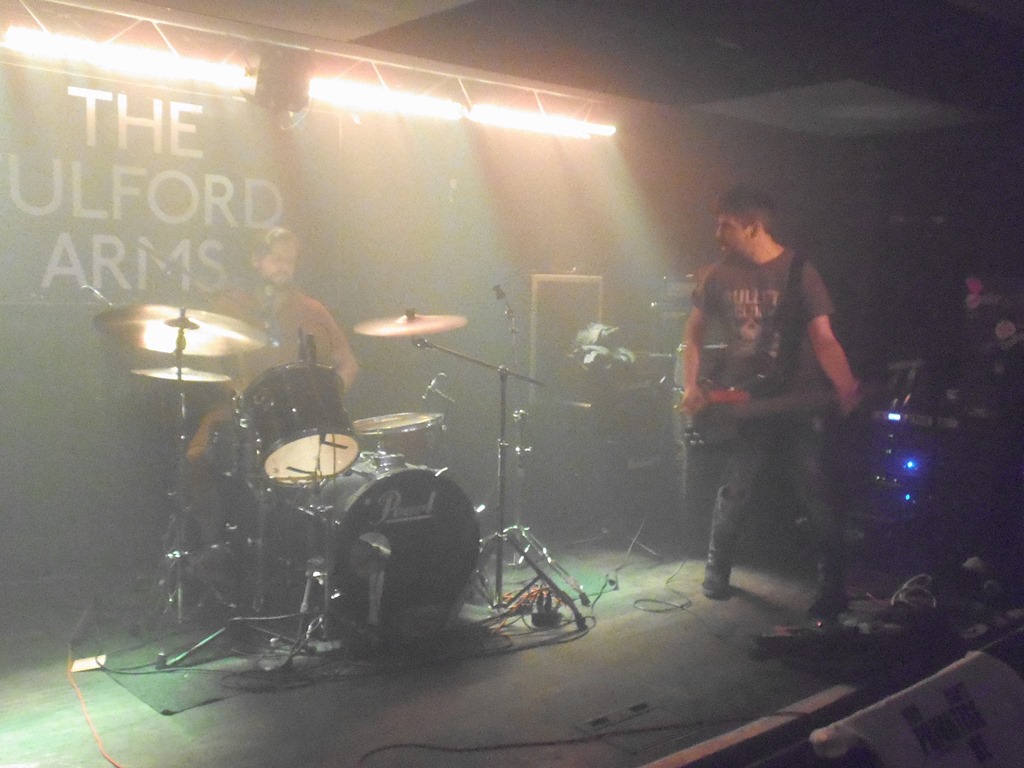
What had initially been booked as a standard date on the UK leg of Full of Hell’s tour metamorphasised into an eleven-band extravaganza when circumstances dictated a change of promoter. And there wasn’t a weak act on the bill, and the first couple, Cheap Surgery and Hoof Glove both stood at the punkier end of the musical spectrum than the screaming metal end. It’s not so much that it was welcome to be eased in gently as a positive thing to be treated to some musical range: it’s not as if either was light or poppy, with Cheap Surgery evoking the spirit of bands like Penetration. Hoof Glove, meanwhile, are a band of two halves with a metal rhythm section onstage and an electronic noise duo at a table in front of it. Processed-to-fuck female vocals add a different shade of intensity to a grainy noise reminiscent in places of the abrasive angst of Xmal Deutchschland.

DSCF0289DSCF0301

Cheap Surgery                                               Hoof Glove

A close-cropped screamer in a Crass T-shirt leads the full-throttle attack of Hex, and it was midway through their confrontational, fiery set that the slam-dancing commenced, hinting at the shape of things to come.

Led by the Throat may look like four ordinary guys, but they’re the first band to bring the full-on snarling metal assault to proceedings, and they bring it from the first bar of their tight, powerful set. As he paces the stage, the singer emanates a malevolent energy that’s as powerful as his patterned shirt is tasteless.

I can’t remember when or where I last saw Groak, but I remember them being good, and this evening’s performance confirms my memory is correct. Singer / guitarist Ben Southern is wearing a Rudimentary Peni t-shirt and the band’s sludgy, dirgy churn is propelled – slowly – by Steve Myles’ crushing percussion (how many bands is this guy in?). This is music dredged from the pits of the lower regions of hell, and pretty much as intense as it gets. Or so you’d think. But it’s only 6:30 in the evening by the time they leave the stage, and we’re not even halfway through the lineup.

DSCF0375

Groak

Masters of Powerviolence Lugubrious Children, who released a spit EP with Groak last year are up next, and they’re punishing too. The trio bring the power and the pace, and the result is carnage.

DSCF0384

Lugubrious Children

It only gets better, and more intense, with Gets Worse. Very much a beards and long shorts band, they’re bristling additional strings, with a massively overdriven five-string bass bringing the low-end that grinds below a pair of seven-string guitars. And all of those stings are downtuned and sludged to the max. A single power chord sustains for a full minute before the juggernaut chug slams in. This is a full-on, balls-out racket that draws together the slow trudge of Godflesh and the tearing frenzy of Napalm Death to devastating effect.

Famine are one of those bands who just get better with every outing. Having seen them grow from a snotty two-piece into a thunderous, ferocious gut-ripping threesome who are tighter and more ferocious with every show. My notes from their set are sparse and only semi-legible, but in front of a home crowd, they’re assured and received the violently rapturous reception they deserved.

I’d been recommended Unyielding Love by a friend whose opinion I very much respect, and they didn’t disappoint, taking the snarling gnarliness to a whole other level. The seven-string guitar and five-string bass congeal into a thick glutinous sonic slime with optimum low-end. It’s driven by rapid-fire drumming that’s hard enough to crack any skull, and overlaid with brain-shredding electronic noise. Their relentlessly savage set can be perhaps defined as the sound of a goat’s skull being dragged underfoot about the stage echoing amidst a heavy organ drone, before processed reverby vocals erupt into a howling vortex of noise. And tat all actually happened, in real life.

DSCF0448

Unyielding Love

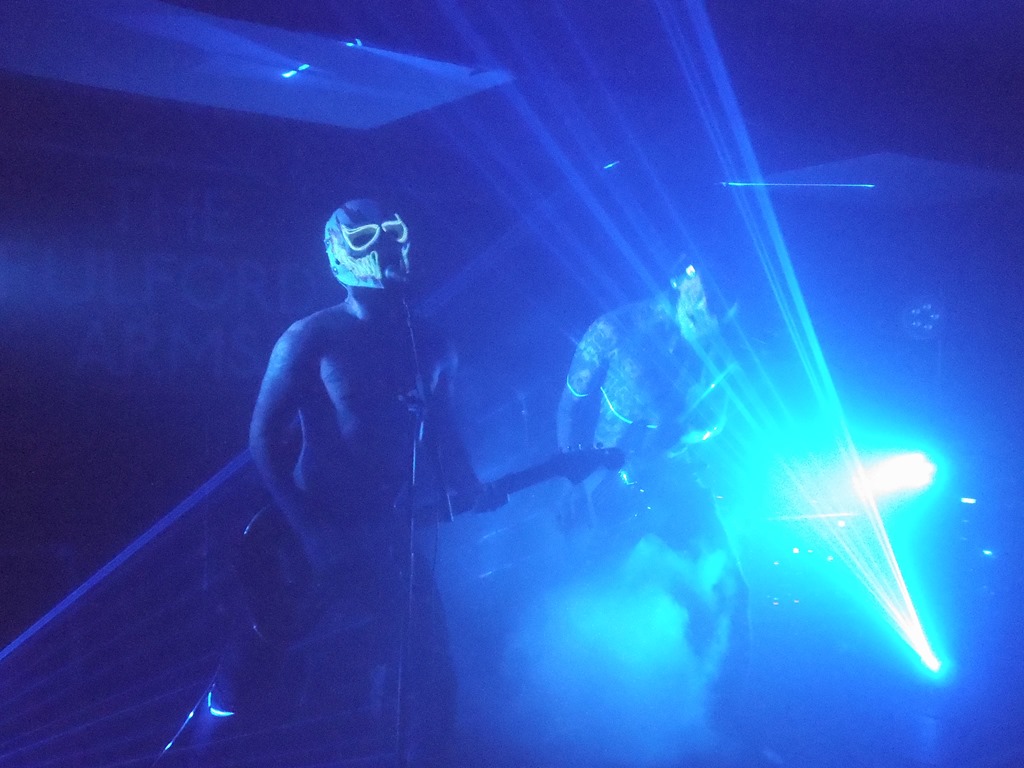
I’ve no idea who I saw performing a ‘secret set’ in the Meatlocker (the venue’s second stage, still draped with original plastic curtains because it was absolutely fucking heaving and I’d had a few beers by this point but they were intense and loud and brutal. But Full of Hell… Fucking hell. I’d run into Dylan Walker shortly before the set and was struck by just what an affable guy he was. On stage, of course, it’s another story: blasting ear-bleeding electronics and brutal vocals with a violent energy amidst a raging tempest of the harshest grindcore around, live shows don’t come more intensely visceral than this. How much of the set was lifted from the latest long-player, Trumpeting Ecstasy, I couldn’t say: I was too busy avoiding flailing feet and flying bodies, and clearly, the pain in my left side tells me I failed somewhere during the mayhem. But this…. THIS is catharsis.

DSCF0534DSCF0484DSCF0505

Full of Hell

I stopped to have my photo taken with some random strangers on my way out: they liked my hat. I may have drunk too much beer, but in the main, I was hitting the cool night air elated and exhilarated, and on a different plane from the one I had arrived on.

The abrasive, otherworldly hiphop pioneers Dälek will be touring this month for a week of live shows, following on from the release of their 2016 comeback LP, Asphalt For Eden (Profound Lore), the first new record from the NYC trio since 2009. Ahead of these shows, they have released a brand new track, ‘Molten’, and the wind-tunnel production and furious wordsmith delivery that have become the group’s calling card have been amped up to reflect the song’s theme…

  "After this unprecedented Presidential campaign, a venting was needed. This is bigger than the individual candidates, bigger than a broken system, bigger than the dumbing down of America. ‘Molten’ is the quiet rage, angst, and sadness against the current climate in our country and in this world, it’s a state of mind and emotions manifested. ‘Molten’ is the guttural yell into the nothingness by those of us who still think."

Their live performances are known as intense events that often end in a shoved mic stand and sonically assaultive layers of sound. Witnessing Dälek live is like coming face to face with the bastard child of Public Enemy and My Bloody Valentine; an amalgamation of the heaviest noise that the Velvet Underground or Merzbow ever unleashed and the knowledge spit by the likes of Rakim. The trio leaves you in a trance, sends shivers down your spine from the haunting beats intertwined with ambient textures and noise scales, and hits you with a powerful raw flow from one of the most charismatic MC’s of his, or any, era.

Listen to ‘Molten’ below. Full list of UK live dates after the jump.


22/11 – The Louisiana, Bristol
23/11 – Saint Lukes, Glasgow

24/11 – Chunk, Leeds *new addition
25/11 – Thomas House, Dublin
26/11 – Corsica Studios, London
27/11 – Islington Mill, Salford

Ritual Productions – 11th November 2016

Christopher Nosnibor

You might expect that the tracks on an album containing just six songs would consist of long, dawn-out affairs. But not Thralldom’s latest offering: there are a couple that extend beyond the six-minute mark, but in the main, these are short pieces, under four minutes in duration. But in terms of dark intensity, they’re immense.

The introductory instrumental, ‘Cosmic Chains’ is a disturbing vocal cacophony from the bowels of hell which paves the way for the blackened trudge of ‘Chronovisions’, which truly sets the tone for the album as a whole. It’s seriously fucking dark, tangled gothic guitar lines weaving tapestries which depict unspeakable events of demonic torture and pain.

It may be that Thralldom have been silent for over a decade, but is seems that the intervening years since their last release have been spent crawling through subterranean passages by candlelight, stooped, starved and rabid, and battling with marauding demons every step of the way. And so as what’s billed as ‘Thralldom 3.0’ emerge, screaming and agonised into the light, it’s hard to tell if they’ve slain those demons or become partly consumed by them: Time Will Bend Into Horror forges a netherworld of tempestuous torment. The title is fitting in that it reflects the ancient evils which claw their way through the spaces between the crooked notes and mangled power chords which form the fabric of an album which soundtracks a walk through purgatory. In the hands of Thraldom, a four-minute composition feels like ten or more as they grind out the darkest, most oppressive noise.

The angry grey surges of noise which crash and thrash over a violent percussive assault on ‘The Corpse of the Radar Towers Over All’ collides against the churning discord of ‘Dark Grey Mist’, a track which brings elements of Swans’ Cop into a metal maelstrom that’s as black as the canal of Satan’s sphincter. It’s gnarly, alright – and then some – and brings horror in spades.

Thralldom - Time Will Bend

Ritual Productions – 28th October 2016

11Paranoias do heavy psychedelic with the emphasis very much on the heavy. Their fourth album, Reliquary For A Dreamed Of World is a downtuned, ultra-low frequency, mega low-tempo doom sludge trudge through the darkest places of psychedelia. The crushing riff that lands halfway through ‘Peripheral Metamorphosis,’ the album’s first track, registers around the same sonic zone as Swans’ ‘Cop’. There’s an eternity between each pulverizing drum smash, which lands with the force of a planetary collision, and the power-chords are heavier than is conceivable for mere instruments to make: this is music that’s nothing short of galactic in its enormity and weight. It’s the sound of dark matter combusting.

Five minutes into the 15-minute mammoth that is ‘Destroying Eyes’, a whip-crack treble-topped snare snaps through the dense murk of noise to propel a vocal track, layered in delay and reverb to plough a New-Wave inspired furrow before it all explodes, unexpectedly, in a blistering wig-out centres around a driving goth-tinged groove.

After the hypnotic ‘Avallaunius’ chills the intensity – at least for the first three minutes or so, at which point it brings the noise – ‘Mutus Liber’ brings it low and slow and goes for the crushingly heavy in a big way, the mangled vocals all but lost in the tsunami of immense power chords. ‘Meditation on the Void’ is the darkly hypnotic workout the title suggests, whipping up a cyclone of psychedelia which threatens to collapse in on itself. After the slowly spiralling ‘Phantom Pyramid’, the brevity of the final track, ‘Milk of Amnesia’ is unexpected. In fact, a squalling barrage of feedback a snarling, ripping bass from which emerges something that for all the world resembles a distorted segment of Fields of the Nephilim’s cover of Roxy Music’s ‘In Every Dream Home a Heartache’, it’s unexpected in pretty much every way imaginable.

Conjuring mental spaces and a hallucinogenic, mirage-filled alternative reality, Reliquary For A Dreamed Of World conjures a world that’s s much a nightmare as a dream. It’s a powerful album which, while heavy – and oftentimes, monumentally so – displays a remarkable knack for a deep groove. It’s an album that will bend your brain, while crushing it by sheer force at the same time.


11PARANOIAS-cover-2000PX-dark

Rock is Hell – RIP67

Christopher Nosnibor

This one’s been out a little while now but has only recently landed with me. I can’t feel too much guilt: Regolith aren’t exactly the fastest of movers, however you look at it. They’ve been going for a full decade, and despite having racked up a substantial catalogue of EPs and split releases, it’s taken until now to get around to a proper album (although, arguably, 2009’s Music for Hot Air Balloon, with its three tracks spanning a full hour, would constitute an album by most people’s reckoning). Musically, they’re not exactly about pace, either, trading in crawling ambient drone of almost incomprehensible proportions.

Their debut album proper isn’t exactly about the immediate hit, the hooks or the general accessibility, either, and necessarily requires time to engage, cogitate and digest.

I is a monster work: a double album comprising just four tracks. And the sound is as immense as the album’s duration, inching toward the 80-minute mark, with each of the tracks clocking in around 20 minutes in duration. But it’s not just about the length: feel the weight. The sounds may be produced electronically using analogue synths and a vast array of effects, and Regolith may describe themselves as ‘tech freaks’, but the material is heavily steeped in the tropes of doom. Having spent my childhood living on the flight path of the takeoff / landing of the RAF Vulcans, I feel qualified to make the analogy of the drones sounding like jet engines rumble and roar, a spectrum of lower-end frequencies that focus on the ribcage, the particle-splitting noise is also more than enough to terrorize the most dulled eardrums. ‘Platinum’ sounds like my young recollections of the Falklands War. The molecule-destroying, air-shredding sound engulfs the listener; the experience is immersive and annihilative.

‘Comet Tails’ is a far sparser affair, echoed beats decaying into the void, the space between the sounds comparable to the distance between planets. Gradually, as slowly as a planet on the outer reaches of a solar system orbits its sun, a low drone begins to rise and swell, a dark, large sonorous body of sound, a black hole cruising closer with inexorable determination. The hum continues to grow until its edges begin to distort and disintegrate and bleeds into ‘Star Trails’. One benefit of hearing this in a digital format is the two tracks do run together. Of course, the downside is simply that however enormous the sound, the full enormity can only really be conveyed via the medium of vinyl, and ideally on a decent set-up with a solid amp and some fuck-off powerful speakers. It’s an album that has the capacity to make the earth move.

The sound is more than fitting for a band named after ‘a layer of loose, heterogeneous superficial material covering solid rock, which includes dust, soil, broken rock, and other related materials and is present on Earth, the Moon, Mars, some asteroids, and other terrestrial planets and moons,’ and whose objective is to create ‘music on a geological scale; music of mountains, shifting like glaciers, slow and relentless processes on grand timescales’. The tracks on I are at once heavy on the ground, and beyond gravity, simultaneously tectonic in their movement and of galactic proportions.

Regolith

Regolith Online

Sub Rosa – SR406 – 5th May 2016

Christopher Nosnibor

There’s no escaping the band’s name. It’s striking, to say the least. Simply calling a band ‘phallus’ would be something, the connotations numerous and not all positive. Putting it out there is a strong challenge to the (potential) audience’s sensibilities, and is as likely to deter many listeners in itself. There may be puerile implications, and an element of silly shock, but what does this say about culture and society? Human history, even prehistory, is in many respects, the history of the phallus: the Romans were obsessed by the power of the phallus, rendering it a totem. Freud was famously fixated, and 60s and 70s feminism marked the opening of a discourse concerning phallocentric society, as they strove to rebalance things. While the phallus in this context is more metaphorical than literal, what matter is the fact that discourse is far from over.

While ‘cunt’ may represent the last bastion of hardcore swearing, and carries the most weight in terms of the offense it can impart, ‘it’s the hard dick that offends most’, as Philip Best spits on the Whitehouse track ‘Language Recovery’. Why is that? What is our society so hung up on the erection? Despite the enduring power of the phallus in society through the ages, art and popular culture is more given to celebrating the female form. And from classical antiquity (I’m thinking Michelangelo’s ‘David’, for example) to modern art (take Lucien Freud’s nude male portraits by way of an example here), male genitalia is understated if it’s to be accepted. It’s simply unimaginable that David, an image of the ‘perfect’ male form, could brandish a raging horn. Soft is art: hard is porn. The phallus may be all-powerful but it’s not acceptable on display, it’s ugly, repulsive, threatening, frightening, says society.

So what does this say about Ultraphallus? To take a blunt and literal view, individually and collectively, the band is cock. But not just any old cock. It’s more cock than that. It’s not only a throbbing erection, a pulsating meat truncheon, but amplified to the power of ten. Ultra… it has such a powerfully maximalist suggestion. This band isn’t just the simple encapsulation of the phallus, but thrusts into the public domain the phallus on a scale comparable to the Cerne Abas giant. Is it more confrontational and in your face than Throbbing Gristle? It’s a close call.

Appropriately, the music on The Art Of Spectres is overtly masculine: hard, heavy, rhythmic. It’s hard, uncompromising.

Ultraphallus are Phil Maggi (vocals, samples, electronics, trumpet, percussion); Xavier Dubois (guitars); Ivan Del Castillo (bass); Julien Bockiau (drums). A bunch of giant cocks. And they make challenging music, which pulls an eclectic range of styles together to forge something immense, dark and compelling. The press release notes that Ultraphallus defines their sound with some accents from styles including Western Music, Death metal, Doom-Rock, Avantgarde Psychedelia and Electronic Soundtracks, as a tribute to Rock Culture. But there’s a whole lot more besides lurking in the murky sonic depths of the seven tracks here.

Seven tracks were recorded in four days at Drop Out Studios, South London, with Tim Cedar (Part Chimp leader, Hey Colossus, ex-Penthouse…). The band say that the tracks are inspired by The Residents, Marc Bolan, Mark Frechette and Zabriskie Point, Swans, Autechre, David Bowie, Eva Ionesco, Polanski’s movie The Tenant and Death-Metal. In this respect, the title is germane, as the album finds the band exploring the spectres of their precursors and their peers. They loom large.

Opening track, ‘The Blood Sequence’ combines the grit of black metal with the squalling white noise of power electronics, delivered with the panache of Bauhaus and the theatrical gothic detail of Roz Williams era Christian Death. They really hit their stride with the second track, the seven-minute ‘’Madrigal Lane’ at the heart of which lies a throbbing bass and relentless beat.it builds hypnotically, reaching a frenzied climax of crashing cymbals while Maggi Hollers maniacally in a tsunami of reverb.

‘Let Him be Alistair’ finds Maggi hollering like a drunk impersonating Tom Waits over the skittering sonic backdrop, a slow grinding rhythm section churning out a grainy, Neurosis-like dirge. ‘Whitewasher’ is even slower and heavier: again, the percussion dominates, the lyrics are coarsely shouted, thick, and burning with anguish, evoking the spirit of Godflesh and ‘Greed’ era Swans to punishing and painful effect as the song batters the listener into submission over the course of seven-plus crushing, doom-laden minutes. If the tone mellows and the oppression lifts during the last two tracks, the hypnotic percussion and repetitive nature of the riffs prove every bit as powerful as the final track, ‘Sinister Exaggerator’ builds to a spiralling psychedelic shoegaze swirl.

Despite all of the myriad comparisons and parallels, The Art Of Spectres goes a long way from being any simple homage to the annals of rock and metal, because for all of the references, Ultraphallus don’t really sound like anything or anyone else.


SR406_front

Ultraphallus Online