Posts Tagged ‘Heavy’

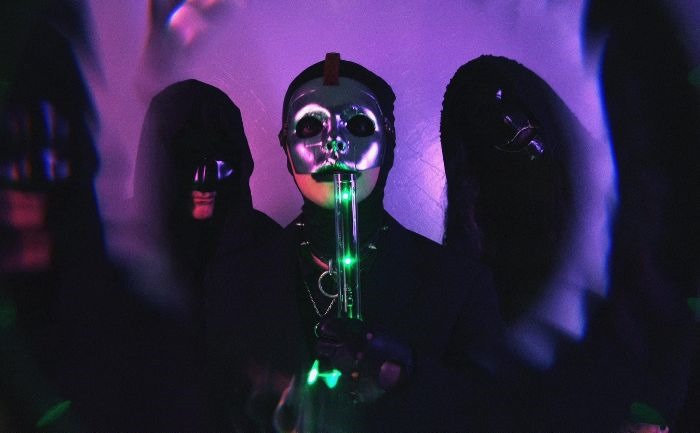
Industrial metal band Our Frankenstein has just unleashed their new video for the single, ‘Illuminate’.

‘Illuminate’ is a song about finding the light that can exist in a barren and hopeless wasteland while building a better future for yourself. It’s about forging forward and discovering the strength in yourself to move on past a difficult time in your life.

‘Illuminate’ is available on all major streaming platforms including Bandcamp.

Watch the video here:

AA

3bcf9af0-7883-3998-e5a2-d8566be02f9f

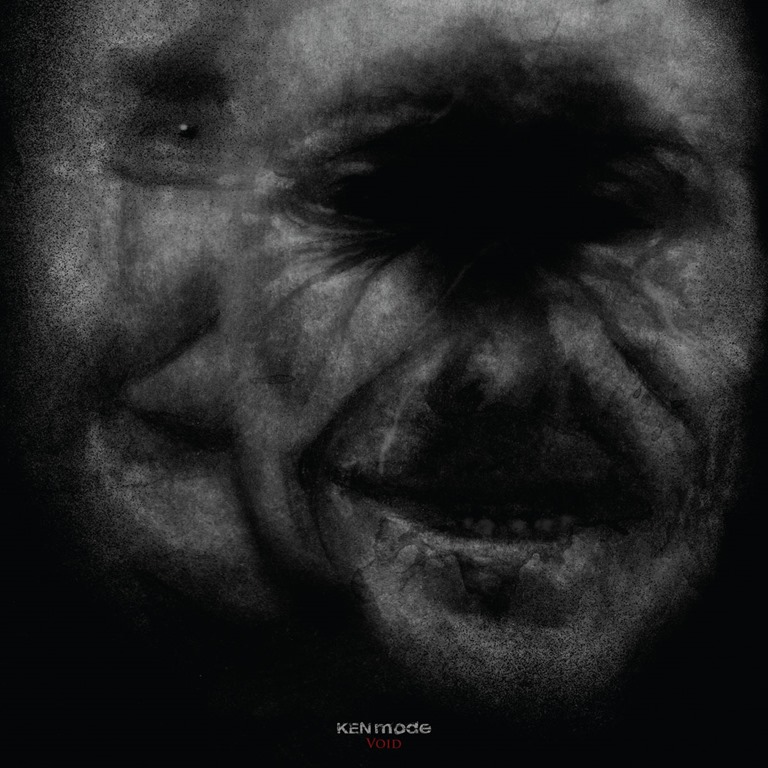
With their anticipated new album, VOID, just a few months away, KEN mode has given us another look into what to expect from the full-length, out Sept. 22nd via Artoffact Records. Today, the band shares a new single, true to their unforgettable and unique sound – ‘He Was A Good Man, He Was A Taxpayer’!

On the new track, Jesse Matthewson comments candidly that it is, "perhaps a little more post-punk than people are used to hearing us – but we had fun playing with synth and pushing the boundaries of the emotionality of this track. Is this noise goth? I don’t know. Does that sound stupid? Did I just invent a new genre? There are equal parts Bauhaus and Unsane on this, so maybe?"

‘He Was A Good Man, He Was A Taxpayer’, follows the band’s absolutely bone shattering single, ‘The Shrike’, which last month gave us 4 minutes and 10 seconds of sheer energy, fueled by the frustration of the ‘lost years’ of the pandemic, pelting fans’ eardrums with blissfully crass instrumentals and a vocal approach like no other.

Listen here:

AA

With their anticipated new album, VOID, just a few months away, KEN mode has given us another look into what to expect from the full-length, out Sept. 22nd via Artoffact Records. Today, the band shares a new single, true to their unforgettable and unique sound – ‘He Was A Good Man, He Was A Taxpayer’!

On the new track, Jesse Matthewson comments candidly that it is, "perhaps a little more post-punk than people are used to hearing us – but we had fun playing with synth and pushing the boundaries of the emotionality of this track. Is this noise goth? I don’t know. Does that sound stupid? Did I just invent a new genre? There are equal parts Bauhaus and Unsane on this, so maybe?"

‘He Was A Good Man, He Was A Taxpayer’, follows the band’s absolutely bone shattering single, ‘The Shrike’, which last month gave us 4 minutes and 10 seconds of sheer energy, fueled by the frustration of the ‘lost years’ of the pandemic, pelting fans’ eardrums with blissfully crass instrumentals and a vocal approach like no other.

TOUR DATES:


09.24.23 Porto, PT @ Amplifest*

09.26.23 Rouen, FR @ Le 106

09.27.23 Lille, FR @ Aeronef

09.28.23 Paris, FR @ Point Ephemere

09.29.23 Angouleme, FR @ La Nef

09.30.23 Clermont-Ferrand @ La Cooperative De Mai

10.01.23 Yverdon, CH @ L’Amalgame*

10.02.23 Karlsruhe, DE @ Jubez

10.03.23 Dresden, DE @ Ostpol

10.04.23 Wroclaw, PL @ Klub Lacznik

10.05.23 Berlin, DE @ Urban Spree

10.07.23 Aalborg, DK @ 1000 Fryd

10.08.23 Aarhus, DK @ Headquarters

10.10.23 Liege, BE @ La Zone

10.11.23 Haarlem, NL @ Patronaat

10.12.23 Bruxelles, BE @ La Botanique

10.13.23 Brighton, UK @ The Hope & Ruin*

10.14.23 London, UK @ Perpetual Flame Ministries w/Lingua Ignota*

AA

Zoj64xD3

Photo: Brenna Faris Photography

Indian deathgrinders Gutslit will release their anticipated third full-length, Carnal, on 7 July physically (vinyl, CD) and digitally.

In their over 15-year journey, Gutslit has transcended their status as a mere household name in the Indian metal scene to a global force to be reckoned with, showcasing their technical prowess and brutal riffs on two critically acclaimed full-length albums. The Mumbai-based quartet has embarked on independent tours globally and left audiences in awe with their intense live performances. Their meteoric rise has been further validated by the endorsements they have received from some of the world’s top musical instrument brands, cementing their status as a highly professional and internationally acclaimed band.

Gutslit’s untamed musical prowess, razor-sharp precision, and blisteringly fast songs earned them the distinction of being hailed as the finest and filthiest band in the Indian metal scene. Their formidable sound is a testament to their versatility in adapting various styles of death metal and grindcore, which is showcased by their pulverizing riffs, pummeling blasts, vicious bass grooves, and horrendous gutturals. The intent has always been to push the boundaries of the extreme metal genre.

Gutslit’s latest offering, Carnal, is an explosive follow-up to their 2017 album Amputheatre. With eight crushing numbers, the album showcases the band’s evolution in sound, smoldering and surging with violent energy. The album was mixed and mastered by Mark Lewis (The Black Dahlia Murder, Whitechapel) and produced by Prateek Rajagopal (The Book of Boba Fett, Creed 3), with artwork by Kidsquidy. Notably, Carnal marks the return of Aditya Barve (Skewered in the Sewer) on vocals and features guest vocals by Julien Truchan (Benighted) on the track “Bind Torture Kill.”

Ahead of the album, they’ve released a video for ther track ‘The Killing Joke’. Watch it here:

AA

187094

Invada Records – 30th June 2023

Christopher Nosnibor

You know what? This never gets tired. I started reviewing live stuff in the 90s, but it wasn’t until 2008 I started receiving albums for review. Receiving albums ahead of release was a big deal back then: it made me feel somehow special. Advance promos probably meant something more then, on reflection. They would be, more likely than not., a single CD – or even a single-track CD – and my objective would be to get my review out ahead of, well, as many people as possible. It wasn’t so much about generating buzz as feeling a buzz.

I miss the steady drip of CDs and vinyl through the letterbox, although am coming to accept that space is an issue here, and if the endless bombardment of emails with downloads and streams sometimes – often – feels overwhelming, with up to fifty review submissions a day, when I clock a release I’ve been getting excited about well before time, the buzz still hits.

The way albums are released now isn’t quite the same, either: time was when there would be a single or two ahead of release, there’d be reviews and then the album would arrive and you’d have to buy it to hear it. Now, singles aren’t really singles and half the album’s been released on various streaming platforms along with a bunch of lyric videos and ‘visualisers’ (that’s one for another time). But having only slipped out a couple of tracks in a relatively low-key fashion in April and May, this landing in my inbox to download ahead of release, gave me a genuine buzz.

Gas Lit, released in 2021, was a powerful, album on so many levels. As they put it, the album was their ‘fight for Indigenous Sovereignty, Black and Indigenous Liberation, Water, Earth, and Indigenous land given back.’. The Australian duo make music with meaning, and do so with passion and sonic force.

How often do we hear recently that the failings were systemic? Systemic failings in the NHS led to deaths, and systemic failings in the schooling system resulted in kids committing suicide, systemic failings in vetting and so on has resulted in a culture of racism and misogyny in the MET police… daily, we hear or read news about systemic issues. And we know, we know the system is fucked. Not merely flawed: fucked.

And on fourth album Systemic, Divide and Dissolve examine ‘the systems that intrinsically bind us and calls for a system that facilitates life for everyone. It’s a message that fits with the band’s core intention: to make music that honours their ancestors and Indigenous land, to oppose white supremacy, and to work towards a future of Black and Indigenous liberation.’

“This music is an acknowledgement of the dispossession that occurs due to colonial violence,” says Takiaya Reed, saxophonist and guitarist in Divide and Dissolve. “The goal of the colonial project is to separate Indigenous people from their culture, their life force, their community and their traditions. The album is in direct opposition to this.”

Divide and Dissolve represent a people for whom the system hasn’t failed: it was always pitched against them, and succeeded in stripping Indigenous people of everything. What kind of system is it where this brutal debasement is a success? A capitalist one, of course.

Systemic certainly isn’t a flimsy pop record, then. But it is inherently listenable and does unashamedly incorporate pop elements, and this dynamic only serves to heighten its sonic power.

‘Want’ lulls us into a false sense of tranquillity, a looping motif pulsating over grand drones: it’s quite pleasant, even. And then ‘Blood Quantum’ hits: after a delicate, supple chamber-pop intro, the guitars crash in and it’s like a tidal wave. It’s a slow-stomping riff that grinds hard, and the textures are thick and rich.

The setup is simple, and the guitar and drum combo has become increasingly popular in recent years – but for all of its limitations, it also has considerable versatility, and Divide and Dissolve exploit and push those parameters by exploring the interplay between the two instruments when played slow and heavy and at high volume. And so it is that without words, their songs convey so much.

Photo_by_Yatri_Niehaus_516198

Photo by Yatri Niehaus

There’s almost something of a Duane Eddy / Western twang to ‘Simulacra’ before it explodes in a thrashing flurry of distortion and pummelling percussion. But for all the sludge-laden noise of ‘Reproach’, there is a grace and beauty about it, too, and this is what differentiates Divide and Dissolve from their myriad ‘heavy’ contemporaries: they imbue their songs with a palpable emotional depth. ‘Indignation’ begins with trilling woodwind, and possesses a wistful, aching jazz vibe before the thunderous deluge of guitar and drums heaps in. Featuring a spoken word recital from Minori Sanchez-Fung, ‘Kindgom of Fear’ is the only one of the album’s nine tracks to feature vocals: it’s a more minimal musical work which allows the words to stand to the fore, supplementing them with atmosphere and adding further variety and contrast to the album, notably ahead of the ragged riffery of ‘Omnipotent’.

The tranquil strings of ‘Desire’ provide the perfect bookend to stand opposite ‘Want’, and their synonymity is highlighted in this way. To want, to desire, something – something back – seems reasonable, should not need so much fight… but while there is the need to fight, Divide and Dissolve make protest music. It may not be protest music in the way many of us recognise it, but slogans and punk and folk are tired and worn, and on Systemic, Divide and Dissolve speak in their own strong and powerful way.

AA

644835

9th June 2023

Christopher Noosnibor

The fascination with true crime has exploded in the last decade, and it’s hard to know what to make of it. Some true crime documentaries, like Making a Murderer and even The Staircase (the 2018 one, that is) have been hard-hitting and ultimately compelling. But then the dramatisations of not only The Staircase, but also David Tennant playing Dennis Nilsen, feel like perhaps a step too far into the macabre serial killer revelry that saw bands like Whitehouse vilified in the 80s. At some point, serial killers and all the dark gruesome shit that historically was the domain of weirdos and outcasts shot into the mainstream.

It’s a curious contradiction. While America is immersed in an existential crisis over the right to bear arms, quite literally hundreds of children and teens – and teachers – have been shot dead already this year – and bearing in mind it’s only early June it’s beyond terrifying. The anguish of killings is almost unspeakable… and yet it’s now great TV. What does that say about our society? As the accompanying notes explain, ‘The songs on Lividity were written right from true crime stories, Each song represents a true story of murder and violence as the Antania duo find their inspiration from real events.’

But then, this doesn’t have to be about sensationalism: the title of Antania’s album is pure Law and Order, and we could reasonably trace a lineage back to Ed McBain’s novels of the 60s, which saw pulp pave the way for the birth of the procedural crime novel.

And with this release, they promise a set that ‘mixes a “doom bass” sound with acid metal, for a ‘a slow, rhythmic bass-heavy release’. And that is precisely what they deliver, with ten tracks of rapid-fire drums and gnarly darkness bashing through mangled samples and snarling, swampy synths.

The samples on the first song, ‘3 Days’ are culled from recordings of Angela Simpson, who openly admitted to the torture, murder, and dismemberment of her wheelchair-bound victim: “I beat him to death… I killed him and cut him up,” Simpson told 3TV in a jailhouse interview shortly after her arrest in 2009. Hot on its dingy heels lands ‘Antania’, and it’s got that back metal sound to it, grainy, gritty, as if recorded on a 90s Walkman from the room next door.

This kind of production makes sense at times, but at others – at least for me – it doesn’t so much. Yes, to obfuscate the details creates an intrigue, and imbues the recordings with a quite literal obscurity. But if Bathory created a gnarly template that ploughed the deepest subterranean depths to drag the burning coals of Satan’s soul from the bowels of hell, most of those who followed in their grim wake have simply mined the seems of unlistenability.

The heavily processed vocals on here, which are so OTT cliché ‘scary’ that they actually emerge on the other side to be genuinely scary, are paired with swampy synths and creepy extranea. There are even some riffs happening here, as on the churning grind of ‘Angels and Demons’. It’s utterly fucked up and tormented, the sound of a soul in torture. There’s o clear indication, however, of what each of the individual tracks were inspired by. It’s a shame, because although Lividity is about the blacker than black atmosphere., given the context, it would be interesting to know whose vocal samples occupy the various songs, and which cases the songs are inspired by. I daresay there are clues for the hardcore true crime fanatics, but the rest of us would like to feel included, too.

That said, there aren’t many points of entry into what is a difficult and utterly brutal album. Every track feel like the soundtrack to the goriest, bloodiest, most brutal murder ever. Every track feels loser, slower darker, heavier, gnarlier.

‘August’ plunges yet deeper, darker depths, and Lividity just keeps on getting nastier and nastier. From whichever perspective you view it, it’s not a pleasant album: as the songs succeed one another you feel the life slowly ebbing from you, as one by one they pound away without mercy. You will it to stop, but no: Antania keep on bludgeoning away until you’re beaten, your head lolling with exhaustion.

As I felt myself being battered, tortured, by this most brutal racket, I felt myself sag, and also recalled the earlier days of the internet – specifically, the discovery of sites like gruesome.com where you could find a full reel of film of pics taken by a couple who had dismembered the body of the woman’s husband and posed the body parts to show him picking his nose and the like.

There’s little need for crime fiction when true crime is this sick, and Antania provide the perfect soundtrack to this gruesome shit.

A

AA

a3172920995_10

Godflesh share new track "LAND LORD" from their forthcoming album, PURGE. It’s a track which spirals out in pent-up rage from the first second, distorting and mutating 90’s drum and bass through the Godflesh filter.

About the track Justin comments, “’LAND LORD’ references ownership, entitlement and the objectification of human beings, as practised by almost anyone who wields power.”

Listen to ‘Land Lord’ here:

With the highly anticipated new album PURGE, Godflesh brings a whole host of new dirges and laments. Amongst the many layers of dirt, PURGE mangles 90s hip hop grooves and puts them through the Godflesh filter to create something futuristic in style – and utterly unique.

Both minimal and maximal, Godflesh deliver alien grooves that swing whilst also retaining the psychedelic, bad trip edge with layer upon layer of filth and heaviness – that Godflesh have always been known for. This is, and always has been, feel-bad music.

The title alone – PURGE – references directly how songwriter and creator Justin K. Broadrick utilises Godflesh’s music as a temporary relief from his diagnosed autism and PTSD. It’s the next stage in a journey he has been on since he began creating music, feeling alone and like an outsider in any scene or group, from childhood through to adulthood.

The music of Godflesh gives Broadrick the means to express a lifetime of feeling misunderstood and overwhelmed by hyper-sensitivity. The band is the vehicle to provide some sense of catharsis and transcendence; a way of communicating overload, as well as the constant disenchantment at the human condition, and man’s abuse of power and the systems that chain us.

PURGE references the cycle of horror that man always has and always will put us through; those in positions of power revel in the infliction of pain and horror upon individuals – in the name of their religion, their power, their money, their flags…

PURGE is out on 9th June.

M0QwWbig

Sacred Bones – 16th June 2023

Christopher Nosnibor

They’re the first to admit that this pairing may seem like an unusual one, having first teamed up for a US tour in 2019: as the bio notes, ‘Sure, both bands harness the power of big, blown-out riffs, but Boris’s rock heroics, lysergic sprawl, and monolithic sludge summon a different energy than Uniform’s mechanized bombardments and frenzied assaults.’ But often the most exciting and unexpected results emerge when pairing contrasts rather than sameness. Put two drone bands together, you can predict the outcome will be amplified drone; sludge with sludge equals more sludge, and industrial matched with industrial is unlikely to yield any great surprises. Yes, pairing like with like makes sense, it’s safe, there’s an intuition and interplay that comes from familiarity with the territory and the form, and fans will likely be happy being served a double helping of what they like.

But neither Boris nor Uniform are acts who are overly concerned with appeasement: that isn’t to say they don’t care about their fans, but more that they both trust their fan bases to be broad-minded and accommodating of the idea that creative fulfilment is integral to their existence. Even those more casually acquainted with their respective catalogues will recognise that both Boris and Uniform are driven, not by the desire to entertain, but to follow their creative instincts. The way these manifest musically are very different, but in this context, the parallels become more apparent, and it also becomes easier to understand their mutual appreciation for one another. And neither act is new to the spirit of collaboration, with Boris having have collaborated with the likes of Sunn O))), Merzbow, and Keiji Haino, and Uniform having previously released a blistering collision with The Body back in 2018, as well as remixes with Zombi more recently.

It will be news to no-one that this is big on riffs, that it’s loud and heavy, but this is a collaboration like no other: ordinarily, artists will bring their ‘thing’ to the table, and the songs will represent the meeting in the middle ground. This isn’t so much the case on Bright New Disease: the two acts are given equal billing and play evenly to their strengths and stylistic methodologies: but don’t necessarily play ‘together’ in the conventional sense. But when did either Boris or Uniform do ‘conventional’?

The album’s first track, ‘You are the Beginning’, aired online a few weeks ago, is the perfect combination of the two bands’ individual sounds: hard, heavy, the blistering harsh industrial intensity of Uniform, angular, antagonistic, crackling with the punk-tinged rage of Michael Berden, suddenly melts into a wild blitz of fretwork which paves the way for a monster thrash workout. Even the tone and texture shifts from harsh treble to murky mid-range, and it feels like a song of two halves. Quite unexpectedly, it works. When you weight up the value of any collaboration the question is always ‘is it different from or better than their independent works?’ Bright New Disease throws a curveball in that it’s a yes and a no at the same time, and that’s the genius of it.

The explosive ‘Weaponized Grief’ is a sub-two-minute blast of feedback and fury, and another thing which is notable about Bright New Disease is just how short the songs are. While there are a couple over four minutes and the finale, ‘Not Surprised’ does just creep over five minutes, the majority are significantly shorter, and condense a lot into those brief times, too.

‘No’ goes all-out grindcore / thrash in a two-and-a-half- minute flurry of churning guitars, but at the same time there’s something vaguely Spinal Tap – or Melvins –about its overblown excesses, and this may be a short album, but it’s high impact, and that’s true of much of the album: they slam down riff after riff with relish. ‘Endless Death Agony’ brings together the boldest excess of Boris with the most brutal attacks of Uniform, with a shrieking guitar solo fading out ahead of a most punishing riff with more solo mania blistering and melting on top, before the megalithic slow grind of ‘Not Surprised’ drags its way through the pits of hell.

Apart from the gloomy atmospheric suspense of the intro to ‘The Look is a Flame’ there really isn’t much respite on Bright New Disease. It’s harsh, heavy, relentless, by turns sludgy and slow, or otherwise frantic, frenetic, explosive – and packed with surprises, from the murky ambience of ‘The Sinners of Hell’ to the bubbling electronica of ‘Narcotic Shadow’ that sounds more like DAF collaborating with A-Ha and the straight-up glam pop of ‘A Man from the Earth’. Never could I have anticipated describing anything involving Uniform as ‘glam pop’. But then they kill it hard with ‘Endless Death Agony’, which is some brutal shit. Bright New Disease is everything all at once: it’s often punishing, sometimes spectacularly theatrical, and (almost) always heavy, but it’s smartly realised and expounds the importance of identity as both bands showcase and celebrate theirs in triumphant tandem.

AA

326319

XASTHUR unveil the next sinister single, ‘A Future to Fear II’, taken from the forthcoming double-album Inevitably Dark, which is set up for release on June 23, 2023.
The stylistically highly diverse American outfit instigated by multi-instrumentalist Scott Conner has created a kaleidoscopic double-album that is ranging from acid folk to black metal.

A visualizer of the eerie track ‘A Future to Fear II’ is available here:

AA

There is hardly a more fitting title for the new XASTHUR compositions than "Inevitably Dark". Darkness is the element that holds all the tracks together despite the fact that they are expressed in a multitude of genres, which even includes black metal. This time. Be warned: this album is neither meant as a return to black metal of mastermind Scott Conner, even though he does this time, nor a guarantee that it will happen again next time – although, he might. Maybe.

This monolith of musical darkness that is balefully towering in the shape of a monumental XASTHUR double album has been made from sonic granite. Like the intrusive igneous type of rock, it is coarse-grained, composed from different minerals that have formed from magma erupting to the surface from infernal depths, and has a high content of metal oxides that do not always show at a superficial glance.

Instead of quartz, alkali feldspar, and other types of rock, Conner has used black metal, dark ambient, acid folk, doomgrass, and other genres to express what he has seen and felt, as well as a way to find his own sound or style at a point in time – for example when he was without a steady home and often living in hotels or cars. His insights into the underbelly of the American dream are reflected in the lyrics of "Inevitably Dark", which are there even though there is no singing on the album. Conner is taking a look into the minds of the mentally ill. The puzzle of people that he encountered on the road and that might be homeless because they are ill, or whose minds shattered when they lost their homes.

Documenting what he has heard and seen, Conner recorded all the tracks of "Inevitably Dark" live and by himself, which might make it sound coarse to modern ears, but it is just the grit and stain of unfiltered reality. His way is the old hard way of a live sound and not the fake glitter of a perfectly polished product. XASTHUR are sounding exactly as the mastermind has envisioned his album to be: real.

2BKQb_u0

Xasthur by Lukasz Jaszak

Young God Records – 23rd June 2023

Christopher Nosnibor

Swans are back – again. This is no surprise: they released – as has become standard form – a limited edition demos CD, Is There Really A Mind? through the website as a fundraiser to pay for the album’s recording and release. All ten of the songs which appeared there have made it to the finished album, but, more often than not, in aa rather different form. Unusually, though, the bare-bones demos didn’t all start life as brief acoustic sketches which expanded to twenty-minute sprawlers exploding with extended crescendos: the shapes of the songs were realised early on, and in several cases, the final versions are actually shorter than the drafts. And while Gira hinted at a seismic shift following the gargantuan blow-out of The Glowing Man, heralding the arrival of a new era with Leaving Meaning – and it’s true that the shape of the band has been very different, not least of all with mainstay Norman Westberg and Thor Harris both stepping back to being contributors rather than a core members, Kristof Hahn remains – Swans remains very much ultimately Gira’s vehicle. And so it is that for all of the changes, The Beggar is clearly very much a Swans album, and sits comfortably in the domain of their body of work.

There does very much seem to be an arc when it comes to Swans releases, rather than any rapid shifts, particularly since their 2010 comeback, My Father Will Guide Me up a Rope to the Sky, whereby the songs grew incrementally longer and more sprawling and the crescendos more drawn out, fewer, and further apart. And so it is that The Beggar follows the more minimal sound of Leaving Meaning, and, like its predecessor, it’s a comparatively succinct statement, at least by Swans standards in the last decade – at least, discounting ‘The Beggar Lover (Three)’, an album-length track which is absent from the album, and occupies the majority of disc two on the CD. This track is, in some ways, contentious: does it even belong on the album, or should it have been released as a standalone work? The album minus ‘The Beggar Lover (Three)’ is still an expansive work, but has a certain flow and sense of existing as a cohesive document. And so it feels like there are almost two different albums here:

As the album’s ‘taster’ tune, the twitchy, trippy, eternally-undulating ‘Paradise is Mine’ indicated, Gira’s compositions on The Beggar are constructed around heavy repetition. This is to be expected: it’s been Gira’s style since day one. The first song, ‘The Parasite’, strips right back to nothing around the mid-point to find Gira acappella, imploring ‘come to me, feed on me’ in a menacing low-throated rasp. And as Gira questions ‘is there really a mind?’ in the psychedelic droning loops of ‘Paradise is Mine’ the tension increases and you start to feel dizzy. and perhaps a little nauseous. This pit-of-the-stomach churn is something that Swans have long been masters of, although quite how it manifests has changed over time: back in the days of Filth, Cop, and Greed, it was sheer force. More recently, it was woozy, nagging repetitions that lurch like a boat on a bobbing tide.

‘Los Angeles: City of Death’ returns to the style and form of The Great Annihilator – a three-minutes hard-punching gloom folk song. After the previous incarnation’s ever-longer workouts, it’s an absolute revelation, and a joy to be reminded that despite the work of the last decade or so, Gira can still write tight songs that you can actually get a grip on and really get into. ‘Unforming’ is a soft country drone, which finds Gira crooning cavernously over slide guitar, and it’s reminiscent of some of the more tranquil moments of Children of God.

‘I’m a shithead unforgiven… I’m an insect in your bedclothes…’ Gira drones on the ten-minute title track. For all of the artistic progress and evolution over the decades, Gira is still chained to the tropes of self-loathing and the darkest, most self-destructive introspection, and this is dolorous, doomy, and bleak …and then about four minutes in, the drums crash in and the sound thickens and they plug into one of those nagging grooves that simply immerses you and carries you upwards on a surge of sound. ‘My love for you will never end’, Gira moans, ever the subjugate, before the vocals conclude with an anguished, wordless strangled gargle as the riff kicks back in and swells to a monumental scale seemingly from nowhere.

‘No More of This’ is mellow and almost uplifting, both sonically and in its message – at least until near the end, when Gira reels off a list of farewells, and as much as ‘Ebbing’ seems to be about drowning, it’s a sliver of sunny-sounding psychedelic folk. And then ‘The Memorious’ hits that dizzying swirl of repetition that feels like a kind of torture. It’s hard to really articulate just how there can be music that makes you want to puke because it’s so woozy, wibbly. It’s the sonic equivalent of watching Performance. You don’t need to take a trip to take a trip.

‘The Beggar Lover (Three)’ represents a massive detour that does and doesn’t sit within the flow of the album. It’s either the penultimate track, or an appendix, depending the format of your choice. However you approach it, this is drone on an epic scale. Five minutes into ‘The Beggar Lover (Three)’, which starts out a trickle, with a robotic female spoken word narrative, everything just goes off – mostly drums, but also noise. When this tapers away, we’re left with the sound of sirens, ominous drones, and then after some hypnotic droning, there’s another monster surge, a nagging guitar motif riding atop a thumping beat and heavy swell of drone. It soon crackles into a grand wheeze of electronica, And a detonating wall of noise, and at the end, it all collapses. Around the eighteen-minute mark it really hits a heavy groove and blows you away.

The Beggar is certainly not the kind of heavy of Swans early releases, but it’s still heavy. It may not possess the sledgehammer force of the original. It’s beyond strong.

Once again, Swans have produced an album that’s more than an album, more than anything.

AA

a3082583285_10