Posts Tagged ‘Haunting’

Christopher Nosnibor

Bite the Boxer is unquestionably an unusual and intriguing name for a musical project: my mind immediately leaps to the infamous ‘bite fight’ between Mike Tyson and Evander Holyfield in 1997, where Tyson lost through disqualification after biting off a chunk of Holyfield’s ear in one of sport’s most shocking moments.

In combining an eclectic range of elements spanning industrial, alt-pop, trip-hop, and ambient lo-fi, there’s nothing about Matt Park’s music which indicates any connection to this moment in sporting history. The same is true of his objective to create music imbued with ‘he feeling of impending doom but with just a glimmer of hope’, which is inspired by ‘horror video games and dystopian, post-apocalyptic films’.

‘Venom Test’ is haunting – at first ambient, before bursting with an expansive, cinematic feel, then plunging into darker territory. Even without the aid of a beautifully-shot and remarkably stylish video, the rack leads the listener through an evocative sequence of sonic transitions. Although never harsh, the distant drums are weighty, powerful, and the overall experience feels like a juxtaposition of must and decay with rays of shining hope breaking through cloud. The listener feels as if they’re being pulled in opposite directions, the suspenseful end offering no conclusion, but instead, leaving a sense of emotional quandary, an uncertainty. ‘Venom Test’ creates a tension, and provides no closure or conclusion, only a sense of a door being left ajar. It’s a deftly woven piece, and one which feels very much like it belongs to a much larger project – which it does, being a taster (which doesn’t remotely have the flavour of bloodied ear, to the best of my knowledge) for the forthcoming album, Haunted Remains Pt.2. As a choice of single, it’s a good one, leaving us in suspense to hear it in the context it was intended.

AA

AA

92e42d4c-6d54-911b-d615-4a752d4ebad6

Wounds is Cold in Berlin’s long-awaited and recently announced fifth album – their first in six years. As heavy as it is haunting, the record masterfully blends doom, post-punk, and driving krautrock in a dynamic, hypnotic maelstrom – pushing London’s most exciting cult band into intoxicating new territory.

Wounds is a series of songs about the different ways people live with and process ‘the wounds’ of their lives,” explains vocalist Maya. “A strange celebration of that formative pain we have all experienced in some way. The loss and joy of survival – the celebration of finding others like us, the gift of knowing life comes after fire.”

New single ‘The Stranger’ is a song that is meant to allow for multiple interpretations. Vocalist Maya adds:

“Perhaps it is a song about addiction- the wound that doesn’t heal. The way the focus of an addiction sings to you, searching you out, twisting and flowing through the body- whispering beneath the skin until you answer the call and find home once more.

Perhaps it is a song about finding your place in the world- groups of people watching and experiencing something meaningful together- a way to heal and close old wounds. How live music can stay with you even as you are separated from it. How finding the strange songs, sang in dark places can actually bring you home to yourself.

Or perhaps it is a song about that sharp kind of love at first sight that can overwhelm, offering freedom and constraint all at once. When you are drawn to that person that you know can destroy you, but you cease to matter because they are somehow instantly your home and only resting place.

‘The Stranger’ can be all these things- a healer, a cage, an addiction, but it is most definitely a call into the darkness, reaching out to the listener to join us in the howl of life, to wake up the bones and the skin. Be with us in the noise and know that whatever it is that led you to us, we are grateful you are home.”

AA

AA

zDIwBwtg

Mortality Tables – 16th May 2025

Christopher Nosnibor

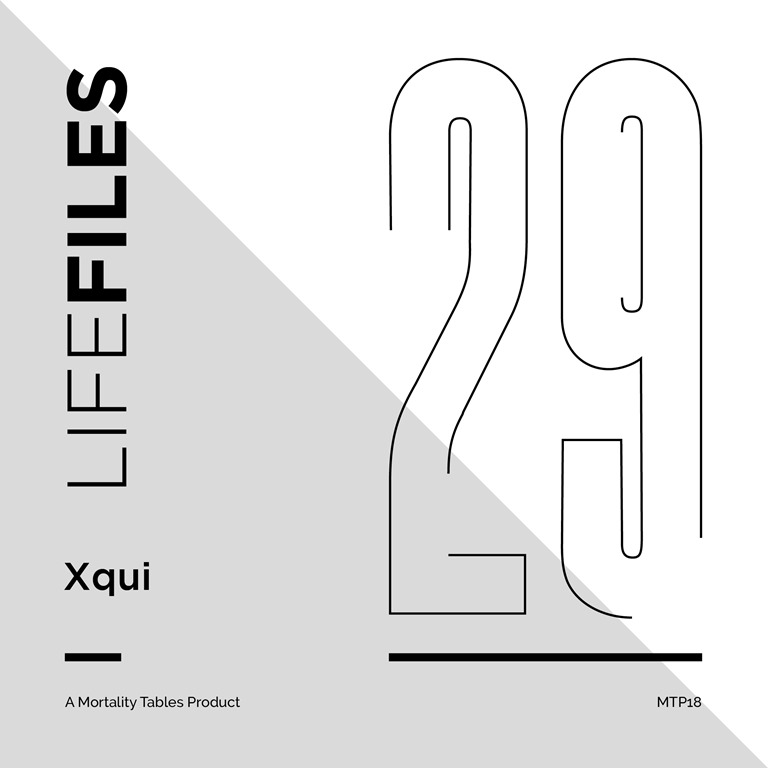
Just three weeks after the previous instalment in the extensive LIFEFILES project from Mortality Tables, now in its third season, comes what promises to be the final instalment for now. And all proceeds from this release will be paid to CALM – the Campaign Against Living Miserably. It seems fitting, given that life can often feel relentless, amped-up stress and bewilderment, and the LIFEFILES series has presented, over its duration, works which take the listener into audio representations of calmer environs. I write this as someone who has, in recent years, factored a daily walk into their routine, as much for the mental health benefits as for the physical exercise. A change of scenery, particularly in open spaces and away from crowds, can be a transformative experience.

The premise of the series, for anyone who hasn’t seen any of my previous coverage, is that the artist is given a field recording, captured by Mat Smith, who runs the label, to respond to in any way they feel appropriate. For this release, the accompanying notes record that the two tracks have been constructed using ‘Source recordings made by Mat Smith at Charing Cross Underground Station on 27 November 2021, as part of a Hidden London tour of disused areas of the station and areas not normally accessible by the public.’

In addition, there’s an excerpt from Smith’s journal, from the same date, which reads as follows: “…walked around the old station section of the Jubilee Line that isn’t used any longer, went into a construction tunnel underneath Trafalgar Square which had a bend in it to avoid the foundations of Nelson’s Column, and then finished up in a ventilation shaft above the Northern Line platform…”

Xqui’s treatment of the recording is interesting, taking the form of the ‘classic’ experimental work, the likes of which you’ll find on labels like Editions Mego, with a single longform track occupying each side. The first, ‘Charing Cross Underground’, captures the voice of what may be a tour guide, spun out in reverb and glitching echo, while trans rumble in the distance, before slowly melting into ambient abstraction. It’s like hearing the ghosts of the underground, rising up through the disused tunnels, calling out to the present to remind us of the past beneath our feet. There are flickers of chatter, as if, here in the present, we continue to talk without ever stopping to listen. Voices warp, slow, slur, distort, and it makes for an unsettling fifteen minutes.

‘Reverb Underground’ goes slower, more spacious, more echoey. I had half-expected something resembling a dub version, but instead, Xqui slows and stretches everything beyond recognition, creating a slow-motion blur, a crawling ambient drone. The sound simply hangs, dense, suffocating. Time stalls, and you find yourself floating, in suspense, in a fugue state, as the sound lifts free of context and embraces pure abstraction.

What Xqui manages to convey on this release is a sense of history, of space, of time, and the way we’re so busy rushing about in our daily lives that we never pause to contemplate the echoes of the past which exist, and linger all about us.

AA

cover

The final song in a trilogy of time-related experimental tracks, ‘Mnemosyne’ incorporates an original song – recorded in Mayfair Studios, London, in 1975 – into poetic musings, and haunting atmospherics, dwelling on nostalgia and false memory.

a0864877400_10

5th March 2025

Christopher Nosnibor

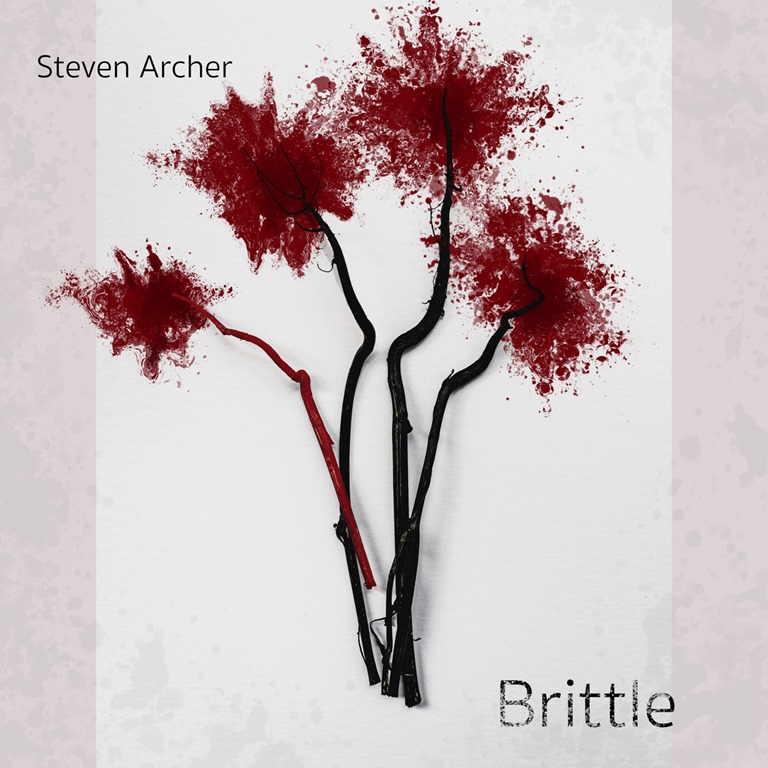
Steven Archer has been keeping busy: it’s barely three months since he landed the latest Stoneburner release, with its glorious Foetus-inspired cover art, not to mention a brace of EPs late last year, and a and lo, we have an album of steaming-hot brand new material. I often marvel at artists like this, who are so prolific. Do they even sleep? I do get that creativity is something that, more often than not, simply hits and you have to run with it, but…

Brittle is a twisted mix of all sorts. First and foremost, it’s an electronic album, and one which leans toward darker territories – not in an aggressive or overtly industrial way, but more given to brooding, introspection, haunting reflection and melancholia.

‘Our Past is a Wasteland’ is a track which transitions and evolves as it progresses: initially, it’s kinda smooth, a bit epic, sedate in in its musical form, with soft synths and mellow beats presenting a low-temp dance vibe, but along the way it begins to develop a darker, harder edge, gets a bit more Depeche Mode. The gentle drift of ‘Tenuous Place’ steps into expansive mode toward the end, exuding anguish and pangs of pain. ‘Only the Young Die Good’ is decidedly heavier: a droning organ gives way to a twitchy drum ‘n’ bass beat and serrated synths that saw deep into the psyche.

With its piano-led instrumentation and popping drums, ‘The Human Void’ is bleak and expansive, dark electropop rubbing and against drifting ambience with sinister industrial undercurrents as the backdrop to a vocal that switches from almost spoken word to hypnotic repetition. Elsewhere, ‘Tiger Longitues’ shares borders with the kind of smoky trip-hop of Portishead, only heavier, bassier, beatier.

The vocals on Brittle are heavily processed, and there’s a strong technogoth feel to the album as a whole. There’s something of a juxtaposition here, in that lyrically, emotional turmoil and troubling psychological situations are the main focus. Yet, in contrast to the intense and personal nexus of the words, the processed feel, which diminishes the human aspect of the vocal delivery, renders a clear separation. Perhaps this is a part of a necessary distancing: it’s certainly easier to manage challenging personal matters by creating layers of separation, and a deliberate detachment. ‘A Love Song for Monsters’ is exemplary: it’s a straight-up stomping banger, with robotix vocals and a slick production, but there’s so much more beneath the surface.

On the surface, Brittle sounds anything but: with sturdy beats and throbbing basslines, it’s a set which concentrates on delivering dark bangers. But however much we lay ourselves bare, we tend to need for there to be some kind of buffer, some space in between, in the interests of self-preservation. Most of us are more fragile, more delicate, more brittle, than we are comfortable to admit, even through the most forthright of art.

Brittle is uncomfortable, pulling in different directions, the undercurrent dragging against the main current on the surface. But the tension at its core is what renders it so compelling. Take in the tension, let it course through you.

AA

a4203216124_10

Gothic Rock / Darkwave act THE AWAKENING presents ‘Haunting’, the latest taster of their eponymous album, out now on vinyl, CD, digitally and various limited-edition formats via Intervention Arts. With a music video in classic black-and-white format, ‘Haunting’ follows ‘Mirror Midnight’, which has amassed over 1.1 million views, establishing The Awakening’s return to its dark roots.

Now US-based, The Awakening was formed in Johannesburg, South Africa in the late ’90s as the creative expression of vocalist, multi-instrumentalist and songwriter ASHTON NYTE, anointed as ‘Johannesburg’s Bowie’ for his widely varying musical styles and theatrical performances. He calls this single “a celebration of old-school Gothic Rock, with a suitable dose of Post-Punk swagger and a wink at the camera. It’s probably the most whimsical song on the album. I wanted the video to capture some campy Horror B-Movie goodness, and I am very happy with the result”.

You can witness the result here:

AA

402933

Dret Skivor – 7th February 2025

Christopher Nosnibor

I do like an album with a story. With Korset i Röjden by D L F, we get half a story, but one which builds a sense of mystique, enigma, a sort of allusion to local folklore, set out in the notes which accompany the release:

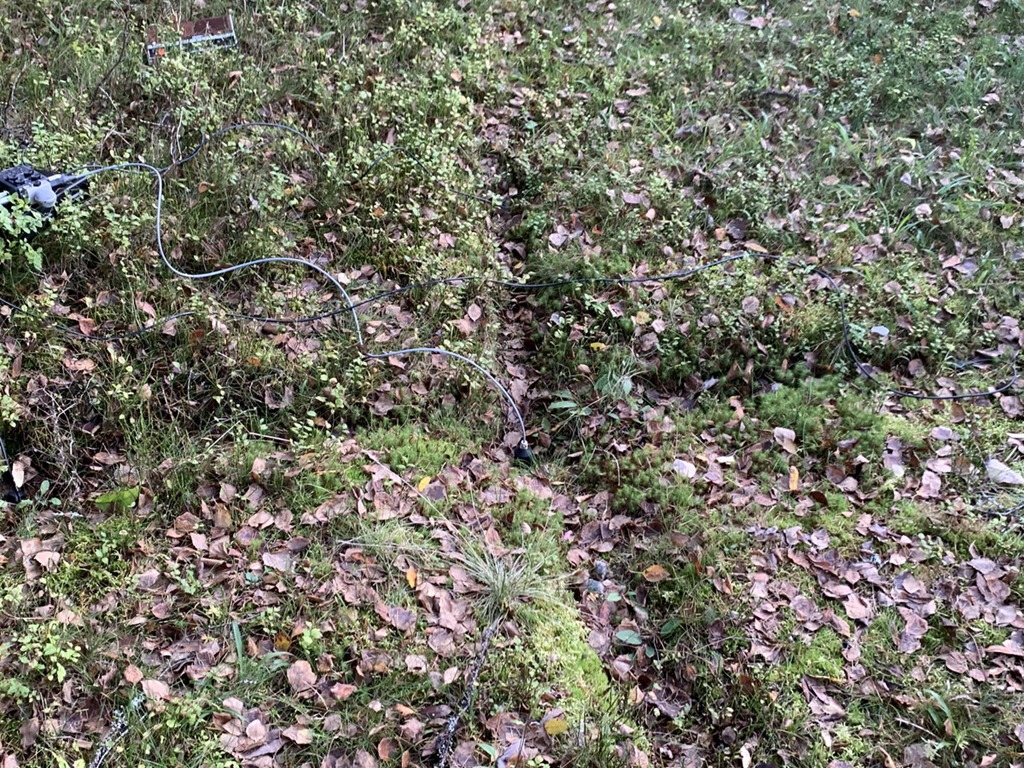
‘There’s a place in the forest, in the shape of a cross, where nothing grows. No one knows how it got there, or why.

60°33’48.6"N 12°39’15.6"E

The two recordings on Korset i Röjden capture sounds and vibrations in and around the cross. A geophone, a few contact mics, an H6, a smartphone, and a broken cassette recorder. Track two, ‘Den onda ska pressas ur’, features samples from a 1963 television documentary, an old Finnish lullaby, and taped interviews with locals from the 1990s.’

This has got it all: mythology, mystery, co-ordinates – a map, in other words – and the kit, the foundations for a sonic retake of The Blair Witch Project, perhaps. There is a strong sense of there being something hat isn’t right. Granted, I get that from simply breathing the air, from turning on the news – but this is quietly unsettling. Very quietly, in places: the first two minutes or so of ‘Korset’ are almost the sound of silence. Turn it up, and there is the sound of air, a soft breeze, perhaps, some kind of background noise. Insects? Footsteps? The rustle of leaves? Perhaps, but just as nothing grows in that unexplained cross marked in the forest, so it seems there is little sound. No birdsong, no… nothing. Has anyone ever run a metal detector over the sight? Considered digging?

I mention digging with caution. There is a wood close to where I live, a portion of which has been decimated in the last three years or so by dirt bikers who have turned the space into a track with jumps and ditches. It’s clearly not just the work of a couple of kids with spades: these are proper earthworks, excavations, the likes of which have involved adults turning up with mini-diggers. I once witnessed a woman challenging a family who had turned up with motorbikes who were revving around and scaring pedestrians and dog-walkers being met with aggressive verbal abuse. My email reporting the matter was of no consequence. Rather like this narrative detour.

‘Det onda ska pressas ur’ offers another ten minutes of haunting dark ambience – unsettling, disorientating. It rumbles and echoes around infinite subterranean corridors, leading to who knows where? There are sounds – possibly the pushing through undergrowth, possibly almost anything else. Wraiths whisper through the clicks and crackles, hums and pops… is that breathing or simply the breeze?

Korset i Röjden tells us nothing, other than that the world is a dark and unpredictable place. It’s a dark and unpredictable album. But it hints that we should fear, and fear the worst. There are dark forces all around, and while the insanity of the world right now is more than reason to take cover, it’s worth remembering that there are other things a play.

AA

a2167462165_10

26th November 2024

Christopher Nosnibor

Deborah Fialkiewicz has been keeping busy – as usual. Composer of contemporary classical, ambient, and dark noise works both as a solo artist and in various collaborative permutations and guises, she’s back with a new BLOOM release in collaboration with Daniel James Dolby. And it’s a Christmas single.

I’ve never been rabid about Christmas, and the last three years have seen a succession of difficult Christmases for me personally. In December 2021, my wife was diagnosed with stage 4 breast cancer. We weren’t even sure if she would be home for Christmas. She was, but was incredibly weak after three weeks in hospital, and that she was able to sit at the table for Christmas dinner felt like a miracle. We were in shock, and she was clearly unwell. Having made substantial improvements in rebuilding her strength through 2022, she deteriorated with the onset of winter, and again was weak and struggling over Christmas. It still doesn’t seem real that she only had another three weeks. And so Christmas 2023 was the first with just me and my daughter, aged twelve. We made the best of it, but it wasn’t the same. I detail this not for sympathy, but purely for context. It means that while around this time of year it becomes nigh on impossible to avoid festive fervour, with adverts depicting happy couples and radiant nuclear families, all the usual Christmas tunes and an inbox busting with new ones clamouring for coverage, and Facebook friends and work colleagues are dizzy with excitement over getting their decorations up, sorting secret Santa and planning social activities, I’m not feeling much enthusiasm, concerned primarily with getting through it and hoping distant relatives don’t think I’m rude or twatty for not sending cards out for the second year in succession.

When writing about music, I am often – and perhaps increasingly – aware that how we engage with it, how it affects us, is intensely personal and involves multitudinous factors. Sometimes, it’s something as arbitrary as the mood we’re in when we hear a song that will determine our response. And the chances are – and I’m no doubt not alone in this – hearing chirpy tunes when I’m down isn’t going to cheer me up, it’s going to really piss me off, or set me off. It’s impossible to predict. To be safe, I tend to try to avoid Christmas songs, which involves avoiding TV and radio – which is surprisingly easy if you spend large chunks of your time in a small room reviewing obscure music – avoiding shops – manageable – tacky pubs – easy – and ignore review requests for Christmas singles.

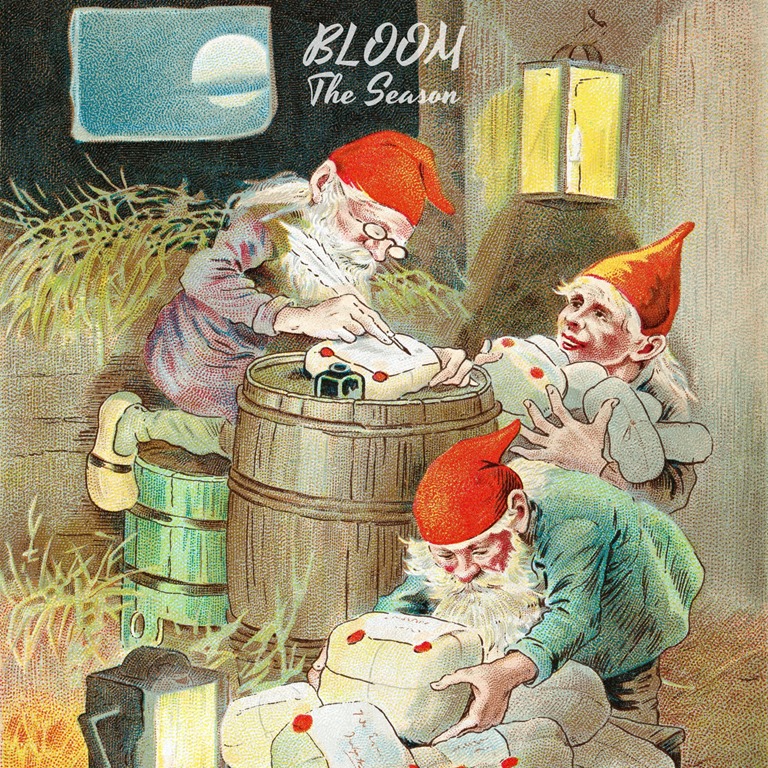
But there is always space for an exception, and Bloom’s ‘The Season’ is it. Deborah may have been posting pics on Facebook of the ‘festive mouse’ in the studio to mark this release, but said mouse is looking over a piece of kit called ‘Psychosis Lab’ made by Resonance Circuits. The cuddly cartoon cover art for this release is misleading, and for that, I am grateful.

It’s five minutes of deep, hefty beats melded to a throbbing industrial synth bass. Atop this thumping dance-orientated rhythm section, there are synths which bring a dark 80s synthpop vibe. In combination, the feel is in the vein of a dance remix of Depeche Mode circa ‘85 or ’86, around the point they began making the transition from bouncy pop toward altogether darker territories. It’s repetitive, hypnotic, pulsating, big on energy. But there are eerie whispers which drift through it all, distant wails like spirits rising from their graves. These haunting echoes are more evocative of Halloween than Christmas – and this is a significant part of the appeal. It’s a curious combination of ethereal mists and hefty, driving dance groove, which is simultaneously uplifting, tense, and enigmatic. It is not schmaltzy, cheesy, twee, or saccharine. It’s the season, alright. The season to be weird, to be unconventional, to accept those darker moods and remember that they will pass. It’s a Christmas anthem for those who aren’t feeling festive. And I will most certainly drink to that.

AA

a3458409831_10

Cruel Nature Records – 27th September 2024

Christopher Nosnibor

The scene of microlabels will always give you something absent from the mainstream. I mean it’ll give you many things, but I’m talking about variety. We live in the strangest of times. Postmodernism brought simultaneously the homogenisation of mainstream culture and the evermore extreme fragmentation of everything outside the mainstream. And example of that fragmentation is the existence of Cruel Nature Records, who operate by releasing albums digitally and on cassette in small quantities. Further, the second album by Deep Fade, is typical, released in an edition of forty copies. It’s better to know your audience and operate on a sustainable model of what you can realistically sell, of course, but do take a moment to digest the numbers and the margins and all the rest here. It’s clear that this is a label run for love rather than profit.

The sad aspect of this cultural fragmentation is that so much art worthy of a wider, if not mainstream, audience simply doesn’t get the opportunity. Not that Deep Fade have mainstream potential, by any means. As evidenced on the seven tracks – or eight, depending on format – tracks on Further, Deep Fade are just too weird and lo-fi for the mainstream to accommodate them. They simply don’t conform to a single genre, and with tracks running well over eight minutes and often running beyond the ten-minute mark, they’re not likely to receive much radio airplay either.

Opener ‘Tidal’ is exemplary. Somewhere during the course of its nine minutes it transitions from being minimal bedroom pop to glitchy computer bleepage to a devastating blast of messed-up noise. Yet through it all, Amanda Votta’s vocals remain calm and smooth as she breathily weaved her way through the sludge. The twelve-minute title track veers hard into wild Americana, a mess of country and blues and slide guitar, before tapering into fuzzed-out drone guitar reminiscent of latter-day Earth. Amidst trudging drone guitar, thick with distortion, it’s hard not to feel the lo-fi pull.

We’re immensely proud to present an exclusive premier of the video for the mighty ‘Tidal’:

AA

‘Surge’ arrives on a raw metallic blast before yielding to a spacious echo-soaked guitar drift and some dense, grating abstractions. Texture and detail are to the fore on this layered set of compositions are by no means easy to navigate.

As the band explain, ‘The album, influenced by Neil Young and Einstürzende Neubauten, was recorded across various locations including St. John’s, Providence, Liverpool, and Edinburgh. Environmental elements play a significant role, with guitars recorded during a nor’easter and vocals captured at lighthouses, incorporating natural sounds like wind and bird calls… Toronto’s Church of the Holy Trinity and the Cowboy Junkies’ The Trinity Sessions also influenced the album’s sound, adding to its atmospheric and melancholic feel.’

Atmospheric and melancholic it is, although many of the aforementioned touchstones aren’t easy to extrapolate from the mix. Nevertheless, and you feel your stomach enter a slow churn, which is exacerbated by the low-gear drones which sound like low-circling jets – there have been a lot of those lately and the air is filled with paranoia and mounting dread right now. Further, however not only provides a sonic landscape that matches this mood, but runs far deeper into the psyche.

The acoustic ‘Little Bird’ scratches and scrapes over a fret-buzzing acoustic guitar. The fifteen-minute ‘Heartword is simply a mammoth-length surge of everything, occasionally breaking down to piano and deep tectonic grinds.

It’s fitting that Deep Fade should call their second album Further, because this is where they take things. At times it’s terrifying and at times it’s immense.

The lyrics are as breathtaking as the crushing bass on ‘Wake Me’, and the sparse arrangement of closer ‘Fixed and Faded’, with its breathy, folky vocal and crunchy overdriven guitar which drones, echoes, and sculpts magnificent spares from feedback and sustain, brings a sense of finality and offers much to digest.

The digital version includes an additional track, another monumental epic in the form of the eleven-minute ‘Hawk’, a work of haunting, spectral acoustic country: it’s one hell of a bonus worthy of what is inarguably, one hell of an album.

AA

a1741881484_10

Christopher Nosnibor

Well, this one landed unexpectedly. It’s a welcome arrival, although taking a second hit of material from Uniform’s latest and quite possibly most brutal and challenging album to date does feel like an exercise in Masochism. It’s also a superb example of alternative marketing, landing this alternative version of American Standard less than a month after the album’s release, on digital and tape formats.

Context, from Uniform’s bandcamp: ‘A companion piece to American Standard, Nightmare City is essentially the same record devoid of the rock elements. By removing the presence of traditional instruments, the synths, lap steel, and pianos that sit beneath the surface of the proper album are allowed room to breathe and speak for themselves. The end result straddles the worlds of Basic Channel influenced dub, Tangerine Dream inspired soundscapes, and brutal death industrial.’

It’s a bold move, befitting of Uniform, a band who have relentlessly pushed themselves to explore ever-wider horizons, switching from their original drum-machine driven raw industrial noise to adopting live drumming, undertaking a number of collaborative projects with the likes of The Body and Boris, and especially befitting of this album, where Michael Berdan tore away the last vestiges of artistic separation to rip off his skin and purge the rawest emotions stemming from his dealing with Bulimia.

Nightmare City is another step towards stripping away the layers and presenting the naked self. ‘The bedrock of American Standard stands upon the Nightmare City. It’s not the happiest of all places, but understanding the landscape yields its own rewards,’ they write alongside the Bandcamp release.

One thing about being in a band – even if there are only two of you – is that there’s somewhere to hide, somewhere to transfer the focus. Hell, even performing solo, if there’s noise, there’s something take shelter behind. I’ve always thought that solo acoustic and spoken word performers were the bravest: there is simply no place to hide, and nothing to blur or mask any fuck-ups. Nightmare City isn’t quite solo acoustic, but it is seriously minimal.

Removing the ‘rock’ elements to reveal the bare bones of the songs shows the inner workings of Uniform, and they’re unexpected, to say the least. One would expect them to build up from the elements of drums bass, guitar. But this leads us on a different journey.

Punishing riffs and pulverising percussion, rather than supple layers and swirling instrumental ambience. As the band put it, ‘Although the finished product stands as a culmination of cohesive sounds, the individual threads that weave songs together often provide necessary nuance and exposition all of their own. Each isolated stem might be part of a greater story, but the whole cannot stand as intended without a complex series of seemingly disparate elements.’

Hearing the swirl of these ‘seemingly disparate elements’ feels like hearing the ghost in the machine, a haunting, eerie, ethereal echo, which barely seems to correspond with the structured framework of the final versions of the songs. One might almost consider this a palimpsest, an album beneath the album, submerged by process of layering and erasure. The tracks are – and I shouldn’t be surprised, but still I find I am – completely unrecognisable. Instead of being the punishing beast the album version is, ‘American Standard’ sounds more like one of the epic instrumental segments of recent SWANS works. There’s a muffled thud like a heartbeat on ‘This is Not a Prayer’ which possesses something of a womb-like quality, while ‘Clemency’ feels like a moment caught between heaven and hell, soundtracking the struggle of being pulled between the two in some purgatorial space as ceremonial drums hammer out a doomy passageway and spluttering vocals spew raw anguish.

In common with American Standard is the darkness which looms large, the tension, the suffocating gloom, the discomfort which dominates, and hearing this spectral echo of the album brings a fresh understanding and appreciation of the process and the depth of layering and everything that goes into their material. ‘Permanent Embrace’, too, sounds both like an ascent to the light and a sepulchral sigh, a funereal scene in which the grave suddenly opens like a sinkhole sucking everything down into the bowels of the earth.

Nightmare City is appropriately titled: it is a truly hellish, tortuous listening experience – but at the same time quite remarkable. Uniform, in their quest to do something different, to push themselves and in refusing to conform to genre conventions, continually find new ways to articulate the pain of the human condition.

AA

a1449843444_10