Posts Tagged ‘goth’

Christopher Nosnibor

Goths are the most knit-picking pedants and harshest critics of their favourite bands of any genre’s fans I know. Actually, that’s not quite true: fans of The Sisters of Mercy are the worst knit-picking pedants and harshest critics of their favourite bands. I preface this review with this observation as a Sisters fan first and foremost, and contestably as a goth second.

Y’see, most of the bands which emerged after that initial post-punk crop which included The Sisters, Siouxsie, The Cure, Bauhaus – disparate bands who have little in common sonically and stylistically beyond reverb, dyed hair, and studded belts – and sure, The March Violets, The Danse Society, UK Decay, and a handful of others, were toss. By the time ‘goth’ was formalised as a ‘genre’ it had gone to shit, mostly with every other band ripping off the guitar and bass for ‘Walk Away’ and diluting it to a pissweak rehash, and all too often with ghastly theatrical booming vocals. And they all started wearing waistcoats and frilly cuffs and appropriating ‘gothic’ imagery to boot. That was circa 86, by which time – that’s which time, not witch time – The Sisters and The Cure and Siouxsie had very much evolved, so we can probably as much blame The Mission for the start of the rather more naff second wave. By the 90s, derivative cack like Every New Dead Ghost was crawling out of the woodwork, amplifying the cliches on top of simply being laughably bad.

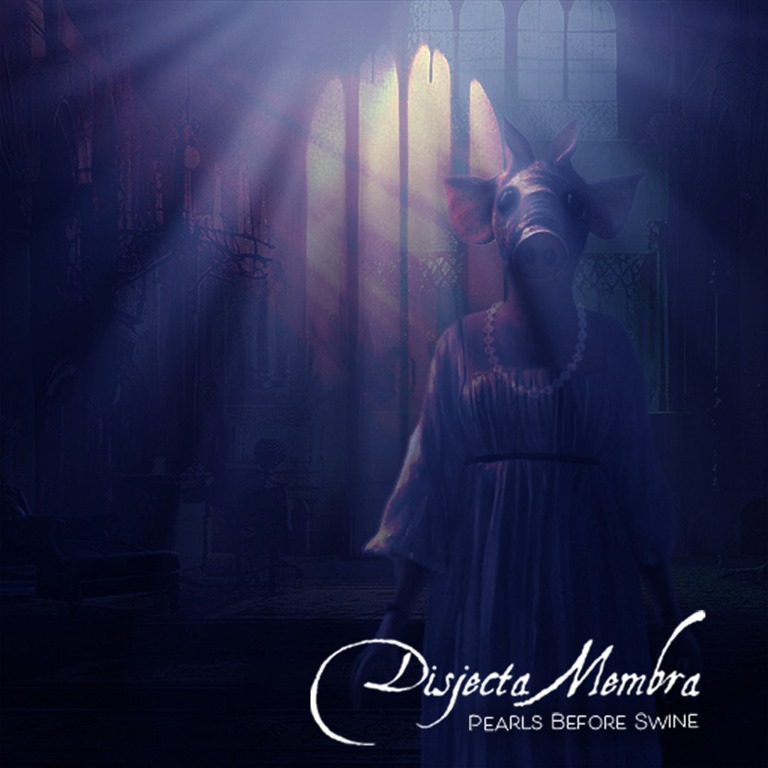
It so happens that Disjecta Membra have been going 30 years, emerging from that early 90s milieu of corny goth revivalism – presumably pining for 1985 and sobbing into their baggy sleeves when The Sisters went cock-rock with Vision Thing. This release is a career-spanning retrospective, which they’re giving away free on their Bandcamp. And this is the first I’ve heard of them.

I kinda wish it had stayed that way. It starts off with the single version of ‘Whakataurangi Ake’, which features Rob Thorne, and it’s a preposterous, pretentious semi-ambient new-age effort with over-the-top dramatic vocals. I mean, fair enough in that it draws on their New Zealand heritage, but it’s pretty obvious and cheesy as. And it’s all downhill from there.

‘Lilitu’ might actually be quite exciting if X-Mal Deutschland had never existed. But as it is, it might as well be a cover of ‘In Der Nacht.’ Talking of covers, there are a few here. And again, after The Sisters broke the ground of taking songs that didn’t obviously sit with the style – like ‘Jolene’, and disco faves ‘Gimme Gimme Gimme’, and Hot Chocolate’s ‘Emma’ and made it their schtick, every other goth band thereafter just had to toss in some quirky covers… and lo, we get a take on Boney M’s ‘Rasputin’ and covers of other goth bands, because they obviously add so much more. ‘Rasputin’ sounds like you’d imagine, of course: drum machine with a head-splitting snare and spindly guitars. It’s cack, but the worst thing is that it doesn’t really bring anything new and doesn’t even sound like it’s done vaguely ironically, meaning it’s neither cool nor funny.

And while we’re in the realms of cliche, what’s the obsession with marionettes in contemporary goth? ‘Antoinette Marionette’ is as obvious as it is lame as wordplay goes., and with its crashing snare and chilly synths and spindly guitars, the best that can be said for it is that it’s uptempo. I did kinda wish that ‘Skin Trade’ was a Duran Duran cover instead of the po-faced and predictable goth-by-numbers that it actually is.

Apparently, ‘Madeline! Madeline!’ and ‘Death by Discotheque’ are both good enough to warrant two versions on a thirteen-track compilation. They aren’t, and it suggests a lack of material of a quality to fill a single album over the course of thirty years. The latter, especially is a derivative disappointment, a stab at rambunctious goth-country in the vein of Fields of the Nephilim while attempting to create their own take on Suspiria’s ‘Allegedly, Dancefloor Tragedy’- one of the few decent songs to come out of the early 90s revival. This isn’t a patch on it, and just seems to think it’s amusing bashing cybergoths. I mean, they have a point, in that cybergoth was a ridiculous thing, but of all the audiences to alienate in their position.

The last track, ‘Walking in Light’ is quite interesting, marking a shift in tone towards droning guitar ambience, at least initially, but then it descends into a glam-infused rock stomp which turns out to be a cover anyway.

30 years, and this is the best they’ve got.

AA

a0980357481_10

Bin Liner records – 5th July 2024

Christopher Nosnibor

The band hailed by Louder Than War as ‘probably the Last Great Gothic Rock Band’ – Portsmouth based post-punk/goth band Torpedoes – return with their fourth album, Heaven’s Light Our Guide, six years after their previous outing, Black Museum (2018). To compensate for the time away, they’ve made it a twenty-track beast of a double-album, and when coupled with something of a transition in their sound towards something rather more keyboard-driven, it’s almost certainly their most ambitious release to date.

The album’s themes are pretty bleak, but no-one’s here for a party goth album, right? The press release is worth quoting for context: ‘Principal songwriter Ray (Razor) Fagan (Ex Red Letter Day) gives his take on the world we must all inhabit whether we like it or not. Lyrically the album focuses on largely dark themes from the destruction of the planet & corruption to bereavement and historic tragedies. Including a song inspired by a mass suicide in the town of Demmin, north of Berlin in May 1945. Over a thousand of Dremmin’s inhabitants, mostly women and children elected to commit suicide rather than face the advancing Russian troops….’

Hopefully, this sets the context, rather than torpedoing the mood – pun intended, of course.

Heaven’s Light Our Guide is by no means a concept album, or a work which focuses specifically on any one tone or theme, which would be difficult to sustain and likely difficult to listen to over such a duration: instead, the album is in many ways a pick ‘n’ mix from the smorgasbord of goth, in the way that The Cure’s Kiss Me Kiss Me Kiss Me offers contrasting elements of light and dark. These contrasts do make for a work that feels like it pulls in different directions at times – not nearly as schizophrenic as Kiss Me, but certainly the product of a band on a voyage of discovery.

‘Somekindaheaven’ kicks things off with a quintessentially gothy bass groove, that foot-to-the-floor, four-four thudding bass, and while it’s draped in cold synths, the guitars rip in just shy of a couple of minutes into its expansive six. There are some nagging gothy guitar breaks, too, and it presents balance between introspective and anthemic.

‘End of the World Party’ is far from a knees-up, but it’s a dreamy, wistful Curesque slice of jangling, indie which definitely sits at the poppier end of the goth spectrum. It’s fitting, inasmuch as it was The Cure who really broadened the spectrum of what is generally recognised as ‘goth’ – a term I really do struggle with despite principally identifying as such myself. Then, as many of the songs on here are more 90s grunge than goth, as ‘Idiot’ evidences perfectly.

‘Blue Sky (In the Rain)’ sits somewhere between Dinosaur Jr and REM, and in its execution ends up sounding not unlike later Red Lorry Yellow Lorry. None of this is a criticism: it’s a solid tune, and Heaven’s Light Our Guide has plenty of them.

There is a strong leaning towards that mid-late 80s alternative sound as showcased by the likes of The Rose of Avalanche and IRS-era Salvation. The fact that the latter toured extensively with The Alarm does give some indication of the more commercial sound which had evolved by this time, and hints at the tone of Heaven’s Light Our Guide. In the main, this is a highly accessible set of songs. But then they chuck in some really hefty darker-hued cuts along the way: ‘Made of Stone’ comes on like The Mission in their early years, but heavier and more fiery, and it’s by no means the only stomper in this vein here. The grungy ‘Your Democracy’ certainly brings the riffs on one of the album’s most blatantly political songs, which goes a bit Metallica, too.

The title track is different again, a sweeping post-rock instrumental sweep that really mellows things down, and it’s clear that Torpedoes really want to demonstrate their range and musical skills here. Takings its title from a novel by Dostoyevsky, ‘Notes from the Underground’ is another gritty slice of sociopolitical critique, which contrasts with the altogether folkier acoustic-based ‘Fear of Human Design’.

Despite its length, Heaven’s Light Our Guide manages to hold the attention: it’s varied and interesting enough to do so, but not so diverse as to feel unfocussed or messy. Perhaps an even greater feat is that it doesn’t feel like there are any filler tracks or any which it would have been beneficial to cut.

AA

Copy of HLOG Front Cover text black star (1)

22nd March 2024

Christopher Nosnibor

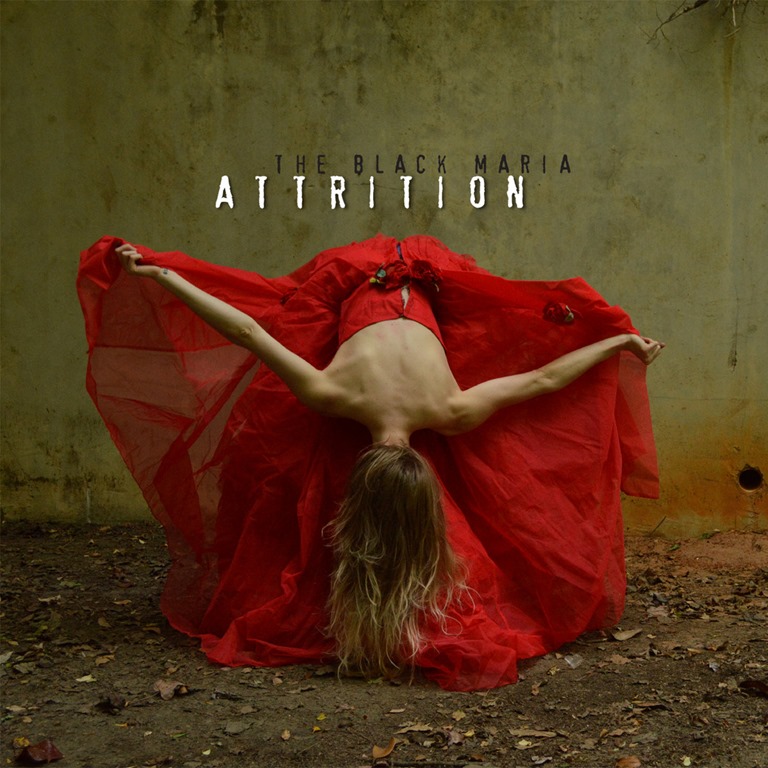
Everyone has a different way of processing, everyone’s cognition operates differently. It’s all a matter of experience and perception. The broader one’s experience, and also one’s exploration of art – in all media, be it books, music, visual art – the broader the network of intertext and references available. Formative experiences and interactions are also a significant factor in the way we come to shape and comprehend our world. And so it s that the moment I encounter the words ‘Black Maria’, my mind immediately leaps to ‘Afterhours’ by The Sisters of Mercy – my first encounter with the term, long before I would understand that it was a term for a police van. Attrition’s latest release certainly doesn’t elicit images of dark vehicles, but does hint at the seedy backstreet scenes that the Sisters song brings to mind, with its sense of disconnection, of being outside yourself, .the paranoid twitch of sleep deprivation

The album’s brief intro track, ‘The Promise’ is a murky ambient piece with hushed spoken-word vocals which is build a mood, a sense of dark atmosphere and foreboding. This intro track thins has really become a vogue in recent years, to the point that it’s becoming predictable and even frustrating to be presented with an atmospheric opening piece which probably isn’t particularly representative of the album it prefaces.

In the case of The Black Maria, it’s a fair primer for the wildly varied, even cacophonous blend of musicality which follows. ‘The Great Derailer’ brings operatic vocals and some bold technoindustrial grooves, before ‘The Switch’ gives us some techno-heavy goth with strong hints of Twitch-era Ministry woven into the mix. But once again, against the busy backdrop that alludes to the likes of PIG and KMFDM, there are ethereal moans and wails which drape themselves hauntingly. I’ve loosely reminded of some of the contributions Gitane DeMone made to Christian Death around the time of Ashes, or maybe Jarboe on Swans’ Children of God, but this is somehow different, and if anything, more difficult to assimilate.

Attrition bring a vast array of styles to the table for a start. ‘The Pillar II’ is exemplary: a low industrial throb brings a heavy tension, an unsettling uncertainty, which manifests as a discomfiture in the lower regions of the gut. But the wailing wordless vocals evoke tortured souls, wandering in purgatory. There are tense strings swelling and holding a tight grip, you find your chest tightening and it’s hard to swallow for this clench of tension. It evokes physical response: I feel my jaw clench and my breathing growing more laboured as the track builds layers of sound: there’s a hum that tortures the ears, and when it falls away, the sensation is strange, empty.

Music box melancholy prefaces more ultra-tense violins on ‘The Alibi’, which really takes a turn for the disturbing. The dual vocals grate against one another, dark sinister, deranged, almost schizophrenic in their whispers. The layers are busy and there are serpentine instrumental intrusions amidst the strolling piano and skittering strings and the wild cacophony of backing vocals: the effect is absolutely dizzying. The title track draws the album to a close with warping, time-bending synth dissonance and pulsating bass which contrasts with operatic quailing providing the backdrop to a growled, menacing spoken word vocal – and then it goes large near the end, with industrial-strength percussion cutting through the melee.

‘Spooky’ feels like such a weak, tame adjective in the main, but it’s the best I’ve got when it comes to summarising the otherworldly discomfit of the experience that is The Black Maria. But throughout The Black Maria, Attrition channel all of the dissociation and disconnection, and I’d challenge anyone to listen to this and keep their feet completely on the ground.

AA

a0847003042_10

10th May 2024

Christopher Nosnibor

Back in April 2020, writing on the release of their second album, Prepared for a Nightmare, I remarked that it had been four years since their debut, Observed in a Dream, and it had felt like an eternity. And here we are, a further four years on, and ‘A Foretold Ecstasy’ has landed as the prelude to album number three, due in the autumn.

Here, they’re straight in with that tight, solid rhythm section – a chunky bass with a hint of chorus to fatten it out while also giving it that classic spectral goth sound, melded to a relentless four-four metronomic thump, minimal cymbals, no flamboyant fills, just taut, a tense, rigid spine around which the body of the song grows. This, of course, is the foundation of that vintage gothy / post punk sound which originated with The Sisters of Mercy and, thanks largely to Craig Adams – who is arguably one of the greatest bassists of all time by virtue of his simple style of nailing a groove and just holding it down for the duration – carried on in The Mission. The Mish may lack some of the style and certainly the atmosphere and lyrical prowess of The Sisters, but the musical ingredients – and in particular that unflinching rhythm section – are fundamentally the same. And so it is that while the dominance of that thunking bass and bash-bash-bash snare may have become something of a formula, it’s hard to beat and absolutely defines the genre.

Mayflower Madame have always sat more toward The Mission end of the spectrum, whipping up songs which owe a certain debt to Wayne Hussey’s layered, cadent guitar style. But what they bring that’s unique is a swirly, psychedelic / shoegaze hue, a fuzzy swirl of texture and light. There’s a dark decadence, a lascivious richness to Mayflower Madame that accentuates the dramatic aspects of the gothiness: theatrical, flamboyant, but without being hammy or campy. And of course, Trond Fagernes’ vocals drift in an ocean of reverb, and the cumulative effect isn’t simply atmospheric: it carries you away on a sea of mesmeric sound.

With layers of synth which drift like mist across a production that balances dreaminess with a driving urgency, ‘A Foretold Ecstasy’ floats between haunting verses and surging choruses – and it’s hinting at their best work to date.

AA

5tqs_MayflowerMadame1photobyMiriamBrenne650--1

PHOTO CREDIT: MIRIAM BRENNE

15th March 2024

Christopher Nosnibor

While releasing a double-A-sided single is one option, in the digital age, releasing two singles simultaneously is also a viable option. It doesn’t coast any more, but does probably double the likelihood of scoring hits, and double hits equals double download potential. It’s the 2024 equivalent of releasing a single on multiple formats, only not nearly the pain in the arse collectors had to suffer in the 90s, heading down to the local record shop to bag the regular release on 7” and 12”, cassette and CD, and then again the following week for a limited edition format. Because back then, these strategies would have an impact on chart placings, and chart placings mattered, receiving airplay on the UK Top 40 on Radio 1on a Sunday evening, and the chance of further exposure on Top of the Pops. Now, if any fucker downloads your release, you’re doing well, because infinite streams may be something to plug but the revenue is not. Yay, fifty thousand streams… we earned 10p.

As usual, I digress.

Reviser are pitched as sitting alongside ‘classic 80’s bands such as Sisters of Mercy, The Cure, and Killing Joke, REVISER sounds complimentary to such contemporaries as Actors, Soft Kill, and Drab Majesty.’

So many contemporary acts align themselves to The Sisters of Mercy while offering but pale ghosts of imitation, and I find myself feeling deflated on a constant basis. Reviser do at least offer something, in the deep, grooves which likely come from baritone guitarist and vocalist Krysztof Nemeth, which shares some commonality without being a lame tribute-style rip-off. The baritone guitar is a rare and underrated instrument, showcased to strong effect by Leeds duo That Fucking Tank. Here, with its thicker tones, it manifests as a foot-to-the-floor low-end groove that clearly takes its cues from ‘Alice’ and choice cuts from First and Last and Always.

‘Burn it Out’ is synthy, but there are flickers of fractal guitar which float across a thunderous drum machine. Krysztof Nemeth – while not remotely ‘gothic’ in his vocal delivery, eschewing melodramatic baritone in favour of singing ‘straight’ brings further layers to the band’s evolving atmosphere. ‘Assassins’ again brings that solid 4/4 groove melded to relentless drum machine, reminiscent of ‘Lucretia, My Reflection’ (I’m thinking this is no accident), combining reverby guitar and wispy synths, finishing it all off with some processed vocals. It’s a bit post-Depeche Mode electrogoth, but the guitars provide texture and the songwriting and the delivery is on point, hitting the balance between that mechanised detachment and a the twitch of human heart.

This takes you back to the spirit of 83/84, when their forbears were knocking out black gold, and a single, at its best, was a tightly-packed statement of dark intent. These singles – taken together – deserve your attention.

AA

AA

255181

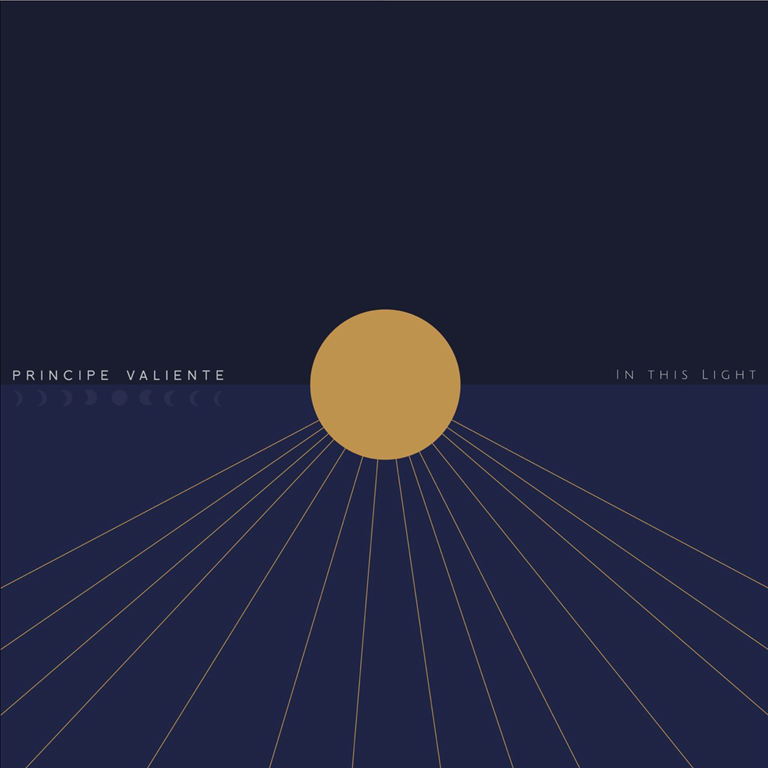
‘Inspired By Me’ is the second single to be taken from ‘In This Light’, the forthcoming fifth album by Swedish dark-pop act Principe Valiente. Marking a bold evolution in the group’s decade-plus journey, ten meticulously crafted new songs lay bare the signature ethereal soundscapes and dreamy ambient allure that initially propelled them onto the alternative scene with the release of their self-titled 2011 debut album.

’In This Light’ is a symphony of mellotrons, samplers and analog synths harmonising with the celestial resonance of Rickenbacker 12-string and Gretsch guitars played by Jimmy Ottosson, further enriched by melodic piano and distinctively distorted driving bass all enveloped in the enigmatic voice of singer Fernando Honorato.

‘Inspired By Me’ follows the new album’s introductory single, ‘Something New’, which signalled a shift in direction for the current duo line-up with its dream-pop approach.

Watch the video here:

AA

729e820211d3b87b30d1f2fae3ae96c11c4a0f4c

Seattle’s ‘turbowave’ pioneers, DUAL ANALOG just unveiled their new single, ‘Slave’. The song challenges perceptions and takes listeners on a journey through the complexities of desire and intimacy.

At first glance, "Slave" may seem to explore themes of S&M, but as with all things DUAL ANALOG, there’s more than meets the eye. The lyrics, cloaked in provocative imagery, actually delve into the realm of dissatisfaction and disappointment in sexual encounters, turning the traditional narrative on its head.

“We wanted to play with perceptions of sex and challenge our audience to think beyond the surface,” says vocalist Chip Roberts. “The S&M angle is like a lure, drawing listeners in, but once they dive deeper, they’ll discover the true essence of the song.”

With its pulsating beats, hypnotic melodies, and raw, emotive vocals, ‘Slave’ captures the essence of frustration and longing, painting a vivid picture of the complexities of human relationships. As with their previous releases, DUAL ANALOG delivers a sonic experience that transcends genres, blending elements of post-industrial, Neue Deutsche Härte, and aggrotech to create a sound that is uniquely their own.

Listen to ‘Slave’ here:

AA

4e444430-0e97-7c89-5b3a-601b1c017128

Distortion Productions – 8th March 2024

Christopher Nosnibor

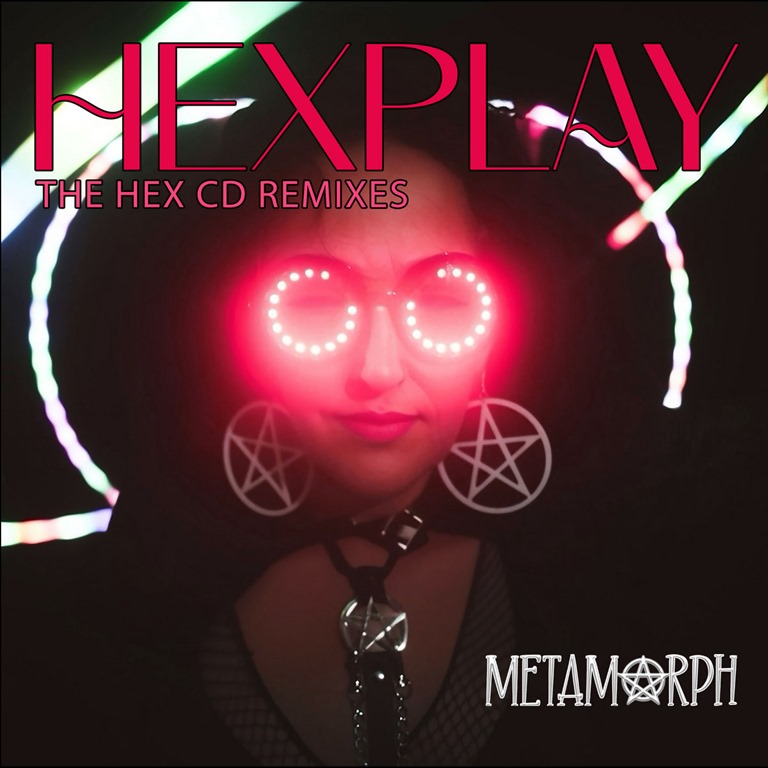
Metamorph have made their way onto these virtual pages a couple of times with previous single releases, most recently ‘Witchlit’ just over a year ago to the day as I write this. And, it turns out, this single was the very long lead-in for this long-player, which comprises seven new tracks which follow ‘Witchlit’, augmented by three remixes.

I’m going to park the remixes to save retreading territory that’s growing tedious and focus on the album proper, which kicks off in solid style with the pumping dark disco of ‘Veridia’ which blends surging dance pulsations with 90s enigma music and a dash of eastern mysticism to conjure a compelling hybrid or esoteric origins that lands with a dancefloor-friendly immediacy and energetic beat and throbbing bassline – and packs it all into just two pumping minutes.

There’s a lot to be said for starting an album strong and going straight in and hitting hard over the slow-build, and in today’s attention-deprived climate, it really does seem like the way to go – and Metamorph nail it here. They want your attention, and they’re bold about it.

‘Witchlit’ is up next, and it’s perfectly placed as a shimmering slice of dark electropop, sultry but lively, like Siouxsie gone electro. This is Metapmorph at their best – haunting, gothy, a little bit twisted. The title track crashes in next, bursting with flamboyant Europop vibes counterbalanced by darker shades – and once again, they pack it all into two and a half minutes.

Casting an eye down the tracklist, the majority of the songs on HEX are under three minutes in duration, and the album showcases a real economy of songwriting – no expansive mid-sections, no extravagant solos. They really do keep it tight.

‘Woo Woo’ is perhaps the album’s weakest track , not only with its mundane lyrics – ‘I won’t lie / I’m gonna get real high’ and unimaginative efforts to be sexy – but its wholesale immersion in commercial pop stylings. It feels like a stab at mainstream accessibility which is beneath them and isn’t particularly successful; in contrast, the mid-tempo brooder, ‘Raining Roses’ is brimming with dark, doomed romanticism , and ‘Broken Dolly’ borders on industrial and steps over the edge into a darker shade of darkness. ‘Wasteland Witch’ is well placed, a glammy industrial stomper that pumps up the tempo just when it’s all getting a bit dark and moody.

‘Whore Spider’, the last album track proper, could reasonably describes as an electropop anthem – mid-tempo, building, and unexpectedly hooky, while unexpectedly bringing back the wild woodwind. You can almost smell the incense as it spirals thickly to its finale.

AA

a0251618540_10

Christopher Nosnibor

Their bio tells us that ‘Pythies is a witchy grunge band from Paris (France), created by Lise.L.’ it was late in 2022 that Lise began to evolve the concept for a new, all-female musical project, in the vein of (L7, 7 year bitch, Babes in Toyland, Hole), the twistr being that it would incorporate her taste for witchcraft. You’d think this was pretty niche, but proving the theory expounded in Warren Ellis’ novel Crooked Little Vein – a brilliant book by an author who’s since turned out to be just another white male shithead and therefore probably best sidestepped, although he’s at least disappeared from the public eye following his exposure – if it exists it’s on the Internet, and sure enough, withing a few months, Lise had joined forces with guitar player Thérèse La Garce and drummer Anna B. Void, and lo, Pythies was born.

Thank fuck for the internet and social media. They may be a cesspit of angry people shouting the worst insults and a truly horrible place at times, but let it be remembered it can often be a conduit for good.

‘Eclipse’ is proof positive.

It’s a strong, guitar-driven grunge-orientated song with a darkly seductive gothy tinge to it, calling to mind Gitane Demone era Christian Death.

Amidst images of cards and tarot and esoteric mysticism, there are more direct lines which are very much more of the flesh:

Something

Is swelling

My hands

Are sweating

The vocal delivery is simultaneously sultry and dangerous, hinting at desire but also darkness, as Lise delivers the hook of ‘IwantitIwantitIwantitIwantit….’

What is it she wants? Probably nothing you’ve got to offer, fuckface. The video abounds with lollipop sucking and lascivious woman-on-woman rubbing, boozing, and BDSM, which will no doubt get a lot of blokes in a lather, but make no mistake, this is about female power and self-possession – and it’s absolutely killer.

AA

Pythies image 2

Pythies Artwork

Malmö’s MISSILES have released a new single, ‘Living In A Nuclear Town’, from their upcoming album Weaponize Tomorrow (10th May 2024).

MISSILES explains the backgrounds of the new single, out today on Svart Records:

“’Living in a Nuclear’ Town was one of the last – if not the last – song to be finished before we started the recording process. It’s also one of the tracks that was finished first and saw few changes whilst others got a good beating. Lyrically, the song deals with the rough realities, both the ones reported and seen as well as the ongoing hidden waiting to happen”.

The members of MISSILES are no new kids on the block. Coming from punk, rock, and metal, as well as surf and rather diverse backgrounds, they all answered to the call of their good friend Gabriel Forslund – sincerely interested in doing something new and exciting together. The band’s trajectory began with a 7" single released by the Swedish label Fetish in 2016. Initially viewed as a project, MISSILES have organically evolved into a fully dedicated band with a laser-guided focus, causing shock waves in the underground with their jet-fuel genre-clash. Combining abandoned sounds with new inventions on Weaponize Tomorrow, MISSILES promises to both pat you on the head and stab you in the back, delivering a unique blend of post-punk with a touch of goth rock.

Listen to ‘Living in a Nuclear Town’ here:

AA

MISSILES claim their debut is a one-of-a-kind album, truly a loved bastard. Weaponize Tomorrow will appeal to those who enjoyed the certain “je ne sais quoi” found in the New Wave movement, a line of thought that is liberating to hear today when artists go to the bank with a genre description. MISSILES couldn’t be bothered; it’s rock, it’s pop, it’s punk, it’s je ne sais quoi. Hard to pin down, but undeniable to freak out to, Weaponize Tomorrow is a high yield blast wave that will leave MISSILES hot on the tongues of those looking for a sudden and dramatic, incendiary kick. A gut smashing future shock that will resonate across diverse musical landscapes, Weaponize Tomorrow will be the perfect atomic cocktail for fans of Wipers, Dead Moon, The Birthday Party, The Gun Club and even modern iconoclasts Molchat Doma and Beastmilk.

imHbKg8g

Pic: Thomas H Johnsson