Posts Tagged ‘Experimental’

Karlrecords – KR024 – 15th July 2016

Edward S. Robinson

How I hadn’t encountered the work of Iannis Xenakis previously, I will never know. Nevertheless, it was at the 2016 European Beat Studies Network conference that I first saw – and then heard – examples of his work, courtesy of Antonio Bonome in his talk on ‘Polytopy and Burroughs’ Coordinate Points’. The crazy, three-dimensional graphs, or polytopes, which accompanied Metastasis were utterly mind-bending. Given that I’m neither a musician nor a mathematician, they didn’t mean a great deal to me, but as visual pieces, they were stunning. Conceptually, Xenakis’ fusing of two disciplines, music and architecture, breaks new ground in itself, with the combination of architecture and music translating to the architecture of music. And then Bonome played the sounds these images represented. Huge, extended, quivering, brain-draining walls of sound. Powerful, immense, they seemingly took solid physical form. This was truly something.

La Legende d’Eer was composed in 1977 and 1978, when Xenakis was in the midst of his far-reaching explorations of mythology and philosophy. La Legende d’Eer is another of Xenakis’ monumental polytopes, and was created to mark the opening of the Pompidou Centre in 1978. While previous editions have presented the music as a single track and across different releases, featuring an array of errors, this latest reissue from Karlrecords (which makes the work available on vinyl and download for the first time), uses the eight track version Xenakis himself presented at Darmstädter in 1978.

La Legende d’Eer represents one of Xenakis’ most renowned and celebrated electroacoustic compositions, and is a challenging work to sat the least. Not being musically minded in the compositional sense, or scientifically minded in the sense of the technicalities of the mechanics and frequencies and all that jazz, I’m perhaps rather ill-equipped to respond to the fullness of Xnenakis’ objectives and achievements. As such, this is less of an academic analysis and more of a straightforward review, and pulled more from the gut than drawn from anywhere else. However, this is sound which elicits a cerebral, emotional and physical response first and foremost. This is extreme music, which many would likely dispute even constitutes music, and a similarly extreme response is surely a natural one.

Those who are wired to actually derive enjoyment from it are likely a very small minority, but one I happen to belong to. The eight tracks segue together, and begins as a series of trilling whistles of feedback, building into a screeding, shrill mesh of treble, howling drones and pained hums that bow, bend and scrape. If sounds reminiscent of Whitehouse (the resemblance of ‘Wriggle Like a Fucking Eel’ to moments on track seven is remarkable, but then the twittering, jittering top-end noises Xenakis creates are also very like those which make up the majority of the Great White Death album) and the entirety of the careers of Merzbow and Kenji Siratori can be heard, then La Legende d’Eer marks the foundation stone of power electronics and noise. Amidst the earthwork rumbles and the buzzing swarms of hornets and the atomic detonations, shrieks, rattles and crashed are churned together to form a huge, excruciating aural assault.

Acute listening reveals complex internal polyrhythms of the sonic vibrations as they bounce together and against one another. And as the tones and velocity of the sounds shift, so the rhythms change. Indeed, La Ledenge d’Eer is a work in which sound is in perpetual flux. Bleeping arcade game sounds bubble from a tidal wave of noise which resembles a landfill sit’s worth of tin cans, blooping laser modulations surge and swell before devouring themselves and being carried away in an avalanche of static and pink noise. Extraneous jazz honks through a kaleidoscope of sparkling circuitry and low-end interference. In short, there’s a lot going on, and what goes on changes over the course of the piece(s).

It’s a three-dimensional attack on the senses, designed to inflict maximum disorientation and temporal dislocation. And it succeeds. It will necessarily and inevitably twist the psyche and create an almost indefinable sense of discomfort, and it doesn’t require a mathematical equation to calculate the unsettling effects of the sound on the listener. 38 years after its composition and it’s still an astounding and quite devastating work.

 

Iannis Xenakis - La Legende d'Eer

2nd September 2016

Christopher Nosnibor

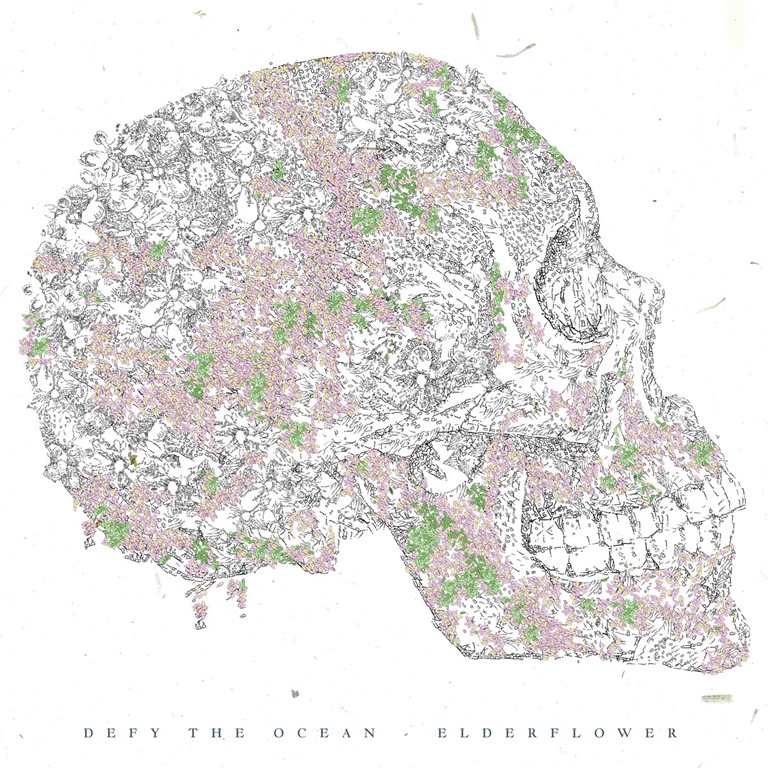
With seven tracks and a running time in excess of half an hour, it’s one hell of an EP. ‘Elderflower’ is also a whole lot more than the prescriptive ‘post-rock’ tag attached to the duo. Much as I appreciate labelling as much as the next time-pressed music journo struggling to place a band and clutching for pointers for pitching a band in a review, and much as I like a lot of what slots into the post-rock bracket, Defy the Ocean are a band who create music that simply cannot be readily classified on their expansive and accomplished new release.

For a start, it’s more rock than post rock. It’s pretty loud. It’s pretty heavy. There are a lot of vocals. None of these are bad things, and ‘Elderflower’ is a work of depth, range and power. From the get-go, they demonstrate a knack for shifting between segments and moods with real panche, dragging the listener along with them: ‘Rest’, the first track may only clock in at two minutes and fifty-five, but it’s got more twists and turns and ideas and emotional range than some bands’ entire albums.

‘Veils’ is restrained, darkly atmospheric, moody and is perhaps the most post-rock track of the set. But it’s got a bleak, metallic edge that also tips a nod to the mid 90s alternative rock sound.

The title track breaks into full-on grunge mode, the quiet / loud dynamic and brooding atmosphere more Alice in Chains and Soundgarden than I Like Trains, and the crushing power chords are thick and heavy, and paired with a drawling vocal delivery, it calls to mind Melvins – the mellow piano breakdown notwithstanding. ‘Brine’ is serpentine, stripped back, and provides a distinct contrast with its chiming guitars which does call to mind I Like Trains – but then again, the burst of powerchords, distorted vocal and full driving climax, alludes to millennial progressive acts like Oceansize, Amplifier, Porcupine Tree, Anathema, and if anything, ‘Vessel’ amalgamates neoprog with the desert rock vibe of Queens of the Stone Age and their ilk. There’s a lot going on here, and it’s all well-assembled and musically articulate.

Everything about ‘Elderflower’ points to a band who aren’t confined to any one format or bank of instruments, which makes for a refreshingly varied collection of songs, and one which demands repeated listening in order to reveal its full richness.


Defy the Ocean EP

Twin Paradox – TPR003

Christopher Nosnibor

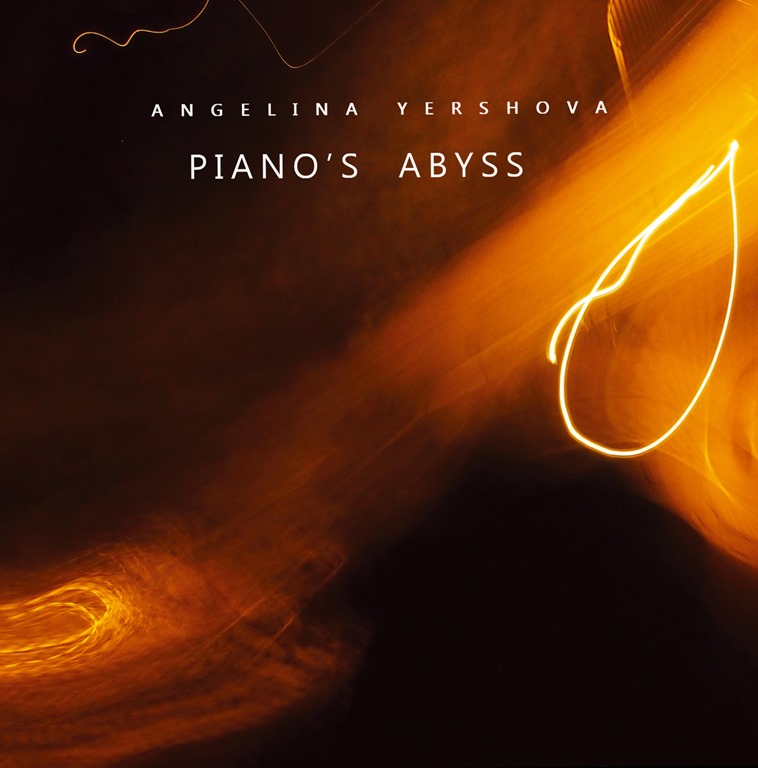
You might be forgiven for thinking that everything that could possibly be done with a piano has been done. Played, played harder, played drunk like a percussion instrument until the fingers begin to bleed a bit, stood on, worked from the inside, dropped from a high window, freewheeled down stairs, digitised and manipulated in every conceivable way by digital and analogue means, prepared, choked, treated, mistreated in every way imaginable. And then along comes composer, pianist, producer, sound artist and improviser Angelina Yershova. Classically trained, and with a degree in Electronic Music from Conservatory of S. Cecilia in Rome, she’s discovered a ne avenue of exploration for this timeless instrument.

Piano’s Abyss is described as ‘a vertical and progressive immersion within the “abyss” is the piano, an exploration of the expressive soul of the instrument through electronic synthesis, towards the discovery of an evocative and mysterious world that is exclusively constitutes by the drone of the piano.’ Who knew the piano droned? After hearing this album, there can be no doubt as to the claim. Like a micro-camera inserted into the body, or a deep-sea exploration, the audio reveals a slow suspension of ever-shifting sound, deep and low.

Yershova’s studies have been extensive, focusing on the vibrations of the strings, the instrument’s resonances, the mechanical noises of the hammers – the mechanics and inner workings of the piano, in other words – and these hidden aspects of the sound have been manipulated, processed and accentuated, amplified and extended. The results are fascinating and unexpected.

Up above, on the surface, notes recognisable as those of a piano can be heard, clear, but distant and quiet. They resonate and slowly fade into the rumble. The soft tinkling compositions are washed with a liquid tone which envelopes it. Delicate harmonies drift gently – the piano playing itself is beautiful, but the listener’s appreciation and understanding is altered through the alternative vantage point, which places the background sound in the foreground and vice versa. Spurs of sound grate and scrape while strings pinkle amidst a rumbling swell of sound akin to distant thunder or a strong wind funnelling down a bleak valley in winter. The piano sighs, it moans quietly. It breathes, long, elongated breaths. It drones. This is music with a cellular, atomic feel. Hear this album, and the piano will never sound quite the same again.


Angelina Yershova – Pianos Abyss

Frozen Light – FZL 041

James Wells

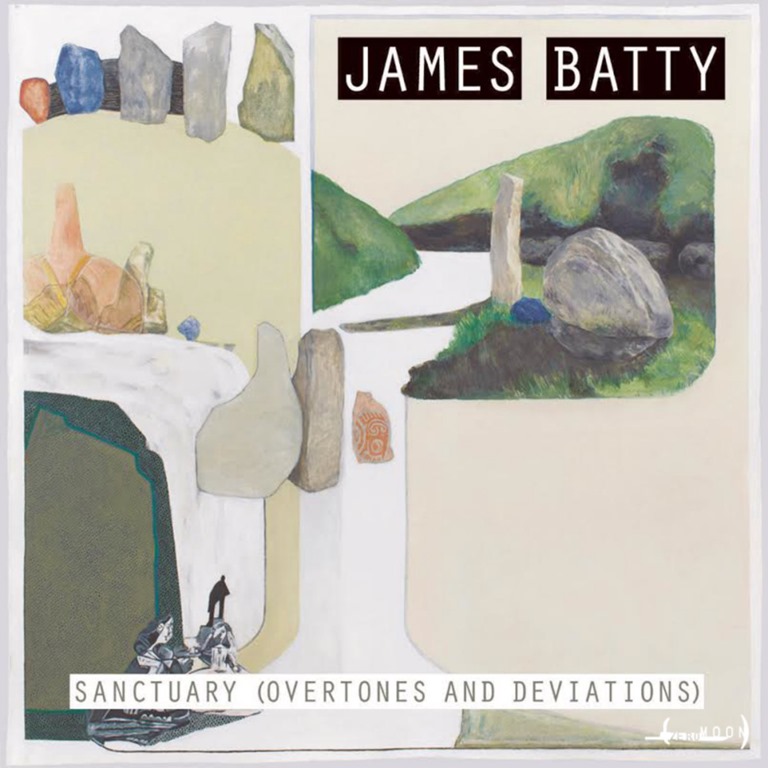
There’s something mildly irksome about the phrase ‘tickling the ivories’. It’s perhaps a strange personal quirk, but perhaps it’s the louche thespy associations of the phrase which are so bothersome. There’s also the fact that the phrase really fails to convey what’s truly involved in the act of playing the piano. Well, that’s usually the case. But much of the music on Sanctuary sounds very much like the tickling of ivories. Often quiet, delicate, light, tentative and experimental piano notes flit here and there, forming irregular patterns in the air. There are passages of haunting melody, with wavering drones quivering tremulously. There are also scraping strings, trilling woodwind and stomping elephantine rhythms passing through the protracted periods of hush. But first and foremost, it’s about the ivories, and there’s nothing remotely irksome about it.


James Batty - Overtones

SOFA551 – 22nd July 2016

Christopher Nosnibor

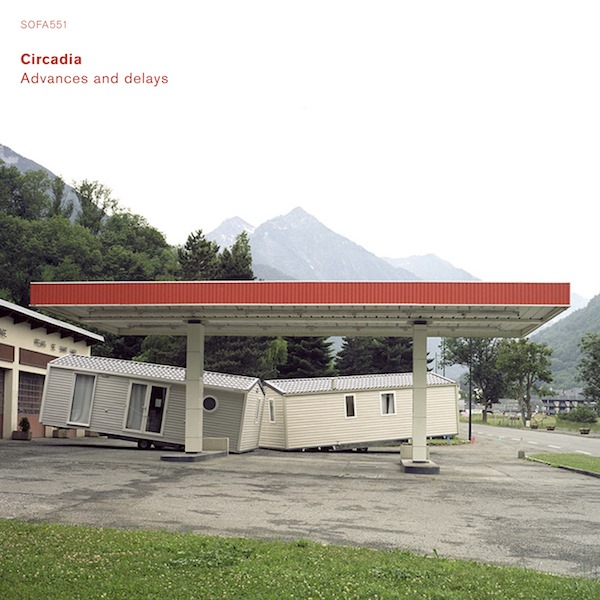
This two-track album by a collective who suggest they ‘might be your favourite new experimental psych-impro-folk band’ is housed in a spectacularly nondescript cover. Nondescript, yet also bizarre: a pair of cabins, on wheels as though for towing, at a garage in the middle of nowhere. Rugged mountains lie in the back. What does it mean? What is it saying? The absence of any people or any sense of movement is also a factor in what makes this image so striking in its plainness. There’s a sterility about it.

This is carried through into the title of both the album and the tracks. ‘The Animal Enters and Traverses the Light’ has an air of clinicality. The sounds themselves are more of nature, yet somehow in keeping: the jangling chimes and gently thrumming rhythms would sit comfortably on the soundtrack of a nature documentary. However, as the track progresses, picked guitar strings begin to build in volume and urgency, achieving a sustained multitonal throb by the twenty-four minute track’s mid-point which gradually gives way to deliberate low-end drone, beneath which crackling burrs rattle a twitchy percussion. The musicality of a strummed acoustic guitar, however irregular and however dissonant the chords, sounds almost incongruous against the rumble which slowly fades. The shifts are gradual but definite.

‘The Human Volunteers Were Kept in Isolation’ begins subtly, a single hum, before picked guitar notes and harmonics creep in by stealth. Gentle acoustic washes glide over supple, delicate percussion.  It’s pensive and understated, and creates an atmosphere that’s hard to define, and a sound more focused on texture and tone than rigid structures. There is melody, but it’s subtle, and there is movement, but it’s not necessarily overtly linear. But to return to the question posed earlier, what does it mean?  More interesting than the cover art is the fact that this superficially conventional line-up of two guitars, bass and drums, creates such unconventional music. But this is the work of David Stackenäs, Kim Myhr, Joe Williamson and Tony Buck of the widely-acclaimed The Necks. It was never going to be straightforward. And does there have to be an extrinsic meaning? Sometimes, the exploration of sound is enough.

Circadia – Advances and Delays

Veals & Geeks Records – 017 / Les Disques en Rotin Reunis – LDRR#056– 16th August 2016

Christopher Nosnibor

Oh yes. Now this is something. How have I not been listening to these guys for all the years they’ve been in existence? A three-way collision between Arnaud Maguet, Vincent Epplay and Fred Bigot, they promise ‘a majestic blend of Krautrock, Thomas Pynchon, Pataphysics, a rhythm box, abuse and Persephone. On Drei Dre Drei, they deliver all of this and a whole lot more.

‘Prima Belladonna’ raises the curtain with a grand, swirling flourish, a galactically vast slow-turning cyclone of sound. From it emerges the album’s first motoric masterpiece in the form of the relentless thump of ‘Disappear in Amerika’. With a drum machine sound lifted straight outta 1978 and a drawling vocal, it’s like Kraftwerk fronted by Mark E Smith covering Cabaret Voltaire’s ‘Nag Nag Nag’ – only even better and more audacious in its locked-down groove and swirling synth drones. And it gets better still: there’s a Dr Mix and the Remix vibe about the dubby ‘New Diamond day’, as whipcracking synthetic snare drum sounds reverberate in a sea of echo in the company of woozy drones and a slow, swampy, spaced-out bass.

The minimalist robotic groove builds a piston-pumping pace on ‘Je Plaure une Lotte’, the dalek-like vocal bringing another element of dislocation to the already disjointed party. The album’s second extended motoric workout, ‘Bongo Bongo Bongo’ is a magnificent counterpart to ‘Disappear in Amerika’, being another Fallesque behemoth that grinds a more overly electro, bass-led groove for well over eight minutes. A trilling organ pipes around the top end while the vocals, rhythmic and repetitive, blur in a wash of reverb. The effect is hypnotic.

While building on well-established forms, Drei Drei Drei revels in anarchic experimentalism, incorporating cut-up sound collages and pan-cultural infusions throughout, giving it a unique flavour. Balancing weirdness and surreal avant-gardism and a mischievous sense of humour with a keen sense of rhythm and groove, it’s intelligently assembled. But best of all, you can get down to it. CAN you dig it? Neu bet!

Bader Motor - Drei Drei Drei

Sub Rosa

Christopher Nosnibor

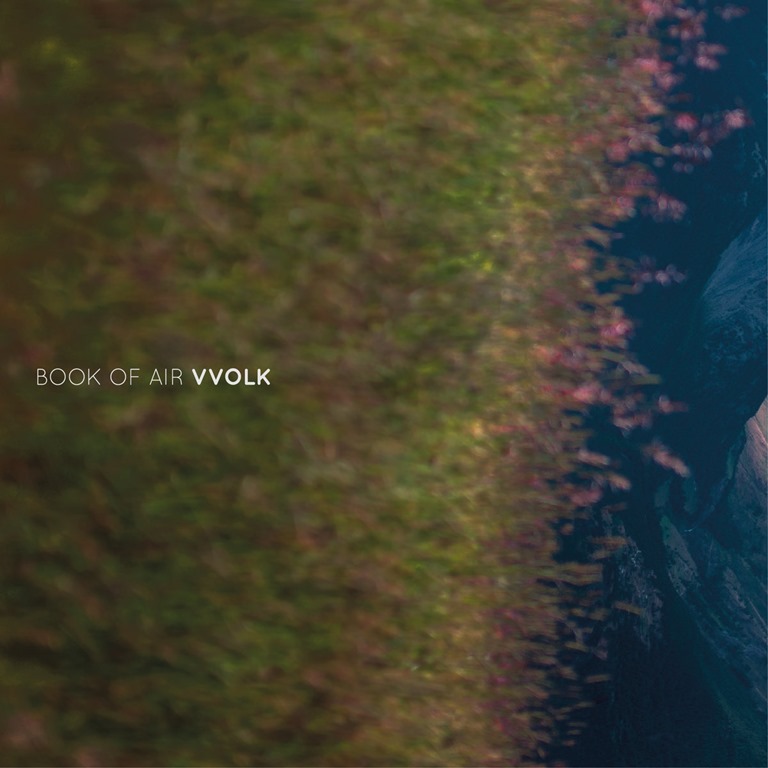
It’s not entirely clear, but it appears that Book of Air is a series of album releases with different collectives interpreting it differently, with VVOLK being the second collective after Fieldtone who released a Book of Air album in 2015. But perhaps given the nature of the project, identity is something which is of little to no consequence, names mere markers for marketing purposes. This is, after all, very much music where its origins and its makers are not only interchangeable and very much in the background but largely invisible – as is the music itself. This is a project about the listener, about perception, and about intangibles.

While I must confess that I’m unfamiliar with the concept of ‘bundled compositions’, I can readily grasp the concept of an album comprising four pieces performed by some eighteen improvisational players with musical roots in jazz and classical. Their collective objective is to investigate and interrogate improvisation in close relation to present time, asking the questions ‘what are the possibilities in playing music, when changes in the music pass unnoticed?’ and ‘how does our hearing and memory react to these slow changes?’ The album’s concept, then, is based around making music which is perceived less in the present time, ‘but rather occurs in our memory of the past’. As such, the album’s form pieces (spanning four sides of vinyl, and mastered as just two tracks of approximately twenty-five minutes apiece in duration on the CD) are built around slow notes and the compositions evolve at an evolutionary pace and are based around the gradual transition of the seasons, with the first track ‘Lente > Zomer’ giving way to ‘Herfst > Winter’.

Some time around the fifteen-minute mark during ‘Lente > Zomer’ I realise there are slow cymbal splashes washing over the gradual turning drone that forms the track’s foundation. Gradually, so gradually, the sound swells and grows in volume and resonance. Guitar notes flicker in the slow-turning sonic mass and imperceptibly, darkness turns to hint towards light. The two tracks segue together, with ‘Herfst > Winter’ beginning as a light, delicate undulation which draws out time itself as the notes interweave like starlight from distant galaxies making their way through space to be seen by human eyes millions of years later. The images of ice-capped mountains inside the album’s gatefold are appropriate: time move at a pace akin to that at which mountain ranges change. Such things are also relative: while the Himalayas continue to rise as the Indian tectonic plate continues to drift and buckle against the Eurasian, the Appalachians are slowly eroding. The analogy extends to the arrangements, which explore in painstaking detail the way sounds interact and reverberate against one another. And it all happens a truly glacial pace

‘Herfst > Winter’ tapers to a sparse dissonance around the sixteen-minute mark, simmering down to a hushed yet insistent throbbing tone, a frequency that nags at the nerves despite being soft-edged and gentle. The instrumentation is delicate and understated to the point that this is not an album one really listens to, but simply allows to wash over oneself and to form an almost subliminal listening experience.

Such sparse sound arrangements demand considerable restraint for so many musicians, and the collective result in many respects is one of subtraction. And yet, this is by no means a negative assessment. The music’s presence increases after the slow fade to silence.

VVOLK

Perpetual Motion Studios

James Wells

The backstory is one I can relate to: Dominic Franciso, aka the brilliantly-named Space Monkey Death Sequence recounts how at the age of twelve he decided to fight sleep and watch more TV, with his channel-surfing landing him at the start of an episode of The Twilight Zone. The episode in question, ‘People Are Alike All Over’ stuck with him, but on revisiting it a decade later, the experience wasn’t the same – although this particular episode out of all of those he watched, resonated in a peculiar way.

I’ve long maintained that sleep is the enemy and is for wimps, and in this line of work, I find I’m not so much nocturnal as around the clock. Granted, I spent most of my teenage years watching weird shit, bad sitcoms, and late-night Channel 4 in the hope of something with nudity rather than The Twilight Zone, but I certainly get how these formative experiences are integral to a person’s development, and how returning to those experiences of youth will inevitably bring forth a range of emotions and that the sense of ‘same but different’ can be disquieting. It’s not the film or TV show that’s the issue, but the underlying sense of looking back into one’s mind as it was, from an adult perspective.

People Are Alike All Over is not an easy album to pin down, or to get into. ‘No Brain’ is a classic example of why this is: a difficult mash-up of bits and pieces, it lumbers from jazzy wig-out to hefty hip-hop beats, while sounding like the tape was spliced at random in a studio located in a coral cave half a mile under the sea. ‘All Brawn’ is a spaced-out, disorientating affair, and ‘I Think We’re Alone Now’ is not a cover of Tiffany’s 1987 hit, but woozy wobble of an instrumental with slithering, crunching extraneous sounds and anxietised samples (lifted from the episide of  The Twilight Zone in question) incut.’Diaphragm’ is a Spartan dirge that calls to mind Movement era New Order and The Cure’s Carnage Visors, and elsewhere, ‘Funeral Pt I’ sounds like some weirded-out whale-song, a woozy drone of underwater depths, and a metronomic drum machine accompanies a fractal, chorus-laden guitar on ‘Leave’. Samples crackle away in the background as flashes of synth swirl around and pass like comets through the strangely uncanny soundscape before spiralling into almost drum ‘n’ bass territory.

People Are Alike All Over is unsettling and intriguing, and best of all, it’s inventive and atmospheric.


images-albums-Space_Monkey_Death_Sequence_-_People_Are_Alike_All_Over_

Immedata – IMM006 – 4th July 2016

Christopher Nosnibor

‘Instruments that sound like instruments!’ boasts the sticker on the cellophane in which North of North is shrinkwrapped. It’s a good selling point, and I’m not being sarcastic. It’s not a matter of selling tradition, but what could reasonably be described as the album’s manifesto: ‘this is no random grimprov get together or free jazz blowout, this is a serious engagement with compositional parameters combined with instrumental virtuosity from a working band’, announced the press release. It’s a bold statement which is likely to rankle with a fair few in avant-jazz circles, but fuck ‘em. Isn’t that what avant-gardism is all about?

As it happens, there’s a lot of fucking going on with this release. The interior of the lurid pink gatefold cover contains the following uncredited quotation, impressed in silver text:

It doesn’t come from fucking somewhere else,

It comes from your fucking brain.

Your brain tells you what to do, and you fucking do it.

If your brains are fucked, then the music will be fucked.

And the music is a little fucked, but in a good way. In the way that this album is all about what the title states: ‘The Moment In and Of Itself’. It’s immediate. It’s real. The moment is the only thing that matters. The moment is history in the making. It’ a moment in time, captured, distilling the coming together of three musicians to create something – to create music. Nothing more, nothing less.

Featuring the talents of Anthony Pateras (piano), Scott Tinkler (trumpet) and Erkki Veltheim (violin), the album’s five tracks represent spirited, free-flowing improvisation – a subject they discuss at length in the three-way conversation (it’s not strictly an interview) in the 16-page booklet which accompanies the album. It’s all in the moment. It’s not pre-planned improvisation, guided, ordered, conducted. Naturally, just because the instruments sound like instruments doesn’t mean that this is a perfectly accessible work. At times in perfect accord and at others creating tempestuous discord, there are jazz elements in the compositions, such as they are. And of course, the range of sounds three instruments can name, individually and in combination, while still sounding like instruments, is immense, and at times brain-bending.

There’s certainly a strong element of playfulness which runs throughout the project as a whole. What lies North of North? It’s like the question posted in Spinal Tap when discussing the cover to their Black Album. And just as there’s none more black so there is none more North than North, unless you’re going to leave the planet completely. Which could well be the aim of these fellows, as they explore what it means to participate in ‘real-time composition’. I’m also reminded of the Bukowski book, South Of No North. Which is presumably nowhere or also off the planet. Whatever: location is a state of mind.

Leaping between brooding drama and fleeting, skittering leaps and transitioning from moody to frantically busy, with scratches and scribbly scrapes, fast fingerwork and mindboggling intuition are what make this album happen. And in the moment, they eke out extended crescendos and embark on wild detours and impromptu romps in myriad directions. It’s challenging, at times manic and eye-popping. But this is the real deal. It happened. And this album is a document of a moment, as it happened.

North of North

Kit Records – 31st August 2016

James Wells

The title is a reference to various artists who enjoyed a creative surge in their later years, who, instead of tapering away to an end horizon, defied the conventional downward trajectory to create works which marked a new and noteworthy phase in their already illustrious careers.

As the blurb explains, ‘Ageing isn’t always a dignified, serene fade. The brink before death can be violently creative; it can bring about loss of inhibition, unexpected innovations and sourceless leaps. In art, late style often means an unfettered outpouring. Confined to a wheelchair following cancer surgery, Matisse turned to simple paper cutouts in his later years. The work produced in this period, his ‘seconde vie’, became his most admired – physical restriction had been inverted in an expression of freedom and colour. Goya’s last works were also a departure from former style. Increasingly deaf and fearing insanity, he created a series of dark paintings reflecting this bleak, morbid outlook on life. Sensory deterioration seemed to offer Goya unprecedented vision’.

In recent months, I’ve heard and reviewed a number of albums which use – and abuse – church organs to unconventional ends, although a common thematics are their slow decay and their relationship with their surroundings, the architecture and sense of place. Sense of space is also integral to the instrument’s sound: as grand an instrument as a church organ is, much of its power resides in the natural reverb of the building in which it is installed.

But Late Style is a work preoccupied less with location or architecture, but time, and where the organ’s power is concerned, the focus of attention here is on the diminishment of that power, something which also inspired Stefan Fraunberger’s recent album Quellgeister 2: Wurmloch.

However, while Fraunberger’s work and Michel Moser’s Antiphon Stein were centred around pipe organs, Drömloch’s instrument of choice is a Hohner church organ, a synthesiser situated at the label’s headquarters. And so it is that an instrument which once produced sounds resembling a pipe organ near the end of its life wheezes in a different kind of way, leading to the contemplation that ‘Perhaps circuitry and software can have late style, too.’

As is often the case when process becomes integral to the end product, a little expanation goes a long way: ‘Like creatures and plants, they change over time; they decay, confront mortality, and their functions adapt. This record is a collection of live takes recorded directly from a Hohner church organ at the point of collapse. This circuitry of this hulking synth, long-installed at Kit HQ, has inexplicably decayed over time, rendering its preset drum loops and melodies as raptures of white noise, squelches and and bizarrely spiralling clangs. The result is primitive, aleatoric music – weirdly moving digital swan-songs, each named after the mangled preset triggered during recording’.

Late Style may be dominated by elongated drones and quivering, wavering hums, sounds recognisable as originating from the groan and swell of a dilapidated organ, but bubbling bleeps and less organ-ic sounds are overlaid and cut across these to forge strange juxtapositions.

The first track ‘8 Beat Variation’ finds the organ fading in and cutting out while stop-start percussion and variable echoes and delays disrupt any kind of flow. With volumes and tones wavering and fluttering unpredictably, and extraneous feedback, whistles, crackles and pops interfering with the irregular drum machine beats, the effects is disorientating.

‘Waltz’ sounds very like the time one spends fiddling with a keyboard trying to find the right sound, when every preset just sounds naff. If much of Late Style sounds like s much pissing about, then perhaps that’s largely the point: like many experimental albums – Miguel Frasconi’s Standing Breakage (for Stan Brakhage) captures the artist striving to push a cracked glass bowl to its limits and beyond – Late Style is about taking an opportunity when it presents itself and capturing the outcome. In this sense, it’s a truly experimental work.

The fact that this album, and those mentioned previously, are concerned with the destruction, or death, of an instrument, is significant: the fundamental premise of the avant-garde is that in order to move forward, to create anew, it is first necessary to destroy.

There are also some quite compelling moments to be found here: the surge and swell of ‘OI’ builds an ominous drama, while ‘Key’ is a rather fun exercise is microtonal blippage that sits alongside Mark Fell’s exploratory releases on Editions Mego. However, unlike Fell’s works, Late Style is both more varied and more listenable.

Drömloch - Late Style