Posts Tagged ‘Experimental’

The experimental chamber collective Collectress, who create unique surrealist-tinged chamber pop and have been described as a cross between "the Elysian Quartet and possessed Brontë sisters teasing an unsuspecting dinner party" (Foxy Digitalis) release a video today for new single "In The Streets, In the Fields".

Using dance as a means to explore the nature of the music, and with nods to both psychedelia (particularly 13th Floor Elevators), and the 1937 recording of Virginia Woolf’s “Words”, Collectress play at taking you somewhere imaginary whilst staying grounded in reality- ‘in the streets’ yet also ‘in the fields.’  The band remark "we liked the sense of the transience of language as evoked by the crackly Woolf recordings, of time passing and of spaces shifting, of being in one place yet another at the same time, in “Different Geographies”. In this technological world of ours, Woolf’s “Words” speaks to us from the past, visionary in suggesting we are mere vessels for language to occur, adapt and move around in. “In the Streets, In the Fields” melodically ‘sets off’ and in some way is doing this too, its simple structure unfolding, shifting and developing over the course of the song."
Collectress continue "the film for "Streets" was always going to include dance as a means to explore and express the nature of the music. We talked about parts of the body, colours and ‘elements’ to include. We each gave our interpretation and filmed ourselves dancing at our own respective ‘different geography’. What you see in the film is a layering of those interpretations to the rhythm and layers of the individual parts of the music, to create an indefinable space that we hope has something recognisable and grounded but that also allows for an element of getting lost."

Watch ‘In the Streets, In the Fields’ here:

AA

Collectress Spring Shows:

Friday April 10 – Brighton Album Launch at The Rosehill, Brighton

Sat May 9 – Daylight Session (plus special guests), Union Chapel, London

AA

Collectress

Christopher Nosnibor

The Wonkystuff nights to date may have been a shade sporadic, but that’s what happens when the organisers have day-jobs and families, and more importantly, what they’ve lacked in regularity, they’ve more than compensated in quality, and that’s a major reason why there’s such a respectable turnout to a gig midweek, mid-January, in York. There’s also the warm, welcoming vibe: these nights may be musical showcases, but they’re also a coming together of an oddball community, where we’re all misfits together and it feels good and feels like home. Tonight’s lineup – as usual – demonstrates John Tuffen’s skill for bringing together acts who provide a satisfying balance of contrasting and complimentary.

It’s the Wonkystuff House Band – a collective rather than a fixed entity, tonight comprising Tuffen alongside Ash Sagar and Simon Higginbotham – who warm things up with a set consisting of permutational repetitions delivered by multiple vocals, delivered in a drab monotone over repetitive beats. Comparisons to Can, Cabaret Voltaire circa ‘Nag Nag Nag’, The Fall, Flying Lizards, Girls vs Boys, Young Marble Giants, and the more contemporary Moderate Rebels all make their way into my notes as I watch them crank out vintage synth and drum machine sounds. Cyclical bass motifs and whizzing diodes fill the air as they sit and twiddle knobs and read lyrics from clipboards and the historical leaps into the present for a while.

DSC_3198[1]

Wonkystuff House Band

The start of TSR2’s set crackles and pops fireworks. The trio hunch over customised kit with wires all over to create warped undulations and machine gun fire beats that batter the speaker cones. The set builds into a dense, murky trudge. The second track, ‘What will be’ is more co-ordinated than the opener, and is solidly rhythmic, mechanoid and spacious, and metamorphosises into some kind of glam reimagining of Kraftwerk via DAF. Heavy echoes and tribal beats dominate the third track, and they very much find their groove at this point, at least for a spell, before the construction grows shaky despite solid foundations. Perhaps it’s the sheer ambition of layering up so much at once that’s difficult to keep together. Despite this, the discord and dissonance are part and parcel of an intriguing set.

DSC_3201[1]

TSR2

Rovellasca takes the stage, quietly and understated and stands behind a bank of kit. So far, so standard. The set begins with deep, dark, rumblings, and very soon builds into something shatteringly immense. It’s dense. It’s loud, and fills the room like a thick, suffocating smog. The sound is thick, immersive. Time passes. Unexpectedly, elongated mid-range notes sound out and the underlying dense noise builds. I’m no longer listening: my entire body is enveloped. This is the effect of sonic force. Noise wall without the harsh. Burrs of static, pink and brown noise lurk in the immense billowing noise. The shifts are subtle, and gradual, but present over the course of the single, continuous half-hour piece. People start to become visibly uncomfortable after a time others vaguely bored. I’m loving it, and could listen all night. A slow fade to finish. The hush is deafening.

DSC_3204[1]

Rovellasca

It’s a hard act to follow, but See Monstd – the new musical vehicle of radiofreemidwich’s Rob Hayler is an inspired choice, in that it represents something completely different that thus prevents any risk of comparison. There’s a lot going on here: the set starts with a sample, then breaks into what my notes describe as ‘wtf noise’. It subsequently settles into heavy harsh ambience, with dense, grating drones providing the body of sound, with swerves off trajectory for spells of audience participation, with a phone being passed around for members of the crowd to repeat lines from the sheets circulated prior to the set. This is one of those performances where you never know quite where it’s going to go, and is all the better for the element of unpredictability.

DSC_3212[1]

See Monstd

And this, in a nutshell, is everything that’s great about the Wonkystuff nights.

Midira Records – MD080 – 13th December 2019

Christopher Nosnibor

It’s new year’s day, 2020. Like many, I’ve spent the last few weeks reflecting on the passing year: I usually do around this time, remembering where I was a year ago, two, three, five, ten years previous. Wondering precisely what I’ve got to show for it. that slow, sad, weight of nostalgia as the images captured in memories fade and curl around at the corners. Wondering: was I actually happier then, less prone to panic, or is this simply rose-tinting, psychological refuge in the comfort of the known, the life lived, rather than the fearful prospect of the unknown future? Such conflict, such dichotomy and dilemma.

And so, another year is indeed over, and here we are, staring into the void. Teetering on the brink of the abyss of a new decade in a post-fact, post-truth world where the capitalist world teeters on the brink of self-induced collapse and global climate catastrophe. And there is no success like failure.

We’ve failed as individuals, and as a species. The year is over… so what is there in prospect?

Open to the Sea’s new album, released late December provides the soothing backdrop to my existential strife, and it’s barely there for the most part. And yet, it’s there just enough: understated, yet still clearly stated.

The press release provides some useful insight into the album’s origins and its creators: ‘Open To The Sea is the collaboration project of Matteo Uggeri and Enrico Coniglio and Another Year Is Over is their second album. While Coniglio focusses on guitar, synths and other instruments, Uggeri adds samples and field recordings to create a soundcosmos full of tiny melodies and themes with appereance by some guest musicians on drums, trumpet and cello. That would make a perfect experimental ambient album with jazzy moments, but Uggeri & Coniglio push this release further by adding some vocals to most of the tracks by inviting guest singers like Dominic Appleton (This Mortal Coil) or Lau Nau from Finland.’

Minimal post-rock forged from sparse piano notes which drift into a rarefied air, spun with subtle, near-subliminal swirls of ambience, and stammering, glitching beats that hammer like a palpating heartbeat rattling in a tense ribcage, and picked guitar notes waft into the ether.

With different vocalists contributing to the various tracks, the tone and feel changes: ‘Heavy Like a Falling Leaf’ is soft, airy, yet poised, while ‘Uninvited Ghost’ and ‘Crystal Dog Barks’ feature a spoken word lyrical delivery, which in some respects changes both the dynamic and balance, and the function of the musical accompaniment, rendering the piece less a song and more of a narrative with instrumental backing.

‘Duduk Confession’ is hushed, brooding, with haunting strings and ominous hums lingering in the shadows, and on ‘Tapes and Cows Pt 1’, lonely brass wails softly over low notes to produce the most forlorn jazz imaginable. Scraping strings and frosty synth flickers accompany the deepest woe, which gradually evolves into warped space-age electro that melts into some warbling jazz trumpet.

The penultimate composition, ‘facing the waves’ is by far the most conventionally ‘songy’ of the ten, with a straight-ahead drum rhythm and solid piano providing the primary instrumentation on a whispy indie/shoegaze work. The fading refrain of ‘time now to start again’ is sung by a layered-up vocal set and, unexpectedly, Interpol come to mind.

The final song, ‘Another Year is Over, Let’s wait for Springtime’, with its whispering dialogue and soft dulcimer shimmers and soft, snowy strings that glide smoothly into the darkest corners, reminds me of my urge to hibernate, but also the fact that everything passes in time and everything is cyclical. Yesterday, today, tomorrow – they’re all points on a circle, and as linear as life lived is, as sure as birth and death, one year will follow the last, and so it will go on, whether we’re here or not.

AA

MD080_front

Editions Mego – 1st November 2019

The 80s was an exciting and revolutionary time, and UK label Some Bizzare gave a platform to some of the more unusual exploratory and experimental acts around the middle of the decade, meaning that while acts like Depeche Mode and Soft Cell were mainstays that brought in funds, they were able to release albums by Soft Cell offshoots like Flesh Volcano, as well as work by Foetus, The The, Coil, Einstürzende Neubauten, and Cabaret Voltaire. Their reputation may have slipped in later years following various stunts and a major falling out with Neubauten over unpaid royalties, but the legacy very much remains strong.

The Elbow is Taboo was Renaldo & The Loaf’s fourth and last album of their initial phase prior to their return in 2010, which was released by and Some Bizzare in the UK and Ralph in America in 1987. Marking a significant expansion and evolution on their previous outings in compositional and instrumental terms, and the result of three years’ work, it’s considered to be ‘the definitive statement by the group in this early period’.

There was a 2016 reissue, with a stack of ‘elbonus’ material and I’m sold on the pun alone, but this Editions Mego reissue has to be the ultimate, as in addition to the elbonus stuff, the first 300 vinyl copies and digital editions also include bonus bonus 7” tracks ‘Hambu Hodo’ live and a remix, ‘Hambu Hoedown’, which ultimately sees the album’s original nine tracks expanded to twenty-two. Comprehensive is the word.

But is it any good?

It’s leftfield, weirdy and experimental: the album’s first piece, ‘A Street Called Straight’ melds medieval folk with tribal drumming and something pan-pipey and hints at neofolk but then goes off at some odd tangents, before ‘Boule’ does some kind of quirky somersaults across traditional Japanese music and sparse, clattering electronica. It’s the stuttering, busy-yet- rattly percussion that defines the oddball and off-kilter compositions, from the wonky country twangery of the title track to the marching Krautrock groove of ‘Hambu Hodo’ that lands somewhere between the pulsing electro of DAF and the zany mania of early Foetus. ‘Critical/Dance throws some jazz and atonal bleepings into the mix. It’s this offbeat eclecticism paired with an emphasis on rhythm that renders The Elbow is Taboo simultaneously compelling and bewildering.

The slew of bonus material on Elbonus ranges from fragmentary loops to fully realised versions and songs, spanning disorientating sound collage to audio collisions which are simply dizzying, not to mention quite inexplicable.

If ever an album qualified as a lost classic, it’s The Elbow is Taboo. So if the 80s underground is your scene, you need this. And if it isn’t, then it’s time to get educated.

AA

Renaldo & The Loaf – The Elbow is Taboo

Christopher Nosnibor

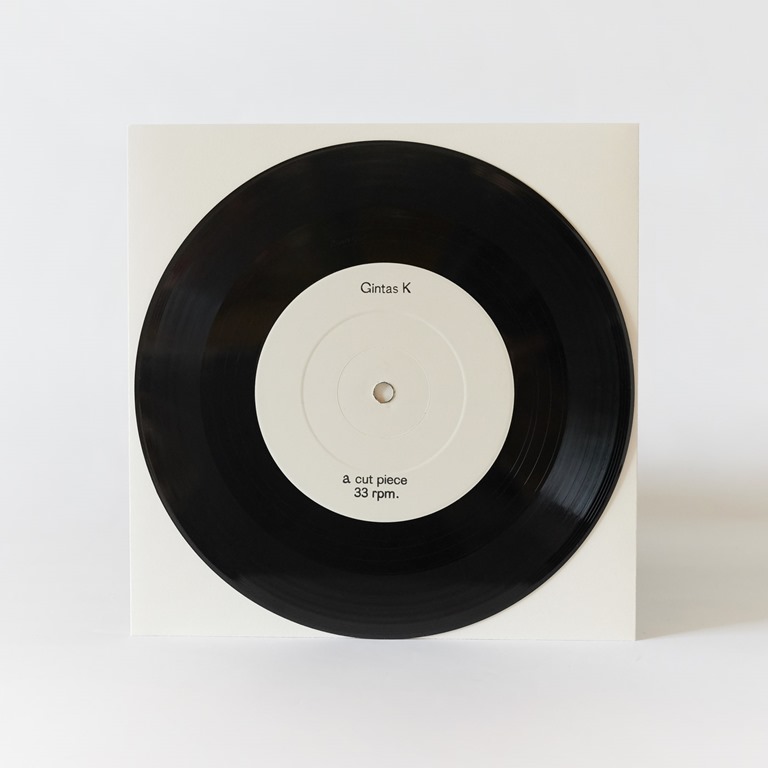
This one’s been languishing in the vaults for a while now, but one of the things about recording prolifically is that sometimes it takes time to catch up on the release schedule. And so Gintas K’s variations in a-moll for a granular synthesis gets to see the light of day in the middle of a solid and steady release schedule which has seen the release of one or two albums a year for the last three.

Of the six sequentially-numbered tracks, all but one are well over the ten-minute mark, and the shortest is over eight minutes in duration.

Not a lot happens, at least initially: repetitive synth stabs on a single note with varying levels of force shift into different notes. They begin to overlap, and a fuzz of distortion decays the edges. Gradually it slides into a mess of overloading noise: the synths crackle and burn among a billowing walls of darkness.

Across the album, scraping granularity and stuttering dominate the foreground. It difficult to settle to a constant flickering, a crackling distortion of interrupting signals, and the sensation is disorientating, dissonant, disruptive. By the third piece, the sounds has degraded to a rumbling crackle. This sonic disintegration could likely be taken as a metaphor for something. But for what? Well, from a reception theory perspective, you can insert your own metaphor as appropriate. To me, it feels like a sort of glitched-out panic attack, a mental collapse as a response to the crumbling culture at the tail-end of 2019. A decade slumping to its bitter end in an amorphous mass of fragmentation, with rhythms reduced to swampy surges back and forth, and fractal notes dance skittishly.

The fifth piece introduces some softer tones, an ambient wash that’s cracked and damaged, bur nevertheless hints at something mellow… and then it tears apart from the seams as a heavy fog of noise descends, and the final composition splinters and breaks, the shards bursting apart in slow-motion to leave rubble and dust.

AA

Gintas K – variations in a-moll for a granular synthesis

8th December 2019

Christopher Nosnibor

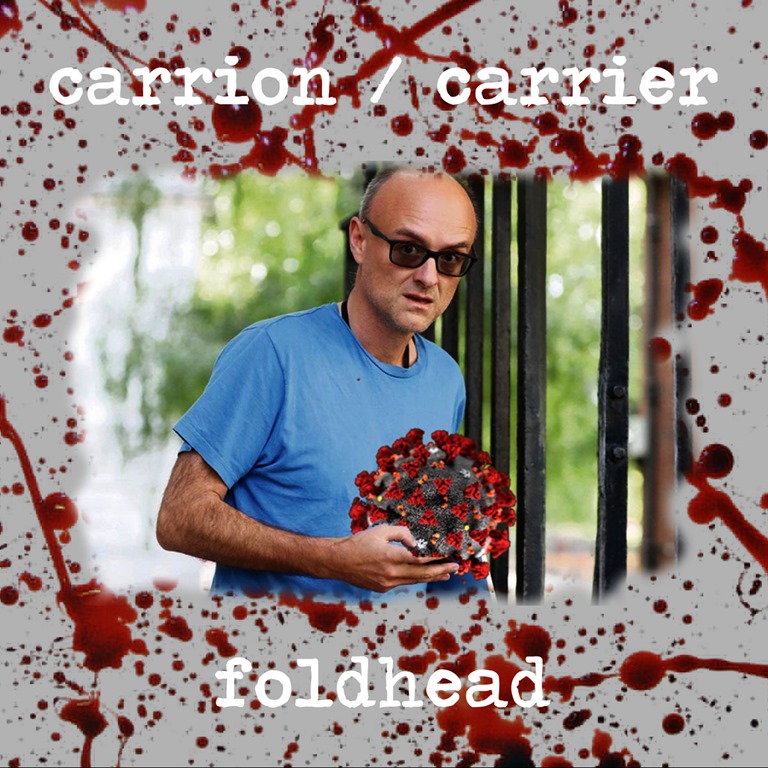
The latest release from Yorkshire electronic noisemaker Foldhead comes with no information whatsoever. It features just one track, and laser synth sounds throb space-age pulsations into a void of distant dissonance and static air. Voices crackle somewhere almost subliminally as if tapping into the mutter line. Change the frequency. Same distorted, indecipherable message. Feedback. Hiss. Hum. Extraneous noise. Sounds like something… something indefinable. Something out of range. Something unsettling. Not painful, but uncomfortable.

At the four-minute mark: silence. Is that a low rumble or simply the heating and my laptop’s hard-drive?

The ponderance is disrupted by crawling, squalling extranea, a mess of feedback and treble, scrapes and hovers, a mid-range, mid-air act of defiance against comfort. The volume takes unexpected incrementals steps upward, while the stuttering rotary stammerings continue to churn and thrum. Faint trills of treble and low-level grinds emerge and fade. The swell of sound is increasingly unsettling as the volume and density increases… ad then, an abrupt end. Silence. This is how it ends. This is how everything ends.

Now, I like noise, but am often relieved in some sense when it ends. Foldhead’s latest isn’t as oppressive as that, but there is a certain sense or the pressure lifting after the end. It may only be ten minutes in duration, but Radio Dust MAG 4.wav has a certain sonic intensity from which there is no escape until that silence descends.

AA

Foldhead - Dust

29th November 2019

Christopher Nosnibor

For me, there are few things worse than a story untold and only alluded do. Tell it or don’t! The press release for Cologne-based Roman Jungblut’s solo debut tantalisingly informs us that ‘His mainly improvisational musical live performances – in varying constellations since 1996 – are temporarily reduced to a few selected appearances in Cologne since 2009, due to reasons’. First and foremost, of course, my thoughts are with the artist: we all have our reasons for done – for not doing – things. Sometimes, they’re painful, or we simply don’t want to talk about them. But a story-half-told can lead to speculation. Not that I’m about to speculate on anything here, and shall instead focus on the sonic document presented in the form of Back To Where It Never Started, which comprises four pieces which explore a broad territory in a short span of time.

The blurb goes on: ‘After a ten-year full abstinence of recorded output besides contract work – and only ever having released music as a member of bands or collectives – Roman finally found it to be inevitable to not only release some music, but to do it as a solo artist, not hiding behind a pseudonym, an ensemble or even ironic distance. “Back to where it never started” is the first product of a long time filled with lots of artistic and personal moments of growth, of finding the courage for imperfection and embracing the potential of constraints’.

The most striking thing about the EP is its diversity.

‘Detox – Retox’ packs a lot into just five minutes, as a trilling top synth that surges and builds tension suddenly gives way to a plunging, thumping bass pulsation that’s low and low, and registers around the lower abdomen, before spiralling scraping drones evolve around it, conjuring a cinematic, texture-heavy soundscape that resonates in ever-expanding ripples.

‘78-7-88’ is radically different, a piano-led piece that’s almost jazzy in its stylings – but not so jazzy as to be irritating. Long, drawn-out notes hang and taper over the jaunty, mellifluous babbling backdrop, while ‘Einsicht’ is a space-age bloop-out, with whistles, bleeps, and whirrs hovering in zero-gravity slow-mo.

The final composition, the eleven-minute ‘Two for Tooth’ takes the form of a sparse yet layered ambient work that gradually grows warmer as it develops, slowly and subtly, around a rippling repetitive wave.

In some respects, the fact the set tapers out after so many shifts and ups and downs feels vaguely disappointing, but ultimately, its slow ebbing departure seems fitting as the listener’s journey ends with Jungblut meandering toward the horizon.

AA

RJ01_front

Words: Christopher Nosnibor

Pics: Chris Power

Sometimes, the everyday and the ordinary are just so difficult to navigate. Stuff that the majority of the time is just what you do becomes suddenly too much. For some, it’s going to work; others, it’s worse even than that, like leaving the house to go to the corner shop. We all have our limits, and they can change unexpectedly, and seemingly inexplicably. For me, the onset of darkness as the clocks changing hurls us into the late autumn / winter spell does it every time and the urge to hibernate or hang myself becomes stronger than the enthusiasm for going out and watching live music.

Sometimes, it’s easier to crawl out to someplace where you know you won’t be known, so it’s possible to concentrate on the music and not have to deal with conversation. But sometimes, there has to be an end to avoidance, and the only way forward is to do the thing, however hard. There’s no snapping out of it, no flicking a virtual or metaphorical switch. There is no one single means of dealing. For me, it’s about a self-created nudge. Because no amount of external nudging has any effect – although, arguably, Hogwash was a successful external nudge here.

Wharf Chambers is one of those places that doesn’t make a twitchy, lone drinker feel awkward, and the vibe is never anything but welcoming and inclusive. This matters, a lot: I don’t feel like anyone thinks I’m a weirdo or inadequate when I fumble around with change, or as I sit in a corner with a pint to read – Lee Rourke’s Vulgar Things – and do the constant phone-checking thing that’s become habitual, by candlelight while waiting for doors.

So why am I here? Well, the Facebook event suggests folk may be ‘baffled and/or enticed by’ the eclectic lineup, consisting of Claus Poulsen // Stuart Chalmers, Eskimoomin, Two’s Company, and Inhuman Resources. I’m here for the music. Also, people: much as I feel a compulsion to avoid them, there’s a comfort in knowing there will be people there that you know, who are there for the same reasons.

The latter is up first, and it’s another of the infinitely-numerous project by event organiser and master purveyor of weird random noise, Dave Procter. Playing in a Parka with the hood up, he churns out a wall of blistering electronic noise that gets louder and more brain-melting as the set progresses. Reminiscent of Whitehouse without the vocals, here’s some classic power posing happening behind the trestle table laden with gear, and it’s a quality example of contemporary power electronics, with a self-awareness that carries an ironic twist in the posturing. Oddly, I find this all a source of immense joy: I find myself relaxing, and smiling to myself. This is exactly what I came for, and this is why live music is a holistic form of therapy: it offers escape, external stimuli suggesting routes inwards to explore and also let go of things.

75220781_540974880031612_4404610269104308224_n

Inhuman Resources

Eskimoomin play warped synth pop. She plays synths and sings. He dances like Bez, wearing shorts, a Hawaiian shirt with some kind of shark design and meerkat mask or something. It’s brilliantly bizarre, visually and sonically, and as quirky as fuck, but also accessible with some pumping beats. Bewildering, baffling, a but wrong, but also a whole lot of fun. The world needs more artists who give this much effort and this little of a shit what you think of it.

75443135_1156956231162197_8258115284250918912_n

Eskimoomin

Claus Poulsen and Stuart Chalmers do what I might reasonably describe – according to what I’ve tapped in onto my phone – as ‘some kind of Eastern / pan pipe percussive string-scraping shit. Bow against the side of a table. Clattering percussion gives way to trilling organ tones’. It’s immersive, although I suspect it’s the beer rather than the music that’s proving soporific. The pair work their respective segments of kit intuitively and coordinatedly, and it’ a pleasure to watch.

73404081_598709020876275_509431852004540416_n

Claus Poulsen and Stuart Chalmers

Headliners Two’s Company deliver fractured, droning noise, and I’m way in the wash of atmosphere. Nothing seems entirely real right now, and I like it like that. I’m, primarily in the moment but if my sketchy notes are to be believed, the ‘synth guy in coat has William Bennett trappings, while guy sitting down has lounging cunt all over. Beat-heavy electro with a hard and challenging edge’. I could, and maybe should, expand on that, and attempt to convey the real, lived experience. But ultimately, you had to be there to fully experience the physical and psychological effects of their textured soundscapes in a darkened room. And being there next time is a must.

75561419_722237111629672_1741998697572466688_n

Two’s Company

Buh Records – 20th September 2019

Christopher Nosnibor

Apophenia: the tendency to perceive connections and meaningfulness in random noise, e.g., clouds resembling animals or human faces. Ale Hop’s Apophenia, which we learn ‘suggests possible and reimagined South American geographies’, contains an abundance of random noise. Ale Hop, we find, isn’t a band as such, but ‘a Berlin-based artist, researcher, and experimental instrumentist (sic) from Peru. She composes electronic music, by blending strains of noise, pop, avant-garde, ambient and a complex repertoire of extended techniques for electric guitar and real-time sampling devices which she uses as her sound vocabulary to craft a performance of astonishing physical intensity, saturated of layers of distortion and stunning atmospheres’.

And on the strength of this outing, she grasps atmosphere in a major way. These pieces are hefty, deep, and often dark, not to mention challenging. Ale Hop doesn’t do easy accessibility, and that’s a good thing. This is one of those releases I’m proud to say is about art. I can’t truly fathom it, and certainly can’t justify it.

The press release pitches ‘atomized field recordings and sound samples. recollected from video archives from her homeland, Peru, the composer interweaves unknown territories, by mimicking mountains and oceans, but also grey skies and violent cities, with droning and shrieking textures of electric guitars mixed with spoken chatters and sizzles’.

Somnambulant drones and ethereal elongated notes which hover and hum dominate the album’s eight compositions. There are no easy inroads here. In fact, there are no inroads at all.

‘Side Effects’ is an odd piece of spoken word with extraneous noise, and the mix oddly pitches background sounds to the fore to disorientating effect. It’s only three-and-a-half minutes long, but it’s three-and-a-half minutes of warping drones and static hiss and crackling.

There’s dark turbulence on ‘Lima’, which plunges the listener into subterranean spaces of disquiet and discomfort, while ‘Onomatopoeia’ appropriately brings a gloopy, swampy soup of sound, and the title track – a succession of scraping shards of electronic feedback.

And what does it all mean? That I fail to sense ‘South American geographies’ doesn’t mean they’re not present in every moment, but reminds us that artistic intention and the artist’s spheres of reference and influence often differ from those of the audience, who can only truly receive art from their own solipsistic vantage point. As such, dissemination and reception rarely correspond, and this is never more apparent than when considering the experimental and the avant-garde, where theoretical context counts for nought to much of the audience.

The sign of artistic success in this context is not whether or not the audience grasp the context or intention but whether they connect with the work – on any level – despite a lack of a priori knowledge.

Apophenia is a challenging listen, but is an album that holds up and ‘works’ when removed from its context. It’s all about atmosphere, and the universal language of sound.

BR127_front

Front & Follow – 15th November 2019

Christopher Nosnibor

Front and Follow is a label that’s carved a special niche in the cassette release corner of the industry, and has, for those in the know, become a trademark of quality. But sustaining such consistency – or even anything – as a one-man operation is hard work, and often with little reward. As such, while I was sad to learn they’re taking a break, they’re signing off with an incredibly strong release, courtesy of Ekoplekz, who is also embarking on an indefinite break.

The album’s pitched as ‘drawing parallels between present day Britain and that of the turn of the 80s, Ekoplekz looks back to that era’s industrial and post-punk soundtrack for inspiration,’ and the press release continues: ‘In a land increasingly brutalized by austerity and divided by nationalism, the tensions that informed some of the post-punk era’s most important works (Red Mecca, Unknown Pleasures, Metal Box) haunt this collection of bleak postcards from the present’. The present is indeed bleak, unless, of course, you perhaps run a hedge fund with billions backing a no-deal Brexit or you’re a major corporation invested in climate change denial or pharmaceuticals. But then, if you’re in that bracket, you’re probably on your private jet grabbing bitches by the pussy and going gammon about these smelly hippy protestors or somesuch. For the rest of us these ae dark times that require a dark soundtrack, and as I’ve said elsewhere, it’s no surprise that we’re experiencing a different kind of 80s revival at the moment. Brutal and divided pretty much sum up both UK and US politics and cultures , as well as further afield. Who actually feels safe on the street? Who actually feels safe as a career artist? Who isn’t remotely concerned, doesn’t feel concerned, panicked, anxietised? We don’t need Duran Duran replicas like The Bravery, and even Editors and Interpol’s take on post-punk feels lightweight in the face of the crises that define the current – and so Ekoplekz plunge deep back to the late 70s source to dredge real darkness and despondency here, and in doing so, In Search of the Third Mantra soundtracks the present – bleak as it is.

With In Search of the Third Mantra, Ekoplekz sets his spheres of reference out early, with ‘High Rise Dub’ carrying Ballardian connotations and ‘K-Punk’ taking its title from the seminal blog of the early noughties by the late Mark Fisher, to whom the album is dedicated. This, then, without wanting to sound elitist, is no mindless replication of an array of retro tropes, but a considered assimilation of myriad sources, distilled into something wilfully challenging. We would expect nothing less of K Craig, filmmaker and front man of currently-resting Last Harbour. This is quite a departure, but works in context: while we don’t get brooding vocals and arch-gothic sonic structures, there’s a brooding nihilism that rumbles at the core of In Search of the Third Mantra in the same way it lurks so many albums of the period, and a lot has to be credited to the production.

It’s got grooves and danceable beats, but it’s also possessed of a dehumanised detachment, a sense of distancing and dislocation: you’re in the zone and in the space where you’re feeling the distance, the disfunction. The fact that this doesn’t fit, the fact that you don’t fit.

The spartan electronica of the former, with its dubby bass and rhythm that shuffles and clatters conjures a sense of alienation and otherness, while the latter brings things down a notch darker, laser bleeps and eerie vaporous notes hover ominously. ‘Do the Meinhof’ goes full motoric, channelling the insistent industrial grooves of DAF and Cabaret Voltaire into a tense death disco pounder laced with icy synths.

The sonic touchstones are all very much in evidence as the listener is led through a haunting desert of sound, dark, murky, menacing. ‘Accept Nothing’ has hints of The Cure’s Carnage Visors soundtrack, and the atmosphere which permeates all ten compositions is unforgiving and inhospitable.

There’s a degree of linearity to the album’s sequencing, and each track feels sparser, less defined, and with this progression there comes an increasing sense of collapse, of emptiness, and while sonically, the pieces are spacious, the atmosphere is evermore paranoid. One feels as though familiar structures are falling away, disintegrating. By the time we arrive at ‘Heart Addict (In Make Up)’, there’s little left beyond an almost subliminal, stunted dub bass that twitches anxiously alongside a barely perceptible beat, and we’re left, alone, disorientated, and teetering on the precipice just inches from the void.

AA

Ekoplekz_cover